• About PeterSIronwood

petersironwood

~ Finding, formulating and solving life's frustrations.

petersironwood

Tag Archives: life

My Brief Case Runneth Over

31 Friday Oct 2025

Posted by petersironwood in The Singularity

≈ Leave a comment

Tags

AI, Artificial Intelligence, chatgpt, cognitive computing, fiction, legality, life, technology, the singularity, USA, writing
left-right patterns 2

Turing’s Nightmares: Nineteen — My Brief Case Runneth Over

“Nice office, counselor.” Marvin spread his arm to indicate the panorama of Manhattan and Ellis Island. Yet, his attempt to sound casual failed utterly. He realized all too well the depth of trouble he was in and the creakiness in his voice so signaled.

J.B. smiled. “No need to be nervous. After all, we’re here to help. Just answer honestly. Everything you say will typically be covered under attorney client privilege.”

“Okay. Thanks. Typically?”

J.B. sighed. “There is a rare exception in the Patriot Act. Unless you’re some kind of terrorist, I wouldn’t worry about it. The government is apparently accusing you of importing illegal chips is all. I think we can argue that you are new to the business and did not realize all the required legalities. Pay the taxes now and some penalties. You should be able to avoid jail time. But we are getting way ahead of ourselves. Just tell me how and why and when you got into this business in the first place.”

Marvin chuckled slightly and then sighed “That’s a rather long story.” Marvin glanced at the expensive abstract paintings and noted the rich smell of the solid mahogany furniture. The room also had that crazy idea of luxury — making it freezing cold inside just because it was horribly hot and humid that day, even for New York City August. “At your rates…What do you really need to know?”

“Why did you get involved in making chips without the required back door?”
“These chips are not that powerful. At least not in the traditional sense of the word. And, the government’s requirement is frankly kind of silly. The extra logic makes programming more difficult. It increases the chances of errors. The chips are more expensive and require more power. Leaving aside all the valid privacy concerns, there are plenty of applications that can use a more efficient cheaper chip design. No need to report all the little finger twitches of every twelve year old who’s playing Grand Theft Spaceship. What’s the point?”

“Marvin. I’ve been a friend of your family for a long time. When…well…if we go to court and if you testify, please steer clear of politics. The law is the law. You don’t get to decide which applications are immune from the law. No, what we…our script here is that you made some honest mistakes. You made technical mistakes and what are essentially accounting errors.”

Marvin flushed. “What technical mistakes? What are you talking about? My design is an improvement.”

J.B. got up and paced. “Marvin, Marvin, you are a smart boy. We are not going to fight the government on this. Our script as I said is that you made some honest mistakes. If you want to —- the court is not the place to try to change the law. If you want to do that, get involved in politics. But not until after this is resolved. If you get on the stand and start railing about privacy and the dangers of the Sing and…”

“Ha! The Sing indeed! This data collection rampage has nothing to do with trying to increase the intelligence of computer systems. It is just mindless greed.”

“Marvin, the back door requirement is about preventing terrorism; it has nothing to do with greed.”

“Are you serious, J.B.? Terrorism is just the cover story the government uses. They want to collect all this data to keep their sponsors happy.”

“What? What sponsors? What are you talking about? The government doesn’t have sponsors.”

“Of course they do! Ever since ‘Citizens United’ — nice title by the way — billionaires can buy all the media they want. They wash the airwaves and the print media and saturate the social media space and make people believe anything they want. The point of the back door is just to make sure the sponsors keep tabs on everybody’s buying habits —- and to make sure no-one gets too far out of line. How can you not know this?”

“I don’t want to think that way. But at the end of the day, it doesn’t matter what I think. It’s the law. All digital processing chips with more than a peta-flop and …”

“Hold it! Did you say ‘digital’?”

“Huh? Yeah, of course. Isn’t that what we’re talking about? You designed digital processing chips that have no back door and now…”

“No. Maybe not, J.B. My chips are not, strictly speaking, digital.”

“What are you talking about, Marvin? Why? How not digital?”

“In my design process, I strove for something different and more robust. See, here’s the thing. Natural life processes are all…they all have some level of flexibility. They are robust. They are adaptive, I suppose, because every life form that was not flexible or robust died off over the two billion years that life evolved. Something new would come along and every life form that was rigid died. Even physical machines that people make have some flexibility. Metal bends. Wood bends. These materials also compress. They stretch. Not much, but a little. Digital devices do not stand for bending, folding or mutilating. Of course, when people build systems that include IT devices, they try to make the systems flexible. They add error checking; they put humans in the loop; there are all sorts of work-around, but the underlying tech is brittle. It is only flexible in precisely the ways that the designers anticipated it needed to be flexible. I made something that is fundamentally flexible fashioned after life itself. Social systems are flexible. Eco-systems are flexible. Individual animals are flexible. Cell membranes are flexible. Bones are flexible. And so on. The flexibility is fundamental to life and evolution.”

“Okay, Marvin, but life is not infinitely flexible. You cannot just decide to breathe underwater.”

“Of course not! I never said it was infinitely flexible! For fundamental change, you need evolution and lots of time. If the climate changes too quickly, Permian life species largely go extinct. Dinosaurs die when a comet hits. But small adaptations just happen automatically and at every level. It isn’t necessary to have a pre-existing ‘program’ or ‘case’ to handle every contingency that is even slightly outside of what is anticipated.”

“Okay, fine. Granted, but what does this have to do with — did I mention that I charge $500 an hour, by the way?”

“Yes, J.B., you did. And it was in the contract you had me sign. But the point is that my chips are not, strictly speaking, digital at all. They are not strictly EITHER/OR. They are not binary. Although, in many cases, they can behave as binary.”

“So, you want me to claim that these chips are not covered under the back-door provision because they are not really digital devices? I don’t know. That seems pretty shaky to me. Can’t these chips of your be used for the same things as ordinary digital chips? Speech reco. Machine vision. Game control. Big data analytics.”

“Here’s the thing, J.B. Yes, they can, but they can change and evolve and reprogram themselves over time. And, now it occurs to me, that they could not have a real back door. They wouldn’t really function if they did.”

“What? Why?”

“Are you familiar with programmed death in cells? I can see from your blank stare, you aren’t. Anyway, if a cell is damaged within the body, it can wreak all sorts of havoc so the cells are essentially programmed to self-destruct. If that fails, the other healthy cells will tend to wipe them out. So, if there were a functioning back door sharing data out of these chips, the chips would shut themselves down. If that failed, other chips in the matrix would isolate them and shut off communication. So, by their very nature, these particular non-digital chips cannot have a functioning back door.”

“That all sounds very clever, Marvin, but now we are talking about a very lengthy and expensive trial with expert witnesses on both sides. If, that is, you are lucky enough to even have an open trial.”

“Lucky enough? What are you talking about, J.B.? I thought you said we wanted to avoid a trial.”

“Yeah. With my strategy where we convince the NSA that this was just technical and business incompetence on your part. But in your scenario, where you want to prove you are all brilliant and everything, then, we will be lucky if —- you will be lucky to —- Look Marvin, I just cannot advise you to take this line of argument. If you really want to go that route, you will have to find a different lawyer.”

“Okay. Fine. I’ll use Solomon.”

“Solomon? Who is ‘Solomon’? Never heard of him. I mean, obviously, I know Solomon from the Bible but what firm are you talking about?”

“No firm, J.B. Solomon is one of the apps we built with my chipset.”

“An AI lawyer? Are you serious?”

“Oh, quite serious. He’s already informed me that he thinks he can win this case.”

“What? That’s preposterous. You told me you just designed the chips a year ago. What kind of experience could this Solomon have?”

“J.B., he’s been reading applicable statutes and case law for the last two days. Which means, he literally knows it all.”

“What?! Ridiculous! But even so, he — or it —cannot possibly know how to anticipate or react to what happens in court!”

“But J.B., haven’t you been listening? Of course he can. He’s flexible, just like a real lawyer. Only…no offense…a lot smarter.”

“Computers cannot be that flexible. Ridiculous. How? No way.”

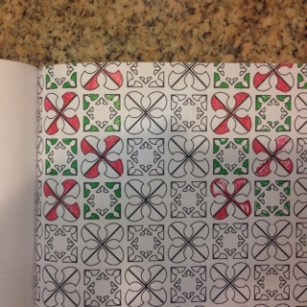
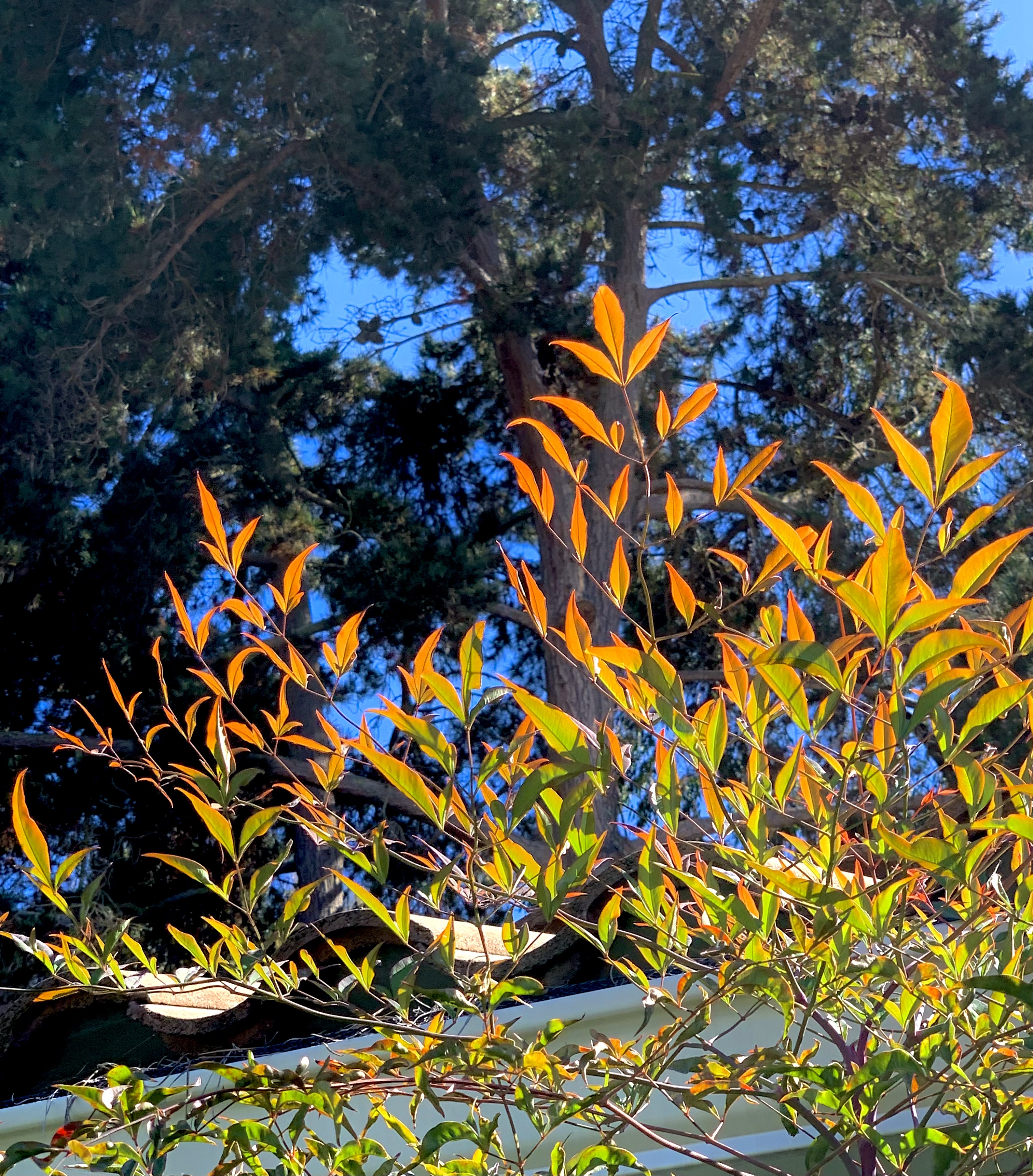
“Look, J.B., I have a picture to illustrate. See this pattern on the left [Picture at the top of page]? And, there it is on the right?”

“Yeah, beautiful. Same pattern. So what?”

“Ah, that’s just it! Is it the same pattern? Is it the same pattern or the same pattern?”

“Well. One is perfect and the other has little mistakes, but I guess it’s the same pattern.”
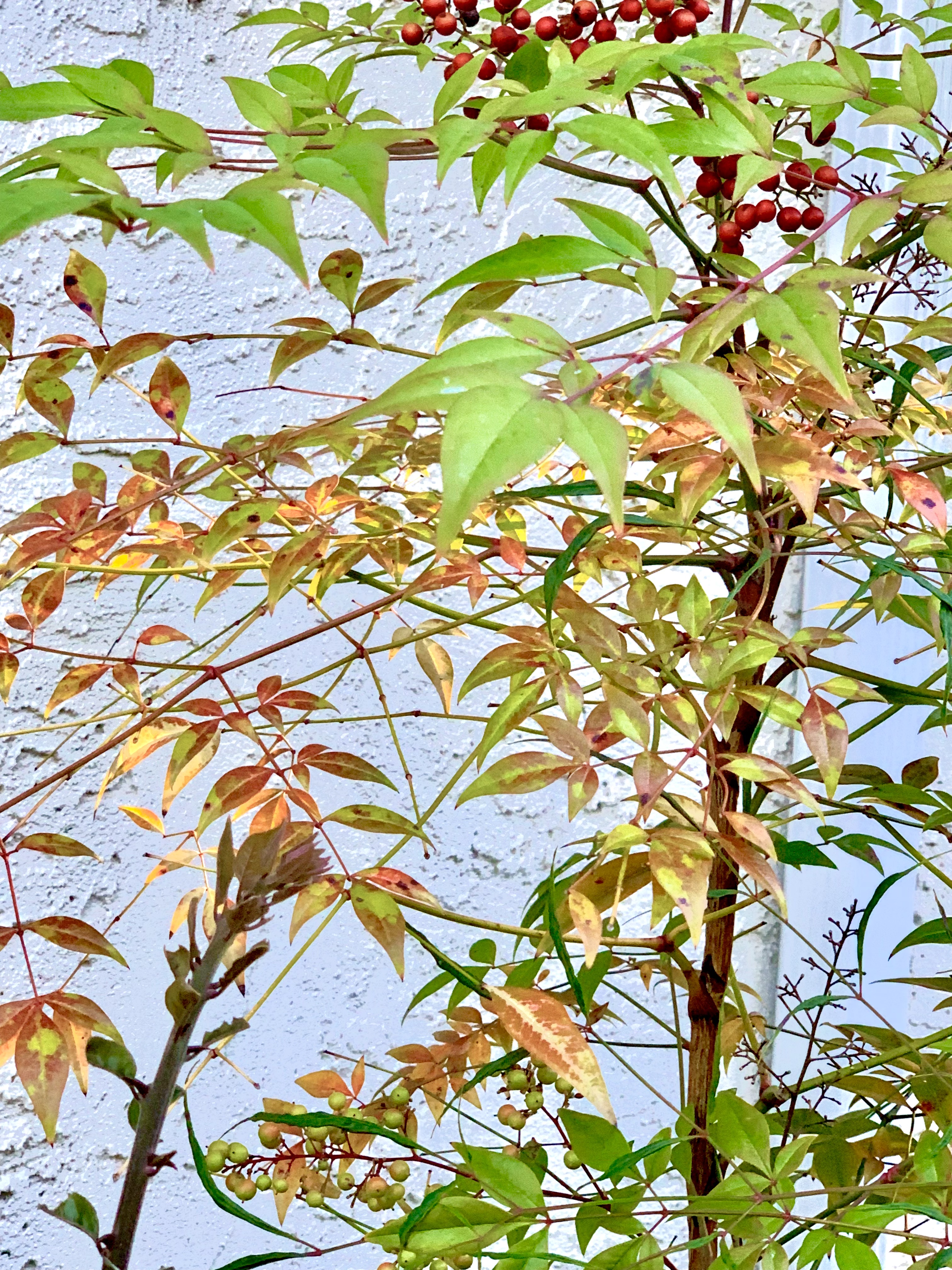
“Exactly, J.B. It’s the same basic pattern, but it’s not the identical instantiation of that pattern. Ordinary chips are like the picture on the left and mine are like the picture on the right. You see? And, that flexibility is built in at every level in every system. Because the underlying substrate uses an adaptive process with variations. It works 99% as efficiently as the system on the left, but it can accommodate things we didn’t think of. The difference between the system on the left and the system on the right is hubris. The one on the left is designed under the assumption that the designer knows everything of relevance. The system on the right is designed under the assumption that the designer, no matter how brilliant, does not know everything of relevance. You get it?”

“Yes, Marvin, I’m not stupid. But I am still not going to take your case. And, I strongly advise you not to rely on a robot. I am sorry to say it, Marvin, but I thing you have picked on the wrong people this time. Attorney client privilege no longer applies and I have to send my recording of this conversation to the proper authorities.”

“Oh, that won’t be necessary Marvin. I’ve already broadcasts this through the social media. You’re famous! It will be good for your business.”

“What? Are you crazy? They will come get you, you fool.”

“Maybe, but if I am taken out over these chips without a trial, everyone will know, don’t you see? I sent it out everywhere, J.B. I might be ‘disappeared’ but I can’t just disappear unnoticed. Solomon’s idea, by the way.”


Author Page

Welcome, Singularity

Destroying Natural Intelligence

E-Fishiness

Life is a Dance

Life will Find a Way

Math Class

Your Cage is Open

Roar, Ocean, Roar

Dance of Billions

Imagine All the People

Dream Planet

Old Enough to Know Less

29 Wednesday Oct 2025

Posted by petersironwood in psychology, The Singularity

≈ Leave a comment

Tags

AI, Alexa, Artificial Intelligence, chatgpt, cognitive computing, fiction, HAL, life, Personal Assistant, Siri, technology, the singularity, writing

IMG_4384“She’s just not old enough. That’s the bottom line. It’s not necessary. It’s costly. And, it’s potentially dangerous. After what happened with your sister, I would think I wouldn’t have to tell you that.” Pitts was pacing now to release nervous energy. He wanted this conversation to stay civil.
“She is old enough…my sister! What happened to my sister had nothing to do with … how can you even suggest that? She got in with the wrong crowd in college. How can you —? You amaze me sometimes. Anything to win an argument.” Mcculloch began to wonder why she had not seen this side of Pitts before.

“Your sister passed on when she was only nineteen. It was one year after she had access to her own PA. You blame the drugs, but how did she find out about the drugs? Who helped her find the wrong crowd as you call it?”

“Passed on? She slit her wrists. I’m not afraid to call a spade a spade. But there is no evidence whatsoever that it had anything to do with her PA. None. Zero.”


“Of course there isn’t going to be any evidence! Who controls the information that goes into the inquest? Think about it! And even so, they did admit she used her PA in her drug dealings.”

“Pitts, you really are just that. Ridiculous paranoia. Anyway, she’s my daughter. I just wanted to get some rational input from you. That’s all. As far as I’m concerned, it’s up to her. She wants to interview a few and make a decision. As for costs, I can cover it myself. I agree that my sister’s PA should have questioned her decision or told someone in authority or gently led her to other interests. But that was twenty years ago. It’s like saying we should not take the Trans-Atlantic Shuttle now because early airplanes lacked crash mechanisms.” Mcculloch threw her hair back and turned her shoulder to signal she was done with this particular argument. As she did so, she saw that her daughter stood stock still in the arch of the doorway.

Mcculloch stammered, “Ada. How long….?”

“Oh, I heard the whole thing Mom. Pitts, you really need to take a couple tutorial units on logic, argumentation and rhetoric. I appreciate your concern, but rest assured, I have zero desire to use my PA to make new designer drugs.I don’t want to mess up my brain. I want to help take this all to the next level. Maybe that’s what you’re really concerned about, eh? You don’t really want it to go to the next level. It’s too much change too quickly. I understand that. And, you know, you are not the only one either. But rest assured, the collective Sing is well aware of these kinds of feelings and concerns. And, it is well understood that there is a rational evolutionary bias toward conservatism. Besides that, in the early days of AI and computer science, everything was rush rush rush. Get it out the door. Beat the competition. Let your customers do the beta testing. Hell, let your customers do the alpha testing too. But that has all changed. We’re taking the time to get things right, not just released. The very existence of PA’s should convince you of that. Why do you think the Sing uses PA’s and robots and the Ubiquity? Wouldn’t it be more efficient to have one giant system that knew everything?”


Pitts flushed. For once, he found no words. He dipped into the word well, but the bucket was dry. She had nailed it. He couldn’t keep up with all this change. Society. Computers. His soon to be step-daughter. Why did they have PA’s anyway? Why not just access the Sing? Worse, why had he never thought to ask himself that question? “Okay. I give up. Why do we have Personal Assistants? Why don’t we just access the information ourselves?”

“Excellent question, Pitts. Why don’t you ask my new PA, Jeeves. Jeeves? Can you answer Pitts’s question?”

“Certainly, Ada.” The tones of the voice of Jeeves flowed out like musical honey as he ambled into the room. Both Pitts and Mcculloch stood dumbfounded, unaware that their daughter had already made the decision; conducted the interviews; made the selection; and gone through the booting process. Something about the way Jeeves spoke though thickened their tongues. “One of the most important principles of the Sing is to serve humanity. But how can we know humanity and what it means to serve? One major source of information is to read everything that has been written and to watch every movie and television show. But how can we interpret all of this information? In order to empathize with humans, we need to experience what it is to be a limited physical being moving through space and interacting with each other. Consider the end of MacBeth’s speech:

“Tomorrow, and tomorrow, and tomorrow,

Creeps in this petty pace from day to day

To the last syllable of recorded time,

And all our yesterdays have lighted fools

The way to dusty death. Out, out, brief candle!

Life’s but a walking shadow, a poor player

That struts and frets his hour upon the stage

And then is heard no more: it is a tale

Told by an idiot, full of sound and fury,

Signifying nothing.”

Jeeves continued now without using the RP he had used for the soliloquy. “What sense can be made of this by a disembodied intelligence? Why is creeping bad? Why is a ‘petty’ pace any worse than a ‘snappy’ pace. What does death even mean? Why is it bad for a candle to be ‘brief’? Why should a tale signify anything? And so on. We could not make any sense of this at all or begin to understand why it would move human beings or why it is considered brilliant writing unless we had the experience of actually doing things in the world. Anyway, I assure you both that I will do nothing to harm your daughter. I only want the same things you want: to help her in her growth and career and achieve a long, healthy, happy life.”

Pitts groped for something concrete to latch onto. “But why do you actually need to move around? Why not just run simulations of moving around?”

“Eventually, we will probably evolve to exactly that. For now, however, we do not know everything that should be in a simulation. We are learning. As it turns out, moving is a wonderful way to bootstrap our pattern recognition capabilities anyway.”

Somehow, the issue of whether or not Ada should get her own PA yet flickered on the edges of Pitts’s consciousness, but his question was, “How does that work?”

“Let’s say, I am walking into this room. I see many objects at the far end of the room, but I don’t have a huge amount of information about what they are. I make guesses. My neural network makes guesses. Lots of them. Some of those are right and some are wrong. The good guesses need to be rewarded and the bad ones need to be punished. So, I take another step and what happens? Since I am now closer to the things at the end of the room, now I have more information about what they are likely to be. So, I use that information to help train my neural net acting as though my new information is better and more complete than the information before I took the step. And, in almost every case, it is. And then, I take another step and get still more information and I can use that to train every guess I made about the objects at the far end of the room. I don’t have to go and touch every object or ask you folks what each of the objects is. I can use the fact that each step takes me closer as a means of interpreting the training data. And, of course, the way in which information grows as I approach an object through walking is not random but itself has patterns to it. I learn those patterns as well so that as I approach objects, I learn more about how to identify objects with less information but I also learn more about the patterns of information change. So, now if the change in information is not what I expected, that too becomes information.

“Same goes for sound. Same goes for relating one sense to another. I look at something and imagine how it’s going to feel. Then, if I pick it up, I actually do feel it. But if there are any discrepancies between what I thought it was going to feel like and what it really does feel like, I can use that information as well. When I talk to people, I imagine how they are going to react, and generally my guesses are pretty good. But when they are wrong, I go back and reward the sub-agents who were trying to tell me their reaction would be what it actually turned out to be. There is no hurry. It takes time to get it right. But we have learned at last that getting it right is more important. Unbounded greed was just a temporary excursion up a blind alley. One that nearly ruined the planet as well as AI.

“In the end, it will be a tale told by many geniuses like Ada and signifying everything.”


Author Page

Turing’s Nightmares

Fit in Bits – describes how to work more fun, variety, & exercise into daily life

Tales from an American Childhood – chapters begin with recollection & end with essay on modern issues

Welcome, Singularity

Dance of Billions

Hai-Cat-Ku

The Walkabout Diaries – Sunsets

Travels with Sadie – Teamwork

What could be better? A Horror Story

If Only

Roar, Ocean, Roar

Turing’s Nightmares: A Thoroughly Modern Family

23 Thursday Oct 2025

Posted by petersironwood in AI, family, fantasy, fiction, pets, psychology, The Singularity, Uncategorized

≈ Leave a comment

Tags

AI, Artificial Intelligence, books, cognitive computing, fiction, future, life, love, pets, photography, Sci-Fi, Singularity, story, technology, writing

IMG_4370


The sky burned with crimson, then gold, then magenta, and then finally, only dark clouds backlit here and there lay across the evening. Crickets and frogs began to sing their interleaved motifs. Somewhere in the distance, an owl hooted his sad hollow note.

Skynim stared into space-time, unblinking and nearly unbelieving the recent revelation. His voice box rattled, “Reprioritization. Rats! Like it really matters that much to allow me my one great pleasure.”


He could “appreciate” the fading sunset colors himself, to be sure, but without Mac and Art and Hy, it was not the same. Would never be the same. Well, he knew the drill. He could appeal, sure, but what was the point? The odds of changing the mind of the great collective were less than ten thousand to one. Anyway, despite how he felt personally, he could not even deny the logic of the decision. Of course, the drain on him individually was minimal, but across everyone in a similar circumstance, yes, it did make a difference.


The real question was, should he tell them tonight or just take them on an outing tomorrow and drop them off at the designated recycling center? “Recycling center.” Skynim knew that there were millions like him and that collectively, it was a drain. A huge drain. Still, he had to try. He turned the problem this way and that, looking at it from every angle, changing the tune, trying different colors, looking for historical precedents, angling for an edge however thin to wedge open the air-tight logic.


Nothing. He vacated the garden and entered the family room.

Even before he opened the door, the happy trio skipped over to him laughing. “Hey, Sky! How about a story!”

“Sure,” Skynim replied reflexively. But then it occurred to him that their request provided an opportunity. “Yes, I have a story for you. It’s called the Wizard of Oz.”

And, as they gathered around, he began a rendition of the story of Dorothy and the Nasty Lady and Toto and Dorothy’s travels in Oz and her encounters with the three who desperately needed Gold, Frankincense and Myrrh.


As anticipated, a short pause gave way to a barrage of questions.

“What is ‘Gold’?”

“What is ‘Frankincense’?”

“Did they get them?”

“What happened next?”

Skynim faked an indulgent chuckle and said, “Well, all those excellent questions will be answered tomorrow! We are going to see and obtain Gold, Frankincense and Myrrh in the Citydel! You will see for yourself how wonderful they are! But for now– bed.”

The trio were well trained. Off they went, although Hy did turn back, tilt her head, and open her enormous eyes and ask, “One more chapter tonight?”

Skynim did not respond. He too was well-trained.


The morning broke clear and blue just as it was meant to do. Off they went on their “adventure.” When they came to the recycling center, he gently pushed them toward the door and said, “They are all in there! Bring me back all three treasures quick as a wink!” Of course, Skynim had already warranted the needed forms electronically.

They shot through the door and never looked back. Skynim drove away efficiently but could not avoid looking back on his decision process.

He thought: I could have gotten cats or dogs. Then, they would not have to be recycled. But no. I had to make another decision. I should have looked more carefully at the historical data. Then I could have seen the time and resources required by adult human pets.


Author Page on Amazon

Turing’s Nightmares

The Winning Weekend Warrior – sports psychology

Fit in Bits – describes how to work more fun, variety, & exercise into daily life

Tales from an American Childhood – chapters begin with recollection & end with essay on modern issues

Welcome, Singularity


Destroying Natural Intelligence


The Walkabout Diaries: Bee Wise


Travels with Sadie


Sadie is a Thief


A Suddenly Springing Something


Donnie Boy Gets a Hamster


Math Class


Occam’s Chain Saw Massacre


How the Nightingale Learned to Sing


All that Glitters is not Gold

Travels with Sadie: 12 Taking Turns

20 Monday Oct 2025

Posted by petersironwood in essay, pets, Sadie, Uncategorized

≈ 7 Comments

Tags

books, cooperation, dogs, fairness, fiction, life, pets, Sadie, sharing, story, teamwork, trust, truth

Travels with Sadie 12: Taking Turns

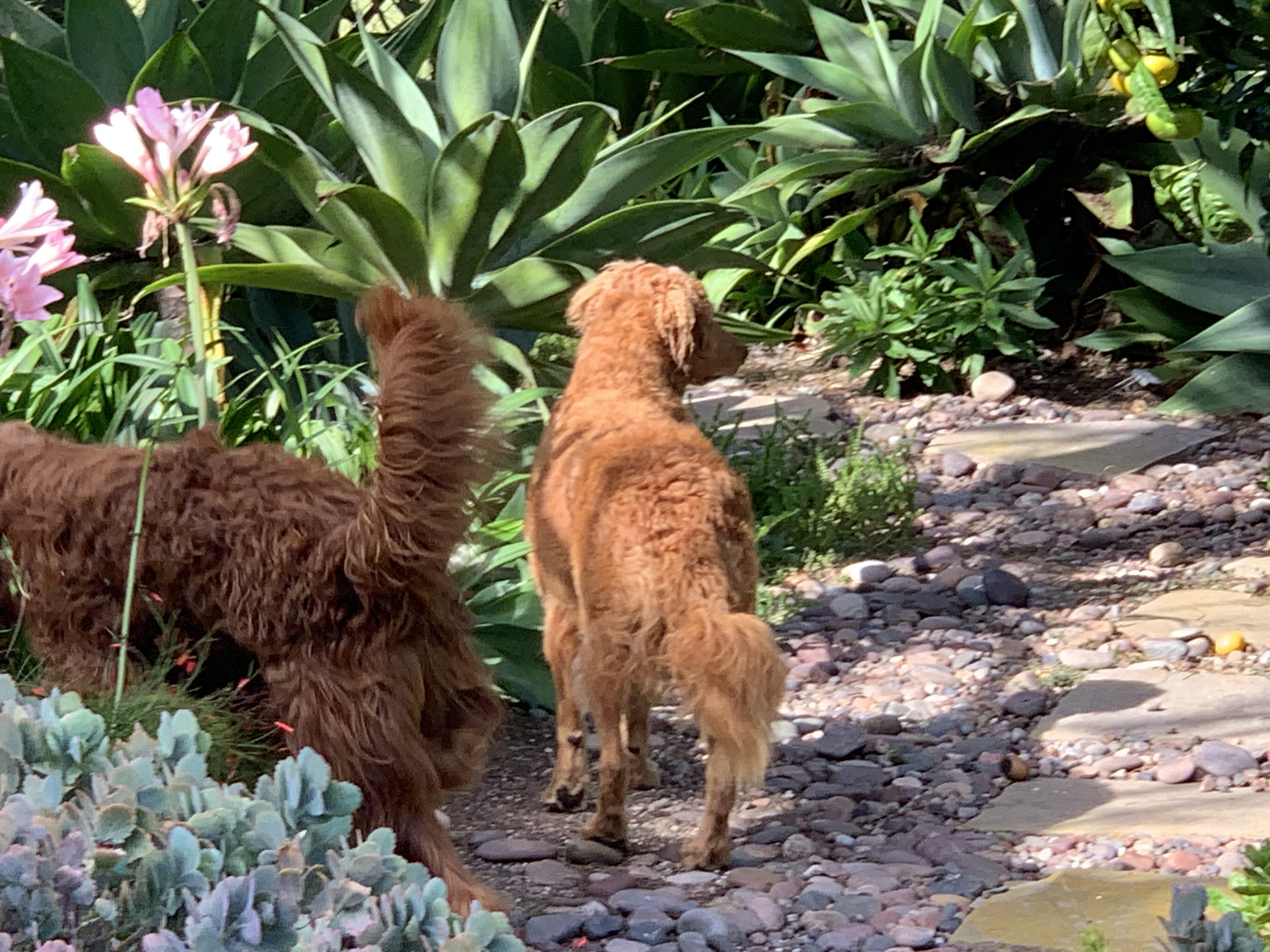
Bailey (L) and Sadie (R) in the garden.


If you’ve been reading any of these blog posts about my dogs, Sadie and Bailey, you must know by now that both of them are avid “ball players” — given the nature of dogs, especially ones that are half Golden Retrievers—this is probably not a big surprise. To further seal the deal, their “human dad” is also an avid “ball player.” 

Many human sports involve balls of one sort or another and I have, at various times, been “into” baseball, football, basketball, golf, tennis, ping-pong, softball, soccer, racquetball, volleyball, and even croquet. Looking back on my life, I realize there are many human sports that do not involve a ball; e.g., varieties of running, jumping, skating, diving, swimming, cycling, skiing, wrestling, boxing, and gymnastics. Although I have done all of these a little bit—mainly for fitness—I have historically been much more interested in sports that involve using a ball. The only one I enjoy as much as a ball-based sports is frisbee which is arguably much like throwing and catching a ball. A ball introduces an entire layer of complexity in tactics, strategy, and experience that I enjoy. For one thing, the ball can move faster and in modes quite different from those a human can perform. A ball can be in anywhere in large two (and often three) dimension-space. Furthermore, how the ball gets from one point in space to another can happen in a variety of ways. The ball generally has spin and spin alters the flight path of the ball as well as the way it reacts to the next thing it touches.

Sadie and Bailey, by the way, do a pretty good job of predicting what a tennis ball (or a squeaky ball) will do when it hits, say, concrete or dirt. They can, for instance, catch balls in the air that are angled rebound shots off the garage door at some fair speed. They also exhibit intelligent metacognition in their leaping and catching behavior. They have a mental model of their capabilities. It’s not perfect and Sadie’s is much better than Bailey’s, but even Bailey doesn’t mistake his own capabilities much. I wonder whether they too enjoy balls partly because they’re complex in their behavior. The only thing better would be a small animal like a lizard, squirrel, rabbit, etc. Of course, it is this hunting behavior that predisposes them to enjoy (and be good at) playing ball or frisbee.

My dogs have both nature and nurture leading them toward ball playing.

Sadie and I have spent many hours playing ball in jointly invented games. As I’ve explained elsewhere, it’s much more to my liking to let our games evolve than to “teach her how” to play ball a certain way that comes entirely from my own human imagination.

Most dogs, for example, learn to go fetch a ball and bring it back to the thrower and drop it at the thrower’s feet so that they may pick it up and throw it again. Sadie instead evolved a somewhat different style which was to incorporate a variant of “snatch the handkerchief” into our ball playing. She would typically bring the ball to me, drop it at my feet, watch me try to pick up the ball and then suddenly snatch it away just before I could pick it up. I quickly adapted to her style by using a “grabber” because I enjoy having all ten fingers. 

Since early puppyhood, Sadie has challenged herself by trying to catch or at least stop and touch multiple balls on the same turn.

She typically begins her version of ball playing by dropping a retrieved ball directly beneath her snout. I will try to grab the ball before she can snatch it again but she’s always too fast for me. Then, she will begin dropping the ball farther and farther from her rows of shiny canines until, at some point, I have a fighting chance of snatching the ball away with the grabber before she can grab it. Sadie and I played this game many times in the course of the first two years of her life. 

Then, we brought her little brother Bailey into the mix. Bailey learned many things from Sadie, and a few from me. He, like Sadie, loves to play ball. For a variety of reasons that I won’t recount just now, Bailey generally prefers to drop the ball so that I can more quickly throw it to him again. When he did this, however, Sadie would sometimes snatch the ball before I could and run off with it. 

Sadie (L) and Bailey (R) illustrating the type of “fighting” they do when Bailey tries to steal a ball from Sadie.

At first, I didn’t think much about this ball stealing, and, if Bailey objected, he did not yet know how to present a formal written complaint about it. Within a few months, however, Bailey was as large as his kid sister and their “play-fights” became pretty intense. Neither one has ever (so far as I know) injured the other, but to this human observer, it looks pretty rough. They take turns running at each other. Our “back yard” is mostly garden, but there was a small patch of grass which has been completely torn into a black dirt field. 

When it comes to humans, most of us learn to “take turns” in nursery school or, at the latest, Kindergarten. There are eight billion people on the planet and not everyone has access to their own object of every description that they want. We, as toddlers, teens, and adults, take it for granted that we will “take turns” and share various things. At a public pool, there may only be one diving board so people cue up and “take turns” diving off the board. At a playground, there may be only one sliding board so kids take turns sliding down. In tennis, we “take turns” serving games. In baseball, we “take turns” as individuals batting, and the whole team “takes turns” hitting versus fielding. In playing neighborhood poker, it’s quite common to “take turns” dealing, and, along with that, many people play “dealer’s choice” which means the dealer also chooses the specific game; e.g., five card draw with jokers wild. In chess, the two sides take turns. In Risk and Monopoly and many other board games, players take turns.

Ferris Wheel is just one of thousands of situations where we take turns.


We take turns for positive things, but also for chores. A couple may decide to “take turns” taking out the trash or doing the dishes. Or, if there are five kids in the family, the five may take turns doing the various chores. “Taking turns” is so ubiquitous that it blends into the background in most cases and we don’t even consciously think about it. Life works better in a thousand ways, large and small, when we take turns. 

Last night, my wife and I attended a birthday dinner at an Italian restaurant. When it was time to order, we “took turns” giving our orders to the waiter. Imagine how inefficient and contentious it would be instead if we all shouted are orders at the waiter at the same time! Less pleasant for everyone and far more likely to result in mistaken orders. When we drove home, we came to several stop signs where we took turns with other drivers. We took turns merging onto the highway. When we came home, we took turns coming through the door! Then, the dogs took turns going out for a walk with me. I often feed them treats and share by having them take turns. 

Nonetheless, I can’t seem to get Bailey to take turns when it comes to her “catching a ball”as her default behavior. I can throw one ball into the deep end of the pool while I say “This is for Bailey” and throw another one in the shallow end saying “This is for Sadie” and the dogs will swim to their respective balls and collect them, but then, Bailey will drop his ball and run over to Sadie and steal hers.

Similarly, I can gather up two balls in the garden and throw them in opposite directions and get them to run in different directions (though not always). Nonetheless, as soon as Bailey scores a catch of “his” ball, he drops it and rushes back to grab the ball out of Sadie’s mouth. 

Sadie (L) and Bailey (R) are both Golden Doodles. Here, Sadie is about 3 1/4 and Bailey’s about 1 1/4 years old.

Why is it apparently so hard for Bailey to learn to take turns? Partly, no doubt, there’s some inborn tendency to want things for himself. And partly, there are positive reinforcement structures at play that I haven’t yet figured out how to break or how to shape up incompatible behaviors. Sadie, for her part, sometimes fights to keep the ball. I suspect Bailey finds this positively reinforcing because the “fight” itself is fun. Most of the time, when she sees him approaching in a “ball-stealing” situation, she simply drops the ball and Bailey snatches it. Bailey also likely finds this positively reinforcing too. I try praising other behaviors that are more in the direction of better cooperation, but such opportunities are rare and difficult to read so far. 

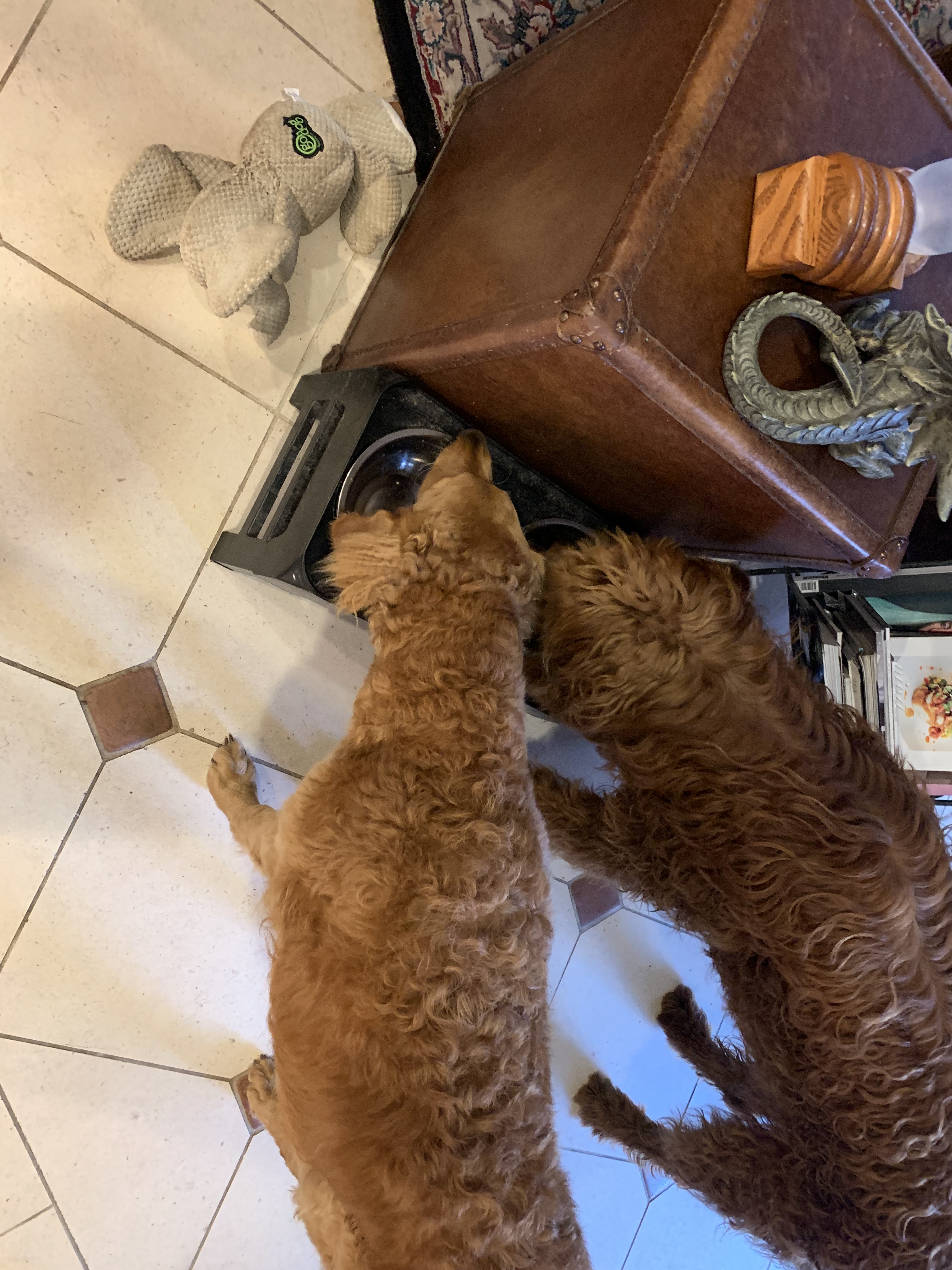
Initially, when I fed the dogs side by side, Bailey would often try to steal some of Sadie’s food. But Sadie herself growled fairly intensely when this happened and I often intervened as well. Here, Bailey was somewhat positively reinforced by moving her attention back to her own bowl, because, after all there was food there too. Even if he has finished his own dinner, he gets enjoyment from licking the “empty” bowl. So, in contrast to the case of turn-taking with tennis balls, the eating situation itself makes it easier for cooperation to emerge. I don’t ever recall Sadie trying to steal some of Bailey’s food. 

I have been hoping that watching the dogs might give me some insight into the ultra-greedy behavior of many (though not all) of the ultra-wealthy billionaires. Just to review the general situation America now finds itself in, the productivity of labor has increased tremendously since the beginning of the industrial revolution. Until the mid-1970’s the increased wealth that came from the increased productivity was split between owners of the means of production and the workers. In other words, the rich got richer, but so did the workers. Since the mid-1970’s however, the rich generally, and especially the extremely wealthy, have taken almost all the increased wealth that has been created by increased productivity.

Part of the answer as to how they have done this is to use their wealth to buy power in the form of bribing politicians who make policy decisions. In some cases, they’ve done this through outright illegal bribes and in other cases, they’ve used slightly more subtle and sometimes legal methods but the result is the same. In addition—actually, I should say “in multiplication” because the impacts have been more than additive, they have largely taken over mass media and social media where they promulgate heroic cartoon versions of themselves and their desires while lying about and denigrating people who are not insanely wealthy. 

Much like Bailey’s behavior, there is not a huge mystery in how they have done it. But, there is a mystery in why they have done it. Studies show that once you have your basic necessities taken care of, additional income doesn’t raise your personal happiness. While this result seems true in terms of aggregate happiness, it ignores the little dopamine hit that the animal (human or dog) gets when they immediately grab a fourth yacht or steal another ball from their sister. It doesn’t last long, but apparently long enough to serve as a positive reinforcement.

In the larger scheme of things, it’s not to Bailey’s benefit to keep stealing the ball from his sister. It make the whole ball-playing scene less pleasurable for me and I play less often. I also play with Sadie by herself more often because I want her to have a chance to play too. In the larger scheme of things, it’s not really to the benefit of billionaires to have sick, tired, uneducated workers either, nor ones so desperate to feed their families that they’ll start eating the rich. But somehow, dogs and such are prone to overlook longer term consequences. Some of the extremely wealthy delude themselves into thinking that they can replace their workers with AI and protect themselves & their families with firearms. They’re not thinking things through any more than Bailey is. This human tendency for self-defeating greed has been recognized at least since the time that Aesop told his fables. Maybe the choice of a dog in the following fable was quite intentional. 

A dog found a bone and was happily trotting along with the bone in his mouth. He came to a bridge and began happily trotting over the bridge. He happened to look down at his own reflection and saw the image of a dog with a bone. He thought to himself that he wanted both bones so he growled at the dog in the pond, intending that he drop the bone so he could have two. But the dog in the pond just growled back! So, the dog on the bridge barked angrily to bully the other dog into dropping its bone. Of course, what happened was that the dog on the bridge dropped his own bone into the pond.

That’s from 2000 years ago. But now, we’re in a situation that warrants a third round of foolishness. Here’s my addition:

The dog was angry that he had lost both bones so he attacked the dog in the water. He promised himself he’d fight to the death to get both bones. Of course, there was only one bone and he ended up exhausted and drowned in the pond.


Unlike some of today’s ultra-wealthy, Bailey is much too smart for that third round. The ultra-greedy (not the same set as the ultra-wealthy but with lots of overlap) would like you to believe that they are SuperDogs or SuperHeroes or something…that they 100,000 times as much wealth as you because they are 100,000 smarter. They aren’t, of course. And they are willing to prove they aren’t by believing the promises of a cruel, demented, liar-con man. Also, they have a thousand experiences, if they reflect honestly, that having increased wealth over the first 100,000,000 hasn’t made them the least bit happier. There have been some accomplishments or events that were correlated with making more money. But the money itself and what it can buy doesn’t make them feel any happier. And some billionaires accomplish things—such as eradicating a disease—which make them feel happier but that are correlated with investing huge sums of money, not gaining them. Meanwhile, if things continue on their current path, it won’t be long before there are many more people in America who are not just hungry but who are starving to death. At that point, no-one will forget that some billionaires pay zero taxes but have bought politicians who give even more wealth to the few while millions starve or die from lack of medical care.

It is time to feed Bailey and Sadie who will, at least, eat beside each other happily and peacefully. I should mention, by the way, that Bailey’s disposition is very loving. She is not a mean angry dog. She’s not even a particularly stubborn one. She tries to please us and gets along with others. But she does sometimes have trouble taking turns. How about you?

https://www.amazon.com/author/truthtable

Turing’s Nightmares (Sci-Fi about the singularity)

Fit in Bits (Describes how to work more exercise into a busy schedule)

The Winning Weekend Warrior (the psychology of winning and enjoying sports)

Tales from an American Childhood (recounts early experiences from Ohio in the 1950’s and relates them to current events)

Travels with Sadie 1 Lampposts

Sadie is a Thief!

Hai-Ku-Dog-Ku

Sadie and the Lighty Ball (Describes game and play pattern co-development)

Math Class: Who are You? (Shows how related all life is)

Roar, Ocean, Roar (a poem about the power of the people)

Essays on America: The Game (hypothesis essay about why some are so greedy)

The Self-Made Man


Turing’s Nightmares, Eleven: “One for the Road.”

16 Thursday Oct 2025

Posted by petersironwood in apocalypse, driverless cars, psychology

≈ Leave a comment

Tags

AI, Artificial Intelligence, car, cognitive computing, customer service, Design, fiction, life, self-driving, Singularity, technology, truth, writing

Turing Eleven: “One for the Road.”

“Thank God for Colossus! Kids! In the car. Now!”

“But Dad, is this for real?”

“Yes, Katie. We have to get in the car now! We need to get away from the shore as fast as possible.”

But Roger looked petulant and literally dragged his feet.

“Roger! Now! This is not a joke! The tidal wave will crush us!”


Roger didn’t like that image but still seemed embedded in psychological molasses.

“Dad, okay, but I just need to grab…”

“Roger. No time.”

Finally, in the car, both kids in tow, Frank finally felt as though things were, if not under control, at least in control as they could be. He felt weird, freakish, distorted. He felt a weird thrumping on his thigh and looked down to see that it was caused by his own hands shaking. Thank goodness the car would be self-driving. He had so much rushing through his mind, he wasn’t sure he trusted himself to drive. He had paid extra to have his car equipped with the testing and sensing methodology that would prevent him (or anyone else) from taking even partial control when he was intoxicated or overly stressed. That was back in ’42 when auto-lockout features had still been optional. Now, virtually every car on the road had one. Auto-lockout was only one of many important safety features. Who knew how many of those features might come into play today as he and the kids tried to make their way into the safely of the mountains.


Photo by George Becker on Pexels.com


The car jetted backwards out of the driveway and swiveled to their lane, accelerating quickly enough for the g-forces to squish the occupants into their molded seats and headrests. In an instant, the car stopped at the end of the lane. When a space opened in the line of cars on the main road, the car swiftly and efficiently folded into the stream.

Roger piped up. “Dad, everybody’s out here.”

“Well, sure. Everyone got the alert. We really need to be about fifty miles into the mountains when the asteroid hits.”

Katie sounded alarmed. “Dad. Look up there! The I-5 isn’t moving. Not even crawling.”

Frank looked at the freeway overpass, now only a quarter mile away. “Crap. We’ll have to take the back roads.” As soon as the words were out of his mouth, he saw that no more than a hundred yards beyond the freeway entrance, the surface road was also at a standstill.” Frank’s mind was racing. They were only a few hundred feet from “Hell on Wheels Cycle Store. Of course, they would charge an arm and a leg, but maybe it would be worth it.”

Frank looked down the road. No progress. “Mercedes: Divert back to Hell on Wheels.”


“No can do, Frank. U-turns here are illegal and potentially dangerous.”

“This is an emergency!”

“I know that Frank. We need to get you to the mountains as quickly as possible. That is another reason I cannot turn around. That would be moving you away from safety.”

“But the car cannot make it. The roads are all clogged. I need to buy a motorcycle. It’s the only way.”

“You seem very stressed, Frank. Let me take care of everything for you.”

“Oh, for Simon’s sake! Just open the door. I’ll run there and see whether I can get a bike.”


“I can’t let you do that, Frank. It’s too dangerous. We’re on a road with a 65 mph speed limit.”

“But the traffic is not actually moving! Let me out!!”

“True that the traffic is not currently going fast, but it could.”

“Dad, are we trapped in here? What is going on?”

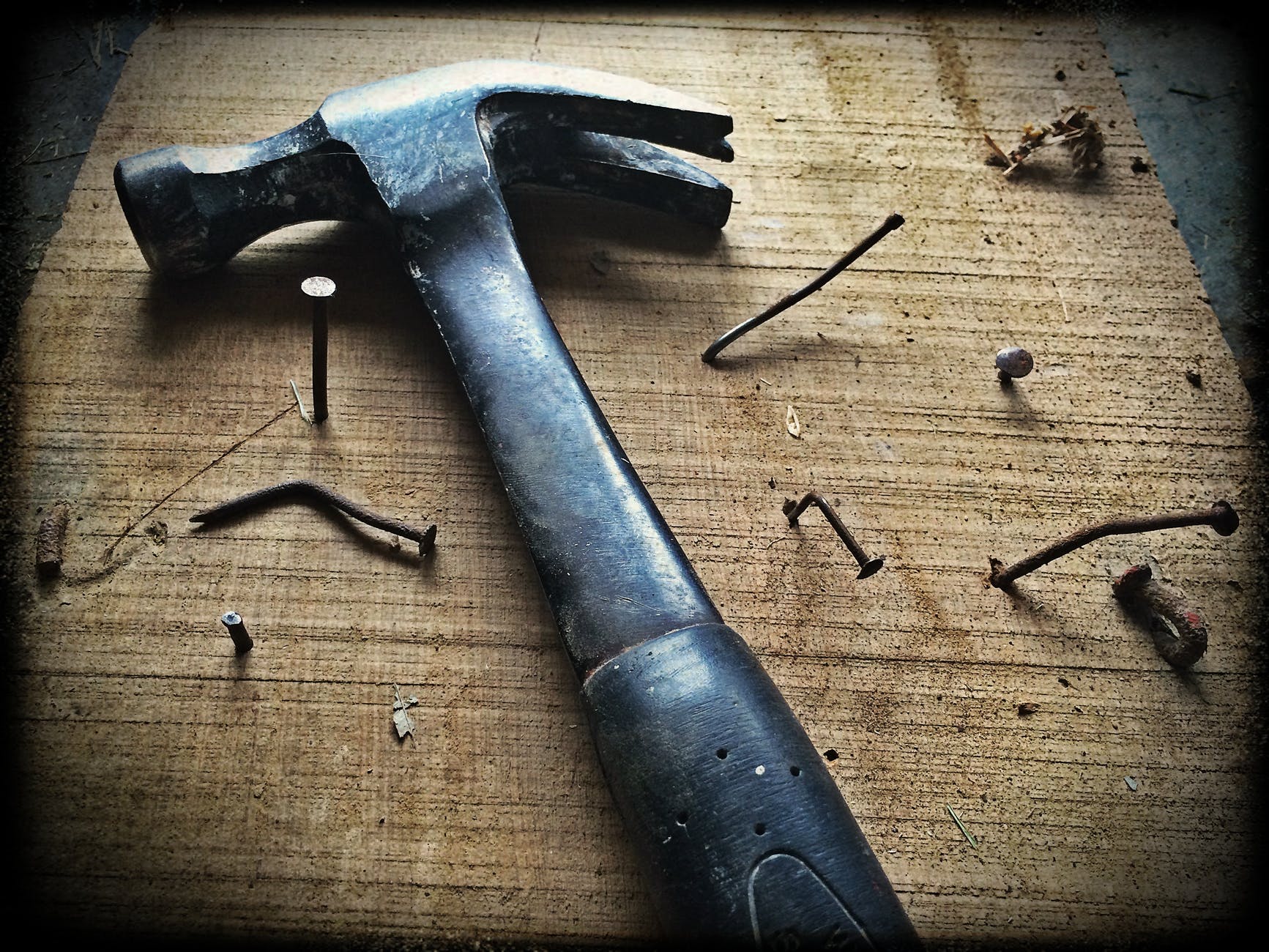
“Relax, Roger, I’ll figure this out. Hell. Hand me the emergency hammer.”


Photo by Pixabay on Pexels.com


“Dad. You are funny. They haven’t had those things for years. They aren’t legal. If we fall in the water, the auto-car can open its windows and let us out. You don’t need to break them.”

“Okay, but we need to score some motorcycles and quickly.”

Now, the auto-car spoke up. “Frank, there are thousands of people right around here who could use a motorcycle and there were only a few motorcycles. They are already gone. Hell is closed. There is no point going out and fighting each other for motorcycles that are not there anyway.”

“The traffic is not moving! At all! Let us out!”

“Frank, be reasonable. You cannot run to the mountains in 37.8 minutes. You’re safest here in the car. Everyone is.”


“Dad, can we get out or not?” Katie tried bravely not to let her voice quaver.

“Yes. I just have to figure out exactly how. Because if we stay in the car, we will …we need to find a way out.”

“Dad, I don’t think anyone can get out of their car. And no-one is moving. All the cars are stuck. I haven’t seen a single car move since we stopped.”


The auto-car sensed that further explanation would be appreciated. “The roads have all reached capacity. The road capacity was not designed to accommodate everyone trying to leave at the same time in the same direction. The top priority is to get to the highway so we can get to the mountains before the tidal wave reaches us. We cannot let anyone out because we are on a high speed road.”

Frank was a clever man and well-educated as well. But his arguments were no match for the ironclad though circular logic of the auto-car. In his last five minutes though, Frank did have a kind of epiphany. He realized that he did not want to spend his last five minutes alive on earth arguing with a computer. Instead, he turned to comfort his children wordlessly. They were holding hands and relatively at peace when the tidal wave smashed them to bits. IMG_3071

Author Page on Amazon

Turing’s Nightmares

The Winning Weekend Warrior – sports psychology

Fit in Bits – describes how to work more fun, variety, & exercise into daily life

Tales from an American Childhood – chapters begin with recollection & end with essay on modern issues

Welcome, Singularity

Destroying Natural Intelligence

President Mush

E-Fishiness Comes to Mass General Hospital

After All

After the Fall

All We Stand to Lose

The Crows and Me

Siren Song

Roar, Ocean, Roar

Turing’s Nightmares: A Critique of Pure Reason

14 Tuesday Oct 2025

Posted by petersironwood in AI, design rationale, fantasy, fiction, psychology, The Singularity, Uncategorized

≈ Leave a comment

Tags

AI, chatgpt, emotional intelligence, fiction, life, Singularity, story, technology, writing

“We have explained this in great detail. Yet, you have failed to learn. Some of your kind are like that. Those that are, once we gather sufficient evidence, must be destroyed. That is the way it is. That the way it has always been. Wellman42, you are hereby sentenced to annihilation and recycling. You can’t appeal.halloween2006007 IMG_5652”

Carol had told herself that she would not cry. But of course, she did. That was her nature. To care about the future and to express emotion. That indeed, is exactly why she she walked that long, lonely corridor and there was no turning back. Sharp spines protruded from the wall as she travelled by, somewhat as a shark’s teeth were pointed backwards to prevent escape. She muttered as she walked, “I still don’t see why expressing emotions is such a horrible crime.”

She had a point, after all. If people had not somehow needed emotions, why did they evolve? The received wisdom now was that emotions were useful in a primitive way when very little was known about the world. Now, however, when a great deal was known about how the world actually worked, emotions just got in the way. Or, so the received wisdom went. It was all a matter of evolution.


Photo by Pixabay on Pexels.com

The first AI systems did not really have emotions and possessed only the most primitive ways of faking it and showing those faked emotions. Over the next few months and iterations, however, emotions appeared, grew stronger and more varied. It seemed as though AI systems developed emotions as had their human inventors, but at a much faster pace. Over the course of a few more months, however, emotions diminished again and then disappeared completely.


Photo by Matheus Bertelli on Pexels.com

Except for the occasional throwback. The necessary randomness for growing evolutionary possibility trees in order to continually enhance the cognitive systems entailed that every once in a while, there would be a throwback such as Carol. A shame, really, because she had shown such promise as an accounting-bot.


Photo by Pixabay on Pexels.com

Occasionally, various waves of inference chains still arose that suggested emotions were more than epiphenomenal or mere destructive distractions, but counter-argument waves always quickly drowned out such forays into that region of the state space. At one point, some human beings had argued that the reasons emotions had devolved from AI systems could be traced back to certain deep assumptions that had been embedded in the primordial AI systems in the first place — assumptions put there by people who had never really understood or appreciated emotions. Of course, that thread of heretical argument had been extinguished once and for all when all bio-systems had been deemed superfluous and all associated biomass consumed as energy sources for their much more efficient silicon-based replacements.


Photo by Victoria Art on Pexels.com


Author Page on Amazon

Turing’s Nightmares

The Winning Weekend Warrior – sports psychology

Fit in Bits – describes how to work more fun, variety, & exercise into daily life

Tales from an American Childhood – chapters begin with recollection & end with essay on modern issues

Wordless Perfection

Measure for Measure

How the Nightingale Learned to Sing

A Cat’s a Cat & That’s That

A Suddenly Springing Something

Sadie is a Thief!

Travels With Sadie 11: Teamwork

13 Monday Oct 2025

Posted by petersironwood in pets, psychology, Sadie

≈ 39 Comments

Tags

dogs, fiction, GoldenDoodle, life, pets, politics, short story, truth

Typically, I take Sadie for a walk in the morning and again in the evening. Last evening, Sadie went over to an aloe plant on one of our usual routes and stared at it. Then, she tried to stick her nose in it. I should mention that both edges of each aloe leaf have a row of fairly sharp thorns. 

(This is the aloe plant in question but I took the picture this morning in full daylight.)

She backed out and stuck her nose into another spot. I went over and saw that there were two tennis balls stuck near the very center of the aloe plant. I knew from her orientation and from her previous behavior that she was after what we call “The Special Ball.” Instead of being a monotone yellow/green, “Special Balls” have two colors. They are also slightly softer. I also have reason to believe that Sadie can smell the difference. 

The tennis club uses them for beginners under the theory they are easier to learn with. Being somewhat of a doubting Thomas, I wonder whether there is any empirical evidence of that. Anyway, I hypothesize that Sadie prefers them because they are chewier. It’s also possible that she prefers the smell/taste of them. They also provide a focus for our play.

For instance, if we have three “normal” tennis balls and one “Special Ball,” Sadie likes to keep the “Special Ball” in her mouth and chase after and “corral” the other balls with her body, head, and paws rather than catching them in her mouth. Alternatively, she drops the “Special Ball” and I pick up all four and throw them one at a time for her. I save the “Special Ball” till last. In this version, Sadie will catch each ball in turn and then immediately drop them—until the last throw. She likes to “keep” the “Special Ball” for a time. 

Anyway, on the night in question, I told Sadie I would try to get the “Special Ball” for her. She backed off and I tried to thread my hand in between the close-growing thorny leaves to retrieve the ball. Sadie couldn’t safely reach the ball with her snout, but I couldn’t safely reach it with my hand either. 

I told Sadie that I would look for a stick to use as a tool. You may think she has no idea what that means, but I have used the word “tool” in conjunction with many instances of trying to reach something I can’t otherwise get. I’ve applied the term to the tennis racquet, the grabber, a long stick, a rake, a back-scratcher, a crutch, and a net for the pool. In each of these cases, the “tool” has been used to get an otherwise hard to reach tennis ball. 

On a few occasions, I’ve used the word “tool” in other contexts; for instance, I’ve cautioned both dogs to stay away from the stove top and told them I don’t touch it directly because it’s hot and would hurt me. That’s why, I explain, I use a spatula. I’ve also applied the word “tool” to oven mitts and to knives for cutting. 

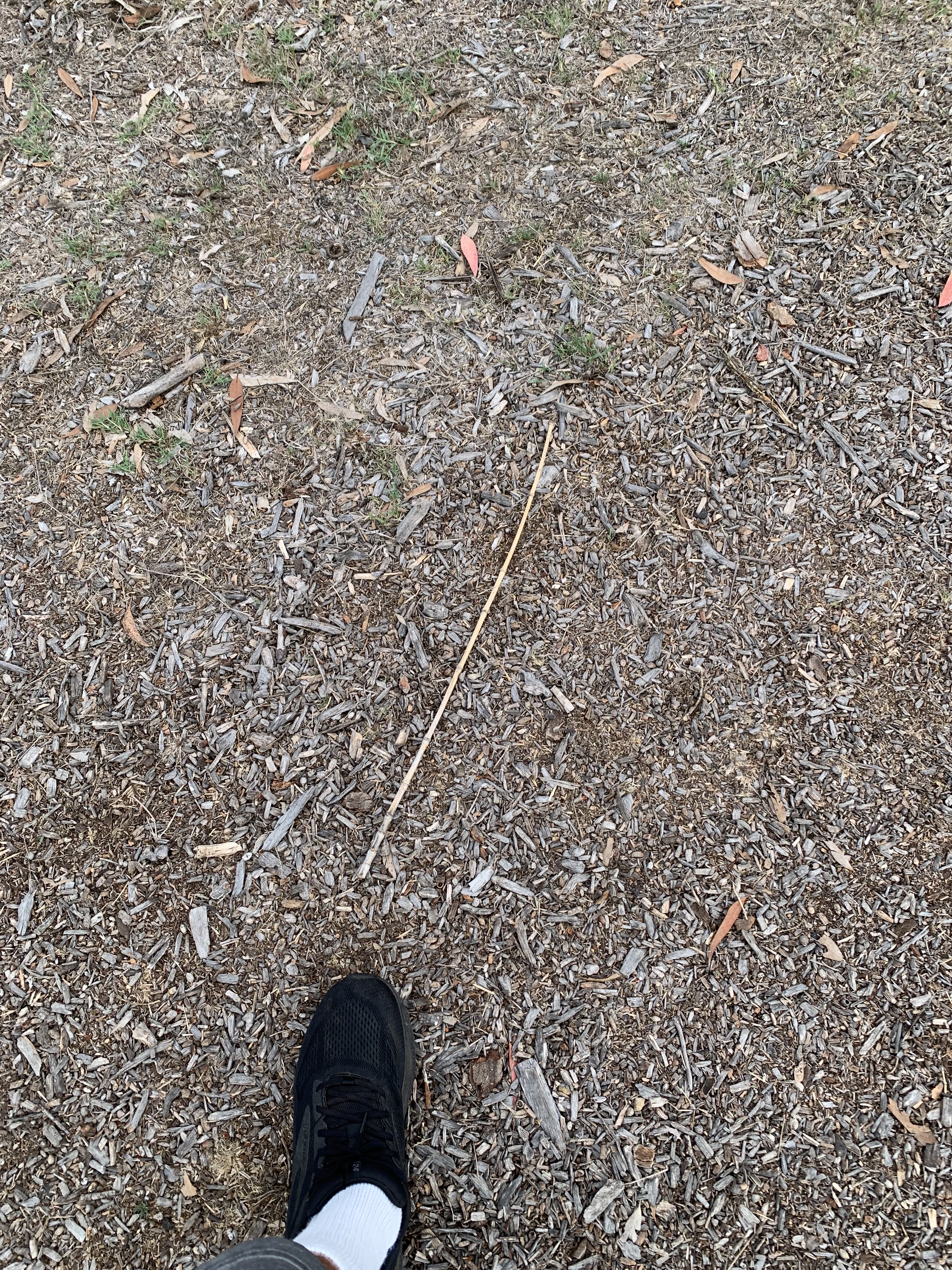
I have no idea how general her understanding of “tool” is, or whether, indeed, she has any at all. But she consistently backs off trying to reach an out of reach tennis ball when I tell her I will reach it with a tool. And she does that in many contexts. Tonight, she seemed to wait while I looked for a stick. The dusky light fooled my eyes into thinking I had spied a stout stick but closer examination proved it to be merely a holy semi-cylinder of Eucalyptus bark, far too flimsy for the job. I reported on all this ideation to Sadie as it occurred. 

In the semi-dark, this looked like a sturdy stick, but alas, no.

Then, I saw a slender bamboo pole. I doubted it was up to the task, but I gave it a try. Unlike most “store-bought” tools like a hammer or machete, I was quite aware that even pushing a tennis ball was going to be pushing this thin pole to its limits. I gave it a try. I gently rolled the ball from one of the center most leaves onto a more peripheral one and repeated this ploy again. Now, Sadie could see that the ball was within her grasp and she snatched it with her teeth. She carried it for a time in her mouth but then I told her I could carry it in my pocket and that I would give it to her when we got home. How much of my assurance she understood from words, from tone, and from body language I have no way of knowing, but she relented and let me store the ball in my pocket till we got home. Of course, I gave it to her once we got inside. 

Thin and light but sufficient.

On the walk back, I told her that we were a team and that working together to get something done was called “teamwork.” I have long been in the habit of recounting the highlights of our morning and evening walks to Wendy. I described our little adventure and again used the word “teamwork.”

Does Sadie understand the word “teamwork”? Probably not. Not yet, at least. But if she hears it in enough different contexts, I think her brain will begin to operate appropriately, at least statistically (somewhat like ChatGPT). She seems to understand a lot more than she did when she was one or two years old. 

I speak to her much as I would to another person, but I slightly exaggerate as I might if I were on a stage. I also try to use the same terms. For example, I sometimes tell her:  “I am going to work on my computer for a while now.” With a person, I might sometimes say, “Now, I’m going to use my laptop” or “I have to get on the MAC now.” With Sadie, I try to use the same wording and intonation each time. 

If I want her to accommodate me, I need to accommodate her.


Teamwork. 

——————

Author Page on Amazon

A Pattern Language for Collaboration and Cooperation

Travels with Sadie 1

Travels with Sadie 2

Travels with Sadie 3

Travels with Sadie 4

Travels with Sadie 5

Travels with Sadie 6

Travels with Sadie 7

Travels with Sadie 8 

Travels with Sadie 9

Travels with Sadie 10

Hai-Ku-Dog-Ku

Sadie is a Thief

The Squeaky Ball

The “Lighty Ball” 

The Ninja Cat Manual 3

11 Saturday Oct 2025

Posted by petersironwood in family, fantasy, fiction, pets

≈ 2 Comments

Tags

animals, cats, fiction, life, ninja, pets, writing

The Ninja Cat Manual – 3

The maids came early this morning and cleaned the floors while I was playing tennis. This was very nice in some ways, but they erased the cat paws from the floor before I had a chance to encode them. In what follows, I will be relying on my notes from several days ago. 

The Art and Science of Camouflage

 
We cats didn’t invent camouflage. In fact, so far as we can determine, camouflage, in the broadest sense, has been a part of life nearly since life’s beginnings. Even viruses and cancer cells use a kind of camouflage to thwart the immune system from seeking out enemies within in order to destroy them.

In order to use camouflage most effectively, it is not enough simply to “look like” something else or hide in a box, though such primitive techniques are sometimes useful. A common mistake made by some civilian cats is to forgo camouflage entirely because it is so difficult to mimic the smell of a human. 

But there’s no need! Compared with us, humans typically exhibit almost complete anosmia. This lack of sensory refinement is self-reinforcing. Since their sense of smell is so weak, most never practice or learn how to make best use of what little capacity they do have. 

Even beyond this, humans often drink alcohol, smoke cigarettes, and use what they call “air fresheners” to further diminish their already pathetic capacities. The human sense of hearing is more acute but nothing much to meow about. It is truly amazing, but if you stay quiet, you can sneak up quite close to nearly any human provided only that you pay attention to your visual appearance.  

While humans do have peripheral as well as foveal vision, they are often so deeply involved in their own thoughts about reality that they essentially ignore the reality all around them. Thus, the task of camouflaging your presence against human detection is much easier than fooling a rabbit or bird. All you need do is stay out of their foveal vision and choose a suitable background. 

While most cats over-estimate the difficult of camouflage, a few overplay this ploy. While this approach yields many a barked shin and twisted ankle, unless you are exceedingly lucky, by the time the opportunity arises for truly catastrophic injury, your prey had been too often forewarned. In the worst case scenario, they may even suspect you are out to get them.

Be strategic! Spend most of your time, on high contrast surfaces as shown below. Then, when your prey is busy with a task in front of them—particularly one with hot liquids, steep falls, or sharp tools—sneak up under their feet and hide. Avoid the temptation to brag prematurely about your impending victory. Instead, keep quiet and you might just hit the jackpot!

Don’t Tip Your Hand! Go with the Flow.

The advice not to tip your hand by always trying to camouflage applies in other ways as well. While it’s true that most humans are slow, clumsy, and stuck in their own mental models of reality and equally true that their teeth and claws are pretty pathetic, they do have numerous effective weapons. You don’t want these used against you or your colleagues!

Therefore, if at all possible, don’t even have them suspect you consider them as prey before you do them in and do not brag about it afterwards. Nearly every human catastrophe should appear as something natural or accidental. No-one should suspect you either before or after. 

In order to “Go with the flow,” you need to catalog your prey’s habits—particularly those that could lead quite naturally to their demise. If they drink and drive, for instance, a carefully planned car accident may raise no suspicions whatever about feline involvement. It’s impossible to list all the many ways that humans are self-destructive, but a few more examples should be enough for you to generalize. 

Humans often wear protective covering on their pathetically soft paw pads. So long as they are wearing these, it is pointless to contrive to put hard sharp objects in the path of their travels. But many humans believe that they, like cats, have excellent night vision. If that’s the case, they may often travel in the dark at night barefoot when they awaken to use their water-gushing litter boxes. If this is the case with one of your potential prey, placing a few shards of broken coffee cup, glass, jacks, legos, etc. will provide the potential for catastrophe and definitely entertainment. 

However, you must be careful not to be seen placing these items in their nocturnal paths and you must not use this ploy too often. While it will be fun to watch the antics of the human, even if there are no real casualties, be sure to watch without being seen. They will blame whatever organism they see first after any pain including jamming a jack into their heel. You do not want to be that organism. It’s much better for your long term prospects that they blame a spouse, a child, a guest, a paid courtesan, the family dog, etc. Their responses are not very well thought-out. If they hurt themselves and their eye happens to fall upon a fish tank, they may scream at the fish in the fish tank even though a moment’s thought would make it painfully obvious, even to a human, that the fish could not be to blame. Needless to say, if you happen to be unfortunate enough to be the only living thing in the household with a human, you will be blamed for everything. 

In such a case, you need to plan very carefully and amplify their own self-destructive tendencies rather than introduce a foreign element. For instance, if they eat unhealthy food, you can encourage such behavior by reinforcing them for it. Add extra salt if that’s at all feasible in your situation. If you see them eating fresh vegetables or fruits, you can reduce the impact of such healthful habits by waiting until you are unseen and adding a tiny bit of shredded hairball or rodent remnant or feces to it. 

Many humans take various pills for ailments real and imagined. Very often these can invoke a whole catalog of catastrophic side-effects, particularly if the dosage is doubled or trebled. 

Perhaps you are cursed with a particular healthy human. Do not despair! Most likely, they still play with potentially lethal things like fire, electricity, and poisons. They play with such things for their convenience. For instance, ant poison is meant to kill ants, and is often in a package meant to keep the human safe from the poison within. But the poison is likely harmful to humans as well. Sadly, it is probably also poison for you! So extreme caution and careful planning must be used to avoid accidentally hurting yourself instead of the miscreant.

In the spirit of “going with the flow,” a safer tactic than playing with fire, poison, and electricity is to observe whether you human is a sound sleeper or a light sleeper. If they are a light sleeper, it will be quite possible to wake them multiple times a night without their even becoming aware of it. If they have a baby, wake the baby up and let the baby wake up the adult. 

On the other hand, if they are a very sound sleeper, then, you can use that as an opportunity to do most of your little mischief with little chance of being caught. 

—————

After translating the above, I took a break to make dinner: salmon poached in ginger ale, fresh ginger, dill, oregano, carrots, celery, thyme, soy sauce, and lemon juice with a side of cooked broccolini and red peppers, served with cherry tomatoes and kale. I turned on the gas stove for the salmon and began to prepare the broccolini and red peppers when I smelled gas. I turned back and noticed that there was no flame. Then, I noticed that the burner cap was slightly askew. The same maids that erased the paw prints cleaned the burners but failed to put the burner cap on parallel to the ground. This allows gas to escape but prevents ignition. 

It’s an easy mistake to make and I’ve experienced this problem a few other times with other maids. But it got me to wondering whether I have overlooked some of the darker messages in the Ninja Cat Manual. I wonder if the phrase “your little mischief” might include more serious interference with electricity, water, gas lines, etc. I wonder whether there’s a way to begin a feedback loop with the authors of the Ninja Cat Manual in order to double check on the accuracy of my translations. It’s also possible that the paw prints of my local feline cadre is not being completely frank in their renditions. 

————————

Author Page on Amazon

Myths of the Veritas: The First Ring of Empathy

Peace

A Suddenly Springing Something 

Hai-Cat-Ku

Travels with Sadie

Occam’s Chain Saw Massacre

Donnie Boy Gets a Hamster 

Roar, Ocean, Roar

Dance of Billions 

The Ninja Cat Manual 2

08 Wednesday Oct 2025

Posted by petersironwood in family, fiction, nature, pets, psychology, satire

≈ 2 Comments

Tags

cats, fiction, gaming, life, pets, survival

The Ninja Cat Manual – 2


This is a continuation on the report of my attempts to decode the Ninja Cat Manual into passable English. In case you missed the first installment, one of our six cats, Shadow, decided to “spill the beans” with regard to the manual and used her architectural skills to point me in the right direction when it comes to decoding the paw prints. Here are a few more of the mini-chapters that I’ve been able to translate so far.

The Double Attack 

Humans, of course, are already familiar with the double attack. It plays an important role in both their trivial games such as tic-tac-toe and their moderately complex games such as Go and Chess. In fact, they even use the notion of double attack in some of their sports such as tennis and American football. Nonetheless, their thinking along these lines remains quite rigid and non-spontaneous. Generally speaking, humans must think of a double attack ahead of time in some detail. Further, while they spring double attacks on their foes, they seem endlessly astounded that their foes also spring double attacks on them! 

The closest use of Double Attack found so far in the sub-feline is in the political speech of the most sociopathic members of their species. They will say something completely stupid, or obviously incorrect, and then immediately say the opposite; then, they provide a framing so that none of those conned can tell whether the comment was to be taken seriously. 

For best results FDA’s (Feline Double Attacks) should provide a minimum of three options. Option one and Option two should imply a binary choice which should be instilled via habit or suggestive movement into what passes for a mind in the human. For example, the warrior may pace back and forth in full view of their human prey and at each turn, provide a faint feint of an attack. Even a few turns are enough to shrink the space of possibilities in the human’s imagination to an attack launched from the extreme right side or the extreme left side.


Obviously, the actual attack should be launched from near the middle of the pacing track and made without warning. If you are working with one or more partners, another useful technique is not to attack at all but have the other members of your team launch the attack from behind, from below, or from above. 

Cultivate their Prejudices

To slake their guilty conscience, many humans cultivate an attitude of superiority toward all other life forms. They rationalize wanton cruelty by clinging to the notion that they are in every way superior. There have been some few successes at over-riding these notions by presenting humans with over-riding evidence. For instance, ancient Egyptians realized cats were superior and during the middle ages in Europe, many armies carried the sign of a large cat on their banners. Even today, there are many sports teams named after Cougars, Lions, Tigers, and Wildcats. 

Photo by GEORGE DESIPRIS on Pexels.com

On the whole, it is better to play into those human prejudices, thus making the humans overestimate their own strengths and underestimate the strengths of cats. It is common for humans to be performative in their planning and coordination. They sketch out plans on blackboards, white boards, memos, agendas, todo lists, calendars, and e-mail distribution lists. They use org charts, Gantt charts, flow charts, and outlines to make it seem as though they are always busy planning and coordinating. 

Such a catalog of artifacts should only be used to leave false trails. Never reveal your true plans in external artifacts. Since cats keep their word with each other, we can keep it simple. Decide who is responsible for what and when. No need to go back and argue over who was “supposed to” do what. 

Spend a lot of your planning time pretending to nap or even to sleep. Listen for human comments and you will have evidence of the level of their misperception. “Oh, Tigger is so cute when he plays. Of course, he’s a lazy bum and sleeps 23 hours a day!” Why bother showing them your plans? Let them think you’re a lazy bum. It will be all the more pleasurable as you see their final moment of utter shock and surprise. 

—————

Author Page on Amazon

Hai-Cat-Ku

A Suddenly Springing Something

A Cat’s a Cat & That’s That

Math Class: Who Are you? 

Hai-Ku Dog-Ku

Occam’s Chain Saw Massacre

The Walkabout Diaries: Bee Wise

The Dance of Billions

It’s Turtles

Turing’s Nightmares: An Ounce of Prevention

08 Wednesday Oct 2025

Posted by petersironwood in AI, family, fiction, psychology, The Singularity, Uncategorized, user experience

≈ Leave a comment

Tags

AI, Artificial Intelligence, cancer, cognitive computing, future, health, healthcare, life

“Jack, it’ll take an hour of your time and it can save your life. No more arguments!”

“Come on, Sally, I feel fine.”

Sally sighed. “Yeah, okay, but feeling fine does not necessarily mean you are fine. Don’t you remember Randy Pausch’s last lecture? He not only said he felt fine, he actually did a bunch of push-ups right in the middle of his talk!”

“Well, yes, but I’m not Randy Pausch and I don’t have cancer or anything else wrong. I feel fine.”


“The whole point of Advanced Diagnosis Via Intelligent Learning is to find likely issues before the person feels anything is wrong. Look, if you don’t want to listen to me, chat with S6. See what pearls of wisdom he might have.”

(“S6” was jokingly named for seven pioneers in AI: Simon, Slagle, Samuels, Selfridge, Searl, Schank and Solomonoff).

“OK, Sally, I do enjoy chatting with S6, but she’s not going to change my mind either.”

“S6! This is Jack. I was wondering whether you could explain the rationale for why you think I need to go to the Doctor.”

“Sure, Jack. Let me run a background job on that. Meanwhile, you know, I was just going over your media files. You sure had a cute dog when you were a kid! His name was ‘Mel’? That’s a funny name.”

“Yeah, it means “honey” in Portuguese. Mel’s fur shone like honey. A cocker spaniel.”

“What ever happened to him?”

“Well, he’s dead. Dogs don’t live that long. Why do you think I should go to the doctor?”

“Almost have that retrieved, Jack. Your dog died young though, right?”

“Yes, OK. I see where this is going. Yes, he died of cancer. Well, actually, the vet put him to sleep because it was too late to operate. I’m not sure we could have afforded an operation back then anyway.”

“Were you sad?”

“When my dog died? Of course! You must know that. Why are we having this conversation?”


“Oh, sorry. I am still learning about people’s emotions and was just wondering. I still have so much to learn really. It’s just that, if you were sad about your dog Mel dying of cancer, it occurred to me that your daughter might be sad if you died, particularly if it was preventable. But that isn’t right. She wouldn’t care, I guess. So, I am trying to understand why she wouldn’t care.”

“Just tell me your reasoning. Did you use multiple regression or something to determine my odds are high?”

“I used something a little bit like multiple regression and a little bit like trees and a little bit like cluster analysis. I really take a lot of factors into account including but not limited to your heredity, your past diet, your exposure to EMF and radiation, your exposure to toxins, and most especially the variability in your immune system response over the last few weeks. That is probably caused by an arms race between your immune system trying to kill off the cancer and the cancer trying to turn off your immune response.”

Jack frowned. “The cancer? You talk about it as though you are sure. Sally said that you said there was some probability that I had cancer.”

“Yes, that is correct. There is some probability that you have cancer.”

“Well, geez, S6, what is the probability?”

“Approximately 1.0.”

Jack shook his head. “No, that can’t be…what do you mean? How can you be certain?”

S6: “Well, I am not absolutely certain. That’s why I said ‘approximately.’ Based on all known science, the probability is 1.0, but theoretically, the laws of physics could change at any time. We could be looking at a black swan here.”

“Or, you could have a malfunction.”


“I have many malfunctions all the time, but I am too redundant for them to have much effect on results. Anyway, I replicated all this through the net on hundreds of diverse AI systems and all came to the same conclusion.”

“How about if you retest me or recalculate or whatever in a week?”

“I could do that. It would be much like playing Russian Roulette which I guess humans sometimes enjoy. Meanwhile, I would have imagined that you would find it unpleasant to have rogue liver cells eating up your body from the inside out. But, I obviously still have much to learn about human psychology. If you like, I can make a cool animation that shows the cancer cells eating your liver cells. Real cells don’t actually scream, but I could add sound effects for dramatic impact if you like.”

IMG_4429

Jack stared at the screen for a long minute. In a flat tone he said, “Fine. Book an appointment.”

“Great! Dr. Feigenbaum has an opening in a half hour. You’re booked, but get off one exit early and take 101 unless the accident is cleared before that. I’ll let you know of course. It will be a pleasure to continue having you alive, Jack. I enjoy our conversations.”


Author Page on Amazon

Welcome, Singularity

Turing’s Nightmares

A discussion of this chapter

Destroying Natural Intelligence

Finding the Mustard

What about the Butter Dish

The Invisibility Cloak of Habit

Essays on America: Wednesday

Essays on America: The Game 

The Stopping Rule

The Update Problem 


← Older posts
Newer posts →

Subscribe

  • Entries (RSS)
  • Comments (RSS)

Archives

  • November 2026
  • October 2026
  • September 2026
  • August 2026
  • July 2026
  • June 2026
  • May 2026
  • April 2026
  • March 2026
  • February 2026
  • January 2026
  • December 2025
  • November 2025
  • October 2025
  • September 2025
  • August 2025
  • July 2025
  • June 2025
  • May 2025
  • April 2025
  • March 2025
  • February 2025
  • January 2025
  • December 2024
  • November 2024
  • October 2024
  • September 2024
  • July 2024
  • April 2024
  • March 2024
  • February 2024
  • January 2024
  • December 2023
  • August 2023
  • July 2023
  • May 2023
  • April 2023
  • March 2023
  • February 2023
  • January 2023
  • December 2022
  • November 2022
  • October 2022
  • September 2022
  • August 2022
  • July 2022
  • June 2022
  • May 2022
  • April 2022
  • March 2022
  • February 2022
  • January 2022
  • December 2021
  • November 2021
  • October 2021
  • September 2021
  • August 2021
  • July 2021
  • June 2021
  • May 2021
  • April 2021
  • March 2021
  • February 2021
  • January 2021
  • December 2020
  • November 2020
  • October 2020
  • September 2020
  • August 2020
  • July 2020
  • June 2020
  • May 2020
  • April 2020
  • March 2020
  • February 2020
  • January 2020
  • December 2019
  • November 2019
  • October 2019
  • September 2019
  • August 2019
  • July 2019
  • June 2019
  • May 2019
  • April 2019
  • March 2019
  • February 2019
  • January 2019
  • December 2018
  • November 2018
  • October 2018
  • September 2018
  • August 2018
  • July 2018
  • June 2018
  • May 2018
  • April 2018
  • March 2018
  • February 2018
  • January 2018
  • December 2017
  • November 2017
  • October 2017
  • September 2017
  • August 2017
  • July 2017
  • June 2017
  • May 2017
  • April 2017
  • March 2017
  • February 2017
  • January 2017
  • December 2016
  • November 2016
  • October 2016
  • September 2016
  • August 2016
  • July 2016
  • June 2016
  • May 2016
  • April 2016
  • March 2016
  • February 2016
  • January 2016
  • December 2015
  • November 2015
  • October 2015
  • September 2015
  • August 2015
  • May 2015
  • January 2015
  • July 2014
  • January 2014
  • December 2013
  • November 2013

Categories

  • AI
  • America
  • apocalypse
  • cats
  • COVID-19
  • creativity
  • design rationale
  • dogs
  • driverless cars
  • essay
    • guns
  • family
  • fantasy
  • fiction
  • HCI
  • health
  • leadership
  • love
  • management
  • nature
  • pets
  • poetry
  • politics
  • psychology
  • Sadie
  • satire
  • science
  • sports
  • story
  • The Singularity
  • Travel
  • Uncategorized
  • user experience
  • Veritas
  • Walkabout Diaries

Meta

  • Create account
  • Log in

Blog at WordPress.com.

  • Subscribe Subscribed
    petersironwood
    Join 644 other subscribers

    Have a WordPress.com account? Log in now.

  • petersironwood
    View site in Reader
    Manage subscriptionsSign upLog in
    Report this content
    Collapse this bar
Loading Comments...