• About PeterSIronwood

petersironwood

~ Finding, formulating and solving life's frustrations.

petersironwood

Tag Archives: ecology

Blood-Red Blood

24 Sunday May 2020

Posted by petersironwood in America, apocalypse, poetry, politics, psychology, Uncategorized

≈ 12 Comments

Tags

ecology, environment, green, life, love, peace, poem, poetry, war

IMG_2261

Those tortured in the name of Our Dear God,
Racked, burned or sawed, bleed blood-red blood.

Sailing to Freedom, they slaughter
Their trusting brothers with reddish skin
And all their blood is blood-red, blood-red.

The black skin of slaves under the lash
Bleeding the blood-red blood.
Soldiers North in marching blue,
Soldiers South in riding gray,
Bleed their blood-red blood.

person s hands covered with blood

Photo by NEOSiAM 2020 on Pexels.com

The white skin of soldiers entrenched
Breathing the deadly golden mustard gas,
Coughing their lungs, their blood-red blood,
Coughing on their uniforms of blue or gold.

The Cambodian Killing Fields flow bright
With blood-red blood spurting from under yellow skin.

Genocide in Tamil —
Drunken driving in Toledo —
Bombs in Northern Ireland —
Whether the children wear green
Or orange, blood-red is their blood.

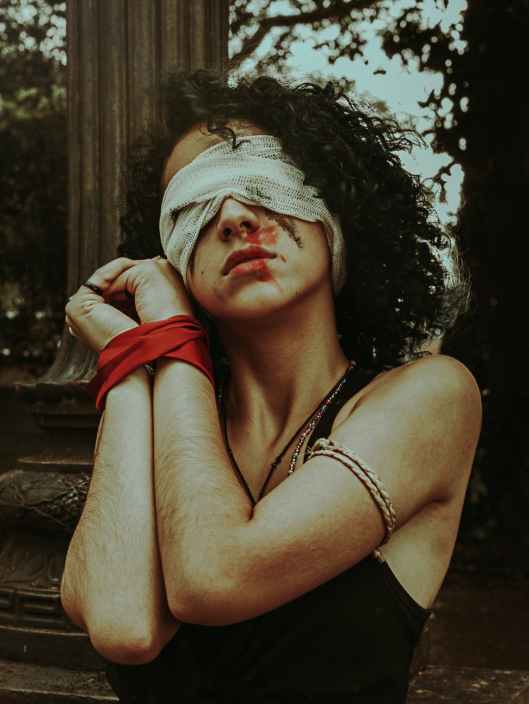
woman in black tank top blindfolded

Photo by Thuanny Gantuss on Pexels.com

Only that is clear. Blood is blood.
That, and the tears.
The tears are clear.
But what of hearts and thoughts?

In Flanders Field, so they say,
The poppies grow, red-blood red.
We know where hatred grows —
The fields of greed and fear.
But where on this green earth
Is there a space for love to grow;
For that magic drop of clearly know
That can save so many seas of blood?

B852E891-61E2-4C98-B440-C9718033FE6A

Waterloo and Gettysburg
We can quickly find on a map.
Battlefields, Killing Fields,
Killing Camps, Hiroshima —
These we can pinpoint oh so easily.

Harder to see are the loving fields.
They lay only hidden deep within
That uncharted country of our own hearts.

E9221FE8-778C-469A-98F6-46CD644477BF_1_201_a

I have a question for you.
I have a question for me.
Haven’t we shed enough of each other’s blood?
Are we really still surprised to see
Our enemy bleeds blood-red blood
Just like you and me?
Can we find something else to do now?
Some new game to play?
Are you not bored, like me,
With shoot and burn and slay?
How about a game that does not end in bloody red?
How about a game that ends in green, say?
How about working together to re-make Eden?
Let us make the woods and fields green again
Like a sparkling miracle of loving creation.
I think that might be more fun.
I am getting sick and tired of blood and red and dead.
How about you?

cascade creek environment fern

Photo by Pixabay on Pexels.com

Want to play for green instead?

3FC757BE-A645-4C45-B75F-BD101D6225AC_1_105_c


America

Essays on America: Wednesday

The Pandemic Anti-Academic

The Impossible

The Truth Train

Sunless Sunday of Faith

Author Page on Amazon

You gave me no fangs

23 Saturday May 2020

Posted by petersironwood in America, apocalypse, poetry, psychology, Uncategorized

≈ 8 Comments

Tags

earth, ecology, greed, humanity, life, poem, poetry, sustainabilty

wildlife photography of tiger

Photo by Sayantan Kundu on Pexels.com

You gave me no fangs.

You gave me no wings.

You gave me no claws.

Just a bag full of flaws,

And leftover things.

photo of boy in black and red collared shirt

Photo by Mike Sangma on Pexels.com

You favored my brothers;

You favored the others,

Left me only these brains

To fend off the beasts

And fend off the rains.

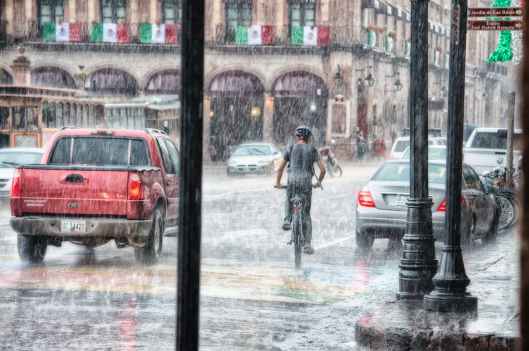
person riding a bicycle during rainy day

Photo by Genaro Servu00edn on Pexels.com

Cainly, I search and destroy

All my brothers and sisters alike.

With an efficient surgical strike;

Pop them to bits like a bustable toy.

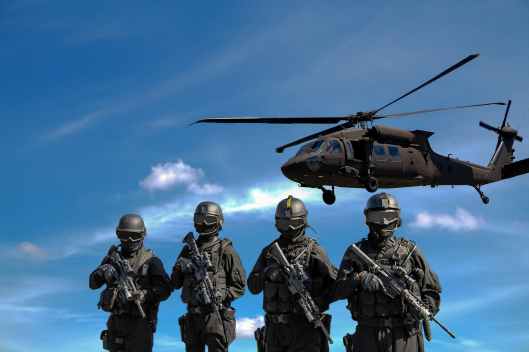
police army commando special task force

Photo by Somchai Kongkamsri on Pexels.com

I chew off my paw,

But see if I care.

It’s the Law, the Law,

Though my cupboard grows bare.

abstract blue clean container

Photo by jamie he on Pexels.com

I foul my teeny, self-built cage,

But I don’t know & I don’t care.

I’m all in, in a self-imposed rage,

And nowise will dare to learn to share.

baby child close up crying

Photo by Pixabay on Pexels.com

Unbalanced and crazed, my genius so stable

I comfort myself with a reckless fable:

That Father will Save me, Save me at last

If I destroy it all in a nuclear blast.

680174EA-5910-4F9B-8C75-C15B3136FB06_1_105_c

You seem so bewildered and oh, so amazed,

That I’m so unfit; so  roundly unstable,

Yet, I’m the one whom you ceaselessly hazed

Then pushed away me from the well-stocked table.

cooked pie

Photo by kelvin carris on Pexels.com

Mother, you made me; you made me this way.

Stay and play for the final slay.

I’m loonery toonery sure as I’m shootin’!

Lunatic Fringe? You’re damned well tootin’!

woman with face paint with pumpkin

Photo by VisionPic .net on Pexels.com

So here I go with my terminal act.

Self-destructive and as fat as a fact.

We could’ve had earth as an Eden instead

But I guess I’d rather be greedy — and dead.

photography of maple trees

Photo by Johannes Plenio on Pexels.com


Author Page on Amazon

Snowflakes

The Impossible

The Truth Train

The Pandemic Anti-Academic

Myths of the Veritas: Books

26 Sunday Apr 2020

Posted by petersironwood in America, apocalypse, COVID-19, family, health, politics, psychology, Uncategorized, Veritas

≈ 1 Comment

Tags

bullying, Democracy, ecology, empathy, ethics, fiction, greed, harmony, history, leadership, legends, lying, myth, politics, power, science, truth

snow covered mountain under blue sky

Photo by Francesco Ungaro on Pexels.com

Fleet of Foot took a deep breath. The air still held a bit of chill. In this place, the sun had difficulty finding and warming the land. He enjoyed the chill but also enjoyed the warmth when if finally came. He wondered how these Veritas who lived beyond the Twin Peaks regarded him and his companions. 

He realized that, whereas the Veritas who lived near the Forgotten Field of Flowers had had many interactions with a number of different tribes within living memory, the Veritas beyond the Twin Peaks had had only three such “interactions” in memory and all had been disastrous raids where children had been stolen and taken off on horseback before a reasonable defense could be mounted. Of course, they had tried to track down The People Who Steal Children, but such tracks had led to a solid wall of rock that none could penetrate. Others, including the parents of Cat Eyes, Of the Night and Gathers Acorns, had attempted to cross the treacherous melting glaciers. None had returned. 

Fleet of Foot looked over at Cat Eyes who sat in a circle with a dozen of her kin and they pored over some of the mysterious markings. The strange pupils of Cat Eyes had made her immediately recognizable to everyone here except the young children. This had no doubt played a part in their easy acceptance of Cat Eyes though the lucky accident — if that’s what it was — of her fulfilling a prophesy — made what would have been acceptance and rejoicing into something more — something like the reverence that everyone in his own land felt for She Who Saves Many Lives. And yet, Cat Eyes was so much younger. He watched her — she seemed so at home with everyone here. Fleet of Foot remembered his former friends ALT-R and POND MUD. They — or at least ALT-R would have used the good feeling to gain power or wangle extra portions of delicacies. But this was not the nature of Cat Eyes. She got along with everyone of every age. Most of those in the circle were young but everyone was interested in the decoding. 

MythofVeritas-2-1

It was important work in the eyes of these Veritas who lived beyond the Twin Peaks. Even Gentle Talons sat sometimes in the circle learning the keys to understanding the markings and then, taking one of the collections and trying to make sense of it. It was a halting and laborious process. There were so many to decode! Each one was like a precious jewel. Each one sparkled and reflected a new light on what was all about them. Some told of medicines that had been forgotten. Some told of strange mythologies about the earth and the stars and the sky wanderers. Some described impossible creatures, both humorous and terrible; both gigantic and some so small one could not even see them! 

Each day, the Veritas learned something. And each day was pleasant. Yet, each and every day, Fleet of Foot felt a stronger and stronger tug to return to his own home. Trunk of Tree had begun to insist that they return days ago. He felt that they had accomplished their mission and learned much besides. Fleet of Foot looked up and saw that Trunk of Tree strode toward him. Fleet of Foot sighed. For he knew that Trunk of Tree was about to argue, yet again, that they should return with their news to the Center Place of the Veritas. 

“Good morning, Fleet of Foot. See yonder Cat Eyes. She has found her home. That seems clear. What of us? Our home is also beautiful. Let us arrange to go. Leave her here. Let’s get back. We can’t take all those … things … with us!” 

E8FD1B88-3D33-40ED-BA2A-D2715EAC812D

He gestured toward the cliffs where most of these strange boxes of knowledge were still among the many unexplored shelves. Maybe we could take a few. Maybe some of these Veritas will want to accompany us. But we need to get back! We have no idea what Eagle Eyes and Shadow Walker have found. We have no idea whether — even now — our Center Place may be under attack with Killing Sticks. We’re well rested. These Veritas have no Killing Sticks. What use are they? Let’s go.” 

Fleet of Foot sighed. He felt much as Trunk of Tree felt. He worried about the Center Place. Yet, the decoding work seemed very important as well. It was as though — it was a kind of magic. Cat Eyes and those she had taught were discovering things — some ridiculous of course, like the fish with eight arms and a beak who lives in a giant lake or large birds who cannot fly and little bugs so small they cannot be seen but still make people sick. Or the notions about the sky wanderers and the sun. Absurd, but still interesting. 

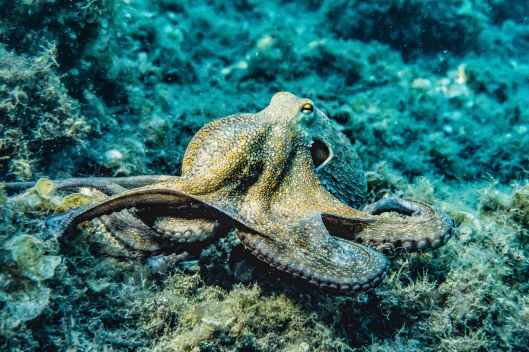
selective focus photography of octopus

Photo by Pia on Pexels.com

Yet other things seemed very useful: medicines, ways to prepare foods, a description of a way to lengthen one’s arm with a stick in order to throw a spear faster and farther. No-one had been successful at actually making such a device though. Perhaps it was also fanciful. Why would
“The Ancients” mix together so many fanciful things with useful information? It’s a mystery. 

Fleet of Foot nodded to Trunk of Tree. “There is much truth in what you say, Trunk of Tree. I too am eager to return. I suppose — I am not entirely convinced that the tunnel will even work. It was too … it seems now more like a dream I had than a reality. Somehow, I too worry about the Center Place. Perhaps most of us should return now. Let’s see how the others feel.” 

“Why? Many Paths made me the leader. I don’t see why you keep thinking I should see how the others feel.” 

Fleet of Foot sighed and looked at Trunk of Tree. “I know you don’t, Trunk of Tree. I have some trouble to explain it. If we all understand how each of us feels, then, when something happens we can work together better. We don’t have to stop in the middle of an emergency and have a discussion when there is no time for a discussion. Each person knows — or at least makes a good guess — about how every other person will react.” 

“If everyone would just follow my orders, we would all know too. Because everyone would follow my orders. If we did that….” Trunk of Tree gestured with his open hands but added no words of clarification.

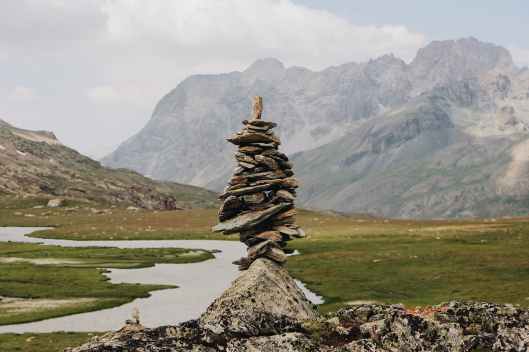
pile of stones

Photo by Mau00ebl BALLAND on Pexels.com

“If we did that we would still be stuck in the tunnel. In fact, if we did that, we wouldn’t have even found the tunnel. Do you really want to decide for others whether they should go or stay? How might you make such a decision without talking with them?” 

“I know it’s important that we go back. We have information that we came to get. And, it may be important. And, you just said you feel the same way. Let’s just go! Come on Fleet of Foot.” 

“I think most will agree with you, but let’s hear their voices. Yes, we have learned some important things, but every day that Cat Eyes works with those — cousins of hers, we learn more about the world that we never knew.” 

“And we learn nonsense as well! What use it is to think about — the other day, I overheard Cat Eyes and her friends talking about a lake that is so large you cannot see across it! What nonsense. And, it tastes like salt. And, it has waves as high as a tree. What use are such ramblings. These things do not exist. I don’t believe any of it when there is so much that…now what?” 

There was commotion around the small circle of cousins. They all seemed to be talking at once. A small crowd was gathering around the circle and adding to the general commotion. As the crowd grew, others began to pause in their tasks and walk over to see what was happening. At last, Gentle Talons came over and used his not inconsiderable voice to quiet the crowd. 

“Please. Please! One at a time. What is all this ado about?” He looked directly at Cat Eyes, somewhat accusingly, somewhat wonderingly. 

closeup photo of book filed on shelf

Photo by John-Mark Smith on Pexels.com

“Oh, Gentle Talons, we have been decoding this book — for that is what they are called — all of them are called “books” — this book is called The Book of Civilizations. And it … it says that all of this — she gestured with both her arms, palms up, to sweep in the entire excavated cave was made by an ancient people…that there have been many great gatherings of people. Such people learned many things and had comfortable lives. And they had many wondrous things. They explored everywhere and learned much.” 

It became clear that Cat Eyes, for some strange reason, was having trouble speaking. She was swallowing hard, holding back tears. 

The booming voice of Gentle Talons rang out, “Please, sister, continue. What? Where are these civilizations?” 

Trunk of Tree and Fleet of Foot had walked over to watch more closely. Fleet of Foot craned his neck and wedged his way forward to look more closely upon the face of Cat Eyes. Tears were rolling down her cheeks. What is going on, he wondered. How can mere … markings on the page cause such pain? Books? She had called them books? But how can they cause tears? He forced his way into the circle and took the hands of Cat Eyes, holding them gently in her own. 

“What is it? What’s wrong, Cat Eyes? Why do these tears flow on your cheeks? What strange magic is in these — books?” 

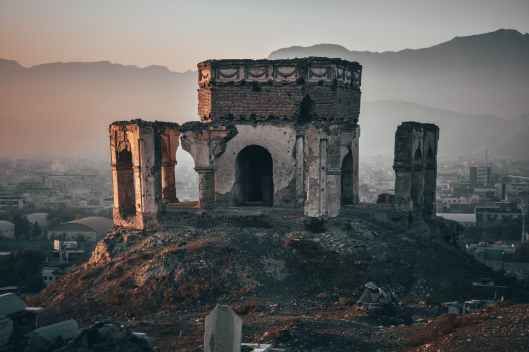
gray concrete building on top of hill

Photo by Suliman Sallehi on Pexels.com

Cat Eyes squeezed the hands of Fleet of Foot and drew strength from them. She took several deep breaths and continued. “This book — this book tells of many wondrous civilizations. They used wisdom and experience much as we ourselves do. They learned from each other. They loved each other. They ensured that they had enough food and yet … each of them … each of these ancient peoples … destroyed themselves. But it’s worse than that. The destroyed themselves through greed and hubris. They sought to … they knew about the Myth of the Orange Man. They knew that lying and greed destroyed other, earlier peoples. And, yet, each time, they stopped … they stopped being kin and part of nature. They knew that greed had killed other civilizations before them.” Cat Eyes shook her head and sighed before continuing on.

“Yet, each new civilization thought — somehow — it would be different for them. Of course, it was not different. Lies and greed and putting power over truth destroyed every single one of them. The story seems so real. But — how can it be? How could people know such greed and lies led to so much death and destruction and yet — they did it over and over again? According to this….” Cat Eyes stopped. She shook her head. She gulped and slowed her breathing.

At last, she was able to continue. “According to this book, there are much worse weapons than Killing Sticks. And they have been used to destroy untold numbers of people. And, after the greedy take everything and kill everyone, they die too! Because — in all their greed, they forgot how to live without stealing from others. And this didn’t happen just once. It’s happened over and over. How can this be? It can’t be true.” 

history ancient peru south america

Photo by Amanda Kerr on Pexels.com

All had heard her words. And all reflected silently upon them. 

After some moments, Cat Eyes continued. “It can’t be true. And yet — I think it is — the book says that after a time, the greedy people begin to believe exactly that — that it cannot be true — and so — they make the same exact mistakes again. And again. And again. It seems impossible and yet…where are they? Where are the people who made these books and these caves? It seems as though they knew all of this — and allowed greed and lies to destroy them anyway! Are we doomed to be that stupid yet again?” 

Cat Eyes bit her lip and looked up at the eyes of each person she could see around her. No-one answered. She ended looking into the eyes of Fleet of Foot. But he too remained silent.

5EA20EE6-6F23-4ACD-8831-58A93737B8F8

——————————————————-

The Myths of the Veritas: The Orange Man

Author Page on Amazon

Essays on America: Wednesday

Essays on America: Rejecting Adulthood

Essays on America: A Lot is not a Little.

The Anti-Academic Pandemic 

The Truth Train

Essays on America: You Bet Your Life

You Must Remember This

19 Sunday Apr 2020

Posted by petersironwood in America, apocalypse, COVID-19, health, poetry, Uncategorized

≈ 24 Comments

Tags

Climate change, COVID19, ecology, environment, greed, life, pandemic, poem, poetry, truth

worms eyeview of green trees

Photo by Felix Mittermeier on Pexels.com

A breeze flutters the leaves of the tulip tree
It seems to me
They wave, they warn,
“Remember us. Remember, that we may come again.
That once again forests of greenery will come to be.”


adventure arid barren coast

Photo by Pixabay on Pexels.com

Under this clear blue sky,
Under this bright yellow sun,
In this verdant surround, I see, nonetheless,
Long lines of grieving skeletons
Wandering the gray-brown dessert
Searching for food, for water,
For the lost way,
The fallen times.
Someone has lost the memo,
Broken the schedule,
Failed the test,
Not met the ROI.

2ED5B35A-54F8-43CB-8534-46D31A07049D_1_105_c


I have drawers of papers,
But what do they mean?
And why are they there?
They seemed so important once.
I have closets of clothes
That no longer fit.
I have machines that would buzz and whirr delightfully
If I could find a place to plug them in.

woman in black jacket sitting on rock formation

Photo by Chase McBride on Pexels.com


And, in these dead days of gray on gray,
I must remember, I must tell,
Though few believe,
“Once there were forests here,
Trunk on trunk of thick tall tree,
Leaf and flower, flower and leaf,
Green, green, under a clear blue sky.
We can make it live again.”

49CBA1E0-13F8-445C-9E9F-00467169FFC5


Now, so the story goes, the Devil tempted us with knowledge
And we were exiled from Eden into this world.
But, really, who is this Devil, anyway, I wonder?
What if, drunk on half-knowledge, we left voluntarily?
Greedy for the shiniest bauble,
The sparkliest stone,
We forgot that sunset on lake,
Icy creeks, and snow-laden trees,
Are more beautiful than jewelry.

time lapse photography of waterfalls during sunset

Photo by Pixabay on Pexels.com

I see them marching, line on line,
Mindlessly miming a pattern, a template,
Aimlessly roaming, but all in formation,
With no information, but under orders, all the same.
The cadence of the stepping,
The drubbling of the drums,
Makes it all seem okay somehow
As row on endless row,
Over the cliff they go.
Blind are they to the leaves of the tulip trees, still green,
Waving their warning; warning with their waving,
Bending, sighing, singing, in the breeze:
“Remember such as these,
When there are no more trees.
Remember such as these,
After the fire and the freeze.”

A6253369-6ABE-4B57-884E-BEFF53F7F505

Author Page on Amazon

Index to a Pattern Language on Cooperation and Teamwork. 

Myths of the Veritas – Explorations of Leadership, Empathy, & Ethics in times of crisis. 

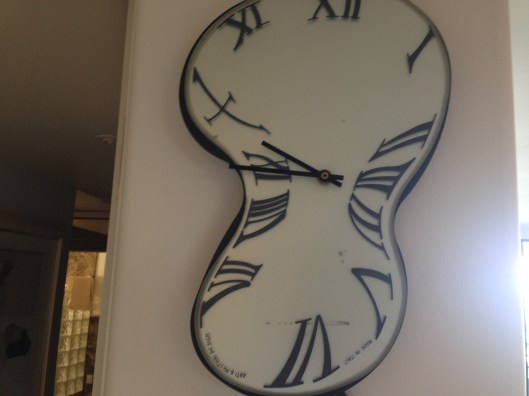
Wristwatch

23 Monday Mar 2020

Posted by petersironwood in America, apocalypse, COVID-19, poetry, politics, Uncategorized

≈ 4 Comments

Tags

celerity, ecology, environment, life, mindfulness, poem, poetry, politics, time, truth, virus

2ED5B35A-54F8-43CB-8534-46D31A07049D_1_105_c

What is this?

A gift. 

A wristband watch.

How convenient.

For someone.

For me?

I wonder…

It’s a kind of a band

(A bit like a slave band)

A bit of a rift,

Between me and me

men s suit and accessories

Photo by malcolm garret on Pexels.com

If you see; 

Get my drift.

It’s kind of sand

In my shoe

Keeping me from other things

And it rings

In my ear

That a land

Where all that stands

Is the least pernicious example

Is but a silly sweet example

Of things to come.

“Hurry to the hippodrome!

Never mind the cost.”

Never mind what’s lost

Never mind what land

We conquer to expand

The land that … sorry….

Didn’t mean to mention that…

The land of the free…

I hope that is an okay phrase,

An acceptable phrase.

Because the thing that worries me

Is not forty-five per se, 

Oh, 

No.  

I know.

No.

What bothers me is this:

That a part of me says, “hiss”

On cue.

And then I say “Boo!”

And either way, 

It’s Putin’s day. 

men in black and red cade hats and military uniform

Photo by Pixabay on Pexels.com

Oh, yes.  We are quite the quintessential conquestadoro.

Les hommes mucho macho

Let’s salsify the nacho

Let’s wolf down some state or other.

Sorry, meant to say steak or other…

1DCFDDF6-6B3F-434F-97F5-4C6C090667DC 

Slyly, slyly, you may perceive

That I, 

Much like our current reality,

Make no sense.  

680174EA-5910-4F9B-8C75-C15B3136FB06_1_105_c

Granted, 

But I have no pretensions of being

Chiseled into Mount Rushtoomuchmore

Just because I gave away 

The U S A 

To those who hanker-danker for oil.

“Oil.”

Isn’t that a lovely word?

I like the sound.

Silky, deep, and dark. 

gray industrial machine during golden hour

Photo by Pixabay on Pexels.com

“Oil.”

I love the stuff. 

Titusville, Pennsylvania as I recall

Was the happening place to be.

Nearly, West Virginia and Ohio 

Came to blows over it.

But we got over it.

Clear over the rainbow.

All the way to where the sun don’t shine

To where instead monkeyshines

Rule the day,

And check 

And slay.

Say! 

My watch alarm now is screaming: 

woman holding burning newspaper

Photo by Jhefferson Santos on Pexels.com

“Way past time to play! 

All hands on deck! 

You’re making a wreck

Of every day! 

Your addictive greed

Grew a wicked weed!

Thoughts flash between sulcus and gyrus

Showing us how to beat the virus,

We must hunker down and work as one

For just this once until it’s done.

Then, we go and green this globe 

Let’s use once more that frontal lobe!”

IMG_3071


———————————————-

Author Page on Amazon

Start of the First Book of The Myths of the Veritas

Start of the Second Book of the Myths of the Veritas

Table of Contents for the Second Book of the Veritas

Table of Contents for Essays on America 

Index for a Pattern Language for Teamwork and Collaboration  


Peace

07 Saturday Mar 2020

Posted by petersironwood in America, poetry, politics, psychology, Uncategorized

≈ 26 Comments

Tags

ecology, environment, green, life, love, peace, poem, poetry, truth, war

IMG_3071


All the guns are silent now;
Landmines, all defused, exhumed.
Warships, mothballed; warplanes, scuttled;
Missiles, bombs, and tanks, entombed. 

Across the world, hands are held
And faces face the clearing sky
In silent prayer, in wonderment.
No-one quite remembers why 

It once seemed great to shoot to kill.
No-one gets that deadly thrill.
No-one cares to take that hill.
No-one wishes others ill. 

7551D277-6606-4C1B-9E06-5E4E44C81A64
A13D392E-DFD8-47ED-9D4C-5C3F3E6318CF

Instead, the people turn their mind
Inside to see what they can find
Of ignorance within their skin
And mine their souls to conquer sin. 

No-one throws the stones at others;
Hands are used to help instead;
Someone speaks and someone listens;
Around the world, each kid is fed. 

6ED86DEA-F6EC-4482-827F-8275A931F7F0
IMG_2261

Slowly now we heal the earth;
Slowly now we heal our soul;
Surely now we tend our hearth;
Finally now we have a goal 

Worthy of humanity:
Not to overcome each other —
We work together to save our Mother,
And never wake those Dogs of War. 

IMG_9137

Author Page on Amazon

Start of the First Book of The Myths of the Veritas

Start of the Second Book of the Myths of the Veritas

Table of Contents for the Second Book of the Veritas

Table of Contents for Essays on America 

Index for a Pattern Language for Teamwork and Collaboration  

Essay on Peace, War, and Greed.

Myths of the Veritas: The Prophesy Dream of She-Who-Saves-Many-Lives

27 Monday Aug 2018

Posted by petersironwood in apocalypse, family, health, Uncategorized, Veritas

≈ Leave a comment

Tags

celerity, dream, ecology, haste, myth, prophesy, speed, story

The Prophesy Dream of She-Who-Saves-Many-Lives

IMG_9414

She-Who-Saves-Many-Lives wondered how effective the promised dream-catcher of She-of-Many-Paths would prove. Lately, the Shaman’s dreams had been more troubled than usual. In the distance, she could hear the skies rumbling and grumbling in the distance. She could smell the approaching storm; as yet though, no raindrops drummed and not a whisper of wind swayed the nearby oaks. She-Who-Saves-Many-Lives drifted into a fitful dream. 

{Translator’s Note}: Needless (?) to say, the Veritas, like many so-called primitive people took great store in dreams and dream interpretation. Nonetheless, they also realized that the outside conditions influence dreams as the reader is also no doubt aware from their own experience. Therefore, before recounting the contents of a prophetic dream itself, they recorded the physical circumstances and physiological state of the dreamer. 

She-Who-Saves-Many-Lives began her journey in the spirit world walking along one of the broad paths that the many branches of the Veritas used for commerce among themselves. She walked soundlessly along the path, whose dirt had been pounded into hard-baked clay by the elements and the numerous feet, large and small, who had trod, run, shuffled, and plodded along this path. Presently, the Shaman came across a blueberry bush and snatched off a handful, anticipating the rich, sweet, aromatic taste. But there was no taste. She coughed and noticed that her eyes watered. Breath came with difficulty, and the air itself seemed to filled with dust or ash — the worst tasting ash ever. She looked toward distant peaks but they were dim as though the air was no longer air but a thin gray smoke, tinged with yellow. Smoke seemed to grow from leafless, limbless trees.

sky clouds building industry

Photo by Pixabay on Pexels.com

She-Who-Saves-Many-Lives looked down at her feet and was surprised to see that the baked dirt was not yellow-brown dirt. Instead, the path was a dirty silvery gray flecked with tiny pieces of mica. The road was hard under her feet – much harder than usual. She stopped in her tracks. Something was making an odd noise. No, not a noise. It was silence. 

No crow scolded. No robin tweeted and twittered. No unseen tiny feet scurried through the brush. No squirrels chattered in the trees. She-Who-Saves-Many-Lives saw the rock-hard road beneath her feet spread out like a cancer growing ever larger. As the strange and ugly whitish rock spread out in all directions, She-Who-Saves-Many-Lives could see it destroying all in its path: blueberry bushes, oak trees, deer, squirrels. Everything flying fell from the sky. Everything crawling or running found themselves mired in the ever-expanding death rock. Initial silence was replaced by deafening screeching and rumbling. 

IMG_1775

She-Who-Saves-Many-Lives still found herself wanting to run from this terrible thing that ate her world but found herself instead lashed to the spot, unable to move. She called for her tribe but no-one came. Perhaps they could not even hear her over the din. In the distance, at last, she saw other people coming toward her. Like every other adult in the tribe, she knew everyone and could recognize each such person at a distance. But here she saw none that she recognized. As the throng grew closer, she saw that their faces were also white and flecked like the rock itself and their eyes had no light. Each marched as though to a drumbeat that only they could hear. Their faces showed nothing and their mouths all moved constantly but nothing meaningful issued forth. 

As people in such close proximity inevitably do, some few tripped upon each other. A few such blank people fell. Rather than laughing and spreading out more to avoid further tripping, they began fighting and screaming at each other. Each such person blamed other such people and everyone pointed fingers at someone else and screamed. Some such persons now drew forth magic black rocks and pointed not fingers only but also these magic black rocks at each other. Such pointing came with a loud noise such as a moist shale makes in exploding when placed too close to the fire. Such magic pointing caused blood to appear in the person pointed to. Many such people pointed and many such people of white death in so pointing caused others to fall bleeding and screaming. 

IMG_0130

She-Who-Saves-Many-Lives tried to minister to some who were bleeding and screaming. She began to tear off some of the clothing of these people of white death to make tourniquets. The touch of such clothing repulsed her; nonetheless, she persisted. She saw that no-one else helped her with her ministrations. She began to wonder whether these magic black fire rocks would also cause blood to appear if pointed at her. She stood to look about for anyone from among the Veritas who might help her, but all she saw was an endless sea of the people of the white death coming down the broad white road. Now, each had a magic black rock of fire and all pointed at someone else and made blood appear. They no longer waited for someone to trip. They simply seemed to want to cause harm and kill another living human being. 

The Shaman became concerned for her own people and ran to hide in the Lake of Reeds until such time as she could conceive of appropriate action for no such plan could she yet devise. When, she came to the Lake of Reeds, however, there were no reeds at all. The beautiful blue lake had been replaced with one of brown and it was covered with scum. She walked to the edge and touched some of the scum. It was not a plant however as she had sometimes seen. This scum was not of life but of death. It was mainly white or clear. And, when she touched it, it seemed not of this earth but appeared instead to be of the land of death. When she touched it, she felt no connection whatever to life. 

IMG_9924

She-Who-Saves-Many-Lives decided to head back to her own cabin and call a council meeting. She knew a path over the ridge and hoped that the white road of death had not yet killed such path. Suddenly, she was at her cabin door. Sitting in front of the cabin door, laughing, was Fleet-of-Foot wearing a white death-mask. She-Who-Saves-Many-Lives spoke urgently. “Fleet-of-Foot, be true to your name and run quickly to summon the tribe. There is a great plague upon the land and I fear it will kill all things unless we act quickly.”

Fleet-of-Foot just grinned at her, and replied, “Do your own errands, old lady. I am from the future where I am king.”

“King? What is a ‘king’ and do you not hear me? It is urgent that we summon all the people now. There is a giant white rock of death covering all things. I cannot stop it alone.” 

Fleet-of-Foot shook his head. “No, old woman, that is just a better kind of path. It is faster and allows more people to travel. It kills nothing but useless trees, bushes, and animals.” 

“Useless? How can you say trees, bushes and animals are useless? We depend on them for our survival.” She-Who-Saves-Many-Lives now saw that Fleet-of-Foot seemed enclosed in a giant shiny bubble. His voice seemed to have lost its rhythm and music. Indeed, he spoke quickly but without any connection to his own heart. 

IMG_9553

“Listen, Old One,” continued Fleet-of-Foot, “we have better ways to find food now and everything else. We have no more need for animals, bushes, and trees. Everything is done more quickly and efficiently now. Perhaps you do not yet see the wisdom of this new way, but you will. Everyone does eventually. Well, everyone who survives. You see, One-Too-Old-To-Save-Many-Lives, now everyone has only one way of how-to. My way. The way of As-Fast-As-Possible.”

“Fleet-of-Foot, there is some good to that way of how-to, but it must be balanced with other ways. Where are the other candidates?” 

“Not really, One-Too-Old, speed is really all that counts. I killed all the other candidates. Too much trouble. They didn’t seem to realize that my way is the only way. My way of how to has made many weapons as well for fast killing. Such weapons as these end arguments very quickly indeed. And, I have wasted too much time already talking with you.”

At this, Fleet-of-Foot pulled out a magic black killing rock and pointed it at her. 

Before he could use his weapon, a hundred eagles dove from the sky onto every part of Fleet-of-Foot, and tore him apart with their talons. Fleet-of-Foot screamed. 

At this, She-Who-Saves-Many-Lives awoke and realized it was she herself who was screaming. Outside, she could now hear the storm outside bringing life-giving rain and the crack of nearby lighting and the ripping of trees struck by such. The Shaman decided this was a dream that she needed to share. She decided that when the storm had passed, she would call together first the Six-Who-See-With-Animal-Eyes, including Fleet-of-Foot, to see what possible meanings could be gathered and whether such a dark dream should be shared with all of the Veritas. Beyond meanings, however, she wished to amplify her own wisdom about whether such an imbalanced world as the one she had seen could ever truly come to pass. 

fullsizeoutput_2514

Further sleep that night proved impossible, even for one so disciplined as She-Who-Saves-Many-Lives. She turned the problem this way and that in her mind, trying to see if such path of inharmonious blindness could ever be. Could the Veritas, or indeed, any people, come to view speed as so important that they put no value whatever on any other way of how-to? Being in harmony counted for nothing? Making something that lasted for many winters counted for nothing? The pleasure of the making itself counted for nothing?  It seemed unlikely. It was also unlikely that one tree could grow through another. Yet, she had seen such herself and not far from here. But to see trees, bushes, and animals as being without value? To replace such with a huge block of ugly white flat stone? To make a gray white pond scum to cover lakes? To laugh at and mock other ways of knowing? These seemed impossible, not just unlikely. Still it would be good to see whether fresher eyes on the world could see a path to this not-life way of life. Often, she well knew, a perfectly good fruit with a slight crack may become first a home for a few tiny mold plants and soon the entire plant is encrusted with foul-tasting mold. Some few ants could begin chewing on logs and eventually destroy an entire lodging as she herself had pointed out to Pond Mud. Could something like that happen to an entire world? Wouldn’t the people stop such an infestation long before it was too late?

Enlight1


——————-

“Magic Portal” to Other Worlds! 

You Know

02 Monday Oct 2017

Posted by petersironwood in America, family, psychology, story, Uncategorized

≈ 15 Comments

Tags

character, ecology, environment, ethics, Native American, resonsibility, science


David's DreamDeeply


You know perhaps of various versions of the story of the “two wolves” that live within us. I have heard it various ascribed to Native Americans of the Dakota tribe as well as the Cherokees. Basically, a grandfather, or other such wise person tells his grandson that there are two wolves inside him: a good wolf who is kind and generous and a bad wolf who is mean, spiteful and selfish. These wolves are in a constant battle with each other. The grandson asks which wolf will win and the grandfather replies “whichever one you feed.”

http://www.firstpeople.us/FP-Html-Legends/TwoWolves-Cherokee.html

We have probably all seen cartoons in which an angel perches on one shoulder of a cartoon character inspiring them toward good actions and a devil slouching on the other shoulder whispering rationalizations for bad actions. I suspect that variants of this story exist in many cultures. It seems to me that there is more than a speck of truth in it.

I would love to report that I was born without any bad wolves and that I never had such a struggle myself. That, however, would be a lie. To lie about it would be feeding the bad wolf. In fact, I have experienced the bad wolf as well as the good wolf. I also find the that the bad wolf has weakened considerably over my life-time though he is far from completely dead.
IMG_4087

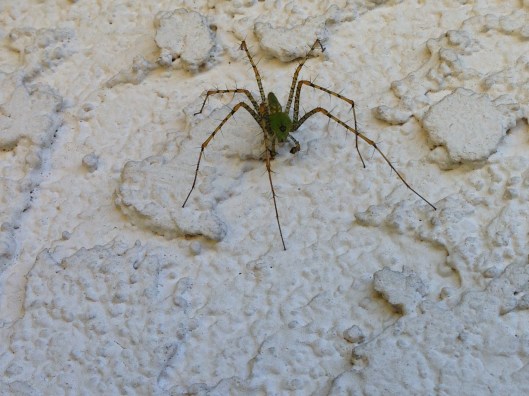
At boy scout camp, for example, when I was about 10 or 11, three of us sat around a campfire, getting ready to make some simple biscuits. So far as I can recall, I have always loved being outdoors and especially in forests, wood, fields, mountainsides. I don’t even recall feeling any conflict whatever about this. I suppose both the “good wolf” and the “bad wolf” must love the outdoors. On the other hand, I don’t love everything about the outdoors equally. Trees, flowers, clouds, streams, deer, rabbits — always my friends. Spiders, ticks, mosquitoes and deer flies — not so much. I never understood why on earth a person would pick a tarantula for a pet, for instance. On the other hand, I realize that most spiders are harmless to humans and even helpful because most of them catch things like mosquitoes that are much more harmful. Your chances of getting a lethal spider bite are nearly non-existent. Even at eleven, I could not really say I “hated” spiders although having one fall unexpectedly onto my body caused me to jump and try frantically to brush it off. I didn’t really care if I killed it in the process.

While we waited for the fire to heat up enough to cook our primitive trail biscuits however, one of my companions found a spider on a stick and placed it on the hot pan atop the grill. He shook the stick until the spider fell onto the hot pan. For a moment, the spider sprung into action, jumping and hopping excitedly. When he made it to the edge of the pan, my pack mate pushed him back to the middle with the stick. The spider didn’t last long after that. He collapsed and died.
IMG_4429

This simple scene did not last long, but it certainly stirred a tornado of emotions inside me. I thought about objecting but didn’t. I really wanted to see what would happen to a spider subjected to that kind of environment. In other words, I was curious. At the same time, I felt a strange kind of gratitude that the spider was on the hot grill and not me. I had already gotten a rather nasty burn so I knew that burns were horrifically painful. I felt a kinship to the other two guys in this. We were humans after all, and therefore more powerful and clever than a mere spider. I was superior to the spider as were they. We could control the life of the spider more than it could control us. And though I had never actually been bitten by a spider of any kind, let alone been seriously injured, I had been frightened when they dropped on my arm or hair. So, I also felt a kind of vindication; I told myself the creepy spider deserved to die for being so creepy and — well, spidery. Yet, despite all this, I kind of hoped the spider would make it off the hot grill and just learn their lesson (which was what exactly? I guess not to be a spider?) and go on with their life being a more enlightened spider. Anyway, my camp companion prevented any of that from happening by pushing the spider back onto the middle of the grill.

While there had been a whole dark rainbow of emotions in that twisting tornado, I didn’t have any doubt that this was feeding the evil wolf. This was an evil deed and I knew it. When my body is attacked, I am going to defend it. I would defend my life and those of my family by killing any attacker, whether it be an attack from a virus, a bacterium, a spider or an actual wolf. But this spider had not actually attacked anyone. We had gone out of our way to kill it. Not only that, we had killed it in a way that, to all appearances, pained the spider considerably. We hadn’t exactly laughed at the spider’s plight but we had certainly enjoyed it and exclaimed about how he bounced around so vigorously. I did not go home and brag about this incident to my parents or grandparents. Killing unnecessarily, and especially killing another creature in a painful way, is not something anyone in my family would have praised me for.

Of course, considerations of when killing is “necessary” versus “unnecessary” could be the topic of an entire book. <grin> That book might conclude that killing is never really necessary; it’s only convenient. As for pain, I have largely been trained as a scientist and in that training, we were always told to employ parsimony and avoid “anthropomorphism” — that is, to hold to the simplest explanation and not to assume that mammals and birds (let alone spiders) have consciousness and feelings like humans do.

For example, many years later in college biology class, we dissected a surprisingly large live crayfish and this mantra was repeated. So, for example, we were reassured that the crayfish would feel no actual pain because its nervous system was too primitive. First on the agenda: badly injure one of its arms by crush-crunching it with pliers. The crayfish hesitated a few moments and then reached over with one of his major claws, clamped on to his injured arm and yanked it hard. This caused the arm to snap off at one of the joints. The crayfish could then re-grow its arm from that point. The jerking of its own arm was termed as a “reflex.” This “reflex” serve the crayfish well in the wild because the crayfish will grow back a complete arm. This particular crayfish, however, never had that opportunity because the next little trick on the agenda was to remove its beating heart.

So, I cut out the heart and put it in a separate little dish that had some small dosage of adrenaline in it. Immediately, the teeny heart started beating faster. Meanwhile, the heartless crayfish continued to totter about its cramped living quarters. Perhaps it was searching for its missing heart.
OLYMPUS DIGITAL CAMERA

OLYMPUS DIGITAL CAMERA

I accepted the explanations given as to why the crayfish felt no pain. (And, by the way, while I did feel some curiosity as I did all this, I did not have any of those earlier feelings of the crayfish “deserving this” or of my being “superior to it.”) The Teaching Assistant explained, that after all, the crayfish’s nervous system was “primitive” compared with a human’s. We have these enormous brains, you know. It also made a lot of sense to me to take the most “parsimonious” explanation. I believed that then and I believe it now. However, my assumptions about what constitutes “parsimonious” have evolved quite a bit.

You know, I’ve always been something of a pain to my parents, teachers, and probably many others. Starting that tradition early, my mother was in labor for 72 hours before I was born. As best I can recall (which is not at all) I must have been reluctant to enter some new environment head first. By the way, in movies people are always diving head first into ponds, rivers, lakes and so on without the slightest knowledge of how deep the water is or what is in that body of water (such as a submerged log, for instance). So, generally, it is a much better idea, if you have to enter such a body of water, to enter feet first. You might twist your ankle or even break your leg, but you are unlikely to spend the rest of your life paralyzed from the neck down. So, the strategy of “feet first” is a good one.

Except it isn’t a good strategy at all, while you are being born. Anyway, in the various gymnastics I performed to get into the right position, no doubt, with plenty of encouragement and prodding of the doctor, I managed to get a hernia. I was born with a hernia and operated on at about six months and the hernia was fixed. I later discovered, to my great surprise, that this operation had almost certainly been performed with no anesthesia whatsoever. Why? Because a baby’s nervous system was thought too primitive to feel pain. Sure, babies cried and writhed, but those actions were just reflexes, according to accepted medical doctrine at the time.

Of course, if you’ve ever been in close contact with a baby, your own opinion, like mine, is likely that this is utter non-sense! Of course, babies feel pain. You may also be surprised to learn that about that time, the medical profession also believed that babies could not see until they were about six months old. Professor Robert Fantz conducted some of the initial research on this question while I was studying psychology at Case-Western Reserve. Though I wasn’t personally involved in the experiments, I was personally involved in the idea because I had a newborn daughter at home. The work of Fantz was cool and showed that infants preferred human faces and a moderate level of complexity. Infant research is amazing in its own right. Researchers use gaze direction, heart rate deceleration and other clever measures to find out what babies perceive. But how on earth could doctors have ever believed that babies couldn’t really see until they were six months old? As a new father, I found that completely preposterous. My daughter could most certainly see from day one.

iPhoneDownloadJan152013 1150

My brother is eleven years younger than I am. When he was an infant, I used to carry him around and show him various things in the house and later, in the yard. Of course, he could see from day one. But how could the medical profession have thought otherwise, even before Fantz’s work at Case-Western?

The next year, I moved on to grad school in Ann Arbor and delved more deeply into infant development and perception. That is when I discovered that those bastards had almost undoubtedly operated on me without giving me any pain killers or anesthetic. No, I kid, of course. No hard feelings. They were no doubt just doing what they thought best. For them.

Therein lies the problem. I now think the most parsimonious explanation is that every living thing feels pain. While the precise quality of the pain may differ among crayfish, spiders, and humans, I see no reason whatever to believe that our human pain is more excruciating because we have bigger brains. In fact, it seems equally plausible, that because of our much bigger brains, our experience is more removed from actual pain than is that of a crayfish. I believe that people define away consciousness and pain for others because it is more convenient for them in making decisions and living with themselves without guilt.

Saying that the crayfish’s nervous system is more primitive doesn’t really cut it either. That firstly implies a doctrine disavowed by most scientists that the “point” of evolution is to make humans and that other branches are necessarily more “primitive” if they have been here longer. For instance, horseshoe crabs have been around for 500 million years, basically unchanged so far as we can tell. Humans have been around for a much shorter time. Of course, if you measure how advanced a species is by how quickly it can destroy things for its own convenience (not just survival) then, yes, humans win hands down. Congrats to all.

Humans have several kinds of sensory nerve fibers on the periphery. We have, for example, A fibers. These are myelinated, and this allows nerve conduction to go much faster than impulses travel in their slower cousins, the C fibers.  So, when a human touches the proverbial hot stove, the A fibers go right into a quick feedback loop to get you to jerk your hand away. A noticeable time lag and you actually feel the pain. The C fibers take longer. It is thought that one way acupuncture might work is to stimulate A fibers to that they inhibit the C fibers.

It turns out that these C fibers have been around a long time and they are the types of fibers in our friend the crayfish. In over-simple terms, “advanced species” have fast and slow fibers while “primitive species” only have the slow pain fibers. Well, if that’s true, and particularly in consideration that the fast fibers may actually serve to dull pain under certain conditions, how on earth does it make any sense to say the crayfish cannot feel pain because its nervous system is too primitive? No. It makes more sense to say that the crayfish cannot help but feel pain. It is the only signal coming in.

twinsthreemonthbirthday

It seems the same thing applies developmentally within an individual. Indeed, if you look at the behavior of babies without any preconceptions to the contrary, I think a normal reading of the reality would conclude that babies are feeling way more completely and overwhelmingly than are adults. It seems to me much more likely that babies feel pain more intensely than do adults.

One could argue that, despite the pain of the crayfish, it’s worth it because the doctors being trained (most of the class was pre-med) will certainly end up saving way more pain among their human brothers and sisters than they will cause this crayfish. I think that’s probably valid. But it does require thinking about a conscious tradeoff among species which is a weird kind of decision that we’ve never had to consciously make before in our history.

Our ancestors may or may not have measured the pain of their prey against their own hunger. Now, however, we literally have to ask ourselves whether it is worth saving one human life through economic growth if it means obliterating an entire species of whales? Of fish? Of plankton? How about saving one human a trip to the grocery every week? Is it worth killing off a species for that? How about twelve? How about 1000?

I feel a little out of joint now with much of society because I’ve been feeding the wolf that says to me: “Those living things all have lives and those lives are just as precious to them as yours is to you. Keep that in mind. Oh, and by the way, you bet they feel pain just as you do. Don’t tell yourself some bullshit that they don’t feel pain because they are too primitive. We all feel pain: wolf, rabbit, fish, bird.” Meanwhile, I feel as though many parts of our society, because of the nature of our economy, has been listening to a different wolf.

That wolf says, “Humans are special. They deserve special treatment. And just as the human species is the just ruler of every other species which is only put here for your pleasure, so too, there are some humans who are above and superior to others. And those humans deserve special things. And those humans who are above deserve special favors, sexual and otherwise. And those “up there” humans, who are more evolved, deserve to inconvenience you if it serves their pleasure. But don’t worry about feeling spat upon and made to feel small. There’s a whole lot of things inferior to you and you can take your hate out on them! Kick the dog! Stomp on the ant! Trash the environment! You’re human! You can do whatever you want to destroy earth. It’s your earth after all.”

A few months ago, I found a rather large grand-daddy longlegs in the house. I did consider simply crushing it in a paper towel. Instead I used a paper plate and a cup to take him outside and deposit him intact onto our pathetic brown-leafed gardenia bush. Guess what? That gardenia bush now has wonderful looking leaves. No curling. No browning. Coincidence? Perhaps. What do you think?

I’m pretty sure the following is not coincidence. For a time, I rented a house in Woburn Massachusetts. It had a basement with windows at the top. At one point those windows all became covered with spider webs. I took down all the spider webs. Yay for me. Mission accomplished. The next day, our basement was infested with wasps. It can’t always be “follow the butterflies,” you know. So which wolf will you be feeding? Only you know.
IMG_9722

Author Page on Amazon

Big Zig Zag Canyon

20 Monday Feb 2017

Posted by petersironwood in America, Uncategorized

≈ 4 Comments

Tags

America, ecology, hiking, Mt. Hood, politics

Big Zig Zag Canyon

mthood

Ever since I can remember, I have enjoyed hiking. Where I grew up, in Northeastern Ohio, woods, fields, streams and hills provided the typical backdrop. I still cannot deny that every new vista, every turn of the path provides a coursing-through-your-body pleasure…unless of course, the path becomes actually dangerous rather than simply breathtaking. People differ a lot on where that boundary lies between thrilling and insanely stupid. Personally, I find that I get plenty of “adrenaline rushes” simply from being a driver or pedestrian or cyclist. Walking across a fallen log 50 feet above a ravine has never been my idea of a good time. I would, of course, try it if necessary but I wouldn’t enjoy it. On the other hand, speaking in public has always seemed pleasurable although it is definitely nerve-wracking. In any case, it has always seemed to me that there are millions of interesting, beautiful, unique paths, in just America’s own 50 states, that have very little intrinsic danger. All of them are worth pursuing.

I never saw “real” mountains till I visited the West Coast. I hiked a few times on Mt. Ranier with my brothers-in-law. When some of them attended college at Reed in Portland, we decided to take a hike on Mt. Hood in order to take advantage of the clear day. The odd thing about climbing a mounting, at least in the Pacific NW is that often your view of the mountain becomes more and more obscured as you come closer to the parking lot where you begin your journey. By the time you park, you actually possess zero sensory evidence that you are anywhere near a mountain and have to believe it must be there somewhere because of your general orientation in space and because of your belief in social cooperation in providing actual rather than false trails, accurate maps, compasses that more or less work, etc.

Imagine instead that we lived in a society where it was more common to make false trails than real ones; a society where it was more common to publish false maps than real ones; a society where compasses were all digital — and regularly hacked. Would you still bother to try to climb a mountain for pleasure? At the very least, you would build a completely different strategy.

For our actual hike, however, we lived in a society wherein we could generally trust people. We had a map and headed out for what we estimated to be a hike to get us back to the car right before dark. We were not attempting the summit, but it certainly appeared to be a serious hike. We were basically doing a kind of helical partial circumference trek. The scenery began as spruce and pine gradually giving way to more scrub and less forest. Occasionally, we were rewarded with glimpses of the summit. A fair amount of the hike soon consisted of taking zig zag paths up and down small canyons. As we continued these became larger. And larger. And larger. Now our elevation map indeed warned us of “Little Zig Zag Canyon” and “Big Zig Zag Canyon” but we weren’t precisely sure where we were.

As we encountered ever larger canyons, we kept revising our idea about where we were. As we finished one canyon, we would always say, “Well, that must have been Big Zig Zag Canyon, so we must be *here* on the map.” At one point, after just deciding that we had conquered Big Zig Zag Canyon, we emerged from a grove of hemlock to a gaping maw of the mountain. It completely dwarfed anything we had seen before. Obviously, the much lesser giant we had already conquered was only “Little Zig Zag Canyon” and we were only now facing “Big Zig Zag Canyon.” It probably took at least an hour to descend and re-ascend. As those of you who have ever climbed on a mountain know, changing elevation is much like traveling in time. As we descended, the cold frozen ground of winter gave way to the first signs of spring. As we continued our descent, weeds and flowers abound and trees bud and leaf.  At the bottom of the ravine, it felt like a summer day. And, again, on the way up, there was the feeling of time travel compression. We were climbing through weeks of season change in minutes.  At last we reached the top of the trail and looked back at this canyon which would have been much better named “Gargantuan Zig Zag Canyon”! One last look and we turned back to the path into another forests. At the entrance to the forest, I noticed there was a small wooden sign oriented toward people leaving the forest and entering the canyon. Curious, I ventured forth and looked back to read: “Little Zig Zag Canyon.” What!!?? That enormous chasm in the earth was little Zig Zag Canyon?

Up to this point, our hike had been vigorous but not dangerous. However, now a small and subtle danger did present itself. We might be lucky to make it back to the car by dark. We had not bought provisions for an over-night stay. Hiking in the dark is dangerous. And, it gets really cold at night. So, now the question was, could we still cross the next canyon and still get back by dark? We decided we could. We did make it back before dark, but barely. Clearly, “Big” Zig Zag Canyon was a name chosen in a paroxysm of understatement while “Little” Zig Zag Canyon was just a bald-faced lie.

Like it or not, we journey now on spaceship earth. We are traveling together with everyone else on the planet. Neither a single person on the planet nor all of us collectively have a guaranteed comprehensive well thought out plan for how to avoid any one of a number of ecological disasters. Throughout the planet, there are numerous religions and cultures. Getting along with each other is critical, even if many countries did not have nuclear weapons, which we do. To enhance the adrenaline rush, these various countries and cultures and religions are associated with many different languages and stories about how we got to where we are today. Everyone, in other words, has a different map. There are no posted signs. And no-one owns a compass.

I could say, “Fasten Your Seat Belts Folks. We are in for turbulence.” I could say that to bend the spaceship metaphor. But if we think of ourselves as passengers on a plane that someone else, perhaps even someone competent, is piloting, I believe that stance pretty much guarantees that humanity’s day’s are numbered. No, I think a vigorous and potentially dangerous hike is more in order. Sometimes, it will feel as though you are going backwards in time and sometimes forward at lightning speed. Everywhere along the path, you will have to watch your step, even as you take the time to appreciate the beauty still surrounding you. And just when you think you have conquered the biggest challenge we have ever faced, a still larger challenge will appear.

I am hopeful.


panorama of Big Zig Zag Canyon

(The story above and many cousins like it are compiled now in a book available on Amazon: Tales from an American Childhood: Recollection and Revelation. I recount early experiences and then related them to contemporary issues and challenges in society).

Tales from an American Childhood

Author Page on Amazon
website of stories, poems

Newer posts →

Subscribe

  • Entries (RSS)
  • Comments (RSS)

Archives

  • January 2026
  • December 2025
  • November 2025
  • October 2025
  • September 2025
  • August 2025
  • July 2025
  • June 2025
  • May 2025
  • April 2025
  • March 2025
  • February 2025
  • January 2025
  • December 2024
  • November 2024
  • October 2024
  • September 2024
  • July 2024
  • April 2024
  • March 2024
  • February 2024
  • January 2024
  • December 2023
  • August 2023
  • July 2023
  • May 2023
  • April 2023
  • March 2023
  • February 2023
  • January 2023
  • December 2022
  • November 2022
  • October 2022
  • September 2022
  • August 2022
  • July 2022
  • June 2022
  • May 2022
  • April 2022
  • March 2022
  • February 2022
  • January 2022
  • December 2021
  • November 2021
  • October 2021
  • September 2021
  • August 2021
  • July 2021
  • June 2021
  • May 2021
  • April 2021
  • March 2021
  • February 2021
  • January 2021
  • December 2020
  • November 2020
  • October 2020
  • September 2020
  • August 2020
  • July 2020
  • June 2020
  • May 2020
  • April 2020
  • March 2020
  • February 2020
  • January 2020
  • December 2019
  • November 2019
  • October 2019
  • September 2019
  • August 2019
  • July 2019
  • June 2019
  • May 2019
  • April 2019
  • March 2019
  • February 2019
  • January 2019
  • December 2018
  • November 2018
  • October 2018
  • September 2018
  • August 2018
  • July 2018
  • June 2018
  • May 2018
  • April 2018
  • March 2018
  • February 2018
  • January 2018
  • December 2017
  • November 2017
  • October 2017
  • September 2017
  • August 2017
  • July 2017
  • June 2017
  • May 2017
  • April 2017
  • March 2017
  • February 2017
  • January 2017
  • December 2016
  • November 2016
  • October 2016
  • September 2016
  • August 2016
  • July 2016
  • June 2016
  • May 2016
  • April 2016
  • March 2016
  • February 2016
  • January 2016
  • December 2015
  • November 2015
  • October 2015
  • September 2015
  • August 2015
  • May 2015
  • January 2015
  • July 2014
  • January 2014
  • December 2013
  • November 2013

Categories

  • AI
  • America
  • apocalypse
  • cats
  • COVID-19
  • creativity
  • design rationale
  • driverless cars
  • essay
  • family
  • fantasy
  • fiction
  • HCI
  • health
  • management
  • nature
  • pets
  • poetry
  • politics
  • psychology
  • Sadie
  • satire
  • science
  • sports
  • story
  • The Singularity
  • Travel
  • Uncategorized
  • user experience
  • Veritas
  • Walkabout Diaries

Meta

  • Create account
  • Log in

Blog at WordPress.com.

  • Subscribe Subscribed
    • petersironwood
    • Join 661 other subscribers
    • Already have a WordPress.com account? Log in now.
    • petersironwood
    • Subscribe Subscribed
    • Sign up
    • Log in
    • Report this content
    • View site in Reader
    • Manage subscriptions
    • Collapse this bar
 

Loading Comments...