• About PeterSIronwood

petersironwood

~ Finding, formulating and solving life's frustrations.

petersironwood

Tag Archives: collaboration

Take Me For A Ride in the Car Car!

26 Saturday Feb 2022

Posted by petersironwood in Uncategorized

≈ Leave a comment

Tags

collaboration, cooperation, Democracy, Dictatorship, essay, problem solving, Ukraine, USA

Do you remember the song, “Take me for a ride in the car car”? Here’s a link to one popular version. Peter, Paul, & Mary also sang it. Nice song. But you may have experienced it being repeated too often. At a certain age, some kids seem to discover that they can be really annoying simply by singing a song over and over and over and over. 

When I was in my early teens, I took a car trip with my Uncle Paul and his wife and three kids out to see his brother Bob who headed up a psychiatric hospital in Pennsylvania. It was a long drive. At some point, to pass the time, we sang some songs. When the last song was over, Paul’s youngest son began to make up new verses for one of the songs. At first, it was rather cute to watch him try to build a story, rhyme, and keep in tune, none of which he actually succeeded in. But after about a quarter hour, he began to annoy people with his off-key, non-rhyming, senseless continuations of the song. After about a half hour he was annoying everyone. After an hour, we began to discuss leaving him by the side of the road and returning in another ten years to see whether he was still there. 

On car trips, we used to play a number of games to pass the time; e.g., seeing how many different states license plates we found find. Later, I learned to play “The Alphabet Game.” There are several versions, but basically, you must find, in order, the letters of the alphabet from passing cars, signs, etc. Stuff inside your own car cannot be used. (You could easily find all the letters in a book or magazine). I’ve learned to know where to look for J, Q, and Z. I’ve been in cars where we played twenty questions, Botticelli, Buzz, and Ghost. When I was a kid, I also simply looked out the window to entertain myself. Sometimes, I would imagine that the dotted lines that divide the lanes were like tracer bullets shot from our car. Then, I would watch to see whether another car got “blown up” because they crossed our fire. I would also imagine myself “flying” alongside the car, having to bob and weave to avoid telephone poles, trees, signposts, etc. 

Traveling in a car with a family or with a group of friends or your car pool is potentially a social opportunity as well as an opportunity to save money. Since you’re in the same car, you need to agree on destination. To some extent, you need to agree on temperature & what to do about the windows. As a kid, everyone also lived in the same “sonic space.” We would have to “agree” on a game or on a radio station. This is no longer the case. Now, often times, everyone in the family may have their own individual entertainment. Is that a good thing or a bad thing? 

Even in the modern day, driving in a car with others is different from driving in a car on your own. If you’re by yourself, you can decide on the temperature and entertainment without having to take into account anyone else’s wishes. If others are in the car, some kind of negotiations have to take place. 

At least, that’s what most people do. You could decide: “Hey! It’s my car so I’m going to drive and I get to determine everything about our common space — temperature, entertainment, windows, whether we stop, etc.” This is what is known in academic circles as the “A$$hole theory of cooperation”: Get everything you possibly can for yourself and to hell with everyone else. And after all, they’re doing the same exact thing. 

Notice too that to some degree, the amount of accommodation you have to do depends on how much humanity is in the car besides yourself. It also depends on how “luxurious” your vehicle is. If you have a tour bus or a camper, six people might be relatively comfortable. If it’s a VW bug, you won’t be. You’ll not only be crowded; you’ll have to be careful every time you move not to accidentally elbow someone in the eye. Have you ever been in that crowded of a situation for hours at a time or even days at a time? 

Photo by Life Matters on Pexels.com

It isn’t just cars. In general, the more people occupy a given space, the more they are going to have to cooperate in order to survive and thrive. You can provide individuality support with technology, up to a point. In a way, clothing is like that. We can peacefully co-exist in a car without either of us compromising out comfort because I can wear a sweater and you can wear a thin shirt. You can provide everyone an iPhone and everyone can play their own game without having to agree on a common game. Of course, there’s a downside to that. First, we don’t have practice getting along with others. Second, we don’t share a common experience. 

Even if the “typical” family of four interrupts their car trip and stops for lunch and agrees to talk, they are likely coming from very different places. Dad has been listening to Mozart and was in good mood until he suddenly remembered he was supposed to have sent out a memo to everyone in the department about last month’s sales figures. Damn. Maybe he can do it from the Motel but it will take longer than it would have at work. His son Sam, meanwhile, was trying to use sexting to convince his girlfriend to “take their relationship to the next level.” As a result, they just broke up. Dad doesn’t know a thing about that; nor does Sam know anything about why Dad suddenly seems put out. Mom meanwhile, was listening to Fox “News” where she “learned” that it’s Biden’s fault Putin “had to” attack the Ukraine because Biden was too tough on Russia and also too easy. Her daughter Sally, on the other hand, has spent the last 45 minutes on twitter learning about the Putin invasion. She is wondering whether atomic war might start. 

Now, they stop for lunch. That’s nice. And, maybe they’ll talk about something common; perhaps the weather, or the scenery or the food. But they might just revert to what they were doing before they got together at the restaurant. Even if they all have the willpower to put away their personal devices, they are still coming from very different places emotionally and experientially. Dad might make a comment about how he forgot to write an important e-mail and he’ll have to do it from the Motel. Sam just shakes his head and says, “Important e-mail? My life is ruined! What do you care?” 

Dad might say, “What do you mean by saying that your life is ruined?”

Sam might even share, “Jackie broke up with me!” 

Dad, meaning well, and wanting to offer a solution before he starts reminiscing about his own high school days, blurts out: “Oh, Sam, don’t worry about it! You’ll have another girlfriend in a week.” 

That may well be empirically true. But to Sam? He feels he has just lost the love of his life. His father’s comment seems to him to be dismissive of his feelings to the point of cruelty.  

Sally pipes up, “How can you be worried about such trivial things as e-mail and dates when we might be blown to smithereens at any moment? Do you ever pay any attention to the world outside yourself? Putin is a monster killing innocent civilians so he can slake the thirst of his pathetic ego!” 

Mom is taken aback. The only news she doesn’t dismiss as “lies that are out to get Trump” has been Fox “News” for the last few years. She says, “Don’t be saying bad things about Putin! He’s a nice man who just wants his Ukraine back.” 

Sally’s jaw drops. “Are you serious! He kills journalists who write the truth about him. He’s a corrupt crime lord. He played Trump like a fiddle … no … not that complicated … played him like a drum … no … still too complicated … played him like the triangle. You know. Bang it every once in awhile and it reverberates. Anyway, it isn’t “his” Ukraine. It belongs to the Ukrainian people!”

Some families are better at getting through all this than others. These four have not shared a common experience and are coming from very different places. If they have no practice playing a game according to a common set of rules, what chance to they have to settle deeper differences? 

Maybe avoiding little conflicts by giving everyone their own personal entertainment device means that when much bigger and more difficult conflicts arise, no-one remembers how to resolve things. Why shouldn’t everything by how I want it? Let others do the same! Let the best man win!

Except, of course, it isn’t the best man or woman who actually wins in a land where no-one plays by the rules. It’s the most corrupt. And the net result of everyone spending so much time competing and so little, if any, time cooperating is that nothing much is actually accomplished. It doesn’t even work very well in a small group. In a large nation, a dictatorship is almost invariably associated with less for everyone except the dictator and the immediate surround. Dictatorships do sometimes manage to steal from neighbors who are productive because they are cooperative. If all countries were dictatorships, they would all perish, probably in atomic war, but possibly in ecological collapse or just mass suicide. 

In 2018, I worked on a “Pattern Language” for collaboration and cooperation. Here’s a link to an index of the Patterns. One of them is called “Small Successes Early.” Should I be worried that we seem to be moving into a world where there are fewer and fewer opportunities for peacefully resolving small conflicts? Avoiding unnecessary conflict seems like a good thing. But … is the downside that people have no practice resolving conflicts? And, is the further downside, that people eventually end up with huge differences in their notions of reality when it really matters? It seems to be the very thing that Faux News has been counting on; that people would not only listen to them but not listen or dismiss any other views. As a result, people end up with very different models and explanations of the world. That is always a bad thing, but in a world where people are unpracticed at resolving conflicts, it’s even more problematic.

There is always a tradeoff between cooperating as a whole and letting each individual do as they wish. One thing seems crystal clear. As the number of people in your car increases, their individual freedom to do just as they please decreases. So, too, with the world. In my own lifetime, the population of the world has quadrupled. Of course, it’s not equally distributed. People are more concentrated in cities than ever before. Many of these cities are located on ocean coasts. What does the continuation of global warming mean to population migration and crowding?

I’m not sure how many people realize this, but we’re still in a pandemic. If people were very sparsely populated, we probably wouldn’t be. But as we continue to get more crowded, humanity will become more susceptible to pandemics. That in turn, means people will have to accommodate to each other’s needs. As a background rule, a person can choose to wear what they want. There are, of course, many exceptions to that. In many situations, you have to wear a shirt and shoes. In some situations, you have to wear a suit and tie or a uniform. If you might be spraying germs at other people, it seems totally reasonable to change your behavior or clothing to minimize that spread. But some people apparently think that they should be able to do exactly as they want regardless of the consequences to others.

Toddlerhood Nation

As the earth becomes more crowded, we need to be more cooperative, not less. The presence of a large number of deadly weapons also makes it more important to cooperate. The race to ensure survival by having ever larger numbers of ever more deadly weapons is not a path toward that greater cooperation. Dictators, for instance, tilt toward war to consolidate their power.


Create Peace

Author Page on Amazon

Absolute is not just a vodka

Where does your loyalty lie? 

My Cousin Bobby

The Stopping Rule

The Update Problem

Essays on America: Wednesday

Myths of the Veritas: The Orange Man
Myths of the Veritas: The Three Blind Mice

Myths of the Veritas: Stoned Soup

Patterns for Collaboration: Rituals

25 Tuesday May 2021

Posted by petersironwood in Uncategorized

≈ Leave a comment

Tags

collaboration, cooperation, Pattern, pattern language, ritual, teamwork

OLYMPUS DIGITAL CAMERA

Author, reviewers, revision history: 

John C. Thomas, Draft – May 22, 2021 (Draft)

Synonyms: 

Rites. Observances. Routines. Habits. Sacrements. Ceremonies. Protocols. Programs. Practices.

Abstract: 

Many groups, and not only religious groups, perform various rituals. Some are done periodically like daily prayers. Some are done on special occasions such as baptism, graduation ceremonies, marriage ceremonies, last rites, funerals, etc. Rituals appear to address many issues simultaneously. 

Problem: 

Rituals, so far as we can tell, are quite old. They seem to serve several purposes. It isn’t clear to me which of several purposes they were originally “designed” to solve.


Here are the problems they seem to touch on and offer partial solutions to:

  1. In many cases, it is necessary for groups of people to work in a coordinated fashion. If each person separately develops their habits for dealing with things, conflict and confusion can arise. How can the group behave without interfering with each other?
  2. Some rituals deal with major life changes. When Complex Adaptive Systems are faced with major changes, a whole host of individual changes and adaptations may be necessary to deal with the new circumstances. Too much change can induce exogenous depression. The person simply does not know what to do. Exogenous depression may be a coping mechanism to avoid making a catastrophically wrong decision before the person has had a chance to adapt to the new circumstances. However, in some cases, action must be taken before people have had a chance to let the implications of the new circumstances “sink in.” For instance, a death in the family has many implications. No-one knows quite what to do. Yet, something must be done. How can one behave when one is too depressed to think straight?
  3. In very small groups, such as the tribes we evolved in, everyone knew everyone personally. As groups grew larger and larger; in order to accomplish more ambitious tasks, for instance, it became difficult for people to recognize who was in their “in-group.” How can one recognize who is in one’s group when there are too many people to know personally? 
  4. People grow aware of their own mortality. How can one gain a sense of belonging to something that transcends the boundaries of their own bodies when their own bodies are limited in space and time?
  5. As groups grow larger and larger, there will be more and more diversity of abilities, capacities, styles, and so on. How can we keep track of what people are like?
  6. Human life is complex and so is the human behavior that attempts to deal with that complexity. Our behavior at time t is influenced by what happens before hand and especially what happens directly before a given activity. If it is important to perform something at time t precisely, it helps to preface the action with a series of actions right before the critical time t. This also “loads” working memory with the same material. 

Context:

Forces:

  • Individuals naturally have somewhat different ways of doing things.
  • Having individuals do things in different ways means that some individuals will discover, invent, or happen upon ways of doing things that are superior. 
  • Group behaviors, to be most effective, require some degree of coordination. 

*  Some situations are so stressful and/or novel that people cannot make reasonable decisions.

*  Some situations require action in a timely fashion. 

Solution

Communities develop rituals over time. A community ritual may address any subset of at least five problems at once: 

  1. It provides a set of roles and procedures so that people may act together without interfering with each other.
  2. It provides people with a “plan of action” that they can follow in times of change without having to try to think it through individually. 
  3. A ritual provides a kind of behavioral “test” that shows whether someone is in our “tribe.” 
  4. A ritual, since it has many common elements over time and space, reminds us that we are part of a larger effort. 
  5. Precisely because rituals are to be done in a common way, they partial out those aspects of behavior which are due to circumstances and motivations from those that are due to abilities and inherent styles. 
  6. When someone seeks optimal performance of a complex behavior, it can help to preface the complex behavior with a series of preparatory behaviors that are performed in exactly the same way over and over. 

Examples:  

First, I present below some “porto-rituals” from my own life that I don’t claim are examples of what people generally think of as rituals, but which are behavioral “in that direction” which solve each of these subproblems.

  1. I do most of the food preparation for my wife and I. We mostly like the same things, which is handy. But sometimes, there are slight differences in preferences. For instance, I never add salt to my portions. In some things, my wife likes additional salt. Therefore, I alway prepare her drink or dish on the left and put mine on the right. This just avoids confusion. One might imagine however, that over generations such a heuristic could evolve into an actual ritual; e.g., women’s portions are on the left; men’s are on the right. 

  1. As I learned more and more psychology, it became more and more feasible to use what I learned in order to teach others or help others. But when? How much is enough? When do (or should) people “trust me” enough to take my advice? The ceremony, credentials, and rituals around getting a degree provide a handy shorthand that is generally though not universally accepted as showing that the point had been reached where my advice was “valuable enough” to receive credence (and reimbursement). This was much better, in my opinion, than having to decide every single day, “Should I stop learning and get a job today? No? How about tomorrow? How about the day after?” 
  2. One of the things that people in many academic communities do is review papers and grant proposals. In my experience, the reviewing process is partly influenced by reading signals about whether someone is in or not in the appropriate “tribe.” In a study of a new computer interaction technique, for instance, in my “tribe” it is not enough to simply claim that a new technique is superior. One is expected to show empirical evidence to that effect. If one does not do that, it detracts from the credibility of the claims. More than that, however, it signals to the reviewer that the author is not yet a full-fledged member of the community. 
  3. My mother was one of those people who always returned shopping carts to the store rather than leaving them in the parking lot. I do the same. I want to model good behavior for others, and avoid unneeded wreckage of carts and unneeded scrapes on the paint jobs on cars. But another motivation is that it reminds me of my mother. Since I am carrying on her tradition, it gives me a small feeling of continuity across generations.

    In a similar fashion, my grandmother told me stories that she made up herself. I create stories for my grandkids (as I did for my kids as well). Apart from other benefits, this gives me a feeling of being part of a tradition which I think is beneficial for me, for my descendants and for society. 

  1. I organize some tennis games for some of the local tennis players who are about my age and ability. In order to do this, I book courts and then send out email asking everyone on the distribution list whether they can play. Anyone who wants to play replies. Around 7 pm the evening before the upcoming tennis game, I let everyone know whether they are “in.” I’m not claiming it’s exactly a “ritual” but only that it’s a kind of “proto-ritual.” It has ritualistic elements. One of the people I play with — actually one of the very best players — cannot consistently perform this ritual. Sometimes, he shows up without informing me. Sometimes, he send three emails telling me he wants to play. Sometimes, he responds to an email from weeks prior. The fact that he is unable to perform the ritual shows a fair degree of impairment in working memory. If you simply observed him playing tennis, you might never know this. 
  2. In tennis serves, golf putts, baseball pitching, and many other athletic and non-athletic behaviors that require top performance, many people find it helpful to engage in a consistent series of overt behaviors and thoughts before the critical activity. Engaging in a preliminary ritual is not only a performance enhancer; it is also a learning enhancer. It essentially means that if you are trying some new “tweak” in your tennis serve, the way you putt (or trying a new putter) or trying a slightly different way to throw a knuckle ball, you are keeping every other variable as constant as possible. 

Resulting Context:

Rationales: 

Metaphor: 

The earth revolves around the sun. If the the gravitational attraction between earth and sun were much less, the earth would fly off into space and soon all water would freeze and life would soon cease. If the gravitational attraction were much greater, the earth would soon spiral down into the sun and the planet would be incinerated. 

A society, group, team, or partnership must similarly have a balance between centripetal forces that tend to make it collapse into a singularity and centrifugal forces that tend to make it fly apart. Ritual can be seen as one of the centripetal forces that keep groups together. 

As an individual lives their life, they will typically do some things in a fairly creative and ever-changing manner and other things will become habitual and routinized. For example, there are several ways to tie shoes but most adults only use one way. Unless, as once happened to me, you break your arm, you need pay little conscious attention to shoe typing. Anything that gets the job done is sufficient.  

Related Patterns: 

Context-setting entrance. 

Meaningful initiation

Build from Common Ground

Known Uses:

Singing “Happy Birthday.” Playing the National Anthem before sporting events. Taking exactly two practice swings before a golf swing. Saying grace before a meal. Going out for a beer at a particular pub after every game. Reading the mission statement at the beginning of each “All-Hands meeting.” Reading the minutes of the previous business meeting at this business meeting. 

References:

https://en.wikipedia.org/wiki/Ritual

https://en.wikipedia.org/wiki/Systems_of_Survival

Pan, Y., Roedl, D., Blevis, E., & Thomas, J. (2015). Fashion Thinking: Fashion Practices and Sustainable Interaction Design. International Journal of Design, 9(1), 53-66.

Schuler, D. (2008).  Liberating Voices: A Pattern Language for Social Change. Cambridge MA: MIT Press.

Thomas, J. C. (2017). Building Common Ground in a Wildly Webbed World: A Pattern Language Approach. PPDD Workshop, 5/25/2017, San Diego, CA.

Thomas, J. C. (2012). Patterns for emergent global intelligence. In Creativity and Rationale: Enhancing Human Experience By Design J. Carroll (Ed.), New York: Springer.

Discussion: 

What new rituals could be designed to remind people of their relationship to all life on earth and the impact of today’s actions on future generations? Could such rituals help remind people to “do the right thing”?

Are there existing rituals which could be used as is, or modified, for ecological purposes? 

An introduction to Pattern Language

Pattern Language Overview

An index of Patterns

Yum! How About Some Ground Glass?

05 Monday Apr 2021

Posted by petersironwood in Uncategorized

≈ 3 Comments

Tags

collaboration, greed, lies, politics, truth, USA, veracity, Veritas

Photo by David Geib on Pexels.com

Lies in civilization are much like ground glass in an otherwise nutritious, delicious  buffet. They are dangerous. They are potentially deadly if undetected. Quantity matters. One piece of undetected ground glass is serious. One hundred pieces means that some people will die. Twenty thousand means everyone who partakes of the buffet will likely die. 

If one side lies constantly and one of the things they lie about is saying the other side lies, then, of course, your “loyalty” to your own side may get you to thinking: “Both sides lie equally.” Or, even more sadly, “The other side lies!” 

Imagine Rembrandt’s Mona Lisa: a beautiful painting. Now, imagine painting a red stripe one inch wide diagonally through the painting. It’s only a small part of the painting, after all. Maybe 10%. But is the value decreased by only 10%? Of course not. 

Photo by BROTE studio on Pexels.com

Ever use a dictionary? How much would you pay for a really good dictionary? How about a dictionary with 1% errors? How about one with 10% errors? How about one with 50% errors? How about one with 100% errors?

Imagine you finally manage to save up enough money to buy your dream house. Location: near highways, shopping, & parks. Style: perfect. Condition: perfect. Except for one small thing. 

It reeks. 

Living in a society that is perfused with lies is like living in a house situated right next to a sewage plant. 

Photo by Designecologist on Pexels.com

The *only* advantage humans have in their struggle to survive is their ability to cooperate and communicate. A lie diminishes that ability to coordinate. The impact is not just that one lie. It’s the spread of skepticism. It’s the felt need to double and triple check everything. 

In a complex society, even a tiny bit of deception can multiply far beyond the immediate effects. That is particularly true if a deception passes through a number of weak points in what could be and should be the world-wide web of wisdom. 

For example, an employee at a drug company might be pressured to downplay side effects in a report. He does so. But in a corporate culture of honestly, someone will catch the lie and patiently explain that this is not the way things are done around here. The error will be corrected.

And no-one will die from that lie. 

On the other hand, the same employee doing the same act in a company with a sociopathic corporate culture might well have that lie not only propagated but further elaborated. As a result, the drug is over-prescribed and over-used. Millions of dollars, and then, that money is like seed money to buy layers and layers of political protection and press protection. At last billions of dollars flow from the pockets of customers into the pockets of the drug company. And, when I say “the drug company” of course, ultimately it ends up in someone’s pocket. Whose? A little of it goes to workers within the company. A huge amount goes to the top executives. But a huge amount also goes to the major stockholders — people who did nothing to discover or promote the drug, but in some sense provided money to support the company. 

Guess what? It might even turn out that the drug’s drawbacks outweigh the benefits. In the short run, that might not diminish profits at all. 

Photo by Pixabay on Pexels.com

Again though, we need to realize that the damage to society is not limited to the effects of this particular drug (though those can in and of themselves be devastating effects). It is experiences like this, for instance, that play into vaccine reluctance. Because some drug companies have done some unethical things, people naturally have some degree of mistrust for *all* drug companies for *all* drugs. Nor is the mistrust that such a scheme produces limited to the drug industry. If people believe corruption is widespread, they may themselves become more tempted to engage in it. Even if they don’t themselves engage in lies, deception, bribery, etc., they will certainly be on the lookout for such schemes. It will be harder to take people at their word. 

Putting crushed glass in a buffet injures people and ruins the buffet. And, if it happens often enough, it can turn you off from going to any buffets or any restaurants. 

Lying can seem attractive in the short term. But in the long run, it will be found out. It will ruin your individual reputation, but it will also tarnish the reputation of your organization and even, to some extent, your entire industry. Beyond that, lies work to spoil society as a whole.

Imagine that a well-functioning society is something like a well-oiled machine. One part connects to another and things function smoothly. Lies are like pouring sand in the gears. Things will move more slowly. Parts will also wear out more quickly. Add enough sand and the motor will burn out or the machinery may catch fire. Would you put sand in your gas tank? Would you add sand to the oil in your auto? Of course not! Why would you support lies in your company or in your society? 

Photo by Stephan Streuders on Pexels.com

Apart from the societal disintegration that lies promote, if you actively pursue a policy of lies to benefit yourself, you are basically taking a kind of informational poison into your own psyche and eventually it will poison your mind. You’ll become more and more addicted to a strategy of relying on lies rather than relying on doing a good job or learning from your mistakes. When someone asks a perpetual liar a question, they will not be able to simply answer. They will have to calculate who knows what and how easily the lie will be found out and try to recall what lies that they have already told to whom. 

Just as more and more of an addictive painkiller must be used to achieve the same level of pain relief, so too, an addicted liar will find that they have to tell more and more lies. The lies may at first be “reasonable” lies. That is, at first, a liar may tell lies that are plausible. Over time, they will have to tell more and more absurd lies. If the liar is a popular figure, his or her fans may echo the lies despite not having any relevant direct knowledge. As the lies become more absurd, the fans echo not only plausible, lies but also echo absurd lies. To those who are not addicted to the lies, fan behavior becomes more and more ridiculous and pathetic. 

—————————————

Happy Talk Lies

The Invisibility Cloak of Habit 

The Update Problem

You Gave me no Fangs

Myths of the Veritas: The Orange Man
Essays on America: Addictions

Bounce

Claude the Radio Operator

Plans for us; some GRUesome.

A Lot is not a Little 

The Great Remembering

24 Sunday Jan 2021

Posted by petersironwood in Uncategorized

≈ Leave a comment

Tags

collaboration, cooperation, fiction, leadership, legend, myth, story, Veritas

Photo by Julia Volk on Pexels.com

Trunk of Tree had been in a foul mood. Hunger made his belly growl. He had had terrible luck even trying to track a deer. But the sight of these two Veritas, well-known to him, and the smell of cooking venison lightened his mood considerably. He said none of that, but instead asked again how they found him.

Cat Eyes explained quickly to Trunk of Tree that they were near her village. She explained that a feast was being prepared right now in honor of the knowledge that had been gained from decoding a substantial part of the great library that had been recently discovered. The Veritas had split up decoding the numerous tomes in the library. It was far too much for any one person although, among all the Veritas, Cat Eyes knew the most of what had been garnered by the people. She had been sharing much of what she learned with Tu-Swift. Now, she explained, a great feast had been arranged and the afternoon was to be spent eating and listening to the lessons that had been gleaned. In the evening, the people planned to reflect on the totality of this information in a great dialogue. 

Cat Eyes explained all this to Trunk of Tree as they took the short hike back to the place where he had emerged from the hidden cleft in the rock wall. Tu-Swift and Cat Eyes marked the place with broken branches and a small rock cairn so they could be sure to find it later.

Photo by nicollazzi xiong on Pexels.com

Then, the trio strode back to the center place of the Veritas across the Mountain. Cat Eyes and Tu-Swift kept having to stop for Trunk of Tree to catch up. At last, Cat Eyes said, “Trunk of Tree. All you all right? You are limping. You are wounded? What happened? I see a bandage and blood. Were you attacked?” 

Trunk of Tree’s mood darkened again. He did not want to explain how he had wounded himself through his anger and carelessness. “I’m fine. Just a scratch.” He swallowed hard. The truth was that the wound was not healing all that well. He grimaced and tried to keep up with the youngsters so they wouldn’t ask any more about his gash. 

The reappearance of Cat Eyes caused more of a stir than usual when people noticed that Trunk of Tree was with them. When he explained briefly how he had come here, the Veritas from the other side of the mountain furrowed their brows. How could a passage out of their valley exist so near that no-one had discovered? Even Trunk of Tree could perceive the skepticism on their faces. He explained that he had only come across the path by sheer accident born of desperate hunger pangs. Tu-Swift explained to the small group how he had marked the trail and three of them jogged off to see for themselves. 

Soon, Tu-Swift, Cat Eyes, and Trunk of Tree were seated on overturned tree trunks. People kept coming to Cat Eyes with small questions about the upcoming feast. As she answered their questions, she simultaneously pulled up the pant leg of Trunk of Tree, ignoring his protestations that nothing was wrong with him. He was immensely powerful and could have easily kicked her away. Although a part of his mind pictured that, some more fundamental part seemed to know that his leg was more important than his pride so he let her unwrap the bandages. 

When she did so, her nose wrinkled up immediately. She glanced at Tu-Swift who noticed it as well. The wound stunk. Just then a young warrior came up to Cat Eyes meaning to ask her opinion about her role in the upcoming knowledge exchange. Cat Eyes answered curtly and then begged the young warrior to bring her the pouch of blue-green mold that sat in a dark corner of Cat Eye’s cabin. Soon, Cat Eyes was applying the mold to the oozing wound of Trunk of Tree despite his objections.

“I already put yellow dock and plantain on it,” he protested. 

“Yes,” replied Cat Eyes, “and that is good. This is even better. We learned about it from one of the many books in the library. There are many things we learned from those books and you will hear about many of those things tonight. I wish all of the Veritas were here to learn what we have decoded in the last few months.” 

Cat Eyes nodded as she noted that the sickness had not spread much from the original injury. She bound up the wound again. She glanced at Tu-Swift. She slowly shook her head. “It’s amazing how much of a great gift we have now from our library — and all the knowledge put there by our ancestors. And to think…it was there when my mother’s mother’s mother lived … and we had no idea what it was. Until now.”

Now, she turned to look at Trunk of Tree. She smiled. “You will see later today, Trunk of Tree, some of the things we have learned. She tilted her head. “There are things in there about fighting and strategy as well as medicine.” She paused, smiled and went on:  “And, to use your imagination to make yourself happier and solve problems — not simply as a tool for hurting yourself.” 

The eyes of Trunk of Tree widened thus confirming her hypothesis. 

Trunk of Tree reddened. Cat Eyes reached out her hand and gently touched his shoulder. “It’s a tendency all of us have, Trunk of Tree. There’s no reason to feel embarrassed. 

An awkward silence grew between them. She looked at Tu-Swift and back to Trunk of Tree. 

Tu-Swift took a deep breath. “For example, when Cat Eyes came to visit our Center Place, I ran off to see her because…well, because I … because I love her.” Now Tu-Swift reddened as well. “Of course, everyone does. I … especially do. But then, Suze died shortly after and I made myself crazy thinking I had somehow been responsible. I didn’t cause her death. That plague though was brought to us intentionally by the Z-Lotz. They’re the ones I should seek revenge on and not on myself. He looked at the face of Trunk of Tree very carefully, the way he imagined that Many Paths would do if she were here. 

Photo by Skitterphoto on Pexels.com

“I can tell you this, Trunk of Tree. I’ve known Shadow Walker all my life. As have you. And, we know Eagle Eyes as well. They are both good people. They will do … whatever they think is best for the Veritas … and for all the people.” Tu-Swift let this thought sink in through the thick skull of Trunk of Tree. He surprised himself by his next words. “Sometimes, we must be apart from those we love. It’s always difficult. But don’t make it worse by imagining things that you know are not true. I don’t know why, but Eagle Eyes likes you. Surely, you must know that.” 

Cat Eyes nodded solemnly. “That’s right. Shadow Walker & Eagle Eyes — these are people we can all trust. Trust is fundamental. You’ll hear more about that at our feast. The destruction of trust is what led to the destruction of … of civilization.” 

Trunk of Tree frowned. “Civilization? What are you talking about?” 

Cat Eyes sighed. “Just listen to our stories tonight. It’s … there were many people … and many wondrous things … but the people lost the one thing more important than all the others.” 

Tu-Swift saw the tears welling up in her cat-irised eyes. “They let their greed, fear, and hate grow … and their love for each other … and for all life … they let that decay … and when it did, it all fell apart. The words that people said came to mean nothing. All trust was lost. And, Trunk of Tree, when all trust was lost, all the energy of the people was put into weapons. Killing sticks were replaced by even less honorable weapons that killed hundreds, thousands, hundreds of thousands. The people thought that somehow, if they hurt others enough, they themselves would live forever, not as part of the great tree of life, but as something separate and apart, as hard as the mountains and as mighty and as immortal. So did the people come to think. 

“The times came of great killing. 

“The times came of great forgetting.” 

The voice of Cat Eyes became stronger and though she spoke to Trunk of Tree, all the people nearby heard her and drew near to her. 

“Now, we are beginning the time of great remembering;

“The great remembering of who we are; 

“The great remembering of what we are not; 

“The great remembering of what makes us a whole people; 

“The great remembering of the importance of truth and trust; 

“The great remembering of the horror and sorrow that comes of the many being misled by the few; 

“The great remembering of what we could become instead; 

“The great remembering that each of us is ourselves but one marvelous leaf on the great abiding tree of life; 

“The great remembering that we cannot make ourselves into something separate and forever by destroying the tree that sustains us.”

Cat Eyes stood and took the hands of Tu-Swift. 

Drums began to play and the people began to sing. 

Cat Eyes and Tu-Swift began to dance. 

All the people began to join in the dance. 

———————————————————-

The Creation Myth of the Veritas

The Myths of the Veritas: The Orange Man

The Myths of the Veritas: The Forgotten Field

The Myths of the Veritas: The First Ring of Empathy

Index to a Pattern Language for Collaboration and Cooperation

Roar, Ocean, Roar

The Only Them that Matters is All of Us

Author Page on Amazon

BOUNCE!!

17 Thursday Dec 2020

Posted by petersironwood in Uncategorized

≈ 8 Comments

Tags

America, collaboration, cooperation, Democracy, Georgia, leadership, pandemic, politics, teamwork, USA

BOUNCE! 

The white line under the jumping man’s shadow is the “baseline”

I love to play tennis. Before I learned tennis or even knew it existed, I learned badminton. I love badminton as well as table tennis and racquetball. Now, living in San Diego, the weather gods are kind enough to shine sun and blue and warm so that tennis is often possible seven days a week. Unfortunately, my 75 year old body has issues with playing every day.

Before COVID, I went to the gym every other day and lifted. I still exercise my muscles but I can’t quite make it as effective as using real weights. Lack of strength and having flat feet combine to put a lot of stress on my feet and knees. Before COVID (will we call this “BC” at some point?) my strength was good. I was nearly as strong as when I was 16. 

As it turns out though, lifting strength is not the only factor that determines how well you can run and jump. The body has, in effect, a number of “springs.” When someone runs (at least when a young person runs), fully half of the power for a running stride comes from the rebound of internal springs which provide power from the previous stride. Our human running springs are primarily the arch, the Achilles tendon and the quad muscles. 

Photo by Pixabay on Pexels.com

My own arches, sadly, have never worked properly. When I step down forcefully, rather than compressing and expanding, my foot slips inward and does not rebound. But the muscles and tendons have also become less resilient with time. Wearing orthotics helps align my body and lessens pain in the arches. But orthotics do not provide the “bounce” of the natural bone arch as it rebounds from the previous step. Nonetheless, I enjoy playing tennis. It’s good for the body, the soul, and the mind. 

I enjoy playing singles but I mainly play doubles. And doubles also provides a variety of lessons (and challenges) in teamwork. 

Here’s one. 

Photo by Nafis Abman on Pexels.com

Consider that you are positioned near the baseline of the court (far away from the net) and someone hits a ball right at you. As it turns out, it is much much easier for your partner to tell whether this shot is going to be long or not than it is for you yourself to tell. Just today, for instance, I was standing just inside the baseline when a deep shot was hit right at me, about waist high. My partner yelled, “BOUNCE!” I let it go. I might mention that my partner’s eyesight is not so good as mine is. I’m not putting him down. That’s just a fact. Nonetheless, I prepared to hit the ball out of the air until I heard my partner yell “BOUNCE!” When that happened I pivoted and let it fly by me, turning so I’d have a good at where it landed. Two inches out.

It turns out that a similar kind of teamwork is important in the outfield of a baseball game. If you are playing in the outfield and a long fly ball is hit toward you, it is devilishly difficult to tell whether the ball is going to land near you, in front of you, or behind you. When a well-coached team plays, the outfielders will call out to one another and give guidance about whether a ball hit directly to another outfielder is going to land in front of them, roughly where they are or far behind them. In a poorly coached team, they do not help each other in this way. 

In a well-coached team, the fielder who is not going to catch a high fly ball does not simply “zone out” and think, “not my play.” Instead, they are still cognizant of their ability and responsibility to help out their teammate who is going to catch the ball, even though they are nowhere near that teammate. Competition for fame, fortune, recruiting, salary, etc. all push toward not helping each other out. But normal people on normal teams actually have a normal reaction to want to help the others on their team. Good coaching enhances a feeling of teamwork. It also involves explaining, at least to the younger players, the ways in which they can help each other. Calling “Forward” or “Back” to a fellow fielder is only one of the many ways teammates in baseball can help each other. 

Photo by Pixabay on Pexels.com

The man behind the mask (the Catcher) and the outfielder trying to throw a player out who is trying to score — that is a delicate sort of dance so that the outfielder throws the ball the spot where the Catcher can most likely tag the runner (advancing player) out. 

For a team to function at the highest level, there has to be both the skill to know how to coordinate and mutual trust. Mutual trust means everyone looks out for each other and wants everyone  to succeed. Some teams lack one or both of these qualities. If they lack both, it will be nothing more than a set of individuals doing assigned tasks. That is both less effective and a whole lot less joyous way to play Baseball or Tennis. (Or, Life, for that matter). 

Photo by Jopwell on Pexels.com

Perhaps you’re not a fan of tennis or baseball but you like golf. Watch one of the most prestigious tournaments of all, the Masters, played at the remarkably beautiful Augusta National. The winners of the Green Jacket show their excitement with a riotous palette of smiles, tears, cheers, and beaming. Regardless of how the excitement is exhibited, the winner shows a lot of excitement. That level of excitement does not, however, even begin to compare to the degree of excitement that the victors exhibit in the Solheim Cup competition nor the Ryder Cup where teams are competing against each other. 

There’s no comparison, to my eyes; or, in my own experience. Don’t get me wrong. I love to win an individual match. I am very competitive, likely too competitive. But I still experience a team victory as — not only more joyous. It’s a different level of joy. A private victory is much like a bite of my favorite food; perhaps a handful of cashews. I love cashews. 

But a team victory? That is more like going out to dinner (if you can still remember BC times) at a wonderful and unique restaurant. I think this feeling is nearly universal. The intensity and even quality of that feeling depends on the quality of the teamwork. If the team really knows how to work together and has the empathy and motivation to do so, and if that teamwork is largely the source of the victory, it is all the sweeter. 

The best teams have the skill and the motivation to cooperate well. Mediocre teams will lack one or the other of those qualities. Poor teams will have neither the desire to cooperate nor the skill to do so. But there is a fifth type of “team”: one composed of people who are actively working against each other. This is like a cancer in an organization.

If Susan sees Charlie fail to help Barbara as promised, Barbara will be less likely to help Charlie. She may even help him fail. But Susan does not remain unaffected either. She may also try to avenge Barbara. Or, she may say to herself, “Well, hell, if Charlie can get away with blaming someone else for his mistakes, why can’t I?” Mistrust, disloyalty, inefficiency, high turnover rates, actual violence in the workplace, absenteeism, theft  — just as you would expect, higher costs are associated with all of these things and all of these things are more common in a toxic environment — one where people cannot trust each other. 

In tennis, the on-court team is only two players. You might think the cooperation is simple. It’s more complicated than that. Believe me — or don’t — but it would be another whole essay to explain. One factor that’s important in all types of teamwork is mutual trust. If my partner says “BOUNCE!” and I let it go repeatedly only to watch it drop well in bounds, I’m eventually not going to trust those judgements of my partner any more.

Notice that trust broken is difficult to bounce back from. And, like arches, muscles, and tendons, when a society gets older, it may well have less “bounce” when it comes to forgiving betrayals. Perhaps the same is true for individuals. 

I don’t know. But it seems to me (as a liberal) as though Trumpists believe liberals are betraying Trump. But why should a liberal have any loyalty whatsoever to Trump. Initially, I felt some loyalty to the Office of the Presidency, and was willing to watch him with an open mind, but he has shredded trust like a pet hamster named Liberty that fell in the document shredder. Only, in the case of Trump, the pet hamster didn’t just fall in the shredder. Poor Liberty was thrown into the shredder. And, when the legless and hapless hamster tried to squirm its way out, he grabbed a handy Barr to push it back in. 

Photo by Element5 Digital on Pexels.com

There’s something even worse, from my perspective. My “teammates” on the “other side of the aisle” are being conned. From my perspective, over here, on the side, it is painfully obvious. To them, it is not obvious. The cons are coming right at them like a high line drive and they cannot see how deep these shots are or how close they take us to the brink of a fascist dictatorship or utter anarchy. 

I try to tell them, “BACK! BACK!” But instead of going back, or asking someone else, they continually insist they are not being conned. And then, they ask me why I hate America and hate Baseball. (Neither of those are true, by the way). 

The ball falls over their head; the other team is scoring runs; and they deny that anything ever happened! They don’t only deny they were not back far enough. They deny there was a ball even hit to them. Or, they insist that they are free and as such, they don’t have to back up just because I say so. 

They don’t even run back and get the ball that landed behind them! Someone else has to do that. I look at the scoreboard, and what I see is this:

Photo by Mike on Pexels.com


COVID19 — 300,000 dead
America – 12,000,000 unemployed

They apparently look at the scoreboard and see:

Liberal Hoax — 300,000 supposedly dead

DOW —————30,000

Donald Trump worked from day one of his Presidency to put our American “team” in the fifth and last category: a divided team without mutual trust. 

We have the skills of teamwork. We have the motivation to act as a team. What is missing is trust. Americans do have the skills to cooperate across every kind of divide. Most Americans do have the desire to work together on some serious problems such as immigration reform, sensible gun control, addressing climate change, increasing employment, decreasing crime, improving our standing in the world, stopping systemic racism. I don’t say all Americans share these goals, but most do. At a more fundamental level, we all want a shot at a decent life and a chance that our kids will do even better. That’s what most people want. We can get all of that and more with teamwork. 

The hardest part of that will be recovering and rebuilding mutual trust. There has been colossal betrayal that goes way beyond policy differences between liberals and conservatives or between Democrats and Republicans. Until the Trump administration, there was an expectation of truth; there was an expectation of hiring excellence for the government; there was an expectation that we would face a common enemy like Russia together; there was an expectation that we would all take an oath of office seriously; there was an expectation that people in high places would not, with absolute impunity, line their own pockets from the public treasury. There was an expectation that a President of the United States of America would tell the truth about a deadly pandemic and not spread lies about it and model lethal behavior. There was an expectation that both Republicans and Democrats would put our Democracy and the legitimacy of our elections ahead of conning followers out of millions of dollars just to line the pockets of Donald J. Trump. 

All those expectations were broken. Trust was broken. Now, we have to try to see that we’re on the same team and work together.

Photo by RF._.studio on Pexels.com


We can do it. But it won’t be easy. 

The most important thing that liberals, Democrats, Republicans, conservatives, and independents can focus on is that our election worked. I don’t just mean that the technology worked or the process worked. What’s most important is that the vast majority of both Republicans and Democrats worked together to make that election happen and be counted and be reported. Yes, there were some high-ranking high-profile Republicans who seemed to be joining the Trump “Let’s Destroy America!” Train; the Trump “If you don’t want me, fine! I’ll burn your silly little democracy down on the way out!” Train. But thousands and thousands of people of all political stripes and all across this country came together to make it work. People in the Great Plains worked together; people in small towns worked together; people in large cities worked together — Republicans and Democrats.

Those who supported Trump need to understand that we were not trying to rain on their parade or hate on them. We were trying to tell them that the damned ball was going over their head! They were being conned! (And many still are). Being conned can happen to anyone. And it’s pretty much always the case that it’s easier to see from the side as shown in the following dialogue.

Photo by Nikolay Ivanov on Pexels.com


Grandpa: “Oh, Grandson! You’ll never guess what happened today. I got a letter in the mail from this really nice man in Kremblinia and he’s giving me…us, really… a million dollars! Isn’t that amazing!” 

Grandson: “Grandpa. No-one gives away a million dollars!”

Grandpa: “No, no. You don’t understand. It’s not exactly a give away. He can’t get to his money because of political problems in Kremblinia. You know. It’s in Africa. I guess they have corruption there.” 

[Au: There!!??]

Grandson: “It’s still a scam.”

Grandpa: “No, it’s real. He just needs my bank routing number so he can wire me the money into my account.” 

Grandson: “You didn’t give it to him, did you?” 

Grandpa: “Of course I did! You think I’ll turn down the opportunity of a lifetime? Why are you being so negative?” 

Grandson: “Call the bank. Quick. He’s going to rob your account!”

Grandpa: “Let me just show you the letter. You can just tell he’s sincere. He’s very religious actually. He was taken from his mother when he just a little kid. Horrible. They do that there. Anyway, he became a Prince in this whole region, but then the Muslims came in. I forget all the details. I’ll show you next time you come over. You’ll see.” 

[Au: There??!!]

Grandson: “CALL THE BANK! Before it’s too late!”

“BOUNCE!!” 

———————————

My Cousin Bobby

Essays on America: The Stopping Rule

Essays on America: The Update Problem

Essays on America: Wednesday

Ramming Your Head into a Brick Wall Doesn’t Make you a Hero

Index of Best Practices in Collaboration and Teamwork

Author Page on Amazon

The Winning Weekend Warrior — book on sports psychology 

How the Nightingale Learned to Sing

14 Monday Dec 2020

Posted by petersironwood in Uncategorized

≈ 108 Comments

Tags

collaboration, cooperation, harmony, leadership, poem, poetry, singing, teamwork

There’s a teeny little bird

And he’s sittin’ in a tree

And he thinks that he’s the cutest thing

That ever there could be

But he’s really quite absurd.

He’s never learned to truly sing.


His feathers all awry,

He isn’t very spry;

He cackles like a jackal.

Like a wounded pterodactyl, 

He whizzes on his wing.

And fails and flails at everything.


There’s a teeny tiny bird

Who sits atop my fountain. 

He screams he’s on a mountain

But he’s really quite absurd.

He cannot speak one loving word. 

He keeps on countin’ countin’ countin.’


He gawks and stalks the birdie girls

Who are hardly more than chicks. 

He squawks and talks and hurls

Hate and fear and bloated ticks.

He overlooks the very thing

That could have let his melodies ring.

This most have known for ages past:

It isn’t screaming hate or flying fast.

It’s loving all of every hue;

Whether black or white or red or blue.

Then the song itself turns true. 

And all return the love to you.


The song of sweet with every beat

Now ripples with fountain’s bleat,

Echoes from the mountain peak.

Tickling back upon the beak 

The world wide, the answer’s known.

No-one wins from a louder groan. 

There’s a teeny little bird

And he’s sittin’ in a tree.

At last, he sings eternally. 

It seems at last, he knows the Word. 

Some say “Life” and some say “Love.” 

Some say both — when sung in harmony. 

Let’s sing each to each in harmony. 

Let’s make this earth a better place.

Not only for the human race. 

Let’s remake Eden where we each can be.

Let’s sing “Love!”; Let’s sing “Life!” Let’s sing “Grace!”

Let’s sing in perfect harmony!


Introduction to a “Pattern Language” for Cooperation

Index to Pattern Language for Cooperation

Myths of the Veritas: The First Ring of Empathy

Life is a Dance

Piano

Take a Glance; Join the Dance

Roar, Ocean, Roar!

Author Page on Amazon

The Itsy Bitsy Spider & the Waterspout

08 Tuesday Dec 2020

Posted by petersironwood in Uncategorized

≈ 4 Comments

Tags

America, arachnid, collaboration, COVID, politics, spider, teamwork, USA, web

Photo by Candid Shots on Pexels.com

I do admit that spiders kind of creep me out.

However…

They are also a rather amazing family of creatures. Much like humans, they have managed to reach most of the lands on our planet. Spiders produce silk which, by weight, is five times as strong as steel.

https://www.sciencemag.org/news/2018/11/spider-silk-five-times-stronger-steel-now-scientists-know-why

Some make beautiful webs. And some are themselves beautiful. In any case, like every other advanced life form, their internal structure is an incredible design fitted to their environment.

Photo by Pixabay on Pexels.com


Their behavior is part of that beauty as well. I had an opportunity to observe a fairly large one for a few days. She had built a web, larger than a bicycle tire, all across the entry way of our back deck. My wife and I liked to go out on the back deck, but both of us were reluctant to destroy the beautiful symmetry of the web. I spent some time watching and she always returned to the center of his web after every “search and destroy” mission that she carried out. As soon as something hit the web, she rushed out unerringly to the spot where the unlucky mosquito, fly, or small moth struggled to set itself free. I only saw one insect succeed before the spider wrapped his prey and bit it to immobilize it. After wrapping up the unlucky prey, the spider would go back to the center. The center is a wise place for her to hang out. It gives the minimum maximum distance to “get to” the prey. And, it allows maximum discrimination for which direction to go. It also allows the spider to “run” the same “algorithm” to get to her prey.

Once, it happened by chance, that two little flying insects hit the web simultaneously and quite far apart. The spider rushed off to one of the two and wrapped it immediately in its silky tomb. Then she returned to the center. She seemed to recall that somewhere out there was another meal, but she didn’t know where. And the insect caught was no longer struggling. So — the spider began systematically “plucking” the radial strings of her web one by one. At last she came to the strand which led to the position of the fly who was attempting to play possum. But once that strand vibrated, the fly, out of what might be something like fear, began to struggle again. That was a fatal mistake. In a flash, the spider’s hypothesis confirmed, she ran up that strand and wrapped up that prey as well.

In The Hobbit, as well as The Lord of the Rings, large spiders are willful villains. It’s much the same in Harry Potter. It’s rare for a spider to be one of the “good guys” but it does happen; e.g., in Charlotte’s Web. Spiders can hurt and even kill people. But it is very rare in the United States; on average about 6 per year. About 30 are killed from stinging insects; about the same number as dogs. About 130 are killed from collisions with deer. The biggest killer worldwide, in terms of complex animals is the mosquito. Those critters have partners of course. They transmit malaria, dengue fever, Zika, encephalitis and other diseases. Spiders trap and kill a lot of mosquitos. Does that make them our friends? Is the enemy of my enemy necessarily my friend?

Photo by Pixabay on Pexels.com

The truth is that the web of life has many players and is a constant dance. We try to make sense of it, but we are not really in a position to really understand how the estimated 8 million species interact. In a few cases, like the novel coronavirus, it seems pretty clear that the virus is not friendly to humans. In this case, the “vector” that transmits the virus is not a mosquito. It’s other human beings — especially those who don’t wear masks or socially distance — who are acting as vectors, spreading disease, and killing their fellow Americans. Is the friend of my enemy my enemy?

A house divided against itself cannot stand.

Which is exactly why Putin is working so hard to divide Americans against each other and to break up the EU and NATO.

Have you heard the story about the tailor who killed giants by hiding in a tree and throwing stones at the giants? Each giant assumed another giant had thrown the stone and they ended up killing each other while the tailor sat hidden in the tree. Except in our case, we know there’s a tailor in the tree throwing stones and it makes no difference. Weird.

Meanwhile, the spider spins a web. Watch her grace. Watch her unity. It isn’t simply the left hand knowing what the right is doing. It’s every one of her eight hands knowing what each of the other seven is doing. When they don’t fight with each other, much can be accomplished.


Author page on Amazon

The Isle of Right

Opponent does not mean enemy

The Declaration of Interdependence


The Healing Tea

09 Wednesday Sep 2020

Posted by petersironwood in Uncategorized

≈ 1 Comment

Tags

collaboration, grief, leadership, legends, loss, myths, pandemic, peace, story, Veritas

When Many Paths awoke, she felt strong, as though the life force within her had replenished itself. She glanced over at She Who Saved Many Lives and frowned. The old Shaman’s rapid shallow breaths rasped. Her skin appeared to be covered with chiggers or orange bloated deer ticks. The rash of the red plague — that’s what really caused it. Many Paths swung her legs out and stood. A momentary dizziness swept over her. She remembered the healing medicine. Hopefully, Tu-Swift had left some on the porch as requested. She pulled aside the skins from the entry door but nothing had been prepared. Maybe Tu-Swift had also fallen ill, she thought. 

She decided to gather the necessary plants herself and ask those she met along the way whether they had seen Tu-Swift. She met surprisingly few on her way to the riverbank and none  of them had seen Tu-Swift. As she crested a small hill and began her descent to the stand of yellow dock, she heard crying. The voice of Tu-Swift. She came upon him silently. He sat on the bank of the river, his arms cradled tightly across his knees. He rocked back and forth slowly and sobbed quietly. She whispered his name, first softly and then more insistently.

He remained unresponsive while she sat beside him and put her arm around him, rocking slowly with him and softly singing one of the grief songs of the Veritas. After a time, he began shaping his sobs into song and singing with her. At first, his voice cracked a lot, but soon his voice grew more even and rhythmic. 

When the song drew to a close, Tu-Swift stopped rocking and spoke to his sister, still staring into the roiling waters of the nearby river. “I killed her. I should not have left her. I thought…I thought maybe Cat Eyes had returned. So, I left Sooz. And now she’s dead.”

“She is and I am very sorry. It is not your fault, however. She died from this nasty red plague. And, I hate to say it, but She Who Saves Many Lives may be next if we don’t get her some medicine. And soon. Did you gather any of the ingredients already, dear brother?” 

“Ingredients? Oh! That’s why I came here. I thought of — Sooz and I — we played together right over there in the pond. When I came here, I thought of her and — I could not think of else. But you’re right. We need medicine.” He arose, wobbled a little, and then went down to the stand of yellow dock.


Many Paths spoke to him, “Tu-Swift, you gather the yellow dock, I’m going up that hill to the elderberries. I still have rose hips. I’ll go back and minister to She Who Saves Many Lives. You should continue to stay distant. Tu-Swift, I know you miss Sooz, but now we need to concentrate all our energy on saving those who yet remain alive. I am worried about the mother of the tribe and also about Eagle Eyes and Shadow Walker. They may not return — all the more urgent to save such lives as we can. 

Tu-Swift did not turn to look at Many Paths, but he nodded his head silently and began harvesting the yellow dock. Many Paths climbed the small hill and began using her hands to rake the entire umbel of elderberries from one stalk after another. As she did so, she imagined that each stalk was a different tribe. What might it be like, she wondered, to sit down and talk among six tribes. How could it not just be chaos? There would have to be rules, she decided, and everyone would have to agree to the rules and to kick out any tribe who did not follow the rules. 

Many Paths finished quickly and plod back down to the riverbank. Tu-Swift had finished as well. He did not look cheerful, but he did look as though, at least for now, he had decided to rejoin the world of the living. They strode back up to the village and boiled more tonic for She Who Saves Many Paths. As they worked, Many Paths related to him the plan to get all six tribes together in a single Great Dialogue. 

Photo by James Wheeler on Pexels.com

“I have been imagining, Tu Swift,” she explained “that we should contact each of these tribes separately first, to see whether they would participate and to understand what each tribe sees as a possible benefit and also so that we might know of any concerns they have.”

Tu-Swift agreed that this approach made sense. “Do you think it matters which tribes you contact first?” 

“I do, but I am not sure yet of the right order. I do think though that we should start with the Veritas beyond — I mean — the Veritas on the other side of the Twin Peaks.” 

Tu-Swift tilted his head at this comment and looked at his sister quizzically. 

“Yes, I think you should definitely be one of those to visit our cousins. But first, we need to get those Veritas of the Center Place healthy — those who can be. Some considerable thought is needed to … to build … a plan about how to conduct such a large meeting.” 

Many Paths continued. “All tribes must agree to meet and to tell the truth, and of course, not to fight, or give such “gifts” as those the Z-Lotz last gave to bring sickness and death. I have been thinking also of how our lives relate to the lives of others. We are like … each of us has a different path. And, we learn along these different paths and we come to Dialogue with each other and we learn from those who took different paths and we teach others about our paths.” 

Tu-Swift nodded. “Yes. And — and even when someone — even when someone dies. They have changed our life and taught us things and shown us things…. I learned so much from Sooz. I miss her, Many Paths. I miss Sooz. And, I also miss Cat Eyes.” 

Photo by Sayantan Kundu on Pexels.com

Many Paths spoke gently. “I know. I know you do. Cat Eyes you may see again in the flesh but Sooz you will meet only in your dreams and in your heart. And there is a part of you that is her. By being aware of how we are all inter-connected, not just all of us within the Veritas, but how also the Veritas — we are not — we would not be what we are except for other Tribes. And humanity itself would not be humanity without the trees, the birds, the vines, the fish. Just as we cannot put ourselves as more important than our tribe, we cannot put our tribe above all of the tribes. We cannot put humanity above all of the rest of life. It makes no sense.” 

The tea was ready so Many Paths asked Tu-Swift to prepare more for others who may be in need but to keep his distance from those who were ill. Many Paths herself set off for the Old Mother and as she walked, she sang a new song.

Photo by BROTE studio on Pexels.com


“It is foolish to put Humanity above The Great Tree of Life.

It is foolish to put Tribe above Humanity. 

It is foolish to put your own Family above the Tribe. 

It is foolish to put your own Person-Life above your own Family. 

It is foolish to put your temporary pleasure of a moment above your own Person-Life.”

She pulled aside the curtain and She Who Saved Many Lives had apparently propped herself up to take tea. Her voice cracked as she spoke, but there was still a lively child’s twinkle in her ancient yellow eyes as she said, “Indeed you are right, Many Paths. It is childish, foolish, or crazy to put the part above the whole.” The Ancient Shaman laughed a laugh which was part cough, but no less genuine for that.

The Old One spoke again. “And indeed, you are the leader this tribe needs. If you please, a little tea, and then I must rest again. I cannot say for how long.” 

——————————————-

The Creation Myth of the Veritas

The Myths of the Veritas: The Orange Man

The Myths of the Veritas: The Forgotten Field

The Myths of the Veritas: The First Ring of Empathy

Math Class: Who Are You? (An essay on the inter-connectedness of all life).

Author Page on Amazon 

The Winning Weekend Warrior (the ‘mental game’ for all sports including tennis, golf, softball, football, etc.)

Turing’s Nightmares (an exploration of the future of AI and what it means socially & ethically for humanity)

Fit in Bits (suggestions for fitting more variety, fun, and exercise into daily activities).

Tales from an American Childhood (autobiography & musings about then and now). 

Index of a Pattern Language for Collaboration and Cooperation

Imagine all the People…

05 Sunday Apr 2020

Posted by petersironwood in America, apocalypse, COVID-19, family, health, poetry, politics, psychology, Uncategorized

≈ 82 Comments

Tags

America, collaboration, cooperation, COVID-19, leadership, life, pandemic, plague, poem, poetry, survival, teamwork

7551D277-6606-4C1B-9E06-5E4E44C81A64

Beyond the cloud, 

The sun still shines, 

It isn’t loud. 

It never whines. 

OLYMPUS DIGITAL CAMERA

Beyond the cold, 

The summer comes. 

When spring is old, 

The drummer drums.

brown wooden percussion instruments

Photo by Pixabay on Pexels.com

The rhythm’s wrong. 

The tune is halt –

Ing, he says: “I’m strong. 

It’s not my fault!”

DCA8FC9A-F229-4538-9EA2-D9E13D4796EB_1_105_c

When virus kills,

Says: “No-one knew.

All our illness; all our ills:

The blame belongs on all of you.”

680174EA-5910-4F9B-8C75-C15B3136FB06_1_105_c

Putin’s plan for planet earth: 

“Kill it dead ‘cause I must die.

I don’t like a spring rebirth. 

It’s hard on lethal spies

gray industrial machine during golden hour

Photo by Pixabay on Pexels.com

Like me — who don’t really care. 

Once I’m dead; no longer me,

It’s not really fair!

No-one should be allowed to be!”

close up photography of burning woods

Photo by Tim Erben on Pexels.com

Trump is fully on board, 

He thinks you should be too! 

“A suicide pact’s the proper chord. 

If I have to die — so should you!”

person holding string lights photo

Photo by David Cassolato on Pexels.com

Putin has plans for you and me. 

He still thinks like KGB.

But we don’t have to play his heartless game.

He doesn’t even know your own true name.

photo of man and woman having fun with their child

Photo by Andrea Piacquadio on Pexels.com

Live and right your country’s wrong.

You can sing a different song.

Dance away to a different tune. 

Eschew the hate & picayune.

22FAC19F-5ABE-4C2B-8102-313BC7FAE5EA_1_105_c 

Dance instead to the stars above!

Dance instead in honor of love!

Handless holding each to each, 

A nation strong’s within our reach. 

woman raising her hands

Photo by Marlon Schmeiski on Pexels.com

Let nation’s rainbow colors show!

We will win and we will grow! 

A smile beneath a mask will show!

Vlad and ilk won’t ever know —

trees beside road

Photo by Mike Krejci on Pexels.com

That reaching down to raise another 

Makes us taller, Sister, Brother. 

This is how a forest stands! 

This, the key to freedom’s lands. 

earth space universe globe

Photo by Pixabay on Pexels.com

Our globe is round and for a reason, 

It’s love, it’s love that conquers treason. 

Take my touchless hand! Stand tall!

All for one. And one for all! 

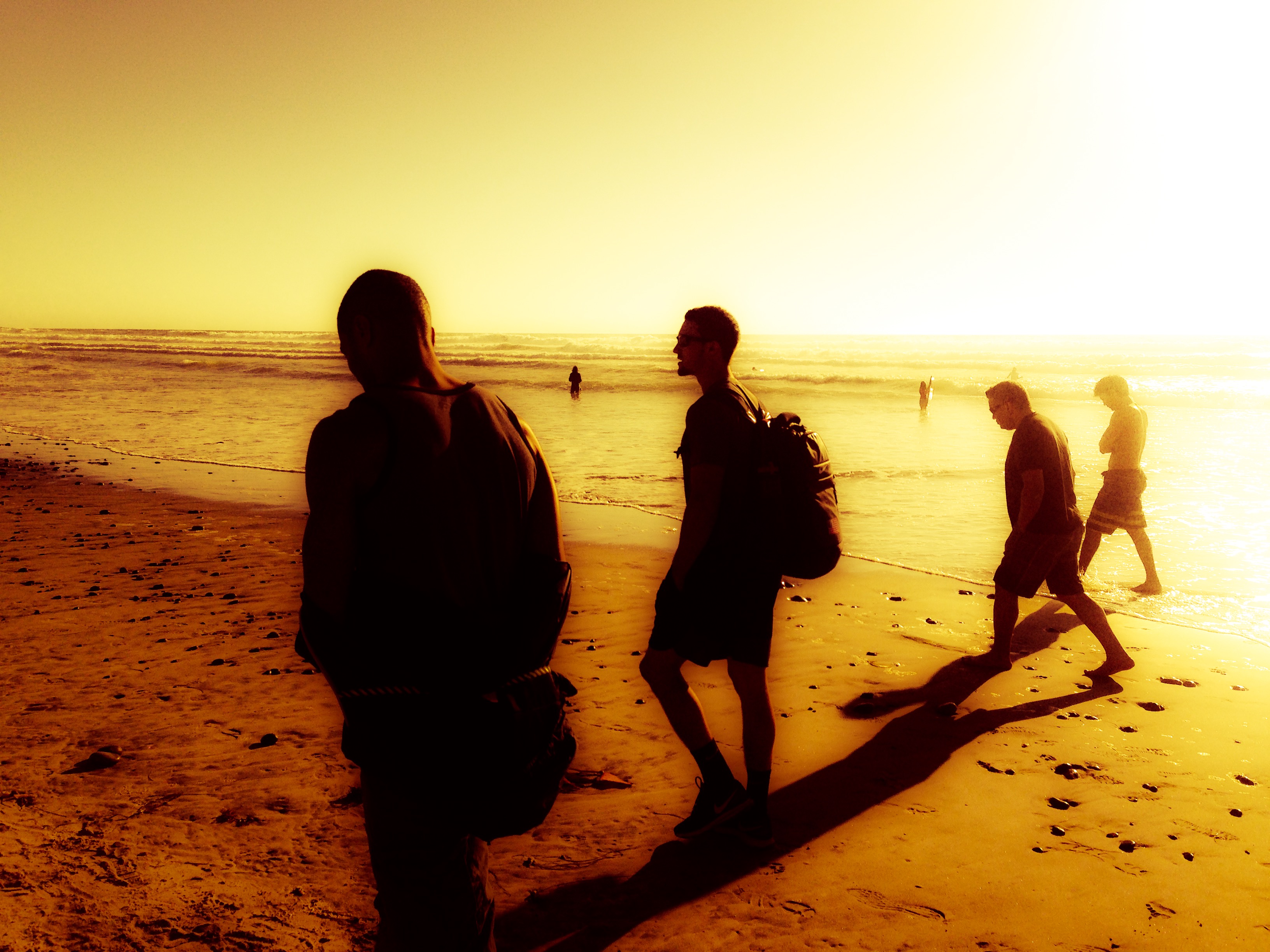
silhouette people on beach at sunset

Photo by Dana Tentis on Pexels.com

The wind is strong but we are stronger, 

COVID lives long, but we live longer. 

Take my touchless hand! And stand as one!

One for all. And all is won! 

7551D277-6606-4C1B-9E06-5E4E44C81A64

———————————————-

 Author Page on Amazon  


How do you Re-culture a Culture?

11 Saturday May 2019

Posted by petersironwood in America, apocalypse, management, psychology, Uncategorized

≈ 1 Comment

Tags

collaboration, competition, cooperation, culture, essay, innovation, life, marketing, sports, teamworkd

We now live (at least in the USA) in such a divided and divisive political climate that I hesitate to bring up something that sounds political but really isn’t. I don’t even have a position, at least as of yet. It’s just a thought I had while I was reaching out to people in India and inviting them to my blog. 

ancient architecture asia building

Photo by Roney John on Pexels.com

Here it is. The USA has a very competitive and individualistic culture. It’s been that way my whole life, but now, it’s insanely so. For one thing, people spend proportionally much more time watching TV and playing on the Internet than they do interacting face to face. In effect, everyone is “competing” not just with local talent, but with people from all over the country. In a nation of 330,000,000 people, 329,999,999 of them will not be the best runner in the country. The vast majority of people will never be winners. This may be why lotto and the Reader’s Digest drawing may be so appealing to so many. 

41494225-657B-4155-ABBC-2438018C5171

But it isn’t just running, and throwing, and high jump where we see competition. We have contests around human activities that have traditionally been mainly about bonding and cooperating, not about competing and winning. We have contests about cooking, and dancing, and singing. I grant you that in the past, small communities might have a dancing contest, once a year. But most of their activity was cooperative activity face to face, and certainly not cutthroat competition. Now, the contest is not part of the yearly festival. The contest is all there is. And, for the most part, the contest is all that is broadcast. 

IMG_3526

It seems that we here in America, with many exceptions and so on, have a culture of individuality and contest is everything there is. Oh, and of course, money. For instance, for far too many Americans the first question they ask about anything is “how much money?” I’ve seen articles that purport to tell retirees what the best place to retire is. Some of those articles focus solely on the financial aspects. Some articles ask which college provides the best education but all they really talk about is ROI. 

We’ve actually accomplished a lot as a nation with this kind of crazy culture. It helped us achieve in terms of invention, discovery, and innovation. But what if the problems of the 21st century are of a fundamentally different nature? What if most of the problems we faced in the 20th century resonated well with a culture that encouraged competition, but that now, as we embark on the 21st century, the nature of problems has shifted. Perhaps now we face problems that require a much more collaborative and cooperative cultural attitude in order to solve? 

IMG_0442

Naturally, these are large trends that I’m talking about. Not every single problem we faced changed lock-step overnight. Let’s examine some examples though. A 1930’s problem might be: “How can we clear cut this forest as cheaply as possible?” And the logging company that solved that problem “won” and got rich. A 2030’s problem might be framed this way: “Is it feasible to provide material by using this forest in a sustainable and humane fashion? How?” One lends itself fairly well to top-down direction. One does not. The reader can guess which is which. 

depth of field photography of brown tree logs

Photo by Khari Hayden on Pexels.com

A 1950’s problem might be: “How can we entice consumers into buying one of our new cars when their old car still works?” A 2050’s problem might be: “How do we provide a transportation system that is effective, efficient, and pleasant for everyone involved?” One is about manipulation and disregards collateral damage. The other collaboratively looks to a sustainable solution without side-effects that are so negative they outweigh the good done by the transportation system. 

american car auto automobile automotive

Photo by Pixabay on Pexels.com

Can American culture evolve quickly enough to be a partner on the world stage in the 21st century? If not, the absolute best we can hope for is slow decay full of internal bickering and hostility as people point fingers and shout loudly in order to establish blame. 

Do we really need to change our culture and change it quickly to avoid that? Or, is the emphasis on competition and individuality still the right way to go? 

C9C3EEAF-D862-4222-886F-CCF8950DC6C3

Other countries and cultures are already ahead of us in cooperation. Look at the cost versus benefits of their health care systems for one. 

How can we change and work together as a culture to a develop a more cooperative view when we seem to be so divided and competitive? That is a real puzzle. 

Do you have a piece of that puzzle? I’d love to hear about it. 

Or, do you think we should “double down” on competition and individuality? I’d love to hear about that as well.

—————————————————

Author Page on Amazon.

← Older posts
Newer posts →

Subscribe

  • Entries (RSS)
  • Comments (RSS)

Archives

  • February 2026
  • January 2026
  • December 2025
  • November 2025
  • October 2025
  • September 2025
  • August 2025
  • July 2025
  • June 2025
  • May 2025
  • April 2025
  • March 2025
  • February 2025
  • January 2025
  • December 2024
  • November 2024
  • October 2024
  • September 2024
  • July 2024
  • April 2024
  • March 2024
  • February 2024
  • January 2024
  • December 2023
  • August 2023
  • July 2023
  • May 2023
  • April 2023
  • March 2023
  • February 2023
  • January 2023
  • December 2022
  • November 2022
  • October 2022
  • September 2022
  • August 2022
  • July 2022
  • June 2022
  • May 2022
  • April 2022
  • March 2022
  • February 2022
  • January 2022
  • December 2021
  • November 2021
  • October 2021
  • September 2021
  • August 2021
  • July 2021
  • June 2021
  • May 2021
  • April 2021
  • March 2021
  • February 2021
  • January 2021
  • December 2020
  • November 2020
  • October 2020
  • September 2020
  • August 2020
  • July 2020
  • June 2020
  • May 2020
  • April 2020
  • March 2020
  • February 2020
  • January 2020
  • December 2019
  • November 2019
  • October 2019
  • September 2019
  • August 2019
  • July 2019
  • June 2019
  • May 2019
  • April 2019
  • March 2019
  • February 2019
  • January 2019
  • December 2018
  • November 2018
  • October 2018
  • September 2018
  • August 2018
  • July 2018
  • June 2018
  • May 2018
  • April 2018
  • March 2018
  • February 2018
  • January 2018
  • December 2017
  • November 2017
  • October 2017
  • September 2017
  • August 2017
  • July 2017
  • June 2017
  • May 2017
  • April 2017
  • March 2017
  • February 2017
  • January 2017
  • December 2016
  • November 2016
  • October 2016
  • September 2016
  • August 2016
  • July 2016
  • June 2016
  • May 2016
  • April 2016
  • March 2016
  • February 2016
  • January 2016
  • December 2015
  • November 2015
  • October 2015
  • September 2015
  • August 2015
  • May 2015
  • January 2015
  • July 2014
  • January 2014
  • December 2013
  • November 2013

Categories

  • AI
  • America
  • apocalypse
  • cats
  • COVID-19
  • creativity
  • design rationale
  • dogs
  • driverless cars
  • essay
  • family
  • fantasy
  • fiction
  • HCI
  • health
  • management
  • nature
  • pets
  • poetry
  • politics
  • psychology
  • Sadie
  • satire
  • science
  • sports
  • story
  • The Singularity
  • Travel
  • Uncategorized
  • user experience
  • Veritas
  • Walkabout Diaries

Meta

  • Create account
  • Log in

Blog at WordPress.com.

  • Subscribe Subscribed
    • petersironwood
    • Join 661 other subscribers
    • Already have a WordPress.com account? Log in now.
    • petersironwood
    • Subscribe Subscribed
    • Sign up
    • Log in
    • Report this content
    • View site in Reader
    • Manage subscriptions
    • Collapse this bar
 

Loading Comments...