It’s nearly Christmas! Well, not really. But before you know it, Yuletide decorations will be everywhere and it will be well past the optimal time to choose a gift for your favorite ultra-wealthy, tax-avoiding, dead-eyed, sociopath who already has everything.
Never fear! I am here! I have catalogued those items most needed for the very neediest amongst us: the born-rich, old white males who, as we all know (because they tell us constantly) are the most unfairly treated group in all human history. They selflessly spend their own precious time prescribing what others may or may not do in their “private lives” because — let’s face it — women, and POC and Native Americans and immigrants and college kids and Hispanics and did I already mention immigrants? And females and homosexuals and lesbians and vegans and vegetarians and people who believe in science and evolution and math and facts and such can not be trusted to make decisions for themselves! Oh, my no! So, the old white guys are stepping up and stepping in whether they’re wanted or not. They don’t have time left over from this precious work of theirs to find presents for themselves. We have to … I should say, we have the privilege to do it for them. It’s a daunting task, but I have made it much easier for us all!
Each gift chosen from this catalog will be wrapped with one ton of earth-trashing plastic! But mainly it’s the gift itself that will let you know that you did your part to show your appreciation for the tireless efforts of that under-represented under-appreciated segment of our society — the White Old Rich Male Sociopaths — WORMS for short — among us. Their vision is legendary, often extending far beyond their fingernails all the way to their bank accounts. Their courage is so awesome as to require almost no statement. Almost. But just to remind folks of one of a few of their sacrifices, imagine an eleven year old gets raped by her step-father and now she has to agonize about whether to have an abortion or have a baby to take care of. No problem! The WORMS have graciously decided to take that decision completely off the table for her. Whew! Problem solved.
And, that’s not all. What about that troubled teen Todd, a child of one of the WORMS, whose teacher threw him out of the spelling bee in the first round simply for misspelling the word “treason.” Come on! One word and he’s out? What kind of bee is that? He spelled it: E-L-E-C-T-I-O-N. Pretty darned close! Right? E, T, O, and N are in both words! Anyway, free and fair elections are treasonous as everyone knows. Women shouldn’t be allowed to vote unless their owners/husbands can be sure they’ll vote as ordered like Amy Bare-it. And POC? Seriously? Who says they can vote? Anyway, the point is, terrible problems like this are solved all the time by those unspoken heroes, the WORMS. In this case, the WORMS are making sure kids like Todd have access to assault weapons so they can express their frustrations in an appropriate fashion — by honoring the Constitution and its Most Holy Second Amendment. Who but the WORMS are there to make sure that no-one actually reads the Second Amendment because that would confuse ordinary mortals since the Founding Fathers accidentally spelled “individual” as “well-ordered militia.” A typo. Obviously. Duh!
Anyway, no need to keep dwelling on how utterly fantastic and under-appreciated the WORMS are. I’ll just say one more thing and then, I promise to move on to the exciting catalog itself. Did you know that some of the non-WORMS are trying to change your habits so that the earth is viable for future generations? What nonsense, right? Who cares if future generations are flooded, or starved, or can’t get clean drinking water, or thousands of species die or humans are plunged into endless war? Trivial stuff like that can always be solved by the WORMS. But meanwhile, they’re trying to reduce plastic? Plastic? Are they nuts? In the beginning, Ben heard the word! And the word was “Plastics”! ‘Nuff said.
As for the gifts themselves, the first thing to say is that you can rest assured that none of these gifts will be the kind of worthless trinkets that poor people buy with their money — you know — trivialities like clean water, food, clothing, shelter, health care. What fun are necessities? How crude! How rude! No sir! None of these gifts will be consist of necessities. These are gifts that show distinctiveness and fine taste.
(All prices are current estimates based on current Market Conditions. All prices are subject to change without prior notice).
US Representative What better gift for WORMS than having their very own US Representative in their pocket? Representatives come in a variety of special flavors including, but not limited to:
Wacko Conspiracy Theorists! One of our most popular items! Whether it’s Jewish Space Lasers or Ersatz meat from a Peach Tree Jar or Vaccines with Computer Tracking Devices, your WORMS can own a US Representative who will spout ridiculous absurdities to distract everyone from their tireless work destroying US Democracy! Current Market Price: $300,000.
Gun-Toting Incompetents! What better way to help squelch any semblance of stately debate than to have your very own Representative show up with an assault weapon, hand grenades, or even a sawed off shotgun! Is it illegal? Sure it is! That just makes it all the more fun! Can be yours to give for the low, low introductory price of only $6969.
Table Banging Blowhards! What a nice gift this makes for WORMS. Whether it’s a child rapist or merely a former wrestling coach who looks away from sexual predation right under his nose, the Table Banging Blowhard will quickly turn any substantive debate about policy into a shouting match. What a fun way to destroy the world’s oldest continuous democracy! $75,000.
US Senator If there’s one thing WORMS like more than their own “Representative”, it’s having their own Senator! One of the advantages of owning a Senator is that they never have to show their ownership by actually voting on things. They can simply refuse to vote! You remember those movies where a Senator “stands on principle” and yacks it up till everyone loses patience and interest on a topic? Those were the bad old days. In today’s Senate, they don’t actually have to filibuster to filibuster; they just have to say they will.
The Hypocrite’s Hypocrite! Made from moldy bread and manure heaps, yet much resembling an aging turtle, these fine folks can not only speak from both sides of their mouth at the same time; they can do it with mock sincerity! They can explain on Monday why even considering thinking about nominating a Supreme Court justice with a Presidential election only a decade away is against common sense, the spirit of the Constitution, the Legend of Babe Ruth, the rules of propriety, and the bylaws of Kentucky’s largest Chicken! On Tuesday, they will explain why it is crucial to confirm a Supreme Court justice with a Presidential election already on-going! Each Hypocrite’s Hypocrite comes with dead shark eyes and is guaranteed to have undergone a complete bilateral ethicsectomy. Price — a mere $500,000.
The Sick Sycophant! The sick sycophant will periodically make a run for the Presidency! During this time, they will explain, with apparent sincerity, why the would-be dictator they are running against would not be good for America. They will explain that he is a failed businessman, a liar, a crook, a racist, a sexual predator (self-proclaimed) and that he has zero experience relevant to being a President, or even, come to think of it, anything else. But have no fear! Once the incompetent liar becomes Putin’s nominee, The Sick Sycophant (SS for short) will tout the would-be dick-tater as the best thing since sliced stupidity! If the would-be dick-tater lies, the SS will repeat the lie endlessly. If the would-be dick-tater tells people to drink bleach or stick UV light up their butt, the SS will demonstrate. If the would-be dick-tater tries to sell out his own country to become an actual dick-tater, the SS will vote against impeachment. On special today for only $666, 666.
The Kinky Kid Killer! Often referred to as the KKK, the Kinky Kid Killer will tout how we must protect the innocent life of a fertilized egg or even an egg that might be fertilized or the sacred right of a man to fertilize any egg he wants to, and meanwhile, ensure that actual living, breathing, loving kids are killed on a regular basis. He or she will explain how Americans will never be safe in schools, movie theaters, grocery stores, street corners, rock concerts, post offices, or hospitals until every man, woman, and child in America has their own personal arsenal of conventional, atomic, chemical, and biological weapons. While the favorite way for the KKK to kill kids is via shredding caliber automatic weapons, the KKK is quite versatile. They will often support rolling back food safety regulations, safe water regulations, air pollution standards, workplace safety standards and, naturally, oppose free health care, child care, after school care and lowering taxes on the poor. The KKK is one of our top line items at an even $1,000,000 but guess what? You only have to pay one half of the cost! That’s right! If you act now, the Kremlin will funnel the other half of the cost through the NRA! What a bargain! You really can’t afford not to buy one of these Senators for your favorite WORMS.
Extreme Court Justice These items have only been recently added to our catalog! Act now before it’s too late! The US Extreme Court (formerly known as the US Supreme Court) is the final authority on Big Lies and Partisan Bickering. Help the WORMS completely control every aspect of American life from the proper bedroom behavior to health care options to controlling the press and the media.
The Logician Magician The Logician Magician will cry, scream, threaten, frown, and lie on command! He will wave his hands and drink beer. Hey, he likes beer! He will show you that he cannot possibly have sexually assaulted someone because — Look here! Look here! — There’s no entry in his calendar for the alleged sexual assault! Well, if that doesn’t establish his innocence, nothing will. Also, did I mention that he likes beer? Price: $2,000,000.
The Memory Leak The Memory Leak will answer any question you don’t ask and none of the questions you do ask. Nonetheless, he will eventually make you believe that he’s answered your actual question. For example, if asked about allegations about sexual misconduct he is accused of actually doing, he will say, “I would never do anything designed at making a woman uncomfortable!” (Translation: I only bring up the topic of pubic hairs on my can of coke to turn her on and thereby give her pleasure; not to make her uncomfortable). If pressed for more information, he will say he can’t remember. If asked about whether he supports the decision in Roe v. Wade, he will say, “It’s settled law!” (Translation: The right wing has spent tens of millions of dollars getting conservative justices so we wouldn’t overturn it!) If asked whether he debated the issue in law school, he will say, “I don’t think it ever came up.” (Translation: Seriously? I’m not answering that.) “Should I recuse myself as judge simply because my wife is a probably defendant? My wife? I didn’t remember she was my wife.” (Translation: eff yew) Price: $1,500,000.
The Handmaiden The Handmaiden has plausible deniability about everything because she belongs to a cult that believes women should defer to their husbands on all things. Price may seem high on this one, but remember, these are lifetime appointments and she’s barely out of her teens. Price: $3,000,000.
The Witch-Hunter This guy’s still truly PO’d that Sally Jones wouldn’t agree to be his date for the Senior Prom. Instead, she went with Charlie Jenkins just because Charlie was the football team running back and made All-State. If the Witch-Hunter happens to run across a part of the Constitution he doesn’t like such as the Ninth Amendment (also known as the “Democracy for Dummies” Amendment which basically says just because a right isn’t explicitly listed doesn’t mean it doesn’t exist), he will find an earlier precedent from some other source such as Attila the Hun, say, or an English judge who sentenced women to be burned at the stake for being a witch like Sally who should have gone to the Prom with the judge, but instead chose Charlie Jenkins, damn him. He wants women to be property, not to be mean, of course, but because — you know — it’s nature’s way! Men are bigger and stronger and live longer and are much more likely to be rapists and killers so men are obviously superior! Even the Taliban knows that! And so what if men can’t have babies? How fair is that? How can men even know if the baby is really theirs? You have to keep them indoors and locked up. For their own good, of course. WORMS will love this gift, but this particular robot seems a bit damaged so it can be yours to gift for the bargain basement price of $1,750,000.
Join the club! Help buy American Democracy for WORMS!
Remember our motto: “The life you ruin may be your own, but you’ll ruin lots of others as well!”
Remember our second motto: “All sales are final. We are not responsible. For anything. If we were, we wouldn’t be selling the country to the Kremlin.”
Matt the Pig, who called himself “Matt the Magnificent,” strolled along the hill when he heard a curious sound. It sounded a little like the roar of a lion but very distant. He turned to his companion, Marjory the Muskrat and asked, “What could be making that sound?”
Marjory Muskrat, who secretly called herself, “Marjory the Magnificent” flung her backpack off her shoulder and searched for an idea hiding among the many assault weapons, but she couldn’t find an idea anywhere. That was not surprising because she had not really had an idea for many years. Nonetheless, she smiled at Matt the Pig and said, “I know exactly what that is!”
Matt tilted his snout and stared at Marjory with his beady pig eyes and wiggled his pig ears and said, “Really? What?”
Marjory Muskrat wriggled her muskrat nose and said, “What what? What are you talking about?”
Matt sighed in a porcine manner and said, “You said you knew what made that roaring sound. What is it?”
Marjory Muskrat never felt obligated to answer a question, especially when she didn’t know the answer (which was usually) and would be caught in a lie (which was always) so instead she said, “Follow me and I’ll show you!” With that, she scurried up the side of a nearby dune.
Matt the Pig came snuffling after her. His cloven hooves spiked deep into the soft sand. Marjory, on the other hand, found that her feet allowed her to climb up the dune quite easily. She waited at the top for her more cumbersome companion to join her. Finally, he clumsily clambered up beside her. He huffed and he puffed. He wanted to ask her again, but he never got the chance. Marjory Muskrat was skittering down the other side of the dune toward the seashore.
Matt the Pig ran a few more steps before he tripped himself up with one of his own lies and somersaulted head over hooves down the far side ending up in some wet sand. It felt good. For awhile, he forgot what he had wanted to ask Marjory.
The roaring noise returned, much louder than before. “What is that? What’s making that noise, Marjory? You said you knew?”
“That” began Marjory, “is the sound of a million billion trillion migrants swimming ashore on our borders!”
Just then, a Teacher walked by. Having overheard the Misguided Muskrat, he said, “Nonsense. It’s just the roar of the ocean waves.”
Matt the Pig oinked with delight. “At least, it’s not a lion! I like the sand. I’m going to build a house here! Do you want to help, Marjory?”
Marjory Muskrat grinned so broadly that all fifty of her little white needle teeth showed. “No, you go ahead. Since you’ll be working hard building a house with your oh-so-powerful snout and hooves, I’d better go find us something to eat. I’ll be back in a jiffy!”
Matt muttered, “Typical. I’m left to do all the work. It’s okay. It’s easy to dig here in the soft sand. I should have a house in no time at all. Matt the Pig began shoveling with his powerful long snout.”
No sooner had he begun, however, than the Teacher said, “Excuse me. My name is Teacher. If you build your house here, the ocean will wash it away.”
Matt the Pig scoffed at the teacher. “What do you know? It’s easy to dig here. I’ll make the quickest house ever. I shall name it, The Sty at Seaside.
Teacher cocked his head to one side and said, “You’ll want to rename it Bye Bye Sty, because, as I said, within a few hours, the ocean will come and wash it away.”
Matt the Pig didn’t see any reason to believe a teacher of all people. “Nonsense! You’re just jealous you didn’t think to build a house here first! What do you know, anyway?”
“I walk this beach nearly every day. Also, I look at the tide charts. Every high tide, the ocean comes in much further than where you are digging and … “
Matt the Pig grunted. “Hah! I see where the ocean is. I see where the house is. Foolish man!”
Teacher shook his head and walked off. He muttered, “Suit yourself. You’ll see.”
Matt the Pig continued to wallow and snuffle and snuggle into the sand. He began to grow hungry and he looked up to see whether Marjory Muskrat had returned with their lunch. No sign of her. As hungry as Matt the Pig was, he realized that all the hard rooting around had made him very thirsty. He wobbled over to the ocean and began lapping up the water.
A Doctor who was out for his morning constitutional noticed that the swine was swizzling seawater. “Hey!” Said Doctor. “That’s salt water! You can’t drink that!”
Matt snorted. “Hah! That shows how much you know. I just did drink some. Though not enough because I am still thirsty.”
Doctor sighed. “Yes, I mean you can drink it, but it’s bad for you. It will only make you thirstier! It’s salt water. I’m a Doctor. Believe me when I tell you that it’s bad to drink it!”
Matt snorted. “Hah! Who cares what a Doctor thinks. Water is water! Everyone knows that! I’m plenty thirsty so I need some more so I can finish the work.”
Doctor shook his head and walked off. He muttered, “Suit yourself. You’ll see.”
Matt realized that despite having drunk quite a bit, he was thirstier than ever. He decided he would see whether the Doctor was telling the truth so he pulled out his smart phone and googled, “Do Doctors Lie?”
Matt looked at the results page. Over 8000 results! Matt snorted. “I guess that proves it! Eight thousand results! Of course, Doctors lie!”
Matt the Pig was getting seriously hungry as well as thirsty. He glanced at the dunes, but didn’t see any sign of Marjory Muskrat. He wondered out loud to himself, “Surely, there must be something to eat along this beach. Clams? Oysters?”
Matt began rooting for shellfish. It wasn’t long before he dug one up. He was about to smash it on some nearby rocks, when a Wild Boar came crashing up beside him, “Whoa there, fellow! Can’t you see the Red Tide? Don’t eat shellfish now! You’ll get deathly ill!”
Matt snorted, “And who are you, pray tell, that you should interfere with my dinner?”
“I’m a Wild Boar. My friends call me Crashing Boar, but you can call me Mister Boar. Everyone knows that you don’t eat shellfish during the Red Tide. Why are you digging up such a large part of the beach anyway?”
Matt snorted. Again. “I’m making a new home here. I’m naming it The Sty at Seaside.”
The Wild Boar frowned. “This is not a good place for a home. You’re right near the ocean!”
Matt snorted. He seemed to be snorting a lot these days. He didn’t care. He said, “That shows how much you know! This happens to be a perfect location! It’s easy to dig. There’s plenty of water and food within easy reach!”
Wild Boar nearly gored himself with his own tusks. “What?! Listen, Pig. The tide will come in and wash away your home. And the water is not potable. The shellfish can sometimes be eaten, but not now. You best find another place for your home.”
Matt snorted yet again. “Hah! You just want this excellent location for yourself. Leave me alone. And, no, I am not sharing my clams with you. Nor can you have any of that water which I claim for myself.”
“That’s the ocean! You can’t “claim it” for yourself! It belongs to everyone! But anyway, you can’t drink it.”
Matt snorted until his nostrils bled. “Don’t tell me what I can and cannot do! I’m perfectly capable of making my own decisions! Be on your way. And let your more civilized cousin finish his house.”
The Wild Boar galloped up a nearby hill and began crashing through some underbrush. He looked one last time back at Matt the Pig, shook his head, and sauntered off.
Matt the Pig, meanwhile, realized that all his work and arguing had made him uncommonly thirsty so he went back to the ocean and took a few more tremendous gulps of brine. It didn’t help. “I must be very hungry. That’s the problem,” Matt muttered. So, he dug up a few more clams and smashed all of them on nearby rocks and ate them all. That satisfied his hunger but he still found himself to be extremely thirsty. He decided to take a short nap in his new seaside sty. He lay down in the nice soft sand.
Matt lay basking in the hot sun. Matt lay in his new home and enjoyed the sound of the name of his new home, The Sty at the Seaside. The many clams he had eaten satisfied his hunger, but he still felt terribly thirsty. He closed his eyes and thought back to the sty where he used to live. He remembered the girl in the gingham dress who filled his water trough with cold clear water. He wished Marjory Muskrat could be more like the little girl. It felt to Matt as though the world was spinning around. Or, that he was spinning around. Or that everything was spinning around. Suddenly, he felt very sick. He wanted to go somewhere else. But the roar of the water. Confusion. Where was that Muskrat, he thought to himself. Why is my home so wet? I’m so smart I know everything. But I don’t know why my sand home is so muddy now. And I’m so thirsty.
No-one knows even to this very day whether Matt died of food poisoning, or dehydration, or drowned. Marjory didn’t care. She knew he was still fresh enough to eat and that’s all that mattered to her. He went very well with the Russian dressing she had gotten at the market. He tasted okay — but way too salty. She felt oddly tired and distant as she finished off the last morsel and stared at his well gnawed bones. I’m too tired to move, she thought to herself and then mumbled, “Best to just let the waves wash over me. They make a nice wet blanket. Later, I’ll turn him over and eat the other half. Right now, I just need a long, long nap.”
Indeed, Matt had been right about one thing. The Sty at Seaside did make a nice home.
A talking worm develops an extremely loud screaming sound. He’s wrinkled and ugly and orange. But neither his physical ugliness nor his rancorous sound is his worst feature. He has evolved an extremely toxic poison.
How is it so toxic?
It is really three separate toxins: Fear and Hate and Greed. Together they are much more toxic than any one of them is alone.
He blackmails everyone around him, from sea to shining sea. He threatens to release the poison into the air if he doesn’t always get his way.
His way is to take all the money. His way is to take all the power.
His way is to use the money and power to make more toxin.
He uses the extra toxin to threaten even more people that he will release the poison into the air if he doesn’t get his way.
His way is to take all the money. His way is to take all the power.
His way is to use the money and power to make more toxin.
Eventually, he tries to blackmail everyone on earth.
He explains that he is a “self-made worm” — that it is his right to take over the world because he and he alone made the world.
That is, of course, a lie.
Life evolved for 4 billion years. All his ancestors, and the life his ancestors interacted with created the conditions for him to make the toxins. He doesn’t mind that he lies. Lying is fun!
He gets his way. To him, that’s all that matters.
He gets all the money.
He gets all the power.
He’s bored.
For fun, he releases the poison any way.
But now, it’s enough to destroy every living thing on earth.
Many Paths rose. Shadow Walker enfolded her in his strong arms and she returned the gesture. He stepped back, still holding both her hands in his and smiled as he spoke. “Come with me! I’ve got something to show you!”
Many Paths tilted her head to the side and frowned. “Can it wait? I’ve just been talking with She Who Saved Many Lives. I’ve got the work on setting up our meeting with the other tribes. So much needs to be done.” She sighed and bit her lip. “So much to do, but I’m not sure what comes next.”
Shadow Walker could see that she was concerned. He frowned sympathetically. Suddenly, Shadow Walker chuckled.
“What joke is this that brings laughter to your heart?” Asked Many Paths. “I’m serious. There’s much work to be done.”
“I never thought of this before, but — Many Tribes. Many Paths. You see? Just as you yourself think of many ways to do things — many more than most of us have patience for — so too do the various tribes try many paths of how to live.”
The eyes of Many Paths grew wide. “Yes! Of course! I never saw it before either! It’s just the same, in a way. Maybe that is a good way to explain it to the many tribes I hope to convene. It is in keeping with the wisdom of the tale of the Forgotten Field. We don’t necessarily have to agree on every path we take; we just have to be sure that we work together when we must.”
Shadow Walker laughed again. “That’s what I was thinking. Just because of your name.” Many Paths and Shadow Walker gazed into each other’s eyes for a moment and he squeezed her hands. After a pause, he continued. “But that is not what I came to tell you. Tu-Swift and Cat Eyes have discovered a book that has many recipes for making the kind of meeting that you wish to convene with the many tribes. You should come see for yourself!”
Many Paths frowned again. “How can that be?”
Shadow Walker smiled and now Many Paths smiled as well. She sensed that the sunny mood of Shadow Walker would not be clouded by her worry. But she looked at her mate askance. “I still don’t see how a book from long ago can be so well-suited to my current task at hand.”
“Come with me, love, and judge for yourself. It appears that you may not be the first person to think about how best to cooperate, after all.”
Many Paths snorted. “You will not be deterred I see, so yes, let’s go see this book you claim will help.”
Shadow Walker smiled again. “Yes! And, if I am wrong, and the book is useless, you and I will have a pleasant walk on a beautiful day and we’ll have a chance to see your brother and his friend, Cat Eyes.
Shadow Walker and Many Paths soon arrived at the hidden entryway that Trunk of Tree had accidentally discovered while stalking a deer. This hidden path connected the Veritas and the two sides of the snowy mountain. They arrived in the Village of the Veritas on the other side of the mountain. They were greeted warmly. Their kin on this side of the mountain felt fully committed to having a meeting with all the tribes.
Many Paths happened to spy a group of elders chatting excitedly. As she guessed, this signaled that the presence of Tu-Swift and Cat Eyes. Many of the Veritas on this side of the snowy mountain had now learned how to read the strange markings arranged in books. In the center of the group, she smiled to see her young brother, Tu-Swift. She called out his name and he smiled broadly and waved for her to come join the group. She noticed that though the group included many elders, there were also people of every age, even children of no more than six or seven summers. Gradually, the people so gathered noticed Many Paths and Shadow Walker approaching. Tu-Swift & Cat Eyes came out to greet them. Tu-Swift smiled broadly as he greeted her. “I see Shadow Walker brought you already! Come! Look what we’ve begun to read!” He held out one of the hundreds of books that had been recently discovered. At first glance, the book looked just like the others, but then she noticed that it had an elaborate symmetrical drawing on the cover.
Tu-Swift & Cat Eyes had become proficient at reading. He could hardly constrain himself as Many Paths sounded out the markings on the cover as she read the title aloud, “A Pattern Language for Collaboration and Cooperation.” Tu-Swift could not wait any longer so he began showing her the various chapters. “Look! It’s a whole book to help you with your meeting with the other tribes! Here, look! It is a whole book of recipes or patterns for helping people to better collaborate! Here’s one called ‘Who Speaks for Wolf.’ Another one: ‘The Rule of Six’ and here. Look! Another: ‘Small Successes Early.’
He showed her the pages one after another. Many Paths barely had time to read the titles before Tu-Swift jumped to the next one. There were dozens! Tu-Swift laughed. “Can you believe our good fortune? This should help us with the meeting, right?”
Many Paths hugged her brother and then smiled broadly at Shadow Walker as she assented. “Yes. These — these Patterns — they seem that they would be a big help. But it will take me time to read these. I am not so swift at reading as you are brother. But thank you for finding these. Can I borrow this book until I have had time to read them all?”
Cat Eyes said, “Of course. But we have come up with another plan. See what you think. Tu-Swift and I will take turns reading them to you. You and Shadow Walker can listen and then we — and some number of interested Veritas should discuss each one before we go on to the next. We have to see which ones might best work for the meeting, but also for before the meeting and after the meeting. It’s clear from the book of Patterns that an effective meeting depends on what you do before the meeting begins and after as well, not just what happens during a meeting. What do you say?”
Many Paths let out a long slow breath. “I did not come prepared for such a thing. I thought we would go back this very day. That’s what Shadow Walker led me to believe.” She stared at her mate.
Shadow Walker’s good mood could not be dampened. He shook his head. “I had no inkling that Tu-Swift wanted us to stay for an extended discussion. I think it’s a good idea though. Here’s another. I will walk back and get whatever you need. We don’t both need to go.”
Tu-Swift interjected, “I have an even better idea. I’ve already read most of the book. Let Cat Eyes begin reading these Patterns to you and then you can discuss. Meanwhile, I’ll go back and get anything you really need although I can’t really imagine … we have everything you need right here, Many Paths.”
Many Paths shook her head. “Is your leg that well heeled already? Why not send someone … someone unhurt?”
Tu-Swift laughed. “You mean someone faster. There is no-one faster.”
Shadow Walker’s face finally managed its own frown. “That can’t be true. You surely can’t be the fastest runner here yet. You’re still on the mend.”
Tu-Swift smiled, “Ah, yes. I am still on the mend. But who said I would be running back?” His eyes twinkled.
Many Paths pursed her lips. “If you’re not running…. Ah! But you have continued to learn how to ride horses haven’t you?!”
Tu-Swift smiled at his sister and nodded vigorously. “Correct!”
Many Paths sighed. “You are amazing, dear brother. But you are right. I don’t really need anything. But the people should know.”
Cat Eyes said, “Some of the people here, including my parents, were going to visit later this afternoon for trade. They can take a message to your people.”
All agreed. Many Paths gave her message to and they all found comfortable places to sit. Tu-Swift began reading the first Pattern.
“The enumeration in the Constitution, of certain rights, shall not be construed to deny or disparage others retained by the people.”
The above is the text of the Ninth Amendment to the US Constitution. It is not my “distillation” or “summary” of the Ninth Amendment. It is the Ninth Amendment. You may recall that the first ten Amendments to the Constitution are known collectively as the “Bill of Rights.” To me, the Ninth Amendment could, in today’s terminology be titled, “Democracy for Dummies” Amendment. In the linked article in the Wikipedia, you can see that this ninth Amendment was added quite intentionally. In fact, some founders who argued against provisions of the Bill of Rights were worried that by enumerating some rights, such as the right to free speech, later generations might take it to mean that since those rights were enumerated, no other rights existed. So, just to make absolutely sure that no-one would make such a silly mistake, the founders added the Ninth Amendment. This says just about as clearly as it’s possible to say: “Look, just because we didn’t list a right should be not be used to argue that it doesn’t exist.”
Remember that the founders had just waged a war of independence against the tyranny of England. They had essentially bet their lives on winning a war against a much greater military power. They were quite serious about freedom! The passage is short and unambiguous.
The first thought that occurs to me when it comes to a Ninth Article in the “Bill of Obligations” is simply that each citizen should read the Ninth Article. Further, we should be vigilant that no politician, party, or demagogue tries to pooh-pooh it away or intentionally misinterpret it.
It honestly never occurred to me, as recently as a fortnight ago, that a Justice of the Supreme Court would be the one to pooh-pooh it as being meaningless, particularly a Justice who otherwise argues for a “strict reading” of the Constitution. But that’s where we are today.
Justice Alito is so hell-bent on destroying freedoms for Americans that he intentionally pretends he cannot comprehend this single, clear, short sentence in a foundational document for our country. Remember, Justices are sworn in. When they are sworn into office, they swear that they will uphold the Constitution of the United States. There is no “escape clause” in their oath. They do not say, “I swear to uphold the Constitution of the United States except for the parts I don’t like.” They do not say, “I swear to uphold the Constitution of the United States unless people who supported me to get on the court tell me to take a wrecking ball to it.”
Here is the text of the Oath of Office for Supreme Court Justices regarding the Constitution.
“I, _________, do solemnly swear (or affirm) that I will support and defend the Constitution of the United States against all enemies, foreign and domestic; that I will bear true faith and allegiance to the same; that I take this obligation freely, without any mental reservation or purpose of evasion; and that I will well and faithfully discharge the duties of the office on which I am about to enter. So help me God.”
What do you suppose “without any mental reservation or purpose of evasion” means? To me, it means just that. It’s not okay to take the oath of office with fingers crossed behind your back and think to yourself:
“Finally! The opportunity to foist off my ideas about how America should be run on an unsuspecting public. Screw the Bill of Rights! And totally screw all those Amendments and precedents since about having women vote and blacks being citizens and an implied right to privacy. Nope! What I want is an American Taliban. So, that’s what I’ll make happen!”
That’s not what taking the oath of office means.
There is another part of the oath of office for Supreme Court Justices:
“I, _________, do solemnly swear (or affirm) that I will administer justice without respect to persons, and do equal right to the poor and to the rich, and that I will faithfully and impartially discharge and perform all the duties incumbent upon me as _________ under the Constitution and laws of the United States. So help me God.”
What do you suppose it means to swear that you will “administer justice without respect to persons and do equal right to the poor and to the rich”? Would you interpret that to mean that it’s okay to show preference to rich donors? Would you interpret that to mean that you’re going to use the power of your office to enhance white privilege or male privilege? Is it okay to mean that if you happen yourself to be a white male? Is it okay to subvert the oath of office if you happen to believe that things are just better if white males have more power? Is it okay to subvert your oath of office if you happen to believe that, actually, come to think of it, people of color and females really shouldn’t have any rights at all?
If a Justice of the Supreme Court decides to “strike down” part of the Bill of Rights because they don’t find it personally to their taste, what is the appropriate action? How about if they are sworn in while saying one thing but meaning something much different and more self-serving? How about if they lie under oath during their confirmation hearing? How about if they intentionally mislead under oath? Is that acceptable?
Let’s consider what constitutes a lie. Suppose we are playing tennis and you hit a ball that lands near the line on my side. I see it as in, but close. I call it out anyway. You ask, “Really? It’s your call, but it really looked in to me.” I answer, “Well, it was close all right, but I had a really clear look at it. I’d call that ball out every time.” That could be the literal truth. It was close. I did have a clear look. And, since I cheat, I’d call it out every time. But the implication of my statements, in context, is that I am re-affirming that I saw it as out.
Or, suppose you and I are throwing a surprise party for a mutual friend. I tell you, “You know, it’s going to cost some money for the food and drinks for everyone. I’ll go pick up the stuff, but can you afford to pay for half?” You say, “Oh, I can afford to pay my half. That’s the fair thing to do.” Note that you didn’t say you would pay for your half. You just said you can afford to pay half and that it’s the fair thing to do. If I interpret that to mean you will pay half, is there lying involved?
Photo by Dan Cristian Pu0103dureu021b on Pexels.com
Here’s another example. You apply for a consulting job on a large new construction job. You give them a lot of good ideas about how to go about solving the problems they presented to you. Instead of hiring you, they decide to use your ideas but have the boss’s brother-in-law implement it on the cheap. In fact, that was their intention all along. You ask about it and the boss says, “We looked at your proposal. Many of the elements of it were exactly what we were planning to do anyway, so we figured, we didn’t really need an outside consultant after all.” Sure. They were going to file a plan with the city, just as you proposed. They were going to file an environmental impact statement, just as you proposed. They were going to hire a crew to do the work, just as you proposed. So, yes, many (three, to be exact) of the elements in your proposal were indeed something that they were going to do even before they read the proposal, but there were also many other elements of your proposal that they had not thought about until they heard your proposal. They had not previously considered passive solar heating, gray water irrigation, or battery back-up. In context, they were intentionally misleading you, perhaps to avoid your suing them.
Suppose you go to a doctor to see about allergies. The doctor has just gotten back from a conference where a paper was presented about an expensive new drug (Damitol) that might work for allergies; unfortunately, some patients lose their sense of smell and others break tendons. The drug company mentioned that doctors who publish papers about good results with Damitol will get free tickets to a conference in Hawaii. The doctor engages in the following dialog with you.
Doctor: “There’s a new treatment for allergies,Damitol. I’m recommending it for you. It’s expensive though.”
You: “Oh, well… aren’t there cheaper drugs?”
Doctor: “Yes, but they don’t always work.”
You: “Does the new drug, Damitol, have side-effects?”
Doctor: “Every drug can have some side-effects, but personally I’ve never seen a single patient with bad side effects from Damitol.
You spend a lot of money on Damitol and lose your sense of smell. Worse, you snap your Achilles tendon.
Did your doctor lie to you? Did he intentionally mislead you?
Are those mealy-mouthed misleaders the kind of characters you really want on the Supreme Court? I certainly do not. It may be tempting to think: “Well, it’s okay to cheat because they are on my side.”
That is precisely the flaw that dictators and would-be dictators have used to gain power since the beginning of time. “Look here,” they say, “I’m on your side. And once I get in power, I’m going to favor you by cheating for you.” It never turns out that way. They lie, and cheat, and appear to favor you in order to gain power. Once they gain power, they will wield it to steal from everyone including you. Putin, e.g., kills generals and oligarchs who support him when it suits him. Killing “the faithful” is an important tool to keep everyone in line. The message is that it doesn’t matter who you are or what you believe or what you’ve done for the dictator in the past. The only thing that matters is what they feel like doing at that moment.
It’s no “accident” that Justice Alito cited an English judge who condemned women to death for witchcraft! It’s a signal to every guy who never learned how to partner or be successful in consensual relationships: “Hey! I’m going to help create a world in which you never have to ask for sex again! Women should be chattel. You’ll be happier that way. And so will they. And if they don’t do what you want, we’ll burn them at the stake. I’ll help you get revenge on all those women who turned you down! And once we begin to burn them at the stake for ‘witchcraft’ (another word for ‘disobedience’), you’ll be surprised how docile they become.”
“A well regulated Militia, being necessary to the security of a free State, the right of the people to keep and bear Arms, shall not be infringed.”
This, as most readers may know, is the Second Amendment to the US Constitution. It is part of the Bill of Rights. Before considering what a reasonable companion Bill of Obligations might be, let’s consider what the Amendment itself says.
The construction of the sentence is essentially:
A well regulated Militia Being necessary to the security of a free State
The right of the people to keep and bear Arms Shall not be infringed.
Some have emphasized the last few words: “Shall not be infringed” and argued that this means no regulations for keeping and bearing arms is Constitutional. Despite that, no-one actually believes that. No-one would argue that the government cannot regulate poisons, or bombs, or tanks. No-one argues that convicted felons should be allowed to arm themselves while out on bail.
The overall construction of the sentence clearly gives a rationale and that rationale is the premise that a well regulated militia is necessary to the security of a free State. In particular, it does not say that the reason is that it you, as an individual, have a right to keep your home or your family or your body safe and that’s why you as an individual have the right to bear arms. That might be a good thing. I’m not saying it isn’t. But it is simply not at all what the Second Amendment says. What it says is that a well-regulated militia is necessary to the security of a free State.
A free State could have a well-regulated militia to help ensure the security of that free State and in order to help ensure that that State does indeed have a well-regulated militia, there could be necessary training of how to use arms. The State could limit participation in the militia to those who are over 18, say, or over 15. The State could limit participation to those who are physically and mentally capable to use whatever arms they have. It wouldn’t add to the security of the free State to put rifles in the hands of people who were blind, or incapacitated or inebriated. If the goal is to increase the security of the free State, it would make sense to train people how to use whatever arms they have in a safe and effective fashion. It adds nothing to the security of the State to have people blowing their brains out or killing their comrades with weapons they don’t know how to use.
Notice that there is nothing in the Second Amendment that says or implies that anyone and everyone who wants to be part of the well-regulated Militia is entitled to join that well-regulated Militia. Everyone who wants to be a medical doctor does not automatically get to be a doctor. Everyone who wants to be a lawyer does not automatically get to be a lawyer. Everyone who wants to be President does not automatically get to be President. Everyone who wants to be an airline pilot or a trucker or a public school teacher or a real estate agent doesn’t get to assume that role. They have to show that they have the capacity and the training to carry out those roles. Not everyone can be a rocket scientist.
Speaking of rocket scientists, it would not have taken a rocket scientist to have written the Second Amendment to mean the various things that people have claimed it means. For example, it could have easily said, “…the right of each individual to keep and bear Arms shall not be infringed.” It doesn’t.
The Second Amendment could have said, “A well-armed populace being necessary …” It doesn’t.
The Second Amendment could have said, “In order to ensure that every person is safe and secure, the right of each individual to keep and bear arms shall not be infringed.” It doesn’t.
The framers of the Constitution and the Bill of Rights had the vocabulary and intelligence to clearly state that each individual must be able to bear arms in order to protect themselves if that is what was intended. It wasn’t. So, they didn’t.
Regardless of how often or how loudly people insist that the Second Amendment means something that it doesn’t, it still doesn’t make it so.
However, regardless of whether someone interprets the Second Amendment to mean what it says or to mean something else entirely; e.g., that every individual, regardless of capacity or training, has a right to get as many guns as they want, it is still worthwhile to consider what might be in a “Bill of Obligations” with respect to arms.
What might be some elements of such a Bill?
Just as we require a person to show capacity for many roles before we allow people to have that role, it seems that is also a reasonable obligation for having and using things that kill. If you would like to drive your automobile on public roads, you need to prove that your automobile is safe. You have an obligation to insure that it’s safe. Your car has to pass a safety inspection. If it’s unsafe, it could harm you or others.
Your obligations don’t end there. In order to drive a car, you have to show that you have the ability and knowledge to drive a car and that you have an understanding of the rules of the road. Even after you obtain a license, you have to follow those rules. If you run a red light, you will be fined. If you run enough red lights, you will have your license taken away.
Candidate obligations that relate to the Second Amendment might include:
You have an obligation to learn which arms are appropriate to your needs and within your capabilities.
You have an obligation to learn to properly use the arms you own.
You have an obligation to prove that you have the capacity & training for the arms you have.
You have an obligation to operate such arms in a safe, reasonable manner.
Notice that to join a legitimate Militia, you would need to fulfill these obligations.
Some examples:
You have an obligation to learn which arms are appropriate to your needs and within your capabilities.
Don’t choose a weapon that is too heavy or has too much “kick.” If you want a gun to kill gophers, don’t choose a howitzer or a machine gun.
You have an obligation to learn to properly use the arms you own.
Learn how to load, unload, fire, and maintain your weapons. Learn how to keep it safe from unwanted and unauthorized use.
You have an obligation to learn to properly use the arms you own.
Your weapon should be periodically inspected to ensure it’s working properly. Your own knowledge and capacity should be tested periodically; not every five minutes, but not every five decades either.
You have an obligation to operate such arms in a safe, reasonable manner.
Your weapons should be under lock and key except when you actually want to use them. Untrained people, including your own toddlers, should not have access to them. Do not point a gun at someone as a “joke.” Do not fire your gun at an uncertain target. “Something’s moving in the bushes” or “I thought I heard a noise” are not sufficient reasons to fire a gun. Don’t take your gun out “just because you’re upset” about your life or about what someone else has done. Don’t take your gun to unreasonable places like airports, airplanes, movie theaters, rock concerts, or Walmart. Don’t operate your weapon when you’re drunk, stoned, or otherwise incapacitated from illness or drugs. Don’t go looking for trouble with your weapons.
The Constitution of the United States of America is a foundational document.The Constitution outlines a form of government and processes to ensure democracy. At the same time that the Constitution was ratified, so too were ten important Amendments collectively referred to as “The Bill of Rights.” The founders rightly thought that outlining the structures and processes of government was not enough to ensure democracy. It was also necessary, as they foresaw, to outline rights of the people that could not be abridged by those governmental structures and processes. They are often referred to as “unalienable rights.”
To comprehend what the Constitution says and how it came to be, it’s useful to outline just a little of what the founders were reacting to and who they were. They were men. For the most part, they were financially successful men and relatively well-educated. They were “white” men. They were overwhelmingly of European descent. They were mainly English speaking. They had successfully executed a War of Independence against England. They were not a homogenous group, but compared with the world as a whole or the current population of the United States, it was a very homogeneous group of people. They were still quite aware of the excesses of monarchies and the horrors of tyranny. That background is important to understanding why they wanted to make sure that people’s rights were protected from government over-reach.
Their homogeneity as relatively rich, well-educated, white men meant that the envisioned “government” would be for their own kind. Blacks had no rights. Children had no rights. Women had no rights. The other species on the planet had no rights. When they talked about rights, they were talking about their rights.
Their background and particularly, the homogeneity of their background, also meant that they presumed some degree of honor and rationality existed in the whole cohort. They didn’t agree with each other about everything. Far from it. There were many debates and compromises baked into the Constitution.
I cannot read the minds of the founders, but I imagine that because of their recent experience with tyrants, they were quite aware of the necessity of protecting rights. It’s not clear to me that they thought much about the need to codify obligations. They had been brought up to assume obligations and so had the other founders they worked with. It’s not surprising that they did not to bother to enumerate obligations. These were the days when a young woman or man of nobility would forgo someone they truly loved in order to fulfill family obligations. If men thought their “honor” had been besmirched they would duel to the death over it. Honor really mattered. I think that’s part of why they didn’t feel it necessary to even think about a “Bill of Obligations.”
I would like to engage in a little thought experiment based on the premise that now, centuries later, we do need to think carefully about obligations. You have the right to free speech. You do not have the right to go into a crowded theater and scream “FIRE!” In order to cause a panic and kill people. This didn’t occur to the founders because, none of them would have ever done such a thing; at least, because of honor. It isn’t that rich white men were morally or ethically superior to a multi-cultural society. Far from it. But it is another aspect of the historical reason, I think, why they might never have bothered to enumerate such obligations.
To start, let’s look at the very First Amendment to the Constitution. I hope everyone will have the patience to wade through this lengthy document.
Congress shall make no law respecting an establishment of religion, or prohibiting the free exercise thereof; or abridging the freedom of speech, or of the press; or the right of the people peaceably to assemble, and to petition the Government for a redress of grievances.
Oh, look. It’s really not that long after all.
The government should not be in the business of establishing a religion.
The government should not restrict people from practicing their religion.
The government should not abridge freedom of speech.
The government should not abridge the freedom of the press.
The government should not abridge the freedom to peacefully assemble.
The government should not abridge the freedom of people to petition the government for a redress of grievances.
Despite the simplicity of the concept, there have been various arguments, often in courts, about what these rights “really” mean. It is not legal to scream fire it a crowded theater. That seems reasonable. It is legal to use your wealth to ensure that your favorite candidate wins because the courts have recently held that spending money to buy politicians is just “freedom of speech.” Huh?
But I don’t want to argue about how to interpret “The Right of Free Speech.” Rather, I want to examine what might be reasonable and commensurate clauses in “The Obligations of Free Speech.”
Here are some candidates.
People have an obligation to speak the truth.
People have an obligation to listen respectfully.
People have an obligation to consider that their own opinion is not the only one that matters.
People have an obligation to follow agreed upon rules of conduct for the speech they are engaged in.
One major benefit of the right to free speech is that ideas can be discussed and debated, and people working together can come up with more intelligent decisions that those of any single individual. In order for that to work, we need to hear many ideas, not just one. The obligations of free speech are also necessary for that process to work in achieving its goals. If we hear many ideas but many people lie, or refuse to listen to each other, or are disrespectful or break the rules of debate, we will not have intelligent decisions.
Consider an analogy to tennis, although you could generate one for any sport; indeed, for nearly any human endeavor, but let’s stick to tennis. In tennis, you have the right to hit whatever shot you want. You can hit it hard or soft, or anywhere in between. You can hit it flat or put a lot of topspin on the ball or slice it or put sidespin on. You can drive the ball or hit a lob or a drop shot. You can hit it down the line or cross-court.
Over the years, people have tried all sorts of various strategies and tactics for tennis. People use different grips. Some hit a two-handed backhand and some hit a one-handed backhand. A few even hit with two hands on both forehand and backhand. People try different things out and play improves, not only for the individual, but for the sport. So it is in any sport. Performance improves over time because people try out different things and what works better tends to be repeated and what does not work tends to fade away. But none of that would happen unless all the players also follow the rules. Their right to hit the kind of shot that suits them works hand in hand with their obligation to follow the rules. If players did not fulfill their obligations to play by the rules, and instead began simply insisting that they had won every point, tennis as a whole would not improve nor would the individual players improve. Most would eventually quit and among those who were left “playing tennis,” without rules or obligations, it would soon degenerate into a fist fight, or, more likely, I suppose, it would escalate from shouting to shooting.
It’s the same for every human endeavor involving more than one person. You not only have some freedom of action vis a vis the other(s); you also have obligations. Just because you feel like assaulting someone on the street and taking their money, doesn’t mean you can do it. People who assault people are meant to end up in jail. Most eventually do.
A society with a high degree of freedom and no sense of obligations is like buying a Lambroghini and paying extra not to have any brakes. It isn’t just human institutions and inventions that have opposing systems in balance. Look at life itself. Inhibition/excitation; inhale/exhale; sympathetic nervous system/para-sympathetic nervous system; biceps/triceps; adductors/abductors; dilation/contraction; heartbeats; sleep cycles; ATP/ADP Cycle.
By the way, a society that was all obligations and no freedom would be like buying a Lambroghini and paying extra not to have a steering wheel or gas pedal; having the tires replaced by railroad wheels; you get to ride your Lambroghini down the track and back up again. That’s it. Well, that sucks! Yes. It literally sucks most of the fun out of life! It makes your life more predictable, but that’s not a good tradeoff; at least, not to me.
Compared with most people, I think I prefer a lot of freedom. That doesn’t mean that I don’t believe in obligation, however, or that my freedom is subject to limits when it infringes on the freedom of others. I strongly prefer freedom of speech. I’m very happy for the First Amendment. But I would not go into a crowded theater and scream “Fire!” Nor should you.
How about someone using Big Data analytics on your on-line behavior being used to manipulate you into buying stuff from the company who’s paying for you data. Here’s the deal. You think you are communicating on GiantSocialMediumCompany with your friends. The GiantSocialMediumCompany hardly seems as though it’s even there.
“Sure, it pops up some annoying ad about Kepsi or Poke every so often, but it easy enough to scroll past it. Except, you know that most recent Kepsi ad was kind a cute. Anyway, of course, I didn’t click on it.”
Uh-huh. But you see, the fact that you even slowed down as you scrolled down past the Kepsi ad, is interesting data to Kepsi (and Poke too for that matter). They aren’t the only two parties who will be interested in your data. Who else might benefit? Lots of people. From many examples of your on-line behavior over time, they can determine which “wedge issue” you are most likely to emotionally react to. They likely have a rough categorization of the type of approach you’d pay most attention to: visual, clever text, GIF, video, website, complex/simple, personal/impersonal, etc. Then, you can be targeted with arguments that are calculated — not to open your mind or to help you see the other side. No. These are arguments designed to move you a little further away from your neighbors and friends; anyone who has even a slightly different opinion about a topic you care about. That’s the purpose. Not to educate. To divide. And it’s working.
And, that, to me, is a an absolutely egregious breach of what should be the First Article in the Bill of Obligations.
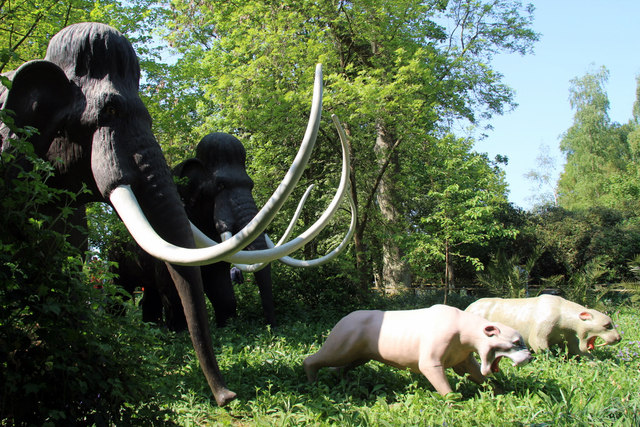
Once upon a time, a great wooly Mammoth happily grazed on green and golden grass. He had satiated his hunger early that morning, but he continued to graze all afternoon. After all, he reasoned, who knows whether the grass will be here tomorrow?
The Mammoth, who had been eating tons of grass from a seemingly endless field of grassy plains, grew bored. The Mammoth, of course, was rather mammoth. He liked the grass, but eating tons of it became ever more boring for the mammoth Mammoth, so his mind wandered and he noticed that a small Mouse was chewing on a grain of grass seed.
“Hey there!!” The Mammoth bellowed. “What are you doing eating my grass!? Leave that alone! All this grass is mine!”
The mouse scampered away and the Mammoth resumed eating tons of grass. But it was still just as boring as ever using his trunk to shovel mouthful after mouthful of grass. He decided he would go looking for the Mouse. He eventually found Mouse and the Mouse was again eating a teeny grass seed.
“Hey there!!!” The mighty Mammoth bellowed. “I told you not to eat grass!! It’s all mine!”
The Mammoth noticed that other animals were laughing. Hyena came over to Mammoth and said, “You are a mammoth Mammoth! Why are you bothering a tiny mouse?”
The Mammoth waved his trunk menacingly and answered, “Indeed! What business is it of yours? Anyway, as you can see, the Mouse is hoping to gain enough weight and strength so that he can come and eat me!”
Now, other animals had come to observe the commotion.
A large Elk said, “That’s ridiculous! Mice don’t eat Mammoths!”
Mammoth smirked and said, “I tell you he wants to eat me! He wants to kill me! I am going to crush this mouse and make life safe for myself, my family, and for all of us.”
The Hyena laughed. The Elk rolled his giant eyes. Even the Yaks began to yuck it up.
Mammoth however began raising up his giant feet and smashing them down to squash the Mouse. But each time, the mouse would scamper away just in time. The Mammoth grew angrier and angrier still because he was having such a hard time smashing the Mouse. He smashed his giant foot down on a sharp stone so hard that it caused his foot to bleed.
The Mammoth bellowed in pain and anger. “Now look! See?! That Mouse is making me bleed! I told you he was trying to kill me and eat me!”
This only made the Hyenas laugh harder. The Elk shook his head in disbelief. The Crows cawed and chuckled. The Lion roared with laughter at the misguided Mammoth.
This only made the Mammoth even angrier and he smashed his giant feet down trying to crush the Mouse. Most of the time, his giant feet came down in the dirt or the grass, but, as luck would have it, he also smashed another foot down onto a sharp rock and now another of his feet began to bleed. “Look! See!? The Mouse is trying to kill me! Laugh if you like, but after I protect myself by killing the Mouse, I’m going to protect myself more by killing everyone who laughs at me! I’ll show you all!”
—————
It has been estimated that there are about 40 billion mice on earth right now.
Of course it seems large enough when you think you’re headed to grandpa’s farm for the weekend. That’s what I was doing when the bombing started. Mom & Dad were going to drive me there after work. But they never made it home. Not yet.
The backpack seems large enough until you find yourself rushing all around the house, like I did, trying to decide what to stuff in it to get away from the bombs. Water? Food? Our pet cat, Lucy? Weapons? Extra clothes? Some of each? Radio? Batteries? Chargers? Electricity. Phone? The kitchen knives, unsheathed?
Meanwhile … the noise never stops. No word from folks. Think you’ll get used to the explosions and the inhuman screams of pain. But you don’t. Not really. You think you’ll find a place that’s better than the last place you were. But you don’t.
No, you won’t get used to it. At least, I never did. You won’t find a better place, either. At, least I never did.
Just death everywhere Stench. And noise which I never did get used to.
The “sharpness” in the explosions evaporated though. I studied enough bio to know what happened. I lost some hair cells is all. They still make a huge THWOMP in my sternum and they still hurt my ears. Oh, yes. The nearby explosions are plenty loud. They are just dull.
Like everything else now, I guess.
I don’t hear birds any more. Maybe there are a few left. What’s that thing about canaries and coal mines? Hard to believe the air here used to be clear enough to breathe without choking. It never used to stink thisbad either. Maybe the stench killed the robins and jays.
Maybe the birds all flew away first. Smart. They have their own built in method of transportation. Anyway, whether the birds are all dead or all flown away, I don’t know. I just know I don’t hear them. Anyway, why would they be singing? I like to think they flew away. All I know for sure is that they’re gone.
I remember in the “before times” being grossed out at the way the crows picked the meat off the bones of road kill. I remember wondering: “Do they get sick from rotting meat ? Or, do they just never realize that rotting meat makes them sick? Or do they do know it makes them sick but they’re so damned hungry, that they don’t care.”
I was sure, back then, that I’d never be that hungry.
What did I know?
Anyway, I thought the crows were gross, all right. But they were brave! They’d swoop out to their sickening feast of squashed squirrel or raccoon or unlucky dog and peck away at the rotting carcass while a car or truck would zoom right at them! Only at the last second, they would angrily flit out of the way. I never saw one get hit.
I guess I kind of wanted one of them to get hit. It would serve them right for being so gross!
“For being so gross.”
As best I can understand it, that’s how all this started. Some folks were being gross. I guess I never really saw them being gross. My parents thought it was a good idea to kill all the gross people but others didn’t agree. I don’t know what the grossness even was. My folks — did I mention I haven’t seen them since all this started? — any way, my folks never explained it.
That was back in what I call the “before times” when we could just drive to the grocery and get fresh vegetables and fruits, butter, cheese, chips, cookies, bread. Olives. I especially liked olives. My folks thought that it was weird for an eight year old to love olives so much. In fact, they called it “gross.”
They were joking. I think they were joking. They may have been joking. I kind of miss them. I don’t think they thought I was gross back then. Lots of people eat olives. I don’t think I started the war. Olives?
I don’t know. I don’t think I was gross enough to deserve to die. Like I said, I’m not sure what the “grossness” was all about — not the grossness that they were killing each other about.
No-one should eat road kill. Or bomb kill.
And no-one does.
Except for the crows.
And me.
*Author’s Note: At the exact moment I wrote the line “Except for the crows” (the first time), the crows outside cawed loudly! Now, all I hear are the wind chimes.