• About PeterSIronwood

petersironwood

~ Finding, formulating and solving life's frustrations.

petersironwood

Tag Archives: problem_solving

Don’t Throw Out the Baby with the Bathwater!

08 Thursday Jan 2026

Posted by petersironwood in creativity, essay, psychology, Uncategorized

≈ Leave a comment

Tags

AI, leadership, life, management, mental-health, politics, Problem_finding, problem_solving, thinking, truth, USA, writing

On Throwing Out the Baby with the Bathwater. 

adorable baby beautiful bed

Photo by Pixabay on Pexels.com

Babies are a pain. Let’s face it. Of course, they are. But they are also a joy. Not only that, they are the future of humanity. Yet, it’s true that they require a lot of attention. And, they have unpleasant by-products, bathwater being one of the least unpleasant. But we say, “Don’t throw out the baby with the bathwater” because we humans do have a tendency to over-emphasize whatever the negative aspects of something are and take for granted the good parts. 

For example, let’s say that your furnace goes out. You are sitting there one cold, wet November evening, before winter’s knife edge of cold is softened by the splendor of a snowfall’s sparkle. No, this is an evening for complete relaxation; it’s the end of a frustrating day at work. Time to settle down with a little Jack Daniels on the minimal rocks and watch the next episode of your favorite TV show. But you find yourself thinking: “It’s cold in here!” So, up you go to see whether someone — certainly not you — has set the thermostat too low. No, you see that it’s set to 72F. But the actual temp is only 67F. No wonder it’s chilly. You put on your slippers and pad down the basement stairs to look at the furnace. It’s not running. 

burning campfire

Photo by Berend de Kort on Pexels.com

You feel that you have been cheated out of your richly deserved and eagerly awaited evening of relaxation. Instead, through no real fault of your own, you find these plans and dreams in shambles and you have to go through a series of hoops, each of which will steal some of your money, and equally important, steal some of your time away from activities you’d prefer. The path in thinking that is tempting to take is to “throw out the baby with the bathwater” and decide that the company or the manufacturer is evil. (They might be, of course; my point is simply that deciding that on the basis of the evidence at hand is not warranted). You might even decide that all heating companies or even all companies or, in extreme cases, everyone else is evil. 

A similar line of thinking, again completely understandable, is something like the following. “Well, when I grew up, we just put everything in the trash. You know. We didn’t have to recycle things. If it was good enough for my parents not to recycle, it should be good enough for my kids.” It really doesn’t seem fair. After all, you were just doing what you had been taught was right and now, all of a sudden, like an infomercial embedded in a sit-com, you are supposed to do something different that does take some extra time. And why? 

assorted plastic bottles

Photo by mali maeder on Pexels.com

As the population of earth grows and grows, our own behavior will inevitably be influenced by a greater and greater number of people. That would be true even without the fact that nearly half of earth’s 7 billion human beings [That was early in 2019; now, it’s 8.3 billion and 68% have access].  now have access to the Internet. Sometimes, that interconnectedness puts constraints on your behavior or makes you feel uncomfortable. On the other hand, that same interconnectedness is what allows so many people (hopefully you included) to live in far better circumstances than did any Medieval king. 

Because we humans trade skills, and natural resources, and cultural strengths, and ideas, and money throughout this whole diverse world, our standard of living is a symphony of glorious possibilities instead of a tuning fork forever singing the monotone of “Sing, Johnny One Note.” But we tend to take for granted the affordable laptop, the central heating and air conditioning, the car now fitted with life-saving seat belts and air bags, the cancer treatment that saved your life, or the pollution regulation that prevented you from getting the cancer you would have gotten without those regulations. You have access, I hope, to a public library and the Internet where you can find out about the world’s great architecture, the world’s great ideas, the world’s great art. Think about that. The world’s knowledge is at your fingertips. Not just the knowledge of your family, or your town, or your state, or your country — the world’s knowledge. And, of course, it isn’t just you. More than 5.5 billion people on earth have this access. And, they can invent, and learn, and dialogue together to create a much better world. 

fullsizeoutput_1372

And that much better world will necessarily be different from the world of today. Being different means that people such as you and I will need to change; learn; and sometimes we will be uncomfortable. It’s understandable that it’s somewhat disconcerting. But we need to look at this in balance. The modern world gives us many good things. Yes, it has some unpleasant side-effects. If we work together though, with the knowledge of the world at hand, we should be able to find ethical and effective paths forward. 

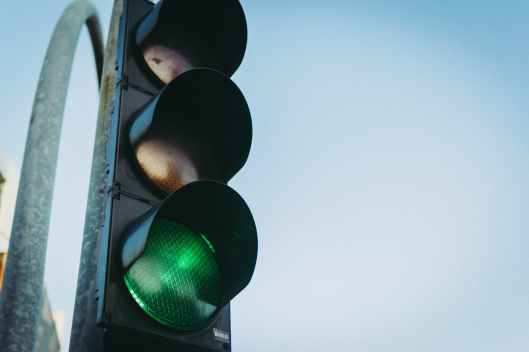
It isn’t only in terms of world-wide cooperation (or lack thereof) that we need to take a balanced look. It’s easy to get frustrated with an actual baby and temporarily forget how wonderful it is. It’s easy to get frustrated with college courses, or roommates, or spouses, or co-workers, or technology, or stop lights, or —- when what is really causing that frustration is not the totality of any one of those things. Stop lights actually speed you on your way! If you’ve ever been to a busy intersection when the traffic light stopped functioning, you’ll quickly see how much worse off things are without the traffic light. 

black traffic light

Photo by Davis Sanchez on Pexels.com

So, please, let’s all have the best 2026 that we can. But when you encounter one of the many frustrations of modern life, let’s try to do a better job of seeing the totality of the system, not just the bothersome part. It’s not easy. When your down jacket, usually so comfortable and warm, happens to send the spiky end of a feather into your neck, it’s natural to focus for a moment on the sharp spike. Okay. We all do that. But let’s also remember that ancestors, not so long ago, would have loved to have a down jacket against the winter freeze. 

beautiful blowing cold cute

Photo by Pixabay on Pexels.com

Don’t throw the baby out with the bathwater! 

————————————

Author Page on Amazon. 

Corn on the Cob

Finding the Mustard

What about the Butter Dish?

The Invisibility Cloak of Habit

You Bet Your Life!

Essays on America: The Game

The Self-Made Man

Wednesday

The Stopping Rule

OOPS!

The Update Problem

Roar, Ocean, Roar

Tools of Thought: Symmetry

07 Wednesday Jan 2026

Posted by petersironwood in management, psychology, Uncategorized

≈ Leave a comment

Tags

beauty, Business, Design, HCI, human factors, Human-Computer Interaction, poetry, politics, problem_solving, symmetry, truth, UX, Web design, writing

Symmetry

IMG_3316

(Original, free-hand drawing by Zoe Colier).

There are many varieties of symmetry. Symmetry exists rampantly in nature and symmetry is also incorporated into many human designs. In this short essay, I want to remind people of several varieties of symmetry and then show how symmetry may also be used as a tool of thought to help solve problems by simplifying the space of possibilities that must be considered. 

Symmetry is a concept with far broader application than cutting out paper snowflakes or choosing a nice looking Christmas Tree, Menorah or other Holiday decoration. It is fundamental in logic, mathematics, physics, chemistry, biology, and even in social science.

Symmetry exists at many different scales as well. Planets are generally roughly spherical and their orbits are roughly circular. 

IMG_5895

The human body, along with most other animals, exhibits rough bilateral symmetry in external appearance. If you examine your own fingerprints or the pattern of your moles, for instance, you will see that one side of your body looks slightly different from a mirror image. If, like me, you are a righty who play tennis, you will find the forearm muscles on your right arm are slightly larger than those on the left. What is remarkable to me is not that there are slight variations between left and right but just how slight those variations are. And, we are not alone. Fish, insects, flatworms, roundworms, snakes, turtles, lizards, horses, dogs, cats, apes, and humans are all roughly bilaterally symmetrical in appearance. I say “in appearance” because our internal arrangement of organs is not at all symmetrical.  

External Appearance and Internal Organs

In general, it seems to me that most animals possess more complete or “perfect” bilateral symmetry than do most plants. I suspect that this is because animals generally move through a physical environment. Since we can move around, the environmental forces are generally symmetrical and so our ability to react to those environmental forces is also symmetrical. A tree, on the other hand, may have a genetic “blueprint” to be bilaterally or (more likely) radially symmetrical, but it may be subject to strong asymmetrical forces such as wind, a water source, or sunlight versus shade. 

Our designed objects are also most often (at least) bilaterally symmetrical, and particularly for those objects which must interact and move through the physical world. Cars, boats, motorcycles, busses, trains, trucks, bikes, skis, surfboards, roller skates, ice skates, snowshoes and tennis shoes all tend to be bilaterally symmetrical. On the inside, however, again just like us, there are often some irregularities. The arrangement of controls of the car, for instance, are asymmetrical. (Each control in itself often does show symmetry. In some cases, this makes it easier to use, especially without looking. I suspect that the symmetry may often be for aesthetic reasons, for ease of manufacturing, for ease of maintenance or replacement or some combination.) The asymmetry of arrangement “works” because the arrangement of displays and controls does not interact with the natural world the way that the car body and wheels do. The controls are designed to interact with a human being. There are also rough conventions for where controls are laid out, how they operate, and what each type looks like. Asymmetry of arrangement is also evident under the hood. However, some of the components such as the engine, the battery, the radiator have symmetry within them. The radiator, which arguably has the most interaction with the outside world, is symmetrically placed though its plumbing is not. 

automobile car customized drive

Photo by Pixabay on Pexels.com

In the design of User Interaction and Experience, an argument can be made for certain kinds of symmetry. For example, in the Mac editor Pages, which I am using to write this, if the B for bold button background turns blue when bolding is turned on, I expect the background will turn back the way it was (white) when bolding is turned back off. I also expect that italics and underlining will behave the same way, especially because all three are in the same toolbar. 

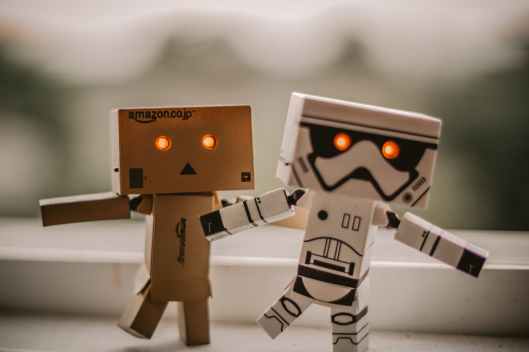
Where possible, it also generally makes sense, I believe, to design so that the functionality of a system is symmetrical. This isn’t always possible. Some actions are necessarily irreversible. If you don’t believe me, ask anyone who has toddlers or who has pets. In the real world, if you shoot someone dead, you cannot “unshoot” them. Unlike a computer system who asks, “Do you really want to delete all your files?” before doing so, guns do not ask that. If you are designing what can be done with a toy robot however, if you can make it go forward, you want to make it so it can go back as well. If it can turn right 90 degrees, you would like to enable it to turn left 90 degrees. Saying, “Oh, yes, but don’t you see, you can, in effect, make it turn left 90 degrees by making it turn right 90 degrees three times?!” does not cut it, IMHO. 

Typically, you not only want the functionality to be symmetrical, you also want the control functions and appearances to mirror the symmetry of the functionality. For example, if you can issue the command: “MOVE ROBOT FORWARD THREE PACES” you want the symmetrical function to be evoked this way: “MOVE ROBOT BACKWARD THREE PACES” and not, “THREE PACES BACKWARD FOR ROBOT MOVE.” If you decide to give auditory feedback for the first command that says, “ROBOT MOVING FORWARD THREE PACES” you do not want the reverse command to provide feedback that says, “ROBOT THREE PACES BACKWARD MOVING.” (Oh, by the way, if you cannot provide symmetrical functionality, please do not pretend to do so with a facade of symmetrical looking commands that actually behave asymmetrically!)

action android device electronics

Photo by Matan Segev on Pexels.com

A lack of symmetry (or consistency) in the functionality, command structure, or visual appearance often arises because of a lack of communication within the development team. If different functions of the robot are to be implemented by different people, then it’s important that those various people use an agreed upon style guide or Pattern Language or that they  communicate frequently. Of course, this is not the only cause of asymmetry. Even if your team communicates really well, they can’t design an effective gun with an “unkill” function. 

There are, of course, various types of symmetry. Bilateral (mirror) symmetry is what the external appearance of our bodies has. There is also translational symmetry, where the same shape is repeated along a line. The string ABCCBA shows bilateral symmetry while ABCABC exhibits translational symmetry. Most human factors people now agree that hot water faucets (usually on the left) and cold water faucets (usually on the right) should both be turned off by turning to the right and turned on by turning to the left (translational symmetry) as opposed to having the faucet on the right turn off to the right and the left faucet turn off to the left. But you will definitely experience both types. 

In both music and poetry, at least in the culture I am most familiar with, translational symmetry is more common than mirror symmetry. It does sometimes happen that musical composers experiment with playing a tune backwards or even with the staff turned upside down. But this is far less common than repeating a theme or melody. Similarly, a rhyme scheme like ABCABC is much more common than is ABCCBA. {In this notation, ABCABC means that the first line rhymes with the fourth line, the second line rhymes with the fifth line and the third line rhymes with the sixth line.} 

black and brown millipede on a green and brown branch

Photo by Pixabay on Pexels.com

In biology, we also find translational symmetry or something close to it. The segments of a tape worm, the segments of the body of a millipede or centipede, the small legs of a lobster, and even our own vertebrae and ribs show translational symmetry. In social structures as well, we find both mirror symmetry and translational symmetry. For instance, the Golden Rule says to do unto others as you would have them do unto you. In addition, as it happens, if we are nicer to other people, then, generally speaking, they are also nicer to us. This is not always true, however. Some people simply take advantage and view all of life as a zero sum game. Whatever you gain, they lose and vice versa. This is a very limited, inaccurate, and self-defeating attitude in most social situations. Most social situations, are, of course, much more complicated. Generally speaking, there are a great many situations that both you and your “opponent” or even your “enemy” would agree are good and a great many others that both of you would agree are bad. If you are playing tennis or golf outdoors, for instance, you may be fiercely competitive but both of you would probably find a game that brings out the best play is better for both of you. Both of you would probably also agree that being rained out is a bad outcome.  

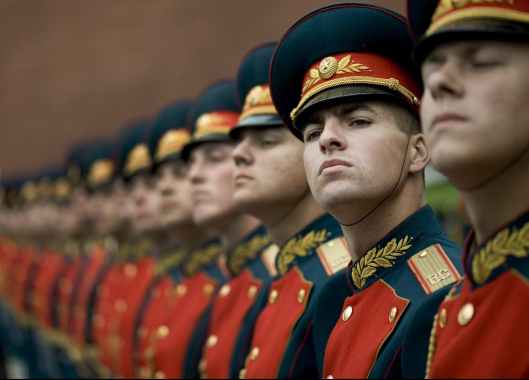
men in black and red cade hats and military uniform

Photo by Pixabay on Pexels.com

In the military and in many industrial settings, there is a great deal of translational symmetry. The “ideal” set-up is to have many groups at each of many levels and each group is meant to be as similar as possible to all the other groups at that level. The marching that military groups learn is both symbolic of this translational symmetry and practice in behaving as a unit composed of identical parts. Whether or not this is the best way to run a military is debatable. To me, it’s undeniable that this management style has been imported into a huge number of organizations where it is definitely not the best way to organize. 

The last thing to note is that symmetry also pops up in design. There is often a whole series of information exchanges from people who have quite different areas of expertise. These exchanges can result in mutual learning, solutions that work, and often patents, and occasionally, some really cool, transcendent, game-changing designs. In my experience, it is much better to have a design process based on symmetrical relationships founded in mutual respect than to have a design process based on having someone in a hierarchical power relationship make decisions that are to be implemented by an identical set of “underlings.”  

macro photography of snowflake

Photo by Egor Kamelev on Pexels.com

The Takeaway

Symmetry is everywhere. There are many forms. If you start looking for symmetry, you will find examples in nature, in mathematics, poetry, art, music, machine design, the military and even in design problems and design processes. Thinking quite consciously about the types of symmetry that exist in a problem space and what could or should exist in that problem space, can lead to novel solutions.


——————————————-

Author Page on Amazon. 

The Walkabout Diaries

Local Symmetries

Alternating Repetition

The First Ring of Empathy

Donnie Takes a Blue Ribbon for Spelling

Travels with Sadie

It was in his Nature

A Cat’s a cat

A Suddenly Springing Something

Hai-Cat-Ku

Hai-Ku-Dog-Ku

The Dance of Billions

Roar, Ocean, Roar


Subscribe

  • Entries (RSS)
  • Comments (RSS)

Archives

  • January 2026
  • December 2025
  • November 2025
  • October 2025
  • September 2025
  • August 2025
  • July 2025
  • June 2025
  • May 2025
  • April 2025
  • March 2025
  • February 2025
  • January 2025
  • December 2024
  • November 2024
  • October 2024
  • September 2024
  • July 2024
  • April 2024
  • March 2024
  • February 2024
  • January 2024
  • December 2023
  • August 2023
  • July 2023
  • May 2023
  • April 2023
  • March 2023
  • February 2023
  • January 2023
  • December 2022
  • November 2022
  • October 2022
  • September 2022
  • August 2022
  • July 2022
  • June 2022
  • May 2022
  • April 2022
  • March 2022
  • February 2022
  • January 2022
  • December 2021
  • November 2021
  • October 2021
  • September 2021
  • August 2021
  • July 2021
  • June 2021
  • May 2021
  • April 2021
  • March 2021
  • February 2021
  • January 2021
  • December 2020
  • November 2020
  • October 2020
  • September 2020
  • August 2020
  • July 2020
  • June 2020
  • May 2020
  • April 2020
  • March 2020
  • February 2020
  • January 2020
  • December 2019
  • November 2019
  • October 2019
  • September 2019
  • August 2019
  • July 2019
  • June 2019
  • May 2019
  • April 2019
  • March 2019
  • February 2019
  • January 2019
  • December 2018
  • November 2018
  • October 2018
  • September 2018
  • August 2018
  • July 2018
  • June 2018
  • May 2018
  • April 2018
  • March 2018
  • February 2018
  • January 2018
  • December 2017
  • November 2017
  • October 2017
  • September 2017
  • August 2017
  • July 2017
  • June 2017
  • May 2017
  • April 2017
  • March 2017
  • February 2017
  • January 2017
  • December 2016
  • November 2016
  • October 2016
  • September 2016
  • August 2016
  • July 2016
  • June 2016
  • May 2016
  • April 2016
  • March 2016
  • February 2016
  • January 2016
  • December 2015
  • November 2015
  • October 2015
  • September 2015
  • August 2015
  • May 2015
  • January 2015
  • July 2014
  • January 2014
  • December 2013
  • November 2013

Categories

  • AI
  • America
  • apocalypse
  • cats
  • COVID-19
  • creativity
  • design rationale
  • driverless cars
  • essay
  • family
  • fantasy
  • fiction
  • HCI
  • health
  • management
  • nature
  • pets
  • poetry
  • politics
  • psychology
  • Sadie
  • satire
  • science
  • sports
  • story
  • The Singularity
  • Travel
  • Uncategorized
  • user experience
  • Veritas
  • Walkabout Diaries

Meta

  • Create account
  • Log in

Blog at WordPress.com.

  • Subscribe Subscribed
    • petersironwood
    • Join 661 other subscribers
    • Already have a WordPress.com account? Log in now.
    • petersironwood
    • Subscribe Subscribed
    • Sign up
    • Log in
    • Report this content
    • View site in Reader
    • Manage subscriptions
    • Collapse this bar
 

Loading Comments...