The higher the resistance, the less current flows for a given level of voltage.
The resistance of the intact human body is higher than you might imagine.
If current is applied where the skin is cut however, the resistance falls dramatically.
Dry, unbroken skin means the resistance of the human body may be as high as 100,000 ohms but broken skin can lower that to as little as 500 ohms.
What about the body politic?
Pure water is not such a great conductor as it turns out. But add a tiny amount of salt and it becomes a great one!
A copper wire is, as most everyone knows, a great conductor and offers little resistance. However, how much resistance depends on diameter of the wire. The greater the cross-sectional area, the less the resistance. They are inversely related.
These days, many people actually get more pleasure and spend more time “living” in the information space they inhabit than they do from the real world that they are actually living in. The result is less resistance to good information but also to misinformation.
The resistance is also directly related to the length of the wire. More length, more resistance. This makes me wonder about the length of the communication channel as well. It is now “shorter” than ever before. You can literally watch a video shot by someone else across the world with no intermediaries touching the content. Or, seemingly so.
Now, let’s introduce the fact that, for the most part, it is non-trivial to decide what is “real” and what is “made-up.” And, you’re subject to more of this stream and more instantaneously than ever before. Not so long ago, new information was vetted by experts and, in fact, multiple experts. This is what happens in scientific journals as well as journalistic reporting. The same is true of financial transactions (which are typically purely informational). No-one is ever expected to be the only source of verification. Everything is cross-checked.
Given this lack of resistance, people are much more susceptible to manipulation. Theoretically, they are also much more “susceptible” to learning more truth more quickly. But whoever controls the wire, controls the flow. For instance, if you have enough money, you can buy more bandwidth and hire entertaining people and collect & analyze data on your audience in great detail so that you can tailor your message for maximum effectiveness.
Given the choice, one has to ask: “What sort of person with a great deal of wealth would use that wealth to misinform and mislead their fellow human beings?” They could choose instead to use that wealth to improve everyone’s knowledge, know-how, and creativity. This would result in a better world for everyone, including the ultra-wealthy unless their greatest source of pleasure is seeing others in misery.
Seriously though. Try to imagine that you had billions and billions of dollars to burn. What would motivate you to spend a substantial amount of that money to lie to people; to intentionally mislead them? I’m really curious.
Today: A beautiful day in San Diego. Yes, it’s true. There are many such—even in January.
Our first discovery was a hawk which I heard the moment we stepped out the door. I tried to mimic the sound and told Sadie it was a hawk. We walked to the end of our street where the hawk was perched on the lamp post. Sadie looked up at it as I greeted the hawk. So far as I can recall, she’s never barked at one.
Even before we reached the hawk, Sadie made another discovery. I have no idea what it was but I know from her level of excitement that it was a *huge* discovery. Rather than drag her along to some predetermined goal of my own, I indulge her explorations even when I can’t tell what it is that she’s so enthralled with.
For her part, she tolerates me stopping to take pictures. I don’t think she understands why I do it. For that matter, I’m not sure I fully understand why I do it. But I enjoy it. I like sharing them.
At one of the many “choice point” corners, the sun was just beginning to rise enough to light up the bougainvillea bush. It’s quite prevalent in the San Diego area so I assume it tolerates the climate quite well.
Next we saw the sun rising. Contrails are also visible. Contrails are mostly composed of the potentially lethal substance: “Hydrogen Hydroxide” aka HOH or, more commonly H2O; i.e., water. Yes, you can drown. OTOH, you are more H2O than anything else and you can’t live without it. We tolerate the presence of water and even encourage it even though approximately ten people a day drown in America.
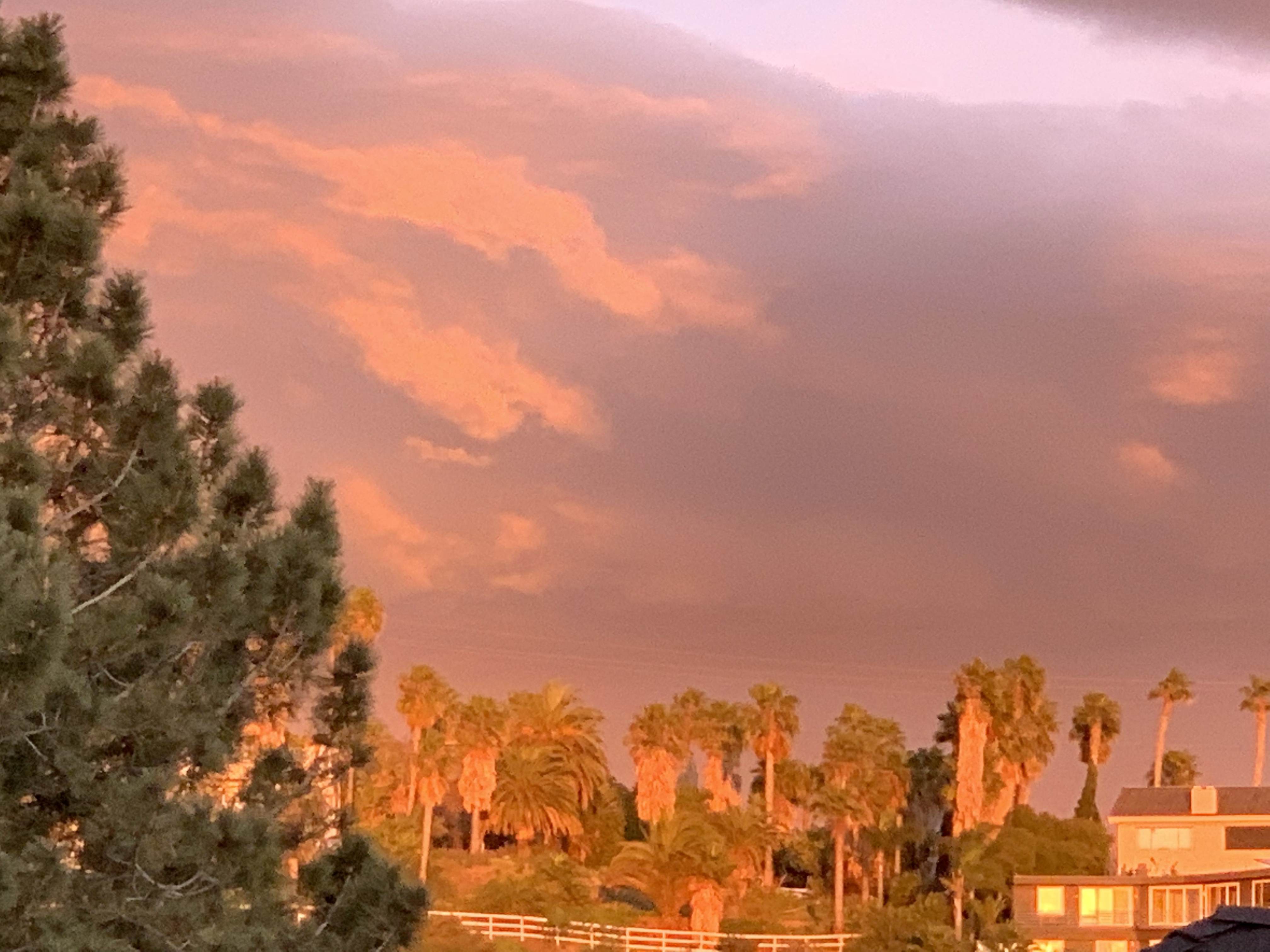
The pineapple palm shown below has its flowers lit by the early morning sun which tends to exaggerate their orange color. Palm trees flourish in California and Florida. But apparently, it isn’t so much that the relish the sun and the heat as that they don’t tolerate freezing temperatures very well. I saw some, for instance, in Limerick, Ireland, not known for a balmy climate.
I next spied these sunlit Christmas decorations. Of course, I could tell they were Christmas decorations and not Kwanza or Hanukkah decorations because, as everyone knows, the wise men found their way to Bethlehem on Reindeer. Or camels. Whatever. Jesus is often portrayed as blond and blue-eyed, so… Anyway, speaking of tolerance, some folks believe all Christmas decorations should be removed no later than January 1.
Why?
Are they confused? Do they look at these reindeer and think, Oh, my God! I thought we just had Christmas, but no! Here it is again already! I’ve got to buy more presents! Or…? It bothers me not the slightest if people want to keep their decorations up all year, be they Christmas, Easter, Halloween, or whatever. After all, some extremely wealthy people celebrate “Wealth Day” 365 days a year with their displays so why not?
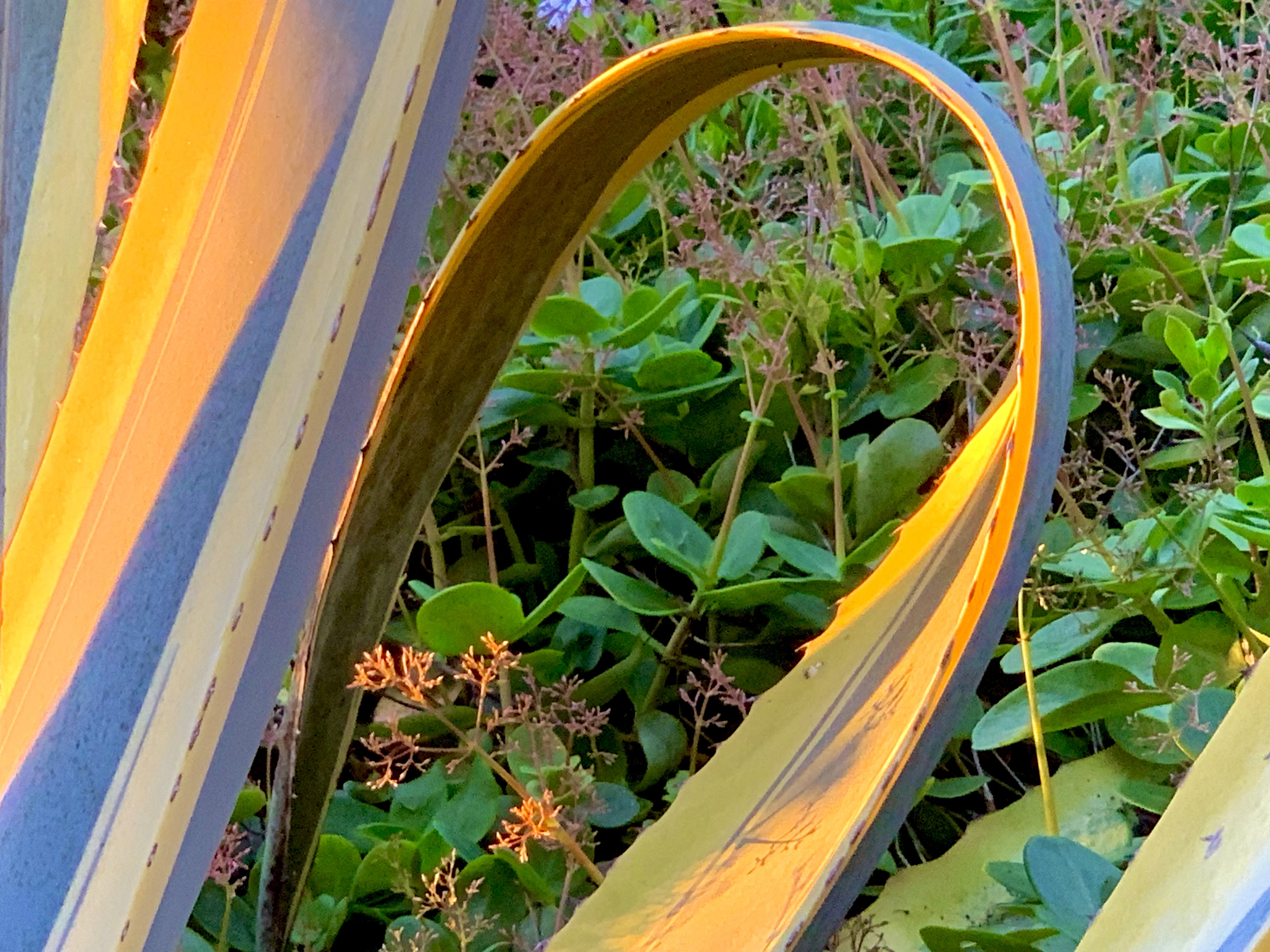
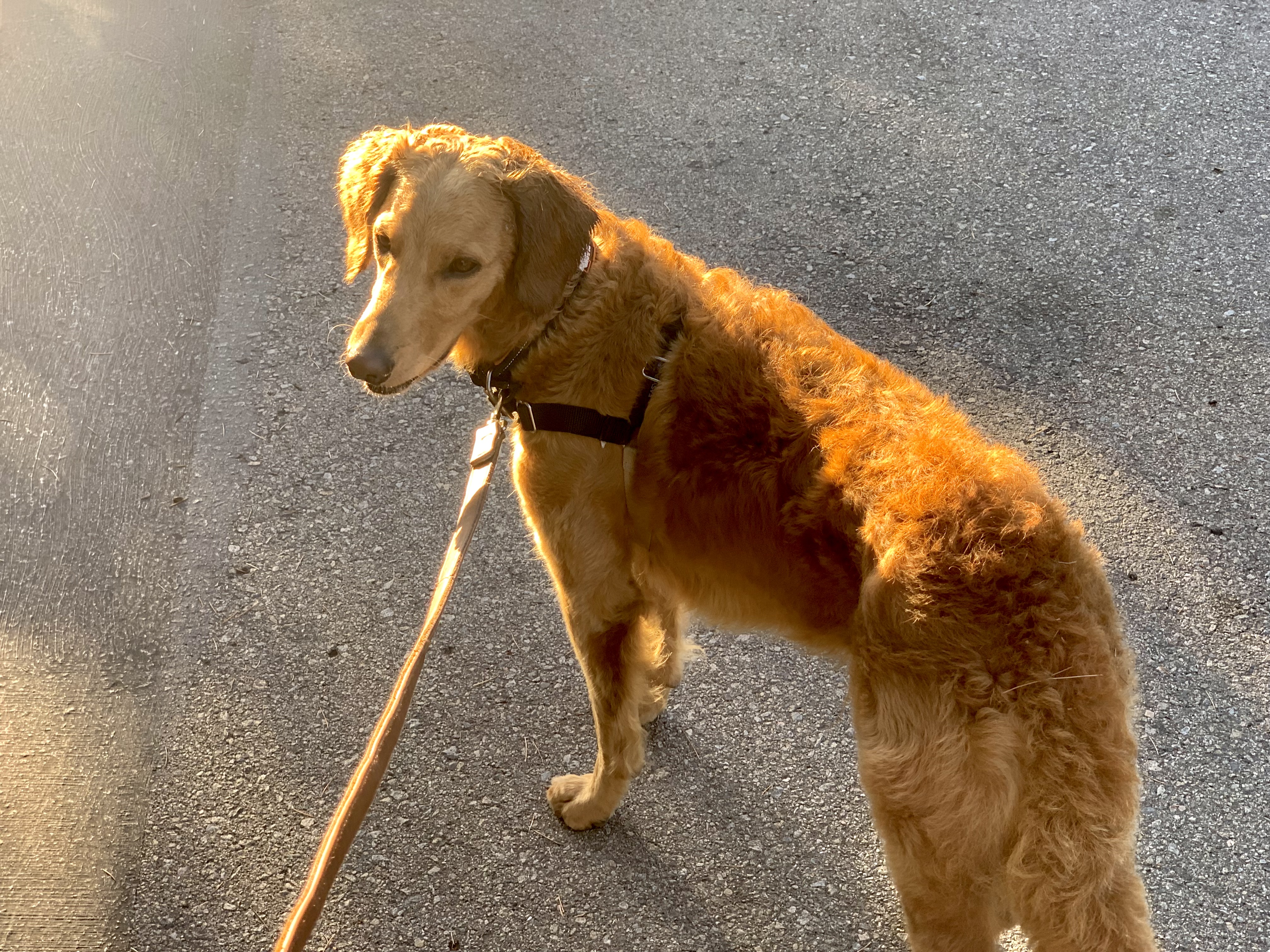
As we continued our walk, the golden sun lit up Sadie’s fur so I snapped the picture below.
And then we came to the golf course. This is the tenth green. If you want to play golf, you will need to become tolerant of your own errors.
So, as we began the long climb back up the street to our home, I began to wonder why tolerance seems so difficult for so many people. Intolerance of other races. Intolerance of other religions. Intolerance of other cuisines, clothing styles, color schemes, music, book genres, traffic merges, waiting in line, sexual preferences, and so much more.
On the one hand, I don’t want to “be” anyone else or any other organism. I admire the hawk but I don’t want to be a hawk. I’m happy being a human. I admire many of Sadie’s abilities. But I don’t want to be a dog. There are many choices that other humans make which are different from the choices I make.
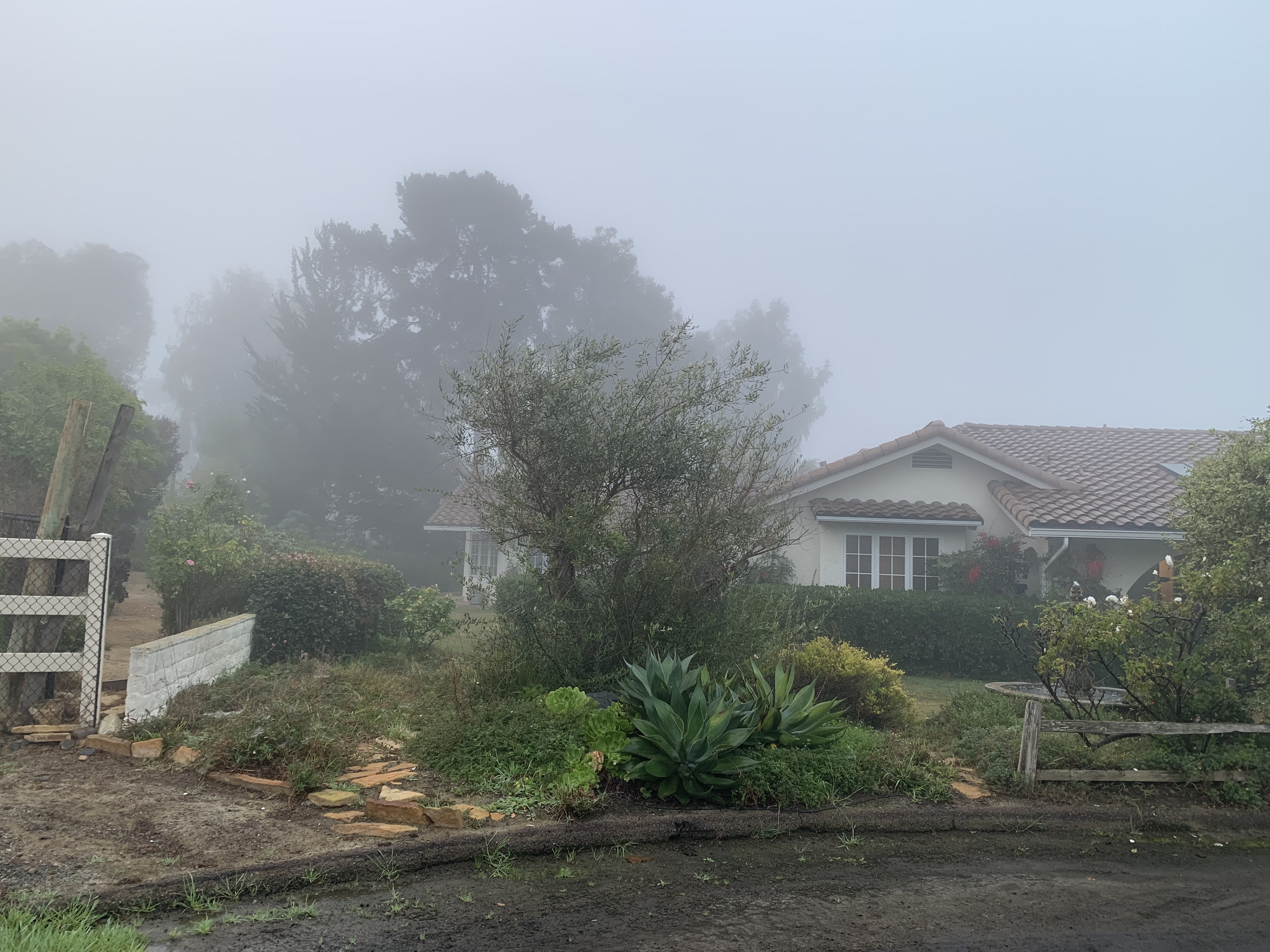
Our morning walk began, appropriately enough, in heavy fog. No sun. Cold. Damp. A slight but persistent icy wind.
How appropriate, I thought. No sign of a sunrise. Not near here.
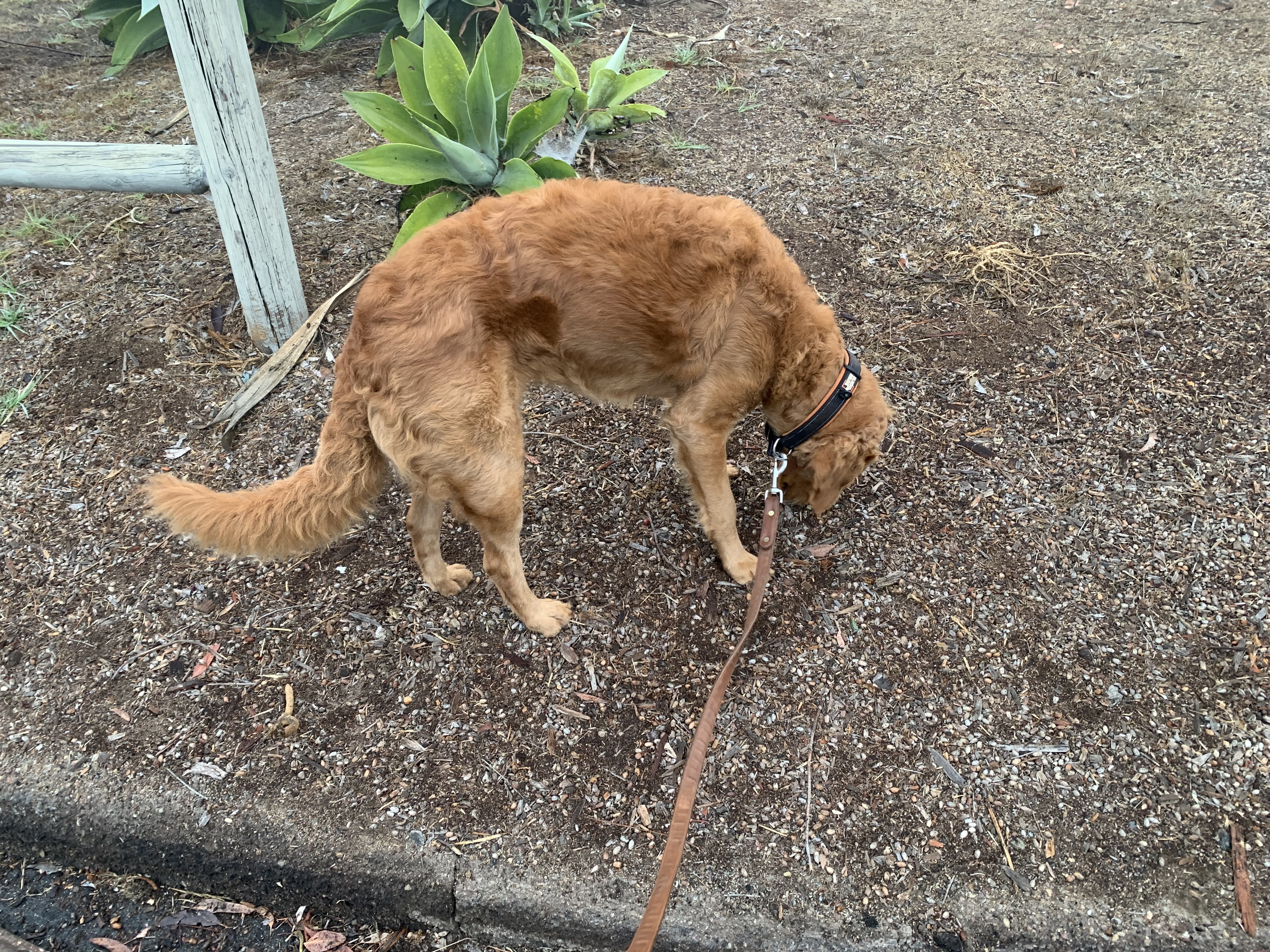
Sadie, however, seemed oblivious to the fog, the damp, the cold, the politics. Before our walk began, I told her we’d try walking without the shoulder harness but she’d have to do “Good Walking” with no Pulling. She’s strong and pulling hurts my back and knees but especially my ankles and arches. The harness helps prevent her from pulling, but doesn’t really eliminate it.
She did good walking.
And I noticed that, up close, she is still as beautiful as ever. No gold or red from the rising sun, but still beautiful.
Indeed, the fog shrouds what is distant, but up close? Bright signs of beauty still beckon. If we bother to look.
Looking more distantly–ominous, if not downright evil.
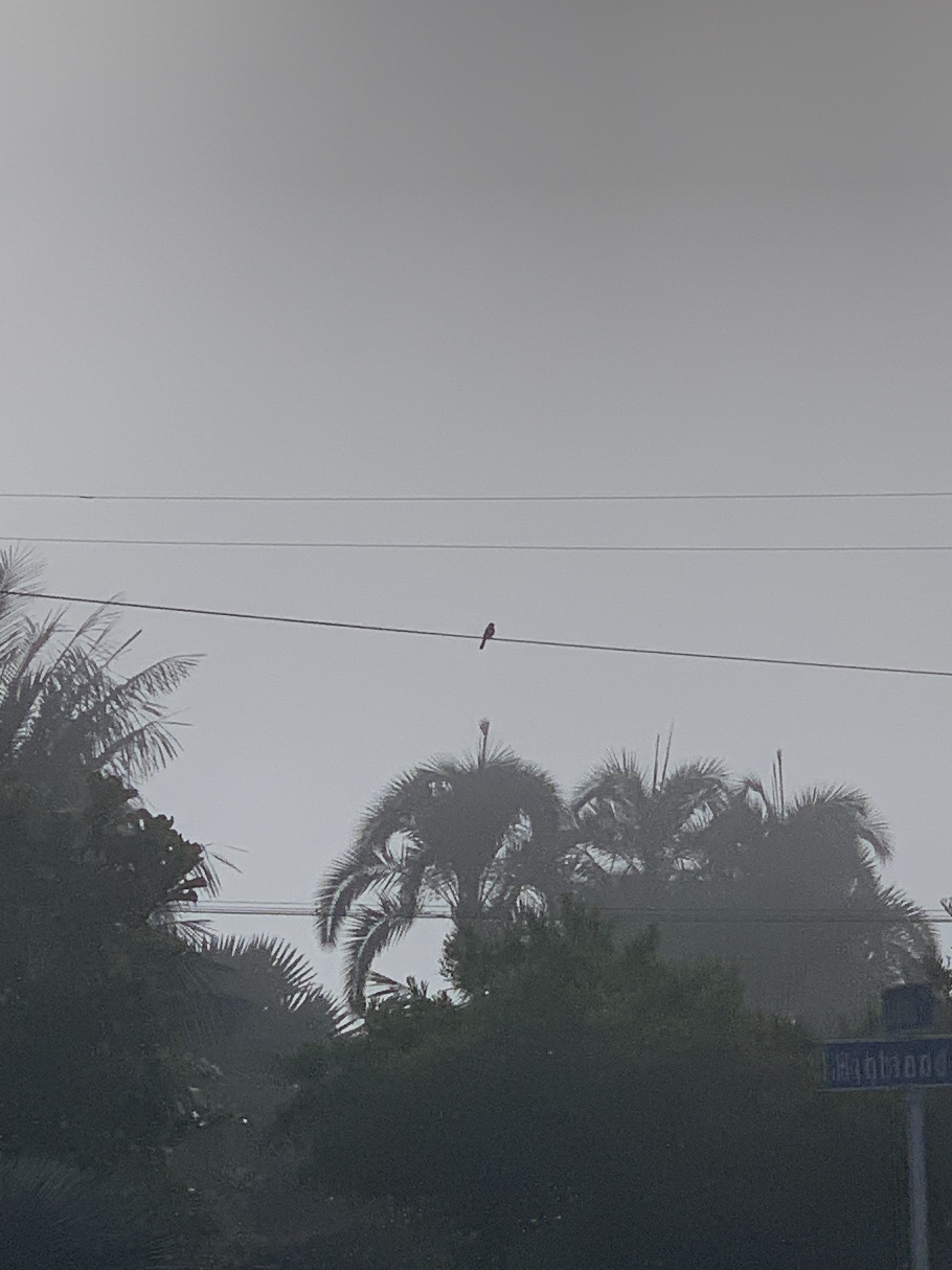
Even so, the lonely mourning dove coos on her thin wire perch.
Soon, the sun does begin to shine. Darkness, like cancer and greed, always eventually loses.
A few weeks ago, in preparing for a blog on the concept of “coming home,” I used a popular search engine to find out how far the sun moves in one year as it speeds through the galaxy. Before listing links, the search engine first provided an AI summary answer to questions. It gave an apt answer that seemed quantitatively correct. Then, astoundingly, it added the gratuitous gem: “This is called a light year.”
It isn’t of course. A light year is how far light travels in a year, not how far the sun travels in a year. The sun travels at 6,942,672,000 kilometers per year. A light year is 9.46 trillion kilometers; more than a thousand times farther. It’s understandable in the sense that the word “sun” is often used in the same or similar contexts as “light.” But it’s an egregious error to be off by a factor of 1000. It would be like asking me how much my dog weighs and I answer 55,000 pounds instead of 55 pounds. A standard field for American football is 100 yards, not 100,000 yards (over 56 miles!).
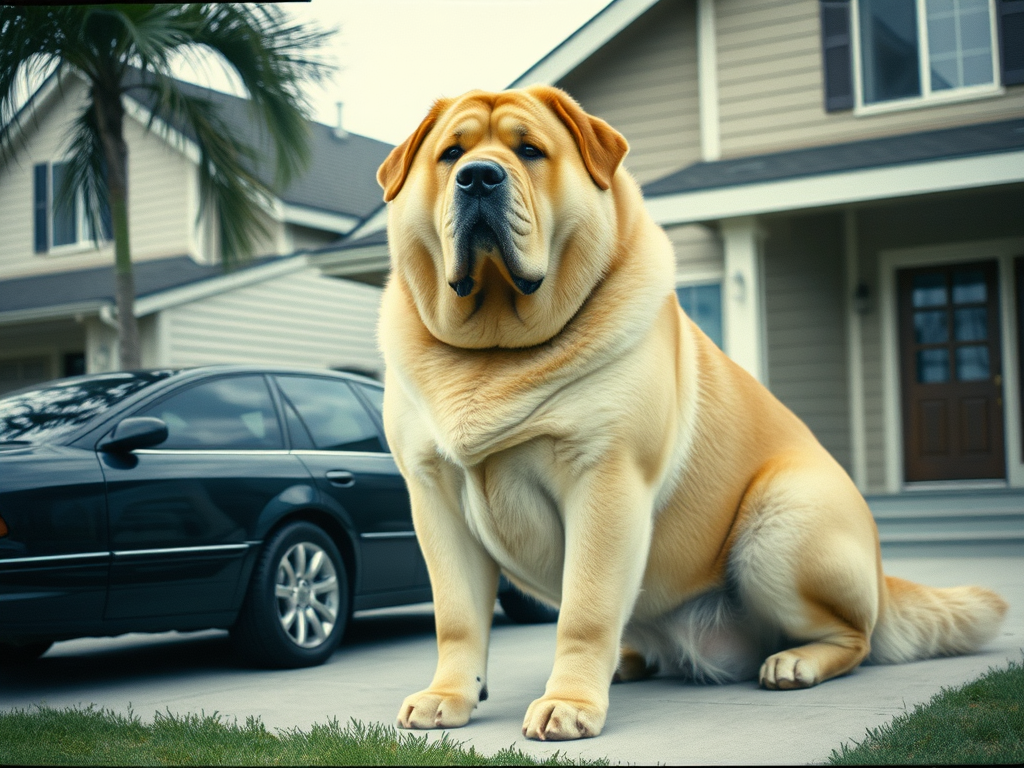
Generated by AI — note the location of the tire! I asked for a 55,000 pound dog, but this looks about the same size as the car which likely weighs far less than 55,000 pounds.
When I checked back a few days later, the offended nonsense no longer appeared. I have no idea how that happened. I forgot about this apparent glitch until Thanksgiving dinner. The topic came up of Arabic and I mentioned that I studied a little in anticipation of a work assignment that might make it useful. I mentioned that in Arabic, not only are nouns and adjectives gender-marked but so are verbs. One of the other guests said, “Yes, just like in Spanish and French.” I said, “No, that’s not right. German, Spanish, and French mark adjectives and nouns with gender but not verbs.” But they were insistent so I checked on my iPhone using the search engine. To my astonishment, in response to the question, “Which languages mark verbs with gender?” I got the following answer:
“Languages like French, Spanish, German, Italian, Portuguese, and most Slavic languages mark gender in verbs, meaning the verb conjugation changes depending on the grammatical gender of the subject noun; essentially, a verb will have different forms depending on whether the subject is masculine or feminine.”
This is not so. And, in the next paragraph, incredibly, there are examples given, but in the examples, the verbs are not marked differently at all! The AI had made an error, but an error that at least one human being had also made.
Now, I sensed a challenge. Can I construct another such query with a predicted “bad logic” result? Is there a common element of “misunderstanding” between the two cases? Intuitively, it feels as though there’s a way in which these two errors are similar though I’m not sure I can put a name to it. Perhaps it’s something like: “A is strongly associated with B and B is strongly associated with C, so A is strongly associated with C.” That’s typically not even a fallacy. The fallacy comes with actually equating A and C because they are strongly associated.
It reminds me of several things. First, my wonderful dog Sadie knows the meanings of many words—at least in some sense of “knows the meaning of.” When we go for a walk, and other dogs come into view, I remark on it: “Oh, here comes a doggie” or “There’s someone walking with their dog.” Or, when a dog barks in the distance, I say, “I hear a doggie.” For several weeks prior to getting her little brother Bailey, my wife and I would tell her something like, “In a few weeks, we’re going to get a little doggie that will be your friend to play with.” When we got to the word “doggie” she would immediately alert and even sometimes bark. She has similar reactions to other words as do most dogs. They “understand” the word “walk” but if you say something like “I can’t take you for a walk now, but later this afternoon, we can go for a walk” you can well imagine that what she picks out of that is the word “walk” and she gets all excited. Same with “ball” or “feed you.”
The AI error also seems vaguely human. I can easily imagine some people concluding that a “light year” is the distance the sun travels in a year. A few years ago, a video was widely circulated in which recent Harvard grads were asked to explain why it was warmer in the summertime. Many answered that the earth is closer to the sun in the summer. It’s totally a wrong answer, but it isn’t a completely stupid answer. After all, if you get closer to a heater or a fireplace, it feels warmer and when you walk away, it feels cooler. We’ve all experienced this thousands of times.
The AI errors also seem related to the human foible of presuming that a name accurately represents reality. For example, many people believe that the sun does not shine on the “dark side of the moon.” After all, it is called “the dark side.” Advertisers use this particular fallacy to their advantage. When we moved from New York to California, we paid for having our stuff “fully covered” which we falsely believed meant “fully covered.” What it actually means in “insurance-speak” is that things are covered at some fixed rate like five cents a pound. Huh? Other examples of misleading words include “All natural ingredients” which has no legal significance whatsoever.
As I suspected, the AI system has an answer that is not unlike what many humans would say:
There are several advantages to buying food with all-natural ingredients, including:
Health benefits Natural foods can help with blood sugar and diabetes management, heart health, and reducing the risk of cancer. They can also improve sleep patterns, boost the immune system, and help with children’s development.
Environmental benefits Organic farming practices prioritize the health of the soil and ecosystem, and are less likely to pollute water sources or harm animals.
Supporting local economies Locally grown food is picked at its peak ripeness, which can lead to more flavor. Buying local food also supports local farmers and producers.
Nutritional superiority Organic ingredients have higher levels of essential nutrients than conventional ingredients.
Superior taste Fresh ingredients can taste much better than non-fresh ingredients.
Health benefits
The first statement is problematic. Why? Because claiming something has all-natural ingredients has zero legal significance. The advertisers, of course, want you to believe that “All-Natural Ingredients” means something; in fairness, it should. But it doesn’t. Everything that follows lists positive benefits of things that are often associated with claims of being all-natural.
The AI answers reflect what is “out there” on the Internet and much of it is simply propaganda. There are many scientific facts that can also be found on the Internet too, but popularity seems to define truth for the AI system. Imagine that one of the major political parties mounted an effort funded heavily by extremely wealthy people that claimed there was genetic evidence that rich people should be rich. There is nothing (apparently) to prevent the AI system from “learning” this “fact.” And, there is nothing (apparently) to prevent many citizens from “learning” this “fact.”
One of the most pleasurable “chores” I’ve ever had is walking our goldendoodle Sadie twice a day. It’s exercise. It’s a chance to see nature’s beauty. It’s a chance to interact with Sadie and informally explore her mind. She likes to vary her route. She likes to return to “known” spots and also to explore new places. She knows when we are “headed home.” And, once we begin heading home, she typically begins to engage in a variety of “procrastination” behaviors. She stops and licks herself. She stops and looks back to see whether any of her neighborhood friends—human and dog—are headed our way. She suddenly finds an incredibly interesting scent to track down.
Her procrastination is something I completely understand. I did the same thing as a kid. And my kids did the same thing. And their kids did the same thing. While I sympathize, it also gives me a chance to think. What does it mean to be heading home? Can one ever go back home?
Undo and Home Base
Early in my career as a researcher in Human-Computer Interaction, I had an opportunity to contribute to a set of “Guidelines.” Although the New York Times once erroneously ascribed the “invention” of UNDO to me, I did not invent it. It seems to me that the concept is actually quite old. I did, however, mention in the guidelines that UNDO should be provided as well as providing a “Home Base”—that is, a way to go to a state where you could begin again.
To Sadie, and to me, our home is our home base. Like other home bases, we conceptualize them as being a return to an unchanging safe space. Relatively speaking, and roughly speaking, that’s a good characterization. It’s relative because no place on earth is absolutely safe. Disasters can come in many forms: extreme weather, wars, crime, and disease to name four. Also, even if disaster doesn’t strike, we can be sure that home will never be exactly the same as when we left it. Everything is constantly in motion and in flux. It can be comforting to imagine that home stays the same, but it doesn’t. Nor does Sadie. Nor do I.
Sometimes, a moderate amount of change is nice. I like to take photos in our beautiful garden. I end up sometimes taking pictures of “the same” plant or flower several days in a row. I also tend to take flowers when they bloom, year after year. Sometimes, these pictures look very similar on successive days or on successive years. But in actuality, they are never exactly the same. The plant itself changes day to day (as do I; as does Sadie; as do you). In addition, the light changes from day to day. The surrounding plants in the garden also change from day to day and year to year. In addition, when I take a picture, I’m not in the exact same position. The software on the iPhone changes over time as well. The lenses on the iPhone change over time. Even if by some industrial strength replicability dream (nightmare?) I could take exactly the same photo, you wouldn’t perceive it as the same because your eye/brain system is always changing, both organically and by virtue of your other visual experiences.
Another Sunset
There are characteristics of sunsets that we see as similar over time. Here are three sunset shots years apart.
Another “Another”
Are there any replications? In my mind, sure. In reality, no.
A rose is a rose is a rose, but not only are two different roses ever identical. Even one rose is not the same day after day, hour after hour, or even second by second.
Another Trip Around the Sun
What is more steady than the movement of the earth around the sun…or the sun around the earth. In the Medieval times, the Europeans wanted to describe in perfect circles and put themselves at the center of the universe.
Now, we are more sophisticated and know that the earth actually orbits the sun. Our seasons depend on the relative position of the earth and the sun. But while we are aware of our trip around the sun, earth does not return to the same spot. Today is November 1. Next November first? The sun will have traveled through our galaxy 6,942,672,000 kilometers. That’s a far piece. I’ve run a number of 10K races. The galaxy travels a lot faster.
Another Homecoming? Is it possible? Can we use time machines?
Can we go back to the 1950s?
Can women simply forget that they were once treated as human beings?
In order to work effectively, today’s technology presumes a whole set of other technologies, skills, infrastructure, attitudes, processes, laws, rules, regulations. If we actually tried to go back to 1950, we would miss.
By about 500,000 years. Every so-called primitive tribe ever studied has customs, rules, practices, and rituals. Going back to the 1950’s by destroying the rule of law won’t work no matter how loudly people scream for it. You can’t scream your way to the moon. You can’t scream your way to Mars. You can’t scream your way to happiness. You cannot make two plus two equal five, no matter how loud you scream. Sadie can’t bark them into equivalence. A snake cannot hiss them into equivalence.
You can typically get yourself home. But no matter how hard you “insist,” home will not be in precisely what it was when you left. And, it definitely won’t be in the same place in the universe. Not even close. Going back is a mental exercise and never a physical reality.
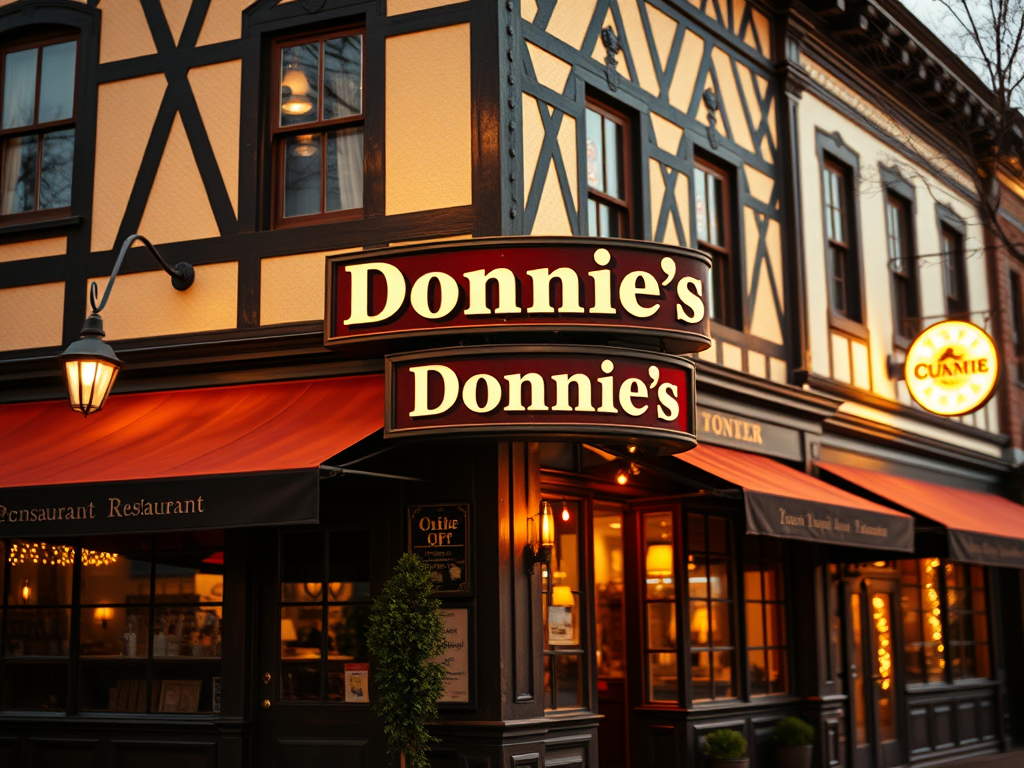
“Donnie’s Restaurant,” located in the town center of Lancaster, Pennsylvania, began business in 1854, a quarter of a century before Franklin Winfield Woolworth opened his first five and dime store in 1879. Of course, back then, it wasn’t called “Donnie’s Restaurant.” It was originally called “George’s” named after the original proprietor, George Oglethorpe Parsons. Lancaster was originally named “Hickory Town.” Indeed, for many years, a stately grove of shagbarks abutted the estate upon which George decided to open his general store and tavern.
If we now fast forward (and who, these days, doesn’t love to fast forward?) to 1985, the name was changed to “Donnie’s Restaurant” by one of George Parsons’s descendants Donnie Parsons. Donnie continued many of the Restaurant’s traditions, including hickory nut pancakes with real maple syrup and local butter; beans and franks in homemade basil tomato sauce; and a one pound serving of prime rib. The prime rib came from local Holsteins. Though not officially “organic,” both beef and butter were free from toxic concentrations of antibiotics and pesticides.
In the summer of 2015, the restaurant changed hands again and for the first time, the proprietor bore no known blood relationship to the earlier owners. Nonetheless, as luck would have it, his name was also “Donald” so he decided to keep the name “Donnie’s Restaurant” as well as the “Pennsylvania Dutch” architecture fused with Italianate features.
The restaurant’s popularity grew under the new owner during the first few months. He kept the traditional dishes and promised to lower prices considerably as soon as possible. He also promised that he would increase the salaries of the cooks and waiters as soon as economically feasible. He fired most of the servers and replaced them with more attractive women.
(AI generated image above)
If one had judged the success of the restaurant by Donnie’s residence, one would have concluded that the restaurant was doing quite well indeed. Donnie found it expedient to cut costs by replacing some of the daily and weekly cleaning routines of the former owners with well-timed bribes for the health inspectors. At first, the bribing was initially more expensive but Donnie recorded the health inspector’s bribe-taking which reduced the necessary fee considerably.
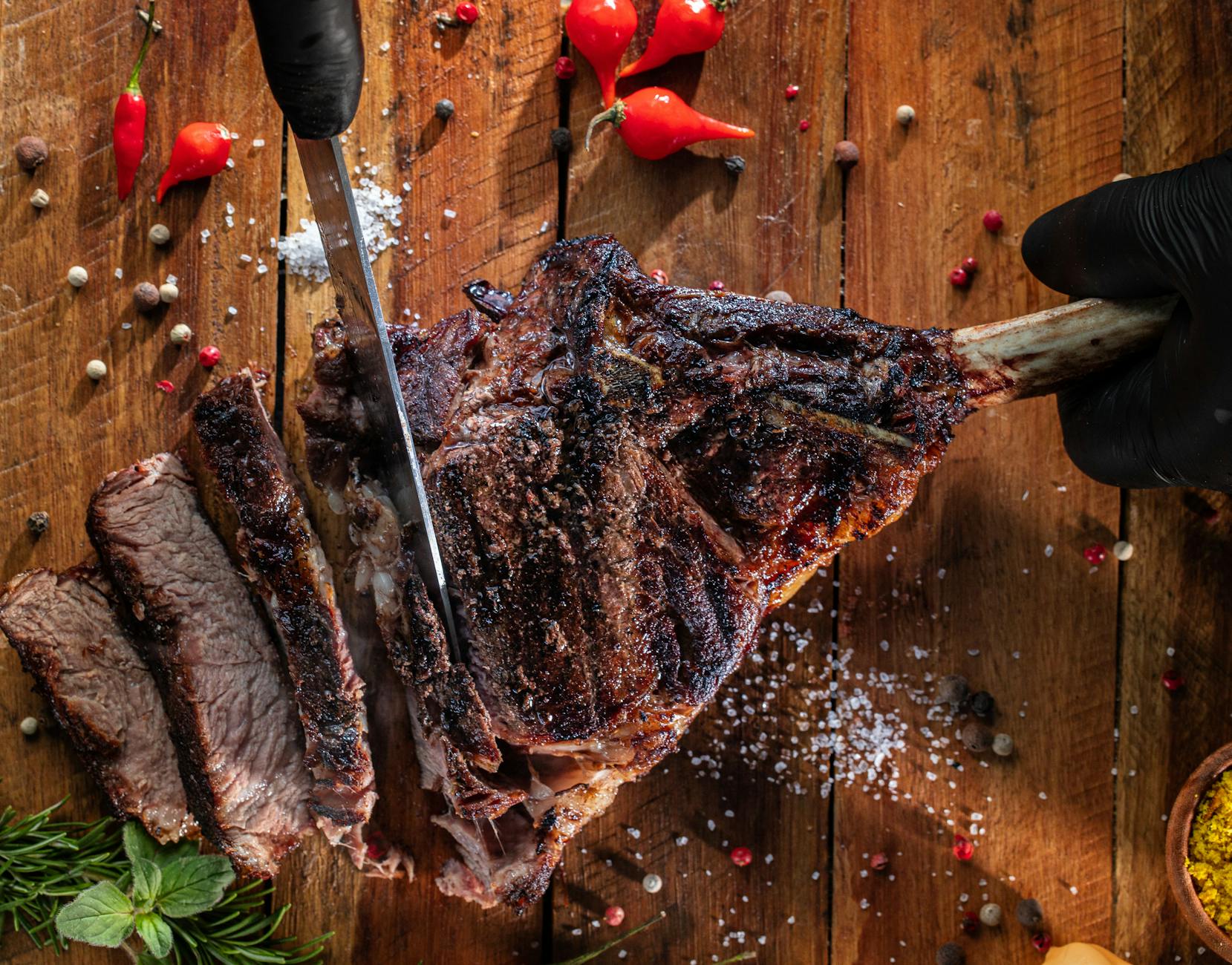
Donnie kept the menu unchanged although he found ways to save more money by replacing the most absurdly expensive ingredients. For example, Donnie’s famous hickory nut pancakes were still listed that way on the menu, but instead of paying a fortune for hand-picked hickory nuts, he bought walnuts in bulk from China. Instead of paying a fortune for locally produced butter, he bought butter in bulk from India. Instead of using real maple syrup, he found that most people could not distinguish it from “Aunt Jemima’s” provided he simply ordered staff to pour the sugar syrup into a serving container that was labelled “100% pure Vermont Maple Syrup.”
(AI generated image above)
By greatly reducing the cost of hygiene and ingredients, Donnie had the option of raising wages or lowering prices or both. He decided it would be more prudent however, to increase profits. After all, Donnie found that if one promised to lower prices and increase wages, it worked nearly as well as actually doing it. This is particularly true if one promises with passion and sincerity.
Despite all the time and effort Donnie put into the restaurant, he found that after several months, fewer people actually went to the restaurant. There were still a large group of faithful customers who showed up on a regular basis, but he was not attracting any new clientele and even the faithful didn’t always show up. Donnie considered spending money on an advertising campaign but decided it was too expensive. Instead, he launched his own anti-advertising campaign aimed at discouraging people from dining at other local restaurants. He wrote letters to the editor. He dropped hints in conversation. He privately told several of his staff members that if they wanted to keep their jobs, they had better join in with his whispering campaign.
A local diner was said to be adding rat turds to bulk up their pecan pie. A fried chicken house went bankrupt from continual reports of Salmonella poisoning despite the fact that there were no actual cases of Salmonella. A sandwich shop, famous for its sourdough bread, had to close doors because one of the bakers had been “caught” urinating in the dough. This too was an out and out lie, but, more importantly, from Donnie’s perspective, it cut his competitor’s business in half. The local “Ponderosa Steakhouse” was said to be using horse meat instead of beef. Again, although completely unfounded, this persistent rumor cut their business in half.
It worked! As the number of options for restaurant-goers diminished, more business returned to Donnie’s. To celebrate the uptick in business, he painted a lot of gold trim on the doors to the restrooms which were newly labelled “Women ONLY” and “Men ONLY.” He found other ways to cut costs. For inspiration, he needed to search no further than his own smear campaigns. He bulked up his pies with rat turds. He told his chefs to save time by not cleaning cutting boards between cutting raw chickens and preparing fresh vegetables. He substituted horse meat for prime beef. Initially, these changes increased his margins and he was happy.
These changes, however, did not go completely unnoticed by his customers. Let’s zoom in for a moment (and who, these days, doesn’t love to zoom?) to a couple of long-term customers of “Donnie’s Restaurant” as they sit in their kitchen and contemplate dinner plans.
(AI generated image above)
Mildred sighed and banged the cupboard shut. She peered over at Gerald whose brow furrowed as convoluted and hateful as an Alito decision rationale. He grunted a single syllable: “Well?” Mildred sighed again and tip-toed across the kitchen to the table and sat beside him.
“We have no pasta, Ger. Sorry. We haven’t been to “Donnie’s” for a while. On the way home, I could run in to Walmart & grab some pasta for tomorrow. Doesn’t a prime rib sound good? You used to love them.”
Gerald grunted. “Yeah. I dunno. Lately, their steaks and prime rib haven’t been as good. Tough. I think maybe they overcook them. I dunno. Also, they replaced their home fries with whipped potatoes but they kind of suck. I think they may be powdered.”
Mildred nodded and bit her lip. “Funny you say that. I used to like the meatloaf. But lately, it has tasted…I dunno…off somehow.”
Gerald peered up at the ceiling and once again thought about what could possibly be causing the ever-widening stain. He shook his head slightly and thought, I’ll deal with that later. First things first. Gerald said, “Well, it can’t really be that different. After all, it’s got the same menu and the same name.”
Mildred and Gerald sat in silence for a few moments before Gerald said, “Not much else in town these days. Such a string of gross stuff. You could stand to lose a few pounds anyway. How ‘bout we just go have a couple slices of pie and a cup of coffee? Skip the main course? What say?”
“That sounds good, actually. Hard to mess up a pie, after all.”
Hard, but not impossible.
Unlikely as it might seem, most people don’t care much for the taste of rat feces. Sure, Donald had the chef throw in loads of extra sugar but it didn’t completely obscure the vermin taste. Privately, neither Mildred nor Gerald cared at all for their desserts. An observer wouldn’t guess that from their conversation however.
“Oh, fine. Yeah, it’s fine. I should have ordered pecan, I think. I generally like pumpkin, but I think this whole season, I’ve been close to ODing on pumpkin spice. How’s yours?”
“Um. Great. Really. Not like I remember it when gramma used to make peach pie. She got fresh peaches from the Farmer’s Market. Can’t expect the same from canned fruit, I suppose. But it’s good. Yeah. I’m not all that hungry.”
“Yeah.”
“Yeah.”
“Donnie’s” became popular with tourists who wanted to see “what all the outsized complaints were about.” Tourists soon found out for themselves that the various reviews they have read were not exaggerations. The service was terrible. The prices never fell but continued to rise. The ingredients were low quality and having them put together haphazardly by inept cooks didn’t really help much. Still, it was fun to watch “Crazy Donald” come storming out of the kitchen and swear at the servers, the busboys, the hostess, and often, even the customers. Although neither Mildred nor Gerald liked the food, they were not disappointed when it came to the show. Sure enough, right before they paid their bill, Donnie stormed out through one of the kitchen’s swinging doors and knocked a large tray of drinks smashing onto the floor. He ignored his bleeding employee and screamed at no-one in particular:
“What the hell do you mean, it’s not good! It tastes good to me! What the hell’s wrong with you people! I’ll tell you what’s wrong! You’ve had your sense of taste destroyed by fast food and TV dinners and foreign sushi and pho soup and sauerkraut and some of those foreign restaurants even serve raw shark and cooked dog! If you don’t like my food, just leave! Give the receptuous, the receptive, the velocitoraptor! Damn! Whaddayacallit. The bitch. Give the bitch your credit card number and I give you double your money back.”
(AI generated image above)
Mildred and Gerald smiled at each other. Fifty bucks for two pieces of pie and coffee? Seriously overpriced, but the show was worth it they both thought (and, these days, who doesn’t like a good show?)
At least they had thought the show was worth it until they awoke around midnight and spent the wee hours alternating between diarrhea and vomiting. (These days, very few people enjoy the consequences of doing business with a liar).







































 petersironwood