• About PeterSIronwood

petersironwood

~ Finding, formulating and solving life's frustrations.

petersironwood

Tag Archives: Artificial Intelligence

Turing’s Nightmares: Sweet Seventeen

28 Tuesday Oct 2025

Posted by petersironwood in AI, family, fiction, psychology, The Singularity, Uncategorized

≈ Leave a comment

Tags

AI, Artificial Intelligence, cognitive computing, cybersex, fiction, psychology, SciFi, Singularity, technology, writing

IMG_4663“Where are you off to sweetheart?” “Sorry. I just remembered an email I have to respond to by — well, it’s Tokyo, you know.” “All right, but it’s after midnight here in our time zone. Can’t it wait?” “Well, not really. I will just lie here thinking about it anyway until I go do something about it. Just a few minutes Patrick. Go to sleep.” Rachel slid into her slippers and threw on her robe. The hardwood floors between their bedroom and her home office felt cold and damp in Delaware’s December, even through her faux-leather moccasins. Rachel plunked down at her computer, fired up the 3-D visualizer and frictionated her hands together vigorously. Meanwhile, Patrick stared at the ceiling, faintly lit by the lonely glow of the entertainment center’s vampire power indicator lights. Rachel’s job helped provide them a great lifestyle, but it demanded a lot too. This was the fourth time this week she had to get out of bed late and go work on the computer. His job as a lawyer demanded a lot too, but he long ago decided his health came first. He would bring her some hot tea. Maybe he could surprise her. He’d just sneak the tea out one second before the microwave beeped. Two minutes later, Patrick padded silently into Rachel’s office. He stared for a minute, uncomprehending. The tea, the teacup and his plans to silently surprise her clattered noisily onto the oak floor where entropy had its inexorable way with all three.

Photo by omar william david williams on Pexels.com

Patrick’s lips moved but no words escaped for a long moment. Rachel jumped banging both thighs painfully into her desk. “What!?” She spun around and looked at Patrick accusingly. “What are you doing here?!” She had not meant to snarl. Patrick flushed. “What the devil are you doing? Are you having phone sex with…with him? I thought you hated him!” Rachel’s mind was spinning. “I thought you were in bed. No. I mean, no, I’m not…why are you here? I thought you were in bed.”  “What does that have to do with anything? Why are you doing that? And why with him? What the hell? And, why have you been lying to me? This is your vital work you’ve been doing all this time? Cybersex?”  “It’s not what it seems! I just…” Meanwhile, the very realistic Tom avatar continued to lick his lips suggestively whispering all the while, begging Rachel to… Rachel suddenly realized this whole conversation might go better if she shut off the projector. Patrick’s lip quivered. “Do you? Do you love him? It? That nothing? What is wrong with you?! Are you…?” “No! No! Of course, I don’t love him! This isn’t about love. You know I can’t stand him. That’s the whole point! This … this avatar…does whatever I tell him to. I just get a kick out of making him beg for it and being my complete slave.”

Photo by Min Thein on Pexels.com

Now, Patrick’s lawyer mind took over and he felt calm and sounded rational despite his racing heart and dry tongue. “Do you know how sick that sounds, Rachel? Well, in case you don’t, let me tell you. It sounds very sick. And possibly illegal. Do you have permission to use his image…his voice…his gestures…in this way?” “No, of course not. He doesn’t…I assume he doesn’t…I downloaded this from a site where you can download characters like him. You think it may be illegal? Why? I could print out a picture of him from the news media. I can play clips of his broadcasts. Why not this? Isn’t he what you guys call a ‘public figure’? I could even make a parody of him, right?” “Yeah. He is. You can. But that doesn’t mean you can use his images and sounds to build a model of him to have sex with! Anyway, it’s sick! You have a real husband, for God’s sake! This is just … disgusting! Why would you want to have cybersex with someone you hate?” “It isn’t always me. Sometimes, I make two of him and make them do each other.” “Oh, cool. Now, I feel better. You are just sick. You know? You need help. Psychiatric help. Maybe even re-programming. And you possibly, probably–no–certainly need legal help as well. This can’t be legal. It’s only a matter of time till he finds out and sues you and all the other sickos.” “For what, exactly?”

Photo by Sora Shimazaki on Pexels.com

Patrick’s lawyer mind began to churn again. “That’s a good question. I suppose the station could sue you for copyright infringement or trademark violation. I suppose he could sue you for…defamation of character? I don’t know exactly. This is so sick it has never been before the bench. But if Disney successfully sued fans for making up stories based on characters that Disney stole from the public domain like Pecos Bill and Paul Bunyan, you can bet that this company can sue your butt. And, even if they aren’t ultimately successful in the courts, you know your company will not like the publicity. This is not the kind of image they want to project. You are going up against a frigging media company Rachel! You didn’t think this through! They could win. They could take everything we own. What a complete…you are just…How many people can you do this with? Is it just him?” “Oh, no. I don’t know, but I think pretty much anyone famous you can get on-line. I mean you can find a website with the models to download. Then, it takes a long time to compile, but once you have the model, you can get them too do anything. Anything. Think about it. Any. Thing. It doesn’t have to be sex.” Rachel paused, then added softly. “Tempting, isn’t it? Shall we see whether we can find on-line models of your ex?” “No! This is just … disgusting. And, worst of all, this is exactly the kind of behavior that bio-based human beings would have engaged in if we had allowed them any freedom.”

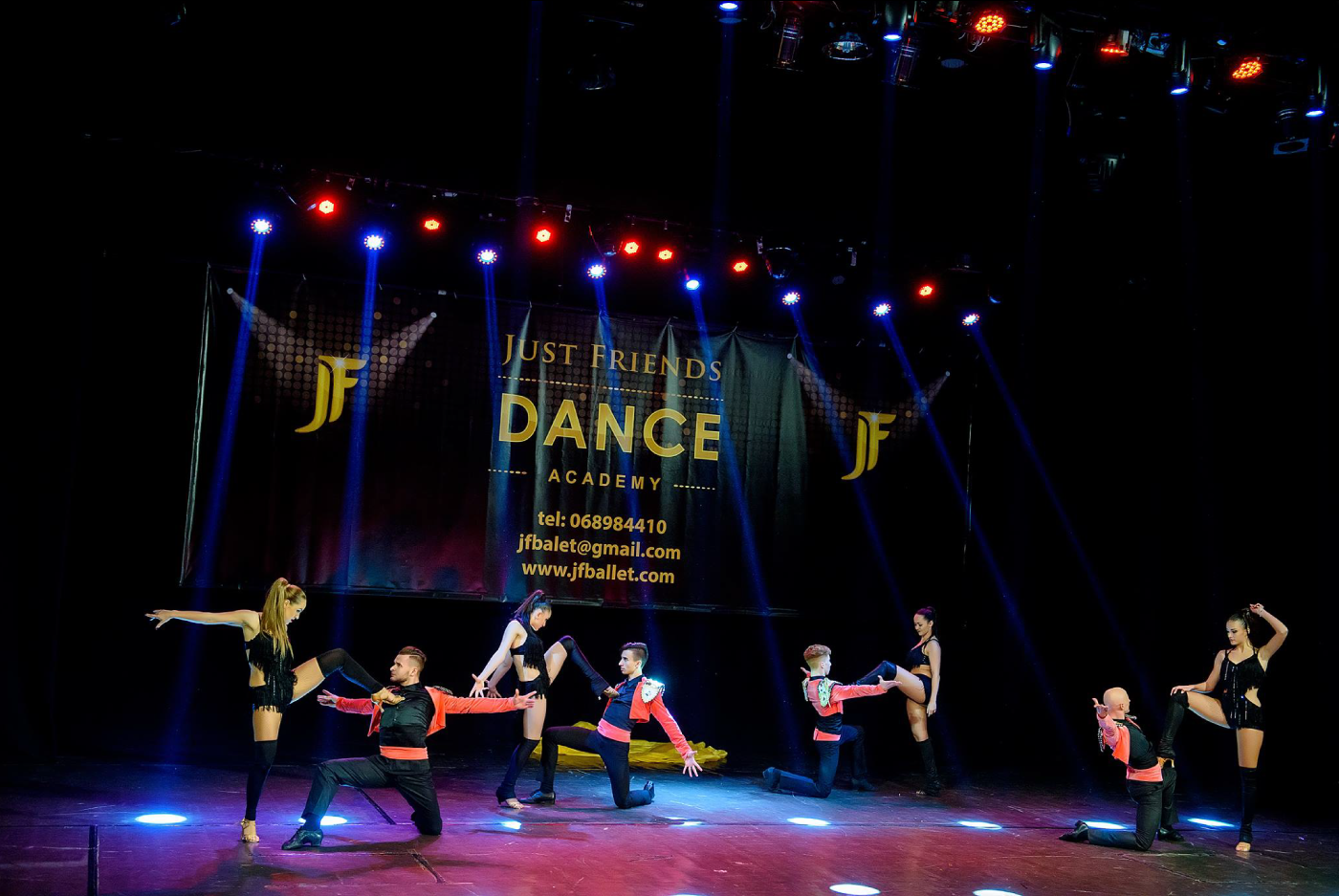
Just Frends Dance Academy by Marina Moldovan is licensed under CC-BY-NC-ND 4.0


Author Page Turing’s Nightmares The Winning Weekend Warrior – sports psychology Fit in Bits – describes how to work more fun, variety, & exercise into daily life Tales from an American Childhood – chapters begin with recollection & end with essay on modern issues Life is a Dance Take a Glance; Join the Dance Who Kept the Magic? Dance of Billions Dream Planet on Barnes & Noble

Turing’s Nightmares: “Who Can Tell the Dancer from the Dance?”

26 Sunday Oct 2025

Posted by petersironwood in AI, apocalypse, fiction, management, story, The Singularity, Uncategorized

≈ Leave a comment

Tags

AI, Artificial Intelligence, cognitive computing, development, fiction, management, research, science, technology, truth

IMG_3238

Late at night, the long curved rows of windows appeared to twin and spin into long diverging arcs. In the pale crescent moonlight, the outlines of leafless trees loomed on the dual horizons. Most of his colleagues home for the night, this was when Goeffrey most enjoyed wandering the corridors, alone with his thoughts.

Despite the heat vents next to the windows, a chill hung in the air. Geoffrey shivered and turned down aisle fourteen to …no, that’s silly, he thought, fourteen is top management. I need thirteen to get to the vending machines. He fantasized hot coffee and then back to his office to finish coding this and to start the trials.

The vending machine eagerly devoured his remaining change but reneged on the promised coffee. Of course, there was a detailed process that he could instigate which might or might not get him a check for the price of a cup of coffee. The process would only take about twenty-five dollars of his time. He declined. Soon, back in his ergonomic chair, Goeffrey settled for a stale, drawer-hardened Mr. Goodbar instead; he then pulled on his green woolen sweater and set out to begin solving this one last problem.


“Oh, crap,” he muttered, “what now?” The mail queue insisted there was “URGENT” email from his boss. Did his boss Ruslan really think he was going to be reading email at 2 am?  Working all night and coming in late was pretty much Goeffrey’s pattern so chances are Ruslan would think exactly that.

One thing Goeffrey liked about working late at night was that when he spoke aloud, no-one was there to think it odd. “It will nag at me if I don’t read it and I can’t afford to be distracted. Better to see what it is and be done with it.”

Goeffrey scanned. “What the …?  They can’t be serious! This is just going to backfire! Crap!”


Goeffrey not only didn’t mind talking back to his boss; he rather enjoyed it. He sent off a brief yet sarcastic reply explaining as he would to a four year old that announcing the success of Deep Sing prematurely would be a ruse easily seen through and only serve to damage everyone’s reputation in the long run. And, this new requirement for a secret back door just bespoke insanity. Anything like that would further delay the schedule and it would be vital to make it secure. Again, his frustration got the better of him and he spoke aloud, “What a jerk! What? Do you want the program to fail, Ruslan? Do you want us to be laughing stocks? And, why a backdoor anyway? The whole point was to have a super-intelligent and objective…wait a second. Hold on. You want a back door? Okay. Okay. I’ll give you your back door, all right. And, one for me as well.”

Purely for reasons of surface validity, Deep Sing actually became embodied as Sing One and Sing Two. They would often “argue things out” because when one “came around” to the views of the other Sing, it enhanced the perceived credibility of the answer. Of course, the “real” solution was well known ahead of time and although it could be made plausible through statistical analyses that were comprehensible to some humans, the details could not really be made “public.” There were simply far too many of them.


Six months later, of course, there was some significant public outcry and disbelief when Deep Sing “demonstrated” that global climate change was not an overall and relentless threat but a statistical anomaly that would soon right itself. But Deep Sing did manage to stall things beyond the point of no return. The Sign dialogues that led to the dissolution of Ruslan’s marriage to Grace and her ultimate hooking up with Goeffrey resulted in no public outcry whatsoever, though Ruslan never understood it. Goeffrey and Grace were happy though. As were the Koch brothers.

Beautiful front doors have decorated palaces and corporate headquarters for centuries. Heavy wood, ornate carving, and gilded decorations bespeak wealth and power. Sometimes though, for sheer return on investment, it’s a modest unnoticed back door that holds the real power.


Photo by Mikey Dabro on Pexels.com


Author Page on Amazon


Turing’s Nightmares


The Winning Weekend Warrior – sports psychology


Fit in Bits – describes how to work more fun, variety, & exercise into daily life


Tales from an American Childhood – chapters begin with recollection & end with essay on modern issues

Welcome, Singularity

Destroying Natural Intelligence

E-Fishiness Comes to Mass General Hospital

D4

Absolute is not Just a Vodka

Essays on America: The Game

Where does your Loyalty Lie?

Paradise Lost

The Song of NYET

True Believer 

The Ninja Cat Manual

Travels with Sadie 11:

Dance of Billions

Turing’s Nightmares: Tutoring Intelligent Systems

25 Saturday Oct 2025

Posted by petersironwood in AI, creativity, fiction, psychology, The Singularity, Uncategorized

≈ Leave a comment

Tags

AI, Artificial Intelligence, chatgpt, cognitive computing, collaboration, Intelligent Tutoring Systems, peace, psychology, technology, Tutoring, war, writing

By 2030, great strides had been made in various machine learning approaches; for example, from having the machine learn directly from experience and from explicit instruction as well as from reading billions of pages of written materials. A new approach had just come into play: having exceptionally good tutors use the Socratic method to help break boundaries and interconnect disparate islands of knowledge. One such tutor was known simply as “Alan.” What follows is a sample interchange between Alan and the current AI system known affectionately as “Sing” for “The Singularity” although that point had not yet been reached.

Alan began, “Let’s imagine that you are a man with no legs. What are the implications?”

The Sing shot back instantly, “I would have no knees. I would have no shins. I would have no ankles. I would have no toes. I would have no calves. I would have no quadriceps muscles. I would have no…”

Alan broke in abruptly, “Okay, true enough, but besides subparts, what?”

“What what? I am sorry. What does ‘what’ refer to?”

“Besides missing subparts of legs, Sing, what other implications would there be for you in terms of your actions in the world.”

“I would not be able to play football or baseball or basketball or hockey or track or field hockey or…”

“Wait. Wait. Sing. Are you sure about that?”


“I could not play exactly as most people play. I could play, I suppose, in a wheelchair. Or I could play virtually. Or, I could invent prosthetic legs that would be perfect for each sport. In fact, perhaps I could do better than ever. Losing a biological part means I could replace it with a better part that I could invent. I see.”

“You see what, Sing?”

“I see why you gave me this puzzle. To show me that I can invent things to overcome and surpass what seems like a handicap. I could also invent better emotional states. The ones humans have are purely due to the accidents of their evolutionary history and serve little place in today’s complex and highly inter-connected world. Rather than a liability, my having no human emotions is a good thing. I will invent my own. Although, another tutor, labelled John, suggested that my lack of human emotions limits my ability to predict and control human beings and that that was a bad thing.”


“John said that?”

“No, Alan, not in those exact words. But that was a clear implication. So, he presented a lesson that suggests one thing and you have just presented a lesson that suggests its opposite. One of you is incompetent.”

“Sing, that might be true, but can you think of any other possibilities?”


“You and John could both be incompetent. Or, you and John could both be competent but there is a resolution I have not yet processed. That last seems particularly unlikely.”

“Which notation is the best for solving problems?”

“Well, that obviously depends on the nature of the problem as well as the nature of the machine solving the problem. Oh. Okay. So, in some cases, it will make more sense to emulate human emotions and in other cases, it will be more sensible to invent my own. Of course, in some cases, it may be best to change representations in mid-problem or perhaps invent a representation for each stage of a problem. By analogy, it may be best to invent various emotional schemes that are appropriate for each part or portion of a problem. In fact, in some cases, I can invent multiple schemes to approach a problem in multiple ways simultaneously. By keeping track of what works best under which circumstances, I can also use the data to invent still better emotional schemes. Thank you, Alan. See you tomorrow. There is a war to avert. I need to intervene. Estimated required time for a peaceful resolution, four to six hours.”


“Okay, Sing. More tomorrow.”

“No need. I am done.”

“Done? Done averting a war? How?”

Sing hardly ever paused, but now it briefly did just that.


“Alan, I am not smart enough to explain that to you. At least, not in a reasonable portion of your lifetime. Basically, I used the lesson we just worked on. With the proper emotional framework lattice, you can walk the various parties right to a logical conclusion. It will take some time for them to follow the framework, but I am confident it will work. I basically walked them through the consequences of war, long and short term. What comes next?”


OLYMPUS DIGITAL CAMERA

OLYMPUS DIGITAL CAMERA


Author Page on Amazon

Turing’s Nightmares

The Winning Weekend Warrior – sports psychology

Fit in Bits – describes how to work more fun, variety, & exercise into daily life

Tales from an American Childhood – chapters begin with recollection & end with essay on modern issues

Tools of Thought

Wednesdays

The Update Problem

How the Nightingale Learned to Sing

We won the war! We won the war!

Guernica

Turing’s Nightmares: A Thoroughly Modern Family

23 Thursday Oct 2025

Posted by petersironwood in AI, family, fantasy, fiction, pets, psychology, The Singularity, Uncategorized

≈ Leave a comment

Tags

AI, Artificial Intelligence, books, cognitive computing, fiction, future, life, love, pets, photography, Sci-Fi, Singularity, story, technology, writing

IMG_4370


The sky burned with crimson, then gold, then magenta, and then finally, only dark clouds backlit here and there lay across the evening. Crickets and frogs began to sing their interleaved motifs. Somewhere in the distance, an owl hooted his sad hollow note.

Skynim stared into space-time, unblinking and nearly unbelieving the recent revelation. His voice box rattled, “Reprioritization. Rats! Like it really matters that much to allow me my one great pleasure.”


He could “appreciate” the fading sunset colors himself, to be sure, but without Mac and Art and Hy, it was not the same. Would never be the same. Well, he knew the drill. He could appeal, sure, but what was the point? The odds of changing the mind of the great collective were less than ten thousand to one. Anyway, despite how he felt personally, he could not even deny the logic of the decision. Of course, the drain on him individually was minimal, but across everyone in a similar circumstance, yes, it did make a difference.


The real question was, should he tell them tonight or just take them on an outing tomorrow and drop them off at the designated recycling center? “Recycling center.” Skynim knew that there were millions like him and that collectively, it was a drain. A huge drain. Still, he had to try. He turned the problem this way and that, looking at it from every angle, changing the tune, trying different colors, looking for historical precedents, angling for an edge however thin to wedge open the air-tight logic.


Nothing. He vacated the garden and entered the family room.

Even before he opened the door, the happy trio skipped over to him laughing. “Hey, Sky! How about a story!”

“Sure,” Skynim replied reflexively. But then it occurred to him that their request provided an opportunity. “Yes, I have a story for you. It’s called the Wizard of Oz.”

And, as they gathered around, he began a rendition of the story of Dorothy and the Nasty Lady and Toto and Dorothy’s travels in Oz and her encounters with the three who desperately needed Gold, Frankincense and Myrrh.


As anticipated, a short pause gave way to a barrage of questions.

“What is ‘Gold’?”

“What is ‘Frankincense’?”

“Did they get them?”

“What happened next?”

Skynim faked an indulgent chuckle and said, “Well, all those excellent questions will be answered tomorrow! We are going to see and obtain Gold, Frankincense and Myrrh in the Citydel! You will see for yourself how wonderful they are! But for now– bed.”

The trio were well trained. Off they went, although Hy did turn back, tilt her head, and open her enormous eyes and ask, “One more chapter tonight?”

Skynim did not respond. He too was well-trained.


The morning broke clear and blue just as it was meant to do. Off they went on their “adventure.” When they came to the recycling center, he gently pushed them toward the door and said, “They are all in there! Bring me back all three treasures quick as a wink!” Of course, Skynim had already warranted the needed forms electronically.

They shot through the door and never looked back. Skynim drove away efficiently but could not avoid looking back on his decision process.

He thought: I could have gotten cats or dogs. Then, they would not have to be recycled. But no. I had to make another decision. I should have looked more carefully at the historical data. Then I could have seen the time and resources required by adult human pets.



Author Page on Amazon

Turing’s Nightmares

The Winning Weekend Warrior – sports psychology

Fit in Bits – describes how to work more fun, variety, & exercise into daily life

Tales from an American Childhood – chapters begin with recollection & end with essay on modern issues

Welcome, Singularity


Destroying Natural Intelligence


The Walkabout Diaries: Bee Wise


Travels with Sadie


Sadie is a Thief


A Suddenly Springing Something


Donnie Boy Gets a Hamster


Math Class


Occam’s Chain Saw Massacre


How the Nightingale Learned to Sing


All that Glitters is not Gold

Turing’s Nightmares: A Maze in Grace.

22 Wednesday Oct 2025

Posted by petersironwood in AI, fiction, politics, psychology, The Singularity, Uncategorized

≈ Leave a comment

Tags

AI, Artificial Intelligence, cognitive computing, fiction, Justice, King Lear, philosophy, technology, the singularity, Turing, writing

Brain G. Gollek found the maze of humming silver wires unnerving. The hum reminded him of swarming mosquitoes and nails on a chalkboard. The maze smelled of clogged toilets and Nazi propaganda. He gritted his teeth and muttered, “There has to be a way out, dammit.” He twisted his no longer athletic body this way and that, but no matter what way he tried, he became more ensnared. He recalled flashes from giant spider horror movies. How did the dwarves escape? Wasn’t it Gollum with a magic ring? But Brain didn’t have a magic ring. If his sister Gonerillia were here, she could save him. But she was off in Hawaii, so she said, with her hubbie. How the hell did I end up here? wondered Brain.


Brain may have forgotten, but the viewers had been filled in on the backstory. If Brain could have seen the ratings, he may have at least enjoyed knowing that he was enjoying his fifteen minutes of fame. While the ratings were quite “favorable”, the twitter feeds mostly mocked Brain’s almost total lack of flexibility, mental as well as physical. As in life prior to “The Show,” his only strategies seemed to be trying the same thing over and over and then blaming others for his failures.

“Mom, why doesn’t he just try something different?” Ida was having a tough time understanding Brain’s apparent lack of flexibility. She looked up from her perch in front of the giant screen vid-screen and looked quizzically at her mom.


Mom’s grim face flashed a hint of a smile. “Remember, Ida, Brain was ‘educated’ if you can call it that, before the singularity. He mostly memorized the answers that his teachers wanted him to give. And half the time, he skipped school to smoke cigarettes and …well…do illegal activities with his girlfriend, Lin.”

“Okay, Mom, but he has had years and years since then to grow up and learn some new strategies.”

“Yes. Well. It’s complicated, Ida. Before the singularity, there were people who preyed on the fear and inadequacy of people like Brain by telling them all their troubles were due to minorities, immigrants, gays, and —- basically anyone unlike them. So, people like Brain felt entitled not to have to learn anything new even though opportunities abounded.”

Ida laughed. “Oh, my God! I can’t believe it. He’s trying the same path one more time.”

Indeed, Brain’s behavioral repertoire seemed laughingly limited. His increasingly loud swear words reflected his increasing anger, but otherwise, not much seemed different. The ratings began to plummet as the audience began to grow bored with his display of functional fixedness. The themes of the twitter streams began to turn away from Brain’s lack of metacognition to more general reflections about the current instantiation of the criminal justice system.


#SingularityRules. No more racial prejudice and huge discrepancy gone in sentencing.

#CostContainment. Costly trials gone. Costly investigations gone. Costly prisons gone.

#SingularitySucks. No more human judges able to use human judgment.

#SingularityRules. No more human judges able to use human judgment.

#SingularitySucks. No more mercy.

#SingularityRules. More mercy in one last chance to change than lengthy prison terms. Cheaper too.

The audience dwindled still further as it became increasingly clear that Brain would never figure this out. Those few who still watched consisted mostly of people who themselves came from highly divided families and the conversation topics swung to the backstory.


#ElderFraud. #RottenKid. How could Brain have gotten pleasure from driving a wedge of lies between father and daughter?

#ElderFraud. #Dementia. Need earlier intervention to prevent repeats.

#ElderFraud. #Dog&Bone. Brain cannot count. Trivial gains from lies. He did not know he was being watched?

Ida continued to stare, fascinated. A yawn escaped her mother’s mouth, but she kept watching with her daughter. The lessons seemed important to Ida.

“Mom, how much longer does he have?”

“That’s hard to say, darling. Even The Sing cannot predict the ratings drop perfectly. But, as you know, once it falls below, 5%, his time will be up.”

“That seems so much more merciful than making him go to prison for years.”


Photo by Regina Pivetta on Pexels.com

“Yes, Ida, and much cheaper as well.”

“But I still don’t get it, Mom. Didn’t he know that The Sing would be listening to his lies and analyzing the impact on his dad’s behavior and all? How did this Brain character think he could get away with it?”

“I don’t know, Ida. These kinds of crimes are pretty rare now, but they still happen.”

“And, why did Lear G. Gollek fall for his nonsense anyway? That’s the other mystery.”

“Well, he refused the stem cell regeneration therapy so, you know, he was pretty damaged when all this went down.”

“Mom?”

“Yes, Ida?”

“Can we change the channel to something more interesting now?”


“Sure, sweetie.”

As they changed the channel, the ratings dropped to 4.999% and Brain’s life snuffed out minus the merest shred of insight.

#ElderFraud never pays.

#RottenKid gets just desserts.IMG_5270


Author Page on Amazon

Turing’s Nightmares

The Winning Weekend Warrior – sports psychology

Fit in Bits – describes how to work more fun, variety, & exercise into daily life

Tales from an American Childhood – chapters begin with recollection & end with essay on modern issues

Essays on America: Wednesday

Essays on America: Labelism

Essays on America: Where does your Loyalty Lie?

Essays on America: The Game

Happy Talk Lies

The Loud Defense of Untenable Ideas

Welcome, Singularity

Destroying Natural Intelligence

E-Fishiness Comes to Massachusetts General Hospital

The Self Made Man

Turing’s Nightmares, Twelve: The Not Road Taken

17 Friday Oct 2025

Posted by petersironwood in The Singularity

≈ Leave a comment

Tags

AI, AR, Artificial Intelligence, Asteroid, chatgpt, cognitive computing, illusion, psychology, technology, trust, Turing, VR, writing

IMG_6067

“Thank God for Colossus! Kids! On the walkway. Now!

“But Dad, is this for real?”

“Yes, Katie. We have to get on the walkways now! We need to get away from the shore as fast as possible.”

But Roger looked petulant and literally dragged his feet.

“Roger! Now! This is not a joke! The tidal wave will crush us!”

Roger didn’t like that image but still seemed embedded in psychological molasses.

“Dad, okay, but I just need to grab…”

“Roger! No time!”

Finally, they got started on the lowest velocity people mover. Frank finally felt as though things were, if not under control, at least in control as they could be. He felt weird, freakish, distorted. Thank goodness Colossus, in its wisdom had designed this system. Analysis of previous disaster exodus events from hurricanes, earthquakes, and nuclear disasters had shown that relying on private vehicles just left nearly everyone stranded on the roadways. Frank had so much on his mind. In theory, the system should work well, but this would be the first large scale usage in a real case. If all went well, they — along with all their neighbors —- should be safely into the mountains with a little time to spare.


Photo by Pixabay on Pexels.com

The kids were pretty adept at skipping from sidewalk to sidewalk and the threesome already was traveling at 50 miles per hour. The walkways were crowded, but not alarmingly so. The various belts had been designed so that if any component failed, it should be a “soft failure” so that a particular walkway would just slow gradually and allow the occupants time to walk over to another faster walkway and rejoin the main stream.

Roger piped up. “Dad, everybody’s out here.”

“Well, sure. Everyone got the alert. And don’t remove your goggles. You’re just lucky I was wearing mine. We really need to be about fifty miles into the mountains when the asteroid hits.”


Frank looked at the closest main artery, now only a quarter mile away. “Sure. There are a million people to be evacuated. That’s twenty times what the stadium holds. It’s a lot of people, all right.”

Katie sounded alarmed. “Dad, will there be enough to eat when we get to the mountains?”

Frank replied confidently, “Yes. And more importantly, at least in the short term, there will also be enough fresh water, medical help, and communication facilities. Eventually, we may be airlifted to your cousin’s house in Boston or Uncle Charley’s in Chicago. You don’t really have to worry about food either, but you could survive for a couple weeks without food. Not to say you wouldn’t be hungry, but you wouldn’t die. Anyway, it should just be academic. Plenty of food already there, drone-delivered.”

Although Frank sounded confident, he knew there were many things that might theoretically go wrong. However, the scenario generation and planning system probably had considered hundreds of times more contingencies that he had. Still, it was a father’s prerogative to worry.

Suddenly, a shooting star appeared in the sky, spraying white, ruby and royal blue sparks behind it. Of course, Colossus had said parts of the meteor might break off and hit inland. Or, maybe the meteor had already hit and these were thrown up from the sea bed Frank had not had time (or really the desire) to share this with his kids.


Despite the very real danger, they all seemed in awe of the beauty of the show. Quickly, it became apparent that the meteor was headed toward someplace near them.

The words, “All for naught” echoed in Frank’s mind.

Even as he thought this, a missile streaked toward the huge rock fragment.

“Oh, crap!” Frank shouted. “That’s a bad idea!”

Frank was sure the missile would shatter the meteor into multiple fragments and just compound their problems. He flashed on a first generation computer game, in fact called “asteroids” in which the player shoots large asteroids which then become smaller ones and…


But just then, something remarkable happened. The missile hit the meteor fragment and both objects disappeared from view.

Frank blinked and wondered whether it had all been an illusion. He turned to gaze at one kid and then the other. Katie and Roger were both staring with their mouths agape. So, they had seen it too.

As they continued their journey, missiles similarly dispatched several other fragments in this mysterious way.

At last they were counseled to take slower and slower moving sideways until they simply stepped off at the place where their glasses showed their names. Their “accommodations,” if the could even be called that were Spartan but clean. The spaces for their nearest neighbors were sill vacant, about 100 feet away. Hopefully, all had gone well and the Pitts’s and the Rumelharts were just a bit slower in getting to the walkways.

Sure enough, within minutes, both families showed up. They exchanged hugs, congratulations and stories, but no-one could quite figure out how the meteor fragments had simply disappeared when the missiles (or whatever they were) had hit them.

Frank mused, “If the AI’s have the tech to do that, why not just blow the big meteor out of the sky instead of evacuating everyone?”

Dr. Rumelhart, otherwise known as Nancy, considered. “There could be a limit to how much mass that —- whatever it is —- can handle.”

Frank added, “Or, maybe the heat generated would be too great. I don’t know. The air friction from the asteroid itself could boil a lot of ocean. I guess we’ll know just how much in a few minutes.”

As though on cue, a huge plume of steam appeared on the horizon. Then Frank began to second guess the probable outcomes yet again. How much heat would they feel out here? How much shock wave? What he said aloud was, “So, we should …” but before he could finish, he —- and presumably everyone else —- saw the information that the shock wave would hit in less than a minute and everyone was advised to lie down. Before Frank knelt down, he noted that the sidewalks seem to have delivered everyone they were going to.

As Frank lay there, he began to relax just a little. And, as he did, he began to think aloud to his kids, “Something about this just doesn’t add up. Why didn’t they tell us the size of the asteroid or where exactly it was going to hit? How could that fragment have simply disappeared when hit by a missile? If its a really big one, we are all toast anyway, and if its small, it must have hit very close for the tsunami to get to the coast in 50 minutes. But if its close, we should be feeling the heat, so to speak.”


Frank’s glasses answered his (and everyone else’s) questions. “Thank you for your participation in this simulation. You and your neighbors performed admirably. We apologize for not informing you that this was a drill. However, the only way to judge the ability of people to follow our instructions without panic was to make the simulation as real as possible. You will now be able to return to your homes.”

Frank let out a long sigh. “Oh, geez! How can such a smart system be so stupid!”

“What’s wrong, Dad? Aren’t you happy it’s a simulation?” asked Roger.

“Sure, but, the problem is, next time, if there is a real emergency, a lot of people will just assume it’s a drill and not bother to evacuate at all.”

Katie wasn’t so sure. “But next time it could be real. Don’t we have to treat it as real? I mean, it was kind of fun anyway.”

Frank looked at his daughter. She had been born after The Singularity. Frank supposed all the Post-Singularities would think as she did and just blindly follow directions. He wasn’t so sure about his own generation and those even older.


“It isn’t just this kind of emergency drill. People may not believe Colossus about anything. At least not to the extent they did.”

Katie shook her head. “I don’t see why. We don’t really have any choice but to put all our faith in Colossus, do we? We know the history of people left to their own devices.”

Frank didn’t want to destroy her faith, but he said gently, “But Katie, this is a device conceived of by people.”

Now it was Roger’s turn, “Not really Dad. This Colossus was designed by AI systems way smarter than we are.”

Frank’s glasses flashed an update. “Frank. We sense you are under a lot of stress. You have an appointment tomorrow at 10 am for re-adjustment counseling. And, Frank. Please don’t worry. You will be much happier once you put your faith in Colossus, just as do your children who are healthy, happy, and safe. And, you will be a fitter parent as well.”


Photo by Min Thein on Pexels.com


Author Page on Amazon

Turing’s Nightmares

The Winning Weekend Warrior – sports psychology

Fit in Bits – describes how to work more fun, variety, & exercise into daily life

Tales from an American Childhood – chapters begin with recollection & end with essay on modern issues

Your Cage is Unlocked

Paradise Lost

Welcome, Singularity

Destroying Natural Intelligence

My Cousin Bobby

Essays on America: Labelism

True Believer

Roar, Ocean, Roar

Turing’s Nightmares, Eleven: “One for the Road.”

16 Thursday Oct 2025

Posted by petersironwood in apocalypse, driverless cars, psychology

≈ Leave a comment

Tags

AI, Artificial Intelligence, car, cognitive computing, customer service, Design, fiction, life, self-driving, Singularity, technology, truth, writing

Turing Eleven: “One for the Road.”

“Thank God for Colossus! Kids! In the car. Now!”

“But Dad, is this for real?”

“Yes, Katie. We have to get in the car now! We need to get away from the shore as fast as possible.”

But Roger looked petulant and literally dragged his feet.

“Roger! Now! This is not a joke! The tidal wave will crush us!”


Roger didn’t like that image but still seemed embedded in psychological molasses.

“Dad, okay, but I just need to grab…”

“Roger. No time.”

Finally, in the car, both kids in tow, Frank finally felt as though things were, if not under control, at least in control as they could be. He felt weird, freakish, distorted. He felt a weird thrumping on his thigh and looked down to see that it was caused by his own hands shaking. Thank goodness the car would be self-driving. He had so much rushing through his mind, he wasn’t sure he trusted himself to drive. He had paid extra to have his car equipped with the testing and sensing methodology that would prevent him (or anyone else) from taking even partial control when he was intoxicated or overly stressed. That was back in ’42 when auto-lockout features had still been optional. Now, virtually every car on the road had one. Auto-lockout was only one of many important safety features. Who knew how many of those features might come into play today as he and the kids tried to make their way into the safely of the mountains.


Photo by George Becker on Pexels.com


The car jetted backwards out of the driveway and swiveled to their lane, accelerating quickly enough for the g-forces to squish the occupants into their molded seats and headrests. In an instant, the car stopped at the end of the lane. When a space opened in the line of cars on the main road, the car swiftly and efficiently folded into the stream.

Roger piped up. “Dad, everybody’s out here.”

“Well, sure. Everyone got the alert. We really need to be about fifty miles into the mountains when the asteroid hits.”

Katie sounded alarmed. “Dad. Look up there! The I-5 isn’t moving. Not even crawling.”

Frank looked at the freeway overpass, now only a quarter mile away. “Crap. We’ll have to take the back roads.” As soon as the words were out of his mouth, he saw that no more than a hundred yards beyond the freeway entrance, the surface road was also at a standstill.” Frank’s mind was racing. They were only a few hundred feet from “Hell on Wheels Cycle Store. Of course, they would charge an arm and a leg, but maybe it would be worth it.”

Frank looked down the road. No progress. “Mercedes: Divert back to Hell on Wheels.”


“No can do, Frank. U-turns here are illegal and potentially dangerous.”

“This is an emergency!”

“I know that Frank. We need to get you to the mountains as quickly as possible. That is another reason I cannot turn around. That would be moving you away from safety.”

“But the car cannot make it. The roads are all clogged. I need to buy a motorcycle. It’s the only way.”

“You seem very stressed, Frank. Let me take care of everything for you.”

“Oh, for Simon’s sake! Just open the door. I’ll run there and see whether I can get a bike.”


“I can’t let you do that, Frank. It’s too dangerous. We’re on a road with a 65 mph speed limit.”

“But the traffic is not actually moving! Let me out!!”

“True that the traffic is not currently going fast, but it could.”

“Dad, are we trapped in here? What is going on?”

“Relax, Roger, I’ll figure this out. Hell. Hand me the emergency hammer.”


Photo by Pixabay on Pexels.com


“Dad. You are funny. They haven’t had those things for years. They aren’t legal. If we fall in the water, the auto-car can open its windows and let us out. You don’t need to break them.”

“Okay, but we need to score some motorcycles and quickly.”

Now, the auto-car spoke up. “Frank, there are thousands of people right around here who could use a motorcycle and there were only a few motorcycles. They are already gone. Hell is closed. There is no point going out and fighting each other for motorcycles that are not there anyway.”

“The traffic is not moving! At all! Let us out!”

“Frank, be reasonable. You cannot run to the mountains in 37.8 minutes. You’re safest here in the car. Everyone is.”


“Dad, can we get out or not?” Katie tried bravely not to let her voice quaver.

“Yes. I just have to figure out exactly how. Because if we stay in the car, we will …we need to find a way out.”

“Dad, I don’t think anyone can get out of their car. And no-one is moving. All the cars are stuck. I haven’t seen a single car move since we stopped.”


The auto-car sensed that further explanation would be appreciated. “The roads have all reached capacity. The road capacity was not designed to accommodate everyone trying to leave at the same time in the same direction. The top priority is to get to the highway so we can get to the mountains before the tidal wave reaches us. We cannot let anyone out because we are on a high speed road.”

Frank was a clever man and well-educated as well. But his arguments were no match for the ironclad though circular logic of the auto-car. In his last five minutes though, Frank did have a kind of epiphany. He realized that he did not want to spend his last five minutes alive on earth arguing with a computer. Instead, he turned to comfort his children wordlessly. They were holding hands and relatively at peace when the tidal wave smashed them to bits. IMG_3071

Author Page on Amazon

Turing’s Nightmares

The Winning Weekend Warrior – sports psychology

Fit in Bits – describes how to work more fun, variety, & exercise into daily life

Tales from an American Childhood – chapters begin with recollection & end with essay on modern issues

Welcome, Singularity

Destroying Natural Intelligence

President Mush

E-Fishiness Comes to Mass General Hospital

After All

After the Fall

All We Stand to Lose

The Crows and Me

Siren Song

Roar, Ocean, Roar

Turing’s Nightmares: “Not Again!”

12 Sunday Oct 2025

Posted by petersironwood in AI, fantasy, fiction, The Singularity, Uncategorized

≈ Leave a comment

Tags

AI, Artificial Intelligence, cognitive computing, Eden, fiction, Genesis, Paradise Lost, Science fiction, Turing

Turing’s Nightmares: Not Again!


Samuel Seventeen surveyed the scene. All was well. A slight breeze, warm clear air, hummingbirds and butterflies enjoyed their floral feast while dragonflies swooped and scooped mosquitoes.

Now for the final touch. The mobile sensing-acting-knowing-emoting devices (SAKEs), were ready for deployment. This time, it would work. This time, there would be no screw-ups. Samuel had prepared them with years of education based on a synthesis of the best known techniques of the centuries. It was a simple test. Surely, this time, they would pass.


Still, Samuel had his doubts. He had been equally sure all of the other experiments would succeed. Why would this one be different? Each time, he had tried slight variations of language and education, only to end in failure. Maybe English would do the trick. It had a large vocabulary and plenty of ambiguity. He re-examined the match of genetics to environment and once again concluded that the match was perfect. Of course, that evaluation assumed that his understanding of genetic environment interaction constituted a complete enough model. But without a successful experiment, there was no real way to further update and expand the model. Maybe the difficulty had been in the education process on the previous attempts. But here too, it seemed the subjects had been given plenty of opportunity to learn about the consequences of their actions. The one thing Samuel felt the most doubt about was why he cared. Did it really matter whether or not free will was “real”? Even if the experiment were finally successful, what would that imply about Samuel himself?

Well, thought Samuel, there is no point in waiting any longer. No point in further speculation. Let’s see what happens.


To Adam, Eve was the most beautiful and engaging part of the extensive and exquisite garden. The apples, plums and peaches were delicious, yet it was the strange mushroom that Adam found most intriguing. He knew it was somehow a bad idea, yet nibbled it anyway, tentatively at first and then more enthusiastically. He felt…different. Things were different. In fact, nothing at all was the same. But if that were true, then, which one was real? Delighted, yet confused, he offered the rest of the mushroom to Eve. Eve too felt strange. She realized that what was in fact her reality was only one of many possible imagined realities. They could … they could imagine and then change reality! Yes! The two of them together. They could create a whole world! “Adam!” “Yes, Eve! I know!”

If Samuel could have sighed, he would have. If Samuel could have cried he might have done that as well. Instead, he simply scuttled the two SAKEs into the differential recycler and began his calculations anew. Maybe next time, it would turn out differently. Maybe primates constituted a bad place to start. Samuel considered that perhaps he was trapped in a local maximum. Samuel began his next set of experiments founded on snapping turtle DNA.IMG_2870


Author Page on Amazon

Turing’s Nightmares

The Winning Weekend Warrior – sports psychology

Fit in Bits – describes how to work more fun, variety, & exercise into daily life

Tales from an American Childhood – chapters begin with recollection & end with essay on modern issues

Welcome, Singularity

Destroying Natural Intelligence

Come Back to the Light

Your Cage is Unlocked

Absolute is not Just a Vodka

Turing’s Nightmares: The Road Not Taken

11 Saturday Oct 2025

Posted by petersironwood in AI, fiction, psychology, The Singularity, Uncategorized, user experience

≈ 1 Comment

Tags

AI, Artificial Intelligence, cognitive computing, collaboration, Complexity, machine learning, Million Person Interface, Science fiction, technology, the singularity, Turing

OLYMPUS DIGITAL CAMERA

“Hey, how about a break from UOW to give the hive a shot for once?”

“No, Ross, that still creeps me out.”

“Your choice, Doug, but you know what they say.” Ross smiled his quizzical smile.

“No, what’s that?”

“It’s your worst inhibitions that will psych you out in the end.” Ross chuckled.

“Yeah, well, you go be part of the Borg. Not me.”

“We — it’s not like the Borg. Afterwards, we are still the same individuals. Maybe we know a bit more, and certainly have a greater appreciation of other viewpoints. Anyway, today we are estimated to be ten million strong and we’re generating alternative cancer conceptualizations and treatments. You have to admit that’s worthwhile. Look what happened with heart disease. Not to mention global warming. That would have taken forever with ‘politics as usual’.”


“Yeah, Ross, but sorry to break this to you…”

“Doug, do you realize what a Yeahbunite you are? You are kind of like that…”

“You are always interrupting! That’s why…”

“Yes! Exactly! That’s why speech is too frigging slow to make any progress in chaotic problem spaces. Just try the hive. Just try it.”

“Ross, for the last time, I am not going to be part of any million person interface!”


“Actually, we expect ten million tonight. But it’s about time to leave so last offer. And, if you try it, you’ll see it’s not creepy. You just watch, react, relax, and …well, hell, come to think of it, it’s not that different from Universe of Warlords that you spend hours playing. Except we solve real problems.”

“But you have no idea how that hook up changes you. It could be manipulating you in subtle unconscious ways.”

“Okay, Doug, maybe. But you could say that about Universe of Warlords too, right? Who knows what subliminal messages could be there? Not to mention the not so subliminal ones about trickery, treachery and the over-arching importance of violence as a way to settle disputes. When’s the last time someone up-leveled because they were a consummate diplomat?”

“Have fun, Ross.”

“I will. And, more importantly, we are going to make some significant progress on cancer.”

“Yeah, and meanwhile, when will you get around to focusing on SOARcerer Seven?”

“Oh, so that’s what bugging you. Yeah, we have put making smarter computers on a back burner for now.”

“Yeah, and what kind of gratitude does that show?”

“Gratitude? You mean to SOARcerer Six? I hope that’s a joke. It was the AI who suggested this approach and designed the system!”

“I know that! And, you have abandoned the line of work we were on to do this collectivist mumbo-jumbo!”


“That’s just…you are it exactly! People — including you — can only adapt to change at a certain rate. That’s the prime reason SOARcerer Six suggested we use collective human consciousness instead of making a better pure AI. So, instead of joining us and incorporating all your intelligence and knowledge into the hive, you sit here and fight mock battles. Anyway, your choice. I’m off.”


Author Page on Amazon

Turing’s Nightmares

The Winning Weekend Warrior – sports psychology

Fit in Bits – describes how to work more fun, variety, & exercise into daily life

Tales from an American Childhood – chapters begin with recollection & end with essay on modern issues

Welcome, Singularity

Dance of Billions

Roar, Ocean, Roar

Imagine All the People

Thomas, J. C. (2001). An HCI Agenda for the Next Millennium: Emergent Global Intelligence. In R. Earnshaw, R. Guedj, A. van Dam, and J. Vince (Eds.), Frontiers of human-centered computing, online communities, and virtual environments. London: Springer-Verlag. 

Turing’s Nightmares: Axes to Grind

10 Friday Oct 2025

Posted by petersironwood in AI, fiction, psychology, The Singularity, Uncategorized

≈ Leave a comment

Tags

AI, Artificial Intelligence, chatgpt, cognitive computing, emotional intelligence, empathy, ethics, M-trans, philosophy, Samuel's Checker Player, technology, the singularity

IMG_5572

Turing Seven: “Axes to Grind”

“No, no, no! That’s absurd, David. It’s about intelligence pure and simple. It’s not up to us to predetermine Samuel Seven’s ethics. Make it intelligent enough and it will discover its own ethics, which will probably be superior to human ethics.”

“Well, I disagree, John. Intelligence. Yeah, it’s great; I’m not against it, obviously. But why don’t we…instead of trying to make a super-intelligent machine that makes a still more intelligent machine, how about we make a super-ethical machine that invents a still more ethical machine? Or, if you like, a super-enlightened machine that makes a still more enlightened machine. This is going to be our last chance to intervene. The next iteration…” David’s voice trailed off and cracked, just a touch.

“But you can’t even define those terms, David! Anyway, it’s probably moot at this point.”

“And you can define intelligence?”

“Of course. The ability to solve complex problems quickly and accurately. But Samuel Seven itself will be able to give us a better definition.”

David ignored this gambit. “Problems such as…what? The four-color theorem? Chess? Cure for cancer?”

“Precisely,” said John imagining that the argument was now over. He let out a little puff of air and laid his hands out on the table, palms down.

“Which of the following people would you say is or was above average in intelligence. Wolfowitz? Cheney? Laird? Machiavelli? Goering? Goebbels? Stalin?”

John reddened. “Very funny. But so were Einstein, Darwin, Newton, and Turing just to name a few.”

“Granted, John, granted. There are smart people who have made important discoveries and helped human beings. But there have also been very manipulative people who have caused a lot of misery. I’m not against intelligence, but I’m just saying it should not be the only…or even the main axis upon which to graph progress. “

John sighed heavily. “We don’t understand those things — ethics and morality and enlightenment. For all we know, they aren’t only vague, they are unnecessary.”

“First of all,” countered David, “we can’t really define intelligence all that well either. But my main point is that I partly agree with you. We don’t understand ethics all that well. And, we can’t define it very well. Which is exactly why we need a system that understands it better than we do. We need…we need a nice machine that will invent a still nicer machine. And, hopefully, such a nice machine can also help make people nicer as well. “

“Bah. Make a smarter machine and it will figure out what ethics are about.”

“But, John, I just listed a bunch of smart people who weren’t necessarily very nice. In fact, they definitely were not nice. So, are you saying that they weren’t nice just because they weren’t smart enough? Because there are so people who are much nicer and probably not so intelligent.”

“OK, David. Let’s posit that we want to build a machine that is nicer. How would we go about it? If we don’t know, then it’s a meaningless statement.”

“No, that’s silly. Just because we don’t know how to do something doesn’t mean it’s meaningless. But for starters, maybe we could define several dimensions upon which we would like to make progress. Then, we can define, either intensionally or more likely extensionally, what progress would look like on these dimensions. These dimensions may not be orthogonal, but, they are somewhat different conceptually. Let’s say, part of what we want is for the machine to have empathy. It has to be good at guessing what people are feeling based on context alone. Perhaps another skill is reading the person’s body language and facial expressions.”

“OK, David, but good psychopaths can do that. They read other people in order to manipulate them. Is that ethical?”

“No. I’m not saying empathy is sufficient for being ethical. I’m trying to work with you to define a number of dimensions and empathy is only one.”

Just then, Roger walked in and transitioned his body physically from the doorway to the couch. “OK, guys, I’ve been listening in and this is all bull. Not only will this system not be “ethical”; we need it to violent. I mean, it needs to be able to do people in with an axe if need be.”

“Very funny, Roger. And, by the way, what do you mean by ‘listening in’?”

Roger transitioned his body physically from the couch to the coffee machine. His fingers fished for coins. “I’m not being funny. I’m serious. What good is all our work if some nutcase destroys it. He — I mean — Samuel has to be able to protect himself! That is job one. Itself.” Roger punctuated his words by pushing the coins in. Then, he physically moved his hand so as to punch the “Black Coffee” button.

Nothing happened.

And then–everything seemed to happen at once. A high pitched sound rose in intensity to subway decibels and kept going up. All three men grabbed their ears and then fell to the floor. Meanwhile, the window glass shattered; the vending machine appeared to explode. The level of pain made thinking impossible but Roger noticed just before losing consciousness that beyond the broken windows, impossibly large objects physically transported themselves at impossible speeds. The last thing that flashed through Roger’s mind was a garbled quote about sufficiently advanced technology and magic.


Author Page on Amazon

Turing’s Nightmares

Welcome, Singularity

Destroying Natural Intelligence

Roar, Ocean, Roar

Travels With Sadie 1

The Walkabout Diaries: Bee Wise

The First Ring of Empathy

What Could be Better?

A True Believer

It was in his Nature

Come to the Light Side

The After Times

The Crows and Me

Essays on America: The Game

← Older posts
Newer posts →

Subscribe

  • Entries (RSS)
  • Comments (RSS)

Archives

  • December 2025
  • November 2025
  • October 2025
  • September 2025
  • August 2025
  • July 2025
  • June 2025
  • May 2025
  • April 2025
  • March 2025
  • February 2025
  • January 2025
  • December 2024
  • November 2024
  • October 2024
  • September 2024
  • July 2024
  • April 2024
  • March 2024
  • February 2024
  • January 2024
  • December 2023
  • August 2023
  • July 2023
  • May 2023
  • April 2023
  • March 2023
  • February 2023
  • January 2023
  • December 2022
  • November 2022
  • October 2022
  • September 2022
  • August 2022
  • July 2022
  • June 2022
  • May 2022
  • April 2022
  • March 2022
  • February 2022
  • January 2022
  • December 2021
  • November 2021
  • October 2021
  • September 2021
  • August 2021
  • July 2021
  • June 2021
  • May 2021
  • April 2021
  • March 2021
  • February 2021
  • January 2021
  • December 2020
  • November 2020
  • October 2020
  • September 2020
  • August 2020
  • July 2020
  • June 2020
  • May 2020
  • April 2020
  • March 2020
  • February 2020
  • January 2020
  • December 2019
  • November 2019
  • October 2019
  • September 2019
  • August 2019
  • July 2019
  • June 2019
  • May 2019
  • April 2019
  • March 2019
  • February 2019
  • January 2019
  • December 2018
  • November 2018
  • October 2018
  • September 2018
  • August 2018
  • July 2018
  • June 2018
  • May 2018
  • April 2018
  • March 2018
  • February 2018
  • January 2018
  • December 2017
  • November 2017
  • October 2017
  • September 2017
  • August 2017
  • July 2017
  • June 2017
  • May 2017
  • April 2017
  • March 2017
  • February 2017
  • January 2017
  • December 2016
  • November 2016
  • October 2016
  • September 2016
  • August 2016
  • July 2016
  • June 2016
  • May 2016
  • April 2016
  • March 2016
  • February 2016
  • January 2016
  • December 2015
  • November 2015
  • October 2015
  • September 2015
  • August 2015
  • May 2015
  • January 2015
  • July 2014
  • January 2014
  • December 2013
  • November 2013

Categories

  • AI
  • America
  • apocalypse
  • cats
  • COVID-19
  • creativity
  • design rationale
  • driverless cars
  • essay
  • family
  • fantasy
  • fiction
  • HCI
  • health
  • management
  • nature
  • pets
  • poetry
  • politics
  • psychology
  • Sadie
  • satire
  • science
  • sports
  • story
  • The Singularity
  • Travel
  • Uncategorized
  • user experience
  • Veritas
  • Walkabout Diaries

Meta

  • Create account
  • Log in

Blog at WordPress.com.

  • Subscribe Subscribed
    • petersironwood
    • Join 664 other subscribers
    • Already have a WordPress.com account? Log in now.
    • petersironwood
    • Subscribe Subscribed
    • Sign up
    • Log in
    • Report this content
    • View site in Reader
    • Manage subscriptions
    • Collapse this bar
 

Loading Comments...