• About PeterSIronwood

petersironwood

~ Finding, formulating and solving life's frustrations.

petersironwood

Category Archives: Uncategorized

The Architecture of Karma

16 Wednesday Mar 2022

Posted by petersironwood in Uncategorized

≈ 2 Comments

Tags

Democracy, Dictatorship, Ukraine, USA

The Architecture of Karma 

One of the best books I ever read: The Architecture of Complexity by Herb Simon, makes a number of stellar points. Three stories that I remember are of the ant, the clockmaker, and the heat dissipation in the building. 

As I recall, the story of the ant opens the book. He basically argues that an ant’s behavior seems complex to us partly because we can’t sense the world of the ant. Simon says that what we might attribute to complexity in the ant’s nervous system is actually due to the complexity in its environment. He’s right, of course, though I think he, like most, vastly underestimates the complexity within the ant as well. A single cell is hugely complex. Nonetheless, it is true that what we observe as complex is behavior that is influenced, and perhaps determined, by both the environment and the internal workings of the ant. That is just as much true for us as individuals, for groups, for nations, and for ecosystems as it is for an individual ant. 
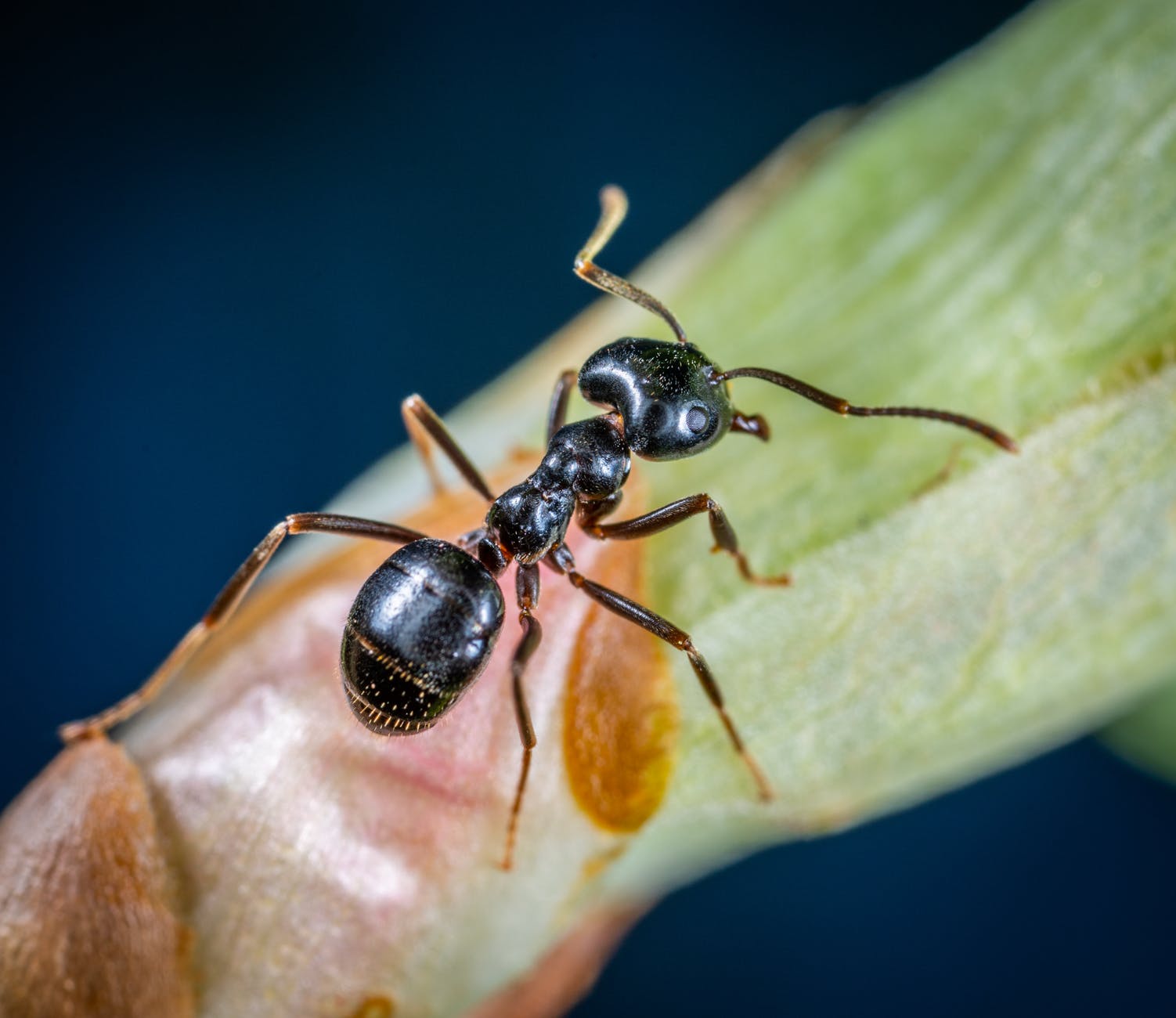
Photo by Egor Kamelev on Pexels.com

Ants, in various circumstances, do things that benefit people, or benefit the ecosystem, or do things that we find destructive or inconvenient. In the case of army ants on the move, they can be highly destructive or even lethal. It seems odd, however, to claim that ants are “evil.”ty 

Why is that? It seems as though the ant is simply “following its nature” even if it spoils our picnic or herds aphids so as to ruin our roses. It doesn’t do what it does, we suppose, to “hurt us” or to “destroy beauty.” 

When it comes to human beings though, it seems that some individuals do engage in destructive behavior, not because they actually gain anything substantive and useful to themselves but merely because they get pleasure out of inflicting pain and death on others. Every society has such thugs. In a healthy society, such individuals end up in jails or psychiatric institutions. At the least, they need to be put in such situations as to minimize the harm they do to other people as well as to other living things. At best, perhaps therapy can stimulate them to restart their stunted emotional growth. 
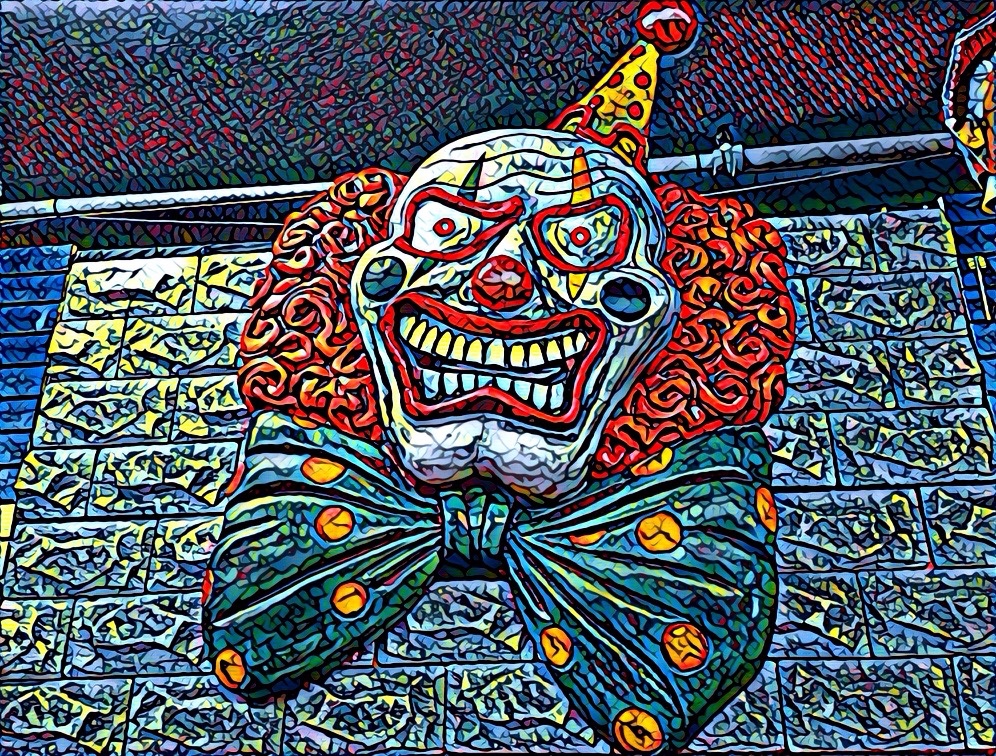
In some cases, such thugs can gain powerful positions in a society. In the worst case, such thugs become dictators. The playbook they use is so old that it is tattered at the edges. It basically consists of playing on the hates and fears of others in their society in order to divide people against each other. Few would fall for such a ploy except that the dick-tater lies and sets up mechanisms to multiply their own lies and prevent people from knowing the truth about things. The dick-tater builds a clumsy but appealing false narrative so that many people will gladly allow the dick-tater to steal wealth, health, life and choice from his victims. I would use the word “evil” to describe what the dick-tater does. 

Like the ant, however, what he does is not particularly “brilliant” or “complex” but it can seem so to those on the outside who don’t understand what the dick-tater is doing. For example, most people, in their daily life, use language to coordinate with others, to bond with others, and sometimes, to enrich life (songs, poetry, puns, comedy, drama, etc.). The dictator relates to language in a completely different way. Their purpose is not to “share experiences” or “solve problems together” or to “enrich life.” Their sole purpose is to manipulate others into doing their bidding. 

There is a karmic price to pay for a life of misusing language however. A dictator becomes ever more paranoid and ever more cut off from reality. As a result, the dick-tater becomes ever less effective. This makes them even more paranoid and careful about who they surround themselves with. People willing to speak truth to power are fired, killed, jailed, or disappeared. People who surround the dick-tater are ever more cowardly and sycophantic. This means that the dick-tater becomes even more isolated from reality. The orders of the dick-tater become ever worse in terms of the very ecosystem that the dick-tater needs to survive. Their actions become more short-sighted in time and more restricted in scope.

A perfect example is in a concordance I once saw of the Watergate tapes. Months before Nixon resigned, he used the word need in sentences such as:

“What this country needs….”
“What the party needs….”
“American needs…”

A week before he was forced to resign, the scope of his interest had narrowed considerably. There was no more talk of what the party needed or what the country needed. It was:

“We need….”
“We need…” 

“We need…”

And the day before he resigned, it was:

“I need…”
“I need…”
“I need … “ 

The ant may have a smaller brain than the dick-tater’s, but the ant is still tethered to her colony mates and to reality. The dictator has no such constraints.


The “beauty” of “Mutually Assured Destruction” (MAD for short) is that no rational person would start an atomic war with another nation because everyone knows that both sides would lose such a war.

And that’s one of many problems with dick-taters. They are eventually guaranteed to become more irrational over time. 

An egomaniacal, cut-off from reality, cut-off from those who would speak truth to power — that is just the sort of person a dick-tater-$hit puts in charge of atomic weapons. 

The second story I recall from the book is the story of two clock-makers. Both of the clock-makers made clocks that consisted of a thousand pieces. One of the clock-makers, however, had to arrange all thousand pieces before the result was stable. If someone interrupted the clock-maker when they were half-way through (or even 99% of the way through), and they were interrupted to answer the door, they would have to start all over again. 

The second clock-maker constructed the clock by putting together 10 super-assemblies, each of which was made out of 10 sub-assemblies. If that clock-maker happened to get interrupted, they only had to redo that specific assemblage. As a result, the progress of the second clock-maker was much more resilient.


If a country’s decision-making is dependent on getting the okay of a dick-tater, it seems to me that it becomes very “fragile” like the work of the first clock-maker. If the dick-tater, for whatever reason, changes the dictated direction, all the work people had been doing is lost. In fact, it’s worse than that because not only is the work done now useless; the people who had been doing that work will not instantly change direction and begin working on the new priority. First, they will have to cover up the work that they had been doing! That takes time and energy. In the case of a particularly inept dictator, this will happen often. Scapegoats must be found so that blame will not fall on those little sycophantic lieutenants who were pursuing the previously approved (but now no longer approved) projects. The same sort of thing will happen if dictator one is assassinated and replaced by dictator two. The work and many of the workers who were doing what they could for dictator one must now be eliminated. Either way, the results are the same: consolidation of power to the dick-tater’s new whim and lack of sustained progress.

A well-functioning democracy is more like the work of the second clock-maker. Things are done at various levels of government and so long as what the mayor or governor does is consistent with the law, there is no need to trash the work (or the workers) simply because someone new gets elected at a higher level. Of course, sometimes that does happen. But it isn’t a perceived necessity as it is in the case of a dick-tater-$hit. 

As a result, dick-tater-$hits are fragile when it comes to getting things done. Of course, people are afraid to fail. That can be motivating. You can build pyramids with the threat of a lash. But you cannot build a robust cyber infrastructure. You cannot bully people into being truly creative. In a regime based on hate and fear, a huge amount of energy is wasted on “covering your a$$” and very little is learned from success or failure. In success, those with relatively more power will take the credit and in failure, those with relatively more power will blame others regardless of what really happened. Moreover, neither failures nor successes are experiences to learn much from. It’s only a question of who gets promoted and who gets “sent to Siberia.” 

Photo by Leonid Danilov on Pexels.com

Dick-tater-$hit is a crappy system for learning, improving, or innovating. It isn’t limited to ill-governed countries. There are people who “run their family” like a dick-tater-$hit and there are people who run their company or club that way as well. If the overall society is a democracy, the most capable people will tend to avoid such companies or families. If the country is a dick-tater-$hit, then, the entire culture will be pushed toward authoritarianism and its attendant ills. 

The last story I recall from The Architecture of Complexity is about a building that consists of several rooms. Each of the rooms is subdivided by partitions. Simon points out that if someone brings a space heater into one of the small partitions, it will heat up that partition first. Eventually, the heat will dissipate into the whole room. But in a still longer time frame, extra heat will seep out to all the rooms in the building. 

I tend to think of karma as operating in this fashion. In the short term, if you are nicer to the people around you, they will tend to be nicer to you. But people circulate. So, to a lesser extent, if you are nicer to the people around you, they will be nicer to people in general, and eventually, the whole society will be moved toward nicer behavior. That will benefit you, other people, and the entire ecosystem. As a result, you will live in a better world, other things being equal. Even more so, it bodes well for a nicer world for your kids, your grand-kids, and your great grand-kids.



Conversely, if you brutalize those around you, it will be bad for you and what you care about. In fact, since we live in an inter-connected world, brutalizing people anywhere will eventually cause pain to your progeny and the Tree of Life more generally. To brutalize means to harm others without any real material benefit to you. If a surgeon removes a cancerous tumor from their patient, that is not brutalization. If you trim injured or diseased branches off of your rose bush, that is not brutalizing the rose bush. But if you wantonly kill animals, plants, or other innocent humans, you will be wreaking havoc upon yourself.

That is not surprising, because bullies bully, essentially, because they hate and fear their own life. Life is too unpredictable and scary for bullies. They want to control the world and especially control other people. They think that this will make the world safer, but it actually just makes it more dead. The death, destruction, and brutality that a dick-tater inflicts on any part of the world is death, destruction, and brutality that is inflicted everywhere and on everyone. It may well be that it will take longer to feel it in some places than in others.

If you have untreated bone cancer in your arm, it may mainly hurt your arm initially. But, if left untreated, it will eventually kill all of you, not just your arm. Like cancer, the greed for power that a dick-tater feels knows no bounds. Remember: the dick-tater is cut off from reality and is very short-sighted in terms of time and space.

Photo by Aneta Foubu00edkovu00e1 on Pexels.com


The rot of dick-tater-$hit eventually seeps into every aspect of society. Schools will only teach what the dick-tater wants taught. Books that the dick-tater thinks will make people think or dislike him will be banned. Even people’s love lives will be constrained by what the dick-tater likes. The people who get the top jobs will not be the ablest or most productive but the ones who have ki$$ed the most a$$. Since the dick-tater’s entire life is built on cheating, they will encourage cheating in everything: business, sports, science, art. Anything alive and thriving is a potential threat to a paranoid dick-tater — and they will all eventually become paranoid. Of course, all this rot that the dick-tater has themselves instituted into society will ultimately make the machinery of the dick-tater-$hit slow and decay. 

Dick-taters do not see that they are quite literally cutting off their nose to spite their face. 

Dick-taters do not see that they are are harming all of life with their brutality.
Dick-taters do not see that they are harming themselves and everything they might care about.
Dick-taters do not see that in their quest for “immortality” they are trying to subvert the very nature of life itself.
Dick-taters surround themselves with cowards who will fail to point out to them the futility and folly of their foul ways. 

We must point it out. 

We must arrange the architecture of our society so that dick-tater-$hit is impossible and discourage anyone and everyone who believes that they are more important than the entire Tree of Life. 

Dick-taters are always bad. 

Now they are lethally bad. 

The end of humanity doesn’t depend on all dick-taters being insane enough to use atomic or biological weapons. 

It only takes one.
 

————————-

Author Page on Amazon

Poppa Goes the Weasel

Absolute is not just a Vodka

Poker Chips

Math Class: Who are you?

The only them that counts is all of us

Dick-Taters

Sonnet of Vlademort

The Ailing King of Agitate

The Stopping Rule

Cancer Always Loses in the End

Con-Con Man’s Special Friend

At Least He’s Our Monster

All for One and None for Most

Plans for US; some GRUesome

First of Several Stories that Shows How Narcissists View the World

Simon, H. A. The Architecture of Complexity. Springer. 1991.

The Walkabout Diaries: Mind Walk

13 Sunday Mar 2022

Posted by petersironwood in Uncategorized

≈ 17 Comments

Tags

imagination, perception, photography, tree, trees, trunk

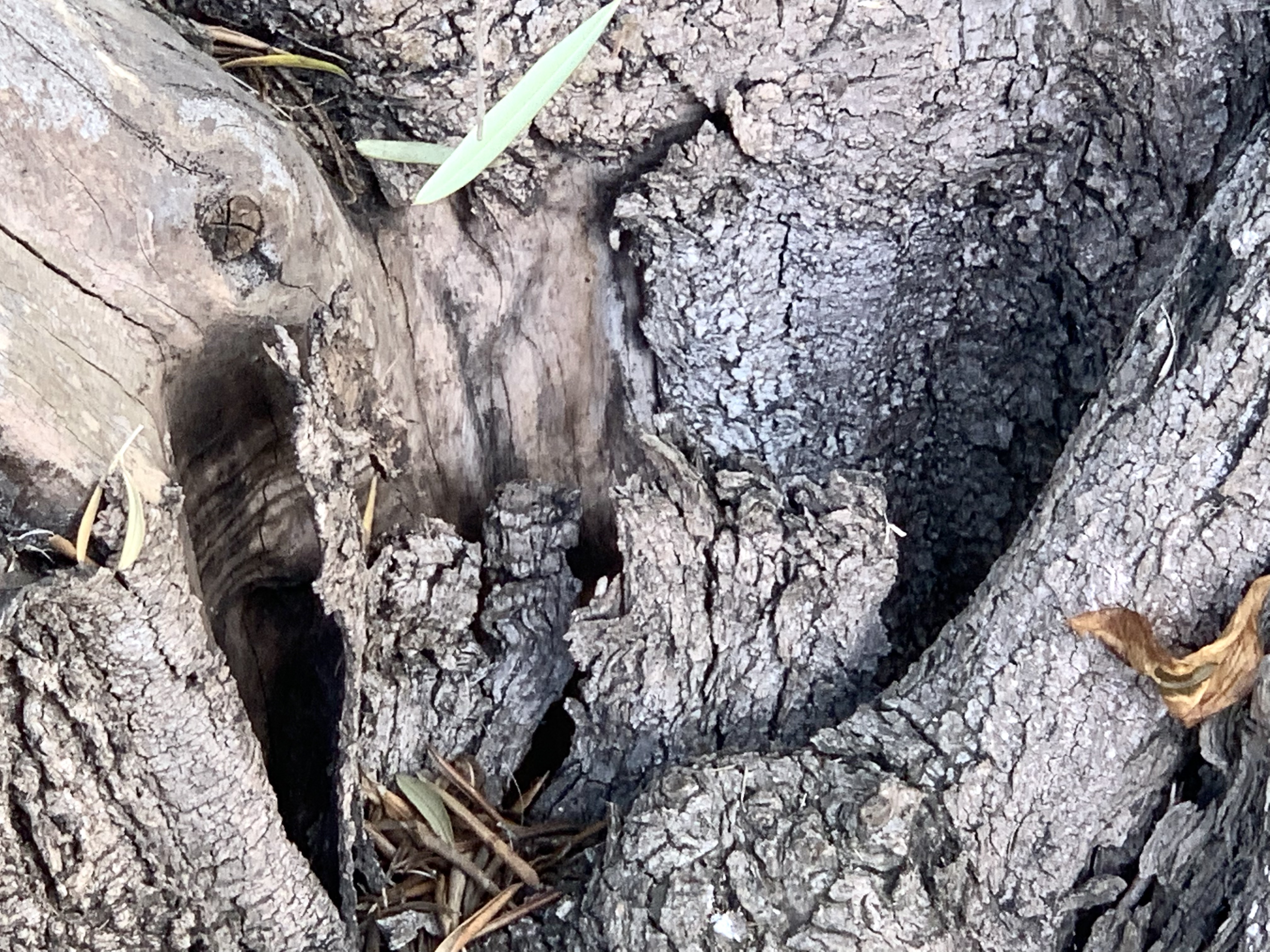
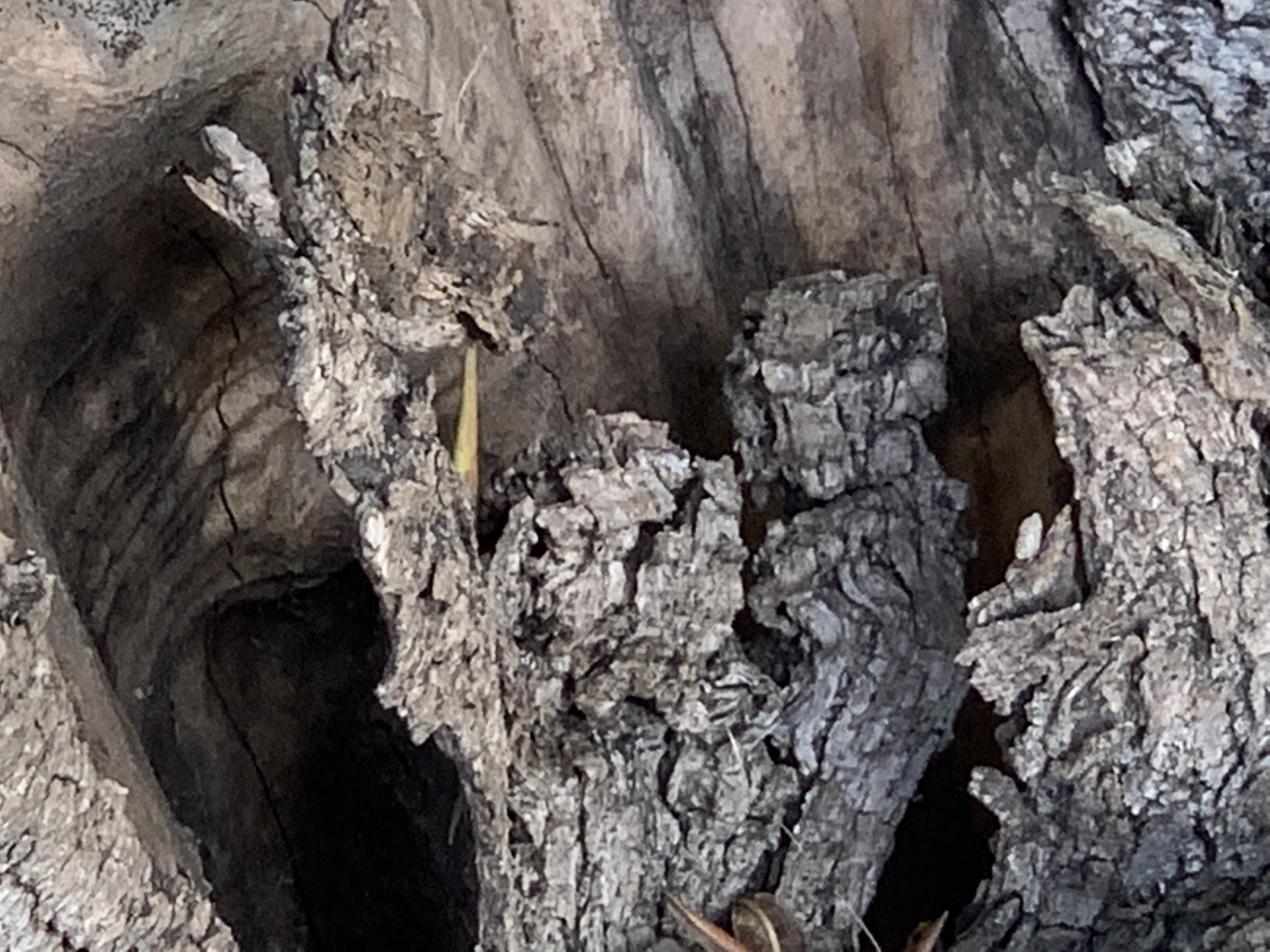
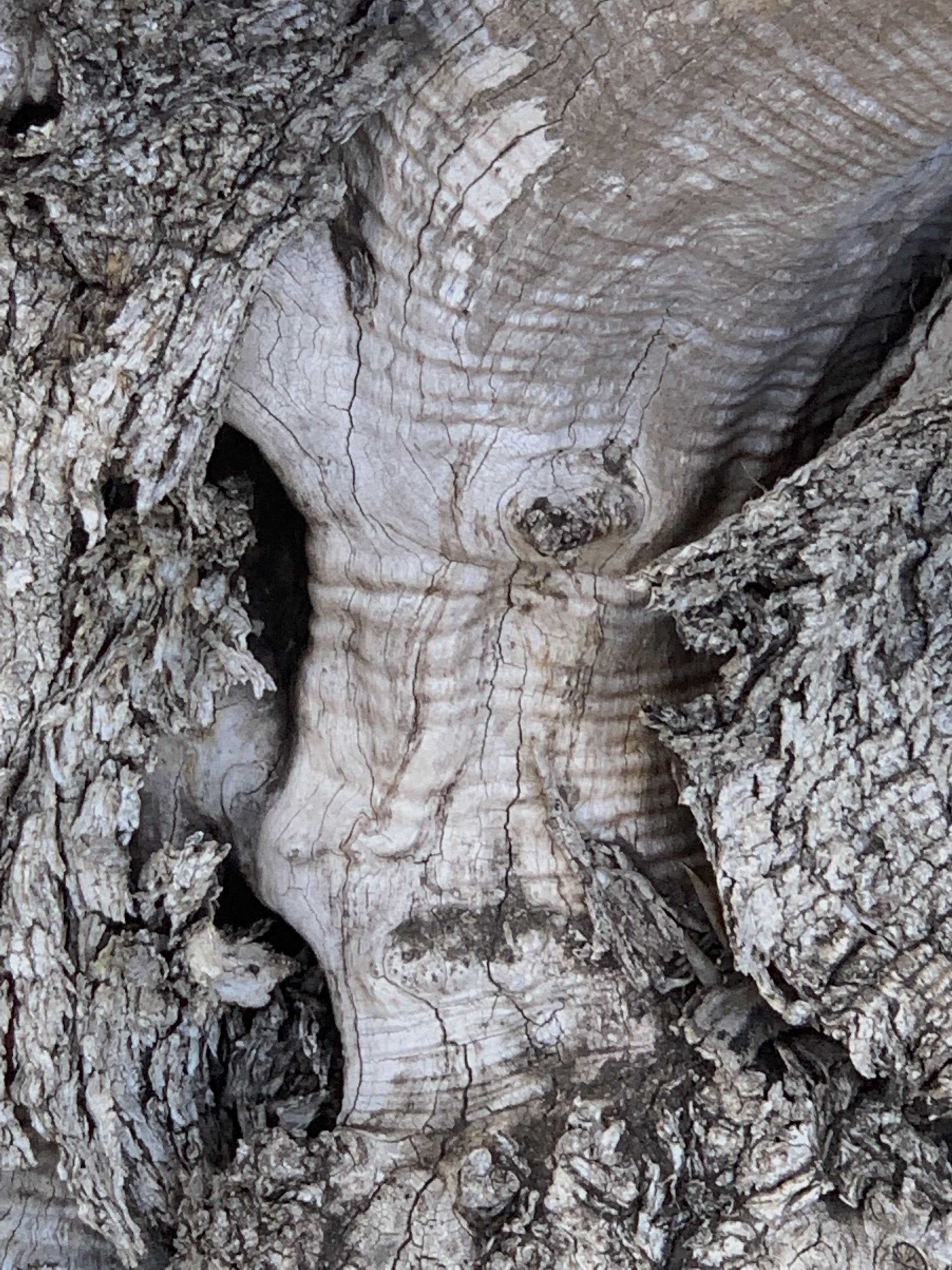
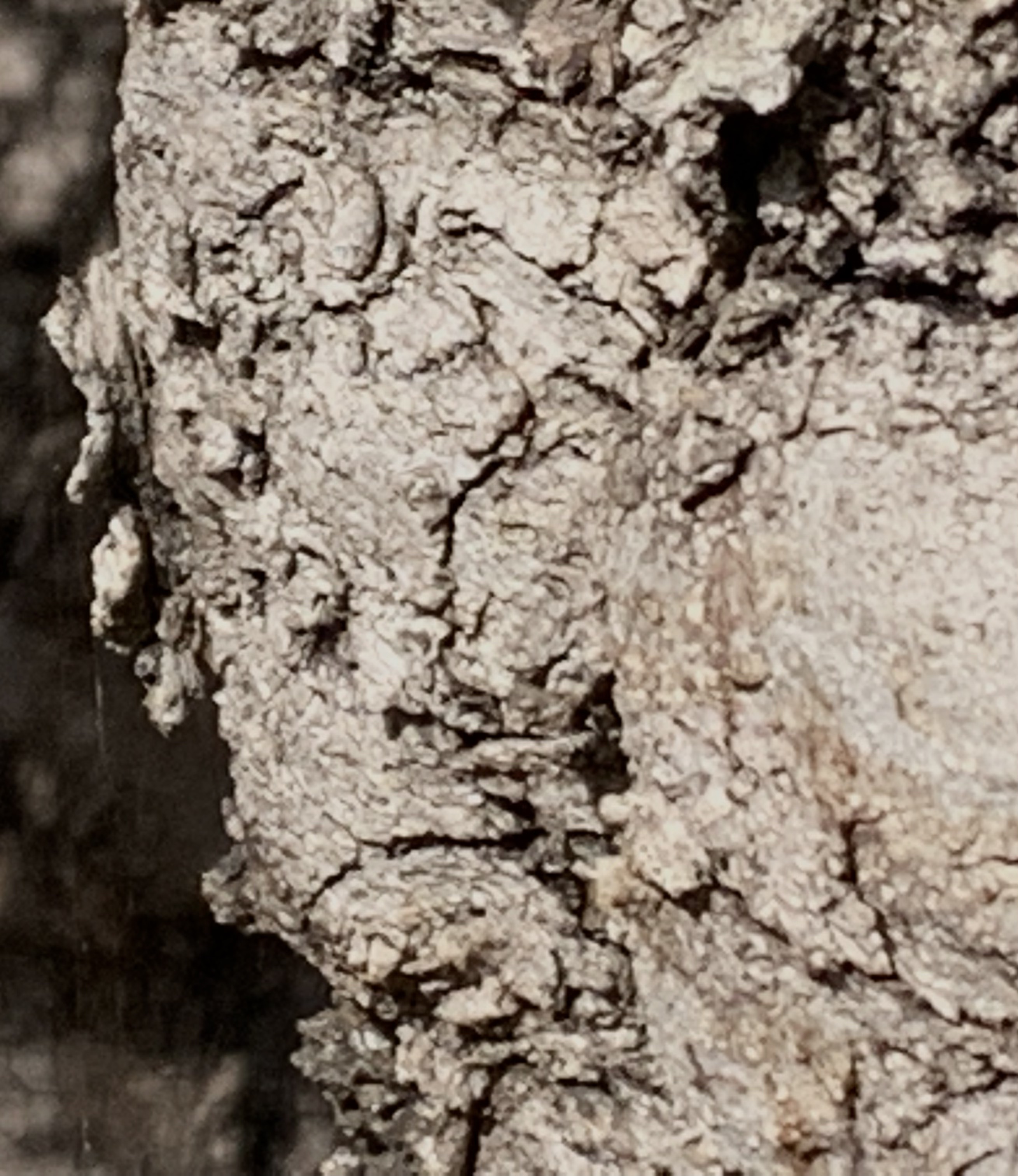
Yesterday, I went for a physical walk to a nearby State Park. Today, I instead decided to see how “far” I could go looking at an old olive tree right out my front yard. This is a walk through perception — powered by imagination. You might come with and see what you see. You may want to put the screen at some distance from your face or use a phone rather than a large display. If the image is too large, you’ll see a completely different set of characters. Of course, you might anyway.

The first group of photos is all from that one tree — a tree that also happens to be featured on the cover of Turing’s Nightmares.

What faces do you see above? I see at least six large humanoid ones.

The lower middle part of the picture above reminds me of The Burghers of Calais by Rodin. Not to be “Rodindant”, but that is an amazing work of art that you should definitely see in person if you can. I believe I saw it both at the Met in NYC and the sculpture gardens in DC.

Also a pretty good pair of owls on the right.

Every two dots of approximately the same size forms part of a face. I can pretty much see as many “faces” here as I choose to. I can easily see 0 by steadfastly reminding myself that this is a tree trunk. Definitely a time & place for that mentality. But not always. For right now, I’m satisfied to see about twenty faces and move on. It’s interesting how often as adults we mainly use our imagination only to see all the bad things that might happen. Sometimes, that is also quite useful. But we can also use imagination to craft beauty or gain insight.

What do you see above? Turtle on the sand? Or, high flying eagle far above the semi/desert scrub? Or something else entirely?

Somehow, the picture above seems to echo elements of Christianity. Three wise men kneeling, angel on the left. I can also see a mind of “mini-history” of the life of Christ from infant to young man to thorn-crowned lamb.

If I focus on the bright spots above as figure, I see a large face LR & a small one UL. The dark on the left, is a shark, on the right, a totem pole of animals.

 It seems to me clear that the frog above is bragging to his cousins about a huge worm — the one who got away: “I swear! It was this big! I would have had it too, but I was knee-deep knee-deep in muck!”

Of the panoply of characters in the photo above, my personal favorite is the little mouse at 7 O’clock. It could well be Stuart. What are your favorites?

The above elephant is sad about losing her habitat. (Who could blame her?) And what’s worse, from her perspective, is that while elephants are very loving, those destroying her habitat are anything but. She, in fact, wonders at our use of the term “humanity” as in “Show some humanity!”

The photo above evokes a Boschian hellscene with warriors, monsters, victims, violence, cruelty, & mayhem. Maybe it’s because of the violent video game my wife’s playing in the background, or maybe it’s because of the violent reality, Vlademort Putrid is creating in real life.

The brown woman in the foreground looks worried. I believe the grim looking bearded knight in helmet down below is knocking at her door. He wants to conduct some seriously bad business. Maybe not a knight, but a guy in a tinfoil hat who wants to kill. What do We do?

 “Hey! What about me!? Small can be beautiful too!” As I walked away from the tree, these tiny few flowers reached out to me.

I answered: “Oh, flower: you are so right!  As usual.”


The cypress(?) trunk above has a hole I which I suspect may be a scar from having a limb lopped off that went into the space of part of the house that was added later. Forensic forestry? That might be a fun setting for a detective series. Solving crimes from tree reading. Something like Bones or Numbers

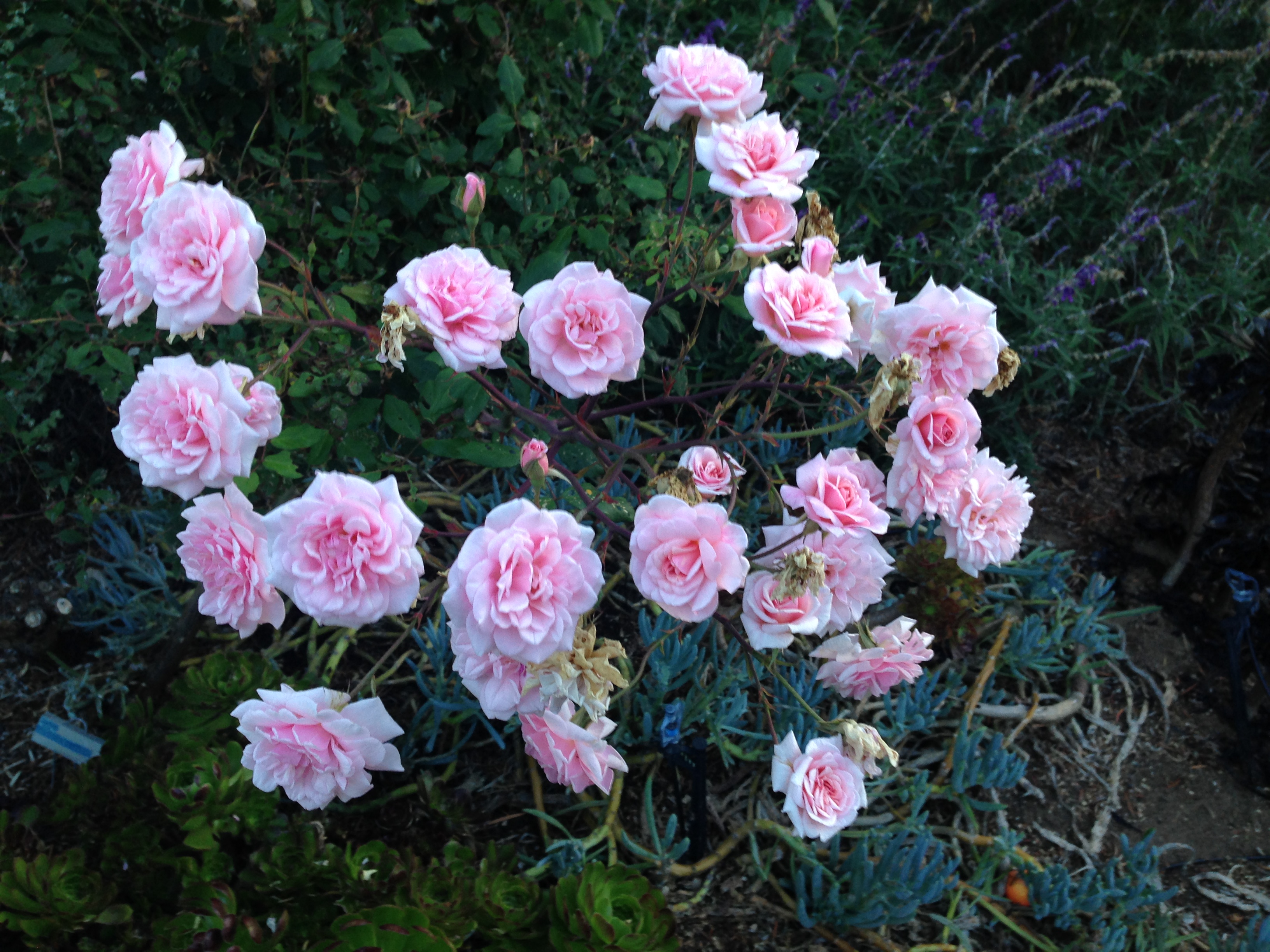
The roses, of course, want everyone to remember that they too are out here doing their part to make the world a more beautiful place; to spread joy; reduce carbon in the air. She wonders what we’re doing to help.

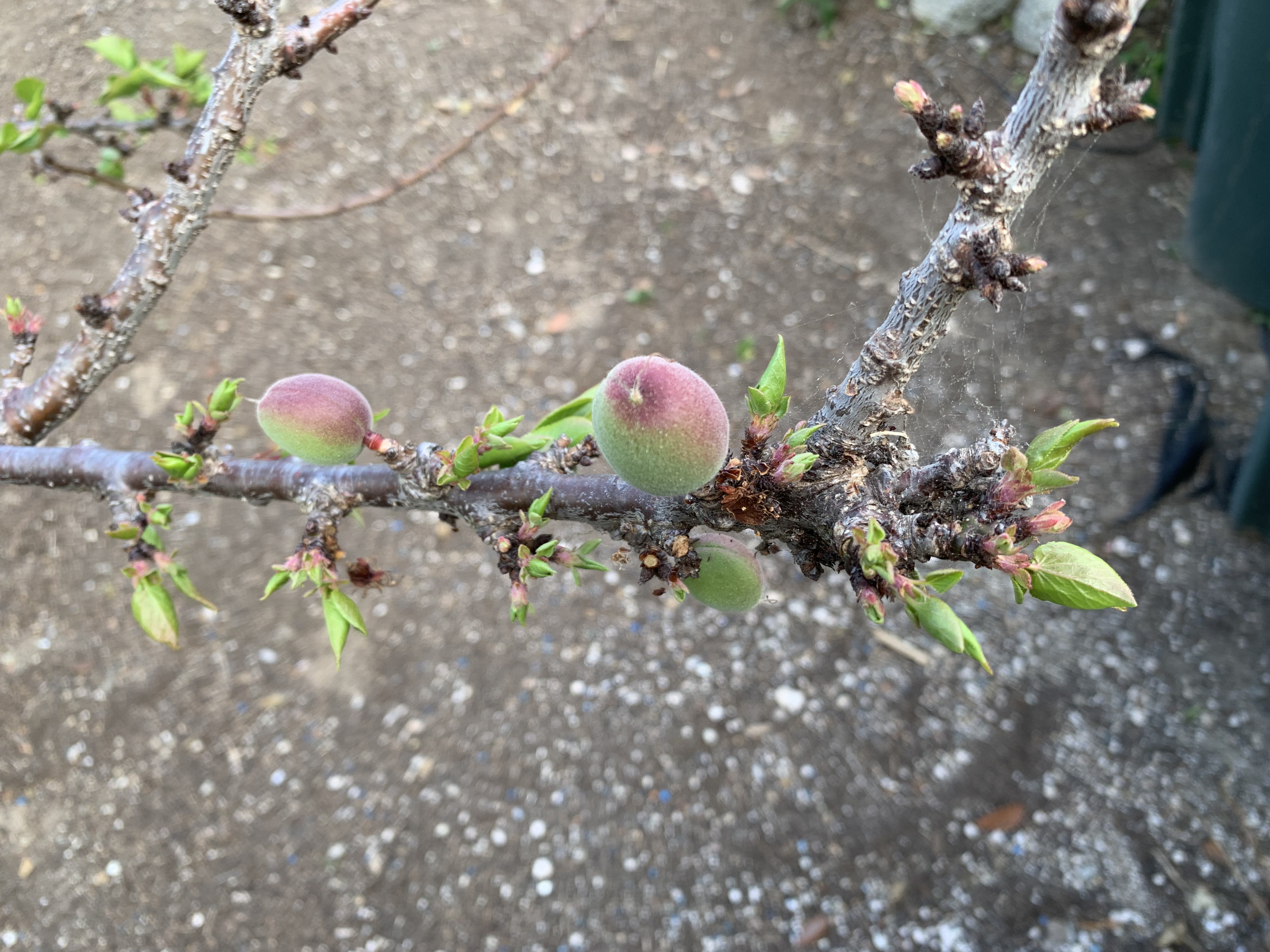
Last week’s promissory flowers have given rise to this week’s prototype apricots. Thank you, bees! Thank you!

Author Page on Amazon

Bee Wise

The Ghosts of Flowers Past

Walkabout Diaries: Walk in the Park

12 Saturday Mar 2022

Posted by petersironwood in Uncategorized

≈ 7 Comments

Tags

Democracy, diversity, flowers, love, nature, peace, photos, Ukraine, USA

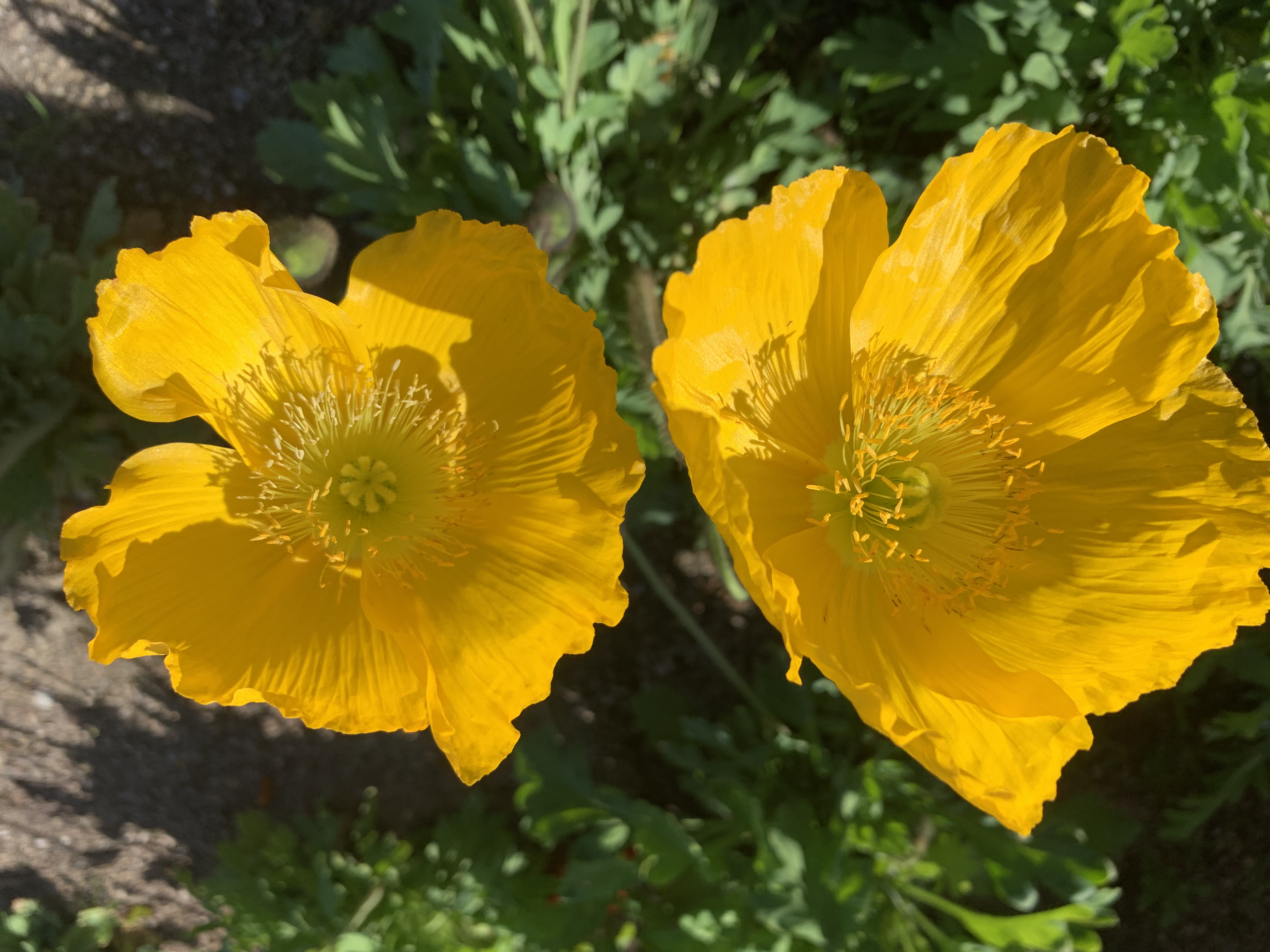
Today, I decided to change up the photo scene so I walked to a nearby State Park. Some nice flowers presented themselves on route. For instance, the bright yellow flowers under the bright blue sky reminded me of the bravery of Ukraine. 

When I arrived at the park, two flags I am proud of greeted me. Of course, it doesn’t mean the State of California is perfect — nor is the USA. But most of us at least are trying to make them better. 

I was also rewarded with beautiful flowering trees on my walk on the park. 

Many bright beautiful flowers also greeted me in my walk in the park.

Some of the beautiful flowers who greeted me on my walk in the park (as well as on the way there) showed their support for Ukraine and the bravery of her people.

The most beautiful gift of my walk was completely unexpected— a very large & very colorful celebration in an Indian tradition. I strongly suspect it was a wedding since I noticed a nearby restroom said “grooms”; people were in a good mood; the celebration included all ages; and everyone looked beautiful.

In addition to the color fest, a band arrived and played beautiful music beautifully! I thought about trying to record some. Where this picture was taken isn’t far from the highway. Since it was behind me, it was easy to block that noise out with my brain. It would be far harder for you listening to it on your device though. 

The walk in the park also reminded me how wonderful is the music made by little children. It is the same music regardless of language if you listen with your heart.

Once more, I find myself grateful that humanity survived & thrived in so many diverse ways. So many solutions to so many problems! Amazing wealth of experience! We can become wise at a whole new level — if we are respectful and kind to each other. Is that too much to ask? I really don’t think it is too much to ask. 

 I love also the way plants have invented so many solutions to so many problems. We have much more to learn from them — and each other — than we can currently even imagine.

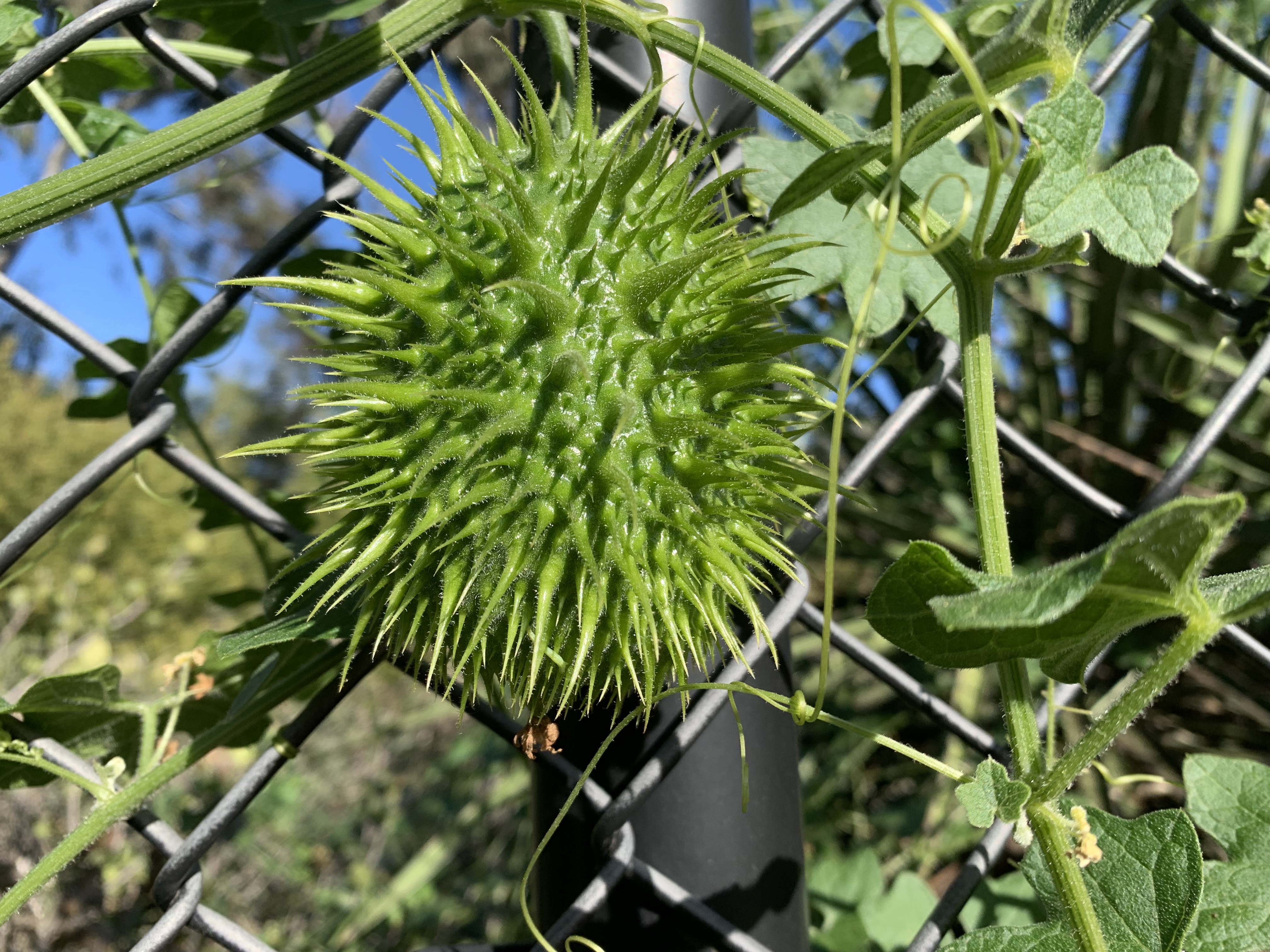
For example, I saw this “Wild Cucumber” as I began my walk home, still enjoying the music & the chattering children. This plant uses hydrostatic pressure to shoot its seeds out at 11 meters/sec. We can learn much from every living thing — including other humans.

I hope you enjoy your next walk in the park. 

———-

Author Page on Amazon

Life Will Find a Way

Ghosts of Flowers Past

The Walkabout Diaries: Life Will Find a Way

Sunsets

Bee Wise

Happy Darwin Day

Math Class: Who Are You?

A Rose is a Rose is a Thinking Rose?

The Walkabout Diaries: Friends

Stoned Soup

Three Blind Mice

Seed, Ground, Water, Light, Love

10 Thursday Mar 2022

Posted by petersironwood in Uncategorized

≈ 1 Comment

Tags

cooperation, council, Democracy, legend, myth, peace, politics, story, Veritas, war

——————

After some delicate and delicious love-making with Shadow Walker, Many Paths decided to check on She Who Saved Many Lives. If she seemed well enough, it might also be good to see whether her mentor had any further wisdom to share about Many Path’s plan to gather all the tribes. Her goal was to bring about peace but she realized that in trying to accomplish that, she might trigger the very things she hoped to avoid. Her tentative plan was therefore to gather as much wisdom as she might from many sources — but not to wait overlong. As the story goes, she thought to herself, if you waste the entire warm season deciding where to plant, you will starve in the season of great ice and snow.

Many Paths called out to her friend and mentor and received a surprisingly strong and cheery response. “Come in, Many Paths. Come in! I’ve been meaning to ask your advice about something. Do sit down. I will get you a cup of tea this time.” 

Not for the first time, Many Paths wondered whether it was actually possible for She Who Saved Many Lives to see into her heart and mind. After serving them both a cup of spicebush tea, ever so slightly flavored with mint, She Who Saved Many Lives went to her work area and brought over two patches of weaving. She placed one on each knee of Many Paths. The older woman smiled and said, “It never fails to amaze me how strong a weave of reeds is! It’s so wonderful. Just as I hope our community is.”

“I have had that exact same though,” Many Paths replied. Then, she laughed and added, “Likely because you pointed that out to me before I was even old enough to remember.”

The Elder Shaman tilted her head and nodded ever so slightly. “Perhaps. But you have made so many wonderful discoveries. And, not only you but the entire tribe. That’s because you have been open to learning and seeing what is there. But enough of that. I did have a question for you. Which of these two do you think is better?”

Many Paths frowned. “Better for what? What are you making?”

She Who Saved Many Lives considered, “A basket to carry things.” 

Many Paths nodded, “What things and how many? This weave has these stiffer switches to help support the weight. If you’re making a small bag to collect mint, for example, you wouldn’t have any need. If you’re making a large bag to collect apples, however, you would want the extra structuring support.”

Photo by Pierpaolo Riondato on Pexels.com

She Who Saved Many Lives nodded. “Yes, yes. That sounds obvious when you say it. I guess the fever must have addled my brain a bit. Anyway, thank you for reminding me. Soon, I will have to decide on what I want to use the bag for; then I will know which one is likely correct. Now, what did you want to ask my advice on?”

Many Paths took in a deep breath and slowly let it out. “I am quite sure I didn’t say anything about asking your advice.” 

She Who Saved Many Lives nodded. “I think you’re right. Sometimes I confuse us.” She laughed. “I know it sounds crazy but any way, I will get back to my weaving — or at least deciding why I’m weaving and let you go about your business — unless, of course, there was something else you wanted to talk about.” 

Many Paths chuckled. “As it turns out, I did want to ask your advice about something. You know I want to convene a  — Let me ask you another question first. Are you going to teach me how to see into another person’s mind?”

She Who Saved Many Lives laughed surprisingly long. At last, she caught her breath and said, “Many Paths! You won all seven rings of empathy! Of course, you can see into others. Of course, you can never be perfect at it. But you already do it. I knew you were busy. Yet you came to see me. You probably wanted to see whether I was dead or not, but even your footsteps and the way you called out told me you had something else on your mind. In fact, whether you knew it or not, you assumed I was alive. There was no edge of anxious worry in your voice. It was friendly — but also a bit — plaintive. I knew you wanted something from me. Now, you can see I have very few possessions. I find too many to be intolerably distracting. I am not going to help you with any arduous physical task. What is left? You want to offer me the opportunity to share my experiences; that is a great gift. For once we die, what else is left? So, naturally, I am more than willing to try to see what grows from our discussion.” 

Many Paths looked down and slowly shook her head. She realized that she could read people. She simply forgot sometimes to do it. If you really take the time to put yourself in their sandals, of course, you can make a good guess at what they’re thinking, she thought. Aloud, she said, “Yes. You’re right. So, I want to convene the tribes and I am wondering how, exactly, to go about it. How can I make sure it helps bring greater peace and doesn’t somehow spark off violence. Maybe it’s better not to try?” 

She Who Saved Many Lives replied, “I can say that no-one has attempted to bring all the tribes we know about together — not in my lifetime or the lifetime of my mother or the lifetime of my mother’s mother. During that time, there have been many wars and other atrocities. People stealing other people’s children? Even in our own tribe, we had some who forgot they were not the Tree of Life but a small and temporary part of the Tree of Life. I judge it’s worth the attempt.”

Many Paths. “As to how…?” 

She Who Saved Many Lives said, “What comes to mind for what you are trying to do is more akin to growing things than it is to making things. I am making a basket, and I will use it for a time. I don’t ever imagine that it will live forever any more than that I will or you, my dear. But if I know your heart correctly, you don’t want to make a thing, which will at some time break or dissolve. You want to make something grow for a hundred years, like a giant oak. Ideally, it would be an oak that would seed still more oaks when old mother oak also died.” 

Many Paths nodded. She realized that her mentor had described her desires precisely even though she herself could not have articulated so succinctly. “Yes, that’s exactly right.”

She Who Saved Many Lives nodded. “Let’s suppose then that you want to plant something so that it’s likely to grow. What do you need?” 

“A seed. Fertile ground. Water. Sun. That’s it. Is there more? Love! It’s all more likely to grow with love.” 

She Who Saved Many Lives nodded. “Yes. That’s it. I would start with the love. You already have that. Then, you need to know what seed. The seed determines what will grow though not exactly how. But you will need the ground, water, and sun so it can grow at all.” 

Many Paths continued the thought stream. “If you know what the seed is, then, you know what kind of place to look for. You know whether you need to plant it in bright sunlight or in shade. You know whether it needs very fertile ground or if it can grow in dirt and rocks. And, you know whether it needs to be in very wet ground or if arid ground will do.”

“Yes,” Many Paths, “and it occurs to me, that you might choose a place with enough light first, because, you can make the ground more fertile and bring more water, if need be. But brining light is more difficult.” She Who Saved Many Paths sighed. “Once, apparently, we knew how to bring light as those which lit the tunnel that leads to the Veritas on the … on the other side of the mountain.” 

“I do wonder, Old Mother, whether such light would is strong enough to grow plants. And then, Shadow Walker used reflections of the sun, along with other captives, to escape from the City of the Z-Lotz. It seems too contrived and elaborate for growing plants, but … perhaps writing is a little like that when it comes to providing enough truth so that peace can grow. It allows you to bring the light of wisdom to places that are many days walk from where they started. More importantly, you can place the light in a different time as well. We have all learned so much from the books uncovered in the great library. But, as usual, you are right. We must determine what type of thing we want to grow. That decision will determine the type of seed. The type of seed will determine the proper material, sunshine, and water.”


Many Paths arose and began pacing around in the Old Leader’s shelter. “Of course, since the outcome could impact everyone, I need to know how everyone believes it should be. Or, at least, find out as much as they know about how they want it to be.”

“Yes.” She Who Saved Many Lives considered for a moment before answering. “I suspect some will have many ideas about that while others may not care that much. Nearly everyone wants peace. On other matters, there may be great differences.” 

Many Paths sat back down. The two sat in a comfortable silence for a time. Many Paths rose at last and said, “Thank you for sharing your wisdom. I will look for some to walk with me a bit and contemplate the plants and their nature and try to see among them what it is that the people may be seeking. I’m glad you seem so much better.” 

“As am I, Many Paths. You know, you give me much to live for.” She Who Saved Many Lives smiled and added, “But I do think I will lie down for a nap now. Though some time in the near future, I might accompany you on such a walk.”

Many Paths left and saw Shadow Walker coming toward her. From the look on his face, Many Paths judged he had some news. His smile broadened as he approached and he said, “Hello my love! Can we go for a bit of a walk?” 

———————

Author Page on Amazon

Myths of the Veritas: The Orange Man

Myths of the Veritas: The Forgotten Field

Myths of the Veritas: The First Ring of Empathy

A Rose is a Rose is a Thinking Rose?

08 Tuesday Mar 2022

Posted by petersironwood in Uncategorized

≈ 3 Comments

Tags

beauty, decision making, Design, essay, flower, flowers, life, rose

Rose bushes lack neurons. 

But that doesn’t mean that they, as a species, and they, as individual plants, don’t make decisions and embody strategies and tactics.

Today, a local crow and I were playing the counting game. I think that’s the most parsimonious explanation, even though I can’t “prove” it. Here’s what actually transpired. I went out into the garden to take pictures of flowers before it gets too chilly. Soon a crow said, “CAW!” So I said, “CAW!” 

Then, the crow crowed “CAW! CAW!” So I repeated that message. Any way, we got up to three and the crow started over at one and we went through the whole sequence three times. 

Photo by Pixabay on Pexels.com

They cawed three times and I said: “That’s what we call ‘Three’ and I “cawed” the first three digits followed by cawing three times. He cawed back.

Then, once again, I said, “One, Two, Three” and “CAW! CAW! CAW!”They next did something I don’t recall hearing before. They did a distinct two-tone CAW: I think it was low-hi. I went out to photograph roses, not take notes on crows. I repeated his two-tone CAW as best I good and he flew off while cawing about ten times. I fantasize that they flew off to tell their friends that they discovered a human who almost seems smart enough to CAW! Indeed, they are having quite a conversation out back right now. I am not yet sophisticated enough to know what they are talking about but cross-species communication is pretty cool. 

The rose bush speaks to me too, of course. 

I cannot hear it with my auditory apparatus. At least, not yet, I can’t. I have to “listen” with my eyes, and my mind, and my heart. I “know” something of what the rose wants and needs. I know it needs water and sunshine, for instance. It needs minerals. But those things are true of green plants in general. What does the rose tell me about its strategy and tactics for survival and thrival? 

No, the rose bush cannot answer my spoken questions, but that often happens when it comes to communicating with other humans. I have read some poorly documented code (perhaps my own) and tried to figure out what the heck this code is doing. Probably, the single most important thing is to understand what the programmer was trying to do. What was their intention. I don’t actually have to know what precisely was in their mind in order to understand it at a useful level. This particular human programmer might have been thinking primarily about getting a raise, or impressing their supervisor, or outdoing their friend. Who cares? I need to understand an imputed design rationale.

Photo by RF._.studio on Pexels.com


In that same sense, I strive to understand the imputed design rationale of the rose plant. It doesn’t require that the rose talks to me in English. For example, why are a rose’s blooms so beautiful? Certain, the original “motivation” was mainly to attract pollinators like bees. But guess what? Some of the same patterns, colors, and odors that attract insect pollinators also attract human caregivers. In fact, the human caregivers have, through selective breeding, put additional design constraints on roses. As a result, there are more varieties of roses than there would have been without human intervention.


The roses have, one way and another, evolved genes that encourage them to grow beautifully. In a way, this can be said to be their “intention” — Their “design rationale” is that if they grow more beautiful, they will thrive more. But is their “intention” to be beautiful so recent? Suppose that other mammals also find the blossoms beautiful? Attracting mammals to the rose plant may encourage them to breathe carbon dioxide on the roses; to defecate nearby and provide minerals; perhaps even to bleed some because of the thorns. It’s even possible that there is also an innate design rationale of all life to be beautiful. Life is beautiful in terms of being itself. Perhaps, other things being equal, surfacing the fact of your being part of life by being beautiful is itself a survival strategy. It increases the chances that other life forms will cooperate with you. They will perceive that you are kindred and may have something valuable to trade. 

Is it the natural state of affairs that all life reaches out for all life in the hopes of reaching some mutual understanding? 

What do you feel?

Life Will Find a Way

The Walkabout Diaries: Life Will Find a Way

Ghosts of Flowers Past

Happy Darwin Day

The Walkabout Diaries

The Walkabout Diaries: Friends

Math Class: Who Are You?

Author Page on Amazon

Sonnet of Vlademort

06 Sunday Mar 2022

Posted by petersironwood in Uncategorized

≈ 7 Comments

Tags

Democracy, poem, poetry, politics, Putin, sonnet, Ukraine

Photo by BROTE studio on Pexels.com

I lie!  I cheat! And then, I win! Makes ME
The best and baddest Putin-tate of all!
I kill my people who tell truth, you see,
I have to do it or I’ll seem so small. 

Photo by NEOSiAM 2020 on Pexels.com

I’m such a chicken and a rat,

I cannot fight myself, of course, so then

I send young men to kill and die and that?

It makes me feel most powerful! And, when

Photo by Pixabay on Pexels.com

The blood of babies, moms, and elderly

Flows through the streets that are not mine. 

My heart leaps up in joyous revelry.

It is my substitute for having spine.

Photo by VisionPic .net on Pexels.com


I steal the wealth of Russians in my thrall.
That’s not enough for me! I want it all!

Photo by Samira on Pexels.com

————————-

Absolute is not just a vodka (poem about dictatorship)

Overheard Conversations of Fiction (Between Putin & TFG)

Voter Suppression is Life Suppression (Essay showing why this is so)

Essays on America: Wednesday (How we can “paint ourselves into a corner” psychologically).

The Stopping Rule (The *lack* of stopping rule for Dictators is a problem; for any procedure, algorithm, or machine, there needs to be a stopping rule).

The Update Problem (Essay about how when things change, we don’t always update all the relevant attitudes & beliefs we have).

The Ailing King of Agitate (Poem about whomever comes to mind at the Title).

The Truth Train (Poem about TFG’s disastrous misleadership on COVID)

The Pandemic Anti-academic (Poem about how anti-intellectualism aided the COVID virus).

Poppa Goes the Weasel (Thoughts about Vlademort).

Life will Find a Way (More hopeful reflection on how life will find a way.)

Cancer always Loses in the End (Essay about how cancer is absurdly stupid. It kills wantonly and ensures its own death. Hmm. Sounds like someone in the news lately.)

At Least he’s Our Monster (Story illustrating the absurdity of people who think if they just kow-tow low enough to people like TFG & Vlademort, that they will show them loyalty back.)

Captain Donny Boy Steers the Titanic (Story with a pretty self-explanetory title).

The Con-Con-Man’s Special Friend (Reflections on the irony that while TFG uses people and never has true loyalty, he has apparently convinced himself that Putin who also uses people and never had true loyalty *does* have loyalty to TFG! That is a symptom of the disease of narcissistic personality disorder.)

Small Steps (So, in the midst of all the types of chaos that we face, what can we do? Here are some things).

Stoned Soup (A story that riffs on the folk story of Stone Soup — a community works together to make a wonderful soup through cooperation).

The Orange Man (Part of the lore of the Veritas, this tale shows how greed and lying together may result in disaster for many).

The Three Blind Mice (Another tale from the Veritas. This is a parable about how the powerful and greedy divide the people so as to stay in power).

All for One and None for Most (Poem with a self-explanatory title — what happens in dictatorships).

Lying to Your Kids (Why would you ever do that? And, yet people may be trying to trick you into that very thing)

My Cousin Bobby (My cousin Bobby conned me when we were young. More than once! How can we minimize the chances of being conned?)

Happy Talk Lies (This essay explores how people can continue to believe the incredible panoply of lies told by TFG over the past decade. He’s lied about virtually everything; yet some believe only him. It’s an addition, basically).

Where does your loyalty lie? (A good question to ask yourself. Here’s some of my reflection.)

Come back to the Light Side (It’s never too late to help our civilization survive and thrive).

Dick-Taters

05 Saturday Mar 2022

Posted by petersironwood in Uncategorized

≈ 81 Comments

Tags

Democracy, Dictatorship, politics, Putin, Ukraine, USA, Vote, war

Putting a dick-tater* [see below*] in charge of things has always been a very very bad idea. 

But in today’s world, this bad idea is worse than ever! 

There is still the problem that such a position appeals mainly to cruel and cowardly people. That results in the person who is in that position surrounding themselves, not with the best experts in the country, nor the most diverse range of opinions, but with people they can cow. 

Hence, you end up with someone predisposed to greed, cruelty, and cowardliness surrounding themselves with others who are cruel, greedy, and cowardly. The entire government decision making process ends up narrow, uncreative, and stupid. It was that way in ancient times and in the Middle Ages.

In those days, however, the whole of accurate human knowledge was much more limited than it is today. Today, even an actual genius (not a self-declared one) will know only a small fraction of the knowledge relevant to a given problem. That’s a bit of an issue for democratically elected leaders as well, but at least there is some chance that elected leaders will listen to a range of experts and make a decent decision. But in a dick-tater-$hit**, that almost never happens. 

Although a dick-tater is supposed to have infinite power, it’s actually just a public fiction. Of course, the people as a whole are way more powerful than the dick-tater. But the dick-tater tries to put everyone in fear of each other. They divide in order to conquer. If the people would all stop obeying stupid orders, the dick-tater-$hit would crumble. But it takes a lot of bravery to be the first one to disobey their orders. The first one will be killed. 

It takes even more bravery to be the second one. Because the second one to defy the Putintate (or whatever it’s called) has already seen the effects of radiation poisoning (or whatever other cowardly action was taken to silence the first). And, perhaps it takes even more courage to be the third person to work for the people rather than just please the dictator.

I enjoy playing chess myself. But it’s not that fun to simply stare at an empty chessboard. (I have actually done that to see how I can allocate my attention to various squares in the matrix, but that’s the subject of a different essay.) It gets old though. It’s certainly more fun to play chess. If you have no pieces however, it’s basically a boring game. It only works because you have pieces to move. If the pieces move on their own and express their basic nature as separate human beings, it’s disconcerting. But it’s even more disconcerting if there are no pieces whatsoever because you’ve murdered them all. 

NOTES:
* I use the term “dick-tater” because I think it shows a better derivation. Latin for “Say often or prescribe” is where “dictator” comes from. And although some dictators and would-be dictators are mouthy or whiney, they don’t really *say* things at all in the way most of us do. Most people, most of the time, say things so as to better communicate and to coordinate our work for the community. The purpose of a dick-tater is to control, not to share truths. So, I don’t like relating what a dick-tater does with words like “diction” or “predict.”

When we think about toxic masculinity, however, we often refer to someone who only has his own interests at heart with the answer to this question: “What do you call it when a needle when stabs into your skin?” Or, we sometimes use a person’s name — one that rhymes with “ick”. And the use of this word “dick” in that way is not at all inclusive of the many characteristics of male anatomy. When we say someone is a “dick”, we’re not saying he’s shaped like one, or that he changes size a lot, or that he’s used for urination. We refer quite specifically to someone being a dick as acting, perceiving, and actually being a certain way. It doesn’t really even have anything to do with sex, per se, although certainly a “dick” is likely to approach sex, like everything else in a selfish, dickish way. He might be prone to “grab women by the pu$$y” or rape them or pay for sex. But that has nothing to do with, e.g., the actual miniscuality of the mushroom in question. True, microsize might be part of the motivation for someone to “become a dick” (since they don’t really have much of one), but it need not go that way. 

The essence of the term refers only to the psychology behind what is being done. What is behind every perception, action, and decision is being an absolute coward. This is basically why the dick-tater seeks absolute power. He or she is too chicken to face a fair contest of any kind. They might lose. That is also why they are prone to pay for sex or sexually assault or molest someone younger. In all cases, they don’t have to face whether or not they will be accepted by their desired partner. It’s too scary for them. They might be rejected. But not if they can be bullied or forced or paid off. The slime invades every aspect of the dick-tater’s life.

No-one really knows exactly what causes people to be extremely (or sightly) sociopathic. It seems correlated with a lack of unconditional love given on the part of the parents. Criminality does tend to run in families but it’s unclear how much of that is due to which sorts of factors. In some ways, maybe it’s a lot like learning any other family business. This family tends to have good cooks. That family tends to have good crooks. In each case, the people in the family learn from each. Within this family there is an innately determined ability to imagine the result of combining tastes, while in that family people seem to have the natural talent to cause great wastes. 

Photo by Leonid Danilov on Pexels.com

Let’s move on to the “tater” part. When I think of a “tater” I think of “tater tot” and that too seems wildly appropriate. The “tater tot” is very appealing. And, it’s also very bad for you compared with most other foods; it’s high in fat, in calories, and in fast-absorbing carbs. And, typically, it comes with added heart-unhealthy sodium. So, in terms of what it means for a society, few things could be more appropriate metaphors. It looks attractive and yummy but what it really does it tend to kill you while it makes you feel good for a moment. But your kids and grandkids and great-grandkids won’t feel that moment that you’ll relish. All they’ll feel is endless frustration and despair of the situation you put them in. And utter hate.

Can you really blame them? 

The word “tater-tot” also has within in the two words, “tater” and “tot” and again both of these seem appropriate. A “tater” is a slang word for “potato” — a food which is something we can almost all relate to. I can’t think of anyone I know who doesn’t really like potatoes. Some only like French Fries while other prefer a Baked Potato. I like potatoes every way made that I’ve ever had: Baked, Fried, Scalloped, Potato Salad, German Potato Salad, boiled, mashed. The only “problem” with potatoes is that they don’t really solve the hunger problem very permanently. They are high calorie and the energy is quickly absorbed. This means your pancreas secretes insulin to drive your blood sugar level back down. And, since our biochemistry mainly evolved before French Fries, our pancreas thinks we are having a huge meal and sends way more than enough insulin. And, that drops your blood sugar level again.
So fifteen minutes after eating the French Fries with salt & ketchup (Yes, of course, I love them!) You feel wonderful! Yum! But an hour and a half after eating them you may feel hungrier than you did before you started! 

Photo by Robin Stickel on Pexels.com

That seems totally appropriate as a metaphor.

At last, we come to “tot.” It’s almost too easy and obvious, isn’t it? Many of us go through a phase as a toddler where we try this “I am the dictator of the world” and everyone must cater to me.” It doesn’t happen to everyone, but to far more than actually become dicks. It takes time and experience to understand how to be kind to people in all its complexity, but the basics are pretty easy, actually. So, most kids are “nice” to others most of the time. But there are a few who are not. And, then almost everyone has a bad day now and again. Now, personally, I was much more of a dick at age 13 than I was at 7, 8, 9, 10, or 11. Hormones? I don’t know. I just know it was so. Your mileage may differ. But, I think generally speaking, we would agree that dick-titorial behavior is childish behavior. It’s childish to be so self-centered that you care more about your own ego than about the fact that you’re killing women and children who have done nothing to hurt you. Nothing. 

So, where were we? Ah, yes, a dick-tater-$hit is a balancing act. Everyone around the dick-tater is afraid of that dick-tater. But at the same time, the dick-tater is scared of everyone around them! This means, among other things, that the dick-tater is always looking for external enemies in order to keep his inner ring from turning their gaze toward him and thinking how much better a job of it they could do. To avoid internal division, the dick-tater is always fomenting discord to outside enemies or to the “undesirables” within their own society. 

Good luck with that one! Because there is absolutely no way anyone can tell with certainty who or what is going to be called a deadly evil in a dictatorship ten years down the line. Just because a dictatorship begins by forbidding gay marriage in year one doesn’t mean they won’t require it next decade. “No, they couldn’t. They wouldn’t.”  Well, don’t be so sure. TFG, would-be tater-tot, was a liberal (gasp!) On many issues such as abortion, before getting into politics. Of course, he needs the support of his fans in order to gain absolute power, but not to keep it. Once the machinery of a dictatorship is well in place, it is very easy to target different groups at different times. If someone thinks they’re safe because the current dick-tater pretends to be a lot like them, they’re simply fooling themselves. First of all, they’re a lot less like the dick-tater than he would have you believe. Second, even if he were your identical twin, he’s out to steal from the people and if he can do that better by throwing you under the bus, he would sacrifice that twin brother. That’s what it means to be a dick-tater: No-one else really matters; you sizzle them with flashy illusion but there’s nothing lasting or substantive; you appeal to the selfish child that lives in everyone. That child was formed before you learned about logic and evidence and facts versus opinions. Why appeal to the rational mind who might (in fact, likely would) see right through your web of lies? Instead, promise them something wonderful and undefined. Whenever you need a bump in popularity, tell them you’ve achieved one of those wonderful things. 

You don’t actually have to achieve anything. You simply have to direct newspapers and social media what to say about your wonderful achievement. Oh, and let’s not forget to jail or poison any journalist who reports on the truth. Eventually, people will begin to catch on despite the dick-tater’s insistence on the web of lies. Eventually, everyone knows the emperor has no clothes. But he simply makes it known that anyone who mentions it will be decapitated which is ironic in that it’s actually the state that needs to be decapitated. 

[Notes: (cont.) ** The suffix “$hit” is appended dick-tater in order to form the word for the type of government. I find the suffix: “ship” leaves me adrift. Maybe running a country is like running a ship? I think the most we can say about “ship” is that it is used to make a collective out of individuals. Partners form a partnership. Towns form a township. But…? Dick-taters make a dick-tater-ship? I guess to some extent that is true. The people closes to the Dick-Tater also have to be pretty cowardly. And so on. The further away you get from the dick-tater, the braver people tend to be. They almost have to because they have far less power. The dick-tater rules because he has power. But what is that power? He doesn’t physically have control over very many.

There are agreements throughout the society that enforce the power. On any given day, everyone could wake up and simply stop enforcing them. After all, they might ask themselves, “Why should the dick-tater be the only one in the country allowed to break his promises? Anyway, I promised I would protect Mother Russia from attack, not that I would attack my neighbors who pose no threat to me.” Those are uncomfortable questions for a dick-tater to answer. So he won’t. To survive in a dick-tater-$hit you need to bribe people. Hence, the dollar sign. Because the rule of law means nothing and the truth means nothing and fair play means nothing and raw power means everything, you and me and everyone we care about will be in something and believe me that thing we will be in is not a ship. 

Destroying the idea of democracy is like trying to chain a cloud, Vlademort. Give it up.

Absolute is not just a vodka

The Siren Song

Poppa Goes the Weasel

All for One & None for Most

The Orange Man

Con-Con Man’s Special Friend

Thrumperdome

Stoned Soup

The Three Blind Mice

Essays on America: The Game

Donnie Plays Bull Dazzle Man

Donnie Plays Doctor Man

Donnie Learns Golf

Donnie Plays Soldier Man

Donnie Visits Granny

Donnie Gets a Hamster

Donnie Takes a Blue Ribbon for Spelilng

Donnie Gets his Name on a Tennis Trophy

Donnie Lets his Brother Take the Fall

Donnie Watches a Veterans Day Parade

Ramming Your Head into a Brick Wall does not Make you a Hero

“There is always light if only we are brave enough to be it.” — Amanda Gorman

Poppa Goes the Weasel

28 Monday Feb 2022

Posted by petersironwood in Uncategorized

≈ 6 Comments

Tags

bully, coward, Democracy, Dictatorship, Ukraine, USA

The mulberry bush isn’t much to look at right now – the vertical bare mini-trunks near the red leaves on the left are the mulberry bush’s.

“All around the truthberry bush 

The monkey chased the weasel.”

All dictators are bullies.
All bullies are cowards.
Therefore, all dictators are cowards. 

In case you don’t already know that. 

Dictators secretly believe, like Voldemort, that if only they are cruel enough and destroy enough “enemies” they will live forever. 

Photo by VisionPic .net on Pexels.com

They won’t. 

In the attempt to kill off all their enemies, they will make more enemies. Therefore they will stay afraid all their lives. They are not just running from enemies; they are running from life. To embrace life, whether you are dancing, loving, creating, building — there is always some degree of danger.

If you dance, you may fall.

If you love, you may lose your love.

If you create, you might fail. 

If you build, things might fall on you. 

But what is the alternative? 

Photo by Pixabay on Pexels.com

The alternative chosen by dictators is to surround himself (or, rarely, herself) with sycophants. Sycophants, in case you don’t know, are even more cowardly than the dictator. In return for small favors, they tell the dictator whatever the dictator wants to hear. As a result, the dictator becomes more and more unhinged from reality. This makes them ever less effective. As they grow less effective, they realize that they must lie even more to keep their power. As they do so, it becomes more and more obvious to everyone that they are ineffective. At first, people who are distant from the dictator realize the ineffectiveness of the dictator. But over time, as the ineffectiveness increases, even people close to the web of lies see that how absurd the whole thing is. Yet, if they are close to the dictator, they’re in a bad position. If they do tell the truth, they’ll be the first to go. 

This behavior is nicely portrayed in the movie, The Deathly Hallows: Part Two. The destruction of one of Voldemort’s horcruxes staggers him. One of his minions asks whether he’s okay. What does Voldemort do? Does he say, “Thanks for your concern, but I’m fine.”

Oh, no. He performs the killing curse on his own follower; in this case, the follower wasn’t betraying his master or even questioning him explicitly. But implicitly, his comment questioned whether Voldemort was perfect, immortal, invincible. And, to a deranged Voldemort, that is the very issue he is destroying the world in order to keep himself from realizing: that he is vulnerable. Of course he is. Everyone is. The only things that are invulnerable are dead things.
But in the extreme case, precisely because vulnerability so obviously is part of all life, Voldemort fights more desperately to deny the truth. As it turns out, it’s precisely the bullies and the cruel dictators of this world who are the actual snowflakes “who can’t handle the truth.” 

In honor of Ukraine and Ukrainians. May we all be so brave when we are tested.

“All around the lie-berry bush, 

The monkey chased the weasel.”

Photo by Pixabay on Pexels.com

———————

Author Page on Amazon

Absolute is not just a vodka

Essays on America: The Stopping Rule

It’s not your fault; send me money

Plans for us; some GRUesome

All for one and none for most

Life is a dance

Take a glance join the dance

Essays on America: The Game

Create Peace

Small Steps

27 Sunday Feb 2022

Posted by petersironwood in Uncategorized

≈ 3 Comments

Tags

Democracy, hope, Humankind, Kindness, life, Resist, Resistance, Ukraine

Small Steps.

Take small steps. 

Be kind to those around you. 

The ruthless dictators of the world stand poised to take their last stand against democracy; against decency; against a world of enough for everyone.

They need inequality. You don’t. 

They need lies. You don’t.

They need wars. You don’t. 

They pretend they have great power. They don’t. 

If Putin’s army decided to do it, they could turn back and liberate their own people.
If Putin’s inner circle decided he was too unstable to rule, they could put in a new “leader.” If he’s a dictator, he too will eventually become unstable. It’s an occupational “hazard” that is a certainty.  By surrounding themselves with “yes-men” and cowardly sycophants afraid to tell the truth, dictators virtually guarantee that they will overestimate their own power and capabilities over time. The same thing happens to drug lords, autocratic bosses, and abusive spouses. 

Human beings are fundamentally social animals. 

Be kind to those around you.

No matter how strong, or smart, or creative a person is, if they really disconnect from their society and their world, they will accomplish little. They can destroy. Just like cancer, they can kill. But they cannot actually accomplish much. 

No-one has infinite energy and attention. A dictator spends so much energy on protecting themselves and consolidating their power, that they have almost nothing left over for actual governance. In addition, since they surround themselves with feckless chickens, they never even get the information that they would need in order to improve their governance.

Dictators destroy the free press. That helps them mislead the people they enslave. At the same time, in ensures that they lose touch with reality.

How can we help save democracy half a world away? 

Photo by RF._.studio on Pexels.com

Be kind to those around you.

Be vigorous in pursuing the truth.

Be kind to those around you.

Get involved in your local politics. Make sure your own elections are fair. Make democracy strong where you are. 

Be kind to those around you. 

Photo by Eileen lamb on Pexels.com

Dictators and would-be dictators seek to divide the people so they hate each other rather than the one who actually wants to enslave them. 

Be kind to those around you.

Dictators not only know no true love themselves; they hate love. They will seek to destroy it. They need a society where mothers inform on their daughters and sons inform on their fathers; where wives inform on their husbands; where brothers inform on their sisters. The dictator wants all loyalty to accrue to them — though they have zero true loyalty to anyone else.

Be kind to those around you. 

If you feel dislike or hatred for another group, ask yourself who benefits from that. Hint: It won’t be you. It won’t be the person(s) you dislike. So who does benefit? While you’re trying to figure that out, you may as well take small steps toward a better world — small steps that hurt no-one. 

Be kind to those around you. 

Any step in that direction is a step in the right direction. 

——-

Author Page on Amazon

Absolute is not just a vodka

Stoned Soup

The Tale of the Three Blind Mice

Siren Song

If you’re so smart, why aren’t you rich? 

Dictatorships: All for one and none for most

We’re all in this together

The “All for me!” Bee 

Life will find a way

Fish have no word for water

Con-Con Man’s Special Friend

Come together right now

The Mud Pit

Lying to your kids

Happy Darwin Day

The Power of the Unbrella 

P is for Politics

Essays on America: The Game

Take Me For A Ride in the Car Car!

26 Saturday Feb 2022

Posted by petersironwood in Uncategorized

≈ Leave a comment

Tags

collaboration, cooperation, Democracy, Dictatorship, essay, problem solving, Ukraine, USA

Do you remember the song, “Take me for a ride in the car car”? Here’s a link to one popular version. Peter, Paul, & Mary also sang it. Nice song. But you may have experienced it being repeated too often. At a certain age, some kids seem to discover that they can be really annoying simply by singing a song over and over and over and over. 

When I was in my early teens, I took a car trip with my Uncle Paul and his wife and three kids out to see his brother Bob who headed up a psychiatric hospital in Pennsylvania. It was a long drive. At some point, to pass the time, we sang some songs. When the last song was over, Paul’s youngest son began to make up new verses for one of the songs. At first, it was rather cute to watch him try to build a story, rhyme, and keep in tune, none of which he actually succeeded in. But after about a quarter hour, he began to annoy people with his off-key, non-rhyming, senseless continuations of the song. After about a half hour he was annoying everyone. After an hour, we began to discuss leaving him by the side of the road and returning in another ten years to see whether he was still there. 

On car trips, we used to play a number of games to pass the time; e.g., seeing how many different states license plates we found find. Later, I learned to play “The Alphabet Game.” There are several versions, but basically, you must find, in order, the letters of the alphabet from passing cars, signs, etc. Stuff inside your own car cannot be used. (You could easily find all the letters in a book or magazine). I’ve learned to know where to look for J, Q, and Z. I’ve been in cars where we played twenty questions, Botticelli, Buzz, and Ghost. When I was a kid, I also simply looked out the window to entertain myself. Sometimes, I would imagine that the dotted lines that divide the lanes were like tracer bullets shot from our car. Then, I would watch to see whether another car got “blown up” because they crossed our fire. I would also imagine myself “flying” alongside the car, having to bob and weave to avoid telephone poles, trees, signposts, etc. 

Traveling in a car with a family or with a group of friends or your car pool is potentially a social opportunity as well as an opportunity to save money. Since you’re in the same car, you need to agree on destination. To some extent, you need to agree on temperature & what to do about the windows. As a kid, everyone also lived in the same “sonic space.” We would have to “agree” on a game or on a radio station. This is no longer the case. Now, often times, everyone in the family may have their own individual entertainment. Is that a good thing or a bad thing? 

Even in the modern day, driving in a car with others is different from driving in a car on your own. If you’re by yourself, you can decide on the temperature and entertainment without having to take into account anyone else’s wishes. If others are in the car, some kind of negotiations have to take place. 

At least, that’s what most people do. You could decide: “Hey! It’s my car so I’m going to drive and I get to determine everything about our common space — temperature, entertainment, windows, whether we stop, etc.” This is what is known in academic circles as the “A$$hole theory of cooperation”: Get everything you possibly can for yourself and to hell with everyone else. And after all, they’re doing the same exact thing. 

Notice too that to some degree, the amount of accommodation you have to do depends on how much humanity is in the car besides yourself. It also depends on how “luxurious” your vehicle is. If you have a tour bus or a camper, six people might be relatively comfortable. If it’s a VW bug, you won’t be. You’ll not only be crowded; you’ll have to be careful every time you move not to accidentally elbow someone in the eye. Have you ever been in that crowded of a situation for hours at a time or even days at a time? 

Photo by Life Matters on Pexels.com

It isn’t just cars. In general, the more people occupy a given space, the more they are going to have to cooperate in order to survive and thrive. You can provide individuality support with technology, up to a point. In a way, clothing is like that. We can peacefully co-exist in a car without either of us compromising out comfort because I can wear a sweater and you can wear a thin shirt. You can provide everyone an iPhone and everyone can play their own game without having to agree on a common game. Of course, there’s a downside to that. First, we don’t have practice getting along with others. Second, we don’t share a common experience. 

Even if the “typical” family of four interrupts their car trip and stops for lunch and agrees to talk, they are likely coming from very different places. Dad has been listening to Mozart and was in good mood until he suddenly remembered he was supposed to have sent out a memo to everyone in the department about last month’s sales figures. Damn. Maybe he can do it from the Motel but it will take longer than it would have at work. His son Sam, meanwhile, was trying to use sexting to convince his girlfriend to “take their relationship to the next level.” As a result, they just broke up. Dad doesn’t know a thing about that; nor does Sam know anything about why Dad suddenly seems put out. Mom meanwhile, was listening to Fox “News” where she “learned” that it’s Biden’s fault Putin “had to” attack the Ukraine because Biden was too tough on Russia and also too easy. Her daughter Sally, on the other hand, has spent the last 45 minutes on twitter learning about the Putin invasion. She is wondering whether atomic war might start. 

Now, they stop for lunch. That’s nice. And, maybe they’ll talk about something common; perhaps the weather, or the scenery or the food. But they might just revert to what they were doing before they got together at the restaurant. Even if they all have the willpower to put away their personal devices, they are still coming from very different places emotionally and experientially. Dad might make a comment about how he forgot to write an important e-mail and he’ll have to do it from the Motel. Sam just shakes his head and says, “Important e-mail? My life is ruined! What do you care?” 

Dad might say, “What do you mean by saying that your life is ruined?”

Sam might even share, “Jackie broke up with me!” 

Dad, meaning well, and wanting to offer a solution before he starts reminiscing about his own high school days, blurts out: “Oh, Sam, don’t worry about it! You’ll have another girlfriend in a week.” 

That may well be empirically true. But to Sam? He feels he has just lost the love of his life. His father’s comment seems to him to be dismissive of his feelings to the point of cruelty.  

Sally pipes up, “How can you be worried about such trivial things as e-mail and dates when we might be blown to smithereens at any moment? Do you ever pay any attention to the world outside yourself? Putin is a monster killing innocent civilians so he can slake the thirst of his pathetic ego!” 

Mom is taken aback. The only news she doesn’t dismiss as “lies that are out to get Trump” has been Fox “News” for the last few years. She says, “Don’t be saying bad things about Putin! He’s a nice man who just wants his Ukraine back.” 

Sally’s jaw drops. “Are you serious! He kills journalists who write the truth about him. He’s a corrupt crime lord. He played Trump like a fiddle … no … not that complicated … played him like a drum … no … still too complicated … played him like the triangle. You know. Bang it every once in awhile and it reverberates. Anyway, it isn’t “his” Ukraine. It belongs to the Ukrainian people!”

Some families are better at getting through all this than others. These four have not shared a common experience and are coming from very different places. If they have no practice playing a game according to a common set of rules, what chance to they have to settle deeper differences? 

Maybe avoiding little conflicts by giving everyone their own personal entertainment device means that when much bigger and more difficult conflicts arise, no-one remembers how to resolve things. Why shouldn’t everything by how I want it? Let others do the same! Let the best man win!

Except, of course, it isn’t the best man or woman who actually wins in a land where no-one plays by the rules. It’s the most corrupt. And the net result of everyone spending so much time competing and so little, if any, time cooperating is that nothing much is actually accomplished. It doesn’t even work very well in a small group. In a large nation, a dictatorship is almost invariably associated with less for everyone except the dictator and the immediate surround. Dictatorships do sometimes manage to steal from neighbors who are productive because they are cooperative. If all countries were dictatorships, they would all perish, probably in atomic war, but possibly in ecological collapse or just mass suicide. 

In 2018, I worked on a “Pattern Language” for collaboration and cooperation. Here’s a link to an index of the Patterns. One of them is called “Small Successes Early.” Should I be worried that we seem to be moving into a world where there are fewer and fewer opportunities for peacefully resolving small conflicts? Avoiding unnecessary conflict seems like a good thing. But … is the downside that people have no practice resolving conflicts? And, is the further downside, that people eventually end up with huge differences in their notions of reality when it really matters? It seems to be the very thing that Faux News has been counting on; that people would not only listen to them but not listen or dismiss any other views. As a result, people end up with very different models and explanations of the world. That is always a bad thing, but in a world where people are unpracticed at resolving conflicts, it’s even more problematic.

There is always a tradeoff between cooperating as a whole and letting each individual do as they wish. One thing seems crystal clear. As the number of people in your car increases, their individual freedom to do just as they please decreases. So, too, with the world. In my own lifetime, the population of the world has quadrupled. Of course, it’s not equally distributed. People are more concentrated in cities than ever before. Many of these cities are located on ocean coasts. What does the continuation of global warming mean to population migration and crowding?

I’m not sure how many people realize this, but we’re still in a pandemic. If people were very sparsely populated, we probably wouldn’t be. But as we continue to get more crowded, humanity will become more susceptible to pandemics. That in turn, means people will have to accommodate to each other’s needs. As a background rule, a person can choose to wear what they want. There are, of course, many exceptions to that. In many situations, you have to wear a shirt and shoes. In some situations, you have to wear a suit and tie or a uniform. If you might be spraying germs at other people, it seems totally reasonable to change your behavior or clothing to minimize that spread. But some people apparently think that they should be able to do exactly as they want regardless of the consequences to others.

Toddlerhood Nation

As the earth becomes more crowded, we need to be more cooperative, not less. The presence of a large number of deadly weapons also makes it more important to cooperate. The race to ensure survival by having ever larger numbers of ever more deadly weapons is not a path toward that greater cooperation. Dictators, for instance, tilt toward war to consolidate their power.


Create Peace

Author Page on Amazon

Absolute is not just a vodka

Where does your loyalty lie? 

My Cousin Bobby

The Stopping Rule

The Update Problem

Essays on America: Wednesday

Myths of the Veritas: The Orange Man

Myths of the Veritas: The Three Blind Mice

Myths of the Veritas: Stoned Soup

← Older posts
Newer posts →

Subscribe

  • Entries (RSS)
  • Comments (RSS)

Archives

  • April 2026
  • March 2026
  • February 2026
  • January 2026
  • December 2025
  • November 2025
  • October 2025
  • September 2025
  • August 2025
  • July 2025
  • June 2025
  • May 2025
  • April 2025
  • March 2025
  • February 2025
  • January 2025
  • December 2024
  • November 2024
  • October 2024
  • September 2024
  • July 2024
  • April 2024
  • March 2024
  • February 2024
  • January 2024
  • December 2023
  • August 2023
  • July 2023
  • May 2023
  • April 2023
  • March 2023
  • February 2023
  • January 2023
  • December 2022
  • November 2022
  • October 2022
  • September 2022
  • August 2022
  • July 2022
  • June 2022
  • May 2022
  • April 2022
  • March 2022
  • February 2022
  • January 2022
  • December 2021
  • November 2021
  • October 2021
  • September 2021
  • August 2021
  • July 2021
  • June 2021
  • May 2021
  • April 2021
  • March 2021
  • February 2021
  • January 2021
  • December 2020
  • November 2020
  • October 2020
  • September 2020
  • August 2020
  • July 2020
  • June 2020
  • May 2020
  • April 2020
  • March 2020
  • February 2020
  • January 2020
  • December 2019
  • November 2019
  • October 2019
  • September 2019
  • August 2019
  • July 2019
  • June 2019
  • May 2019
  • April 2019
  • March 2019
  • February 2019
  • January 2019
  • December 2018
  • November 2018
  • October 2018
  • September 2018
  • August 2018
  • July 2018
  • June 2018
  • May 2018
  • April 2018
  • March 2018
  • February 2018
  • January 2018
  • December 2017
  • November 2017
  • October 2017
  • September 2017
  • August 2017
  • July 2017
  • June 2017
  • May 2017
  • April 2017
  • March 2017
  • February 2017
  • January 2017
  • December 2016
  • November 2016
  • October 2016
  • September 2016
  • August 2016
  • July 2016
  • June 2016
  • May 2016
  • April 2016
  • March 2016
  • February 2016
  • January 2016
  • December 2015
  • November 2015
  • October 2015
  • September 2015
  • August 2015
  • May 2015
  • January 2015
  • July 2014
  • January 2014
  • December 2013
  • November 2013

Categories

  • AI
  • America
  • apocalypse
  • cats
  • COVID-19
  • creativity
  • design rationale
  • dogs
  • driverless cars
  • essay
  • family
  • fantasy
  • fiction
  • HCI
  • health
  • management
  • nature
  • pets
  • poetry
  • politics
  • psychology
  • Sadie
  • satire
  • science
  • sports
  • story
  • The Singularity
  • Travel
  • Uncategorized
  • user experience
  • Veritas
  • Walkabout Diaries

Meta

  • Create account
  • Log in

Blog at WordPress.com.

  • Subscribe Subscribed
    • petersironwood
    • Join 662 other subscribers
    • Already have a WordPress.com account? Log in now.
    • petersironwood
    • Subscribe Subscribed
    • Sign up
    • Log in
    • Report this content
    • View site in Reader
    • Manage subscriptions
    • Collapse this bar
 

Loading Comments...