Two very different things. But perhaps they are different only in the very short term.
When you try to do something that benefits you in some practical way, for best results, use empathy for best results.
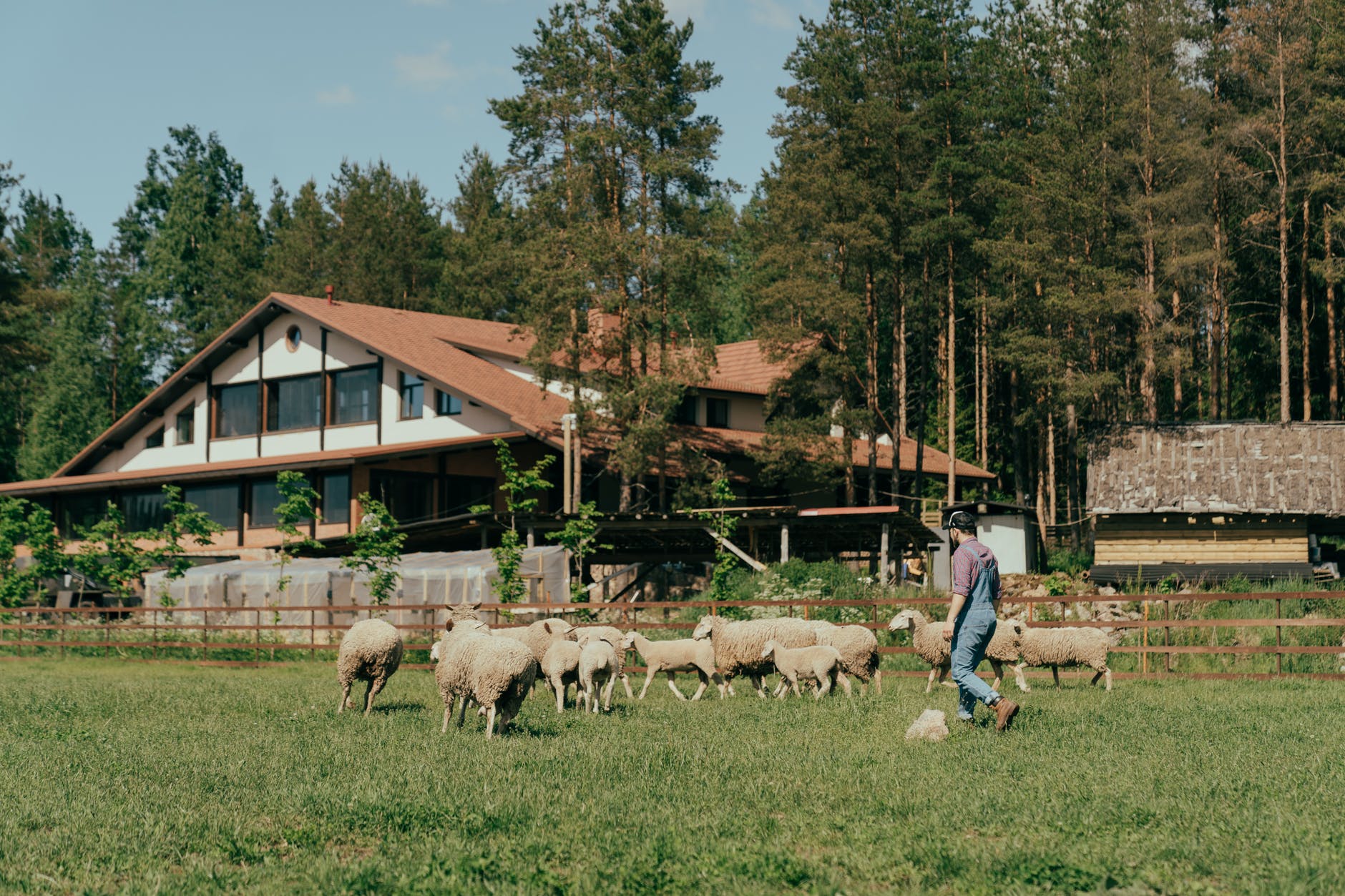
If you are a farmer and eat your own breakfast first, you’ll feel sluggish and you will not be so tuned in to your animals. Sometimes, you might not even do it till much later in the day — when you get around to it. When you feel like it. And sometimes, you won’t feel like it at all. And, the animals might go hungry. But what the hell? They’re just animals, after all.
Feed them a little less. Feed them a little more irregularly. They’re only animals, after all.
You may think you are being “practical” but are you? Are you really? Is it so hard to see that caring — really caring about your animals will tend to keep them healthier and easier to deal with?
Maybe the same thing could be said for the animal in you. Is it possible that sometimes you get so busy with things that you forget to eat right or get enough exercise or take enough time to pet your cats or tell your loved ones that they are your loved ones? Of course, there are emergencies where you do have to go without sleep, or food, and maybe you cannot even see your friends. But is your whole life really just one long emergency? Do the sirens ever stop blaring? Do the drums of war ever stop beating?
My mother’s father and my mother’s mother were both brought up on farms. Many people lived on farms back then.
My grandfather was practical, and empathic. He was an engineer. He was also an artist.
He worked hard. And so did my dad. But neither of them felt obligated to work until well into the evening and take work-related phone calls on the weekends.
Things change. I get that. But are we so busy making a living that we forget to make a life?
Think about it. Some life-forms, like us, move through space. Other life-forms, like redwoods don’t walk about the forest. (Only ents do that!). But, internally, they move all the time. And, over a larger time scale, they move through a larger scale of space. But insects, trees, humans, fish — we all have phases.
When it comes to humans, the first nine months are a whirlwind of change! Perhaps, part of the reason we can “get away with” such a fast sequence of transitions is that we follow a modification of an evolutionary pathway. (Ontogeny recapitulates phylogeny).
An evolutionary pathway is highly constrained as compared with what humans can produce. We can build an automobile-producing plant that produces finished automobiles that “work.” But at almost every point before that final assembly, the car doesn’t “work” at least as a car. Some hunks of metal, I suppose could serve as a doorstop. When it comes to life though, every single generation has to have some survivors. You can’t “invest” so much in one generation that the next one goes extinct. Well, you can, but if you do, your strain, species, etc. will die out.
Life, of course, is extremely diverse! There is life in Antarctica. And there is life in the Sahara Desert. Life flourishes in the Brazilian rain forest, and the jungles of Hawaii and the Outer Banks of the Carolinas and the Canadian tundra and even in boiling sulphur springs in the ocean depths at pressures that would crush you or me!
Every single one of these life forms has phases.
Let that sink in.
Life forms in all these absurdly diverse environments has found it “necessary” to go through phases.
When I consider human beings, it seems clear that we not only go through phases of a biological nature. We also go through phases in our subjective life and in our behavior. The two are related of course. When we’re born, unlike most species, we have very little clue as to how we are to behave vis a vis others of our species.
Very soon, we are (hopefully) bonded through love with our parents, siblings, and others. But at young age, there is no reasonable expectation that we will do the “right thing” or “be considerate” of others. Very young children are capable of empathy. But they’re also capable of rage or behaving in a rigid, self-defeating way and stubbornly stick to it.
In America, people are not deemed fully responsible to vote until they are 18, or drink alcohol until they are 21, or drive a car until they are at least 16. It isn’t that people are physically incapable of voting, or driving, or drinking at a much earlier age. It is that we realize it is necessary to learn from experience that it is better for everyone, including you, but also including people you care about.
Most people, myself included, “try out” some pretty selfish behavior in their early teens. And, most people, myself included, learn from these experiences, that it’s far better to be decent. Eventually, you discover that things like the “Golden Rule” actually make a lot of sense. As inconvenient as it may seem at first, as there are more and more people in the world, we have to make more and more accommodations to others.
Our bodies change over time. There are “phases” at long time scales as we go from infancy to childhood to puberty to adulthood to old age. There are phases at shorter time scales as we go from hunger to satiation and wakefulness to sleep. There are phases at still shorter time scale as we breathe and have our hearts beat.
We have both cyclical and non-cyclical phases. Hunger, breathing, and sleep are cyclical. Our height however grows in one direction for most of our lives and then, in old age, we may shrink slightly.
Our psychological maturity generally grows in one direction, but we can “revert” to an earlier phase of life. If we identify with a sociopath who has never learned how to trust and be trustworthy and who refuses to be fair or follow rules, then we too become as a child. Ironically, as psychological toddlers, we will insist on our rights ever more strongly even as we refuse to take any responsibility.
Trump refuses to take any responsibility for his actions in inciting a riot. He’s a toddler.
Trump’s followers who stormed the Capitol point their fingers at Trump. They are toddlers.
The lawyers who are charged with “defending” Trump give up because it’s too hard. So instead, they lie and use fallacious reasoning or no reasoning at all. They are toddlers.
The GOP Senators who don’t even pay attention to the trial are toddlers as well.
Those GOP Senators who refuse to take their oath of office seriously and who hand their souls and minds over to Trump for his personal use are Toddlers who are deluded into thinking they can hold on to power this way. They have no power. They are slaves of Trump.
They say “too many cooks spoil the broth.”
Maybe.
But I can guarantee you that a political party of toddlers with no adult supervision will vote for candy over healthy food no matter how many teeth fall out.
Please do not quote or summarize or repeat what the likes of Ted Crews, Minorlee Greene, or #MoscowMitch say. Their words mean nothing. They have worked to overthrow our democracy. They are not interested in fair trials. They are not interested in the rule of law. They are not interested in fair elections. They are not interested in taking their oath of office seriously.
They are interested in one and only one thing: power. They want power in order to line their own pockets and decide what other people can do in their private lives. They have zero interest in governing, solving America’s problems, or listening to what liberals, Democrats, Independents or experts have to say.
Yes, they vibrate their vocal cords. Yes, they move their lips and jaws to form sounds that remind people of actual words. But their words mean nothing.
They bark and snarl and whine and, I grant you, it sounds a lot like actual words.
But it’s different. They use these barks that sound like words only trying to lie, cheat, steal from Americans and to confuse enough voters and donors to get votes and money in order to stay in power.
In America, we have a long tradition of trying to be “fair” to “both sides” of a debate, discussion, campaign, election, etc. And, given that you have two sides playing by the rules, that is a great tradition. But if only one side is playing by the rules and the other side subverts and avoid the rules, that is no longer a relevant tradition.
If two sides are both arguing in good faith based on facts, then presenting those facts with various analogies and analyses in order persuade people that their plan, position, or platform is superior, it is good to make sure people hear both sides or all sides of those arguments in order to make a better-informed decision. That’s fine.
But if one side is telling the truth and one side makes up stuff out of thin air, it is not the duty of the media to repeat both sides. If one side is using words in order to destroy our democracy, it is not the duty of the media to repeat both sides. If one side is on board with a Crime Family and pushing for an absolute dictatorship, it is not the job of the media to repeat their lies.
When a patient has cancer, the ethical doctor limits treatments to those treatments that kill the cancer cells or improve the health of their patient. They don’t give medicine in “fair proportion” — giving equal doses to those treatments that help the patient and those treatments that help the cancer cells.
When a general leads his troops in a war, he or she doesn’t go out of his way to make sure the enemy has just as much ammunition as their own troops so they can have a “fair fight.” They call in air support to bomb the enemy. They don’t ask their bombers to be sure to they are dropping shells equally on both sides.
The likes of Ted Cruise, #MoscowMitch, and all the other Trumputinists who tried to overthrow our government by refusing to certify the election; the likes of Trumputinists who attend a trial and snub the entire process of prosecuting the most egregious campaign of actions that any President has taken in the entire history of the nation are not involved in true debate, true discussion, true dialog, or true governing.
No.
They are interested in one thing: power. And they will do anything and everything to get that power — including overthrowing the duly elected government through violence.
Repeating the lies of violence-loving traitors is not part of the duty of the media.
You might think that it is okay so long as you add the tag line that what they say is contested or even a lie. Sadly, however, that doesn’t really do the trick. Once the lie is presented to people enough times, it will “stick” in some people’s memory. (See this post about the “primacy effect” in human memory).
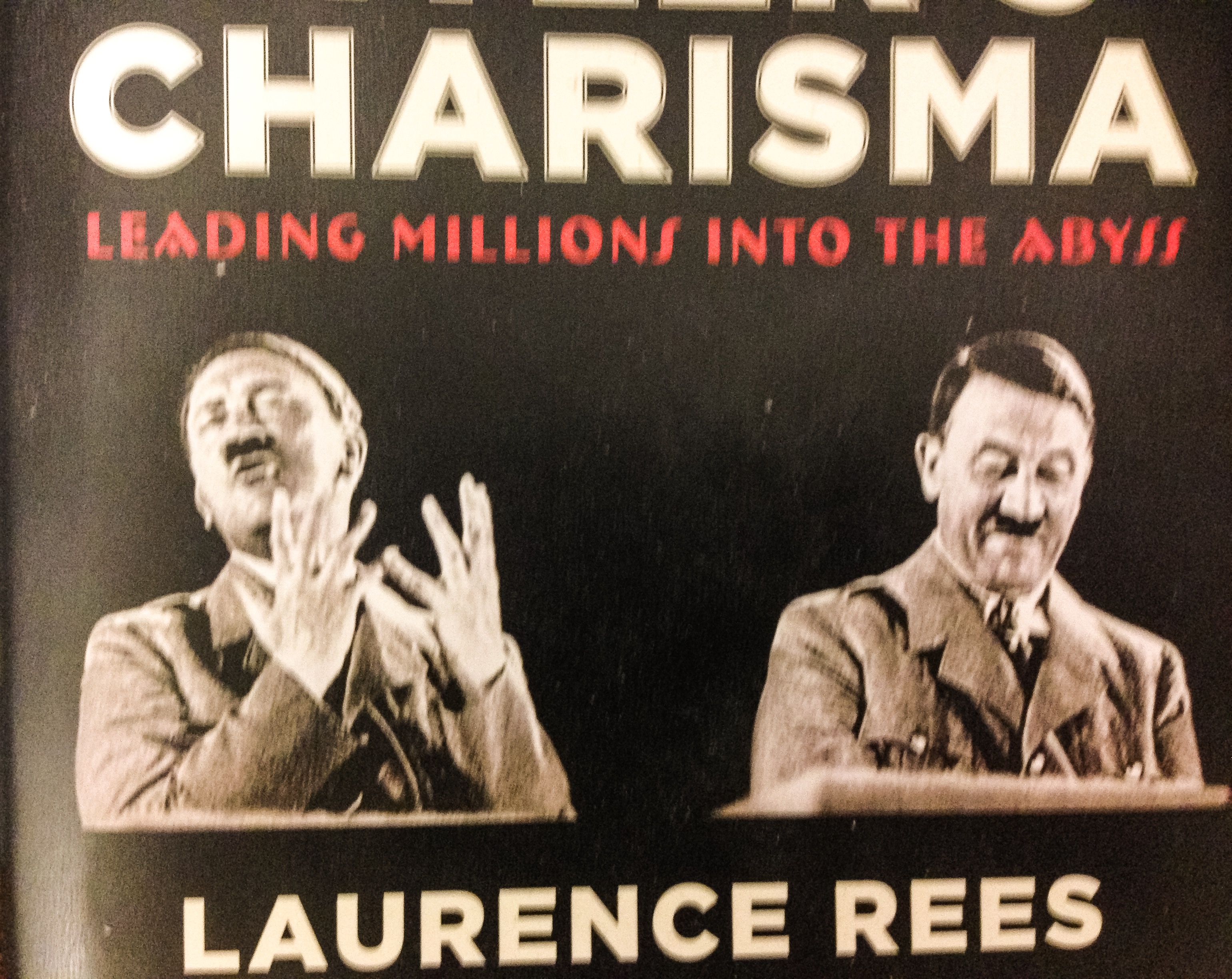
What betrayal of trust in all of American history rivals the relentless campaign of lies, conspiracy theories and violence perpetrated by Trump and supported by disingenuous, treasonous Trumputinists? There is nothing close. Presenting the so-called opinions, views, musings, thoughts, etc. of the Trumputinists is not the duty of the media any more than it is to repeat the delusional lies of Hitler, Mussolini, Stalin, or Kim Jong-un.
We are not having a dialog, or a debate, or a discussion, or a contest with Trumputinists. They want to destroy our country. Don’t be fooled into pretending to have a debate with them. This is an attack on our country every bit as much as the sacking of the Capitol by the British in the War of 1812. Trumputinism is an attack on America every bit as much as Pearl Harbor. Trumputinism is an attack on America every bit as much as were those who flew planes into the World Trade Towers.
As I mentioned before, one of my part-time jobs during my Senior year in college was as a teaching assistant at the Supplementary Educational Center (SEC) in Cleveland. In addition to actual teaching, I did a variety of other chores as well including erecting and painting walls, setting up lighting, putting up NASA exhibits, etc. One of the worst tasks I was assigned was putting a straight pin into each one of a billion variously colored squares of construction paper.
No, there weren’t really a billion. It just seemed that way. I sat at a desk with a very large pile of these 3” x 4” pieces of paper on my left and a large supply of straight pins straight ahead. I picked up a rectangle of paper, picked up a pin and poked it through in two places so that friction held the pin in place. Then I placed it in a pile on my right. I picked up another piece of paper and did the same thing. Again. And again. After awhile, I looked down and noticed that there was a large pile of these pinned pieces of paper on my right — and none left undone on the right. But I only “noticed” doing the first several. After that, my brain took a vacation.
It’s not the only time my brain has taken a vacation when faced with a boring task. If I had a heavy industry job on an assembly line, I have no doubt that I’d be mangled or dead within a week. I just “tune out” of the task at hand. Perhaps you have experienced something similar while driving a well-known route. You get in your car to drive home from work — and then — you find yourself at home — and you have no conscious recollection of driving home! It’s an interesting phenomenon but not the one I’m going to explore in this post.
Hopefully, you are also curious about why I had been assigned the task of putting these pins in all the various pieces of colored paper.
Here’s the deal. The school system of Cleveland, like many others at the time, was very racially divided. There were many neighborhoods in the Cleveland area that were nearly 100% black and others which were nearly 100% white. One of the goals of the SEC was to bring kids from various neighborhood schools together so that they could have at least some experience interacting with kids of different races and ethnic backgrounds. Sadly, the situation is pretty much the same today as the map below from 2018 shows. (Red are majority black areas; orange are Hispanic; Green is Asian; Blue codes for white).
So, cast your mind back to your time in the sixth grade (about 10-11 years old, typically). One day, you get in a bus and ride to downtown Cleveland and go into the Supplementary Educational Center and there are kids there from two other neighborhoods — kids you’ve never seen before and will likely never see again. Are you going to hang out with your friends? Or, are you going to walk up to some total stranger — of a different race — and introduce yourself and hang out with them for the day while you learn about American history or space science? I don’t have any conscious recollection of ever being a racist, but I have no doubt whatever that I would spend time with my own classmates; in fact, I would hang out with a subset of my classmates who were my friends.
Guess what?
That’s exactly what the kids did as well. They hung out with their friends. The administrators of the SEC eventually noticed this and constructed a social engineering “solution.” They gave every kid who entered a tag of green, blue, yellow, or red. For the day, at least, the “greens” would be with each other. The “blues” would hang out together with other “blues.” And so on.
Thus my assigned task of putting pins so that the kids would have a tag that they could pin on their clothes. This way, so the thinking went, people from diverse neighborhoods would end up in the “green” group. Sounds reasonable in theory.
If you’ve never actually been a kid.
Or, if you’ve been a kid but have nonetheless convinced yourself that you weren’t.
Or, if you’ve been a kid but you never think back on your actual experience in order to inform your design decisions when you’re designing for kids.
Cast your mind back to when you were ten or eleven years old. You get on a bus and ride to downtown Cleveland and as you walk in the door of the Supplemental Educational Center, you’re handed a red tag and the two friends you typically hang out with are handed a green tag and a yellow tag. You discover that these tags will determine who you get to hang out with for the day.
What would you do?
I can tell you what the kids at the SEC did. They immediately traded tags with other kids so they could still hang out with their own friends! Mostly, they could do this with kids in their own school. On rare occasions, they also went to kids from other schools in order to get the “right” tags so they could hang out with their friends. At least for a few moments, some of them did actually interact transactionally with kids of other races long enough to trade tags.
Please understand. The administrators and teachers at the school weren’t dummies. But … ? Did they really think this ploy would work?
I’m not saying that empathy is an infallible guide in design. Things change. It’s possible that your experience as a child would be quite different from what children today would do. Technology changes; culture changes; nutrition changes.
Nonetheless, thinking back to your own experience as a child should at least be consulted when you’re designing for kids. Your experiences are vast. You can not only think back about your experience as a kid. You can think back about your own experiences of being thirsty or hungry or afraid or angry. If you’re designing for users who might be experiencing these states, that can be useful information.
I’ll say it again. Your own experience is not an infallible guide. User testing is still necessary. Just because you might have liked something doesn’t mean others will. On the other hand, when it comes to any real world problem, the design space is huge. You can use your own experience as an inspiration to design and you can also use it as a first level check on design ideas.
My senior year at Case-Western Reserve, I went to college full-time but I was also head of a small family. I was married and we had small baby to take care of. I worked three jobs. One of those jobs was as a teaching assistant in downtown Cleveland at a place called “The Supplementary Educational Center.” The job involved a wide range of activities including putting new walls in, painting them, putting up NASA exhibits, running a planetarium and teaching about space and how airplanes worked. The Supplementary Educational Center bussed in sixth grade students (around 11 years old) from diverse parts of the city to learn about American History and about Space Science.
Another job grew out of my class on Learning. The Professor in the previous story about operant conditioning without awareness recommended me as a research assistant for another professor who was also a Skinnerian. He was doing studies on operant conditioning. I “programmed” the experiments by literally plugging together components such as timers and relays. I also ran the experiments. By sheer coincidence, the “subjects” for the Professor’s experiments on operant conditioning were also sixth graders.
The kids would go sit in a chair in front of a screen. On the screen, an image of a red circle would appear from time to time. In front of the kids was a lever. If they pulled that lever when the red circle appeared, a nickel would fall down as a reward. They were completely enclosed in what can be fairly described as a large Skinner Box. After a kid pulled the lever and received their nickel a few times, we began to “thin” the schedule. Now, they had to pull the lever 2 or 3 times before getting a nickel. Then, only every 5-7 times. Then, only once every 10-12 times. (Remember, it only “worked” if they pulled the lever while the red circle was there.) Finally, they were put into a phase where they would never get any more nickels no matter how many times they pulled the lever.
At that point, we (or more accurately, the relays we had programmed) stopped showing the red circle and showed other things such as a smaller red circle or a larger red circle or a green circle or a purple circle or a red ellipse. None of these ever paid off. But the instruments recorded their level pulling and we would soon satisfy our curiosity whether they would “generalize more” (i.e., pull the lever more) to a stimulus that varied in color, shape, or size from what they were originally trained on. I cannot recall how that actually turned out. As I look back on it, the notion that we would have a “general ordering” about the relative importance of these dimensions based on this experiment seems rather…naive.
Although the kids were run as subjects one at a time, it often happened that they came with a friend or two. The kids who were not being a subject just then, sat in a nearby waiting room and stared at the floor. I felt sorry for them. There were no magazines, games, books, etc. The room did have a blackboard though, so I picked up the chalk and began “teaching them” about the planets in the solar system. They seemed to enjoy my mini-lecture so I felt pretty good at having spread some enlightenment among the masses.
Despite the fact that the Professor was a devout Skinnerian, he still suggested that I debrief every subject — ask them what they thought they had been doing. So I did. What I discovered to my amazement was that some of them thought that my astronomy lecture was an advance organizer for the task in the Skinner box! “Well, first you showed me a picture of Mars many times and then Jupiter came up….”
In my mind, the little mini-lecture and the Skinner box experiment were two entirely different things that were not at all connected to each other, but each of which was connected with a specific job and conducted miles apart. The people I saw in these two roles were different; the hours were different. In this specific instance, I had used a bit of what I knew — and more importantly, what kids that age were interested in — to help them pass the time while waiting their turn. It never occurred to me how the situation appeared from their perspective.
From their perspective, they go to this strange place on a college campus and meet this college kid (me) who greets them and takes their permission slips and has them take turns at some weird way to earn nickels involving looking at circles and ellipses. And, this same college kid (still me) teaches them about the solar system with circles and ellipses. Of course, they would think they were related.
For me, there were two distinct circles. For the kids, there was one circle.
“O wad some Pow’r the giftie gie us To see oursels as ithers see us!”
—- Robert Burns, To a Louse
————————————————————————
First in a series of stories about the mythical Veritas tribe who value truth, love, and cooperation and their struggles against the Cupiditas who value power, greed, and cruelty. Our tale begins as the shaman/leader of the Veritas seeks an eventual successor so she devises a series of trials that mainly test empathy.
The name of B. F. Skinner is not often invoked in discussions of User Experience. There are limitations to his basic theory, but perhaps it is time to revisit the baby that was, by many, thrown out with that bathwater. Skinner’s approach has two major limitations that come to mind. First, human behavior is moderated by internal structures such as beliefs, framings, assumptions, labels, and so on. If one ignores these cognitive structures and tries to predict human behavior solely on the basis what behavior is “reinforced” those prediction efforts will often fail.
Second, humans (and other animals) are not born as “blank slates.” We have a number of inborn predispositions. For example, if you “punish” a rat by shocking the rat after performing a particular action, it will quickly learn to avoid that action. Similarly, if you feed the rat a food with a distinctive taste and that food will make it nauseous, it will quickly learn to avoid that taste. Some readers may have also experienced this. If your first experience with oysters, say, made you vomit, you may never try them for the rest of your life.
On the other hand, if you shock the rat after it tastes something, that is a much harder association to master. Or, if you make the rat nauseous after pressing a level, that is also a difficult association to learn.
Despite these and other limitations of the strictly Skinnerian approach, reinforcement still works in many situations. It is even possible for people to “learn” a behavior because of reinforcement and to learn without any conscious awareness of the fact that they are being trained in this way.
As an undergraduate at Case-Western Reserve, one of my psychology courses (on learning) was taught by a “Skinnerian.” He was an excellent instructor and I enjoyed the course immensely. Since we had a syllabus, I knew exactly when he would be lecturing on the topic of “unconscious conditioning.” As usual, almost the entire class was seated before the Professor arrived. This gave me time to explain to my classmates my idea for what the class would do: condition him to stand in a corner and comb his hair with his hand.
I think you will appreciate the fun here. He was giving a lecture about how people could be conditioned without awareness and while he was doing that, we were going to condition him without his awareness.
I will return momentarily to explain just how we managed, but first, I must explain the concept of “shaping.” Shaping is an extremely important concept for training your pets or your kids to behave in convenient or useful ways. Basically, the idea is to begin by reinforcing any behavior that is in the direction that you want the behavior to go in. If you want to potty train your child, for instance, you don’t initially wait for complete success. You praise the child even if he or she sits on the potty. You praise the child if they try to make it to the bathroom but have an “accident” on the way. Gradually, your criteria become stricter and you only reinforce behavior closer and closer to the goal. Similarly, if you want to train your dog to “shake hands” you initially praise them for anything even close. For instance, if you put your hand out and they lift their paw even slightly off the ground, you praise them. As they become more adept, you change your criteria for reward. Eventually, you only reinforce them then when they are “shaking hands” as well as you think possible.
Now, let’s return to the Skinnerian Professor and his lecture on unconscious conditioning. If the class had waited until he stood in the corner and combed his hair with his hand, we never would have succeeded. At first, we only reinforced him (by looking up and looking very eager and interested) when he stood to the right of his lectern (from our perspective). Then, we only began to reinforce him when he was near the corner. Then, we only began to reinforce him when he raised his hand slightly. Then, we only acted eager and interested when his hand went up toward his head or face. Finally, we only acted eager and interested when he stood in the corner and combed his hair with his hand. It took almost the entire hour for this to work. I kept a written record of his behavior and noted the times and the changes in our criteria for success. When the lecture was over, I walked up and explained what we had done. I showed him my records.
He was astounded! It was awesome. I suppose theoretically, he could have been putting it on, but if he was, it was the best acting performance I saw in all my years attending Eldred Theater or the Cleveland Playhouse. Once he recovered from his initial shock though, to his credit, he didn’t get angry with me or deny the reality of what had actually happened. He just nodded and said (essentially). “Yeah. This stuff really works.”
Yeah. It really does. And, although B. F. Skinner’s approach to human behavior is overly simplistic, it still does work in many circumstances, including a human’s behavior interacting with a computer system.
Another important contribution of B. F. Skinner is his work on “schedules of reinforcement.” It’s worth understanding this in some detail, but for now, I just want to focus on one aspect. The “schedule of reinforcement” that leads to the highest rates of behavior is to reinforce, not every time a desired behavior is observed, but very seldom and randomly.
Las Vegas comes to mind. I only visited once. For a time, I watched people at the slot machines. Unlike the people who win on TV commercial casinos, in the “real world” (to the extent Las Vegas is part of the “real world”), I saw four people win and not a single one of them showed even a glimmer of pleasure. They simply started feeding their winnings back into the machine. This is how the Casinos make their money. Basically, they are using “a thin Variable Ratio Schedule” to get people hooked on behavior that is statistically guaranteed not to be in their financial interest. (Of course, it’s understood, people also gamble for fun. That’s okay.) But if you are gambling against the Casinos in order to make money. Well….good luck. Remember: they have chauffeurs, yachts, and mansions. You do the math. They say, “What happens in Vegas, stays in Vegas.” But they might instead say, “Money that comes to Vegas, stays in Vegas.”
In most User Experience contexts, we want the relationship between what the user does and the consequences to be consistent. I say “most” because, when it comes to games or learning experiences or computer art, this is not always true. In most work-related applications however, we want the user to be reinforced every time he or she takes appropriate action. I think that’s what designers mainly strive for.
I believe, however, that the users themselves sometimes fall into doing something that only occasionally pays off. For example, let’s say a college student has ground floor dorm room and connects to the internet via satellite. The connection is flakey. Sometimes it works. Sometimes it doesn’t. But it works much better on the top floor. So, when he or she tries to access the Internet and fails, they walk the three flights of stairs and they successfully connect every single time. But walking three flights of stairs is a pain so the student in question decides it might help if they close all their windows before trying to connect. Now, say that didn’t work so they decided to close all the windows and then reboot. Well! What do you know!? It worked. So, the next time they have trouble connecting, instead of walking up three flights of stairs, the student closes all the windows and reboots the machine. Maybe, by sheer chance, it worked again!
And with winter comes rain. And with rain comes worse connectivity to the satellite. So, as the rain goes from San Diego rain frequency to San Francisco rain to Portland rain to Seattle rain frequency, our student becomes less and less successful in actually connecting. But every so often, the procedure works. They may have rebooted their machine ten times before it finally connected, but that just makes it more likely they will be willing to try twenty times before giving up. Furthermore, the student may have “given up” on even considering walking up 3 flights of stairs. Having the persistent habit of rebooting the machine multiple times actually prevents the student from either doing the thing that has always worked or working toward a more permanent solution (e.g., changing rooms, getting an antennae, finding a wired hookup, etc.).
It is possible in this way to train a rat or a pigeon or a college student — or even a professor — to do something they would not have consciously chosen to do — or to do something at a much greater frequency than they would have chosen to do it.
Closely aligned with the notion of “Problem Framing” is the notion of “Attribution.”
My dad was an electrical engineer. My mother was an English and Drama teacher. I’ve always enjoyed acting though I never pursued it as a career. My mother’s mother founded the “Akron Dramatic Club” and held meetings for many years at the house where my mom grew up. Typically, the group would read plays. I happened to have a very good memory at a young age and often I would “fill in” for anyone who was missing, even before I could read.
In high school, I had the lead in our Senior Class Play, One Foot in Heaven. In college, I continued to take acting classes as well as technical subjects. In one “Studio Production,” we presented a scene from Eugene O’Neil’s drama, Long Day’s Journey into Night. I played the part of Jamie, based on Eugene O’Neil’s older brother. In the particular scene in question, the father and his two sons sit around a table drinking Irish Whiskey and, as they get drunker, blaming themselves and each other for various things including their mother’s drug addiction.
In preparation, we rehearsed on a dozen occasions. At the time, my friends and I typically went out to bars several times a week and drank “3.2 beer.” In Ohio, at that time, the only alcoholic beverage one could legally drink from age 18 to 21 was beer with no more than 3.2% alcohol. I had gotten a “buzz” a few times, but had never been drunk.
I had, however, seen people drunk in real life a few times and seen them many times on TV and in movies. I pretty much knew how to “act drunk.” So, each time we rehearsed the scene, as I drank more and more tea, I pretended to get drunker and drunker. Some say, “in vino veritas.” I don’t totally agree, but it is true that people will say nastier things to each other sometimes under the influence. Jamie, in O’Neil’s play blamed his mother’s addiction on Eugene having been born and, given enough Irish Whiskey, he told him so in no uncertain terms.
In our last dress rehearsal, for some reason, our director thought it would be a great idea if we ran through the scene three times using actual Irish Whiskey instead of weak tea. So, we did. As best I can recall, I had about a third of a bottle of wine before we began the rehearsal and each time through, I had a beer mug half filled with water and half with Irish Whiskey. It tasted pretty horrible, but I could down it. I simulated drunkenness pretty well, if I do say so myself. Each time I went through the scene, I would begin by acting “sober” and then gradually become drunker and drunker. Then, we would do the scene again. I still had a good memory, so I didn’t flub my lines. I don’t think the rest of the cast messed up either. Everything was fine.
Until the rehearsal was over.
During the rehearsal, I was repeating words and gestures that I had done many times. And in every rehearsal before this one, I had acted as though I was drunk even though I had been perfectly sober. Now that rehearsal was over and I found myself faced with the task of getting off the stage, remembering where my dorm was, and navigating myself home, I realized that I was not acting drunk. I was drunk. Very drunk. Walking was a problem.
While I had been rehearsing, I had attributed my behavior, the numb, fuzzy way I felt, and my slurred speech to my superb acting.
Attribution can be tricky.
If feedback is delayed, trying to do the “right thing” can be completely counterproductive. You may attribute good outcomes to actions that are actually making things worse!!
Dave Pelz has a Ph.D. in physics from MIT and is a former astronaut. More recently, he has become an expert in the “short game” part of golf. He applies his analytic and scientific skills to the game and has inventions to help the golfer make correct attributions; a foundation for improving skill.
Here’s how it works. Let’s say you line up to hit a putt (a short golf stroke) from a spot about ten feet from the hole. You strike the ball and it veers to a position about six inches left of the hole. It’s easy for you to see that you’ve ended up six inches left, but you probably have no idea why. Dave Pelz could tell you that you might have misread the slope; you might have misread the grain; you might have pulled the club a little left; you might have hit the ball slightly off center of the putter head causing it to twist ever so slightly and take energy away from the putt; you might, indeed, have done absolutely nothing wrong at all. Your ball might have hit a teeny unseen pebble or been blown off course by a puff of wind. Your golf ball might even possibly be a little off balance.
Dave Pelz has invented various devices to help you disambiguate these (and other) potential sources of error. For example, if your ball ended up 6 inches left because you hit the golf ball slightly off the center of your putter, this would be extremely hard to notice. Dave Pelz has a device however, that you can put on your putter blade. It has “prongs” on both sides of the center line. If you hit the middle of the back of a golf ball with the exact center of your putter blade, the golf ball will go straight ahead as it normally would. However, if you’re off center ever so slightly, the ball will careen off at a strange angle. You’ll know immediately that you haven’t hit the center of the putter blade.
I’ve played many rounds of golf. I’ve never observed someone miss a putt and then say, “Oh, shoot! I hit the back of the ball, not with the exact center of my putter blade, but with a spot an eighth of an inch away from the center point. Damn!”
In complex situations, it can be very tricky to discover attributions. And if you make the wrong attributions, you will almost certainly mis-frame the problem to be solved.
Framings exist at different levels. You might seek to improve your putting by discovering mistakes you make while putting and then correcting them. It helps if you have good feedback, whether from a coach or from mechanical devices or from your own nervous system.
At a higher level, you might also need to reframe your expectations. You see, missing a ten foot putt by six inches is actually a pretty good result! Pro Tour Golfers make less than half of their ten foot putts. What you see on TV coverage of Pro Tour putts is mostly of pros making 10, 20, or 30 foot putts. But that is not, on average, what happens.
Similarly, society is inundated with stories and images of people seeming to overcome impossible odds to become insanely successful. And quickly. At least, in the movies, it happens quickly, because otherwise, we would lose patience and not keep watching. Only, in real life, it doesn’t happen quickly. If you frame your “life problem” as: “How do I become a millionaire by age 25?” you may be setting yourself up for failure.
A different framing might be: “What can I do that I love that also contributes to society so much that society will provide me the things I need.”
Of course, some people may be born rich. In such cases, it is very easy to fall into the misapprehension that all your success is due to your hard work, judgement, intelligence, etc. when, basically, it’s mainly luck of the draw.
Consider. However brilliant you might be, or physically gifted, how do you think your life would look right now if you had been born 100,000 years ago? You wouldn’t be reading these words on a computer, clearly. You wouldn’t be reading at all. Your surroundings, your clothing, your diet, your tools — these are much more determined by the circumstances you were born into than you likely imagine.
It’s not crazy to focus on your own decisions. After all, no-one can determine the circumstances of their birth. You can change your decisions though. Usually, therefore, it makes sense to focus on your decisions, not on the circumstances of your birth.
Usually.
But not if you use the sheer luck of your birth circumstances to argue that you should have more than your fair share. Making your success out to be the results only of your personal perspiration and perspicacity is petty.
Consider the gratitude you owe for what was granted. Your generosity grows correspondingly.
It’s a good antidote for a hangover. You might even call it an antedote.
Attributions are often made without your awareness. They can easily lead you astray. They can even lead you to becoming drunk without knowing it. You might be drunk on whiskey, as I was on that Long Day’s Journey, but people may also become drunk on power, money, or status.
One fine summer day, driving down the long curved driveway of IBM Research in Yorktown Heights, New York, I noticed a manhole-sized snapping turtle in the middle of the driveway. I pulled the car over. I didn’t want someone running into the reptile, looking as he did, such a splendid living fossil.
Naturally, I knew snapping turtles could be dangerous, though as I watched him plod ever so slowly down the road, I felt no threat. Surely, my mammalian reflexes were far superior to those of this ancient reptilian beast. But, in a seeming excess of caution, I made no attempt to touch him with my bare hands. Instead, I found a thigh-sized dead tree branch that seemed suitable for pushing him off the road and thus to safety.
I pushed hard on one side of his carapace. At first, he just kept plodding ahead, but my superior strength overcame his squat stubborn frame and he gradually angled toward the berm. Then, an unbelievable thing happened. In a split second, the viscous snapped to vicious. His head shot out a good foot from his shell and whipped around to the side, still managing his neck-lengthening trick. He chomped down and completely through the tree limb before I even had a chance to be startled.
Our first impression of a situation can often lead us to dangerously erroneous actions.
Here’s another example.
As most Americans now know, there are 435 people in the House of Representatives. What is the probability that at least two in the House of Representatives share a birthday?
This is actually an exceedingly easy problem to solve.
Unless…
Unless, you are familiar with a similar-looking problem called “The Birthday Problem” which may be stated something like this:
You are starting a new class of thirty people. What are chances that at least two of them share a birthday?
It turns out that at least two people will share a birthday in a room with 30 random people over 70% of the time. The “break-even” point where the chances that at least will share a birthday is 23 people. It’s a bit counter-intuitive. But the math is sound.
So, if you have heard of “The Birthday Problem” before, and now hear the question about The House of Representatives, you’d be likely to think something like this: Oh, that’s the birthday problem and it turns out you don’t need many people for their to be a likely double birthday. So, with 435, it must be very hight. Perhaps 99% or even 99.9%
With 435 people in The House of Representatives, you don’t need to “calculate” any probabilities at all. You cannot arrange any way for more than 365 people to “fit into” 365 days without starting to overlap.
Beware of approaching problems (or snapping turtles) based on their eternal appearance. It might or might not be a good clue to its actual behavior.
In the Pattern Language for Collaboration, one is based on this idea and I call it “Context-Setting Entrance.” Because we are prone to pay attention to the entrance, then if we design one, we should ensure that the entrance sets appropriate expectations.
One type of “entrance” to thinking about something is the label. Labels in language can, however, be quite misleading. A dogfish is not a dog. A starfish is not a fish. On the other hand, it’s probably called a “Snapping Turtle” for a good reason. It snaps! It’s not called a “Plodding Turtle.”
We like to measure things. And, generally, that can be a very good thing. Once we measure and quantify, we can bring to bear the world’s most incredible toolbox of mathematical, engineering, and scientific methods. However…
It often happens that we can’t really measure what we’d like to measure so instead we measure something that we can measure which we imagine to be a close cousin to what we’d really like to measure. That’s still not a bad thing. But it’s risky. And it becomes a lot more risky if we forget that we are measuring a close cousin at best. Sometimes, it’s actually a distant cousin.
Here’s an example. Suppose a company is interested in the efficient handling of customer service calls (who isn’t?). A typical measure is the average time per call. So, a company might be tempted to reward their Customer Service employees based on having a short average time per call. The result would be that the customer would get back to whatever they were doing more quickly. AND — they wouldn’t have to be on hold in the service queue so long because each call would be handled, on average, more quickly. Good for the customer. The customer service reps would be saving money for the company by answering questions quickly. Some of the money saved will (hopefully) mean raises for the customer service reps. It’s a win/win/win!
Or is it?
Imagine this not unlikely scenario:
The managers of the CSR’s (customer service reps) say that there’s a big push from higher management to make calls go more quickly. They may hint that if the average service time goes down enough, everyone will get a raise. Or, they might set much more specific targets to shoot for.
In either case, the CSR’s are motivated to handle calls more quickly. But how? One way might be for them to learn a whole lot more. They might exchange stories among themselves and perhaps they will participate in designing a system to help them find relevant information more quickly. It might really turn out to be a win/win/win.
On the other hand, one can also imagine that the CSR’s instead simply get rid of “pesky” users as quickly as possible.
“Reboot and call back if that doesn’t work.”
“Sounds like an Internet issue. Check your router.”
“That’s an uncovered item.”
“What’s your account number? Don’t have it? Find it & call back.”
With answers like this, the average time to handle a call will certainly go down!
But it won’t result in a win/win/win!
Users will have to call back 2, 3, 4 or even more times to get their issues adequately resolved. This will glut the hold queues more than if they had had their question answered properly in the first place. Endlessly alternating between raspy music and a message re-assuring the customer that their call is important to company XYZ, will not endear XYZ’s customers to XYZ.
Ultimately, the CSR’s themselves will likely suffer a drop in morale if they begin to view their “job” to get off the phone as quickly as possible rather than to be as helpful as possible. Likely too, sales will begin to decline. As word gets around that the XYZ company has lousy customer service and comparative reviews amplify this effect, sales will decline even more precipitously.
There are two approaches executives often take in such a situation.
Some executives (such as Mister Empathy) may be led to believe that quantification should be less emphasized and the important thing is to set the right tone for the CSR’s; to have them really care about their customers. Often, the approach is combined with better training. This can be a good approach.
Some executives (such as Mister Measure) may be led to believe that they need to do more quantification. In addition to average work time, measures will look at the percentage of users whose problem is solved the first time. Ratings of how effective the CSR was will be taken. Some users might even be called for in-depth interviews about their experience. This can also be a good approach.
There is no law against doing both, or trying each approach at different times or different places in order to learn which works better.
There is a third approach however, which never has good results. That is the approach of Mister Misdirect.
Original drawing by Pierce Morgan
Mister Misdirect’s approach is to deny that there is an issue. Mister Misdirect doesn’t improve training. Mister Misdirect doesn’t put people in a better frame of mind. Mister Misdirect does not add additional measures. Mister Misdirect simply demands that CSR’s continue to drive down the average call time of individual calls and that sales go up! In extreme cases, Mister Misdirect may even fudge the numbers and make it appear that things are much better than they really are. Oh, yes. I have seen this with my own eyes.
Unfortunately, this way of handling things often makes Mister Misdirect an addict. Once an executive starts down the path of making things worse and denying that they did so, they are easily ensnared in a trap. Initially, they only had to take responsibility for instituting, say an incomplete measure and failed to anticipate the possible consequences. But now, having lied about it, they would have to not only admit that they caused a problem, but also that they lied about it.
The next day, when executive wakes up, they have a choice:
1. Own up
OR
2. Continue to deny
If they own up, the consequences will be immediately painful. If they continue to deny, they will immediately feel relieved. Of course, if they have surrounded themselves with lackeys, they will feel more than simply relieved; they will feel vindicated or even proud. It’s not a “real pride” of course. But it’s some distant relative, I suppose.
For a developer, UX person — or really any worker in an organization, the lesson from this is to anticipate such situations before they happen. If they happen anyway, try to call attention to the situation as quickly as possible. Yes, it may mean you lose favor with the boss. If that is so, then, you really might want to think about getting a new boss. Mister Misdirect will always ultimately fail and when he does, he will drag down a work team, a group, a division, or even an entire company. Mister Misdirect has one and only one framework for solving problems:
Try whatever pops into consciousness.
If it works, take the credit.
If it fails, blame an underling.
But the real fun begins when he takes credit for something and then it turns out it was really a failure. Then, there is only one choice for Mister Misdirect and that is to claim that the false victory was real. From there on, it is Lose/Lose/Lose.
Trunk of Tree had been in a foul mood. Hunger made his belly growl. He had had terrible luck even trying to track a deer. But the sight of these two Veritas, well-known to him, and the smell of cooking venison lightened his mood considerably. He said none of that, but instead asked again how they found him.
Cat Eyes explained quickly to Trunk of Tree that they were near her village. She explained that a feast was being prepared right now in honor of the knowledge that had been gained from decoding a substantial part of the great library that had been recently discovered. The Veritas had split up decoding the numerous tomes in the library. It was far too much for any one person although, among all the Veritas, Cat Eyes knew the most of what had been garnered by the people. She had been sharing much of what she learned with Tu-Swift. Now, she explained, a great feast had been arranged and the afternoon was to be spent eating and listening to the lessons that had been gleaned. In the evening, the people planned to reflect on the totality of this information in a great dialogue.
Cat Eyes explained all this to Trunk of Tree as they took the short hike back to the place where he had emerged from the hidden cleft in the rock wall. Tu-Swift and Cat Eyes marked the place with broken branches and a small rock cairn so they could be sure to find it later.
Then, the trio strode back to the center place of the Veritas across the Mountain. Cat Eyes and Tu-Swift kept having to stop for Trunk of Tree to catch up. At last, Cat Eyes said, “Trunk of Tree. All you all right? You are limping. You are wounded? What happened? I see a bandage and blood. Were you attacked?”
Trunk of Tree’s mood darkened again. He did not want to explain how he had wounded himself through his anger and carelessness. “I’m fine. Just a scratch.” He swallowed hard. The truth was that the wound was not healing all that well. He grimaced and tried to keep up with the youngsters so they wouldn’t ask any more about his gash.
The reappearance of Cat Eyes caused more of a stir than usual when people noticed that Trunk of Tree was with them. When he explained briefly how he had come here, the Veritas from the other side of the mountain furrowed their brows. How could a passage out of their valley exist so near that no-one had discovered? Even Trunk of Tree could perceive the skepticism on their faces. He explained that he had only come across the path by sheer accident born of desperate hunger pangs. Tu-Swift explained to the small group how he had marked the trail and three of them jogged off to see for themselves.
Soon, Tu-Swift, Cat Eyes, and Trunk of Tree were seated on overturned tree trunks. People kept coming to Cat Eyes with small questions about the upcoming feast. As she answered their questions, she simultaneously pulled up the pant leg of Trunk of Tree, ignoring his protestations that nothing was wrong with him. He was immensely powerful and could have easily kicked her away. Although a part of his mind pictured that, some more fundamental part seemed to know that his leg was more important than his pride so he let her unwrap the bandages.
When she did so, her nose wrinkled up immediately. She glanced at Tu-Swift who noticed it as well. The wound stunk. Just then a young warrior came up to Cat Eyes meaning to ask her opinion about her role in the upcoming knowledge exchange. Cat Eyes answered curtly and then begged the young warrior to bring her the pouch of blue-green mold that sat in a dark corner of Cat Eye’s cabin. Soon, Cat Eyes was applying the mold to the oozing wound of Trunk of Tree despite his objections.
“I already put yellow dock and plantain on it,” he protested.
“Yes,” replied Cat Eyes, “and that is good. This is even better. We learned about it from one of the many books in the library. There are many things we learned from those books and you will hear about many of those things tonight. I wish all of the Veritas were here to learn what we have decoded in the last few months.”
Cat Eyes nodded as she noted that the sickness had not spread much from the original injury. She bound up the wound again. She glanced at Tu-Swift. She slowly shook her head. “It’s amazing how much of a great gift we have now from our library — and all the knowledge put there by our ancestors. And to think…it was there when my mother’s mother’s mother lived … and we had no idea what it was. Until now.”
Now, she turned to look at Trunk of Tree. She smiled. “You will see later today, Trunk of Tree, some of the things we have learned. She tilted her head. “There are things in there about fighting and strategy as well as medicine.” She paused, smiled and went on: “And, to use your imagination to make yourself happier and solve problems — not simply as a tool for hurting yourself.”
The eyes of Trunk of Tree widened thus confirming her hypothesis.
Trunk of Tree reddened. Cat Eyes reached out her hand and gently touched his shoulder. “It’s a tendency all of us have, Trunk of Tree. There’s no reason to feel embarrassed.
An awkward silence grew between them. She looked at Tu-Swift and back to Trunk of Tree.
Tu-Swift took a deep breath. “For example, when Cat Eyes came to visit our Center Place, I ran off to see her because…well, because I … because I love her.” Now Tu-Swift reddened as well. “Of course, everyone does. I … especially do. But then, Suze died shortly after and I made myself crazy thinking I had somehow been responsible. I didn’t cause her death. That plague though was brought to us intentionally by the Z-Lotz. They’re the ones I should seek revenge on and not on myself. He looked at the face of Trunk of Tree very carefully, the way he imagined that Many Paths would do if she were here.
“I can tell you this, Trunk of Tree. I’ve known Shadow Walker all my life. As have you. And, we know Eagle Eyes as well. They are both good people. They will do … whatever they think is best for the Veritas … and for all the people.” Tu-Swift let this thought sink in through the thick skull of Trunk of Tree. He surprised himself by his next words. “Sometimes, we must be apart from those we love. It’s always difficult. But don’t make it worse by imagining things that you know are not true. I don’t know why, but Eagle Eyes likes you. Surely, you must know that.”
Cat Eyes nodded solemnly. “That’s right. Shadow Walker & Eagle Eyes — these are people we can all trust. Trust is fundamental. You’ll hear more about that at our feast. The destruction of trust is what led to the destruction of … of civilization.”
Trunk of Tree frowned. “Civilization? What are you talking about?”
Cat Eyes sighed. “Just listen to our stories tonight. It’s … there were many people … and many wondrous things … but the people lost the one thing more important than all the others.”
Tu-Swift saw the tears welling up in her cat-irised eyes. “They let their greed, fear, and hate grow … and their love for each other … and for all life … they let that decay … and when it did, it all fell apart. The words that people said came to mean nothing. All trust was lost. And, Trunk of Tree, when all trust was lost, all the energy of the people was put into weapons. Killing sticks were replaced by even less honorable weapons that killed hundreds, thousands, hundreds of thousands. The people thought that somehow, if they hurt others enough, they themselves would live forever, not as part of the great tree of life, but as something separate and apart, as hard as the mountains and as mighty and as immortal. So did the people come to think.
“The times came of great killing.
“The times came of great forgetting.”
The voice of Cat Eyes became stronger and though she spoke to Trunk of Tree, all the people nearby heard her and drew near to her.
“Now, we are beginning the time of great remembering;
“The great remembering of who we are;
“The great remembering of what we are not;
“The great remembering of what makes us a whole people;
“The great remembering of the importance of truth and trust;
“The great remembering of the horror and sorrow that comes of the many being misled by the few;
“The great remembering of what we could become instead;
“The great remembering that each of us is ourselves but one marvelous leaf on the great abiding tree of life;
“The great remembering that we cannot make ourselves into something separate and forever by destroying the tree that sustains us.”