• About PeterSIronwood

petersironwood

~ Finding, formulating and solving life's frustrations.

petersironwood

Tag Archives: Travel

Madison Keys, Francis Scott Key, the “Prevent Defense” and giving away the Keys to the Kingdom. 

12 Friday Dec 2025

Posted by petersironwood in America, family, management, psychology, sports, Uncategorized

≈ Leave a comment

Tags

art, books, bravery, Business, career, choice, courage, HCI, human factors, IBM, life, school, sports, technology, Travel, UX

Madison Keys, Francis Scott Key, the “Prevent Defense” and giving away the Keys to the Kingdom. 

Madison Keys, for those who don’t know, is an up-and-coming American tennis player. In Friday’s Wimbledon match of July, 2018, Madison sprinted to an early 4-1 lead. She accomplished this through a combination of ace serves and torrid ground strokes. Then, in an attempt to consolidate, or protect her lead, or play the (in)famous “prevent defense” imported from losing football coaches, she managed to stop hitting through the ball – guiding it carefully instead — into the net or well long or just inches wide. 

IMG_2601

Please understand that Madison Keys is a wonderful tennis player. And, her “retreat” to being “careful” and playing the “prevent defense” is a common error that both professional and amateur players fall prey to. It should also be pointed out that what appears to be overly conservative play to me, as an outside observer, could easily be due to some other cause such as a slight injury or, even more likely, because her opponent adjusted to Madison’s game. Whether or not she lost because of using the “prevent defense” no-one can say for sure. But I can say with certainty that many people in many sports have lost precisely because they stopped trying to “win” and instead tried to protect their lead by being overly conservative; changing the approach that got them ahead. 

Francis Scott Key, of course, wrote the words to the American National Anthem which ends on the phrase, “…the home of the brave.” Of course, every nation has stories of people behaving bravely and the United States of America is no exception. For the American colonies to rebel against the far superior naval and land forces (to say nothing of sheer wealth) of the British Empire certainly qualifies as “brave.” 

IMG_8499

In my reading of American history, one of our strengths has always been taking risks in doing things in new and different ways. In other words, one of our strengths has been being brave. Until now. Now, we seem in full retreat. We are plunging headlong into the losing “prevent defense” borrowed from American football. 

American football can hardly be called a “gentle sport” – the risk of injury is ever present and now we know that even those who manage to escape broken legs and torn ligaments may suffer internal brain damage. But there is still the tendency of many coaches to play the “prevent defense.” In case you’re unfamiliar with American football, here is an illustration of the effect of the “prevent defense” on the score. A team plays a particular way for 3 quarters of the game and is ahead 42-21. If you’re a fan of linear extrapolation, you might expect that  the final score might be something like 56-28. But coaches sometimes want to “make sure” they win so they play the “prevent defense” which basically means you let the other team make first down after first down and therefore keep possession of the ball and score, though somewhat slowly. The coach suddenly loses confidence in the method which has worked for 3/4 of the game. It is not at all unusual for the team who employs this “prevent defense” to lose; in this example, perhaps, 42-48. They “let” the other team get one first down after another. 

red people outside sport

Photo by Pixabay on Pexels.com

America has apparently decided, now, to play a “prevent defense.” Rather than being innovative and bold and embracing the challenges of new inventions and international competition, we instead want to “hold on to our lead” and introduce protective tariffs just as we did right before the Great Depression. Rather than accepting immigrants with different foods, customs, dress, languages, and religions — we are now going to “hold on to what we have” and try to prevent any further evolution. In the case of American football, the prevent defense sometimes works. In the case of past civilizations that tried to isolate themselves, it hasn’t and it won’t. 

landscape photography of gray rock formation

Photo by Oleg Magni on Pexels.com

This is not to say that America (or any other country) should right now have “open borders” and let everyone in for every purpose. (Nor, by the way, has any politician of any party suggested that we do that). Nor should a tennis player hit every shot with all their might. Nor should a football team try the riskiest possible plays at every turn. All systems need to strike a balance between replicating what works–providing defense of what one has while also bravely exploring what is new and different. That is what nature does. Every generation “replicates” aspects of the previous generation but every generation also explores new directions. Life does this through sexual selection, mutation, and cross over. 

This balance plays out in career as well. You need to decide for yourself how much and what kinds of risks to take. When I obtained my doctorate in experimental psychology, for example, it would have been relatively un-risky in many ways to get a tenure-track faculty position. Instead, I chose managing a research project on the psychology of aging at Harvard Med School. To be sure, this is far less than the risk that some people take when; e.g., joining “Doctors without borders” or sinking all their life savings (along with all the life savings of their friends and relatives) into a start-up. 

At the time, I was married and had three small children. Under these circumstances, I would not have felt comfortable having no guaranteed income. On the other hand, I was quite confident that I could write a grant proposal to continue to get funded by “soft money.” Indeed, I did write such a proposal along with James Fozard and Nancy Waugh who were at once my colleagues, my bosses, and my mentors. Our grant proposal was not funded or rejected but “deferred” and then it was deferred again. At that point, only one month of funding remained before I would be out of a job. I began to look elsewhere. In retrospect, we all realized it would have been much wiser to have a series of overlapping grants so that all of our “funding eggs” were never in one “funding agency’s basket.” 

brown chicken egg

Photo by Pixabay on Pexels.com

I began looking for other jobs and had a variety of offers from colleges, universities, and large companies. I chose IBM Research. As it turned out, by the way, our grant proposal was ultimately funded for three years, but we only found out after I had already committed to go to IBM. During this job search, I was struck by something else. My dissertation had been on problem solving but my “post-doc” was in the psychology of aging. So far as I could tell, this didn’t bother any of the interviewers in industry in the slightest. But it really freaked out some people in academia. It became clear that one was “expected” in academia, at least by many, that one would choose a specialty and stick with it. Perhaps, one need not do that during their entire academic career, but anything less than a decade smacked of dilettantism. At least, that was how it felt to me as an interviewee. By contrast, it didn’t bother the people who interviewed me at Ford or GM that I knew nothing more than the average person about cars and had never really thought about the human factors of automobiles. 

Photo by Pixabay on Pexels.com

The industrial jobs paid more than the academic jobs and that played some part in my decision. The job at GM sounded particularly interesting. I would be “the” experimental psychologist in a small inter-disciplinary group of about ten people who were essentially tasked with trying to predict the future. The “team” included an economist, a mathematician, a social psychologist, and someone who looked for trends in word frequencies in newspapers. The year was 1973 and US auto companies were shocked and surprised to learn that their customers suddenly cared about gas mileage! These companies didn’t want to be shocked and surprised like that again. The assignment reminded me of Isaac Asimov’s fictional character in the Foundation Trilogy — Harry Seldon — who founded “psychohistory.” We had the chance to do it in “real life.” It sounded pretty exciting! 

antique auto automobile automotive

Photo by Pixabay on Pexels.com

On the other hand, cars seemed to me to be fundamentally an “old” technology while computers were the wave of the future. It also occurred to me that a group of ten people from quite different disciplines trying to predict the future might sound very cool to me and apparently to the current head of research at GM, but it might seem far more dispensable to the next head of research. The IBM problem that I was to solve was much more fundamental. IBM saw that the difficulty of using computers could be a limiting factor in their future growth. I had had enough experience with people — and with computers — to see this as a genuine and enduring problem for IBM (and other computer companies); not as a problem that was temporary (such as the “oil crisis” appeared to be in the early 70’s). 

airport business cabinets center

Photo by Pixabay on Pexels.com

There were a number of additional reasons I chose IBM. IBM Research’s population at the time showed far more diversity than that of the auto companies. None of them were very diverse when it came to male/female ratios. At least IBM Research did have people from many different countries working there and it probably helped their case that an IBM Researcher had just been awarded a Nobel Prize. Furthermore, the car company research buildings bored me; they were the typical rectangular prisms that characterize most of corporate America. In other words, they were nothing special. Aero Saarinen however, had designed the IBM Watson Research Lab. It sat like an alien black spaceship ready to launch humanity into a conceptual future. It was set like an onyx jewel atop the jade hills of Westchester. 

I had mistakenly thought that because New York City was such a giant metropolis, everything north of “The City” (as locals call it) would be concrete and steel for a hundred miles. But no! Westchester was full of cut granite, rolling hills, public parks of forests marbled with stone walls and cooled by clear blue lakes. My commute turned out to be a twenty minute, trafficless drive through a magical countryside. By contrast, since Detroit car companies at that time held a lot of political power, there was no public transportation to speak of in the area. Everyone who worked at the car company headquarters spent at least an hour in bumper to bumper traffic going to work and another hour in bumper to bumper traffic heading back home. In terms of natural beauty, Warren Michigan just doesn’t compare with Yorktown Heights, NY. Yorktown Heights even smelled better. I came for my interview just as the leaves began painting their autumn rainbow palette. Even the roads in Westchester county seemed more creative. They wandered through the land as though illustrative of Brownian motion, while Detroit area roads were as imaginative as graph paper. Northern Westchester county sports many more houses now than it did when I moved there in late 1973, but you can still see the essential difference from these aerial photos. 

YorktownHts-map

Warren-map

The IBM company itself struck me as classy. It wasn’t only the Research Center. Everything about the company stated “first class.” Don’t get me wrong. It wasn’t a trivial decision. After grad school in Ann Arbor, a job in Warren kept me in the neighborhood I was familiar with. A job at Ford or GM meant I could visit my family and friends in northern Ohio much more easily as well as my colleagues, friends and professors at the U of M. The offer from IBM felt to me like an offer from the New York Yankees. Of course, going to a top-notch team also meant more difficult competition from my peers. I was, in effect, setting myself up to go head to head with extremely well-educated and smart people from around the world. 

You also need to understand that in 1973, I would be only the fourth Ph.D. psychologist in a building filled with physicists, mathematicians, computer scientists, engineers, and materials scientists. In other words, nearly all the researchers considered themselves to be “hard scientists” who delved in quantitative realms. This did not particularly bother me. At the time, I wanted very much to help evolve psychology to be more quantitative in its approach. And yet, there were some nagging doubts that perhaps I should have picked a less risky job in a psychology department. 

The first week at IBM, my manager, John Gould introduced me to yet another guy named “John” —  a physicist whose office was near mine on aisle 19. This guy had something like 100 patents. A few days later, I overheard one of that John’s younger colleagues in the hallway excitedly describing some new findings. Something like the following transpired: 

“John! John! You can’t believe it! I just got these results! We’re at 6.2 x 10 ** 15th!” 

His older colleague replied, “Really? Are you sure? 6.2 x 10 ** 15th?” 

John’s younger colleague, still bubbling with enthusiasm: “Yes! Yes! That’s right. You know. Within three orders of magnitude one way or the other!” 

I thought to myself, “three orders of magnitude one way or the other? I can manage that! Even in psychology!” I no longer suffered from “physics envy.” I felt a bit more confident in the correctness of my decision to jump into these waters which were awash with sharp-witted experts in the ‘hard’ sciences. It might be risky, but not absurdly risky.

person riding bike making trek on thin air

Photo by Pixabay on Pexels.com

Of course, your mileage may differ. You might be quite willing to take a much riskier path or a less risky one. Or, maybe the physical location or how much of a commute is of less interest to you than picking the job that most advances your career or pays the most salary. There’s nothing wrong with those choices. But note what you actually feel. Don’t optimize in a sequence of boxes. That is, you might decide that your career is more important than how long your commute is. Fair enough. But there are limits. Imagine two jobs that are extremely similar and one is most likely a little better for your career but you have to commute two hours each way versus 5 minutes for the one that’s not quite so good for your career. Which one would you pick? 

In life beyond tennis and beyond football, one also has to realize that your assessment of risk is not necessarily your actual risk. Many people have chosen “sure” careers or “sure” work at an “old, reliable” company only to discover that the “sure thing” actually turned out to be a big risk. I recall, for example, reading an article in INC., magazine that two “sure fire” small businesses were videotape rental stores and video game arcades. Within a few years of that article, they were almost sure-fire losers. Remember Woolworths? Montgomery Ward?

At the time I joined IBM, it was a dominant force in the computer industry. But there are no guarantees — not in career choices, not in tennis strategy, not in football strategy, not in playing the “prevent defense” when it comes to America. The irony of trying too hard to “play it safe” is illustrated this short story about my neighbor from Akron: 

police army commando special task force

Photo by Somchai Kongkamsri on Pexels.com

Wilbur’s Story

Wilbur’s dead. Died in Nam. And, the question I keep wanting to ask him is: “Did it help you face the real dangers? All those hours together we played soldier?”

Wilbur’s family moved next door from West Virginia when I was eleven. They were stupendously uneducated. Wilbur was my buddy though. We were rock-fighting the oaks of the forest when he tried to heave a huge toaster-oven sized rock over my head. Endless waiting in the Emergency Room. Stitches. My hair still doesn’t grow straight there. “Friendly fire.”

More often, we used wooden swords to slash our way through the blackberry and wild rose jungle of The Enemy; parry the blows of the wildly swinging grapevines; hide out in the hollow tree; launch the sudden ambush.

We matched strategy wits on the RISK board, on the chess board, plastic soldier set-ups. I always won. Still, Wilbur made me think — more than school ever did.

One day, for some stupid reason, he insisted on fighting me. I punched him once (truly lightly) on the nose. He bled. He fled crying home to mama. Wilbur couldn’t stand the sight of blood.

I guess you got your fill of that in Nam, Wilbur.

After two tours of dangerous jungle combat, he was finally to ship home, safe and sound, tour over — thank God!

He slipped on a bar of soap in the shower and smashed the back of his head on the cement floor.

Wilbur finally answers me across the years and miles: “So much for Danger, buddy,” he laughs, “Go for it!”

Thanks, Wilbur.

Thanks.


Photo by GEORGE DESIPRIS on Pexels.com


—————————————-

And, no, I will not be giving away the keys to the kingdom. Your days of fighting for freedom may be over. Mine have barely begun.


Author Page on Amazon

Where does your loyalty lie? 

Essays on America: The Game

The Three Blind Mice

Roar, Ocean, Roar

Stoned Soup

The First Ring of Empathy

Math Class: Who are you?

The Last Gleam of Twilight

The Impossible

Measure for Measure

01 Monday Dec 2025

Posted by petersironwood in AI, essay, psychology, science, Uncategorized

≈ Leave a comment

Tags

art, context, decision making, Democracy, framing, HCI, photography, politics, problem formulation, problem framing, problem solving, technology, thinking, Travel, truth, USA, UX

(More or Less is only More or Less, More or Less)

Confusing. I know. Let’s unpack. 

We like to measure things. And, generally, that can be a very good thing. Once we measure and quantify, we can bring to bear the world’s most incredible toolbox of mathematical, engineering, and scientific methods. However…

Photo by Karolina Grabowska on Pexels.com

It often happens that we can’t really measure what we’d like to measure so instead we measure something that we can measure which we imagine to be a close cousin to what we’d really like to measure. That’s still not a bad thing. But it’s risky. And it becomes a lot more risky if we forget that we are measuring a close cousin at best. Sometimes, it’s actually a distant cousin. 

Here’s an example. Suppose a company is interested in the efficient handling of customer service calls (who isn’t?). A typical measure is the average time per call. So, a company might be tempted to reward their Customer Service employees based on having a short average time per call. The result would be that the customer would get back to whatever they were doing more quickly. AND — they wouldn’t have to be on hold in the service queue so long because each call would be handled, on average, more quickly. Good for the customer. The customer service reps would be saving money for the company by answering questions quickly. Some of the money saved will (hopefully) mean raises for the customer service reps. It’s a win/win/win! 

Or is it? 

Imagine this not unlikely scenario:

The managers of the CSR’s (customer service reps) say that there’s a big push from higher management to make calls go more quickly. They may hint that if the average service time goes down enough, everyone will get a raise. Or, they might set much more specific targets to shoot for. 

In either case, the CSR’s are motivated to handle calls more quickly. But how? One way might be for them to learn a whole lot more. They might exchange stories among themselves and perhaps they will participate in designing a system to help them find relevant information more quickly. It might really turn out to be a win/win/win.

On the other hand, one can also imagine that the CSR’s instead simply get rid of “pesky” users as quickly as possible.


“Reboot and call back if that doesn’t work.” 

“Sounds like an Internet issue. Check your router.” 

“That’s an uncovered item.” 

“What’s your account number? Don’t have it? Find it & call back.” 

With answers like this, the average time to handle a call will certainly go down!

But it won’t result in a win/win/win!

Users will have to call back 2, 3, 4 or even more times to get their issues adequately resolved. This will glut the hold queues more than if they had had their question answered properly in the first place. Endlessly alternating between raspy music and a message re-assuring the customer that their call is important to company XYZ, will not endear XYZ’s customers to XYZ.

Ultimately, the CSR’s themselves will likely suffer a drop in morale if they begin to view their “job” to get off the phone as quickly as possible rather than to be as helpful as possible. Likely too, sales will begin to decline. As word gets around that the XYZ company has lousy customer service and comparative reviews amplify this effect, sales will decline even more precipitously. 

Photo by Denniz Futalan on Pexels.com

There are two approaches executives often take in such a situation. 

Some executives (such as Mister Empathy) may be led to believe that quantification should be less emphasized and the important thing is to set the right tone for the CSR’s; to have them really care about their customers. Often, the approach is combined with better training. This can be a good approach.

Some executives (such as Mister Measure) may be led to believe that they need to do more quantification. In addition to average work time, measures will look at the percentage of users whose problem is solved the first time. Ratings of how effective the CSR was will be taken. Some users might even be called for in-depth interviews about their experience.  This can also be a good approach. 

There is no law against doing both, or trying each approach at different times or different places in order to learn which works better. 

There is a third approach however, which never has good results. That is the approach of Mister Misdirect.

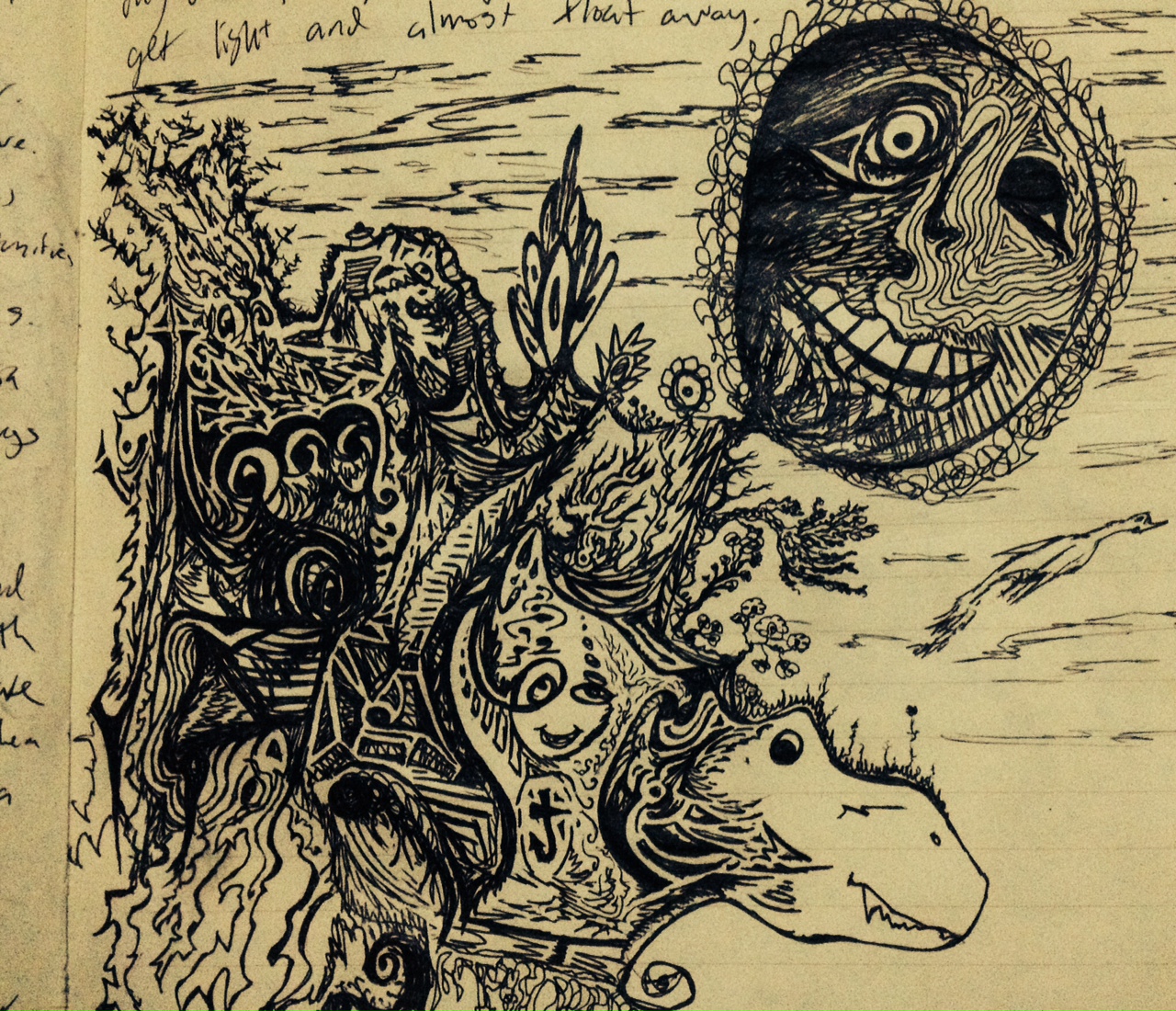
Original drawing by Pierce Morgan


Mister Misdirect’s approach is to deny that there is an issue. Mister Misdirect doesn’t improve training. Mister Misdirect doesn’t put people in a better frame of mind. Mister Misdirect does not add additional measures. Mister Misdirect simply demands that CSR’s continue to drive down the average call time of individual calls and that sales go up! In extreme cases, Mister Misdirect may even fudge the numbers and make it appear that things are much better than they really are. Oh, yes. I have seen this with my own eyes. 

Unfortunately, this way of handling things often makes Mister Misdirect an addict. Once an executive starts down the path of making things worse and denying that they did so, they are easily ensnared in a trap. Initially, they only had to take responsibility for instituting, say an incomplete measure and failed to anticipate the possible consequences. But now, having lied about it, they would have to not only admit that they caused a problem, but also that they lied about it.

The next day, when executive wakes up, they have a choice: 


1. Own up 


OR

2. Continue to deny

If they own up, the consequences will be immediately painful.
If they continue to deny, they will immediately feel relieved. Of course, if they have surrounded themselves with lackeys, they will feel more than simply relieved; they will feel vindicated or even proud. It’s not a “real pride” of course. But it’s some distant relative, I suppose. 

For a developer, UX person — or really any worker in an organization, the lesson from this is to anticipate such situations before they happen. If they happen anyway, try to call attention to the situation as quickly as possible. Yes, it may mean you lose favor with the boss. If that is so, then, you really might want to think about getting a new boss. Mister Misdirect will always ultimately fail and when he does, he will drag down a work team, a group, a division, or even an entire company. Mister Misdirect has one and only one framework for solving problems:

Try whatever pops into consciousness. 

If it works, take the credit. 

If it fails, blame an underling. 

But the real fun begins when he takes credit for something and then it turns out it was really a failure. Then, there is only one choice for Mister Misdirect and that is to claim that the false victory was real. From there on, it is Lose/Lose/Lose.

—————————————————-

  
Author Page on Amazon

————————————

Relevant essays, poems, & fiction about the importance of speaking truth to power:

Pattern Language: “Reality Check”

The Truth Train 

The Pandemic Anti-Academic

How The Nightingale Learned to Sing

Process Re-Engineering Comes to Baseball

——————————————————-

Posts on Problem Framing:

How to Frame Your Own Hamster Wheel

Wordless Perfection

Problem Formulation: Who Knows What?

I Went in Seeking Clarity

I Say Hello

Problem Framing: Good Point

Reframing the Problem: Paperwork & Working Paper

The Doorbell’s Ringing! Can you Get it?

Where is the door?

21 Sunday Sep 2025

Posted by petersironwood in Uncategorized

≈ Leave a comment

Tags

A Pattern Language., architecture, Christopher Alexander., Customer experience, Design, HCI, history, photography, Travel, userexperience, UX

Photo by Laura Tancredi on Pexels.com

Symmetry is often a really nice thing.  I like snowflakes as much as anyone.  So long as no more than three gather at any one time.

And, I suppose that making a building with four identical sides probably saves marginally on costs.  Maybe.  

But if you really care about the “customer experience” wouldn’t it be nice if the customer can figure out how to enter your building? I mean, enter it without walking the perimeter a few times.  Especially if it is raining, or sleeting, or boiling hot, or dark.  There is a variant on this which is popular with convention centers.  They are required by law, I guess, to have approximately 480 doors or more.  However, typically, all but one or two of these are locked.   

Perhaps an argument could be made that making the entrance to a building difficult to detect adds to security.  I seriously doubt it.  A determined burglar could find out by trial and error or observation where the door is.   That burglar has plenty of time because you see, being a burglar is how they make their living.  But not so your customer.  Much as you would love to *think* that your customer has nothing better to do than circle your establishment trying to find a way in, they do, in reality, have better things to do.  

Recently, I had occasion to visit Paris.  Do you have any trouble finding the doors in the building shown?  Last year was the 850th birthday for Notre Dame.  So, having an entrance which is distinctly visible from a distance as an entrance, we would have to say is a *solved problem*, n’est pas?  Check out Pattern 110, Main Entrance, in Christopher Alexander’s A Pattern Language.

Image


A Context-setting entrance

Roar, Ocean, Roar

The Dance of Billions

Peace

The First Ring of Empathy

Travels with Sadie 1

The Walkabout Diaries: Bee Wise

Imagine All the People

The Agony of The Feet

23 Monday Jun 2025

Posted by petersironwood in America, apocalypse, essay, politics

≈ 3 Comments

Tags

Democracy, fiction, life, nature, politics, short story, Travel, truth, USA, writing

Photo by Lucas Allmann on Pexels.com

Apparently, everyone else knew I was supposed to go head first. 

The instructions, however, were far from clear. 

And, although I didn’t know much, four billion years of evolution had taught me to take a few things rather seriously—such as: “Gravity is real!” And: “Don’t dive hard onto something head first.” So, the vague instruction to come out head first made no sense. 

I considered whether feet first seemed a sensible option. I decided “yes” but only for someone with a well-developed set of quads and a months of practice in balancing. Otherwise, a being such as myself would simply topple over and smash their head anyway.

Thinking about it as best I could, coming out butt first seemed by far the most sensible way to enter this world. 

The only problem was that I didn’t fit that way. So—I was at odds with authority figures such as my mother and her doctors before I was even born. 

After 72 hours of labor, I finally let them win that argument and came out head first. 

All of us could have been saved a lot of time and effort had the instructions been clearer to start with.

Is that why I ended up with a career in “Human-Computer Interaction” AKA “Human Factors” AKA “User Experience”? 

Probably not. 

More likely, it has something to do with the agony of the feet.

I inherited “flat feet” and that has been something of a life-long inconvenience. For example, beneath my ankle is another bone that sticks out much more than it does for other people. That bone often rubs against the side of my shoes and boots and that causes a source of both bruises and blisters. The lack of a working arch also contributes to my never being able to jump very well. In high school, when I was very fit, I was capable of jumping up high enough to touch the bottom of a basketball net. On my best days. 

I never got close to being able to jump and touch the rim, let alone being able to dunk the ball.

Nonetheless, I spent many years of enjoyment while on my feet—playing basketball, tennis, golf, table tennis, football, baseball, softball, racquetball, running, and walking. Running speed was never a strong point but I do have good eye-hand coordination and know how to concentrate and adjust my play to the opponent(s). As I sometimes like to say, I’be been violating expectations since 1945. I’ve enjoyed every sport I’ve ever tried. I’ve also seen many people with much more natural talent than I have enjoy sports less. That’s one reason I wrote “The Winning Weekend Warrior” which discusses the “mental game”; that is, “Sports Psychology.”

http://tinyurl.com/ng2heq3

I’ve also discovered some things about mitigating the negative impact of the feet I was born with. 

For one thing, I never buy shoes without trying them on. 

Another surprise is that all hard surfaces are not equally damaging. A basketball floor, a dirt track, an asphalt road, concrete, and steel all seem pretty damned hard. But it turns out that running on concrete sidewalks is much harder on my arches (and shins) than running on asphalt.
It also turns out that standing still for a half hour is harder on my arches than is walking for an hour.

I’ve learned a number of obvious things like: losing weight helps a lot! Strengthening the legs helps. Having good supportive shoes helps. Wearing cushy sox helps. Avoid (when possible) walking on stone, concrete, or metal. 

I’ve tried a number of supplements too. For me, the ones that seem to help slightly are: turmeric, ginger, and sour cherries. I find that B12 seems to worsen joint pain. Elevation seems to help and so does ice. Of course, the trade-off is that ice and elevation are typically things that limit mobility. 

I also use acetaminophen. I also use arnica gel which seems to help.

If there’s a real “solution” though, I haven’t found it. I was born with a bad design. 

Everyone is. 

Life is not, never was, and never will be about a “perfect design.” The environment keeps changing and organisms who adapt to the environment are always changing. That happens at the cellular level, the learning/behavioral level, and on a longer time scale, at the evolutionary level. 

Not only that: change begets change. If, in response to one change in the environment, you make one adjustment, you might cause another problem. It’s the same with the design of physical artifacts, software systems, user interfaces, social systems, games, strategies, tactics, poetry, stories…

One can use knowledge to shrink a design space. Of course, there is always the chance that by shrinking the space, you are deleting the part of the space that has the very best designs. It took evolution billions of years to create multicellular organisms. Our own human bodies have a large variety of different types of cells. Within many of those types there are sub-types and sub-sub types. 

Even within a sub-sub type, no two cells are precisely identical. They have different histories and they have different environments.

Photo by Angela Hutchison on Pexels.com


The feet that are “bad” are only “bad” in a certain set of circumstances. I’m sure that there’s some circumstance in which it’s better to have flat feet and pronated ankles. For example, it’s probably only a matter of time before there’s a top-rated “reality TV” show dedicated to the implications of odd body parts. That would be a show I would get to try out for because of my feet.

Recently, I got hearing aids. That’s a whole different story for another time, but they fit quite snugly and comfortably behind my ears. But we’ve all seen people who look like Alfred E. Newman from Mad Magazine. What do they do about hearing aids? Do they need a different type? Do they tape them behind their ears? What would be the best genre for the show about unusual feet or ears? Doctor Odds? Opera? Shure-Vivor? America’s Got Metatarsals? 

Needless to say, we would have to make it extremely competitive and a little bit cruel. Maybe people with broken feet could run a race and the winner would live for another week and face a greater challenge the following week. The whole thing would be set in someplace chosen to be especially challenging for those with sore feet; e.g., uneven cobblestones, slippery concrete, on fallen tree trunks. Gorse, of course. Background music would be composed to add to the drama. Or, if the budget doesn’t permit human composers, we could ask an AI system to copy some Puccini or Bizet and change it just enough not be sued for copyright infringement. 

The formula importunes for interviews. They need to be short, shallow, but filled with rage or tears. “So John, when did you first learn that your feet were…what is the PC term here?…Different? Weird? Horrific?” Before each competition, the contestants would be introduced with fireworks and flashing lights along with extremely loud and echoing words of exaggeration. We should get the same kind of introduction once reserved only for “Professional Wrestling” but now common in introducing contestants in Golf and Tennis. Why not insanely dramatic foot-offs in “America’s Got Metatarsals!”

Photo by Wendy Wei on Pexels.com


It might be a bit expensive, but we can always cut costs to the bone. And then, just keep cutting!Who even needs real contestants? They can all be CGI. That, in turn, means there’s no need to limit contestants to the kinds of variations that actually occur. Flat feet? Okay. We’ve all heard about that. But how about flatiron feet? Elephant feet? Eagle feet! Grizzly bear paws! Duck-billed platypus feet! Amoebic pseudopods! Insect legs with pollen sacs! 

Why stop there? Mice with elephant ears! Elephants with mouse ears! Whales stalking their prey on the Savannah, cleverly camouflaged in the tall yellow grass!Tigers leaping on Great White Sharks! It’s no more out of place than putting a thoughtless human being in a safari hunt And, the best part of CGI players is that we can interview them regardless of species and regardless of their native language. At long last, we can entertain ourselves to death while the actual ecosystem around us is being destroyed by the greediest members of the greediest species who ever existed. 

What happens when greed exceeds needs and vital functions of society are left to the unfit, untrained, uncaring, uncouth, criminals? They’ll be about as effective as the Whales of the Serengeti and the Elephant-Eared Mice of Siberia. 

Or, me trying to dunk a basketball. 

————-

The Orange Man

At Least he’s Our Monster

D4

Essays on America: The Game

Siren Song

The Ailing King of Agitate

Absolute is not Just a Vodka

Poker Chip

Peace

Imagine all the People

Dance of Billions

Where do you draw the line?

Trumpism is a New Religion

That Cold Walk Home

Three Blind Mice

Stoned Soup

Roar, Ocean, Roar

Destroying Government Effectiveness

The First Ring of Empathy

Travels with Sadie

The Walkabout Diaries: Life Will Find a Way

Author page on Amazon

Fate and Late on the Interstate

10 Tuesday Mar 2020

Posted by petersironwood in America, apocalypse, politics, psychology, Uncategorized

≈ 4 Comments

Tags

cellphone, driving, fiction, life, short story, story, Travel, truth

128

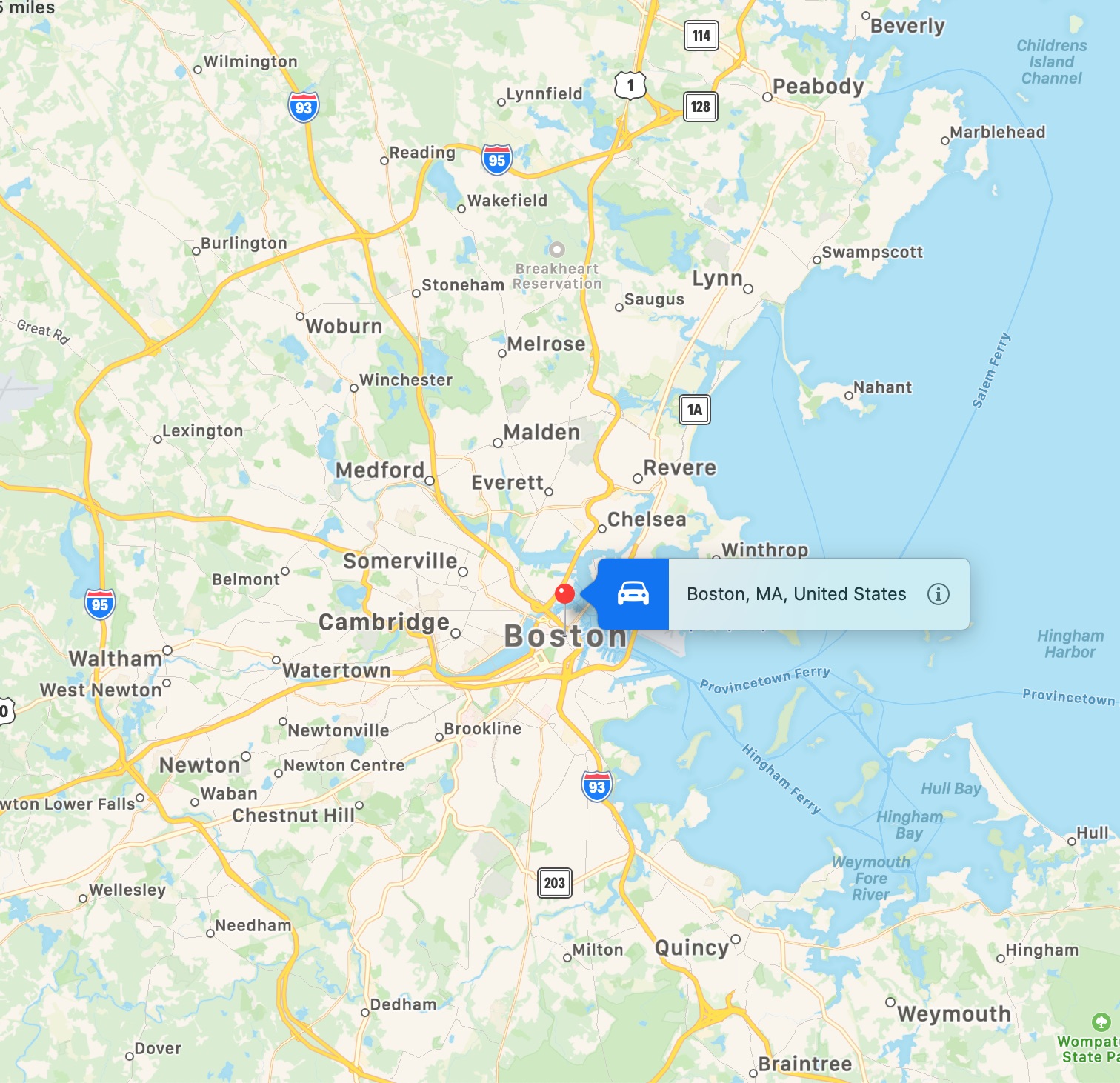
Braintree: Don secured Timmy’s Infant Seat, shut the door and slid into the driver’s seat. He glanced over at Ivy and smiled.

Reading: Mitch’s eyes already drooped. He cracked the window; turned up the radio. His 18-wheeler responded sluggishly around the curves, the cylindrical hold sated with liquid propane.

Norwood: Don glanced left at the small planes circling the airport. “When Timmy’s older and we’ve socked away some money, I’m learning to fly.”
Ivy frowned and stared for a moment at her husband before asking, “Why on earth would you do that?”

Woburn: Mitch wondered to himself, why is 128 always crowded with traffic, day or night? God, I’m tired. What station to choose? Too many lights, he thought to himself and rubbed his eyes. He opened his driver-side window fully. The air was warm and moist.

Needham: “Don, didn’t we promise to bring wine?”
“Shoot! Yeah. Not sure where though. They don’t have anything like that at the rest stops.”
“Better hurry or we’ll miss the fireworks.”
“I promise Ivy. We won’t miss the fireworks. Hand me my phone.”

Lexington: Mitch thought, Crap. No truck stops? I need coffee. Only on the Pike maybe. No, there’s gotta be one here somewhere. Geez. I pity poor Jim who has this boring route every day. A promise is a promise though. Mitch smiled and thought, you owe me, Jim, big time.

Wellesley: “Ivy, do you remember — didn’t we visit Shelly off this exit once and I’m pretty sure there’s a wine store right down Washington. Right?”
“All I remember is your outrageous flirting with Shelly all night. Give me the phone. I’ll look it up. Anyway, Washington is mostly boarded up these days. Dead.”
“I did not! I wasn’t flirting.”
“Just promise you’ll never to do it again. And hand me the phone.”

Waltham: Windows rattled. Expensive porcelain shattered. Babies awoke. Dogs barked.

Boston: Many saw the bright and distant flash. Most assumed it was merely ordinary folks in Lexington or Concord celebrating the birth of the nation; celebrating their freedom from the tyranny of a distant ruler; celebrating their independence from foreign rule.

fire warm radio flame

Photo by Pixabay on Pexels.com


Author Page on Amazon

Start of the First Book of The Myths of the Veritas

Start of the Second Book of the Myths of the Veritas

Table of Contents for the Second Book of the Veritas

Table of Contents for Essays on America 

Index for a Pattern Language for Teamwork and Collaboration  

The Declaration of Interdependence

A Profound and Utter Failure

The Touch of One Hand Clasping

21 Friday Feb 2020

Posted by petersironwood in psychology, Travel, Uncategorized

≈ 6 Comments

Tags

communication, connection, Japan, Tokyo, Travel, truth

image-6

Japan, Tokyo, 1977. I walk crowded streets and beautiful gardens where care is taken for spaces as well as things that grow. I struggle — try to speak Japanese language but usually mispronounce “Key-Ray-Ee-Des” (It is beautiful) as “Key-Rah-Ee-Des” (It is dirty). I tip-toe through minefields of culture steeped in subtlety; lose huge chunks of flesh and karma with my thunderous, blunderous New York strides.

Shin-Ju-Ku: lights dim Times Square into grandmother’s fruit cellar. Row on countless row of Japanese stare hypnotized at small vertical pin-ball game called Pah-Chinn-Koe. This bright hustle bustle hassle hides deeper subtlety, deeper calm, inside, beneath, where foreign eyes can peer not.

city people lights walking

Photo by Negative Space on Pexels.com

I enter Tokyo subway. Then — SHE enters — total stranger, totally beautiful, black hair, endless eyes. I, of course, having learned small little in my many minefield walks, look everywhere but at her. Better, SHE looks everywhere but at me. We ride, totally not looking at each other. SHE stands in middle — nowhere to hold on to — unprotected, beautiful, vulnerable.

Suddenly, train lurches. Simultaneously: SHE shoots hand out to only spot I can possibly reach while I shoot hand out to only spot she can reach. Our hands clasp strongly for instant and I save her from fall. Slowly, we release.

monochrome photo of couple holding hands

Photo by Min An on Pexels.com

Next stop, she suddenly rushes out. But — just before the doors bang shut, she turns — looks straight into my eyes. “Kohn-bahn-wah” she says (“Good Evening”) thus, Japanese beauty touches beyond body into very soul of clumsy Westerner.

snow capped mountain

Photo by Life of Wu on Pexels.com

Author Page on Amazon

Start of the First Book of The Myths of the Veritas

Start of the Second Book of the Myths of the Veritas

Table of Contents for the Second Book of the Veritas

Table of Contents for Essays on America 

Index for a Pattern Language for Teamwork and Collaboration  

Subscribe

  • Entries (RSS)
  • Comments (RSS)

Archives

  • January 2026
  • December 2025
  • November 2025
  • October 2025
  • September 2025
  • August 2025
  • July 2025
  • June 2025
  • May 2025
  • April 2025
  • March 2025
  • February 2025
  • January 2025
  • December 2024
  • November 2024
  • October 2024
  • September 2024
  • July 2024
  • April 2024
  • March 2024
  • February 2024
  • January 2024
  • December 2023
  • August 2023
  • July 2023
  • May 2023
  • April 2023
  • March 2023
  • February 2023
  • January 2023
  • December 2022
  • November 2022
  • October 2022
  • September 2022
  • August 2022
  • July 2022
  • June 2022
  • May 2022
  • April 2022
  • March 2022
  • February 2022
  • January 2022
  • December 2021
  • November 2021
  • October 2021
  • September 2021
  • August 2021
  • July 2021
  • June 2021
  • May 2021
  • April 2021
  • March 2021
  • February 2021
  • January 2021
  • December 2020
  • November 2020
  • October 2020
  • September 2020
  • August 2020
  • July 2020
  • June 2020
  • May 2020
  • April 2020
  • March 2020
  • February 2020
  • January 2020
  • December 2019
  • November 2019
  • October 2019
  • September 2019
  • August 2019
  • July 2019
  • June 2019
  • May 2019
  • April 2019
  • March 2019
  • February 2019
  • January 2019
  • December 2018
  • November 2018
  • October 2018
  • September 2018
  • August 2018
  • July 2018
  • June 2018
  • May 2018
  • April 2018
  • March 2018
  • February 2018
  • January 2018
  • December 2017
  • November 2017
  • October 2017
  • September 2017
  • August 2017
  • July 2017
  • June 2017
  • May 2017
  • April 2017
  • March 2017
  • February 2017
  • January 2017
  • December 2016
  • November 2016
  • October 2016
  • September 2016
  • August 2016
  • July 2016
  • June 2016
  • May 2016
  • April 2016
  • March 2016
  • February 2016
  • January 2016
  • December 2015
  • November 2015
  • October 2015
  • September 2015
  • August 2015
  • May 2015
  • January 2015
  • July 2014
  • January 2014
  • December 2013
  • November 2013

Categories

  • AI
  • America
  • apocalypse
  • cats
  • COVID-19
  • creativity
  • design rationale
  • driverless cars
  • essay
  • family
  • fantasy
  • fiction
  • HCI
  • health
  • management
  • nature
  • pets
  • poetry
  • politics
  • psychology
  • Sadie
  • satire
  • science
  • sports
  • story
  • The Singularity
  • Travel
  • Uncategorized
  • user experience
  • Veritas
  • Walkabout Diaries

Meta

  • Create account
  • Log in

Blog at WordPress.com.

  • Subscribe Subscribed
    • petersironwood
    • Join 663 other subscribers
    • Already have a WordPress.com account? Log in now.
    • petersironwood
    • Subscribe Subscribed
    • Sign up
    • Log in
    • Report this content
    • View site in Reader
    • Manage subscriptions
    • Collapse this bar
 

Loading Comments...