• About PeterSIronwood

petersironwood

~ Finding, formulating and solving life's frustrations.

petersironwood

Tag Archives: Democracy

Keys that Open; Keys that Close

31 Tuesday Mar 2020

Posted by petersironwood in America, apocalypse, COVID-19, politics

≈ 1 Comment

Tags

America, COVID19, crisis, Democracy, USA

680174EA-5910-4F9B-8C75-C15B3136FB06_1_105_c

His whispers seemed so warm and seductive, breathing into her ear: “Come on, it will be nice.  I can protect you.  Give me the keys.”

Lady Liberty, scared, but determined, shook her mighty head, “No.”

The warm breath of the seducer blew on the ear of Lady Justice.  “I need more power.  Then we’ll all be safe.”

architecture art clouds landmark

Photo by Pixabay on Pexels.com

Lady Justice might be blind, but she knew this voice well.  She had heard similar voices in ancient Egypt, in Imperial Rome, in all ages and places.  The languages changed but the message was the same.  “Hand me your freedom.  Just a little.  And I can make you safe.”  Inevitably, of course, there were invasions, plagues, earthquakes and hurricanes and people were not safe.  The voice said, “Yes, that was too bad.  But, you see, you didn’t give me quite enough of your freedom.  Give me just a little more and I can keep you safe.” Lady Justice and Lady Liberty had learned to see these lies for what they were.

woman in black dress holding balance scale

Photo by JJ Jordan on Pexels.com

The Bill of Rights, the Separation of Powers — these are some of the master keys to America (though many citizens think the master keys are baseball and fireworks and grilled hamburgers so that giving up freedom wouldn’t mean all that much).  The Ladies though; they have been around the block a few times.  Thank God. 

DCA8FC9A-F229-4538-9EA2-D9E13D4796EB_1_105_c

Listen to the Ladies. Listen to them well.


Author Page on Amazon

Start of the First Book of The Myths of the Veritas

Start of the Second Book of the Myths of the Veritas

Table of Contents for the Second Book of the Veritas

Table of Contents for Essays on America 

Index for a Pattern Language for Teamwork and Collaboration  

Camelot is in your Heart

09 Monday Mar 2020

Posted by petersironwood in America, apocalypse, poetry, politics, psychology, Uncategorized

≈ 8 Comments

Tags

America, Camelot, Democracy, legends, myths, peace, poem, poetry, revolution, story, USA, war


70E5F8B3-018B-46C2-A765-B75FF60D41C5

The Knights are mostly scattered now;
And Arthur Pendragon long since dead;
A Kingdom ruled by shadows instead. 

The castle lies in broken rubble.
The fields, fallow, untended and bare.
Our Flag doesn’t ripple in cold blue air. 

The maimed, the stunned, stumble, grumble
Of what was once so full of grace,
And now is gone without a trace. 

A grain of wheat is blown by wind,
I seize and touch, and then I see,
Those fields and fields wave goldenly. 

Upon the ground, a hunk of brick —
Its one of hundreds, standing tall
And thickly building castle wall. 

Beside the fallen orchard trunks —
A rotten apple laced with bees;
Inside that core are apple trees! 

Not in warfare, not in plans,
Not in science, not in art,
Not in numbers, not in chart, 

Camelot, 

My friends, 

Is in your heart. 

IMG_9802
Photo by Pixabay on Pexels.com

America

03 Tuesday Mar 2020

Posted by petersironwood in America, poetry, politics, Uncategorized

≈ 4 Comments

Tags

America, Constitution, Democracy, equality, life, poem, poetry, USA, Vote

flag of america

Photo by Sharefaith on Pexels.com

America —
The country I love.
The dream that was my dream.

My father wounded

(Shrapnel black gash, ankle to knee)

In the war against the
Tyranny of Hitler,
That Great Liar,
That Ultimate Cynic,
Playing on the Fears of the Masses.

IMG_8483

Who knew?
Who knew how easily a great Nation
Could be Lost?
We cannot see the forest.
We cannot see the trees.
We can only see the bushes
And the rushes, all around the slime.

Lost, as a leaf that waffles in the wind,
Lost, as a steep plunge into a swimming pool
Waterless, despite the golden promises.

IMG_1442

Plummeting from World Leader
To World Bleeder.
Leech and Destroyer of God’s Green Earth.

Or….

Maybe,
Just maybe,
All is not quite lost.
Maybe,
Just maybe,
We can rekindle the real dream.
Maybe,
We can live up to
Jefferson and Franklin
Maybe,
We can live up to
Abraham Lincoln
And the patriots who died
To set us free,
To build a nation:
Of the people
(Not the special interests)
By the people
(Not by the dollar-soaked lies)
For the people
(Not the oil barons).

IMG_9802

We might just make it,
You and I.
We might just make it
America
Once again.

Posterity,
Posterity will remember
Long after mere prosperity
Has faded into nothing.

It’s worth a try,
After a long cry,
To stitch together the broken pieces
Of the lost dream.

architecture art clouds landmark

Photo by Pixabay on Pexels.com

Oh, America, wake up!
Oh, Americans.
After all, it is ours.
It is our country.
Let’s reclaim it.
Let’s name it
Once again:
America.

daylight forest glossy lake

Photo by eberhard grossgasteiger on Pexels.com


Author Page on Amazon

Start of the First Book of The Myths of the Veritas

Start of the Second Book of the Myths of the Veritas

Table of Contents for the Second Book of the Veritas

Table of Contents for Essays on America 

Index for a Pattern Language for Teamwork and Collaboration  

The Pie of Life

24 Monday Feb 2020

Posted by petersironwood in America, apocalypse, management, politics, psychology, Uncategorized

≈ 4 Comments

Tags

Business, capitalism, Democracy, ethics, fairness, life, marketing, socialism

close up of tasty looking baked goods

Photo by Nishant Aneja on Pexels.com

There isn’t just the one pie, of course. A decent bakery will have quite a variety. Pecan pie, warm, with some vanilla ice cream — the warmth and richness of the pie while the creaminess of the melting ice cream! Key Lime pie — sweet, sour, and a hint of exotic bitterness. Chocolate cream pie — is it really more of a candy or a pie? On occasion, I’ve made pies from scratch that are filled with freshly picked blackberries or raspberries. If you’ve never had one fresh out of the oven — barely cool enough to eat — you should really treat yourself. The same goes for apple and cherry pie!

berry blueberries blueberry cake

Photo by Pixabay on Pexels.com


Most people in their daily lives are generous. They find it’s more fun to share a wonderful pie than secretly steal every piece for themselves. Most people you know and most people I know realize that in order to get anything significant done, they have to work with other people. And, while I, like many people, love to play competitive games and sports, all of life is not a competitive sport. It isn’t about taking the most pie you can regardless of consequences.  

In a zero-sum game, we imagine that there is only one pie. We have to split it and if you get more, I get less. 

But is everything in life like that? Is anything in life really like that? Even competitive sports like tennis where one person or team wins and the other loses is not truly a zero sum game. There is the benefit of fitness and improving your game and the sheer joy of playing. And most of life is like that — including pies. When we think about how to split the pie, we may want to consider other things such as: 

farm land during sunset

Photo by Pixabay on Pexels.com

How did the pie get there? What is the proper share for the people who grew the wheat? The miller who ground the flour? The truck driver who drove the flour truck to the store? How about the grocery clerk? The bagger? The person who cooked the pie? How about the person who tinkered around until she or he developed an excellent recipe? How about the people who had lived for thousands of years with the cinnamon trees and then had their villages and way of life destroyed so that the cinnamon trees could all be cut down? How about the people who cut the sugar cane? How about the policeman who protects the pie and the fireman who comes to save the bakery if it catches fire? How much should they all get? 

Trying to “determine the fair share” by measuring everything and “calculating” it by formula would be endlessly tedious. The inefficiency and waste and lack of innovation in the former Soviet Union demonstrated the futility of detailed central planning. In many places, society has developed a system of exchange based on money. The idea is to let the market “decide.” 

That system only works when people have approximately equal power and when they have equal justice under the law. When capitalism is combined with unequal justice, it quickly devolves into tyranny. Owners of corporations can get almost all of the pie for themselves and leave only enough crumbs for the workers to barely stay alive and eke out a living. To the extent that workers can be replaced by robots, it isn’t even necessary to give workers crumbs. 

Suppose your young child is deathly ill with pneumonia and needs penicillin. Suppose I am the only pharmacy in town and the roads are closed so that the only way for you to get the necessary penicillin is through me. As the pharmacist, I may have paid all of one thin dime for the medicine you need. But, assuming you love your child as much as most parents do, I can charge virtually any price. Any price. Think of that. I can not only gain your car, your house, and every dime you own. I can also make you an indebted servant. 

baby child close up crying

Photo by Pixabay on Pexels.com

Imagine a world in which there are many employers and many workers. Each worker has many possible jobs they could do and every company has a choice among many workers. In such a system, there is some balance of power. An employer who pays low wages or who provides bad working conditions will find themselves without enough workers to get the work done and go out of business. Similarly, a worker who goofs off or insists on very high wages will not be hired. But do we have a balance like that? In a land of many small companies and many small family farms, there is some balance. But today? In many cases, there are a small number of very large corporations who together hold almost all the power. 

If, in addition to the imbalance of workers versus owners, the rich owners have now bought much of the government. Legislation to protect workers and consumers is not even being brought to a vote in the Senate. The Trumputin administration is rolling back food safety regulations, air pollution regulations, water pollution regulations, and healthcare. The justice department and the US intelligence agencies — who used to be filled with nonpartisan experts — are being destroyed from within. Ultimately, it means that every penny of wealth created by workers can be stolen by the richest and most powerful people in the country. Even now, some of the richest corporations and people pay zero taxes.

woman in black dress holding balance scale

Photo by JJ Jordan on Pexels.com


Many of the corporations don’t really have competitors. They spend money on lobbying and advertising. They don’t want to spend money on innovation and invention because that changes the nature of the game and so — they could potentially lose their monopoly power. In other words, none of these people are spending much resource on inventing new types of pies. They are protecting the rules that give most of the pie to them. Similarly, companies buy start-ups of potentially disruptive innovations, not in order to integrate inventions into their product lines but to prevent those start-ups from becoming competitors. 

Since most of us in America will soon be paying our tax bill, it might be time to consider this:

If you work two full time jobs in America, you can barely make ends meet and you will pay taxes on your earned income — not a lot — but more than some billionaires. If you are a highly talented writer, actor, consultant, scientist, and you work 80 hours a week, you might earn $200,000 a year and you will pay a lot of taxes on that money. On the other hand, let’s suppose that you inherited $10,000,000 and you invest $4,000,000 in the stock market. You will easily make $200,000 a year on that money while doing nothing for the whole year. You can spend your time watching TV, playing golf, or dressing up lizards. But your tax rate on the $200,000 you got for nothing except being born rich will be less than the talented person who works full time. 

How we divide up the pie makes a big difference. And we are becoming less and less fair about that and — perhaps even worse — we are no longer putting as much resource into growing the pie and inventing new types of pies. Meritocracy is being replaced with cronyism and a “might makes right” mentality. 

close up photo of spider

Photo by Michael Willinger on Pexels.com

While competition is a part of life, it is not the whole of life. Life cooperates with other life all the time and at every level. In our bodies, if we are healthy, the cells of every organ work together to promote life for the whole. In cancer, a few cells decide to suck all the resources into themselves. And — that’s what happening here in America. 

How’s it going where you are?  

Do you invent new kinds of pies? Do you help improve the recipes? Do you get a fair share? Or, do you find yourself fighting all day just to get a very little bit of a very large pie? 

white and brown bird

Photo by Dominika Roseclay on Pexels.com

————————————

Author Page on Amazon

Index for a Pattern Language for Teamwork and Collaboration  

Checks and Balances

20 Thursday Feb 2020

Posted by petersironwood in America, apocalypse, politics, psychology, Uncategorized

≈ 4 Comments

Tags

Checks and Balances, Democracy, Dictatorship, Feedback, politics, Resistance, Rule of Law, truth, tyranny

Photo by Mau00ebl BALLAND on Pexels.com
Photo by Pille Kirsi on Pexels.com

Checks and Balances. 

Yes, yes, we’ve all heard the term. And, many of us even know that “Checks and Balances” are in the American Constitution and in the foundational documents of other nations as well. But why? Are they really necessary? Aren’t “checks and balances” simply something that “gets in the way” and “slows things down”? 

Let’s see whether “Checks and Balances” are found in other types of systems. Consider a physical system. For instance, in your home, you likely have some source of electricity. Electricity is very useful. It can run refrigerators, TV’s, computers, water pumps, and toasters. If your home is to be safe, its electrical system includes fuses or circuit breakers. Why? 

Basically, a fuse or circuit breaker is there to prevent damage. If you are running an electric motor; e.g., like a drill or a garbage disposal, the motor might get “stuck.” Without a fuse or circuit breaker, the motor will draw more and more current and burn out the motor. Wires can also become frayed, commonly due to rodents eating the insulation, which for some reason, they love. If wire insulation is too frayed, the two ends of a circuit can become directly connected (a “short circuit”) and since the resistance becomes nearly zero, the amperage rises tremendously causing more and more heat which can easily cause a fire. 

orange flame

Photo by Francesco Paggiaro on Pexels.com

Home electrical fires in America account for an estimated 51,000 fires each year, nearly 500 deaths, more than 1,400 injuries, and $1.3 billion in property damage.

(See https://www.esfi.org/resource/home-electrical-fires-184 for more details). 

Yes, electricity is a useful tool! But where there is power and energy, there is also danger. Power and energy must be limited. That’s why your home has fuses or circuit breakers. The idea is that the current must pass through the fuse or circuit breaker and if too much current starts to flow it burns out the fuse (typically a small piece of copper) or “trips” the circuit breaker causing it to shut off current. Your car also has fuses and for much the same reason. 

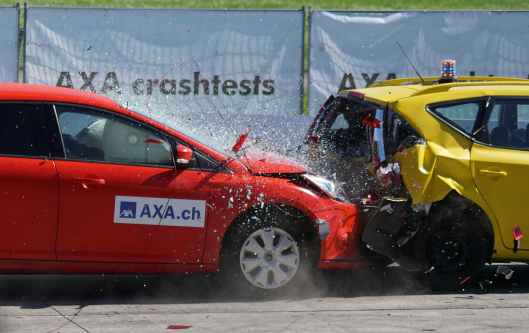
Your automobile has many “checks and balances.” There is not only an accelerator; it also possesses brakes! Imagine a car that had an accelerator but no brakes. One of the scariest things that can happen when you’re driving is to have the accelerator get “stuck” in the accelerating position. It happened to me once. Even pressing on the brakes hard isn’t enough to slow the car. Or, at least it didn’t seem to do much for me. I was driving an automatic and needed to put the car in neutral. The engine still raced but at least the car slowed down. I kept tapping the accelerator with my foot and eventually it became “unstuck.”

red and yellow hatchback axa crash tests

Photo by Pixabay on Pexels.com

Nuclear power plants, elevators, cranes, and so on all have “Checks and Balances” built into them to minimize the chances of a catastrophe when something goes wrong. 

Biological systems, however, sweep the Academy Awards in the category “Checks and Balances.” In fact, life itself can be thought of as energy systems with highly evolved “Checks and Balances.” These “Checks and Balances” happen at the chemical level, at the level of tiny organelles inside a cell, at the level of cells, and at the level of individual bodies such as you and I have. If we get too cold, our hair stands on end and we shiver. Those things warm us up. If we get too hot, we sweat and our skin gets flushed. These two things cool us down. 

If our blood sugar level falls too far, we get hungry. We feel like eating. We eat. We digest food and our blood sugar level goes up. If it does up too fast, our body releases insulin which tends to bring it back down. 

woman wearing black jacket holding doughnut

Photo by Renato Abati on Pexels.com

By and large, these “Checks and Balances” work remarkably well. In some special circumstances, they fail for one reason or another. For instance, if we get addicted to opioids of any kind, we feel “better” after we take the opioids. We also become more “tolerant” of the drug. To feel “better” will require ever higher doses. When you quit, you feel worse and taking more of the drug makes you feel better. 

For some, gambling, sex, alcohol, and crime itself can function the same way. Many who rob a liquor store are doing it to get the money. But some of the people who rob a liquor store are partly doing it for the thrill. They enjoy doing something criminal in and of itself. Similarly, greediness can serve as an addictive drug. Being unfair and cruel, for such people, is not just the means to an end (e.g., becoming richer). It is the end itself. 

For such a person, taking more than their share of donuts isn’t just about having more donuts. The addictive joy is also in seeing others angry or miserable or hungry. The “Checks and Balances” in such a person are not working well at all. They need to wreak more and more cruelty on others in order to feel “okay” again. 

As I’ve mentioned elsewhere, cancer is essentially greed at the cellular level. A cell somewhere in the body is no longer satisfied with its “normal” nutritional allocation. It is no longer content to perform its function as a muscle cell, brain cell, liver cell or skin cell. Instead, it “decides” that it will no longer perform its actual function. Rather, it is now “demanding” more and more resources from the rest of the body and its only function becomes increasing its own power and control over the rest of the body. Normally, cell growth and reproduction are also controlled by “Checks and Balances.” In fact, when cells become damaged and can no longer function, the body’s immune system normally recognizes that and destroys them. In cancer, however, the sick and greedy cell manages to “convince” the other cells that “everything’s normal” and those cancer cells grow without bound. As the tumor grows, it sucks up more and more of the body’s resources until the whole body dies — including, guess who? The ugly tumorous cancer cells grow without bound because “Checks and Balances” no longer work on them. Cancer cells cannot do anything “useful” for themselves. They are only able to suck value from the host body. So once they kill the host, cancer dies too. 

3403641F-071C-4611-A35F-AF9A548C7577

Original drawing by Pierce Morgan

“Checks and Balances” are also meant to work in complex social and political systems. For instance, in a democracy, if people are elected and they provide no value to the political body they represent, they will be voted out, in principle. But what if instead of providing value to the body as a whole, they provide value to a very few, very rich people? What if, in return for funneling the resources to those very rich donors, the rich donors help make sure that the candidate gets re-elected — again, and again, and again — even though those politicians only benefit a few. “Checks and Balances” have now failed. 

woman in black dress holding balance scale

Photo by JJ Jordan on Pexels.com

One important society system of “Checks and Balances” is the legal system. Imagine that there were no legal system — no police, no judges, no prosecutors, no juries, no laws. Now, imagine that someone robbed you or harmed your children. What would you do? You wouldn’t go to the police because they wouldn’t exist in such a system. Or, worse, they would be utterly corrupt. Some people would “turn the other cheek” but most people would set out to seek their own justice. They’d steal something of equal or greater value. They would harm the law-breaker’s children. And, it would often happen that they would not only get “an eye for an eye and a tooth for a tooth” but they would try to get “two eyes for an eye” and “two teeth for a tooth.” And, without “Checks and Balances”, who would stop them? The kin of the first criminal would try to stop them and sometimes succeed and sometimes fail. Without agreed upon “Checks and Balances,” crime, violence, rape, theft, would continue to escalate.

Eventually, like cancer, the violence would die. There would be nothing left worth stealing; no-one left living to rape or kill. So, like cancer, the violence would destroy everything of value and then would fizzle out because there would be nothing left to “feed on.” 

A functioning system of “Checks and Balances” results in houses that don’t burn down, bodies that grow strong and reproduce, and societies that prosper. What happens when we destroy the “Checks and Balances”? In the case of a house, in the old days, we could replace your fuses with a copper penny. A copper penny is much thicker than the thin wire in a fuse. It’s very likely we would end up burning your house down. Cells without “Checks and Balances” form cancer. People whose behavior lacks “Checks and Balances” become addicted, often to self-defeating behavior. Societies without “Checks and Balances” become, quite naturally, more and more unbalanced. This, in turn, leads to violent revolution (as happened in the American, French, and Russian revolution) or being overrun by other countries (as happened in ancient Rome).  

photo of person wearing guy fawkes mask

Photo by Vincent M.A. Janssen on Pexels.com

There are several main types of action that we can take to try to prevent the destruction of our own society. To the extent that any official “Checks and Balances” still exist, we can throw our own energy into slamming on the emergency brake. We can vote. We can encourage others to do the same. 

We can try to “disconnect” the source of power from the “car.” We can push for impeachments, indictments, recusals, article 25 invocations. We can encourage others to do the same. 

We can also try to perform actions that “should be” part of the normal “Checks and Balances” by ourself. If some group of people are being unfairly targeted for instance, we can go out of our way to make that unfairness less unfair. We can encourage others to do the same. 

i voted sticker lot

Photo by Element5 Digital on Pexels.com

If one group of people is amassing power and wealth in an uncontrolled fashion, we can individually resist letting more of our own power and wealth get into their hands. We can encourage others to do the same. 

We can voice our opposition to a cancerous and corrupt system that has destroyed “Checks and Balances.” We can encourage others to do the same. 

———————-

Author Page on Amazon. 

A parable about the logical outcomes of unfettered greed and lying. 

An essay about why cancer must die. 

A Sci-Fi story about an AI system without proper Checks and Balances. 

Wilbur’s Story

19 Wednesday Feb 2020

Posted by petersironwood in America, apocalypse, politics, psychology, Uncategorized, Veritas

≈ 5 Comments

Tags

bravery, cowardice, Democracy, fascism, Resistance, tyranny, war

{Starting in the fifth grade, Wilbur was my next door neighbor. We are entering a time of great danger, as are the Veritas. It will be a great danger to do anything to thwart the Putin administration. Yet, not doing anything may be a greater danger. So, I thought this recounting would be apropos.)

flight sky sunset men

Photo by Pixabay on Pexels.com

Wilbur’s dead. Died in Nam. And, the question I keep asking him is: “Did it help you face the Danger? All those hours together we played soldier?”

Wilbur’s family moved next door from West Virginia when I was eleven. They were stupendously uneducated. Wilbur was my buddy though. We were rock-fighting the oaks of the forest when he tried to heave a huge boulder over my head. Endless waiting in the Emergency Room. Stitches. My hair still doesn’t grow straight there. “Friendly fire.”

More often, we used wooden swords to slash our way through the blackberry and wild rose jungle of The Enemy; parry the blows of the wildly swinging grapevines; hide out in the hollow tree; launch the sudden ambush.

cascade creek environment fern

Photo by Pixabay on Pexels.com

We matched strategy wits on the RISK board, on the chess board, plastic soldier set-ups. I always won. Still, Wilbur made me think — more than school ever did.

One day, for some stupid reason, he insisted on fighting me. I punched him once (truly lightly) on the nose. He bled. He fled crying home to mama. Wilbur couldn’t stand the sight of blood.

I guess you got your fill of that in Nam, Wilbur.

After years of dangerous jungle combat, he was finally to ship home, safe and sound, tour over — thank God!

He slipped on a bar of soap in the shower and killed himself.

Wilbur answers me across the years and miles: “So much for Danger, buddy,” he laughs, “Go for it!”

close up photo of lion

Photo by Gareth Davies on Pexels.com

Thanks, Wilbur.

Thanks.


Author Page on Amazon.

Start of the First Book of The Myths of the Veritas

Start of the Second Book of the Myths of the Veritas

Table of Contents for the Second Book of the Veritas

Table of Contents for Essays on America 

Index for a Pattern Language for Teamwork and Collaboration  


Hauntings Across the Time Zones

18 Tuesday Feb 2020

Posted by petersironwood in America, apocalypse, politics, psychology, Uncategorized

≈ 4 Comments

Tags

activism, apathy, Democracy, environment, poetry, politics, Resistance, Veritas

{You may have noticed that what follows is neither a furtherance of the narrative of The Myths of the Veritas, nor an essay about America. But somehow it seems relevant to both. The poem seems to reflect how many people in America currently feel …. and it also reflects what the Veritas would not do.

Hauntings Across the Time Zones

Caught between a rock and a hard place,
I just try to keep busy.
Busy, busy, blocking out the voices,
Surrounding them with noise.
Busy, busy, blocking out the images,
Enveloped in a flashy Vegas fog.

Surf the web and watch TV,
Mobile phone and rushing traffic,
Fast food and faster planes,
Double or nothing,
Promotion and prozac in equal doses.

Yet, instants pop though the time-warp.
I hear my anscestors moaning behind the fridge,
They waver on the overheated car hood.
“Greed never captured what it’s all about.”
Their hoarse multitudinous whispers carry far
Like a stadium roar across a winter’s frozen lake.

Then, an echo from behind the Dieffenbachia maculata:
The possible children of the future asking,
“Will we have water? Will we have bread?
Will we have air? Will we have plutonium? Why are you selling our birthright
For a bowl of plastic?”

Now, I hear the workers in the arches of my running shoes.
Some of them are surprisingly young or old.

But never mind.
I find
Again the busy keys,
Blocking out eternities.
The path is very narrow —
I must travel like an arrow.
I look nor left nor right
I see only black and white.


Essays on America: The Temperature Gauge

09 Thursday Jan 2020

Posted by petersironwood in America, apocalypse, driverless cars, politics, Uncategorized

≈ 6 Comments

Tags

AI, America, cancer, Democracy, driverless cars, ethics, government

green leafed trees

Photo by Drew Rae on Pexels.com

The sun is shining! Spring is here at last, and the trees are in bloom. You’re driving down the road and you see … 

That your “Engine over-heating” light goes on! 

You think: My engine’s over-heating! 

Or,  you think, it isn’t over-heating at all; I just have a bad sensor. 

Over the next few months, the red light goes on several other times, and each time, you pull over and try to judge whether the engine is really over-heated. No easy task. But you get back in and turn the car on and lo and behold, the light’s no longer on. Aloud, you mutter: “I’ve got to get that damned sensor fixed. Maybe next week.”

In the olden days of driving cars, I had a continuous gauge of the temperature. It was more obvious if it was acting oddly because I had more information. I could track it day to day. If I went on a long trip I could see whether the behavior of the gauge “made sense.” I might go up a long mountain road on a hot sunny day, and I expect to see the temperature gauge climb. On the other hand, if I went back down that same mountain at night and the temperature gauge climbed, I would know to get it checked. 

aerial view of road in the middle of trees

Photo by Deva Darshan on Pexels.com

Suppose instead of a gauge, you or I only get is one bit of information: “Temperature sensor says overheated,”  it’s much harder judge the veracity of the source. But, if we cannot even trust the reliability of the sensor, then we don’t even get one bit of information. Before the light comes on, there are four possible states (not equally likely, by the way, but that’s not important for the following argument). 

Engine OK, Sensor OK; 

Engine OK, Sensor ~OK; 

Engine ~OK, Sensor OK; 

Engine ~OK, Sensor ~OK. 

When the red light comes on, you have some information because the state of:

Engine OK, Sensor OK is eliminated. 

But is it? 

IMG_7209

It certainly is — under a certain set of assumptions — but let’s try to tease apart what those assumptions are and see whether they necessarily hold in today’s world, or in tomorrow’s world. 

Let’s imagine for a moment that your automobile is bewitched and inhabited by an evil demon with limited magical powers, mainly to do with the car itself. If you’ve seen the movie Christine you’ll know what I mean. If you haven’t seen it, please buy the book instead. It’s so much better. But let’s get back to our own evil-spirited car. This car, let’s call him “URUMPUT” because it sounds a bit like a car engine and because — you know, just because. Let’s imagine the car has a lot of mileage and is painted a kind of sickly orange color. The tires are bald, and it’s a real gas guzzler. It’s actually more of a jalopy than a car. Your friends would have assumed you could have done much better, but it is apparently what you’re stuck with for now. 

URUMPUT, unbeknownst to you, is actually out to kill you, but his powers are limited. He cannot simply lock the doors and reroute the exhaust till you pass out from the fumes. So, what it does is to over-ride the sensor so that you get out to take a look at your car so you open the hood and you look inside and BLAM! Down comes the hood on your head with enough force to snap your neck. When your neck is snapped, you don’t die instantaneously. You are aware that something is terribly wrong. Your brain sends signals for you to move; to get the damned hood off; but you can’t move. And, worse, you can’t breathe. Soon, but much too late, you realize something has gone terribly wrong.

You. 

Are. 

Dead! 

That blasted URUMPUT got you. Why?  Just because he could. He paid you no more mind than had you been an ant on the road. He gave you misinformation. That is information that you thought you had because you assumed you were dealing with a system that, although imperfect, had some degree of transparency. You certainly did not think you were dealing with an actively evil agent. But you were. And, now you’re dead. (But go ahead and read the rest as though you were still alive.) 

Of course, in real life, there are no bewitched cars. We all know that. 

86A389C7-4CD7-42E3-ABFA-A555A5BB24CB

Do we? 

Let’s consider how much electronics and “smarts” already exists in cars. The amount will skyrocket with driverless cars. For one thing, the human “occupants” will be able to have much more engaging entertainment. Perhaps more importantly, the “brain” of the car will be able to react to a much wider array of data more quickly than most human drivers could. 

With all the extra sensors, communications, components, functions, protocols, etc. there will be greatly enhanced functionality. 

There will also be all sorts of places where a “bad actor” might intentionally harm the vehicle or even harm the occupants. Your insurance company, for instance, might fake some of the data in the black box of your car to indicate that you drove a lot during nighttime hours. It doesn’t seem to match your recollection, but how would you double check? You grudgingly pay the increased premium. 

white graphing paper

Photo by Pixabay on Pexels.com

Behind on your loan shark payments? Oops? Your driverless car just steered itself off a cliff and all the occupants were killed. 

Oh, but how, you ask, would loan sharks get hold of the software in your car? 

Then, I have to ask you a question right back. Have you been watching the news the last couple of years? People who owe a great deal of money to the wrong people will do anything to avoid the promised punishments that follow non-payment. 

Our government at this point is definitely not much like old time cars that allowed you to see what was going on and make judgments for yourself. This government just sends out signals that say, “Everything’s Fine!” and “Do as I say!” and “Those people NOT like you? They are the cause of all your troubles.” 

D27C46AA-C37E-4AB7-8FE8-8DA937E31A91

That is not transparency. 

That is not even informational. 

That is misinformation. 

But it is not misinformation of the sort where a student says: “Akron is the capital of Ohio.” That’s wrong, but it’s not maliciously wrong. 

When people lose a limb as a result of an accident, cancer, or war, they often experience something called the “Phantom Limb Experience.” They have distinct sensations, including pain, “in” the limb that is no longer there. The engine’s not working but the sensor is also bad. 

That’s where we are. 

The engine’s not working. The feedback to us about whether it’s working is also malicious misinformation. 

We have the Phantom Limb Experience of having a government that is working for American interests. 

We need to regrow the missing limb or get a really good prosthetic. 

We need straight information from the government which is supposed to take input from all of us and then make decisions for all of us. It’s never been perfect, but this is the first time it is not even trying or pretending to be fair or even accurate. People in top level positions in our government think that their oath of office is a joke. 

We live in a monster car — and not the fun kind — the Christine kind. 

The engine’s not working. And the sensor light means nothing. If you look under the hood to find out what’s really going on, you’d better have a partner ready to grab the hood and prevent it from being slammed down on your head. Because URUMPUT would do it with as little regard for you as he would have to out and destroy any other whistleblower. 

blur close up design focus

Photo by Pixabay on Pexels.com

———————————————

The Invisibility Cloak of Habit

Author Page on Amazon

Story about Driverless Cars (from Turing’s Nightmares). 

The Loud Defense of Untenable Positions

07 Saturday Dec 2019

Posted by petersironwood in America, politics, psychology, Uncategorized

≈ 25 Comments

Tags

Democracy, fascism, government, Impeachment, politics, truth

The Paradoxically Fierce Blind Defense of Untenable Positions. 

Quick! How do you know the earth is not flat? 

sky earth galaxy universe

Photo by Pixabay on Pexels.com

If you’re like most people, the question seems absurd. Everyone knows the earth is not flat, you think. Why should I have to prove that? It’s silly. 

You’re so sure that the earth is round that you probably do not have a ready answer. You might know enough about astronomy or general science to put together a fairly convincing case, but unless you’re an elementary school teacher, or have family members who belong to the “Flat Earth Society” you will likely have to construct an answer “on the fly.” 

Although you might be “annoyed” at having to produce a rationale for something that “everyone knows” it is unlikely you will get downright enraged. If someone challenges you, you’ll likely just shake your head and walk away. Or, you might try to convince them that the earth is round. 

man wearing brown suit jacket mocking on white telephone

Photo by Moose Photos on Pexels.com

You likely haven’t given much thought to how to “prove” that the earth is round; at least not since you were a kid. But there’s another and more insidious reason why you cannot “rattle off” a defense of the “earth is round” thesis. 

There’s no money to be made. Not only science, but commerce is premised on the fact that the earth is round. Since (nearly) everyone already knows the earth is round, no-one is being paid to make disturbing videos that seem to “prove” the earth is round. No-one has a troll farm somewhere paying people to post things on facebook or twitter to push the position that the earth is round. 

Let’s take another example. Imagine that you’re walking down the street one day and you look up from your iPhone long enough to notice a man who appears to be trying to walk through a brick wall. He bangs into it; backs up a few steps and walks into it again. 

You were just about to beat your personal best in Candy Crush, but you sigh and ask the man, “What are you doing?” 

“What does it look like? I’m walking through this wall.” 

B591C4D7-C49B-4C98-A842-98F94C097B46

The scenes from the Harry Potter movies where magical folks get to the Hogwarts Express via walking through the wall to get to platform 9 3/4 flash onto your internal TV. But you realize that is a movie about a magical world. Every instance you can come up with where someone walks through a wall is a cartoon or superhero. Perhaps this is where the guy got the idea. But here he is trying it out in real life. But he does’t just try it out once. Here he goes again. You don’t know how long he’s been doing this, but you’ve seen three trials, all with the same, and quite predictable result. 

You realize that if he keeps walking into the brick wall, he will eventually be injured. Moreover, a person who is so clearly self-destructive might do other, and even worse, self-destructive things. Would it be possible to talk them out of this behavior with logic or facts? That seems doubtful. After all, assuming they didn’t just pop up on the street from a completely different universe where walking through brick walls works, he’ll have already had plenty of opportunities to learn about the world. 

IMG_8467

The more absurd the false beliefs are, the more vigorously people will defend them. You’ve spent no time practicing arguments about why the earth is round or why you can’t walk through brick walls. On the other hand, someone who does believe in these things will have had many occasions when those beliefs were challenged. Nonetheless, they won’t be very successful in convincing others that, say, the earth is flat. But every time they try to make that sale, it will convince the person who constructs and voices such arguments, even more deeply that the earth is flat. So, even though they might tell this story 100 times and every single person remains unconvinced, by thinking that they have to “stand up for themselves” they will try out any sort of non-sense to bolster their position. And, if there were serious money to be made by convincing some people that the earth is flat, you can bet there would be a never-ending series of propaganda offerings to push in that direction. And, while most people will continue to believe the earth is round, occasionally someone will hear enough crap to really begin to wonder. 

Now, let’s go back to our original flat-earther who has just failed to convince one hundred people that the earth is flat — but at the same time, he (let’s say it’s a he named Milhaus) has practiced convincing himself 100 times. And now, a miracle occurs. Milhaus happens to run into Doubting Dolly who has heard or read screes promoting flat earth to the extent that she now experiences a certain amount of doubt. The two of them strike up an excited conversation in which each one reinforces the beliefs of the other. Mihaus is thrilled! Imagine! He’s been scoffed at as ridiculous 100 times. But now, right here, he finds an acolyte — someone who now shares his beliefs. The chances that Doubting Dolly will find such screes depends a lot on whether there is any extrinsic reward for writing and promulgating such screes. Flat Earth conspiracy theories don’t lend themselves to making money off such lies. 

abundance achievement bank banknotes

Photo by Pixabay on Pexels.com

Other currently popular lies, on the other hand are promoted initially by people with vested narrowly selfish interests. But once enough “Milhaus”-types get converted, these falsehoods, however bizarre, get repeated over and over. For instance, the oil company oligarchs have known for years that their business model is seriously damaging human lives, changing climate, and putting much of life at risk. What do they do? They spend millions creating and promulgating false narratives. 

Ironically, then, people who hold untenable, counter-factual positions often are more practiced at their arguments than people who simply put forth the truth. Moreover, they not only are more practiced, they are also more emotionally involved. The average person who belongs to the “Flat Earth Society” has hugely more of their identity wrapped up in the idea of a flat earth than the average person has their identity wrapped up in the idea of a round earth. Of course, there are no valid arguments for a flat earth, for walking through a brick wall, or for interpreting the Constitution as saying that the President should be treated as a dictator. As a result, proponents of such things tend to scream and pound the table a lot. 

D27C46AA-C37E-4AB7-8FE8-8DA937E31A91

The screaming and table pounding is not just out of frustration for not having any valid arguments. For people suffering from PTSD, or who have been in abusive relationships, or grew up in an abusive household, yelling and screaming and pounding the table reminds them of terror and a remembrance that the only way to avoid pain is to make daddy happy. Oh, let’s find out what Pappa Putin wants and give it to him! Maybe we’ll get lucky and he won’t end up treating American citizens as badly as he’s treated his own countrymen. Maybe. But don’t count on it. 

———————————-

Author Page on Amazon

It’s Your Call!

19 Tuesday Nov 2019

Posted by petersironwood in America, psychology, sports, Uncategorized

≈ 2 Comments

Tags

cats, Democracy, fascism, Feedback, games, politics, sports, Tennis

It’s Your Call

IMG_2768

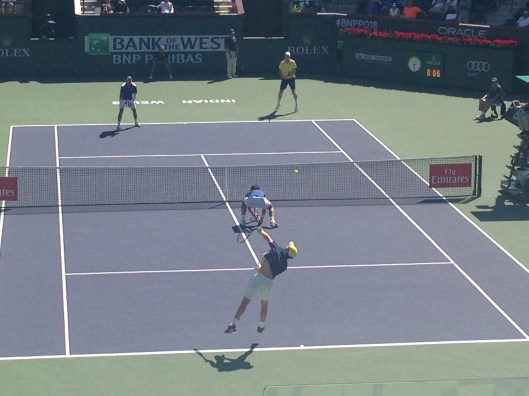
Tennis is played on a so-called court. As a matter of fact, when tennis began, it was literally played in a courtyard and people could hit the ball off roofs, etc. But, now the game has become much more regular. Historians believe tennis began in the 12th century. At that point, the ball was hit with the hand. At what point does it become close enough to modern tennis to deserve the name? I don’t know. My cats have been known to play a kind of primitive tennis with me and, more rarely, with each other. 

7B292613-361F-4989-B9AC-762AB956DECD

The most elaborate example of the latter was something I walked in on. Under the kitchen table were three of our cats batting back and forth the lifeless body of a small lizard who had unfortunately managed to sneak into our house. The cats are well-fed so there was no rushing or fighting over the meat. No, they were batting it back and forth. I don’t know how long they had been playing this little game, but at the point I observed them, they seemed rather bored. I can tell you that when I play tennis, almost all the time, almost all the players exhibit enthusiasm for the game. 

Tennis, it turns out, is much like the game my cats played. Just as the cats did, there is a defined space within which a small object (lizard, tennis ball, etc.) gets batted back and forth. Sides (one or two people to a side) take turns batting the ball over to the other side. This back and forth continues until one side is unable to return the ball into their opponents side of the court. The ball must pass over the net before bouncing and it must land in the opponent’s side of the court. In tennis, as in baseball, if a ball hits the line (even a little) it is “in.” So, knowing when the ball is “in” or “out” is quite critical for scorekeeping purposes, just as it is in nearly every game or sport. “Baseball,” they say, “is a game of inches.” And so is tennis. And football, and hockey, and gymnastics, and basketball, and golf! There are boundaries — and often it is both critical and hard to determine where something falls with respect to those boundaries. 

IMG_9333

For that reason, professional tennis tournaments have not just one, but several people whose sole responsibility is to determine whether balls are “in” or “out.” There is also a “chair umpire” who has several roles but one of which is to serve as a kind of “over-judge.” He can “overrule” one of the linesman as to whether a ball was in or out. More recently, technology has added yet another layer of “presumed certainty” about whether a ball was in or out. Everyone assumes — or has agreed to act as though they assume — that the technology is perfect. As someone who spent many years working with technology, I think it is perfectly safe to assume that the technology is not perfect. But it is, in pro tennis, the final arbiter. 

The kind of tennis I play, “Club Tennis” or “Friendly Tennis” is quite another matter! Our prize money is nil. Our trophies are nil. That doesn’t mean people don’t play their hearts out! But who gets to say whether a ball is in our out? We don’t have technology or line judges; we make our own calls. Here is the over-riding rule of “Friendly tennis”: people call the ball “in” or “out” on their own side of the court. There are three major reasons for this. First, when you hit a ball, you intend for it to be “in.” Second, if the ball is “in” that is to your advantage in winning the game. Both of these are “psychological” effects that impact everyone to a greater or lesser degree and will tend to make them “see” their close shots as in that are really out. The third reason, however, is much more important and it is purely physical. In nearly every case, the person who is attempting to hit the ball is way way closer to the ball (and the line) than anyone else. 

Sometimes, however, there are mitigating circumstances. The person hitting the ball may be running hard and tracking the ball in order to hit it. It sometimes happens that they will admit to having no idea whether the ball was in or out. The first recourse is to ask their partner whether they saw the ball clearly. They might also ask their opponents. Remember: it’s a friendly game. But that does not mean it always stays free from controversy. 

You are supposed to call a ball “out” only if you are sure it was out. What “sure” means though can vary quite a bit from person to person. There are also physical reasons why some people’s line calling is better than others. Many players in our games wear glasses. I won’t go into all the various issues with glasses. If you wear glasses you already know and if you don’t, you couldn’t care less. (Unless you’re extremely empathic and then, you might want to read “The Myths of the Veritas” which delve heavily into empathy; go ahead; give it a try; it’s free with no ads). People also differ in how much they compensate for the effect of parallax. If I am receiving a serve, for instance, I am likely to see a ball that’s slightly long as “in” while the server will tend to see it as “out” even if it is barely in. If a serve comes to my side and lands near the line, the effect of parallax is to make them look “out” even when they are slightly in. Some people are aware of these effects and some aren’t. To make a long story short, people don’t always make the best call. 

44F0D442-87A3-4742-8CD1-6209327BC615

We have the exact same issues that we had when we played baseball, football, in grade school. The only difference is that now that we are in our 70’s we don’t spoil our day and tell Johnny we’re not going to play with him any more. Instead, we revert to “It’s your call” even when we “know” that our opponents have just called one of our hits that was really in, out. 

In the same way, in life outside the tennis realm, we can sometimes see problems that the person nearest to their problem cannot see. We may know that you are eating too much for your own good, or drinking too much, or would be happier in the long run if you studied harder. We might say that, under the right circumstances, to a good friend. But — at the end of the day, it is “their call.” 

alcohol event fun hangover

Photo by Pixabay on Pexels.com

As I’ve argued elsewhere, there seems to be an urban/rural difference in how hard one pushes to let people know they are screwing up. It isn’t only an urban rural split. It seems to me, that many conservatives are afraid that liberals want to make them do and be and like all the things they do! But liberals, you see, by the very nature of the word “liberal,” don’t want to have everyone the same. It’s okay with almost all liberals if you go bowling, or play tennis, or watch NASCAR. We’re not going to force everyone to eat quiche or adopt a “gay lifestyle.” I have to admit, I do think there are some liberals who would be happy to write you an extremely detailed “prescription” for your life. But they are really rare exceptions, in my experience. Liberals, just like conservatives, do want to have laws that prevent people from hurting others for no reason. 

There are interesting edge cases that people may differ on. Is this “your call” or “our call”? That has changed over time as people have multiplied across the earth and as science has understood more and more of our interactions. In the middle ages, when people began congregating in large cities, they lived in (what we would now call) disastrously unsanitary conditions that were ideal for plagues. Dump your sewage into a place that flows into the water supply? Sure. It’s your sewage after all. But now we know that is not a good idea. 

photo of landfill

Photo by Leonid Danilov on Pexels.com

When I was a kid, my dad and my grandpa would “rake the leaves” in the fall; rake the leaves into a big pile; and then burn them. And, everyone was doing that. Now, I would guess that such is illegal in most places in the US. We realize that the smoke doesn’t simply “disappear” but is, in fact, bad for other people. You are burning the leaves on your land, but the smoke doesn’t stay there. Now, we’re more savvy than when I was a kid. But it’s much more than that. There are also a lot more of us! When I born, there were about 2.4 billion people on earth; now there are more than 7 billion. But it isn’t only the number. Many of us around the earth, including me, are using up a lot more resources than we did back then. We are using materials like plastics and sending more and worse chemicals out into the environment we all share. I still believe in the general principle that it’s your call, in terms of how much pollution you are willing to live with. 

As I’ve mentioned before, Air Fresheners are a good example of a bad example. So-called “Air Fresheners” do nothing of the kind. They make you think the air is fresher because they have perfume in them. Not only that; they typically include carcinogens, a chemical to mess with your hormones and another chemical that deadens your sense of smell! You see? Air Fresheners, some people might call the “Bill Barr” of household products. They label themselves as “Air Freshener” but they are really noxious stuff that only makes the whole situation worse. 

I’m afraid that what is “your call” will continue to shrink in some ways if humanity keeps expanding the population and using up more and more resources. On the other hand, the space of what is your call is also expanding. Whether it is sports, clothing, food, games, movies, TV, books, experiences — even with the choice of burning autumn leaves in your backyard gone, you have way more choices available to you than your parents or grandparents had. 

IMG_9107

If there is one person in a car driving alone, they can pick the music they want and play it loud. They can change stations every two seconds. Or not. But if there are six people in the car, it’s going to be more complicated. That’s not because people hate your music or hate you. Now, you could take the attitude: “It’s my car, so I’ll pick whatever music I please!” And then, you might choose to play disco music at full blast. You could. But if you do that, then as soon as possible, people will choose note to ride with you. That’s okay. But don’t complain that you’re ever more isolated. It’s not your choice of music that isolates you. It’s your insistence that everyone is subjected only to what appeals to you. 

And, then we come, at last, as we seem to inevitably do, to the crisis at hand.  

It’s our collective “call” to determine who our leaders are. Some prefer someone who is stately, intelligent, and diplomatic. And, some prefer Donald Trump: bombastic, often inarticulate, and crude. Styles and tastes differ. It’s your call. Personally, I don’t think style is irrelevant, but I don’t think it’s vital either. 

But being an agent, witting or unwitting, of Vladimir Putin, rather than of America, is not a question of style. Doing what is in Russian interests and against the interest of America over and over is not a matter of style. Nor is dividing the country against itself. Nor isolating us from our allies. Nor destroying the morale of our intelligence agencies, our military command, our State Department, and the Justice Department. 

IMG_9802

If it were possible for you to have a dictatorship and for me to stay in a democracy, that might be fine. I would caution you that you wouldn’t really be the least bit happy about living in a dictatorship, but in the end, that’s your call. Also problematic is the fact that dictators are almost never satisfied with the absolute power they have and want to keep extending it to other areas. 

Donald Trump doesn’t want to just be dictator of the Republican Party (which he pretty much already is). He wants to be dictator of the entire country. That is destroying and will continue to destroy everything good about America. It’s the whole country. It’s not just your car. Before finding out just how horrendous it is for everyone to live in a dictatorship, go live for a few months at least, in a cult that has a dictator and see how you like it. You might like it. You might not. It’s your call. 

But America is not going to let our entire country go to ruin. No-one has the right to make that call. 

That would be like one of my tennis opponents saying, “The ball was “out” and furthermore, from now on, everyone’s tennis rackets are mine and you can only play when I say so and I win every game no matter what happens! 

IMG_1442

You know. It’s possible it could happen one day. We’re old. People have strokes. People get dementia. I hope none of my regular tennis players go insane like that, and if they do, I hope they get appropriate care. 

We’re not crazy enough to “give in” to such absurd demands! Not even if he yells and screams and says, “It’s my call!” 

Because it isn’t. 

It’s our call.

———————————-

Author Page on Amazon. 

The Myths of the Veritas 

Trumpism as the new religion

Why the Rule of Law is important

City Mouse and Country Mouse


← Older posts
Newer posts →

Subscribe

  • Entries (RSS)
  • Comments (RSS)

Archives

  • April 2026
  • March 2026
  • February 2026
  • January 2026
  • December 2025
  • November 2025
  • October 2025
  • September 2025
  • August 2025
  • July 2025
  • June 2025
  • May 2025
  • April 2025
  • March 2025
  • February 2025
  • January 2025
  • December 2024
  • November 2024
  • October 2024
  • September 2024
  • July 2024
  • April 2024
  • March 2024
  • February 2024
  • January 2024
  • December 2023
  • August 2023
  • July 2023
  • May 2023
  • April 2023
  • March 2023
  • February 2023
  • January 2023
  • December 2022
  • November 2022
  • October 2022
  • September 2022
  • August 2022
  • July 2022
  • June 2022
  • May 2022
  • April 2022
  • March 2022
  • February 2022
  • January 2022
  • December 2021
  • November 2021
  • October 2021
  • September 2021
  • August 2021
  • July 2021
  • June 2021
  • May 2021
  • April 2021
  • March 2021
  • February 2021
  • January 2021
  • December 2020
  • November 2020
  • October 2020
  • September 2020
  • August 2020
  • July 2020
  • June 2020
  • May 2020
  • April 2020
  • March 2020
  • February 2020
  • January 2020
  • December 2019
  • November 2019
  • October 2019
  • September 2019
  • August 2019
  • July 2019
  • June 2019
  • May 2019
  • April 2019
  • March 2019
  • February 2019
  • January 2019
  • December 2018
  • November 2018
  • October 2018
  • September 2018
  • August 2018
  • July 2018
  • June 2018
  • May 2018
  • April 2018
  • March 2018
  • February 2018
  • January 2018
  • December 2017
  • November 2017
  • October 2017
  • September 2017
  • August 2017
  • July 2017
  • June 2017
  • May 2017
  • April 2017
  • March 2017
  • February 2017
  • January 2017
  • December 2016
  • November 2016
  • October 2016
  • September 2016
  • August 2016
  • July 2016
  • June 2016
  • May 2016
  • April 2016
  • March 2016
  • February 2016
  • January 2016
  • December 2015
  • November 2015
  • October 2015
  • September 2015
  • August 2015
  • May 2015
  • January 2015
  • July 2014
  • January 2014
  • December 2013
  • November 2013

Categories

  • AI
  • America
  • apocalypse

  • cats
  • COVID-19
  • creativity
  • design rationale
  • dogs
  • driverless cars
  • essay
  • family
  • fantasy
  • fiction
  • HCI
  • health
  • management
  • nature
  • pets
  • poetry
  • politics
  • psychology
  • Sadie
  • satire
  • science
  • sports
  • story
  • The Singularity
  • Travel
  • Uncategorized
  • user experience
  • Veritas
  • Walkabout Diaries

Meta

  • Create account
  • Log in

Blog at WordPress.com.

  • Subscribe Subscribed
    • petersironwood
    • Join 662 other subscribers
    • Already have a WordPress.com account? Log in now.
    • petersironwood
    • Subscribe Subscribed
    • Sign up
    • Log in
    • Report this content
    • View site in Reader
    • Manage subscriptions
    • Collapse this bar
 

Loading Comments...