An expression that perhaps goes back to the Roman Coliseum or “gentlemanly” dueling. What is a weapon? What can it mean to say, “The pen is mightier than the sword.”?
A few years ago, I decided to try a little experiment. I knew that studies showed that owning a handgun did not, in general, make you safer. Actually, it was the reverse. Nonetheless, I thought perhaps I would feel safer. For one week, I imagined that my cellphone was a lethal weapon. I could pull it out and cause someone else horrendous pain or to end their life or both. As you might imagine, I did not feel more secure or safer. I felt more paranoid about others but also afraid I might accidentally shoot someone.
In the middle of Monday night, one of our cats turned over some cat bowls and made a huge ruckus. I immediately yelled bloody murder and jumped out of bed. I would not want to have a gun if I’m awakened like that. My body is primed for action and my mind is not yet anywhere to be found. I literally have no idea as to what’s going on. It only last a few moments. But those few moments are enough time to grab a gun and shoot someone. And that someone is far more likely to be someone in your family than a home invader. Maybe they left a book in your room and couldn’t sleep so they came into your room to retrieve it. I don’t really think an error like that is self-forgivable. Your mood would be altered much to the negative for the rest of your life. The only alternative would be to shut off your feelings so completely that you literally became a heartless monster.
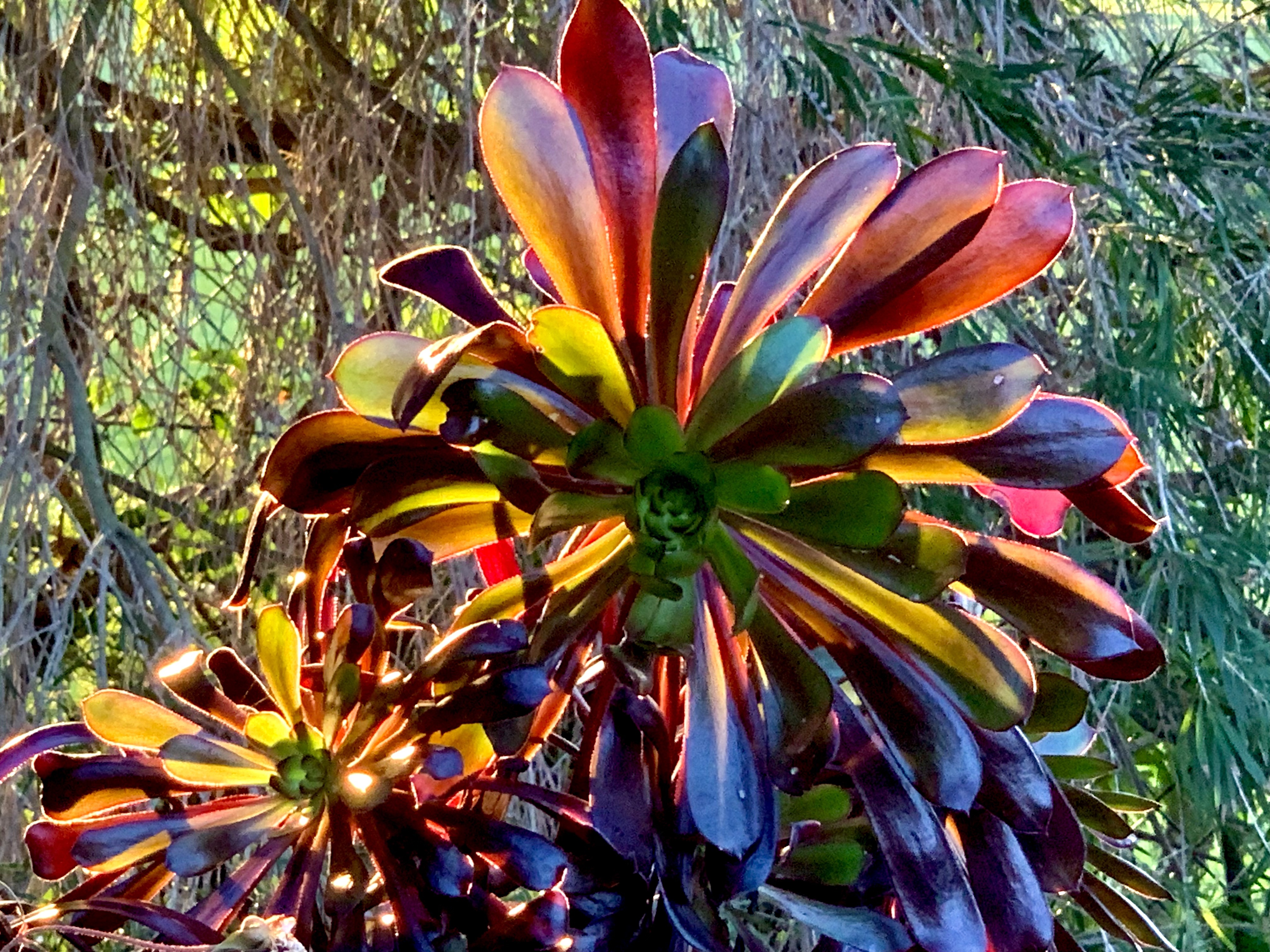
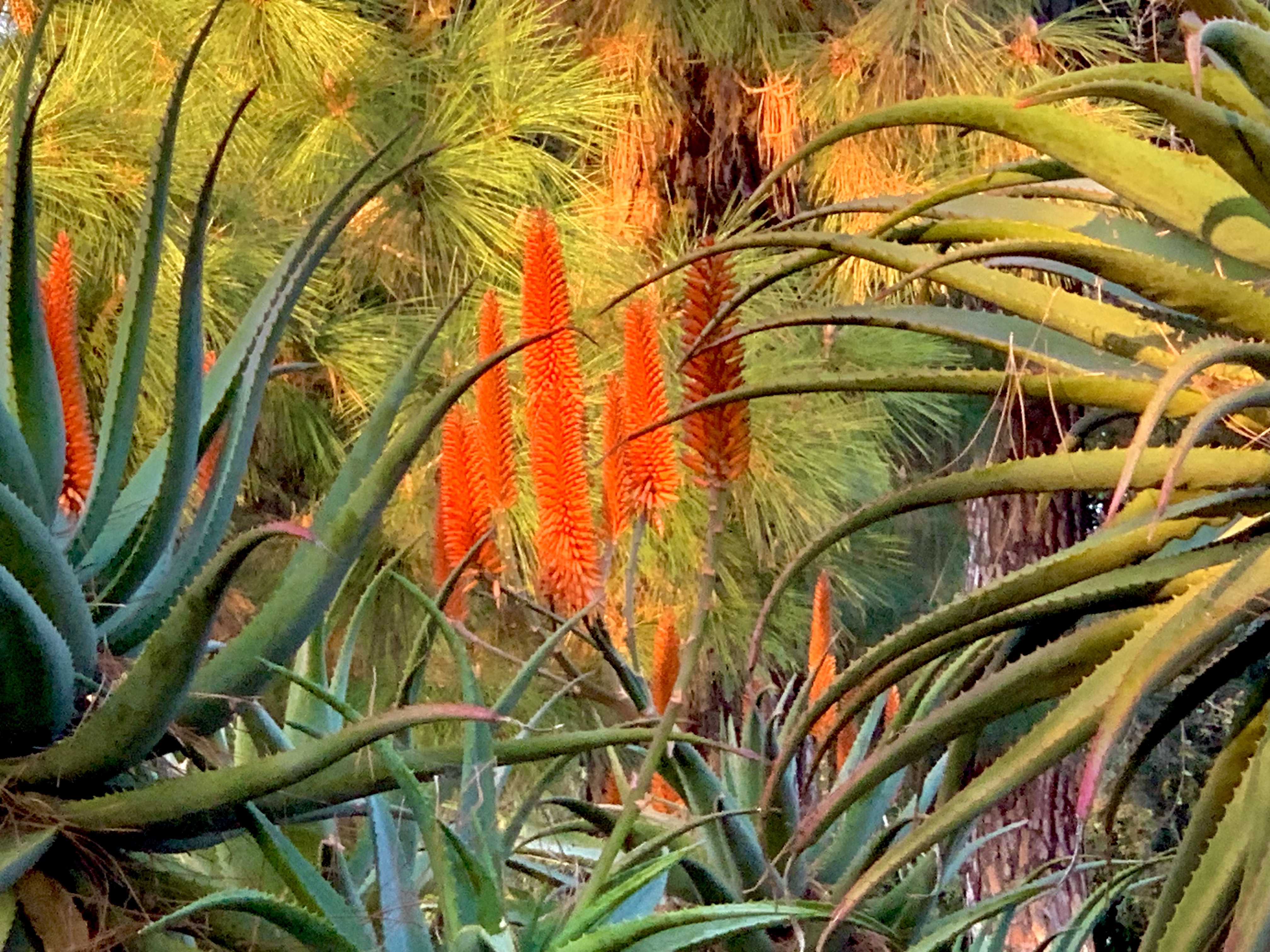
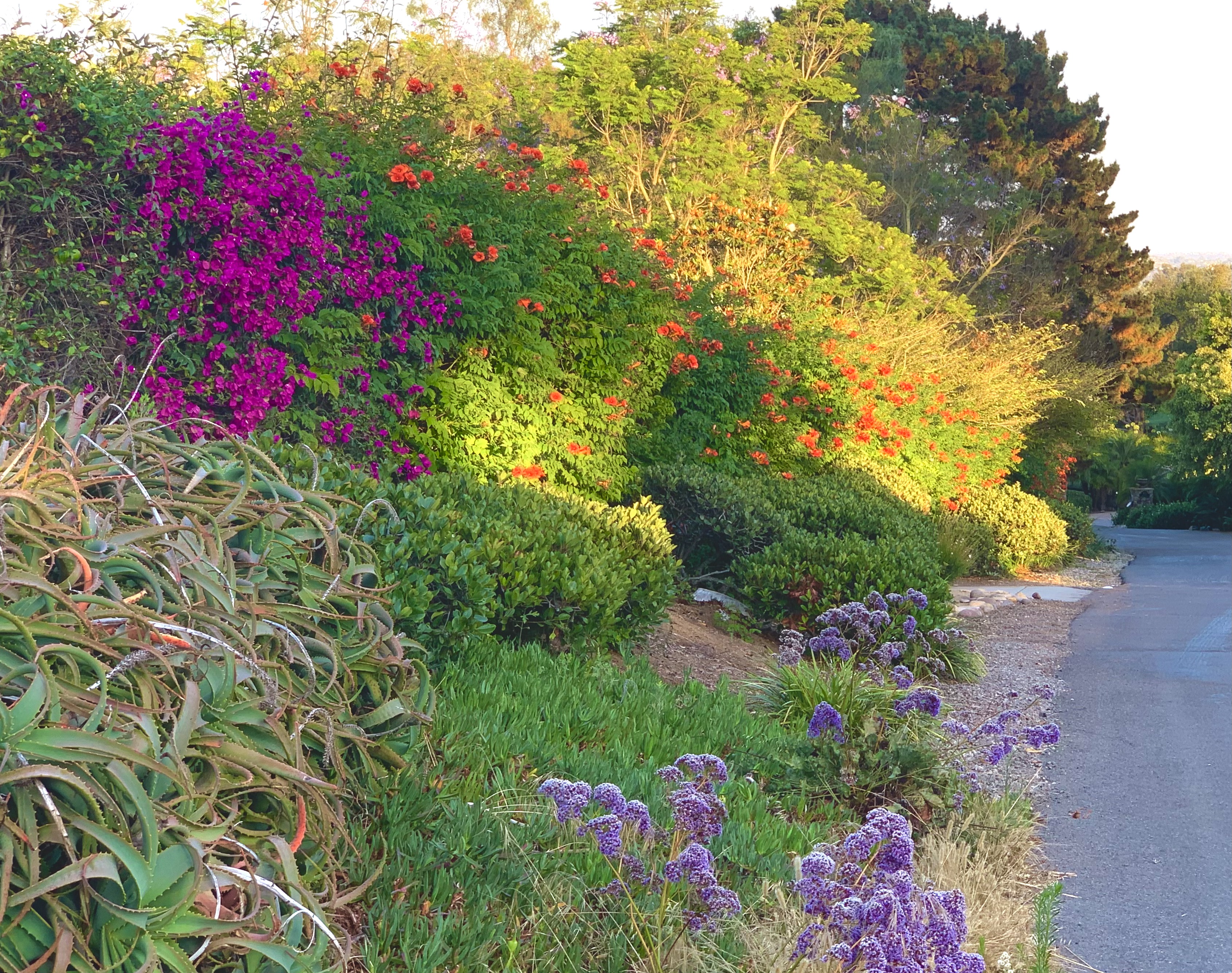
What occurred to me tonight taking pictures of flowers, as one is wont to do, is making a much better use of the iPhone than a gun for home protection is. For one thing, if you own a gun for home protection, you hopefully rarely use it. I use the iPhone nearly every day. The statistics say that you’re actually more likely to die in a home invasion if you have a gun, but let’s say, no, in your particular case, you did manage to shoot two people dead. And, that’s that.
Except of course, it isn’t done at all. You will find out that those two people you shot didn’t think it was so cool and they may sue you. Or, you may find out things about those families such as how desperate they were to make enough money to feed their kids that they turned to crime. Of course, you don’t want to hear that. They broke the law. And, indeed, in many states, that can be enough to get you off the hook.
The “hook” of the law, that is. But that’s not the only hooks there are. There’s the social hook. How do you think other people would view you? Maybe some will view you as a hero. But certainly many will not. You might end up being much more annoyed at those who view you as a hero that at those who view you as a villain. Either way, your life will never be the same. Those changes are much more likely to be negative on balance.
There’s another social hook. How would you feel about someone you care about marrying into a family where someone killed two young lads? Better protected? Or, might you be worried about how that gun might be used in the future, in say, a marital dispute? (Although, of course, suicides and accidental killings should also be on your mind, but those are always a possibility with a gun owner. But in the case of the dual killer, we don’t just know he might kill when provoked; we know he will kill when provoked. Maybe you think a home invasion is sufficient reason for murder. But how about a marital dispute? Surely you’ve noticed that even couples who love each other can come to a point where they are too frustrated to think clearly. I don’t really see how a gun helps a situation like that.
Lastly, there is your own hook. That may be the sharpest and deepest cutting hook of all. You will second guess your actions on the night of no matter what. That’s just human nature. Some dark, rainy evening, when that re-run is playing for the 13th time, it will hit you that you knew damned well they were unarmed. Another part of your brain screams “Bullshit!” And, so you block it out. Until several weeks later, you discover your cousin’s preferred brand of weed is way stronger than what you’re used to. And, as that snuff movie replays itself yet again, it occurs to you that you not only knew they were unarmed, you thought: “So what? Nobody’s going to put me in prison for it. In this state, they’l think I’m a hero.” Again, you hear the booming voice: “Bullshit!” Only this time, you realize that isn’t your voice at all. That voice is the one he used to destroy you when you told people about his molestations. That’s not you. Or is it? You might, at some point, find yourself depressed by this debate, perhaps riddled with self-doubt. At other times, maybe you’ll come to peace with your actions. But the debate will never stop.
I take pictures of flowers. They are for anyone to enjoy or ignore. No regrets. That’s my “weapon” of choice.
Last Thursday, right after I had obtained my weekly shipment of unobtainium and resold it for a little bit more than usual, I discovered.… Well, after all, unobtainium is getting to be harder to obtain. They’re charging me more so I pass it along to the hoi poloi. And a little left over for myself. Maybe another 10% profit. Who cares? We’ll just blame some politicians! Not my fault. I’m just trying to make a buck. Or two. Or a trillion. You know what they always say: squeeze ‘em till they hurt. Then, they won’t have the time or energy to figure out who’s really screwing them.
But hey, forget all that because I was about to say that I was walking the three blocks home, when it began to lightly sprinkle. And, there was this odd smell. And it reminded me of something but I couldn’t remember what — not at first. But then, I knew. It was the smell of fresh air. Just like I had when I was a kid. And that reminded me of playing different codes so that parents wouldn’t know what we were saying. Most kids learned pig-latin, for instance. But there were many variants. We played one where we would just say the opposite of whatever we really meant.
And that reminded me about how unobtainium, while hard to obtain, is obviously not actually unobtainable. If it were, no-one would have discovered it and therefore no-one would have ever named it. But someone did name it and why did they name it as they did? Is it just because “hardtoobtainium” is too long? I don’t think so. I think some marketing guy figured out that if it were called “unobtainium” it would sell for a higher price right out of the blocks. I think that’s pretty clear from Marketing 101. But then, I got to thinking. Hey, we get a bump every time the price changes! Yeah. The name “unobtainium” makes our suckers — I mean customers — our suckers always fearful that we’ll run out of unobtainium so we can always kick up the price a bit more whenever the “hard to obtainium” becomes “harder to obtainium” but always remember it’s called “unobtainium.”
But then, I had an even more troubling thought. What if almost all the things we were taught to try to attain because they’re hard to obtain or even unobtainable — what if the things that are obtainable are equally valuable? What if some of the obtainable things are even more valuable than the unobtainable things? What if the whole reason that those things are designated as very difficult to obtain is that they aren’t worth attaining if they mean giving up all the things that are easier to obtain. I mean, I’m rich so what else matters, right? So then I’m thinking why am I even having this conversation with myself. I need people to think unobtainium is unobtainium. That’s part of what makes me rich! So that’s why I called you. So fix me from this crazy thinking. Being rich enough is okay? Give me a break. That’s plain disgusting. You gotta fix me.
Gerrymandering allows politicians to stay in power no matter how bad a job they do for *all* their constituents; those who voted for him/her or those who didn’t. All suffer from divide & conquer.
You and I and King Cobra and Queen Anne’s Lace and every other living thing on earth are small and temporary little leaves on the ancient (4.5 billion years and counting), vast, and diverse Tree of Life. Typically, you know a lot more about the neighborhood surrounding your little leaf than you do about mine and vice versa. Yet, I may discover things that are of use to you. And, you may discover things that are of use to me. So, humans, have one gift that is valuable above all others.
But before we explore what that valuable gift is, let me ask you a question about how you would react to a hypothetical.
Suppose you were so poor that you barely had enough to eat, no clothes to wear, a small damp cave for shelter. You were cold in the winter and hot in the summer. Now, suppose I gave you a magic ring that changed all that. If you wear this ring — voila! — you now have clean water and sufficient food and plenty of clothes and a house that really shelters you from the extremes of the environment. In return, you must wear the magic ring at all times. If you remove the ring, your life reverts immediately.
How tempted would you be to throw that magic ring in the toilet?
Yet, that is precisely what many people do.
And, if a sufficient number of people throw away the ring, everyone will essentially live the life of a beast.
That “magic” ring is, like most rings, circular. It represents the whole of humanity. It represents the family. It represents a club, a marriage, a lodge, a company, a church, a school, a class, a group of friends. It represents our respect for each other as human beings. It represents our ability to communicate with each other.
You could call that ring love and I wouldn’t object. It need not be imbued with so much positivity that people feel love. But it must be overall positive. It represents truth. It represents empathy. Love is strong and it can overcome both a few misdeeds by everyone and many misdeeds by a few. But if lies become more commonplace than truths, civilization will run downhill and eventually cease.
Similarly, if hate and fear and contempt are how we mostly regard each other, the marriage, the family, the club, the school, the church, the party, the lodge, the company, the group of friends will eventually disintegrate. In many cases, it would disintegrate into a self-destructive war except that most people will stop themselves because they don’t want to be ostracized or jailed by the larger society. If, however, the entire society becomes rife enough with hate and fear, no one will come to anyone else’s rescue.
Our entire survival depends on our gift, our ring, our community, our country, our fellow human beings.
Our gift is not our lightning speed of running.
Our ring is not our ability to out-swim the shark.
Our gift is not our powerful jaws, or our steel strong talons.
It is our ability to communicate with each other by sharing experiences. It is truth, caring, and cooperation. That is our one gift that enabled us to survive and thrive.
A democracy can take many specific forms. What it is, at base, is that it recognizes the gift as a fundamental value to be cherished and used. The fundamental purpose is to ensure that government is aware of and takes into account how policies and people and processes actually impact people who live in the democracy. In a representative democracy, the people, in turn, can vote for people to represent them. They can vote for any reason they like; e.g., because they admire a particular person; they believe they will do a competent job; they like the candidate’s promised policy changes; they find that the candidate reminds them of his funny old uncle Al who always had the best candy on offer.
No democracy is perfect. There has to be in its structure and processes more truth than lie; more empathy than indifference; more love than hate; more hope than fear. In some democracies, there are basically two parties; others have dozens. Parties may differ on philosophies, priorities, platforms, programs, etc.
A “party” who rejectsdemocracy itself however, is not an actual political party. The term “political party” only makes sense in the context of a democracy. If “elections” are determined by those in power, they are not actual elections and there is no party. It’s just a group of thugs who want to rule by hate and fear and lies. That is not a political party. It is not a legitimate part of a political process. They want to throw the ring away in the toilet. They want to subvert the truth to lies. They want to severely limit love and enhance fear and hate. They divide rather than unify. Oh, and guess what else? Historically, they want war. They will ensure that war just as Putrid is doing right now.
Democracies have also been known to start wars. When they do, it’s often based on lies. As communication has become more ubiquitous, it has been harder and harder for democracies to lie, cheat, and be cruel. Most people don’t want that! Most people want there to be more truth, love, caring, and cooperation. There are plenty of differences about how to go about that. That’s fine. That’s just the sort of difficult and messy problem that democracy is particularly less bad than any other system.
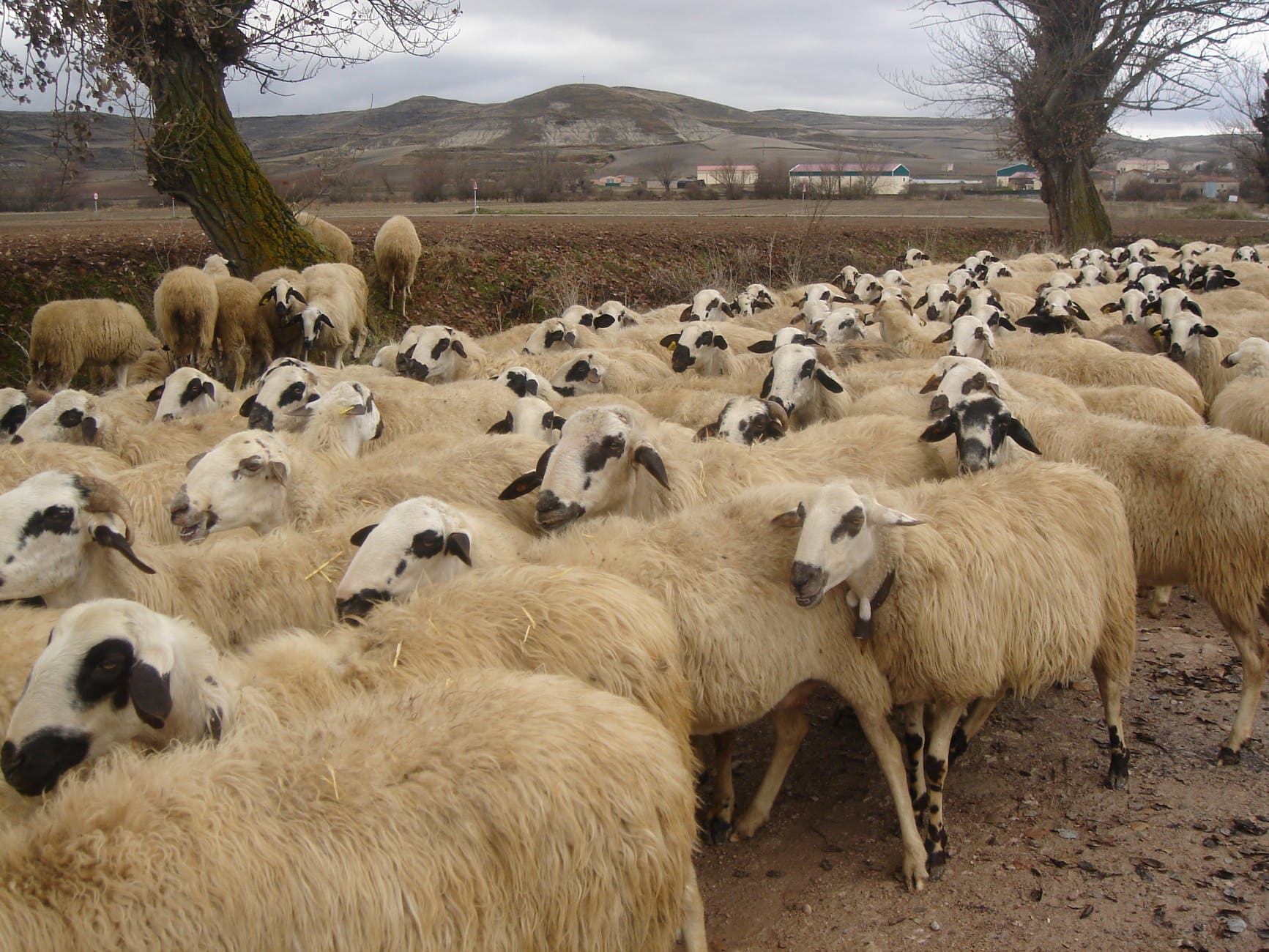
As I said, I really think most people prefer interacting in a caring and cooperative way. We see that it’s more effective in getting things done and it simply feels better for everyone. For that reason, dick-tater-$hits have to provide lies to help assuage the consciences of its citizens. “Oh, they are all murderers and rapists! You shouldn’t feel bad about being cruel to them!” Another favorite is: “Oh, they aren’t really human beings, the way we are. No need to treat them any better than a fox trying to steal your chickens!”
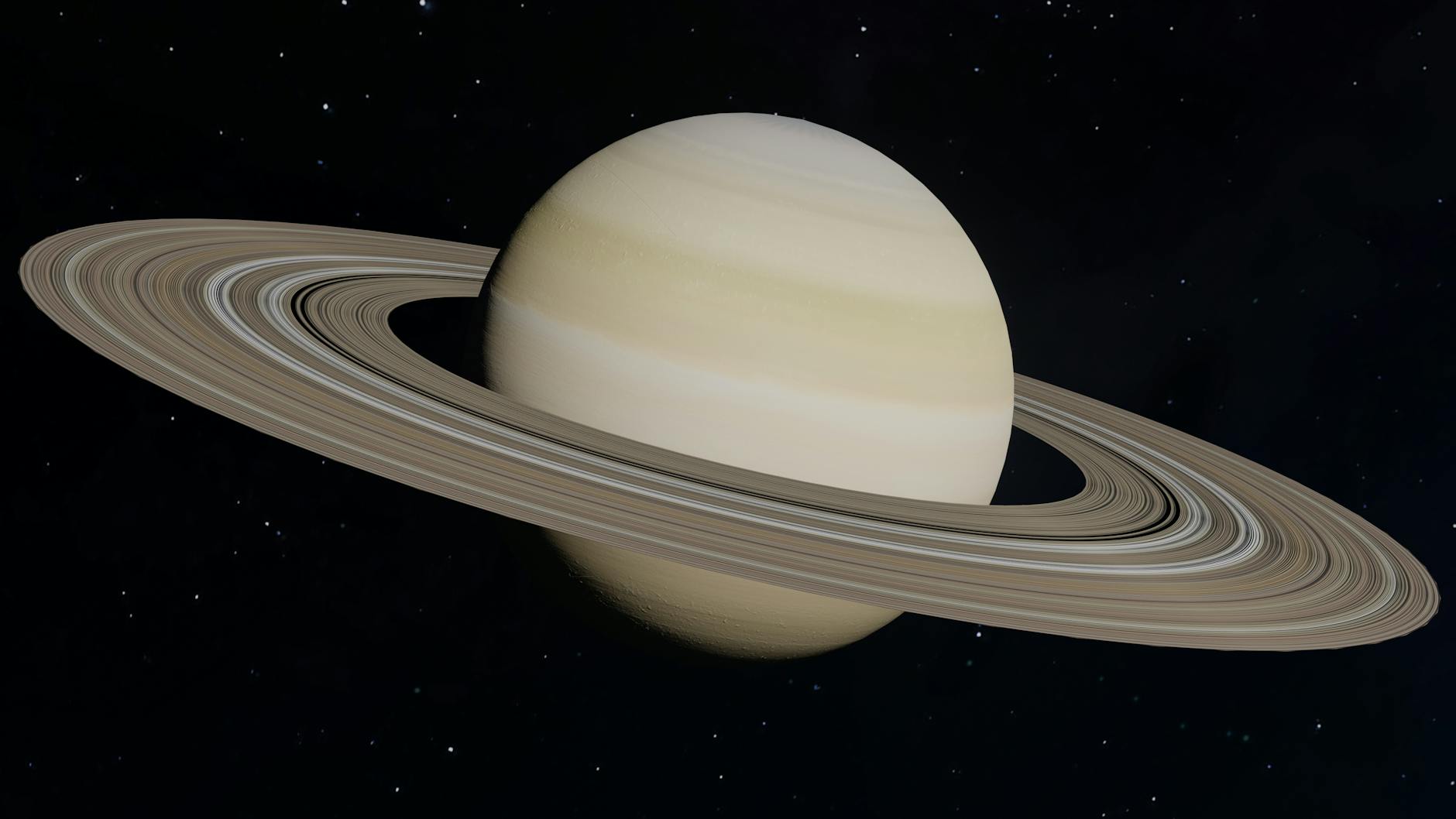
Photo by u041eu043bu0435u0433 u042fu043au043eu0432u043bu0435u0432 on Pexels.com
Needless to say, this ploy completely fails on many people and isn’t completely effective on anyone. Any time you’re cruel, whatever story you tell yourself about it, you know you are destroying a bit of yourself. Except, what you are really destroying is something much vaster than a bit of yourself. In fact, what you are destroying is something much vaster than all of yourself. What you are destroying by being cruel, whatever story you tell yourself is the human branch of the Tree of Life. Lies weaken that branch. Cruelty weakens that branch. Bullying weakens that branch. So too does cowardice.
The architecture of karma shows that the future impact of your present day behavior is much greater in scope than your present impact. Behaving well is in your interest because what you are is essentially a very small and very temporary part of that ancient, vast, and diverse Tree of Life. The more you can enhance that tree with truth and love, the better for the whole tree.
Don’t throw away the ring. Wear it proudly. It is truly an amazing gift!
One of the best books I ever read: The Architecture of Complexity by Herb Simon, makes a number of stellar points. Three stories that I remember are of the ant, the clockmaker, and the heat dissipation in the building.
As I recall, the story of the ant opens the book. He basically argues that an ant’s behavior seems complex to us partly because we can’t sense the world of the ant. Simon says that what we might attribute to complexity in the ant’s nervous system is actually due to the complexity in its environment. He’s right, of course, though I think he, like most, vastly underestimates the complexity within the ant as well. A single cell is hugely complex. Nonetheless, it is true that what we observe as complex is behavior that is influenced, and perhaps determined, by both the environment and the internal workings of the ant. That is just as much true for us as individuals, for groups, for nations, and for ecosystems as it is for an individual ant.
Ants, in various circumstances, do things that benefit people, or benefit the ecosystem, or do things that we find destructive or inconvenient. In the case of army ants on the move, they can be highly destructive or even lethal. It seems odd, however, to claim that ants are “evil.”ty
Why is that? It seems as though the ant is simply “following its nature” even if it spoils our picnic or herds aphids so as to ruin our roses. It doesn’t do what it does, we suppose, to “hurt us” or to “destroy beauty.”
When it comes to human beings though, it seems that some individuals do engage in destructive behavior, not because they actually gain anything substantive and useful to themselves but merely because they get pleasure out of inflicting pain and death on others. Every society has such thugs. In a healthy society, such individuals end up in jails or psychiatric institutions. At the least, they need to be put in such situations as to minimize the harm they do to other people as well as to other living things. At best, perhaps therapy can stimulate them to restart their stunted emotional growth.
In some cases, such thugs can gain powerful positions in a society. In the worst case, such thugs become dictators. The playbook they use is so old that it is tattered at the edges. It basically consists of playing on the hates and fears of others in their society in order to divide people against each other. Few would fall for such a ploy except that the dick-tater lies and sets up mechanisms to multiply their own lies and prevent people from knowing the truth about things. The dick-tater builds a clumsy but appealing false narrative so that many people will gladly allow the dick-tater to steal wealth, health, life and choice from his victims. I would use the word “evil” to describe what the dick-tater does.
Like the ant, however, what he does is not particularly “brilliant” or “complex” but it can seem so to those on the outside who don’t understand what the dick-tater is doing. For example, most people, in their daily life, use language to coordinate with others, to bond with others, and sometimes, to enrich life (songs, poetry, puns, comedy, drama, etc.). The dictator relates to language in a completely different way. Their purpose is not to “share experiences” or “solve problems together” or to “enrich life.” Their sole purpose is to manipulate others into doing their bidding.
There is a karmic price to pay for a life of misusing language however. A dictator becomes ever more paranoid and ever more cut off from reality. As a result, the dick-tater becomes ever less effective. This makes them even more paranoid and careful about who they surround themselves with. People willing to speak truth to power are fired, killed, jailed, or disappeared. People who surround the dick-tater are ever more cowardly and sycophantic. This means that the dick-tater becomes even more isolated from reality. The orders of the dick-tater become ever worse in terms of the very ecosystem that the dick-tater needs to survive. Their actions become more short-sighted in time and more restricted in scope.
A perfect example is in a concordance I once saw of the Watergate tapes. Months before Nixon resigned, he used the word need in sentences such as:
“What this country needs….” “What the party needs….” “American needs…”
A week before he was forced to resign, the scope of his interest had narrowed considerably. There was no more talk of what the party needed or what the country needed. It was:
“We need….” “We need…”
“We need…”
And the day before he resigned, it was:
“I need…” “I need…” “I need … “
The ant may have a smaller brain than the dick-tater’s, but the ant is still tethered to her colony mates and to reality. The dictator has no such constraints.
The “beauty” of “Mutually Assured Destruction” (MAD for short) is that no rational person would start an atomic war with another nation because everyone knows that both sides would lose such a war.
And that’s one of many problems with dick-taters. They are eventually guaranteed to become more irrational over time.
An egomaniacal, cut-off from reality, cut-off from those who would speak truth to power — that is just the sort of person a dick-tater-$hit puts in charge of atomic weapons.
The second story I recall from the book is the story of two clock-makers. Both of the clock-makers made clocks that consisted of a thousand pieces. One of the clock-makers, however, had to arrange all thousand pieces before the result was stable. If someone interrupted the clock-maker when they were half-way through (or even 99% of the way through), and they were interrupted to answer the door, they would have to start all over again.
The second clock-maker constructed the clock by putting together 10 super-assemblies, each of which was made out of 10 sub-assemblies. If that clock-maker happened to get interrupted, they only had to redo that specific assemblage. As a result, the progress of the second clock-maker was much more resilient.
If a country’s decision-making is dependent on getting the okay of a dick-tater, it seems to me that it becomes very “fragile” like the work of the first clock-maker. If the dick-tater, for whatever reason, changes the dictated direction, all the work people had been doing is lost. In fact, it’s worse than that because not only is the work done now useless; the people who had been doing that work will not instantly change direction and begin working on the new priority. First, they will have to cover up the work that they had been doing! That takes time and energy. In the case of a particularly inept dictator, this will happen often. Scapegoats must be found so that blame will not fall on those little sycophantic lieutenants who were pursuing the previously approved (but now no longer approved) projects. The same sort of thing will happen if dictator one is assassinated and replaced by dictator two. The work and many of the workers who were doing what they could for dictator one must now be eliminated. Either way, the results are the same: consolidation of power to the dick-tater’s new whim and lack of sustained progress.
A well-functioning democracy is more like the work of the second clock-maker. Things are done at various levels of government and so long as what the mayor or governor does is consistent with the law, there is no need to trash the work (or the workers) simply because someone new gets elected at a higher level. Of course, sometimes that does happen. But it isn’t a perceived necessity as it is in the case of a dick-tater-$hit.
As a result, dick-tater-$hits are fragile when it comes to getting things done. Of course, people are afraid to fail. That can be motivating. You can build pyramids with the threat of a lash. But you cannot build a robust cyber infrastructure. You cannot bully people into being truly creative. In a regime based on hate and fear, a huge amount of energy is wasted on “covering your a$$” and very little is learned from success or failure. In success, those with relatively more power will take the credit and in failure, those with relatively more power will blame others regardless of what really happened. Moreover, neither failures nor successes are experiences to learn much from. It’s only a question of who gets promoted and who gets “sent to Siberia.”
Dick-tater-$hit is a crappy system for learning, improving, or innovating. It isn’t limited to ill-governed countries. There are people who “run their family” like a dick-tater-$hit and there are people who run their company or club that way as well. If the overall society is a democracy, the most capable people will tend to avoid such companies or families. If the country is a dick-tater-$hit, then, the entire culture will be pushed toward authoritarianism and its attendant ills.
The last story I recall from The Architecture of Complexity is about a building that consists of several rooms. Each of the rooms is subdivided by partitions. Simon points out that if someone brings a space heater into one of the small partitions, it will heat up that partition first. Eventually, the heat will dissipate into the whole room. But in a still longer time frame, extra heat will seep out to all the rooms in the building.
I tend to think of karma as operating in this fashion. In the short term, if you are nicer to the people around you, they will tend to be nicer to you. But people circulate. So, to a lesser extent, if you are nicer to the people around you, they will be nicer to people in general, and eventually, the whole society will be moved toward nicer behavior. That will benefit you, other people, and the entire ecosystem. As a result, you will live in a better world, other things being equal. Even more so, it bodes well for a nicer world for your kids, your grand-kids, and your great grand-kids.
Conversely, if you brutalize those around you, it will be bad for you and what you care about. In fact, since we live in an inter-connected world, brutalizing people anywhere will eventually cause pain to your progeny and the Tree of Life more generally. To brutalize means to harm others without any real material benefit to you. If a surgeon removes a cancerous tumor from their patient, that is not brutalization. If you trim injured or diseased branches off of your rose bush, that is not brutalizing the rose bush. But if you wantonly kill animals, plants, or other innocent humans, you will be wreaking havoc upon yourself.
That is not surprising, because bullies bully, essentially, because they hate and fear their own life. Life is too unpredictable and scary for bullies. They want to control the world and especially control other people. They think that this will make the world safer, but it actually just makes it more dead. The death, destruction, and brutality that a dick-tater inflicts on any part of the world is death, destruction, and brutality that is inflicted everywhere and on everyone. It may well be that it will take longer to feel it in some places than in others.
If you have untreated bone cancer in your arm, it may mainly hurt your arm initially. But, if left untreated, it will eventually kill all of you, not just your arm. Like cancer, the greed for power that a dick-tater feels knows no bounds. Remember: the dick-tater is cut off from reality and is very short-sighted in terms of time and space.
The rot of dick-tater-$hit eventually seeps into every aspect of society. Schools will only teach what the dick-tater wants taught. Books that the dick-tater thinks will make people think or dislike him will be banned. Even people’s love lives will be constrained by what the dick-tater likes. The people who get the top jobs will not be the ablest or most productive but the ones who have ki$$ed the most a$$. Since the dick-tater’s entire life is built on cheating, they will encourage cheating in everything: business, sports, science, art. Anything alive and thriving is a potential threat to a paranoid dick-tater — and they will all eventually become paranoid. Of course, all this rot that the dick-tater has themselves instituted into society will ultimately make the machinery of the dick-tater-$hit slow and decay.
Dick-taters do not see that they are quite literally cutting off their nose to spite their face.
Dick-taters do not see that they are are harming all of life with their brutality. Dick-taters do not see that they are harming themselves and everything they might care about. Dick-taters do not see that in their quest for “immortality” they are trying to subvert the very nature of life itself. Dick-taters surround themselves with cowards who will fail to point out to them the futility and folly of their foul ways.
We must point it out.
We must arrange the architecture of our society so that dick-tater-$hit is impossible and discourage anyone and everyone who believes that they are more important than the entire Tree of Life.
Dick-taters are always bad.
Now they are lethally bad.
The end of humanity doesn’t depend on all dick-taters being insane enough to use atomic or biological weapons.
Yesterday, I went for a physical walk to a nearby State Park. Today, I instead decided to see how “far” I could go looking at an old olive tree right out my front yard. This is a walk through perception — powered by imagination. You might come with and see what you see. You may want to put the screen at some distance from your face or use a phone rather than a large display. If the image is too large, you’ll see a completely different set of characters. Of course, you might anyway.
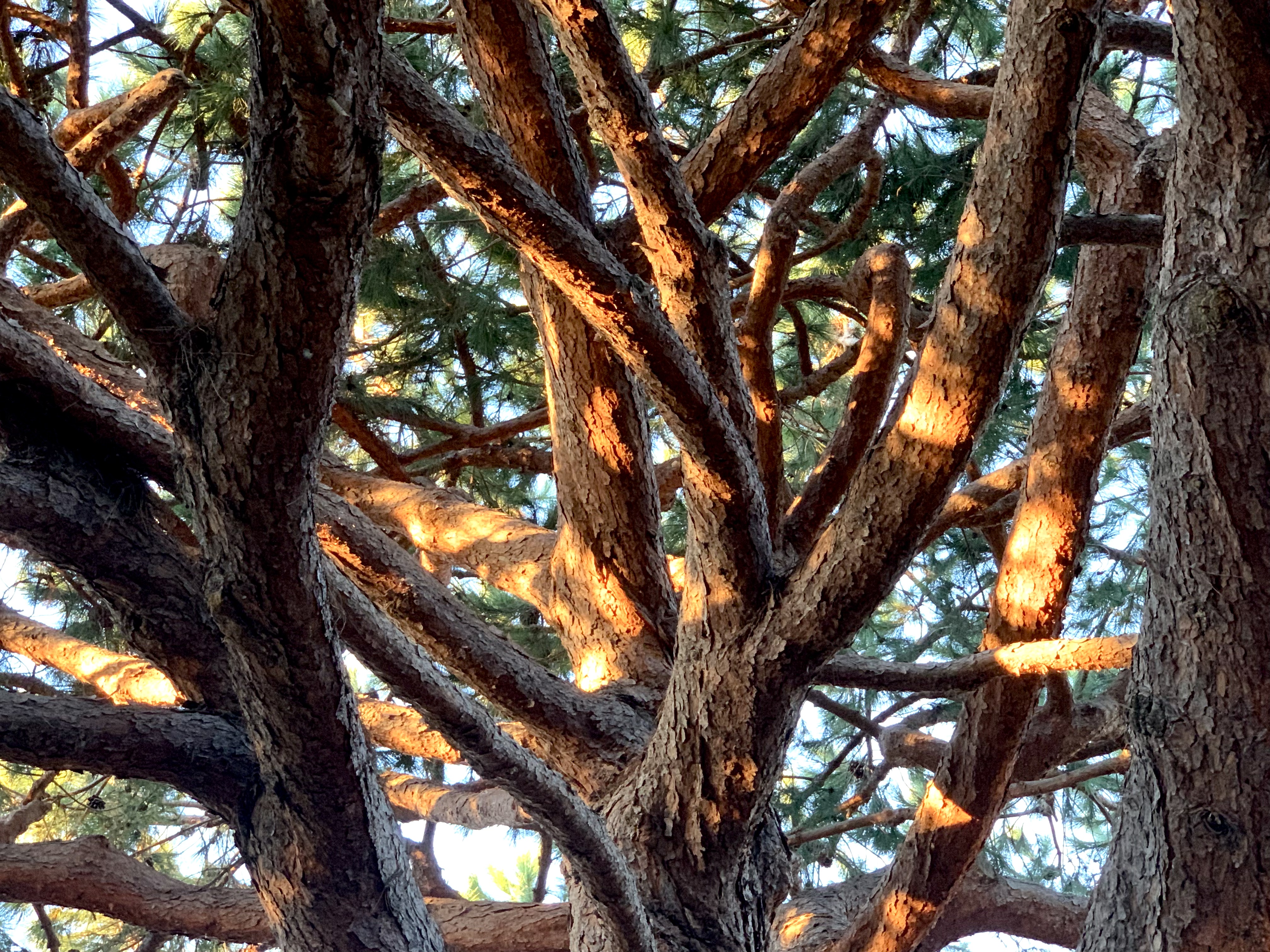
The first group of photos is all from that one tree — a tree that also happens to be featured on the cover of Turing’s Nightmares.
What faces do you see above? I see at least six large humanoid ones.
The lower middle part of the picture above reminds me of The Burghers of Calais by Rodin. Not to be “Rodindant”, but that is an amazing work of art that you should definitely see in person if you can. I believe I saw it both at the Met in NYC and the sculpture gardens in DC.
Also a pretty good pair of owls on the right.
Every two dots of approximately the same size forms part of a face. I can pretty much see as many “faces” here as I choose to. I can easily see 0 by steadfastly reminding myself that this is a tree trunk. Definitely a time & place for that mentality. But not always. For right now, I’m satisfied to see about twenty faces and move on. It’s interesting how often as adults we mainly use our imagination only to see all the bad things that might happen. Sometimes, that is also quite useful. But we can also use imagination to craft beauty or gain insight.
What do you see above? Turtle on the sand? Or, high flying eagle far above the semi/desert scrub? Or something else entirely?
Somehow, the picture above seems to echo elements of Christianity. Three wise men kneeling, angel on the left. I can also see a mind of “mini-history” of the life of Christ from infant to young man to thorn-crowned lamb.
If I focus on the bright spots above as figure, I see a large face LR & a small one UL. The dark on the left, is a shark, on the right, a totem pole of animals.
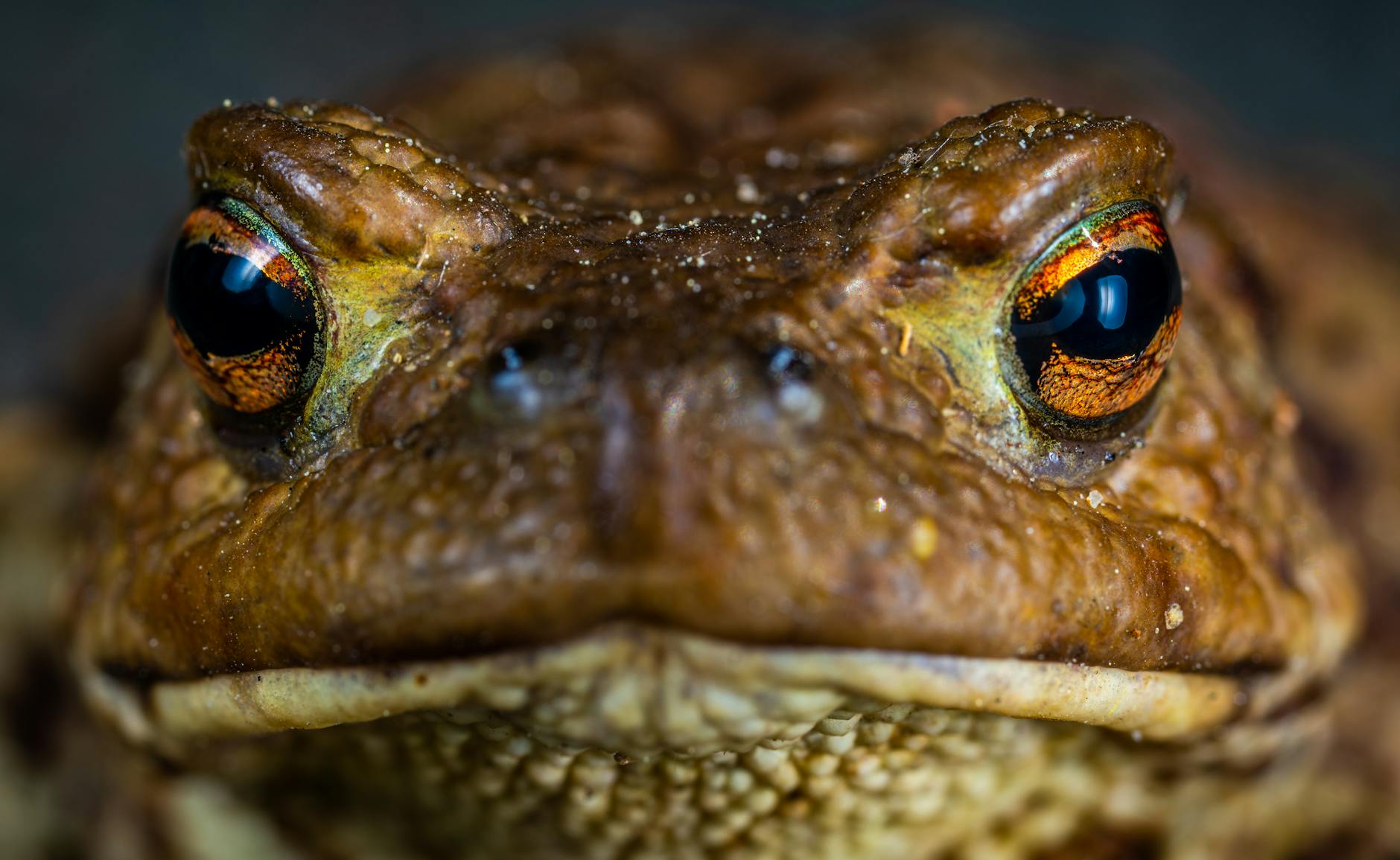
It seems to me clear that the frog above is bragging to his cousins about a huge worm — the one who got away: “I swear! It was this big! I would have had it too, but I was knee-deep knee-deep in muck!”
Of the panoply of characters in the photo above, my personal favorite is the little mouse at 7 O’clock. It could well be Stuart. What are your favorites?
The above elephant is sad about losing her habitat. (Who could blame her?) And what’s worse, from her perspective, is that while elephants are very loving, those destroying her habitat are anything but. She, in fact, wonders at our use of the term “humanity” as in “Show some humanity!”
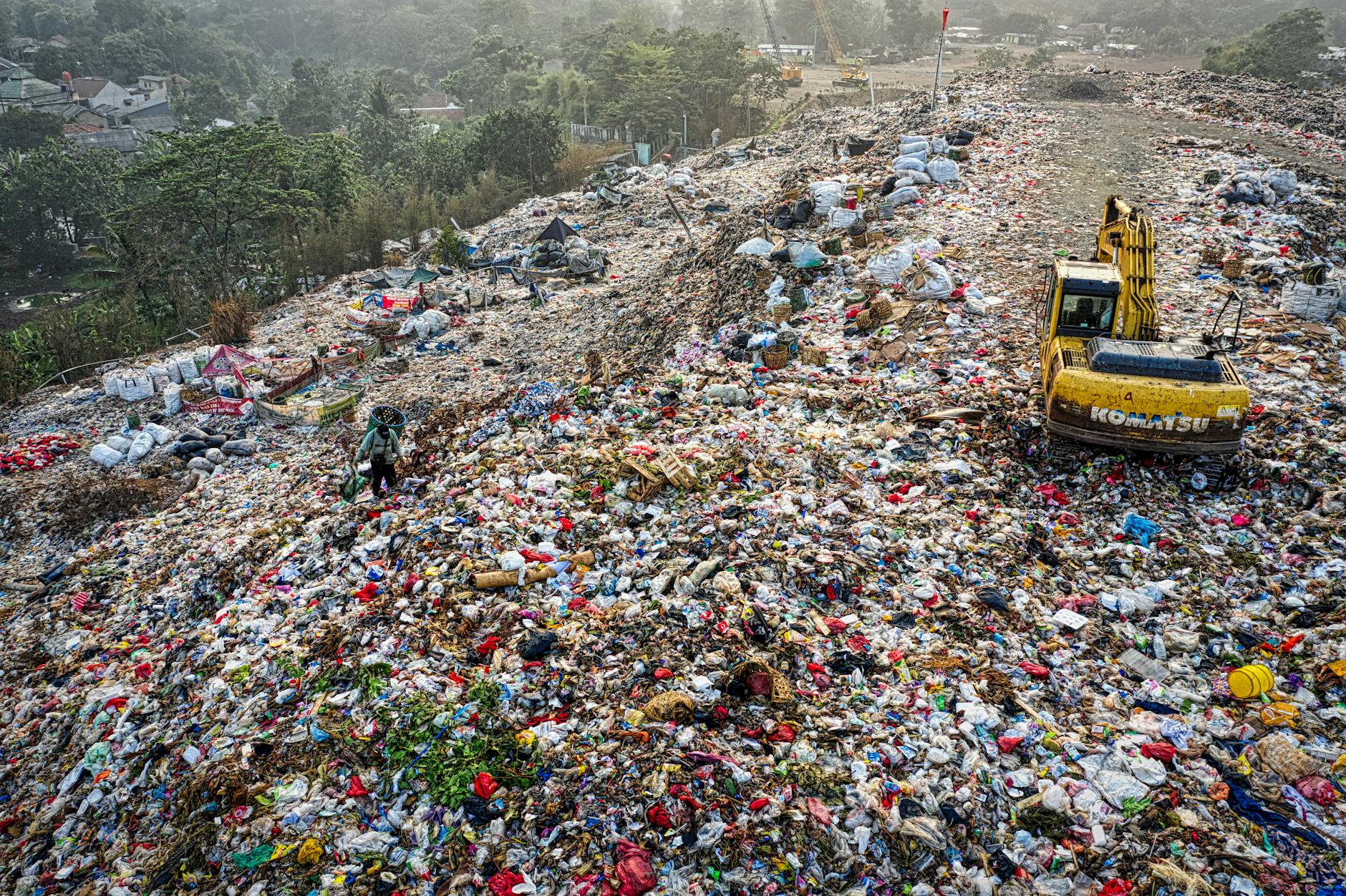
The photo above evokes a Boschian hellscene with warriors, monsters, victims, violence, cruelty, & mayhem. Maybe it’s because of the violent video game my wife’s playing in the background, or maybe it’s because of the violent reality, Vlademort Putrid is creating in real life.
The brown woman in the foreground looks worried. I believe the grim looking bearded knight in helmet down below is knocking at her door. He wants to conduct some seriously bad business. Maybe not a knight, but a guy in a tinfoil hat who wants to kill. What do We do?
“Hey! What about me!? Small can be beautiful too!” As I walked away from the tree, these tiny few flowers reached out to me.
I answered: “Oh, flower: you are so right! As usual.”
The cypress(?) trunk above has a hole I which I suspect may be a scar from having a limb lopped off that went into the space of part of the house that was added later. Forensic forestry? That might be a fun setting for a detective series. Solving crimes from tree reading. Something like Bones or Numbers
The roses, of course, want everyone to remember that they too are out here doing their part to make the world a more beautiful place; to spread joy; reduce carbon in the air. She wonders what we’re doing to help.
Last week’s promissory flowers have given rise to this week’s prototype apricots. Thank you, bees! Thank you!
Today, I decided to change up the photo scene so I walked to a nearby State Park. Some nice flowers presented themselves on route. For instance, the bright yellow flowers under the bright blue sky reminded me of the bravery of Ukraine.
When I arrived at the park, two flags I am proud of greeted me. Of course, it doesn’t mean the State of California is perfect — nor is the USA. But most of us at least are trying to make them better.
I was also rewarded with beautiful flowering trees on my walk on the park.
Many bright beautiful flowers also greeted me in my walk in the park.
Some of the beautiful flowers who greeted me on my walk in the park (as well as on the way there) showed their support for Ukraine and the bravery of her people.
The most beautiful gift of my walk was completely unexpected— a very large & very colorful celebration in an Indian tradition. I strongly suspect it was a wedding since I noticed a nearby restroom said “grooms”; people were in a good mood; the celebration included all ages; and everyone looked beautiful.
In addition to the color fest, a band arrived and played beautiful music beautifully! I thought about trying to record some. Where this picture was taken isn’t far from the highway. Since it was behind me, it was easy to block that noise out with my brain. It would be far harder for you listening to it on your device though.
The walk in the park also reminded me how wonderful is the music made by little children. It is the same music regardless of language if you listen with your heart.
Once more, I find myself grateful that humanity survived & thrived in so many diverse ways. So many solutions to so many problems! Amazing wealth of experience! We can become wise at a whole new level — if we are respectful and kind to each other. Is that too much to ask? I really don’t think it is too much to ask.
I love also the way plants have invented so many solutions to so many problems. We have much more to learn from them — and each other — than we can currently even imagine.
For example, I saw this “Wild Cucumber” as I began my walk home, still enjoying the music & the chattering children. This plant uses hydrostatic pressure to shoot its seeds out at 11 meters/sec. We can learn much from every living thing — including other humans.
After some delicate and delicious love-making with Shadow Walker, Many Paths decided to check on She Who Saved Many Lives. If she seemed well enough, it might also be good to see whether her mentor had any further wisdom to share about Many Path’s plan to gather all the tribes. Her goal was to bring about peace but she realized that in trying to accomplish that, she might trigger the very things she hoped to avoid. Her tentative plan was therefore to gather as much wisdom as she might from many sources — but not to wait overlong. As the story goes, she thought to herself, if you waste the entire warm season deciding where to plant, you will starve in the season of great ice and snow.
Many Paths called out to her friend and mentor and received a surprisingly strong and cheery response. “Come in, Many Paths. Come in! I’ve been meaning to ask your advice about something. Do sit down. I will get you a cup of tea this time.”
Not for the first time, Many Paths wondered whether it was actually possible for She Who Saved Many Lives to see into her heart and mind. After serving them both a cup of spicebush tea, ever so slightly flavored with mint, She Who Saved Many Lives went to her work area and brought over two patches of weaving. She placed one on each knee of Many Paths. The older woman smiled and said, “It never fails to amaze me how strong a weave of reeds is! It’s so wonderful. Just as I hope our community is.”
“I have had that exact same though,” Many Paths replied. Then, she laughed and added, “Likely because you pointed that out to me before I was even old enough to remember.”
The Elder Shaman tilted her head and nodded ever so slightly. “Perhaps. But you have made so many wonderful discoveries. And, not only you but the entire tribe. That’s because you have been open to learning and seeing what is there. But enough of that. I did have a question for you. Which of these two do you think is better?”
Many Paths frowned. “Better for what? What are you making?”
She Who Saved Many Lives considered, “A basket to carry things.”
Many Paths nodded, “What things and how many? This weave has these stiffer switches to help support the weight. If you’re making a small bag to collect mint, for example, you wouldn’t have any need. If you’re making a large bag to collect apples, however, you would want the extra structuring support.”
She Who Saved Many Lives nodded. “Yes, yes. That sounds obvious when you say it. I guess the fever must have addled my brain a bit. Anyway, thank you for reminding me. Soon, I will have to decide on what I want to use the bag for; then I will know which one is likely correct. Now, what did you want to ask my advice on?”
Many Paths took in a deep breath and slowly let it out. “I am quite sure I didn’t say anything about asking your advice.”
She Who Saved Many Lives nodded. “I think you’re right. Sometimes I confuse us.” She laughed. “I know it sounds crazy but any way, I will get back to my weaving — or at least deciding why I’m weaving and let you go about your business — unless, of course, there was something else you wanted to talk about.”
Many Paths chuckled. “As it turns out, I did want to ask your advice about something. You know I want to convene a — Let me ask you another question first. Are you going to teach me how to see into another person’s mind?”
She Who Saved Many Lives laughed surprisingly long. At last, she caught her breath and said, “Many Paths! You won all seven rings of empathy! Of course, you can see into others. Of course, you can never be perfect at it. But you already do it. I knew you were busy. Yet you came to see me. You probably wanted to see whether I was dead or not, but even your footsteps and the way you called out told me you had something else on your mind. In fact, whether you knew it or not, you assumed I was alive. There was no edge of anxious worry in your voice. It was friendly — but also a bit — plaintive. I knew you wanted something from me. Now, you can see I have very few possessions. I find too many to be intolerably distracting. I am not going to help you with any arduous physical task. What is left? You want to offer me the opportunity to share my experiences; that is a great gift. For once we die, what else is left? So, naturally, I am more than willing to try to see what grows from our discussion.”
Many Paths looked down and slowly shook her head. She realized that she could read people. She simply forgot sometimes to do it. If you really take the time to put yourself in their sandals, of course, you can make a good guess at what they’re thinking, she thought. Aloud, she said, “Yes. You’re right. So, I want to convene the tribes and I am wondering how, exactly, to go about it. How can I make sure it helps bring greater peace and doesn’t somehow spark off violence. Maybe it’s better not to try?”
She Who Saved Many Lives replied, “I can say that no-one has attempted to bring all the tribes we know about together — not in my lifetime or the lifetime of my mother or the lifetime of my mother’s mother. During that time, there have been many wars and other atrocities. People stealing other people’s children? Even in our own tribe, we had some who forgot they were not the Tree of Life but a small and temporary part of the Tree of Life. I judge it’s worth the attempt.”
Many Paths. “As to how…?”
She Who Saved Many Lives said, “What comes to mind for what you are trying to do is more akin to growing things than it is to making things. I am making a basket, and I will use it for a time. I don’t ever imagine that it will live forever any more than that I will or you, my dear. But if I know your heart correctly, you don’t want to make a thing, which will at some time break or dissolve. You want to make something grow for a hundred years, like a giant oak. Ideally, it would be an oak that would seed still more oaks when old mother oak also died.”
Many Paths nodded. She realized that her mentor had described her desires precisely even though she herself could not have articulated so succinctly. “Yes, that’s exactly right.”
She Who Saved Many Lives nodded. “Let’s suppose then that you want to plant something so that it’s likely to grow. What do you need?”
“A seed. Fertile ground. Water. Sun. That’s it. Is there more? Love! It’s all more likely to grow with love.”
She Who Saved Many Lives nodded. “Yes. That’s it. I would start with the love. You already have that. Then, you need to know what seed. The seed determines what will grow though not exactly how. But you will need the ground, water, and sun so it can grow at all.”
Many Paths continued the thought stream. “If you know what the seed is, then, you know what kind of place to look for. You know whether you need to plant it in bright sunlight or in shade. You know whether it needs very fertile ground or if it can grow in dirt and rocks. And, you know whether it needs to be in very wet ground or if arid ground will do.”
“Yes,” Many Paths, “and it occurs to me, that you might choose a place with enough light first, because, you can make the ground more fertile and bring more water, if need be. But brining light is more difficult.” She Who Saved Many Paths sighed. “Once, apparently, we knew how to bring light as those which lit the tunnel that leads to the Veritas on the … on the other side of the mountain.”
“I do wonder, Old Mother, whether such light would is strong enough to grow plants. And then, Shadow Walker used reflections of the sun, along with other captives, to escape from the City of the Z-Lotz. It seems too contrived and elaborate for growing plants, but … perhaps writing is a little like that when it comes to providing enough truth so that peace can grow. It allows you to bring the light of wisdom to places that are many days walk from where they started. More importantly, you can place the light in a different time as well. We have all learned so much from the books uncovered in the great library. But, as usual, you are right. We must determine what type of thing we want to grow. That decision will determine the type of seed. The type of seed will determine the proper material, sunshine, and water.”
Many Paths arose and began pacing around in the Old Leader’s shelter. “Of course, since the outcome could impact everyone, I need to know how everyone believes it should be. Or, at least, find out as much as they know about how they want it to be.”
“Yes.” She Who Saved Many Lives considered for a moment before answering. “I suspect some will have many ideas about that while others may not care that much. Nearly everyone wants peace. On other matters, there may be great differences.”
Many Paths sat back down. The two sat in a comfortable silence for a time. Many Paths rose at last and said, “Thank you for sharing your wisdom. I will look for some to walk with me a bit and contemplate the plants and their nature and try to see among them what it is that the people may be seeking. I’m glad you seem so much better.”
“As am I, Many Paths. You know, you give me much to live for.” She Who Saved Many Lives smiled and added, “But I do think I will lie down for a nap now. Though some time in the near future, I might accompany you on such a walk.”
Many Paths left and saw Shadow Walker coming toward her. From the look on his face, Many Paths judged he had some news. His smile broadened as he approached and he said, “Hello my love! Can we go for a bit of a walk?”