• About PeterSIronwood

petersironwood

~ Finding, formulating and solving life's frustrations.

petersironwood

Monthly Archives: July 2026

“The Psychology of Design”

22 Wednesday Jul 2026

Posted by petersironwood in creativity, design rationale, HCI, management, politics, psychology, science, Uncategorized, user experience

≈ Leave a comment

Tags

AI, creativity, Design, education, HCI, human factors, IBM, leadership, research, technology, UX

“The Psychology of Design” 

I worked at IBM, all told, about 28 years. During that time, management put increasing pressure on us to make our work “relevant” to the business. In fact, the pressure was always there, even from the beginning. Over the years, however, we were “encouraged” to shorten evermore the time gap between doing the research and having the results of that research impact the bottom line. This was not an IBM-only phenomenon. 

I was a researcher, not a politician, but it seemed to me that at the same time researchers in industrial labs were put under pressure to produce results that could be seen in terms of share price (and therefore payouts to executives in terms of stock options), academia was also experiencing more and more pressure to publish more studies more quickly — and to make sure “intellectual property” was protected to make sure the university could monetize your work. This was about the same time that, at least in America, increasing productivity and the wealth that sprung from that increased productivity stopped being shared between the workers and the owners.

Photo by Dmitry Demidov on Pexels.com

In the late 1970’s, the “Behavioral Sciences” group at IBM Research began to study the “psychology of design.” For the first few months, this was an extremely pleasurable & productive group, due mainly to  my colleagues. Over the next few blogs, I’ll focus on some specific techniques and methods that you may find useful in your own work. 

In this short recounting though, I want to focus instead on some broader issues relevant to “technology transfer”, “leadership” and “management.” Even if you are or aspire to be an expert in UX or HCI or design, I assure you that these broader issues will impact you, your work and your career. I wouldn’t suggest becoming obsessed with them, but being aware of their potential impact could help you in your own work and career. 

It is telling that, almost invariably, whenever I told someone inside IBM (or, for that matter, outside IBM) that I was studying the “psychology of design,” people responded by asking, “the design of what?” So, I would explain that we were interested in the generic processes of design and how to improve them. I would explain that we were interested in understanding, predicting, and controlling these processes to enable them to be more effective. I would explain that we could apply these findings to any kind of design: software design, hardware design, organizational design, and (see last post about IBM) communication design. I would explain that design was a quintessentially human activity. I would also explain that design was an incredibly leveraged activity to improve. 

Looking back on it, I still think all these things are true. I also see that I missed the “signal” people were giving me that, while I thought of design as something that could be studied as a process, that most people did not think of it that way. To them, it was never the “psychology of design,” but only the design of something. 

Don’t get me wrong. I agree that somewhat different skills are involved in designing a great advertising campaign, a great building, and a great application. I agree that different communities of practice treat various common issues differently. I still think it’s worth studying commonalities across domains. For one thing, we may find an excellent way of generating ideas, say, that the advertising community of practice uses that neither architects nor applications developers had ever tried. Or, vice versa.

My own academic background was in “Experimental Psychology.” We were forever doing experiments that we believed were about psychological processes that were thought to be invariant regardless of the domain. It was an axiom of our whole enterprise that studying memory for any one thing also shed light on how we remember every other thing. Similar studies looked at decision making or problem solving or multi-tasking. We came to understand that there were some interesting exceptions to being able to separate content from process. For instance, it is much easier to multi-task a spatial task and a verbal task than it is to multi-task two independent spatial tasks or two independent verbal tasks. 

In our Behavioral Sciences lab, we used a spectrum of techniques to study “design” ranging from laboratory studies of toy problems, to observing people doing real-world design problems while thinking aloud. After about 3-4 months of very productive work, we were told that we had to make our work relevant to software development. That one domain should be the focus of our work. We were told that this command came from higher-ups in IBM. That might have been true, or perhaps partly true. 

It might also be relevant that someone in our management chain might have been the recipient of a grant from ONR which was specifically focused on software development. So far as I can tell, nothing had been done on that grant. So, our past, present, and future work could have been co-opted to be “results” done under the auspices of the ONR grant. 

In any case, regardless of the “reasons,” the group began to focus specifically on software design. In one study, we used IBM software experts as subjects. Each person was given information that was geared toward a specific transformation that occurred in software development. One person was presented with the description of a “situation” that included a number of “issues” and they were asked to write a requirements document. In real life, I would hope that this would be done in a dialogue (and, indeed, in other studies, we recorded such dialogues). Absent such dialogues, what we found was that different software experts — all from IBM research — and all given the same documentation about a set of problems generated vastly different problem statements and overall approaches. 

Photo by ELEVATE on Pexels.com

In other parts of the study, other experts were variously given requirements documents and asked to do an overall, high level system design, or given a high level design and asked to design an algorithm, or given an algorithm and asked to code a section. There was always diversity but the initial phases showed the greatest diversity of behavior. The initial stage is also the one that can cause the most expensive errors. If you begin with a faulty set of requirements — a misreading about how to even go about the problem — then, the overall project is almost certain to incur schedule slip, cost overruns, or outright failure. 

While the vital importance of the initial stages of design is true in software development, I would argue that it is likely also true for advertising campaigns, building designs — and even true for the design of research programs. We designed our research agenda under the assumption that we had a long time; that we were studying design processes independently of specific communities of practice or the nature of the problems people were attempting to address. We assumed that there was no “hidden agenda.” Although we believed we would eventually need to show some relevance to IBM business, we had no idea, when we began, that only relevance to software design would be “counted.”


—————-

Some of our studies on the “Psychology of Design.” 

Carroll, J. and Thomas, J.C. (1982). Metaphor and the cognitive representation of computer systems. IEEE Transactions on Man, Systems, and Cybernetics., SMC-12 (2), pp. 107-116.

Thomas, J.C. and Carroll, J. (1981). Human factors in communication. IBM Systems Journal, 20 (2), pp. 237-263.

Thomas, J.C. (1980). The computer as an active communication medium. Invited paper, Association for Computational Linguistics, Philadelphia, June 1980. Proceedings of the 18th Annual Meeting of the Association for Computational Linguistics., pp. 83-86.

Malhotra, A., Thomas, J.C. and Miller, L. (1980). Cognitive processes in design. International Journal of Man-Machine Studies, 12, pp. 119-140.

Carroll, J., Thomas, J.C. and Malhotra, A. (1980). Presentation and representation in design problem solving. British Journal of Psychology/,71 (1), pp. 143-155.

Carroll, J., Thomas, J.C. and Malhotra, A. (1979). A clinical-experimental analysis of design problem solving. Design Studies, 1 (2), pp. 84-92.

Thomas, J.C. (1978). A design-interpretation analysis of natural English. International Journal of Man-Machine Studies, 10, pp. 651-668.

Thomas, J.C. and Carroll, J. (1978). The psychological study of design. Design Studies, 1 (1), pp. 5-11.

Miller, L.A. and Thomas, J.C. (1977). Behavioral issues in the use of interactive systems: Part I. General issues. International Journal of Man-Machine Studies, 9 (5), pp. 509-536.

——————————

Blog posts about the importance of solving the “right” problem. 

The Doorbell’s Ringing. Can you get it?

https://petersironwood.com/2021/01/13/reframing-the-problem-paperwork-working-paper/

Problem Framing. Good Point. 

https://petersironwood.com/2021/01/16/i-say-hello-you-say-what-city-please/

Problem formulation: Who knows what. 

How to frame your own hamster wheel.

The slow seeming snapping turtle. 

Author Page on Amazon. 

Walston & Felix Multiple Regression Study

17 Friday Jul 2026

Posted by petersironwood in creativity, design rationale, leadership, management, psychology, Uncategorized

≈ 1 Comment

Tags

art, books, development, HCI, IT, productivity, programming, regression, software, technology, UX, writing

As I mentioned recently, when I first arrived at IBM Research in the early 1970’s I began to work on Query By Example and other schemes to make it easier for non-programmers to interact productively but flexibly with computers. Some of the lessons learned have to do, not with my own work, but with the work of others. 

At that time, some researchers labelled their work as “The Psychology of Programming.” There were many debates — and some studies — about structures, syntax, which language was better than others, etc. There were also lengthy discussions about the process that one should use for software development. Doing any kind of “controlled” experiment on large scale code development is prohibitively expensive. It is rare that a company is willing to have two independent teams build the same piece of software in order to learn which of two methods is “better.” 

Of course, one such comparison would likely not prove much. It may be that one of the two teams had a “super-programmer” or an extremely good manager. Perhaps, flu broke out in one of the two teams. You would really need to study many more than two teams to properly and empirically study the impact of language, or syntax, or process. Doing reasonable-sized experiments would be far too costly and impractical. Our lab and others did do laboratory tasks in order to test one syntax variant against another and so on. The problems were generally quite small in order for the study to be practical. So, the applicability to real-world development projects was questionable.

Photo by Christina Morillo on Pexels.com

Walston & Felix (See below), on the other hand, were able to find data on a fair number of real-world projects and rather than try to control for languages, processes, etc., they did a multiple regression analysis based on what languages, methods, etc. real projects used and what the important predictors were of actual productivity. 

Personally, I learned two lessons from their study. 

Lessons Learned: #1 — Sometimes, when it comes to what matters in the real world, controlled laboratory experiments have to give way to other methods such as studying “natural experiments.” Despite the many issues with trying to interpret such findings, no-one will pay for massive controlled experiments that parametrically vary programming methods, programming languages, etc. while controlling for quality of management, experience, complexity of task, etc. Multiple regression studies and in-depth case studies; ethnographic studies; interviews: all of these can provide useful input. 

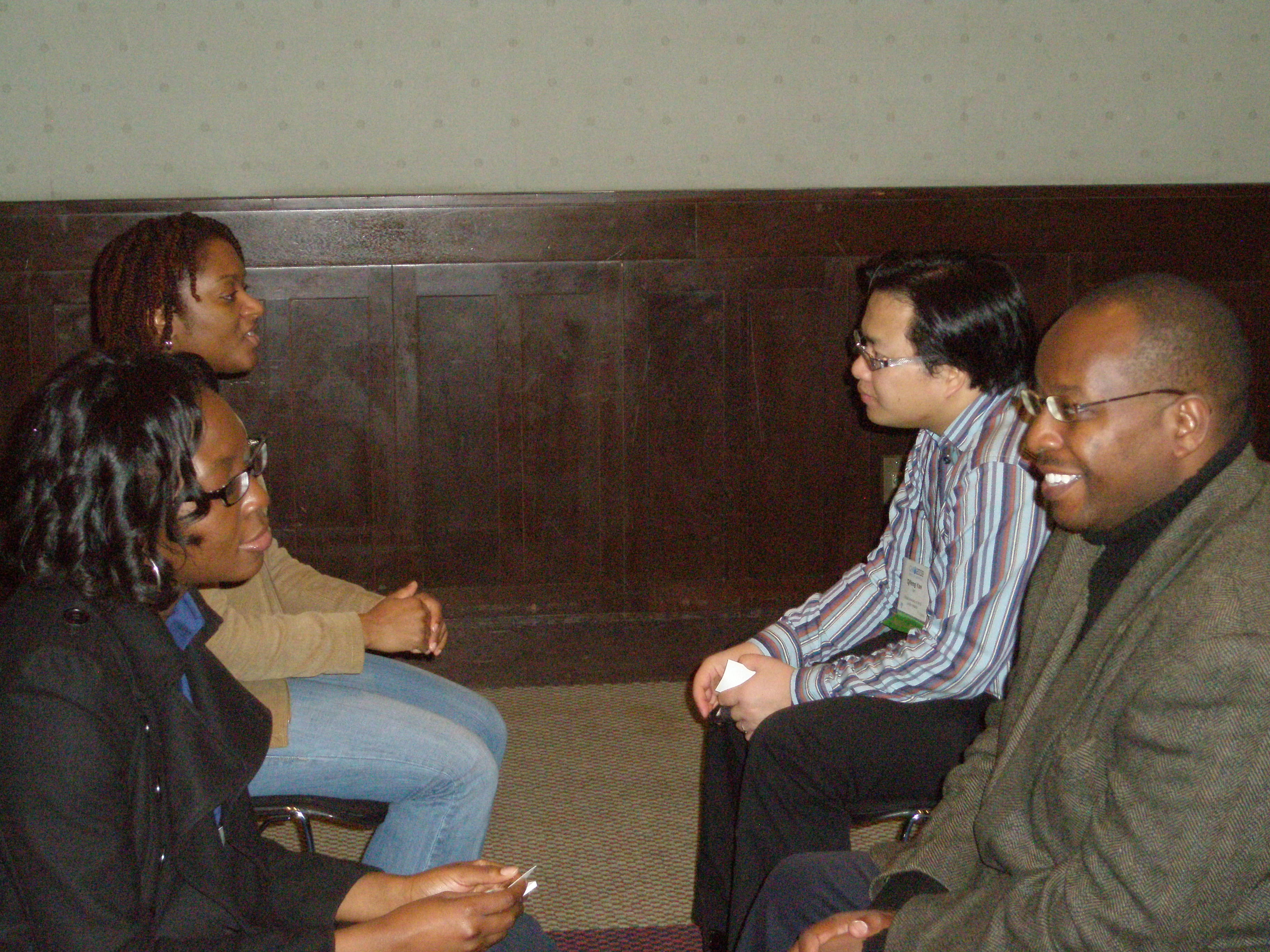
OLYMPUS DIGITAL CAMERA

Lessons Learned: #2 — The impact of the variables that our community of people were looking at in terms of syntax, structure, etc. were dwarfed by the impact of organizational variables. For example, Walston & Felix found that the complexity of the interface between the developers and the customers was extremely important.

DeMarco & Lister (See below) claim that, based on their decades of experience as consultants to the software development process, projects almost never fail for technical reasons; when they do fail, it’s almost always for organizational and management reasons.  

That conclusion dovetails with my own experience. Many decades later, working for IBM in “knowledge management,” it was amazing how many companies wanted us to “solve” their knowledge management issues by building them a “system” for knowledge sharing.

But…

Management at the company would not provide:

Incentives to share knowledge

Space to share knowledge

Time to share knowledge 

Or, commit any personnel to gathering, vetting, organizing, and promoting the knowledge repository. 

So — knowledge sharing was something their workers were simply supposed to “do” knowledge sharing on top of everything else they were doing. 

They did not want a computer system, IMHO; they wanted a magic system. 

Photo by David Cassolato on Pexels.com

These experiences were part of my motivation for attempting to catalog “best practices” in collaboration and teamwork in the form of a Pattern Language. Christopher Alexander and his colleagues looked at “what worked” in various parts of the world when it came to architecture and city planning. What they did for architecture and city planning, I want to do for collaboration. 

Naturally, merely creating a catalog is not sufficient. I need to have people who will read it, understand it, modify and improve it, and then promulgate it via actual use. For now, it’s free. Comments and critiques are always welcome.

—————-

C. E. Walston and C. P. Felix, “A method of Programming Measurement and Estimation,” IBM Systems Journal, vol. 16, no. 1, pp. 54–73, 1977.

https://en.wikipedia.org/wiki/Peopleware:_Productive_Projects_and_Teams

Thomas, J.(2008).  Fun at work: Managing HCI from a Peopleware perspective. HCI Remixed. D. McDonald & T. Erickson (Eds.), Cambridge, MA: MIT Press.

——————-

Introduction to a Pattern Language for Collaboration and Teamwork 

Index to a Pattern Language for Collaboration and Teamwork

Chain Saws Make the Best Hair Clippers 

Author Page on Amazon

Design – Interpretation Model of Communication

16 Thursday Jul 2026

Posted by petersironwood in AI, creativity, design rationale, HCI, leadership, politics, psychology, Uncategorized, user experience

≈ 1 Comment

Tags

communication, deception, experiment, HCI, IBM, life, media, psychology, relationships, truth, UX, writing

In my early days at IBM Research (1970’s), we were focused on trying to develop, test, or at least conceive of ways that a larger proportion of people would be able to use computers. One of the major ways of thinking about this was to use natural language communication as a model. After all, it was reasoned, people were able to communicate with each other using natural language. This meant that it was possible, at least in principle. Moreover, most people had considerable practice communicating using natural language. 

One popular way of looking at natural language (especially among engineers & computer scientists) was essentially an “Encoding – Decoding” model. I have something in my head that I wish to communicate to you. So, I “encode” my mental model, procedure, fact, etc. into language. I transmit that language to you. Then, you “decode” what I said into your internal language and — voila! — if all goes well, you construct something in your head that is much like what is in my head. Problem solved. 

Photo by LJ on Pexels.com

Of course, people who wrote about communication from this standpoint acknowledged that it didn’t always work. For instance, as speaker, I might do a bad job of “encoding” my knowledge. Or, I might do a good job of encoding, but the “transmission” was bad; e.g., static, gaps, noise, etc. might distort the signal. And, you might do a bad job of decoding. It’s an appealing model and helped engineers and computer scientists make advances in “communication theory” and helped make practical improvements in coding and so on.

As a general theory of how humans communicate, however, that notion is vastly over-simplified. I argued then that a better way of looking at human communication was as a design-interpretation process, not as an encoding-decoding process. One of the examples that pointed this out was a simple observation by Don Norman. Suppose someone comes up to you and asks, “Where is the Empire State Building?” You will normally give a quite different answer depending on whether the two of you are in Rome, Long Island, or Manhattan. In Rome, you might say, “It’s in America.” Or, you might say, “It’s in New York City.” If you are on Long Island, you might well say, “It’s in Manhattan.” If you are already in Manhattan, you might say, “Fifth Avenue, between 33rd and 34th.” 

Photo by Matias Di Meglio on Pexels.com

Building on Don Norman’s original example, but based on your own experience, you can easily see that it isn’t only the geographical relationships that influence your answer. If you were originally from Boston, now on your own in Rome, struggling with Italian and homesick and someone came up to you and asked that question in American English with a Boston Accent, your response might be: “Are you joking? But how did you know I was an American. My name’s … “

On the other hand, if you’re a 13-year old boy in Manhattan — one with a mean streak — and someone asks you this question in broken English and they’re looking around like they are totally lost, you might say, “Oh, no problem. Just follow 8th Avenue, all the way north up to 133rd. It’s right there. You can’t miss it.” (Note to potential foreign visitors, most kids in Manhattan would not intentionally mislead you. But they point is, someone could. They are not engaging some automatic encoding process that takes their knowledge and translates into English. Absurd! 

You design every communication. I think that’s a much more useful way to conceive of communicating. Yes, of course, there are occasions when your “design” behavior is extremely rudimentary and seems almost automatic. It isn’t though. It just seems that way. Let’s go back to our question-asking example. Suppose you work at an information booth in New York City. People ask you this same question day after day, year after year. You’re seemingly giving the answer without any attention whatsoever. Suppose someone asks you the question, but with a preface. “Look here, chap! I’ve got a gun! And if you give me the same stupid answer you’ve given me every time before, I’ll shoot your bloody brains out!” You are going to modify your answer. It only seemed as though it was automatic.

When you design your answer you take into account at least these things: some knowledge that you communication about, the current context (which itself has hundreds of potentially important variables), a model of the person you’re creating this communication for, a set of goals that you are trying to achieve (e.g., get them safely to their goal, mislead them, entertain them, entertain yourself, entertain the people around you, demonstrate your expertise, practice your diction, etc.). The process is inherently creative. In many circumstances (writing, playing, exploring, discovering, partying), you can choose how creative you want to make it. In other cases, circumstances constrain you more (though likely not so much as you think they do). 

Many readers think this is a classic example of a straw man argument. “No-one believes communication is a coding-decoding process.” 

Well, I beg to differ. I worked for relatively well-managed companies. I’ve talked to many other people who have worked in different well-managed companies. We’ve all seen or heard requests like this: “I need a paragraph (or a slide or a foil) on speech recognition. Thanks.” 

What??

Who’s the audience? Are they scientists, investors, customers, our management? How much do they already know? What are your goals? What other things are you going to talk about with them? The people who have left me such messages were all smart people. And, providing the necessary info would have only taken a minute or two. But it would have substantially improved the outcome. It’s not a straw man argument. 

Sit-com plots often hinge on the characters doing poorly at designing and/or interpreting communications. A show based on encoding-decoding? No. What could be funny — indeed what often is shown in comedy — are people failing to do good design and in the extreme case, that can arise by having an actual robot as a character or someone who behaves like one.

People also interpret what was said in terms of their goals, the context, what they believe about your goals and capacity, what they already know, and so on. And, even though this may seem obvious, millions of people believe what advertisers or politicians say without questioning their motives, double-checking with other sources, or even looking for internal inconsistencies in what is being touted as true. In other cases though, the same people will not believe anything the “other side” says no matter what. Just as one can do faulty design, one can also do faulty interpretation. 

In any case, I decided that it would be good to “show” in a controlled laboratory setting that the Encoding-Decoding model was woefully inadequate. So, I brought in “subjects” to work in pairs at a simple task about communicating Venn diagram relationships. The “designer” had a Venn diagram in front of them. “The “interpreter” was supposed to draw a Venn diagram. The “designer” was constrained to say something true and relevant. In addition to a “base” pay, the “interpreter” subjects would be given a bonus according to how many relationships matched those of the “designer.” The designer’s bonus depended on condition. In the “cooperation” condition, their payoff would also, like the interpreter’s, be determined by how much agreement was shown in the two diagrams. In the “competition” condition, the designer’s bonus depended on how different the two diagrams were. 

Photo by August de Richelieu on Pexels.com

I ran about half the number of subjects I had planned to run when the experiment was ended by corporate lawyers. 

What? 

IBM had no unions at that time. And, they didn’t want any unions. One of their policies, which they believed would help them prevent the formation of unions was that they never paid their workers for piece-work. Apparently, somehow, IBM CHQ had gotten wind of my experiment. People were being paid different amounts, based (partly) on their performance. They couldn’t have this! People might think were paying people for piece-work! 

It hardly needs to said, I suppose, that IBM definitely tried to pay for performance. This was true in sales, research, development, HR, management, and so on. No-one in IBM would argue that your pay shouldn’t be related to your performance. That was exactly — in one way of describing it — was going on here. By the way, these were not IBM employees and each subject only “worked” for about an hour.

Basically, regardless of how irrelevant this experimental set-up might have been to the genuine concern of unions not to pay people in an insanely aggressive and ever-changing piece-work scheme, the lawyers were concerned that it would be somehow misrepresented to workers or in the press and used as evidence that IBM should unionize. In a way, the lawyers were proving the point of the experiment in their own real-life behavior even as they insisted that the experiment needed to be shut down.


Lessons Learned: #1 Corporate lawyers are not only concerned about what you actually do or how you represent your work; they are also worried about how someone might misrepresent your work. 

Lessons Learned: #2 Even when constrained to say something true and relevant, ordinary people are quite capable of misleading someone else when it’s to their benefit and considered okay to do.

It is this second aspect of the experiment that I myself felt to be “edgy” at the time. Sure, people can mislead, but I was providing a context in which they were being encouraged to mislead. Was that ethical? Obviously, I thought it was at the time. On reflection, I still think it’s okay, but I’m glad that there are now review boards to look at “studies” and give a less biased opinion than the person who designed the study would do.

I view the overall context of doing the study as positive. As adults, these people all already knew how to mislead. I was letting them, and many other people, know that we know you know how to mislead and we’ll be on the lookout for it. 

What do other people think about studies wherein the experimenter encourages one person to deceive another? 

2026 Update: I’ve spend a fair amount of time recently “chatting” with ChatGPT and with Claude. It’s clear that the implementers of these systems (or, at least some of them) were quite familiar with the idea of designing and interpreting text. Claude, in particular, seems like a “nice guy” and an honest one at that. It acknowledges some of its own limitations and often praises the questioner. This shouldn’t come as a complete shock. After all, good sales people and advertisers have relied for centuries on “Design and Interpretation.” Nonetheless, I sometimes wonder whether AI systems might be more ethically employed if they were operating on principles closer to “Coding and Decoding.” What do you think?

———————-

References published literature that describes some of the research that was done around that time. 

Malhotra, A., Thomas, J.C. and Miller, L. (1980). Cognitive processes in design. International Journal of Man-Machine Studies, 12, pp. 119-140.

Carroll, J., Thomas, J.C. and Malhotra, A. (1980). Presentation and representation in design problem solving. British Journal of Psychology/,71 (1), pp. 143-155.

Carroll, J., Thomas, J.C. and Malhotra, A. (1979). A clinical-experimental analysis of design problem solving. Design Studies, 1 (2), pp. 84-92.

Thomas, J.C. (1978). A design-interpretation analysis of natural English. International Journal of Man-Machine Studies, 10, pp. 651-668.

Thomas, J.C. and Carroll, J. (1978). The psychological study of design. Design Studies, 1 (1), pp. 5-11. 

———————

Other essays that touch on communication. 

Freedom of Speech is not a License to Kill

Ohayogozaimasu

The Sound of One Hand Clasping

Fool Me

Claude the Radioman

Know What? 

The Story of Story, Part 1

The Temperature Gauge

The Destruction of Natural Intelligence

A Little is not a Lot

Try the Truth

Stoned Soup

Turing’s Nightmares

“Wizard of Oz”

15 Wednesday Jul 2026

Posted by petersironwood in AI, apocalypse, design rationale, HCI, leadership, management, politics, psychology, The Singularity, Uncategorized, user experience

≈ Leave a comment

Tags

AI, HCI, IBM, research, technology, usability, UX, Wizard of Oz, writing

(Some Lessons Learned from studies in Human-Computer Interaction/User Experience conducted at IBM Research in the mid-70’s.)

Photo by Johannes Plenio on Pexels.com

Wizard of Oz 

One of the studies I conducted at IBM Research in the mid 1970’s was part of an effort to do “Automatic Programming” — a department under Pat Goldberg. The first level manager I worked with was Irving Wladawsky (later Irving Wladawsky-Berger). His group wanted to develop a system that would allow the owner/operator of a small business to type requirements into a computer in English (or something English-like) and have the system itself produce RPG code to run the business so described. 

The underlying motivation from an IBM business perspective was that many small businesses could well afford a computer to do inventory, fulfill orders, etc. but they couldn’t afford to hire programmers to create such a system from scratch. The small business owner in the mid-1970’s did not program! Yet, for the most part, they understood how their business worked. The notion was that a natural language understanding and generation program could dialogue with the user/owner and through that process, understand their “business rules.” No costly programmers needed!

Photo by Dmitry Demidov on Pexels.com


An interesting side note: at that time, we were told that IBM corporate forbade us to use the terms “Artificial Intelligence” or “Robotics” to describe our work because some PR firm had determined that these terms were too scary for the general public. So, IBM had research in “mechanical assembly” but not “robotics.” We had work in character recognition, speech recognition, handwriting recognition, automatic program generation, and compiler optimization. But no work in “Artificial Intelligence.” (Wink, wink, nod, nod). 

Labelism: Confusing a thing with the label for that thing.

Another interesting side note: I worked at IBM Research for a dozen years; started an AI lab at NYNEX where I worked another 13 years; came back to IBM Research and several years later found myself working on the same problem! We were still trying to make a system to allow small businesses to generate their code automatically. In my second iteration, rather than using natural language, we were trying to make the specification of business rules in a graph language that was intuitive enough for business owners. This was a different approach, but trying to address the same underlying desire: to bring computing to small business without incurring the heavy costs of programming and maintenance. 

Let’s return to iteration one — the natural language approach @ 1975. Well, one issue was that no-one had a natural language program that even approximated being able to do the job. So…how to study people’s interaction with a system that doesn’t exist? 

We used an approach that my colleague Jeff Kelly called the “Wizard of Oz” technique; viz., use a human being (in this case, me) to simulate how the system might work and record people’s behavior. In this way, we could discover many of the issues that such a natural language programming system would have to deal with. I had already had plenty of experience interacting with a computer; and I had acting experience. I could “play the part” of a computer fairly well as I typed in my questions and answers. 

(Description of “The Wizard of Oz” technique).

IBM Research in Yorktown had roughly a thousand people including not only scientists, programmers, and engineers but also a number of business people (who did not know how to program). I knew some of them from playing tennis and table tennis and we used those folks as initial subjects. What did I find? Good news and bad news. 

Dealing with natural language is tricky for many reasons. One of those reasons is that English, including the English that people normally use to describe their business, is filled with words that have multiple meanings; e.g., “file”, “run”, “program”, “object”, “table”, etc. But here is the good news: although it’s true that many English words have many meanings, when these business people described business procedures, almost all of the lexical ambiguity vanished! The program to understand business English would not have to distinguish between a business file and a nail file; it wouldn’t have to worry about distinguishing a run in baseball or a run in stockings from a run of the payroll program; it wouldn’t have to distinguish between the table in a relational data base and the table in your dining room. The domain would mainly constrain! That’s the good news.

The bad news was dialogue management. How can the machine recognize a misunderstanding and how can it correct it? To make matters worse, while business people were fairly consistent in the way they described how their business ran, they were not consistent in how they talked about the communication. If a human being senses that another one is misunderstanding, then, depending on context they might: raise their eyebrows, say “Huh?”, “Come again?”, “What?” “I think I lost you.” “WTF?” “Are you kidding?”, “We’re on different wavelengths,” “I don’t get it.” “But…wait.” 

Photo by Nafis Abman on Pexels.com

Sometimes, these are referred to as “meta-comments.” Here’s a simple example that took place in the study. 

One of the business people told me about various discounts. I had assumed (playing the part of the computer) that he was talking about discounts for items that were being discounted due to inventory management. I recorded all the various percentages and so on. Then, he said, “Now, we also give discounts for various items.” 

At that time, most natural language systems of that era simply ignored words like “now” and “also” in this context. Stepping out of my role as a “computer system” and thinking about from the perspective of a human conversational partner though, these words are crucial! What it signals is a change in topic. In the larger context of our conversation, it shows that everything that had just been said, which I thought had been about item discounts, was not about item discounts!

This is just one example, but there were many more. In my more recent experience interacting with various computer dialogue systems, being able to recognize the signals of miscommunication and being able to repair misunderstandings is still not very well-handled more than four decades later.

I’d be interested in any pointers you have to a system that you think deals with meta-communication in a natural and robust manner. I do not think that it is beyond the pale of possibility. The general categories of the ways that people misunderstand each other is not infinite. John Anderson developed excellent tutoring systems for LISP and geometry and those systems worked something like human tutors in that, the tutor inferred the mental model of an individual student and focused instruction on correcting any misconceptions. My intuition is that a generic system built with equal complexity could deal with most of the issues as well as the average human being deals with them; i.e., imperfectly. 

—————————————

Lessons Learned: #1 You can test aspects of a system even before it’s built or even completely defined. One method that has been used many times: “Wizard of Oz.” 

Lessons Learned #2: Language used by professionals to talk about their domain is much more constrained in terms of lexical ambiguity than is language when considered by all native speakers.

Lessons Learned #3: People in “our culture” (i.e., US business culture) do not have an agreed upon and consistent vocabulary for talking about communication nor a consistent process for dealing with them.

Lessons Learned #4: Speaking of communication errors, I don’t recall why, but it was about this time, that I realized that my notion about how research results would be transferred to other parts of IBM was a complete and utter fantasy. I hadn’t articulated it, but it was basically that I would do research, write the results up for publication in scientific journals for an academic audience and publish Research Reports which would be eagerly consumed by anyone who needed to know. I’m not proud of this. LOL. But that’s really kind of how I viewed it. And, then, after a few years, I realized that it really mainly came about through relationships. That was something that people had been showing me all my life, but which I don’t think anyone ever stated it explicitly enough.

Update for 2026: While the four “Lessons Learned” above still seem apropos, some of today’s chatbots such as ChatGPT and Claude are much better at dealing with connected conversations with humans that were the systems of the twentieth century. Not only that, people are now describing systems in “natural language” and the computer is writing code. That’s the “good news” I suppose.

The bad news? While my impression of most of the AI researchers of the twentieth century is that they were largely motivated by intellectual challenges and a desire to help make people more productive, I get the impression that most of the AI work of today is controlled by people who are already astoundingly wealthy and want to become even wealthier. And, as UN-laudable as we may view that goal, the wealth is only a means to an end and that end is the total enslavement of most of humanity. Even being a trillionaire isn’t enough.

That’s not to say that all the workers advancing AI have those nefarious aims just because those in charge do, but as the surveillance state becomes more pervasive, their private motivations could have less influence over the outcomes.

———————————-

Author Page on Amazon

The Myths of the Veritas (an exploration of leadership & ethics in free, no ads fiction)

Index to a Pattern Language for Collaboration and Teamwork

Experiences in Human-Computer Interaction

Post on “The Story of Story” 

The After Times

After All

When Greed is the only Creed

Destroying Natural Intelligence

“Turing’s Nightmares” comprises 23 Sci-Fi short stories that explore the implications and ethics of AI

Here is an example chapter from “Turing’s Nightmares” that explores a possible dilemma of working in AI.

To Be or Not To Be

Whom to Trust?

14 Tuesday Jul 2026

Posted by petersironwood in creativity, fantasy, fiction, leadership, management, politics, psychology, Uncategorized, Veritas

≈ Leave a comment

Tags

ethics, leadership, legend, love, myth, truth, Veritas

“Whom can I trust?” Shadow Walker paced, his energy still high from his second brush with death since becoming the “King” of the Z-Lotz. He didn’t wait for Eagle Eyes to answer and instead ‘ran ahead without his footwear’ as the Veritas liked to say. “I mean who? I am supposed to be their King! Can you imagine someone plotting to overthrow or kill Many Paths?” 

Eagle Eyes nodded. “Yes, I can. If we are going to discuss this, you must keep your voice low. We might be overheard and that would not do. I can imagine someone trying to overthrow or kill Many Paths.” Eagle Eyes paused, watching the face of her friend carefully. When she saw that he understood, she continued. “Shadow Walker, you had better be able to imagine that you might be undone. Or, we surely will be. And I have an inkling that your death would be of some interest to Many Paths. Thunder clouds she would see on every horizon. For her, bright green would turn dark blue and blue would look brown. After a refreshing morning rain, the yellow sun would no longer sprinkle the forest floor with stars. She would just find annoyance in the rain. Her large bright heart that sets a glow in all the people would instead be a siphon to suck their sunny spirit out and replace it with spent black embers from a fire once so bright.”

Photo by Johannes Plenio on Pexels.com

Shadow Walker took deep breaths and consciously calmed himself while Eagle Eyes spoke. Just thinking of Many Paths helped. But it also awakened an overwhelming desire to leave; to return home; to see Many Paths; to touch Many Paths; to smell and taste her; to make love with her; to be home where he could trust everyone. 

“Yes, Eagle Eyes. She would grieve for a time. But she is our leader. And she takes that responsibility — that is above everything else, her own comfort, her own desires — even her love for me. She would not allow herself to stay in such a foul place very long. Because of exactly what you say. She would well understand that by seeing a snake in every river, she would lead others to see the same and eventually the people would die of thirst. She knows how important it is to lead by example.”


Eagle Eyes nodded again. “Yes. And an angry leader may anger everyone. A stupid leader encourages the people to be stupid. A cruel leader inspires more cruelty. Do you agree?”

Shadow Walker admitted to himself that it sounded plausible. But then he tried to imagine a counter-example. He couldn’t. Yet, something tickled in his mind that the truth of Eagle Eyes was a partial truth. “There is much truth in what you say. However, just a few minutes ago, I was very upset — for obvious reasons. But you didn’t let it make you upset. Instead, you calmed me down so that I might think more clearly and not do something impulsively that might make the situation worse.”

Eagle Eyes considered. “Yes. You’re right. Sometimes bad behavior produces a good reaction in good people. But that only works at first. Imagine –these people, the Z-Lotz — the leaders lie to the people. They choose their king by assassination. The king — well, certainly NUT-PI, but conversations with Cat Eyes suggest that others were similar — the king shows no loyalty at all to the people whom he depends on. He tries to control them all with fear.” Eagle Eyes bowed her head and shook it side to side. She sighed a deep sigh. “How can people let themselves live like that? It’s horrible. Anyway, the effect of all this on our current circumstance is that because NUT-PI himself was so untrustworthy and so disloyal, many of the Z-Lotz could well be the same. They may think you’re better than NUT-PI, but the ambitious ones are all able to convince themselves that they’d do a better job than you! After all, you’re not even a Z-Lotz.”

“All right, Eagle Eyes. So…” He broke off because Eagle Eyes put her index finger on his lips. He remembered her admonition to speak softly so as not to be overheard. He took several deep breaths and continued.

“So, let’s leave! Let the Z-Lotz sort out their own issues! For all we know, Many Paths needs our skills right now. Why are we saving these people when we may still have more problems at our own Center Place.?”

“First, I don’t think sneaking out is all that feasible. But even if we did leave, might they not be affronted by a King who simply — abandons them. Hard to know whether they would become so ensnarled by their own fighting that they would ignore us or whether they would somehow find this a good excuse to attack the Veritas. And — the very best we could hope for is that things would “get back to normal.” And these people would come and steal children again. If we stay…and we live…there is some chance we could improve relations between … well, really among all the tribes. And, they know things that could be important for us. Besides, none of the people born into the Z-Lotz chose to be born there. If we can help them….”

“If. Yes. If. They know their ways. We don’t.” Shadow Walker looked at Eagle Eyes, who was clearly deep in thought. “I don’t even know how many of them know about that cache of weapons and gold that we found. I don’t know whom I can ask about those weird liquids in the see-through rocks that are not rocks.” 

Eagle Eyes and Shadow Walker reflected on their situation in comfortable silence for a time. The Veritas were unafraid to give their ideas space enough to breathe; time enough to mature. 

After a time, Shadow Walker said, “We desperately need to understand more of their language. Perhaps we could find some tutors to trust. More than one. It may be very hard to decide whom to trust, but it may be possible to find someone to trust. If we could ask questions of multiple tutors, and we get the same answers, we might presume that they are telling the truth, or at least the truth as they see it. Yet, if they say almost the exact same words, then they are telling a rehearsed story to gain our trust.”

Photo by Pille Kirsi on Pexels.com

Eagle Eyes added, “In addition to learning more about the Z-Lotz and their language, for others, we can simply be honest. Tell them that, because of the assassination attempts, you don’t know whom to trust so we will need to test their loyalty. Give them the Veritas Test of Truthfulness. If they pass, you will trust them and that will be a very good thing for them as well as for you. On the other hand, if they lie to you, they will not pass the test and that will be a very very bad thing for them.” 

“What is the Veritas Test of Truthfulness? Why have I never heard of it, Eagle Eyes?”

Eagle Eyes smiled. “We will need to create it.” After all, She Who Saved Many Lives created seven tests of empathy. We ought to be able to create one test of truthfulness.” 

Shadow Walker suggested, “Suppose we observe someone doing something very difficult without their knowing that we are watching. We note how they do. Then we ask them how they did. We will see how accurate they are in their description. If they are honest about their mistakes, they are likely to be honest about other things. On the other hand, it seems a bit ironic — and more than a little sad — to build a test of honesty that relies on deception.” Shadow Walker looked down to the side and bit his lower lip.

“Then let’s not,” said Eagle Eyes after a time. She saw the questioning look in the eyes of Shadow Walker. “I mean, let’s not be deceptive. I don’t think we need to. We will ask them to do something and observe them. I believe, the dishonest will still give themselves away. They are so used to lying that they won’t be able to give a fair description of what they did and did not do.”

Shadow Walker considered: ALT-R had been able to fool nearly everyone about his true nature. For most people though — Eagle Eyes was likely right. What if the Z-Lotz had their own ALT-R? Would they be able to smoke them out? After all, Cat Eyes had said that the Z-Lotz leaders convinced the people who actually worked that they believed in a whole jungle web of lies when actually, they didn’t. She had seen their hypocrisy. Perhaps that was partly because, as a slave, they saw her as not fully human or not very clever. Shadow Walker realized that he would benefit from the thoughts of Eagle Eyes so he said aloud, “We need to start with the people I do trust. I can explain to Tree Vines that the sooner he can help me vet the Z-Lotz, the sooner he can leave to see his daughter — and — that his daughter will grow up in a safer world. If we do this right, we might be able to prevent kidnappings such as what happened to his own daughter so many years ago.”

Eagle Eyes laughed.

Shadow Walker frowned. “Is that funny?” 

Eagle Eyes said, “No, it’s just that I had an image. I saw honesty spreading through the Z-Lotz like a plague.”

Shadow Walker chuckled too. “That would be something.” Then another frown passed over his brow. “But that seems like we’re making them into Veritas. Is that right? What if they prefer being dishonest and choosing Kings by assassination rather than competence?” 

Eagle Eyes said, “Yes, in the same way that watering the squash turns it into something edible instead of a barren stalk. We’re not talking about their preferences for how well done they like their meat. We’re talking about truth — which is every bit as vital as water is for life itself. Lies, dishonesty, cruelty, hate — these are not the paths of Life. These are paths of Death. As shown by our story of the Orange Man.”

Photo by Johannes Plenio on Pexels.com

——————————————-

The Myths of the Veritas: The Orange Man 

The Myths of the Veritas: The Forgotten Field 

The Myths of the Veritas: The First Ring of Empathy (Beginning of Book I)

The Myths of the Veritas: Feast and Fire (Beginning of Book II) 

The Myths of the Veritas: A Map of Sorts (Beginning of Book III)

Author Page on Amazon

Index to Patterns for Collaboration and Teamwork

An Essay on the Nature of Nature

A Lot is Not a Little

The Ailing King of Agitate

Cancer Always Loses in the End

The Silent Screams of Dead Mens Dreams

Somewhere a Bird Cries

The Broken Times

Roar, Ocean, Roar

The Dance of Billions

Finding the Cache

13 Monday Jul 2026

Posted by petersironwood in creativity, fantasy, fiction, leadership, psychology, story, Uncategorized, Veritas

≈ Leave a comment

Tags

books, fantasy, fiction, legend, myths, short story, Veritas, writing

Shadow Walker and Eagle Eyes spoke softly to each other in their native tongue — Veritas — as they explored their “House of the King.” They wanted to plan without being overheard.

Shadow Walker suggested, “At no time should both of us be asleep. I think I can trust our three ministers, but I am not sure. Cat Eyes told us that most of the Z-Lotz do not even believe the myths and legends that they insist everyone else believe! How can one see into such a heart? They shade their soul windows. Can you know the heart of such a one? Can your eagle eyes penetrate the blank stare?”

Eagle Eyes shook her head. “I cannot.” She paused for a moment and took a deep breath. “You are strong and wise and handsome and these things help. But you are still seen as something foreign. I cannot imagine that the people held much love for NUT-PI. He was a cruel and ineffective leader who repeatedly betrayed those loyal to him. There may be others from among the Z-Lotz…no, there must be others from among the Z-Lotz who are popular and who are ambitious enough to be King. Even among the three ministers.”

Photo by James Wheeler on Pexels.com

Shadow Walker nodded. As they spoke, they strode through the King’s House. Shadow Walker’s hand’s idly trailed along the walls as they spoke. The surface felt shiny like rock, but felt warm, something like a rock in the sun, but they were inside. Odd. The surface seemed rock-like but not really rock. It was also much too regular. He wondered whether some of the tiny but deadly red spiders were on the walls. 

Eagle Eyes explored her surroundings a different way — by darting her eyes everywhere. Shadow Walker stopped and took the hands of Eagle Eyes. Unlike the Z-Lotz, his eyes were open as he said, “Thank you for saving my life! We will get through this, but I must confess…I don’t know how. I need you and your quick thinking if we are to survive.”   

Eagle Eyes tried not to blush, but she couldn’t help herself. She bit her lip and tried to plan. That helped some. Wild images swarmed before her like hiveless bees not knowing where to alight. “Sometimes, I wish we could escape in the night. I’m not sure we could even do that, but it would be wrong. Even if these are Z-Lotz and ROI, they need a leader who isn’t corrupt.” 

Shadow Walker gave no outward sign as to whether he had seen her blush. He nodded. “To leave now would be — cowardly. I do trust the parents of Cat Eyes. And, that’s good because we need them to translate. But — now that they know their daughter is alive, I presume that they will wish to journey to see her very soon. In fact, Tree Vines has already told me so. When that happens….?”

Original drawing by Pierce Morgan


Eagle Eyes nodded. “Regardless of what the future brings, it seems that you and I would do well to learn more of the language — and of the ways — of the Z-Lotz and ROI.” 

Shadow Walker grimaced. “You are right. Though I wish they would learn more to be like the Veritas, to tell the truth. Just think. The only way for me not to be leader is for someone to kill me! That method ensures that only the most powerful — or most treacherous — will become King. And it will encourage intrigue among the people — not honesty and openness — which are two virtues we desperately need to kill off this plague.”

Eagle Eyes sighed. “If we even can kill it off. We have to try though. That has to be our top priority. Meanwhile, we need to learn as much as we can including who, if anyone, we can trust. I know you must miss Many Paths. I miss her as well. Still, our lives would be simpler if we were together. We could stay here and rule and teach our children to rule and how to stay alive. When the time comes, our offspring could wrest control from you by “force” — though — “farce” might be closer to the truth. We could feign your death and then, once the new ruler was firmly in place, you and I could leave.” 

Shadow Walker frowned and then laughed. “That is way too long to wait! But I — I do like your idea about faking my death. That might be a way to provide them another ruler. Anyway, first we must try to help them avoid being killed off. They’ll be plenty of time to plot out our leaving after that. But you said you missed Many Paths.” 

Eagle Eyes nodded. “I do. Don’t you?” 

Shadow Walker nodded. “Of course, but … I thought you would say you miss Trunk of Tree.”

Eagle Eyes frowned. “Have you noticed how all of the rock in this place is the same exact color?” 

“I don’t think it’s really rock. At least, it’s not like any rock I’ve seen before, but — yes. It’s all the same. Too much the same. Not like real rock.” Shadow Walker wondered whether Eagle Eyes wanted to avoid answering his implied question.  

Eagle Eyes pointed, “Except over there. Look.” She strode over to a spot behind the throne.

Shadow Walker followed her over. It was subtle, but there was a definite set of lines making a rectangle. Shadow Walker traced the line. It felt different too. He pushed on various spots and felt a slight give. They tried pushing at the same time in a variety of places but nothing happened. 

Shadow Walker again found himself wishing that Many Paths were here — or, even better, that he was with her back in the Center Place of the Veritas. Yet again, he took out the Sixth Ring of Empathy. As he felt it and stared at the crystal, as always, he felt a little closer to her. 

In his mind’s eye flashed a clear image. Shadow Walker saw himself as a very young boy. He held a leaf in his hand — a dry leaf. He turned and looked up to the side where he saw a beautiful woman smiling at him. It wasn’t Many Paths though. It was She Who Saves Many Lives. Her hair was only flecked with a little gray. Shadow Walker’s tiny hand moved from the dry leaf to a dry seed pod. He heard his little boy’s voice ask the plant, “Thirsty?” He looked up to the kind face of the Shaman and saw her nod. He saw himself bend down and pick up his cup of water from the ground. He lifted it to the leaf and frowned, unsure how to give the plant a drink. She Who Saves Many Lives gently took the cup from his hands and bent down beside him. “Here, Shadow Walker. Here is where the plant drinks.” She slowly poured the water into the ground all around the base of the plant. The soil darkened and turned muddy. He heard his young self ask the Shaman, “Why did you waste the water and not give the plant a drink?” 

She Who Saves Many Lives smiled and said, “I did. Be patient and you’ll see.”  

Shadow Walker shook his head to clear his mind of the clear memory. He turned away from the wall and looked instead at the back of his Throne. He shook his head. He didn’t like sitting up there. It seemed absurdly huge. It was elaborately carved, not only on the front, but here on the back as well. The front and sides at least were beautifully turned out. The back however…? He glanced at Eagle Eyes who had also turned around and she was pointing to a part of the carving that looked like a small house with rectangular windows and a rectangular door. He touched the door and heard a loud creaking behind him. The noise startled them both. Shadow  Walker’s hand flew instinctively to his sword. But no-one else was near. The noise, it became obvious, arose from the grinding of stone rubbing against stone as a hole appeared in the wall behind them. After the noise stopped, the pair peered into the darkness beyond the wall. They each cupped their hands around their eyes and waited for their eyes to adjust. 

Photo by Luis Quintero on Pexels.com

————————————

The Myths of the Veritas: The Orange Man

The Myths of the Veritas: The Forgotten Field

The Myths of the Veritas: The First Ring of Empathy

The Myths of the Veritas – Beginning of Book Two

The Myths of the Veritas – Beginning of Book Three

Author Page on Amazon

A Successful Project

12 Sunday Jul 2026

Posted by petersironwood in America, leadership, management, politics, Uncategorized

≈ Leave a comment

Tags

blog, books, Democracy, goals, KPIs, life, mental-health, politics, project, teamwork, truth, USA, writing

A successful project. 

Who doesn’t like those? 

But what exactly *is* a successful project? 

Photo by Pixabay on Pexels.com

Some are quick to reply (and that very quickness might be an indicator of indoctrination more than conscious choice) that a project is successful if it meets its objectives and is on time and within budget. I have to admit that seems logical and tidy. 

In comparing two projects, we might say project A is more successful than project B if project A achieves more objectives in a shorter time with fewer resources.

A little more about objectives however. Does every objective need to be explicitly stated? Or, to put it another way, if an objective seems obvious to most people but it hasn’t been put in writing, then it need not be met?

Suppose I contract someone to build a pool in the back yard and they do indeed build a pool of the proper size and they do it at estimated cost and time frame. Wonderful! But what if, in the process, they made so much noise, I was successfully sued for twice the cost of the pool? The answer is: “Hey, it wasn’t in the contract we couldn’t do it at night and loudly.” ?

Or, if the pool construction allowed water to run under the nearby house and ruin the foundation and the house fell down and killed everyone inside. But “Hey, it’s not in the contract.”?

Photo by Tosin Superson on Pexels.com

Does every aspect of every contract have to be in writing? 

What about the successful projects of life?

Photo by Zaida M on Pexels.com

Here are some sample objectives that might be included in every contract. I’d prefer that we would all simply agree to abide by them as members of the human race, but if not, we could boilerplate it I suppose.

You project should, on the whole, provide a positive environment for everyone working there. People should not be harassed, belittled, or needlessly endangered.
People who work on the project will learn new skills.
Your project will not destroy innocent people or their environment. 

Your employees will not have to lie to the public.
If the project is wildly successful in any way, that success should be shared.

There are many more constraints that might be suggested. What do you think? 

If we put too many constraints on people, maybe no-one will never become a multi-billionaire and become too rich to jail. 

I guess I could live with that. 

Photo by Igor Passchier on Pexels.com


——————————

Essays on America: The Game

When Greed is the Only Creed

The Orange Man

At Least He’s Our Monster

Stoned Soup

The After Times

The Silent Screams

After All

The Crows and Me

We Won the War!

The Dance of Billions

Somewhere a Bird Cries

Career Advice from Polonius

07 Tuesday Jul 2026

Posted by petersironwood in creativity, essay, psychology, Uncategorized, user experience

≈ Leave a comment

Tags

career, education, HCI, human factors, learning, life, mental-health, usability, UX, work, writing

Photo by Ott Maidre on Pexels.com

Career Advice from Polonius: To Thine Own Self be True

“To thine own self be true.” This advice comes from Polonius who is giving advice to his son in Act I, scene 3 of Shakespeare’s Hamlet. 

Polonius says: “This above all: to thine own self be true. And it must follow, as the night the day, Thou canst not then be false to any man.”

Let’s focus on the first part. 

One of the dreams of education is to customize teaching to the specific learning style(s) of individual students. This was a hot topic when I was in graduate school.

Photo by Suliman Sallehi on Pexels.com


Around 50 years ago. And it still is.

Some day, your grandchildren or your great-grandchildren may be the beneficiaries of learning experiences that are individualized to their specific styles. I wouldn’t hold my breath, but it could happen. It isn’t only a question of research on what various styles are and how to present material that resonates with these various styles. There is also the question of priorities and dollars and personnel. 

But meanwhile, here’s the good news. You don’t have to wait for another 50 years of research and a reshuffling of priorities so folx spend more money on education and less on, let’s say, cosmetics and professional sports. As I say, don’t hold your breath.

But let’s get back to the good news. The good news is that you can discover for yourself how to maximize your own learning as well as what your particular talents are. 

One cautionary note: Don’t be a jerk about it. If you’re in a group dealing with grief, don’t say, “Well, I learn best if a subject is reduced to a few hundred polynomial formulae. So, let’s start right there. Let’s reduce grief to three dimensions. Later, of course, we can do a proper multidimensional scaling exercise to determine the optimal number of dimensions.”

Photo by Andrea Piacquadio on Pexels.com


No. Don’t say that. Of course, you’re free to suggest that approach, but chances are, in that situation, and in most realistic group situations, you will be treated to information in the same manner as many others who have different styles from yours.

However, in many situations, you are, far and away the main important stakeholder. You can use your knowledge of how things work for you in order to strategize and plan how you will learn about things. You can organize and arrange your work so you’ll be more productive. 

Here’s a trivial example. I have learned that my eyes have a wisdom of their own. If, for instance, I’m going out for a walk around the garden to take some pictures of the sunset on the flowers, I grab my stuff and find myself turning and staring at the hat-rack on the way out the door. When I was younger, I would ignore this. But what I have learned is that my eyes are really good at knowing what to look at. So, even if I’m in a hurry, I take a moment to reflect on why my eyes are looking there. And, then, it comes to me. I’ll do better if I wear a brimmed hat to keep the sun out of my eyes while I look at my iPhone.


By paying attention to this little quirk, I’ve saved myself a lot of grief over the years; e.g., not left the house without my wallet, etc.

Here’s another example. I’m very good at seeing “patterns” emerge from a small number of examples or when there is considerable noise involved. This serves me well as my hearing diminishes because I can use top-down processing. Generally, but not always, I understand what people are saying. On the other hand, if I try to listen to a foreign language tape that is only isolated audio words, I have no hope of knowing what they are saying. “Key” “Tee”, “Pea”, sound exactly the same.

Seeing patterns easily is generally a nice capacity. However, I’m horrible at finding my own typos immediately after I write something. I actually “see” what I meant to type. A week later, I’m pretty good at catching the errors. If I had more patience, I would wait a week to proofread for every blog post, but being patient isn’t a strength of mine either. I do go back over old posts occasionally and fix the typos (which I never saw at the time). 

Photo by Frank Cone on Pexels.com

When I go to the movies — remember when we used to go to movies? — anyway, if I went to a comedy, I was very likely to laugh too soon. I “hear” the punchline two lines earlier than it actually occurs. There’s no benefit to my laughing early! But that’s when the punchline hits me. I do keep it soft so as not to disturb the others in the audience. On the other hand, I’m pretty good at “discovering” the playing patterns of my tennis opponents and anticipating what they are going to do. Naturally, I don’t always guess right, but I do way better than chance.

I bring up these examples to illustrate a generality; that most of these individual differences have both an upside and a downside. Mainly, learning about my own styles and capacities is something I only began to think about well after leaving high school. That makes sense. In school — or at least, the schools I went to — everybody got the same instruction in the same way almost all the time. But as an adult, you often have a lot of control over your own timing, flow of information, etc. I think it’s worth your while to look back at your experience and discover what you have difficulty with, what you’re OK at and what you are exceptionally good at. When you have a choice, use the approach you’re really good at. 

Oh, and try to avoid hiding behind curtains when there’s someone with a sword around.

—————————————-

More background on “knowing yourself” 

https://en.wikipedia.org/wiki/Know_thyself

https://arkintime.com/know-thyself/history/

The Walkabout Diaries Natural Variety

Where do you draw the line

Your Cage is Unlocked

Newer posts →

Subscribe

  • Entries (RSS)
  • Comments (RSS)

Archives

  • October 2026
  • September 2026
  • August 2026
  • July 2026
  • June 2026
  • May 2026
  • April 2026
  • March 2026
  • February 2026
  • January 2026
  • December 2025
  • November 2025
  • October 2025
  • September 2025
  • August 2025
  • July 2025
  • June 2025
  • May 2025
  • April 2025
  • March 2025
  • February 2025
  • January 2025
  • December 2024
  • November 2024
  • October 2024
  • September 2024
  • July 2024
  • April 2024
  • March 2024
  • February 2024
  • January 2024
  • December 2023
  • August 2023
  • July 2023
  • May 2023
  • April 2023
  • March 2023
  • February 2023
  • January 2023
  • December 2022
  • November 2022
  • October 2022
  • September 2022
  • August 2022
  • July 2022
  • June 2022
  • May 2022
  • April 2022
  • March 2022
  • February 2022
  • January 2022
  • December 2021
  • November 2021
  • October 2021
  • September 2021
  • August 2021
  • July 2021
  • June 2021
  • May 2021
  • April 2021
  • March 2021
  • February 2021
  • January 2021
  • December 2020
  • November 2020
  • October 2020
  • September 2020
  • August 2020
  • July 2020
  • June 2020
  • May 2020
  • April 2020
  • March 2020
  • February 2020
  • January 2020
  • December 2019
  • November 2019
  • October 2019
  • September 2019
  • August 2019
  • July 2019
  • June 2019
  • May 2019
  • April 2019
  • March 2019
  • February 2019
  • January 2019
  • December 2018
  • November 2018
  • October 2018
  • September 2018
  • August 2018
  • July 2018
  • June 2018
  • May 2018
  • April 2018
  • March 2018
  • February 2018
  • January 2018
  • December 2017
  • November 2017
  • October 2017
  • September 2017
  • August 2017
  • July 2017
  • June 2017
  • May 2017
  • April 2017
  • March 2017
  • February 2017
  • January 2017
  • December 2016
  • November 2016
  • October 2016
  • September 2016
  • August 2016
  • July 2016
  • June 2016
  • May 2016
  • April 2016
  • March 2016
  • February 2016
  • January 2016
  • December 2015
  • November 2015
  • October 2015
  • September 2015
  • August 2015
  • May 2015
  • January 2015
  • July 2014
  • January 2014
  • December 2013
  • November 2013

Categories

  • AI
  • America
  • apocalypse
  • cats
  • COVID-19
  • creativity
  • design rationale
  • dogs
  • driverless cars
  • essay
    • guns
  • family
  • fantasy
  • fiction
  • HCI
  • health
  • leadership
  • love
  • management
  • nature
  • pets
  • poetry
  • politics
  • psychology
  • Sadie
  • satire
  • science
  • sports
  • story
  • The Singularity
  • Travel
  • Uncategorized
  • user experience
  • Veritas
  • Walkabout Diaries

Meta

  • Create account
  • Log in

Blog at WordPress.com.

  • Subscribe Subscribed
    petersironwood
    Join 653 other subscribers

    Have a WordPress.com account? Log in now.

  • petersironwood
    View site in Reader
    Manage subscriptionsSign upLog in
    Report this content
    Collapse this bar
Loading Comments...