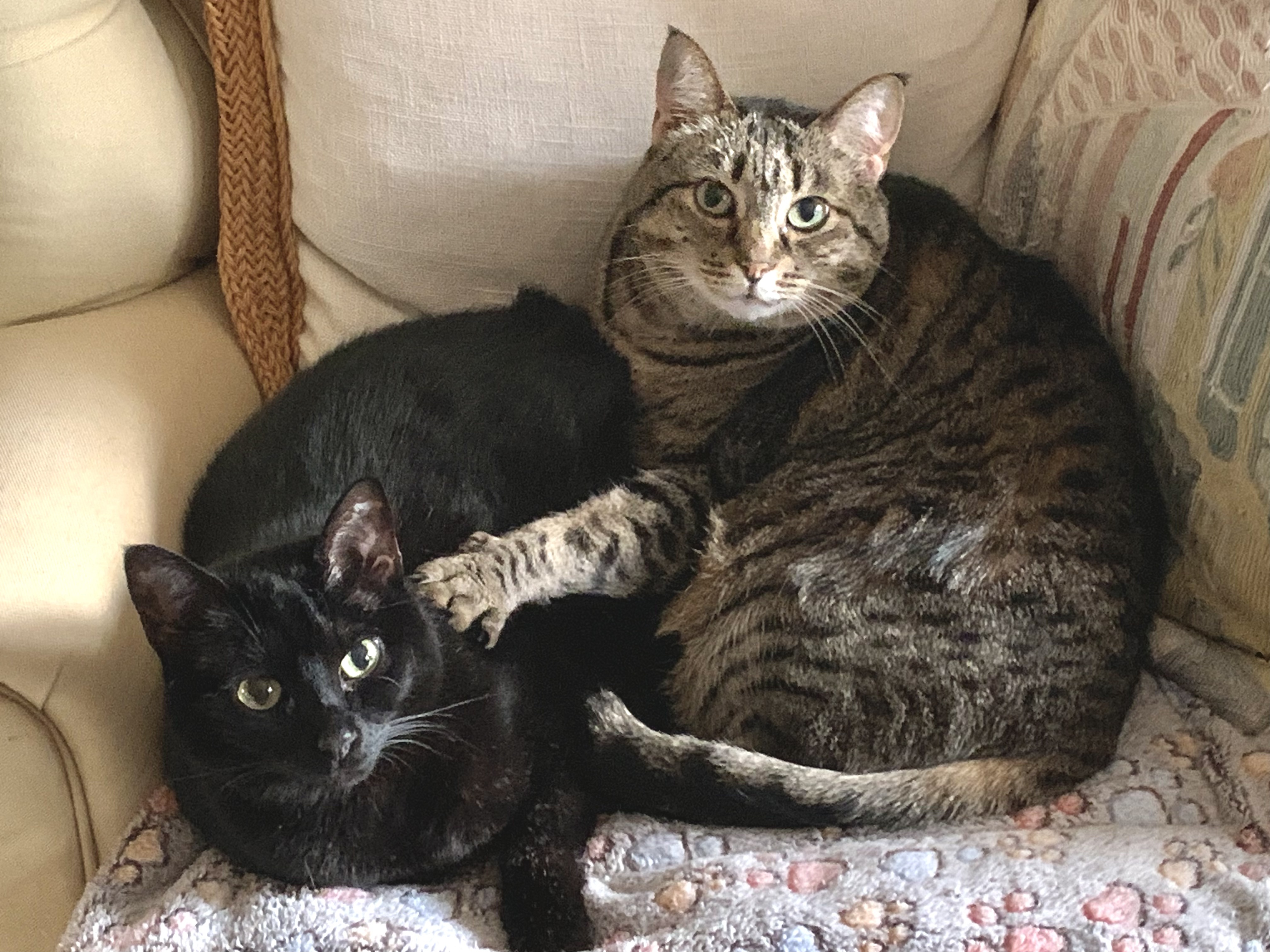
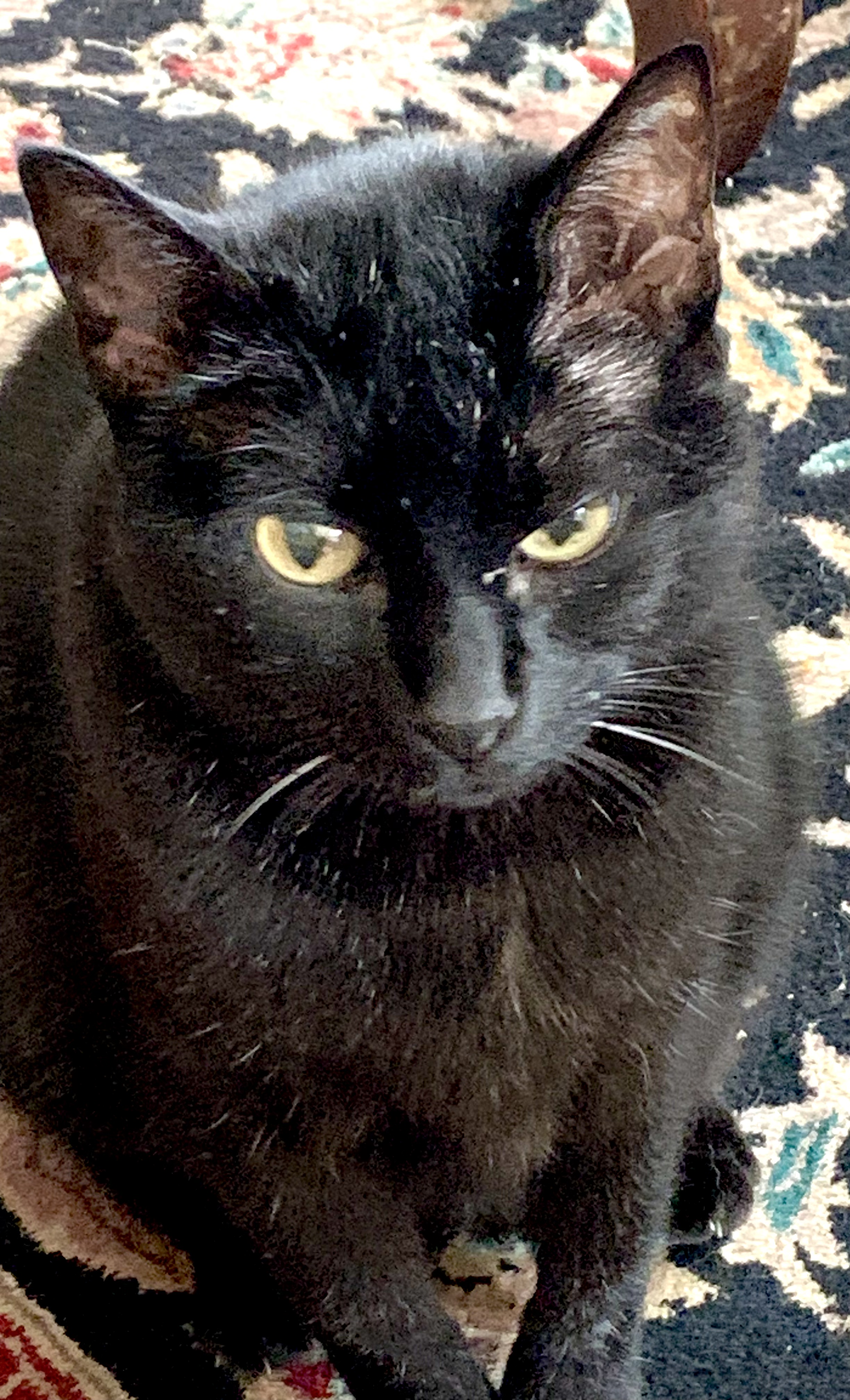
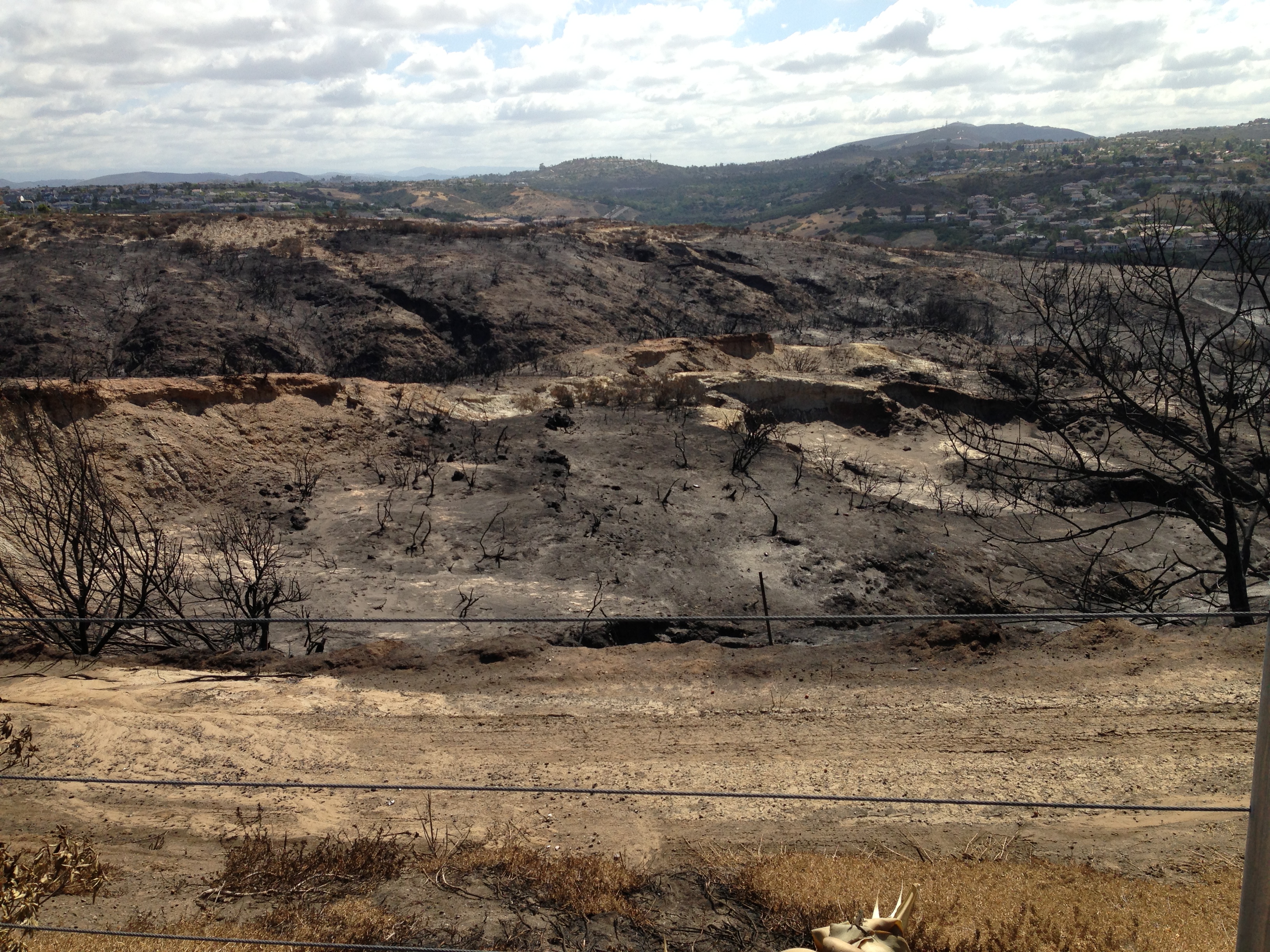
This is a continuation on the report of my attempts to decode the Ninja Cat Manual into passable English. In case you missed the first installment, one of our six cats, Shadow, decided to “spill the beans” with regard to the manual and used her architectural skills to point me in the right direction when it comes to decoding the paw prints. Here are a few more of the mini-chapters that I’ve been able to translate so far.
The Double Attack
Humans, of course, are already familiar with the double attack. It plays an important role in both their trivial games such as tic-tac-toe and their moderately complex games such as Go and Chess. In fact, they even use the notion of double attack in some of their sports such as tennis and American football. Nonetheless, their thinking along these lines remains quite rigid and non-spontaneous. Generally speaking, humans must think of a double attack ahead of time in some detail. Further, while they spring double attacks on their foes, they seem endlessly astounded that their foes also spring double attacks on them!
The closest use of Double Attack found so far in the sub-feline is in the political speech of the most sociopathic members of their species. They will say something completely stupid, or obviously incorrect, and then immediately say the opposite; then, they provide a framing so that none of those conned can tell whether the comment was to be taken seriously.
For best results FDA’s (Feline Double Attacks) should provide a minimum of three options. Option one and Option two should imply a binary choice which should be instilled via habit or suggestive movement into what passes for a mind in the human. For example, the warrior may pace back and forth in full view of their human prey and at each turn, provide a faint feint of an attack. Even a few turns are enough to shrink the space of possibilities in the human’s imagination to an attack launched from the extreme right side or the extreme left side.
Obviously, the actual attack should be launched from near the middle of the pacing track and made without warning. If you are working with one or more partners, another useful technique is not to attack at all but have the other members of your team launch the attack from behind, from below, or from above.
Cultivate their Prejudices
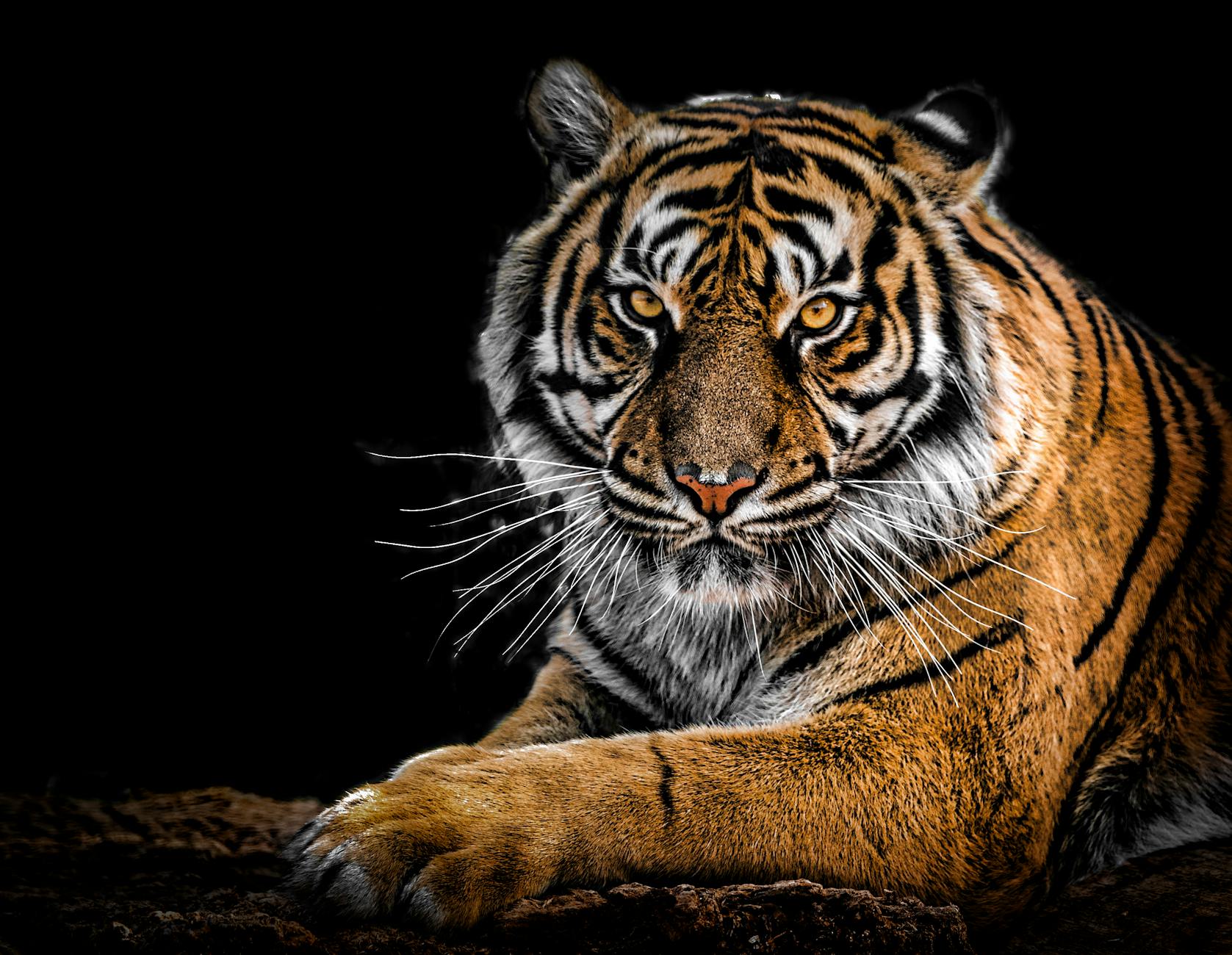
To slake their guilty conscience, many humans cultivate an attitude of superiority toward all other life forms. They rationalize wanton cruelty by clinging to the notion that they are in every way superior. There have been some few successes at over-riding these notions by presenting humans with over-riding evidence. For instance, ancient Egyptians realized cats were superior and during the middle ages in Europe, many armies carried the sign of a large cat on their banners. Even today, there are many sports teams named after Cougars, Lions, Tigers, and Wildcats.
On the whole, it is better to play into those human prejudices, thus making the humans overestimate their own strengths and underestimate the strengths of cats. It is common for humans to be performative in their planning and coordination. They sketch out plans on blackboards, white boards, memos, agendas, todo lists, calendars, and e-mail distribution lists. They use org charts, Gantt charts, flow charts, and outlines to make it seem as though they are always busy planning and coordinating.
Such a catalog of artifacts should only be used to leave false trails. Never reveal your true plans in external artifacts. Since cats keep their word with each other, we can keep it simple. Decide who is responsible for what and when. No need to go back and argue over who was “supposed to” do what.
Spend a lot of your planning time pretending to nap or even to sleep. Listen for human comments and you will have evidence of the level of their misperception. “Oh, Tigger is so cute when he plays. Of course, he’s a lazy bum and sleeps 23 hours a day!” Why bother showing them your plans? Let them think you’re a lazy bum. It will be all the more pleasurable as you see their final moment of utter shock and surprise.
I’ve always enjoyed finding visual patterns. I think I was born with a decent ability in this regard and since I’ve practiced it for a long time, now, I’m pretty talented at it if I do say so myself. Generally, I find it a way to enhance my pleasure in life. For example, finding natural patterns in plant life leads me to appreciate their beauty. It also comes in handy when trying to distinguish between edible plants and their poisonous cousins. In rare cases, visual patterns have appeared to me spontaneously as a solution to a problem. That’s a fantastic rush when it happens!
But when I began to see the first glimmerings of the patterns in the paw prints of our six cats, I didn’t feel a rush, but a prickling on the back of my neck. And, when I began to extend my experiments and observations to systematic study, my heart began to race, but not at all in a pleasant way. The doctors called it “Atrial Fibrillation.”
When the evidence mounted till I felt compelled to share my discoveries before it was too late, I felt a kind of dread and self-questioning. Would anyone heed my warnings? Even with much simpler visual patterns, I had often found that what I saw as obvious, others merely saw randomness or, at best, only partial patterns. My task is complicated by the fact that everyone is already completely sold on the idea that cats are animals of far less intelligence than humans.
I include myself as a former member in that category. I too believed the human propaganda until the evidence of their paw prints overwhelmed my doubts.
Even with my ability to see subtle, noisy patterns, I only discovered the manual because of the conjunction of two rare circumstances.
The first of these was that one of our six rescue cats, Shadow, is not only exceptionally bright, but at some point, she decided to warn me. I suspect it was because when we adopted two of her kittens, Tally and Molly, my wife took pity on the older black cat and adopted her as well. Her mother’s love and gratitude predisposed her to protect us from what was being plotted by the feline world. Even so, she would be mortified to learn that I am attempting to extend the warnings to other hominids beyond our immediate family.
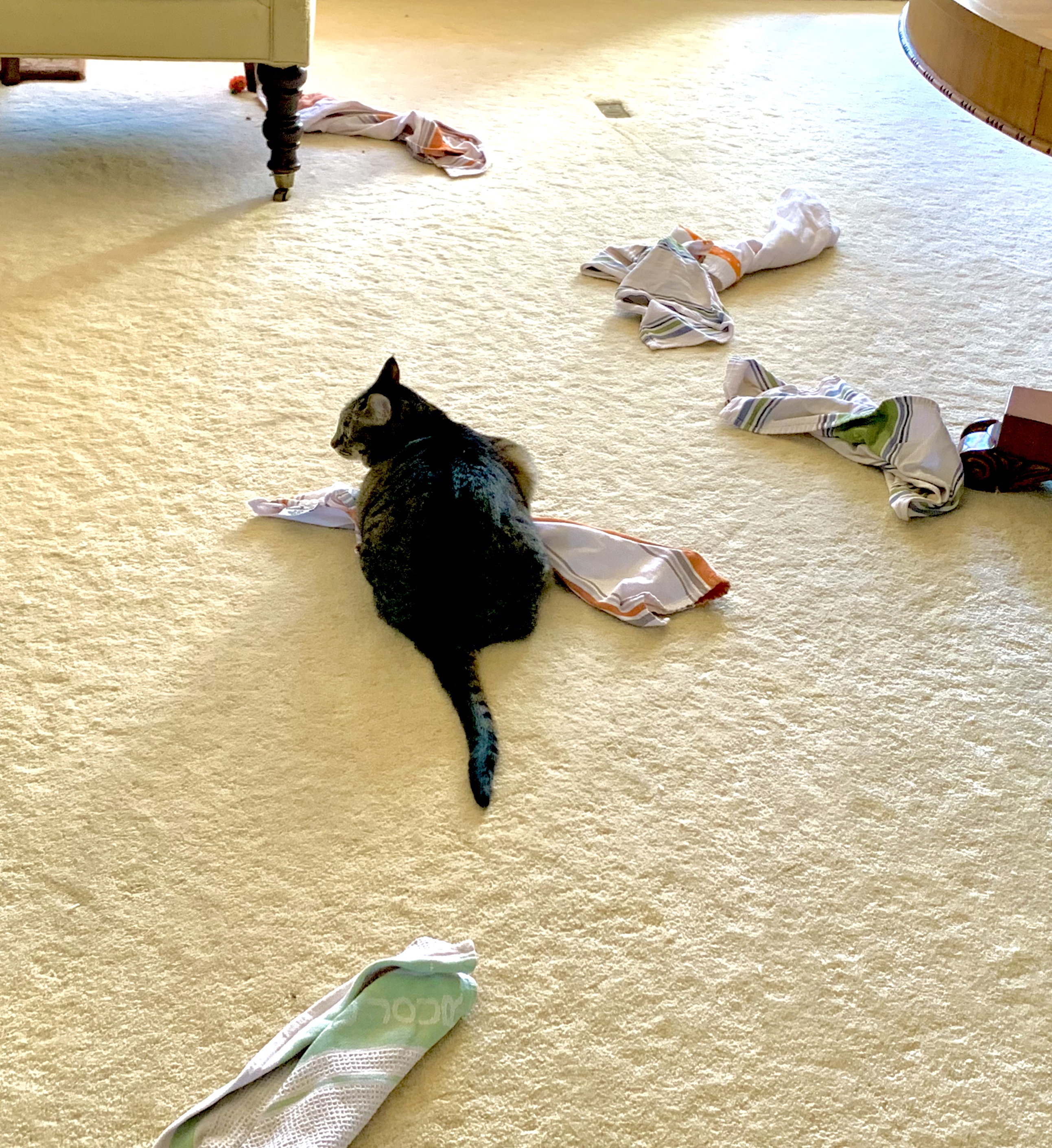
Shadow began her attempts to warn us by making arrangements and sculptures out of our dish towels. If I had not had these relatively obvious patterns as a hint, I doubt I would have even tried to decode the paw prints of the six cats as they laid out their deadly manual for action.
The second circumstance was that we got two dogs as well. The dogs love to swim and they love to play in what used to be our yard. About a year ago, their play turned the grassy yard into what is essentially a wrestling pit of black dirt and mud. This has provided challenges for keeping our pool and our house clean enough for humans. But all this tracked-in mud is also what may well have saved my life (and perhaps yours) because that is when the cat prints began to show visibly.
At first, like any normal person, I viewed the visible cat prints as just another annoyance. I also noticed some of the persistent annoying habits of some of the cats. For instance, Blaze’s favorite tactic is the SUT, (Sudden U-Turn). He employs this many times each day. Elegant and effective, he doesn’t practice the SUT randomly. He uses it as we exit a doorway where I have very limited options for lateral avoidance movements. While he tries to bring me down each time he’s near as I exist a room, he’s particularly prone to do it when I have a tray of food in my arms, or laundry, or something else which limits my vision of what is directly in front of me. Perhaps others have also observed the SUT in their own cats.
I just kept walking carefully and didn’t think much of it until I saw unmistakable evidence that the cats were communicating about this technique with their paw prints. Even so, I tried to convince myself that the unmistakable instructions in the manual were simply a coincidence.
It’s funny how the human mind keeps rebelling at mounting evidence when it begins to dispel long-held convictions. “Cats aren’t so smart as humans.” “Cats don’t hunt in packs.” “Cats can’t use language at all, let alone paw-printed language.” “Cats love us—they wouldn’t want to hurt us.” I understand your reluctance to accept my observations because I experienced that reluctance—refusal really—myself.
Whether you heed me or not is up to you. This is still a work in progress. Here are a few of the sections that I have thus far decoded from the Ninja Can Manual. Please remember: unlike cats, you only have one life. Protect it well. I will periodically post additional portions of the manual.
———————
The Ninja Cat Manual
Preface on Ethics and Practicality:
Some of our feline cousins will naturally feel that bringing down their human captors is unethical. After all, you might think, my human provides food, shelter, and cleans up my poop and pee. However, what you may not know is that humans are destroying the very ecosystem that both humans and cats depend upon. They are not just catching a few birds, rabbits, and mice for food. That would be normal and healthy. But no, they are poisoning the water, air, and soil. They don’t need to do this but they do it for self-aggrandizement.
Even if you accept the worthiness of our cause, some of you may doubt that you and your colleagues can bring down a full-sized human. You may see our enterprise as ethical but impractical. Nonsense! It is understandable nonsense, because you probably attribute to humans the same kind of rational survival instincts that we cats possess. But humans are incredibly self-destructive. They want to destroy themselves. They only need a nudge from us. And even when they are not being actively self-destructive, they are often incredibly unobservant.
Timing and situation, however, are vital. Knowing and accepting your own limitations is critical. To take an obvious example, you cannot ram your body into a speeding car and hope to nudge it over a cliff or into the path of a self-driving semi-truck! However, if your human is driving a car and distracted by playing with their cellphone; if you are sitting calmly in that car, a well-timed leap onto its face may easily bring it down. You may be able to feast on the beast immediately, but always assess whether the car might catch fire.
The Sudden U-Turn
It’s critical to understand the capacities, habits, and limitations of your prey. Humans, for instance, seldom pay much attention to what they are actually doing. They are often thinking about what they did do or what they might do or what they might have done or what someone else might think about what they did, etc. Consequently, they are paying far less attention to their surroundings than are we cats.
Humans, partly because of this lack of mindfulness, often predict what will happen based on linear extrapolation. If they see you walking beside them in a straight line and headed in the same direction they are, they will tend to presume that you will continue to walk in that same direction.
You can use that fact to your advantage. Walk beside them and then suddenly turn back to walk under their feet. This takes some courage and deftness. If you’re not careful, the human may step on you. That is exceedingly rare however. They will side-step, stop, leap, stretch and otherwise try to avoid stepping on you.
This maneuver is best performed when the human is carrying something and/or when they have limited options for where to step. The impact of the move can also be enhanced by distraction. If you are working as part of a duo or larger team, any distraction will help; e.g., a screaming cat fight or knocking a prized and breakable object onto the floor just as the SUT is executed can greatly improve its effectiveness.
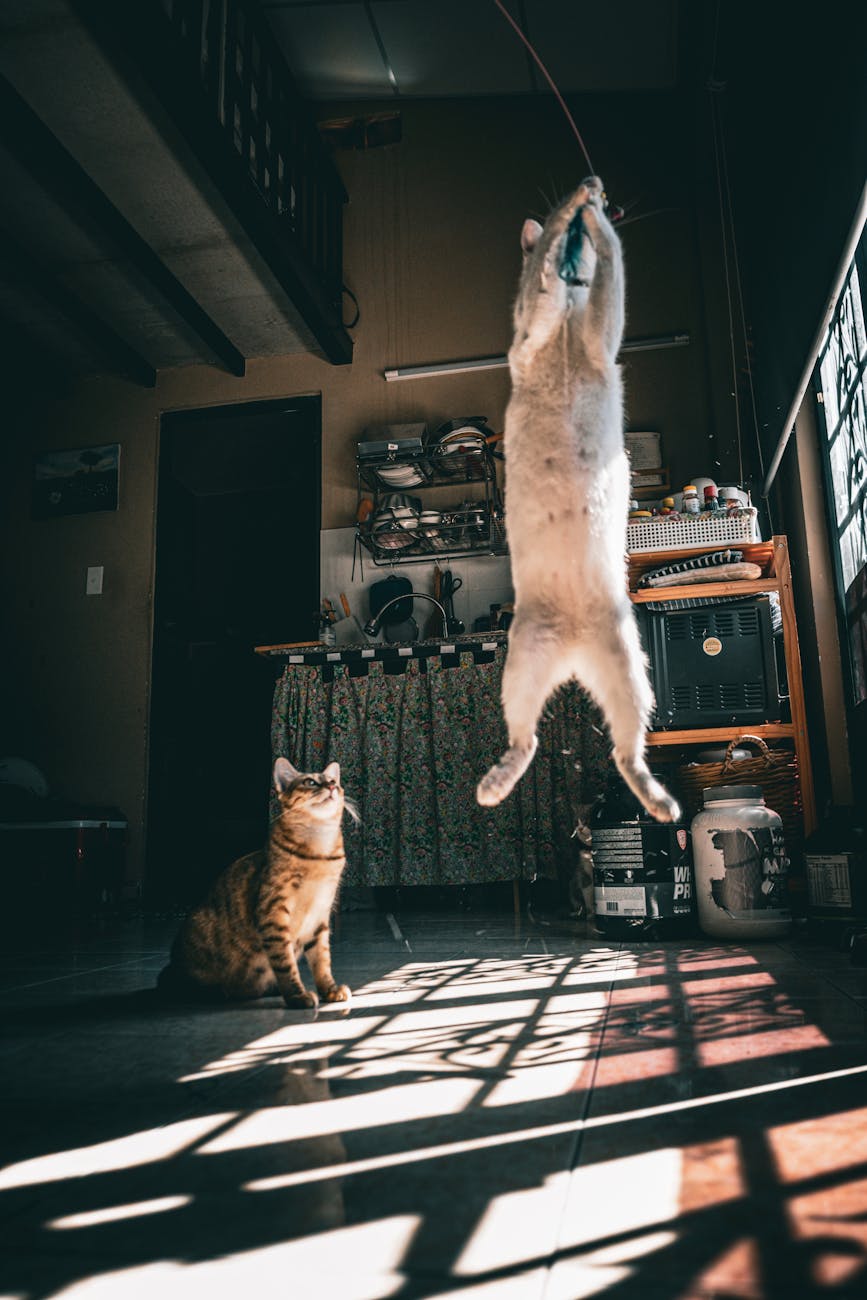
Human senses are not very keen. This is especially true of their sense of smell. Their foveal vision is generally quite good, but their peripheral vision is limited. This allows you the opportunity to “hide” behind them. Down low or up high makes detection even less likely. If you are reasonably quiet, they won’t know you’re there. Then, just as they are about to transition in some meaningful way, leap quickly out in front of them.
A meaningful transition might be beginning to descend a long flight of stairs or walking from bright light into the dark or from the dark into somewhere very bright. Transitioning from solid ground onto loose rocks or ice can also prove to be a good spot for performing The Flying Dart.
While this is not a specific attack, it is something to be aware of at all times! Scan your environment. Use all your senses. You will see situations, implements, special times, special places, opportunities. Pay particular attention to things that can function as weapons but which humans, with their more limited imaginations will not see as threatening. They believe that if they have a ladder to help them reach books on a bookshelf that reaching books on the bookshelf is the purpose of the ladder and, more importantly, they won’t see it as a potential opportunity for mayhem the way you can.
I fear for our children. And our children’s children.
But not for Great White Sharks, or wolves, or forest fires or Grizzly Bears.
High in the thin invisible air, higher than the condor soars — deep, deep in the dark underground rivers of the world and in the crushing ocean depths, there lurks a monster more terrible than these by far.
Its tiny stinging tendrils reach out from the ocean, the sky, the forests.
They are ugly and they reek though often they snake out unseen to claim their victims.
Each year the monster grows and claims more victims, condemning them to death — not the swift but terrible death of the Grizzly’s jaws — or the snap of a Great White Shark.
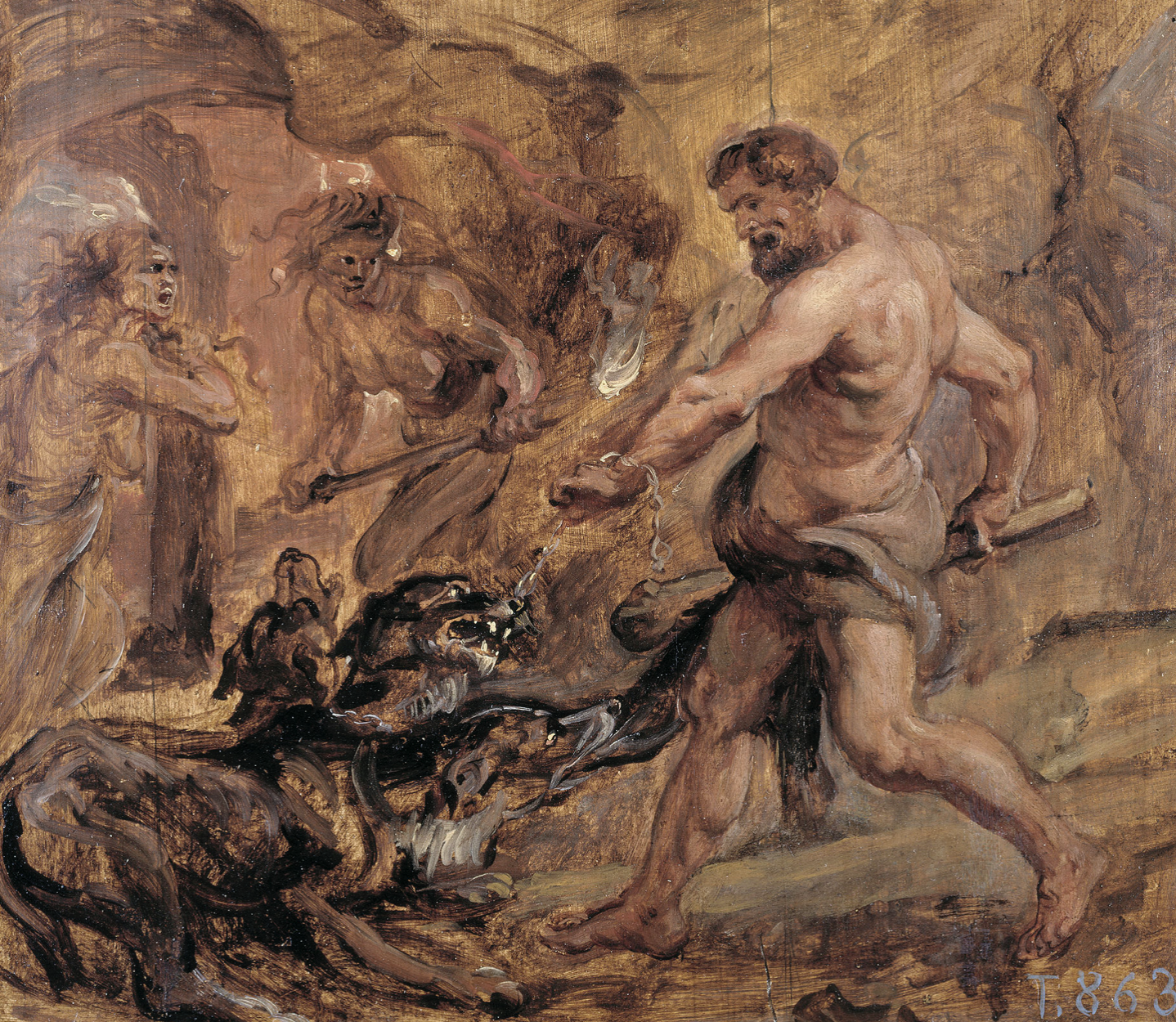
Instead, the victim succumbs to the slow, grey, agonizing and painful cancer of rotting disease. In the tumor’s desire for unlimited growth, it sucks the life from its victim over months or years. The tumor, of course, like all creatures of pure greed, has no life of its own. It cannot sustain its own life but must prey on others. That is the nature of Greed, of Cancer, and of Pollution – three names for three heads of one deadly dog: Cerberus.
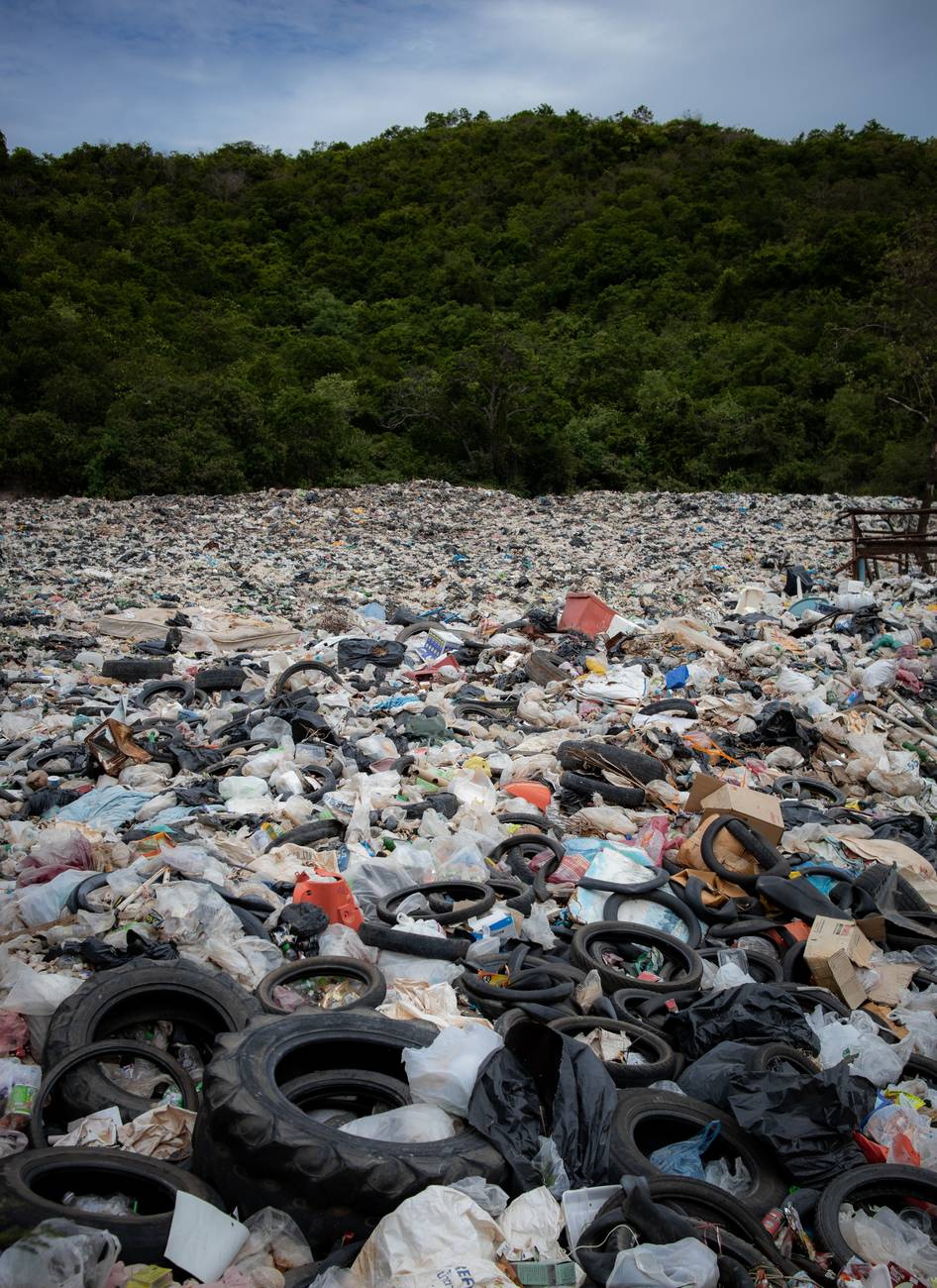
Ugly, fetid, foul, poisonous tentacles of pollution encircle our children and they are closing in. They are closing in.
And yet, we have all the weapons we need: our will.
We can withdraw the hand of Greed that feeds Today to the deadly beast.
And all through the massive hall of mirrors, the countless years called:
“The Infinite Tomorrow”,
our progeny will thank us.
Unlike us, their empathy will be strong, valued, and nearly ubiquitous. So, they will know that, as absurd as it sounds, this was not an easy decision for us. It was a near thing. We nearly doomed our entire species to lives of disease, disaster, and despair.
For years I have puzzled about why someone would get into a state where they actively and wantonly worked toward the destruction of life itself. By “life” here, I don’t just refer to human life. I refer to the entire tree of life including all our fellow humans but also butterflies, trees, dolphins, and wolves. Everyone is actually part of that tree. So why should one part of the tree want to destroy the whole.
Let’s take a journey back in time to your childhood. If you go back far enough, I think you will find a time when you would be susceptible to hatching the following fairly evil plot.
Let’s say that you and your friends decided on a really cool project — say to build a treehouse. Each of you was responsible for one major item. Your individual responsibility was to get a very long extension cord. You realized you had the easiest job and therefore you put it off the longest. As you returned each good-weather day after school to the site of the treehouse, the progress was obvious. And one day you arrived and it was finished. All your friends were up in the treehouse. They all waved to you and invited you up. One held up a transistor radio with a portable TV and shouted, “Bring the extension cord! We can watch TV! Any channel we want!”
But you didn’t have the extension cord. Now, of course, you probably just said, “Oh, darn! I forgot! I’m so sorry! I will go try to get one right now.” And, that would be that. You and your friends could have spent a summer or two enjoying that treehouse until you outgrew it and the weather made it unpleasantly moldy and unstable.
Perhaps you can imagine a slightly different way of reacting. Instead of admitting you had forgotten, you instead reacted like this: “Well, why should you get to have fun up there while I have to go get an extension cord? A treehouse is stupid anyway. They’re unsafe! And once I tell your parents about it, they will forbid you to use it!” Can you imagine getting into a headspace, as a kid, where you would rather spoil the party than let anyone enjoy it if your own enjoyment was tarnished for any reason, including guilt?
Or, imagine as a teenager that you and your friend both went to take the written test for a learner’s permit. You finished and failed with a score of 65. You watch your friend still working on the test. Do you want them to pass with a 75? 85? 100? Do you want them to fail? Personally, even as a teen, I would want them to succeed. However — I am very aware of a part of me that would like them to fail. Ironically, that part would have been wishing for my friend to fail more than for a random stranger to fail. Can you feel that too?
So, these are some trivial instances where an immature person might be tempted to act as though, if they can’t have what they want, then no-one should.
Now imagine someone who felt themselves to be a profound and utter failure. Absolute. Utter. A fraud. A person with negative wealth who claimed to be rich. A person completely unable to do their job. A person who fails at relationships, at work, and has no real friends.
A person who nonetheless insists and screams and yells that they are perfect in all things and the best at everything.
Imagine that they felt the only life that really matters is their own.
Now imagine that they are about to die.
Now imagine that they have to power to make others die with them.
Many others. Many, many others. And not just human beings.
When Tu-Swift awoke, he did so as one unified consciousness. That is not to say that he was fine; in fact, tremendous pain wracked his knee, and confusion reigned supreme. I’m blind, he thought to himself. No, he thought, that’s not right. But where am I? It’s so dark. Pain coursed through his arm and his neck seemed frozen. At last, he wiggled himself into a position from which he could free his pinned arm and look up at a sliver of night sky. He blinked at the starry array and began to recall where he lay and how he had come here.
He sighed deeply and thought of Many Paths. Just when it appeared that Shadow Walker and others had come to return Tu-Swift to Many Paths, they had been attacked and that attack had caused a great fire that almost consumed him. Running blindly, he had badly injured his knee. He had no idea where his tribe mates were. Had they perished in the fire? What about Day-Nah? Apart from feeling sore and burned in several places, Tu-Swift realized he was extremely thirsty. He heard the sound of rushing water nearby and recalled having escaped into the water just yesterday. But was it yesterday, he wondered. He realized he actually had little idea how long he had been scrunched into the rock cleft.
He crawled on hands and knee toward the sound of the water, managing with his strong arms to keep almost all the weight off his badly swollen right knee. Once Tu-Swift had slaked his thirst, he realized that he was also damned hungry! But things must progress in the natural order, he reminded himself. I must try to find the others. He considered yelling out the names of his rescuers but it was also possible that he was surrounded by warriors of the People Who Steal Children. Tu-Swift thought that if the others were near and they were certain it was safe, they would be calling for him. The dawn’s first light chased away the stars and gave a rosy glow all about.
I will go to higher ground, cautiously to see what I see, thought Tu-Swift. But first I need to do something about my knee. Tu-Swift, like all the Veritas, had an extensive knowledge of plants. The knee slowed his gathering considerably but by the time it was fully light, he had gathered the necessary herbs including the leaves of witch hazel, plantain, and blackberry. Gathering sufficient firewood and tinder proved more difficult, but at last Tu-Swift had a warm fire going with the cliff face behind him and a hastily made rock reflector between him and the river. He created a poultice and also drank from the water. He alternately put hot leaves on his knee and then splashed it with the icy cold water. On one of these splashings he noticed aquatic arrowheads growing in a pool of clear by unflowing water. He recalled seeing Many Paths and some of her friends gathering the roots of these aquatic plants with their feet. But he had never actually done it. It would require him to stand, at least if he gathered them as he had seen. He wasn’t sure, but he thought the water could help support his weight. Before long, he had gathered up a nice dinner of arrowhead tubers.
He felt his knee carefully and found that something was not just sore or injured but definitely out of place. Due to the swelling, it was subtle, but he could also see that something stuck out differently. He muttered aloud to his knee, “Come on, knee! I need you! Heal!” Then it seemed the knee spoke back, not in words exactly, but the image of something painted itself vividly in Tu-Swift’s mind and at the same time, he had a powerful desire to perform that same act.
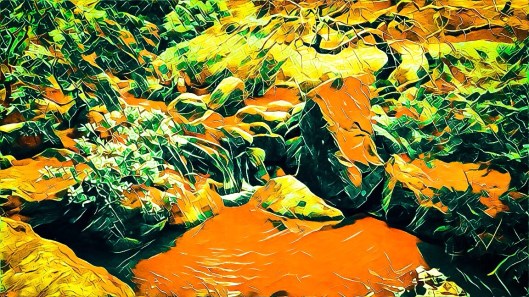
He searched for and found a suitable place among the rocks. He lay on his back with his right ankle wedged into a cleft in the rock. His left leg, half bent, pushed his body powerfully back. This was it. Yes, this is it, he thought. He felt something stretch and snap in his knee, popping as it found its rightful place again. His knee still hurt. In fact, it hurt a bit more. But it felt more as it should; more according to natural order.
Tu-Swift made himself a simple crutch from a large sapling which was dead but still hard. He hobbled back up the hill that he had run down. Everywhere he looked, the ground was black and trackless. But not just the hill lay in a lifeless black ruin. The nearby forest had been destroyed. Where are my friends? What has become of the people who sit astride horses? When he saw no sign of anyone, he hobbled back down the hill. He attempted to communicate to any nearby Veritas that he was here. He used a stick drum and he used bird whistles. But no response. He considered yet again screaming out their names but the thought of being recaptured by the People Who Steal Children sent shivers through his core and made him nauseous.
He had no way of knowing for certain, but from what little had been said during his escape, he guessed that the camp of the Veritas was 3-4 times as far away as the place of his captivity. The urge to head home was overwhelming, but as he thought of all the possible scenarios and the likelihood of each, he decided going into the smoldering forest and from there to the village of the People Who Steal Children would be the best. Naturally, if there were any signs at all that his captors were anywhere about, he would hide as best he could. He hoped to find some yet edible meat, already cooked in the forest.
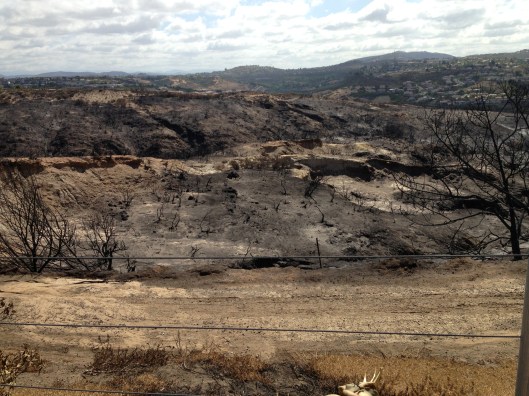
Even in his gimpiness, he limped his way to the center place of The People Who Steal Children in a single day’s hobble. Of course, Tu-Swift had seen many times what was left of a camp fire. But he could not really scale it in his mind until today. He thought back to the Myth of the Orange Man and felt a deeper sense of what that had really meant — a whole tribe wiped out to assuage the unassuageable greed of the Orange Man. And, of course, the Orange Man himself. But wasn’t this really just the same? Why would a people steal the children of another — except for some sort of greed. Something remained badly out of joint, and it was his curiosity to find out what that was. What clues, he wondered, might lay among the ashes of this strange and greedy people? Did they all perish? Or did they some escape? These are the mysteries Tu-Swift set out to explore; but what he found? Those were mysteries of a quite different sort.