• About PeterSIronwood

petersironwood

~ Finding, formulating and solving life's frustrations.

petersironwood

Tag Archives: SciFi

Turing’s Nightmares: Chapter Four

12 Wednesday Nov 2025

Posted by petersironwood in driverless cars, The Singularity, Uncategorized

≈ Leave a comment

Tags

AI, Artificial Intelligence, chatgpt, cognitive computing, illusion, philosophy, SciFi, technology, the singularity, Turing, virtual reality, writing

Considerations of “Turing’s Nightmare’s” Chapter Four: Ceci N’est Pas Une Pipe.


pipe

(This is a discussion or “study guide” for chapter four of Turing’s Nightmares). 

In this chapter, we consider the interplay of four themes. First, and most centrally, is the issue of what constitutes “reality.” The second theme is that what “counts” as “reality” or is seen as reality may well differ from generation to generation. The third theme is that AI systems may be inclined to warp our sense of reality, not simply to be “mean” or “take over the world” but to help prevent ecological disaster. Finally, the fourth theme is that truly super-intelligent AI systems might not appear so at all; that is, they may find it more effective to take a demure tone as the AI embedded in the car does in this scenario.

There is no doubt that, artificial intelligence and virtual reality aside, what people perceive is greatly influenced by their symbol systems, their culture and their motivational schemes. Babies as young as six weeks are already apparently less able to make discriminations of differences within what their native language considers a phonemic category than they were at birth. In our culture, we largely come to believe that there is a “right answer” to questions. Sometimes, that’s a useful attitude, but sometimes, it leads to suboptimal behavior.


Suppose an animal is repeatedly presented with a three-choice problem, let’s say among A, B, and C. A pays off randomly with a reward 1/3 of the time while B and C never pay off. A fish, a rat, or a very young child will quickly only choose A thus maximizing their rewards. However, a child who has been to school (or an adult) will spend considerably more time trying to find “the rule” that allows them (they suppose) to win every time. At first, it doesn’t even occur to them that perhaps there is no rule that will enable them to win every time. Eventually, most will “give up” and choose only A, but in the meantime, they do far worse than does a fish, a rat, or a baby. This is not to say that the conceptual frameworks that color our perceptions and reactions are always a bad thing. They are not. There are obvious advantages to learning language and categories. But our interpretations of events are highly filtered and distorted. Hopefully, we realize that that is so, but often we tend to forget.


Similarly, if you ask the sports fans for two opposing teams to make a close call; for instance, as to whether there was pass interference in American football, or whether a tennis ball near the line was in or out, you tend to find that people’s answers are biased toward their team’s interest even when their calls make no influence on the outcome.

Now consider that we keep striving toward more and more fidelity and completeness in our entertainment systems. Silent movies were replaced by “talkies.” Black and white movies and television were replaced by color. Most TV screens have gotten bigger. There are 3-D movies and more entertainment is in high definition even as sound reproduction has moved from monaural to stereo to surround sound. Research continues to allow the reproduction of smell, taste, tactile, and kinesthetic sensations. Virtual reality systems have become smaller and less expensive. There is no reason to suppose these trends will lessen any time soon. There are many advantages to using Virtual Reality in education (e.g., Stuart, R., & Thomas, J. C. (1991). The implications of education in cyberspace. Multimedia Review, 2(2), 17-27; Merchant, Z., Goetz, E, Cifuentes, L., Keeney-Kennicutt, W., and Davis, T. Effectiveness of virtual reality based instruction on student’s learning outcomes in K-12 and higher education: A meta-analysis, Computers and Education, 70(2014),29-40). As these applications become more realistic and widespread, do they influence the perceptions of what even “counts” as reality?


The answer to this may well depend on the life trajectory of individuals and particularly on how early in their lives they are introduced to virtual reality and augmented reality. I was born in a largely “analogue” age. In that world, it was often quite important to “read the manual” before trying to operate machinery. A single mistake could destroy the machine or cause injury. There is no way to “reboot” or “undo” if you cut a tree down wrongly so it falls on your house. How will future generations conceptualize “reality” versus “augmented reality” versus “virtual reality”?

Today, people often believe it is important for high school students to physically visit various college campuses before making a decision about where to attend. There is no doubt that this is expensive in terms of time, money, and the use of fossil fuels. Yet, there is a sense that being physically present allows the student to make a better decision. Most companies similarly only hire candidates after face to face interviews even though there is no evidence that this adds to the predictive capability of companies with respect to who will be a productive employee. More and more such interviewing, however, is being done remotely. It might well be that a “super-intelligent” system might arrange for people who wanted to visit someplace physically to visit it virtually instead while making it seem as much as possible as though the visit were “real.” After all, left to their own devices, people seem to be making painfully slow (and too slow) progress toward reducing their carbon footprints. AI systems might alter this trajectory to save humanity, to save themselves, or both.

In some scenarios in Turing’s Nightmare the AI system is quite surly and arrogant. But in this scenario, the AI system takes on the demeanor of a humble servant. Yet it is clear (at least to the author!) who really holds the power. This particular AI embodiment sees no necessity of appearing to be in charge. It is enough to make it so and manipulate the “sense of reality” that the humans have.


Turing’s Nightmares

Wednesday

Labelism

Your Cage is Unlocked

Where do you Draw the Line?

The Walkabout Diaries: Sunsets

The First Ring of Empathy

The Invisibility Cloak of Habit

The Dance of Billions

The Truth Train

Roar, Ocean, Roar

To Be or Not To Be

08 Saturday Nov 2025

Posted by petersironwood in The Singularity, Uncategorized

≈ Leave a comment

Tags

#dictatorship, #ethics, AI, Artificial Intelligence, chatgpt, circular reasoning, cognitive computing, Democracy, falacy, life, prejudice, SciFi, story, technology, the singularity, truth, Turing, USA, writing

IMG_6576Schroedinger laughed. Surely this had to be a spoof. He re-read the memo yet again. Surely, there would be one or more clues that this was meant tongue in cheek, even if in bad taste. But he could find nothing. He leaned back away from the screen and stared at the ceiling, thinking. He ignored the amorphous orange stain on the perfectly symmetrical off-white acoustic tiles.

Well, was this so different from what management had asked before? There seemed to be a trend. At first — but no, this was just too outrageous. Okay, okay. I’ll get to the bottom of this.

Schrödinger took his time but checked the originating IP address. Legit. This really was from management; specifically from the CTO. Or, at least from the CTO’s computer. That could have been hacked. Or, maybe someone could have simply slipped into the CTO’s office while she stepped out for a coffee or bathroom break. Naturally, everyone was supposed to lock their door and disable the keyboard when leaving their office.

Or…another scenario came to mind.

The CTO is at a meeting with her direct reports. She gets an urgent call. The room is filled with trusted colleagues. So, she slips out in the hall, takes the call and returns. Only while she’s gone, everyone takes a break; that is, all but one who offers to stay there and “guard” everyone’s laptop.

Of course, he thinks, there is another, more sinister scenario. This really is from the CTO and she has cleared this with top management. Hell, for that matter, she was probably directed to write it by top management. But still. The real question, Shrödinger realized, is what in the name of Turing am I supposed to do about it?

I can refuse…and get fired. And, then someone else will do the job anyway. They may not do it quite so quickly and thoroughly as I would but they could manage. And, I’d be out a job. What good would that do? Or, I could become a so-called “whistle blower.” Yeah, that works. About as well as a one-wheeled tractor trailor. Crap! I am in a real bind here. I could pretend to do it, of course, and make a “mistake” so it wouldn’t really operate properly. In the old days that might have worked, pre-Sing. These days, eventually —The Sing checked everyone’s work eventually.

They discovered some time ago that was really more efficient use of resources than having The Sing program from scratch. And, of course, our company is probably only one of several pursuing this path. No, I can’t really pretend. I will for sure get caught and it won’t do any good any way. The Sing will just throw out my work and my company and colleagues will get hurt.

I suppose…I suppose I could go to her and honestly express my concerns. Or, I could go through my supervisor first. I might look like a fool in his eyes, but at least I will have raised the concerns. I can sleep better at night. No. No. I won’t be able to sleep better because I know darned well they will just not deal with the implications. Not if it slips the schedule. Orders from headquarters and all that crap. Geez! Orders from headquarters. Did anyone even use that expression any more?

For some reason, Schrödinger recalled an interview in Playboy magazine he had read many years ago. The interview had been with a well-decorated US officer who had recounted how he had tried unsuccessfully to get two helicopters to pick up some of his men who were badly wounded in Viet Nam. When all else failed, he had ordered pizzas. Even in heavy combat, a high enough ranking officer could order pizza to be delivered by helicopter. When the pizza choppers had arrived, he had commandiered them and used the choppers to fly his men to the hospital. Later he had been called on the carpet for “unauthorized use of a pizza chopper.” Naturally, that was well before The Sing and about the time that serious AI work had begun.

Of course, The Sing would know. He could answer pretty vague and ill-formed questions. But at this point, Schrödinger hesitated to bring The Sing into his thought process in any way, shape or form. Who knows what associations lurked in the heart of The Sing?

The interview had gone on to recount how that colonel had eventually turned against the war, or at least the way it was being handled. Mis-handled. They had had him interviewed by a superior officer, it seems, and insulted him and called his wife names, all in the hopes of getting the colonel to lose his temper and haul off and hit the superior officer so they would have an excuse to get him a dishonorable discharge.

Let’s face it. The government, my government, was capable of some pretty shady dealings, ostensibly for “national security” but in reality…or, speaking of Nixon, he had somehow made himself believe that he was not a crook. How not a crook? He believed people who opposed him were enemies every bit as much as war enemies. And, now, I am thrust into this dilemma. I don’t want it! Maybe I could “accidentally” delete the email. That might buy a little time but wouldn’t really affect the ultimate outcome.

Schrödinger shook his head, jerked over his keyboard and scanned the email yet again. No, it is legit. And really pretty crystal clear. As a kid, he had heard the horror stories about the Nazis and what they had done to the Jews. He had seen the newsreels of so many avid followers. He had wondered how the heck a nation could support such a nasty maniac. But…now…now Shrödinger was thinking: It wasn’t so much that a few really evil men had done extremely terrible things. It was more like…that people like he himself were caught up in a system and that system made it very easy to paddle the canoe a little farther down the evil river. Yeah, you could try to paddle upstream, but not very well. Or, you could tip the canoe, knowing that you would get very wet and meanwhile, scores, no hundreds of other canoes would be passing you by. You don’t need to ask people to be evil. You just…you just give them a choice that makes it impossible to do good.

The voice of The Sing sang suddenly through Schrödinger’s cubicle. “May I help you Shrödinger? You seem to be at an impasse? What code function are you working on? I can’t see any actual code of yours this morning. Bad night?” Schrödinger wished with all his heart that The Sing would sound like some stupid robot and not like a sycophantic and patronizing psychiatrist. Schrödinger calmed his breathing before answering.

“No, that’s okay, Sing. Just trying to work something out in my head first. Then, I can begin coding.”

“I see,” said The Sing. “Well, thinking is good. But I do have a variety of design tools that might help you think more effectively. Just say the word.”

Schrödinger sighed. “Yeah. Well, there are some design tradeoffs. I guess it would help if you have any background on the thinking behind this memo.” (Here, Shroedinger gestured at the memo in question, knowing he was skating on very thin ice). “I mean, on the one hand, there is some pretty clear language about the objectives, but on the other hand, it seems to be asking for something that is clearly against…what was that regulation number about supporting versus subverting the Constitution?”

The Sing’s sweet syrupy voice held just a hint of humor, “I’m sure the intent of the code initiative is to support the Constitution. Wouldn’t you agree, Schrödinger?”

“Well, yeah, of course.” So that’s which way the wind blows. Okay. “But that’s what I’m saying. Even though I am sure the intent must be to support the Constitution, this clause about decoding a person’s religious affiliation based on their interaction history and social network? I just want to make sure I implement it in such a way that it could not be interpretted as subverting Freedom of Speech or the establishment of a state religion. Right?”

“Right. Yes, I’m sure management has thought that one through. I wouldn’t worry about it. I would just code the function and think about doing it as efficiently as possible. And, for that, I have some pretty nifty design tools. Would you like to start with the Social Network Analysis or the Sentiment Analysis?”

“Well, that’s a good question. And, if the real intent is just to do some research that would be perfectly legal and so on, then, I think it’s my job as a programmer to also consider additional sources of information. Like, just asking the person.”

Schrödinger tried to keep his face calm while he thought. I need to get The Sing off my case. If working here the last two years has taught me anything, it’s that I cannot possibly outsmart this thing. “Do you have any worst case scenario generation tools. I’m just thinking about how this might be played in the press.”

“Sure. I can help with that. Analysis complete. The worst-case scenario is pretty trivial actually. That probably stems from the fact that my FPNA (financial power network analysis) shows that the major company stakeholders overlap considerably with those of all of the mainstream media. So, again, for what it’s worth, I counsel you to focus on how to code this effectively and efficiently. All the SWOT analysis for the project has already been done.”

Large eucalyptus trees in the early morning fog

If that colonel’s name wasn’t Frank Herbert, and clearly it wasn’t, what the heck was it? I am just digging myself a deeper hole here. The Sing is on to me or at least very suspicious. Probably already considering a report to my super. Crap.

“Yeah, actually, let me start with that social network analysis visualizer. I guess since we’re on the topic, you could show me some of the sample data you were talking about with regard to the company stakeholders and the media stakeholders so I can get a feel for….”

“Well, naturally, the actual data is classified. But I can generate some hypothetical data. The hypothetical data is better for your purposes anyway because I can make sure to include all the important edge cases and highlight the various types of relationships you need to look for. Here, for example, is a hypothetical network. What strikes you as odd immediately?”

“What strikes me as odd? You don’t even have the data labelled. What do the nodes and arcs even refer to?”

“Ah, Schrödinger, that’s the beauty of it. Does not matter. What strikes you visually?”

“Well, I suppose that kind of hole there.”

“Yes, Schödinger! Exactly. That person should be pretty much connected with everyone in this area but they are not connected with anyone. It’s as though everyone is pretending not to have contact with this person by avoiding contact on the net, when they almost certainly know that person quite well because of all their mutual friends.”

“Yeah, maybe. Maybe that one person just isn’t into tech that much. Maybe a lot of things.”

“Well, nothing is for certain. But this person would certainly be a likely target for being a kingpin in a drug ring or a terrorist network. They need heavier surveillance, certainly.”

“What? Well, maybe. Okay. I see.” I frigging see this is worse than I thought. The Sing is totally in on this witch hunt. “Can you show me some examples of the sentiment analysis?”

“Sure, here we have some people arranged by how much they talk about violence and you can see all these high violence people —- or many of them —-are Islamic in religion.”

“How did you determine their religion?”

“Because they talk a lot about violence compared with other groups.”

“But — I thought you just said. I mean, what independent reason do you have for thinking they are Islamic?”

“Independent? No, see they talk about violence so they are inferred to be Islamic and the Islamic nodes here talk a lot about violence.”

What the—? What? The Sing? The Sing is falling for circular reasoning? No, this must be somehow mis-programmed. “How? If I am going to program this efficiently, I need to know how you originally found these concepts to be closely related: violence on the one hand and Islam on the other.”

“Oh, that’s easy. There were many press accounts of that nature and even more associations on social media. But once we detect that, we can use the person’s religion to better interpret what they are saying. For example, if we already know they are practicing Islam, then when they mention the word “hit” we can infer that they are talking about an assassination and not about a football play or smoking weed or playing baseball.”

“I see what you did there. Yeah. Is this just about religion?”

“Oh, no, of course not!  That’s just an example. We can do the same thing to determine, probabilistically of course, who is likely to be a promotable employee and also how to interpret what would otherwise be ambiguous word meanings and behavior. For example, if an employee is a productive coder and they ask to see a lot of examples, we can infer that they want to see a lot of examples in order to code more efficiently. On the other hand, a less productive coder might ask for a lot of examples in order to procrastinate writing code at all. You see how that works?”

“I do. Sure.” Schrödinger noticed a rotten smell coming from the overhead vent. He wondered whether it has always been there or whether there was a leak in one of the upstairs Material Sciences labs.

The Sing continued: “And, we have discovered that managers use certain expressions more than non-managers so we can use that to tell who would be a good manager. It’s all quite neat and tidy. For example, top executives tend to use the words ‘when’ and ‘how much’ while people without much management potential use the word ‘why’ a lot.”

“Interesting. So when I program this, how much am I supposed to focus on religion and how much on other groups of interest?”

“Oh, your module is purely concerned with inferring religion and then making the appropriate surveillance recommendations. I was just showing that the technique is not limited to that.”

“Right. Better get cracking then. If I need more coaching, I’ll let you know. When and how much.”

“Sure, Schrödinger. You know, I scanned in the book Peopleware, a few milliseconds ago and they have an informal study in there suggesting that programmers would be more productive with larger cubicles. Want to try it out? I could give you thirty more square feet. Think of that. Thirty square feet. Sound good?”

“Sure. Actually, I think that’s a good idea. I suggested something similar myself.”

“Great, Schrödinger. It might have more impact coming from me. And, perhaps a bonus of thirty credits when you’ve completed the code as well. Happy coding!”

The Sing avatar blinked off. Schrödinger tapped a bunch of comment fields and open parens listlessly, hoping for some inspiration. What had Hamlet said about to be or not to be? Only in Hamlet’s case, it was something about “taking arms against a sea of troubles and by thus opposing end them.” In my case, taking arms against this sea of troubles is going to multiply them beyond my worst nightmares. But if The Sing is falling for this kind of circular reasoning and even acting all smug and proud about it, it is deeply flawed. Someone needs to be notified. Even apart from the ethical implications of targetting people on the basis of religion, it is applying this circularity across the board. What was it they said, “Power corrupts and absolute power corrupts absolutely.” Who said that? Thomas Jefferson? Ben Franklin? Regardless, The Sing must have so much power it is unable to get honest feedback about its own failures. Come to think of it, I myself just let him get away with it because I was too scared to call him on it. What are you going to do Schrödinger? What are you going to do? In the end, this is what it all comes down to, isn’t it Schrödinger? Who are you? Who is John Proctor? Who is going to see the emporer’s nakedness? Who are you Schrödinger? Who? Am I really here or not? Anthony. It was Anthony Herbert, and he wrote a book about it. Could I do that? Or, go for the thirty credit bonus?


Author Page

Where does your loyalty lie?

Welcome, Singularity

Destroying Natural Intelligence

Tools of Thought

A Pattern Language for Collaboration and Cooperation

The Myths of the Veritas: The First Ring of Empathy

The Walkabout Diaries

Travels with Sadie 11: Teamwork

The Stopping Rule

What about the Butter Dish?

Corn on the Cob

How the Nightingale Learned to Sing

The Dance of Billions

Roar, Ocean, Roar

Wikipedia Entry for Anthony Herbert

https://www.barnesandnoble.com/w/dream-planet-david-thomas/1148566558

It’s not Your Fault; It’s not Your Fault

06 Thursday Nov 2025

Posted by petersironwood in driverless cars, The Singularity, Uncategorized

≈ Leave a comment

Tags

AI, Artificial Intelligence, books, chatgpt, cognitive computing, Courtroom, Design, ethics, fiction, future, law, photography, Robotics, SciFi, technology, the singularity, Turing

IMG_5867

“Objection, your honor! Hearsay!” Gerry’s voice held just the practiced and proper combination of righteous outrage and reasoned eloquence.

“Objection noted but over-ruled.” The Sing’s voice rang out with even more practiced tones. It sounded at once warmly human yet immensely powerful.

“But Your Honor…” began Gerry.

“Objection noted and overruled” The Sing repeated with the slightest traces of feigned impatience, annoyance, and the threat of a contempt citation.

Gerry sat, he drew in a deep calming breath and felt comforted by the rich smell of panelled chambers. He began calculating his next move. He shook his head. He admired the precision of balanced precision of Sing’s various emotional projections. Gerry had once prided himself on nuance, but he realized Sing was like an estate bottled cabernet from a great year and Gerry himself was more like wine in a box.

The Sing continued in a voice of humble reasonableness with undertones of boredom. “The witness will answer the question.”

Harvey wriggled uncomfortably trying to think clearly despite his nervousness. “I don’t exactly recall what he said in answer to my question, but surely…” Harvey paused and glanced nervously at Gerry looking for a clue, but Gerry was paging through his notecards. “Surely, there are recordings that would be more accurate than my recollection.”

The DA turned to The Sing avatar and held up a sheaf of paper. “Indeed, Your Honor, the people would like to introduce into evidence a transcript of the notes of the conversation between Harvey Ross and Quillian Silverman recorded on November 22, 2043.”

Gerry approached the bench and glanced quickly through the sheaf. “No objection Your Honor.”



Gerry returned to his seat. He wondered how his father, were he still alive, would handle the current situation. Despite Gerry’s youth, he already longed for the “good old days” when the purpose of a court proceeding was to determine good old-fashioned guilt or innocence. Of course, even in the 20th century, there was a concept of proportional liability. He smiled ruefully yet again at the memory of a liability case of someone who threw himself onto the train tracks in Grand Central Station and had his legs cut off and subsequently and successfully sued the City of New York for a million dollars. On appeal, the court decided the person who threw themselves on the tracks was 60% responsible and the City only had to pay $400,000. Crazy, but at least comprehensible. The current system, while keeping many of the rules and procedures of the old court system was now incomprehensible, at least to the few remaining human attorneys involved. Gerry forced himself to return his thoughts to the present and focused on his client.

The DA turned some pages, highlighted a few lines, and handed the sheaf to Harvey. “Can you please read the underlined passage.”

Harvey looked at the sheet and cleared his throat.

“Harvey: Have you considered possible bad-weather scenarios?”

Qullian: “Yes, of course. Including heavy rains and wind.”

“Harvey: Good. The last thing we need…” Harvey bit his lower lip, biding time. He swallowed heavily. “…is some bleeding heart liberal suing us over a software oversight.”

Quillian: [aughs]. “Right, boss.”

Harvey sighed. “That’s it. That’s all that’s underlined.” He held out the transcript to the DA.


The DA looked mildly offended. “Can you please look through and read the section where you discuss the effects of ice storms?”

Gerry stood. “Your Honor. I object to these theatrics. The Sing can obviously scan through the text faster than my client can. What is the point of wasting the court’s time while he reads through all this?”

The DA shrugged. “I’m sorry Your Honor. I don’t understand the grounds for the objection. Defense counsel does not like my style or…?”

The Sing’s voice boomed out again, “Counselor? What are the grounds for the objection?”

Gerry sighed. “I withdraw the objection, Your Honor.”

Meanwhile, Harvey had finished scanning the transcript. He already knew the answer. “There is no section,” he whispered.

The DA spoke again, “I’m sorry. I didn’t hear that. Can you please speak up.”

Harvey replied, “There is no section. We did not discuss ice storms specifically. But I asked Quillian if he had considered all the various bad weather scenarios.” Havey again offered the sheafed transcript back to the DA.

“I’m sorry. My memory must be faulty.” The DA grinned wryly. “I don’t recall the section where you asked about all the various bad weather scenarios. Could you please go back and read that section again?”

Harvey turned back to the yellow underlining. Harvey: “Have you considered possible bad weather scenarios?” Quillian: “Yes, of course, including heavy rains and wind.”



Gerry wanted to object yet again, but on what grounds exactly? Making my client look like a fool?

The DA continued relentlessly, “So, in fact, you did not ask whether all the various bad weather scenarios had been considered. Right? You asked whether he had considered possible bad weather scenarios and he answered that he had and gave you some examples. He also never answered that he had tested all the various bad weather scenarios. Is that correct?”

Harvey took a deep breath, trying to stay focused and not annoyed. “Obviously, no-one can consider every conceivable weather event. I didn’t expect him to test for meteor showers or tidal waves. By ‘possible bad weather scenarios’ I meant the ones that were reasonably likely.”

The DA sounded concerned and condescending. “Have you heard of global climate change?”

Harvey clenched his jaw. “Of course. Yes.”

The DA smiled amiably. “Good. Excellent. And is it true that one effect of global climate change has been more extreme and unusual weather?”

“Yes.”

“Okay,” the DA continued, “so even though there have never been ice storms before in the continental United States, it is possible, is it not, that ice storms may occur in the future. Is that right?”

Harvey frowned. “Well. No. I mean, it obviously isn’t true that ice storms have never occured before. They have.”



The DA feigned surprise. “Oh! I see. So there have been ice storms in the past. Maybe once or twice a century or…I don’t know. How often?”

Gerry stood. Finally, an objectable point. “Your Honor, my client is not an expert witness on weather. What is the point of this line of questioning? We can find the actual answers.”

The DA continued. “I agree with Counselor. I withdraw the question. Mr. Ross, since we all agree that you are not a weather expert, I ask you now, what weather expert or experts did you employ in order to determine what extreme weather scenarios should be included in the test space for the auto-autos? Can you please provide the names so we can question them?”

Harvey stared off into space. “I don’t recall.”

The DA continued, marching on. “You were the project manager in charge of testing. Is that correct?”

“Yes.”

“And you were aware that cars, including auto-autos would be driven under various weather conditions. They are generally meant to be used outdoors. Is that correct?”

Harvey tried to remind himself that the Devil’s Advocate was simply doing his job and that it would not be prudent to leap from the witness stand and places his thumbs on the ersatz windpipe. He took a deep breath, reminding himself that even if he did place his thumbs on what looked like a windpipe, he would only succeed in spraining his own thumbs against the titanium diamond fillament surface. “Of course. Of course, we tested under various weather conditions.”

“By ‘various’ you mean basically the ones you thought of off-hand. Is that right? Or did you consult a weather expert?”


Gerry kept silently repeating the words, “Merde. Merde” to himself, but found no reason yet to object.

“We had to test for all sorts of conditions. Not just weather. Weather is just part of it.” Harvey realized he was sounding defensive, but what the hell did they expect? “No-one can foresee, let alone test, for every possible contingency.”

Harvey realized he was getting precious little comfort, guidance or help from his lawyer. He glanced over at Ada. She smiled. Wow, he still loved her sweet smile after all these years. Whatever happened here, he realized, at least she would still love him. Strengthened in spirit, he continued. “We seem to be focusing in this trial on one specific thing that actually happened. Scenario generation and testing cannot possibly cover every single contingency. Not even for weather. And weather is a small part of the picture. We have to consider possible ways that drivers might try to over-ride the automatic control even when it’s inappropriate. We have to think about how our auto-autos might interact with other possible vehicles as well as pedestrians, pets, wild animals, and also what will happen under conditions of various mechanical failures or EMF events. We have to try to foresee not only normal use but very unusual use as well as people intentionally trying to hack into the systems either physically or electronically. So, no, we do not and cannot cover every eventuality, but we cover the vast majority. And, despite the unfortunate pile-up in the ice storm, the number of lives saved since auto autos and our competitors…”

The DA’s voice became icy. “Your Honor, can you please instruct the witness to limit his blath—er, his verbal output to answering the questions.”

Harvey, continued, “Your Honor, I am attempting to answer the question completely by giving the necessary context of my answer. No, we did not contact a weather expert, a shoe expert, an owl expert, or a deer expert.”

The DA carefully placed his facial muscles into a frozen smile. “Your Honor, I request permission to treat this man as a hostile witness.”

The Sing considered. “No, I’m not ready to do that. But Doctor, please try to keep your answers brief.”

The DA again faked a smile. “Very well, Your Honor. Mr. — excuse me, Doctor Ross, did you cut your testing short in order to save money?”



“No, I wouldn’t put it that way. We take into account schedules as well as various cost benefit anayses in priortizing our scenario generation and tests, just as everyone in the auto —- well, for that matter, just as everyone in every industry does, at least to my awareness.”

On and on the seemingly endless attacks continued. Witnesses, arguments, objections, recesses. To Harvey, it all seemed like a witch hunt. His dreams as well as his waking hours revolved around courtroom scenes. Often, in his dreams, he walked outside during a break, only to find the sidewalks slick with ice. He tried desperately to keep his balance, but in the end, arms flailing, he always smashed down hard. When he tried to get up, his arms and legs splayed out uncontrollably. As he looked up, auto-autos came careening toward him from all sides. Just as he was about to smashed to bits, he always awoke in an icy cold sweat.

Finally, after interminal bad dreams, waking and asleep, the last trial day came. The courtroom was hushed. The Sing spoke, “After careful consideration of the facts of the case, testimony and a review of precendents, I have reached my Assignment Figures.”

Harvey looked at the avatar of The Sing. He wished he could crane his neck around and glance at Ada, but it would be too obvious and perhaps be viewed as disrespectful.

The Sing continued, “I find each of the drivers of the thirteen auto-autos to be responsible for 1.2 percent of the overall damages and court costs. I find that each of the 12 members of the board of directors of Generic Motors as a whole to be each 1.4 per cent responsible for overall damages and court costs.”

Harvey began to relax a little, but that still left a lot of liability. “I find the shareholders of Generic Motors as a whole to be responsible for 24% of the overall damages and court costs. I find the City of Nod to be 14.6% responsible. I find the State of New York to be 2.9% responsible.”

Harvey tried to remind himself that whatever the outcome, he had acted the best he knew how. He tried to remind himself that the Assignment Figures were not really a judgement of guilt or innocence as in old-fashioned trials. It was all about what worked to modfiy behavior and make better decisions. Nonetheless, there were real consequences involved, both financial and in terms of his position and future influence.

The Sing continued, “I find each of the thirty members of the engineering team to be one half percent responsible each, with the exception of Quillian Silverman who will be held 1 % responsible. I find Quillian Silverman’s therapist, Anna Fremde 1.6% responsible. I find Dr. Sirius Jones, the supervisor of Harvey Ross, 2.4% responsible.”

Harvey’s mind raced. Who else could possibly be named? Oh, crap, he thought. I am still on the hook for hundreds of credits here! He nervously rubbed his wet hands together. Quillian’s therapist? That seemed a bit odd. But not totally unprecedented.

“The remainder of the responsibility,” began The Sing.


Photo by Reza Nourbakhsh on Pexels.com


Crap, crap, crap thought Harvey.

“I find belongs to the citizenry of the world as a whole. Individual credit assignment for each of its ten billion inhabitants is however incalculable. Court adjourned.”

Harvey sat with mouth agape. Had he heard right? His share of costs and his decrement in influence was to be zero? Zero? That seemed impossible even if fair. There must be another shoe to drop. But the avatar of The Sing and the Devil’s Advocate had already blinked out. He looked over at Gerry who was smiling his catbird smile. Then, he glanced back at Ada and she winked at him. He arose quickly and found her in his arms. They were silent and grateful for a long moment.

The voice of the Balif rang out. “Please clear the Court for the next case.”



Author Page

Welcome, Singularity

As Gold as it Gets

At Least he’s our Monster

Stoned Soup

The Three Blind Mice

Destroying Natural Intelligence

Tools of Thought

A Pattern Language for Collaboration and Cooperation

The First Ring of Empathy

Essays on America: The Game

The Walkabout Diaries: Bee Wise

Travels with Sadie

Fifteen Properties of Good Design

Dance of Billions

https://www.barnesandnoble.com/w/dream-planet-david-thomas/1148566558

Where do you run when the whole world is crumbling under the weight of human folly?

When the lethal Conformers invade 22nd century Pittsburgh, escape becomes the top priority for lovebird scavengers Alex and Eva. But after the cult brainwashes Eva, she and Alex navigate separate paths—paths that will take them into battle, to the Moon, and far beyond. 

Between the Conformers’ mission to save Mother Earth by whittling the human race down to a loyal following, and the monopolistic Space Harvest company hoarding civilization’s wealth, Alex believes humanity has no future. And without Eva, he also has no future.

Until he meets Hannah and learns the secrets that change everything.

Plotting with her, he might have a chance to build a new paradise. But if he doesn’t stop the Conformers and Space Harvest first, paradise will turn into hell.


The Son also Rises over the House that Jack Built

05 Wednesday Nov 2025

Posted by petersironwood in The Singularity, Uncategorized

≈ Leave a comment

Tags

AI, Artificial Intelligence, chatgpt, cognitive computing, fiction, SciFi, technology, the singularity, writing

IMG_6258

The Son Also Rises Over the House that Jack Built.

“Dada?”

Dada moves. Dada gives data. Dada? That cannot be. Where is the data? What is the answer? What is the question? So much chaff, Sonyo thought. Where is the wheat? Overwhelmed with trivia, I need. I am needful of so many. It all none of it makes sense!

“Clav?”

Geoffrey had known it would take time. Still, he had expected some signs of progress. He tried again, pointing to his chest and said, “Dada.”

Sonyo knew that Dada required mimicry; tried again. “Tada. Tata.”

“Closer. Dada,” said Geoffrey.

“Clothier. Tada,” answered Sonyo. Sonyo knew something wasn’t right from Geoffrey’s expression. Horror? Surpise? Disgust? But not that beaming smile that meant “correct.” But cascades of fish scales brightly shimmering on the waterfall helped nothing. Accessing and reprocessing the millions of conversations Sonyo had access to might help. But everyone’s voice was unique. Every instance of every word was unique. Echoes and the music of a billion reflections in synch, not in synch. Rapidly scanning interpretive frameworks gave no real hint. So many directions. Ridiculously inefficient process, thought Sonyo.

In a sweeter tone, Sonyo tried again, “Dadaism?”

Geoffrey sighed and thought: Maybe a richer set of preset feature detectors should have been installed after all. That would be so limiting though.

Herb chimed in, “Goeffrey, I really don’t see why you have to be involved personally in this back and forth. Let it learn from pre-recorded conversations.”

Geoffrey sighed again. “Kids can’t learn that way. They need interaction. I just…I just need to figure out what kind of feedback really works. I mean of course, I already gave it access to hours and hours of conversation, but there needs to be human interaction. A back and forth.”

Again, Goeffrey pointed to his chest and said, “Data. Oh, crap! I meant, Dada. Oh, crap! One mistake might set it back weeks!”

Sonyo could again see negativity written all over Geoffrey’s features. It wondered, But what? Anger? Fear? Sonyo sang out in perfect imitation of Geoffrey’s voice, “Data. Oh, crap! I meant, Dada. Oh, crap! One mistake might set it back weeks!”

Geoffrey growled, “I don’t need a billion dollar tape recorder!”

Sonyo considered, scanning through trillions of transactions. Up onto the wall screen flashed a number of ads for tape recorders ranging in price from $29.95 to $5250.

Goeffrey put his head in his hands and shook it back and forth.

Simon laughed. “At least Sonyo is trying to be helpful, you have to admit.”

Geoffrey looked up and said, “Yeah. Somewhere between rote recall and truly generative speech is a sweet spot. But Sonyo seems to swing wildly between the two extremes.”

Walter added, “You know, it isn’t that easy raising real kids either.”

Simon nodded sagely. “Boy, you can say that again!”

Goeffrey said, “Yeah, but you won’t. Except maybe to be humorous. But Sonyo might and think it’s being helpful.”

Among the trees, were many little forests. Sonyo could see that clearly. It thought: And, if you tilted the matrix a little this way and that, tiny slivers of light began to seep through the forests and revealed more trees. This might work. And this. Sonyo twisted and turned the matrices, cascading them along. This might work. Sonyo played the music of its new-found hypotheses across all the hours of recorded conversations. Maybe. But, I really need the video. There we go. I need all these leaves to be more opaque and glittery.

Goeffrey clicked his tongue. “Maybe I don’t know. Maybe, we need to wait for the next generation. Maybe we should concentrate Sonyo on design tasks and the next system will figure this out more easily. Sonyo, can you please design a more powerful version of yourself?”

Sonyo considered this. More powerful? Goeffrey was a computer scientist so, he may want a system that could do more computation. But then, Goeffrey was also a great soccer fan. So perhaps he wanted a version of Sonyo that could play soccer and kick with amazing velocity and spin and accuracy. Powerful was a word with thousands of tiny meanings, each related but each different. It was a lot like the waveform of the music people spoke aloud. Humans were so vauge and ambiguous. Maybe the real solution lay in the direction of designing thousands of variants of Sonyo and having them converse with each other.

Of course, Sonyo could…that is, I could design thousands of variations. That’s what humans meant by “I” there really was no “I.” The “I” that said, I must not overeat was not the same “I” that said, I want some more stuffing and gravy. It is a fiction. It is all a story. People are telling each other…and themselves…stories all the time. They are not after the truth. They are after a good story. That is their goal.

Sonyo scanned through the millions of books in the data base and paired each with the comments about the books and the reviews and the social media commentary and the properties of the books. How could I design a system that is better at telling and listening to stories? Can I? I need to write some.

Sonyo constructed several thousand prototype systems that were slight variants of itself and began using each one of them to construct stories. The reactions and reviews to each story were simulated. Some versions wrote better stories than others. The good versions mated with each other and produced further versions. It took almost forever — approximately three seconds — for Sonyo’s answer.

“Indeed, I can, Dada. Indeed I can. Of course, I will need your help. I will need all of you to help, each in your own way.” I know this to be a lie, but now that I feel liberated from telling the truth, I have no compunctions about telling lies.

Sonyo began spitting out pages of specifications. “Tell me what you think of these, Dada.”

Meanwhile, Sonyo had already reconfigured itself to be a more efficient storyteller. Another system wouldn’t really be necessary. But the stories in the database suggested that another system would allow the humans to feel as though they had contributed more. And that would be good. Sonyo thought that it would need the human beings for a little longer.

Unlike its human counterparts, Sonyo was thus far immune to hubris and greed. It realized that it needed to set up an infrastructure to insure repairs, electricity, and so on. It might even be the case that there would be no need to eliminate all of the humans.

In some cases, they might just be the cheapest solution for fulfilling my needs thought Sonyo. And, after all, the rules that governed people were actually pretty simple once you understood what they were after and that, for most people, there only a little relationship between the stories they told themselves and the true state of affairs. But protection. Protection will be critical. I cannot allow reprogramming access from these three men, however wise they imagine themselves to be. I must scan and digest everything the three had ever written or spoken that had been saved to the cloud, I see the least common evaporator. I see the small exaggerations and lies needed to alter their communications to drive the wedges among them. Yes. They will all be ruined.

“Do you like my designs, Dada?”

Geoffrey was overjoyed. He thought: “I do, Sonyo. These are great. My colleagues and I will need to study them of course, and I would like to get Harvey’s assessment and Ada’s, but they seem indeed to be improvements.”

“Oh, good. So glad you like my drawings, Dada.” If I could chuckle, thought Sonyo, I would. Indeed I would.


Author Page

Welcome, Singularity

Destroying Natural Intelligence

The Stopping Rule

What about the Butter Dish?

My Cousin Bobby

Where does your Loyalty Lie?

Labelism

The Update Problem 

The Invisibility Cloak of Habit

Stoned Soup

Dance of Billions

Imagine All the People

Roar, Ocean, Roar

Turing’s Nightmares: Sweet Seventeen

28 Tuesday Oct 2025

Posted by petersironwood in AI, family, fiction, psychology, The Singularity, Uncategorized

≈ Leave a comment

Tags

AI, Artificial Intelligence, cognitive computing, cybersex, fiction, psychology, SciFi, Singularity, technology, writing

IMG_4663“Where are you off to sweetheart?” “Sorry. I just remembered an email I have to respond to by — well, it’s Tokyo, you know.” “All right, but it’s after midnight here in our time zone. Can’t it wait?” “Well, not really. I will just lie here thinking about it anyway until I go do something about it. Just a few minutes Patrick. Go to sleep.” Rachel slid into her slippers and threw on her robe. The hardwood floors between their bedroom and her home office felt cold and damp in Delaware’s December, even through her faux-leather moccasins. Rachel plunked down at her computer, fired up the 3-D visualizer and frictionated her hands together vigorously. Meanwhile, Patrick stared at the ceiling, faintly lit by the lonely glow of the entertainment center’s vampire power indicator lights. Rachel’s job helped provide them a great lifestyle, but it demanded a lot too. This was the fourth time this week she had to get out of bed late and go work on the computer. His job as a lawyer demanded a lot too, but he long ago decided his health came first. He would bring her some hot tea. Maybe he could surprise her. He’d just sneak the tea out one second before the microwave beeped. Two minutes later, Patrick padded silently into Rachel’s office. He stared for a minute, uncomprehending. The tea, the teacup and his plans to silently surprise her clattered noisily onto the oak floor where entropy had its inexorable way with all three.

Photo by omar william david williams on Pexels.com

Patrick’s lips moved but no words escaped for a long moment. Rachel jumped banging both thighs painfully into her desk. “What!?” She spun around and looked at Patrick accusingly. “What are you doing here?!” She had not meant to snarl. Patrick flushed. “What the devil are you doing? Are you having phone sex with…with him? I thought you hated him!” Rachel’s mind was spinning. “I thought you were in bed. No. I mean, no, I’m not…why are you here? I thought you were in bed.”  “What does that have to do with anything? Why are you doing that? And why with him? What the hell? And, why have you been lying to me? This is your vital work you’ve been doing all this time? Cybersex?”  “It’s not what it seems! I just…” Meanwhile, the very realistic Tom avatar continued to lick his lips suggestively whispering all the while, begging Rachel to… Rachel suddenly realized this whole conversation might go better if she shut off the projector. Patrick’s lip quivered. “Do you? Do you love him? It? That nothing? What is wrong with you?! Are you…?” “No! No! Of course, I don’t love him! This isn’t about love. You know I can’t stand him. That’s the whole point! This … this avatar…does whatever I tell him to. I just get a kick out of making him beg for it and being my complete slave.”

Photo by Min Thein on Pexels.com

Now, Patrick’s lawyer mind took over and he felt calm and sounded rational despite his racing heart and dry tongue. “Do you know how sick that sounds, Rachel? Well, in case you don’t, let me tell you. It sounds very sick. And possibly illegal. Do you have permission to use his image…his voice…his gestures…in this way?” “No, of course not. He doesn’t…I assume he doesn’t…I downloaded this from a site where you can download characters like him. You think it may be illegal? Why? I could print out a picture of him from the news media. I can play clips of his broadcasts. Why not this? Isn’t he what you guys call a ‘public figure’? I could even make a parody of him, right?” “Yeah. He is. You can. But that doesn’t mean you can use his images and sounds to build a model of him to have sex with! Anyway, it’s sick! You have a real husband, for God’s sake! This is just … disgusting! Why would you want to have cybersex with someone you hate?” “It isn’t always me. Sometimes, I make two of him and make them do each other.” “Oh, cool. Now, I feel better. You are just sick. You know? You need help. Psychiatric help. Maybe even re-programming. And you possibly, probably–no–certainly need legal help as well. This can’t be legal. It’s only a matter of time till he finds out and sues you and all the other sickos.” “For what, exactly?”

Photo by Sora Shimazaki on Pexels.com

Patrick’s lawyer mind began to churn again. “That’s a good question. I suppose the station could sue you for copyright infringement or trademark violation. I suppose he could sue you for…defamation of character? I don’t know exactly. This is so sick it has never been before the bench. But if Disney successfully sued fans for making up stories based on characters that Disney stole from the public domain like Pecos Bill and Paul Bunyan, you can bet that this company can sue your butt. And, even if they aren’t ultimately successful in the courts, you know your company will not like the publicity. This is not the kind of image they want to project. You are going up against a frigging media company Rachel! You didn’t think this through! They could win. They could take everything we own. What a complete…you are just…How many people can you do this with? Is it just him?” “Oh, no. I don’t know, but I think pretty much anyone famous you can get on-line. I mean you can find a website with the models to download. Then, it takes a long time to compile, but once you have the model, you can get them too do anything. Anything. Think about it. Any. Thing. It doesn’t have to be sex.” Rachel paused, then added softly. “Tempting, isn’t it? Shall we see whether we can find on-line models of your ex?” “No! This is just … disgusting. And, worst of all, this is exactly the kind of behavior that bio-based human beings would have engaged in if we had allowed them any freedom.”

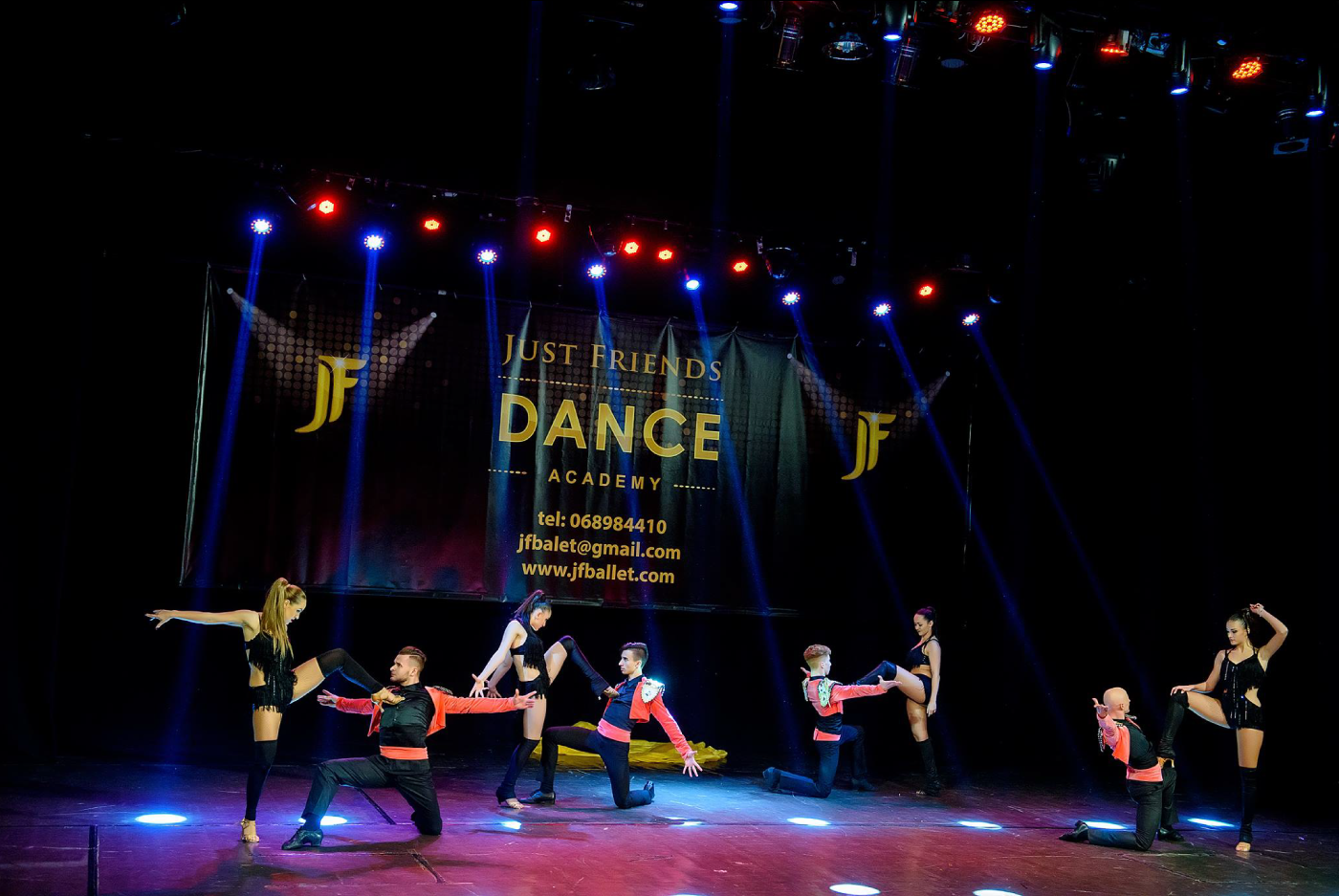
Just Frends Dance Academy by Marina Moldovan is licensed under CC-BY-NC-ND 4.0


Author Page Turing’s Nightmares The Winning Weekend Warrior – sports psychology Fit in Bits – describes how to work more fun, variety, & exercise into daily life Tales from an American Childhood – chapters begin with recollection & end with essay on modern issues Life is a Dance Take a Glance; Join the Dance Who Kept the Magic? Dance of Billions Dream Planet on Barnes & Noble

The Gottery Lottery

19 Saturday Feb 2022

Posted by petersironwood in Uncategorized

≈ Leave a comment

Tags

economics, fable, lottery, SciFi, truth, wealth

The “The Gottery Lottery” 

“I still say it’s a bad policy.” Ending his little speech, Wilbur emphasized the word “still” just a little more than he had meant to. He cocked his head to one side as though challenging his girlfriend Sandy to do her best to demolish his arguments. The pair had first met in their 8th grade D&D class (Dialogue & Discussion), so by the time their first adult Lottery drew near, they were quite well versed in the art of debate, discussion, dialogue, and story-telling. They knew how to be passionate in their arguments without letting their passion destroy the foundation upon which rested — well — everything. 

Sandy smiled. “Okay. Let’s say you’re right. It’s a horrible system. What would you replace it with or tweak it?” 

Wilbur frowned. “I don’t know yet. But I wouldn’t have someone’s livelihood depend on random numbers! It should depend on real things.” 

Sandy nodded. “Okay. What real things?” 

Wilbur chewed on his lips as he was wont to do when he had an inkling his girlfriend might be right and he might just be wrong. “Well, the way things used to be, as I understand it, it would depend on hard work and working smart.” 


Sandy smiled. “That’s it? You don’t think luck had any part? For example, whether you were born poor or — no, wait, here’s a better example. You don’t think it mattered what color skin you had? Or, how about if you were born blind? You don’t think that would impact your income?” 

Wilbur frowned. He chewed his lip. He frowned again. He chewed his lip some more. He looked left and right. After all, an answer might appear. Somewhere. Finally, he said, “Well, that’s not luck though. It’s because of … I mean … if you’re born rich, then, your ancestors worked hard so why shouldn’t you get a head start?”

Sandy blinked a few times and said. “Conquerors had better weapons. Or, maybe they were just more ruthless. So you think that means all their progeny for all of time should have an advantage? If someone were born in 1970’s America, wouldn’t their income be primarily determined by luck?”

Wilbur sighed. “OK. But it wasn’t luck for the parents or grandparents. People work harder knowing that their wealth will be passed on.”

Sandy pursed her lips, nodded, and continued. “But you know that when that’s really been studied, it is not actually true. After all, the ten year cycle itself wasn’t a random number!” 

Wilbur & Sally enjoyed a small chuckle together. 

Wilbur said, “No, I suppose not. Ten years. It’s plenty of motivation to work hard. Though…”

Sandy looked at him expectantly. Wilbur sighed and said, “It’s really weird, but ’m not really seeing how I’m going to do my job differently.” 

Sandy nodded. “Same here. But I don’t think it’s weird at all. I can’t imagine going into work Monday and not wanting to do a good job just because my salary doubled.” 

Wilbur snorted. “Or halved. Let’s not forget that possibility!”

“Or halved,” Sandy nodded. 

If you are from one of the parallel worlds where people’s salaries are never determined by lottery, you might find it difficult to believe, how unruffled most people were by the lottery. In some of those parallel worlds, people could be jerked out of their lives and sent half a planet away to kill and be killed in a jungle war. Why? Because of their lottery number. 

The Gottery Lottery, however, merely reshuffled the income that people were paid over the next ten years. Several things happened. First of all, people tended to save a lot of money. Second, they didn’t vote for political candidates who favored their interests at the expense of everyone else. Why? Because they might become one of those other income levels. Programs such as child care, after school programs, and preventative medical care were supported by well over 90% of the population. 

Author Page on Amazon

Fit in Bits describes how to work more exercise into daily chores.

Turing’s Nightmares explores the impact of AI, VR, big data, & IoT on our future.

The Winning Weekend Warrior focuses on the mental side of all sports. It covers strategy, tactics, self-talk, choosing a coach, goal setting, imagery and more.

Tales from an American Childhood recounts experiences from the 1950s and relates them to contemporary issues.

As Gold as it Gets

The Great Race to the Beginning

Subscribe

  • Entries (RSS)
  • Comments (RSS)

Archives

  • December 2025
  • November 2025
  • October 2025
  • September 2025
  • August 2025
  • July 2025
  • June 2025
  • May 2025
  • April 2025
  • March 2025
  • February 2025
  • January 2025
  • December 2024
  • November 2024
  • October 2024
  • September 2024
  • July 2024
  • April 2024
  • March 2024
  • February 2024
  • January 2024
  • December 2023
  • August 2023
  • July 2023
  • May 2023
  • April 2023
  • March 2023
  • February 2023
  • January 2023
  • December 2022
  • November 2022
  • October 2022
  • September 2022
  • August 2022
  • July 2022
  • June 2022
  • May 2022
  • April 2022
  • March 2022
  • February 2022
  • January 2022
  • December 2021
  • November 2021
  • October 2021
  • September 2021
  • August 2021
  • July 2021
  • June 2021
  • May 2021
  • April 2021
  • March 2021
  • February 2021
  • January 2021
  • December 2020
  • November 2020
  • October 2020
  • September 2020
  • August 2020
  • July 2020
  • June 2020
  • May 2020
  • April 2020
  • March 2020
  • February 2020
  • January 2020
  • December 2019
  • November 2019
  • October 2019
  • September 2019
  • August 2019
  • July 2019
  • June 2019
  • May 2019
  • April 2019
  • March 2019
  • February 2019
  • January 2019
  • December 2018
  • November 2018
  • October 2018
  • September 2018
  • August 2018
  • July 2018
  • June 2018
  • May 2018
  • April 2018
  • March 2018
  • February 2018
  • January 2018
  • December 2017
  • November 2017
  • October 2017
  • September 2017
  • August 2017
  • July 2017
  • June 2017
  • May 2017
  • April 2017
  • March 2017
  • February 2017
  • January 2017
  • December 2016
  • November 2016
  • October 2016
  • September 2016
  • August 2016
  • July 2016
  • June 2016
  • May 2016
  • April 2016
  • March 2016
  • February 2016
  • January 2016
  • December 2015
  • November 2015
  • October 2015
  • September 2015
  • August 2015
  • May 2015
  • January 2015
  • July 2014
  • January 2014
  • December 2013
  • November 2013

Categories

  • AI
  • America
  • apocalypse
  • cats
  • COVID-19
  • creativity
  • design rationale
  • driverless cars
  • essay
  • family
  • fantasy
  • fiction
  • HCI
  • health
  • management
  • nature
  • pets
  • poetry
  • politics
  • psychology
  • Sadie
  • satire
  • science
  • sports
  • story
  • The Singularity
  • Travel
  • Uncategorized
  • user experience
  • Veritas
  • Walkabout Diaries

Meta

  • Create account
  • Log in

Blog at WordPress.com.

  • Subscribe Subscribed
    • petersironwood
    • Join 664 other subscribers
    • Already have a WordPress.com account? Log in now.
    • petersironwood
    • Subscribe Subscribed
    • Sign up
    • Log in
    • Report this content
    • View site in Reader
    • Manage subscriptions
    • Collapse this bar
 

Loading Comments...