Life on planet earth is over 4 billion years old. There are also no known “skips” in life. In other words, each generation of life, N comes from the previous generation N-1 and generates the next generation N+1. Every living thing on earth today, so far as we know, has the same unbroken line of ancestry dating back 4 billion years. We all share ancestors.
Vertebrates appeared about 500 million years ago. This means that we humans share 7/8 of our heritage with every living fish, bird, reptile, amphibian, and mammal. Indeed, fish have a heart, a brain; they mate; they eat; they have blood; they move; they learn. They flee danger. If someplace is a good source of food, they hang out there.
Early humans must have intuited that they were very like (as well as somewhat unlike) other animals. Otherwise, they would not have learned how to track them and hunt them, let alone train them. In the last few hundred years, however, we have learned much more about how similar we are to other animals anatomically, physiologically, and behaviorally.
I happen to think this branch of science is fascinating.
But it’s more than that. To me, it’s also heart-warming. It’s comforting in many ways.
First of all, I am in awe of our extended family. Life has survived for over four billion years! It hasn’t just survived; it has evolved in a million different directions. Our family includes trees that live thousands of years and grow hundreds of feet tall. Our family includes animals and plants too small to be seen by the naked eye; birds that migrate thousands of miles; whales that weigh 300,000 pounds.
Second, it is comforting to me to know that the Tree of Life is secure against the short-sighted greed of a small number of humans. Ecological disaster, atomic war, pandemics are certainly damaging human life and comfort as well as destroying whole species. But the Tree of Life is vast and more importantly, incredibly diverse. The self-destruction of humanity is possible and would be incredibly sad. But the Tree of Life? We won’t destroy that.
Third, it is comforting to see, hear, and interact with the biome. The way that life interacts with other life is beautiful to observe. I view it as a drama, a symphony, a tapestry, all rolled into one. When I go for a walk, I walk through life; I walk through my family; I walk through a work of art and become reminded that I am one with it.
Birth and death become the same: turning a page in a marvelous and endless story. That’s not to trivialize or belittle it. Turing the page of a story is actually a big deal! Pages make chapters. And chapters make books.
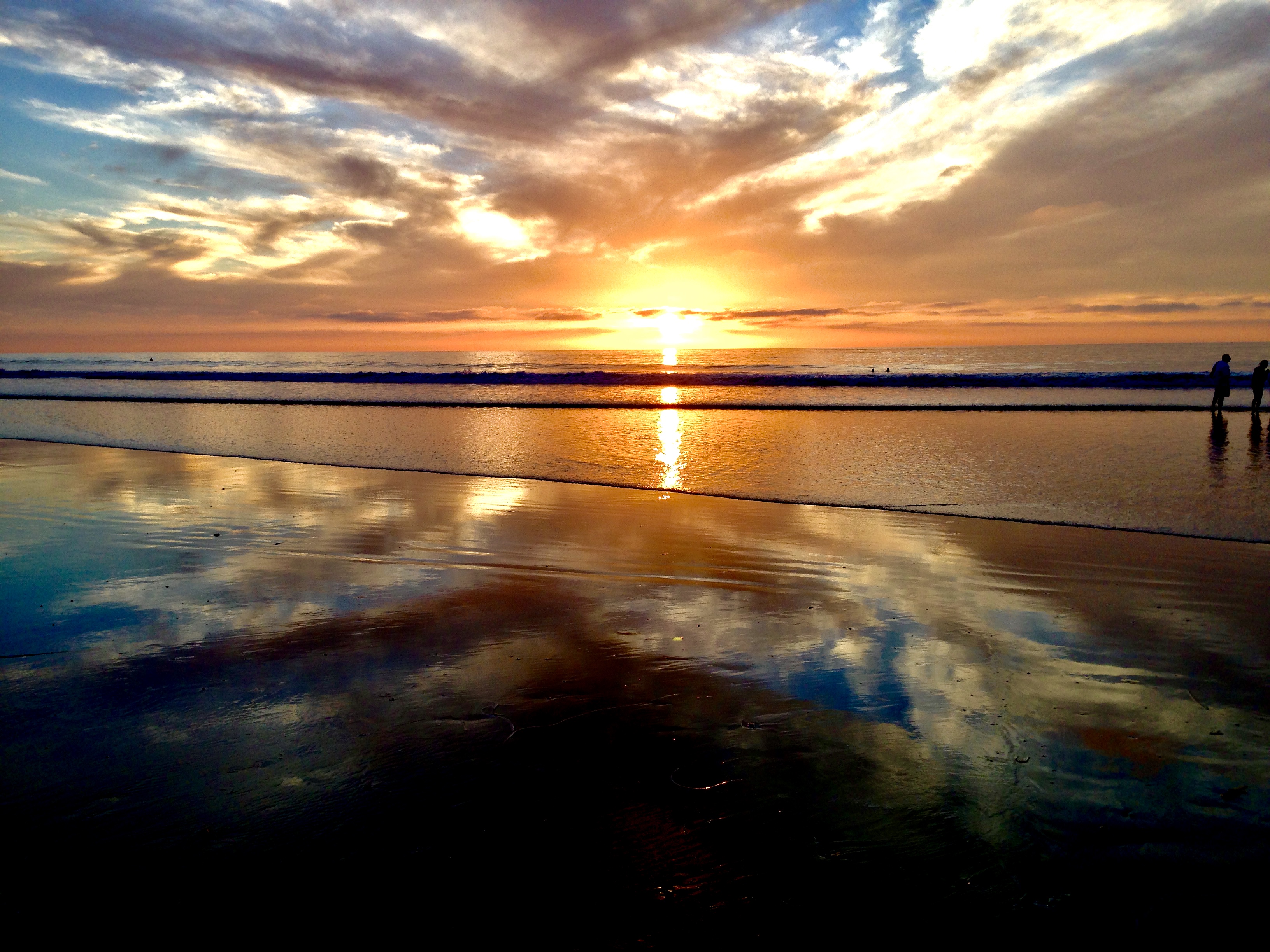
Weather in San Diego is typically nice almost every day. Today is no exception, but that doesn’t mean that the weather is boring. There is a lot of natural variation. There is variation in the humidity, in the wind, in the position of the sun, in the heat, in the (fairly rare) precipitation.
Reflecting on this reminded me of another kind of natural variation: the variation in organisms of the same species. Without that variation, evolution would be far less effective.
It also reminds me of several of the characteristics of natural beauty and good design that Christopher Alexander writes about.
Things that have zero variation are mechanical, predictable, repetitive, and generally not very pleasing aesthetically. Mindless, endless repetition is aligned with death. Variation is aligned with life, freedom, creativity, growth, and joy.
Among things that are non-living artifacts, there is still a variation in how variable they are. Walls made of stone, are by their nature, “rougher” and more variable (and more beautiful) than walls made of bricks. Walls made of bricks are more irregular and beautiful than one made of solid steel. Similarly, at least to me, fences made of wood are more variable and beautiful than fences made of metal.
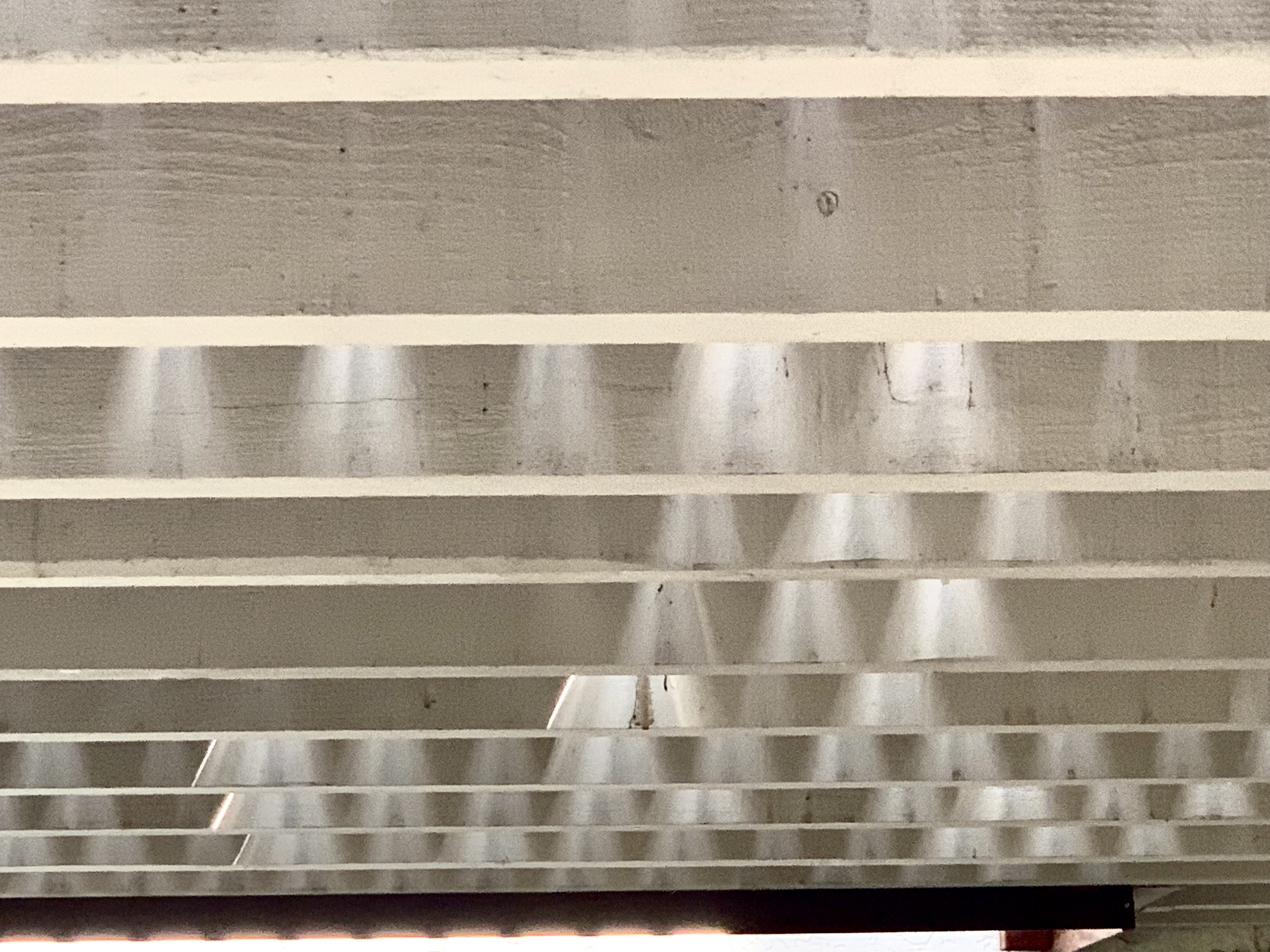
Building elements that make up a wooden deck show grain and irregularities in the surface of the deck. In addition, however, they even have interesting variability below the deck as shown here.
You can also see in this photo below a variety of materials. The stucco, by its very nature, more interesting and variable than steel or plaster.
In these photos, you can see variation within leaves, among the leaves of a particular plant, and also among the plants themselves. Each plant and each part of the plant grows in accordance to its genetic blueprint. Except a “blueprint” is itself too fixed and unbending to be an appropriate metaphor. The growth will depend on the context–water sources, light sources, nutrients in the soil, other nearby plants and rocks will all play a part in how, precisely, a particular plant grows.
It would be absurd for one plant to say to itself: “Every plant should be just like me! I have a plan based on what works for me and everyone should do exactly what I do!”
Yesterday, I went for a physical walk to a nearby State Park. Today, I instead decided to see how “far” I could go looking at an old olive tree right out my front yard. This is a walk through perception — powered by imagination. You might come with and see what you see. You may want to put the screen at some distance from your face or use a phone rather than a large display. If the image is too large, you’ll see a completely different set of characters. Of course, you might anyway.
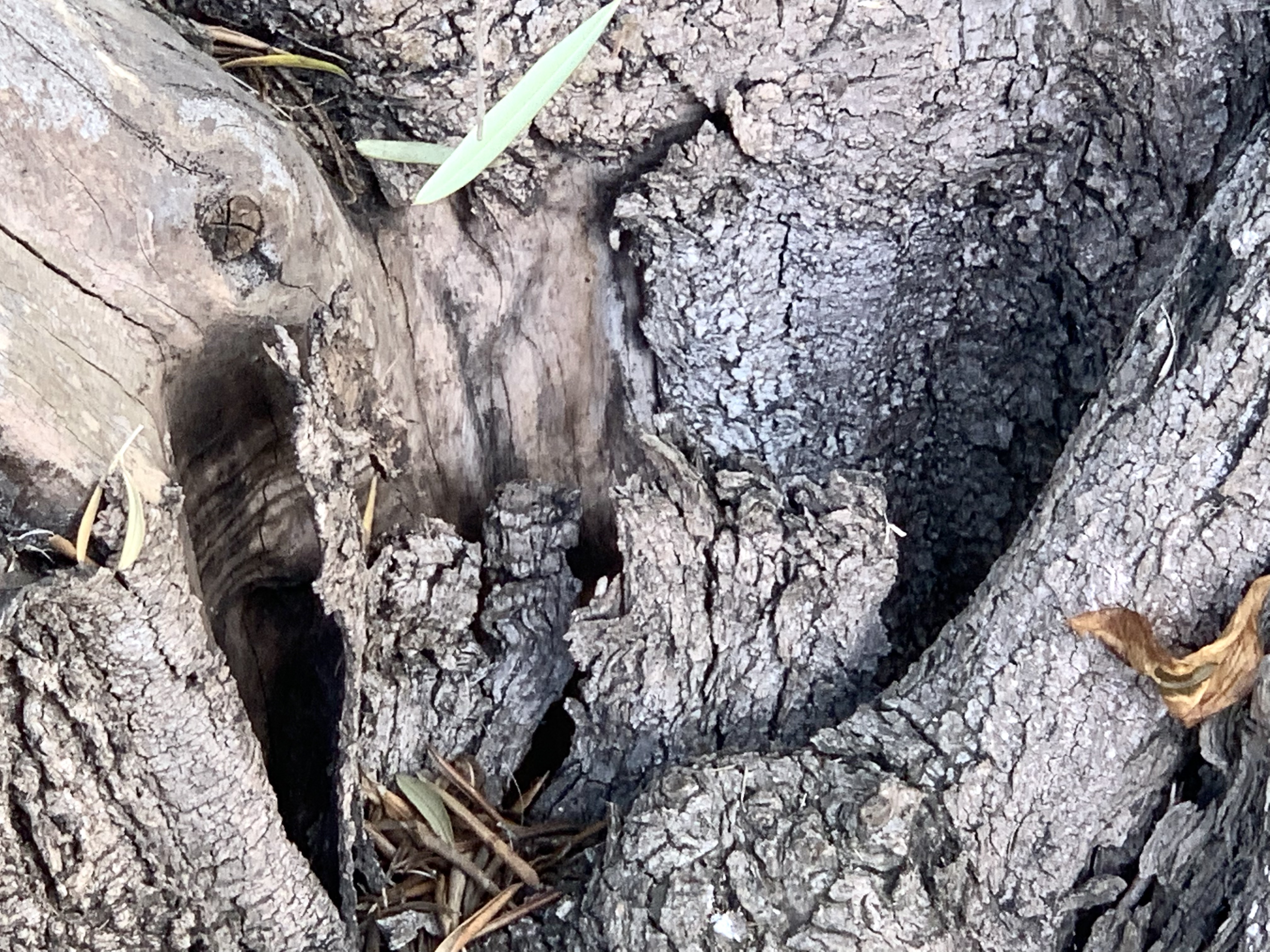
The first group of photos is all from that one tree — a tree that also happens to be featured on the cover of Turing’s Nightmares.
What faces do you see above? I see at least six large humanoid ones.
The lower middle part of the picture above reminds me of The Burghers of Calais by Rodin. Not to be “Rodindant”, but that is an amazing work of art that you should definitely see in person if you can. I believe I saw it both at the Met in NYC and the sculpture gardens in DC.
Also a pretty good pair of owls on the right.
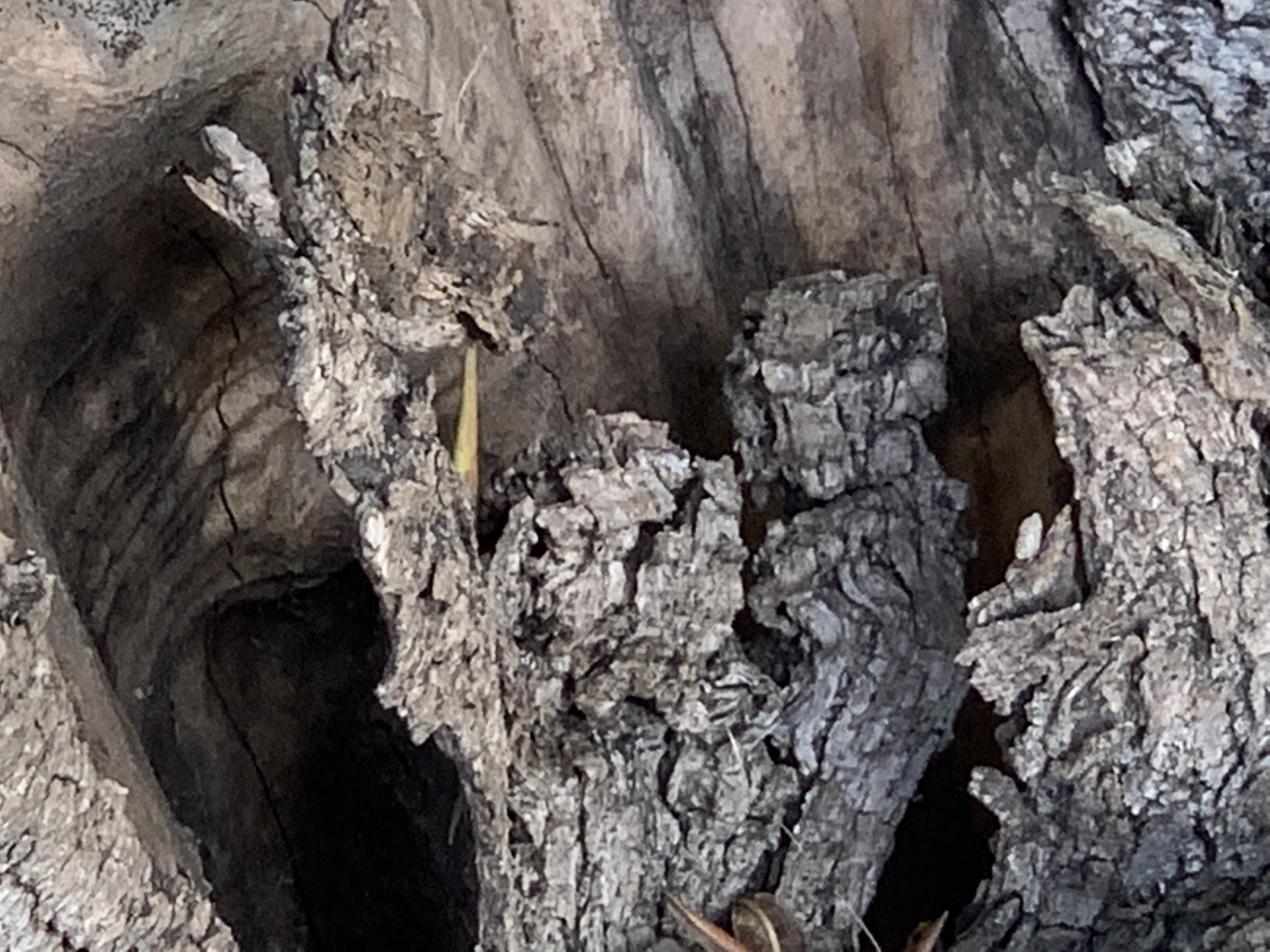
Every two dots of approximately the same size forms part of a face. I can pretty much see as many “faces” here as I choose to. I can easily see 0 by steadfastly reminding myself that this is a tree trunk. Definitely a time & place for that mentality. But not always. For right now, I’m satisfied to see about twenty faces and move on. It’s interesting how often as adults we mainly use our imagination only to see all the bad things that might happen. Sometimes, that is also quite useful. But we can also use imagination to craft beauty or gain insight.
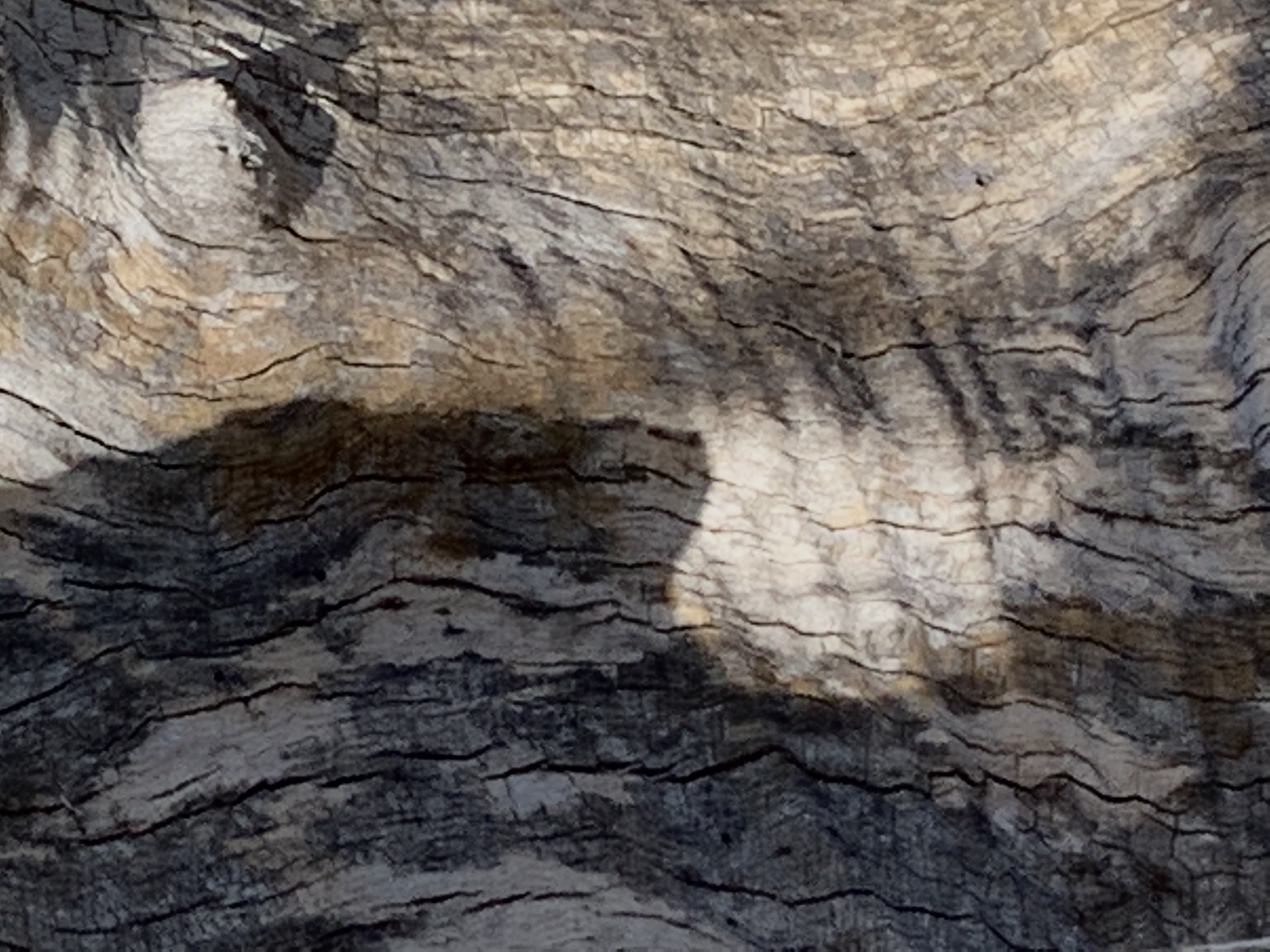
What do you see above? Turtle on the sand? Or, high flying eagle far above the semi/desert scrub? Or something else entirely?
Somehow, the picture above seems to echo elements of Christianity. Three wise men kneeling, angel on the left. I can also see a mind of “mini-history” of the life of Christ from infant to young man to thorn-crowned lamb.
If I focus on the bright spots above as figure, I see a large face LR & a small one UL. The dark on the left, is a shark, on the right, a totem pole of animals.
It seems to me clear that the frog above is bragging to his cousins about a huge worm — the one who got away: “I swear! It was this big! I would have had it too, but I was knee-deep knee-deep in muck!”
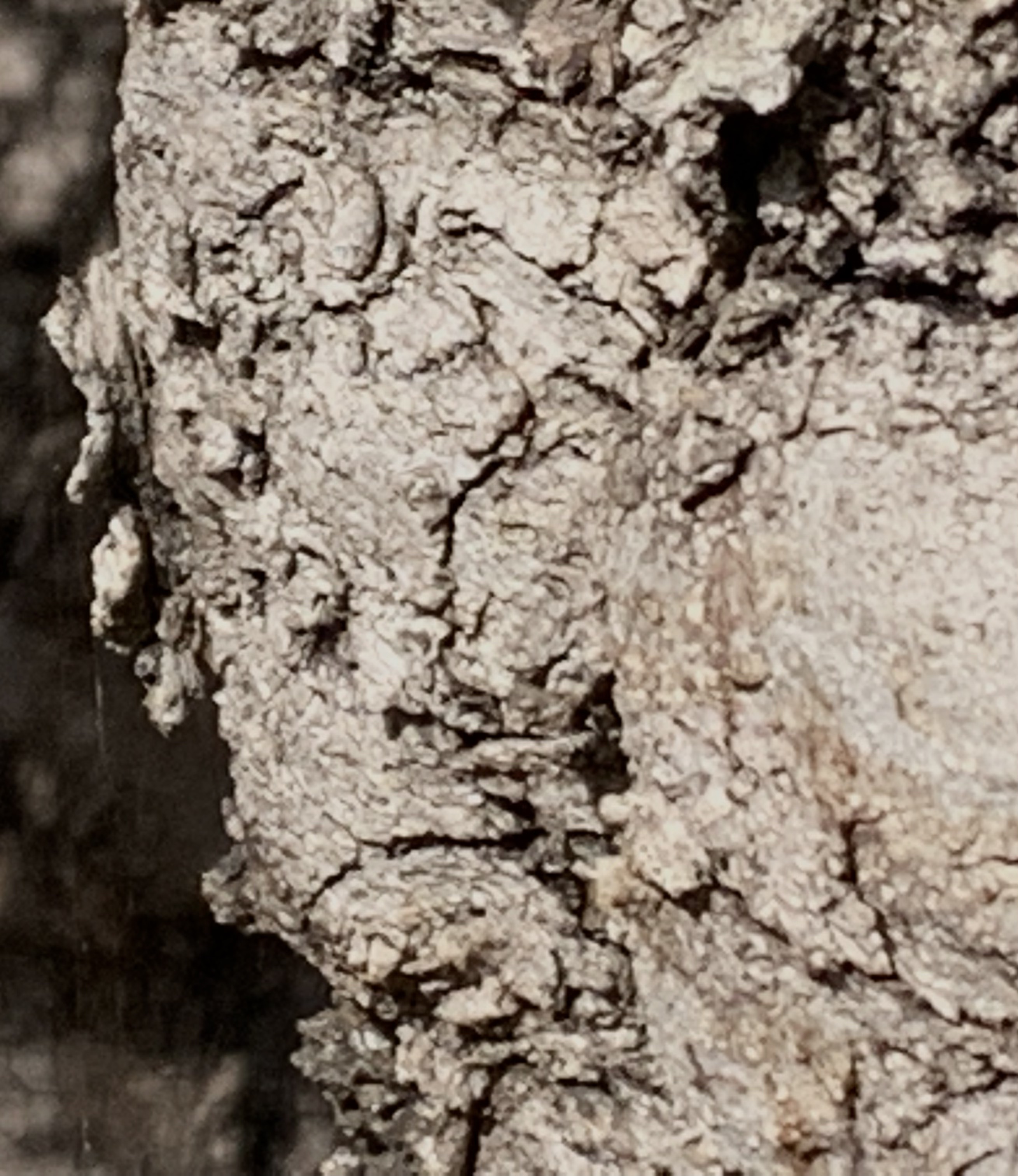
Of the panoply of characters in the photo above, my personal favorite is the little mouse at 7 O’clock. It could well be Stuart. What are your favorites?
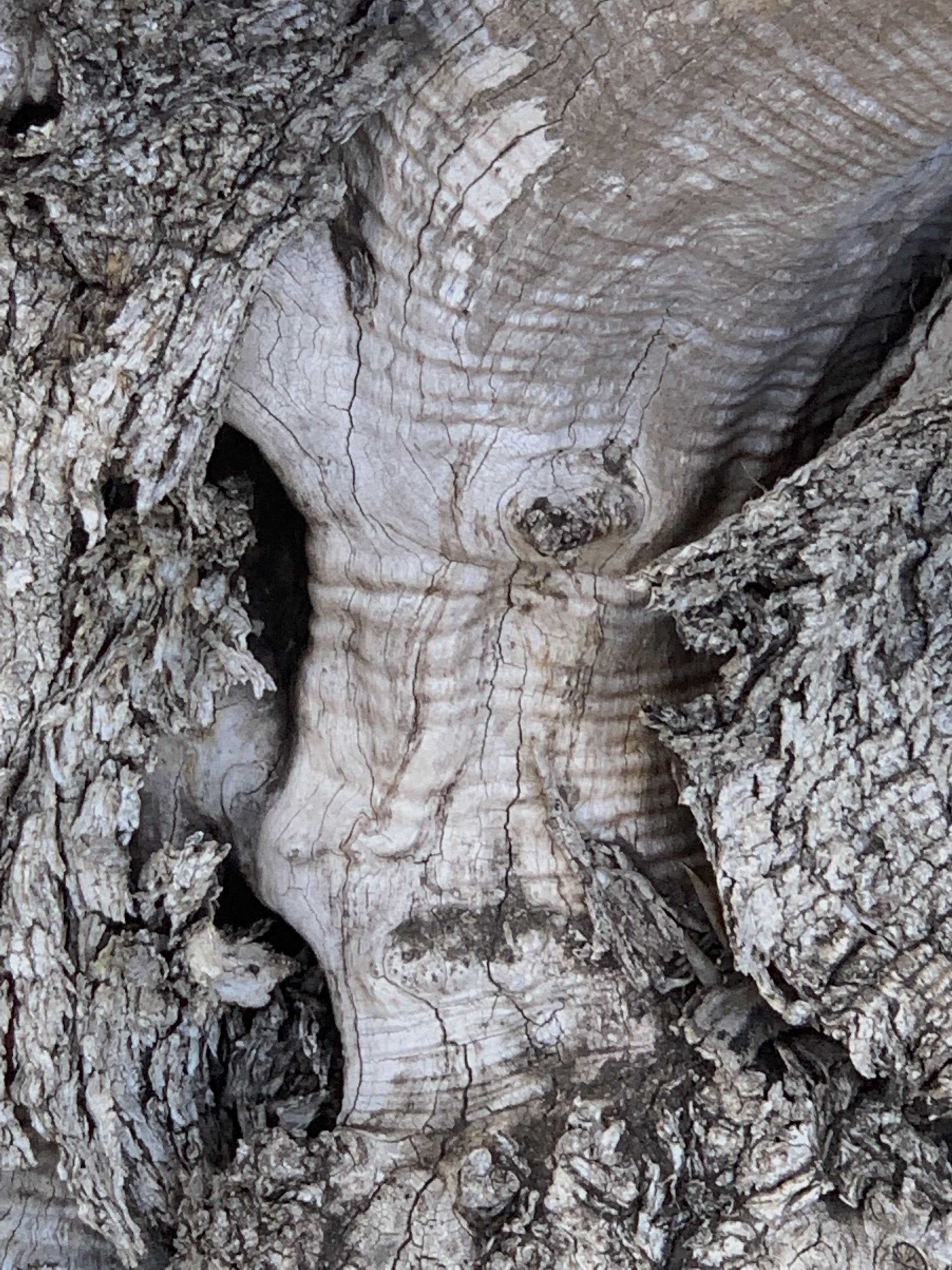
The above elephant is sad about losing her habitat. (Who could blame her?) And what’s worse, from her perspective, is that while elephants are very loving, those destroying her habitat are anything but. She, in fact, wonders at our use of the term “humanity” as in “Show some humanity!”
The photo above evokes a Boschian hellscene with warriors, monsters, victims, violence, cruelty, & mayhem. Maybe it’s because of the violent video game my wife’s playing in the background, or maybe it’s because of the violent reality, Vlademort Putrid is creating in real life.
The brown woman in the foreground looks worried. I believe the grim looking bearded knight in helmet down below is knocking at her door. He wants to conduct some seriously bad business. Maybe not a knight, but a guy in a tinfoil hat who wants to kill. What do We do?
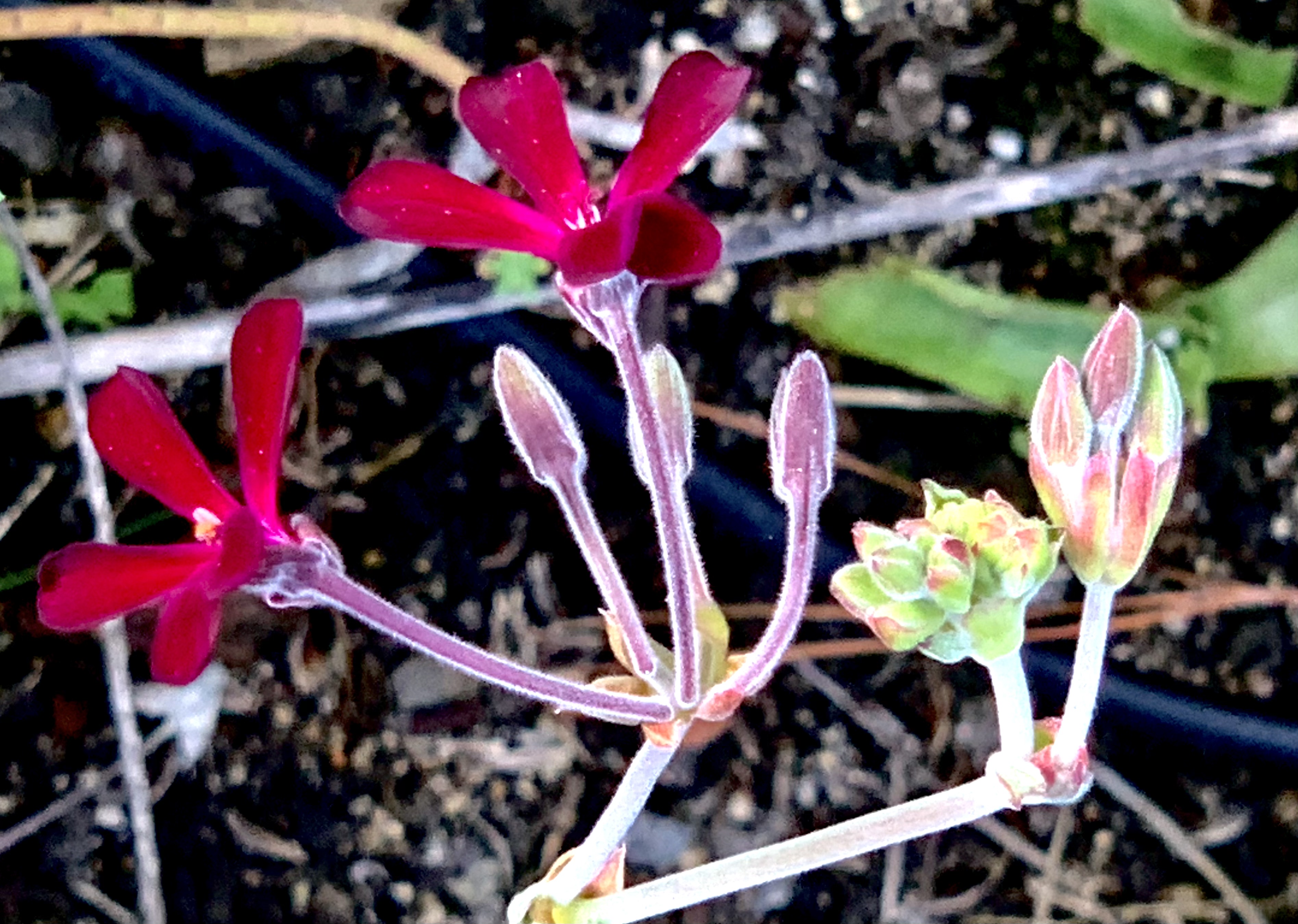
“Hey! What about me!? Small can be beautiful too!” As I walked away from the tree, these tiny few flowers reached out to me.
I answered: “Oh, flower: you are so right! As usual.”
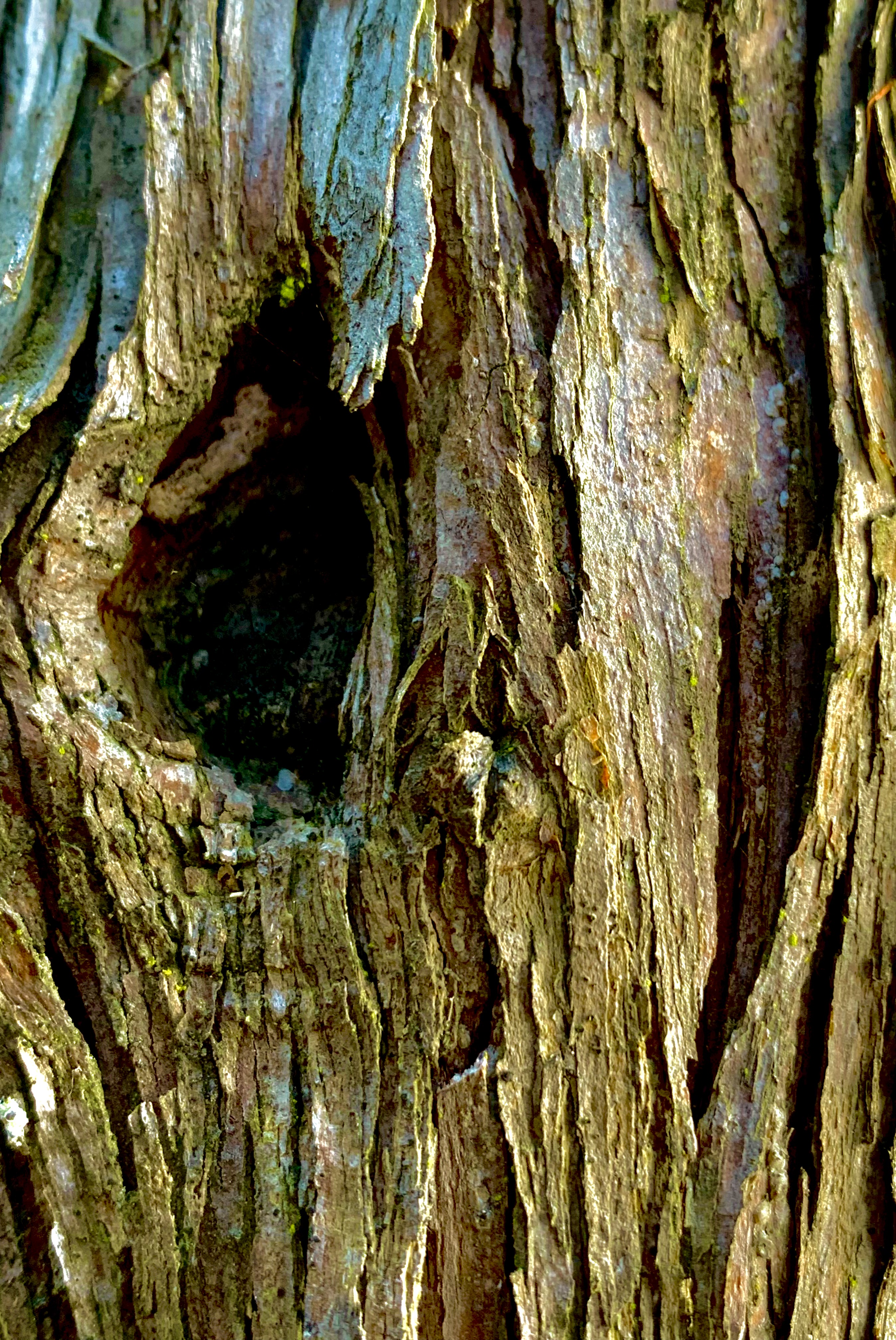
The cypress(?) trunk above has a hole I which I suspect may be a scar from having a limb lopped off that went into the space of part of the house that was added later. Forensic forestry? That might be a fun setting for a detective series. Solving crimes from tree reading. Something like Bones or Numbers
The roses, of course, want everyone to remember that they too are out here doing their part to make the world a more beautiful place; to spread joy; reduce carbon in the air. She wonders what we’re doing to help.
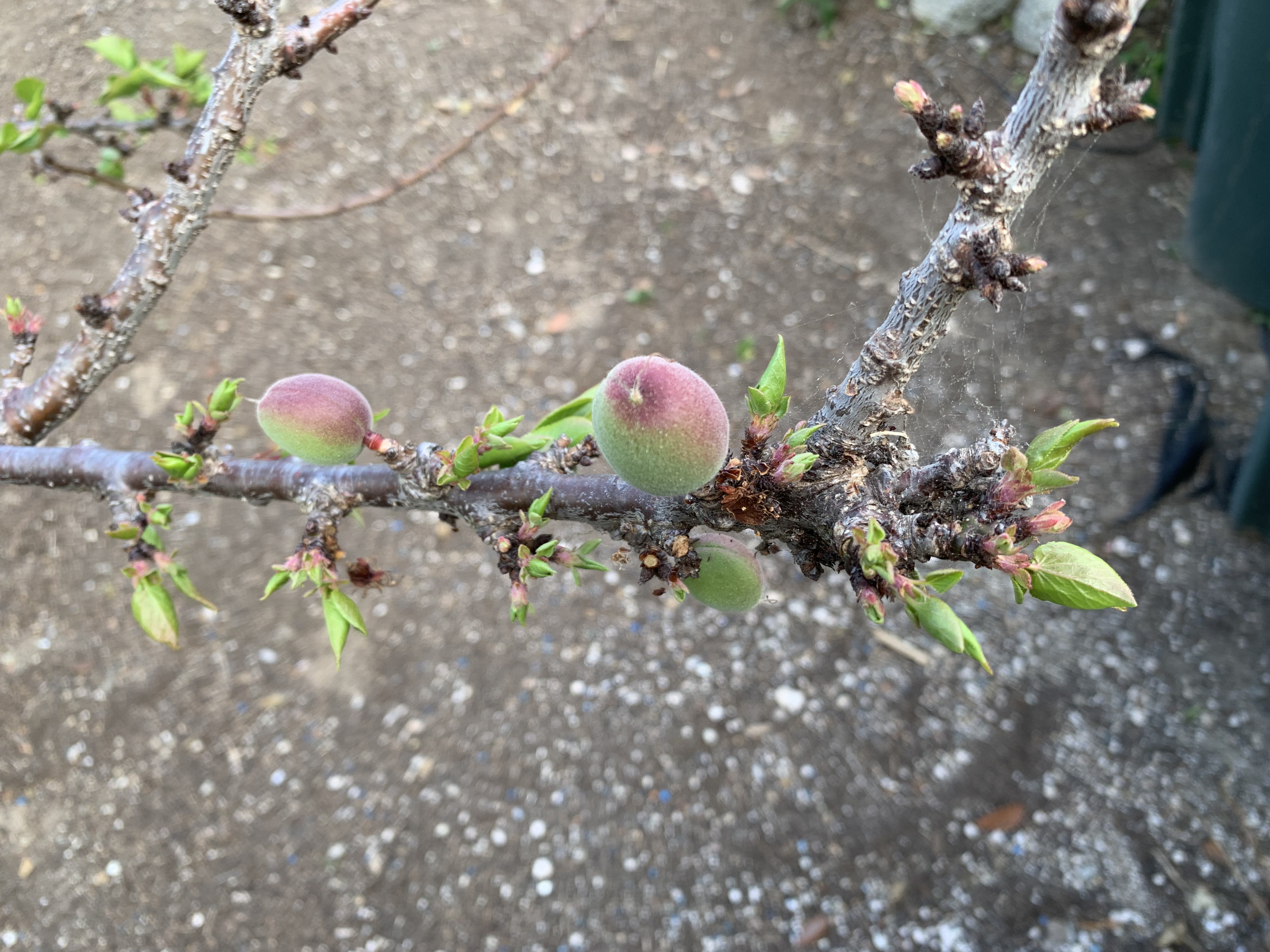
Last week’s promissory flowers have given rise to this week’s prototype apricots. Thank you, bees! Thank you!















 petersironwood