• About PeterSIronwood

petersironwood

~ Finding, formulating and solving life's frustrations.

petersironwood

Tag Archives: history

Much lost!

10 Sunday Sep 2017

Posted by petersironwood in America, psychology, Uncategorized

≈ 2 Comments

Tags

family, history, learning, life, loss, marketing, politics, rationality


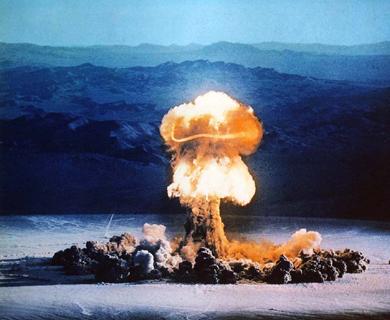
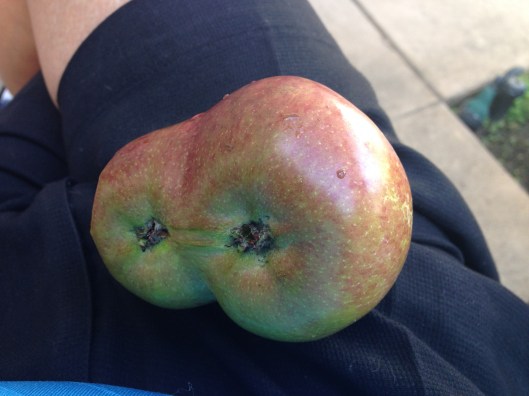
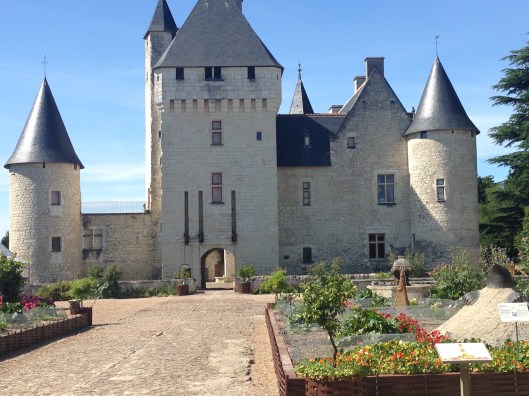
IMG_9722Why do we feel so devastated after losing someone we love when we generally felt pretty good before we ever met them? That person lives in us; at least a mental model does and that includes what they looked like, how they talked, their habits, their mannerisms, their smell, what they liked and disliked, specific interactions and conversations, shared memories. It’s really little wonder people believe in ghosts. I often dream about my grandparents, for example, decades after they died.

Their life is gone and that is a huge sadness but there is also an impact on you and me. We will have to do things differently, say things differently, recall things that they used to recall. In some cases, of course, it means we may now have sole responsibility for raising children or running a business.

Here’s another strange case. People pretty much exactly like us physically used to live, mate, reproduce, bring up kids, find food, find shelter, find water, avoid enemies, make friends, grow old, share stories, and eventually die. But they did all that without cellphones. They did that without television. They did that without oil or wheels or electricity. They did not miss these conveniences because, for them, they were not even conceptions. But if all those things are taken away from us, we would feel deprived.

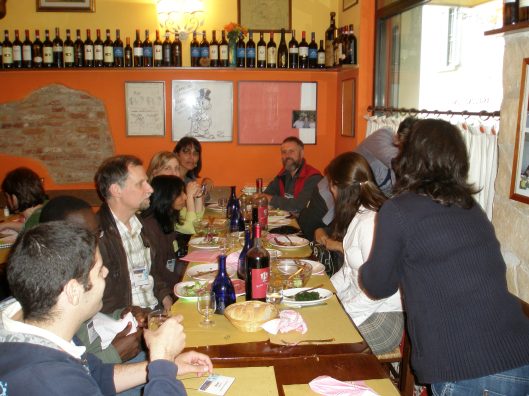
IMG_5931

Let’s get more specific. The video games of today are fantastic. But, let’s rewind recent history. I thought the original adventure game was completely awesome. We would type in two word commands and the 80 character by 40 line display would flash up green word descriptions of places and events. The descriptions were well-written and there were clever puzzles to be solved. But how many gamers of today would be able to enjoy the original Adventure game as we did in the 1980’s? Maybe all of them? But probably not.

Every time I go to youtube, they ask whether I want an “ad-free” experience which I can “try” for free! Of course, after having the ad-free experience, going back will be relatively difficult whereas right now, I don’t even notice them. I totally get why people eventually become unable to “hear” the other side of a political argument. Instead, they simply tune it out. Indeed, it is often the same approach and probably often the same people who end up trying to “sell” a political candidate as those trying to “sell” a new brand of deodorant. There is much that needs to be fixed about our current political system. But if we replace it with corporate rule, I think we will miss the “good old days” very much indeed.

Do you recall the oddly delicious pain of a loose tooth? To wiggle that tooth caused pain. At least that’s the way I remember it. Yet, I loved to cause myself that hurt. It didn’t hurt much. And, I could control the pain pretty precisely by how hard I pushed with my tongue. Of course, I knew that eventually the tooth would come out and be replaced by a newer stronger tooth. I also knew that placing my tooth under the pillow would cause my parents to supply cash; typically, a dime. That was not an inconsiderable sum. Yet, neither better teeth nor financial gain provided my main motivation for wiggling my tooth. Simply having a small pain that I could control seemed a wonderful thing.

In fact, once the tooth eventually fell out and the newer, bigger, stronger tooth began to grow in, I missed the old, weak, loose tooth, not because of the tooth, per se, but because I had lost that controllable pain. The desire to have something is rather strange, particularly because it is both fundamental to the “rational man” of classical economics and at the same time, extremely irrational. 

People who lived a hundred years ago did not desire iPhones, television, or central air conditioning. They might have thought, e.g., “I am frigging frying – need a cooler breeze.” But they wouldn’t exactly desire air conditioning. Later, some people actually could afford air conditioning and others could not. The “could not’s” would feel the lack of air conditioning much more than their ancestors. There is one group of people who would feel the sting even more: those who had air conditioning and subsequently lost it.

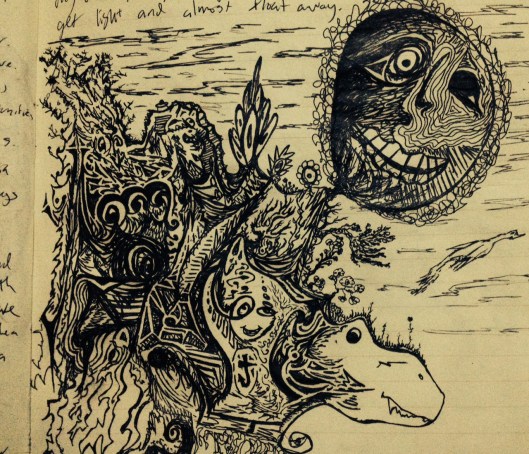
IMG_3066

In fact, once we have something for awhile, we not only feel the loss of that thing intently; we feel we deserve whatever it is we lost. After all, it is ours! (Even if we just stole that very same thing from someone else a few weeks ago!).

It isn’t just things and people that people feel a loss for. They feel a loss for places, situations, abilities, and even abstractions such as progress toward a goal. And that brings me to my dissertation.

I gave people a fairly simple river-crossing problem. The problem begins with three hobbits and three orcs on one side of the river. There is a small boat that can hold one or two creatures. The goal is to figure out how to get all six creatures to the other side of the river. They can’t swim, or wade, or leap, or build a bridge. The only way is to use the boat. At least one creature must be in the boat at all times. The orcs can never outnumber the hobbits on either side of the river. If that happens, the orcs will gang up and eat the hobbits. It’s a little tricky, but it is possible to get all six critters from one side of the river to the other by ferrying it back and forth.

Some people were first given “half” of the problem; that is to say, they were given a starting position that was half-way through the entire solution. After they solved that, they were given the whole problem. Many of them wanted to give up the problem as impossible, precisely at the spot from which they had just solved the half-problem no more than 20 minutes earlier. Apparently, the position was psychologically different if they were plunked into the spot as opposed to getting to that same spot through their efforts. People who started the problem from the beginning felt as though they had been making “progress” toward the goal. At one point, they had to appear to move away from the goal. It may have seemed to them, in other words, as though they were losing the progress that they had already made. On the other hand, when they started at that same mid-way point, they didn’t feel any “loss” and had an easy time solving the problem from that point forward.

This effect is related to a major deviation people have from acting in accordance with the economic fantasy of the “rational person” when it comes to decision making. Consider investments in stocks. Let’s say that  at one point, you buy 100 shares of IBM stock at $50/share and at another point, I buy 100 shares at $150/share.  Now, the current price is $100/share. You and I have the same exact information about IBM, the tech industry, the economy and so on. Rationally, we should make the same decision (leaving aside tax consequences and whether we need the money desperately). People do not typically view these situations as similar. If you bought the stock at $50/share, you feel as though selling it at $100/share is a great deal. You’ll make a cool $5000! Sounds great. On the other hand, what would you counsel me to do? You might well say that I should definitely not sell right now because I would lose $5000. Actually, the stock certificates have no memory. They have no idea what either of us paid for them and are worth identical amounts.

IMG_0727

I will not try to “prove” this to you. For now, it’s enough to realize that people feel quite different about the two situations. People are very motivated to avoid a loss. Indeed, even the pain of a wiggling tooth can be something not to lose. In Lord Byron’s poem about the Prisoner of Chillon, the long-time prisoner is finally set free, but feels the loss of the prison.

The longish poem ends with these lines.

“My very chains and I grew friends,

So much a long communion tends

To make us what we are:—even I

Regained my freedom with a sigh.”

Returning veterans, despite the dangerous and uncomfortable conditions they’ve been in, often feel as though they have lost something vital when returning to civilian life; e.g., a clarity of what is important, a clear mission, and being part of something bigger than themselves. In fact, the sense of loss can be so overwhelming that more US veterans have committed suicide after returning from duty in the middle east than have been killed in combat.

When people lose a limb, whether through war, an industrial accident or in some other way, they often have “phantom limb” feelings. They can feel sensation and even pain in the limb that is no longer there. Is this similar to what happens when we lose a loved one and then see them in a crowded room? Our mental models of what is true about the world, about others, and even about ourselves are always in danger of being out of touch with what is really happening now. As your kids grow up, your mental model of their capability is always behind the times because it is based on your past experience with them. People who are dangerously thin can still be concerned about being overweight. People no longer capable of driving safely because of their vision or memory may resist the suggestion to stop driving because of a lifetime of experience driving safely. To a computer program, loss and gain may appear symmetrical but they don’t appear that way to a person.

IMG_5006

My three older kids are a year apart in age. When they were young, there was one large shared toy box in the family room. On more than one occasion, one of the kids dug through a random pile Lincoln logs, Lego pieces, tinker toys, monopoly money and pulled out, say, a tiny, green, broken toy car. The car, so far as I could determine, had no QRC code, embedded electronics, or wireless connection. Yet, within seconds, one of the other kids would appear from the other end of the house where they had been doing homework or reading and — Voila! — they would appear and announce: “Hey, that’s my car. I’ve been looking for that! Where did you find it? Anyway, give it here.” Seriously? They hadn’t seen the car for two years, perhaps. They had completely “gotten over” the loss. Now, however, they were reminded of their loss as well as presented with an opportunity to recover that loss. You might think they would be much more inclined to share this toy than they would a new toy. You might think that if you didn’t have multiple kids of your own, that is. No. This “prodigal toy” was welcomed back with open arms and more than a little suspicion and hostility toward the sibling that discovered it.

Another controversial and related phenomenon is the notion of constructed memories or confabulations. Here is a simple example from the psych lab. You give a person the following list of words to recall:

Peach, Pear, Brandy, Tree, Plum, Orange, Pie, Book, Seed, Dish, Grove, Orchard,  Plate, Cinnamon, Zest, Peel, Cobbler, Supple, Couple, Farm, Sample, Computer. 

No, a few hours later, you ask them to recall the list. Almost everyone will remember part of the list. A few people might recall all of them. But more people typically recall “Apple” than any of the items actually on the list! Of course, advertisers are not unaware of this phenomenon and neither are political consultants. They can easily get you to imagine that the candidate said something when they actually did not say it. But the words chosen got you to think it and recall it. But wait. It gets even better. The inclusion of “Apple” in your memory is based on associations that are widely shared in the mental structure of most American native speakers of English. The same technique can be used to arouse words, thoughts, and images selectively in specific segments of the population.

Consider the following list:

Sharapova, Halep, Muguruza, Federer, Del Potro, Mcenroe, Navratilova, King, Evert, Keys, Vandeweghe, Tilden, Laver, Andersen, Radwanska, Gore, Nader, Roddick, Connors, Borg, Ulna, Radius, Radium. 

If I listen to that list and try to recall it a few hours later, I am very likely to include “Nadal” in the list. If you’ve never watched or followed professional tennis, you’re very unlikely to include “Nadal.” For you, the list is pretty random and has little association with “Rafa Nadal.” But for me, these are all strongly associated.

IMG_1428

Ponder that for a moment. Advertisers and political consultants can send an implicit message that only “works” for certain groups of people. When it comes to political consultants, one of their favorites is to convince you that you have in fact, lost something which you never had. Because it is something you come to believe you lost, you want it quite dearly.

A case in point is the mythical perfect America of the past. If you have been reading this blog before, you know that I love many of the things that actually used to be true in America. For instance, when I used to pull into a “Service Station”, I actually got service! Someone came and cleaned the window and checked the oil as well as pumped the gas. Now, when I pull into a “Gas Station” that does not happen. That really is a loss although if we did have that service today, gas might be $10 a gallon instead of $3. And, there are many other things that are gone that really did exist. But many people have also been convinced that there were a lot of things that they have lost, even those things that never actually existed. 

The Founding Fathers, for example, were not all Protestants. And, even among those who were Protestant, they did not all agree on the same Biblical interpretations. And, I am extremely confident that very few of the Founding Fathers interpreted the Bible in precisely the way that your particular minister does. There was never a time when workers didn’t complain, had no unions, and yet were treated fairly. There was never a time when every politician was above corruption. There was never a time when children were never molested, or when the press did not sensationalize, or when everyone “got along.” That is not an America that has since been lost. That is an America that never existed.

IMG_9452

Legends of a “lost land”, Atlantis, Eden, Shangri-La, and the “noble savage” are not unique to modern America, of course. Many politicians in many eras and many different lands have tried to gain power by making people feel that they have “lost” something that never actually existed! It’s a pretty cool trick when you think about it. If done with artistry and tact, and especially if done with billions of dollars of advertising, they can not only make you think you heard the word “apple”; they can make you remember the taste of an imaginary apple!

IMG_4382———————————

Author Page on Amazon

Poems of Loss

If Only…

28 Friday Jul 2017

Posted by petersironwood in psychology, story, Uncategorized

≈ 15 Comments

Tags

competition, crime, history, insanity, London

If only…

Henry slung off the down comforter and swung his well-muscled legs over the edge of the four-poster. “Screw it” he muttered. “Nothing for it.” He padded over to the dresser and began pulling out some clothes for late night walking.

As usual, he made no attempt to direct his thoughts but watched to see where they would flow on their own. While his dextrous hands dressed himself, he listened attentively to the voices vying for attention in the theater of his brain.

Tick, tick, tick. I hate clocks, Henry’s relentless flow began. Tick. Tick. Tick. They’re everywhere. Why? All they do is remind people that they’re going to die. So what’s the point? There must be somewhere in this God-forsaken city that a guy can go and get some peace from their incessant — and even worse than their damned tickery  — that clanging gonging earsplitting racket! It drives me to — but more of that later. I need to exit this rat-trap of a hotel and walk the river, no matter how late it is or how foggy the night. Head ready to explode and all this place offers me is noise. Did you ever notice how the tick tick tick of clocks is like the sounds those insect — what do they call them — mandibles I think — yeah, like their jaws only sideways. That’s the sound. Only magnified. Louder. Sharper. More painful.mandibles

He snatched his Macintosh, and crammed himself into the elevator thinking as he slammed the grate shut, here I am again in this absurdly teeny cage of an elevator. All these European hotels are the same. Can’t spring for a real elevator. Just these little metal cages. Not even enough room for two people. Especially if one of them blobs on the floor uselessly. Damn. It would be so much nicer if I could take them up to my room after. Dragging dead weight up three flights of stairs though? No way.

Maybe I’ll buy myself a small cottage instead. Secluded. If I can save the money. I’ll get there. Or my own damned hotel. Why not? Think big. Not teeny like this damned elevator. And, why does this lift — as they call it — take so blasted long? Like everything here. Too ancient. Like they never got over losing their favorite colony. Not sure why so many people swoon over London. Everything’s old or broken or most likely both. Although, that torture museum on the south bank. I have to say, that is pretty cool. For the first time in a long while, Henry’s eyes sparkled and the right corner of his mouth even turned up. “Even the frigging elevator goes tick tick tick,” he muttered.

Charles, the night clerk pretended to be shuffling important papers on the well-polished mahogany counter he considered his rightful domain.

“Good evening, Mr. Holmes. I trust all is well with you? Out for another evening stroll, are we?”

IMG_6084

Henry’s inner voices continued, Good God, the Brits are annoying. I’ve got to get back to city of big shoulders. Do they learn this crap at their homo boarding schools? Suspicion drips like black blood from his pupils. And that voice. Almost worse than the ticking. He acts like he’s in the Globe, playing Hamlet. Fine. I can join this little charade.

Aloud, Henry intoned his lines like Maurice Barrymore: “Indeed, my good chap. You surmise correctly. And, if you can hold the key till my return, that would be capital.”

Henry half placed, half slammed the key with its heavy awkward metal tag down on the wooden counter. Not so hard that he expected Claude to raise a fuss, which he calculated he wouldn’t have the rocks to do anyway. But not so soft that he isn’t going to wonder what’s going on. Let him wonder, the prig, thought Henry, noticing with pleasure the slight wince that flickered across Claude’s stoic face.

“Yes, I should return around twenty-two hundred latest. A pint of bitters should do me nicely. And, kidney pie of course.”

“Yes, sir. I will still be on duty when you return.”

In an aside to his audience of one, Henry silently added, Of course you will, you little prick. What else is there to do in your pathetic little life? Kidney pie! Lord. Does he think I’ve sunk so low I’d eat the garbage they do? Tastes like pee. No pub for me. No siree…I have other plans.

“Cheerio then, Clyde.” Or whatever your real name is. They can’t even be bothered to wear name tags like they do in modern countries like the states. 

Even the frigging front door isn’t like a real hotel door. Doesn’t open automagically. You have to turn the little faux crystal handle like you’re about to visit His Majesty in Buckingham Palace. When I get my own hotel, there will be an entirely different set of amenities. Oh, yes. 

Henry slid out into the damp London fog thinking: And bloody good I brought this bloody armored raincoat. Chilly and damp. Is there any other kind of London weather? Is it too cold for other Londoners to be out and about? No way. If they wait for decent weather, they’d never get out of the house. Or, bed. They’ll be someone. I just have to be patient. Tower Bridge, Tooly Street. Some lonely heart American there maybe. Or, just someone too jet-lagged to turn in early. They’ll be happy to hear my midwestern accent in this sea of ‘raaaaathaaa good.’ Or the scarier: ‘Eh goo lay-ee, needin’ spot a compny, are we?’ Morceau de gateau as the frogs would say. 

Well, there’s one good thing about London at night, Henry told himself. All these lights, each wearing its own halo. One good thing about the fog. Yeah. I love the halos. I admit it. So what?That doesn’t make me a fag. But these people. Acting like they’re all pristine and godly. Have these Londoners even visited their own Torture Museum? Get the truth you want. Yeah, no matter what. No matter who. I learned that on both sides. Toes still can’t really work right. Especially in this endless cold damp weather.

Henry began sizing up possible targets. Too many. And walking too fast. Nope. Don’t like three on one — though I could no doubt take all three. But it might get messy. They’re young. Better to bide my time. Maybe this couple? Not far enough away from the others. I’ll just go hang out on the bridge. Stare at the Thames like I’m lost in thought. Wait for the right one. Stare into the murky dark of the river. I can barely see that relentless tidal flow. It carries everything with it. Everything. Every year, some dozen idiots think they can out swim the power of the tide. Not to mention the cold. What fools. But aren’t we all fools. Crap it’s cold up here as well. Hey, now, here’s a cutie. What’s she doing out alone? Decent clothes. Some kind of glinty choker around her neck. Be cool, Henry. Be cool. I’ll start by complaining about the weather.

But to his surprise, she spoke first.

“Excuse me, sir. Do you happen to know if there’s a pub around here? I’m freezing.”

Jackpot. American.  At least I’m pretty sure. Maybe a touch of accent.  “I sure do. I can’t even begin to tell you how nice it is to hear another American ‘accent’ as they call it. Am I right? Anyway, I do know a pub, well, two actually, just down there maybe 200 yards. I’m done staring into the black water and asking myself why I came to London in January. I’m headed there myself. I can show you.” Play it cool. Play it cool, Henry. Nothing pushy. “I’d be happy to buy you a drink, but no obligation. You pick your pub and if you don’t want company, I’ll take the one across the street.”

The woman smiled, “Oh, sure. A drink together sounds great. But you needn’t pay. Let me treat you.”

Like shooting fish in a barrel, smirked Henry. “By the way, I’m Henry. Henry Howard Holmes. From Chicago.”

“Pleased to meet you! I’m Belle. Belle Gunness from Indiana.”

She stuck out her gloved hand.

Henry could see the bumps of two substantial rings beneath the tight white silk.  “Nice to meet you Miss Gunness. Or, shall I say, ‘Mrs. Gunness’?”

What’s that? I see a flash of — regret — then she smiles warmly? What — Henry’s mind still searched wordlessly as Belle supplied the answer.

“Well, I’m sorry to say my poor husband is dead,” she said matter-of-factly. I still go by Mrs. Gunness though, out of respect. He was a very proud man. You know. Handsome and strong like you.”

Henry intentionally slowed his breathing as he thought: This is shooting fish in a barrel after they swim into the barrel on their own! “I’m so sorry about your loss, Mrs. Gunness.”

“Oh, it was awhile ago. I thought that leaving our farm for a time, taking a trip abroad, would cure my loneliness, but it really hasn’t. No, not at all.” Here she sighed and looked full into Henry’s eyes.

“Well, Mrs. Gunness, I am sorry to say I have some idea of how you feel. My poor wife Agatha died a few months ago. I too thought a change of scenery would do me well. Chicago can be brutally cold in the winter. Alas, perhaps we should have chosen Nice instead?”

“Mr. Holmes, I am equally sorry to hear of your loss. Life is often merely the fruit for the seeds of death, isn’t it?  Ah, well, anyway, the pub it is! A warmer place and then on to a happier topic of conversation. Shall we?”

“All right, Mrs. Gunness, let’s go arm in arm like comrades facing this lonely world together.”

TowerBridge

Out of the cold night and into the surprisingly bright and crowded tavern they walked, locating a booth that looked a little less noisy that most, probably empty due to its proximity to the flight path of a spirited dart game. Henry didn’t mind a little danger, nor apparently did Belle.

“So,” began Henry, “What shall it be then? A pint of bitters, Mrs. Gunness?”

“That sounds lovely. And, please call me Belle.”

“Okay, Belle. And, please call me Henry. That’s what my friends back in the states call me.” Henry chuckled inwardly. Friends? Bah. As unreal as my made-up wife Agatha. But Henry had long ago learned to lie much more convincingly than most people can utter the truth. “And, remember, I’m paying.”  Henry trudged up to the bar to score a couple pints and skirted the lurching and somewhat over-intoxicated patrons. He set the pints back down on the small table between them along with a small ramekin of salted cashews.

“Thanks, Henry, that’s very generous of you. And, by the way, just out of curiosity, if you’ll excuse my question, what brings you to London? Is it only to escape sad memories or do you do business here as well?”

Henry eyed her carefully as she removed her coat and gloves revealing a number of interesting pieces of jewelry which his practiced eye judged to be quite real and quite dear. A bit dangerous to wear all this late on a London eve, especially in this part of town. Basically, Henry thought, not for the first time, these people get what they deserve. 

Henry chuckled again inwardly but let no humor reflect on his practiced mask, “As a matter of fact, I do manage to earn my keep when I travel to London. Belle,” he added. “How about you?”

IMG_5135

Belle smiled her full-lipped and open-eyed smile. “Me too. But what is it you do here? Isn’t it hard for an American to go into business here?”

Henry took a nice long suck on his pint as he considered this question. “You know, Belle…you’re sure it’s okay to call you that? Well, it’s very difficult to reveal — I mean explain. There is no one source of income. My sources are extremely diversified and even somewhat random. Yet, somehow, I succeed each time. It is really as though wealth seeks me out rather than the other way around. Just lucky I guess.”

Belle laughed, “Oh, Henry, you’re so mysterious. I saw you eyeing my rings. You aren’t a thief are you?”

Henry let his face betray nothing, half hiding it behind another long sip. “Oh, no, don’t worry. I’m not a thief, at least no more than any other businessman, and I’m certainly not out to steal your jewelry, which by the way, I did notice. You’re quite right about that. Very beautiful. Especially the star sapphire ring. But don’t worry. You won’t be calling the Bobbies to complain about me stealing it. That I can promise you.” Henry looked into her eyes quite openly now because he was telling the truth. He had no plans whatsoever for her to be complaining to the Bobbies or anyone else about his actions for the night.

“And how does a lovely widow such as yourself manage business here?”Henry asked with unfeigned interest. He really was curious.

“Well, Henry, tit for tat. Tit for tat. Although you didn’t give me a very clear answer. Anyway, my husbands happily did provide for me after death. I’m fine for now. But it won’t last forever, so I’m spending his fortune over here finding what might be the basis of an import business. Buy things here inexpensively and then back stateside, charge a premium. How does that sound?”

“That could work. Yes. By the way, did you say ‘husbands’? Did you lose more than one?”

“Oh, no. Just the one. Well, I mean, it is a bit loud in here, isn’t it? People do tend to get louder in direct proportion to the amount of alcohol they consume.”

As though on cue, the sharp clatter of a heavily laden tray declared its undying love for the third law of thermodynamics.

Henry snorted. “I see what you mean, Belle. It is loud. Perhaps I should have suggested a quieter place for a quieter meal and conversation.”

“Oh, Henry. This is fine. I’ve already suppered in any case. Just a pint or two and I’ll be off to bed. I just wasn’t ready to face sleep alone. Not yet.”

“Okay. Well, pardon me for saying so, but it does seem a shame that one so charming and intelligent as yourself should have to travel London unaccompanied. What sorts of items are you looking for? Jewelry? Antiques? Handbags, perhaps? I notice yours is rather unique.”

“Oh, this old thing. Yes, I suppose. It is a Hermes. But I’m more into what is inside. Can I show you?” With practiced skill, she glanced to see that they remained as unobserved as possible in such a public place and unclasped the bag. She drew out a small pearl-handled dagger, presenting it to Henry much as a Michelin three star chef might present the piece de resistance. She placed it toward him but not where he could reach without effort.

IMG_9691

Henry found himself admiring this woman. Of course, that was exactly how they all worked. Draw you in one way or another so they can sting. Just like a black widow. He was sure she had said “husbands.” But the dagger — that really is beautiful. Henry moved his hands toward hers. “May, I, Belle?”

Henry laid the blade carefully in his hand admiring the workmanship as well as the sharpness. “It is indeed a beautiful blade. But don’t they make such daggers in the US?”

Belle laughed. “Well, Henry, yes, you can get a right nice dagger in America, but not one like this. This you see, has history. This dagger was supposedly owned by Mary, Queen of Scots. That’s what I’m after. Artifacts with history attached. That’s what some will pay top dollar for back in the states. Of course, I will have to move to a larger city for that kind of market. New York would be ideal. Or, perhaps Chicago.”

“Hey, Belle. Move to Chicago! We could be neighbors. I want to open up a hotel there, in time to catch people for the Columbian exposition. Which by the way, would also be a fine opportunity to let people know about your line of — are they all daggers?”

Belle smiled. “No, not at all. Here. Give me back the dagger and I’ll show you another fine item.” She gently took back the dagger and placed it carefully back into the depths of her handbag and then placed another item on the table. “Do you know what this is, Henry?”

“Well, bless my heart. I do believe that’s a thumbscrew. Of all things! So, they are all … weapons of some sort?” Be cool, Henry, he told himself. Don’t fall for this dame.

“Not exactly. I haven’t really decided on the exact scope. They are all — they all claim to be — of some historical significance. I think you might like this one.” She scooped up the thumbscrews and replaced it with an awkward assemblage on the table but kept it half-covered by her hands. “Do you recognize this, Henry?”

“It’s…a…chastity belt? Are you serious? I mean … whose?”

“Well, it’s not mine! I’ve been married. Not clear whose, but from the 1500’s. Imagine this may have prevented the birth of a King or a maniac or another De Vinci. Anyway, that’s why people like these artifacts to have a history. And, they will pay good money for them. They were common among the nobility in the Middle Ages. It wasn’t only jealousy. That was obviously one thing. But they were also for protection. And to prevent uprisings over claims to royal blood. Anyway, I suspect it will raise a good price back in the states. I’d never wear one. Or, I mean, is that the sort of thing that would…?”

“Oh, Belle, believe me, you have all the equipment any man would desire.”

“Henry, desire is not a word I have thought much about lately. But now that you mention it, the nights are lonely here. And cold. I don’t mean to seem forward, but I do have a very nice room. Perhaps you would be kind enough and brave enough to accompany me home to insure my safe arrival? Or, are you hungry? We haven’t had anything to eat and now I see our bitters are out.”

IMG_0530

Just then a waiter appeared to pick up the empty glasses. “So, would you two fancy something to eat? Or, another pint?”

Henry glanced at Belle but he had not yet learned to read her and she gave no hint of what she wanted, at least not in terms of food and drink.

“All right. No dinner. I think for us tonight, how about just desserts? Anything good?”

“Well, I’d recommend the blackberry trifle myself.”

“Okay,” said Henry, “We’ll take two. And two brandies as well, please.” He glanced again at Belle, waiting for her to assent or object or something. But she just stared at him pleasantly, Madonna like.

She smiled and yet seemed strangely distant as they awaited their desserts. However, when the trifles arrived, she once again became animated, tasting both the brandy and her trifle with obvious, if somewhat salacious, relish. She kept flicking her tongue over her lips.

Despite his best intentions to keep cool, Henry found himself aroused and drawn to this mysterious woman. He wanted to get a conversation going. He needed now, more than ever to keep his wits about him. “Have you heard about the Electric Chair? Do you think it will replace hanging?”

As soon as these words slipped out, he regretted it. Damned alcohol! Woman’s making me stupid. 

But Belle seemed completely unperturbed. “Oh, yes. I know about the Electric Chair. Yes, I suspect it will replace hanging. So long as they have a large enough place for the gallery. I do think it very important for people to be able to see the price of crime up close and personal. Otherwise, we’d all be doing the most sinful things, wouldn’t we? And vengeance of course, is not to be denied, is it? If I kill someone’s wife, the husband wants revenge doesn’t he? If he doesn’t get it, then he’s likely to kill me and my whole family. And, when that happens, the next thing is my village attacks that man and kills his whole village. And it escalates. Hang the person who did it. Have everyone watch. They feel their revenge. And, all the other bystanders? It makes them refrain from crime.”

“Indeed. Or do a damned good job of covering it up.”

Belle laughed. “Oh, Henry, you are too much! Yes, I guess another good outcome of hanging — or the electric chair — is that it makes people just that much cleverer. Speaking of clever, this trifle is delicious! Thank you so much. I see you’re finished as well. Shall we?”

IMG_9154

“Indeed, we shall, my lady. Indeed we shall.” He laid down the proper coinage on the bill and helped her on with her coat, ever the perfect gentleman. Then, he donned his own. Out into the cold night air they went. He offered his elbow once again, ever the perfect gentleman. He spoke in his Barrymore voice again, “All right, Mrs. Gunness, let’s go arm in arm like comrades facing this lonely world together.”

They walked back to Tower Bridge which was now considerably more deserted than it had been on their initial encounter. Henry’s heart raced. He briefly considered going back to her hotel room with her for a pleasurable encounter beforehand. But now, that makes for complications. Someone could easily spot him coming in. Better here on this now deserted bridge. With his free hand, Henry surreptitiously worked his knife into his hand.

“I know it’s cold, but can we just take one look at the Thames? Just for a moment?”

“Certainly, Henry. I’m no longer cold with you beside me.” Henry tried to make out her expression but to no avail.

“Actually, let’s duck down here for a moment, Belle. We can get a bit closer to the water.”

Off they went on a side path to an even more deserted path. Yes. Here. Henry’s heart raced like a whipped horse now. So close. Revenge at last. Revenge for all those women who…

Henry heard a blood curdling scream and wondered where on earth it was coming from. Me, thought Henry in panic. It’s me! What? He realized that sweet Belle had stabbed him and badly. Over the initial shock, he tore free and stabbed her with his own knife. She crumbled, mortally wounded, so he thought.

IMG_6059

Damn! Thought Henry, I’m losing consciousness. He grabbed her to throw  her into the black water and with his last strength hurled her into the Thames. She held tight however and they both plunged into the water. Don’t gasp! he told himself, but he did and they fell apart both struggling uselessly in the icy water, laden as they were with soaked heavy clothes. But my beautiful hotel, Henry thought. It would have been so delicious. The Exposition. Belle, he thought. Belle. Blood. Cold. Oh, God, I really am dying. Supposed to take her life, not have her take mine. Damn you, Belle. And why kill me? What did I…?  


Author Page on Amazon

Readers might find the following links also interesting.

Henry Holmes – Wikipedia

Belle Gunness – Wikipedia

Newer posts →

Subscribe

  • Entries (RSS)
  • Comments (RSS)

Archives

  • December 2025
  • November 2025
  • October 2025
  • September 2025
  • August 2025
  • July 2025
  • June 2025
  • May 2025
  • April 2025
  • March 2025
  • February 2025
  • January 2025
  • December 2024
  • November 2024
  • October 2024
  • September 2024
  • July 2024
  • April 2024
  • March 2024
  • February 2024
  • January 2024
  • December 2023
  • August 2023
  • July 2023
  • May 2023
  • April 2023
  • March 2023
  • February 2023
  • January 2023
  • December 2022
  • November 2022
  • October 2022
  • September 2022
  • August 2022
  • July 2022
  • June 2022
  • May 2022
  • April 2022
  • March 2022
  • February 2022
  • January 2022
  • December 2021
  • November 2021
  • October 2021
  • September 2021
  • August 2021
  • July 2021
  • June 2021
  • May 2021
  • April 2021
  • March 2021
  • February 2021
  • January 2021
  • December 2020
  • November 2020
  • October 2020
  • September 2020
  • August 2020
  • July 2020
  • June 2020
  • May 2020
  • April 2020
  • March 2020
  • February 2020
  • January 2020
  • December 2019
  • November 2019
  • October 2019
  • September 2019
  • August 2019
  • July 2019
  • June 2019
  • May 2019
  • April 2019
  • March 2019
  • February 2019
  • January 2019
  • December 2018
  • November 2018
  • October 2018
  • September 2018
  • August 2018
  • July 2018
  • June 2018
  • May 2018
  • April 2018
  • March 2018
  • February 2018
  • January 2018
  • December 2017
  • November 2017
  • October 2017
  • September 2017
  • August 2017
  • July 2017
  • June 2017
  • May 2017
  • April 2017
  • March 2017
  • February 2017
  • January 2017
  • December 2016
  • November 2016
  • October 2016
  • September 2016
  • August 2016
  • July 2016
  • June 2016
  • May 2016
  • April 2016
  • March 2016
  • February 2016
  • January 2016
  • December 2015
  • November 2015
  • October 2015
  • September 2015
  • August 2015
  • May 2015
  • January 2015
  • July 2014
  • January 2014
  • December 2013
  • November 2013

Categories

  • AI
  • America
  • apocalypse
  • cats
  • COVID-19
  • creativity
  • design rationale
  • driverless cars
  • essay
  • family
  • fantasy
  • fiction
  • HCI
  • health
  • management
  • nature
  • pets
  • poetry
  • politics
  • psychology
  • Sadie
  • satire
  • science
  • sports
  • story
  • The Singularity
  • Travel
  • Uncategorized
  • user experience
  • Veritas
  • Walkabout Diaries

Meta

  • Create account
  • Log in

Blog at WordPress.com.

  • Subscribe Subscribed
    • petersironwood
    • Join 664 other subscribers
    • Already have a WordPress.com account? Log in now.
    • petersironwood
    • Subscribe Subscribed
    • Sign up
    • Log in
    • Report this content
    • View site in Reader
    • Manage subscriptions
    • Collapse this bar
 

Loading Comments...