• About PeterSIronwood

petersironwood

~ Finding, formulating and solving life's frustrations.

petersironwood

Tag Archives: environment

Fire and Ice

27 Thursday Feb 2020

Posted by petersironwood in America, apocalypse, politics, story, Uncategorized

≈ 2 Comments

Tags

empathy, environment, fable, fire, greed, hate, ice, life, love, myth, story

orange flame

Photo by Francesco Paggiaro on Pexels.com

Fire: “What are you doing here? Fool. I’m god on earth now. You’re neither wanted nor needed. It’s over.”

Ice: “Perhaps. Perhaps not.”

Fire: “Bah. In war, it is I who kills. Flame-throwers, the gunpowder propelling bullets, bombs, and best of all, but rarely used, atomic fire. Oh, it warms my heart to see all that death and destruction.”

Ice: “Yes, but I am your best partner, though you know it not.”

ice formation

Photo by Simon Matzinger on Pexels.com

Fire: “You? Hah. Okay, I grant you, frostbite and cold have destroyed the bodies of many. Napolean and Hitler and Lord knows who else’s armies. But still.”

Ice: “No, you’re foolish and rambling as ever. I’m not talking about how I can help you kill. I’m talking about how I prepare the ground for you. Make people not care. Encourage the turning of a cold shoulder, a blind eye. Without me, people might never turn to you. Without me, how could they contemplate intentionally ignoring the truth? How could they embrace the litany of lies that lead to war? Who would willingly kill others if they clearly saw how useless and cruel it all was?”

Fire: “Yeah, yeah. I doubt it. Fire begets fire. Hate begets hate. What does your little chill of indifference have to do with it? Be gone or I’ll melt you to water. Boil you to steam.”

Ice: “Perhaps. But I might douse you to smoldering embers. I suggest you think about it. We can work as partners. Each making the other stronger. Actually, we have been partnering, but I’ve never gotten the credit I deserve! You’ve ignored me too long.”

men s black and white checkered shirt

Photo by Guduru Ajay bhargav on Pexels.com

Fire: “Hah! Not nearly so much as you have ignored me! You’re useless without me!”

Ice: “Fine, if that’s the way you feel, then this is goodbye! Forever.”

Humanity decided to open its heart; embrace empathy; dismiss the lies of “other” and instead loved everyone as sister and brother. Fire shook his coronal locks in disdain and slunk off to reinvigorate himself in the core of a distant star.

Ice regained his rightful throne at the poles of the spinning emerald and sapphire planet. He abandoned the heart of humanity. Unbridled greed became nothing but the shadowy memory of a bad drug trip or a recurring nightmare — still scary to contemplate, but powerless to destroy the trajectory of life’s grand and glorious growth.

earth space universe globe

Photo by Pixabay on Pexels.com


Author Page on Amazon

Start of the First Book of The Myths of the Veritas

Start of the Second Book of the Myths of the Veritas

Table of Contents for the Second Book of the Veritas

Table of Contents for Essays on America 

Index for a Pattern Language for Teamwork and Collaboration  

Hauntings Across the Time Zones

18 Tuesday Feb 2020

Posted by petersironwood in America, apocalypse, politics, psychology, Uncategorized

≈ 4 Comments

Tags

activism, apathy, Democracy, environment, poetry, politics, Resistance, Veritas

{You may have noticed that what follows is neither a furtherance of the narrative of The Myths of the Veritas, nor an essay about America. But somehow it seems relevant to both. The poem seems to reflect how many people in America currently feel …. and it also reflects what the Veritas would not do.

Hauntings Across the Time Zones

Caught between a rock and a hard place,
I just try to keep busy.
Busy, busy, blocking out the voices,
Surrounding them with noise.
Busy, busy, blocking out the images,
Enveloped in a flashy Vegas fog.

Surf the web and watch TV,
Mobile phone and rushing traffic,
Fast food and faster planes,
Double or nothing,
Promotion and prozac in equal doses.

Yet, instants pop though the time-warp.
I hear my anscestors moaning behind the fridge,
They waver on the overheated car hood.
“Greed never captured what it’s all about.”
Their hoarse multitudinous whispers carry far
Like a stadium roar across a winter’s frozen lake.

Then, an echo from behind the Dieffenbachia maculata:
The possible children of the future asking,
“Will we have water? Will we have bread?
Will we have air? Will we have plutonium? Why are you selling our birthright
For a bowl of plastic?”

Now, I hear the workers in the arches of my running shoes.
Some of them are surprisingly young or old.

But never mind.
I find
Again the busy keys,
Blocking out eternities.
The path is very narrow —
I must travel like an arrow.
I look nor left nor right
I see only black and white.


Cancer Always Loses in the End

12 Wednesday Feb 2020

Posted by petersironwood in America, apocalypse, health, politics, psychology, Uncategorized

≈ 44 Comments

Tags

cancer, Corruption, Dictatorship, environment, fascism, Hitler, learning, Mussolini, pollution, Rule of Law

I would have to suppose that 45’s supporters are very happy tonight. The President tweeted that his friend Roger Stone had been treated unfairly and should get a lighter sentence. Roger Stone has been at “dirty tricks” his entire career. (This man was convicted in court. He not only lied under oath and failed to keep his promise not to comment on the case but even sought to intimidate other witnesses). 

But #45 tweets to let him off easy and Bill Barr demands it. Four long-time competent prosecutors quit the case. Yay! A win for #45! 

That’s a win for #45 in precisely the same way that it’s a “win for a cancer cell” who manages to hide from surgery or recover from chemotherapy. Make no mistake. Whatever lies you have chosen to believe about #45, he is not on your payroll. Just as cancer cells are capable of misleading and misdirecting the body’s immune system from destroying them, so too #45 has used, among other things, Fox News, pep rallies, lies, and Russian bot accounts and fake news propagation through social media to convince the immune system of the country to treat him as a legitimate member of society. A cancer cell is not a legitimate member of your body. #45 is not a legitimate politician. He doesn’t do a brilliant job of competing; he does a brilliant job of cheating. 

86A389C7-4CD7-42E3-ABFA-A555A5BB24CB

Cancer though? Cancer is stupid. Sometimes, the immune system is not fooled or the surgery works or the radiation works or the chemo works and the rogue liver cell dies along with all its neighbors. Or, cancer succeeds and produces more and more cancer cells. Cancer will eventually kill its host body. And, then it dies anyway. If had kept being a decently functioning liver cell, it would have been a part of the tree of life that extends and grows. 

Instead, that liver cell’s overblown sense of self-importance led it to stop functioning as a liver cell and instead simply spend its time sucking all the resources possible to itself and grow without bound. 

As you know, if you have cancer in any part of your body, there’s a chance that it will spread to other parts and, if unchecked, it will spread to every part. 

photo of landfill

Photo by Leonid Danilov on Pexels.com

It isn’t just government that grows corrupt when the government is corrupt. It’s every organ of the society. You like watching the Academy Awards? Will it be more fun when you know that the “Best Picture Award” (and all the others) will be determined by Putin? Will it be more fun when the “Best Pictures” aren’t even made because they don’t win the favor of the “National Cultural Purity Board.” 

Will you enjoy the Super Bowl, or the World Series or the Kentucky Derby when the outcome is determined ahead of time by politicians? Don’t you think that the managers will work as hard? Will the officials care as much about the accuracy of their calls? Will the athletes train as hard or try as hard? 

Will technologists and industrialists work hard and think hard to improve products and customer service? Why? What’s the point? The brands that will succeed are the ones that are favored by the most powerful. 

094B8A3E-B81C-4362-B83E-89FA50F9646B

Corruption, like cancer, spreads everywhere. At some point, the dysfunction grows so large that the body politic dies. The society devolves into Civil War, anarchy, or it falls like a ripe plum into the waiting hand of the man who got #45 Putin office.

Will you even remember what it was like to taste an organic, vine-ripened tomato, or have a free & fair election, or a fair athletic contest, or a fair trial, or trust in the police to help you when you’re in trouble? 

Cancer doesn’t care. It feels good. For awhile. It gets a richer blood supply than it used to! It can grow faster! Whoopee! But — of course — it only lasts for awhile. The tumor can’t go hunting and gathering. The tumor can’t prepare a meal or even digest the meal. Cancer needs the body for its survival — but it imagines it doesn’t and thereby kills itself. 

Some people treat everything as a zero sum game. In life, however, many situations are win/win scenarios. Cancer, however, is not a “win/win” or a zero sum game. It’s a lose/lose situation. The cancer always dies and sometimes so does its victim. But even if the body recovers, the body is harmed, often irreparably. 

So, too, corruption is a lose/lose scenario. Rigged horse races lead to hurting horses, jockeys, and fans. Those who “control” the outcome lose too. They become greedy and rig more and more until no-one has any interest any more. 

IMG_3191

Original drawing by Pierce Morgan

Cancer is stupid. 


Author Page on Amazon

Cancer and Air Pollution

Cancer and Water Pollution

Cancer and Food Additives

Pollution and Autoimmune Disease

Click to access CAPH1_Parallel_sessions_III.3_3_AP_major_risk_factor_for_cancer_Weiderpass.pdf

Return from the Old Place

04 Tuesday Feb 2020

Posted by petersironwood in America, apocalypse, creativity, politics, psychology, Veritas

≈ 1 Comment

Tags

environment, legend, myth, nature, Resistance, story, tale, weapons

horse and foal at field

Photo by Elina Sazonova on Pexels.com

Many Paths led the small group back toward the Center Place of the Veritas. She contrived to walk near Cat Eyes and Cat Eyes walked behind Jaccim. Thus, Many Paths continued a sort of dialogue with Jaccim. 

“Ask him if the mother horse loves her baby horse.” 

Cat Eyes quickened her step till she walked close to Jaccim. She noticed that he seemed fairly recovered from his injuries. 

“Oh, yes! Very much!” Cat Eyes translated back to Many Paths who then elaborated this idea by asking about all sorts of animals. When she judged that the mind and heart of Jaccim were both prepared, she shifted to a related but different topic. 

“It seems to me the natural order of things. The natural place of adults is to care for children, not to enslave them. We want to teach them but we don’t want to harm them. Ever. Every living thing has a pattern. A pine tree grows in the pine tree pattern. An oak tree grows in the oak pattern. A grape vine grows in the grape vine pattern.” 

in distant photo of tree on landscape field

Photo by Sebastian Beck on Pexels.com

A long conversation ensued between Cat Eyes and Jaccim. At last, Cat Eyes looked back over her shoulder to Many Paths. “I think he understands. He understood after I gave your specific examples. I don’t know of a way to say ‘the natural order’ or ‘the natural place’ in ROI. That doesn’t surprise me. They have little respect for the way things are in nature.” 

Cat Eyes walked another hundred yards in silence. At last, she spoke again, loudly enough for all of them to hear. “It is as though everything in nature is there for them to use…to steal for their own use. So, perhaps it is not surprising that they also steal children away from their parents.” 

Many Paths furrowed her brow. She shook her head. She thought about it and thought about her dream and the dream of She Who Saves Many Lives. She looked out over the beautiful plain below and felt a hollow in her chest much as she felt when Shadow Walker and Tu-Swift were away and possibly dead. Her sorrow and worry now were not for the two people she most loved, but for her the entire tribe whom she loved. If these people who cared not for nature — these people who stole other people’s children… if they had killing sticks and they were numerous and cruel, this might all be destroyed — all the beauty, all of nature, all of the Veritas. Everyone and everything that she loved. Gone.

IMG_5418

For a moment, she pointed her hand toward Jaccim’s back. Her nostrils flared and she saw flames shoot from her hands and burn him badly. Then, Many Paths shook her head to wipe the fantasy from her mind. She felt she had reason to hate these ROI and the only one in sight was Jaccim. Yet, she may need him in more ways than one. 

A more central reason for her sudden anger was that she seemed completely unable to understand this man’s heart. She had all seven rings of empathy and she still had no idea how he could look at the world the way it seemed he did. But she must try. What if there were some useful truth in the way he looked at the world even though it was distasteful to her? And, even if that turned out not to be the case, it was certainly the case that understanding the way he thought would be of enormous use in case of war, or, in case of slavery. She had to try, for the sake of everyone she loved, to try to understand this man’s heart and mind. It is clear, Many Paths suddenly thought to herself — I must learn this man’s language. “Cat Eyes!” 

“Yes?” 

“I want you to teach me ROI. Will you?”

“Certainly. But really, you should learn from Jaccim. He knows it much better and he speaks with the … the flourish of the way the words are spoken. Perhaps…perhaps it would be good for everyone to know all the languages, at least some. Do you think so, Many Paths?”

“Yes. I certainly do.” Then, Many Paths thought to herself, how can the people do all that needs to be done though? She had taken the lead for awhile and suddenly a hart leapt across her path only a short distance ahead. She was thrilled with the beauty of the deer — as though all the parts worked together with the single goal of staying alive. That’s what we need to do with the Tribe as well, I think. Yes. I must explain all the plans, but different persons of the Veritas will be responsible for different parts. But we will all know the whole of it. And I may not even know all the parts we need, but there’s already a fair number. 

IMG_2031

There is the matter of the Killing Sticks. We need to know more about them, but we also need to begin thinking about other weapons in case we cannot get them. Eagle Eyes would be good for that. But…she’d also be important in leading reconnaissance to the Walled Camp of the Z-Lotz, both because she’d been there and because of her superior eyesight. I could lead the thinking on alternative weapons, at least until we know more about the nature of the Killing Sticks. Some of the Veritas, but not all, should put energies into knowing as much as possible about these people who seem not to care about nature. But they are of nature. How can this be? How can this be? It is like a child hating his own mother. Perhaps that is why they steal people’s children. Perhaps such a child hates their own mother for not protecting them. Then, such a person might also not feel the truth of their connection to the Tree of Life. Yet, Cat Eyes seems all right. She’s not … disconnected. I think it’s time for a talk with She Who Saves Many Lives. 

Many Paths reflected ruefully that her usual joy in walking back toward the Center Place of the Veritas was marred by her own thoughts. Once she decided to lead the group that would think about weapons, she could not turn that stream off. Instead of noticing the brilliant pink glow of some Lady Slippers growing near a stream, she thought of their medicinal properties as a soporific. She began to wonder how much would be required to poison opposing warriors, or, if it came to that, slave-owners. Poppy Pods could be used the same way. Cat Eyes had said that some of the slave children of the Z-Lotz had found ways to thwart their overseers. She herself had managed to sicken those who “owned” her. She had never used enough poison to kill anyone, not because she would feel guilty, but because it would increase the chances of being found out. She would typically contrive, not to sicken everyone in a family, but one person at a time, so that every few weeks, one or the other would find themselves retching all day or unusually tired. That way, her captors had simply assumed an illness was working its way through the family. She would feign these symptoms herself so as to avoid suspicion. 

IMG_0057


And, now, instead of enjoying the delicate blooms of the Lady Slippers for their own sake, Many Paths found herself eyeing everything in the field and the forest as a possible tool — a weapon of defense or offense. Wasn’t this frame of mind exactly what the ROI themselves did? And, according to Cat Eyes, this was also the true way that the most powerful and richest among the Z-Lotz viewed the world. Though they would put on a show of being consumed with piety, they were constantly scheming to get more through work or artifice or treachery. 

Many Paths wondered if she was simply feeding the bad wolf within herself. Would she become so consumed with how to destroy the lives of those who would kill or enslave the Veritas that she herself would lose the capacity to feel for others? Was there a path to peace that did not run through the fire of war? I must speak of this with She Who Saves Many Lives, she thought again. And, I will speak of this with Shadow Walker as well. Perhaps he and I can help each other keep the light of love alive through the coming trials. 

Shadow Walker had said that the People Who Steal Children had made no effective attempt to cover their trail. Perhaps they had spent so long plotting and scheming to get more that they no longer saw the impact of their own actions on the world. Or, perhaps, they could still cover their trail but believed so much in the superiority of their numbers and their weapons that they didn’t bother. Maybe hiding hoof prints is just too difficult and time consuming. She did not want to become a person who saw nothing, heard nothing, felt nothing except for how it furthered or did not further her plans to hurt others. 

Maybe, she reflected, there is a way to turn the minds of the Z-Lotz back to pleasurable things and back toward harmony. She Who Saves Many Lives had tried to do this with POND MUD and ALT-R. But they were somehow beyond — it seemed they had fallen in some way. Tu-Swift had hurt his knee fleeing the flames. He might — or might not — be permanently marred in his running. Perhaps ALT-R and POND MUD had been marred in their souls to such an extent that they could not ever have been healed. She had tried. Others had tried. And, what of this man NUT-PI? From all accounts, he seemed to actually enjoy inflicting pain on others. That might be a type of wound of the soul that festers and never recovers. In rare cases, she knew that the infection of a wound could sometimes festers and the sickness of the wound spreads until it destroys the human body of a person, no matter what medicines are given, or how many healing songs are sung. Is this what had happened with ALT-R and POND MUD? And, NUT-PI? Could this happen to Many Paths herself if she kept dwelling on all the different ways to sicken, maim, hurt, thwart the Z-Lotz? 

3403641F-071C-4611-A35F-AF9A548C7577

Original drawing by Pierce Morgan

She hoped not. Yet, even as she walked this path, one of her favorites, she looked at a different forest, a different field — one less filled with life. It was a path on which things of use rather than things of beauty stood out for her. Saplings became spears in waiting. Thorn Apples became possible two-part weapons. She could coat the thorns in a poison from the leaves and then arrange for the thorns to penetrate the skin. Rocks along the path reminded her of slings. Slings and rocks. These were weapons that could always be ready to hand for a people who were captured. Tu-Swift himself had used a small rock to sabotage some of the weapons of the ROI. 

Many Paths tried to drink in the beauty surrounding her with the eyes of her youth, and she could, but now it seemed an effort. After all, if she could not help lead her people so as to prevent the destructive war that seemed inevitable, there might not be any beauty left to drink. In the Battle of the Three Paths, two would-be enemies had been persuaded not to fight. But they had had to fight the Cupiditas. Those people could not be deterred, at least in any way that anyone had yet discovered. She resolved to spend some part of each day reminding herself of the way of seeing which was to feel the inner beating heart that she shared with all living things. But for the rest, she would dedicate herself to finding many weapons of war, the most important among those weapons being yet the way of peace. Perhaps, thought Many Paths, if the way of the Z-Lotz and the ROI is to stop seeing the harmony of nature, we can use the harmony of nature that they no longer see as a kind of weapon to destroy them. Or, maybe we can somehow rekindle that love-sight in their souls. 

Many Paths began to sing the legend of the Forgotten Field of Flowers and soon Cat Eyes and Tu-Swift began to sing along. Jaccim improvised a humming beat to accompany. Singing one of the songs of her people put Many Paths in a more harmonious mood and as she glanced to the northern horizon, the flashes of lightning in the dark clouds filled her with awe. The storm was headed their way, but she relished the smell of summer rain and looked forward to the downpour. 

island during golden hour and upcoming storm

Photo by Johannes Plenio on Pexels.com

Many Paths came to the end of her song. To her surprise, Cat Eyes kept singing! She sang verses that Many Paths had never before heard. Cat Eyes sang with a beautiful clear voice. She sang with joy and she sang with a profound sadness at the same time. The voice of Cat Eyes filled the heart of Many Paths and she wondered yet again what deep wounds had been cut into the very heart of Cat Eyes and how those wounds had been healed. Perhaps that was also a weapon whose secrets must be discovered.

———————————————-

Author Page on Amazon

Start of the First Book of The Myths of the Veritas

Start of the Second Book of the Myths of the Veritas

Table of Contents for the Second Book of the Veritas

Table of Contents for Essays on America 

Index for a Pattern Language for Teamwork and Collaboration  

Essays on America: At Least he’s Our Monster!

19 Thursday Sep 2019

Posted by petersironwood in America, apocalypse, politics, Uncategorized

≈ 46 Comments

Tags

criminal, environment, Impeachment, life, politics, truth

“He’s a Monster, but at Least He’s Our Monster.” Little Sally pointed her tiny finger toward the writhing orange blob, then turned back to her older brother, Tony. Sally smirked smugly and folder her arms, dipping her head slightly as if that clinched the argument. 

IMG_3123

“No he isn’t!” insisted Tony. “You’re deluding yourself.” 

Perhaps Tony thought of his real name “Marc Anthony” as an invitation — perhaps a demand — to wax upon the topic; I won’t say wax elegant — but some sort of wax — as you might obtain as part of a ten dollar drive-through car wash. Perhaps if he had waxed more elegantly, but alas, that was not the case.

Tony thus proceeded:  “The whole point of being a Monster is that you don’t answer to anyone else. That includes a team captain, a superior officer, a teacher or any other “authority” figure. But you may, of course, give in temporarily to a more powerful monster. You are using him for your own purposes — playing on his vanity. Other, less powerful people you bully into doing what is in your own interests — or often just on a whim. You play to the throngs by giving them entertainment. But you have no loyalty to them either. 

IMG_3379

Liberty – Sold to the Highest Bidder. Hold for pickup.

“Our Monster — as you call it just because that’s the name he likes  — has no loyalty. He absolutely thinks loyalty is garbage – a set of words and concepts you can use on some people to get them to do what you want. So, sure, he thinks it’s fine to pretend loyalty in order to manipulate others. But the instant he thinks one of his “loyal followers” is a liability, he’ll destroy that person as best he can. If all he can do is ruin their reputation, he’ll do that. If they own key personnel in courts and law enforcement, he’ll use the courts to ruin his “comrades.” If and when he gains still more power over the police and military, he’ll destroy his enemies physically. 

IMG_3126

“And, if he runs out of enemies, he’ll start calling old friends, new enemies and destroy them as well. You’re playing with something worse than fire, here Sally.” 

Sally sniffed. “You’re just jealous because he likes me better than you!” 

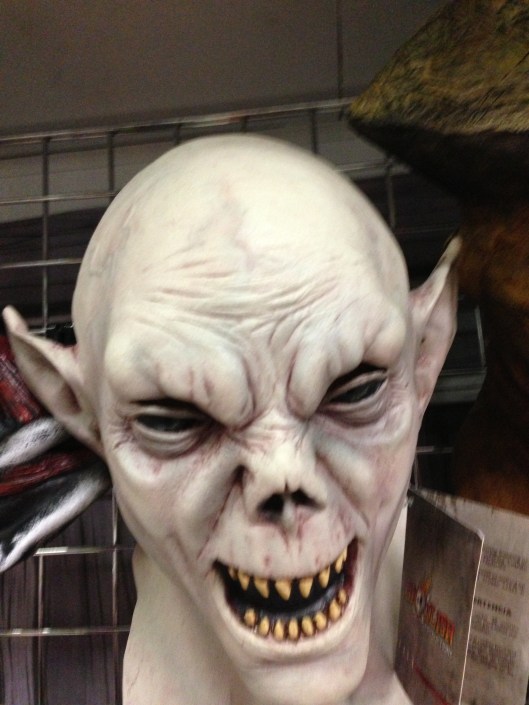
A shrill scream shot through the air. Sally & Tony both jerked their heads toward the sound. The sharp teeth of the round-mouthed orange monster opened wide as it bellowed and screeched. “HUNGRY! HUNGRY!” 

“Well,” said Sally, “I think he’s cute, so I’m going to feed him.” 

As Sally scanned their scant provisions for something that would likely please the monster, Tony continued to try to dissuade her. 

“Look, Sally, it’s not safe. It may look somewhat human, but he has no human feelings. He just…” 

Sally picked up some lunch meat from the nearly empty fridge and ignored Tony as she walked out into the back deck. She looked down on the writhing form of our poor monster. She muttered to herself, “I don’t see why he needs to be penned up. He should be free to go anywhere he wants and to do anything he wants like everyone else.” 

woman taking bottle of drink from refrigerator

Photo by Pedro Sandrini on Pexels.com

Sally strode over to the edge of the deck, took one backward glance to see whether Tony was coming to stop her and drew her arm back to toss the package of meat. She hesitated for a moment. What if Tony’s right? What if it really is dangerous? 

The monster’s plaintive cry bellowed through the air again, “HUNGRY! HUNGRY! FEED ME!” 

Well, thought Sally, I’m not going to do — or not do — something just because my smarty pants brother says it’s a bad idea. She cocked her arm again and threw the packaged down to monster — MY monster, she thought. 
7FBFF51B-BA6C-46C0-ABD7-5AC863AA947D

Monster immediately tore off the packaging and tossed it aside. He had already made quite a mess of his pen. He gobbled it up in a flash. Then, he began moaning. “Not fresh! Low quality! Need fresh! FRESH! Come closer, little girl. Pretty girl. Oh, you are a pretty girl! No-one ever pets me. Woe is me!” 

The monster waddled over to the edge of his pen. From here, Sally judged, she should be able to barely pat the top of his scruffy head. He looked up with dog eyes and she put her hand out to pet her. Suddenly, Monster’s neck shot up and took her whole hand in its mouth. It sucked on her hand and she could feel its sharp teeth against her skin. It began growling in its throat but she could understand what it was saying, “Bring me fresh meat! Or, I will eat you! I need it NOW!” 

The monster released her hand and stared up into her eyes with its dull shark eyes. She glanced back into the kitchen but saw no sign of Tony. The skin of her arm was unbroken. But that Monster really sucks! 

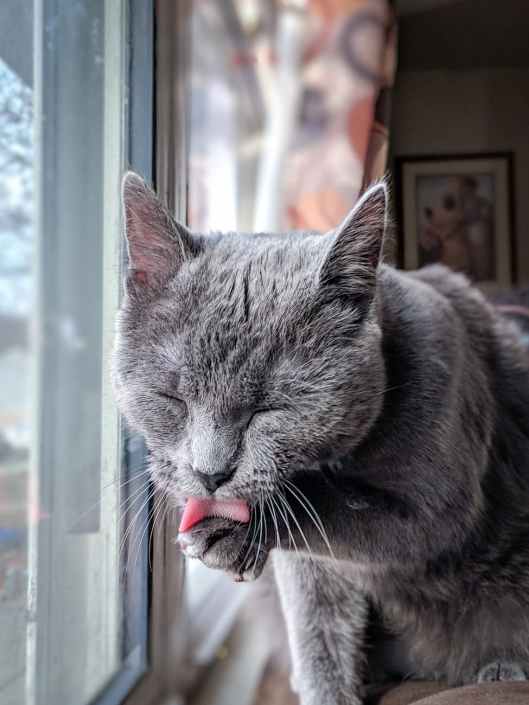
Where had Tony gone? She opened the kitchen door and padded about. No-one here but old Winston, the sick gray cat. Winston had once been a fun lively pet, but these days — not so much. Maybe he’d be happier dead. She knew in her heart of hearts that was a lie. But somehow, lying for the Monster didn’t seem so bad. She grabbed Winston by the scruff of the neck and put her hands under his aging body. She could feel the old cat’s ribs. She had to use her butt to open the door back to the deck but she managed. Like a zombie, she walked over to the edge and tossed the cat over before she lost her courage. 

cat sitting beside window

Photo by Jeffrey Riley on Pexels.com

The cat was gone in a single gulp! Well, she thought, at least it was painless. “There you go, Monster!” 

“I NEED MORE! MORE Fresh Meat!” the monster pleaded. “NOW!” 

“We don’t have any more meat. Times are tough. Would you like some fruit?” 

“MEAT! NOW! MORE and Fresh! NOW!” wailed the Monster. 

“Okay, just a minute, Monster. I’ll look.” 

Sally re-entered the kitchen but saw no sign of Tony. She walked into the entry way and there sat Tony putting his fishing boots on. 

“Where are you going, Tony?” 

“I’m going fishing! You just threw away our last package of lunch meat. Like an idiot!” 

bay beach bicycle clouds

Photo by Snapwire on Pexels.com

Sally ground her teeth. Why was her brother so mean about the Monster? “Tony,” she said sweetly, “I’m glad you’re going fishing. I’m sorry I gave our last meat to the Monster, but I think you’re right! He’s dangerous! And, I think he’s about to break out of his pen! Can you come take a look before you go?”

Tony nodded. “All right. I’m glad you’re finally seeing some sense!” He finished putting on his boots making the trek out onto the back deck a little awkward but he came to the edge and looked down at the Monster. He scanned the pen. “Sally, I don’t see a problem with the pen.” 

Sally came up next to him.  “Look over — like here — right below. Doesn’t it look like a hole in the fencing? It might be okay, but it looks wrecked somehow.” 

Tony leaned over the rail to look at the fencing directly below. “WHAT?!” he screamed as Sally snuck behind him and lifted his feet making him tumble a dozen feet onto the ground below. Something — perhaps several somethings — snapped as he hit the ground awkwardly. “NO!” he screamed. Those were his last words. 

Sally felt a moment of guilt but then thought: Well, he had it coming. Anyway, now the Monster’s fed. And he was really hungry. She felt just a bit nauseous though as she heard the monster’s teeth saw through the bones. She couldn’t tell her parents what really happened of course. When the noise stopped, she crept over to the edge. There were only small pieces of her brother left and these were being lapped up by the Monster who stopped long enough to leer at Sally. 

094B8A3E-B81C-4362-B83E-89FA50F9646B

“Monster happy! Thank you, little girl. Pet Monster, pretty little girl. Please pet Monster.” 

Having a pet Monster like this was a lot better than having a pesky brother she decided. 

She put her hand down to pet the Monster’s scruffy head again. She stared uncomprehending at the place where her right arm had been just moments before. A pulsing geyser of someone’s blood spurted through the air. She shook her head and said, “What?” That’s my blood, she realized and she fell forward. She was losing consciousness. She found the strength to move her head and the last thing she saw was the Monster’s impossibly long neck stretching that roundish hole of teeth toward her face. The Monster laughed and said, “Pretty little stupid girl.” 

After digesting the lunch meat, the cat, Tony and Sally, the Monster felt quite satisfied. 

For an hour. 

Then, he began using his new found bulk and strength to dismantle his pen. Now he would be free. 

Free at last. 

Free to kill and eat all the children he could. 

Life was good, thought “Our” Monster. 

air air pollution climate change dawn

Photo by Pixabay on Pexels.com


An earlier parable about a monster. 

The beginning of the Myths of the Veritas. 

Author Page on Amazon. 

Essays on America: Ice

04 Wednesday Sep 2019

Posted by petersironwood in America, apocalypse, psychology, science, Uncategorized

≈ 9 Comments

Tags

arctic, carbon dioxide, Climate change, environment, ice, life, methane, politics, science, truth

“Have a nice day.” 

IMG_3105

In the San Diego area, where I live, people really do often say, “Have a nice day.” And, generally, that happens, at least weather-wise. It is typically between 55 and 75 degrees Fahrenheit (13 to 24 degrees Celsius) year round. Right now, we are having a slight heat wave. When I went to play tennis this morning, I filled a cup 2/3 ice and 1/3 water to help me stay cool and hydrated on the court. Although we played at 8:30 am, the temperature on the tennis court was already high. As I filled my cup (to almost running over), I was once again struck by the odd properties of ice. 

One of those properties is that ice is less dense than water. Ice floats. That turns out to be a good thing. But it’s also an unusual thing. Many substances contract as they get colder and expand as they get warmer. 

iceberg during daytime

Photo by Pixabay on Pexels.com

There’s another weird thing about ice. It takes as much heat energy* to change a cup of ice at 32 degrees Fahrenheit (0 degrees Celsius) to a cup of water at 32 degrees Fahrenheit as it does to warm that water from 32 degrees F to 176 degrees F!! That is hot water! Exposure to water for two seconds that is only 150 degrees F will give you third degree burns. You do not want to touch water that is 176 degrees Fahrenheit (80 degrees Celsius)! 

Just contemplate that astounding fact. It takes as much heat energy to change a cup (or any other amount) of ice to water at that same temperature as it does to heat that ice cold water up to way beyond scalding. 

brown surface beside body of water in a distant of mountains under white clouds during daytime

Photo by Pixabay on Pexels.com

“Well, okay,” you might say. “But who really cares?” 

You do! Or at least you should. Because all that ice that is melting at the Arctic and in Iceland and in Greenland — that is a big frigging deal! 

And I think you would immediately know it’s a big frigging deal if Global Warming heated the ice cold water in the Arctic Ocean to scalding water that was so hot it killed all the fish, dolphins, whales, crabs, and seaweed in the ocean. It would kill you almost instantly if you tried to swim in it. 

pexels-photo-225869.jpeg

Photo by HAMID ELBAZ on Pexels.com

Actually, what is happening is worse than that. 

Why? Because although water is reflective, it is not nearly so reflective as ice covered with snow. Chances are, you may have heard the expression “snow blind” which is a temporary blindness caused by the sunlight bouncing off snow and hurting your retina. But you have not heard the expression “water blind.” Although there can be glare off the water, it is not nearly so severe. So, when the ice melts, it not only represents a huge change in heat energy; it also speeds up the further heating of the planet. The sunlight once reflected off of ice covered with snow and that helped keep the planet cooler. In those areas where the ice and snow have melted, much less of the sun’s energy is now reflected off into space. 

Actually, what is happening is worse than that. 

Why? Because the arctic heat is also thawing permafrost in arctic lands. This means that methane which is trapped beneath the permafrost is being released into the atmosphere. Alas, methane, like Carbon Dioxide, is a greenhouse gas. So, the increased level of Carbon Dioxide in the atmosphere is not only itself causing the planet to heat up; it is also releasing huge quantities of another greenhouse gas: methane. 

beach beautiful clouds countryside

Photo by Pixabay on Pexels.com

Unfortunately, in the first two decades after being released into the atmosphere, methane is 84 times as “effective” as Carbon Dioxide at trapping the heat energy in the earth’s atmosphere. Agro-business and manufacturing also produce methane. This means more warming and less ice. 

As it turns out, there are many possible variations of ice. The exact number of different types varies depending on what “counts” as another type. You know that “solid ice” is different from frost and snowflakes and candle ice. Under extreme pressures, many kinds can be produced in the laboratory. But none of them is Ice Nine. 

Ice Nine is a science fiction substance created by the mind of Kurt Vonnegut in his wonderful book, Cat’s Cradle, which is well worth the read. 

In Cat’s Cradle, a scientist discovers another form of ice which “freezes” at room temperature. Not only that; if even a tiny “seed” of this Ice Nine touches a larger body of water, that entire body of water will turn into Ice Nine. So, an over-arching suspense arc of the book is whether or not humanity will be able to “contain” Ice Nine or whether it will basically destroy life on earth. 

fullsizeoutput_1372

Ice Nine is fiction. But global climate change is not fiction. 

Whether we humans can get our act together in time to prevent turning Global Climate Change into Global Climate Disaster is not clear. Many people are working very hard to prevent that. But many other people apparently think it will happen after their individual life is over so they don’t really give a damn about how many of their descendants will suffer or how many other life forms they destroy. And a few people, those I call SHRUGS (Super Hyper Really Ultra-Greedy Swindlers), are actively trying to hasten the Global Climate Disaster by rolling back environmental regulations, setting forests afire, and denying that Climate Change is real. 

Why? 

That’s the subject of the next post. 

—————————————-

  • In actual practice, the amount of heat will vary depending on the insulation and ambient temperature. If you heat ice water up on your stove, for example, at first, in addition to the heat you provide from the gas flame or electric coil, your house temperature (perhaps around 72 degrees F) will also be heating up that water. But once the temperature of the water reaches a higher temperature than 72 degrees F, some of the heat you apply from the stove will “leak out” into the rest of your house. And the higher the temperature of the water, the more will leak out into the rest of your house. 

https://en.wikipedia.org/wiki/Cat%27s_Cradle

Author Page on Amazon

Finding the Mustard

12 Monday Aug 2019

Posted by petersironwood in America, apocalypse, politics, psychology, Uncategorized

≈ 11 Comments

Tags

environment, experiment, Feedback, learning, life, politics, racism, truth

{A departure from the Myths of the Veritas, this is just some thoughts while making dinner}

MustardJar

To the best of my ability, this is the view I had when I was poaching salmon for dinner tonight and realized I had almost forgotten the mustard. I spied it immediately.

Then, (while using the mustard) I began to ponder a blog post from a few weeks ago on the importance of making sure that you looked for “the whole enchilada.” But just now, I relied on a small number of cues and it all worked out fine. What’s the difference?

The difference is that I am looking in my refrigerator for something that I know I have. Even in a large grocery store, there are a limited number of products in jars. But in my fridge? Very few. And, let’s face it; much of modern life is like this. We spend time at work, at home, at the gym, on our commute and we are on familiar ground. We see familiar things. We talk to familiar people. So, all these little algorithms we develop *work* pretty well most of the time.

IMG_9189

But — they do not work very well at all if applied to *new* situations, or *new* places, or *new* knowledge or *new* people. If I were to find myself looking in the refrigerator in Italy or Malaysia and relied on the exact same cues, it would be far less likely to work!

It isn’t so much that these little algorithms or pattern recognitions don’t work. They don’t. But so what? The problem comes when we *assume* or even *insist* that they still work. Mostly, they don’t. So, when you are in different situations, you need to slow down and search & ask for help & think & test. And, if you do, it’s mostly all OK.

IMG_1238

But if you insist that your knowledge *should* work in situations where it does not…you are going to make yourself uncomfortable much more than you need to.

Quite apart from the unfairness that xenophobia wreaks upon “others”, it is sad to me that it prevents so much that is interesting and wonderful about living in the 21st century. We have this *astounding* and *amazing* opportunity to learn from a thousand cultures and peoples. Instead, we are ignoring them, or destroying them, or sometimes incorporating a useful piece of technology.

Left to their own devices, people from different places, cultures, races, etc. can generally work it out. But if a rabble rouser preys on your feelings of discomfort and helps you focus on it, they destroy that natural accommodation and mutual learning. Of course, they are doing it to gain power over you, and they don’t care that they are blinding you to a cornucopia of possibilities.

OLYMPUS DIGITAL CAMERA

Once the flames of hatred are sufficiently fanned, you will never be able to see that “other” as a human being who is fundamentally just like you, but whose ancestors and cultures learned different skills and customs in order to survive. You will never see all that you can learn from each other. You will never see that you have been manipulated into fearing, and hating, and even killing so that someone else can become richer, or more powerful, or be able to flout laws that they don’t like. And that is a very sad thing.


Myths of the Veritas: Book One

Myths of the Veritas: Book Two

Myths of the Veritas: Diversity as a Testament to Our Success as a Species

The Whole Enchilada 

Author Page on Amazon


Fire Arrows

17 Friday May 2019

Posted by petersironwood in America, apocalypse, psychology, Veritas

≈ 1 Comment

Tags

environment, escape, fire, hate, legend, life, myth, politics, story, Veritas

Eagle Eyes suddenly put her hand up thus silencing Tu-Swift in his recounting. She pointed to a spot on the horizon. The others stared but saw nothing. She made the sign for “fire” and then pointed to another spot and again made the sign for “fire.” The sun now began to rise behind them but shadows still obscured the valley between their small party and the people who steal children. A cool breeze freshened behind their backs. The wolves would not be able to catch a scent if they were being pursued. All of the party trained their eyes on the places where Eagle Eyes pointed but nothing appeared to them. They stared into the valley below: grassland, scrubby trees, and on one side a forest of conifers. On the other side, another forest bordered with birches and aspens. 

photo of trees and mountain

Photo by Brandon Montrone on Pexels.com

The wind, they knew would carry their voices as well as their scent so they deliberated in quiet. If they stood their ground here atop the hill, they would have some advantage in a fight. If their enemy approached on horses, they would not be able to outrun them. They might be better off to stay and fight from the high ground. Tu-Swift shot his hand out and nodded vigorously, making the sign for “fire.” He too saw these flashes of flames. Soon, the others detected these fires that multiplied and flickered in the nearby woods. Shadow Walker, Fleet of Foot, and Lion Slayer each strung one of the bows that Tu-Swift had stolen and lay arrows beside them, ready to shoot when the time came. 

A hail of flaming arrows suddenly streamed toward them. Shadow Walker laughed. What a terrible aim they had, he thought to himself for he could see that the arrows would fall well behind them. Lion Slayer saw this as well, but he yelled at the others to run and follow him. “Fire!” he screamed and began to run down the hill away from the forest of evergreens toward the birches. Shadow Walker frowned for a moment thinking Lion Slayer a coward not to stand and fight. A jumble of thought-images flickered through his mind: Lion Slayer, lion, a lion slain, a fire, The Legend of the Orange Man and then he understood and urged everyone to follow. 

bonfire burning camp campfire

Photo by Vlad Bagacian on Pexels.com

Shadow Walker understood that their enemy had not aimed at them but at the grassy expanse behind them. Even now, fire took hold in the dry grass and burned quickly up the hill behind them. Lion Slayer realized immediately that running away from the evergreen forest was their only hope. The entire party now ran headlong down the side of the hill away from the forest. Shadow Walker glanced back and could see their pursuers now emerging from the edge of the forest. He saw that they were not atop horses. Perhaps they could out run both them and the fire, but if they loosed another volley of arrows they could start a new fire. He stopped for a moment, turned back and picked up the small friend of Tu-Swift who was falling behind. 

It seemed to Shadow Walker that fire now roared all around them. Thick black smoke hid each from the others and they continued their descent, running blind. Shadow Walker’s foot landed on a loose rock and he fell heavily while Day-Nah flew off his back and tumbled away from him.  The fire seemed to suck life out of the air around them. Shadow Walker crouched on all fours attempting to catch his breath. He stood but saw no sign of the others. Flames surrounded him. He was disoriented and could see nothing and he heard no voices above the roaring flames. Wolves! He heard the wolf pups and, having no other beacon, ran toward the sound of their voices. 

Shadow Walker’s feet suddenly splashed into cold water. He had come to a broad shallow river. Here, smoke hung still heavy in the air, but there were no flames surrounding him. A splash beside him made him spin around ready to kill but it was the small friend of Tu-Swift. Shadow Walker heard coughing and saw Hudah Salah splashing toward him. The air began to clear around them. 

cascade creek environment fern

Photo by Pixabay on Pexels.com

Wind is a fickle friend. Those who loose fire — or hatred — upon a land or a people, can never predict with certainly where those flames will lead. Fed by the fuel of fierce desire to destroy and flowing with the ever changing winds, foolish indeed are those who think these movements may be directed and channeled. 

This day, the winds had shifted and the fire now pursued the pursuers and the fire burned toward the people who steal children. Though slower on the downhill side, it chased the ROI into the forest, but did not stop at the edge of the forest. Encouraged by the richer fuel within, the blaze now devoured its way back into the fir and pine. Another small fire had begun when one of the ROI had pulled back his lit arrow, and before he could release it, the weakened nock broke and the flaming arrow had fell at the bowman’s feet instantly igniting the grass around him. The breaking of the bow stung his arms and in his surprise, he ran into the forest rather than attempting to put out the small fire around him. Of course, it quickly grew and like his larger cousin, relished the change in wind that allowed him to charge into the fuel-rich forest. 

orange fire

Photo by Guduru Ajay bhargav on Pexels.com

As the air cleared around Shadow Walker and Hudah Salah, the rescue party began to see that in the distance, a great fire was destroying the forest — and all the creatures within. Easy Tears soon joined them along with the wolf pups. Fleet-of-Foot and Day-Nah also joined them. The stream water was cold. Shadow Walker looked about. Though there was no immediate threat of fire, he knew that winds were unpredictable. If the wind shifted directly toward them, the fire would find nothing to burn. In front of him, in a direct line to the forest of firs, the entire grass hillside had been burned to ash. On the other side of the burned grassland, the evergreen forest bloomed red and black. Huge flames leapt to the sky. The fire seemed intent on burning back toward the center place of the people who stole children. But fire is unpredictable. It might then turn and come up the other side of the valley after them. But where was Tu-Swift? Where was Eagle Eyes? Where was Lion Slayer? 

Shadow Walker began to realize that his ankle was badly sprained. He gestured the others to come to the edge of the stream to parley. That sat for a few moments in silence. Each of them had just barely escaped death, after all. No-one seemed badly burned or injured. But three of their party remained unaccounted for. Shadow Walker sat on the edge of the stream, shivering with the others, keeping his turned ankle in the icy water. He focused his energy on telling it not to swell. At last, he opened his mouth to speak, but the small thin voice of Day-Nah spoke first. 

“Tu-Swift?” he questioned. “Tu-Swift run? Tu-Swift hide? Tu-Swift?” 

Shadow Walker almost choked up with tears. He cupped his hands around his mouth, gestured for the others to follow his lead and they all turned toward the center place of the ROI and shouted “TU-SWIFT!  TU-SWIFT!” Then, they cupped their hands behind their ears to amplify any returning call. Nothing. “Eagle Eyes! EAGLE EYES!” Nothing. They did the same for Lion Slayer. Nothing. Then, they all turned in a slightly different direction and did the same. They completed this circle twice with no response. The roaring, sparking fire was the only sure sound though on several occasions they all thought they heard screams of agony.

fire warm radio flame

Photo by Pixabay on Pexels.com

At last the sun shone over the peak of the hill; the smoke clouds no longer hid its warming rays and they began to parley on whether the people who steal children had survived to chase them further and whether and how and where to search for those missing from their party. Hudah Salah regarded Shadow Walker’s ankle with a grimace. She tore some of her garments and took his ankle gently into her lap where the wrapped cloth tightly about it and tied it. “Too tight – you loose. Too loose – you tight. Understand?” 

Shadow Walker looked into her face. He could see genuine caring and concern and beyond that he saw her fear – that her husband, Lion Slayer might have been lost to the flames. This tore at the heart of Shadow Walker. He had come here to rescue Tu-Swift, who was nowhere to be found and he may have lost two of their party and still not returned Tu-Swift to Many Paths as he had promised. 

IMG_3229

He stood at last, and hobbled a few steps. He would be of no use searching. They worked together to devise a search plan. They would communicate by alternating whistling like an eagle and drumming with sticks. If anyone saw a sign of the return of their pursuers, they would warn the others. If they met up with any of their missing party, they would likewise let the others know. They would meet back at the stream at sunset. Shadow Walker and Day-Nah would stay behind to relay messages and Shadow Walker would try to learn more from Day-Nah. Though Day-Nah’s ability to speak Veritas was limited, he hoped he could learn something, and he began to query the little fellow. “Tu-Swift? Where Tu-Swift?” 

The child repeated back. “Tu-Swift! Tu-Swift — good!” This was followed by gibberish more unintelligible to him than the hissing of a snake. But Salah Hadam, who had just gathered up her pack, and headed off to search, snapped around. She spoke to the boy rapidly in some foreign tongue. They spoke excitedly back and forth for several minutes and the others also turned back. Fleet-of-Foot could stand it no longer. 

“What is he saying? Is he of your tribe? Where is Tu-Swift?” 

Salah Hadam, generally quite demure, put up her had as though to push away Fleet-of-Foot and looked him in the eye and said, “You. Stop! He talk!” She turned back to Day-Nah and they continued to converse. Shadow Walker had no idea what she said, but Fleet-of-Foot understood much of what they said. He stooped down beside Shadow Walker and spoke in a stage whisper. 

BBBC47A1-B5B7-48F3-A03D-A58102A13B91

“This boy does not know what happened to Tu-Swift. They were together running down the hill quickly to escape fire. Black smoke and fire everywhere. Tu-Swift had helped Day-Nah get up after you dropped him and had yelled, “Run, Day-Nah. RUN!” 

“Day-Nah had looked over to see Tu-Swift but he saw nothing. He had vanished into smoke.”

Fleet-of-Foot realized that this conversation would continue for awhile and he set down his pack beside Salah Hadam and began translating as best he could to all the rest. One by one, the rescuers set down their packs and began listening to Day-Nah’s story.

——————————-

 Author Page on Amazon

Non-Linearity

20 Thursday Dec 2018

Posted by petersironwood in America, management, psychology, Uncategorized

≈ 4 Comments

Tags

environment, equilibrium, feedback loops, ping pong, research, science, systems thinking, table tennis, testing, truth

Non-linearity

A Chessboard Full of Rice

According to myth, the Emperor’s wise adviser once did him a great favor. So grateful was the Emperor that he begged his wise advisor to take any gift she might like from the vast treasures of gold or jewels, any lands or gardens, any of the Emperor’s many male children to be her companion. However, the advisor answered as follows: “Thank you for your generosity, oh mighty Emperor. I have no need of great material wealth. My needs and wants are simple. I do get hungry and thirsty, of course, as do we all, and sometimes my household runs short of rice. You see this fine chessboard?”

battle black blur board game

Photo by Pixabay on Pexels.com

“Oh, yes, my wise counselor, it is indeed finely made of gold and silver and I would gladly give you twenty such!” 

“Thank you again for your generosity, but I only wish for a some grains of rice. Give me one grain on this space and tomorrow, two grains on this space and the next day, four grains on this space. Each day for 64 days, double the number of grains of rice you gave me the day before. At the end of the 64 days, I will ask for no more.” 

The Emperor looked puzzled. “Surely, you must have something more valuable than rice! Name it!” 

“No, Sire, that is all I desire. Just the doubled rice will do quite nicely.” 

“Well, it shall be so!” And thus the Emperor told his staff that they were to provide a grain of rice for the first day, two grains of rice for the next day and to double the amount each day until all 64 days had passed. At first, it seemed such a pathetic gift for such a great favor. 

Even after 8 days, the wise counselor only received 128 grains of rice – not even a bowlful. 

Readers familiar with exponential growth realize that on the 64th day, the Emperor has promised to deliver 2**63 grains of rice. This is not only more rice than the Emperor had at his disposal. It is more grains of rice than exist in all the kingdoms of earth. To be exact, the last payment is meant to be 9,223,372,036,854,775,808 grains of rice while the total is one less than 2**64. To put the matter scientifically — it’s a lot of rice! Much more than exists in the world. 

How would you like the story to end? A wise Emperor, to my mind, would thank the counselor after a couple weeks and say, “I see, oh wise Counselor, that you used my gift to give me another gift to enhance my wisdom. For I now understand that what seemed at first an easy thing to do is actually quite hard. Doubling soon undoes even the richest king. I will keep this in mind when I think about interest rates and population growth.” 

A crummy Emperor, on the other hand, might say, “I offer you a gift and you see fit to embarrass me by making me agree to an impossible task? Boil her in oil!”

The Lily Pad Pond Puzzle. 

Beside my house is a pond. In this pond, a lily pad began to grow. Every day, it doubled in size. On day 20, it completely covered the surface of the pond. The surface of the pond is 400 square feet. How many days did it take to cover half of the pond? 

red and green lily pads focus photography

Photo by Skitterphoto on Pexels.com

At first glance, you might think this problem is insoluble because you don’t know how big the lily pad was initially. In fact, you don’t even need to know how large the pond is. It will cover half the pond on day 19.  

The Ping Pong Table Ping Pong Player Population

When I began at IBM Research in 1973, I soon discovered that a fair number of researchers were avid table tennis players. At lunch time, somewhere between six and twenty researchers would show up to play. There were two tables and some small amount of room for spectators to stand on the edges of the two ping-pong rooms and watch. Our rule was that if a person won, they would stay at the table and a new challenger would play. However, if you won three times in a row, you had to sit down regardlessly. I didn’t go over every lunch time, but I went over quite a few times over the course of my first ten years there and there was invariably someone to play with. Sometimes, I had a longer wait time than others, but it was never too long a wait. 

Then, because management wanted to use one of the two ping-pong rooms for other purposes, they repurposed one of the rooms. Now, there was only one ping pong table. In the two ping-pong table case, remember, I never had to wait too long nor did I ever go there and have no-one to play. As I said, the number of players varied between somewhere around six to twenty. What is your prediction about how many players showed up when there was only one ping pong table? 


Here’s what happened. The first day after this change happened, I went over and about fifteen people showed up. I, like everyone else, waited a long time for a game. Our “official” lunch hour was actually 42 minutes and the building was a five minute walk away. So, if you had to wait a half hour for your chance to play, it really wasn’t that much fun. In addition, there were some more subtle effects. All the players were good, but there some substantial differences in skill level. People tried to arrange it so that they played someone at about the same level. WIth only one table, this was trickier. In addition, when a relatively large number of people showed up, it was too crowded for everyone to see the match without interfering with play. It happened that I was too busy to go for a few days. The next time I showed up, no-one was there. Some of us talked about trying to “organize” the ping pong to insure that enough people showed up but everyone was busy and no-one wanted to take this on. Scheduling researchers is harder than you might think. It was hard for people to make a commitment to show up at noon because a meeting might run over, their manager might give them extra work, etc. The number of people showing up swung wildly for about two weeks and then stabilized. 

At zero. 

What had been a vibrant community with two ping pong tables did not stay the same size, or shrink to half when we were limited to one table. It went to zero. 

Warring Positive Feedback Loops. 

We’ve already talked about “positive feedback loops” which are also known as “vicious circles.” Sometimes, there are actually (at least) two positive feedback loops hiding beneath what appears to be a stable system. In the Case of the Missing Ping Pong Table described above, one positive feedback loop was simply that when you went there and had a good time through some combination of watching good matches or playing yourself, you were more likely to go there again. There was also a positive feedback loop that was more of a social nature. The more people who were there, the more likely it was you would find a good or interesting match. It was also more likely to be able to find someone you wanted to have a conversation with although the venue prevented this from being a big part of the adventure. Another way that having more people there increased the chances that more people would be there the next day was that it was kind of exciting to have a larger audience watching, cheering, throwing the ball back when the ball crept under the radiator after pin-balling around for awhile after a decent slam. 

IMG_1075

At the same time, there were other feedback loops, sometimes of the same factors but in a different range. For instance, beyond the point of having the periphery of the playing field covered one or two deep, additional spectators added only a little excitement and they were more likely to infringe on the needed space around the table. In addition, while the first ring of spectators felt very much a part of the action, the experience for the second ring of spectators was far less engaging. While I mentioned above that more players meant a better change of finding a good match, it also meant that one had to wait longer between matches. The worst case scenario, of course, is that you are the only one who shows up. 

Behind Every Abstraction are a Host of Personal Stories. 

Yes, you can practice against the wall, and I did this a few times, but it is significantly less fun than a real match. I love to serve, for instance. I have a raft of difficult serves. Just to give you one example, with most set-ups, I can hit the right side of the ball so thinly that I put enough side-spin for the ball to appear as though it isn’t even going to hit the table on the second side, but it does; it curves radically back around the left. Sometimes people are so surprised that they miss it entirely. Even if they get there, the sidespin often makes them hit it off the table or the curve causes them to mis-hit the ball on their thumb or finger. I can also add a fair amount of top-spin or under-spin as well. Anyway, I didn’t get to do any of that just hitting the ball against the wall. The wall was not perfectly smooth either. So I might hit three of four shots and then the ball would hit a little imperfection in the plaster and careen off to scribble scrabble along the floor and then crawl under the radiator. It’s the kind of annoyance that everyone has experienced. And if someone else is there, you can kind of glance at your friend who nods nearly imperceptibly as you get down on your hands and knees and stretch your fingers into the territory of God-knows what spiders or broken glass and feel around through the grit and dust until you retrieved the ball. And that little glance and that little nod actually make quite a difference. If you’re on your own, it’s not any fun at all. It’s just an annoyance. The only reason I even bother to hit against the wall is to learn to keep focus for extended periods of time. For this, it is good practice and a good challenge. But, if I’m interrupting this to go fish my hand into a pile of dust every couple minutes, it isn’t so likely I’ll come back. 

close up portrait of owl against sky

Photo by Pixabay on Pexels.com

These various factors were all in a dynamic balance so long as there were two tables. When the tables went from two to one, however, what had been a stable equilibrium became a very unstable one. Eventually, of course, it did find a new equilibrium point and that was zero. To crawl out of that, one person might show up. But most of the time, they were the only one. So, they would be less likely to come again. Even if two showed up, since no-one could play every day, you might still find yourself wondering whether someone would be there the next time. 

bandwidth close up computer connection

Photo by panumas nikhomkhai on Pexels.com

You might have read this whole story and wondered why the hell this building full of Ph.D.’s couldn’t get their act together and arrange some matches. It’s an interesting question and here is my personal opinion. When it came to these brilliant scientists and engineers, they came from every part of the globe and they came in all shapes and sizes. Some were vastly overweight and others were ultra marathoners. But the ones who liked to play table tennis were, by and large, athletic and “hyper” – an impatient lot. What all of us really loved was working to find out the truth. And, these truths that we sought were ones the company that we worked for wanted us to seek. True enough, but by the same token, that meant the truth found and utilized would make people’s lives better in some way in the not too distant future. But working in a corporation also meant doing a bunch of administrivia. So, the ping pong set in particular, wanted to get up from their intense sedentary mental and administrative work and play hard at something completely physical and different. The last thing any of us wanted to do was add more administriva to our lives. 


The Takeaway

 It’s easy and common to assume implicitly that the systems you deal with are linear.

They often aren’t. 

Things can go out of control extremely quickly (into a dominant positive feedback loop) once the dynamic equilibrium is disturbed. 

Would the invention of the iPhone have kept the ping pong community going? 

Another takeaway: there are two quite distinct ways of analyzing that are going on in the essay above: a fairly abstract one (even if it uses concrete examples like rice and lily pads) and a very concrete and experiential one. In my experience, both of these modes are useful and valid and if taken together give a fuller picture of what’s going on. My experience in this was mainly in human computer interaction but I think it is equally true for many in law, medicine, management and many other fields. What’s your experience? 

———————————

Author’s Page on Amazon.  

Fraught Framing: The Virulent “Versus” Virus

16 Sunday Dec 2018

Posted by petersironwood in America, apocalypse, creativity, driverless cars, management, psychology

≈ 2 Comments

Tags

Climate change, Design, environment, framing, innovation, IQ, politics, problem formulation, problem solving, school, testing, TRIZ

Fraught Framing: The Virulent “Versus” Virus

IMG_2349

Like most of us, I spent a lot of time in grades K through 12 solving problems that others set for me. These problems were to be solved by applying prescribed methods. In math class, for example, we were given long division problems and we solved them by doing — you guessed it — long division. We were given history questions and asked who discovered [sic] America and we had to answer “Christopher Columbus” because that’s what the book said and that’s what the teacher had said. 

Even today, as of this writing, when I google “problem solving” I get 332,000,000 results. When I google “problem formulation” I only get 1,430,000 results — less than 1%. (“Problem Framing,” which is a synonym, only returned 127,000). And yet, in real life, at least in my experience, far greater leverage, understanding, and practical benefit comes from attention to problem formulation or problem framing. You still need to do competent problem solving, but unless you have properly framed the problem, you will most often find yourself doing much extra work; finding a sub-optimal solution; being stymied and finding no solution; or solving completely the wrong problem. In the worst case scenario, which happens surprisingly often, you not only solve the “wrong problem.” You don’t even know that you’ve solved the wrong problem. 

IMG_0687

There are many ways to go wrong when you frame the problem. Here, I want to focus on one particularly common error in problem framing which is to cast a problem as a dichotomy, a contest, or a tradeoff between two seemingly incompatible values. We’ve all heard examples such as “Military Defense Spending versus  Foreign Aid” or “Dollars for Police versus After School Programs” or “Privacy versus Convenience” or “A Woman’s Right to Choose versus the Rights of the Unborn Fetus” or “Heredity versus Environment” or “Addressing Climate Change versus Growing the Economy.” 

One disadvantage of framing things as a dichotomy is that it tends to cause people to polarize in opinion. This, in turn, tends to close the minds on both sides of an issue. A person who defines themselves as a “staunch defender” of the Second Amendment “Gun Rights”, for instance, will tend not to process information or arguments of any kind. If they hear someone say something about training or safety requirements, rather than consider whether this is a good idea, they will instead immediately look for counter-arguments, or rare scenarios, or exceptional statistics. The divisive nature of framing things as dichotomies is not even what I want to focus on here. Rather, I would like to show that these kinds of “versus” framings often lead even a single problem solver astray. 

Let’s examine the hidden flaws in a few of these dichotomies. At a given point in time, we may indeed only have a fixed pool of dollars to spend. So, at first blush, it seems to make sense that if we spend more money on Foreign Aid, we may have fewer dollars to spend on Military Defense and vice versa. Over a slightly longer time frame, however, relations are more complex. 

woman standing on sand dune throwing hat

Photo by The Lazy Artist Gallery on Pexels.com

It might be that a reasonable-sounding foreign aid program that spends dollars on food for those folks facing starvation due to drought is a good thing. However, it might turn on in a specific case, that the food never arrives at the destination but instead is intercepted by local War Lords who steal the food and use it get money to buy more weapons to enhance their power; in turn, this actually makes the starvation worse. Spending money right now on military operations to destroy the power of the warlords might be a necessary prerequisite to having an effective drought relief programs.  

Conversely, spending money today on foreign aid, particularly if it goes toward women’s education, will be very likely to result in the need for less military intervention in the future. That there is a “fixed pie” to be divided is one underlying metaphor that leads to a false framing of issues. In the case of spending on military “versus” foreign aid, the metaphor ignores the very real interconnections that can exist among the various actions. 

There are other problems with this particular framing as well. Another obvious problem is that how money is spent is often much more important than the category of spending. To take it to an absurd extreme, if you spend money on the “military” and the “military” money is actually to arm a bunch of thugs who subvert democracy in the region, it might not make us even slightly safer in the short run. Even worse, in the long run, we may find precisely these same weapons being used against us in the medium turn. Similarly, a “foreign aid” package that mostly goes to deforesting the Amazon rain forest and replacing it with land used to graze cows, will be ruinous in the long run for the very people it is supposedly aimed to help. 

bird s eye view of woodpile

Photo by Pok Rie on Pexels.com

False dichotomies are not limited to the economic and political arena. Say for example that you are designing a car or truck for delivering groceries. If you design an axle that is too thin, it may be too weak and subject to breakage. But if you make it too thick, it will be heavy and the car will not accelerate or corner as well and will also have worse gas mileage. On the surface, it seems like a real “versus” situation: thick versus thin, right? Maybe. Let’s see what Altshuller has to say.

Genrich Altshuller was a civil engineer and inventor in the Stalin era of Soviet Russia. He wrote a letter to Stalin explaining how Russian science and engineering could become more creative. A self-centered dictator, Stalin took such suggestions for improvement as personal insults so Altshuller was sent to the Gulags. Here, he met many other scientists and engineers who had, one way or another, gotten on the wrong side of Stalin. He discussed technical issues and solutions in many fields and developed a system called TRIZ (a Russian acronym) for technical invention. He uses the axle as one example to show the power of TRIZ. It turns out that the “obvious” trade-off between a thick, strong but heavy axle and a thin, weak, but light axle is only a strict trade-off under the assumption of a solid axle. A hollow axle can weigh much less than a solid axle but have almost all the strength of the solid version. 

IMG_8612

One may question the design assumptions even further. For instance, why is there an axle at all? If you use electric motors, for example, you could have four smaller, independent electric motors and not have any axle. Every wheel could be independent in suspension, direction, and speed. No-one would have designed such a car because no human being is likely capable of operating such a complex vehicle. Now that people are developing self-driving vehicles, such a design might be feasible. 

The axle example illustrates another common limitation of the “versus” mentality. It typically presumes a whole set of assumptions, many of which may not even be stated. To take this example even further, why are you even designing a truck for delivering groceries? How else might groceries go from the farm to the store? What if farms were co-located with grocery stores? What if groceries themselves were unnecessary and people largely grew food on their own roofs, or back yards, or greenhouses? 

house covered with red flowering plant

Photo by Lisa Fotios on Pexels.com

For many years, people debated the relative impact of environment versus heredity on various human characteristics such as intelligence. Let us put aside for a moment the considerable problems with the concept of intelligence itself and how it is tested, and focus on the question as to which is more important in determining intelligence: heredity or environment. In this case, the question can be likened to asking whether the length or height of a rectangle is a more important determiner of its area. A rectangle whose length is one mile and whose height is zero will have zero area. Similarly, a rectangle that is a mile high but has zero length will have zero area. Similarly, a child born of two extremely intelligent parents but who is abandoned in the jungle and brought up by wolves or apes will not learn the concepts of society that are necessary to score well on a typical IQ test. At the other extreme, no matter how much you love and cherish and try to educate your dog or cat, they will never score well on a typical IQ test. Length and breadth are both necessary for a rectangle to have area. The right heredity and environment are both necessary for a person to score well on an IQ test. 

IMG_0423

This is so obvious that one has to question why people would even raise the issue. Sadly, the historical answer often points toward racism. Some people wanted to argue that it was pointless to spend significant resources on educating people of color because they were limited in how intelligent they might become because of their heredity. 

Similarly, it seems that in the case of framing dealing with climate change as something that is versus economic growth, the people who frame the issue this way are not simply falling into a poor thinking habit of dichotomous thinking. They are framing as a dichotomy intentionally in order to win political support from people who feel economically vulnerable. If you have lost your job in the steel mill or rubber factory, you may find it easy to be sympathetic to the view that working to stop climate change might be all well and good but it can’t be done because it kills jobs. 

scenic view of mountains

Photo by Zun Zun on Pexels.com

If the planet becomes uninhabitable, how many jobs will be left? Even short of the complete destruction of the ecosphere, the best estimates are that there will be huge economic costs of not dealing with global climate change. These will soon be far larger than costs associated with reducing carbon emissions and reforesting the planet. Much of the human population of the planet lives close to the oceans. As ice melts and sea levels rise, many people will be displaced and large swaths of heavily populated areas will be made uninhabitable. Climate change is also increasing the frequency and severity of weather disasters such as tornados and hurricanes. These cause tremendous and wide-spread damage. They kill people and cause significant economic damage. In addition, there will be more floods and more droughts, both of which negatively impact the economy. Rather than dealing with climate change being something we must do despite the negative impact on the economy, the opposite is closer to the truth. Dealing with climate change is necessary to save the world economy from catastrophic collapse. Oligarchs whose power and wealth depend on non-renewable energy sources are well aware of this. They simply don’t care. They shrug it off. They won’t be alive in another twenty years so they are willing to try to obfuscate the truth by setting up a debate based on a false versus. 

They don’t care. 

Do you? 

—————————-

Author Page on Amazon


← Older posts
Newer posts →

Subscribe

  • Entries (RSS)
  • Comments (RSS)

Archives

  • January 2026
  • December 2025
  • November 2025
  • October 2025
  • September 2025
  • August 2025
  • July 2025
  • June 2025
  • May 2025
  • April 2025
  • March 2025
  • February 2025
  • January 2025
  • December 2024
  • November 2024
  • October 2024
  • September 2024
  • July 2024
  • April 2024
  • March 2024
  • February 2024
  • January 2024
  • December 2023
  • August 2023
  • July 2023
  • May 2023
  • April 2023
  • March 2023
  • February 2023
  • January 2023
  • December 2022
  • November 2022
  • October 2022
  • September 2022
  • August 2022
  • July 2022
  • June 2022
  • May 2022
  • April 2022
  • March 2022
  • February 2022
  • January 2022
  • December 2021
  • November 2021
  • October 2021
  • September 2021
  • August 2021
  • July 2021
  • June 2021
  • May 2021
  • April 2021
  • March 2021
  • February 2021
  • January 2021
  • December 2020
  • November 2020
  • October 2020
  • September 2020
  • August 2020
  • July 2020
  • June 2020
  • May 2020
  • April 2020
  • March 2020
  • February 2020
  • January 2020
  • December 2019
  • November 2019
  • October 2019
  • September 2019
  • August 2019
  • July 2019
  • June 2019
  • May 2019
  • April 2019
  • March 2019
  • February 2019
  • January 2019
  • December 2018
  • November 2018
  • October 2018
  • September 2018
  • August 2018
  • July 2018
  • June 2018
  • May 2018
  • April 2018
  • March 2018
  • February 2018
  • January 2018
  • December 2017
  • November 2017
  • October 2017
  • September 2017
  • August 2017
  • July 2017
  • June 2017
  • May 2017
  • April 2017
  • March 2017
  • February 2017
  • January 2017
  • December 2016
  • November 2016
  • October 2016
  • September 2016
  • August 2016
  • July 2016
  • June 2016
  • May 2016
  • April 2016
  • March 2016
  • February 2016
  • January 2016
  • December 2015
  • November 2015
  • October 2015
  • September 2015
  • August 2015
  • May 2015
  • January 2015
  • July 2014
  • January 2014
  • December 2013
  • November 2013

Categories

  • AI
  • America
  • apocalypse
  • cats
  • COVID-19
  • creativity
  • design rationale
  • driverless cars
  • essay
  • family
  • fantasy
  • fiction
  • HCI
  • health
  • management
  • nature
  • pets
  • poetry
  • politics
  • psychology
  • Sadie
  • satire
  • science
  • sports
  • story
  • The Singularity
  • Travel
  • Uncategorized
  • user experience
  • Veritas
  • Walkabout Diaries

Meta

  • Create account
  • Log in

Blog at WordPress.com.

  • Subscribe Subscribed
    • petersironwood
    • Join 663 other subscribers
    • Already have a WordPress.com account? Log in now.
    • petersironwood
    • Subscribe Subscribed
    • Sign up
    • Log in
    • Report this content
    • View site in Reader
    • Manage subscriptions
    • Collapse this bar
 

Loading Comments...