• About PeterSIronwood

petersironwood

~ Finding, formulating and solving life's frustrations.

petersironwood

Tag Archives: religion

Finger-Pointing among the ROI

22 Wednesday May 2019

Posted by petersironwood in America, apocalypse, management, psychology, Veritas

≈ 1 Comment

Tags

chaos, Dictatorship, fire, greed, leadership, legend, myth, religion, ROI, story, war

Among the ROI, it was common for each person to become a specialist in one or two of the tasks of the tribe. One such person, named Jaccim Nohan, specialized in capturing children. Indeed, he had been one of those who had attacked the Veritas at high feast and had carried off Tu-Swift on the back of his horse. Between slave-gathering raids, he worked with the horses and when all the horses of the ROI had begun to run off, it fell to him and two others to attempt to recapture them. Most of the horses had run far south, but a few, perhaps attempting to reconnect with their foals, had instead galloped about the village adding to the general confusion. 

Nohan ran after them to little avail. The noise made by the ROI themselves added to the terror of the horses. As one of them ran by, Nohan noticed that a fair length of frayed rope still trailed behind one of the chestnut mares. He thought to grab the rope and quickly wind it around a strong post. In this way he hoped to stop at least one horse from dangerously galloping to and fro among the villagers and soldiers. 

C3DFBFC1-D938-40E4-861D-15FD4F0FEA65

At first, his plan seemed to be working well. He grabbed the rope and the horse turned toward Nohan. The rope slackened and Nohan spotted a sturdy nearby post. He quickly grabbed the rope and began tying it in loops around the post. The horse reared up, spooked, and turned away in a panic. The horse broke the post in two and the loops of rope entangled around Nohan’s forearm. Suddenly, he found himself being dragged through the village. He tried several times to disentangle himself from the rope, all the while cursing himself and the horse. 

Nohan’s clothing and then his skin disintegrated from the friction. The horse dragged him near the paddock and into a large pile of fresh manure that Tu-Swift and Day-Nah had constructed only a few days ago. The horse felt the tug and turned back to regard the situation. Nohan managed to free himself of his bonds before losing consciousness. The last thing he recalled was the chestnut mare pawing the air over him. 

IMG_2855

The ROI soldiers imagined that they were under attack from a large army and immediately sped to the place where their bows and arrows were kept. As each arrived, they looked in disbelief to see that all of their bows were gone! A few went inside the armory to retrieve swords and clubs. Inside they found a few bows in working order as well as some arrows. As hastily as a group of disorganized men who are used to being told what to do in a very organized fashion can, they gathered their weapons and headed to the barn to get atop horses to fight the enemy they thought numerous. But there were no horses to be had! 

The head magistrate for the ROI, BRILL-BRA had been sound asleep after a long wine-filled orgy with several young slaves when the chaos began. He shook his head. That, he decided, was a mistake for a massive headache ensued. He threw on a robe and stumbled out into the square and saw the chaos. He wobbled unsteadily over to a large hunk of resonant metal which was suspended near a central dais and struck it hard. A few people nearby heard it and stopped their running uselessly about and came to the circle of benches near the large platform which BRILL-BRA had surmounted. He continued to ring the gong whose sound penetrated through the general din. More and more people began to stop their craziness and remember their discipline. Eventually, almost all the uninjured came to hear their leader’s orders. 

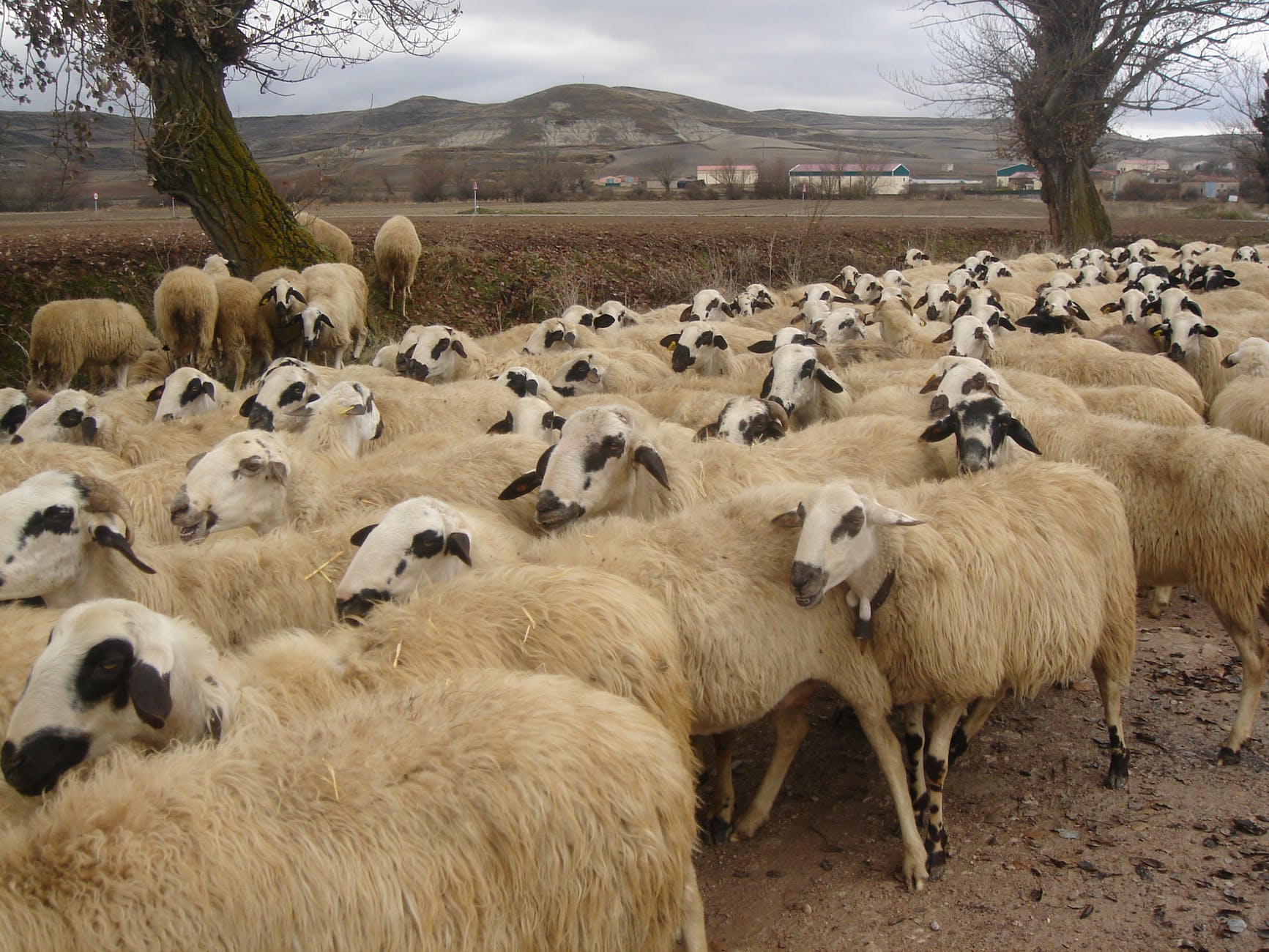
herd of sheep

Photo by Jose Lorenzo on Pexels.com

BRILL-BRA had no more idea what was happening than anyone else. But he recognized an opportunity to consolidate his power and so he took it. He “called on” various members of the ROI to explain what had happened, shushing anyone who was not “called on.” As the various members of the tribe spoke up, he began to piece together a picture of what had happened. The ROI had made many mistakes. The biggest blunder? Raiding the Veritas in the first place which had yielded only one potential slave. That slave had apparently managed to escape, taking another boy with him. Now, the ROI were short in their agreed upon number of slaves that they owed the Z-Lotz. Well, that was easily solved. He’ll find a scapegoat or two from among the ROI and take their children to make up the shortfall. More of that later, he thought. Apparently, there were no horses available right now, so he realized if they had any hope of recaptured the slave boys, he would have to send out a raiding party soon. 

He asked for volunteers and was heartened to see that all the young men of sound body volunteered. Inwardly, he snickered yet again at how easily manipulated they all were. Outwardly though, he arranged his face as appropriate to moods of fear, and hatred, and occasionally belittling the enemy encouraging his own people to think that the Veritas had used witchcraft and magic to multiply the effectiveness of their vastly superior numbers. It would be in no-one’s interest, he rationalized, to let them know what he suspected — that a mere handful had thrown their village into such disarray. That handful would be tracked down and killed before long. Better yet, perhaps a few could be captured alive and tortured to death for the entertainment of his followers. 

IMG_7922

Painting by Pierce Morgan.

BRILL-BRA chose a party of a dozen men whom he knew to be fast runners and good archers. The rest would be posted as guards around the village. This move solidified the atmosphere of fear and hate that he wished to prolong as long as possible. His people, he knew, proved much easier to manipulate and lie to when he kept them in a near constant state of anxiety and anger. The attack group soon set off toward the Veritas central place. BRILL-BRA thought it likely the Veritas would choose the most direct path back toward their home. For his part, BRILL-BRA spent a few more minutes rousing his audience to fear and righteous indignation about an enemy who would use dark magic to overcome the obviously superior ROI people. He promised revenge and then, told the people to go and repair the village while he, BRILL-BRA would undertake the most difficult task of all — which was to determine who among them had been derelict in duty. Of course, this also had the desired effect of putting everyone on edge. For they knew that anyone could be so accused and the penalty would be severe, if not fatal. 

Except for the dozen in the raiding party, the ROI worked to restore their village and to try to capture the escaped horses. For his part, BRILL-BRA spent a pleasant day interviewing candidates for his wrath. He had learned from NUT-PI, now the leader of the Z-LOTZ, the trick of making the suspects kneel on sharp gravel while he grilled them. Torturing his own people always put a smile on his face. With them kneeling before him, he always felt superior. And after all, he thought, I am superior. After all, they are the ones in pain and I am the one in charge. He smirked as they struggled to try to keep their composure and swear their loyalty to him while he pretended to consider what they said. After a long day of this, he finally feasted heartily and ordered some more slave children to be brought for his pleasure. This too, he enjoyed, not so much for the sex, per se, though that indeed was pleasurable, but more for the joy of knowing he had complete control over someone else’s body.   

He woke in the morning to the glorious glow of sunrise, a sunrise unusually vivid and red. He ordered one of his personal guards to bring him the three daughters of L-SIDNEY. They were a bit on the young side, but he fancied them. He decided to blame L-SIDNEY for the fiasco, mainly because he wanted his three daughters. The choice was also easy to rationalize because L-SIDNEY had been one of the three men who had been responsible for training up the two male captives to help with the horses. Since the horses had escaped along with the two kids, it seemed only fitting to make him pay by giving him his daughters. It wasn’t strictly necessary to come up with an explanation like that, but it helped. It gave the ROI people the semblance of a rationale so that they would be more comfortable with what would otherwise merely seem like random cruelty.  

fullsizeoutput_13a1

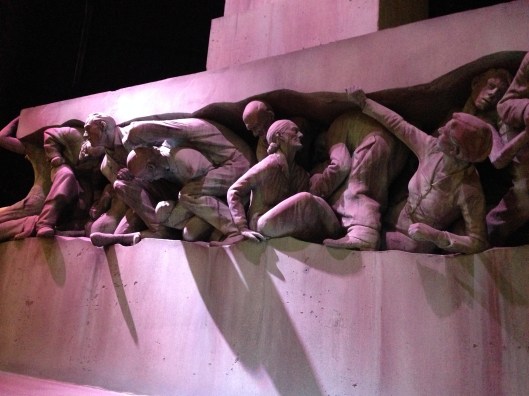
Guernica by Picasso

BRILL-BRA also planned to take the daughters with him (once he tired of them) to help fill his quota for the Z-LOTZ. L-SIDNEY himself — BRILL-BRA toyed with various torture deaths. Slow burning was nice. Stoning was okay too, provided that people were only allowed small stones. NUT-PI had some wonderful ideas along these lines, many of which BRILL-BRA had never seen in person but was eager to try. As he nibbled on his food and fantasized about torturing L-SIDNEY, he vaguely noticed something odd about this morning’s sunrise. The crimson sky seemed to grow in intensity rather than diminish over time. And, then, there was that odd noise in the distance. It drew nearer. Well, he thought, someone else will take care of that. He laughed as he contemplated trying out the torture of growing bamboo shoots through the body.

His pleasant reverie was shattered by a shouting guard outside his cabin. He vowed to torture the guard as well. He stepped outside to find out who his second victim would be and then saw that the entire sky was red. At the southern edge of the village he could see flames devouring the fir trees. “CRAP!” he shouted. The guard screamed “FIRE!” and did not wait to take his leave. BRILL-BRA screamed more profanity and ran back inside to grab his small bag of precious stones and metals. The roar of the fire grew deafening and he could actually feel the heat. The ROI were running everywhere. They were too panicked to stop. BRILL-BRA ran too. 

fullsizeoutput_123a

Meanwhile, Jaccim Nohan awoke in great pain and confusion. He ached everywhere and his ample though shredded flesh ached. He crawled out of the large pile of horse manure and saw that the entire sky glowed red. Though still at some distance, he could feel the heat of the fire. He did not feel strong enough to make his broken body run. Into his mind flashed an image of the fruit cellar that lay beneath one corner of the large lodge used for dining and for storing weapons. It lay only forty yards upwind of the barn. He crawled as fast as he could just as the flames began to emerge from the fir forest. Adrenaline managed to help his broken body traverse the distance and crawl into the landing. From there, he sat on the stairway and used his hands to lower himself, step by step, into the fruit cellar. He did not know whether he could survive but he hoped so. In one corner was a cistern of water used to soften dried fruit and he wet some cloths and pulled them around himself and awaited his fate as the flames roared and cracked outside. Nohan’s pain so overwhelmed him that he felt unsure whether he wished the flames would spare him or consume him. 

————————————

Author Page on Amazon. 


The Alliance of the ROI & the Z-Lotz

13 Saturday Apr 2019

Posted by petersironwood in America, psychology, Uncategorized, Veritas

≈ 1 Comment

Tags

Business, legend, myths, politics, religion, search, story, Veritas

Eagle Eyes chatted quietly with Easy Tears, and their conversation drifted easily among many topics. Suddenly Eagle Eyes stopped in her tracks. Her eyes spun to something sparkling among the rocks. She thought that perhaps it was merely a piece of shiny rock but as she drew nearer, she realized it was not a rock, or at least nothing like any rock she had seen before. Soon, the others drew near and stared down with her. Even the pups busied themselves sniffing its edges.

white wolf

Photo by Flickr on Pexels.com

A hand-sized ornament had drawn the attention of Eagle Eyes. It consisted of a perfect full-moon shape within which were inscribed three smaller circles. Every member of the search party found the ornamented piece intriguing. Apart from the pups, Shadow Walker touched it first. “It is of the same — or at least very much like — the circles of cold rock at the bottom of the wall door we moved.”

In turn, the others touched the cool circle of rock. 

IMG_5866

Easy Tears said, “Whatever this is, it gives me chills. It feels like touching…death, actually.” Lion Slayer picked up and turned it in his hands. “I see one. Long ago. My father’s father called it, ‘Tree Quarto’ or something like that.”

Hudah Salah whispered something into the ear of Lion Slayer. He nodded and said to the group, “Yes, Hudah remind me that this is a symbol used by the Z-Lotz. Grandfather showed us one when he tell us the Legend of the Unholy Alliance. I dream about it night before dawn, but then forgot when I … when I awoke.” He glanced at Shadow Walker. 

Shadow Walker smiled, “When I woke you up. Sorry. What can you tell us of that legend?” 

IMG_2439

Lion Slayer frowned as he began. “The Legend of the Unholy Alliance” has been told in our tribes for at least six generations. I am not storyteller, but this symbol is supposed to represent the world – the larger full moon shape; and the three smaller full moon shapes represent body, mind, and spirit.” 

Shadow Walker waited while Lion Slayer gathered his thoughts. Easy Tears broke in. “So, this is a symbol that the ROI like?” 

“No, Easy Tears. It is a symbol of the Z-Lotz. That is where the unholy alliance comes. Far beyond our lands, the Z-Lotz ruled but they often fought with the ROI. At last, so the legend goes, the greatest leader of the Z-Lotz and the leader of the ROI had a parley. They agreed to stop fighting. The ROI care nothing for the spirit world, nor really for much of anything except to get more and more as fast as possible. They make deal. Z-Lotz agree to leave the ROI alone and not try to make them believe all the impossible things that the Z-Lotz believed. 

IMG_2466

“But in return, the ROI, promise to pretend to believe and wear the symbols of the Z-Lotz. In return, the Z-Lotz would not only leave the ROI alone; they would pretend that anything that the ROI did was commanded by Giant Sky Bear himself, which the Z-Lotz pretended to be able to talk to. In this way, the ROI were able to conquer many people’s by force and then teach these conquered people that it was their lot in life to be slaves because it was commanded by Giant Sky Bear. The ROI never believed it, of course, for they cared nothing for such things, but these lies proved helpful in convincing the slaves that there was no point in resisting because they would be struck down by the powerful claws of the Giant Sky Bear. The ROI gave the Z-Lotz many material gifts as well. Though the Z-Lotz pretended not to care about material gifts, they never refused any such gifts.”

Fleet of Foot thought perhaps Lion Slayer was finished so asked a question. “And, did the Z-Lotz actually believe this Great Bear in the Sky would really do that? Or, did the ROI? I am confused.” 

nature animal bear teddy bear

Photo by Pixabay on Pexels.com

“Fleet of Foot, you ask good question, but we do not know. We do not know what they truly believe. I have never even met ROI or Z-Lotz. But when our legends are tested, they are generally accurate. I suppose that beliefs actually vary quite a bit among the ROI and among the Z-Lotz, but they all steadfastly pretend to believe such things and this allows them to manipulate people. At least that is what legend says. So, if our supposition is correct that ROI were stealers of children, and they are wearing this symbol of Z-Lotz, that would tend to be in alignment with legend. It does not prove it, of course. But it seems consistent.” 

Eagle Eyes asked, “But do your legends say that the ROI make or use these cold, smooth, hard rocks?” 

Lion Slayer glanced at his wife, and she shook her head. “Not that we recall. No. I am sure I would have remembered such a tale. Such a soul-sucking object, I would have recalled. Neither of us has heard of such before.” 

Shadow Walker put the ornament into his knapsack and the six continued swiftly on their journey. 

———————————————————-

Author Page on Amazon

The Myths of the Z-Lotz

The Myths the ROI

The Creation Myth of the Veritas

Myths of the Veritas: The Fifth Ring of Empathy

01 Saturday Sep 2018

Posted by petersironwood in America, management, psychology, Uncategorized, Veritas

≈ Leave a comment

Tags

empathy, myth, politics, power, religion, story, truth, Veritas

IMG_4324

The day after the Prophesy Dream of She-Who-Saves-Many-Lives dawned clear and clean. The air smelled as sweet as ever and sweeter still to the shaman who had dreamt of a world of dirty air. The clear morning sun rainbowed on raindrops on every bush. Trees sported their first leaves of spring which are as various in colors as those of autumn but because the leaves are yet babies, She-Who-Saves-Many-Lives could see much more deeply into the land about her. It filled her heart with gladness even more deeply on this spring morn. She decided that she would share her dream with all of the Veritas, but only after she took the time to craft the telling so that each would receive the gift as she had — the gift of great gratitude. For she well knew that experiencing that dead white world as she had made her redouble her appreciation for the real world but that simply telling others about her dream would not be enough to gift them the same great gratitude. It would take time to decide how best to share her gift. 

Meanwhile, She-Who-Saves-Many-Lives walked to the main village to see who among “The Six Who See Through Animal Eyes” was already at work on their various tasks. The eyes of the shaman, though old, remained clear and her mind remained retentive so that as she passed through the village greeting this person and that person from among the Veritas, she observed many things both small and large. And, among the small things she noticed were a number of crushed ants. She looked around for Pond Mud but he was nowhere near. On a hunch, she decided to visit the place where she had shown Pond Mud the strength of ants. As always among the Veritas, and as she had been trained all her life, her footsteps were as silent as those of bobcat. Before she reached the clearing with the broken cabin, she could hear the angry voice of Pond Mud. And though the eyes of She-Who-Saves-Many-Lives were as clear as ever, she well knew that her hearing was not so good as that of a youth such as Pond Mud. As she approached, she could hear the tone of voice of Pond Mud become sweet and she greatly suspected that he had heard her coming despite her silent way of walking. 

He met her at the entrance to the clearing and spoke first, “Ah, She-Who-Saves-Many-Lives, it is good to see you. I am headed back to the village. I was just trying to learn more about ants though I well understand that I am no longer in contention for another ring of empathy. Such learning is still a good thing. Anyone can see that.” 

“I am glad to hear you say that. The statement is correct. Anyone can see that. Though some choose not to see. I hear that you have become still better friends with Alt-R. Is this so?” 

“Yes, She-Who-Saves-Many-Lives, we have been training together to become still better hunters. And, that skill, as you well know, also requires seeing through the eyes of animals. May I accompany you back to the village and I will tell you something of what I have learned?”

She-Who-Saves-Many-Lives wished to examine the clearing but decided it could be better done later while Pond Mud busied himself with other tasks. So, she returned to the village still feeling great gratitude for the fullness of the life around her. 

During this day, she observed the Six-Who-See-With-Animal-Eyes at their various tasks as well as much more. When Alt-R and Pond Mud, along with several other hunters, went to practice spear throwing, she returned to the clearing. Alas, her hunch had been correct. Pond Mud had not simply been observing ants; he had been systematically killing them. Even more disturbing, many had been tortured. And, even more disturbing than those actions, had been the dissembling of Pond Mud. He had known what she would like to have heard — that he had taken her lessons to heart. Her mood soured for this was the sort of deception that could destroy a village or indeed an entire tribe. It would have to be curbed very soon and most likely shared with the entire tribe. She held out some hope however, that the heart of Pond Mud could yet be turned to good. For if not, he would certainly be exiled, a rare and severe punishment which invariaby lead a short and lonely life. 

fullsizeoutput_192b

As the delicate beginnings of spring gave way to the fullness of another summer, the tasks of the Six-Who-See-With-Animal-Eyes gave way from planning to building. Soon, the time came for all to recount their learning. When She-Who-Saves-Many-Lives saw that this was so, she called each of The Six to her as one. She asked each pair in turn to describe their experiences for she wanted to judge not only the maker but also the mentor as well as how they recalled events differently, as people do, and how such differences were resolved. The shaman also knew that each of The Six could learn from all these experiments in trying to use the way of how-to of another.

The first to report on their experience together were the hammock-builder, Fleet-of-Foot and his mentor, Trunk-of-Tree. According to Trunk-of-Tree, he first tried to show Fleet-of-Foot how he would make a hammock with great thought as to its longevity and strength so that it would last against time and some misuse. Fleet-of-Foot had resisted such advice and had immediately begin building the hammock. Six such hammocks had Fleet-of-Foot constructed over three days time and each such hammock had collapsed.

photo of hammock

Photo by Voicu Oara on Pexels.com


Fleet-of-Foot admitted that these hammocks had broken but he claimed it was because Trunk-of-Tree had given him faulty materials and bad advice. At long last, in frustration, Fleet-of-Foot had challenged Trunk-of-Tree to show him how he would build a hammock and instead, Trunk-of-Tree had spent an entire morning making tools, and laying things out, and not even starting on the hammock. Fleet-of-Foot grew impatient because obviously, Trunk-of-Tree had had no intention of showing Fleet-of-Foot how to build a hammock. When Fleet-of-Foot came back a few hours later, the hammock was finished. This they agreed upon, and as to its sturdiness, but Fleet-of-Foot was sure that Trunk-of-Tree had cheated by getting others to help him make his hammock. Otherwise, argued Fleet-of-Foot, how could slow Trunk-of-Tree make a hammock in a day when fast Fleet-of-Foot finished no hammocks in three days? 

She-Who-Saves-Many-Lives had much to say about this experiment, but she held her tongue and first asked the others from among The Six what they thought. After some long silence, Shade Walker said this, “I have known both all my life and have never known Trunk-of-Tree to cheat or lie. Fleet-of-Foot is fast; of this, there is no question. But he also sometimes rushes into things so quickly that he ends up taking more time. I have myself only made three hammocks so I am not so expert as Trunk-of-Tree and perhaps mine are not quite so sturdy but they were all finished in one day.” 

She-of-Many-Paths spoke next. “I have never made a hammock. But I have been listening to many expert craftsman in our village and every such has cautioned me to take the time to plan the work carefully. Whether it is making spears, making spearheads, making pottery, or baking bread, it is critical to ensure that you have a good plan; that you have chosen your materials well; that you have prepared and tested at each step along the way. So, I can well believe that Too-Fleet-of-Foot could charge off along the wrong path six times in three days while Trunk-of-Tree could take a more deliberate path to create a hammock in one day.” 

Easy Tears knew it was his turn to speak but did not wish to offend anyone. “I cannot really tell because I was not a witness to these recounted events. I believe that each told us of their own experiences as they now recall them. And, ultimately, both were successful because now there is a hammock that was not there before and Trunk-of-Tree served as mentor and judge.” 

She-Who-Saves-Many-Lives nodded to Eyes-of-Eagle who spoke carefully, molding the shape of her argument and the shape of each sentence and each word. “I find that trying to create something in the way of another how-to is a difficult task. So, it was with Trunk-of-Tree and Fleet-of-Foot. Fleet-of-Foot grew too quickly impatient and rather than trying to build in the way of Trunk-of-Tree instead built in his own way of how-to which was not sufficient to the task. Rather than learn another, more careful way from someone who knows and uses the careful way, he insisted on sticking with his own way though that way did not work. However, Trunk-of-Tree, though he took his time with the hammock, was likewise impatient with Fleet-of-Foot and ended up building the hammock himself which was not his assigned task.”   

{Translator’s Note}: In the original, these recountings, have apparently been preserved in great detail. Though scholars differ, I tend to believe the details are correct despite their being passed down orally because the Veritas developed many methods to ensure the accuracy of their traditional learning stories and because the details of their skills were vital to their survival. Since most modern readers have little little experience weaving baskets or making a hide tent, I omit much of those details in my summaries. Instead, I focus on the lessons learned and the decisions of She-Who-Saves-Many-Lives. 

Now, as was her way, She-Who-Saves-Many-Lives asked Fleet-of-Foot and Trunk-of-Tree whether they had found any further learning while listening to the comments of his compatriots. 

Fleet-of-Foot immediately began, “Wonderful comments. I learned much. However, the important thing is that I was asked to produce a hammock in the way of how-to of Trunk-of-Tree and such a hammock was indeed constructed. I caused that to happen by my actions so I believe I completed my task. Fast is good. But sometimes, the fastest way to accomplish something is to have someone else who is even faster do the job. Either way, faster is better.” 

IMG_3510

She-Who-Saves-Many-Lives stared at Fleet-of-Foot and sighed. Still, she did not speak. Instead, she turned to Trunk-of-Tree. The latter’s face flushed as he said, “Fleet-of-Foot is indeed impatient, but so was I. My job was to mentor Fleet-of-Foot in the way of how-to for strength and longevity yet after three days, I gave up and made the hammock myself. I believed that if I demonstrated to him that I could make the hammock more quickly by being careful and planning each step that Fleet-of-Foot would learn the lesson. I made this judgement based on my own way of how-to. I would have learned the lesson this way. But this is not the way of learning of Fleet-of-Foot. He is too impatient to learn in this way. He left even before I finished; in fact, barely after I had made preparations for the work. He believes I encouraged or cajoled others to help me, which I did not do, because I failed to teach him the slow and methodical way of how-to. So, I too failed in my task.” 

She-Who-Saves-Many-Lives again turned to “Fleet of Foot” and prompted, “And…?” Fleet-of-Foot answered thusly, “Trunk-of-Tree may have failed but I did not. We should see who else besides me deserves the next ring of empathy.” 

She-Who-Saves-Many-Lives chuckled. “I have dreamed of such a one as you, Fleet-of-Foot, and when the time comes, I will indeed, shrink our group as is befitting, as well as sharing my dream. I would now observe, however, that Trunk-of-Tree has shared a great learning for all of us. What would have sufficed for him to have learned the lesson of patience did not work for you. On the other hand, you have shown no learning whatever. The tree of your learning has not added a single branch or leaf so far as I can see. Fleet-of-Foot, you wished to win a race; lost the race; then showed no interest in discovering how you could have won the race. This is the way of “Fast-at-First-and-Slow-at-Last.” 

So, in turn, did each of the pairs recount their experiences and learnings. 

girl s orange dried fruits

Photo by Min An on Pexels.com

Trunk-of-Tree made a basket very slowly and carefully. Yet, no-one wanted to trade very much for such a basket; not nearly enough to satisfy Trunk-of-Tree’s desire for compensation for so much time spent. Easy-Tears had been quite content to watch the strong hands of Trunk-of-Tree working the reeds over and under and through. It had been quite mesmerizing. She had said almost nothing during the making, but when Trunk-of-Tree found no-one willing to trade much for his basket, she showed Trunk-of-Tree how the addition of a some brightly colored dyes in a pleasing pattern changed such luck and how such additions made his sturdy basket much more desirable in the eyes of the clan. Trunk-of-Tree had been quite surprised at this common reaction. He had thought the purpose of a basket was to hold things and this goal he had accomplished quite well. However, Easy-Tears had shown him how just a little extra work, though not making the basket stronger or more functional, could greatly increase how badly others wanted such a useful basket. 

Shade-Walker and Eagle-Eyes recounted their adventures in jug making. At first, Shade Walker had mainly loved the feel of the wet clay spinning through his hands. With the hands of Eagle Eyes guiding his, however, he learned to enjoy the sight of the evolving shape as well. In the end, both had gone on to make a series of beautiful jugs. Eagle Eyes had ended up loving the feel of the wet clay, although what she had loved the most was the feel of Shade Walker’s fingers, she admitted. 

Eyes-of-Eagle explained that she found if very difficult to make a dream catcher under the tutelage of Fleet-of-Foot since she herself had wanted the end result to be beautiful and Fleet-of-Foot kept encouraging her to proceed more and more quickly. However, as Fleet-of-Foot at last perceived that his constant encouragement toward ever more speed made Eyes-of-Eagle both more error prone and more testy with him, he instead encouraged her by telling her that she was amazingly fast. Everyone could see that Fleet-of-Foot was again interested in speed; however, in this case, his interest had been more in speed of becoming more intimate with Eyes-of-Eagle than in the speed of making a dream catcher. 

background beautiful cloud clouds

Photo by Pixabay on Pexels.com

She-of-Many-Paths told of how she had wanted to make a tent for Shade Walker. Shade Walker had liked watching her and had asked if she were enjoying the process of making the tent. She had blushed — and had said that she was very much enjoying herself. After they get over their awkwardness, they had talked about the various ways of how-to and had decided together that being grounded and having a satisfying process are very much akin. Though these are different ways of how-to, one helps provide the other, they had surmised. This they shared with The Six and the shaman and all had agreed. 

Upon recounting and subsequent questioning, all learned that Easy-Tears had wanted the travois to be popular and had difficulty even understanding what She-of-Many-Paths meant by constructing a travois so that it encouraged a “grounded” view of life. Easy-Tears had been watching She-of-Many-Paths and Shade-Walker for some time however, and decided that what She-of-Many-Paths really wanted was Shade-Walker. Easy-Tears suggested that if She-of-Many-Paths wanted Shade-Walker, it would be best for everyone to be done quickly with the travois project so that She-of-Many-Paths could spend more time with Shade-Walker who had lately been spending much time with Eagle-Eyes, their long fingers inter-twined with those in the wet clay which they shaped together. In return, Easy-Tears had promised to teach She-of-Many-Paths the path to popularity and thereby to further increase the interest with which Shade-Walker would view She-of-Many-Paths. 

At the end of day, after every such recounting and dialogue, She-Who-Saves-Many-Lives quietly took out a small, folded deerskin. This deerskin held a number of rings of hemp woven into a complex, repeating, yet ever-changing pattern. “The time has come,” she began, “to chose which among all the Veritas is ready to take on the next challenge. All of you have done well and should now be more of a contributor than ever to the Veritas. I have challenged you in many ways to see and feel as others do. In this, you have all shown much skill in the ways of empathy.”

“As you know, each of us is a small leaf on the very large Tree of Life, a tree that has been growing and expanding through all of earth. We are all connected: the people who are the Veritas, other people, other animals, every bird, every plant. We are all connected. With empathy, you may be able to tune in to the tree itself. As you have observed, when we sing and play music and dance, the self-same beat is in everyone and every drum vibrates. If two strings are of the same length, and one is plucked the other may also vibrate. The life in all is in all.

“Learning to tune in to the music, to the beat of another person, or to the great Tree of Life is a great gift to be greatly encouraged. However, you must understand that this is the Tree of Life itself that you are tuning into in order to understand others. When you do such tuning in, you must do so for the good of others, for this great Tree of Life. If instead, you tune in only to serve your own ends, you are using the Tree of Life in a way that destroys the tree itself. Empathy is a way to make us whole. It should never be used to divide us. 

IMG_5295

“Fleet-of-Foot, you had some ability to understand the way of Trunk-of-Tree. This knowledge you used to subvert the task at hand. You therefore emerged from the womb of this great opportunity for you to have learned patient working instead unchanged. You also used your understanding of Eyes-of-Eagle, not to help her learn other ways, but to flatter her to try to get her to become closer to you. Ultimately, this way of using empathy always pushes others away. Some may understand quickly and some may take years. But ultimately, tuning in to the Tree of Life in order to bend it to your own purpose will fail for you. It may also, as shown in my dream, cause the Tree of Life itself to fail. 

“Easy-Tears, you were honest and helpful in your work with Trunk-of-Tree. You helped him to understand in a deep way that the surface beauty of something, while it may not be of much value to him, is nonetheless of value to others. In this, you did well. However, you tried to use your knowledge of the affection that She-of-Many-Paths has for Shade-Walker to try to get her to accept your lack of being able to understand the way of how-to of grounding every action. She-of-Many-Paths saw through this ruse and told us honestly of what happened. Yours was also a misuse of empathy. You were not primarily interested in helping She-of-Many-Paths as you claimed, but were more interested in getting your task finished. Moreover, if you really understood deeply Trunk-of-Tree and She-of-Many-Paths, you would see that a surface popularity is not what draws them together. Rather, they are being drawn together by the Tree of Life itself; e.g., their own future children.

“Please understand. Your own ways of how-to are each valuable. And you are all skilled in empathy. For now, I bestow the Fourth and Fifth Rings of Empathy on only those who tune in to the great Tree of Life to help the great Tree of Life. If I become convinced at some future time that others have also learned this great lesson, they too may receive the Fourth and Fifth Rings. For now, please come to me to receive your rings for you have earned them.”

Trunk-of-Tree, Shade-Walker, Eyes-of-Eagles, and She-of-Many-Paths each came in turn, knelt before the shaman and received their double rings. Each such person had much to think about and they walked back to their lodgings in silence.  

IMG_3518

  ——————————————————

Author Page on Amazon

The Myths of the Veritas: The Forgotten Field

03 Friday Aug 2018

Posted by petersironwood in America, management, psychology, story, Uncategorized

≈ 54 Comments

Tags

collaboration, competition, cooperation, experiment, life, peace, politics, religion, science, truth, war

The Myths of the Veritas: The Forgotten Field

{Translator’s Note}: I should have made it clear that I am not so much creating these stories as translating them from the original language family known by pseudo-linguistic scholars as the Veritas language; a language remarkable mainly in the mythical nature of their myths. This is quite different from every other set of creation myths because so many (though not all) of the people of every other religion know that their story is the “correct” one. There is no way to tell which myth is true, because they are all myths. However, there is a way to tell whether the sun is still in the sky. Go out and look. And say what you see. And if you disagree, solve the problem together. Fighting it out is completely stupid. What you need to do together is uncover the truth. But I diverge from the task. Back to the translation: 

fullsizeoutput_136c

The people of Micah’s tribe lived long and prospered untold generations in many camps on all sides of the lake of reeds and bubbling streams. Using their gifts of sounds, made whole into the patterns of language by the careful work of the story-weavers, they prospered greatly. In a nearby valley, the people soon found the field of flowers. Whenever someone felt sick at heart as sometimes happened, the wise would walk with the world-weary to the field of flowers. Here they would sit together talking quietly among the buzzing bees about this and that. Sometimes, the wise would spin tales to help the weary once again see the unity of life; the essential oneness of all things; the long view; the broad view. The weary grew weary no longer and the pair returned to the nearby village, both renewed as to purpose. Now, the brick-makers made bricks with love in their heart for they could see that their bricks were part of a pattern that made life better for everyone in the village and their children and their children’s children and their children’s children’s children. The bread-makers baked bread with love in their heart for they could see that their bread was part of a pattern that made life better for everyone in the village and as well, for their offspring for all generations. The bead-makers polished beads with love in their hearts for they knew they were making the world more beautiful with each passing day and that they could teach their children and their children’s children to do the same. 

shallow focus photography of sliced brownies

Photo by Craig Dennis on Pexels.com

As the people prospered, some explored well beyond the shores of the lake and settled on the sides of mountains while others journeyed to edges of deserts. Still others moved to the depths of the forests. Over time, the people began to build different buildings that were suitable for different locales. Over time, the people began to weave different kinds of clothing as appropriate to different climates. Over time, the people learned to hunt different game and to gather different plants. Over time, they began to weave different sorts of baskets. Over time, they began to weave different sorts of stories as well. 

{Translator’s Note}: Is this surprising? Would you expect anything else? Doesn’t this seem to comport precisely with your own experience in life? Oh, well. Back to the story. 

Yet, the people did not fight battles over whose stories were correct. If the were stories about things that could no longer be seen or heard, and had no impact on one’s actual life, everyone agreed that everyone could have their view. 

OLYMPUS DIGITAL CAMERA

When it came to things that could be proven, one way or another, all the people worked together in a spirit of curiosity because all wanted to know the way of things. Some of every tribe went together as friends into the field of flowers. And, here they thought, and they spoke and they listened. And they agreed on ways to test that which they did not know. And, the people checked each other’s logic and it happened many times that new ideas came from their speakings and listenings and thinkings. 

All the people worked together, though they built different sorts of buildings. All the people worked together, though they wove different kinds of clothing. All the people worked together, though they hunted and gathered differently. All the people worked together, though they wove different sorts of baskets. All the people worked together, though they wove different stories. 

abundance agriculture bananas batch

Photo by Pixabay on Pexels.com

And the people saw that the very fact that there were now so many tribes and so many ways of building and so many ways of weaving and so many different ways of hunting and so many different stories was a testament to their strength as a people. If they had not flourished and expanded and become different, they would be but a tiny tribe with one kind of building and one kind of clothing and one kind of hunting and one kind of story. Far from being reasons to fight, these were reasons to celebrate. And whenever they sought to settle a disagreement, they began with a recognition of their common ancestry and acknowledged that it was only because of their tribe’s success that they spread out to different situations and that these situations led quite naturally to different ways of doing things. This is what the people did every single time. 

Until, they forgot. They forgot to go to the field of flowers. And they forgot to go in a spirit of love. And they forgot to begin by acknowledging their common ancestry and they forgot to acknowledge that their differences were a testament of their mutual success. This was something to celebrate! But they forgot.  

{Translator’s Note}: You can see in the primitive pattern of repetition the kind of immature thought process that a culture like this is prone to. In our modern societies, we have obviously moved far beyond that to systems that exaggerate the differences among people (for profit, mainly but sometimes just out of hate) and cause arguments and prevent common resolutions and instead make more profit out of sending other people’s kids off to be maimed or killed in wars and also, by the way, to maim and kill people that they don’t really know from Adam. And, how much do the surviving soldiers really gain from all that compared with the destruction of lives and property that they do on orders? But I digress. Yes, I was simply making the point that we are so much more evolved now than were the Veritas. Now, we do not only build buildings; we bomb them down. Now, we do not only weave baskets, we shred them to pieces. Now, we do not only weave stories to entertain or to teach the truth but we weave stories to deceive. Oh, incidentally, How and Why they Forgot is a different myth to be translated soon.

IMG_5572——————————–

Magic Gateway to the Delivery of Books right to your door

Myths of the Veritas: The Orange Man

31 Tuesday Jul 2018

Posted by petersironwood in America, psychology, story, Uncategorized

≈ 138 Comments

Tags

deception, falsehood, greed, legend, liar, lie, life, myth, politics, religion, truth

(A continuation of the thread: the myths of the Veritas. The immediately preceding myth describes the creation of humans).

pile of gold round coins

Photo by Pixabay on Pexels.com

In this age, each person had enough. But one day, a man, who happened to be astoundingly fat and orange had an astounding idea. Enough was not enough. He had plenty to eat. But it occurred to him that he would feel even more satisfied if other people had less. So he decided to steal some of the food of others to test whether this would indeed make him feel even more satisfied. It worked! On the second day, he again went to steal from his neighbors, but they objected. Still, he tried to steal their food so they would be hungry and in their hunger he might again feel even fuller and more satisfied than ever before. 

His neighbors grew impatient and when the one they called Orange Man continued to try to steal his neighbors’ food, they eventually beat him with their fists and drove him away. He sat alone in a barren cleft of rock and out of the sunlight and thought long and hard. “True, I am satisfied with enough food. But I felt so much better when I had more. Perhaps I will go in the night when everyone else is asleep and steal their food. Because when they are hungry, I will feel so much better when I am fat and full.” 

IMG_9666

That night, when everyone was asleep, Orange Man snuck into the camp of his neighbors and began to steal their food. But Orange Man was quite fat and graceless and soon woke his neighbors who quickly surmised what he was up to and again drove him out of the camp. Now, the people were genuinely angry with him and told him that from now on, he would have to gather his own nuts and catch his own fish. None wanted to share with the greedy Orange Man. 

That night, Orange Man went hungry. He had had enough all his life. He tried to steal more than his share and now he was hungry. From this experience, many might learn the value of sharing. But not Orange Man. Instead, he plotted and schemed; schemed and plotted. How could he steal from people when they were all on the lookout for him? That was the question that obsessed him. 

He had never learned to make a fire on his own, so he was cold as well as hungry that night. He at last cried himself to sleep and began to dream. In his dream, he saw all the people sitting around their campfire talking and laughing. They were not only sharing their food. They were sharing stories. This was not a strange dream, for indeed, this is exactly what they did every night in good weather. They shared their food. They shared their fire. And they shared their stories so that they could work together better; make better houses; find game more easily. 

The next morning, Orange Man awoke more hungry than ever and very very angry. He was angry with his neighbors for not letting him steal more than his share. He was angry with the gods for making them too smart to give away all their food to him. Surprisingly, he wasn’t even a little bit angry with himself for being so greedy. Nonetheless, he was too hungry to mope all day. He needed to find some food. So, he went foraging for insects. Some of the bugs were much too fast to catch, but many were not. Of course, while searching for bugs, the Orange Man saw many weeds and twigs but he had never bothered to learn which ones were edible and which ones were poison. He happened to be staring at a twig trying to see whether there were any bugs under it, when all at once the twig walked. It was not really a twig at all! It was just another bug that looked like a twig. Once he realized it was a bug, the Orange Man grabbed at it to eat it straight away.

walkingstick

Before he could snatch it up, however, the bug waved one of its little insect claws back and forth and stared into the little insect eyes of the Orange Man with its little insect eyes. Weird, thought the Orange Man just as he gobbled it up.  It wasn’t very tasty compared to some bugs, but it gave him pleasure to eat it because he was angry at the bug. He didn’t know why he was angry. Indeed, it never occurred to Orange Man to wonder why he was angry but if he had thought about it, he might have realized it was because the bug made Orange Man change his mind. First, he thought it was a twig and then he had to change his mind and realize it was a bug. And, then the little bug had seemed to wave to him in that annoying way that other people seemed to wave at friends. Of course, as a child, Orange Man may have felt love, but he worked hard all his life to kill love within himself and eventually he succeeded. 

After another afternoon of eating bugs, Orange Man at last grew thirsty and he knelt down to drink from a nearby lake. As he did so, he could see his reflection in the water. There he was, fat, ugly, and orange. Orange Man ate up many more bugs that afternoon and was less hungry than the night before. He fell into a fitful sleep and dreamt that night of returning to the lake for a drink of water. Again in his dream, as he had done in real life, he knelt down to drink. But in his dream, he heard frogs creaking and croaking. They seemed to be saying, “Greenie, greenie, greenie” and this time, when he looked at his reflection, instead of being fat, ugly, and orange, he appeared to be fat, ugly, and green. How could this be, Orange Man wondered. Even in his dream, he remembered that he was orange. This weirdness wakened him with a start, the sound of the frogs reverberating in his ears: “Greenie, greenie, greenie.” Is it possible that he saw himself as green because the frogs were saying the word “green” the whole time he was looking? 

fullsizeoutput_2509

The next day, the Orange Man had much to think about. So far, words and stories had been used by the people mainly to work together by sharing knowledge. On a few occasions though, people told stories for entertainment. They made up stories about the stars and how mountains came to be, and how deer grew antlers. Everyone knew that they were simply made up stories. But now, the Orange Man thought of the bug that looked like a twig and how the frogs made him look green even though he was orange. What if I told people a story about where to find game but it was really just a made-up story to get people to go hunting and leave their things where I can steal them? 

The next morning, the Orange Man decided to test his plan. He went to the village and told everyone that he had seen a giant mammoth just over the layered ridge at the edge of the village. Most were skeptical, but a few argued that it might be worth a look since felling a mammoth could help feed the village through many moons. The Orange Man jumped up and down and yelled and screamed telling them that they should all go because a mammoth is a huge animal and they would need everyone to hunt it. One young boy named Micah pointed out that it wouldn’t be a good idea for everyone to leave the village. “Rats may come and eat all our food,” the youngster argued. 

“I’ll stay here and protect the food,” offered the Orange Man. Try as he might, twisting the truth this way and that, he was unable to convince everyone to go on the mammoth hunt. A few braves went off and returned at dusk. They were, of course, empty-handed but they also reported to the tribe that they had seen no evidence of a mammoth. There were no tracks, no spoor, not so much as a toppled sapling to indicate a mammoth. The eyes of the tribe turned toward the little insect eyes of the Orange Man. He yelled and screamed and jumped up and down and said they were blind or liars or both.  

It was hard to get a word in edge-wise because the Orange Man screamed continuously, but at last when he stopped to take a break, Micah asked, “What is this word that you used? What is a ‘liar.’?” 

That stopped the Orange Man. He had called them liars because that’s what he was doing. None of the people in the tribe had ever used language to intentionally mislead others for their own gain so they were unfamiliar with the word as well as the concept. In a flash, the Orange Man realized he had made a mistake to use such a word. “Oh, Micah, you must have mis-heard me. I said, ‘They must be blind as briars.’ or something like that.” But Micah knew he had heard a new and different word. Several others chimed in as well. But the Orange Man would hear none of it. 

“Look, I saw a mammoth. I have very good eyes. The best eyes, in fact. If you hunters can’t find it, you’re not very good hunters. But I don’t really care. Go hungry. Don’t find the mammoth. I don’t care. More mammoth for me. I’ll go get it myself. I’ll bring the mammoth back here single-handedly and show it to you big as life! Good-bye.” 

No sooner had the Orange Man uttered these words than he realized he had made a big mistake. Before people started questioning him, he strode off, refusing to engage in any questions and answers about how he would kill a mammoth all his own. Day after day, the Orange Man ate bugs, planned lies aimed at convincing the villagers to leave their village while he and he alone guarded it. And each day, he tried to be more and more convincing about his lies. But each day, the villagers became harder and harder to convince. The Orange Man was careful never to use the word, “liar” again, but people discounted what he said nonetheless. 

At long last, The Orange Man decided that it would be easier to convince another tribe of his lies. So, off he trudged across the plains to find another tribe. IMG_1224From a mesa, he observed the tribe from afar and watched them come and go, waiting for a time when the village was unguarded so that he could go in unseen and steal everything for himself. But people always hung out in the village, grinding corn, drying skins, or sitting around campfires talking. All in all, he found it quite disgusting. Why wouldn’t they leave so he could steal their stuff?

Then, one day, he had a wonderful inspiration. Buffalo! He would tell the people in the village that a great herd of buffalo was coming to destroy their village. They would all have to leave immediately and leave everything behind because there was no time! He too was fleeing from the buffalo but, he would caution them not to wait for him but to save themselves running as fast as they could to the next bluff to save themselves from trampling. He went into the village at dusk, yelling and screaming and waving his arms. He told them that a great herd of buffalo were coming to destroy the village and that they should save themselves and run to the bluff and clamber up it as best they could. Some of the villagers indeed panicked and began to gather up their children. But some of the villagers put their ears to the ground and heard no such stampede coming. Several of the villagers did not wait to see the outcome, however, and ran off as fast as they could. In their haste, a few fell and one woman dropped her baby on a rock which broke its soft head and killed it. But not everyone left the village and so Orange Man was not able to steal anything. He claimed that he had a potion back at his camp which would bring the broken baby back to life and he hobbled off to get it, or so he claimed. Of course, when he saw that everyone was not leaving the village, Orange Man realized he needed to leave before it became obvious that no giant herd of bison was coming.  

Several days went by before the Orange Man ventured to try again. He was heartened by the fact that his lie about the bison herd had almost worked. Several people did flee the village and at least one person died and several were injured. This, he chuckled at, but it wasn’t really the full scale all-out panic he was aiming for. 

That night a great thunderstorm flashed all about him. Atop the mesa, a bush was struck by lightening and it smoldered and flamed. He took some of the smoldering branches and made a little fire in a crook of rocks, feeding it dry firewood he had stashed nearby for just such a lucky occasion. Finally, he had found fire to keep him warm. Then, he had a great inspiration: Fire! “That’s it!” he thought. He would tell people a great fire was coming to destroy their village. Surely, that would cause panic and this time, everyone will leave the village and I can steal everything. 

night fire flame fire pit

Photo by Bob Clark on Pexels.com

The next morning just as the sun rose, the Orange Man walked toward the village, rehearsing his lies in his head to make them more convincing. When he came in sight of the village, he trot-wobbled up the path waving his arms and yelling at the top of his lungs, “FIRE! FIRE! Run for your LIVES!” Sure enough, the villagers were worried. But they all recognized the Orange Man and although they did not yet realize that he was simply lying to steal all their stuff for himself, they did realize that his judgement was not sound. So, instead of immediately racing out of the village, they instead scanned the horizon for signs of smoke. There were none. Indeed, the ground was still damp from last night’s rain. While lightning sometimes did cause prairie fires, this seemed unlikely in the present circumstances, and no-one believed him. He shouted and screamed and waved his hands but no-one believed him. There was no smoke. At last, realizing that he would again leave empty-handed, he headed back to his mesa to gather some bugs and grubs. Well, he thought, as he trudged back. At least I have my fire now. 

The days grew hot and dry. The Orange Man grew still fatter on his diet of grubs and bugs. Then, at last, he reckoned that perhaps the people would have forgotten his lies and be willing to believe him again. This time, however, he would be smarter about his lies. He waited for a dry windy day and took a torch from his fire with him. He descended the path at the edge of the mesa and walked toward the village. He again planned to trot-wobble into the village while waving his arms and screaming about a fire, but this time, he would be smarter! He laid his lighted torch into some of the brush and grass near the edge of the village. This time the villagers would see smoke and maybe even see flames. This time, they would all panic as he hoped. After setting several small fires, the Orange Man trot-wobbled down the path to the village. As he approached, he began shouting, yelling, and waving his hands wildly. “Run!” he yelled. “There’s fire coming! FIRE! RUN!” Oh, yes! At last, this time, his lies were working! He could see that indeed, this time, people were grabbing things at hand and running away. It’s the smoke, he thought! I’m so smart! And, they are so stupid! Everything in the village will be mine. He smiled a broad smile at the stupidity of people who would fall for such a lie. The Orange Man turned back to glance at his little smoke trick to see what it looked like. What he saw, however, pounded his heart right through his chest and out the other side. Rather than clouds of smoke, what he saw was a wall of fire behind him. Now, the Orange Man trot-wobbled in earnest. He immediately fell over his own feet. He crawled back to his feet, but the cuffs of his pants were already on fire. He frantically waved and twisted but the fire burned his pants and soon the flames engulfed him. His last thought was, “It’s not fair! I’m so much smarter than everyone else. I deserve it all.” 

IMG_3123

Indeed, it wasn’t fair. Everyone from the village also perished in the flames. No food was left to plunder had there been anyone nearby to plunder it. Many miles away, it happened that Micah looked up from chipping an arrowhead to see plumes of black smoke on the horizon. For some reason, the thick, ugly, black smoke reminded him of the Orange Man. He wondered what had become of him. Once again, Micah wondered what that word had meant. An odd word: Liar. Liar. 

It seemed to Micah that everything the Orange Man said had been for the sole purpose of getting the villagers to leave so that the Orange Man could steal everything. But why would someone do that? After all, the Orange Man had not been starving. Far from it! He was the fattest person Micah had ever seen. Perhaps he had wanted just some of the things in the village; things he had no way to craft himself. But if that were the case, why not just trade for one? The Orange Man could have traded something he was good at for something he wanted whether it was blankets, spears, or baskets. Theft was extremely rare among Micah’s tribe. Perhaps the Orange Man had come from a tribe where everyone stole from each other rather than making and trading things. Micah shuddered to think how terrible it must be to belong to such a tribe as that. The rest of the day, as he gathered acorns, Micah contemplated what “Liar” meant and he concluded that a liar was a kind of thief. If you said something that you knew was not true, it must be to steal something. 

IMG_4098

It occurred to Micah that while the Orange Man might have wanted to steal blankets or baskets or food, he would have stolen much more than that. He would have stolen the soul of the tribe. As they worked together, loved together, hunted together, ate together, sang together, the words of the tribe were a bond that held them together, each to each. This was so because everyone was doing it together and each word spoke, carefully measured, acted like an arrow aimed at a larger prey. Together these arrows could bring down a mammoth. But the Orange Man would use these words like arrows aimed at other Humans. A liar could destroy the entire tribe! Micah did not then know that the Orange Man had literally destroyed a tribe with fire in order to make one of his lies more credible, but Micah foresaw that if people in a tribe lied to each other, it would ultimately destroy the working togetherness of the tribe and therefore the tribe. 

If someone said that they would watch a toddler and then they didn’t, the toddler might wonder into the river and be drowned. If a hunter said they would be ready with a large boulder up above to smash the prey that someone below was luring into a narrow canyon but then never showed up or never dropped the boulder, the person luring below would be eaten or trampled. Just as the mortar held their bricks together to make a house, the truth held the tribe together as a whole; a whole who could survive long winters and floods and dry spells and fend off predators. A tribe of liars would destroy themselves. Micah shuddered at such a prospect. He tied the ends of the great blanket filled with acorns he had gathered, for a chill and a fog lay heavy in the air. He trudged back to the village and heard the distant voices of his tribe, the Veritas singing together sharing their food and their love and their songs of true talk. 

truthtable


Magic Gateway to the books I authored!

Anti-Pattern: Cascading Betrayal

23 Saturday Jun 2018

Posted by petersironwood in America, management, sports, Uncategorized

≈ 1 Comment

Tags

authoritarianism, Business, competition, Democracy, ethics, Facism, life, pattern language, politics, religion, Totalitarianism

Cascading Betrayal

IMG_5916

A very interesting little book that I recommend is Jane Jacobs’s Systems of Survival. In it she argues that there are two systems of ethics and morality: an older one, the “Guardian Syndrome” whose values include: Shun trading; exert prowess; be obedient and disciplined; adhering to tradition, respecting hierarchy, being loyal, deceiving for the sake of the task, making rich use of leisure; being ostentatious; and taking vengeance. Most of us might recognize these from history and stories about the Middle Ages in Europe but many other kingdoms and empires of earlier times also valued such things more than most of us do today. On the other hand, a newer system of values has been developing since the Renaissance. In the “Commerce Syndrome,” people tend to value things such as shunning force, competing, being efficient, being open to inventiveness and novelty, being honest, collaborating easily with strangers and aliens, dissenting for the sake of the task, respecting contracts, investing for productive purposes. 

fullsizeoutput_139d

In modern societies worldwide, both systems are at play and they can often be in conflict. For instance, you have friends that you feel loyalty to (Guardian Syndrome) and you work for a corporation which asks you to sign a contract that says you will not steal from the corporation and that you will report anyone who does (Commerce Syndrome). You observe your good friend taking supplies from the company storeroom for personal use. You ask the friend to return the goods but they say, “Oh, come on. The company makes billions. They can afford it. It’s just our little secret.” You can’t dissuade your friend. Now, the conflict in values causes you a conflict. Do you “betray” your friend and honor your contract? Or do you betray your contract and collude with your friend? 

person holding queen chess piece

Photo by rawpixel.com on Pexels.com

Within American society (the one I happen to be most familiar with), these values are not evenly distributed. For instance, Silicon Valley seems quite centered on the “Commerce Syndrome” while small towns, sports teams, and the Catholic Church, for example, seem more centered on the “Guardian Syndrome.” 

People whose values are almost totally aligned with the “Guardian Syndrome” will tend to stay loyal to their boss, leader, team, political party, even when the boss, leader, team or political party does something stupid, cruel, unethical, or illegal. For a time, people in positions of great power can keep their power through, for example, the dispensing of favors, defining agreed upon untruths, or taking vengeance on the disloyal. 

abandoned architecture auschwitz auschwitz concentration camp

Photo by Pixabay on Pexels.com

Such a system is always somewhat fragile as demonstrated by the constant stream of rebellions, crusades, and wars in the Middle Ages. A state or organization based purely on the “Guardian Syndrome” is even more difficult today. If one tries to keep to a pure “Guardian System” in the midst of a highly interconnected and interdependent world, it will fail sooner and more spectacularly. 

One issue is that it is no longer possible for people not to be exposed to the actual truth. Lying to a populace in which only 1% of the population could read and write was fairly easy. Trying to do it in the computerized and recorded world of today is nearly impossible. Some people will remain loyal and refuse to call out the Emperor for having no clothes. But someone will. And, it will be caught on tape. And, the tape will be shown to vast numbers of other people who have no loyalty to the Emperor. They will all see he’s naked and have no compunction about saying so. 

rattlesnake-toxic-snake-dangerous-38438.jpeg

As a result, a modern “Emperor” will find it difficult to keep all but the most fanatic fans from dismissing his attempts to control through politics and pageantry. The Medieval mechanisms of dispensing favors and wreaking havoc via vengeance will largely prove ineffective. Once such an Emperor begins to lose power, more and more people will begin to realize that they are much better off to “play by the rules” of the Commerce Syndrome. As a result, people who might have stayed loyal to the death to the Emperor will instead begin to defect. As more and more people defect, this will further weaken the Emperor’s power base and make it more likely for even more people to defect. 

IMG_9628

Naturally, the Emperor will attempt to use whatever power they have left to prevent defections, but in our modern interdependent and interconnected world, this is increasingly difficult. Most modern countries — and their leaders — realize that material prosperity in the 21st Century depends on many of the values of the Commerce Syndrome. A society that tries to remain “closed” like North Korea, for instance, will find themselves at a distinct disadvantage when it comes to invention, comfort, prosperity, and the happiness of its citizens. What little resources such a country does have will be increasingly funneled toward weapons of war, security, police, prisons, and the suppression of truth. While these measures may serve to consolidate the power of a modern emperor in the short term, in the long term, too many people will have too little physical comforts to feel much loyalty to the emperor. Support will continue to erode and eventually everyone will see beneath the invisible clothes. An early signal of such a collapse will be a cascade of betrayals. 

By contrast, in a modern state, loyalty is earned through such virtues as fairness, competence, innovation, and collaboration. In other words, people dispense loyalty on the basis of what people do, not because of what they promise to do and not on the basis of some bogus claim to royalty based on how and where they were born. Cascading betrayal is typically a symptom of an attempt to revert to an earlier state of human social evolution. It is another descriptive short-hand Anti-Pattern. It can be avoided by allowing feelings of loyalty to grow naturally from watching someone in a role of power make and keep promises over time and by watching them do what is in the best interest of the State; not by watching them take actions which mainly enrich the emperor. 

pexels-photo-210703.jpeg

Photo by Pixabay on Pexels.com

———————-

https://en.wikipedia.org/wiki/Systems_of_Survival

My Author Page on Amazon

Fostering Community Learning via Transformed Narratives

01 Tuesday May 2018

Posted by petersironwood in family, management, psychology, Uncategorized

≈ 1 Comment

Tags

cooperation, innovation, learning, organizational learning, pattern language, politics, religion, stories, Storytelling

Fostering Community Learning via Transformed Narratives

IMG_5400

Prolog/Acknowledgement: 

The idea for this Pattern emerged from work done around 2000 with colleagues at IBM Research (including Cynthia Kurtz, Carl Tait, Frank Elio, Debbie Lawrence, Neil Keller, Andrew Gordon), Lotus (including Dan Gruen, Paul Moody, Michael Muller), and at the IBM Knowledge Institute(including Dave Snowden, Larry Prusak, Sharon Darwent & Fiona Incledon) on the business uses of stories and storytelling. However, the essence of the idea is not that new. The British Navy uses a cartoon of a silly Admiral doing something to be avoided. Apparently, there was a process to collect anonymous stories of “mistakes” that people had made. Rather than being ascribed to the actual person, they were “ascribed” in the cartoon to the fictional Admiral. The point was to help insure that others would not make the same mistake. Mullah Nasreddin stories predate that practice by centuries. This fictional character often was reputed to have done silly things but in a way that made a point for others to learn from.

Author, reviewer and revision dates: 

Created by John C. Thomas April, 2018.

IMG_6012

Abstract: 

Stories are memorable and motivating. One popular type of story is the “Cautionary Tale” which describes what happens when a person makes a significant kind of error. Stories of this type can be valuable ways for a community as a whole to learn from the errors of one person thus preventing others in the community from making the same mistake. However, many communities also punish people for making errors. One solution is to alter the story of what actually happened slightly so that the community learns from the mistakes of individuals without the individual suffering from an unrecoverable loss of status.

Context: 

Groups across many contemporary cultures and throughout history have tended to tell, learn, and repeat stories as a way of codifying what is desirable and acceptable behavior, understanding the world, and communicating important lessons learned across generations. One such type of story is the “Cautionary Tale.” Many of Aesop’s Fables, for example, The Boy Who Cried Wolf and The Dog and its Reflection fall into this category. Such stories are potentially excellent ways to teach a lesson in a memorable way. For example, The Dog and its Reflection cautions that one may be so obsessed with greed that they will lose even what they already have in the attempt to grasp for more.

While Aesop’s Fables and other folk stories make very general points about values and “right action,” stories also serve an important way for a very local community to learn from the mistakes of individuals so that these same mistakes are not made over and over.

David's DreamDeeply

Problem. 

In communities, families, and organizations there are often negative sanctions applied to members who make mistakes. This sets up a dilemma. For the group as a whole to learn optimally, it is best to be able to learn from the experiences of every other member. On the other hand, the member who freely shares stories of his or her mistakes may find themselves punished and the “cautionary tale” repeated in the community then becomes a lesson about how not to admit mistakes, or not to be discovered, or how to shift blame to someone else. Rather than learning as a community and having such learning experiences increase social capital, such a practice instead reinforces self-serving denials and lies. The process is unpleasant and the group loses opportunities to learn from each other. While giving appropriately structured feedback can help, it is not a complete solution. Indeed, a culture that celebrates self-serving lies may quickly devolve into a “race to the bottom” with everyone mistrusting everyone else. The group as a whole is incapable of improving actual performance and so are its members.

halloween2006007

Forces:

  • Life is too complex, changing, and chaotic to describe completely in empirically falsifiable scientific statements.
  • Learning from the stories of others who have made mistakes can prevent everyone else from making the same mistake.
  • Humans are social creatures who tend to reward those who do well and punish those who do not do well.
  • Since people avoid punishment, if the punishment for admitting and relating mistakes is more severe than the reward for knowledge sharing, people will tend not to admit mistakes.
  • Once it becomes known in a culture that admitting mistakes leads to punishment, then it becomes even less likely for people to admit their mistakes.
  • The details of a story that are most important for the group to learn are often different from the details needed to mete out punishment.


PicturesfromiPhoneChinaParisPrinceton 131

Solution:

When someone in the community makes a mistake that might teach a valuable lesson but could also result in loss of face, there are alternatives in the presentation of the story that allow for the community to learn the lesson but also protect the person involved from social ostracism. This may be done by “projecting” the story onto a fictional character such as Mullah Nasreddin. Another method is to slightly alter the story flow. For instance, instead of a story that says, “I did X and this terrible thing occurred” once could alter the story to: “I almost did X and if I had, this terrible thing would have occurred.” Or, one might say, “I did X and this really bad thing happened. Good thing we noticed right away because otherwise, this much worse thing, X! would have happened.” Another alternative: “Our team did X. This put us in a terrible position vis a vis our crucial customer Y. Luckily, we had a contingency plan in place and were able to immediately repair our relation with customer Y. Of course, next time, we will know not to do X in the first place.”

PicturesfromiPhoneChinaParisPrinceton 035

Examples: 

  1. At once point, IBM was trying to save money and suggested that employees only use sardine class airline tickets. I overheard an IBM executive relate the following story. “I was high enough in the hierarchy that IBM made an exception for me. I could have gotten the first class ticket but I decided to take the sardine class ticket anyway. As I boarded that plane, I could see a dozen people in my own organization sitting in steerage. I was really glad to be able to sit down in my teeny seat along with everyone else.” This may have actually been true. On the other hand, it’s also possible that he only wished he had done this and altered what really happened to avoid opprobrium but still get the message across.

Resulting Context:

The altered story allows the team, family, culture or other group to learn from the mistake while protecting the person who made the mistake. As a result, people are more willing to admit to mistakes.

Needless to say, these kinds of alterations are not ethically done so as to avoid punishment for criminal behavior. Even apart from criminal behavior, there are certainly cases where the public has the right to know about actions that reveal a person’s character and this may outweigh concerns for ensuring that the community focuses on learning.

References: 

Pan, Y., Roedl, D., Blevis, E., & Thomas, J. (2015). Fashion Thinking: Fashion Practices and Sustainable Interaction Design. International Journal of Design, 9(1), 53-66.

Thomas, J. C. (2012). Patterns for emergent global intelligence. In Creativity and Rationale: Enhancing Human Experience By Design J. Carroll (Ed.), New York: Springer.

Darwent, S., Incledon, F., Keller, N., Kurtz, C., Snowden, D., Thomas, J.(2002) YOR920000749US2 Story-based organizational assessment and effect system (granted).

Thomas, J. C., Kellogg, W.A., and Erickson, T. (2001) The Knowledge Management puzzle: Human and social factors in knowledge management. IBM Systems Journal, 40(4), 863-884.

Thomas, J. C. (1999) Narrative technology and the new millennium. Knowledge Management Journal, 2(9), 14-17.

https://en.wikipedia.org/wiki/Nasreddin

—————————————

Author Page on Amazon

Fostering Group Cohesion through Common Narratives

28 Saturday Apr 2018

Posted by petersironwood in family, management, psychology, Uncategorized

≈ 1 Comment

Tags

collaboration, cooperation, learning, life, marketing, pattern language, politics, religion, teamwork

Fostering Group Cohesion through Common Narratives

IMG_3611

Prolog/Acknowledgement: 

The idea for this Pattern emerged from work done around 2000 with colleagues at IBM Research (including Cynthia Kurtz, Carl Tait, Frank Elio, Debbie Lawrence, Neil Keller, Andrew Gordon), Lotus (including Dan Gruen, Paul Moody, Michael Muller), and at the IBM Knowledge Institute(including Dave Snowden, Larry Prusak, Sharon Darwent & Fiona Incledon) on the business uses of stories and storytelling. Of course, stories have long been used by leaders to motivate groups and to help foster group cohesion.

Author, reviewer and revision dates: 

Created by John C. Thomas April, 2018.

fullsizeoutput_176c

Abstract: 

Stories that we tell ourselves help define who we are and frame our experience, both individually and collectively. In relatively stable cultures, a number of common stories are usually shared by everyone. What makes storytelling challenging in modern life is that group boundaries are continually shifting and changing. It often happens that groups which used to be separate must learn to work together; e.g., because of a peace treaty, corporate merger or acquisition, or even a marriage involving extended families. In these cases, it helps to find within the stories of these groups, common values among the previously disparate groups and then make compelling versions of stories that express these values and tell them back to the entire newly formed team, family, group, company, or nation.

Context: 

Groups across many contemporary cultures and throughout history have tended to tell, learn, and repeat stories as a way of codifying what is desirable and acceptable behavior, understanding the world, and communicating important lessons learned across generations. Such stories often include “creation myths” but also include stories about the “hero’s journey.”

In most cultures, these stories are transmitted orally regardless of whether such “cultures” are based on geography, company, religions, or even families. It’s true that some important stories have been put into written form. For example, many company founders have their own stories of founding the company put into written form. Religions often have sacred texts. However, both corporate cultures and religious sects and even congregations transmit the “proper interpretation” of these written documents orally. The written texts are modified very slowly while the oral interpretations can possibly change much more quickly. Nonetheless, the stories often persistently encode modes of behavior over centuries and even millennia.

When groups are stable over a long period of time and have minimal interaction, the fact that diverse groups have quite different stories seldom causes difficulties. As these diverse groups began to interact more frequently, it often happened that one group (typically the one with superior weapons) used violence to impose their stories on the other group. More recently, the world has become highly interconnected through inventions and developments in communications such as telegraphy, telephony, and the internet. Physical travel is also faster via rail, cars, and airplanes. People with different stories now come in contact of one sort or another very frequently indeed. Many of the most pressing problems that the world now faces including overpopulation, pandemics, and the destruction of the ecosystem require global cooperation.

Problem:

The very different stories of different groups are not simply just a matter of preference or taste. They are much more crucial and central than that. The stories portray how people should act; they specify good and bad values. When cultures collide, the fact that their very different stories encapsulate very different preferred modes of behavior often fosters suspicion, fear, hatred and disgust. People do not simply observe that others behave differently in terms of speech, dress, food, rituals, and so on. They perceive that the others are doing things, not just differently, but wrongly. The stories of the “in-group” can be used to rationalize exploitation, enslavement, or even genocide.

fullsizeoutput_1351

Forces:

  • Life is too complex, changing, and chaotic to describe completely in empirically falsifiable scientific statements.
  • Learning from others who have relevant experience can shorten learning time.
  • Humans are social creatures who can feel empathy for others.
  • Cultures use stories as memorable and succinct ways to encapsulate lessons learned and inculcate the proper values in the young.
  • Because stories encapsulate much of a culture’s knowledge, members of the culture habitually do what is prescribed by stories and avoid what the stories proscribe. In this way, they can focus decision making among a much smaller set of possibilities and not be perpetually at a loss as to what to do.
  • Because stories are valuable guides for the individual, they are reluctant to change those stories. If learned early, contradictory evidence is then particularly ineffective at altering or discarding stories.
  • When people in the “in-group” perceive those in the “out-group” as behaving “badly” (not doing what the stories say they should), trust is ruined and cooperative action is nearly impossible.

Solution:

Whenever two or more groups with different stories must work cooperatively for mutual benefit, create and promulgate new stories that stress the commonalities among the groups rather than stressing differences. In more detail, one way to do this is to collect important, value-laden stories from each group; find the common values expressed; generate stories that stress these common values; and then re-introduce these common values in the form of compelling, memorable common stories.

pexels-photo-874207.jpeg

Examples: 

  1. Two people from very different cultures fall in love. Individually, they find that their love supersedes any feelings of disrespect for the way the other eats, dresses, speaks, etc. In fact, the difference may even be part of the attraction. However, the two families each experience discomfort when confronted with someone who is so different from what they are used to. In some cases, the couple may simply convince their families to accept their choice of mate. In other cases, as in Romeo and Juliet or West Side Story, love ends in tragedy. In other cases, they would work together by each learning more of the stories of their partner’s culture and find, among those stories, common values. They may find or create stories that stress these common values and relate those back to their families. A nice illustration of this is in the movie, The Hundred-Foot Journey in which two families from very different cultures come together over their skills and love of fine cooking.

2. In a corporate reorganization, both the Marketing and the R&D Departments are put under one executive whose job is to speed to market a stream of innovative new products. Among the factors that make this a difficult task is the fact that Marketing and R&D have different values, culture, and success stories. Of course, it will help if they are rewarded only for mutual success. But even this may not be enough. It will help to find and promulgate common stories that stress common, rather than different, values. Marketing people may typically dress more sharply than R&D people and put more emphasis on flash and dazzle. But stressing that will hardly encourage better cooperation. Instead, it will work better to stress, for example, persistence, originality and being willing to change based on feedback. These are values that are important for success in R&D and for success in Marketing. The story of Thomas Edison (light bulb; lead storage battery) and Ray Kroc (McDonald’s franchise) for instance, both show that success comes with persistence in the face of repeated failure.

3. Two companies merge. Let’s say one (a sports-focused media company) has a corporate culture that stresses work hard/play hard while the other (a sports-focused engineering company) culture stresses work hard/family time. If it’s really important for the two cultures to merge and then work together, promoting stories about the outrageous parties and wild orgies that the first company participates in will not be helpful. Instead, it will be good to find stories from both companies that stress the “work hard” part. Since both companies are concerned with sports, the settings and characters from stories can both utilize sports. But the values that are stressed should relate to working hard and the resultant rewards.

pexels-photo-139681.jpeg

4. Many nations in an entire region of the world; e.g., Europe, are sick of centuries of war and counter-productive bickering and the inefficiency that comes of contradictory rules and regulations on transportation, environmental protections and so on. Despite different cuisines, traditional dress, and languages, they wish to be able to cooperate more effectively. In furtherance of that goal, they form a “European Union” which promotes the freer interchange of products, ideas, and people. Together, they constitute a formidable trading block and military force. It is important in such an effort to find stories that stress commonalities and then make sure these are prominently communicated among all the members. By contrast, an agent who wants to weaken or divide such a union would promulgate stories, even false stories, that stress differences.

Resulting Context:

Once a newly merged group shares a common story or set of stories stressing common values, they are much more likely to experience a higher degree of trust. This will make interactions more pleasant in terms of the on-going experiences but will also result in more effective action in meeting common or overlapping goals.

Related Patterns: 

Build from Common Ground.

References: 

Thomas, J. C. (2012). Patterns for emergent global intelligence. In Creativity and Rationale: Enhancing Human Experience By Design J. Carroll (Ed.), New York: Springer.

Darwent, S., Incledon, F., Keller, N., Kurtz, C., Snowden, D., Thomas, J.(2002) YOR920000749US2 Story-based organizational assessment and effect system (granted).

Thomas, J. C., Kellogg, W.A., and Erickson, T. (2001) The Knowledge Management puzzle: Human and social factors in knowledge management. IBM Systems Journal, 40(4), 863-884.

Thomas, J. C. (2001). An HCI Agenda for the Next Millennium: Emergent Global Intelligence. In R. Earnshaw, R. Guedj, A. van Dam, and J. Vince (Eds.), Frontiers of human-centered computing, online communities, and virtual environments. London: Springer-Verlag.

Thomas, J. C. (1999) Narrative technology and the new millennium. Knowledge Management Journal, 2(9), 14-17.


Author Page on Amazon:

Author Page

Build from Common Ground

25 Sunday Feb 2018

Posted by petersironwood in America, psychology, sports, Uncategorized

≈ 6 Comments

Tags

A Pattern Language., collaboration, Common Ground, family, innovation, life, music, religion, sports, teamwork

OLYMPUS DIGITAL CAMERA

CHI Workshop Activity: Working Together to Create World Map (Florence, 2008)

Build From Common Ground

Prolog/Acknowledgement: 

The idea for this Pattern comes from long personal experience trying in many contexts to get to solutions quickly without first bothering to try to find common ground. In addition, I am working on a project to provide a platform to support civil discussion, debate, Dialogue, and deliberations. One of the other founders has a long history with The Interactivity Foundation which also uses various methods to build from common ground.

Author, reviewer and revision dates: 

Created by John C. Thomas on February 20-25, 2018

IMG_2979

Synonyms: 

Abstract: 

Human beings share a large majority of their genes. Life on earth began 4.75 billion years ago. Only around 100,000 years ago people began migrating out of Africa, going to different places and evolving different cultures, religions, and languages. In addition to our long common history, people across the globe want many of the same things: freedom, food, water, safety, love, friendship, a space to be themselves, a life with some pleasure and a sense of meaning or higher purpose.

In the so-called developed world, there is an emphasis on doing things as quickly and efficiently as possible. To accomplish that, many people are extremely specialized in their education and profession in addition to whatever differences they have in culture and family background. Often, in a highly populated, highly interconnected world, people must collaborate and cooperate at a very large scale. Since some of the problems we face (e.g., preventing atomic war; preventing plagues; reducing global climate change) are vital, people are passionate about getting to solutions. They want to do this quickly. There is often a natural tendency to focus immediately on the problem as initially defined, and then to focus on differences and to resolve those differences as quickly and efficiently as possible. This does not generally work. People are invested in their own solutions which depend on their own background and experiences in their various cultures, families, education and training. Focusing from the onset on differences sets up a competitive mindset which then has everyone thinking how to “win” against their competitors. Unlike athletic competitions, people are unlikely even to agree initially on the “rules” for deliberations and debate, and often have pre-existing “positions” to sell to everyone else or force on everyone else.

Therefore, for any group trying to solve a problem collaboratively, it works better to first identify and build on common ground. Later, after some degree of trust is established, people may (or may not) find it useful to examine as well their differences as a source of ideas for how to solve the larger problem.  They may choose from a variety of methods to make progress. Starting with common ground can help everyone involved to see that they are all part of one big and quite similar “in-group” with a problem to solve rather than focusing on everyone else as being in an “out-group” that needs to be defended against.

IMG_3240

Problem:

Groups function better under a wide variety of circumstances if there is a high degree of internal mutual trust. If people work together over a long period of time, trust will usually develop if warranted. This is what happens in most (but not all) work groups, teams, standing committees, etc. However, it often happens that other problems need to be understood and solved by groups that span pre-existing organizations. For example, a town needs to collectively decide whether to sell a beautiful community park to a mall developer who promises tax revenue and convenient shopping for the town. A state needs to decide whether to legalize marijuana or to ban assault weapons. A nation needs to decide whether or not to work with other nations to reduce air and water pollution. People addressing such issues will often have to address them in combination with others that they do not already know well and may not trust.

Often such decisions as those mentioned above must be made under some time pressure. Some people will have vested interests in a “solution” that is particularly favorable to them regardless of how much it hurts others. When people begin by stating their own position and trying to “sell it” to others, an adversarial atmosphere is created so that “winning” rather than “solving” becomes the dominant tone of subsequent conversations and actions. This almost always results in sub-optimal solutions and, in addition, almost always results in reducing trust and social capital among the people deciding.

Even under the best of circumstances, with everyone committed to finding a “good” solution for all, people will tend to misunderstand each other simply because language is ambiguous and vague. People have different assumptions based on their experiences, culture, and training what process to follow as well as what constitutes acceptable rules and boundaries. If we add to these inherent difficulties the further (and avoidable) difficulty that people are focused on the ways people are different, it will tend to prevent mutual trust and prevent the emergence of new ways to find, formulate and solve the problems at hand.

IMG_5159

Context: 

Complex problems can often only be solved by groups. Even when the nature of the problem is simple enough for one person to solve, people want to feel that they or their representatives are engaged in the process if the outcome will impact them. For the group to work well together to solve problems, it is useful for them to understand each other’s situations and motivations. When in a hurry or under stress, people often perceive others and their motivations, not on the basis of inquiry into what those are but on group membership and the way that group differentiates itself from other groups.

Our nervous systems (and those of other animals) are constructed to be particularly sensitive to differences and changes. Our education and society teach us to differentiate as much as possible. We celebrate the wine connoisseur who can tell you the year and vineyard and scoff at the person who simply says, “I like all wine.” Sometimes, of course, fine differentiation is critical, particularly for an omnivore. We need, for instance, to be able to differentiate the three leaves of a wild strawberry from the three leaves of poison ivy. In biology class, we get high grades for correctly labeling 100 different parts of the earthworm and get no credit for simply saying, “Look! These are all parts of an earthworm! How cool! I had no idea it was that complex inside or that it has so many of the same parts we do!” In many contexts, being able to further differentiate things is a good thing. Even in group problem solving, there are situations where this is true. However, we typically do not ask ourselves whether this is one of those situations. We tend to dive unthinkingly into exploring differences.

Forces:

  • Our brains are not infinite but finite. We, along with other animals, generally focus on foreground while ignoring or presuming the background. Our nervous system is especially tuned to differences and changes, not to similarities and constancies.
  • Our educational systems typically focuses on teaching people to make even finer and further differentiations beyond what our senses immediately show.
  • Societies typically celebrate finding additional differences rather than finding additional similarities. Experts are typically defined by their ability to detect differences rather than their ability to see similarities.
  • People are quintessentially social animals. Therefore we tend to join groups. Each group coheres around a group identity which tends to define itself in terms of differences from other groups and seldom mentions similarities.
  • Each person only knows a small proportion of another person’s situation and individuality. Often, we treat each person according to their differentiating group membership(s) rather than their similarities to ourselves or according to the complexity of their individual selves.

Solution:

When a group begins to address a situation that impacts many people in various ways, and especially if people already have opinions and positions on the situation, begin by stressing, creating, or fostering their common ground before even starting any other problem solving activity.

OLYMPUS DIGITAL CAMERA

Sharing a Meal at CHI 2008 Workshop

Examples: 

1. At IBM Research, for several years, I managed a research project on the “business uses of stories and storytelling.” I worked with a small team of researchers & consultants to develop tools and techniques. One patent (Story-based organizational assessment and effect system) was originally inspired by trying to help companies involved in mergers and acquisitions deal with cultural differences between companies. The suggested technique essentially involved collecting stories from the two original companies, analyzing them for the underlying values that were expressed in the stories, finding common values in the stories from both original companies, creating new stories using the values and situations from the originals but making sure the new stories were constructed to be memorable and motivating; and finally re-introducing these stories to the people from both companies. The reason for this whole process was to stress common ground so that people from two companies could work better together.

StoryPatent

2. At a workshop at the 1992 ACM Conference on Human Factors in Computing Systems (CHI ’92), I co-organized and co-led a workshop on “Cross-cultural issues in HCI.” At the beginning of the workshop, the participants entered the assigned workshop room to find that it had been set up in a “classroom style” with one small table and two chairs at the front of the room and all the other chairs and desks set up for the “listeners.” We wanted the room set up as a large circle. Everyone pitched in to re-arrange the room into this large circle. This physical activity provided additional common ground for the team. One outcome of the Pattern “Small Successes Early” is to provide common ground. Having people work together to perform a physical task is one way to establish common ground.

We also played a game called “Barnga.” In my introduction to the game, I explained that it was much like Bridge, Whist, or Euchre. To my surprise, none of the participants attending from Asia had any idea how to play such games or what I meant by “tricks” or “following suit.” That experience illustrates how easy it is (at least for me!) to over-estimate how much common ground exists in a group.  (http://www.acadiau.ca/~dreid/games/Game_descriptions/Barnga1.htm)

In a later workshop (2008) on “Human Computer Interaction for International Development,” at the suggestion of Andy Dearden, we began by cooperatively building a map of the world from materials at hand (illustrated above) before delving into the details of the workshop. Starting with this as “common ground” we then explored some of our differences by standing on the representation of where we were from, a favorite place we had visited, a place we wanted to visit, etc.

3. Religions regularly practice rites and rituals. For practitioners of the religion, this provides common ground regardless of a host of differences among the adherents. Of course, it is a double-edged sword because differences among these rites and rituals can also separate people. One of the more brilliant scenes from West Wing cuts among scenes of people attending religions services that are variously Jewish, Muslim, and Christian while the viewer knows that there is an unsuccessful peace effort underway. In this case, the uncommented footage helps to illustrate the common ground among these three religions.

earthfromspace

4. The Family of Man was both an ambitious photography exhibit and a book (definitely worth buying) that portrays people across the world to illustrate precisely that we do have common ground.

https://en.wikipedia.org/wiki/The_Family_of_Man

5. In an earlier blog post, I showed with back of the envelope calculations just how “related” humanity is in terms of genetics, experience, ideas, and matter. In fact, all of life on earth is highly inter-related and it has been for its entire 4.75 billion years.

https://petersironwood.wordpress.com/2017/03/09/math-class-who-are-you/

6. In a recent episode of the TV series, Madam Secretary, the Secretary of State is trying to resolve a conflict between two nations A and B. The diplomats from A say they cannot trust B and the diplomats from B say that they cannot trust A. She suggests that they start from their mutual distrust as part of common ground. In other words, rather than treating the mistrust of A and B as two separate issues, she begins by suggesting that A and B both share two things in common: not only a desire for peace but also a difficulty in trusting the other side. Even mutual distrust can be framed as a basis for common ground. This is more than a linguistic trick. It is an important reframing. It may well turn out that a single event such as a soccer game with teams that have members from both nations may help reduce mistrust on both sides at the same time.

7. Holiday celebrations, the preparation and consumption of food, listening to music, or appreciating the beauty of nature may all provide additional ways of beginning with common ground. Of course, there are cultural differences in all of these as well so one must take some care to provide something that actually is common ground and not something that tends to emphasize the differences among people in these activities.

8. One of the plenary speakers at CHI 1989 in Austin Texas was an astronaut who had been in space. I spoke with him after and during our conversation, he claimed that all astronauts, whatever country they were from, shared the same experience of seeing earth from space; viz., that the national boundaries we typically think so much about were only political; most are not physical. He said all the astronauts were struck by how thin and fragile our atmosphere is and that the earth is the only place around that is capable of sustain the breadth and depth of life. Many of them found this realization of “common ground” the most transformative of all their experiences in the space program.

Resulting Context:

Once people experience common ground, they may still disagree, debate, discuss, or hopefully dialogue in order to identify issues and problems. Experiencing common ground makes it harder to “dehumanize” the other side. It decreases the chances that people will engage in counter-productive actions such as “name calling” or using propaganda techniques to “prove” that they are right and their “opponents” are wrong.

Rationale:

Actions are always better based on reality than on fantasy. Reality is that people share much in common. Reality is that there are also many remaining differences. The entire problem solving process (including problem finding, problem formulation all the way through to finding issues with solutions and re-solving, re-negotiating, re-designing, or re-developing a solution) is enhanced when it is based on a balanced view that includes both real similarities and real differences. We already have a culture and an educational system that focuses on differences. Focusing on common ground is a critical factor in balancing our view so that we do not try to solve problems based on the partial truth that we are all different.

Related Patterns: 

Reality Check, Check-In, Small Successes Early.

Metaphors: 

It is a windy day in San Diego as I write this. We have a set of wind chimes outside the bedroom. Whichever direction the wind blows; however windy it gets (within bounds); and even if the wind is quite chaotic, the sound that emerges is always harmonic and tuneful. This is because of the structure and relationships of the chimes. It would be nice if we could have a platform that encouraged and promoted civility. I think that could work because of the nature of the platform. One of the “chimes” could be Bohm Dialogue; another could be “Building from Common Ground.”

Another musical example is Jazz Improvisation. If a group of musicians who know each other get together, they can improvise some very nice music. If they’ve never met, they will almost certainly agree on a few boundaries before beginning such as style, time signature, key signature. They may well start by having the percussion set up a “beat” that everyone relates to.

Now, imagine instead that seven random people are thrown together from seven different cultures. Each has an instrument that none of the others has ever seen. They have completely different musical experiences and expectations. Does it not make sense that they will take more time to converge on anything good? Doesn’t it seem as though they first need to discover some kind of common ground in terms of scales, rhythms, degree of repetition before achieving a good result? Or, do you think they should argue about which kind of music is best first? Do you think any of the seven will be able to convince the other six that “their” kind of music is superior? Suppose instead of having as one mutual goal making good music, instead, they are in a contest and only one of them will “win” and go on to the next round. Surely, this will only further confound any possible teamwork. Add to this, that they only have two minutes. What kind of performance would you expect now? And, yet, we seem to expect people from very different backgrounds to get on-line and instantly “make good music together.” Whether it’s 140 characters, 280 characters or a whole paragraph, it seems unlikely you will be able to sway anyone to move from “their position” to “your position.”

IMG_3524

International sports competitions such as the Olympics provide a setting where people from around the world get together and compete. These are not random people; they are all immensely talented and skilled; however, they are also all highly competitive. Yet, the venue provides a framework for competition that provides a structure for competing within common ground. Despite being from different cultures and using different languages, the athletes push each other to amazing performances with a minimum of rancor. Every athlete realizes as well that every other athlete has also gone through a rigorous selection and training process involving many sacrifices to get where they are — more common ground. The Olympics might be thought of as a particularly interesting example of finding common ground despite people having different backgrounds, language, and goals. Sports may also be thought of as a compelling metaphor. When politics are reported in the media, they are most often treated as a sporting event. But it is a strange kind of sporting event in that such reporting seldom stresses common ground and instead focuses on strategy, polls, winning, losing, and differences. It almost never reports on common ground in politics. In reporting on actual sporting events, however, the reporting focus often does cover the common ground that athletes face; e.g., the training, the dedication, the sacrifices that families must make, the importance of coaching, etc.

References: 

https://www.goodreads.com/book/show/197193.The_Family_of_Man

https://www.johngraham.org/coach/17-finding-common-ground-negotiating-and-resolving-conflicts-part-i

http://www.tandfonline.com/doi/full/10.1080/03057267.2016.1206351

http://journals.sagepub.com/doi/abs/10.1177/1049732306289705

https://www.researchgate.net/publication/221517384_Video_Helps_Remote_Work_Speakers_Who_Need_to_Negotiate_Common_Ground_Benefit_from_Seeing_Each_Other

Thomas, J. C. (2017). Building Common Ground in a Wildly Webbed World: A Pattern Language Approach. PPDD Workshop, 5/25/2017, San Diego, CA.

Thomas, J.C. & Kellogg, W. (1993). Cross-cultural perspectives on human-computer interaction: report on the CHI ’92 workshop. SIGCHI Bulletin, 25 (2), 40-45.


Happy New Year!

01 Monday Jan 2018

Posted by petersironwood in America, apocalypse

≈ Leave a comment

Tags

advertising, civility, cooperation, greed, innovation, life, media, religion, social media

PicturesfromiPhoneChinaParisPrinceton 174

It’s not really the champagne or the fireworks that make New Year’s special.

Many people around the world, in their own time zones, celebrate New Year’s. Precisely when depends on where you live and to a large extent, the major religion in your area. Some people tend to celebrate in the Spring; others in the Autumn; many around the winter solstice; and a few traditional cultures celebrate the new year in the summer. Some of the traditional calendars are based on 12 lunar cycles which does not make a full year so their “New Year’s Day” shifts over time relative to the Gregorian calendar.

It’s easy to get lost in the details of the differences among traditions, cultures, and religions. But what I find remarkable about New Year’s is not the fact that there are differences across the world. What I find both remarkable and heartening is that many different cultures in many different countries have some kind of “New Year” celebration; that people across the globe recognize that time has a cyclical as well as a linear aspect; that people everywhere recognize the importance of new beginning and that special events are “marked” in some way and that these celebrations are shared by scores, thousands or millions of people across the planet.

earthfromspace

What I find even more wonderful is that people across the globe are able to learn something about other people and cultures. Right now, at the beginning of 2018, there are some few extremely greedy people who want to play on your hate and fear of anyone and anything that is different. They want to enhance your ignorance and play on your negative emotions for one and only one reason — to cheat you out of your freedom and therefore your life. Make no mistake about it. There really are dangers in the world and for best results, you really do want protection from those dangers — protection for you and for your family. Some of those people who threaten you do speak different languages or do practice or profess different religions.  But some don’t. Some people who are threats may dress differently or eat different kinds of foods. But some don’t. Basically, all those people across the globe are very much like you. And, just like you, they too need to understand that some of their leaders are also trying to steal things away from them and in order to do that, they want to make their followers believe that you and your kind are the threats and dangers.

Chances are much greater than 50-50 that if you were suddenly set down in the middle of a completely different culture, you would eventually be accepted and even welcomed. Why? Because people are fundamentally similar. However, people “getting along” is not in everyone’s interest; it’s only in the interest of the vast majority of human beings on the planet. Those who have positions of power and no real leadership skills to help “grow the common pie” will instead try to arouse your feelings that other people are trying to steal your piece of pie. If you cede your freedom to such power brokers, they promise they will protect you from these “others” who are trying to steal your pie. Instead, it is these very people in power who are out to steal your pie and add it to their considerable stack of pies — more than they could ever possibly eat.

IMG_9803

Here’s a secret though. The people who are inventing new pies; the people who are sowing wheat to make new flour for pies; the people growing the berries; the people actually baking pies — we are all very similar regardless of dress, language, religion, or customs. People in power are absolutely terrified that the rest of us will all discover the extent of the emperor’s nakedness and call it out for all to see. Those in power would hate to see a true meritocracy because they have very little skill when it comes to any aspect of actually making pies. By and large, their only skill is to make you fear that others are out to steal your pie. If everyone else becomes friends and colleagues across the globe, there is no more reason for the power-hungry to rule you.

Meanwhile, people across the planet collectively have a huge amount of power. In some places, there are still free elections and those can be one way to change the world and exercise your own power. But it is not the only way. Whatever wealth you have, you will have some choice about where to spend it. What if everyone rewarded companies that are ethical and punished companies that do unethical things by refusing to spend money on their product and services? What if people refuse to give up the hours of their lives for working for companies that act unethically? Would you be willing to take a 5% pay cut to pay for a company that believes “ethics” is not just a training exercise for underlings but also applies to the top executives of the company as well? How about 25%? Would you be willing to blow a whistle on corporate crime? Would you be willing to buy local product and support local services unless and until large multi-nationals behaved like good citizens? Are you willing to refuse further increases in productivity until there is a plan in place to share the gains in productivity between workers and those who own the companies? A world-wide or national strike would cause people to take notice and eventually change business practices.

IMG_7660

Last year, I wrote a long series of blogs about some of the root causes of divisiveness in America — though much of it applies equally to other countries in the world. There can be changes to social media, for instance, that could make it more of a force for unity and good and less a force for maximizing advertising dollars. Yet, none of the three social media companies I use most: LinkedIn, Facebook, or Twitter have asked me (or, so far as I know, any other user or citizens in general) what I would like to see different about their policies, procedures, and principles. We don’t have to wait for them to ask though. We are their users and their customers. Right now, they mainly care about their advertisers because advertisers are very vocal about policies if it affects their pocketbooks. But you and I can be just as vocal about policies that impact our society as are the advertisers. Ultimately, the advertising dollars depend on you and I using these social media.

For instance, check out the “Terms of Service” for these social media. It’s not always clear what constitutes a violation, but it does seem very clear that these social media are free to use the content you created for their own profit and that includes any clever things you say, photos, videos and music tracks. On the other hand, if you post something that you don’t have legal rights to, you and you alone are responsible. The terms of service are not “negotiated” with you; they are a “take it or leave it” affair and they are aimed at protecting the company, not at protected our democracy or humanity in general.

https://twitter.com/en/tos

https://www.facebook.com/legal/terms?_rdr=

https://www.linkedin.com/legal/user-agreement

But we can change that. We can collectively pressure social media to make changes that we feel are in the best interests of humanity. And this does not just apply to social media companies. It also applies to Walmart and Apple and Amazon and every other large multinational. We don’t have to be purely passive recipients of what others deem is the most profitable way for them to do business. We can change the commercial world so that products and services work better, are safer, and that the profits of productivity do not just accrue to owners but to workers as well. Yes, we can.

And that would indeed be a Happy New Year.

IMG_3071 - Version 2
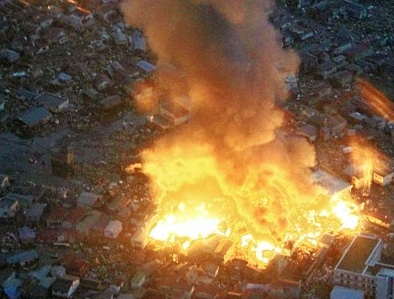

Author Page on Amazon

← Older posts
Newer posts →

Subscribe

  • Entries (RSS)
  • Comments (RSS)

Archives

  • December 2025
  • November 2025
  • October 2025
  • September 2025
  • August 2025
  • July 2025
  • June 2025
  • May 2025
  • April 2025
  • March 2025
  • February 2025
  • January 2025
  • December 2024
  • November 2024
  • October 2024
  • September 2024
  • July 2024
  • April 2024
  • March 2024
  • February 2024
  • January 2024
  • December 2023
  • August 2023
  • July 2023
  • May 2023
  • April 2023
  • March 2023
  • February 2023
  • January 2023
  • December 2022
  • November 2022
  • October 2022
  • September 2022
  • August 2022
  • July 2022
  • June 2022
  • May 2022
  • April 2022
  • March 2022
  • February 2022
  • January 2022
  • December 2021
  • November 2021
  • October 2021
  • September 2021
  • August 2021
  • July 2021
  • June 2021
  • May 2021
  • April 2021
  • March 2021
  • February 2021
  • January 2021
  • December 2020
  • November 2020
  • October 2020
  • September 2020
  • August 2020
  • July 2020
  • June 2020
  • May 2020
  • April 2020
  • March 2020
  • February 2020
  • January 2020
  • December 2019
  • November 2019
  • October 2019
  • September 2019
  • August 2019
  • July 2019
  • June 2019
  • May 2019
  • April 2019
  • March 2019
  • February 2019
  • January 2019
  • December 2018
  • November 2018
  • October 2018
  • September 2018
  • August 2018
  • July 2018
  • June 2018
  • May 2018
  • April 2018
  • March 2018
  • February 2018
  • January 2018
  • December 2017
  • November 2017
  • October 2017
  • September 2017
  • August 2017
  • July 2017
  • June 2017
  • May 2017
  • April 2017
  • March 2017
  • February 2017
  • January 2017
  • December 2016
  • November 2016
  • October 2016
  • September 2016
  • August 2016
  • July 2016
  • June 2016
  • May 2016
  • April 2016
  • March 2016
  • February 2016
  • January 2016
  • December 2015
  • November 2015
  • October 2015
  • September 2015
  • August 2015
  • May 2015
  • January 2015
  • July 2014
  • January 2014
  • December 2013
  • November 2013

Categories

  • AI
  • America
  • apocalypse
  • cats
  • COVID-19
  • creativity
  • design rationale
  • driverless cars
  • essay
  • family
  • fantasy
  • fiction
  • HCI
  • health
  • management
  • nature
  • pets
  • poetry
  • politics
  • psychology
  • Sadie
  • satire
  • science
  • sports
  • story
  • The Singularity
  • Travel
  • Uncategorized
  • user experience
  • Veritas
  • Walkabout Diaries

Meta

  • Create account
  • Log in

Blog at WordPress.com.

  • Subscribe Subscribed
    • petersironwood
    • Join 664 other subscribers
    • Already have a WordPress.com account? Log in now.
    • petersironwood
    • Subscribe Subscribed
    • Sign up
    • Log in
    • Report this content
    • View site in Reader
    • Manage subscriptions
    • Collapse this bar
 

Loading Comments...