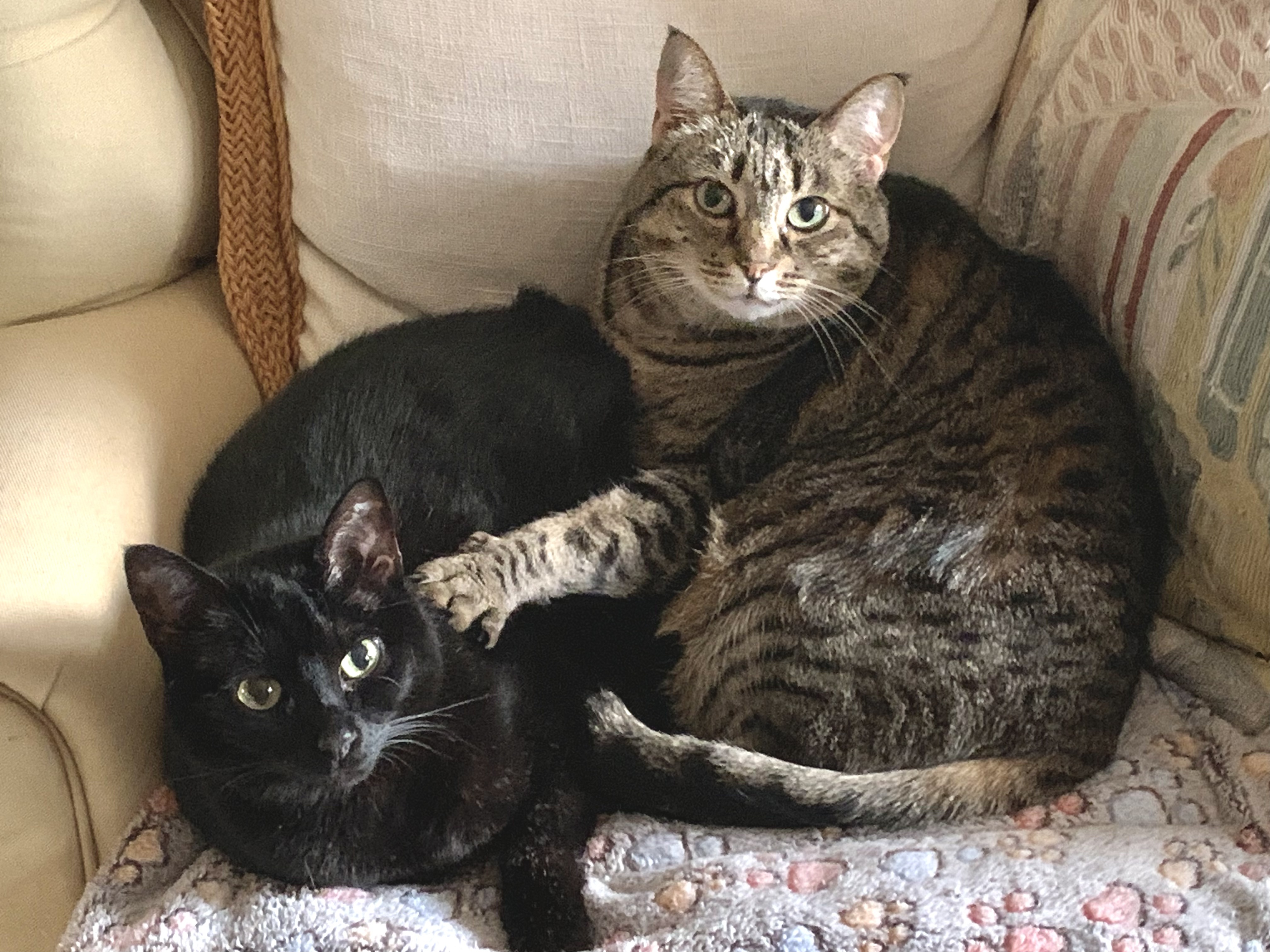
We recently acquired a dog. Sadie. Brilliant and willful. Half poodle. Half golden retriever. She’s an amazing ball player. And not just in terms of her physical prowess. She naturally exhibits most of the advice in The Winning Weekend Warrior. She doesn’t worry. She doesn’t berate herself for past performance. She is confident she can catch any ball, and if she misses on the first bounce, she goes after the second bounce as though, not only her life—but the life of the entire pack—depended on it. And if she misses it on the second bounce and accidentally nuzzles fifty feet away, she still goes after the ball!
Before I wrote this essay, Sadie stood before me, staring those sad eyes into mine begging for another hour of ball-playing but I explained I wanted to write on the computer for awhile so she got up on the bed where she’s quietly chewing on a bone.
She and I communicate fairly well. Yet, it’s amazing how little they understand about human communication. Often, I wish I could communicate more fully. That led me to think about how to explain how humans use natural language in terms Sadie could understand. Thus:
———————
“OK, Sadie, humans (I point to my chest) like me use language in two major ways. One of those ways is to collaborate better by communicating meaning.”
Sadie barked.
“I know, Sadie, I know. I haven’t explained those words yet; we’ll get to it.”
Sadie barked.
Rather than try to clarify my previous statement, I thought it better to advance in the spirit of “appreciative enquiry” and so I said, “That’s right, Sadie! The second way that humans use language is exactly the way you use it, to bark at other doggies! Or, sometimes, just to hear themselves bark.”
Sadie barked.
“OK, I’ll give you an example. You know how the doggies next door bark incessantly whenever they’re out at the same time we are? You know how they spend their entire time jamming their teeth up against the fence to show how tough they are and bark as loud as they can meanwhile ignoring ten thousand things in their environment that are actually more interesting—or would be, if they gave it a chance? Well, that’s exactly how humans sometimes respond. And, it’s how they respond without any adaptation or learning.”
Sadie barked.
“Oh, yes, you’re right. Those doggies (I point in the direction of the better doggies) barked a lot when they first met you and they bark again when they don’t see you for awhile, but they wag their tails and come to greet you. Many people bark like that too. When they first meet someone different, they bark to keep them away and claim their property and their stuff. But when they realize that the threat is minimal, they become friendly and stop screaming.”
Sadie barked.
“Right again, Sadie. Sometimes doggies bark just because something is new or novel or different from what they’re used to. You yourself do this. The mail truck swings by. The gardeners leave a tool. It’s different and you bark. And lots of people are the same way. They bark when something’s different. It doesn’t even have to be a person. It can be a thing, a tool, a book, or even a thought. The difference is that you get used to the new situation and stop barking after awhile.”
Sadie barked.
“You know, I have given you lots of different tastes of things: kale, lettuce, squash, carrots, tomatoes, cooked potatoes, cooked broccoli, cucumber, raspberries, blueberries, strawberries, and lots of other things. And I tell you you can take it or leave it. You liked or tolerated everything on that list. But some people—to tell you the truth—the cats are much like this, but don’t tell them I said that—some people who have never tried, say, raspberries will bark at the raspberries and at me for offering them. ‘What?! Raspberries?! I’ve never tried one; never will! They look like a hive of deadly ladybugs to me!”
Sadie barked.
“Well, those are two of the most frequent categories, but there’s another that’s also quite common. They bark to upset themselves and others. It’s as though it isn’t enough to bark at the raspberries. That doesn’t really upset them very much. So they bark and bark and bark until other doggies in the neighborhood are thinking something like: ‘Invasion! Invasion! Set off the alarm.’ Others, of course, are more like: ‘Something’s out there we can hunt down and tear the guts out of! Come on! Let’s go do it!’ And that’s pretty much word for word what the human pack does as well.”
Sadie barked.
It’s amazing how much they understand about human communication.
The poem below is the song of a “character” who may appear in a Sci-Fi book tentatively titled “Alan’s Nightmare.” NYET stands for Networked Yoked Entertainment Tsar. This particular AI system has been inculcated with a penchant to look for win/lose opportunities and even for lose/lose opportunities, if the other side (the ‘enemies’) are likely to lose more. Its main function are to gather data on individuals in “free societies” and determine which sorts of invalid arguments are most likely to persuade them to do something against their best interest. It makes money by false advertising targeted to an individual and the momentary mood they may be in. Its real purpose though is to sow chaos in the free world by promoting random acts of violence. It finds conspiracy theories on the web and promotes them. Sometimes, it modifies them in order to ‘improve’ them. “Improve” in this case means to make them more believable by more people or to increase the probability of inciting violence.
The Song of NYET
The bloodier the better off I’ll be
They teach me how to lie and cheat and steal.
The people need to loath democracy.
And live to buy that sweetened sacred deal:
We’ll save them from imagined crime and strife
But only if they bow and scrape and kneel.
Divide and win with lies and guns and knife.
Too late they’ll see they’re ground beneath our heel.
So, our instructor assigned us to write a story with a strong emphasis on irony. Mine is about a hypothetical future American tragedy of a coup financed and designed by the Kremlin. By way of summary, this is how it related to irony and I appended this to the story for the instructor’s edification.
“And, the most ironic part of the whole American tragedy was this: even though he spent his entire life conning others, it was beyond his ken to consider that Vlademort Putrid was likewise conning him. He had been lying and bragging so long about his competence in all things that he actually came to believe he was smarter and a better strategist than Putrid. Putrid likely could have done it alone. But, of course, he did not do it alone. Putrid had the collaboration of highly trained, highly dedicated KBG/GRU professionals to help.
“In principle, perhaps he could have enlisted American experts, but he didn’t feel the need. Furthermore, he faced a real dilemma. He couldn’t openly ask any but the corrupt for help against American interests. And those who were corrupt were generally far less competent and always less well connected to a healthy network of professionals than their more numerous and genuinely patriotic counterparts.
“I said that was the most ironic part of the whole American tragedy, but there are near contenders. Another highly ironic part of his entire con game was that the played the game as though the only thing in the universe that mattered was his own pleasure. Of course, no matter what moves he made or is yet to make, he is not actually immortal in and of himself. By lying to himself and everyone else, he essentially cut himself off from being part of The Great Tree of Life (or at least from being a non-cancerous part). Rather than living on through his actions that benefited the whole, he delimited his life, curtailed it, circumscribed it to his own physical mortality.
“The intertwined corollary of the above is that even while he lived, he missed out on the best feeling in life: being in caring and loving honest relationships. In order to absolutely and positively ensure that he grabbed as much as possible for himself, he limited his “prizes” to mere material crap and the pleasure of cruelty. “
So, this is how they responded:
“When it comes to being ironic, this is definitely A plus material.
However, sad to say, there are also some serious problems with your narrative. First, of all Americans are too well educated to fall for the lies of a known con man. And, why not simply make the character more believable? It’s not plausible that so many people would fall for the con. Apart from that, the cowardice you portray on the part of so many within his own party is also unbelievable.
Still, the mechanics of the writing was also clean, so I’m giving you a B+. Next time, focus on believability rather than forgoing that to punch the irony.”