• About PeterSIronwood

petersironwood

~ Finding, formulating and solving life's frustrations.

petersironwood

Tag Archives: life

A Tale of Two Nannies

13 Tuesday Aug 2019

Posted by petersironwood in America, politics, Uncategorized

≈ 3 Comments

Tags

family, life, nanny, parenting, politics, truth

A Tale of Two Nannies. 

Some decisions are difficult. Some are easy. I’ll let you decide for yourself, discerning reader, which kind of decision this one is. 

brown deer

Photo by Jim Fawns on Pexels.com

Briefly, I need a nanny for my kids. One is named, let us say, Donna. The other is named, let us say, Serena. 

I didn’t really know either of them personally, but I find out something about each of them. 

Serena came from a good family. Everyone spoke highly of her and of her family. She had worked at the local library and from my casual observations, seemed to get along quite well with children. She was soft-spoken but assertive and articulate. She was also young and athletic. 

Donna came from a crime family. She swore like a sailor. Many people had accused her of various crimes including theft, tax fraud, insurance fraud, obstruction of justice, and pedophilia. So far, none of these had resulted in her going to jail. 

IMG_3241

By chance, I happened to see her hanging out, joking, and laughing with known drug dealers and murderers.

When I confronted her about the shadiness of her background and acquaintances, she pooh-pooh’d it as nothing but slander by jealous bitches out to steal her God-damned job and I had God-damned better hire her or she was going to sue me and everyone else she could think of!!

So two questions. 

  1. Which one should I choose for the nanny to my kids?
  2. Is this really a hard decision? 


IMG_3152


Author Page on Amazon

Myths of the Veritas: Book One

Myths of the Veritas: Book Two

Which wolf do you feed? The “bad” wolf or the “good” wolf? Of course, sometimes, decisions involved complex trade-offs, but sometimes we “know” what the right thing to do is and instead do the convenient or selfish thing.


Finding the Mustard

12 Monday Aug 2019

Posted by petersironwood in America, apocalypse, politics, psychology, Uncategorized

≈ 13 Comments

Tags

environment, experiment, Feedback, learning, life, politics, racism, truth

{A departure from the Myths of the Veritas, this is just some thoughts while making dinner}

MustardJar

To the best of my ability, this is the view I had when I was poaching salmon for dinner tonight and realized I had almost forgotten the mustard. I spied it immediately.

Then, (while using the mustard) I began to ponder a blog post from a few weeks ago on the importance of making sure that you looked for “the whole enchilada.” But just now, I relied on a small number of cues and it all worked out fine. What’s the difference?

The difference is that I am looking in my refrigerator for something that I know I have. Even in a large grocery store, there are a limited number of products in jars. But in my fridge? Very few. And, let’s face it; much of modern life is like this. We spend time at work, at home, at the gym, on our commute and we are on familiar ground. We see familiar things. We talk to familiar people. So, all these little algorithms we develop *work* pretty well most of the time.

IMG_9189

But — they do not work very well at all if applied to *new* situations, or *new* places, or *new* knowledge or *new* people. If I were to find myself looking in the refrigerator in Italy or Malaysia and relied on the exact same cues, it would be far less likely to work!

It isn’t so much that these little algorithms or pattern recognitions don’t work. They don’t. But so what? The problem comes when we *assume* or even *insist* that they still work. Mostly, they don’t. So, when you are in different situations, you need to slow down and search & ask for help & think & test. And, if you do, it’s mostly all OK.

IMG_1238

But if you insist that your knowledge *should* work in situations where it does not…you are going to make yourself uncomfortable much more than you need to.

Quite apart from the unfairness that xenophobia wreaks upon “others”, it is sad to me that it prevents so much that is interesting and wonderful about living in the 21st century. We have this *astounding* and *amazing* opportunity to learn from a thousand cultures and peoples. Instead, we are ignoring them, or destroying them, or sometimes incorporating a useful piece of technology.

Left to their own devices, people from different places, cultures, races, etc. can generally work it out. But if a rabble rouser preys on your feelings of discomfort and helps you focus on it, they destroy that natural accommodation and mutual learning. Of course, they are doing it to gain power over you, and they don’t care that they are blinding you to a cornucopia of possibilities.

OLYMPUS DIGITAL CAMERA

Once the flames of hatred are sufficiently fanned, you will never be able to see that “other” as a human being who is fundamentally just like you, but whose ancestors and cultures learned different skills and customs in order to survive. You will never see all that you can learn from each other. You will never see that you have been manipulated into fearing, and hating, and even killing so that someone else can become richer, or more powerful, or be able to flout laws that they don’t like. And that is a very sad thing.


Myths of the Veritas: Book One

Myths of the Veritas: Book Two

Myths of the Veritas: Diversity as a Testament to Our Success as a Species

The Whole Enchilada 

Author Page on Amazon


Essays on America: Wimbledon

15 Monday Jul 2019

Posted by petersironwood in America, apocalypse, politics, psychology, Uncategorized

≈ 2 Comments

Tags

Corruption, Democracy, dishonesty, fascism, innovation, life, politics, truth

Wimbledon.  

An amazing venue. An amazing tournament. 

person woman sport ball

Photo by Pixabay on Pexels.com

This year,  in particular, offered up a host of amazing matches; e.g., Federer vs. Nadal; Federer vs. Djokovic; Serena Williams vs. Simon Halep; all the matches of Coco Gauff. And many more. The quality of tennis keeps improving. And not by accident. It’s due to fair competition. 

In match after match, not only in the finals, players threw themselves into the fray to run, perceive, plan, hit, decide, and use their emotional energy in positive ways. What makes this, and every sports event, wonderful is that it is a fair contest. And because it is a fair contest, people train hard, push hard, try their damnedest to win. 

The opponents make each other better. And, then, after they have trained as hard as they can train, they play as hard as they can play and we watch the drama that reveals the limits of human performance. 

IMG_3416

Imagine instead that the outcome were to be predetermined by those in power. Because someone bribes the dictator, or is otherwise connected by favors or blood, the winner is chosen by the dictator. Then, everything is “show” to make it fall into place the way the the dictator wants. Maybe some of the competitors would be drugged. Maybe some of them would meet with accidents. Maybe the line calls could consistently shade one way. 

Would fans even get any joy in watching? I suppose some might. After all, I do enjoy watching 007 movies, Star Trek, etc. even though I already know which side will win. But then, why bother with a tournament? Why not just make a fictional movie about tennis and the dictator’s favorite tennis player? 

Who would want to enter such tournaments if they knew that the outcome depended on your connections to the dictator rather than on their skill and strategy? Who would bother to train hard for the event? Who would even be attracted to the sport in the first place? 

If you were a top quality athlete, if some sports were “open and fair” and other sports were predetermined by the dictator, which one would you want to play in? 

A1356755-E7D8-41A6-A98A-AD4CB64083E5

Of course, in a dictatorship, it isn’t just sports that are corrupted. Every aspect of life is corrupted. You can poison the food and water and get away with it — if the dictator likes you. You can run your company into the ground and be bailed out if you are aligned with the wishes of the dictator. Government officials will be advanced according to how corrupt they are rather than how well they do their jobs. You can be a brilliant academic, but if your views do not align with what the dictator thinks will protect and expand his own power, you’ll be passed over for promotion. That’s the best case scenario. You could find yourself in a prison camp. 

And under these circumstances, why should people try hard to discover and disseminate the truth? Why should anyone make the best possible product if the dictator might jail you because you are competing with the dictator’s son-in-law? 

IMG_5418

Under dictatorship, everything in life decays into a moldy shadow of what it should be. Creativity is stifled. Your brilliant discovery won’t be approved by the dictator because the dictator didn’t know about it ahead of time (by definition). On the other hand, the dictator might “prescribe” findings and discoveries such as the existence of phlogiston. Experimental results will be manipulated and the population will begin to believe in a reality that is less and less aligned with the actual facts. 

Do you think this is an exaggeration? It isn’t. But don’t take my word for it. Read about writers, film makers, singers, movie stars, athletes that were not in “favor” with Stalin or Mao. 

3A7CE1AC-1B9A-4005-A118-B3B4460A450F

Do you, like most workers, take pride in doing a good job? Why bother if the dictator can brush away your team’s product in order to promote the competitive product made by the dictator’s daughter, say? Absolute power is an addictive drug and a dictator will never voluntarily give up power. They insist on more. Of course, no-one can know everything and the worst kind of dictator is the impulsive/cover-up kind. They don’t bother to understand a situation but make snap judgements. Then, everyone is required to scramble to pretend the snap judgment was actually a good — no, a great decision. 

The lies and mediocrity will proliferate. In many cases, cruelty will be extracted from “enemies of the people” intentionally. Beyond that, there will be almost no incentive for government to be effective under a dictatorship. Do you think the Bureau of Motor Vehicles is inefficient now? You haven’t seen anything like the inefficiency of a dictatorial state! But if things stay on the current trajectory, you will. 

IMG_3241

Once honesty becomes replaced with loyal lying, everything crumbles. Everything.

Your body only stays healthy and alive because it sends all sorts of communication signals. If your body “lies” to itself and sends false signals, you will soon find yourself in terrible health or worse.

It is the same with a nation. If public officials lie, it destroys government in and of itself — and it also encourages  the rest of the population to lie, cheat, and steal. 

Game. Set. Match. 


Author page on Amazon.


Eagle Eyes Eyes an Eagle

20 Thursday Jun 2019

Posted by petersironwood in America, apocalypse, psychology, Veritas

≈ 1 Comment

Tags

forest fire, legend, life, myth, ROI, story, Veritas

sky space telescope universe

Photo by Pixabay on Pexels.com

Eagle Eyes ran desperately to escape the flames that chased her down the hill. Her eyes burned from the smoke, but she hated the lack of visibility more than the pain. She needed to run quickly and yet, could hardly see her next footfall. So much for having the eyes of an eagle a tiny voice in her head said scornfully. She might or might not break a leg, she calculated, but being eaten by the fire would surely kill her, so on she ran. For a moment, the wind shifted and she could see a clear path before her with only a small fire to avoid and she ran even faster in that direction. Suddenly, the path before her burst into a wall of flames. She looked around desperately and caught a glimpse of another person off to her right. She couldn’t tell who it was in the murky air, but whoever it was seemed to be running directly away from her. She turned and ran in that direction. 

The shadowy figure before her suddenly veered to the right, stopped, spun around and ran off at a different angle. She ran toward the shadowy figure. She soon outdistanced the flames and found herself doubled over, gasping for air in a grassy field that was unscathed by fire. Even better, she breathed clean air. She thought of how grateful she was and suddenly collapsed. 

When she regained consciousness, she found herself on her belly. She raised her head, glanced down and saw human feet right beside her. She jumped and spun into a defensive combat posture. Eagle Eyes took in the posture and bearing of her enemy and had decided where to strike when a voice yelled “Stop!” She recognized the voice. It was her own voice, echoing in her head. She felt faint. 

The man before her was Lion Slayer. He was trying to smile at her but grimacing in obvious pain.

654FF1D3-68C3-4CF9-A6DC-3A2EA7156C17

“Ah, Lion Slayer. Well met. Sorry, I thought you were…I guess I thought you were one of those who steals children.”

“I understand. I was also terrified! Because of this.” He held up his injured arm. “And worse. We could be both crisply burned to a crisp. What of the others? Have you seen them?” 

Both of them looked toward the open, undamaged field that lay before them. Neither saw any sign of their compatriots. Then, they turned and regarded the crest of the hill behind them. It lay a charred ruin and behind that they could see towering flames and billowing black smoke. They turned and looked at each other. 

Eagle Eyes frowned. “Should we go back for them?” 

Lion Slayer looked down. “I would like to. Of course. But we were very lucky to escape those flames once. We will do them no good dead.”

fire orange emergency burning

Photo by Little Visuals on Pexels.com

Eagle Eyes considered. With a sudden shudder, she recalled running through the flaming field, unable to draw breath, unable to see more than a few feet in front of her. “I hate fire. At least this kind of uncontrolled fire. It destroyed everything and everyone. I hate fire arrows.” 

Lion Slayer nodded. “As do I. Eventually, it will burn itself out and I will find Hudah Salah. And the others. But now, we should move even farther away. The wind can shift again and bring the fire this way and this time, we might not be so lucky.”

Eagle Eyes also nodded. “We must be wary as well to be on the lookout for the People Who Steal Children. If we escaped, some of those might have as well. And our friends. Come, let me tend to your wounds when we get down there. Beyond that creek, there are trees. On the far side of the creek we may find jewelweed or yellow dock to help with your burns.” Here she pointed off in the distance and began walking. Lion Slayer walked beside her, constantly scanning the horizon for enemies of the human or fiery variety. 

“I see some far trees. I do not know these plants, jewelweed and jello dock, but we have a kind of cactus  — we put the jelly on burns.” 

The eyes of Eagle Eyes brightened, “Oh, yes, I know that one. You brought some on your visit! But I don’t think it grows near here. It’s ‘yellow dock’ by the way, not ‘jello dock’.” 

981ABFE1-F37E-474C-8D2C-B4E38508ECEA

“Oh, sorry, yes. I wasn’t sure anyone noticed the gifts we brought. Perhaps you have no need of such things. We call it ‘aloe’.” 

“Oh, yes, all of the Veritas were grateful for your gifts. I especially thought those…what did you call them? ‘Scarves’?  They were quite attractive!”

“Like this one?”  He pulled out from his robe a finely made scarf and held it out to her. It looked to have originally been blue and white, but now it was mostly black. “I found it easier to breathe through this. It keeps out very many of the smoke. We use them for sandstorms.” 

adventure arid barren coast

Photo by Pixabay on Pexels.com

Presently, they arrived at the creek. Sure enough, on the far side, yellow dock grew in abundance. Finding a long-abandoned campsite near the margin of the woods, Eagle Eyes made a cold wrapping of boiled leaves. To cool them quickly and more completely, she swung them in the air until they were cold to the touch. She gently laid them on the blistered skin of Lion Slayer. She was surprised that he hardly flinched. She glanced back across the creek and saw a group of people! She hoped it was Fleet of Foot! And, the others, of course. She tapped Lion Slayer on the shoulder and put her finger to her lips for quiet. She gestured for him to turn and look. He did so, stood, and began to shout, “Hudah! Hu-mmmph!” 

Eagle Eyes sprang up in a flash and clamped her hand over his mouth. She put her mouth right next to his ear and, in a loud whisper said, “Wait! There are too many. Those are the People Who Steal Children!” 

Lion Slayer turned looking back and forth between the figures on the horizon and Eagle Eyes. She appeared so insistent, gesturing him to get back behind the cover of nearby trees. He backed away into the trees. When they were in a fair distance but could still look out he turned again, “You cannot count how many there are! Not from here. Hudah may be there!” 

Eagle Eyes put her finger to her lips to signal quiet. She whispered again. “I can count them from here. Twenty have passed by and more are still passing.” 

“But then, our friends may have been captured!” he protested. 

“I doubt that very much. So far, no-one resembling Fleet of Foot or any of our friends have passed by. And Fleet of Foot would probably rather fling himself into the fire than be captured. That man loves his freedom, believe me. I know him well.” For some reason, she blushed after she said this and her hands became sweaty. She glanced away from the horizon into the deep dark eyes of Lion Tamer. 

She stammered out, “I mean, Shadow Walker’s probably much the same. And you. Wouldn’t you rather die in the fire than be captured?” 

“No. I would fight. I hate captured. But hate fire burning more. This hurts!” 

photo of fire

Photo by Dương Nhân on Pexels.com

At least he’s whispering now, thought Eagle Eyes. Maybe he’s trainable. Anyway, that’s not my job. My job is to look for our friends. But now, there are too many together. I cannot really see everyone. But we must remain here until…. She decided to share her thoughts with her comrade. “I cannot get a good look at everyone. There are too many. But if our friends are there, I can tell you that they are definitely captured and vastly outnumbered. Once they all pass by, maybe we can follow their trail and we will get a better chance to see about our friends.”

When Eagle Eyes saw that there were no more passing by, she signaled Lion Tamer to follow her. He frowned and whispered, “It’s dangerous. Let me lead.” 

Eagle Eyes nearly laughed aloud but stifled herself. “It much much more dangerous if you lead. I can see better. Oh, don’t make that look. You know it’s true.”

Lion Tamer sighed. He knew it was true, but somehow, he felt he should go first. It was how things were done. But not by the Veritas, he reminded himself. Their leader is a woman. Without a very good record so far, he thought silently.

Eagle Eyes got down on all fours and began creeping up the hill at an angle. She turned, put her fingers to her lips and gestured Lion Tamer to get down. He did so and they slowly moved forward through the tall grass whenever the wind came up. She turned to to say something and Lion Tamer was not there! She looked all around and then saw him coming through the grass. She crept up to him and whispered, “Stay close. Where you can see me. And hear my whispers. We don’t want to be found out. Stay close!” 

Lion Tamer followed his instructions, but it made him very uncomfortable. He could see her only all too well. Much of her clothing had been burned. And Veritas women wore hardly more than men did. At her insistence, he was so close, he could not only see her, but smell her as well. And, he liked it. A lot. 

Lion Tamer sighed. He thought to himself that he must put this out of his mind, at least for now. If they were discovered, they might or might not be able to outrun their enemies. Eagle Eyes stopped and held up her hand behind her. She turned and put her mouth near the ear of Lion Tamer. She whispered. “We are close enough for now. They have no horses. None. And they are not very well organized. I think it most likely that they simply ran from their village. I still see no sign of our friends, but we will creep closer after nightfall if conditions are right. Come.” She gestured toward a small gully overgrown with weeds. 

body of water near mountain

Photo by Emre Can on Pexels.com

He lay next to her, without touching her, but close enough to feel the heat of her body. He reminded himself of his wife, Hudah. How would he feel if he survived this fire and she did not? He hoped he did not have to discover the answer to that question. Hudah suited him just fine, though the Veritas women intrigued him. And this one…her eyes were not only effective, but deep and beautiful. 

Something caught those deep and beautiful eyes and she glanced up. An eagle circled above, its majestic wings reflecting a red glow from flames burning. Eagle Eyes made an incredibly high pitched whistle. The eagle immediately banked left out of its circle and descended rapidly toward them. Eagle Eyes heard Lion Slayer gasp beside her and she lay her fingers on his lips to hush him. She slowly drew a piece of dried meat from a pouch. She gathered much of the cloth that remained and wrapped it quickly around her forearm just before the eagle alit upon it. She whispered to it gently as she fed it the meat. Eagle Eyes tore a tiny strip of blue cloth from her garment and wrapped around one of the eagle’s legs, whispering gently as she did so. The eagle stared at her as she said, “Go home. Go home. Go home.” The eagle finished the meat and flapped back up into the sky.

eagle in flight

Photo by David Dibert on Pexels.com

She turned to look at Lion Slayer, whose mouth lay agape below staring eyes.

“Will that work?!” he asked.

“I’m not sure. I’ve trained many eagles. Luckily, this was one of them. But I can’t say for certain.”

“You are an amazing … you are amazing,” said Lion Slayer, shaking his head slowly from side to side.

——————————-

The Creation Myth of the Veritas

The Parable of the Orange Man 

The Myths of the Veritas: Beginning of Book One

The Myths of the Veritas: Beginning of Book Two

Author Page on Amazon

Fire Arrows

17 Friday May 2019

Posted by petersironwood in America, apocalypse, psychology, Veritas

≈ 1 Comment

Tags

environment, escape, fire, hate, legend, life, myth, politics, story, Veritas

Eagle Eyes suddenly put her hand up thus silencing Tu-Swift in his recounting. She pointed to a spot on the horizon. The others stared but saw nothing. She made the sign for “fire” and then pointed to another spot and again made the sign for “fire.” The sun now began to rise behind them but shadows still obscured the valley between their small party and the people who steal children. A cool breeze freshened behind their backs. The wolves would not be able to catch a scent if they were being pursued. All of the party trained their eyes on the places where Eagle Eyes pointed but nothing appeared to them. They stared into the valley below: grassland, scrubby trees, and on one side a forest of conifers. On the other side, another forest bordered with birches and aspens. 

photo of trees and mountain

Photo by Brandon Montrone on Pexels.com

The wind, they knew would carry their voices as well as their scent so they deliberated in quiet. If they stood their ground here atop the hill, they would have some advantage in a fight. If their enemy approached on horses, they would not be able to outrun them. They might be better off to stay and fight from the high ground. Tu-Swift shot his hand out and nodded vigorously, making the sign for “fire.” He too saw these flashes of flames. Soon, the others detected these fires that multiplied and flickered in the nearby woods. Shadow Walker, Fleet of Foot, and Lion Slayer each strung one of the bows that Tu-Swift had stolen and lay arrows beside them, ready to shoot when the time came. 

A hail of flaming arrows suddenly streamed toward them. Shadow Walker laughed. What a terrible aim they had, he thought to himself for he could see that the arrows would fall well behind them. Lion Slayer saw this as well, but he yelled at the others to run and follow him. “Fire!” he screamed and began to run down the hill away from the forest of evergreens toward the birches. Shadow Walker frowned for a moment thinking Lion Slayer a coward not to stand and fight. A jumble of thought-images flickered through his mind: Lion Slayer, lion, a lion slain, a fire, The Legend of the Orange Man and then he understood and urged everyone to follow. 

bonfire burning camp campfire

Photo by Vlad Bagacian on Pexels.com

Shadow Walker understood that their enemy had not aimed at them but at the grassy expanse behind them. Even now, fire took hold in the dry grass and burned quickly up the hill behind them. Lion Slayer realized immediately that running away from the evergreen forest was their only hope. The entire party now ran headlong down the side of the hill away from the forest. Shadow Walker glanced back and could see their pursuers now emerging from the edge of the forest. He saw that they were not atop horses. Perhaps they could out run both them and the fire, but if they loosed another volley of arrows they could start a new fire. He stopped for a moment, turned back and picked up the small friend of Tu-Swift who was falling behind. 

It seemed to Shadow Walker that fire now roared all around them. Thick black smoke hid each from the others and they continued their descent, running blind. Shadow Walker’s foot landed on a loose rock and he fell heavily while Day-Nah flew off his back and tumbled away from him.  The fire seemed to suck life out of the air around them. Shadow Walker crouched on all fours attempting to catch his breath. He stood but saw no sign of the others. Flames surrounded him. He was disoriented and could see nothing and he heard no voices above the roaring flames. Wolves! He heard the wolf pups and, having no other beacon, ran toward the sound of their voices. 

Shadow Walker’s feet suddenly splashed into cold water. He had come to a broad shallow river. Here, smoke hung still heavy in the air, but there were no flames surrounding him. A splash beside him made him spin around ready to kill but it was the small friend of Tu-Swift. Shadow Walker heard coughing and saw Hudah Salah splashing toward him. The air began to clear around them. 

cascade creek environment fern

Photo by Pixabay on Pexels.com

Wind is a fickle friend. Those who loose fire — or hatred — upon a land or a people, can never predict with certainly where those flames will lead. Fed by the fuel of fierce desire to destroy and flowing with the ever changing winds, foolish indeed are those who think these movements may be directed and channeled. 

This day, the winds had shifted and the fire now pursued the pursuers and the fire burned toward the people who steal children. Though slower on the downhill side, it chased the ROI into the forest, but did not stop at the edge of the forest. Encouraged by the richer fuel within, the blaze now devoured its way back into the fir and pine. Another small fire had begun when one of the ROI had pulled back his lit arrow, and before he could release it, the weakened nock broke and the flaming arrow had fell at the bowman’s feet instantly igniting the grass around him. The breaking of the bow stung his arms and in his surprise, he ran into the forest rather than attempting to put out the small fire around him. Of course, it quickly grew and like his larger cousin, relished the change in wind that allowed him to charge into the fuel-rich forest. 

orange fire

Photo by Guduru Ajay bhargav on Pexels.com

As the air cleared around Shadow Walker and Hudah Salah, the rescue party began to see that in the distance, a great fire was destroying the forest — and all the creatures within. Easy Tears soon joined them along with the wolf pups. Fleet-of-Foot and Day-Nah also joined them. The stream water was cold. Shadow Walker looked about. Though there was no immediate threat of fire, he knew that winds were unpredictable. If the wind shifted directly toward them, the fire would find nothing to burn. In front of him, in a direct line to the forest of firs, the entire grass hillside had been burned to ash. On the other side of the burned grassland, the evergreen forest bloomed red and black. Huge flames leapt to the sky. The fire seemed intent on burning back toward the center place of the people who stole children. But fire is unpredictable. It might then turn and come up the other side of the valley after them. But where was Tu-Swift? Where was Eagle Eyes? Where was Lion Slayer? 

Shadow Walker began to realize that his ankle was badly sprained. He gestured the others to come to the edge of the stream to parley. That sat for a few moments in silence. Each of them had just barely escaped death, after all. No-one seemed badly burned or injured. But three of their party remained unaccounted for. Shadow Walker sat on the edge of the stream, shivering with the others, keeping his turned ankle in the icy water. He focused his energy on telling it not to swell. At last, he opened his mouth to speak, but the small thin voice of Day-Nah spoke first. 

“Tu-Swift?” he questioned. “Tu-Swift run? Tu-Swift hide? Tu-Swift?” 

Shadow Walker almost choked up with tears. He cupped his hands around his mouth, gestured for the others to follow his lead and they all turned toward the center place of the ROI and shouted “TU-SWIFT!  TU-SWIFT!” Then, they cupped their hands behind their ears to amplify any returning call. Nothing. “Eagle Eyes! EAGLE EYES!” Nothing. They did the same for Lion Slayer. Nothing. Then, they all turned in a slightly different direction and did the same. They completed this circle twice with no response. The roaring, sparking fire was the only sure sound though on several occasions they all thought they heard screams of agony.

fire warm radio flame

Photo by Pixabay on Pexels.com

At last the sun shone over the peak of the hill; the smoke clouds no longer hid its warming rays and they began to parley on whether the people who steal children had survived to chase them further and whether and how and where to search for those missing from their party. Hudah Salah regarded Shadow Walker’s ankle with a grimace. She tore some of her garments and took his ankle gently into her lap where the wrapped cloth tightly about it and tied it. “Too tight – you loose. Too loose – you tight. Understand?” 

Shadow Walker looked into her face. He could see genuine caring and concern and beyond that he saw her fear – that her husband, Lion Slayer might have been lost to the flames. This tore at the heart of Shadow Walker. He had come here to rescue Tu-Swift, who was nowhere to be found and he may have lost two of their party and still not returned Tu-Swift to Many Paths as he had promised. 

IMG_3229

He stood at last, and hobbled a few steps. He would be of no use searching. They worked together to devise a search plan. They would communicate by alternating whistling like an eagle and drumming with sticks. If anyone saw a sign of the return of their pursuers, they would warn the others. If they met up with any of their missing party, they would likewise let the others know. They would meet back at the stream at sunset. Shadow Walker and Day-Nah would stay behind to relay messages and Shadow Walker would try to learn more from Day-Nah. Though Day-Nah’s ability to speak Veritas was limited, he hoped he could learn something, and he began to query the little fellow. “Tu-Swift? Where Tu-Swift?” 

The child repeated back. “Tu-Swift! Tu-Swift — good!” This was followed by gibberish more unintelligible to him than the hissing of a snake. But Salah Hadam, who had just gathered up her pack, and headed off to search, snapped around. She spoke to the boy rapidly in some foreign tongue. They spoke excitedly back and forth for several minutes and the others also turned back. Fleet-of-Foot could stand it no longer. 

“What is he saying? Is he of your tribe? Where is Tu-Swift?” 

Salah Hadam, generally quite demure, put up her had as though to push away Fleet-of-Foot and looked him in the eye and said, “You. Stop! He talk!” She turned back to Day-Nah and they continued to converse. Shadow Walker had no idea what she said, but Fleet-of-Foot understood much of what they said. He stooped down beside Shadow Walker and spoke in a stage whisper. 

BBBC47A1-B5B7-48F3-A03D-A58102A13B91

“This boy does not know what happened to Tu-Swift. They were together running down the hill quickly to escape fire. Black smoke and fire everywhere. Tu-Swift had helped Day-Nah get up after you dropped him and had yelled, “Run, Day-Nah. RUN!” 

“Day-Nah had looked over to see Tu-Swift but he saw nothing. He had vanished into smoke.”

Fleet-of-Foot realized that this conversation would continue for awhile and he set down his pack beside Salah Hadam and began translating as best he could to all the rest. One by one, the rescuers set down their packs and began listening to Day-Nah’s story.

——————————-

 Author Page on Amazon

How do you Re-culture a Culture?

11 Saturday May 2019

Posted by petersironwood in America, apocalypse, management, psychology, Uncategorized

≈ 1 Comment

Tags

collaboration, competition, cooperation, culture, essay, innovation, life, marketing, sports, teamworkd

We now live (at least in the USA) in such a divided and divisive political climate that I hesitate to bring up something that sounds political but really isn’t. I don’t even have a position, at least as of yet. It’s just a thought I had while I was reaching out to people in India and inviting them to my blog. 

ancient architecture asia building

Photo by Roney John on Pexels.com

Here it is. The USA has a very competitive and individualistic culture. It’s been that way my whole life, but now, it’s insanely so. For one thing, people spend proportionally much more time watching TV and playing on the Internet than they do interacting face to face. In effect, everyone is “competing” not just with local talent, but with people from all over the country. In a nation of 330,000,000 people, 329,999,999 of them will not be the best runner in the country. The vast majority of people will never be winners. This may be why lotto and the Reader’s Digest drawing may be so appealing to so many. 

41494225-657B-4155-ABBC-2438018C5171

But it isn’t just running, and throwing, and high jump where we see competition. We have contests around human activities that have traditionally been mainly about bonding and cooperating, not about competing and winning. We have contests about cooking, and dancing, and singing. I grant you that in the past, small communities might have a dancing contest, once a year. But most of their activity was cooperative activity face to face, and certainly not cutthroat competition. Now, the contest is not part of the yearly festival. The contest is all there is. And, for the most part, the contest is all that is broadcast. 

IMG_3526

It seems that we here in America, with many exceptions and so on, have a culture of individuality and contest is everything there is. Oh, and of course, money. For instance, for far too many Americans the first question they ask about anything is “how much money?” I’ve seen articles that purport to tell retirees what the best place to retire is. Some of those articles focus solely on the financial aspects. Some articles ask which college provides the best education but all they really talk about is ROI. 

We’ve actually accomplished a lot as a nation with this kind of crazy culture. It helped us achieve in terms of invention, discovery, and innovation. But what if the problems of the 21st century are of a fundamentally different nature? What if most of the problems we faced in the 20th century resonated well with a culture that encouraged competition, but that now, as we embark on the 21st century, the nature of problems has shifted. Perhaps now we face problems that require a much more collaborative and cooperative cultural attitude in order to solve? 

IMG_0442

Naturally, these are large trends that I’m talking about. Not every single problem we faced changed lock-step overnight. Let’s examine some examples though. A 1930’s problem might be: “How can we clear cut this forest as cheaply as possible?” And the logging company that solved that problem “won” and got rich. A 2030’s problem might be framed this way: “Is it feasible to provide material by using this forest in a sustainable and humane fashion? How?” One lends itself fairly well to top-down direction. One does not. The reader can guess which is which. 

depth of field photography of brown tree logs

Photo by Khari Hayden on Pexels.com

A 1950’s problem might be: “How can we entice consumers into buying one of our new cars when their old car still works?” A 2050’s problem might be: “How do we provide a transportation system that is effective, efficient, and pleasant for everyone involved?” One is about manipulation and disregards collateral damage. The other collaboratively looks to a sustainable solution without side-effects that are so negative they outweigh the good done by the transportation system. 

american car auto automobile automotive

Photo by Pixabay on Pexels.com

Can American culture evolve quickly enough to be a partner on the world stage in the 21st century? If not, the absolute best we can hope for is slow decay full of internal bickering and hostility as people point fingers and shout loudly in order to establish blame. 

Do we really need to change our culture and change it quickly to avoid that? Or, is the emphasis on competition and individuality still the right way to go? 

C9C3EEAF-D862-4222-886F-CCF8950DC6C3

Other countries and cultures are already ahead of us in cooperation. Look at the cost versus benefits of their health care systems for one. 

How can we change and work together as a culture to a develop a more cooperative view when we seem to be so divided and competitive? That is a real puzzle. 

Do you have a piece of that puzzle? I’d love to hear about it. 

Or, do you think we should “double down” on competition and individuality? I’d love to hear about that as well.

—————————————————

Author Page on Amazon.

Unstrung Bow & Unsteady Arrow of the Cruel

05 Sunday May 2019

Posted by petersironwood in America, apocalypse, psychology, Uncategorized, Veritas

≈ 1 Comment

Tags

innovation, legend, life, myth, politics, story, truth

The Unstrung Bow & The Unsteady Arrow of the Cruel

80B4784C-9B78-4B8E-BBB9-BF223F46234C

Tu-Swift discovered that waiting, just waiting, can often prove more difficult even than a hand-blistering day of shoveling horse manure. He returned to his training. “Inventory” he whispered to himself. After recalling everything about himself, his surroundings, Day-Nah, and the circumstances, he carefully went over the plans, if he might even call them that. He wished he had a weapon. His small sharp stone was no match for their odd looking bows, all of which they methodically hung up in a row on the outside of a building next to the barn, their strings dangling. Beneath each bow, a quiver of arrows stood upright on the pounded dirt. Tu-Swift’s brow furrowed as a strange thought came to edge of his mind. He nearly swatted it away as reflexively as he might swat away an annoying fly. 

Like all the Veritas, he had been taught that theft, like every manifestation of greed, was wrong-headed. It would be feeding the “bad wolf” within himself. He would never steal from another of the Veritas. But these people who stood atop horses had stolen him. And, he suspected, that they had also stolen Day-Nah. So, maybe stealing some of their bows would be….It took a lot of work and effort to make a good bow; this he knew from personal experience. But to steal a person from their family, from their tribe? Surely that was far worse. Those bows, along with the arrows, had been loosed upon his tribe. On the other hand, trying to carry several dozen bows would be too awkward when trying to escape. He dug out his hard, small stone and turned it over in his hand. Tu-Swift chuckled inwardly. “You are not much of a weapon, little stone, but perhaps you can defeat a stronger one.” He thought he would try to manage stealing three of the bows and a quiver of arrows.

black and brown bow on grass field during daytime

Photo by Pixabay on Pexels.com

Tu-Swift looked out into the dark, silent, and empty courtyard of the Center Place of the child-stealers. He heard no-one stirring about. He could hear the noises, faint and distant, of the horses nickering and of people snoring, but he could not detect any footsteps. He signaled Day-Nah to stay close and to stay quiet. Despite his young age, Day-Nah was quite adept at being careful and quiet. Careful to slink along in the shadows, they slowly made their way toward the paddock, from stump, to shed, to bush, always seeking some way to stay hidden in the darkness. Now, however, to get to the hanging bows, he would have to venture into open ground. If one of the guards saw him, they would raise an alarm. Others might think he was simply a youth on his way to relieve himself. 

He grabbed a handful of the bows and brought them into the vacant log building. He inserted his thin stone knife into the nock at the bottom of an unstrung bow and twisted. The nock snapped just as he had hoped. He worked as quickly as he could. After disabling the bows, he gestured for Day-Nah to stay inside while Tu-Swift ventured back outside to gather another armful of bows and quivers. He quickly snuck back inside and repeated the process. This time however, instead of completely breaking off the nock, he cracked it enough, as best he could judge, that attempting to string the bow would finish the job. 

abandoned architecture brick brick wall

Photo by Pixabay on Pexels.com

By being so organized, he reflected, these child-stealers had made themselves more vulnerable. That seemed odd, but Tu-Swift did not follow that path and instead looked about in the dim light for a place to hide arrows. Working quickly, he placed most of the arrows underfoot and bent them up enough to crack them without severing them. 

Although concentrating on breaking as many arrows as he could, he realized that this place was quite unlike anything among the Veritas. Nothing in this place seemed round and living. It all looked hard and sharp even in the semi-darkness. He whispered softly and gestured to Day-Nah making him to understand that he was to hide these bows and arrows. He went outside and gathered the rest of the bows and arrows. As he did so, he could perceive a slight glow on the horizon. The moon was about to rise! 

IMG_3484

He went back inside and slung the arrows around the odd room, stomped on all the quivers, save one which he saved for himself. Then, he made Day-Nah understand that he needed now to be very quiet. He took his hand and they peered out into the courtyard. Still no-one appeared. Why were there no sentries? Did these people who stole children not suppose someone would come to rescue him? Another thought for another day. The moonlight now showed itself in patches between deep shadows as they padded their way to the meadow where the horses and mares were near each other though separated.  

Tu-Swift picked up two sticks from the woodpile and banged them together, trying to sound as much like a woodpecker as he could. “We are with the horses in the meadow. I am about to set them free on your signal.” 

IMG_2855


Immediately, he heard another “woodpecker” answer: “We are here. Set them free. Then run to our sound.” 

He and Day-Nah went over to the small new pens that Tu-Swift had constructed to separate the foals and mares. He pulled out a few rails of wood and the foals were now free to go. The foals however did not seem to notice, instead sticking close to their mothers. Tu-Swift again cautioned Day-Nah to remain quiet. He saw shadowy figures emerge from the nearby grove of firs and they began dismantling the fence. A flash of moonlight happened to fall on the face of Shadow Walker and Tu-Swift could barely contain a cry of joy from escaping his throat. 

The horses had been nickering nervously from the smell of so many unknown humans, but now a few began rearing up and pawing the air. In so doing, they discovered that their feet were no longer strongly tethered. The mares whinnied and reunited through the broken fences with their foals. Tu-Swift then heard a wonderful sound – the sound of Shadow Walker saying it was time to join up. He grabbed Day-Nah’s hand and they ran toward the fir grove. The horses seemed to be scattering everywhere. 

fullsizeoutput_2444

As they ran into fir grove, he could hear yelling and many footsteps back in the main courtyard. Although he had learned almost nothing of the language of those who steal children, he could tell from the frustration in the voices that the warriors of those who steal children began to discover that their bows were not in their proper place. Better yet, they began screaming accusations at each other rather than searching for their lost weapons.

The Veritas party proceeded quickly through the fir grove through the trail that they had marked. Shadow Walker bore Day-Nah on his back. After running quickly for a time, Shadow Walker put up his hand and they all stopped to listen. They could hear a great many voices – the tribe who steals children sounded much like a broken hive of bees. Shadow Walker stood Day-Nah on the ground for a moment. Shadow Walker bent and put his hands on his knees to help catch his breath. He lifted his head and caught the eye of Day-Nah who said in heavily accented Veritas, “I run” and he used his hand to gesture a run, scissoring his fingers back and forth as Tu-Swift had done. Shadow Walker looked at the boys wide dark eyes and nodded. 

Now, the rescuers and the two boys jogged at an easier pace for nearly two hours, circling part-way around the stronghold of the tribe who steals children and back toward the home of the Veritas. Just before dawn, quite exhausted, after clambering up a fairly steep hill, they sat down to rest and stretch for a moment. Eagle Eyes scanned the horizon for pursuers but listened intently as Tu-Swift quickly recounted what he knew of this tribe who perches atop horses and steals children from their families. The boy spoke so quickly that Eagle Eyes had trouble understanding, but Hudah Salah appeared to follow the tale without difficulty.

fullsizeoutput_2449

——————————————————————————

Author Page on Amazon. 

Problem Finding

18 Tuesday Dec 2018

Posted by petersironwood in America, management, psychology, Uncategorized

≈ 2 Comments

Tags

Design, life, marketing, media, problem finding, problem solving, research, truth

Problem Finding

IMG_5193

Today, I googled “problem solving” and it returned 287,000,000 results. In most of our school life as well as most people’s work life, we are given problems and asked to solve them. “Problem finding” only returned about 2.5 million or fewer than 1/100th as many hits. Solving problems can make processes more efficient and more effective. Solving problems can even save lives. We generally reward people both at school and at work for being good problem solvers. We seldom train people in problem finding. In fact, the reaction of many teachers and many managers when someone finds a problem is to dismiss it as being a non-problem. 

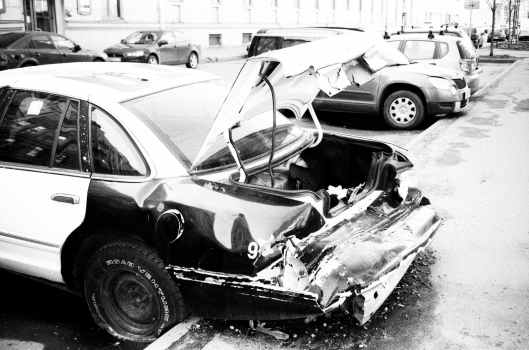
I can understand this sentiment. As a teenager driving my dad’s car home from a date with my girlfriend, somebody beside me tried to make a right turn from the left lane and ran right into my dad’s blue Dodge. I heard what sounded like the voice of God say “NO!!” loud and clear. It was actually louder than the sound of crumpling metal. For a split second, I was in complete denial. Even some moments later, when we pulled over to assess the damage, it looked minor enough to ignore in my mind and just drive off. A more experienced guy from the corner gas station near where this happened said that while it may look minor, it would cost hundreds of dollars to fix and we therefore needed to trade information. I was stunned.

grayscale photo of wrecked car parked outside

Photo by Александр Неплохов on Pexels.com

In many cases, it is a human tendency to want to deny that a problem really exists. If you can get past that tendency however, and embrace problems and indeed, even learn to seek them out, you may be able to create tremendous value for yourself and for those around you. Problem solving can make your bookstore more profitable. Problem finding lets you invent Amazon. Problem solving lets you build a better internal combustion engine. Problem finding leads you to a Tesla.

What might you do to discover problems? First, you might take your own negative emotions as a jumping off place. If you find yourself angry, or anxious, or depressed, to the extent that you can trace back what is going on to the initiating event, you may be able to be consider whether that event is unique to you — or, more likely, that event is likely to trigger a negative reaction in many people. 

person holding white polaroid land camera

Photo by fotografierende on Pexels.com

If you found waiting even 48 hours to have your photographs developed and printed — and you thought others might also be impatient to see the results, you might invent Polaroid instant photos. If you found cooking a casserole too time-consuming and messy for your taste, you might invent frozen dinners. If you drove a lot in hot, humid climates, you might be motivated to put air conditioning in cars. 

Of course, you do not have to limit yourself to your own misfortune. If you read about someone having a miserable time, you could dig a little deeper and ask yourself how a tragedy might have been prevented or how an accident could have been avoided. You can also look at a change that seems minor and ask yourself what will happen if this change becomes widespread. 

For example, if you read in the newspaper that a robot has been invented that harvests tomatoes, you might extrapolate to a more universal situation. What if all crops were harvested by machine? This might make groceries cheaper. But what else would it mean? Tomatoes are rather delicate, after all. You might wonder whether growers using a machine to harvest tomatoes would harvest them early to avoid them being mashed by the machine. You might wonder whether they would even genetically alter the tomatoes so that they were easier to harvest by machine (even if they were no longer as tasty). You might wonder what will happen to the tomato pickers? Politicians may tell you that they will all be retrained for higher paying jobs as machine inventors, machine programmers, and machine maintenance folks. But this makes no sense. If there were an equal number of IT jobs as there used to be tomato pickers but each of the new jobs came with a higher salary, why would the growers use robots? There will be fewer jobs after automation and in some cases, far fewer. 

close up of hands holding cherry tomatoes

Photo by rawpixel.com on Pexels.com

You might look at the global temperature trends and ask yourself what will happen if they continue. What will happen if global temperatures continue to rise? What can be done about it? Of course, once people start seriously mapping out the consequences, some people will react by saying, “Oh, it isn’t really happening!.” Why do they think that? Because it’s too scary to contemplate the truth; or too inconvenient to take the necessary actions. There are vested interests in old energy sources who will be happy to help you along in your fantasy of denial. In the short run, it’s often easier to imagine that problems do not exist, or are not that bad, or won’t get worse, or that there is just nothing to be done. 

Even most of the people who rail against what most of us think of as sensible gun regulation (requiring a license, showing ID, getting at least some training and testing the would-be gun owner’s knowledge, competency, and eyesight as we do with cars) don’t think that mass shootings of innocent children is a fine thing. They see it as a problem — just one that cannot be solved or one that can only be solved by adding cost and inconvenience to the potential victims. After such a tragedy, they may even send “thoughts and prayers.” 

black rifle

Photo by Specna Arms on Pexels.com

There is a possible “down side” to problem finding. The greedy may decide that they can make a lot of money by generating a solution to a problem that isn’t really a problem and making you believe it is a problem. My favorite, and so far made up, example is “Elbow Cream” for those unsightly skin wrinkles that appear on the back of your elbow when you straighten your arm. But that made up example is not too far off. You eat spicy food and it upsets your stomach? We can fix that! Of course, you could too by not eating spicy food! But nobody makes money that way. So they will sell you something that supposedly fixes the “problem.” While it might be fantasy to imagine “Elbow Cream” that will “fix” your “unsightly elbow wrinkles” it is not fantasy to imagine that people have been hoodwinked into spending money on “fixing” their faces and bodies. 

fullsizeoutput_11b5

Americans spent 16 billion dollars on cosmetic plastic surgery in 2017. There are 50 countries who each have a lower GDP than that. The beauty industry in the USA overall was supposedly around $445 billion in 2017. That’s more than the GDP of each of 151 countries! Both figures are also less than the federal government spends on reducing climate change. Or cancer research. 

Do you see that as a problem? I do. 

——————————————————

Author Page on Amazon. 

Metaphors We Live By and Die By

12 Wednesday Dec 2018

Posted by petersironwood in America, family, management, psychology, Uncategorized

≈ 5 Comments

Tags

Democracy, elections, Feedback, government, life, metaphor, politics, programming, thinking

Metaphors We Live By and Die By

PicturesfromiPhone2 087

I love metaphors.I always have. I admit it. I think every youngster does, at least until they are exposed to poetry in English class. I was lucky to have an awesome English teacher who deepened rather than destroyed my natural love of metaphors. There are plenty in my own poems.  but in this post, I am not focusing on metaphors for poetry so much as metaphors that we use in our thinking. Metaphors impact the way we approach situations at work and at home. I was influenced to see this by two main sources. First, Lakoff & Johnson’s book, Metaphors we Live By  was first published in 1980. This book greatly influenced, among other things, our IBM Research team’s study of human-computer interaction. At this point in the history of human-computer interaction and user experience, researchers and practitioners began to explore how various metaphors (e.g.,desktop, trash can, windows, drag and drop) could be used to help users understand the capabilities of computers and how to invoke them. (See, e.g., Carroll, J. and Thomas, J.C. (1982). Metaphor and the cognitive representation of computer systems. IEEE Transactions on Man, Systems, and Cybernetics., SMC-12 (2), pp. 107-116). 

Consider the error messages “Illegal Syntax” and “User Error.” They both put the responsibility for an undesirable state of affairs squarely on the shoulders of the user. “Hey you! User! You did something dastardly! You used illegal syntax.”

man wearing jacket and peaked cap grayscale photo

Photo by Brett Sayles on Pexels.com

Generally, the term “illegal” implies that you did something that was against the law. It usually implies you did something unethical too. Gerry Weinberg, one of the pioneers of UX/HCI (a keynote speaker at the Gaithersburg Conference),  pointed out that the “legal” syntax of languages often has arbitrary restrictions. It might be more accurate to have an error message that says, “Our programmers were unable to take the time to allow dates to be entered in European or Chinese format. Please enter dates as MM/DD/YYYY as in 08/04/1961 for August 4th, 1961.” This longer message tells the user what was “wrong” with their input and how to correct it as well as conveying the very real truth that the limitation is with the software, not with the user. Similarly, what is called “User Error” actually comes up as a message when the user does something that seemed reasonable to the user and would most likely be interpretable by another human being but was not anticipated or could not be dealt with by the programming team. Suppose it said instead, “Software error. We did not anticipate this kind of input so we can’t deal with it.” Or, in many cases, a more honest message might be: “Software error. We knew people would want to do this, but we didn’t have budget to program properly.”  

silver and gold coins

Photo by Pixabay on Pexels.com

 At the same time I was thinking about metaphors and Human Factors in Computing Systems, I was also conducting therapy as a Fellow at the Institute for Rational Living. I was learning and supervising cognitive behavioral therapy under the direction of Albert Ellis. Here I observed how people used metaphors to help make sense of their lives and make decisions about their lives. For example, as pointed out by Lakoff & Johnson, people often viewed romantic love as a sickness! It is also common to view romantic love as a journey over which you have little or no control. It is understandable why it sometimes feels that way, but such a metaphor is not empowering. It does little to lead you to make reasonable decisions about love or about those whom you love. Think instead of love as a collaborative work of art. 

man standing beside his wife teaching their child how to ride bicycle

Photo by Agung Pandit Wiguna on Pexels.com

The “Love is a collaborative work of art” metaphor encourages you to realize that you must collaborate with your partner to make a relationship work over time. You can’t really collaborate very well unless you communicate. It also encourages you to realize that work is involved. It encourages you to realize that it is a creative endeavor. While you can certainly learn from the successes and mistakes of others, in the end, your relationship is unique. It will take creativity to make your relationship work. It puts the responsibility for the relationship on you and your partner, not on forces beyond your control. 

It isn’t only love about which people often use inappropriate metaphors. For example, when it comes to overcoming addiction, overeating, under-exercising, people often use sin as their over-arching metaphor. “I was bad last night. I had two pieces of pumpkin pie.” “I was horrible all week. I had those evil donuts every morning.” The metaphor that “eating is evil” is inaccurate. After all, you have to eat to live. Furthermore, that metaphor doesn’t lead to any solutions except to try harder to be “good.” Worse than that, if often subverts a person’s efforts. “I didn’t want to have any ice cream but I did. Oh, well, the night is blown. I may as well eat the whole quart.” (Now that I’ve sinned, I may as well enjoy it). Weight is best thought of in purely physical terms. If you ingest more calories than you burn you will gain weight. If you burn more calories than you consume, you will lose weight. That’s it! That’s all there is. Making it about good and evil does not help and, in my experience, is completely counter-productive. 

donuts and bagel display

Photo by Igor Ovsyannykov on Pexels.com

Speaking of counter-productive metaphors, I have been annoyed and concerned for decades that the media have largely (though not wholly) reported on political matters as they report on sporting events. During election season, you will hear relatively little about the candidates, their positions, their backgrounds or their ethics. You will hear a lot about strategy and where they stand in the polls. Often you will literally hear nothing more than a sound bite per day about major candidates. Then, pundits will unendingly discuss and debate how this or that sound bite will work or not work with various voter groups. No matter how outrageous, unethical, or disgusting a candidate’s behavior is, the media will spend most of their coverage on how it will affect the “score.”

Metaphors have consequences. 

We now find ourselves in an extremely weird position, at least in America. One candidate has “won” the “World Series” of elections (American Presidency). Many of the people who voted for him think of themselves as his “fans” and “supporters.” They believe their guy “won” so they want to continue to support “their team.” After all, imagine that you are a Yankees fan and the Yankees won the World Series. You get to have bragging rights until the next World Series. If one of the Yankees turns out to be a tax evader, you’re still going to be a Yankees fan. If one of the Yankee pitchers turns out to have cheated during the games, say, by putting illegal substances on the baseball, you’ll still be a Yankees fan. Another Yankee might be a wife beater. But, hey, they won the World Series! So you’re still a loyal Yankees fan. 

man wearing new york yankees cap

Photo by Oleksandr Pidvalnyi on Pexels.com

Here’s the thing. It doesn’t make a whole lot of real difference in your life who won the World Series. It doesn’t matter materially to your kids. It doesn’t matter materially to your grandkids. Don’t get me wrong. It will make some difference in how you feel. You and your whole family might be happy they won. But it won’t make the air you breathe cleaner or dirtier. It won’t make the water you and your family drink pure or contaminated with carcinogenic toxins. It won’t make or break the economy. Having the Yankees or Boston Red Sox win the World Series will have zero impact on global climate change. Even if Chicago wins the World Series, it won’t start an atomic war. If the Phillies win, it won’t mean you will lose your health care. Stay loyal to those Yankees! Or to the Green Bay Packers. Or to Manchester United. Or to the India National Cricket Team. Or whoever your favorite team is. Why not? 

Politics though, regardless of how it is reported by the news media, is vastly and vitally different from a sporting event!  Who is in office can have a huge influence on what happens in the lives of people. In the case of an American President, who is in office can have a huge influence on the lives of people around the globe, not only today and tomorrow, but also for decades to come. 

white and grey voting day sign

Photo by Element5 Digital on Pexels.com

Collectively, those Americans who voted (about 137.5 million) in the last Presidential election hired someone for a job. (Actually, nearly 63 million voted to hire him while nearly 66 million voted to hire Hilary Clinton). POTUS is an important job and how that person does that job impacts your life in a very real way. It impacts the lives of your friends and your family. It impacts the lives of people around the world. Every action that person takes, every speech they give, every statement they tweet has an impact. You or I might send out a nasty tweet about people. But our nasty tweets are very unlikely to cause someone to construct and send pipe bombs to the people we tweeted about. We have hired someone to do a very important job. It isn’t a sporting event.

IMG_2349

Imagine instead of rooting for your favorite sports team that you hired a guy to take care of your kids. To you, that is certainly an important job. After you hire him, you discover that the person you hired lied to get the job. He lies to you every single day. He steals from you! Not only that. Every day, he trashes your house a little more. He has parties at your house and the people he invites include known criminals. Worst of all, this guy you hired is a child molester! That’s obviously a nightmare scenario. What makes it worse is that many people knew that the person you hired was a crook and a child molester. 

What do you do when there is a mountain of evidence that he is lying to you; stealing from you; trashing your house; consorting with known criminals; and is a child molester? 

IMG_9150
IMG_3123

Do you keep him on to watch your kids anyway out of a sense of loyalty? 

Do you feel so guilty about hiring him that you insist to all your friends and relatives that this guy is doing a great job? (Because, after all, that’s what he keeps saying). 

Do you keep him on until he is convicted in a court of law? 

Of course you don’t! You fire him immediately. 

You have the power to choose the metaphors you use. You don’t have to stick with a metaphor just because it was the first one to occur to you. 

Metaphors have consequences. Whether in your personal life, work life, or political life, choose your metaphors with care. Don’t latch on to one simply because it’s the one the mainstream media discovered rakes in the most ad revenue.

IMG_5126

Author Page on Amazon

Regression to the Mean

10 Monday Dec 2018

Posted by petersironwood in America, management, psychology, sports

≈ 2 Comments

Tags

Business, experiment, family, Feedback, HCI, learning, life, politics, science, sports, testing, usability, UX

Regression to the Mean

selective focus photography of yellow leaves

Photo by Haugenzhays Zhang on Pexels.com

While working full-time at IBM Research, I was also a Fellow at the Institute for Rational-Emotive Therapy in Manhattan. I wrote an article in 1978 for their Journal, Rational Living.  The title was: “Why Do I Self-Down? Because I’m an Idiot?” Indeed, many people put themselves down and it is not helpful. I hypothesized several different causes for this kind of self-slamming behavior. Most of these causes you could probably figure out on your own. But one in particular is subtle and non-intuitive. It is based on a statistical phenomenon which few people know about despite the fact that it is extremely pervasive. This phenomenon is called “Regression to the Mean.” 

I want to define this term by explaining some examples. Imagine that you have a new soft drink which contains a combination of herbs that will purportedly make you smarter; e.g., gingko and bacopa. (There is some evidence these may actually work but let’s assume that they don’t or that your tea has too little to be effective). Here’s what you do to “prove” that it works anyway. You give an IQ test to 10,000 people and choose the 50 who score the lowest on the test and have them drink your tea for the next six months. At the end of that time, you give those 50 people an IQ test again and — Voila! The average (or mean) of the IQ scores has almost certainly gone up. Yay! It works! 

Or does it? One of your competitors is not too happy about your study. In fact, they aren’t even happy you put your tea on the market. They decide to prove that your tea is not only ineffective but that it makes people less smart. So what do they do? They give an IQ test to 10,000 people and they pick the 50 who score the highest. They have them drink your tea for six months and at the end of that time, they have them take another IQ test. In this case, the mean (average) score is lower than the first time! Ouch! They say your tea causes brain damage! 

photo of head bust print artwork

Photo by meo on Pexels.com

How can the same tea make people smarter and make them dumber? In this case, it does neither. What is going on? Here’s what is going on. When you measure something, there is always some error. Whether you are measuring your weight, your height, your blood pressure, or your IQ, the measurement is never exactly perfect. Your weight may vary slightly because of atmospheric pressure and more so because of water retention. If you take an IQ test, your score will partly reflect how well you do on such tests in general, but it will partly depend on luck. You may have felt particularly good that day, or a few of the questions might have been on topics you just heard about on TV the day before, or you may have made some lucky guesses. Or, you may have been unlucky on a particular day. You might have had a cold or misread one of the questions or forgotten your morning coffee. On any given day, some people will be a little lucky and some people will be a little unlucky. These things tend to balance out in a large group and if you tested all 10,000 people after six months, then assuming the tea has no real effect, no effect will be shown in the data. 

cards casino chance chip

Photo by Pixabay on Pexels.com

However, if you select the very best scores, you are partly picking smart people, of course, but you are also picking the people who were lucky that day. When you test just those people six months later, they will generally be just as smart but there is no reason to suppose they will be lucky again. Some will be lucky both times, most will not be particularly lucky or unlucky and a few will be unlucky. The average score will be lower. Conversely, if you choose the lowest scoring people, you will partly be choosing people who don’t do well on such tests in general. But you will also be choosing people who were tired, sick, guessed wrong or were otherwise unlucky that day. When you retest, those people will still tend to be people who do poorly on such tests, but they won’t necessarily all be unlucky again. Some will. Some won’t. On average, the scores will be higher than they were the first time. 

The phenomenon of “Regression to the Mean” was first noted by Francis Galton in the 1880’s. Tversky and Kahneman, so far as I know, were the first to note that this phenomenon could easily cause managers, coaches, and parents to end up being unnecessarily negative. Here’s how it works. Let’s say you are learning to hit tennis serve. Although you will likely improve in general, over time, there will also be a lot of variation in your performance. Sometimes, everything will work well together and you’ll hit an excellent serve, one that is above your average level. At first, the coach’s natural inclination will be to praise this by saying, “Wow! Great serve!” or something like that. Unfortunately, your next serve, due to regression to the mean is very likely not to be quite as good as that one was. Your coach’s praising behavior was thereby punished. On the other hand, if you hit a particularly poor serve for your level, your coach might say, “Oh, come on. You can do better than that!” If they choose to say such things only on your very worst performances, then, due to regression to the mean, your next serve is likely to be somewhat better. In other words, their slamming you will be rewarded by your doing better the next time. The same general tendencies will apply to managers and parents as well.  

adult athlete body bodybuilding

Photo by Pixabay on Pexels.com

The same applies to you! Whatever you are doing, your performance will vary somewhat over time. If you begin by praising yourself internally whenever you hit a particularly great shot, your next shot will most likely be not so great. On the other hand, if you put yourself down when you find your performance particularly bad, “You idiot! How could you miss that!?” Your next shot will tend to be somewhat better. Over time, your positive self-talk will tend to be punished and your negative self-talk will tend to be rewarded. 

It’s no wonder then that many managers, coaches, and parents end up saying very negative things about their charges. It’s also no wonder that many people say (or more likely think) many more negative things about themselves than they say positive things.  

Is there anything to be done? First, simply be aware of this phenomenon. That is step one. If you are running a study, you need to be careful in selecting. The study about your tea could be fixed by re-testing the entire population; by selecting a random group of 50 rather than the best or worst; or by using a control group who did not drink tea but was retested anyway. When praising or punishing someone’s performance, do not bother with trying to reward or punish outcomes based on one trial. That’s actually a pretty poor way to coach yourself or others in any case. See The Winning Weekend Warrior for more on this. Also watch out for this when you read about various conclusions of other studies. Did the investigators select either the “best” or the “worst” for their study? If they did such a selection, did they talk about the bias this introduces? Did they have a control group? 

Meanwhile, treat your mistakes as opportunities to learn, not as opportunities to put yourself down. There’s really no point in self-downing. But if you do find yourself self-downing, remember that it’s common; relax; smile at this human foible; then quit doing it. At least give yourself a break for the holidays. 

beautiful christmas fashion female

Photo by freestocks.org on Pexels.com

————————————-

Tversky, A., & Kahneman, D. Judgment under uncertainty: Heuristics and biases. Science, 1974, 185, 1124-1131. 

Author Page on Amazon


← Older posts
Newer posts →

Subscribe

  • Entries (RSS)
  • Comments (RSS)

Archives

  • February 2026
  • January 2026
  • December 2025
  • November 2025
  • October 2025
  • September 2025
  • August 2025
  • July 2025
  • June 2025
  • May 2025
  • April 2025
  • March 2025
  • February 2025
  • January 2025
  • December 2024
  • November 2024
  • October 2024
  • September 2024
  • July 2024
  • April 2024
  • March 2024
  • February 2024
  • January 2024
  • December 2023
  • August 2023
  • July 2023
  • May 2023
  • April 2023
  • March 2023
  • February 2023
  • January 2023
  • December 2022
  • November 2022
  • October 2022
  • September 2022
  • August 2022
  • July 2022
  • June 2022
  • May 2022
  • April 2022
  • March 2022
  • February 2022
  • January 2022
  • December 2021
  • November 2021
  • October 2021
  • September 2021
  • August 2021
  • July 2021
  • June 2021
  • May 2021
  • April 2021
  • March 2021
  • February 2021
  • January 2021
  • December 2020
  • November 2020
  • October 2020
  • September 2020
  • August 2020
  • July 2020
  • June 2020
  • May 2020
  • April 2020
  • March 2020
  • February 2020
  • January 2020
  • December 2019
  • November 2019
  • October 2019
  • September 2019
  • August 2019
  • July 2019
  • June 2019
  • May 2019
  • April 2019
  • March 2019
  • February 2019
  • January 2019
  • December 2018
  • November 2018
  • October 2018
  • September 2018
  • August 2018
  • July 2018
  • June 2018
  • May 2018
  • April 2018
  • March 2018
  • February 2018
  • January 2018
  • December 2017
  • November 2017
  • October 2017
  • September 2017
  • August 2017
  • July 2017
  • June 2017
  • May 2017
  • April 2017
  • March 2017
  • February 2017
  • January 2017
  • December 2016
  • November 2016
  • October 2016
  • September 2016
  • August 2016
  • July 2016
  • June 2016
  • May 2016
  • April 2016
  • March 2016
  • February 2016
  • January 2016
  • December 2015
  • November 2015
  • October 2015
  • September 2015
  • August 2015
  • May 2015
  • January 2015
  • July 2014
  • January 2014
  • December 2013
  • November 2013

Categories

  • AI
  • America
  • apocalypse
  • cats
  • COVID-19
  • creativity
  • design rationale
  • dogs
  • driverless cars
  • essay
  • family
  • fantasy
  • fiction
  • HCI
  • health
  • management
  • nature
  • pets
  • poetry
  • politics
  • psychology
  • Sadie
  • satire
  • science
  • sports
  • story
  • The Singularity
  • Travel
  • Uncategorized
  • user experience
  • Veritas
  • Walkabout Diaries

Meta

  • Create account
  • Log in

Blog at WordPress.com.

  • Subscribe Subscribed
    • petersironwood
    • Join 661 other subscribers
    • Already have a WordPress.com account? Log in now.
    • petersironwood
    • Subscribe Subscribed
    • Sign up
    • Log in
    • Report this content
    • View site in Reader
    • Manage subscriptions
    • Collapse this bar
 

Loading Comments...