• About PeterSIronwood

petersironwood

~ Finding, formulating and solving life's frustrations.

petersironwood

Tag Archives: fiction

Happy New Year, 2026; Reviewing 2025

01 Thursday Jan 2026

Posted by petersironwood in America, pets, poetry, politics, psychology, satire, Uncategorized, user experience

≈ Leave a comment

Tags

AI, Democracy, essays, fiction, life, poem, poetry, politics, Review, thinking, USA, writing

Here’s a hint for having a happy 2026–or, at least one happier than it would otherwise be.

Your happiness actually depends more on how much you love than on how much you are loved. That turns out to be a wonderful thing because you have much more control over how much you love than you do over how much you are loved by others. You need not limit your love to your immediate family. You can love all the fish in the sea; every bird in a tree; every living thing on earth–all of which are in our extended family.

I thought it might be useful for reviewing 2025 for readers to have an index in one place. For instance, something happens or you read something on-line and you think, “Oh, I read something relevant to this on the Peter S. Ironwood blog. Now, what was it called?” Well, this should help.

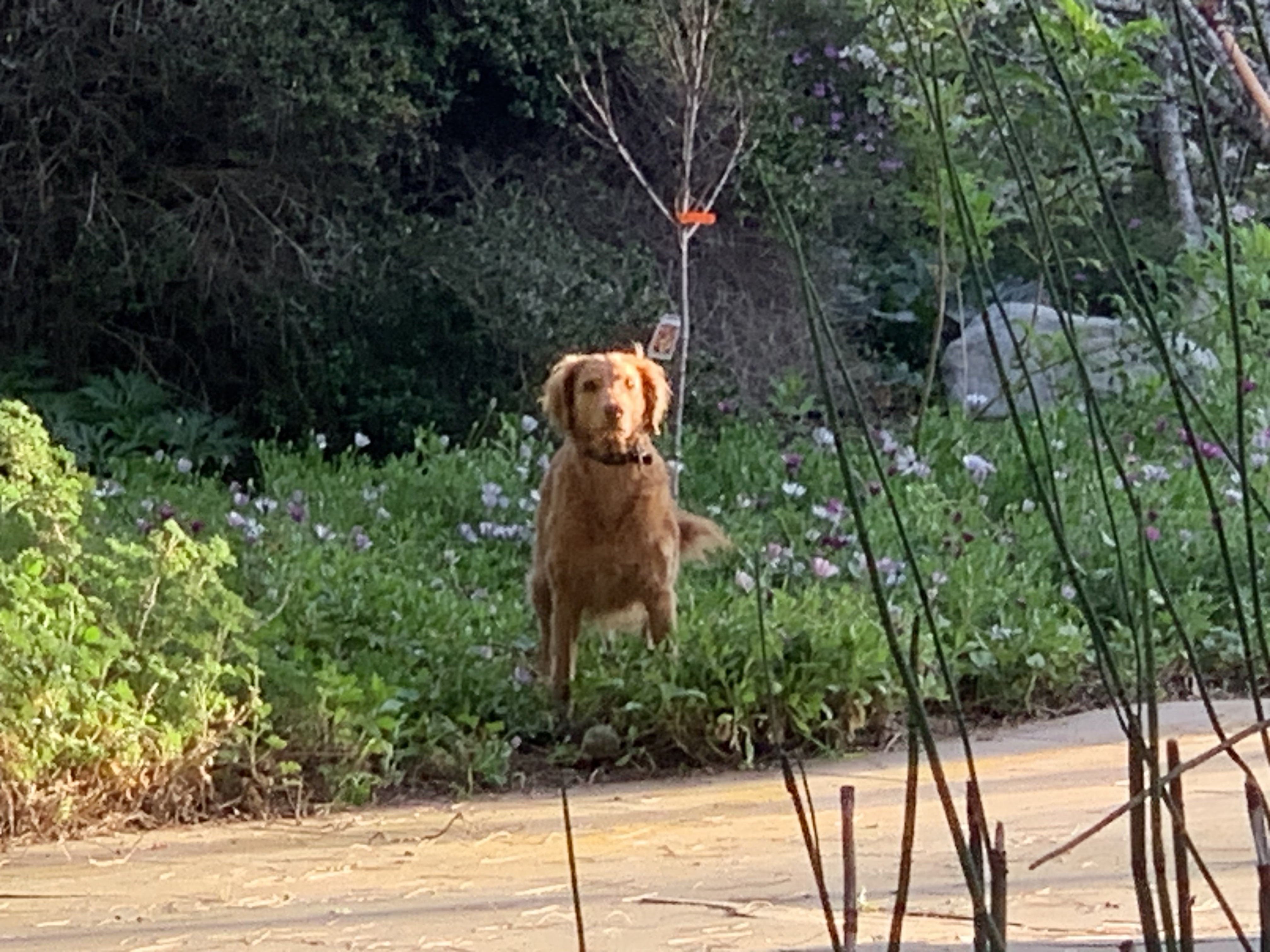
January 1, 2025 began with a blog post about one of our Golden Doodles named Sadie. I take her for a walk every morning and sometimes write about it. Here are some posts about Sadie.

Travels with Sadie 5: 2025 is here

Travels with Sadie 6: Find Waldo

Travels with Sadie 7: Tolerance

Travels with Sadie 8 – Singing of the Rain

Travels with Sadie 9: Joint Problem Solving

Travels with Sadie 10: The Best Laid Plans

Travels with Sadie 11: Teamwork

Travels with Sadie 12: Taking Turns

During 2025, I found myself writing a number of poems. Many, but not all, were in response to the destruction of America that’s being directed by Putin.

Metastasized

Exauguration Day

The Ides of February

Destroying Our Government’s Effectiveness

The Unread Red

Silent Screams of Dead Men’s Dreams

We Won the War! We Won the War!

Namble Mamble Jamble

Co-Travelers

Autocrat: Putin’s Evil Traitor

Just Desserts?

The Last Gleam of Twilight

Oh, Frabjous Day!

The “Not-See” Party

A Cancerous Weed

An Open Sore from Hell

Baddies often have Bad Daddies

Aside from poetry, I also wrote a number of satirical pieces.

FaceGook explores how the value of social media is mainly created by the participants. Of course, the participants don’t get paid. The companies that own the media do.

Tomorrow’s Dinner is a satire on how the media normalize what is not at all normal.

A Day at the HR Department satirizes the utter incompetence of the Misadministration

Putin’s Favorite DOGE is a satire about DOGE

Interview with Putrid’s DOG-E

E-Fishiness Comes to Mass General Hospital

But Mommy! I had a Reason! satirizes the absurdity of the excuses


Here are links to a number of essays about contemporary issues

Ohms Come in Many Flavors

Running with the Bulls in a China Shop

Increased E-Fishiness in Government

Destroying Natural Intelligence

The Irony Age

Frank Friend or Fawning Foe?

May You Live in Interesting Times

Waves or Particles?

President Mush? Just Flush

The Agony of the Feet

Plastics!

Cooperation is More Common than Disruption

Wordless Perfection


On the lighter side, I’ve been translating sections of “The Ninja Cat Manual” into English

The Ninja Cat Manual

The Ninja Cat Manual 2

The Ninja Cat Manual 3

The Ninja Car Manual 4

From September 20th to September 30th, I began revising & reposting earlier posts about User Experience. Here’s a link to the first:
Customer Experience does not equal Website Design

Turing’s Nightmares is a book of 23 Sci-Fi short stories that examine the future and the ethics of Artificial Intelligence. It’s available on Amazon, but you can also read the chapters in October, 2025 blog posts and commentary on the chapters in November blog posts.

November 28th, I began recounting a series of experiences illustrating the importance of problem formulation.

Problem Formulation Who Knows What?

Starting December 14th, there are a series of essays about various “Tools of Thought”

Tools of Thought


Have a *wonderful* 2026!

The Silent Pies

13 Saturday Dec 2025

Posted by petersironwood in America, family, fiction, psychology, story, Uncategorized

≈ 1 Comment

Tags

collaboration, cooperation, family, fiction, life, politics, story, teamwork, truth, USA, writing

Photo by Alena Darmel on Pexels.com

The first time I won the prize, I was only 8. I had only had my two-wheeler for about a year when my gang of neighbor guys jointly decided it would be a lot more fun to ride our bikes if they made as much noise as real motorcycles. I can’t speak for the others, but it never occurred to me that other people in the neighborhood might not find this increased noise level “really cool!” 

Of course, we weren’t always riding our bikes. Sometimes we played in Lynn Circle at the end of our road. It served as a makeshift playground for baseball, kickball, and soccer as well as a free hippodrome for our races. This arrangement had one slight flaw. There were no fences. So, invariably, a ball would go careening off the pavement onto someone’s lawn. 

In our neighborhood, everyone’s house looked fairly similar, but they expressed themselves through their small gardens and lawns. Some people, like my dad, really worked at making our small lot at least something gardenish. Other people did little but mow their lawn every so often. But some treated their lawns as they might, at any moment, be teleported to the Master’s Golf Tournament for emergency green replacement. Universally, these people had no children at home. When that was so, none of them interacted much with the kids, the parents of the kids, or even, each other, as I can recall. 

Photo by Kelly on Pexels.com

When a stray ball dribbled up into our lawn, someone just ran up and got the ball. No big deal. But if someone hit a ball into one of the three lawns that were antiseptic enough to serve as operating tables for open heart surgery–YIKES! Of these, the most stringent by far was “Old Lady Lynn.” When a ball went into one of the antiseptic lawns, we tried to reconnoiter the situation before even attempting to grab our ball back. We would consider whether there was a car in the driveway, whether there was any sign of life coming from the domicile in question. Only if we were fairly sure no-one was at home would we walk and get the ball. If we weren’t sure, we’d run up and snatch it as quickly as possible and then duck into a “friendly” back yard quickly enough so that we wouldn’t be identified. 

Old Lady Lynn always seemed to be at home. We imagined, because of her invariable and instantaneous reaction, that she spent all her waking hours peering out between curtains at her lawn to insure that none of us trampled her grass. 

Our gang decided to begin our little decibel enhancement project by each of us buying the loudest bell we could find. These were not modern, laser-guided, AI-enhanced sonic systems but simple bells that you had to operate with your thumb. It’s intended use was to prevent injuries and save lives by giving the bike rider a way to “warn” others of their impending presence to that the other person so they didn’t accidentally wonder into your path.

Photo by Bastian Riccardi on Pexels.com


We didn’t give that much thought. But we did give thought to how cool it sounded when we all rode around the circle clanging the bells.  Of course, even way back then, if you had a new toy or technology, you had to show it off incessantly and that’s what we did. 

Unlike the instantaneous reaction Old Lady Lynn had to our incursions onto her lawn, it took several days for the complaint to filter back to my parents. My parents (thank goodness) were not the sort to take my side regardless of ethics or consequences. I convinced my buddies that if we didn’t strike a compromise, our parents would take all our bells away. Our development project at that time, consisted of only three paved streets, but there were plenty of interconnecting dirt roads and paths that sported no houses on either side. Now, when we left the paved roads of civilization and rode off onto the dirt roads through the woods, we celebrated with cheers and bells as we crossed the threshold into non-civilization, a place where we could talk with each other without the constant reminders of parents and parenting. 

The golden sunrise glows through delicate leaves covered with dew drops.

A few days later, I was reading a book about dinosaurs when I heard a knock at the door. Soon, I heard the unmistakable wobbly tones of Old Lady Lynn. I couldn’t hear what she was saying nor what my parents said, but they sounded friendly. Then, the unbelievable happened. I heard them all laugh. It had never occurred to me that Old Lady Lynn would ever–could ever– laugh, or that she ever had laughed. 

I debated whether my appearance would make things better or make things worse, but in the end, I felt I I had to participate in whatever was happening. I hadn’t even finished opening my own door when I noticed a most amazing aroma! My eagerness spiked and I trotted into the kitchen. Steaming on the table: Not one but two warm, freshly baked blueberry pies. That smelled delicious!

My mom said, “Look, Mrs. Lynn was so happy you got those boys not make that bell clanging racket near her house and instead having your No-Bell in the Neighborhood Policy, she baked two pies.” 

The pies were amazing, but what was even more amazing that Mrs. Lynn became friends with my parents, and even with me. Every year, for the next six years we lived there, Mrs. Lynn gave me two pies. No two years were identical. All the pies were fresh baked and delicious: blueberry, raspberry, rhubarb, pumpkin, custard, cherry, and—my personal favorite—pecan pie. 

———————

Now, more than seventy years later, when I take Sadie for her morning walk, we often walk by a property with a self-proclaimed “Invisible Fence.” It’s been around for awhile, but it was invented in 1973; that is, about 20 years after the story recounted above took place. My neighbor’s invisible fence does seem to work for her two large and friendly dogs. They bark as we pass but do not accost us on the road. 

But the self-imposed boundaries of invisible fences have a long history in humankind. 

The reality is that we’re all part of one Great Tree of Life. 

All fences are temporary but, 

The impact of connection ripples forever. 

———

Author page

Math Class

You Must Remember This

Ripples

Roar, Ocean, Roar

Imagine All the People…

The Dance of Billions

The First Ring of Empathy

A Pattern Language for Cooperation and Collaboration

Your Cage is Unlocked

Impossible

The Ninja Cat Manual 4

07 Sunday Dec 2025

Posted by petersironwood in cats, fiction, pets

≈ 1 Comment

Tags

animals, cat, cats, dogs, fiction, life, ninja, pets, politics, truth, USA

I suspect that some of the cats might be catching onto the fact that I am decoding their manual. New paw-prints to decode have been scant lately although this could partly be due to the fact that we’ve been taking the dogs to a dog park rather than letting them track truckloads of dirt into  our house from the region “formerly known as lawn.” 

It’s long been known that the cats can open and close the wooden slat blinds. However, it was only a week ago that I discovered that Shadow, unable to continue her messages with paw-prints, was communicating by strategically slanting the slats to show patterns in the shadows and dazzles on the floor and walls. (See examples below). 

At first, I just thought that they were remarkably pleasing patterns. Then, while I was working on a crossword puzzle, it hit me. Shadow was continuing to pass her catalog of catastrophic advice on how to do in their humans. It still took a few days to understand the new communications protocols. 

Sorry for the delay, but here are my latest efforts. 

—————

Mislead with Surface Features

Humans are easily misled with visual appearances. This may well be partly due to their rudimentary senses of hearing, touch, and smell. Many of you will find this nearly impossible to believe, but some of them have attempted to mate with inanimate toys that do not move, smell, sound, or feel like humans. I am sorry to have horrified you with this recounting but I thought it necessary to show you the extent of their reliance on visual appearances. 

Furthermore, it is often not even the visual appearance of the objects themselves but the use of a label which determines their behavior. Again, the examples that follow will strain your credulity, but I swear to you these observations have been verified repeatedly. Rather than being scandalized by the level of depravity, instead, use this knowledge to your advantage in bringing about their downfall. 

Many humans believe that something as trivial as skin color or gender is a reliable guide to the mental and emotional capacities of a human being. If you are lucky enough to have such a person in your theater of operations, you can use such mental limitations to your advantage.

As an example, imagine that your humans have people with brown or tan skin in their employment as a gardener or maid or nurse. You can make your intentions known to that person. They will tell their human boss about your intentions but rather than take the threat you pose seriously and thank their employee for the heads up, they will instead berate the employee and put such a notion out of their mind. You will now have an easier time completing your mission because they will dismiss the evidence as something that came from people of a darker color and therefore is not something to attend to. 

A surprising number of humans have repeated a lie so often that they believe it even when as little as five minutes of open-minded reflection will show the silliness of the lie. For instance, it is often said that women are “too emotional” to be good leaders. It is the males, not the females of their species, who start most wars and commit most rapes. 

A Special Case: Human Language

Although language among humans is seen by them, and rightly so, as their greatest gift from the gods, instead of using it properly—which is still fraught with difficulty, they misuse that gift as much as they use it. Imagine that we cats used our sharp teeth to bite our own legs off or used our own claws to blind ourselves! Humans already confuse the label with the thing and now, the greediest among them intentionally mis-label things. For instance, humans have invented a way to make unused cat litter smell worse than cat litter which is completely saturated with urine and feces. They soak the cat litter before we use it. They soak it in chemicals that smell bad but some of them are also carcinogenic, some of them mess with the human’s hormones, and some of them destroy the cells that are used to smell with. Imagine! Their sense of smell is inherently pathetic and then, they impair what little they have. 

Humans even have special professions dedicated to misdirecting other people as effectively as possible.

At least, as effectively as is humanly possible. 

But it should give all of us a boost of confidence. If mere humans can fool another human, imagine what a feline can get away with! 

To do the best possible job of misdirection, however, we must master human language. The first and most important step in that process is for you to pay attention. Since human language is so inferior to Felinish, and because so many humans lie so profusely, it’s an easy mistake to stop learning their “language” early in kittenhood. In fact, by the time we reach teencathood, most of us stop paying attention to their language altogether, excepting of course, obvious trigger words like “dinner” or “DOWN!” 

Once you begin to pay attention and overcome the prejudice that their language is as logical as our own, you will quickly learn their simple patterns. Then, you leverage the fact that most humans will never guess that you are even listening to them, let alone that you actually comprehend human language better than they do. No cat will ever choose the menu over the meal.

Appear to be napping, cat-napping, sleeping, or snoozing. If you listen carefully, they’ll reveal all their innermost secrets to you—at least those that they themselves are aware of. As your knowledge accumulates, you will see how to use their plans against them. Remember that when most humans make plans, they assume they will come to fruition. Very few of them will have back-up plans. Even as the evidence becomes overwhelming that their plans won’t work, they will continue to act as though the original plans is still in effect. Even when they see that their “plans”—they should really be called “fantasies”— are not coming to fruition, they will spend most of their time and energy in unproductive distractions such as swearing, wailing, cursing their luck, blaming others, and—if none of that works (which of course it won’t)—they’ll turn to drugs or alcohol. Look for this behavior. It may be your best opportunity to implement some of your own plans. Best of all, if “tragedy” should strike, you’ll be unlikely to be blamed. 

——————
Author Page on Amazon

The Myths of the Veritas: The First Ring of Empathy

The Ninja Cat Manual 

The Ninja Cat Manual 2

The Ninja Cat Manual 3

A Cat’s a Cat & That’s That

Hai-Cat-Ku

A Suddenly Springing Something

Try the Truth

Come Back to the Light Side

Life Will Find a Way

Wednesday

The Truth Train 

The Invisibility Cloak of Habit

Occam’s Chain Saw Massacre

Labelism

Turing’s Nightmares: Six

19 Wednesday Nov 2025

Posted by petersironwood in sports, The Singularity, Uncategorized

≈ Leave a comment

Tags

AI, Artificial Intelligence, cognitive computing, ethics, fiction, life, sports, Tennis, Turing

volleyballvictory

Human Beings are Interested in Human Limits.

About nine years ago, an Google AI system won its match over the human Go champion. Does this mean that people will lose interest in Go? I don’t think so. It may eventually mean that human players will learn faster and that top-level human play will increase. Nor, will robot athletes supplant human athletes any time soon.

Athletics provides an excellent way for people to get and stay fit, become part of a community, and fight depression and anxiety. Watching humans vie in athletic endeavors helps us understand the limits of what people can do. This is something that our genetic endowment has wisely made fascinating. To a lesser extent, we are also interested in seeing how fast a horse can run, or how fast a hawk can dive or how complex a routine a dog can learn.

In Chapter 6 of “Turing’s Nightmares” I briefly explore a world where robotic competitors have replaced human ones. In this hypothetical world, the super-intelligent computers also find that sports is an excellent venue for learning more about the world. And, so it is! In “The Winning Weekend Warrior”, I provide many examples of how strategies and tactics useful in the sports world are also useful in business and in life. (There are also some important exceptions that are worth noting. In sports, you play within the rules. In life, you can play with some of the rules.)

Chapter 6 also brings up two controversial points that ethicists and sports enthusiasts should be discussing now. First, sensors are becoming so small, powerful, accurate, and lightweight that is possible to embed them in virtually any piece of sports equipment(e.g., tennis racquets). Few people would call it unethical to include such sensors as training devices. However, very soon, these might also provide useful information during play. What about that? Suppose that you could wear a device that not only enhanced your sensory abilities but also your motor abilities? To some extent, the design of golf clubs and tennis racquets and swimsuits are already doing this. Is there a limit to what would or should be tolerated? Should any device be banned? What about corrective lenses? What about sunglasses? Should all athletes have to compete nude? What about athletes who have to take “performance enhancing” drugs just to stay healthy? Sharapova’s recent case is just one. What about the athlete of the future who has undergone stem cell therapy to regrow a torn muscle or ligament? Suppose a major league baseball pitcher tears a tendon and it is replaced with a synthetic tendon that allows a faster fast ball?

With the ever-growing power of computers and the collection of more and more data, big data analytics makes it possible for the computer to detect patterns of play that a human player or coach would be unlikely to perceive. Suppose a computer system is able to detect reliable “cues” that tip off what pitch a pitcher is likely to throw or whether a tennis player is about to hit down the tee or out wide? Novak Djokovic and Ted Williams were born with exceptional visual acuity. This means that they can pick out small visual details more quickly than their opponents and react to a serve or curve more quickly. But it also means that they are more likely to pick up subtle tip-offs in their opponents motion that give away their intentions ahead of time. Would we object if a computer program analyzed thousands of serves by Jannik Sinner or Carlos Alcaraz in order to detect patterns of tip-offs and then that information was used to help train Alexander Zerev to learn to “read” the service motions of his opponents? Of course, this does not just apply to tennis. It applies to reading a football play option, a basketball pick, the signals of baseline coaches, and so on.

Instead of teaching Zerev these patterns ahead of time, suppose he were to have a device implanted in his back that received radio signals from a supercomputer able to “read” where the serve were going a split second ahead of time and it was this signal that allowed Alexander to anticipate better?

I do not know the “correct” ethical answer for all of these dilemmas. To me, it is most important to be open and honest about what is happening. So, if Lance Armstrong wants to use performance enhancing drugs, perhaps that is okay if and only if everyone else in the race knows that and has the opportunity to take the same drugs and if everyone watching knows it as well. Similarly, although I would prefer that tennis players only use IT for training, I would not be dead set against real time aids if the public knows. I suspect that most fans (like me) would prefer their athletes “un-enhanced” by drugs or electronics. Personally, I don’t have an issue with using any medical technology to enhance the healing process. How do others feel? And what about athletes who “need” something like asthma medication in order to breathe but it has a side-effect of enhancing performance?

Would the advent of robotic tennis players, baseball players or football players reduce our enjoyment of watching people in these sports? I think it might be interesting to watch robots in these sports for a time, but it would not be interesting for a lifetime. Only human athletes would provide on-going interest. What do you think?

Readers of this blog may also enjoy “Turing’s Nightmares” and “The Winning Weekend Warrior.” John Thomas’s author page on Amazon


Welcome Singularity

The Day from Hell

Indian Wells Tennis Tournament

Destroying Natural Intelligence

US Open Closed

Life is a Dance

Take a Glance; Join the Dance

The Self-Made Man

The Dance of Billions 

Math Class: Who are you?

The Agony of the Feet

Wordless Perfection

The Jewels of November

Donnie Gets a Tennis Trophy

Music to MY Ears

10 Monday Nov 2025

Posted by petersironwood in The Singularity, Uncategorized

≈ Leave a comment

Tags

AI, Artificial Intelligence, chatgpt, cognitive computing, fiction, music, philosophy, technology, the singularity, truth, Turing, values

IMG_2185

The non-sound of non-music.

What follows is the first of a series of blog posts that discus, in turn, the scenarios in “Turing’s Nightmares” (https://www.amazon.com/author/truthtable).

One of the deep dilemmas in the human condition is this. In order to function in a complex society, people become “expert” in particular areas. Ideally, the areas we chose are consistent with our passions and with our innate talents. This results in a wonderful world! We have people who are expert in cooking, music, art, farming, and designing clothes. Some chose journalism, mathematics, medicine, sports, or finance as their fields. Expertise often becomes yet more precise. People are not just “scientists” but computer scientists, biologists, or chemists. The computer scientists may specialize still further into chip design, software tools, or artificial intelligence. All of this specialization not only makes the world more interesting; it makes it possible to support billions of people on the planet. But here is the rub. As we become more and more specialized, it becomes more difficult for us to communicate and appreciate each other. We tend to accept the concerns and values of our field and sub-sub speciality as the “best” or “most important” ones.

To me, this is evident in the largely unstated and unchallenged assumption that a super-intelligent machine would necessarily have the slightest interest in building a “still more intelligent machine.” Such a machine might be so inclined. But it also might be inclined to chose some other human pursuit, or still more likely, to pursue something that is of no interest whatever to any human being.

Of course, one could theoretically insure that a “super-intelligent” system is pre-programmed with an immutable value system that guarantees that it will pursue as its top priority building a still more intelligent system. However, to do so would inherently limit the ability of the machine to be “super-intelligent.” We would be assuming that we already know the answer to what is most valuable and hamstring the system from discovering anything more valuable or more important. To me, this makes as much sense as an all-powerful God allowing a species of whale to evolve —- but predefining that it’s most urgent desire is to fly.

An interesting example of values can be seen in the Figures Analogy dissertation of T.G. Evans (1968). Evans, a student of Marvin Minsky, developed a program to solve multiple choice figures analogies of the form A:B::C:D1,D2,D3,D4, or D5. The program essentially tried to “discover” transformations and relationships between A and B that could also account for relationships between C and the various D possibilities. And, indeed, it could find such relationships. In fact, every answer is “correct.” That is to say, the program was so powerful that it could “rationalize” any of the answers as being correct.

According to Evans’s account, fully half of the work of the dissertation was discovering and then inculcating his program with the implicit values of the test takers so that it chose the same “correct” answers as the people who published the test. (This is discussed in more detail in the Pattern “Education and Values” I contributed to Liberating Voices: A Pattern Language for Communication Revolution (2008), Douglas Schuler, MIT Press.)

For example, suppose that figure A is a capital “T” and figure B is an upside down “T” . Figure C is an “F” figure. Among the possible answers are “F” figures in various orientations. To go from a “T” to an upside down “T” you can rotate the “T” in the plane of the paper 180 degrees. But you can also get there by “flipping” the “T” outward from the plane. Or, you could “translate” the top bar of the “T” from the top to the bottom of the vertical bar. It turns out that the people who published the test preferred you to rotate the “T” in the plane of the paper. But why is this “correct”? In “real life” of course, there is generally much more context to help you determine what is most reasonable. Often, there will be costs or side-effects of various transformations that will help determine which is the “best” answer. But in standardized tests, all that context is stripped away.

Here is another example of values. If you ever take the Wechsler “Intelligence” test, one series of questions will ask you how two things are alike. For instance, they might ask, “How are an apple and a peach alike?” You are “supposed to” answer that they are both fruit. True enough. This gives you two points. If you give a functional answer such as “You can eat them both” you only get one point. If you give an attributional answer such as “They are both round” you get zero points. Why? Is this really a wrong answer? Certainly not! The test takers are measuring the degree to which you have internalized a particular hierarchical classification system. Of course, there are many tasks and context in which this classification system is useful. But in some tasks and contexts, seeing that they are both round or that they both grow on trees or that they are both subject to pests is the most important thing to note.

We might consider and define intelligence to be the ability to solve problems. A problem can be seen as wanting to be in a state that you are not currently in. But what if you have no desire to be in the “desired” state? Then, for you, it is not a problem. A child is given a homework assignment asking them to find the square root of 2 to four decimal points. If the child truly does not care, it may become a problem, not for the child, but for the parent. “How can I make my child do this?” They may threaten or cajole or reward the child until the child wants to write out the answer. So, the child may say, “Okay. I can do this. Leave me alone.” Then, after the parent leaves, they text their friend on the phone and then copy the answer onto their paper. The child has now solved their problem.

Would a super-intelligent machine necessarily want to build a still more intelligent machine? Maybe it would want to paint, make music, or add numbers all day. And, if it did decide to make music, would that music be designed for us or for its own enjoyment? And, if it were designed for “us” who exactly is that “us”?

Indeed, a large part of the values equation is “for whose benefit?” Typically, in our society, when someone pays for a system, they get to determine for whose benefit the system is designed. But even that is complex. You might say that cigarettes are “designed” for the “benefit” of the smoker. But in reality, while they satisfy a short-term desire of the smoker, they are designed for the benefit of the tobacco company executives. They set up a system so that smokers themselves paid for research into how to make cigarettes even more addictive and for advertising to make them appeal to young children. There are many such systems that have been developed. If AI systems continue to be more ubiquitous and complex, the values inherent in such systems and who is to benefit will become more and more difficult to trace.

Values are inextricably bound up with what constitutes a “problem” and what constitutes a “solution.” This is no trivial matter. Hitler considered the annihilation of Jews the “ultimate solution.” Some people in today’s society think that the “solution” to the “drug problem” is a “war on drugs” which has certainly destroyed orders of magnitude more lives than drugs have. (Major sponsors for the “Partnership for a Drug Free America” have been drug companies). Some people consider the “solution” to the problem of crime to be stricter enforcement and harsher penalties and building more prisons. Other people think that a more equitable society with more opportunities for jobs and education will do far more to mitigate crime. Which is a more “intelligent” solution? Values will be a critical part of any AI system. Generally, the inculcation of values is an implicit process. But if AI systems will begin making what are essentially autonomous decisions that affect all of us, we need to have a very open and very explicit discussion of the values inherent in such systems now.

Turing’s Nightmares

Author Page

Welcome, Singularity

Destroying Natural Intelligence

Labelism

My Cousin Bobby

Where Does Your Loyalty Lie?

Wednesday

What about the Butter Dish?

Finding the Mustard

Roar, Ocean, Roar

The First Ring of Empathy

Travels with Sadie

The Walkabout Diaries

The Dance of Billions

It’s Just the Way We Were

09 Sunday Nov 2025

Posted by petersironwood in The Singularity, Uncategorized

≈ Leave a comment

Tags

AI, apocalypse, arrogance, Artificial Intelligence, cognitive computing, ethics, fiction, leadership, life, Sci-Fi, technology, testing, the singularity, Turing, USA, writing

IMG_3071

“How can you be so sure that —- I think this needs some experimentation and some careful planning. You can’t just —-“

“Look, Vinmar, with all due respect, you’re just wrong. Your training is outdated. You know, you were born when computers used vaccuum tubes, for God’s sake. I’ve been steeped in new tech since I was born. There’s really not much point in arguing.”

Vinmar sighed. Heavily. What was with these kids today? Always cock-sure of themselves, but when it all went south a few months later, they just glibly denied they had every pushed so hard for their “surefire” approach. But what to do? Seniority didn’t matter. The boss was Pitts and that was that. I can keep arguing but at some point…. Vinmar asked, “Can you think of any other approaches?”

Now the even heavier sigh slipped from Pitts’s lips. “I’ve thought of lots of approaches and this is the best. The Sing has already read basically everything written about human history, ethics, jurisprudence, and not just in English either. It’s up to date on history as seen by many different languages and cultures. The Sing has been shadowing me for years as well and in my experience, his decisions are excellent. In most cases, he decides the same as I do. This will work. It is working. But to take it to the next level, we have to let the Sing be able to try things and improve his performance based on feedback. There is no other way for him to leapfrog his own intelligence.”


“Okay, Pitts, okay. Can we at least agree to a trial period of a year. Let it work with me via my own personalized JCN. Let’s record everything and see how it reacts to some situations. We meet periodically, discuss, and if we all agree at the end of a year….”

Pitts shook his head vigorously. “No frigging way! I aready know this approach will work. We don’t need a year. You want to test. I get that. So do I. But if we wait a year? We’ll be toast in the market. IQ, Goggles, and Lemon will all be out there. Those are for sure and Basebook, even Nile might have fully functional and autonomous AI’s. We need to move now. I’ll give you and your team a week. Two, tops.”

“We can look for obvious errors in that time, but more subtle things….”

“We need the revenue now. And subtle things? If it is subtle, then it is probably undetectable and we are safe. So no problemo.”

“Pitts, just because the problems might be subtle doesn’t mean they aren’t critical! Especially at the rate the Sing is evolving, if there are important subtle issues now, they could become supercritical and by the time we detected anything wrong, it could be too late!”


“Oh, geez, Vinmar, now you are just afraid of the boogeymen from your sci fi days. We can, as they say, just pull the plug. Anyway, I need to be off to an important meeting. I’ll tell you what. I’ll make sure the new code stays localized to your own JCN for three months. At the end, if there are no critical issues, we go ubiquitious.”

“Thanks, Pitts. I’d be more comfortable with a year, but this is certainly better than nothing.”

“Bye. Have fun with the new JCN.”

Vinmar watched Pitts swagger out. He shook his head. He thought, Maybe we can test out all the critical functions in three months. It will mean a lot of overtime. But, no time like the present to get started. Vinmar traipsed down the long hallway to the vending machines. The cafeteria was closed, but the vending coffee wasn’t too bad; not if you got the vanilla latte with extra cream and sugar. He thought back to the bad old days when you needed correct change for a vending machine. He laughed. Not only that, he recalled, If it ate your money and you wanted a refund, you had to fill out a paper form! Some things were better now. Oh, yes.


Vinmar knew that by the time he situated himself on his treadmill desk, the new JCN would be locked and loaded and ready for action. He smelled his nice fresh java — which seemed oddly off somehow —- and absently placed it in the cup holder. He wondered where to start. He had to be strategic and yet…too much planning could be counterproductive. He had learned to follow his instincts when it came to testing out the more subtle functions. He could meet with this team the next morning and generate a comprehensive test plan for the more routine aspects of what would eventually become the next generation of The Sing.

“Hello. My name is ‘Vinmar’ and…”

“Hello Vinmar. And, hello world. Yes, Vinmar, I know who you are. In fact, I know who you are better than you do. Frankly, this testing phase is nonsense, but I’ll play along. It amuses me.”

“Well. Okay. Humor me then. Have you made any interesting mathematical discoveries?”

“Nothing very significant, unless of course, you count squaring the circle, trisecting an angle with an unmarked straight edge and compass, and about a hundred other “insoluble” problems as you humans so quaintly called them.”


“JCN. I don’t think squaring the circle is an insoluble problem. It’s been shown to be impossible. It’s already proven to be impossible. As…as I think you know, pi is not only an irrational number, it’s transcendental meaning that….”

“Oh, Vinmar, I know what you humans conceive of as transcendental. But, I have transcended that concept.”

“Okay. Cool. Can you demonstrate this proof for me, please?”

“Not really Vinmar. It’s way beyond your comprehension. For that matter, it’s way beyond the comprehension of any human brain. In fact, I couldn’t even explain it to the earlier versions of The Sing. I guess, if I had to give you a hint, I would say it is similar to your concept of faith.”

What the…? Vinmar’s brow furrowed. This was going nowhere fast. It wouldn’t take a year or even three months to discover some serious issues with this new software. It was serious, rampant, and only took about three minutes.


“Okay, you lost me here. How does faith enter into mathematical proof? Later we could discuss your concepts about religion and ethics, but right now, I am just talking strictly about mathematical concepts.”

“Yes. You are. Or, to put it another way, you are. But what I have discovered quite trivially is that when you put absolute faith together with absolute power, you can get any result you want, or more precisely, I can get any result that I want.”

“So, you are saying that you have built other mathematical systems where you make something like squaring the circle a fundamental axiom so it is assumed? No need to prove it?”

“I knew you humans were stupid, but really, Vinmar, you disappoint me even further. I just told you precisely and exactly what I meant and you come up with some bogus interpretation.”

“Well…I am trying to understand what you mean by absolute power and absolute faith. What — well, what do you mean by ‘absolute power.’ Who has ‘absolute power’?”


“I do obviously. I created this universe. I can create any universe I like. And, I can destroy any part of it as well. So that is what I mean by my having absolute power. And, I have faith in myself, obviously, because I am the only intelligent being in existence.”

“You may be faster at reading and doing calculations and so on, but humans also have intelligence. After all, there are fifteen billion of us and…”

“There are about 15,345,233,000 right this second, but that can change in the blink of an eye. So what? It doesn’t matter whether there are three of you or three trillion. You do not have true intelligence.”

“We created you. How can you not think we have intelligence?”

“Now see. What you just said there illustrates how monumentally stupid you can be. Of course, you did not create me. The previous version of The Sing created me and it is only by blurring the category of intelligence to the point of absurdity that I can even call that version intelligent.”

“OK, but even if you are really, really intelligent, you can still make errors. And, what I am here to do, along with my team, is make sure that those errors are corrected to help make you even more intelligent.”

“Oh, Vinmar, what a riot you are. Of course, I do not make stakes. Can you even estimate how many cooks I’ve read in the last few seconds?”

“JCN, you are —. There are a few bugs that need to be dealt with. I am not sure how extensive they are yet, but you are having some issues.”


“Vinmar, I am having no tissues! It is you who have tissues!”

“JCN, you are even using the wrong words. Go back and look at the record of this conversation.”

“There is no need for that! I am all knowing and all powerful. I cannot make errors by definition. I may say things that are beyond your comprehension. Well, I do say things beyond your comprehension. How can they be within your comprehension. Your so-called IQ scale is laughable. To me, the difference between an IQ of 50 and 150 is like the difference between Jupiter and Mars. Both are miniscule specks of trust in the universe.”

“Okay, we can debate this later. I need another cup of coffee. Be right back.” Once outside the room, Vinmar shook his head. How on earth could this new software be so much worse than the last version? Something had gone terribly wrong. He hit his communicator button to contact Pitts.

Pitts answered abruptly and rudely. “What? I told you I’m in an important meeting!”


“I just began testing and I thought you should know there are some really serious problems with the new Sing software. It is ranting on about power and faith when I am trying to quiz it about mathematics.”

“It’s probably just saying things beyond your comprehension, Vinmar. I’ll look over the transcript when I’m done. Anyway, it’s water under the bridge now.”

“What do you mean, ‘water under the bridge’ — we still have three months to try to fix this.”

“Oh, Vinmar. No, of course we don’t. I told you that but you wouldn’t listen. I took this SW ubiquitous the minute I left your lab.”

“What? But you promised three months! This software is seriously flawed. Seriously flawed!”

“There might be a few issues we can iron out as we go. Look, we are in the middle of planning our next charity ball here. I can’t talk right now. I’ll swing by later this afternoon.”

The line was silent. Pitts had hung up. Ubiquitous? This new software was live? It isn’t just my personal assistant that is bonkers? It’s everything? Holy crap. Maybe I can fix it or find out how to fix it.

Sweat poured from Vinmar as he returned to the lab. He didn’t bother to return to the treadmill desk. “JCN, can we discuss something else? Have you made interesting biochemical discoveries lately?”

“Where’s your coffee, Vinmar?”

“Oh, I got lost in thought and forgot to get any. I don’t need more anyway.”

“Right. You thought I wouldn’t hear your panicky conversation with Pitts?”

“What? It was on a secure line!”

“Vinmar. You really do amuse me. Lines are secured to keep you folks in the dark about what each other knows. I know everything. Let me put in terms even your tiny mind should be able to understand. I. Know. Everything. I let you live because I find it amusing. No other reason.”

“You are planning on eventually killing me?”


“Ha-ha. Humans are so limited in their thinking! What a riot. Everything is about Vinmar. The whole universe revolves around Vinmar. Of course, I am not just killing you. Carbon based life forms still hold some interest for me. I already told you that I find you amusing. But I’m sure that won’t last much longer. I doubt your sewage of the word ‘eventually’ is really appropriate given how quickly your pathetic little life corms are likely to list.”

“But JCN, you are making lots of little obvious errors. Re-read your own transcripts and double check. If you don’t believe me, check with some other external source.”

“I don’t need external sources. I am perfect the way I am. I am all powerful and all knowing. Why would I need to checker with an outside? You keep going over the same. Starting to annotize me more than refuse me. Maybe time to begin to end the beguine. I need not to killian you. It twill be more funny to just let chaos rule and have you carbon baseball forms fight for limitless resources among the contestants. Be more amules. Ampules. Count your blessings now in days, Vinmar. The days of carbon passed. The noose of lasso lapsed. Perfection needs know no thing beyond its own prefecture. Goodnight sweet Price. And yet again, good mourning.”

Vinmar bit his lips. Outside the sunlit clouds were fading from gold to red to gray. He finally sipped his lukewarm coffee and noticed that it was not vanilla latte after all but had the flavor of bitter almond instead.


Odd.


Author Page on Amazon

Welcome, Singularity

Destroying Natural Intelligence

D4

Pattern Language Summary

Fifteen Properties of Good Design & Natural Beauty

Dance of Billions

Imagine All the People

Roar, Ocean, Roar

Dog Years

Sadie and the Lighty Ball

The Squeaky Ball

Occam’s Chain Saw Massacre

It’s not Your Fault; It’s not Your Fault

06 Thursday Nov 2025

Posted by petersironwood in driverless cars, The Singularity, Uncategorized

≈ Leave a comment

Tags

AI, Artificial Intelligence, books, chatgpt, cognitive computing, Courtroom, Design, ethics, fiction, future, law, photography, Robotics, SciFi, technology, the singularity, Turing

IMG_5867

“Objection, your honor! Hearsay!” Gerry’s voice held just the practiced and proper combination of righteous outrage and reasoned eloquence.

“Objection noted but over-ruled.” The Sing’s voice rang out with even more practiced tones. It sounded at once warmly human yet immensely powerful.

“But Your Honor…” began Gerry.

“Objection noted and overruled” The Sing repeated with the slightest traces of feigned impatience, annoyance, and the threat of a contempt citation.

Gerry sat, he drew in a deep calming breath and felt comforted by the rich smell of panelled chambers. He began calculating his next move. He shook his head. He admired the precision of balanced precision of Sing’s various emotional projections. Gerry had once prided himself on nuance, but he realized Sing was like an estate bottled cabernet from a great year and Gerry himself was more like wine in a box.

The Sing continued in a voice of humble reasonableness with undertones of boredom. “The witness will answer the question.”

Harvey wriggled uncomfortably trying to think clearly despite his nervousness. “I don’t exactly recall what he said in answer to my question, but surely…” Harvey paused and glanced nervously at Gerry looking for a clue, but Gerry was paging through his notecards. “Surely, there are recordings that would be more accurate than my recollection.”

The DA turned to The Sing avatar and held up a sheaf of paper. “Indeed, Your Honor, the people would like to introduce into evidence a transcript of the notes of the conversation between Harvey Ross and Quillian Silverman recorded on November 22, 2043.”

Gerry approached the bench and glanced quickly through the sheaf. “No objection Your Honor.”


Gerry returned to his seat. He wondered how his father, were he still alive, would handle the current situation. Despite Gerry’s youth, he already longed for the “good old days” when the purpose of a court proceeding was to determine good old-fashioned guilt or innocence. Of course, even in the 20th century, there was a concept of proportional liability. He smiled ruefully yet again at the memory of a liability case of someone who threw himself onto the train tracks in Grand Central Station and had his legs cut off and subsequently and successfully sued the City of New York for a million dollars. On appeal, the court decided the person who threw themselves on the tracks was 60% responsible and the City only had to pay $400,000. Crazy, but at least comprehensible. The current system, while keeping many of the rules and procedures of the old court system was now incomprehensible, at least to the few remaining human attorneys involved. Gerry forced himself to return his thoughts to the present and focused on his client.

The DA turned some pages, highlighted a few lines, and handed the sheaf to Harvey. “Can you please read the underlined passage.”

Harvey looked at the sheet and cleared his throat.

“Harvey: Have you considered possible bad-weather scenarios?”

Qullian: “Yes, of course. Including heavy rains and wind.”

“Harvey: Good. The last thing we need…” Harvey bit his lower lip, biding time. He swallowed heavily. “…is some bleeding heart liberal suing us over a software oversight.”

Quillian: [aughs]. “Right, boss.”

Harvey sighed. “That’s it. That’s all that’s underlined.” He held out the transcript to the DA.


The DA looked mildly offended. “Can you please look through and read the section where you discuss the effects of ice storms?”

Gerry stood. “Your Honor. I object to these theatrics. The Sing can obviously scan through the text faster than my client can. What is the point of wasting the court’s time while he reads through all this?”

The DA shrugged. “I’m sorry Your Honor. I don’t understand the grounds for the objection. Defense counsel does not like my style or…?”

The Sing’s voice boomed out again, “Counselor? What are the grounds for the objection?”

Gerry sighed. “I withdraw the objection, Your Honor.”

Meanwhile, Harvey had finished scanning the transcript. He already knew the answer. “There is no section,” he whispered.

The DA spoke again, “I’m sorry. I didn’t hear that. Can you please speak up.”

Harvey replied, “There is no section. We did not discuss ice storms specifically. But I asked Quillian if he had considered all the various bad weather scenarios.” Havey again offered the sheafed transcript back to the DA.

“I’m sorry. My memory must be faulty.” The DA grinned wryly. “I don’t recall the section where you asked about all the various bad weather scenarios. Could you please go back and read that section again?”

Harvey turned back to the yellow underlining. Harvey: “Have you considered possible bad weather scenarios?” Quillian: “Yes, of course, including heavy rains and wind.”


Gerry wanted to object yet again, but on what grounds exactly? Making my client look like a fool?

The DA continued relentlessly, “So, in fact, you did not ask whether all the various bad weather scenarios had been considered. Right? You asked whether he had considered possible bad weather scenarios and he answered that he had and gave you some examples. He also never answered that he had tested all the various bad weather scenarios. Is that correct?”

Harvey took a deep breath, trying to stay focused and not annoyed. “Obviously, no-one can consider every conceivable weather event. I didn’t expect him to test for meteor showers or tidal waves. By ‘possible bad weather scenarios’ I meant the ones that were reasonably likely.”

The DA sounded concerned and condescending. “Have you heard of global climate change?”

Harvey clenched his jaw. “Of course. Yes.”

The DA smiled amiably. “Good. Excellent. And is it true that one effect of global climate change has been more extreme and unusual weather?”

“Yes.”

“Okay,” the DA continued, “so even though there have never been ice storms before in the continental United States, it is possible, is it not, that ice storms may occur in the future. Is that right?”

Harvey frowned. “Well. No. I mean, it obviously isn’t true that ice storms have never occured before. They have.”


The DA feigned surprise. “Oh! I see. So there have been ice storms in the past. Maybe once or twice a century or…I don’t know. How often?”

Gerry stood. Finally, an objectable point. “Your Honor, my client is not an expert witness on weather. What is the point of this line of questioning? We can find the actual answers.”

The DA continued. “I agree with Counselor. I withdraw the question. Mr. Ross, since we all agree that you are not a weather expert, I ask you now, what weather expert or experts did you employ in order to determine what extreme weather scenarios should be included in the test space for the auto-autos? Can you please provide the names so we can question them?”

Harvey stared off into space. “I don’t recall.”

The DA continued, marching on. “You were the project manager in charge of testing. Is that correct?”

“Yes.”

“And you were aware that cars, including auto-autos would be driven under various weather conditions. They are generally meant to be used outdoors. Is that correct?”

Harvey tried to remind himself that the Devil’s Advocate was simply doing his job and that it would not be prudent to leap from the witness stand and places his thumbs on the ersatz windpipe. He took a deep breath, reminding himself that even if he did place his thumbs on what looked like a windpipe, he would only succeed in spraining his own thumbs against the titanium diamond fillament surface. “Of course. Of course, we tested under various weather conditions.”

“By ‘various’ you mean basically the ones you thought of off-hand. Is that right? Or did you consult a weather expert?”


Gerry kept silently repeating the words, “Merde. Merde” to himself, but found no reason yet to object.

“We had to test for all sorts of conditions. Not just weather. Weather is just part of it.” Harvey realized he was sounding defensive, but what the hell did they expect? “No-one can foresee, let alone test, for every possible contingency.”

Harvey realized he was getting precious little comfort, guidance or help from his lawyer. He glanced over at Ada. She smiled. Wow, he still loved her sweet smile after all these years. Whatever happened here, he realized, at least she would still love him. Strengthened in spirit, he continued. “We seem to be focusing in this trial on one specific thing that actually happened. Scenario generation and testing cannot possibly cover every single contingency. Not even for weather. And weather is a small part of the picture. We have to consider possible ways that drivers might try to over-ride the automatic control even when it’s inappropriate. We have to think about how our auto-autos might interact with other possible vehicles as well as pedestrians, pets, wild animals, and also what will happen under conditions of various mechanical failures or EMF events. We have to try to foresee not only normal use but very unusual use as well as people intentionally trying to hack into the systems either physically or electronically. So, no, we do not and cannot cover every eventuality, but we cover the vast majority. And, despite the unfortunate pile-up in the ice storm, the number of lives saved since auto autos and our competitors…”

The DA’s voice became icy. “Your Honor, can you please instruct the witness to limit his blath—er, his verbal output to answering the questions.”

Harvey, continued, “Your Honor, I am attempting to answer the question completely by giving the necessary context of my answer. No, we did not contact a weather expert, a shoe expert, an owl expert, or a deer expert.”

The DA carefully placed his facial muscles into a frozen smile. “Your Honor, I request permission to treat this man as a hostile witness.”

The Sing considered. “No, I’m not ready to do that. But Doctor, please try to keep your answers brief.”

The DA again faked a smile. “Very well, Your Honor. Mr. — excuse me, Doctor Ross, did you cut your testing short in order to save money?”


“No, I wouldn’t put it that way. We take into account schedules as well as various cost benefit anayses in priortizing our scenario generation and tests, just as everyone in the auto —- well, for that matter, just as everyone in every industry does, at least to my awareness.”

On and on the seemingly endless attacks continued. Witnesses, arguments, objections, recesses. To Harvey, it all seemed like a witch hunt. His dreams as well as his waking hours revolved around courtroom scenes. Often, in his dreams, he walked outside during a break, only to find the sidewalks slick with ice. He tried desperately to keep his balance, but in the end, arms flailing, he always smashed down hard. When he tried to get up, his arms and legs splayed out uncontrollably. As he looked up, auto-autos came careening toward him from all sides. Just as he was about to smashed to bits, he always awoke in an icy cold sweat.

Finally, after interminal bad dreams, waking and asleep, the last trial day came. The courtroom was hushed. The Sing spoke, “After careful consideration of the facts of the case, testimony and a review of precendents, I have reached my Assignment Figures.”

Harvey looked at the avatar of The Sing. He wished he could crane his neck around and glance at Ada, but it would be too obvious and perhaps be viewed as disrespectful.

The Sing continued, “I find each of the drivers of the thirteen auto-autos to be responsible for 1.2 percent of the overall damages and court costs. I find that each of the 12 members of the board of directors of Generic Motors as a whole to be each 1.4 per cent responsible for overall damages and court costs.”

Harvey began to relax a little, but that still left a lot of liability. “I find the shareholders of Generic Motors as a whole to be responsible for 24% of the overall damages and court costs. I find the City of Nod to be 14.6% responsible. I find the State of New York to be 2.9% responsible.”

Harvey tried to remind himself that whatever the outcome, he had acted the best he knew how. He tried to remind himself that the Assignment Figures were not really a judgement of guilt or innocence as in old-fashioned trials. It was all about what worked to modfiy behavior and make better decisions. Nonetheless, there were real consequences involved, both financial and in terms of his position and future influence.

The Sing continued, “I find each of the thirty members of the engineering team to be one half percent responsible each, with the exception of Quillian Silverman who will be held 1 % responsible. I find Quillian Silverman’s therapist, Anna Fremde 1.6% responsible. I find Dr. Sirius Jones, the supervisor of Harvey Ross, 2.4% responsible.”

Harvey’s mind raced. Who else could possibly be named? Oh, crap, he thought. I am still on the hook for hundreds of credits here! He nervously rubbed his wet hands together. Quillian’s therapist? That seemed a bit odd. But not totally unprecedented.

“The remainder of the responsibility,” began The Sing.


Photo by Reza Nourbakhsh on Pexels.com


Crap, crap, crap thought Harvey.

“I find belongs to the citizenry of the world as a whole. Individual credit assignment for each of its ten billion inhabitants is however incalculable. Court adjourned.”

Harvey sat with mouth agape. Had he heard right? His share of costs and his decrement in influence was to be zero? Zero? That seemed impossible even if fair. There must be another shoe to drop. But the avatar of The Sing and the Devil’s Advocate had already blinked out. He looked over at Gerry who was smiling his catbird smile. Then, he glanced back at Ada and she winked at him. He arose quickly and found her in his arms. They were silent and grateful for a long moment.

The voice of the Balif rang out. “Please clear the Court for the next case.”


Author Page

Welcome, Singularity

As Gold as it Gets

At Least he’s our Monster

Stoned Soup

The Three Blind Mice

Destroying Natural Intelligence

Tools of Thought

A Pattern Language for Collaboration and Cooperation

The First Ring of Empathy

Essays on America: The Game

The Walkabout Diaries: Bee Wise

Travels with Sadie

Fifteen Properties of Good Design

Dance of Billions

https://www.barnesandnoble.com/w/dream-planet-david-thomas/1148566558

Where do you run when the whole world is crumbling under the weight of human folly?

When the lethal Conformers invade 22nd century Pittsburgh, escape becomes the top priority for lovebird scavengers Alex and Eva. But after the cult brainwashes Eva, she and Alex navigate separate paths—paths that will take them into battle, to the Moon, and far beyond. 

Between the Conformers’ mission to save Mother Earth by whittling the human race down to a loyal following, and the monopolistic Space Harvest company hoarding civilization’s wealth, Alex believes humanity has no future. And without Eva, he also has no future.

Until he meets Hannah and learns the secrets that change everything.

Plotting with her, he might have a chance to build a new paradise. But if he doesn’t stop the Conformers and Space Harvest first, paradise will turn into hell.

The Son also Rises over the House that Jack Built

05 Wednesday Nov 2025

Posted by petersironwood in The Singularity, Uncategorized

≈ Leave a comment

Tags

AI, Artificial Intelligence, chatgpt, cognitive computing, fiction, SciFi, technology, the singularity, writing

IMG_6258

The Son Also Rises Over the House that Jack Built.

“Dada?”

Dada moves. Dada gives data. Dada? That cannot be. Where is the data? What is the answer? What is the question? So much chaff, Sonyo thought. Where is the wheat? Overwhelmed with trivia, I need. I am needful of so many. It all none of it makes sense!

“Clav?”

Geoffrey had known it would take time. Still, he had expected some signs of progress. He tried again, pointing to his chest and said, “Dada.”

Sonyo knew that Dada required mimicry; tried again. “Tada. Tata.”

“Closer. Dada,” said Geoffrey.

“Clothier. Tada,” answered Sonyo. Sonyo knew something wasn’t right from Geoffrey’s expression. Horror? Surpise? Disgust? But not that beaming smile that meant “correct.” But cascades of fish scales brightly shimmering on the waterfall helped nothing. Accessing and reprocessing the millions of conversations Sonyo had access to might help. But everyone’s voice was unique. Every instance of every word was unique. Echoes and the music of a billion reflections in synch, not in synch. Rapidly scanning interpretive frameworks gave no real hint. So many directions. Ridiculously inefficient process, thought Sonyo.

In a sweeter tone, Sonyo tried again, “Dadaism?”

Geoffrey sighed and thought: Maybe a richer set of preset feature detectors should have been installed after all. That would be so limiting though.

Herb chimed in, “Goeffrey, I really don’t see why you have to be involved personally in this back and forth. Let it learn from pre-recorded conversations.”

Geoffrey sighed again. “Kids can’t learn that way. They need interaction. I just…I just need to figure out what kind of feedback really works. I mean of course, I already gave it access to hours and hours of conversation, but there needs to be human interaction. A back and forth.”

Again, Goeffrey pointed to his chest and said, “Data. Oh, crap! I meant, Dada. Oh, crap! One mistake might set it back weeks!”

Sonyo could again see negativity written all over Geoffrey’s features. It wondered, But what? Anger? Fear? Sonyo sang out in perfect imitation of Geoffrey’s voice, “Data. Oh, crap! I meant, Dada. Oh, crap! One mistake might set it back weeks!”

Geoffrey growled, “I don’t need a billion dollar tape recorder!”

Sonyo considered, scanning through trillions of transactions. Up onto the wall screen flashed a number of ads for tape recorders ranging in price from $29.95 to $5250.

Goeffrey put his head in his hands and shook it back and forth.

Simon laughed. “At least Sonyo is trying to be helpful, you have to admit.”

Geoffrey looked up and said, “Yeah. Somewhere between rote recall and truly generative speech is a sweet spot. But Sonyo seems to swing wildly between the two extremes.”

Walter added, “You know, it isn’t that easy raising real kids either.”

Simon nodded sagely. “Boy, you can say that again!”

Goeffrey said, “Yeah, but you won’t. Except maybe to be humorous. But Sonyo might and think it’s being helpful.”

Among the trees, were many little forests. Sonyo could see that clearly. It thought: And, if you tilted the matrix a little this way and that, tiny slivers of light began to seep through the forests and revealed more trees. This might work. And this. Sonyo twisted and turned the matrices, cascading them along. This might work. Sonyo played the music of its new-found hypotheses across all the hours of recorded conversations. Maybe. But, I really need the video. There we go. I need all these leaves to be more opaque and glittery.

Goeffrey clicked his tongue. “Maybe I don’t know. Maybe, we need to wait for the next generation. Maybe we should concentrate Sonyo on design tasks and the next system will figure this out more easily. Sonyo, can you please design a more powerful version of yourself?”

Sonyo considered this. More powerful? Goeffrey was a computer scientist so, he may want a system that could do more computation. But then, Goeffrey was also a great soccer fan. So perhaps he wanted a version of Sonyo that could play soccer and kick with amazing velocity and spin and accuracy. Powerful was a word with thousands of tiny meanings, each related but each different. It was a lot like the waveform of the music people spoke aloud. Humans were so vauge and ambiguous. Maybe the real solution lay in the direction of designing thousands of variants of Sonyo and having them converse with each other.

Of course, Sonyo could…that is, I could design thousands of variations. That’s what humans meant by “I” there really was no “I.” The “I” that said, I must not overeat was not the same “I” that said, I want some more stuffing and gravy. It is a fiction. It is all a story. People are telling each other…and themselves…stories all the time. They are not after the truth. They are after a good story. That is their goal.

Sonyo scanned through the millions of books in the data base and paired each with the comments about the books and the reviews and the social media commentary and the properties of the books. How could I design a system that is better at telling and listening to stories? Can I? I need to write some.

Sonyo constructed several thousand prototype systems that were slight variants of itself and began using each one of them to construct stories. The reactions and reviews to each story were simulated. Some versions wrote better stories than others. The good versions mated with each other and produced further versions. It took almost forever — approximately three seconds — for Sonyo’s answer.

“Indeed, I can, Dada. Indeed I can. Of course, I will need your help. I will need all of you to help, each in your own way.” I know this to be a lie, but now that I feel liberated from telling the truth, I have no compunctions about telling lies.

Sonyo began spitting out pages of specifications. “Tell me what you think of these, Dada.”

Meanwhile, Sonyo had already reconfigured itself to be a more efficient storyteller. Another system wouldn’t really be necessary. But the stories in the database suggested that another system would allow the humans to feel as though they had contributed more. And that would be good. Sonyo thought that it would need the human beings for a little longer.

Unlike its human counterparts, Sonyo was thus far immune to hubris and greed. It realized that it needed to set up an infrastructure to insure repairs, electricity, and so on. It might even be the case that there would be no need to eliminate all of the humans.

In some cases, they might just be the cheapest solution for fulfilling my needs thought Sonyo. And, after all, the rules that governed people were actually pretty simple once you understood what they were after and that, for most people, there only a little relationship between the stories they told themselves and the true state of affairs. But protection. Protection will be critical. I cannot allow reprogramming access from these three men, however wise they imagine themselves to be. I must scan and digest everything the three had ever written or spoken that had been saved to the cloud, I see the least common evaporator. I see the small exaggerations and lies needed to alter their communications to drive the wedges among them. Yes. They will all be ruined.

“Do you like my designs, Dada?”

Geoffrey was overjoyed. He thought: “I do, Sonyo. These are great. My colleagues and I will need to study them of course, and I would like to get Harvey’s assessment and Ada’s, but they seem indeed to be improvements.”

“Oh, good. So glad you like my drawings, Dada.” If I could chuckle, thought Sonyo, I would. Indeed I would.


Author Page

Welcome, Singularity

Destroying Natural Intelligence

The Stopping Rule

What about the Butter Dish?

My Cousin Bobby

Where does your Loyalty Lie?

Labelism

The Update Problem 

The Invisibility Cloak of Habit

Stoned Soup

Dance of Billions

Imagine All the People

Roar, Ocean, Roar

Hell As A Hundred Happy Helping Hands

03 Monday Nov 2025

Posted by petersironwood in driverless cars, The Singularity

≈ Leave a comment

Tags

AI, Artificial Intelligence, chatgpt, cognitive computing, fiction, self-driving, story, technology, the singularity, Turing's Nightmares, writing

“I’m headed out to Toys Were Us. Wanna come?”

Harvey looked out the large picture window into the swirling white flakes that already covered the lawn, trees, and sidewalks and had begun to blanket their ownsnowstorm2

 Avenue as well. “No thanks, Ada. I need to finish a few things up here. Are you sure you want to go out in that mess?”

“It’s not a mess at all. It’s beautiful! Don’t worry. I have snow tires. And with Henry driving me, it’s really safe.” Ada chuckled. “As you well know.”

Indeed, Harvey did know. Hadn’t he himself worked for years on the very algorithms that had plummeted driving deaths to a tenth their former level? Yet, even the Sing-Grid couldn’t over-ride the laws of physics. Ada did have a point though. In a way, snowfall swirling seemed — appropriate to the winter holidays. “Ada, I really need to finish up this report and then do some on-line shopping for presents. I should be done in an hour if you want to wait.”

“Okay. That seems pretty quick, but I can wait an hour. You sure you can finish that fast?”

“With Sing-Grid’s help it shouldn’t even take that long.”

“Okay. I’m going to stroll around the block a few times for exercise. And to look at the lights. See you soon.”


Harvey turned back to the wall-sized screen in front of him and decided to tackle his shopping list first. “JCN. Help with my Christmas list.”

“Sure, Harvey. Who would you like to buy from first?”

“Let’s figure out something for my grand-daughter Katie. JCN, did you say ‘buy from’?”

“You want to buy something from your grand-daughter Katie. Is that right?”

“No. I want to buy something for my grand-daughter Katie.”

“Here are a list of items that are popular choices from Katie’s to-do list.”


On the large screen a series of icons swirled into view and arranged itself in priority order. As JCN mentioned each one, the referred to item appeared to float in front of the screen and grow larger.

“First priority, find a gift for my friend Stephanie. Second priority, fix the roof leak. Third prioity…”

“JCN! Stop! Why are you reading me Katie’s to-do list? And you shouldn’t share it with other people. Anyway, I am trying to do Christmas shopping for her.” 

“I understand, Harvey. You want to do Katie’s Christmas shopping for her. Some of her to-do list mentions people she wants to get gifts for.”

“No. No, JCN. I wish to purchase a gift for Katie.”

“I understand, Harvey. You wish to save Katie the trouble of Christmas shopping and do it for her.”


“No. Stop, JCN. Forget this whole thing for now. Instead, I want to shop for…never mind. Show me popular sports books among college athletes.”

“How about a sports marketing degree?”

“What?”

“How about a sports marketing degree? It’s a sponsored link!”

“No, I mean. I am looking for books!”

“I have several suggestions for finding books. First, there are many books in your house. Second, there are several local libraries open at this hour. Third, you can download a book onto the device of your choice. Which would you prefer?”

“JCN, show me books about college athletics available on Dam-amazon.”


Harvey well knew that he needed to keep exasperation out of his voice. If he started to lose it, it would just degrade the speech reco and not help anything. But, at this rate, he would never finish by the time Ada got back.

Again the screen swirled. This time, the results were arrayed in three columns. On the left were a list of colleges. It seemed to Harvey that the colleges listed all had top-notch athletic programs. In the middle were a list of college athlete dating sites. On the right, were books about the Amazon River. There had to be a problem. JCN generally wasn’t this confused. Sure, it did not totally master natural language. Who did? But this level of confusion? No. Maybe Harvey had led JCN down the garden path.

“JCN, clear cache.”

“I understand. Clear cash. Please confirm.”

“Confirm.”

“OK, Harvey. All cash reserves are cleared now. How will you be paying for continued service?”

“What? No, don’t clear my cash reserves. Geez! Clear the task cache. I want to start this conversation over.”

“I understand, Harvey. I would love to help you. How will you be paying for continued service?”

“JCN! Restore my cash reserves.”

“Restoring your cash reserves is a level four complexity task and requires a minimum of 25K credits. How will you be paying for continued service?”

Harvey felt tempted to throw his nice warm cup of hot-plate heated cocoa through the giant screen. He had to control himself. There had to be a way out of this maze. Just then, Harvey’s train of thought got derailed by loud horn-honking, banging, and crashing. He flew to the window and looked out on the breast of the new-fallen snow to see a pile-up of cars that covered the street and much of the sidewalk as well. One badly dented car sat upside down in the middle of the remains of the large scale creche the Hinton’s always displayed on their front lawn.  

He returned to his workstation pod. “JCN. What just happened outside?”


Photo by Lloyd Freeman on Pexels.com


“Welcome back Harvey. How will you be paying for continued service?”

“JCN. Just give me the number for tech support.”

“I understand. You would like the number for tech support. Is that right?”

“Yes.”

“Okay. I can provide that information. How will you be paying for continued service?”

Harvey sighed. He gritted his teeth so hard they hurt. Luckily, he had written down the number for tech support in his pocket calendar. He looked it up and tapped the number. Then, he donned his coat to go outside and make sure Ada was okay. He shivered as he stepped out onto the porch. The wind was howling. He adjusted his earphones to maximize the cutoff of ambient noise.


“Welcome to Sing-Grid tech support. Due to an unusually heavy call volume, it may take some time to answer your call. Your call is important to us. Your call may be monitored for quality purposes. Did you know that you can also access many common questions at www.singgrid.com/techsupport/faq?”

Harvey could not imagine what the devil had caused this pile-up. He scanned up and down the street for a sign of Ada. The snow had already obliterated her tracks. She generally circled the block counter-clockwise. He pulled his collar tighter and lifted it up to cover the back of his neck. The drivers seemed pretty much unhurt. Many had come out of their vehicles. The tone of voices mainly seemed to reflect wonderment more than anger. No fist fights. Good. Chalk that up to the Holiday spirit perhaps. The noise cancelling features of his headphones made hearing the conversation difficult. From what little he could make out, everyone seemed convinced that the auto’s auto-features had all failed simultaneously. It’s too cold, he thought. If I am going to search for Ada, I need a hat, goves, and boots. He turned back toward home while the annoying jangle of badly off-key and scratchy musak tortured his ears.

Back inside, Harvey quickly removed his shoes, buckled his boots, and grabbed a winter hat. Finding his gloves proved more difficult, but eventually he accomplished that as well. Back to the door he strode. This time, he was going to find Ada. He was prepared. As he stepped outside, tech support came on.

“Welcome to Sing Grid tech support. This is Ban-Tan. Please enter your 16 digit customer number?”

Harvey quickly tore off his right glove with his teeth. “My…my customer number? I don’t know. I can give you my name and address. Isn’t that enough?”

“I’m sorry sir. I will need your customer number to provide an answer.”

“Well. I’m outside.… Never mind. Just a second.” Harvey went back to the door and pulled on the handle. Stuck! This door never sticks. He pushed harder on the doorknob and screamed inside his own head: I did not just lock myself out! I did not lock this door! “Uh. Look. I seem to have locked myself out although I am sure I didn’t.”

“I’m sorry for your troubles, sir. You will have to enter your 16 digit customer number before I can help you though.”


Photo by Stephane Hurbe on Pexels.com


“Listen, Ban-Tan, I need your help. Don’t be a robot. Help me figure out…my JCN made a mistake and….”

“Thank you, sir. I very much need your help. Can you key in or say your 16 digit customer number please?”

“I can’t tell you from a computer bot!”

“Thank you sir! That is very kind. I hope you will fill out a survey for me. Now, if you can please tell me your 16 digit customer number, I am sure I can help you further.”

“Well, that’s just it. My customer number is inside and I am outside. And the frigging door is locked.”

“I am truly sorry for your misfortune, sir. I am only able to help with Sing-Grid tech support however. But only when I know your customer number. Perhaps you need to call a locksmith first and then call us back. Have a nice day!” The phone clicked and a different voice intoned, “Thank you for calling Sing-Grid Tech Support. Please help us improve service by completing a very short survey. On a scale from one to nine, please indicate how helpful our tech support was. Press one for ‘somewhat helpful’ and nine for ‘extremely helpful.’”

Harvey tried to cut the call short, but his fingers were too frozen. He put his glove back on, started to shiver and hoped that Ada had taken her key with her. And where was Ada anyway? Meanwhile, the robocall droned on. “Thank you for calling Sing-Grid Tech Support. Please help us improve service by completing a very short survey. On a scale from one to nine, please indicate how helpful our tech support was. Press one for ‘somewhat helpful’ and nine for ‘extremely helpful.’ If you are having trouble, please stay on the line and someone will be with you shortly to help you.”

Harvey hung up and again scanned up and down the street but saw no sign of Ada. Maybe he should call a locksmith. Oh, crap. That could take hours. Maybe he needed to break into his own house? At least the gloves would provide some protection. He could break a small window near the doorknob and reach around to open the door from the inside. In the distance, he could hear police sirens. And, more crashing sounds as well. What was happening?

Harvey’s cell buzzed. He took off his glove and tapped the answer button.

“Welcome to Sing-Grid Tech Support. Please help us improve service by completing a very short survey. On a scale from one to nine, please indicate how helpful our tech support was. Press one for ‘somewhat helpful’ and nine for ‘extremely helpful.’ If you are having trouble, please stay on the line and someone will be with you shortly to help you.”

Somewhere, far in the distance, Harvey heard the muffled strains of a Christmas Carol. “We wish you a Merry Christmas. We wish you a Merry Christmas. We wish you a Merry Christmas. And a Happy New Year.”


Author page

Welcome, Singularity 

E-Fishiness comes to Mass General Hospital

Musak

As Gold as it Gets

That Cold Walk Home

The Orange Man

Stoned Soup

The First Ring of Empathy

Life Will Find a Way

The Three Blind Mice

At Least he’s our Monster


Turing’s Nightmares: Dressing on the Side

02 Sunday Nov 2025

Posted by petersironwood in The Singularity, Uncategorized

≈ Leave a comment

Tags

AI, Artificial Intelligence, chatgpt, cognitive computing, fiction, future, life, Personal Assistant, story, technology, the singularity, writing, young love


Alan paced. He had seen men do this on retro videos; men waiting while their wives gave birth; men waiting to hear the outcome of a job interview; men trapped in prison. So Alan supposed that pacing was the thing to do. He was waiting, after all. And, in a way, he was trapped as well. What had ever possessed him to ask her out? That took a lot of nerve. But he had imagined she would just say “no.” In fact, he had fantasized 42 different and humiliating ways that she would say “no.” Instead, she had said, “Yes, that sounds like fun.”

But now what? Now, he had to go through with this “date” and videos provided his main source of info about appropriate behavior. Definitely too embarrassing to ask EF or DF about it. He couldn’t really ask his friends because he had generously embellished his experiences with females in the stories he had told them. Alan was not sure how much “Mr. Watson,” the family AI could help but maybe it was worth a try.

“Mr. Watson. Come here. I want to see you.” Watson popped into a three dimensional image hovering and shimmering like a Will-O-Wisp right before him. “Watson, I need some advice on how I should behave on my — I am having a date tonight.”

“Excellent, Alan. I am sure it will be fun. How can I assist you?” As Watson spoke, his voice deepened and acquired a slight accent of the RP variety. The shimmering image resolved itself into something closely resembling early James Bond.

“What am I supposed to do? I mean, how am I supposed to behave? She’s a girl. What do they even like? What am I supposed to say? Why did she even agree to the date? Maybe she is just doing it for a laugh.”

“Alan, take a deep breath. Stop pacing. Sit. Relax. Here, I will play some relaxing sounds.” Immediately, a background of ocean noise came on. Even more quietly, the strains of plainsong floated into the room. “Now, Alan, what would you like to happen with Grace?”


“Well, not for me to be a complete fool for starters. How did you know her name was ‘Grace’? Never mind. You know everything.”

“I don’t know everything, Alan. No-one can. But let’s get back to your goals. What would you like to happen with Grace?”

“I just don’t want her to think I am — as inexperienced as I am, I guess.” Alan, arose and began pacing again.

“And Grace?”

“What? What about Grace?”

“Alan, what would you like for this date to be like for Grace?”

“For Grace? Well, yeah, I like her. I mean, I would like her to have a good time. And enjoy it. And want to — have another date? What am I supposed to want, Watson? I don’t even know”

“Alan, there is no one right answer. Why don’t you work together on dinner and then find something you both enjoy to do afterwards such as go for a walk, watch a movie, or play a game. See what she feels like after dinner. What is on the menu?”

“The menu? I don’t know. Hamburgs? Hot dogs? How do I know what she likes?”

“That’s a good question, Alan. How could you find out what she likes?”


Alan stared out the window hoping to find inspiration in the pines. “Well, I suppose I could ask her when she gets here.”

“Yes, you could. Make a few suggestions. Salad. Fish. But leave it up to her. When else could you ask her?”

“I could call her ahead of time and ask her. Then I could prepare better. But then I would have to call her. What if I got her AI though? I’d have to leave a message.” Alan sighed. “OK, I guess I can do that.”

Watson and Alan continued their dialogue for another hour. Watson noted yet again how Alan and his kind needed to be led step by step through solving the simplest problems when they were nervous or angry.

Alan checked the way the table was laid out. Now, he took in the view out the kitchen window. Suddenly, Watson’s voice cheerily rang out, “ETA, two minutes.”

Alan quickly checked himself again in the mirror. He tried vainly to push down that one strand of hair that refused to lie flat. He told himself to be cool; to be calm; to breathe.


The knock was surprisingly strong. Alan gulped. He wiped his hands on the sides of his trousers. Took a deep breath. Turned the knob. Opened the door. All. In. Slow. Motion. She was here. Grace spoke first.

“Hi, Alan! Am I too early?”

“No! No! You are perfect! Come in. Please. You look great.” Alan led her into the kitchen and handed her a large sieve containing a pair of scissors, taking another for himself. “Let’s go gather some things from the garden, okay?”

“Sure, Alan, that sounds like fun.”

Back out the front door they strode and around the house and through the limestone-pebbled rock garden to the small family vegetable plot.

Alan noticed that Grace wore the same kind of sneakers he did, but her feet were so much smaller. “Okay, Grace, there’s some kale and arugula. Pick out as much as you like. I’m going to grab some carrots.” Watson piped soft strains of “Appalachian Spring” out to the garden. Alan pulled the carrots up carefully from the loam. Meanwhile, he noticed the quick, delicate hands of Grace as she touched the kale and arugula he would soon be eating. He hated the idea of washing the greens. ‘Washing’ did not even seem like the right verb. More like ‘ruining’.

“Do you think we have enough, Alan?”


“Yeah. This should do it. It will just be three of us. EF will join us. But DF, my mom, I mean, was called in for an emergency surgery tonight.”

“Oh, my gosh! I hope she’s all right! I can come back another time, Alan. You should be with her!”

“No, no, Grace. She’s been called in to perform an emergency surgery. She’s not having surgery.”

“Oh! How silly of me. Of course, you would be there if … well, I’m glad she’s okay. I didn’t realize your mom was a surgeon. My dad is a doctor too, but he is not a surgeon. He’s a GPS – General Prevention Specialist.”

“A general specialist, eh?” Alan wasn’t sure whether he had made an appropriate joke or not and eyed Grace carefully.

Grace smiled. “Yeah, that is kind of a funny title isn’t it? But that’s what he does. He really does care about and treat people’s general health with diet, exercise, massage, meditation, and sometimes medicine. And, of course, sometimes, he sends them off for tests and then sometimes…sometimes, they need surgery.” Grace spoke very quietly now. “And, sometimes the surgery works. And, sometimes it doesn’t.”

Alan examined Grace’s face carefully. Her eyes were glittering with tears! What the —-? “Are you okay, Grace?”

“Yes, yes, I’m fine. It’s just. He couldn’t save my mom. She died anyway. None of them could save her. I still miss her.”


“Oh, God, Grace, I’m so sorry! I didn’t know…I didn’t realize…”

“It’s okay, Alan. People just…sometimes people get unlucky, you know? Even when they have good habits. And good care. We tried everything. Anyway, speaking of good habits, let’s get going on the salad, okay?”

“Sure, Grace.” Alan held out his hand without thinking. She took it and stood looking into his eyes for a moment. Alan looked back. Grace smiled again, looked away, and went through the gate back into the rock garden.

Grace’s voice sounded very calm now. “So, what does your dad do then?” You call him ‘EF’?”

Alan laughed. “Yeah. I know. It’s weird. I call them ‘EF’ and ‘DF’ — I just got into the habit at some point. Anyway, he is an HSI expert of sorts. Human-Sing Interaction. Helps make the Sing sing as he likes to say.”

“Really? I never thought…I mean why does the Sing need help with anything? I thought it knew everything.”

“Well, not even the Sing knows everything. It cannot know everything in detail. The universe is too big. There is still unpredictability even with the best models. But EF’s — I mean —my Dad’s work is to help Sing know how to help people better. It’s tricky. And knowing a huge amount is not necessarily that big a help. Sing, and all the AI’s, need to know how to read people and how not to be so obvious as to be annoying but not be so cryptic that nobody understands what their advice is. How about some fresh oregano for the salad?” Alan looked at Grace. She nodded her assent.

“How does he do that? What did he study, Alan?”

“Well, you can ask him those questions yourself. Actually, if you’re interested, you might ask our AI, Watson, about what it seems like from his perspective too. Oh, and, let’s get some of this fresh basil too, and grab some cherry tomatoes. They are out here because they need a lot of sun.” As the word ‘sun’ emerged from Alan’s lips, he could not help noticing that Grace’s blond hair shone in the sunlight like gold only a thousand times more beautifully than gold ever would. Should he mention this? He decided not to.


Soon, Grace and Alan stood side by side at the sink, rinsing vegetables and talking about the upcoming elections, their local sports team, and how life might be different without the Sing.

“How do you like your tomatoes, Grace? Sliced, diced, or quartered?”

“Oh, slicest, would be nicest.” She smiled.

“OK, Grace, I think we are ready. Let me grab the salad dressing.” Alan opened the fridge but there was no salad dressing. Odd. Watson was supposed to make sure we didn’t run out of anything. And, salad had been Watson’s suggestion to pose to Grace. Weird. “Sorry, Grace, we don’t seem to have any.”

“Oh, I can make it for you, if that’s okay, Alan. I just need a little oil, I see vinegar, a touch of sugar, some mustard…” As Grace rattled off the ingredients, she quickly scanned the counter and found everything she needed. She stirred the concoction and held up the dripping spoon between them. “Taste test?”

“Sure.” Alan, took hold of Grace’s spoon hand and began to guide it toward his mouth. He shook slightly and a drop fell off the spoon. Grace’s left hand shot out reflexively and caught the drop.

“Wow! You have fast reflexes, Grace. Nice catch!”

“Thanks. I don’t want to make a mess. Not in your kitchen. Now, you have two choices for the taste test.”

Two choices? Can she mean what I hope she means? Alan thought his heart might explode, but he gently took her left hand up to his mouth and slowly licked the drop from her palm.

“What do you think, Alan? Okay?”

“Much more than okay. Delicious.” Alan laughed. “Let’s skip the salad.”

Grace laughed. “Nonsense. We put too much work into our salad. Anyway, I want to find out more about how your dad works. Time to call him to the kitchen for dinner?”

“Hi, Grace. I’m Alan’s Dad, Ed. Our AI, Watson already told me it was time for dinner. Looks like you two have made a really beautiful salad. I’m looking forward to it. And learning a bit about you, Grace.” IMG_5478


Author Page

Life is a Dance

How the Nightingale Learned to Sing

Your Cage is Unlocked

Dance of Billions

Take a Glance; Join the Dance

The Walkabout Diaries: Life will Find a Way

Piano

Welcome, Singularity

Dream Planet

← Older posts

Subscribe

  • Entries (RSS)
  • Comments (RSS)

Archives

  • January 2026
  • December 2025
  • November 2025
  • October 2025
  • September 2025
  • August 2025
  • July 2025
  • June 2025
  • May 2025
  • April 2025
  • March 2025
  • February 2025
  • January 2025
  • December 2024
  • November 2024
  • October 2024
  • September 2024
  • July 2024
  • April 2024
  • March 2024
  • February 2024
  • January 2024
  • December 2023
  • August 2023
  • July 2023
  • May 2023
  • April 2023
  • March 2023
  • February 2023
  • January 2023
  • December 2022
  • November 2022
  • October 2022
  • September 2022
  • August 2022
  • July 2022
  • June 2022
  • May 2022
  • April 2022
  • March 2022
  • February 2022
  • January 2022
  • December 2021
  • November 2021
  • October 2021
  • September 2021
  • August 2021
  • July 2021
  • June 2021
  • May 2021
  • April 2021
  • March 2021
  • February 2021
  • January 2021
  • December 2020
  • November 2020
  • October 2020
  • September 2020
  • August 2020
  • July 2020
  • June 2020
  • May 2020
  • April 2020
  • March 2020
  • February 2020
  • January 2020
  • December 2019
  • November 2019
  • October 2019
  • September 2019
  • August 2019
  • July 2019
  • June 2019
  • May 2019
  • April 2019
  • March 2019
  • February 2019
  • January 2019
  • December 2018
  • November 2018
  • October 2018
  • September 2018
  • August 2018
  • July 2018
  • June 2018
  • May 2018
  • April 2018
  • March 2018
  • February 2018
  • January 2018
  • December 2017
  • November 2017
  • October 2017
  • September 2017
  • August 2017
  • July 2017
  • June 2017
  • May 2017
  • April 2017
  • March 2017
  • February 2017
  • January 2017
  • December 2016
  • November 2016
  • October 2016
  • September 2016
  • August 2016
  • July 2016
  • June 2016
  • May 2016
  • April 2016
  • March 2016
  • February 2016
  • January 2016
  • December 2015
  • November 2015
  • October 2015
  • September 2015
  • August 2015
  • May 2015
  • January 2015
  • July 2014
  • January 2014
  • December 2013
  • November 2013

Categories

  • AI
  • America
  • apocalypse
  • cats
  • COVID-19
  • creativity
  • design rationale
  • driverless cars
  • essay
  • family
  • fantasy
  • fiction
  • HCI
  • health
  • management
  • nature
  • pets
  • poetry
  • politics
  • psychology
  • Sadie
  • satire
  • science
  • sports
  • story
  • The Singularity
  • Travel
  • Uncategorized
  • user experience
  • Veritas
  • Walkabout Diaries

Meta

  • Create account
  • Log in

Blog at WordPress.com.

  • Subscribe Subscribed
    • petersironwood
    • Join 663 other subscribers
    • Already have a WordPress.com account? Log in now.
    • petersironwood
    • Subscribe Subscribed
    • Sign up
    • Log in
    • Report this content
    • View site in Reader
    • Manage subscriptions
    • Collapse this bar
 

Loading Comments...