• About PeterSIronwood

petersironwood

~ Finding, formulating and solving life's frustrations.

petersironwood

Category Archives: Uncategorized

4. Alternating Repetition

03 Tuesday Aug 2021

Posted by petersironwood in Uncategorized

≈ 2 Comments

Tags

beauty, Design, diversity, HCI, human factors, order, repetition, UX

(This is the fourth post in a series of 15 which aim to examine the fifteen properties of natural order postulated by Christopher Alexander. I wonder whether the property of “Alternating Repetition” could be more frequently incorporated into User Experience and what the pros and cons might be).
4. Alternating Repetition

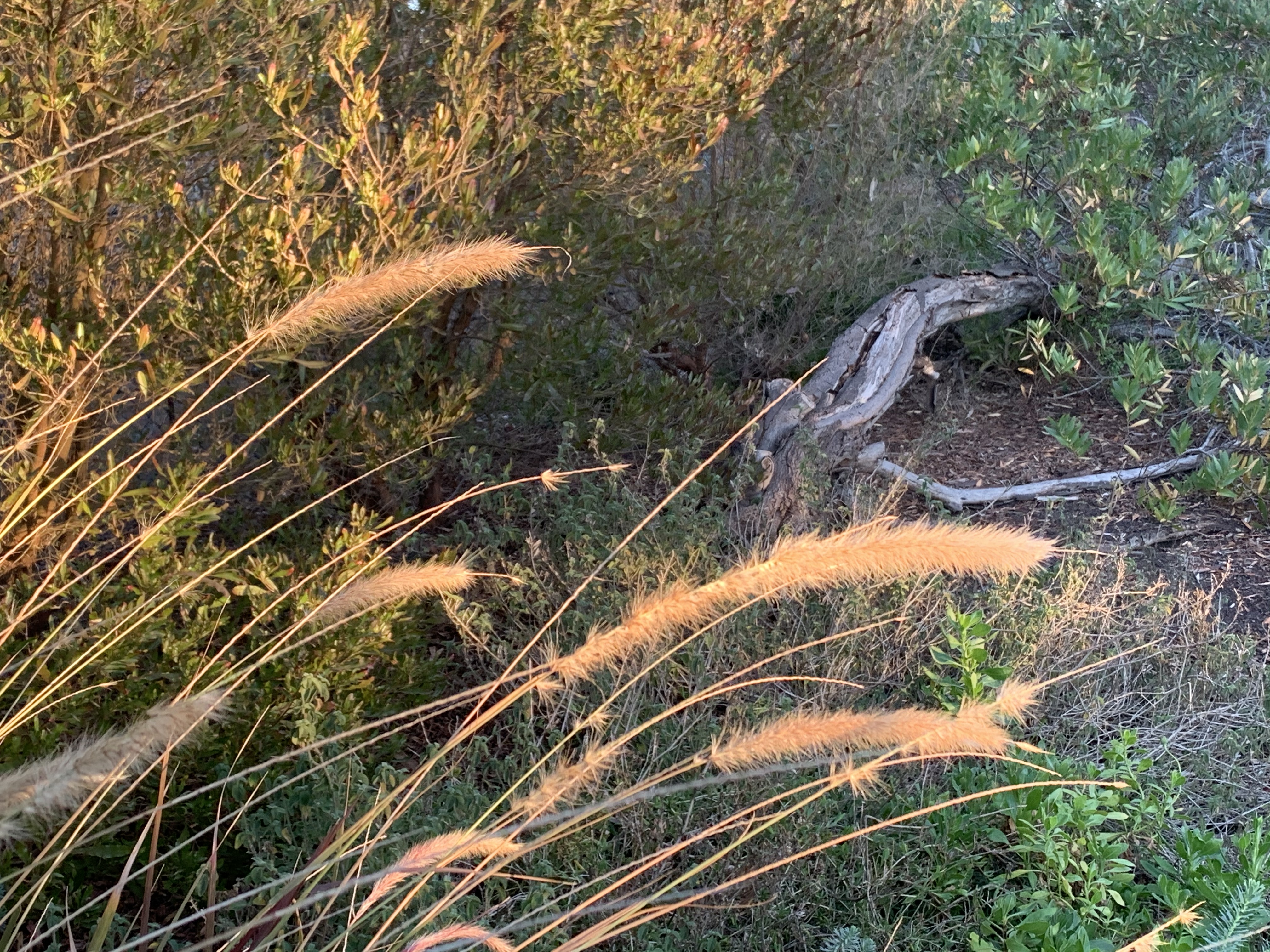
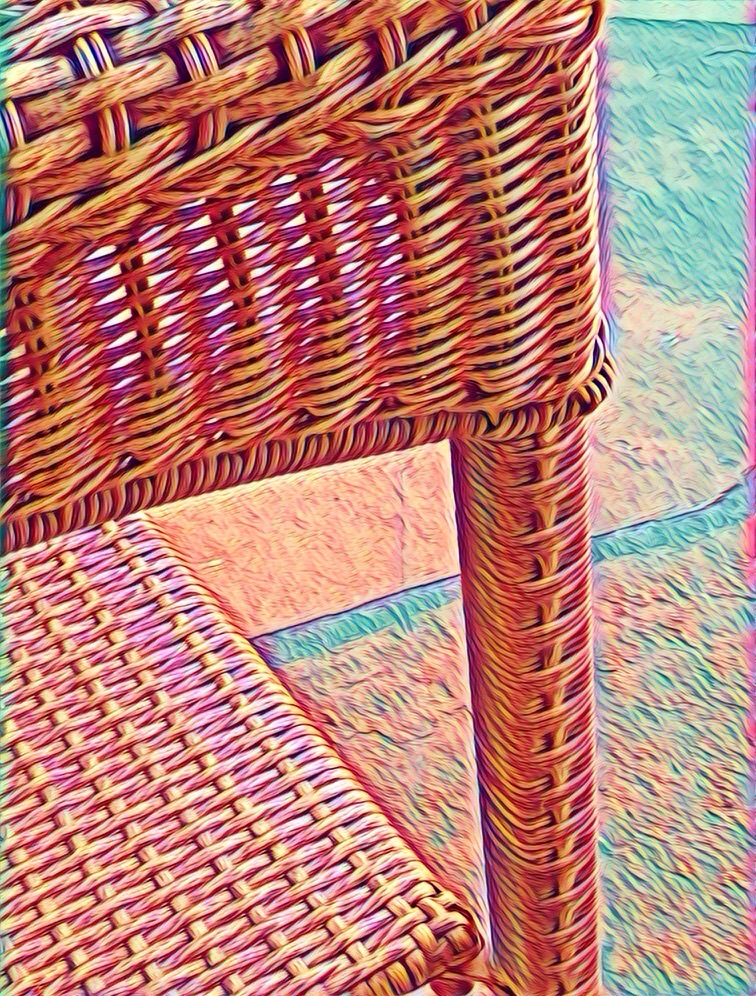
In nature, whether we look at clouds, waves, mountain ranges, forests, plants, the leaves of plants, or almost any animal, we see alternating repetition. Such natural repetition is almost never precise and complete replication. Just as every reproductive act of life introduces an element of recombination as well as the possibility of mutation, so too the repetitions we see in life are not mathematical. We indeed see patterns repeated in a line or in a circle, but the instances in living things show variation. Similarly, human artifacts made with the hands; e.g., weaving or poetry or rock walls or tennis strokes show repetition but with slight and subtle variations. 

If you look at modern industrial society, you see many examples of exact repetition. It’s true that if you looked at 10,000 examples of the same brand and model pen, or notebook, or scissors, or streak knives under a microscope, you could likely find small differences. To the naked eye, however, they would appear identical. Seeing 10,000 pebbles, leaves, or waves you would always see slight to moderate differences. To me, it makes a difference in terms of beauty. Handmade items and human actions naturally show more variation than things produced by machines. 
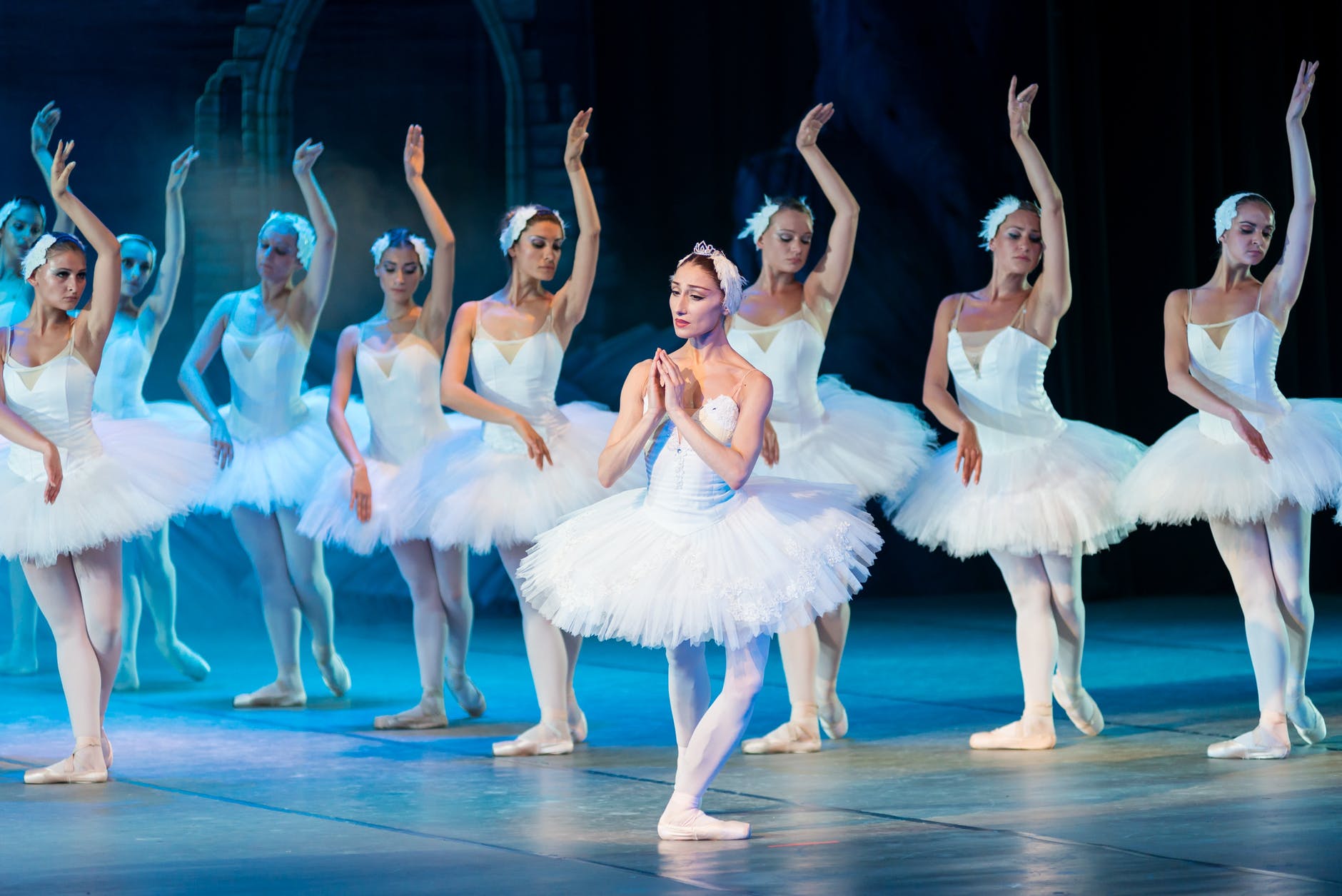
Photo by Pixabay on Pexels.com

The various “elements” of a User Interface generally have the feel of something made by machine. The size of all the application icons on the tool bar for instance are the same. They are all almost the same exact shape and size. On my tool bar the icons for Finder, Launchpad, Mail, Safari, Chrome, FaceTime, Messenger, Maps, Photos, Contacts, Calendar, Reminders, Notes, System Preferences, Keynote, Pages, Preview, and News are the same. However, the Kindle icon is slightly larger and more square. The Zoom icon is very slightly rounder and the icon for Facebook is circular. In other words, there is some slight variation, but mainly the icons are the same in outline, but different inside. But the set of icons on the tool bar has no sense of “harmony.” 
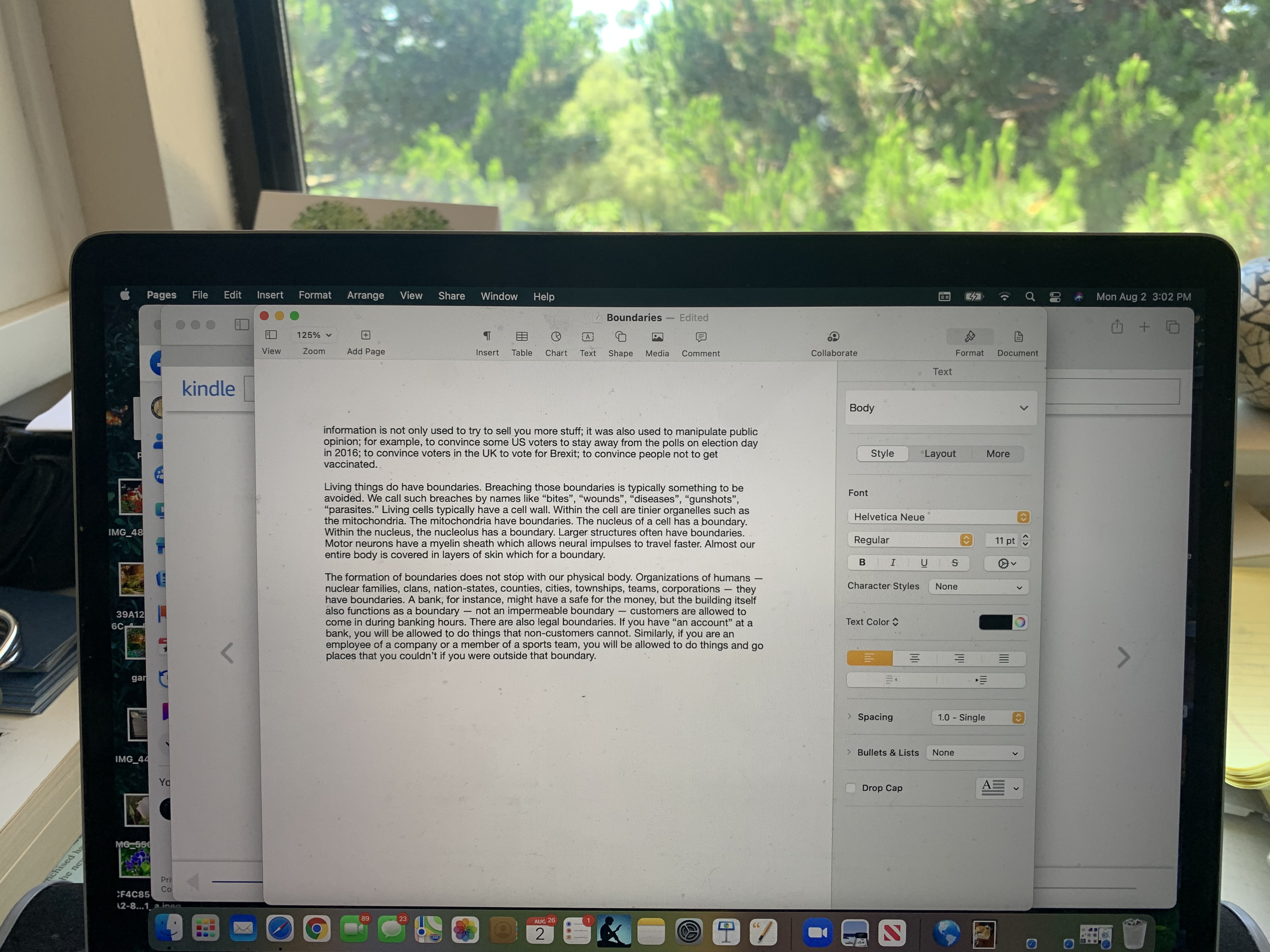
Note that the tool bar is both abnormally homogeneous in terms of positioning and size but completely disconnected in terms of the images which differ in a random disharmony seldom exhibited in nature.

Instead, each icon seems to scream out its individuality without regard to its neighbors. (Which reminds me of things like masking, vaccinations, telling the truth, etc.). Anyway, the layout of the toolbar, to me, it’s reminiscent of driving down the highway and seeing a sequence of billboards, each advertising some random product or service in no particular order. Often, each billboard is the same size but they are independent of each other. The one exception I can think of were the “Burma Shave” signs along the highway. Each sign was a small rectangle with several words on it. About a quarter mile down the road, another sign would appear. They were meant to be seen in a specific order and together, they made a kind of “story” which usually rhymed. Typically, the signs touted the joys of the product — “Burma Shave” — or, provided public service announcements about safe driving. 

In the early days of computing, putting in “variation” would have been insanely wasteful of space and processing time. This is no longer true. Yet, the “look and feel” of User Interfaces remains, for the most part, quite “mechanical” or “mechanistic” rather than “natural.” Sometimes modern computer games include naturalistic looking variations in how repeated plants, rocks, clouds, etc. are represented. Look at the palm trees and you will see variations among the trees that are reminiscent of the real palm trees I see every day. In addition, each tree contains a number of fronds that repeat a generic theme; yet, each front is somewhat different. The fronds themselves each contain alternating repetition, just as do real palm tree fronds. 

We might consider whether it would make sense to put more natural looking alternating repetition into the more utilitarian aspects of user experience. For example, could it be both more beautiful and more useful to allow more variation in the way files are represented visually?  Will Hill, James Hollan, Dave Wrobleski, & Tim McCandless suggested (in a CHI ’92 paper) that physical documents such as manuals naturally show wear in places where they are most used. They suggested that the visual representation of computer documents might be altered slightly to show which documents have been used or edited more and also that such cues within a document might also be useful. 

Hill, William; Hollan, James; Wrobleski, Dave; McCandless, Tim; “Edit Wear and Read Wear,” Human factors in computing systems: Striking a balance. Proceedings of the 9th annual conference. SIGCHI ’92 Proceedings (Monterey, CA), Addison-Wesley, 1992, pp. 3-9.

One of the few cookbooks I use with some regularity is entitled, Fat Free and Flavor Full. The recipe I’ve used many times is the black bean salad. If I open the physical book, it naturally falls open to that particular recipe. “Open Recent” I find a very useful features of the Pages application, but I don’t see a way to look at files based on overall frequency of use. It could be the case that there are some applications for which you would want specific files to be easily found depending on the season or the date. The authors of “Edit Wear and Read Wear” were mainly talking about the utility of encoding information about a file into its visual representation. There might well be aesthetic reasons to do so as well. 

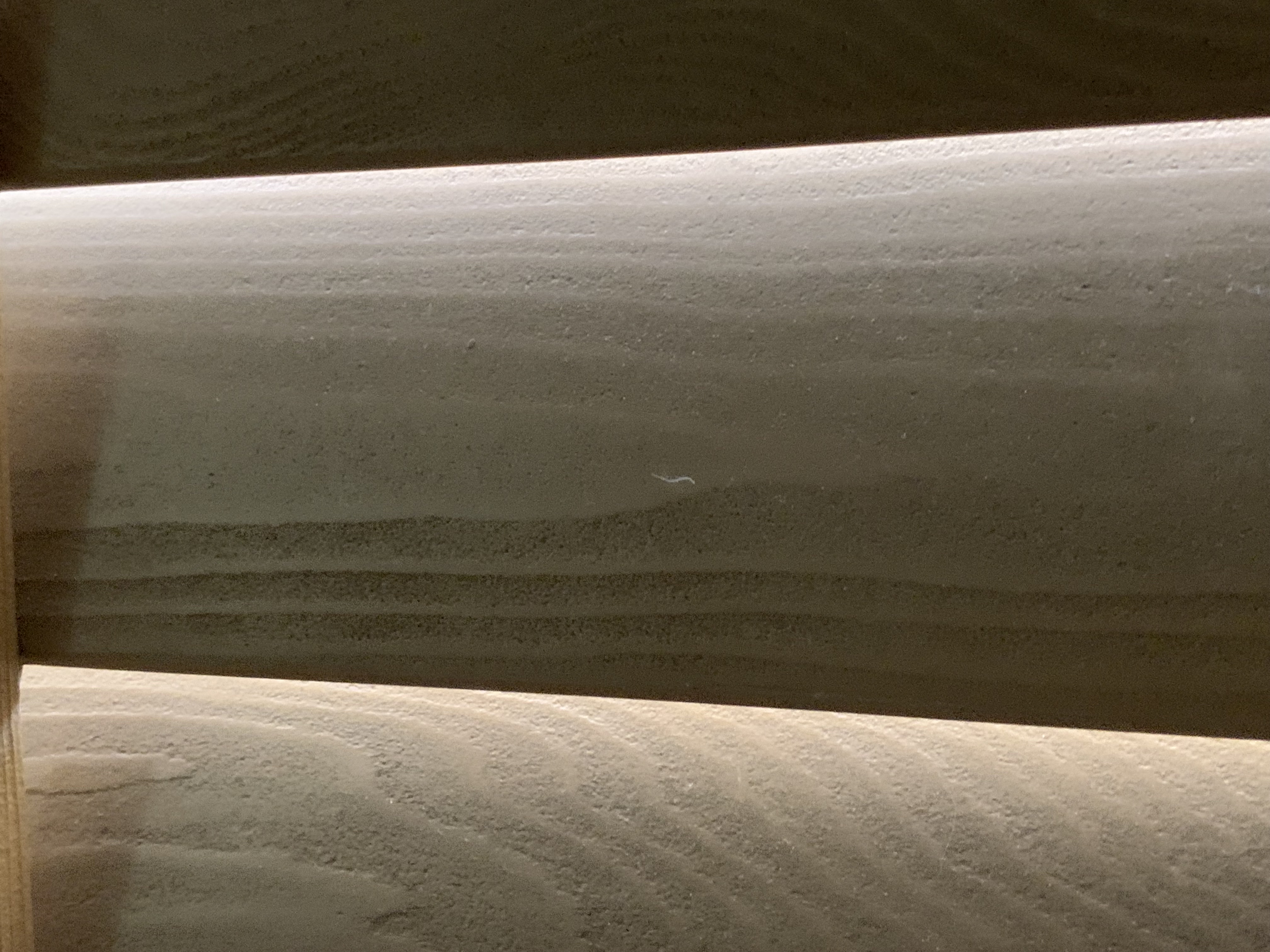
The wooden blinds shown below exhibit alternating repetition in several ways. First, there is the matter of perspective. Some variation almost always presents itself simply by virtue of the fact that I typically view the blinds at an angle and some are closer to me than others. This means that the size, and the retinal shape are slightly different. Second, there is variation caused by slight changes in the angle of the slats relative to vertical. Third, each slat is made of wood. The wood itself shows rings (or more commonly a planar projection of the concentric cylinders. 

The wooden blinds, because they are illuminated from the outside by tree-filtered sunlight also show further variation; however I don’t think that is typically “alternating repetition.” Perhaps not coincidentally, although I find it a little interesting, I can’t say I find that source of variation to be beautiful to me. The other three all add to the aesthetics, at least to me. 

Is it feasible to introduce alternating repetition with slight variation into User Interfaces? Would it be desirable? What negative side-effects might arise? Do you even agree with Christopher Alexander that Alternating Repetition is an aspect of natural beauty and beautiful design? One thing that occurs to me is that if some element of the UI is more variable in outline etc., it may mean that the actions upon that object must deal with that variability. If designed greenfield, that might not be too difficult. But if, for example, the code for dragging and dropping was written under a presumption of zero variability, that might be problematic. What do you think?
——————-

Discussion of Alternating Repetition with additional visual examples can be found here: 

The Fifteen Fundamental Properties of Living Structure. 4. Alternating Repetition

Use Diversity as a Resource

The Tree of Life

Life is a Dance

Take a Glance; Join the Dance

3. Boundaries

02 Monday Aug 2021

Posted by petersironwood in Uncategorized

≈ 1 Comment

Tags

boundary, Design, ethics, limit, privacy, truth, UX

3. Boundaries

Here are a few thoughts about “Boundaries” and how they apply in User Experience. 

I decided to gift a copy of of Volume One on The Nature of Order to my daughter earlier today. I logged on to Amazon and looked at my address book. I am aware that she moved fairly recently. So, I was scrolling through my earlier text conversations with her to see whether she had told me of her new address. I couldn’t find a text about her new address so I texted her to get the new address. 

Suddenly, a popup window appeared from SIRI. It had her new address. I hadn’t said anything aloud. I thought of SIRI as a voice-activated service on my iPhone. It was disconcerting to have it “notice” my text message and then suggest an answer (which turned out to be correct). 

Last week, after physical therapy, my therapist & I began to discuss the time for my next appointment. I pulled up the calendar application on my iPhone and went to a particular day and began to type in her name. After the first two characters were typed in, the “type-ahead” function suggested three possible “completions” the first of which was the time we had been orally discussing (which was not a common time nor the time of any of my recent appointments with her). It also filled in her complete name and the purpose of the appointment, but that was more understandable. 

Photo by Nikolay Ivanov on Pexels.com

One sense of “Boundaries” in User Experience connects with a notion of “boundaries” that is much discussed in contemporary mental health. We are advised to “establish boundaries” with co-workers, family, friends, and strangers. We don’t necessarily want to share personal information with everyone or let everyone touch us in any way they choose to. If intimate details are shared in a recovery group or group therapy, it is generally agreed that such details will not be shared with others. 

We sometimes extend the idea of informational boundaries to written materials as well. If, for instance, we keep a personal diary, we do not expect other people to “search for it” or to read it. In this story, I relied on the expectation that someone would read a paper I “accidentally” dropped on the sidewalk. But she was so protective of my privacy that she wouldn’t even glance at my paper. 

On the other hand, if we write and publish an autobiography, then we can expect that other people will feel justified in discussing the contents. To me, it would seem odd for an author to feel “violated” if people start talking about the contents of their autobiography (or their blog).

When it comes to modern interactions with computer software however, the boundaries are invisible — and sometimes non-existent. It can feel as though I write a private diary on paper; lock it up in a safe immediately; and then — without any sign that the safe has been broken into, I suddenly find details of my personal life revealed! 

There appear to be boundaries between applications, and certainly between devices but these boundaries may be illusory. I find that troubling and confusing. I think the first application of “Boundaries” as a property of UX is that apparent boundaries should be real. There may be exceptions for exceptional circumstances; e.g., the police may get a search warrant to search your house if there is reasonable suspicion that you have committed a crime. 

When a social media site analyzes your reactions, relationships, and word usage to determine what to try to sell you and what type of approach is most likely to succeed, that does not strike me as a reasonable response to an “emergency.” As most readers know by now, such information is not only used to try to sell you more stuff; it was also used to manipulate public opinion; for example, to convince some US voters to stay away from the polls on election day in 2016; to convince voters in the UK to vote for Brexit; to convince people not to get vaccinated. 

Living things do have boundaries. Breaching those boundaries is typically something to be avoided. We call such breaches by names like “bites”, “wounds”, “diseases”, “gunshots”, “parasites.” Living cells typically have a cell wall. Within the cell are tinier organelles such as the mitochondria. The mitochondria have boundaries. The nucleus of a cell has a boundary. Within the nucleus, the nucleolus has a boundary. Larger structures often have boundaries. Motor neurons have a myelin sheath which allows neural impulses to travel faster. Almost our entire body is covered in layers of skin which for a boundary.


The formation of boundaries does not stop with our physical body. Organizations of humans — nuclear families, clans, nation-states, counties, cities, townships, teams, corporations — they have boundaries. A bank, for instance, might have a safe for the money, but the building itself also functions as a boundary — not an impermeable boundary — customers are allowed to come in during banking hours. There are also legal boundaries. If you have “an account” at a bank, you will be allowed to do things that non-customers cannot. Similarly, if you are an employee of a company or a member of a sports team, you will be allowed to do things and go places that you couldn’t if you were outside that boundary. 

All boundaries are semi-permeable. Boundaries change over time. A thorn tears your skin. Your boundary is broken. If you’re not careful, bacteria can get in and cause an infection. Your white blood cells destroy the invading bacteria. Your body heals. If the cut was bad enough, you may get a scar and the scar is now part of your “boundary.” It isn’t only at the level of the body that changes occur. Your social boundaries change too.

You get married. You get divorced. You are born. You join a team. You quit the team. You sell your house and other people buy it. Now, you are no longer allowed to come into the house without an invitation. Meanwhile, you buy another house. You have acquired new boundaries. Or, perhaps, you have no home. You are homeless and your boundaries are not so secure. 

Most of our possessions have clearly defined boundaries. Your hammer is separate from your saw which is separate from your drill. They come from an earlier time and the “boundary” of such objects are determined by their shape. More recently, such tools (and nearly everything else!) Is packaged in bubble wrap which forms an additional boundary. This makes it harder for people to hide one under their clothes and walk out without paying. Such packaging has the added advantage that it will require time and energy on your part before you can actually start using the tool for its intended purpose. Not only that — such packaging helps pollute our world beyond the pollution required by “old style” tools.

Photo by cottonbro on Pexels.com


Once you have separated your new tool purchase from its packaging, if you have any energy left, you can saw a board, or drill a hole, or hammer a nail. But you do not expect (not yet, at least), the saw to “communicate” behind the scenes with your drill. Or with you. You’d be surprised if it piped up and said, “Gee, Gene, you just sawed a board. Now, you have taken up the drill. Would you like suggestions on how to build a dog house?” (That’s what Clippy would do). 

(Link to Wikipedia article on “Clippy” and how it was parodied). https://en.wikipedia.org/wiki/Office_Assistant

Clippy tried to be helpful. But it didn’t really have enough information about my tasks, goals, and context to actually be helpful. But today’s behind-the-scenes information sharing with dark forces is not trying to be helpful. It’s trying to get you to change your behavior for someone else’s benefit — and you don’t even know who those someones are. 

Notice that if you buy a house (which typically comes with doors and keys), you can lock the house and the default is that it keeps everyone else out — except those you’ve given a key to or those who have rung your doorbell or otherwise asked for permission to come in. Typically, if a rare visitor comes to your house, you make arrangements for a time and a place. The piano tuner comes to tune your piano. You might let them use your bathroom or even offer them something to drink. But you don’t expect the piano tuner to redecorate your study or to spend the night uninvited. 

Photo by Mike on Pexels.com

That’s kind of what does happen in the electronic world though. In many cases, you cannot visit a website or use an application unless you give permission for the “guest” to rifle through the choices you make. Just to be clear, these “choices” are not only explicit choices; your “choices” can include how long you linger over a particular message or video clip. In many cases, you have not just given a key to a specific vendor, application, or website — in many cases, you have also given them rights, essentially, to make as many copies of your front door key as they care to make and hand them out to whomever they like. 

These are missing boundaries, not so much in the user interface design, but in the socio-technical context in which we use our technology. 

In the physical world in which we evolved, invasion of privacy typically involved symmetry. If I can see your eyes, you can see mine. Conversely, if I can’t see anyone, chances are that they can’t see me. Of course, this isn’t literally true. A tiger’s camouflaging stripes may mean that they can see the gazelles even though the gazelles cannot see them. The astounding eyesight of the eagle allows them to see a mouse on the ground and start their deadly dive before the mouse can see the eagle. 

In the electronic world, it isn’t genetically coded asymmetries of information that allows other people to invade your boundaries — in many cases without your permission or even knowledge. It is an asymmetry that comes from money and time. You don’t have anything like the fortune that rich companies have. They can hire experts at subverting your boundaries. They can hire an entirely different set of experts to convince you that it’s all okay. They can afford to hire still other experts to defend themselves in a court of law should you seek redress for any particularly unethical behavior. They can afford to hire politicians as well in order to make laws to protect their unfettered access to your data. You typically cannot afford to hire politicians to protect your right to privacy. 

You probably don’t have 10,000 to 100,000 people working for you. Companies not only have the money to spy on you. They also have to time to collect and analyze your behavior & make sense of it. You don’t. Perhaps, every once in a while, you take the time to wade through a “privacy policy.” In most cases, since experts were hired to make the text as incomprehensible as possible, you likely didn’t see much value in reading the document. 

The Nature of Order is about aesthetics, not ethics. And, this post was meant to be about aesthetics, not ethics. 

The poem by Keats, Ode on a Grecian Urn, 

https://www.poetryfoundation.org/poems/44477/ode-on-a-grecian-urn

ends thusly: 

“Beauty is truth, truth beauty,—that is all

                Ye know on earth, and all ye need to know.”

Life includes differences in sensory capability. And life includes camouflage. Generally, however, when you get to the end a cliff and step off, you have a pretty good idea what’s going to happen. The boundary is visible to you, to a bison, to a mouse, to a lemming, to an eagle. 

Photo by Pixabay on Pexels.com

When we walk through the woods in northeastern USA where I lived for many years, we run the risk of being attacked by a deer tick. The dear tick makes a hole in you and starts sucking your blood (oh, while they’re at it, they may inject a large does of Lyme disease bacteria into your blood stream). You don’t notice it, because the deer tick is “kind enough” to administer a local anesthetic so you don’t feel any pain from this invasion of your person; this breaking of boundaries. It’s a one-sided breach. The deer tick is well aware of the invasion. It’s the whole point! But you do not perceive the breach. At least, I didn’t. Twice. Thankfully, I don’t seem to have any long-lasting effects though I have several friends who do. 

A one-sided boundary breach, doesn’t seem “aesthetic” to me. Nor does it seem “truthful.” The little orange deer tick, is, in a very real sense, lying to me. It uses its narcotic to tell me, “No worries! There’s no wound here! There’s no deer tick sucking your blood. There’s no deer tick injecting a serious disease into your blood. No, no. All is well!” It seems the opposite of beauty and the opposite of truth.

I suppose if I had been born a deer tick, I might view things differently. 

———————-

Myths of the Veritas: The Orange Man

Pattern Language for Collaboration and Teamwork

Strong Centers

29 Thursday Jul 2021

Posted by petersironwood in Uncategorized

≈ 2 Comments

Tags

beauty, Christopher Alexander, Design, HCI, UX

This is the second posting in a series of fifteen which examine Christopher Alexander’s “Fifteen Properties” of natural beauty and suggests how these properties might apply to user experience design. 

Photo by Dominika Greguu0161ovu00e1 on Pexels.com

2. “Strong centers” is probably one of the most overlooked properties of design in UX/HCI. Often, what exists for the user, from their perspective, is a “sprawl” of functions, tool bars, and icons with no obvious overall or subsidiary organization. A better design would allow the user to quickly find a “home base” from which, it would be obvious where to find subsidiary home bases. There is some sense in which hyperbolic trees, fisheye lenses, and home pages partly begin to address this issue. 

Instead of “strong centers”, the impression I often get in looking at applications for word processing, organizing photos, searching, or dealing with settings is that the designers are given or generate a long list of functions to be supported. Which ones are related to which though? Which ones are central? In many cases, UX practitioners give users (or, more often, potential users), a set of cards with one function each and ask the users to sort these into piles. I am not against such studies, but they are unlikely to lead to a coherent design with a strong center. The users are not, in most cases, professional designers. In many cases, an application is supposed to support many different specific actions. For example, I use word processors to write essays, poems, and fiction. I also use a word processor to proofread something, to re-organize ideas, to “jot down” a bunch of ideas, or to write an outline. These are very different tasks, at least to me. If asked sort cards, I would do it differently depending on which type of task and which type of material I’m thinking about. 

As I type this, I glance at the “Pages” tool bar which includes: Pages, File, Edit, Insert, Format, Arrange, View, Share, Window, and Help. None of these seems like “home” to the task of writing an essay. I know from experience that if I want to write any kind of material, I must go to the “File” menu even though, as best I can recall, my initial impression of this label was that it would be something to do after I was “done” with the tasks of composing and proofreading. The toolbar gives no impression of their being any “center” at all, let alone a “strong center.” 

In my native language (English), I read from top to bottom, left to right. In that sense, the Apple Icon is first and the “Pages” item is next and it is in bold print. That could be considered a subtle clue that it’s the “most important.” In a way, the items on the “Pages” menu are “meta-items.” In that sense, I suppose you could argue that they are “important” — though as a writer, none of the items seem that important. In fact, if we get right down to it, nothing in Pages really seems designed to support the actual writing process. And, I’m not trying to single out Pages because it’s the only one or the worst one. Lack of a “strong center” seems true of nearly all applications. 

Different people use different processes for writing — and I myself use different processes for different types of writing, so perhaps trying to organize the features and functions so that there is a “strong center”reflective of the “strong center” of the task of writing is just not feasible. I am certainly not advocating for resurrecting “Clippy.” 

Ideally, it should be possible for users to “know where the action is” upon entering an application or a web page.

In another interpretation, “strong centers” refers more to underlying architecture and points to the need for a core of functionality that transcends a specific release or even a specific application. A good underlying architecture will communicate this essential center (related to central purpose or style) to the user.

All too often, the processes involved in developing an application or system themselves have no “strong center.” If the development process is itself a hodgepodge political process of accommodating to a portfolio of features and functions that are advocated for by diverse and uncoordinated stakeholders, then, what one has are a long, unorganized list artificially shoved into menus and sub-menus and toolbars. It should not be surprising then, that the user finds it difficult to know where to begin when first encountering an application — even if the user knows exactly what they want to accomplish. 

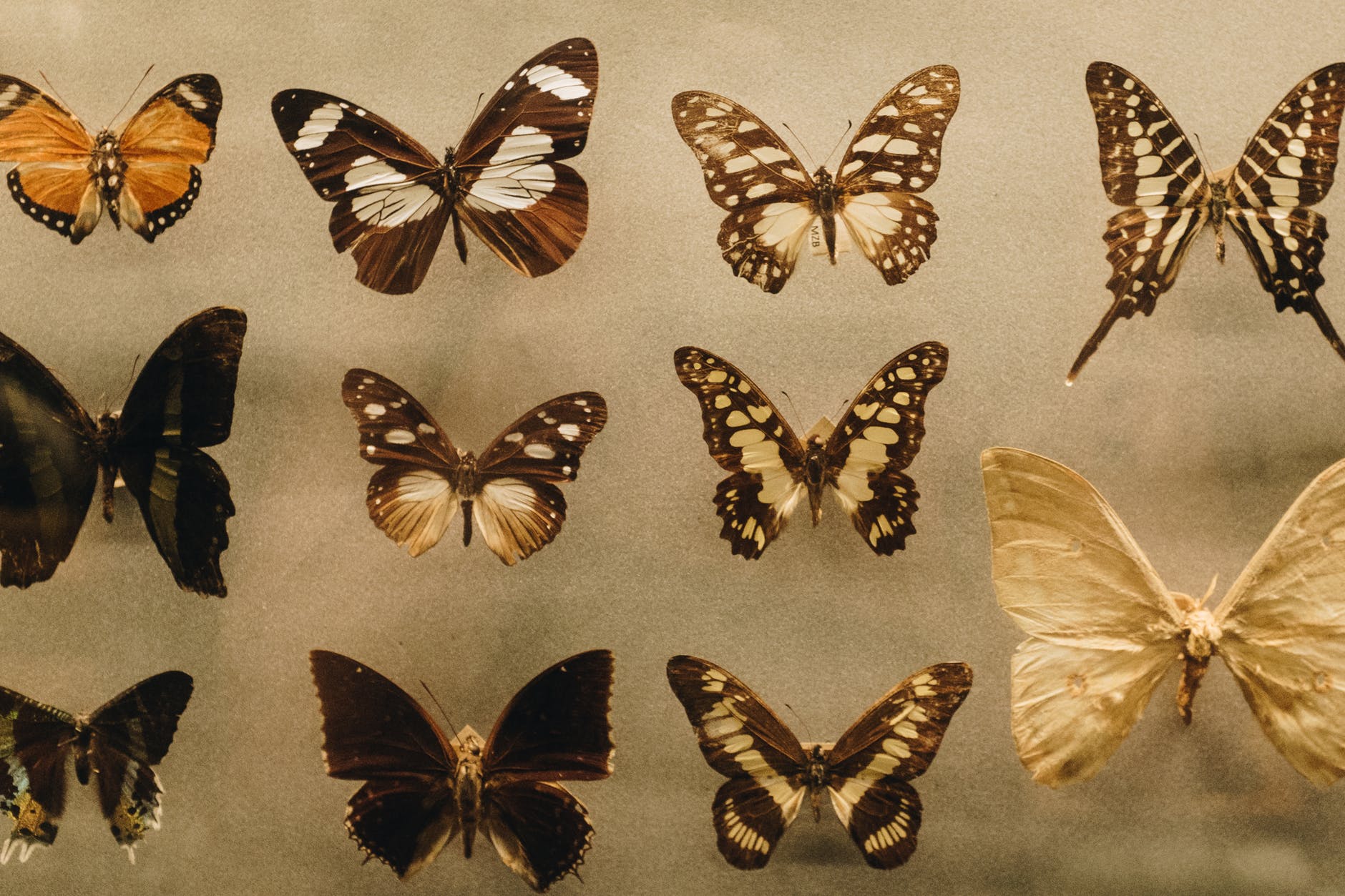
Compare and contrast most menu structures and user interfaces with the “strong centers” that are extremely common in life forms. Here are some examples of butterflies. 

Photo by Cu00e1tia Matos on Pexels.com

The central axis includes the head, the thorax and the abdomen. These are in a line in the strong center. Typically, they are colored differently from the wings. The bilateral symmetry of the wings as well as the overall shape reinforces the strong center. Wing patterns, and even the antennae and legs lead the eye back to the strong center. 

Most people think of butterflies as beautiful — and I agree. When asked, however, most people will say they are “brightly colored.” Some are; some are not. But “bright colors” don’t necessarily give rise to beauty!

Strong Centers doesn’t just apply to butterflies. Look at most birds, fish, mammals, insects and you will see how the symmetries and smaller centers reflect and strengthen the major center. Indeed, Strong Centers are not limited to the animal kingdom. The trunk of a tree provides a strong center. Each branch is itself a center and the connection of the branches to the trunk reinforces the strength of the central trunk. 

Photo by Snapwire on Pexels.com

Even single cells often exhibit strong centers (and many of the other 15 properties, by the way). 

It would love to be able to provide you with a process or checklist or formula so you could design user experiences with “strong centers.” I cannot really do that. Nor can anyone else. If you keep it in mind, even at the back of your mind, you may see opportunities to help make that happen with regard to whatever you’re working on. I’m curious to hear your thoughts about “Strong Centers.” 

———————

Some useful links to more information, discussion, and examples relevant to “strong centers” or to the fifteen properties.

Christopher Alexander – Fundamental Property 2: Strong Centers

https://www.archdaily.com/626429/unified-architectural-theory-chapter-11

Fifteen Properties of Natural Beauty & UX/HCI

22 Thursday Jul 2021

Posted by petersironwood in Uncategorized

≈ 16 Comments

Tags

Design, HCI, human factors, UX

Photo by Dominika Greguu0161ovu00e1 on Pexels.com

This is an introduction to a series of blog posts on the “Nature of Beauty.” 

Christopher Alexander was an architect and city planner. In his MIT dissertation, Alexander took a very mathematical approach to design. In our studies at IBM Research on the “Psychology of Design” I first ran across that work (Notes on the Synthesis of Form). Later in his career, however, he took a quite different approach to design. With an international team, he visited many different parts of the world to see what “worked” in terms of architecture and city planning. The results were documented in the form of a “Pattern Language.” In this sense, a “Pattern” is the named solution to a recurring problem. A “Pattern Language” is a connected lattice of Patterns that together, “cover” a field. 

Others (including me) have emulated his approach for other fields such as pedagogy, organizational change, object-oriented programming, software development processes, and human-computer interaction. A few years ago, I suggested such Patterns for collaboration and teamwork. Here’s a link to the introduction of that effort. Here’s a link to the index of those Patterns. 

Still later in life, Christopher Alexander embarked on a project called The Nature of Order. This work is documented in a series of four books. In the first book, he proposes fifteen properties of good form in nature — and in beautiful artifacts. Explication and example will be needed to appreciate what these properties mean. In this post, I list the fifteen and will attempt to explain the first one with respect to UX and Human Computer Interaction.

OLYMPUS DIGITAL CAMERA

First, you might be wondering what relevance these fifteen properties of nature might have to interface design. After all, can’t the designer just test out their ideas empirically until a UX design is shown to be usable, learnable, and perhaps enjoyable as well? Well, sure. Ideally, every possibility could be explored and tested empirically. 

But how many possibilities are there? Without any guiding principles, there are not only more possibilities than can be tested by you. There are more possibilities than there are atoms in the universe. Imagine a very simple interface on a small mobile device. Let’s say there are only ten screens in your whole application. The iPhone 12, for instance, has nearly 3 million pixels. 24-bit color allows over 16 million colors per pixel. If you literally tested out every possible arrangement, this would mean 16 million to the 3 millionth power for each of the ten screens!! The number of atoms in the universe is estimated to be between 10**78 and 10**82. Obviously, this is far less than 16,000,000**3,000,000 !! 

Of course, I’m not suggesting that anyone would attempt a pixel by pixel test of an interface, but the general point remains: you need some way to limit testing to reasonable alternatives. The notion of using these fifteen properties is not that they dictate a particular design nor that you don’t need to do any empirical testing. Rather, the fifteen properties could be used to help guide design. The properties could be thought of as reducing the search space. 

Here are the fifteen properties: 

  1. Levels of Scale
  2. Strong Centers
  3. Boundaries
  4. Alternating Repetition

  5. Positive Space
  6. Good Shape
  7. Local Symmetries
  8. Deep Interlock and Ambiguity
  9. Contrast
  10. Gradients
  11. Roughness
  12. Echoes
  13. The Void
  14. Simplicity and Inner Calm
  15. Not-separateness

Perhaps the names themselves might resonate with your own sense of aesthetics for design and composition, but let’s review them one by one. 

The first is “Levels of Scale.” 

Photo by Roney John on Pexels.com

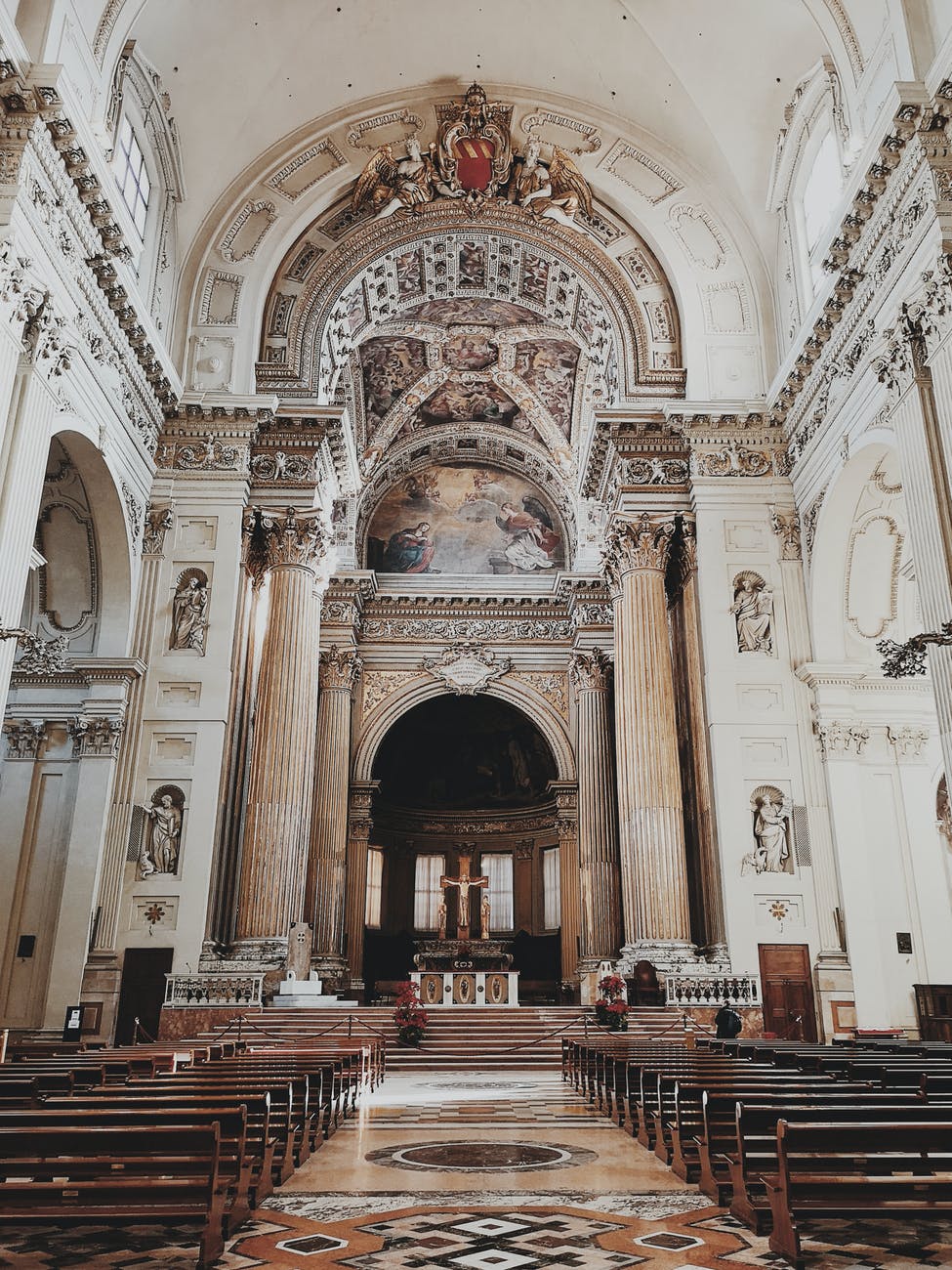
When it comes to natural beauty, a few moments reflection may provide you with many examples. Christopher Alexander claims this property is also present in traditional art and architecture across many cultures. As you see something such as, e.g., the Taj Mahal or the Parthenon in the distance, you see a beautiful shape. As you approach it, you will see more and more levels of scale. By contrast, many modern buildings are largely featureless between the overall shape and the texture of the building material. 

If your design has multiple levels of scale, it will be easier for your user to orient themselves; to know “where they are” in the application and therefore easier to take appropriate action. It’s something to keep in mind with respect to your design — whether hardware, software, documentation, or a building. 

How could you use or see “Levels of Scale” as a desirable property of what you are doing right now? 

———————————-

Some references to Pattern Languages in HCI. 

Pan, Y., Roedl, D., Blevis, E. and Thomas, J. (2012), Re-conceptualizing Fashion in Sustainable HCI. Designing Interactive Systems conference.  New Castle, UK, June 2012.

Thomas, J. C. (2012).   Patterns for emergent global intelligence.   In Creativity and Rationale: Enhancing Human Experience By Design J. Carroll (Ed.), New York: Springer.

Thomas, J. (2012). Edging Toward Sustainability. CHI Workshop Position Paper for Simple Sustainable Living. CHI 2012, Austin, Texas.

Thomas, J. (2012), Enhancing Collective Intelligence by Enhancing Social Roles and Diversity. CSCW Workshop Position Paper for Collective Intelligence and Community Discourse and Action. CSCW 2012, Bellvue, WA.

Thomas, J. (2011), Toward a pattern language for socializing technology for seniors. Workshop position paper accepted for CSCW 2011 workshop: Socializing technology among seniors in China, Hangzhou, China, March 19-23.

Thomas, J. (2011). Toward a Socio-Technical Pattern Language for Social Systems in China and the World. Workshop position paper accepted for CSCW 2011 workshop: Designing social and collaborative systems for China. Hangzhou, China, March 19-23.

Thomas, J. (2011). Toward a Socio-Technical Pattern Language for Social Media and International Development. Workshop position paper accepted for CSCW 2011 workshop: Social media for development, Hangzhou, China, March 19-23.

Bonanni, L., Busse, D. Thomas, J., Bevis, E., Turpeinen, M. & Jardin, N. (2011). Visible, actionalble, sustainable: Sustainable interactin design in professional domains.  Workshop accepted for CHI 2011. Vancouver, B.C., May 7-12.

Thomas, J. (2011). Focus on Ego as Universe and Everyday Sustainability. Workshop position paper accepted for CHI 2011 workshop: Everyday practice and sustainable HCI: Understanding and learning from cultures of (un)sustainability.  Vancouver, B.C., May 7-12.

https://www.researchgate.net/publication/2242380_A_Pattern_Approach_to_Interaction_Design

Click to access dearden-patterns-hci09.pdf

https://www.mit.edu/~jtidwell/common_ground.html

Thomas, J. C. (2018), Building common ground in a wildly webbed world: a pattern language approach. Journal of Information, Communication and Ethics in Society, 16 (3), 338-350.

——————————-

To See the Earth in Vast Expanse

17 Saturday Jul 2021

Posted by petersironwood in Uncategorized

≈ 2 Comments

Tags

flight, poem, poetry, sunrise, sunset, technology

Photo by Kristin Vogt on Pexels.com

To see the earth in vast expanse,

That far forge of crimson fire,

Miles of cloudiflower faces, mewling Maine Coon cats,

Puppies romping and the grinning cheeks of witches, 

Waves and waves – a host of golden waffledills. 

Photo by paul voie on Pexels.com

Above the smoky wisps,

I spy the wink of evening star. 

Then, she shyly sheds her veil, 

And still, still I see the endless sunset:

Ruby opalescences 

Knife-blade thin along the margin of the sea sky scape.

Photo by Izaac Elms on Pexels.com

Hawaii? 

This is no escape, but a plunge

Into the very midst of it all. 

My eyes hurt, but I forget to blink.

Alice, Alice, what you dreamed, I live — 

For there below me lies the earth in vast expanse.

Huge frogs, gigantic prawns,

Rhinos chasing Tweedledum and Tweedledee.

So much we take for granted.

What would my grandfather’s grandfather have given for

This moment?

Or this, or this?

Ever on it goes. 

Sailing on this sea of air, the very air we breathe,

Toward vacation or catastrophe. 

That first, the evening star

Winkling, twinkling her eye at me again through her veil, 

Ogling me with lust;

Then, with cold appraising passion

Through the porthole of the 757.

Photo by Vitor Almeida on Pexels.com

On wings of steel,

On wings of steel, 

I ride my metal steed!

I follow the sunset!

I sing the body electric! 

It may be indeed that these are the worst of times.

But it may be too that these are the best of times. 

What do you think, Merlin? 

——————

(An earlier version of this poem appeared in World’s Strand: An International Anthology of Poetry. ISBN 3-934285 55-4)

Life is a Dance

Is a Dream

Take a glance join the dance

How the nightingale learned to sing

It needs a new starter

A wildly webbed world 

The watershed virus

The bubble people

Who are the speakers for the dead?

Voter Suppression is Life Suppression

16 Friday Jul 2021

Posted by petersironwood in Uncategorized

≈ 5 Comments

Tags

Democracy, essay

Photo by Johannes Plenio on Pexels.com

You must understand one thing about the current crop of voter restriction laws. 

One thing is vital. 

One thing is central. 

One thing is crucial to understand and it is not often mentioned in the press or on social media.

Voter suppression is not only about making it harder for people in the Armed Services to vote.

Voter suppression is not only about making it harder for people of color to vote.

These restrictions are not only about making it harder for the elderly or disabled to vote.

These restrictions are not only aimed at making it harder for Native Americans to vote or people who *must* go to work every day to vote. 


These voter suppression tactics may look right now as though they are basically aimed at Democrats so that Republicans can win more easily despite being the minority party. If you’re a Democrat, you think that’s unfair. If you’re a Republican, you might think it doesn’t matter if it’s unfair so long as Republicans get voted in. 

No.

There is something else more fundamental even than being fair or reinforcing the big lie. 

Voting restriction laws are aimed at allowing crooks to hold public office.

Voting restriction laws are aimed at allowing incompetent people to hold public office.

Voting restriction laws are aimed at allowing unpopular a$$holes to hold public office.

Let’s say you live in a city with a crooked mayor who takes your tax dollars and uses it to line his or her own pockets. What is your recourse? Vote him or her out of office? 

No. 

You cannot. 

All the crooked politician has to do, to stay in power under the new laws in Georgia, say, is to use some of their graft money to pay off key state legislators. Even if 90% of the people voted to get this person out of office, the crooked state legislators can set aside those election results and keep the crooked politician in power. Such as that will continue to stay in power and continue to steal your tax dollars and continue to pay off state legislators to keep themselves in power.

What peaceful recourse do you have to get rid of crooked or completely incompetent public officials if you cannot vote them out? 

None.  

There is another crucial reason that is a bit more subtle than the way voting restrictions encourage bad government. They also encourage unpopular government programs. That, in and of itself, causes strife and ineptitude.


Let’s say for instance, that you live in a small town with a beautiful public park on the river. Ninety per cent of the people love the public park. But the mayor of your small town is paid a bribe to replace the public park with a condo development project. Ninety per cent of the people in your small town are against the project. They would rather keep the public park. The mayor, however, doesn’t get a big kickback from the public park. The major doesn’t give a damn how unpopular the new proposal is. They know they can’t be voted out so they will go ahead with the project.

As a result, ninety per cent of the people in the town are pissed off. Because of the draconian voter suppression laws, they feel they have no recourse at the ballot box. All the energy that went into healthy outdoor recreational activity can no longer be released in the public park and instead is redirected to other pursuits, some of it petty crime. Some of it is vandalism aimed at the offending condos or the residents. Sure, the mayor may react by putting more cops on the job or raising the penalties for petty crimes. It won’t help. The town has been put on a downward spiral. Having 90% of the population being pissed off will put everyone on edge. Bad moods and nastiness begets nastiness and more bad moods. Having people arrested won’t help that. It will simply make people even more negative. Over time, more people will leave town. Property values will decline. Even the condos may eventually be a money sink. 

Voter suppression is not about simply disenfranchising a group of voters you don’t happen to agree with.

Voter suppression is about enabling and encouraging inept government, crooked government, and unpopular government. It’s an express train straight to destruction, decay, and decadence.

Eventually, voter suppression may lead to even more outrageous outcomes. Dictators know they can’t win free and fair elections so they are always paranoid about being ousted by force. As a result, they wage wars, divide their citizenry, lie about their actions, and focus on preventing violence against their crooked, inept, and unpopular decisions by using more force. Citizens end up being taxed more for police and the military and the surveillance of citizens. 

In a nutshell, it’s horrible to live under a dictatorship. That is why people risk their lives every single day to leave dictatorships for the opportunity to live in a democracy. People who leave dictatorships are not deluded into thinking that everything will be easy in a democracy or that they will always get their own way. No-one always gets their own way. But in a democracy, they will have a chance to make their ideas heard. They will have a chance to convince others that they have a good idea. There is a chance to succeed wildly. And there’s a very good chance to succeed a little. 

Photo by Pixabay on Pexels.com

In a dictatorship, everything is stacked against you. Is it worth it? What is the record for dictatorships? 

Mao is responsible for the deaths of 40-80 million of his own countrymen.

Stalin killed 6 to 9 million of his own countrymen.

Hitler killed 6 million Jews as well as many additional of his own non-Jewish countrymen. His absurd ambitions caused the death of many American, Russian, allied and German soldiers as well. All told, about 40 million soldiers were killed in World War Two and 75 million people total.

Massive death and destruction are the predictable results of having a government with no accountability for their actions at the ballot box. 

Photo by Cameron Casey on Pexels.com

How could it be otherwise? 

Dictatorships are sought by cruel, paranoid, inept people who care only about themselves. And, it isn’t only the person with the most power in the country who becomes inept and crooked. Every governor, mayor, city official, dog catcher is free to do be crooked and capricious so long as they pay off the people in power. You won’t be able to hire a competent plumber, teacher, or doctor based on their price and effectiveness. All these people will be appointed for you by those in power. 

Voter suppression is the suppression of competence. 

Voter suppression is the suppression of honesty.

Voter suppression is the suppression of life itself. 

The dictator wants you to behave like a machine, not like a living being with free choice. How can a dictator have the desired complete control if people are free to choose? They can’t. 

If you support voter suppression, please understand what exactly you are encouraging: incompetence, dishonesty, cruelty, and the destruction of your own freedom — along with, quite possibly, your own life. 

That’s what history shows has happened. That’s what logic shows must happen. 

But if you’re not convinced, try it out! Move to Cuba, North Korea, Russia, and see how you like it. Perhaps you’ll thrive once your freedom is throttled. Come back in a few years and tell us all how it went!

Oh, there is one teeny little sticking point. They may not let you come back to America. Dictators don’t want people to leave their country and report on how bad life actually is there.

———————-

A profound and utter failure 

The game

At least he’s our monster

Absolute is not just a vodka

Winning by cheating is not winning

Freedom of speech is not a license to kill

Cancer always loses in the end

What about the butter dish?

Where does your loyalty lie?

My cousin Bobby

Poker chips

Dance a Whirling While or Three

15 Thursday Jul 2021

Posted by petersironwood in Uncategorized

≈ 3 Comments

Tags

poem, poetry

Every once in a while, 

Every so often,

It seems quite worth our while

To take a glance 

At what is outside our 

Usual reference Frame, 

That habitual way of seeing

And notice just this once instead

The very essence of our being.

In truth, you see,

We are each a universe of miracles.

After 4.5 billion years of trying, 

At last, long last, we now begin, 

Begin

To understand what we are spying. 

We are a universe of miracles

Surrounded by a sea of miracles:

The cat beside me;

The chair she lies upon

While she licks her fur —

With her dampish tongue of bur;

The house that holds us both;

The computer that I type upon; 

The internet that links me 

To you

And you

And you

And you

All across our common miracle:

That Eden

That garden of green and blue 

That whirling ball, 

Of ocean, river, stream, and waterfall. 

That garden filled with flowers

Which the prism of evolution 

(Or creation if you prefer)

Has refracted into a revolution 

Of colors, shapes, and sizes. 

There are no greater prizes; 

Nor more wondrous surprises.  

We are here. 

We are alive. 

Each of us:

Seventy trillion cells apiece. 

We are a universe of miracles.

The product of 4.5 billion years of trying.

Most of us — 

Cat be nimble;

Mouse be quick;

Human living in a house of brick;

Humans who have built the house, 

Every human being 

And every, every living being. 

We dance this dance together, 

Don’t you see? 

The music never ends, 

The dance will morph around a billion bends. 

And every move of every player, 

Telegraphs its fireworks display 

Like a soothsayer 

Like a prophet, 

Like a sinner, 

Like a saint. 

Ever-changing, 

Ever-ranging 

In our planet’s spiral dance

Across the utter and unspeakable vastness of space

Across the everywhere of place. 

Take a glance.

I know we buzz as busily as a bee

With little time to contemplate eternity. 

But take a glimpse every now and then, 

You might be shocked at what you see. 

Look beyond the daily grind 

And you will find

Millions of kinds of minds 

Of creatures large and small

And that’s not all!

They are dancing each and every one!

In that great and magic dance of life!

On and on the music goes.

On and on the rhythm flows. 

On and on the mystery grows.

Just because our own brief turn will end at last. 

That doesn’t end that endless dance divine!

No matter how you moan; no matter how you whine,

The earth will sing and spin even when your life has passed

(So fast). 

Just take a little peek and you at last will see

You change, you morph, you flash. 

But, regardless of your stash of cash

You won’t outlast infinity; 

You won’t outwit eternity.

Don’t plot & scheme to check & slay and fight & clash.

No, help our cousins on this great green spaceship earth.

Help make this dance more graceful, fine, & filled with mirth. 

You can dance your dance without destroying; 

You can do your thing without annoying.

You have a million ways to thrill 

Why pick out one instead to kill? 

The sun is sinking red and low 

The wind begins to blow and flow

Into the pines who dance with love

Inviting air and water, dirt and sun,

To join her in her laughing life-long dance

“You too can join in all the fun!

Become a part of me and you’ll have won!” 

Take the time to take a glance.

The ordinary world we live in is 

Extraordinary in every single way!

Every molecule of it sings.

Every moment has its million miracles! 

Take the hands on either side. 

Across the world, the world is wide. 

We’re divided just as far as we’ve decided we can be.

This division shows a silly decision; 

Not an ever-fixed reality.  

When we see the truth, 

We will have won.

The truth

Is that we’re one.

————————————-

Essays on America try to make sense of current politics in America though many of the issues extend beyond American borders.

Here’s a link, e.g., to an essay about how it can be hard to change your mind. 

The Myths of the Veritas is a fictional series that explores leadership, ethics, and empathy in another time and place. Our tale begins as the leader/shaman of the Veritas tribe seeks an eventual successor so she devises a series of increasingly difficult trials that mainly test empathy.

Here’s a link to The First Ring of Empathy.  

You might find value in this attempt to catalog “best practices” in teamwork and collaboration in the form of a Pattern Language. 

Here’s a link to the introduction.

Here’s a link to the index of Patterns. 

Cedars Sighing in the Wind

14 Wednesday Jul 2021

Posted by petersironwood in Uncategorized

≈ Leave a comment

Tags

cooperation, ethics, fiction, leadership, learning, legend, myth, parable, Veritas

Cedars Sighing in the Wind

Photo by Tomas Balogh on Pexels.com

When Cat Eyes had finished reading aloud the story of The Wobby Man, she put aside what the ancients called a “book” and looked expectantly at Tu-Swift. He seemed lost in thought — tortured thoughts filled with thorns — by his visage. Cat Eyes stood and grabbed a nearby water pouch. Reading made her thirsty. She sat back down across from him. She smiled. She was  happy to see him again; happy to be reunited with her parents; happy at all the things that the tribe had learned from their discovery; happy that it had taken both of them working together, with their mutual friend Suze, in order to discover how to read. The joy of Cat Eyes felt a sharp edge though because Tu-Swift seemed anything but happy. 

“But, I don’t — .” Tu-Swift didn’t finish what he said to Cat Eyes because he didn’t know what he himself meant to say. Instead, he shook his head from side to side. “Why?” 

Cat Eyes took his hands into her own and looked at him with love in her eyes, a love that he did not see because his head bowed down and his eyes were only upon the ground. After a few moments she put one of her hands under his chin and lifted it up. They looked into each other’s eyes and she could see that his eyes were tearing up. “It’s okay. It’s to learn from, like all the stories here.” 

Tu-Swift shook his head from side to side and bit his lips. “But why?” His voice was plaintive as though he had a thorn stuck painfully under his fingernail and pled for her to remove it.

Cat Eyes sighed and asked gently, “Why what? What are you struggling with? Maybe we can work it out together. Often, life is a fight, but it doesn’t mean you have to be alone in every fight.”

Tu-Swift nodded. After a pause he said, “Why did The Wobbly Man do all that evil? And why did they let him?! Why couldn’t they see what he was up to?” 

Cat Eyes nodded. “There are people who do things — evil things — such as steal children. Perhaps there always will be. But I don’t think they think of it as evil. To them, it’s their way of … living … or of having fun. They like destroying life and love in others … I guess because they cannot experience it themselves. I don’t know.” 

Tu-Swift sighed. “You are right of course. Within the Veritas where I grew up, there was one such. The Wobbly Man sounds much like him. He manipulated others. He was cruel. Yet, he was such a good liar that he almost fooled our leader, the wise She Who Saves Many Lives. He actually betrayed the tribe to NUT-PI. And here’s the worst part. He got several other braves to go along with his schemes. Without ALT-R, I don’t think POND MUD or KAVANUT would have even been evil.”

“Yes.” After a pause, Cat Eyes added, “It’s much like that Red Spotted Death. It can spread from person to person. And, just as there are evil people even in societies based on truth and trust and love, so too there are people who act in good ways even among the Z-LOTZ and the ROI. It’s much like the story about the two wolves inside someone and which one you feed. The customs of the tribe can make it easy to feed the good wolf — or easy to feed the bad wolf.” 

Tu-Swift let out a long sigh. He stood up and held out his hand. Cat Eyes took it and, for a time, they walked in silence. Without intending to do so, they ended up at the entrance to the now dysfunctional tunnel. They stood for a time, holding hands in silence staring at the tunnel. At last, Tu-Swift voiced what both were thinking. 

“How could a people know so much as to build a tunnel through a mountain — and yet be so ignorant as to let a liar destroy their village?” 

Another long silence ensued until Cat Eyes sighed and spoke again. “We still have many books to read and understand. Many books are filled with words whose meanings we have yet to understand. It appears that it wasn’t just a village here and there. The plague of evil lies destroyed everything. I know you have struggled with whether to use the fire sticks….” 

Tu-Swift wondered why Cat Eyes stopped speaking. He looked at her and saw that silent tears were streaming down her cheeks. He squeezed her hand and asked gently, “What is it, Cat Eyes? Why are you so sad?” 

“Actually, I was just thinking a little while ago how happy I am about so many things. Yet … we had so much. We knew so much. But we destroyed it. If the books are true, and if our understanding is correct, weapons were developed that … weapons were created that were far worse than fire sticks. Far worse. Yet, there were also treatments for every disease. But the people forgot that they were part of the Tree of Life. People forgot that they were all one. People — not everyone — but enough — just began to grab everything they could for themselves. Lying became commonplace. Once the truth meant nothing, decisions were made by power alone. That is bad enough in the Z-Lotz or, from what you told me, among the Cupiditas. But imagine that they had — not just fire sticks — but horrible weapons that could destroy many villages and all the people in them. Of course, in doing so, these weapons killed birds and butterflies and trees and no-one even seems to have noticed! Maybe … perhaps, we are not really understanding. Maybe they are just stories to prevent people from becoming what the books say that they became. Maybe.” 

Tu-Swift bent down and plucked up a small flower that had grown in the cranny of the wall that held the now defunct controls for the tunnel door. He gently braided the stem into the silky hair of Cat Eyes. When he was done, he said, “Well, the tunnel is real. Yet, no-one really knows how it works. How could that be? I mean, unless there was some great loss of learning. I don’t know. Perhaps, we can learn from these stories, whether real or not, how to … how to ensure that we do not fall so far again. From what you said, it sounds…it sounds as though the people became sightless and witless. How can the people not see that they are a part of the Great Tree of Life? How can they not hear the song of the bird or the murmur of the stream? How can they not see the beauty of the trees and flowers all around them? How can they not taste the sweetness of honey?” 

Cat Eyes nodded. “That is one of the main question that we — those of us who are studying the books — keep asking ourselves. But when this question is asked, none of us answers. Not yet. Each of us is hoping someone else will explain. But what comes to our ears is only the silence and the cedars sighing in the wind.”  

—————————————

Roar, Ocean, Roar (A poem about the power of cooperation) 

The Only Them that Counts is All of Us

The Myths of the Veritas: The Forgotten Field 

The Myths of the Veritas: The Orange Man

The Myths of the Veritas: The First Ring of Empathy (Here begins the continuous trilogy of the Mythical Veritas who value truth, love, and cooperation).

Author Page on Amazon

An index to a proposed Pattern Language for Collaboration & Cooperation 

Myths of the Veritas: Stoned Soup

11 Sunday Jul 2021

Posted by petersironwood in Uncategorized

≈ 127 Comments

Tags

fiction, myths

“Tu-Swift, we are learning so much from the library we uncovered. Just as you came, I was putting the final touches on a translation of a story about Stoned Soup, Would you like to hear it?” 

“Yes! What’s it about, Cat Eyes?” 

Cat Eyes smiled. “Well, I’ll tell you the story and you tell me what you think it means. Here. Come sit beside me.” She patted the rough-hewn bench she sat upon. “You can watch the words as I tell them. How would that be?”

“That,” replied Tu-Swift, “would be wonderful. I love hearing your voice.” He sat beside her and took her hand in his and peered at the runes that he had helped decode. This is the story she read him: 

———————————-

Photo by Julia Filirovska on Pexels.com

Stoned Soup

Once upon a time, long ago, there was a village blessed with enough for everyone. The village, named Acirema, was located near ancient beautiful forests of beech and oak. The forests abounded with plentiful game. Long ago, the people of Acirema had cut down part of the forests and turned it into rich farmland capable of producing abundant food. Beyond the forests lay snow-capped mountains. From the mountains, several clear beautiful rivers ran to the plains near the village of the Acirema. 

Photo by James Wheeler on Pexels.com

These villagers, like most villagers, had developed many customs. Among them were their shared evening feasts. Except when the weather was exceptionally bad, the villagers gathered in the evening to share a feast. They built a huge fire beneath a large cauldron. When the water finally began to boil, villagers began to contribute what they had to the community soup. Some brought potatoes and turnips; others brought large yellow squash, Jerusalem artichokes, and bright orange carrots; still others brought nettles, blackberry leaves, and hickory nuts. Others, who had been lucky at hunting or fishing or gathering eggs brought those contributions and added them to the soup. Each time the villagers made this soup, the first ingredient that they added was invariably a clean stone, though no-one knew exactly why. Many simply accepted that this was the proper way to make soup. Some theorized that the stone made it tastier. Others believed it helped the flavors circulate. Some thought it was a sacrifice to the god of the fresh mountain water, the sun, or the spirits of the forests. 

When the soup was ready, everyone partook and everyone was satisfied. After the meal, they would take turns telling stories or reflecting on the events of the day. Sometimes, they would dialogue about why they began their recipe with a stone. 

On occasion, strangers would wander by and they would join in the evening meal. Some of these strangers taught the Acirema new dances or songs or showed them new ways to make things. Some were strangely silent. All of them thanked them for the soup and most continued on their way after a day or two but some liked the village so much that they joined with the Acirema. Those who joined soon found a way to make their own contribution to the village and its soup. Although some harvests were sparse and some flush, the Acirema always had enough to feed everyone in the village. They worked in harmony and enjoyed life.

Photo by Felix Mittermeier on Pexels.com

One hot summer day, it so happened that a fat old man wobbled unsteadily into their village. Despite his obvious extra folds of fat, he demanded a very large portion of soup. His appetite seemed nearly insatiable. He didn’t say much at his first few evening meals, but he observed carefully.

The Wobbly Man noticed that some people ate more than others. The Wobbly Man noticed that some people were taller than others; that some had blue eyes and some had brown eyes. The Wobbly Man noticed that some villagers put a large quantity of carrots in the soup and others only put in a few nuts. The Wobbly Man noticed that some people were old and some were young. 

Although the Wobbly Man said little during the evening meal for the whole village, he spoke throughout the entire day, at first, only to one at a time. The Wobbly Man spoke to a strong young man thus:

“Well met, my strong young lad! You must be the strongest man I have ever seen! Surely, you are the strongest in the village! Am I right?”

The strong man answered modestly, “I may be.” He shrugged. 

“Of course you are. And, yet, I know that you could be much stronger still. You are not really getting your fair share of the evening soup. Your grandfather eats as much as you do! How is that fair? I’m sure you’re a much better hunter.” 

Photo by Gareth Davies on Pexels.com

“Grandfather? My grandfather no longer walks this earth. Perhaps you saw my father? He often sits next to me.” 

The Wobbly Man acted surprised. “Oh, that old man is your father. I wonder…he doesn’t seem nearly so strong as you do. Well…who knows? But anyway, he certainly eats a lot for his size. And, yet, he isn’t half the hunter you are, I imagine. I don’t really know. I’m just guessing from how little he adds to the soup.” The Wobbly Man smiled.

After a few moments of awkward silence, the strong young man said, “I’m going hunting. Do you know how to hunt? Do you wish to come too?”

The Wobbly Man replied, “Oh, no. I don’t hunt. You go ahead. And don’t pay any attention to what I said. It’s none of my concern. I like to joke a lot. That’s all. It means nothing. Sometimes a maple tree springs from an acorn, you know?” 

The strong man shook his head. “No, that never happens. What are you talking about?” 

The Wobbly Man replied, “No. Perhaps you are right. I’ve never actually seen that either. Well, you go hunting. Happy hunting!” 

Photo by Pixabay on Pexels.com

Next, the Wobbly Man spied one of the beautiful young maidens of the tribe. Long silky blond hair framed her smooth skin and her bright blue eyes. He followed her down to a nearby stream where she bathed herself. He watched with pleasure from behind some bushes. At last, she emerged, quite refreshed; she lay on a warm slab of shale to allow the sun to dry her front and back. When he judged she was about to re-robe herself, the Wobbly Man walked by casually placing himself between the young maiden and her robe. 

“Oh! Well met, young maiden. I didn’t realize anyone was here. Nor did I realize it was your custom to go naked in public. I shall join you then and learn more about your ways.” In a flash, he dropped his own clothes in a pile at his feet. 

The young maiden blushed and this excited the Wobbly Man even more; so much so, that his excitement was nearly visible. He strode up to her wondering whether his great weight would be sufficient to force her to do what he wanted regardless of her wishes. 

“Sir, put your own clothes back on and hand me mine! You are a guest here and it will not do well for people to see you naked. They may misunderstand your intentions.”

“Oh, me, oh, my,” said the Wobbly Man. “I’m just having a little fun. Is that such a bad thing? It’s of no concern to me if you prefer other women instead of a handsome guy like me. I’m sure another young lady will be along shortly. Maybe this is where you congregate? Ah, but I’m a stranger. What do I know?” 

As he spoke, the Wobbly Man reclothed himself and sauntered back toward the nearby village. Here, he spied a group of youth having a spear-throwing contest. After he spied a particularly long throw, he spoke up again.

“Nice throw! Back in my village a throw like that would earn you the right to a maiden such as the one lying naked by yon stream.” The Wobbly Man pointed in the direction he had just come. “Even now, she is quite — what is the right word? She is quite desirous of having pleasure with someone. She even begged me to have sex with her. She complained that none of the young men hereabouts were interested in wooing women. A shame really. But what do I know of your customs? But if I were younger and stronger, I wouldn’t wait so long to make my own desires known.” 

The young men looked at each other and left off their spear throwing contest and ran down the path toward the river, each hoping to win the young lady’s heart. 

The Wobbly Man smiled and chuckled to himself. He closed his eyes and imagined all of them forcing themselves on her. At least, he hoped that’s what would happen. If she were broken and exhausted, he would try his own luck again. 

Photo by mali maeder on Pexels.com

Now, a new opportunity presented itself and required his attention. The father of the young man he had spoken to earlier was sitting alone and cleaning fish. The Wobbly Man walked over and sat down on a nearby log. “Good afternoon, dear sir. I believe I spoke earlier today with your son. I’m still learning the names of the people here. What is your son’s name again?” 

“Rigel.” 

“Rigel! Rigel! That’s a fine name. And your son seems healthy and strong as well. I must tell you that my own son, named Junior, is every bit as ungrateful. More so. I’m sure they’ll grow out of it. That’s just the way youth are. I wouldn’t worry about it. Speaking of Rigel, where is he? Why isn’t he helping you clean the fish? That seems the least — I mean, it’s none of my business, of course, but it seems as though if he’s going to complain about you getting more of the soup than he gets, he would have a stronger argument if he did more to prepare the soup.”

The man stopped cleaning the fish and looked at the Wobbly Man. “What? Rigel said I eat more than my share?” 

“What? Oh, no! No, no, no, not at all. Not in so many words.” Here, the Wobbly Man paused, tilted his head, and pretended to be thoughtful. He clicked his tongue, leaned closer to the slender old man and whispered in a conspiratorial tone. 

“If you ask me, he should be very grateful that you agreed — you know — to act as his father. Not everyone I know is man enough to do that. Right?” 

The fish cleaner stopped his work again and looked at the Wobbly Man with a frown. “What do you mean, ‘to act as his father.’? I am his father.” 

The Wobbly Man nodded his head up and down vigorously. “Of course you are. Of course you are! You are the man who raised him. I’m sure beneath all that resentment, he has great respect for you. I’m sure he does. Right? You are sure too, right? All that resentment in his tone and so on — that’s just — he’s probably angry at his mother, really.” 

Every day, the villagers of Acirema hunted, fished, gathered food, or worked their farmland. Every day, the villagers made things, observed things, added to the general well-being, the food stores, or the knowledge of the Acirema. Everyone, that is, except for The Wobby Man, who never hunted, never fished, never built or crafted anything with his own two hands.

That is not to say that The Wobbly Man was not busy. He was very busy each and every day. He told the tall people that they should received more soup because their tall bodies needed it more than short people did. He told short people that they were short because they had not received enough soup. He told blue-eyed people that the brown-eyed people thought blue eyes were a deformity and he told brown-eyed people that the blue-eyed people thought brown eyes was a deformity. The Wobbly Man set husband against wife; he set father against son; he set men against women; he set the elderly against youngsters and he set youngsters against the elderly.

At first, the Acirema remained peaceful and kept to their own ways. But gradually, just as the sand in a river bank eventually becomes sandstone or shale, the people began to mistrust each other. As the elderly began to mistrust the young people, that made the young people suspicious of the old people. 

Day after day, week upon week, month upon month, the Acirema tribe grew ever more suspicious of each other. When the autumn harvest came, many kept back a good proportion of their food for their private consumption. The community soup grew thinner in consistency and lesser in quantity. The fire needed not to be so large. People often ate in silence. Instead of sitting around the fire sharing songs and stories, the people retired to their own dwellings. When the cold winds of autumn turned icy, they stopped bothering to make soup at all, at least as a group.  

The Wobbly Man had left. No-one seemed to have noticed exactly when he left. He did not tell them that he was going, nor did he share why he was going, nor where. No-one noticed him walk away from the Acirema, turn back and look from afar upon the village of Acirema and smile a broad grin. His last words to the Acirema, he muttered far out of earshot of the Acirema. 

He simply said, “Fools!” 

———————————-

The Myths of the Veritas: The Orange Man 

The Myths of the Veritas: The Forgotten Fields

The Myths of the Veritas: The First Ring of Empathy

Essays on America: A lot is not a little

Author Page on Amazon

“The Psychology of Design”

08 Thursday Jul 2021

Posted by petersironwood in Uncategorized

≈ Leave a comment

Tags

creativity, Design, HCI, human factors, IBM, leadership, research, UX

“The Psychology of Design” 

I worked at IBM, all told, about 28 years. During that time, management put more and more pressure on us to make our work “relevant” to the business. In fact, the pressure was always there, even from the beginning. Over the years, however, we were “encouraged” to shorten evermore the time gap between doing the research and having the results of that research impact the bottom line. This was not an IBM-only phenomenon. 

I was a researcher, not a politician, but it seemed to me that at the same time researchers in industrial labs were put under pressure to produce results that could be seen in terms of share price (and therefore payouts to executives in terms of stock options), academia was also experiencing more and more pressure to publish more studies more quickly — and to make sure “intellectual property” was protected to make sure the university could monetize your work. This was about the same time that, at least in America, increasing productivity and the wealth that sprung from that increased productivity stopped being shared with the workers.

Photo by Dmitry Demidov on Pexels.com

In the late 1970’s, the “Behavioral Sciences” group began to study the “psychology of design.” For the first few months, this was an extremely pleasurable & productive group, due mainly to  my colleagues. Over the next few blogs, I’ll focus on some specific techniques and methods that you may find useful in your own work. 

In this short story though, I want to focus instead on some broader issues relevant to “technology transfer”, “leadership” and “management.” Even if you are or aspire to be an expert in UX or HCI or design, I assure you that these broader issues will impact you, your work and your career. I wouldn’t suggest becoming obsessed with them, but being aware of their potential impact could help you in your own work and career. 

It is telling that, almost invariably, whenever I told someone inside IBM (or, for that matter, outside IBM) that I was studying the “psychology of design,” people responded by asking, “the design of what?” So, I would explain that we were interested in the generic processes of design and how to improve them. I would explain that we were interested in understanding, predicting, and controlling these processes to enable them to be more effective. I would explain that we could apply these findings to any kind of design: software design, hardware design, organizational design, and (see last post about IBM) communication design. I would explain that design was a quintessentially human activity. I would also explain that design was an incredibly leveraged activity to improve. 

Looking back on it, I still think all these things are true. I also see that I missed the “signal” people were giving me that, while I thought of design as something that could be studied as a process, that most people did not think of it that way. To them, it was never the “psychology of design,” but only the design of something. 

Don’t get me wrong. I agree that somewhat different skills are involved in designing a great advertising campaign, a great building, and a great application. I agree that different communities of practice treat various common issues differently. I still think it’s worth studying commonalities across domains. For one thing, we may find an excellent way of generating ideas, say, that the advertising community of practice uses that neither architects nor applications developers had ever tried. Or, vice versa.

My own academic background was in “Experimental Psychology.” We were forever doing experiments that we believed were about psychological processes that were thought to be invariant regardless of the domain. It was an axiom of our whole enterprise that studying memory for any one thing shed light on how we remember every other thing. Similar studies looked at decision making or problem solving or multi-tasking. We came to understand that there were some interesting exceptions to being able to separate content from process. For instance, it is much easier to multi-task a spatial task and a verbal task than it is to multi-task two independent spatial tasks or two independent verbal tasks. 

We used a spectrum of techniques to study “design” from laboratory studies of toy problems, to observing people doing real-world design problems while thinking aloud. After about 3-4 months of very productive work, we were told that we had to make our work relevant to software development. That should be the focus of our work. We were told that this command came from higher-ups in IBM. That might have been true, or perhaps partly true. 

It might also be relevant that someone in our management chain might have been the recipient of a grant from ONR which was specifically focused on software development. So far as I can tell, nothing had been done on that grant. So, our past, present, and future work could have been co-opted to be “results” done under the auspices of the ONR grant. 

In any case, regardless of the “reasons,” the group began to focus specifically on software design. In one study, we used IBM software experts as subjects. Each person was given information that was geared toward a specific transformation that occurred in software development. One person was presented with the description of a “situation” that included a number of “issues” and they were asked to write a requirements document. In real life, I would hope that this would be done in a dialogue (and, indeed, in other studies, we recorded such dialogues). Absent such dialogues, what we found was that different software experts — all from IBM research — and all given the same documentation about a set of problems generated vastly different problem statements and overall approaches. 

Photo by ELEVATE on Pexels.com

In other parts of the study, other experts were variously given requirements documents and asked to do an overall, high level system design, or given a high level design and asked to design an algorithm, or given an algorithm and asked to code a section. There was always diversity but the initial showed the greatest diversity. The initial stage is also the one that can cause the most expensive errors. If you begin with a faulty set of requirements — a misreading about how to even go about the problem — then, the overall project is almost certain to incur schedule slip, cost overruns, or outright failure. 

While the vital importance of the initial stages of design is true in software development, I would argue that it is likely also true for advertising campaigns, building designs — and even true for the design of research programs. We designed our research agenda under the assumption that we had a long time; that we were studying design processes independently of specific communities of practice or the nature of the problems people were attempting to address. We assumed that there was no “hidden agenda.” Although we believed we would eventually need to show some relevance to IBM business, we had no idea, when we began, that only relevance to software design would be “counted.”


—————-

Some of our studies on the “Psychology of Design.” 

Carroll, J. and Thomas, J.C. (1982). Metaphor and the cognitive representation of computer systems. IEEE Transactions on Man, Systems, and Cybernetics., SMC-12 (2), pp. 107-116.

Thomas, J.C. and Carroll, J. (1981). Human factors in communication. IBM Systems Journal, 20 (2), pp. 237-263.

Thomas, J.C. (1980). The computer as an active communication medium. Invited paper, Association for Computational Linguistics, Philadelphia, June 1980. Proceedings of the 18th Annual Meeting of the Association for Computational Linguistics., pp. 83-86.

Malhotra, A., Thomas, J.C. and Miller, L. (1980). Cognitive processes in design. International Journal of Man-Machine Studies, 12, pp. 119-140.

Carroll, J., Thomas, J.C. and Malhotra, A. (1980). Presentation and representation in design problem solving. British Journal of Psychology/,71 (1), pp. 143-155.

Carroll, J., Thomas, J.C. and Malhotra, A. (1979). A clinical-experimental analysis of design problem solving. Design Studies, 1 (2), pp. 84-92.

Thomas, J.C. (1978). A design-interpretation analysis of natural English. International Journal of Man-Machine Studies, 10, pp. 651-668.

Thomas, J.C. and Carroll, J. (1978). The psychological study of design. Design Studies, 1 (1), pp. 5-11.

Miller, L.A. and Thomas, J.C. (1977). Behavioral issues in the use of interactive systems: Part I. General issues. International Journal of Man-Machine Studies, 9 (5), pp. 509-536.

——————————

Blog posts about the importance of solving the “right” problem. 

The Doorbell’s Ringing. Can you get it?

https://petersironwood.com/2021/01/13/reframing-the-problem-paperwork-working-paper/

Problem Framing. Good Point. 

https://petersironwood.com/2021/01/16/i-say-hello-you-say-what-city-please/

Problem formulation: Who knows what. 

How to frame your own hamster wheel.

The slow seeming snapping turtle. 

Author Page on Amazon. 

← Older posts
Newer posts →

Subscribe

  • Entries (RSS)
  • Comments (RSS)

Archives

  • April 2026
  • March 2026
  • February 2026
  • January 2026
  • December 2025
  • November 2025
  • October 2025
  • September 2025
  • August 2025
  • July 2025
  • June 2025
  • May 2025
  • April 2025
  • March 2025
  • February 2025
  • January 2025
  • December 2024
  • November 2024
  • October 2024
  • September 2024
  • July 2024
  • April 2024
  • March 2024
  • February 2024
  • January 2024
  • December 2023
  • August 2023
  • July 2023
  • May 2023
  • April 2023
  • March 2023
  • February 2023
  • January 2023
  • December 2022
  • November 2022
  • October 2022
  • September 2022
  • August 2022
  • July 2022
  • June 2022
  • May 2022
  • April 2022
  • March 2022
  • February 2022
  • January 2022
  • December 2021
  • November 2021
  • October 2021
  • September 2021
  • August 2021
  • July 2021
  • June 2021
  • May 2021
  • April 2021
  • March 2021
  • February 2021
  • January 2021
  • December 2020
  • November 2020
  • October 2020
  • September 2020
  • August 2020
  • July 2020
  • June 2020
  • May 2020
  • April 2020
  • March 2020
  • February 2020
  • January 2020
  • December 2019
  • November 2019
  • October 2019
  • September 2019
  • August 2019
  • July 2019
  • June 2019
  • May 2019
  • April 2019
  • March 2019
  • February 2019
  • January 2019
  • December 2018
  • November 2018
  • October 2018
  • September 2018
  • August 2018
  • July 2018
  • June 2018
  • May 2018
  • April 2018
  • March 2018
  • February 2018
  • January 2018
  • December 2017
  • November 2017
  • October 2017
  • September 2017
  • August 2017
  • July 2017
  • June 2017
  • May 2017
  • April 2017
  • March 2017
  • February 2017
  • January 2017
  • December 2016
  • November 2016
  • October 2016
  • September 2016
  • August 2016
  • July 2016
  • June 2016
  • May 2016
  • April 2016
  • March 2016
  • February 2016
  • January 2016
  • December 2015
  • November 2015
  • October 2015
  • September 2015
  • August 2015
  • May 2015
  • January 2015
  • July 2014
  • January 2014
  • December 2013
  • November 2013

Categories

  • AI
  • America
  • apocalypse
  • cats
  • COVID-19
  • creativity
  • design rationale
  • dogs
  • driverless cars
  • essay
  • family
  • fantasy
  • fiction
  • HCI
  • health
  • management
  • nature
  • pets
  • poetry
  • politics
  • psychology
  • Sadie
  • satire
  • science
  • sports
  • story
  • The Singularity
  • Travel
  • Uncategorized
  • user experience
  • Veritas
  • Walkabout Diaries

Meta

  • Create account
  • Log in

Blog at WordPress.com.

  • Subscribe Subscribed
    • petersironwood
    • Join 662 other subscribers
    • Already have a WordPress.com account? Log in now.
    • petersironwood
    • Subscribe Subscribed
    • Sign up
    • Log in
    • Report this content
    • View site in Reader
    • Manage subscriptions
    • Collapse this bar
 

Loading Comments...