• About PeterSIronwood

petersironwood

~ Finding, formulating and solving life's frustrations.

petersironwood

Category Archives: politics

Don’t they realize how much better off they are now?

02 Monday Mar 2020

Posted by petersironwood in America, politics, psychology, Uncategorized

≈ 5 Comments

Tags

colonialism, environment, exploitation, Global South, life, poem, poetry, truth

cascade creek environment fern

Photo by Pixabay on Pexels.com

The people, true, they may have been in bliss,
Fishing, hunting, laughing all the while,
Greeting each the other with a smile.
But listen to my vision, listen to this:
I see customers! I see consumers! I see cash!
A way to keep our profit from a crash.

pile of gold round coins

Photo by Pixabay on Pexels.com

Let’s demonstrate our agribusiness joys,
Export industrial wastes and noise!
I see markets for cigarettes and cow’s milk!
You can hardly call it a rip-off, a bilk,
Because they will be so much better off
If they drink themselves to Korsakov.

IMG_5572

And yet it sometimes happens in a craze,
These people — they don’t realize their days
Are so much better now than once they were.
They get to smell the smoke and hear the whirr;
Smoke camels; watch re-runs; drink Miller Lite;
And work in factories under cool florescent light!

photo of landfill

Photo by Leonid Danilov on Pexels.com


Author Page on Amazon

Series of posts on stories and storytelling. 

A sample story from Turing’s Nightmares.

A sample story from Tales from an American Childhood. 

When cultures collide: The Myths of the Veritas. 

The Lost Sapphire

29 Saturday Feb 2020

Posted by petersironwood in America, apocalypse, politics, psychology, Uncategorized

≈ 6 Comments

Tags

fiction, jewels, life, parable, Paradise Lost, ruby, sapphire, short story, story, truth

BCAA0C2B-9EA0-4A13-92E0-3A4031D84334_1_105_c


I cannot recall where or when or how I had first gotten the giant blue sapphire. Of course, even at five years, I knew it might not be a real sapphire; at least, that’s what my parents insisted. They called it “just glass.”

But, they might just possibly be wrong. After all, I could look into it forever. And, if I looked real hard, I could see the dim, midnight blue outline of things beyond and through the stone, transformed by the magic of the stone into something quite out of the ordinary; something heavenly, mysterious.

So far as I could tell, my parents never actually saw the stone; certainly they never looked through it. They’d just glance at it and say, “Oh, yeah, it’s blue glass.” Well, it seemed to me that it must be a real sapphire. Besides making things look beautiful, there was something else — something mom and dad never even tried to understand. It was this. If something happened I didn’t like; if I were sad because my dog was “put to sleep” or scared of getting a shot, I could look at this sapphire and it made me feel better! It made it all: Okay. If I listened carefully, it spoke words of wisdom and comfort. It was obviously worth a lot more than my parents knew.

True, there was a tiny chunk broken out of one corner. But that didn’t really matter. The stone was still perfect. Perfect, something to be kept forever.

Forever, that is, until Jimmy moved next door. Jimmy was ten years old and had a two wheel bike. Jimmy towered up nearly as thick and high as an adult. But Jimmy was still young enough to see the powerful magic in the sapphire. One bright Saturday morning, on the green grass of the “devil strip” between the white sidewalk and the forbidden black street where the deadly cars zoomed, I sat in the grass watching the magic sapphire, listening for its words of wisdom. Jimmy came and plopped down beside me. He flashed the red reflector from his bike in the sunlight. Oh, how it sparkled into my eyes!

“Do you want this ruby?” asked Jimmy innocently.

“Oh! Okay. Thanks!”

Jimmy handed it to me and let me flash it in the sun. It was so much brighter than the sapphire! It sparkled fire!

“Great,” said Jimmy, “Let me have the sapphire.” He snatched it from the grass where I had lain it, jumped up and ran into his house.

android android wallpaper ball bling

Photo by ARUNODHAI VINOD on Pexels.com

I stared dumbly at the huge shut door, then back down at the red reflector in my hand. Maybe this was a good trade after all, I thought. It was really bright all right. And when you moved it in the sun, it made different starburst patterns. After all, it had come from a full-sized two-wheeler. But still…something was missing. Then, a buzzing filled my ears. I suddenly realized that the reflector was just pretty glass! There was no magic to it. It didn’t speak; it just buzzed its foolish empty buzz. I couldn’t look through it to other things. It had no depth. And worst of all, it could never make anyone feel better, not even a little bit. “I thought you meant…for a minute…” I mumbled to the big kid behind the thick wooden door.

I considered telling my mom and dad. Maybe they could get the sapphire back! I hated telling them. You just don’t tell parents about kid troubles; it’s against the main unwritten law of being a kid. But maybe they could get my sapphire back! When I finally told them what had happened, they said, “Well, you made a trade.” I tried to get Jimmy to trade back, but he had none of it. Jimmy soon moved away, never to be seen again. But I kept the red reflector — not to look at because that would seem somehow unfaithful to the spirit of the sapphire — but just in case Jimmy came by one day wanting to trade back.

And later, much later, I used my allowance to buy special clear marbles — called “Peeries” — emerald green and dark blue with bubbles in them, and my dad got me a cool science kit with a clear rainbow prism that threw color into everything, and then one day I looked into the deep, sparking blue eyes of a blond girl named Jennifer and later into the sparkling blue eyes of a beautiful woman named Wendy and then into real diamonds and computer screens and experimental results and statistical analyses and conclusions, insights, and science fiction.

All of those things were good and all of these spoke to me.

But I still wonder where the blue sapphire is and how to get it back. How to get it back? The magic. Not clever illusion; not something made to look nice; but true and actual magic.

Are you out there, Jimmy? Because I still have your red reflector if you want to trade back.

97A1C1D8-3CE1-4B32-A639-D4B78A623CE2

(This story first appeared summer 1997 in the e-zine, The Empty Shelf. Somehow, it seemed apropos to today).


Author Page on Amazon

Start of the First Book of The Myths of the Veritas

Start of the Second Book of the Myths of the Veritas

Table of Contents for the Second Book of the Veritas

Table of Contents for Essays on America 

Index for a Pattern Language for Teamwork and Collaboration 

Essays on America: Addictions

28 Friday Feb 2020

Posted by petersironwood in America, politics, Uncategorized

≈ 6 Comments

Tags

addiction, America, greed, inequality, racism, story

two clear wine glasses

Photo by sergio souza on Pexels.com

“Brad! Glad you made it. A glass of Dom P to celebrate?”

“Great! Nice tie.”

Brad smiled; poured the drink; gestured out the penthouse window. “Should be, Taylor. Two hundred bucks at Bellini’s.”

Glasses clinked. Taylor smiled. “Well, Brad, the market liked your move. Up 4 and 3/8. Not bad.”

“Just the beginning, Taylor. Once we announce the ‘synergies’ between the two companies, we’ll make real money on our options.”

“How many ‘synergies’ are you talking about?”

“At least 50,000 off the payroll,” said Brad, pausing to take another sip. “Machines do most of the Amazon clear-cutting now anyway.”

IMG_5572

“Cool. Mary, I take it, will be bidding on a few more Monets?”

“Mary’s ‘on vacation’, Taylor. Put her up in a private place. Good doctors, the right drugs, etc. It’s cheaper than a divorce.”

“Oh, sorry, I didn’t know.”

“She found out about Jenny and temporarily lost touch with reality. Even started talked divorce. My doctors are calling it a dissociative disorder. I don’t want any negative publicity to queer our deal. Hopefully, she’ll be back to her senses by Christmas, or she can just stay there. Anyway, are we still on for next Thursday at Pebble Beach?”

“Try to keep me away!” Taylor chuckled.

Taylor and Brad stared into the sparkling streets of Manhattan, laid out before them like attractive derivatives.

“Oh, Christ. Taylor! Look at that. Addicts. I hate that crap. Jewelsananny should clean junkies off of the streets permanently.”

“No kidding. I can’t imagine what it would be like to have your life run by addiction. Those people will do anything to get their drug. Pathetic.”

“Amen.”

pile of gold round coins

Photo by Pixabay on Pexels.com


Author Page on Amazon

Start of the First Book of The Myths of the Veritas

Start of the Second Book of the Myths of the Veritas

Table of Contents for the Second Book of the Veritas

Table of Contents for Essays on America 

Index for a Pattern Language for Teamwork and Collaboration  

Fire and Ice

27 Thursday Feb 2020

Posted by petersironwood in America, apocalypse, politics, story, Uncategorized

≈ 2 Comments

Tags

empathy, environment, fable, fire, greed, hate, ice, life, love, myth, story

orange flame

Photo by Francesco Paggiaro on Pexels.com

Fire: “What are you doing here? Fool. I’m god on earth now. You’re neither wanted nor needed. It’s over.”

Ice: “Perhaps. Perhaps not.”

Fire: “Bah. In war, it is I who kills. Flame-throwers, the gunpowder propelling bullets, bombs, and best of all, but rarely used, atomic fire. Oh, it warms my heart to see all that death and destruction.”

Ice: “Yes, but I am your best partner, though you know it not.”

ice formation

Photo by Simon Matzinger on Pexels.com

Fire: “You? Hah. Okay, I grant you, frostbite and cold have destroyed the bodies of many. Napolean and Hitler and Lord knows who else’s armies. But still.”

Ice: “No, you’re foolish and rambling as ever. I’m not talking about how I can help you kill. I’m talking about how I prepare the ground for you. Make people not care. Encourage the turning of a cold shoulder, a blind eye. Without me, people might never turn to you. Without me, how could they contemplate intentionally ignoring the truth? How could they embrace the litany of lies that lead to war? Who would willingly kill others if they clearly saw how useless and cruel it all was?”

Fire: “Yeah, yeah. I doubt it. Fire begets fire. Hate begets hate. What does your little chill of indifference have to do with it? Be gone or I’ll melt you to water. Boil you to steam.”

Ice: “Perhaps. But I might douse you to smoldering embers. I suggest you think about it. We can work as partners. Each making the other stronger. Actually, we have been partnering, but I’ve never gotten the credit I deserve! You’ve ignored me too long.”

men s black and white checkered shirt

Photo by Guduru Ajay bhargav on Pexels.com

Fire: “Hah! Not nearly so much as you have ignored me! You’re useless without me!”

Ice: “Fine, if that’s the way you feel, then this is goodbye! Forever.”

Humanity decided to open its heart; embrace empathy; dismiss the lies of “other” and instead loved everyone as sister and brother. Fire shook his coronal locks in disdain and slunk off to reinvigorate himself in the core of a distant star.

Ice regained his rightful throne at the poles of the spinning emerald and sapphire planet. He abandoned the heart of humanity. Unbridled greed became nothing but the shadowy memory of a bad drug trip or a recurring nightmare — still scary to contemplate, but powerless to destroy the trajectory of life’s grand and glorious growth.

earth space universe globe

Photo by Pixabay on Pexels.com


Author Page on Amazon

Start of the First Book of The Myths of the Veritas

Start of the Second Book of the Myths of the Veritas

Table of Contents for the Second Book of the Veritas

Table of Contents for Essays on America 

Index for a Pattern Language for Teamwork and Collaboration  

Race, Place, Space, Face

26 Wednesday Feb 2020

Posted by petersironwood in America, apocalypse, poetry, politics, psychology, Uncategorized

≈ 7 Comments

Tags

love, peace, poem, poetry, race, racism, time

fullsizeoutput_1372

Space

Allowed the growth of Race.

Race is all about crossing Space
In the shortest Time.

F7CA676E-E4E2-4BF7-973B-9B57EBB6C77F_1_105_c

To save Face,
Many of one Race
Insist they own Space;
Want their own Place.

To win Face,
Someone might fake the Time
It took to cross a Space
And claim a Place
On the winner’s stand and Time,
Their grand Smile
For awhile, so in Style.

Style is a sign of Race,
Of Place,
What kind of Face
Do you want to Grace
What comes into and on your Place?
Your Face?
Your Grace?

29F8267B-8CC2-4FD4-85EA-B9E842DF9CD8

Is there any kind of Reason or Rhyme
To the Time
That we spend trying to Smile —
Trying to use Style
To win Face over Face,
If it means that Life
Is Rife with Strife?

3FC757BE-A645-4C45-B75F-BD101D6225AC_1_105_c

If there were more Time
And we listened for the Rhyme
Would we finally See
Eternity?
Infinity?
The ultimate futility
Of Racing Race over Race,
Face over Face?

IMG_9189

How Odd of God
To give us Life
And then program us to a Life of Strife.
Perhaps the Miller’s Wife
Was right all Along —
The Strong
And stupid “Might Makes Right”
Is just another way of saying: “Fight Fakes Sight.”
For if we could truly See
The Space
The Time
That separates you and Me —

680174EA-5910-4F9B-8C75-C15B3136FB06_1_105_c

Is nothing but illusion and a sick Joke
Not worth the Choke
Of atomic Fire
Ruining Desire
Forever and forevermore
(It isn’t worth the bleeding sore).

IMG_9815

We could reach our hands Out
Across the Space
And Shout:

“Race
Has gone! We’ve won, we all shall Live!
Place?
We do not care; we all shall Give:
Love to our common planet, our Space.
Love to our common people, our Race.
Love each moment of our common Time,
Echo, echo each to each our common rhyme.
Our common rhyme.”

IMG_0442

I think, it’s about Time.
Let’s save this Place!
Let’s forget Race.
Face it, Face
Is a Race that can’t be won;
We’re already one.
We are already One.

7551D277-6606-4C1B-9E06-5E4E44C81A64

We can pull and we can Push;
We can blow ourselves to Mush —
But the fact remains that we are One
So whoever wins hasn’t truly Won.
They are only has-been nth Place.
We are all the Human Race,
And we all share this little Space.

Listen to the echo of our common Rhyme
Let’s use Love — Love to fill our common Time.

A13D392E-DFD8-47ED-9D4C-5C3F3E6318CF


———————————————-

Author Page on Amazon

Start of the First Book of The Myths of the Veritas

Start of the Second Book of the Myths of the Veritas

Table of Contents for the Second Book of the Veritas

Table of Contents for Essays on America 

Index for a Pattern Language for Teamwork and Collaboration  

The Pie of Life

24 Monday Feb 2020

Posted by petersironwood in America, apocalypse, management, politics, psychology, Uncategorized

≈ 4 Comments

Tags

Business, capitalism, Democracy, ethics, fairness, life, marketing, socialism

close up of tasty looking baked goods

Photo by Nishant Aneja on Pexels.com

There isn’t just the one pie, of course. A decent bakery will have quite a variety. Pecan pie, warm, with some vanilla ice cream — the warmth and richness of the pie while the creaminess of the melting ice cream! Key Lime pie — sweet, sour, and a hint of exotic bitterness. Chocolate cream pie — is it really more of a candy or a pie? On occasion, I’ve made pies from scratch that are filled with freshly picked blackberries or raspberries. If you’ve never had one fresh out of the oven — barely cool enough to eat — you should really treat yourself. The same goes for apple and cherry pie!

berry blueberries blueberry cake

Photo by Pixabay on Pexels.com


Most people in their daily lives are generous. They find it’s more fun to share a wonderful pie than secretly steal every piece for themselves. Most people you know and most people I know realize that in order to get anything significant done, they have to work with other people. And, while I, like many people, love to play competitive games and sports, all of life is not a competitive sport. It isn’t about taking the most pie you can regardless of consequences.  

In a zero-sum game, we imagine that there is only one pie. We have to split it and if you get more, I get less. 

But is everything in life like that? Is anything in life really like that? Even competitive sports like tennis where one person or team wins and the other loses is not truly a zero sum game. There is the benefit of fitness and improving your game and the sheer joy of playing. And most of life is like that — including pies. When we think about how to split the pie, we may want to consider other things such as: 

farm land during sunset

Photo by Pixabay on Pexels.com

How did the pie get there? What is the proper share for the people who grew the wheat? The miller who ground the flour? The truck driver who drove the flour truck to the store? How about the grocery clerk? The bagger? The person who cooked the pie? How about the person who tinkered around until she or he developed an excellent recipe? How about the people who had lived for thousands of years with the cinnamon trees and then had their villages and way of life destroyed so that the cinnamon trees could all be cut down? How about the people who cut the sugar cane? How about the policeman who protects the pie and the fireman who comes to save the bakery if it catches fire? How much should they all get? 

Trying to “determine the fair share” by measuring everything and “calculating” it by formula would be endlessly tedious. The inefficiency and waste and lack of innovation in the former Soviet Union demonstrated the futility of detailed central planning. In many places, society has developed a system of exchange based on money. The idea is to let the market “decide.” 

That system only works when people have approximately equal power and when they have equal justice under the law. When capitalism is combined with unequal justice, it quickly devolves into tyranny. Owners of corporations can get almost all of the pie for themselves and leave only enough crumbs for the workers to barely stay alive and eke out a living. To the extent that workers can be replaced by robots, it isn’t even necessary to give workers crumbs. 

Suppose your young child is deathly ill with pneumonia and needs penicillin. Suppose I am the only pharmacy in town and the roads are closed so that the only way for you to get the necessary penicillin is through me. As the pharmacist, I may have paid all of one thin dime for the medicine you need. But, assuming you love your child as much as most parents do, I can charge virtually any price. Any price. Think of that. I can not only gain your car, your house, and every dime you own. I can also make you an indebted servant. 

baby child close up crying

Photo by Pixabay on Pexels.com

Imagine a world in which there are many employers and many workers. Each worker has many possible jobs they could do and every company has a choice among many workers. In such a system, there is some balance of power. An employer who pays low wages or who provides bad working conditions will find themselves without enough workers to get the work done and go out of business. Similarly, a worker who goofs off or insists on very high wages will not be hired. But do we have a balance like that? In a land of many small companies and many small family farms, there is some balance. But today? In many cases, there are a small number of very large corporations who together hold almost all the power. 

If, in addition to the imbalance of workers versus owners, the rich owners have now bought much of the government. Legislation to protect workers and consumers is not even being brought to a vote in the Senate. The Trumputin administration is rolling back food safety regulations, air pollution regulations, water pollution regulations, and healthcare. The justice department and the US intelligence agencies — who used to be filled with nonpartisan experts — are being destroyed from within. Ultimately, it means that every penny of wealth created by workers can be stolen by the richest and most powerful people in the country. Even now, some of the richest corporations and people pay zero taxes.

woman in black dress holding balance scale

Photo by JJ Jordan on Pexels.com


Many of the corporations don’t really have competitors. They spend money on lobbying and advertising. They don’t want to spend money on innovation and invention because that changes the nature of the game and so — they could potentially lose their monopoly power. In other words, none of these people are spending much resource on inventing new types of pies. They are protecting the rules that give most of the pie to them. Similarly, companies buy start-ups of potentially disruptive innovations, not in order to integrate inventions into their product lines but to prevent those start-ups from becoming competitors. 

Since most of us in America will soon be paying our tax bill, it might be time to consider this:

If you work two full time jobs in America, you can barely make ends meet and you will pay taxes on your earned income — not a lot — but more than some billionaires. If you are a highly talented writer, actor, consultant, scientist, and you work 80 hours a week, you might earn $200,000 a year and you will pay a lot of taxes on that money. On the other hand, let’s suppose that you inherited $10,000,000 and you invest $4,000,000 in the stock market. You will easily make $200,000 a year on that money while doing nothing for the whole year. You can spend your time watching TV, playing golf, or dressing up lizards. But your tax rate on the $200,000 you got for nothing except being born rich will be less than the talented person who works full time. 

How we divide up the pie makes a big difference. And we are becoming less and less fair about that and — perhaps even worse — we are no longer putting as much resource into growing the pie and inventing new types of pies. Meritocracy is being replaced with cronyism and a “might makes right” mentality. 

close up photo of spider

Photo by Michael Willinger on Pexels.com

While competition is a part of life, it is not the whole of life. Life cooperates with other life all the time and at every level. In our bodies, if we are healthy, the cells of every organ work together to promote life for the whole. In cancer, a few cells decide to suck all the resources into themselves. And — that’s what happening here in America. 

How’s it going where you are?  

Do you invent new kinds of pies? Do you help improve the recipes? Do you get a fair share? Or, do you find yourself fighting all day just to get a very little bit of a very large pie? 

white and brown bird

Photo by Dominika Roseclay on Pexels.com

————————————

Author Page on Amazon

Index for a Pattern Language for Teamwork and Collaboration  

Wartime Playtime

21 Friday Feb 2020

Posted by petersironwood in America, apocalypse, politics, psychology, Uncategorized, Veritas

≈ 1 Comment

Tags

Feedback, games, innovation, learning, legends, myths, truth, vicious cycle, war, weapons

Tu-Swift laughed. 

BDAD5D7D-3543-4705-9A06-7CD7659129E4

He had mastered juggling four sacks, or four rocks and had been working all morning on five, but with little success. Sooz shook her head and chuckled good-naturedly. “Don’t give up, Tu-Swift. You’ll get there.” Then, after a pause, she added, “Though you may be an old man with a long white beard.” 

“What? You’ll pay for that!” He began to chase her around the training space. Being lighter, Sooz could turn more quickly. After a few moments, Cat Eyes appeared. Tu-Swift called out, “Help me catch this fox! I can’t turn fast enough!” 

Cat Eyes laughed as well. With a serious note in her voice, she added, “You shouldn’t be trying to turn fast. Let your knee heal, would you?” 

1A559AF5-59A6-4D1E-929D-B09054B43A89

Tu-Swift’s face darkened for a moment. The ground around them also grew dark as a passing cloud momentarily blocked the sun. He wondered briefly whether he would ever really regain his speed and mobility. Then, just as the ground grew sunny again, so did his face. Time would tell. Meantime…

Just then, he heard the deep voice of Jaccim. He was trying, but largely failing, to speak Veritas. With the help of Cat Eyes, he eventually made himself clear. He had asked why they were playing when there was likely to be a war which they should all be preparing for. They had been “marked” for war. This was no time for juggling nonsense or for laughing. 

Tu-Swift replied, “Hello, Jaccim. I see you brought your own clouds with you.” 

Sooz and Cat Eyes both laughed, though in a friendly way. Tu-Swift continued, “Jaccim, this is the way of the Veritas. Don’t you ever play?” 

Jaccim’s head snapped back and he frowned. He spoke and Cat Eyes translated. “Me? Certainly not! Play is for small children. Not someone your age. All of you should be preparing for war. It is serious.” 

86A389C7-4CD7-42E3-ABFA-A555A5BB24CB

Many Paths who strode into the training area overheard the last part of the translated conversation. She smiled at all of them and supplemented her Veritas with sign language so that Jaccim would directly understand as much as possible. “You are right. It is serious. This is why we play. We need weapons. New weapons. Weapons that no-one will suspect. That is why  we watch and listen to those whose minds are like water flooding over new plains. They will go ways that we cannot foresee. Nor can others. What shall we care who wins a war if life holds no joy? Every moment now is precious. This is what the Veritas always teach. But now that we may be on the brink of destruction, joy is more important than ever.” 

Jaccim frowned and answered with a mixture of sign language and broken Veritas. “What may be gained by juggling bags or rocks? It is foolish.”

Many Paths smiled at Tu-Swift. She put her hand into a fold of her tunic and brought out a knife and casually tossed it to Tu-Swift. She quickly threw him two more. He easily caught all three and began juggling the three knives. 

Jaccim opened his mouth to speak, but before he could formulate his answer in the tongue of the Veritas, he heard three odd sounds a little like a horse’s whinny and a little like a large rock hitting a tree trunk. He frowned and then his mouth dropped open farther as he saw all three knives sticking out of three nearby tree trunks. Tu-Swift had thrown all three underhand and hard into three targets. Jaccim tried to speak but nothing came out. It wasn’t that he did not know the Veritas words for what he wanted to say. There were no words. Even a sensible language like ROI could not help him. Tu-Swift, meanwhile, calmly walked over and wiggled each of the knives out and handed them back to Many Paths. 

6A476221-BDAD-4FC1-97A4-531C91BE04AC

She smiled at Tu-Swift and continued out of the clearing. As she reached the edge she looked back over her shoulder and said, “Keep up the good work.” 

Jaccim understood her words but not her thinking. She was supposed to be the leader. Yet she spoke of joy and play even though they would likely soon be at war. It made no sense, thought Jaccim. It’s what comes, he thought, of having a woman as leader. We would not have a woman as leader. Not the ROI. Nor would the Z-Lotz. It’s all foolishness. As the Veritas will soon discover for themselves. How had these people defeated the ROI and destroyed his village? 

Tu-Swift called out, “Many Paths! Have you a moment? I wish to show you something else!” 

Many Paths turned back, “I am on my way to meet up with Shadow Walker but I can see what else you have first.” 

Tu-Swift glanced at Sooz and once he had caught her eye, gestured over toward a contraption they had constructed at the end of the training compound. Two vines were suspended from a strong overhanging branch. The vines looped through a thick wooden plank which lay parallel to the ground. Sooz lifted a leg over the plank coquettishly as she smiled at Tu-Swift. He walked around behind her and pushed. He found pushing her surprisingly pleasurable and his cheeks flushed. 

back view photo of woman swinging

Photo by Ahmad Fauzi on Pexels.com

Sooz swung forward and then arced back toward Tu-Swift. Just as she stopped, he pushed her again. Each time, he pushed at just the right time and she swung higher and higher. After a score of pushes, he changed the timing so that he pushed against her momentum and gradually slowed her to a stop. 

Jaccim shook his head. He could see no reason for such frivolity. 

Tu-Swift walked over to Many Paths. “We had been swinging on a single vine and Sooz thought this would work — and it did. But the thing we really wanted to show you is this. He walked over to a small pile of straps made of softened hide. He put a stone in a small, broad but shallow pit in the strap. He motioned for the others to stand behind a nearby tree and peek out. He put both ends of the strap in his hand and began whirling it around his head. He suddenly let go of one end and the stone went flying. It thunked loudly into one of the small, dead pine trunks that had been partly buried in the ground. Many Paths led the others over to see the result. The stone lay buried in the trunk. She nodded. “Nice,” she said. 

Many Paths nodded again. “Yes. This is good. You have an almost endless supply of stones. Imagine these flying into an army from many directions at once. It will be hard to defend against.” Many Paths smiled again at Tu-Swift and set off to meet up with Shadow Walker. 

As Many Paths left the clearing, she ducked under an overhanging branch of Witch Hazel and spoke aloud, “Thank you for your medicine.” She walked down a sweetly curving path toward a small spring. Three pink flowers, Lady Slippers, poked their heads through the dark greenery. She began thinking about the sedation caused by Lady Slippers and recalled what She Who Saves Many Lives had said. “After the sedation wears off, one may be nervous and high strung for a time.” Many Paths had only tried it twice and she experienced exactly what the elder had described both times. It had felt a lot like the way that the roots of Sweet Flag made her feel. But after the effects of Sweet Flag wore off, it made her feel tired and groggy. Odd, she thought. 

She chuckled at the swinging seat that Tu-Swift and Sooz had created though she couldn’t see how that led to the sling weapon he had shown her. It all had to do with the timings of the pushes, she reminded herself. Suddenly, many paths stopped. 

She thought of the swing, the pushes, the Lady Slippers, and the Sweet Flag. What if… what if I pushed with a little Lady Slipper and then… just when it began to wear off, I pulled with some Sweet Flag…a person might become very nervous and want more Lady Slipper… what would happen if they were pushed and pulled higher and higher? I wouldn’t poison the person exactly. Would it tear the body apart? Tearing the people apart with such pushes seemed to be what was indicated in the strange tales scribed into the sheaf of leaves that had been discovered by Lion Slayer and Eagle Eyes. Could that really happen? Was there a way to tear apart the Z-Lotz? Was there a way to tear apart the Veritas? And, if so, how could it be prevented? 

B723FC76-0CC5-4DDB-8A0B-DFADBB1884FD_4_5005_c

———————————————-

Author Page on Amazon

Start of the First Book of The Myths of the Veritas

Start of the Second Book of the Myths of the Veritas

Table of Contents for the Second Book of the Veritas

Table of Contents for Essays on America 

Index for a Pattern Language for Teamwork and Collaboration  


Checks and Balances

20 Thursday Feb 2020

Posted by petersironwood in America, apocalypse, politics, psychology, Uncategorized

≈ 4 Comments

Tags

Checks and Balances, Democracy, Dictatorship, Feedback, politics, Resistance, Rule of Law, truth, tyranny

Photo by Mau00ebl BALLAND on Pexels.com
Photo by Pille Kirsi on Pexels.com

Checks and Balances. 

Yes, yes, we’ve all heard the term. And, many of us even know that “Checks and Balances” are in the American Constitution and in the foundational documents of other nations as well. But why? Are they really necessary? Aren’t “checks and balances” simply something that “gets in the way” and “slows things down”? 

Let’s see whether “Checks and Balances” are found in other types of systems. Consider a physical system. For instance, in your home, you likely have some source of electricity. Electricity is very useful. It can run refrigerators, TV’s, computers, water pumps, and toasters. If your home is to be safe, its electrical system includes fuses or circuit breakers. Why? 

Basically, a fuse or circuit breaker is there to prevent damage. If you are running an electric motor; e.g., like a drill or a garbage disposal, the motor might get “stuck.” Without a fuse or circuit breaker, the motor will draw more and more current and burn out the motor. Wires can also become frayed, commonly due to rodents eating the insulation, which for some reason, they love. If wire insulation is too frayed, the two ends of a circuit can become directly connected (a “short circuit”) and since the resistance becomes nearly zero, the amperage rises tremendously causing more and more heat which can easily cause a fire. 

orange flame

Photo by Francesco Paggiaro on Pexels.com

Home electrical fires in America account for an estimated 51,000 fires each year, nearly 500 deaths, more than 1,400 injuries, and $1.3 billion in property damage.

(See https://www.esfi.org/resource/home-electrical-fires-184 for more details). 

Yes, electricity is a useful tool! But where there is power and energy, there is also danger. Power and energy must be limited. That’s why your home has fuses or circuit breakers. The idea is that the current must pass through the fuse or circuit breaker and if too much current starts to flow it burns out the fuse (typically a small piece of copper) or “trips” the circuit breaker causing it to shut off current. Your car also has fuses and for much the same reason. 

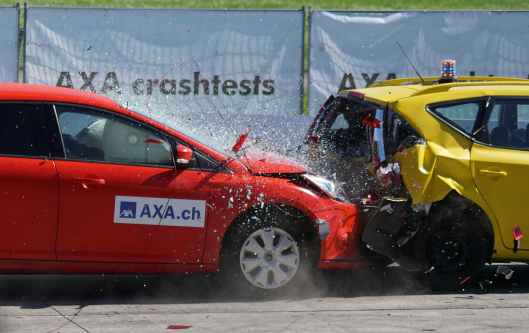
Your automobile has many “checks and balances.” There is not only an accelerator; it also possesses brakes! Imagine a car that had an accelerator but no brakes. One of the scariest things that can happen when you’re driving is to have the accelerator get “stuck” in the accelerating position. It happened to me once. Even pressing on the brakes hard isn’t enough to slow the car. Or, at least it didn’t seem to do much for me. I was driving an automatic and needed to put the car in neutral. The engine still raced but at least the car slowed down. I kept tapping the accelerator with my foot and eventually it became “unstuck.”

red and yellow hatchback axa crash tests

Photo by Pixabay on Pexels.com

Nuclear power plants, elevators, cranes, and so on all have “Checks and Balances” built into them to minimize the chances of a catastrophe when something goes wrong. 

Biological systems, however, sweep the Academy Awards in the category “Checks and Balances.” In fact, life itself can be thought of as energy systems with highly evolved “Checks and Balances.” These “Checks and Balances” happen at the chemical level, at the level of tiny organelles inside a cell, at the level of cells, and at the level of individual bodies such as you and I have. If we get too cold, our hair stands on end and we shiver. Those things warm us up. If we get too hot, we sweat and our skin gets flushed. These two things cool us down. 

If our blood sugar level falls too far, we get hungry. We feel like eating. We eat. We digest food and our blood sugar level goes up. If it does up too fast, our body releases insulin which tends to bring it back down. 

woman wearing black jacket holding doughnut

Photo by Renato Abati on Pexels.com

By and large, these “Checks and Balances” work remarkably well. In some special circumstances, they fail for one reason or another. For instance, if we get addicted to opioids of any kind, we feel “better” after we take the opioids. We also become more “tolerant” of the drug. To feel “better” will require ever higher doses. When you quit, you feel worse and taking more of the drug makes you feel better. 

For some, gambling, sex, alcohol, and crime itself can function the same way. Many who rob a liquor store are doing it to get the money. But some of the people who rob a liquor store are partly doing it for the thrill. They enjoy doing something criminal in and of itself. Similarly, greediness can serve as an addictive drug. Being unfair and cruel, for such people, is not just the means to an end (e.g., becoming richer). It is the end itself. 

For such a person, taking more than their share of donuts isn’t just about having more donuts. The addictive joy is also in seeing others angry or miserable or hungry. The “Checks and Balances” in such a person are not working well at all. They need to wreak more and more cruelty on others in order to feel “okay” again. 

As I’ve mentioned elsewhere, cancer is essentially greed at the cellular level. A cell somewhere in the body is no longer satisfied with its “normal” nutritional allocation. It is no longer content to perform its function as a muscle cell, brain cell, liver cell or skin cell. Instead, it “decides” that it will no longer perform its actual function. Rather, it is now “demanding” more and more resources from the rest of the body and its only function becomes increasing its own power and control over the rest of the body. Normally, cell growth and reproduction are also controlled by “Checks and Balances.” In fact, when cells become damaged and can no longer function, the body’s immune system normally recognizes that and destroys them. In cancer, however, the sick and greedy cell manages to “convince” the other cells that “everything’s normal” and those cancer cells grow without bound. As the tumor grows, it sucks up more and more of the body’s resources until the whole body dies — including, guess who? The ugly tumorous cancer cells grow without bound because “Checks and Balances” no longer work on them. Cancer cells cannot do anything “useful” for themselves. They are only able to suck value from the host body. So once they kill the host, cancer dies too. 

3403641F-071C-4611-A35F-AF9A548C7577

Original drawing by Pierce Morgan

“Checks and Balances” are also meant to work in complex social and political systems. For instance, in a democracy, if people are elected and they provide no value to the political body they represent, they will be voted out, in principle. But what if instead of providing value to the body as a whole, they provide value to a very few, very rich people? What if, in return for funneling the resources to those very rich donors, the rich donors help make sure that the candidate gets re-elected — again, and again, and again — even though those politicians only benefit a few. “Checks and Balances” have now failed. 

woman in black dress holding balance scale

Photo by JJ Jordan on Pexels.com

One important society system of “Checks and Balances” is the legal system. Imagine that there were no legal system — no police, no judges, no prosecutors, no juries, no laws. Now, imagine that someone robbed you or harmed your children. What would you do? You wouldn’t go to the police because they wouldn’t exist in such a system. Or, worse, they would be utterly corrupt. Some people would “turn the other cheek” but most people would set out to seek their own justice. They’d steal something of equal or greater value. They would harm the law-breaker’s children. And, it would often happen that they would not only get “an eye for an eye and a tooth for a tooth” but they would try to get “two eyes for an eye” and “two teeth for a tooth.” And, without “Checks and Balances”, who would stop them? The kin of the first criminal would try to stop them and sometimes succeed and sometimes fail. Without agreed upon “Checks and Balances,” crime, violence, rape, theft, would continue to escalate.

Eventually, like cancer, the violence would die. There would be nothing left worth stealing; no-one left living to rape or kill. So, like cancer, the violence would destroy everything of value and then would fizzle out because there would be nothing left to “feed on.” 

A functioning system of “Checks and Balances” results in houses that don’t burn down, bodies that grow strong and reproduce, and societies that prosper. What happens when we destroy the “Checks and Balances”? In the case of a house, in the old days, we could replace your fuses with a copper penny. A copper penny is much thicker than the thin wire in a fuse. It’s very likely we would end up burning your house down. Cells without “Checks and Balances” form cancer. People whose behavior lacks “Checks and Balances” become addicted, often to self-defeating behavior. Societies without “Checks and Balances” become, quite naturally, more and more unbalanced. This, in turn, leads to violent revolution (as happened in the American, French, and Russian revolution) or being overrun by other countries (as happened in ancient Rome).  

photo of person wearing guy fawkes mask

Photo by Vincent M.A. Janssen on Pexels.com

There are several main types of action that we can take to try to prevent the destruction of our own society. To the extent that any official “Checks and Balances” still exist, we can throw our own energy into slamming on the emergency brake. We can vote. We can encourage others to do the same. 

We can try to “disconnect” the source of power from the “car.” We can push for impeachments, indictments, recusals, article 25 invocations. We can encourage others to do the same. 

We can also try to perform actions that “should be” part of the normal “Checks and Balances” by ourself. If some group of people are being unfairly targeted for instance, we can go out of our way to make that unfairness less unfair. We can encourage others to do the same. 

i voted sticker lot

Photo by Element5 Digital on Pexels.com

If one group of people is amassing power and wealth in an uncontrolled fashion, we can individually resist letting more of our own power and wealth get into their hands. We can encourage others to do the same. 

We can voice our opposition to a cancerous and corrupt system that has destroyed “Checks and Balances.” We can encourage others to do the same. 

———————-

Author Page on Amazon. 

A parable about the logical outcomes of unfettered greed and lying. 

An essay about why cancer must die. 

A Sci-Fi story about an AI system without proper Checks and Balances. 

Wilbur’s Story

19 Wednesday Feb 2020

Posted by petersironwood in America, apocalypse, politics, psychology, Uncategorized, Veritas

≈ 5 Comments

Tags

bravery, cowardice, Democracy, fascism, Resistance, tyranny, war

{Starting in the fifth grade, Wilbur was my next door neighbor. We are entering a time of great danger, as are the Veritas. It will be a great danger to do anything to thwart the Putin administration. Yet, not doing anything may be a greater danger. So, I thought this recounting would be apropos.)

flight sky sunset men

Photo by Pixabay on Pexels.com

Wilbur’s dead. Died in Nam. And, the question I keep asking him is: “Did it help you face the Danger? All those hours together we played soldier?”

Wilbur’s family moved next door from West Virginia when I was eleven. They were stupendously uneducated. Wilbur was my buddy though. We were rock-fighting the oaks of the forest when he tried to heave a huge boulder over my head. Endless waiting in the Emergency Room. Stitches. My hair still doesn’t grow straight there. “Friendly fire.”

More often, we used wooden swords to slash our way through the blackberry and wild rose jungle of The Enemy; parry the blows of the wildly swinging grapevines; hide out in the hollow tree; launch the sudden ambush.

cascade creek environment fern

Photo by Pixabay on Pexels.com

We matched strategy wits on the RISK board, on the chess board, plastic soldier set-ups. I always won. Still, Wilbur made me think — more than school ever did.
One day, for some stupid reason, he insisted on fighting me. I punched him once (truly lightly) on the nose. He bled. He fled crying home to mama. Wilbur couldn’t stand the sight of blood.

I guess you got your fill of that in Nam, Wilbur.

After years of dangerous jungle combat, he was finally to ship home, safe and sound, tour over — thank God!

He slipped on a bar of soap in the shower and killed himself.

Wilbur answers me across the years and miles: “So much for Danger, buddy,” he laughs, “Go for it!”

close up photo of lion

Photo by Gareth Davies on Pexels.com

Thanks, Wilbur.

Thanks.


Author Page on Amazon.

Start of the First Book of The Myths of the Veritas

Start of the Second Book of the Myths of the Veritas

Table of Contents for the Second Book of the Veritas

Table of Contents for Essays on America 

Index for a Pattern Language for Teamwork and Collaboration  


Hauntings Across the Time Zones

18 Tuesday Feb 2020

Posted by petersironwood in America, apocalypse, politics, psychology, Uncategorized

≈ 4 Comments

Tags

activism, apathy, Democracy, environment, poetry, politics, Resistance, Veritas

{You may have noticed that what follows is neither a furtherance of the narrative of The Myths of the Veritas, nor an essay about America. But somehow it seems relevant to both. The poem seems to reflect how many people in America currently feel …. and it also reflects what the Veritas would not do.

Hauntings Across the Time Zones

Caught between a rock and a hard place,
I just try to keep busy.
Busy, busy, blocking out the voices,
Surrounding them with noise.
Busy, busy, blocking out the images,
Enveloped in a flashy Vegas fog.

Surf the web and watch TV,
Mobile phone and rushing traffic,
Fast food and faster planes,
Double or nothing,
Promotion and prozac in equal doses.

Yet, instants pop though the time-warp.
I hear my anscestors moaning behind the fridge,
They waver on the overheated car hood.
“Greed never captured what it’s all about.”
Their hoarse multitudinous whispers carry far
Like a stadium roar across a winter’s frozen lake.

Then, an echo from behind the Dieffenbachia maculata:
The possible children of the future asking,
“Will we have water? Will we have bread?
Will we have air? Will we have plutonium? Why are you selling our birthright
For a bowl of plastic?”

Now, I hear the workers in the arches of my running shoes.
Some of them are surprisingly young or old.

But never mind.
I find
Again the busy keys,
Blocking out eternities.
The path is very narrow —
I must travel like an arrow.
I look nor left nor right
I see only black and white.


← Older posts
Newer posts →

Subscribe

  • Entries (RSS)
  • Comments (RSS)

Archives

  • April 2026
  • March 2026
  • February 2026
  • January 2026
  • December 2025
  • November 2025
  • October 2025
  • September 2025
  • August 2025
  • July 2025
  • June 2025
  • May 2025
  • April 2025
  • March 2025
  • February 2025
  • January 2025
  • December 2024
  • November 2024
  • October 2024
  • September 2024
  • July 2024
  • April 2024
  • March 2024
  • February 2024
  • January 2024
  • December 2023
  • August 2023
  • July 2023
  • May 2023
  • April 2023
  • March 2023
  • February 2023
  • January 2023
  • December 2022
  • November 2022
  • October 2022
  • September 2022
  • August 2022
  • July 2022
  • June 2022
  • May 2022
  • April 2022
  • March 2022
  • February 2022
  • January 2022
  • December 2021
  • November 2021
  • October 2021
  • September 2021
  • August 2021
  • July 2021
  • June 2021
  • May 2021
  • April 2021
  • March 2021
  • February 2021
  • January 2021
  • December 2020
  • November 2020
  • October 2020
  • September 2020
  • August 2020
  • July 2020
  • June 2020
  • May 2020
  • April 2020
  • March 2020
  • February 2020
  • January 2020
  • December 2019
  • November 2019
  • October 2019
  • September 2019
  • August 2019
  • July 2019
  • June 2019
  • May 2019
  • April 2019
  • March 2019
  • February 2019
  • January 2019
  • December 2018
  • November 2018
  • October 2018
  • September 2018
  • August 2018
  • July 2018
  • June 2018
  • May 2018
  • April 2018
  • March 2018
  • February 2018
  • January 2018
  • December 2017
  • November 2017
  • October 2017
  • September 2017
  • August 2017
  • July 2017
  • June 2017
  • May 2017
  • April 2017
  • March 2017
  • February 2017
  • January 2017
  • December 2016
  • November 2016
  • October 2016
  • September 2016
  • August 2016
  • July 2016
  • June 2016
  • May 2016
  • April 2016
  • March 2016
  • February 2016
  • January 2016
  • December 2015
  • November 2015
  • October 2015
  • September 2015
  • August 2015
  • May 2015
  • January 2015
  • July 2014
  • January 2014
  • December 2013
  • November 2013

Categories

  • AI
  • America
  • apocalypse
  • cats
  • COVID-19
  • creativity
  • design rationale
  • dogs
  • driverless cars
  • essay
  • family
  • fantasy
  • fiction
  • HCI
  • health
  • management
  • nature
  • pets
  • poetry
  • politics
  • psychology
  • Sadie
  • satire
  • science
  • sports
  • story
  • The Singularity
  • Travel
  • Uncategorized
  • user experience
  • Veritas
  • Walkabout Diaries

Meta

  • Create account
  • Log in

Blog at WordPress.com.

  • Subscribe Subscribed
    • petersironwood
    • Join 662 other subscribers
    • Already have a WordPress.com account? Log in now.
    • petersironwood
    • Subscribe Subscribed
    • Sign up
    • Log in
    • Report this content
    • View site in Reader
    • Manage subscriptions
    • Collapse this bar
 

Loading Comments...