But let’s not forget that most people, most of the time cooperate. It’s much more pleasant for normal people to cooperate and the results are also much more pleasant.
Is there road rage? Does that exist? Yes, but statistically, the vast majority of people cooperate when they drive.
And, when they do anything else. We depend on many people from many places cooperating in order to eat. First, the efficiency and effectiveness of our food growing, harvesting, transporting and preparing depends on the cooperation of millions of people in the past who found out what was edible, how to grow it, which crops worked best in various conditions, how to irrigate, how to fertilize, how to harvest and so on. The food we have available today depends on the collaborative efforts of many previous generations. These dependencies are not just on food per se, but also depend on scientific advances, transportation advances, financial advances, and so on.
Much of our food also depends on people from many parts of the world cooperating today. The prevalence of cooperation is not just true of driving and food production but also on the construction of buildings and cities; it’s true of our clothing, our medical care, our learning.
Despite the fact that cooperation is much more prevalent than criminality, evil, and violence, there are at least three reasons that the evil of human behavior seems much more prevalent than it really is. These are: 1. Effect Size, 2. Cognitive Bias, and 3. Media Bias.
Effect Size:
First of all, it takes many people working smart and hard over a long period of time to provide value through cooperation. By contrast, it only takes a few people working stupidly over a short period of time to destroy something. The effort to make a pane of glass is immense. To make it efficiently takes a large number of people with different skills. To destroy a pane of glass requires only one second of bad action by one unskilled bratty child.
AI-generated image
Think about how much work goes into planting, growing, and harvesting an acre of corn versus what it takes to burn it down. Think about how much time and effort it takes to raise a child for the first ten years of their life versus destroying that life with an assault weapon. Think about what was required to build a functioning democracy over the course of hundreds of years by cooperation versus how easy it is for a very small group of greedy stupid people to destroy it. The examples are endless. Writing a novel versus burning a book; training to become a world class figure skating versus putting an ice pick in someone’s knee; becoming a skilled artist and painting the Mona Lisa versus splashing it with black paint.
It’s the same with a functioning human body. To be healthy requires the coordination of trillions of cells. The kind of cooperation found in the human body (or an eagle or wolf or whale) took billions of years of evolution. To destroy the health of the body only takes a few stupidly greedy cancer cells. So, although evil destruction is far less prevalent than constructive cooperation, evil destruction can undo the effort of many over the course of a long time.
Second, because destruction can so quickly undo so much good work, our nervous system is very reactive to evil and violence. We perceive it more easily and we remember it more easily. In a crowded city, you might pass by hundreds of people every day. Most of them, most of the time, you don’t notice. But if one of them robs you at gunpoint, you will notice and remember.
Media Bias:
The first two reasons we perceive evil to be more common than it really have existed for millions of years. Now, however, in our modern society, we have people whose job is to report on the news.
When is the last time you saw a headline like: “Two hundred thousand people drove into San Diego from Mexico yesterday with zero fatalities!” Or, “Three million people ate dinner in San Diego county last night! Zero died of food poisoning!”
It is sometimes said that “No news is good news.” It’s also generally the case that good news is no news. There are some exceptions. When World War Two ended, there were headlines. What we don’t see is this headline: “Canada, for the 57,670th consecutive day did not attack the United States of America.” Understanding this, a complete sociopath with an audience might try to increase their own fame by declaring: “America should annex Canada!” An actual war will definitely result in a headline. But threatening war, especially with a friendly country might also result in a headline.
The tendency to report bad news over good news has always been a “feature” of the media. But now that much of our news is basically click-bait for advertisements, the tendency is worse than ever. When I was on the school newspaper, we were taught to put the most important information in the headline; add the most important details in the first paragraph and add more detail in the rest of the article. Now, most headlines are fairly meaningless and important information is hidden behind a paywall or an advertisement.
“Is Earth About to Plunge into the Sun?!”
AI-generated image to prompt: “The earth plunges into the sun.”
Ka-ching!
(No, but we could sure use some extra cash, so click here to find out.)
“Does T-Rump have Proof that Obama was Born in Kenya!?”
An AI-generated image
Ka-ching!
(No, actually, but if you want to find out, click here and pay us money.)
“Could Space Invaders have Brought Life to Earth?!”
AI-generated image to prompt: “A fleet of UFOs hovers over the earth”
Ka-ching!
(Well, sure, anything’s possible. And, while we have no evidence of that, thanks for making one of the greediest people on earth a little richer!)
Dishonesty, greed, and mistrust work in a vicious circle. As you discover that more people are lying; that more people are evil, you yourself become more cynical and more tempted to lie, cheat, and steal. If you succumb to that temptation, it makes others more likely to lie, cheat, and steal.
Here’s the important thing to remember about a positive feedback loop though. It works in both directions. To the extent you can behave in a trustworthy fashion and be kind to others, it increases the chances that others will be inspired also to behave well. Cooperating is the natural and normal course for humanity. You will be happier doing that and you’ll help build a better world.
If you guesses heart disease and cancer, you’re right! Yay! RFK Junior and the Second Putin Misadministration may well change that in the next few years. By discouraging vaccinations, rolling back regulations for food quality, air quality, and water quality; by making proper nutrition much harder for non-wealthy families, the causes of death may change and infectious diseases my well rise to the top of the list again.
The First Putin Misadministration had a dry run by mishandling COVID. They did just about everything they could to kill additional Americans. By modeling disease-spreading behavior, waffling on whether vaccines were good, pooh-poohing the very existence of the disease for the critical early months, and, importantly, by making sure that the logistics of tests, masks, & other protective equipment was put in the hands of an over-spoiled teenager rather than any one of the hundreds of world class logistics experts in America, they did what they could but COVID only rose to third.
We could argue about the details, however, because it is undeniable that, because of the pandemic, many people did not get tests and interventions designed for early diagnosis of cancer and heart disease. So some of the deaths attributed to cancer and heart disease may also have been partly due to COVID. Nonetheless, cancer and heart disease do cause a lot of deaths even without any help from COVID.
Both “cancer” and “heart disease” are very broad labels. And, in both cases, we know that there are a number of factors that influence the incidence of various types of cancer and heart disease. A large number of genetic factors play a part. So too do diet and exercise. A completely sedentary life-style is bad for your health in many ways. One of the motivations for my book, Fit in Bits, is to make it easier for people to incorporate more exercise into daily life.
However, there is evidence that the environment also plays a large part in the prevalence of both cancer and heart disease. Almost all of these studies are understandably correlational in nature. I say “understandably” because most people are unwilling to have their behavior dictated for twenty years. So, we are left with comparing people who, left primarily to their own devices, encounter different environmental factors. However, lab rats and cell cultures do not object to being mistreated so we have additional indirect evidence that plastics are bad for life. For these reasons, one environmental factor that is drawing increasing attention is the “one word” for Benjamin in The Graduate: “Plastics!”
I don’t like plastic. I’m not saying that because I don’t like sea turtles and sea birds strangled with plastic. Of course, I don’t like those things either, but I’m talking about my sensory experience. I’m saying that for me, plastic doesn’t smell, taste, sound, or feel good. For that matter, it doesn’t even look that nice.
Materials I do like include metal, rock, wood, glass, and ceramics. I like them at a sensory level.
Recently, it has struck me just how prevalent plastic has become in my own life. When I was a kid, I had some things that were plastic, but it was much less prevalent than it is today. Let’s take a little look.
One of the first things I do in the morning is have coffee. That’s made from a bean. That’s not plastic.
Or, is it?
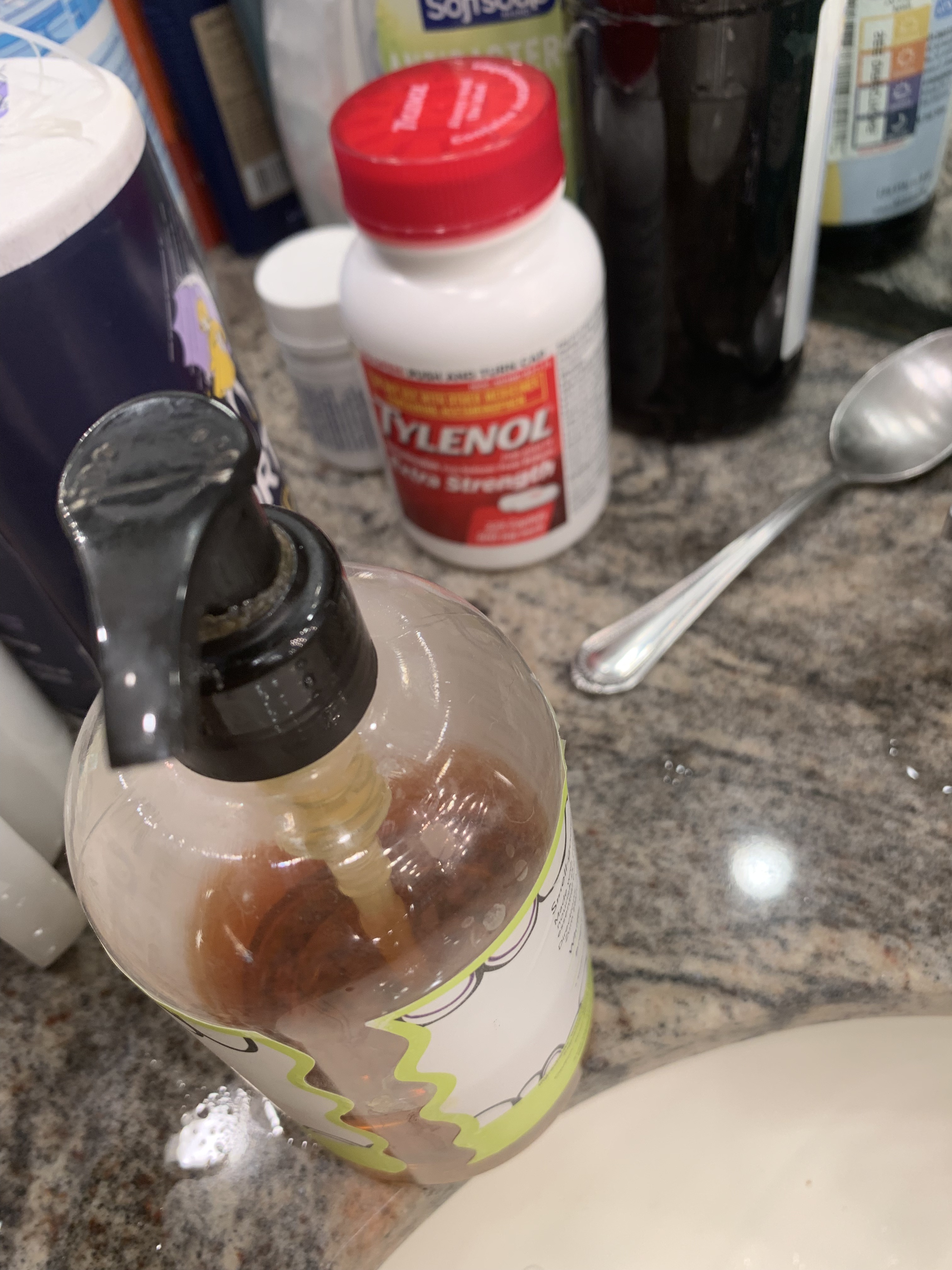
Lately, I make it in this coffee maker which holds coffee in little plastic capsules. The water sits in a plastic reservoir. The sugar sits in a plastic jar. I put in a little milk and hazelnut creamer. Guess what? They also come in plastic.
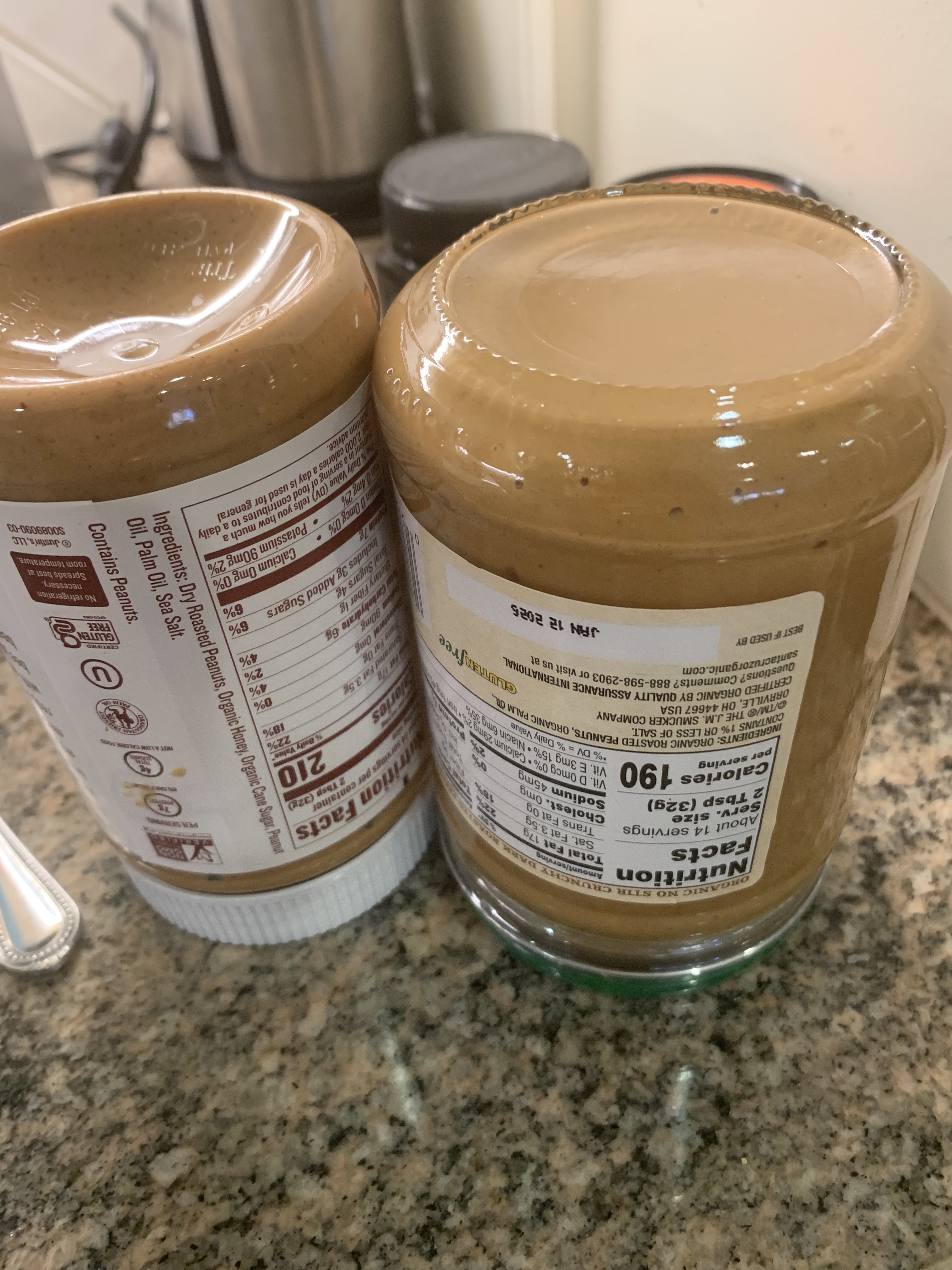
The cup, at least, is ceramic. I often have a whole wheat English muffin. The muffin comes in a container that is part paper and part plastic. I often like to put peanut butter on it. The peanut butter I usually buy comes in plastic. I often put honey or berries on the peanut butter. They come in plastic.
Sometimes, rather than a high fiber English Muffin, I enjoy a bread which is called “Fitness Bread.” It’s high fiber and tasty. And, it comes wrapped in plastic. I often spread hummus or guacamole on it. These are also pretty healthy choices. But they spend a lot of their life in plastic.
As I side dish, I like cherry tomatoes. They are colorful and tasty and low calorie. And they come packaged in–did you guess? Plastic. On sandwiches, I often put ketchup or mayo. They also come in handy squeeze bottles made of…let’s say it together: “Plastic.”
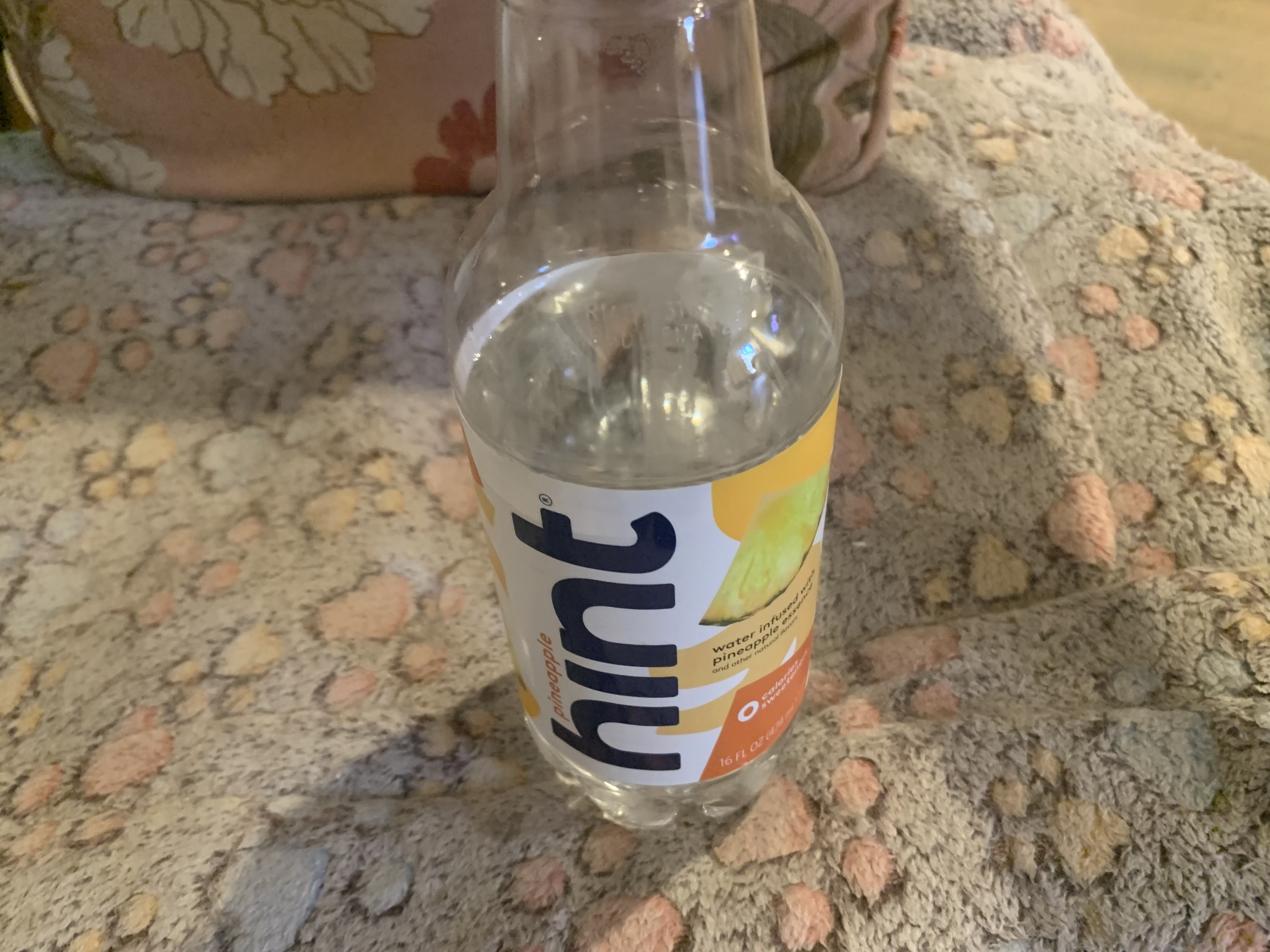
I don’t drink any alcohol, and often drink Hint or BAI, both of which I like quite a lot and both of which come only in plastic containers. This is not great for the environment at large, but also not good for the environment of my body. We also sometimes drink a powdered lemonade mix which comes in plastic packets. Then, a pitcher in the fridge keeps it cold. The pitcher is plastic. Then it is served in a “glass” which is, in fact, not glass, but plastic.
There’s an advantage to plastic over glass. We have cats and dogs and they have a tendency to knock things onto the floor. Plastic things are far less likely to break. Plastic glasses also weigh less than glass.
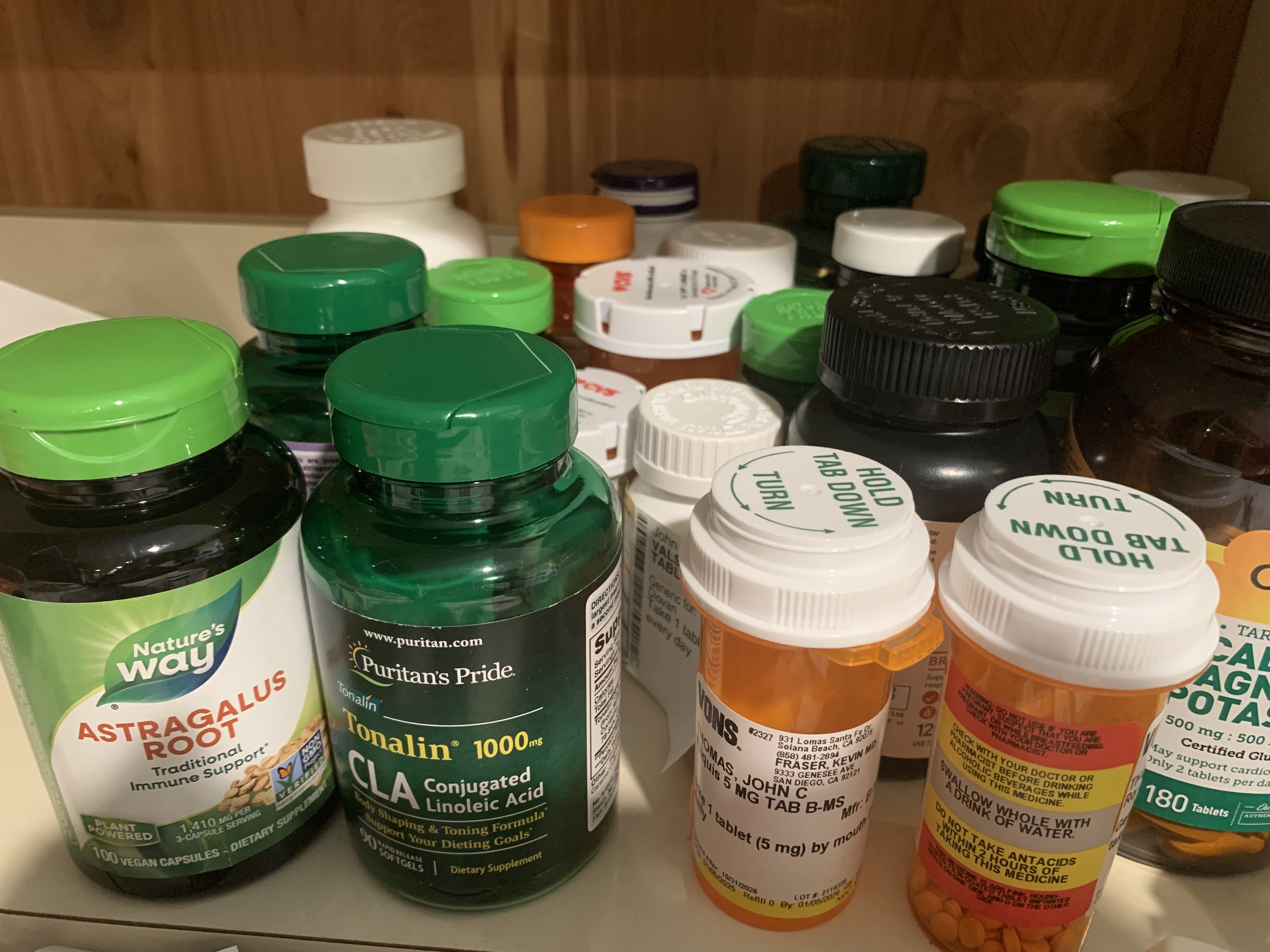
After breakfast, it’s time to take some supplements for my health. These almost always come in plastic containers as do the prescribed medications I take.
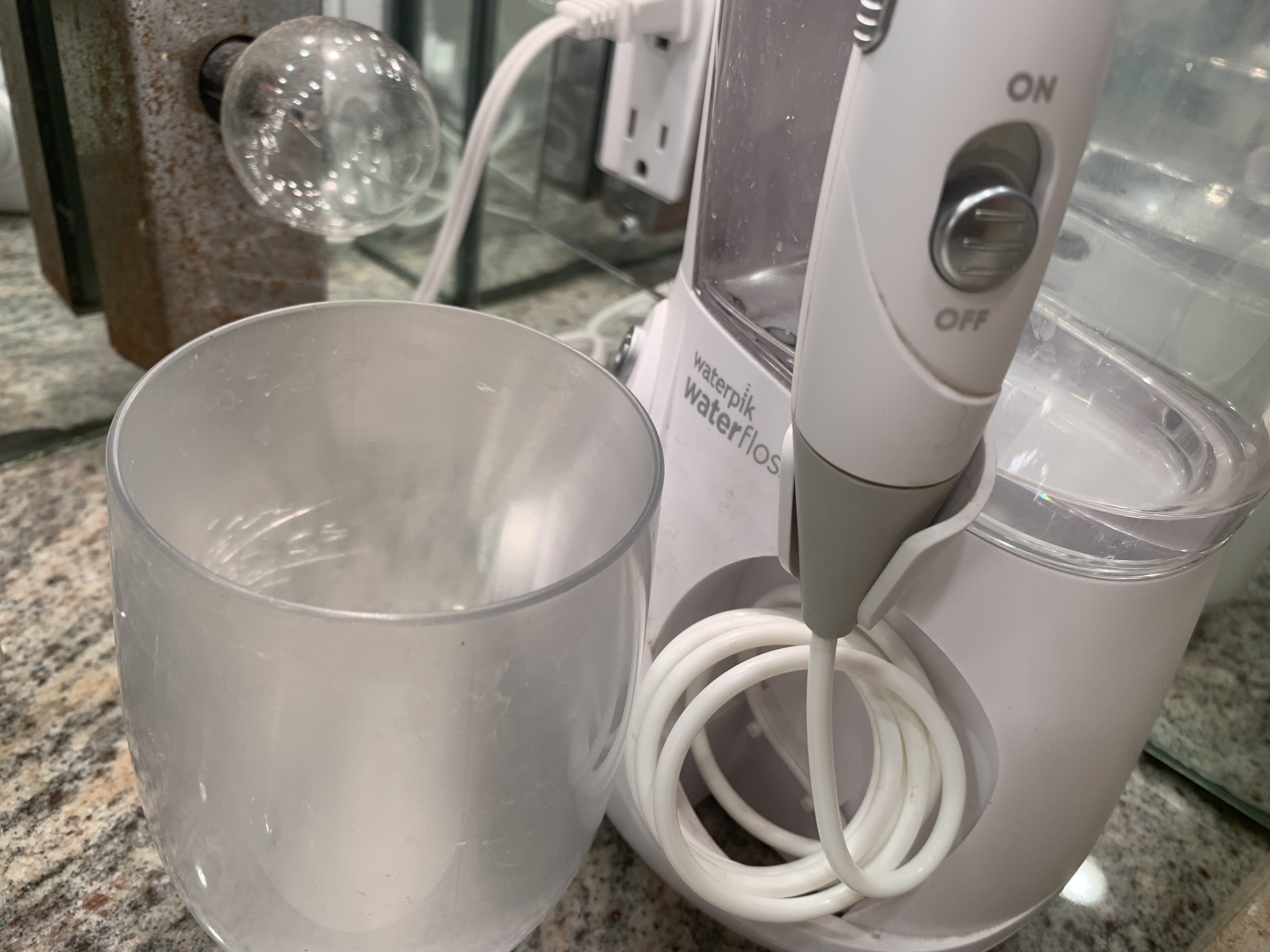
I brush my teeth. That’s a health-promoting activity. But the water glass I use is plastic. The toothbrush bristles are plastic. Lately, I’ve started using a water pick as well, which I highly recommend, by the way, though the reservoir for the water and the entire mechanism is made of plastic.
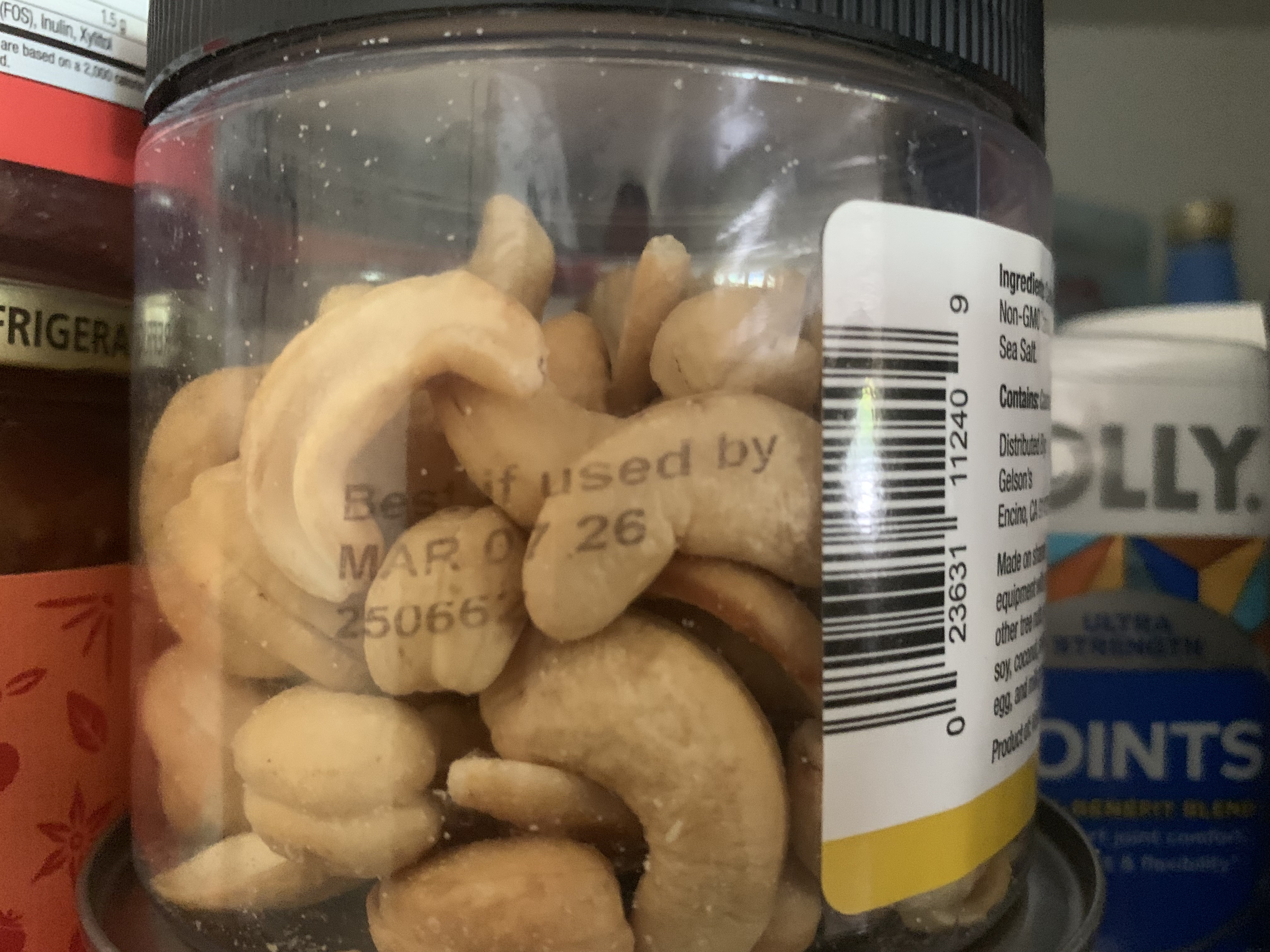
I often cook for the two of us. Lately, I’ve been using cutting boards made of…you guessed it! Plastic! For healthy snacks, I like dried fruit and nuts. Guess what? They come in…
What’s to be done?
In today’s America, with science and truth becoming illegal, it probably won’t make a huge difference. I’m more likely to die of infection or Civil War or unprovoked police violence than from plastic, but I am making some changes.
We bought bamboo cutting boards and paper cups. I’m cutting out the BAI and Hint and exploring options for drinks that come in glass or non-BHA coated metal. I am trying out another type of peanut butter that comes in a glass container. But the vast majority of products at the grocery store come in plastic. Even the vegetables and fruits.
Despite all the years of increasing the percentage of items that are plastic, I still do not actually like plastic.
I’m switching out what I can, and it may be too late in life to make a lot of difference for me personally, especially with a Misadministration that wants to end American lives (and brags about it!). But it may not be too late for you.
Do your own inventory. Hopefully, you will find things you like that are not wrapped in that one word of biological disaster wrapped up with economic faux-prosperity. The word? Here’s a
Apparently, everyone else knew I was supposed to go head first.
The instructions, however, were far from clear.
And, although I didn’t know much, four billion years of evolution had taught me to take a few things rather seriously—such as: “Gravity is real!” And: “Don’t dive hard onto something head first.” So, the vague instruction to come out head first made no sense.
I considered whether feet first seemed a sensible option. I decided “yes” but only for someone with a well-developed set of quads and a months of practice in balancing. Otherwise, a being such as myself would simply topple over and smash their head anyway.
Thinking about it as best I could, coming out butt first seemed by far the most sensible way to enter this world.
The only problem was that I didn’t fit that way. So—I was at odds with authority figures such as my mother and her doctors before I was even born.
After 72 hours of labor, I finally let them win that argument and came out head first.
All of us could have been saved a lot of time and effort had the instructions been clearer to start with.
Is that why I ended up with a career in “Human-Computer Interaction” AKA “Human Factors” AKA “User Experience”?
Probably not.
More likely, it has something to do with the agony of the feet.
I inherited “flat feet” and that has been something of a life-long inconvenience. For example, beneath my ankle is another bone that sticks out much more than it does for other people. That bone often rubs against the side of my shoes and boots and that causes a source of both bruises and blisters. The lack of a working arch also contributes to my never being able to jump very well. In high school, when I was very fit, I was capable of jumping up high enough to touch the bottom of a basketball net. On my best days.
I never got close to being able to jump and touch the rim, let alone being able to dunk the ball.
Nonetheless, I spent many years of enjoyment while on my feet—playing basketball, tennis, golf, table tennis, football, baseball, softball, racquetball, running, and walking. Running speed was never a strong point but I do have good eye-hand coordination and know how to concentrate and adjust my play to the opponent(s). As I sometimes like to say, I’be been violating expectations since 1945. I’ve enjoyed every sport I’ve ever tried. I’ve also seen many people with much more natural talent than I have enjoy sports less. That’s one reason I wrote “The Winning Weekend Warrior” which discusses the “mental game”; that is, “Sports Psychology.”
I’ve also discovered some things about mitigating the negative impact of the feet I was born with.
For one thing, I never buy shoes without trying them on.
Another surprise is that all hard surfaces are not equally damaging. A basketball floor, a dirt track, an asphalt road, concrete, and steel all seem pretty damned hard. But it turns out that running on concrete sidewalks is much harder on my arches (and shins) than running on asphalt. It also turns out that standing still for a half hour is harder on my arches than is walking for an hour.
I’ve learned a number of obvious things like: losing weight helps a lot! Strengthening the legs helps. Having good supportive shoes helps. Wearing cushy sox helps. Avoid (when possible) walking on stone, concrete, or metal.
I’ve tried a number of supplements too. For me, the ones that seem to help slightly are: turmeric, ginger, and sour cherries. I find that B12 seems to worsen joint pain. Elevation seems to help and so does ice. Of course, the trade-off is that ice and elevation are typically things that limit mobility.
I also use acetaminophen. I also use arnica gel which seems to help.
If there’s a real “solution” though, I haven’t found it. I was born with a bad design.
Everyone is.
Life is not, never was, and never will be about a “perfect design.” The environment keeps changing and organisms who adapt to the environment are always changing. That happens at the cellular level, the learning/behavioral level, and on a longer time scale, at the evolutionary level.
Not only that: change begets change. If, in response to one change in the environment, you make one adjustment, you might cause another problem. It’s the same with the design of physical artifacts, software systems, user interfaces, social systems, games, strategies, tactics, poetry, stories…
One can use knowledge to shrink a design space. Of course, there is always the chance that by shrinking the space, you are deleting the part of the space that has the very best designs. It took evolution billions of years to create multicellular organisms. Our own human bodies have a large variety of different types of cells. Within many of those types there are sub-types and sub-sub types.
Even within a sub-sub type, no two cells are precisely identical. They have different histories and they have different environments.
The feet that are “bad” are only “bad” in a certain set of circumstances. I’m sure that there’s some circumstance in which it’s better to have flat feet and pronated ankles. For example, it’s probably only a matter of time before there’s a top-rated “reality TV” show dedicated to the implications of odd body parts. That would be a show I would get to try out for because of my feet.
Recently, I got hearing aids. That’s a whole different story for another time, but they fit quite snugly and comfortably behind my ears. But we’ve all seen people who look like Alfred E. Newman from Mad Magazine. What do they do about hearing aids? Do they need a different type? Do they tape them behind their ears? What would be the best genre for the show about unusual feet or ears? Doctor Odds? Opera? Shure-Vivor? America’s Got Metatarsals?
Needless to say, we would have to make it extremely competitive and a little bit cruel. Maybe people with broken feet could run a race and the winner would live for another week and face a greater challenge the following week. The whole thing would be set in someplace chosen to be especially challenging for those with sore feet; e.g., uneven cobblestones, slippery concrete, on fallen tree trunks. Gorse, of course. Background music would be composed to add to the drama. Or, if the budget doesn’t permit human composers, we could ask an AI system to copy some Puccini or Bizet and change it just enough not be sued for copyright infringement.
The formula importunes for interviews. They need to be short, shallow, but filled with rage or tears. “So John, when did you first learn that your feet were…what is the PC term here?…Different? Weird? Horrific?” Before each competition, the contestants would be introduced with fireworks and flashing lights along with extremely loud and echoing words of exaggeration. We should get the same kind of introduction once reserved only for “Professional Wrestling” but now common in introducing contestants in Golf and Tennis. Why not insanely dramatic foot-offs in “America’s Got Metatarsals!”
It might be a bit expensive, but we can always cut costs to the bone. And then, just keep cutting!Who even needs real contestants? They can all be CGI. That, in turn, means there’s no need to limit contestants to the kinds of variations that actually occur. Flat feet? Okay. We’ve all heard about that. But how about flatiron feet? Elephant feet? Eagle feet! Grizzly bear paws! Duck-billed platypus feet! Amoebic pseudopods! Insect legs with pollen sacs!
Why stop there? Mice with elephant ears! Elephants with mouse ears! Whales stalking their prey on the Savannah, cleverly camouflaged in the tall yellow grass!Tigers leaping on Great White Sharks! It’s no more out of place than putting a thoughtless human being in a safari hunt And, the best part of CGI players is that we can interview them regardless of species and regardless of their native language. At long last, we can entertain ourselves to death while the actual ecosystem around us is being destroyed by the greediest members of the greediest species who ever existed.
What happens when greed exceeds needs and vital functions of society are left to the unfit, untrained, uncaring, uncouth, criminals? They’ll be about as effective as the Whales of the Serengeti and the Elephant-Eared Mice of Siberia.
“Your family makes a big difference in how you turn out.”
Which view are you more sympathetic to?
The first statement is related to hundreds of other statements, stories, images, songs, religious doctrines, and procedures that lean conservative & emphasize individual liberty & initiative.
The second statement is likewise related to an entire network of political & cultural agendas.
Both approaches are true in the sense that they are useful ways to approach the world.
For me, the most appropriate context for emphasizing the first statement & its attendant attitude is when I make decisions that mainly affect my own life. It makes me more productive, responsible, & happier to focus on how I am the master of my destiny. Nonetheless, it is also occasionally helpful to step back and reflect on the conditions that favor my productivity & happiness & then try to maximize those conditions. It would be silly to think my behavior is unaffected by the external world.
On the other hand, when it comes to public policy, it makes sense to me to focus on how modifiable conditions impact people’s performance & happiness. For example, we’ve known for fifty years that people are generally more productive with a 30 hour work week than they are with a 60 hour workweek.
The two frameworks are often quite different in terms of the sources of their evidence. I am immediately aware that factors like my “determination” and “concentration” impact my performance. I hear such a relationship referred to in nearly every sportscast of every sport. But I don’t rely on such banter. I feel it and know it directly.
On the other hand, the relationship between external factors and other people’s situations is probabilistic and hard to see. I largely rely on studies of such phenomena. I have to read such studies critically to know which ones to believe in and which ones are flawed. I don’t typically rely on a single study. And I also see how networks of studies relate to each other.
For instance, heavy metals in the environment are bad for brain development. I don’t think this because I listened to some guy on his podcast. I believe it because there are many such studies with many kinds of pollutants done over a long period of time by many investigators. Moreover, I understand why such heavy metals can cause problems. There are not only numerous correlational studies of humans; there are also laboratory studies using a wide variety of animals.
Typically, most of us think of friends as those who will stand by you through thick and thin. Sometimes, this means that they’re willing to encourage you when you’re down.
To me, a friend is also someone who is willing to give you frank feedback when you’re failing or making a mistake. If I’m doing something counter-productive or wrong, I’d generally like to know. A complement is okay, but I prefer sincere ones. To me, it would be demeaning for someone to lie about my accomplishments or abilities—demeaning to the person who gives such a false complement and demeaning to me as well.
It’s always struck me as an extremely nasty thing to give someone falsely flattering feedback. Of course, if you’re teaching a two year old to bat a ball—or, as I was doing a short time ago—encouraging our puppy to learn to swim—then you set your criterion for “success” fairly low. You don’t expect a two year old to grab a 38” bat, face a major league pitcher and hit a home run into the third deck of Yankee Stadium. You don’t expect a puppy to swim across the English Channel. You have to shape exceptional skill by rewarding behavior. You do it by beginning to reward any behavior that is “in the right direction.” At first, any contact a toddler makes when swinging a bat at a ball is rewarded. A puppy just learning to swim is initially rewarded even for going a few feet.
As a child matures physically and intellectually and learns a skill, you can give more instructive and more measured feedback. For instance, if a kid is learning to hit a baseball, you might give feedback about how solidly they’ve hit the ball. Soon, they’ll be capable of knowing that for themselves. They will see their hit pop up or trickle along the ground or instead streak away in a line drive. Eventually, after seeing many grounders, pop-ups, and line drives, they will know from the “feel” of the bat whether they’ve made solid contact.
Generally, if a person gets accurate feedback from others, they will learn to provide accurate feedback to themselves. If someone keeps doing badly but getting a “pass” constantly, or worse, having people flatter them when they’re doing badly, they’ll become disconnected from reality. This can happen, for instance, to a rich or influential person. The flatterers don’t do it to be kind. They do it to “get on the good side” of someone who is susceptible to such false feedback.
To me, telling an adult their performance is stellar when it actually stinks is typically not a kindness but an evil deed. Understand: I’m not using the word ‘evil’ to mean ‘counter-productive’ or ‘sub-optimal.’ I using the word ‘evil’ because I mean ‘evil.’
One result is that the person’s performance may not improve. Someone who might have become a decent hitter, or tennis player, or swimmer instead stays forever mediocre. What’s worse is that the person may decide to attempt to become a professional baseball player or tennis player when that will be a costly error.
If the flattered person is in some kind of position of authority, the result may be even worse. A police officer, manager, executive, teacher, or political figure who is doing a terrible job but being told they’re doing a great job is not only preventing them from reaching their own potential. They are harming others as well. And, the person giving such false feedback is also harming themselves, their friends, and their families. If they do it enough, they will not learn to look carefully at the behavior or others and give useful feedback. Eventually, they too become disconnected from reality.
Flattery is evil in business in that it’s a misdirection of effort based on lies. Flattery is evil in sports for the same reason. Art? Same. Music? Same. Parents flattering their kids does not build self-confidence. It builds false confidence, making them believe they can do more than they can; that they are expected to do more than they can. Eventually, when the child receives honest feedback from physical reality or from folks that don’t have any reason to flatter, they’ll feel worse than if they had had more honest feedback all along.
The most egregious form of fake flattery, however, occurs in dick-tater-$hits. When the autocrat takes cruel, destructive, or stupid actions, that autocrat is told by a circle of sycophants that his evil actions are wonderful, brilliant, magnanimous, etc. This devalues the person who says it; they lose all credibility. It is also a disservice to the person whose a$$ they are kissing. They are training him up to be even more evil and stupid. It is also a disservice to the very nature of humanity. The one thing we humans have going for us is our ability to coordinate and cooperate on very large scale projects. In order for that to work, we need to communicate. We need to communicate our wishes, our plans, the current state of progress, mistakes, ideas for how to fix them, and what we have learned. If everything we say is a lie, we create nothing. We provide no value. None.
True enough, parasites can live for a time off of the value that previous generations built. But once trust and honesty are destroyed, and the truth means nothing, we are no better than beasts except that we’re less hardy. A tribe of humans used to take down a mammoth. But even a much larger horde of humans, lying about what they are doing and looking out only for themselves? If our ancestors had acted like modern day dick-taters, humanity would not have survived.
Flattering your friend and fawning over them is not, in fact, friendship. It is freaky and frankly disgusting. It’s disgusting that anyone would find such behavior pleasurable. It’s disgusting that anyone would demand it. And it’s disgusting that anyone would engage in such false flattery.
Whatever your sensibilities of the aesthetics of human relations, however, such behavior is economically ruinous. It is antithetical to learning, to science, to progress, to improvement in the human condition.
(AI generated image to the prompt: “A blacksmith wields a large hammer. He strikes down on an anvil. The anvil is composed of people.”
There is no simple or universal answer to when “The Stone Age”, “The Bronze Age,” and “The Iron Age” occurred. The timing varied widely depending on the region. These names refer to the types of materials used for tools. More recently, many people refer to the “Industrial Age” or the “Industrial Revolution” and the “Computer Age” or the “Computer Revolution.”
Now, we see humanity entering a new age, perhaps best referred to as “The Irony Age.” At least in The United States of America, we are well into “The Irony Age” though we are not the only such country. I use the term “The Irony Age” to refer to an age where people’s behavior, individually and collectively, is determined by the informational world they inhabit rather than the real world in which they live.
I use the word “determined” and not the word “influenced.” Words, images, and stories have always influenced human behavior. Indeed, this kind of influence exists in the non-human world as well. The social behavior of ants depends on chemical signaling. Bees that have foraged and found sources of pollen and nectar “dance” for other bees so as to describe the size, contents, and location of these sources for other foraging workers.
Words can be used, not only to influence, direct, teach, or share but also to mislead and control. This is nothing new, but now the conditions are right for “The Age of Irony” in which these misleading communications actually override reality. Examples of such misleading communications abound.
Politically, we can see The Age of Irony in the names of countries. The official name of North Korea, for instance, in not “The Totalitarian Dictatorship of Kim Jong-Un” but is rather “The Democratic People’s Republic of Korea.” In reality it is not a republic; it is not a country for the people and it is not at all democratic.
It is not only in the political realm that we find such ironies. People have been touting “miracle cures” my entire life and before. Various “tonics” have been sold by charlatans throughout the history of America. They often contained opium, tobacco, alcohol, and other noxious substances. Sometimes, people would fall for it and spend money on something that would supposedly fix a malady (or even every malady) and it would make them sicker. There has always been deception. Three things in modern society contribute to making it “The Age of Irony” and not just an age that contains some irony.
First, most people most of the time are not narcissistic sociopaths. Most people most of the time are decent and tell the truth. Studies show that people are particularly likely to be ethical and fair to those with whom they are in direct contact. (See, for instance, Predictably Irrational by Dan Ariely). If you are at a face to face meeting, for instance, and a tray of cookies gets passed around, there are very few people who will immediately grab all the cookies for themselves. As the physical distance grows and the bad behavior becomes more abstract, however, more people are willing to cheat a little and some few people will cheat as much as they can.
In the past, almost all of our interactions were fairly local. Charlatans who sold “miracle cures” tended to be itinerant. If they stayed too long in one place, they were likely to be “run out of town on a rail” (See, for instance, Huckleberry Finn by Mark Twain). Now, however, false cures are sold via podcasts, television, and social media. In The Age of Irony, a large proportion of our purchases are done remotely and the people who sell us nostrums are much harder to bring to justice. Equally importantly, it’s much easier for them to “live with” their evil deeds because they don’t have to face social consequences—they don’t know or see the people harmed by their lies. So, the first thing that contributes to making this The Irony Age is distance. Increased distanced means decreased accountability both legally and socially.
The second major reason that America is entering “The Irony Age” is the ubiquity and power of entertainment. This is partly a side-effect of increased prosperity. Increased prosperity means that people have more time to be entertained. In addition, television, for instance, now shows images that are larger, in color, and in higher definition. Perhaps more importantly, there are many more channels. Advertising is more targeted. And, a greater proportion of live TV time is advertising time.
More recently, podcasting, time on social media, and gaming are also more compelling and more targeted. People are spending less time in face to face interaction and more time is spent in remote interaction.
The pacing of entertainment is also changing. People are spending more time “channel surfing” and interacting in short sequences like chat. This means long, thoughtful discussions are relatively rare while clever one-liners and short videos are relatively more predominant.
(AI generated image to the prompt: “A very large room is filled with robots typing on computers. Hung from the ceiling is a very large dollar sign.”)
While there have always been unusually talented storytellers and orators, now science has formalized these talents and made them essentially available to anyone with a huge amount of money. An extremely wealthy individual no longer needs to be clever or charismatic in order to influence people. He or she can pay for the expertise to make them appear clever and charismatic. Taken together, these trends mean that the tools to manipulate people are generally much more powerful than before.
There is also a potential counter-trend. People are more educated than they were hundreds of years ago. In theory, this should enable them to be critical thinkers and be less likely to believe a lie. In most cases, however, people do not use their education and intelligence to decide whether to believe something or someone but instead use their education and intelligence to defend their current beliefs whatever they may be. They come to view themselves and their “team” as being under “attack” when a belief is questioned and they view their role as to use their brain to defend their team—not to question whether they are on the right team.
The third trend is the self-reinforcing vicious cycle of wealth, greed, and power. This has enabled—some would say guaranteed—that the most sociopathic, greedy, self-centered people on the entire planet now control weapons, information and entertainment channels, and the wealth. It isn’t merely a random set of people in control—it’s largely the very worse people in control. Just to take one example, there are many hundreds of local radio and stations, newspapers, and publishers. But they are not independent of each other. They are controlled by a few major companies. The same applies to food and banking. Your experience is that you go to the grocery store and see hundreds of brands. They look different. They taste different. They are advertised to appeal to different groups. But, behind the scenes, there are a ten companies that control things. https://www.businessinsider.com/10-companies-control-the-food-industry-2016-9?op=1
Briefly, here are a list of some of the major Ironies which are prevalent in the attempted destruction of America.
Many people voted they way they did because the slogan “Make America Great Again” resonated with their love of America and they desired to make it great again. In reality, America, though far from perfect, was already great and Putin’s plans are aimed at making America much worse, not better. Plans are now being implemented to make nearly every aspect of America worse.
Many people voted the way they did because they thought they were voting for a “strong leader” who would do whatever it took to put America first. In reality, that “leader” is extremely cowardly and has been his entire life. He was so cowardly, he begged his daddy to bribe doctors so he could avoid military service. He has a long record of forcing himself on women because he’s too cowardly to risk being rejected. He’s so cowardly, he can’t even publicly tell the truth about his height and weight or the status of his mental faculties. He’s so cowardly, he can’t even admit to a single mistake.
Many people voted the way they did because they thought their candidate and his party were better for the economy. What’s the evidence of that? The party and the candidate claim to be better. Historical fact shows quite the opposite. But neither party has done such a remarkably bad job with economy as what we are now witnessing.
(AI-generated image to the prompt: “A ghost town with tumbleweed. Nothing grows. A sign proclaims: ‘Golden Prosperity Estates’.”)
Many people voted the way they did because they thought their candidate would restore law and order. Why? Because they said so. What actually happens when you vote in a serial rapist who is also a convicted felon, a fraud, and a tax cheat? He pardons traitors who viciously attacked police and he attacks judges who do not agree with him and ignores the rule of law and the Constitution he swore to uphold.
Many people voted the way they did because they were sick of the government telling them what to do. Instead, they voted for less regulation and more freedom. The reality is that while the current Misadministration is trying to reduce regulations on air quality, water quality, and food quality, they are also trying to institute regulations on whom you can love, what you can do with your own body, what you can say, whether and how you can worship, what you can read, and whom you can protest against.
Many people voted as they voted because they bought the story that illegal immigrants were a “drain” on the economy. The truth is that many such immigrants were contributing to the economy including paying taxes and social security and were unable to reap many of the benefits of citizens. Moreover, far from being disproportionally criminal, immigrants were less likely to be criminals than natural born US citizens.
Many people voted as they voted because they specifically thought a more complete wall and more agents at the border would keep immigrants out. In fact, walls are much more effective at keeping people in a country against their will than keeping people out against their will. If the Misadministration is successful in destroying the National Parks, the Economy, and the Rule of Law, a wall won’t be necessary at all to keep people out. No-one will want to come. But it can be quite useful in keeping people in. On the US side of the border, the military can be deployed along with machine guns, land mines, and search lights. The Berlin Wall wasn’t put up by East Germany to keep West Germans from coming into East Germany. It was built to keep the East Germans from fleeing the repressive and ineffective government of East Germany. That’s the real reason Putin wants walls around America—to keep American citizens in.
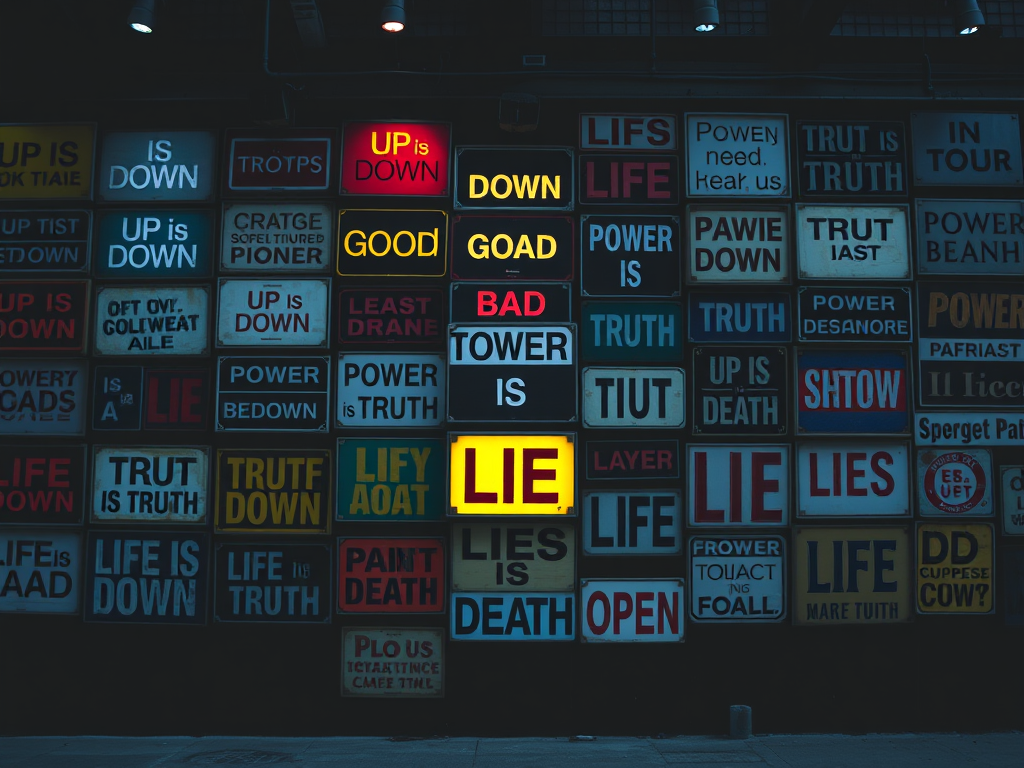
(AI generated image to the prompt: A large wall with many signs. Signs read: “Up is Down” “Good is Bad” “Power is Truth” “Truth is a Lie.” “Lies are truth” “Life is Death”)
In The Ironic Age, the Ironies don’t stop with the fact that many people voted as they did but got the exact opposite of what they voted for. It isn’t turtles all the way down. In The Ironic Age, it’s ironies all the way down.
Some people continue to “like” the current misadministration and think that by showing loyalty to it, they are helping their “hero.” In fact, supporting him in his bad policies and decisions is the very worst thing for him as well as for the country. It’s precisely like “helping” a drug addict by giving him heroin. Such an action doesn’t “satisfy” the addict. It just increases their tolerance for the drug and makes them want even more. It’s the same with narcissistic sociopaths. Telling them their ideas are wonderful no matter how stupid and counter-productive they are doesn’t help the person at all. It just encourages them to be more stupid and disconnected from the actual results. It won’t “moderate” or “reform” him any more than agreeing with a spousal abuser will make them less likely to abuse you in the future.
(AI generated image to the prompt: “A doctor in a white coat tosses a bottle of vodka to a ragged drunk lying in the gutter.”)
As I said, it’s ironies all the way down. President Mush and his side-kick know that they are “smart enough” to view everyone else as a tool. To them, people who have actual friends, have empathy, or love? Those are fools. What they fail to see, however, is that Putin is like them. He doesn’t seem them as peers at all. To him, they are the tools. They are his fools. Once he achieves his goals about dividing and destroying America, they will have served their purpose and he will take over the reins. Apparently, they are too busy slaking their greed to have noticed what has happened to the enablers of Stalin and Putin once they become too successful.
Perhaps the most fundamental irony of all is that even Putin cannot win. Narcissistic sociopaths die too. They live their entire lives fundamentally disconnected from true love and friendship. Not only are their days on earth numbered as individuals—just like everyone else—they have traded in the joys of life for a grim fight that ends in their own destruction.
Cancer always loses in the end. Yes, of course, cancer causes destruction and even death. So, it can cause others to lose, but cancer itself always loses.
Increased government efficiency! Sign me up! That sounds great!
It sounds especially great if your billionaire-owned media companies keep reminding you that you are paying too much in taxes! Not only that! The national debt keeps going up, up, up and your kids and grandkids will have to pay even more in taxes. And, hey—if billionaires don’t end up paying any taxes, that actually a good thing because that way they can create lots of new jobs! And, besides, if they weren’t doing something worth billions and billions of dollars, why would they be so rich? Of course they deserve it! And, if CEO’s weren’t paid outrageous salaries, they wouldn’t even be CEO’s and some second rate person would just run the company into the ground.
It all sounds so plausible. Yet, every bit of it is a lie. But it isn’t just a bunch of lies that’s been told here and there by a few people. It’s been propagated over and over and over and over again for decades on various media and on social media. It’s been propagated on podcasts, and books, and pamphlets.
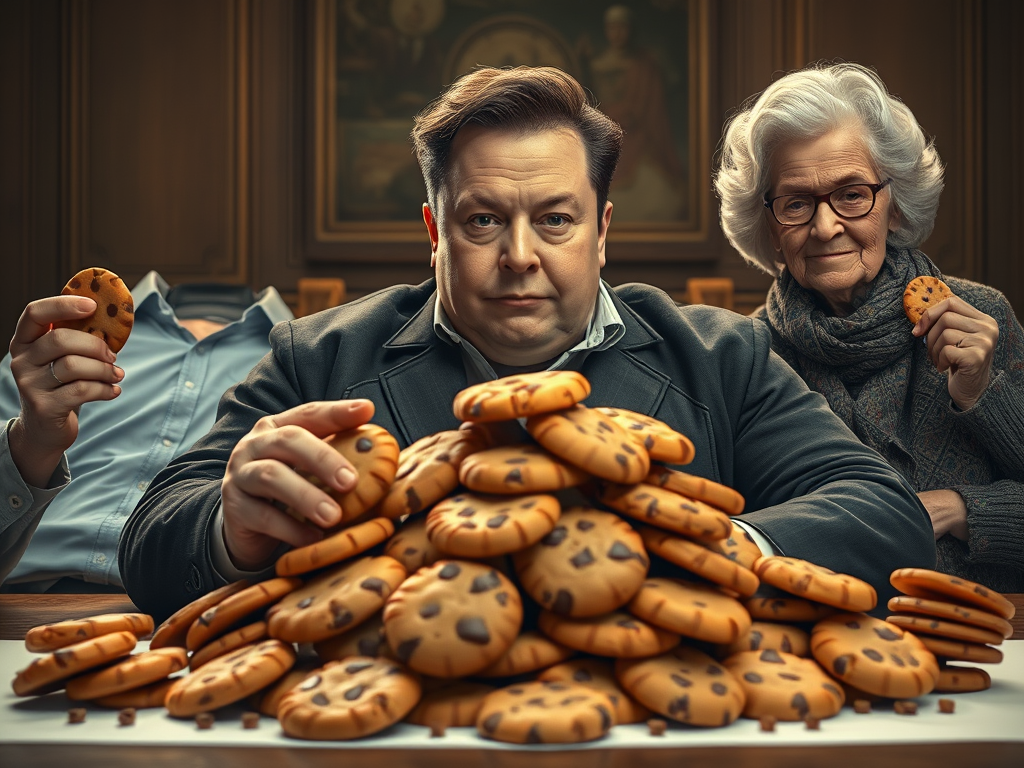
“That old lady doesn’t deserve to steal your one cookie! Watch out for her!”
Here are some things to consider.
The very greediest people in the world are not necessarily the most competent. Most jobs are actually created by small businesses, not by giant corporations. Giant corporations often outsource jobs to other countries where the labor is cheaper and where they don’t have to follow any pesky child labor laws or safety in the workplace regulations. Increasingly, giant corporations look to automate more and more jobs and to use AI to replace people.
Highly paid CEO’s have often run giant companies into the ground. Remember that on your next trip to Montgomery Ward’s or Radio Shack. Who else? Lehman Brothers, Bank of New England, Texaco, Chrysler, Enron, PG&E, GM, WorldCom and a host of others. But wait! GM still makes cars. I can get gas at a Texaco station. How could it be that they went bankrupt. You bailed out GM. Texaco went bankrupt, but the brand name was still worth something. Chevron owns the brand.
Also note that in countries where the CEO’s are only paid ten times the average wage of their employees instead of a thousand times as much, the CEO’s do just as good a job.
Are government agencies sometimes inefficient? You bet your life! And you know what else is sometimes inefficient? Everything! Small businesses are inefficient. Large businesses are inefficient. Medium sized businesses are inefficient. Your car engine is inefficient. Your body is inefficient. Your furnace is inefficient. Your stove is inefficient.
You know what is 100% efficient? Things in your dreams. Things in your imagination. I’m not only efficient in my dreams—my God!—I can frigging fly! When I play basketball in my dreams, I can not only jump higher than I ever have in real life, I can hover near the rim! It’s amazing how well I can play various sports when I dream about them.
(AI generated image of an oldster jumping high in a dream.)
But that’s not reality.
In reality, yes, you can improve the efficiency of systems. But to do so effectively, you have to understand the systems you are trying to make more efficient. Here are just a few of the things you need to understand.
You need to understand what the purpose of the system is. How is its performance measured? Who are the stakeholders? What are the different roles that people play? What formal processes and procedures do various people have to follow? What are the unwritten norms that people follow? These are often more important than the formal processes.
You may recall the scene from the movie A Few Good Men when the attorney points out that “Code Red” is nowhere in the manual. He implies that if “Code Red” is not in the manual, it does not exist. Tom Cruise points out the absurdity of this by asking the witness to point out in the manual where it lays out where the mess hall is. Of course, it doesn’t say that because people learn from others where it is.
In almost every complex organization, people find critical short-cuts and work-arounds to improve the efficiency and effectiveness of the organization. In fact, one of the things people sometimes do to protest idiocy on the part of management is to “Work by the Rule” which means they will not do the things they have discovered make things easier but instead follow the written rules to the letter which typically slows things down considerably.
During the 1990’s, management fell in love with something called “Business Process Re-engineering.” This is how it often worked (or, to put it more honestly, how it often failed to work). Management consultants would come in and talk to a few third or fourth level managers to find out how the work was performed now. The consultants would then construct a map of how things worked (often called the “is map”) and then, they would figure out a more efficient way to do things and map that out; the “to be map.” Then, it was the job of management to make people use the new “more efficient” process rather than the old process.
(AI generated image of the Trumputin Misadministration.)
That seems like a good idea—right? Well, yes, in a dream, it’s a good idea. But in reality, the third or fourth level manager hardly ever knows how things are actually done. Their mental model is a vast oversimplification. To understand what is going on in reality, you must observe the people actually doing the work and talk to them as well.
Below is a link to a satirical piece I wrote some time ago that imagines “Business Process Re-engineering” coming to Major League Baseball to make it more efficient. It is meant to make it obvious how silly it is.
But what DOGE is doing is much worse that Business Process Re-engineering. Even putting aside the obvious conflicts of interest and the illegality of what they are doing, they are going about “improving” things without even understanding the high level over-simplification of what is happening!
Imagine you slipped on the ice and broke your arm. Sadly, it’s not a simple fracture. It’s a compound fracture. This means your bone is sticking out through your skin. You are in a great deal of pain. But no worries! While you are going to the emergency room, a group of teen-age hackers go on-line and examine all your private medical records. They discover that you were vaccinated for smallpox, measles, mumps, and whooping cough. Not only that—they look through a sample of other records and find that more than 90% of the Americans who break their arms have been vaccinated for these diseases! Voila! The vaccinations must be the real cause of your broken arm!
(An AI-generated image for the following prompt: “A man has a compound fracture of the upper arm. The arm bone (the humerus) is jutting out of his shirt and his arm. He is bleeding.”)
These folks don’t know diddly squat about medicine, but they sure know how to hack into systems in order to get data! What they are not so good at, however, is making valid inferences about the data they find. You cannot conclude anything from the fact that 90% of Americans who break their arms have been vaccinated without also finding out about other things. For instance, you also need to know what percentage of Americans who have not been vaccinated have also broken their arms. Suppose it’s 95%. That might mean that vaccinations serve some protective function about bones. Or not. We need to look at other things too. But, let’s suppose that they do look at that and it turns out that only 80% of Americans who have not been vaccinated break their arms. See! See! Surely, that proves that vaccinations cause arm breakage.
Not so fast. You still need to look at other factors. Suppose that people who do not get vaccinated tend to die at a much younger age. That could easily account for the difference. All sorts of factors have some influence on the incidence of fractures. Just to name a few, it depends on the type of fracture; it depends on age; it depends on the prevalence of certain activities (people who ski, or paraglide might tend to break more bones than people playing chess); it depends on diet; it depends on weight bearing exercise. If you lift weights and go to the gym, you help protect yourself from fractures. Of course, separating out all these factors takes time and takes expertise. You can’t expect someone, not matter how brilliant a hacker they are, to find an answer.
But hey! We left you in the emergency room! Sadly, we left you there all by yourself. There are no human experts at the hospital, as it turns out, because the hospital was closed due to lack of funding. You happen to be unlucky enough to have been born in a rural area of the country. There’s only one nearby hospital and much of its funding has been cut. It has to operate with a skeleton crew. But, as it turns out, skeletons, ironically, don’t actually know that much about medicine. They are, after all, skeletons. And while a hacker might come to the conclusion that skeletons are much more efficient than flesh and blood humans (lighter, no caloric requirements), it turns out that they cannot move or think without other parts of the body. To make up for that, DOGE put in some automation and AI systems. But they didn’t have time to debug the system before moving on to the next project.
(AI generated image).
The last thing you experienced before passing out and dying from sepsis was this little snippet of dialogue with the AI system.
“Hello! I am the brilliant AI system called MUSH: Multi-User System for Health. I am here to help you with your medical problem! What seems to be your problem?”
“I broke my arm. Can’t you see? My bone is sticking out through my shirt sleeve.”
“Excellent! We’ll have that fixed in no time. Please put your insurance card in the slot provided.”
“I can’t. It’s in my wallet and I can’t reach it with my left hand. And I can’t move my right arm at all.”
“Excellent! We’ll have that fixed in no time. Please put your insurance card in the slot provided.”
“I need a human operator.”
“Excellent! We’ll have that fixed in no time. Please put your insurance card in the slot provided.”
“No, you don’t get it. I have an insurance card but I can’t reach it.”
“You have failed three times to insert your insurance card. Next patient please. I hope you will fill out a short questionnaire about your experience with MUSH: Multi-User System for Health.”













































 petersironwood