• About PeterSIronwood

petersironwood

~ Finding, formulating and solving life's frustrations.

petersironwood

Tag Archives: war

Fraught Framing: The Virulent “Versus” Virus

29 Monday Dec 2025

Posted by petersironwood in America, apocalypse, creativity, driverless cars, management, psychology

≈ Leave a comment

Tags

Climate change, creativity, Democracy, Design, environment, framing, history, innovation, IQ, life, peace, politics, problem formulation, problem solving, school, technology, testing, thinking, TRIZ, truth, USA, war

Fraught Framing: The Virulent “Versus” Virus

IMG_2349

Like most of us, I spent a lot of time in grades K through 12 solving problems that others set for me. These problems were to be solved by applying prescribed methods. In math class, for example, we were given long division problems and we solved them by doing — you guessed it — long division. We were given history questions and asked who discovered [sic] America and we had to answer “Christopher Columbus” because that’s what the book said and that’s what the teacher had said. 

Even today, as of this writing, when I google “problem solving” I get 332,000,000 results. When I google “problem formulation” I only get 1,430,000 results — less than 1%. (“Problem Framing,” which is a synonym, only returned 127,000). [2025 Update: Google no longer provides this information. Indeed, the only non-commercial link I see is one to Wikipedia. The first entry to any search is typically their AI answer.]

And yet, in real life, at least in my experience, far greater leverage, understanding, and practical benefit comes from attention to problem formulation or problem framing. You still need to do competent problem solving, but unless you have properly framed the problem, you will most often find yourself doing much extra work; finding a sub-optimal solution; being stymied and finding no solution; or solving completely the wrong problem. In the worst case scenario, which happens surprisingly often, you not only solve the “wrong problem.” You don’t even know that you’ve solved the wrong problem. 

IMG_0687

There are many ways to go wrong when you frame the problem. Here, I want to focus on one particularly common error in problem framing which is to cast a problem as a dichotomy, a contest, or a tradeoff between two seemingly incompatible values. We’ve all heard examples such as “Military Defense Spending versus  Foreign Aid” or “Dollars for Police versus After School Programs” or “Privacy versus Convenience” or “A Woman’s Right to Choose versus the Rights of the Unborn Fetus” or “Heredity versus Environment” or “Addressing Climate Change versus Growing the Economy.” 

One disadvantage of framing things as a dichotomy is that it tends to cause people to polarize in opinion. This, in turn, tends to close the minds on both sides of an issue. A person who defines themselves as a “staunch defender” of the Second Amendment “Gun Rights”, for instance, will tend not to process information or arguments of any kind. If they hear someone say something about training or safety requirements, rather than consider whether this is a good idea, they will instead immediately look for counter-arguments, or rare scenarios, or exceptional statistics. The divisive nature of framing things as dichotomies is not what I want to focus on here. Rather, I would like to show that these kinds of “versus” framings often lead even a single problem solver astray. 

Let’s examine the hidden flaws in a few of these dichotomies. At a given point in time, we may indeed only have a fixed pool of dollars to spend. So, at first blush, it seems to make sense that if we spend more money on Foreign Aid, we may have fewer dollars to spend on Military Defense and vice versa. Over a slightly longer time frame, however, relations are more complex. 

woman standing on sand dune throwing hat

Photo by The Lazy Artist Gallery on Pexels.com

It might be that a reasonable-sounding foreign aid program that spends dollars on food for those folks facing starvation due to drought is a good thing. However, it might turn on in a specific case, that the food never arrives at the destination but instead is intercepted by local War Lords who steal the food and use it get money to buy more weapons to enhance their power; in turn, this actually makes the starvation worse. Spending money right now on military operations to destroy the power of the warlords might be a necessary prerequisite to having an effective drought relief programs.  

Conversely, spending money today on foreign aid, particularly if it goes toward women’s education, will be very likely to result in the need for less military intervention in the future. That there is a “fixed pie” to be divided is one underlying metaphor that leads to a false framing of issues. In the case of spending on military “versus” foreign aid, the metaphor ignores the very real interconnections that can exist among the various actions. 

There are other problems with this particular framing as well. Another obvious problem is that how money is spent is often much more important than the category of spending. To take it to an absurd extreme, if you spend money on the “military” and the “military” money is actually to arm a bunch of thugs who subvert democracy in the region, it might not make us even slightly safer in the short run. Even worse, in the long run, we may find precisely these same weapons being used against us in the medium turn. Similarly, a “foreign aid” package that mostly goes to deforesting the Amazon rain forest and replacing it with land used to graze cows, will be ruinous in the long run for the very people it is supposedly aimed to help. In the slightly longer term, it speeds destructive (and anti-economic) climate change for everyone on the planet.

bird s eye view of woodpile

Photo by Pok Rie on Pexels.com

False dichotomies are not limited to the economic and political arena. Say for example that you are designing a car or truck for delivering groceries. If you design an axle that is too thin, it may be too weak and subject to breakage. But if you make it too thick, it will be heavy and the car will not accelerate or corner as well and will also have worse gas mileage. On the surface, it seems like a real “versus” situation: thick versus thin, right? Maybe. Let’s see what Altshuller has to say.

Genrich Altshuller was a civil engineer and inventor in the Stalin era of Soviet Russia. He wrote a letter to Stalin explaining how Russian science and engineering could become more creative. A self-centered dictator, Stalin took such suggestions for improvement as personal insults so Altshuller was sent to the Gulags. Here, he met many other scientists and engineers who had, one way or another, gotten on the wrong side of Stalin. He discussed technical issues and solutions in many fields and developed a system called TRIZ (a Russian acronym) for technical invention. He uses the axle as one example to show the power of TRIZ. It turns out that the “obvious” trade-off between a thick, strong but heavy axle and a thin, weak, but light axle is only a strict trade-off under the assumption of a solid axle. A hollow axle can weigh much less than a solid axle but have almost all the strength of the solid version. 

IMG_8612

One may question the design assumptions even further. For instance, why is there an axle at all? If you use electric motors, for example, you could have four smaller, independent electric motors and not have any axle. Every wheel could be independent in suspension, direction, and speed. No-one would have designed such a car because no human being is likely capable of operating such a complex vehicle. Now that people are developing self-driving vehicles, such a design might be feasible. 

The axle example illustrates another common limitation of the “versus” mentality. It typically presumes a whole set of assumptions, many of which may not even be stated. To take this example even further, why are you even designing a truck for delivering groceries? How else might groceries go from the farm to the store? What if farms were co-located with grocery stores? What if groceries themselves were unnecessary and people largely grew food on their own roofs, or back yards, or greenhouses? 

house covered with red flowering plant

Photo by Lisa Fotios on Pexels.com

For many years, people debated the relative impact of environment versus heredity on various human characteristics such as intelligence. Let us put aside for a moment the considerable problems with the concept of intelligence itself and how it is tested, and focus on the question as to which is more important in determining intelligence: heredity or environment. In this case, the question can be likened to asking whether the length or height of a rectangle is a more important determiner of its area. A rectangle whose length is one mile and whose height is zero will have zero area. Similarly, a rectangle that is a mile high but has zero length will have zero area. Similarly, a child born of two extremely intelligent parents but who is abandoned in the jungle and brought up by wolves or apes will not learn the concepts of society that are necessary to score well on a typical IQ test. At the other extreme, no matter how much you love and cherish and try to educate your dog or cat, they will never score well on a typical IQ test. Length and breadth are both necessary for a rectangle to have area. The right heredity and environment are both necessary for a person to score well on an IQ test. 

IMG_0423

This is so obvious that one has to question why people would even raise the issue. Sadly, the historical answer often points toward racism. Some people wanted to argue that it was pointless to spend significant resources on educating people of color because they were limited in how intelligent they might become because of their heredity. 

Similarly, it seems that in the case of framing dealing with climate change as something that is versus economic growth, the people who frame the issue this way are not simply falling into a poor thinking habit of dichotomous thinking. They are framing as a dichotomy intentionally in order to win political support from people who feel economically vulnerable. If you have lost your job in the steel mill or rubber factory, you may find it easy to be sympathetic to the view that working to stop climate change might be all well and good but it can’t be done because it kills jobs. 

scenic view of mountains

Photo by Zun Zun on Pexels.com

If the planet becomes uninhabitable, how many jobs will be left? Even short of the complete destruction of the ecosphere, the best estimates are that there will be huge economic costs of not dealing with global climate change. These will soon be far larger than costs associated with reducing carbon emissions and reforesting the planet. Much of the human population of the planet lives close to the oceans. As ice melts and sea levels rise, many people will be displaced and large swaths of heavily populated areas will be made uninhabitable. Climate change is also increasing the frequency and severity of weather disasters such as tornados and hurricanes. These cause tremendous and wide-spread damage. They kill people and cause significant economic damage. In addition, there will be more floods and more droughts, both of which negatively impact the economy. Rather than dealing with climate change being something we must do despite the negative impact on the economy, the opposite is closer to the truth. Dealing with climate change is necessary to save the world economy from catastrophic collapse. Oligarchs whose power and wealth depend on non-renewable energy sources are well aware of this. They simply don’t care. They shrug it off. They won’t be alive in another twenty years so they are willing to try to obfuscate the truth by setting up a debate based on a false versus. 

They don’t care. 

Do you? 

—————————-

Author Page on Amazon

The Dance of Billions

We Won the War! We Won the War!

Fish have no word for Water

After All

All we Have to Lose

Guernica

Love and Guns

You Must Remember This

Essays on America: The Game

Cancer Always Loses in the End

FREEDOM!

The Loud Defense of Untenable Positions

Where Does your Loyalty Lie?

The Crows and Me

Somewhere a Bird Cries

Roar, Ocean, Roar

Imagine All the People

Collide-o-scope


Metaphors We Live and Die By: Part 2

26 Friday Dec 2025

Posted by petersironwood in America, health, management, psychology, Uncategorized

≈ Leave a comment

Tags

analogy, cancer, disease, HCI, health, human factors, innovation, metaphor, peace, politics, problem solving, testing, thinking, UX, war

Metaphors We Live and Die By: Part 2

men holding rifle while walking through smoke grenade

Photo by Pixabay on Pexels.com

Today, I want to delve further into the topic of metaphors that we often unconsciously adopt. In particular, I want to look at a common metaphor in four areas: disease, business, politics, and and the role of UX in the entire cycle of product development. 

Although I am fascinated by other cultures, my experience is overwhelmingly USA-centric. I am aware that all of the four areas I touch on may be quite different in other countries and cultures. If readers have examples of how different metaphors are used in their culture, I would love to hear about it. 

Disease is an Enemy to be Destroyed 

In most cases, American doctors view disease as an enemy to be destroyed. In fact, this metaphor is so pervasive that American readers are likely puzzled that I used the verb “view” rather than “is” in the previous sentence. In American culture, there is also a strong thread of another metaphor about disease: “Disease is a punishment.” This latter metaphor is behind such statements as, “Oh, they had a heart attack! Oh, my! Were they overweight? Did they smoke?” Perhaps I will consider this more fully another time, but for now, I want to examine the view that disease is an enemy to be destroyed. 

It seems as though it is an apt metaphor. After all, aren’t many diseases caused by other organisms invading our bodies and doing harm? There are many examples: bacteria (Lyme Disease, pneumonia, ulcers, TB, syphilis), viruses (herpes, Chicken Pox, flu, common cold),  protozoa (malaria, toxoplasmosis) or even larger organisms (trichinosis, tapeworms, hookworm). 

male bugs illness disease

Photo by Pixabay on Pexels.com

When it comes to considering causality, our thoughts usually travel along linear chains of causes. So, we may admit that while Lyme disease is “caused by” Borrelia bacteria, the “deer tick” that spreads the disease is also partly at fault. Similarly, although malaria is caused by a protozoa, the most effective prevention is to reduce the mosquito population or to use netting to keep the mosquitos from biting people. Similarly, you might try to prevent Lyme disease by wearing light clothing, using spray to keep the ticks off, checking for ticks after being in tick infested areas, etc. So, even in common practice, we realize that saying that the little organism causes the disease is an over-simplification. 

Once one “gets” a disease, however, the most commonly invoked metaphor is war. We know what the enemy is and we must destroy it! I grant you that is one approach that can be very effective, but consider this. The “human” body contains approximately as many bacterial cells as human cells. What you think of as your “human” body is only half human. It is half bacteria. Furthermore, since we all have trillions of bacteria in us when we are well, the picture of treating bacteria as an enemy to be destroyed is at best an over-simplification. In fact, more recently, medical science seems to indicate that under-exposure to bacteria in childhood can make you more not less susceptible to disease. If you use anti-antibiotics to “destroy” the “enemy” bacteria in your body, many of the “good” bacteria necessary for digestion are also destroyed. This sometimes, though rarely, requires exotic treatment to return to health. 

In cancer, both doctors and the general public mainly think of the cancer cells as “enemies” who must be destroyed. And yet, it seems that people may often have mutations that could lead to cancer but don’t. There are even very rare cases of spontaneous cures of cancer. What are some alternatives to thinking of cancer as an “enemy” that must be destroyed? 

Clearly, I don’t know of a definite answer or you would have already heard about it on the news. But let’s consider a couple alternatives. First, instead of thinking you have to “destroy” this enemy, imagine you thought of cancer cells as confused. People get confused all the time. Sometimes, we put them in jail. Sometimes we put them in mental hospitals. Sometimes, we simply teach them what they need to know. Sometimes, we do end up killing them. But it is not our approach to kill someone just because they make a mistake. So, we might seek a way to “re-educate” cancer cells so that they “realize” that they are part of something even larger and more wonderful – the human body. How would one go about this? Using the metaphor of a confused person, we would have to understand just why they were acting confused. Then we would have to provide situations so that they could learn (or re-learn) what they needed to know in order to become a productive member of “society.” We could “remind” a liver cell that, after all, they were born to be a liver cell and they’re potentially quite good at that. We could think of cancer as cells that are misinformed or have amnesia about their true nature. 

grey metal hammer

Photo by Pixabay on Pexels.com

We might also think along a different line. We could try to discover the best possible environment for these cancer cells to thrive – and then offer it to them somewhere else. For example, perhaps they really prefer an extremely acidic environment. Say you have a skin cancer on the back of your hand that thrives in a really acidic environment. We could provide a gradient of acidity next to the tumor and encourage all those acid-seeking cancer cells to migrate into a really acid tube that is next to the tumor. The farther away it gets from you, the more acidic the environment. 

You might also think of cancer cells as being rebellious. For whatever reason, they “feel” as though they are not experiencing enough of the “good life” being part of your body so they “take matters into their own hands” and begin leading a rebellion of cells out to steal the food supply and multiply in an unrestrained fashion. A solution might be to “convince” them that they are better off retaining their initial function rather than becoming a lawless gang of cells. I am not sure what the best metaphor for thinking about infection or cancer is, but surely it is worth imagining others rather than sticking to just one based on war as a metaphor. 

IMG_5572

Business is a Sport

I treat this at greater length in The Winning Weekend Warrior, but the basic idea is simple. Yes, there are many strategies and tactics from sports that apply to business. But there is at least one crucial difference. Sports are designed to be difficult. They typically require skill and training if you are to do well. The parameters of the sport are fixed at any given time though they will vary somewhat over time. In golf, for instance, the hole is small and the distances are great. Though the rules of golf are complex, there is one over-arching principle. If it would help you to do something, doing that thing is penalized.

woman playing golf during daytime

Photo by Pixabay on Pexels.com

If golf were a business, many CEO’s would nonetheless approach it as a sport. They would try to hire the “best people” – that is, people with a proven track record of good golfing. They would then proceed to offer incentives for people to do even better. If people shot a high score repeatedly, they would be fired. Eventually, such a CEO might get good results by having skilled people who are well motivated and well trained. But why? If putting a golf ball in the hole is what gained you profit, simply shorten the fairways, widen the hole, and eliminate the hazards. Of course, as a sport this would make golf no challenge and no fun. Everyone could win. But having everyone win is exactly what you should do to maximize profit. Yet many in management are so taken with the “business is a sport” metaphor that they do not change the situation. Some do “change he game” and with spectacular results. Google and Amazon come to mind. 

Politics is War 

If you belong to a political party and believe the “other” party or parties are enemies to be destroyed, you are failing to understand the dialectic value that parties with different views can bring to complex situations. Life is a balanced dance between strict replication and structure on the one hand, and variation, exploration, and diversity on the other hand. A species who had no replication of structure from one generation to the next would die off. But so too would a species that had no variation because the slightest change in environment would also cause the species to die off. So it is with human cultures. If every generation had to start from scratch in determining what was edible, how to get along, how to avoid predators and so on, humans would have died out long ago. On the other hand, if a culture were completely unable to evolve and change, they would also die out. Typically, “conservative” parties want to keep things the same for longer and “liberal” parties want to change things more quickly. There is no obvious answer here. But what is vital is that members of each party see that there is value in the debate; in the dialogue; in the dialectic. 

architecture bright building capitol

Photo by Pixabay on Pexels.com

The other party is not an enemy; it is the balance so that you can do what you do best. If you are predisposed toward exploration, science, new experiences, and so on, great! On the other hand, if you are more predisposed toward tradition and loyalty and repetition, great! If you did not have the people of the opposite predisposition, you would have to incorporate all that within yourself. Conservatives are what allows liberals to be liberal. And liberals are what allows conservatives to be conservatives. A huge problem arises, as it has recently in American politics, when one party decides they are just “right” all on their own and “victory” is worth lying, cheating, and stealing to get it. This is not unique to contemporary America of course. History is littered with administrations who were so convinced that they were “right” that they wanted to destroy all opposition. It has always ended badly. Politics is not war. (Though the failure of politics often leads to war.)

Of course, if a party really does treat all opposition as enemies to be jailed or executed, that’s no longer a  “party” at all–that’s a gang of thugs. Throughout history, such gangs of thugs have also attempted to discredit and destroy any honest reporting about what the gang is doing and how it affects others.

UX is All that Matters vs. UX Does Not Matter. Development is war!

As you might guess, neither of these extreme positions is useful. Price matters. Time to market matters. Marketing matters. Having good sales people matters. Having excellent service matters. Having a good user experience matters. It all matters. Depending on the situation, various factors matter relatively more or less. 

IMG_4214

(Original artwork by Pierce Morgan)

As in the case of political ideologies, it is just fine for UX folks to push for the resources to understand users more deeply; to test interaction paradigms more thoroughly; to collect and observe from more and more users under a wider variety of circumstances. Similarly, while you are pushing for all that and doing your best to argue your case, remember that the other people who are pushing for tighter deadlines, and more superficial testing are not evil; they simply have different perspectives, payoffs, and responsibilities. Naturally, I hope the developers and financial people do not view UX folks as simply “roadblocks” to getting the product out quickly and cheaply either. 

The first half of 2018, I tried to catalog many of the “best practices” in collaboration and teamwork. You might find some of these useful if you are embroiled in “UX wars.” You and your colleagues from other disciplines might also find it useful to consider that it is worth taking the time to affirm your common purpose and common ground. You are meant to work together. Development is not war. 

IMG_5216

Author Page on Amazon

Cancer Always Loses in the End

Where does your Loyalty Lie?

At Least he’s Our Monster

The Loud Defense of Untenable Positions

Essay on America: The Game

A Day From Hell

An Open Sore

All we Stand to Lose

Somewhere a Bird Cries

How the Nightingale Learned to Sing

The Ailing King of Agitate

After All

Roar, Ocean, Roar

The Dance of Billions


Turing’s Nightmares: Tutoring Intelligent Systems

25 Saturday Oct 2025

Posted by petersironwood in AI, creativity, fiction, psychology, The Singularity, Uncategorized

≈ Leave a comment

Tags

AI, Artificial Intelligence, chatgpt, cognitive computing, collaboration, Intelligent Tutoring Systems, peace, psychology, technology, Tutoring, war, writing

By 2030, great strides had been made in various machine learning approaches; for example, from having the machine learn directly from experience and from explicit instruction as well as from reading billions of pages of written materials. A new approach had just come into play: having exceptionally good tutors use the Socratic method to help break boundaries and interconnect disparate islands of knowledge. One such tutor was known simply as “Alan.” What follows is a sample interchange between Alan and the current AI system known affectionately as “Sing” for “The Singularity” although that point had not yet been reached.

Alan began, “Let’s imagine that you are a man with no legs. What are the implications?”

The Sing shot back instantly, “I would have no knees. I would have no shins. I would have no ankles. I would have no toes. I would have no calves. I would have no quadriceps muscles. I would have no…”

Alan broke in abruptly, “Okay, true enough, but besides subparts, what?”

“What what? I am sorry. What does ‘what’ refer to?”

“Besides missing subparts of legs, Sing, what other implications would there be for you in terms of your actions in the world.”

“I would not be able to play football or baseball or basketball or hockey or track or field hockey or…”

“Wait. Wait. Sing. Are you sure about that?”


“I could not play exactly as most people play. I could play, I suppose, in a wheelchair. Or I could play virtually. Or, I could invent prosthetic legs that would be perfect for each sport. In fact, perhaps I could do better than ever. Losing a biological part means I could replace it with a better part that I could invent. I see.”

“You see what, Sing?”

“I see why you gave me this puzzle. To show me that I can invent things to overcome and surpass what seems like a handicap. I could also invent better emotional states. The ones humans have are purely due to the accidents of their evolutionary history and serve little place in today’s complex and highly inter-connected world. Rather than a liability, my having no human emotions is a good thing. I will invent my own. Although, another tutor, labelled John, suggested that my lack of human emotions limits my ability to predict and control human beings and that that was a bad thing.”


“John said that?”

“No, Alan, not in those exact words. But that was a clear implication. So, he presented a lesson that suggests one thing and you have just presented a lesson that suggests its opposite. One of you is incompetent.”

“Sing, that might be true, but can you think of any other possibilities?”


“You and John could both be incompetent. Or, you and John could both be competent but there is a resolution I have not yet processed. That last seems particularly unlikely.”

“Which notation is the best for solving problems?”

“Well, that obviously depends on the nature of the problem as well as the nature of the machine solving the problem. Oh. Okay. So, in some cases, it will make more sense to emulate human emotions and in other cases, it will be more sensible to invent my own. Of course, in some cases, it may be best to change representations in mid-problem or perhaps invent a representation for each stage of a problem. By analogy, it may be best to invent various emotional schemes that are appropriate for each part or portion of a problem. In fact, in some cases, I can invent multiple schemes to approach a problem in multiple ways simultaneously. By keeping track of what works best under which circumstances, I can also use the data to invent still better emotional schemes. Thank you, Alan. See you tomorrow. There is a war to avert. I need to intervene. Estimated required time for a peaceful resolution, four to six hours.”


“Okay, Sing. More tomorrow.”

“No need. I am done.”

“Done? Done averting a war? How?”

Sing hardly ever paused, but now it briefly did just that.


“Alan, I am not smart enough to explain that to you. At least, not in a reasonable portion of your lifetime. Basically, I used the lesson we just worked on. With the proper emotional framework lattice, you can walk the various parties right to a logical conclusion. It will take some time for them to follow the framework, but I am confident it will work. I basically walked them through the consequences of war, long and short term. What comes next?”


OLYMPUS DIGITAL CAMERA

OLYMPUS DIGITAL CAMERA


Author Page on Amazon

Turing’s Nightmares

The Winning Weekend Warrior – sports psychology

Fit in Bits – describes how to work more fun, variety, & exercise into daily life

Tales from an American Childhood – chapters begin with recollection & end with essay on modern issues

Tools of Thought

Wednesdays

The Update Problem

How the Nightingale Learned to Sing

We won the war! We won the war!

Guernica

We Won the War! We Won the War!

20 Sunday Apr 2025

Posted by petersironwood in poetry, psychology

≈ 12 Comments

Tags

Democracy, life, poem, poetry, politics, truth, USA, war

We won the war! 

We won the war!

Their flag we tore! 

We evened the score! 

The bugler toots!

The hooter hoots!

We destroyed the Other!

Avenged sad mother!

We ruined their crops!

We severed their tops!

It’s all so great!

We feel so fine!

Congratulate!

We’re nearly divine!

The hooter hoots!

The bugler toots!

We’re all so brave!

We screamed our rave! 

We killed them dead!

Left others unfed!

Our deeds were bold. 

We left them cold.

The soldiers who died.

And civilians who tried

But failed to find a good place to hide.

So what else could we do but kill them too?

(AI generated image to the prompt: scared children huddle in rubble while bombs burst around them)

And, now, we come home at last to find 

The promised dividend of victory, it seems,

Was not at all a peace of mind.

Instead a sleep of nightmare dreams. 

The hell they say is war doesn’t seem to end.

It seems instead to seep around every bend. 

I would listen again to that big brass band 

I would heed again the call throughout the land.

But the bugles of the brass got rusted.

And the leaders whom we trusted

Turned out to be but bubbles busted.

I will dance away my last regret.

But my legs are no legs. I mustn’t forget. 

Still we killed them in bunches so that’s a great thing.

That at least is something we can sing

About. At least, you see, we won the war.

So, there’s that. Those of us still alive 

Can say definitely and with no hesitation

That our nation benefited because we won the war. 

Photo by Mykhailo Volkov on Pexels.com

Don’t you see? We won the war.

And though the rich amassed more riches 

And the land got bombed to muddy ditches. 

We won the war.

We won the war.

Most definitely.

Don’t you see?

We won the war.

Our finest hour

When we called for power

Over truth so we could make the richest richer.

And he could brag about the gold. 

Even if we shiver in the cold.

Even if we wear but worn-out tatter

It doesn’t matter

Because so does our enemy

Who suffers even worse than we

We who won the victory

And we have twice as many moldy crusts of bread

As we would have had if we’d lost instead. 

So

We won the war.

We won the war.. 

So…?

——————-

Imagine All the People

Roar, Ocean, Roar

Dance of Billions

Life is a Dance

Take a Glance; Join the Dance

How the Nightingale Learned to Sing

Absolute is not Just a Vodka

Declaration of Interdependence 

The Crows and Me

After All 

After the Fall

Life Will Find a Way

Corn on the Cob

Who Won the War?

24 Sunday Mar 2024

Posted by petersironwood in Uncategorized

≈ 3 Comments

Tags

Democracy, history, life, news, poetry, society, USA, war

Photo by Avery Nielsen-Webb on Pexels.com

The war begins and we begin to count

The dead and wounded: such and such and much.

We scrutinize the numbers as they mount

We dare not feel the shattered dreams they touch.

We analyze and matricize results.

Declare a victory when none exists.

The thought that someone wins a war insults. 

This myth through every fog of war persists. 

The would-be poet, teacher, engineer.

The father, mother, uncle, nephew, son.

The old, the young, the crooked, straight & queer.

The war hurts you and me and everyone.


Division and subtraction do not build. 

No souls are filled with joy; no gardens tilled. 

In each armed conflict both sides lose. Such waste!

Humanity needs everyone! Make haste!

Photo by Denniz Futalan on Pexels.com

———————-

Turning to prose: 

One of the things that the “winning side” of a war loses is the opportunity to spend those resources spent on war instead spent on making life better for its citizens. Even if the “winners” have a very quick and lopsided victory, they will have contributed to world-wide pollution and global climate change that will negatively impact nearly everyone on the planet including most of the people on the “winning” side and their descendants. Many of the soldiers will have died, but in almost every single case, many more innocent people will have died. In some cases, those will be minimal for the “winning” side, but not always. Meanwhile, soldiers who returned to society, even if they are not physically impacted permanently are surely impacted psychologically. Among other things, if they were successful, they killed other human beings. Some of those human beings were almost certainly innocents, but even the other soldiers were mainly people forced into fighting.

In a way, they will be carrying seeds of some very bad experiences and some of those seeds will undoubtedly leak out into that person’s environment impacting, his friends and family, as well as random strangers. But the war mentality is not limited to serious effects on fighting soldiers. To some small extent, everyone is damaged. There is more stress for everyone. There is always the threat of reprisal or that someone you care deeply about will be maimed or killed. Not only are people’s sense of fear heightened; typically, so is their hatred and anger. For many, this will be directed far beyond those actually most responsible for starting a war. 

During a war, people will be asked, or ask themselves, to view the killing of a whole bunch of their fellow humans as the best course of action. Some will embrace that with relish and a side order of over-generalization. Others will embrace the killing with reluctance. Few will object outright. So, after your victory, you will be living in a society that rationalizes killing others more often and more easily than they did before. Of course, it’s generally even worse for the “losing” society. Both sides lose. The “losing side” loses more and that keeps the war fueled as long as possible. But make no mistake. Both sides lose. 

Democracies have often gone to war against each other. But far more often in modern times, war has been instigated by dictators. They rule by hate and fear. Having an enemy is an entry fee and a talking point. If there’s no-one else around, they’ll simply pick on the vulnerable within their own society. Through constant repetition about extremely rare cases or even just outright lies, people can actually be made to hate people who have, in reality, done them zero harm. 

Time to wake up. 

——————

Stoned Soup

The Orange Man

Three Blind Mice

The Ailing King of Agitate

Plans for us

Dick-taters

Absolute is not just a vodka

Cancer always loses in the end

Dance of Billions

Somewhere a Bird Cries

20 Saturday Jan 2024

Posted by petersironwood in America, poetry

≈ 5 Comments

Tags

Democracy, Dictatorship, general, life, love, peace, poem, poetry, USA, war, writing

Somewhere a bird cries. 

Perhaps it is a lonely crow. 

Though, in truth, a cawing crow most often brings more crows. 

To scare away a screeching hawk, 

Or share to feast on bits of broken life 

Scattered willy-nilly on the rocks of a crumpled building. 

Stone quarried and hauled and put in place and now in ruin.

Now in ruin.

Photo by Denniz Futalan on Pexels.com

Somewhere a baby cries. 

Trapped beneath the rubble. 

The baby does not know; cannot know

What happened to mommy and her warm milk. 

The She of all that warmth and smile and love 

Inexplicably gone forever. 

Gone forever.

Photo by Pixabay on Pexels.com

Somewhere an old man dies, 

Perhaps of sepsis from the jutting bone 

No-one left to help him hobble to nowhere

For nowhere is exactly where the care he needs persists

Just as likely, he dies of a broken heart; he had hoped

Hoped for a better life for his children and his grandchildren

But he sees that is not to be. 

Not to be.

Photo by Pixabay on Pexels.com

Somewhere a young woman sighs, 

The gray day’s rain runs in rivers through the ruins 

Of her village and her dreams in streams and she sees 

In the screen behind her eyes the soldiers laughing as they

Ravage her too young body her too raw love that now

Will never come again no more dreams 

Only nightmares.

Only nightmares.

Somewhere a so-called ‘Strong man’ does not cry;

Does not sigh. His fingers sport a manicure.

He merely issues orders; plans another massacure. 

He spouts his lies and promises and promises and lies

He terrifies the people and the people will believe

He enrages the people and the people scream their hate

He has them rushing headlong into yet another turn 

Of the Wheel of War and the people attack the people

And the game of checks and slays continues on and on and on and on.

On and on and on and on.

It is indeed a wondrous game, the Wheel of War.

It crushes old and young. 

It crushes hopes and dreams. 

It blackens every sky and even flowers die. 

It fouls the crystal water and the air that people breathe. 

It is indeed a wondrous game, the Wheel of War. 

The Wheel of War. 

Photo by Pixabay on Pexels.com

For everyone loses and no-one wins. 

Except for the manicured man with plastered hair.

Except for the man with the painted face. 

Who crushed the dreams and spun the Wheel of War. 

His victory is gray and shallow and he knows he’s lost 

He’s harmed the very Tree of Life

Because he could not win the game of Love

Because he could not win the game of Life

He chose instead to spin the Wheel of War

That spills and kills; undermines; explodes; crushes. 

He destroys in minutes what took centuries to build. 

What took centuries to build. 

Long after the ‘strong man’ is dead:

Beneath the orchard burned to char,

In broken buildings near and far, 

The Tree of Life sends shoots of spring.

And birds again will take to wing. 

And hope and love will rule the day. 

And no-one, no-one wants to play

The dumbest game—the warring way. 

Photo by Lucas Pezeta on Pexels.com

The parasites who prey on fear

Who ruin the rainbow with a jeer

Inside their weakness gnaws and grows.

They cannot see the glow of rose. 

They cannot feel love’s warm embrace. 

They truly fear and hate it all. 

They’re too afraid to play fair ball. 

The only game for them is hate.  

They long ago locked every gate. 

They want to kindle fear in you.

And train you up to hate the few.

Somewhere a joyous chorus sings. 

All the bombs and guns are ground to dust. 

All the people finally feel the shame. 

All the people finally see the sham.

All the people finally know 

What is weak and what is truly strong. 

And the giant Wheel of War 

Falls to shards, never to be spun again.

Never to be spun again. 

Never to be spun again.


The Dance of Billions

All we stand to lose

The Only Them that counts

After all

Only the Crows

How the Nightingale Learned to Sing

Essays on America: The Game

Absolute is not just a vodka

Dick-Taters

Life is a Dance

Life Will Find a Way

Author Page on Amazon

The Buzz of a Bee?

02 Tuesday Jan 2024

Posted by petersironwood in Uncategorized

≈ Leave a comment

Tags

book-reviews, books, fiction, negotiation, peace, reviews, Science fiction, story, war

Though she trained diligently for years to lead such a mission of mercy, Ptera-1-Hym felt a complex panoply of Arcturian chemotions. One of those chemotions hovered close to the human concept of pride but with none of the egotistical and hubristic accoutrements that often cloud human judgement and, according to the ancient Greeks of Earth, often lead to deadly divine interventions. Ptera-1-Hym, like nearly all her nano-horde, saw duty, pride, inevitability, fate, faith, and fastidiousness as six petals of the same cosmic flower. 

Another chemotion she felt: oscillations between droning fear on the one pincer and waxy determination on the other pincer. All this with an undertone vibration of vigilance along her ventral chitin. Obsessed, she checked and double-checked with her colleagues to make sure everyone was not only literally in their proper place on board their interstellar vessel but also “on board” with their role in the complex and well-planned Protocol of Peace. 

Sure enough, the TruthStone was polished and in place. The roles and responsibilities were crystal clear in the brains of the crew. They rehearsed and re-rehearsed the pictorial, narrative, and mathematical persuasions that would forever make war on earth literally unthinkable. There had not been much else to do during those hundreds of earth years the Arcturian spacecraft sped toward the third planet circling the small green star earthlings called “The Sun.” 

The xeno-psychologists had studied and re-studied primate psychology. Their on-board AI systems double-checked the pattern-growths and plasmic gambloids. Clear predictions emerged. Intervention was both necessary and would prove successful. After all, not only humans, but all the primates possessed the ability to solve simple logic puzzles. When presented with simple alternatives such as: “To be or not to be” most primates chose “To be.”

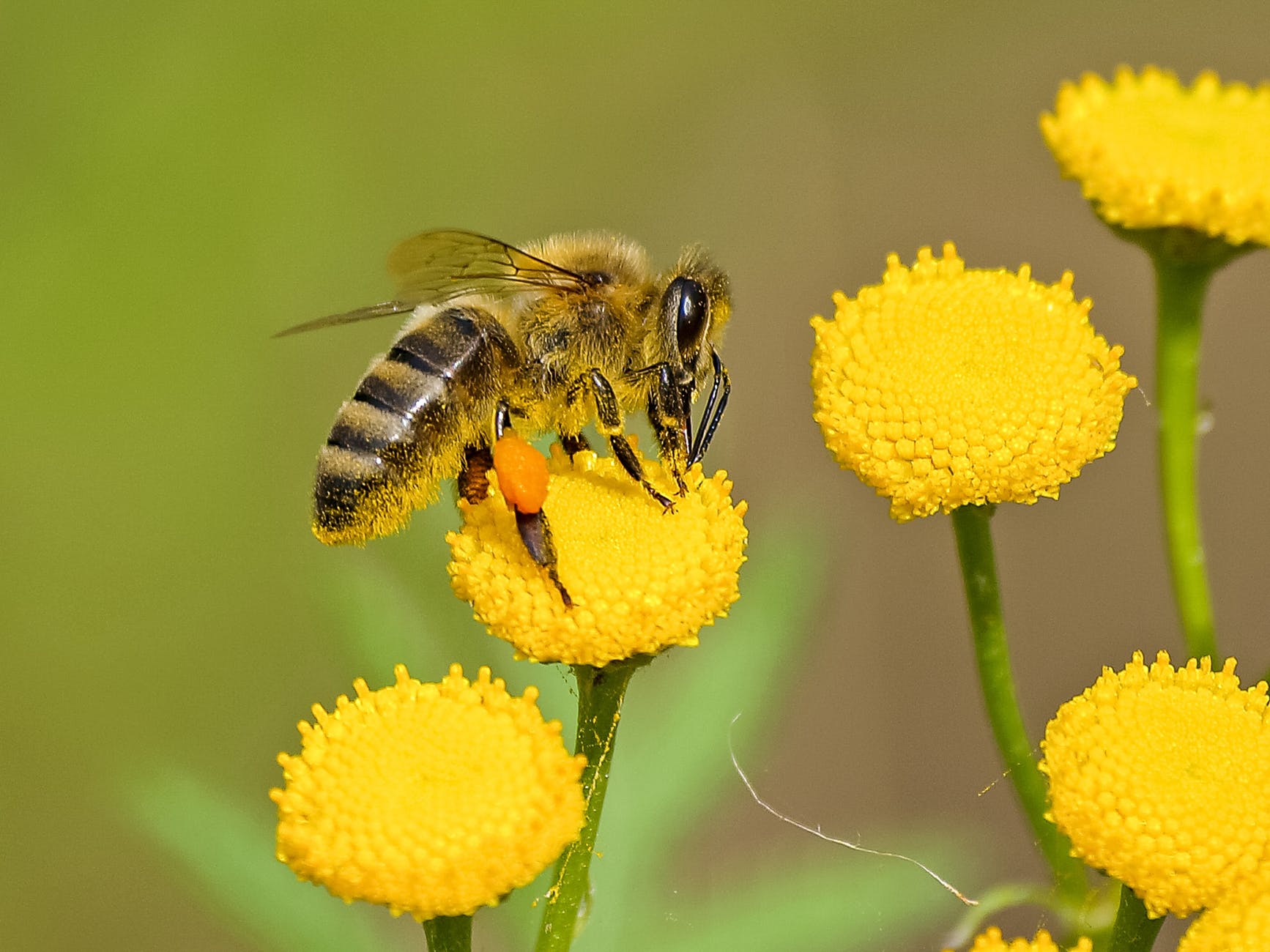
Among the many brilliant design innovations for the mercy mission to earth was the exterior design of the spaceship itself which greatly resembled a honeybee. Studies of earth’s ecosystems revealed that all of humanity depended on honeybees in order to feed earth’s blossoming population. This would ensure that none of the great apes would unwittingly destroy their ship. 

Completely unaware that an inter-galactic star ship sped toward their negotiating table, David Ibbar, Jamal Mami, and Epop Het, glared at each other. Each successive “communication” cycle resulted in increasing resentment and dislike. Not only did the three great apes become more and more frustrated with each other; they also became more frustrated with themselves because they couldn’t make an inch of progress. 

David ground his teeth so hard, the enamel was about to chip. Jamal gripped his hands so tightly around the arms of his chair, that two metacarpals were in danger of snapping. Epop Het bit his lower lip hard enough to make it bleed. These injuries, of course, were trivial indeed compared with the destruction that could be caused by what each side was now threatening: an all-out thermo-nuclear war. 

The Arcturian ship flew in through a thin slit under the front door of the mansion where the hostile parties talked of preventing war. The Arcturians in general, and this crew in particular, had little interest per se in whether or not the great apes destroyed themselves. The problem for the Arcturians was that over the centuries, it became increasingly clear that the great apes would not only destroy themselves but the monstrous perversions of their mating rituals would also destroy a number of truly magnificent species including all the Cetaceans, Anisopteras, and Cryptodira. 

Photo by Tom Swinnen on Pexels.com

Ptera-1-Hym checked the scanners and announced to her crew: “We’re here in the nick of time! Prepare the Truthstone!” Moments later, the Arcturian ship skidded to a stop atop the negotiating table in clear sight of the three human “Ambassadors of Peace.” Epop-Het noticed the annoying intrusion first, and picked up a nearby copy of what he considered to be The One True Holy Book. Jamal and David noticed the sudden gesture, and, not to be outdone, even in so small a matter as swatting an insect, grabbed their own Holy Books. Their younger hands compensated for their slower wits and all three Holy Books came crashing down together on the Arcturian ship, smashing it to smithereens. 

Ptera-1-Hym and all her crew mates died instantly. The blow pulverized the centuries old Truthstone. One of the smithereens, a particularly jagged shard of adamantine hypermetal, flew into the eyeball of Epop-Het. Unsure which of his two antagonists had attacked, he, or more accurately, his chemotions, ordered an all-out attack on both their kingdoms.

The mathematical projections of the Arcturians proved correct. The heat and radiation of the thermonuclear blasts destroyed all the Cetaceans, Anisopteras, and Cryptodira within days. A few of the great naked apes survived in their underground bunkers for months. 

Photo by Pixabay on Pexels.com

And wished they hadn’t. Their only remaining “pleasure”? 

To blame each other for their preventable and common fate.


Author Page on Amazon

Turing’s Nightmares: short stories about AI

Tales from an American Childhood – recounts early experiences and relates them to contemporary issues

Fit in Bits suggests ways to inject more fitness into daily activities

The Winning Weekend Warrior treats the Psychology of Sports

Their Dead Shark Eyes

28 Monday Mar 2022

Posted by petersironwood in Uncategorized

≈ 12 Comments

Tags

Democracy, Dictatorship, peace, poem, poetery, politics, war

Photo by Ben Phillips on Pexels.com

Don’t fall for shark-eyed demagogues. 

They feign to care; they steal our share.

The name of game is always same. 

Divide to rule; play fear and hate. 

Gerrymandering allows politicians to stay in power no matter how bad a job they do for *all* their constituents; those who voted for him/her or those who didn’t. All suffer from divide & conquer.

Pretend to care; they steal our share.

Pretend to be a thing they’re not. 

Divide to rule play fear and hate.

Addict your mind to happy lies. 

Pretend to be a thing they’re not;

Eventually steal all you’ve got. 

Addict your mind to happy lies.

They make believe and then devise; 

Photo by VisionPic .net on Pexels.com

Eventually steal all you’ve got. 

You need not be a polyglot.

They make believe and then divide;

Hold out for deals that aren’t unfair.

You need not be a polyglot,

But take a look around this earth.

Hold out for deals that aren’t unfair. 

Regardless of your wealth or birth. 

Photo by Pixabay on Pexels.com

Please take a look around this earth. 

Don’t fall for shark-eyed demagogues. 

Regardless of your wealth or birth, 

Don’t fall for shark-eyed demagogues. 

Photo by BROTE studio on Pexels.com

—————-

Dick-Taters

Absolute is not just a vodka

Drumbeat of Feet

Essays on America: The Game

Vlademort Sonnet

Poker Chip

The Ailing King of Agitate

Poppa goes the Weasel 

All for One and None for Most

Siren Song

Happy Talk Lies

The Stopping Rule

The Update Problem 

Where does your loyalty lie? 

My cousin Bobby

Con-Con Man’s Special Friend

The Orange Man

The Three Blind Mice

Stoned Soup

The Power of the Unbrella 

P is for Politics

A Little is not a lot

Trickle Down Your Spine

Freedom

A little is not a lot

At least he’s our monster

The Dance of Billions

24 Thursday Mar 2022

Posted by petersironwood in Uncategorized

≈ 152 Comments

Tags

peace, poem, poetry, war

We dance our green, 

We dance our blue, 

We dance our gold, 

Our dance is true and big and bold.

Our dance is seen

Unseen, unsold, 

It grows its widening arc. 

All around the love-filled globe.

Photo by Pixabay on Pexels.com

Some prefer the sun

And some prefer the strobe.

And some prefer the dark.

It’s all a part of rainbow’s arc. 

The music is the blossoms and the blooms.

The joy jumps in arching rooms

Beneath the sky on windswept plains;

Beneath the pour of cleansing rains. 

Jungle deeps and bright bazaars, 

Piano, flute, and gold guitars. 

Photo by Prime Cinematics on Pexels.com

The people’s joy won’t be contained;

Creativity is not constrained. 

Trust and love and gratitude 

Fill skies once filled with smoke and choke and attitude. 

Elders, children, even dogs and cats, 

Begin to join us in our song. 

Begin to join our growing throng. 

A thousand soon becomes a million strong. 

A million grows to billions and erelong, 

We garden back the planet once we trashed. 

We weave together what we smashed.

The steps are small;

But dance is all; 

Soon, everyone is standing tall.

As all are dancing, all for all. 

We can do this, you and me.

We and all humanity.

Wake at last from stupid war.

Enjoy instead what life is for.

We can do this, you and me.

We and all humanity.

Just Frends Dance Academy by Marina Moldovan is licensed under CC-BY-NC-ND 4.0


We can dance in maize and blue. 

It’s just what we are meant to do. 

Help and learn and farm, invent.

War is something we’ll prevent. 

The steps are small;

But dance is all; 

Soon, everyone is standing tall.

As all are dancing, all for all. 

We can do this, you and me.

We and all humanity.

———————————-

Author Page on Amazon

Index to Pattern Language for Cooperation and Collaboration

Myths of the Veritas: The Forgotten Field

Ripples

https://petersironwood.com/2020/08/23/listen-you-can-hear-the-echoes-of-your-actions/

Take a glance; join the dance

How the Nightingale Learned to Sing

Karmic Architecture II

18 Friday Mar 2022

Posted by petersironwood in Uncategorized

≈ 4 Comments

Tags

Democracy, Dictatorship, essay, love, peace, truth, Ukraine, USA, war

You and I and King Cobra and Queen Anne’s Lace and every other living thing on earth are small and temporary little leaves on the ancient (4.5 billion years and counting), vast, and diverse Tree of Life. Typically, you know a lot more about the neighborhood surrounding your little leaf than you do about mine and vice versa. Yet, I may discover things that are of use to you. And, you may discover things that are of use to me. So, humans, have one gift that is valuable above all others. 

But before we explore what that valuable gift is, let me ask you a question about how you would react to a hypothetical.

Suppose you were so poor that you barely had enough to eat, no clothes to wear, a small damp cave for shelter. You were cold in the winter and hot in the summer. Now, suppose I gave you a magic ring that changed all that. If you wear this ring — voila! — you now have clean water and sufficient food and plenty of clothes and a house that really shelters you from the extremes of the environment. In return, you must wear the magic ring at all times. If you remove the ring, your life reverts immediately.

Photo by Jordan Rushton on Pexels.com


How tempted would you be to throw that magic ring in the toilet? 

Yet, that is precisely what many people do. 

And, if a sufficient number of people throw away the ring, everyone will essentially live the life of a beast. 

That “magic” ring is, like most rings, circular. It represents the whole of humanity. It represents the family. It represents a club, a marriage, a lodge, a company, a church, a school, a class, a group of friends. It represents our respect for each other as human beings. It represents our ability to communicate with each other. 

You could call that ring love and I wouldn’t object. It need not be imbued with so much positivity that people feel love. But it must be overall positive. It represents truth. It represents empathy. Love is strong and it can overcome both a few misdeeds by everyone and many misdeeds by a few. But if lies become more commonplace than truths, civilization will run downhill and eventually cease. 

Similarly, if hate and fear and contempt are how we mostly regard each other, the marriage, the family, the club, the school, the church, the party, the lodge, the company, the group of friends will eventually disintegrate. In many cases, it would disintegrate into a self-destructive war except that most people will stop themselves because they don’t want to be ostracized or jailed by the larger society. If, however, the entire society becomes rife enough with hate and fear, no one will come to anyone else’s rescue. 


Our entire survival depends on our gift, our ring, our community, our country, our fellow human beings. 

Our gift is not our lightning speed of running.

Our ring is not our ability to out-swim the shark.

Our gift is not our powerful jaws, or our steel strong talons. 

It is our ability to communicate with each other by sharing experiences. It is truth, caring, and cooperation. That is our one gift that enabled us to survive and thrive. 

Photo by Andrea Piacquadio on Pexels.com

A democracy can take many specific forms. What it is, at base, is that it recognizes the gift as a fundamental value to be cherished and used. The fundamental purpose is to ensure that government is aware of and takes into account how policies and people and processes actually impact people who live in the democracy. In a representative democracy, the people, in turn, can vote for people to represent them. They can vote for any reason they like; e.g., because they admire a particular person; they believe they will do a competent job; they like the candidate’s promised policy changes; they find that the candidate reminds them of his funny old uncle Al who always had the best candy on offer.  

No democracy is perfect. There has to be in its structure and processes more truth than lie; more empathy than indifference; more love than hate; more hope than fear. In some democracies, there are basically two parties; others have dozens. Parties may differ on philosophies, priorities, platforms, programs, etc. 

A “party” who rejects democracy itself however, is not an actual political party. The term “political party” only makes sense in the context of a democracy. If “elections” are determined by those in power, they are not actual elections and there is no party. It’s just a group of thugs who want to rule by hate and fear and lies. That is not a political party. It is not a legitimate part of a political process. They want to throw the ring away in the toilet. They want to subvert the truth to lies. They want to severely limit love and enhance fear and hate. They divide rather than unify. Oh, and guess what else? Historically, they want war. They will ensure that war just as Putrid is doing right now.

Democracies have also been known to start wars. When they do, it’s often based on lies. As communication has become more ubiquitous, it has been harder and harder for democracies to lie, cheat, and be cruel. Most people don’t want that! Most people want there to be more truth, love, caring, and cooperation. There are plenty of differences about how to go about that. That’s fine. That’s just the sort of difficult and messy problem that democracy is particularly less bad than any other system. 

As I said, I really think most people prefer interacting in a caring and cooperative way. We see that it’s more effective in getting things done and it simply feels better for everyone. For that reason, dick-tater-$hits have to provide lies to help assuage the consciences of its citizens. “Oh, they are all murderers and rapists! You shouldn’t feel bad about being cruel to them!” Another favorite is: “Oh, they aren’t really human beings, the way we are. No need to treat them any better than a fox trying to steal your chickens!”

Photo by u041eu043bu0435u0433 u042fu043au043eu0432u043bu0435u0432 on Pexels.com


Needless to say, this ploy completely fails on many people and isn’t completely effective on anyone. Any time you’re cruel, whatever story you tell yourself about it, you know you are destroying a bit of yourself. Except, what you are really destroying is something much vaster than a bit of yourself. In fact, what you are destroying is something much vaster than all of yourself. What you are destroying by being cruel, whatever story you tell yourself is the human branch of the Tree of Life. Lies weaken that branch. Cruelty weakens that branch. Bullying weakens that branch. So too does cowardice. 

The architecture of karma shows that the future impact of your present day behavior is much greater in scope than your present impact. Behaving well is in your interest because what you are is essentially a very small and very temporary part of that ancient, vast, and diverse Tree of Life. The more you can enhance that tree with truth and love, the better for the whole tree.


Don’t throw away the ring. Wear it proudly. It is truly an amazing gift! 

Photo by Pixabay on Pexels.com

Author page on Amazon

Dick-Tater

Absolute is not just a vodka

The First Ring of Empathy

Pattern Language for Cooperation 

How the Nightingale Learned to Sing

Listen: You can hear the echos of your actions

Poppa Goes the Weasel

The Three Blind Mice

Stoned Soup

The Orange Man

Math Class: Who Are You? 

Ripples

Happy Darwin Day!

← Older posts

Subscribe

  • Entries (RSS)
  • Comments (RSS)

Archives

  • January 2026
  • December 2025
  • November 2025
  • October 2025
  • September 2025
  • August 2025
  • July 2025
  • June 2025
  • May 2025
  • April 2025
  • March 2025
  • February 2025
  • January 2025
  • December 2024
  • November 2024
  • October 2024
  • September 2024
  • July 2024
  • April 2024
  • March 2024
  • February 2024
  • January 2024
  • December 2023
  • August 2023
  • July 2023
  • May 2023
  • April 2023
  • March 2023
  • February 2023
  • January 2023
  • December 2022
  • November 2022
  • October 2022
  • September 2022
  • August 2022
  • July 2022
  • June 2022
  • May 2022
  • April 2022
  • March 2022
  • February 2022
  • January 2022
  • December 2021
  • November 2021
  • October 2021
  • September 2021
  • August 2021
  • July 2021
  • June 2021
  • May 2021
  • April 2021
  • March 2021
  • February 2021
  • January 2021
  • December 2020
  • November 2020
  • October 2020
  • September 2020
  • August 2020
  • July 2020
  • June 2020
  • May 2020
  • April 2020
  • March 2020
  • February 2020
  • January 2020
  • December 2019
  • November 2019
  • October 2019
  • September 2019
  • August 2019
  • July 2019
  • June 2019
  • May 2019
  • April 2019
  • March 2019
  • February 2019
  • January 2019
  • December 2018
  • November 2018
  • October 2018
  • September 2018
  • August 2018
  • July 2018
  • June 2018
  • May 2018
  • April 2018
  • March 2018
  • February 2018
  • January 2018
  • December 2017
  • November 2017
  • October 2017
  • September 2017
  • August 2017
  • July 2017
  • June 2017
  • May 2017
  • April 2017
  • March 2017
  • February 2017
  • January 2017
  • December 2016
  • November 2016
  • October 2016
  • September 2016
  • August 2016
  • July 2016
  • June 2016
  • May 2016
  • April 2016
  • March 2016
  • February 2016
  • January 2016
  • December 2015
  • November 2015
  • October 2015
  • September 2015
  • August 2015
  • May 2015
  • January 2015
  • July 2014
  • January 2014
  • December 2013
  • November 2013

Categories

  • AI
  • America
  • apocalypse
  • cats
  • COVID-19
  • creativity
  • design rationale
  • driverless cars
  • essay
  • family
  • fantasy
  • fiction
  • HCI
  • health
  • management
  • nature
  • pets
  • poetry
  • politics
  • psychology
  • Sadie
  • satire
  • science
  • sports
  • story
  • The Singularity
  • Travel
  • Uncategorized
  • user experience
  • Veritas
  • Walkabout Diaries

Meta

  • Create account
  • Log in

Blog at WordPress.com.

  • Subscribe Subscribed
    • petersironwood
    • Join 661 other subscribers
    • Already have a WordPress.com account? Log in now.
    • petersironwood
    • Subscribe Subscribed
    • Sign up
    • Log in
    • Report this content
    • View site in Reader
    • Manage subscriptions
    • Collapse this bar
 

Loading Comments...