• About PeterSIronwood

petersironwood

~ Finding, formulating and solving life's frustrations.

petersironwood

Tag Archives: UX

Metaphors We Live and Die By: Part 2

13 Thursday Dec 2018

Posted by petersironwood in America, health, management, psychology, Uncategorized

≈ 2 Comments

Tags

cancer, disease, HCI, human factors, innovation, politics, testing, UX, war

Metaphors We Live and Die By: Part 2

men holding rifle while walking through smoke grenade

Photo by Pixabay on Pexels.com

Today, I want to delve further into the topic of metaphors that we often unconsciously adopt. In particular, I want to look at a common metaphor in four areas: disease, business, politics, and and the role of UX in the entire cycle of product development. 

Although I am fascinated by other cultures, my experience is overwhelmingly USA-centric. I am aware that all of the four areas I touch on may be quite different in other countries and cultures. If readers have examples of how different metaphors are used in their culture, I would love to hear about it. 

Disease is an Enemy to be Destroyed. 

In most cases, American doctors view disease as an enemy to be destroyed. In fact, this metaphor is so pervasive that American readers are likely puzzled that I used the verb “view” rather than “is” in the previous sentence. In American culture, there is also a strong thread of another metaphor about disease: “Disease is a punishment.” This latter metaphor is behind such statements as, “Oh, they had a heart attack! Oh, my! Were they overweight? Did they smoke?” Perhaps I will consider this more fully another time, but for now, I want to examine the view that disease is an enemy to be destroyed. 

It seems as though it is an apt metaphor. After all, aren’t many diseases caused by other organisms invading our bodies and doing harm? There are many examples: bacteria (Lyme Disease, pneumonia, ulcers, TB, syphilis), viruses (herpes, Chicken Pox, flu, common cold),  protozoa (malaria, toxoplasmosis) or even larger organisms (trichinosis, tapeworms, hookworm). 

male bugs illness disease

Photo by Pixabay on Pexels.com

When it comes to considering causality, our thoughts usually travel along linear chains of causes. So, we may admit that while Lyme disease is “caused by” Borrelia bacteria, the “deer tick” that spreads the disease is also partly at fault. Similarly, although malaria is caused by a protozoa, the most effective prevention is to reduce the mosquito population or to use netting to keep the mosquitos from biting people. Similarly, you might try to prevent Lyme disease by wearing light clothing, using spray to keep the ticks off, checking for ticks after being in tick infested areas, etc. So, even in common practice, we realize that saying that the little organism causes the disease is an over-simplification. 

Once one “gets” a disease, however, the most commonly invoked metaphor is war. We know what the enemy is and we must destroy it! I grant you that is one approach that can be very effective, but consider this. The “human” body contains approximately as many bacterial cells as human cells. What you think of as your “human” body is only half human! It is half bacteria! Furthermore, since we all have trillions of bacteria in us when we are well, the picture of treating bacteria as an enemy to be destroyed is at best an over-simplification. In fact, more recently, medical science seems to indicate that under-exposure to bacteria in childhood can make you more not less susceptible to disease. If you use anti-antibiotics to “destroy” the “enemy” bacteria in your body, many of the “good” bacteria necessary for digestion are also destroyed. This sometimes, though rarely, requires exotic treatment to return to health. 

In cancer, both doctors and the general public mainly think of the cancer cells as “enemies” who must be destroyed! And yet, it seems that people may often have mutations that could lead to cancer but don’t. There are even very rare cases of spontaneous cures of cancer. What are some alternatives to thinking of cancer as an “enemy” that must be destroyed? 

Clearly, I don’t know of a definite answer or you would have already heard about it on the news! But let’s consider a couple alternatives. First, instead of thinking you have to “destroy” this enemy, imagine you thought of cancer cells as confused. People get confused all the time. Sometimes, we put them in jail. Sometimes we put them in mental hospitals. Sometimes, we simply teach them what they need to know. Sometimes, we do end up killing them. But it is not our approach to kill someone just because they make a mistake. So, we might seek a way to “re-educate” cancer cells so that they “realize” that they are part of something even larger and more wonderful – the human body! How would one go about this? Using the metaphor of a confused person, we would have to understand just why they were acting confused. Then we would have to provide situations so that they could learn (or re-learn) what they needed to know in order to become a productive member of “society.” We could “remind” a liver cell that, after all, they were born to be a liver cell and they’re potentially quite good at that. We could think of cancer as cells that are misinformed or have amnesia about their true nature. 

grey metal hammer

Photo by Pixabay on Pexels.com

We might also think along a different line. We could try to discover the best possible environment for these cancer cells to thrive – and then offer it to them somewhere else. For example, perhaps they really prefer an extremely acidic environment. Say you have a skin cancer on the back of your hand that thrives in a really acidic environment. You provide a gradient of acidity next to the tumor and encourage all those acid-seeking cancer cells to migrate into a really acid tube that is next to the tumor. The farther away it gets from you, the more acidic the environment. 

You might also think of cancer cells as being rebellious. For whatever reason, they “feel” as though they are not experiencing enough of the “good life” being part of your body so they “take matters into their own hands” and begin leading a rebellion of cells out to steal the food supply and multiply in an unrestrained fashion. A solution might be to “convince” them that they are better off retaining their initial function rather than becoming a lawless gang of cells. I am not sure what the best metaphor for thinking about infection or cancer is, but surely it is worth imagining others rather than sticking to just one based on war as a metaphor. 

IMG_5572

Business is a Sport. 

I treat this at greater length in The Winning Weekend Warrior, but the basic idea is simple. Yes, there are many strategies and tactics from sports that apply to business. But there is at least one crucial difference. Sports are designed to be difficult. They typically require skill and training if you are to do well. The parameters of the sport are fixed at any given time though they will vary somewhat over time. In golf, for instance, the hole is small and the distances are great. Though the rules of golf are complex, there is one over-arching principle. If it would help you to do something, doing that thing is penalized!

woman playing golf during daytime

Photo by Pixabay on Pexels.com

If golf were a business, many CEO’s would nonetheless approach it as a sport. They would try to hire the “best people” – that is, people with a proven track record of good golfing. They would then proceed to offer incentives for people to do even better. If people shot a high score repeatedly, they would be fired. Eventually, such a CEO might get good results by having skilled people who are well motivated and well trained. But why? If putting a golf ball in the hole is what gained you profit, simply shorten the fairways, widen the hole, and eliminate the hazards! Of course, as a sport this would make golf no challenge and no fun. Everyone could win. But having everyone win is exactly what you should do to maximize profit. Yet many in management are so taken with the “business is a sport” metaphor that they do not change the situation. Some do “change he game” and with spectacular results. Google and Amazon come to mind. 

Politics is War. 

If you belong to a political party and believe the “other” party or parties are enemies to be destroyed, you are failing to understand the dialectic value that parties with different views can bring to complex situations. Life is a balanced dance between strict replication and structure on the one hand, and variation, exploration, and diversity on the other hand. A species who had no replication of structure from one generation to the next would die off. But so too would a species that had no variation because the slightest change in environment would also cause the species to die off. So it is with human cultures. If every generation had to start from scratch in determining what was edible, how to get along, how to avoid predators and so on, humans would have died out long ago. On the other hand, if a culture were completely unable to evolve and change, they would also die out. Typically, “conservative” parties want to keep things the same for longer and “liberal” parties want to change things more quickly. There is no obvious answer here. But what is vital is that members of each party see that there is value in the debate; in the dialogue; in the dialectic. 

architecture bright building capitol

Photo by Pixabay on Pexels.com

The other party is not an enemy; it is the balance so that you can do what you do best. If you are predisposed toward exploration, science, new experiences, and so on, great! On the other hand, if you are more predisposed toward tradition and loyalty and repetition, great! If you did not have the people of the opposite predisposition, you would have to incorporate all that within yourself. Conservatives are what allows liberals to be liberal. And liberals are what allows conservatives to be conservatives. A huge problem arises, as it has recently in American politics, when one party decides they are just “right” all on their own and “victory” is worth lying, cheating, and stealing to get it. This is not unique to contemporary America of course. History is littered with administrations who were so convinced that they were “right” that they wanted to destroy all opposition. It has always ended badly. Politics is not war. (Though the failure of politics often leads to war.)

UX is All that Matters vs. UX Does Not Matter. Development is war!

As you might guess, neither of these extreme positions is useful. Price matters. Time to market matters. Marketing matters. Having good sales people matters. Having excellent service matters. Having a good user experience matters. It all matters. Depending on the situation, various factors matter relatively more or less. 

IMG_4214

(Original artwork by Pierce Morgan)

As in the case of political ideologies, it is just fine for UX folks to push for the resources to understand users more deeply; to test interaction paradigms more thoroughly; to collect and observe from more and more users under a wider variety of circumstances. Similarly, while you are pushing for all that and doing your best to argue your case, remember that the other people who are pushing for tighter deadlines, and more superficial testing are not evil; they simply have different perspectives, payoffs, and responsibilities. Naturally, I hope the developers and financial people do not view UX folks as simply “roadblocks” to getting the product out quickly and cheaply either. 

The first half of 2018, I tried to catalog many of the “best practices” in collaboration and teamwork. You might find some of these useful if you are embroiled in “UX wars.” You and your colleagues from other disciplines might also find it useful to consider that it is worth taking the time to affirm your common purpose and common ground. You are meant to work together. Development is not war! 

IMG_5216


Author Page on Amazon


Regression to the Mean

10 Monday Dec 2018

Posted by petersironwood in America, management, psychology, sports

≈ 2 Comments

Tags

Business, experiment, family, Feedback, HCI, learning, life, politics, science, sports, testing, usability, UX

Regression to the Mean

selective focus photography of yellow leaves

Photo by Haugenzhays Zhang on Pexels.com

While working full-time at IBM Research, I was also a Fellow at the Institute for Rational-Emotive Therapy in Manhattan. I wrote an article in 1978 for their Journal, Rational Living.  The title was: “Why Do I Self-Down? Because I’m an Idiot?” Indeed, many people put themselves down and it is not helpful. I hypothesized several different causes for this kind of self-slamming behavior. Most of these causes you could probably figure out on your own. But one in particular is subtle and non-intuitive. It is based on a statistical phenomenon which few people know about despite the fact that it is extremely pervasive. This phenomenon is called “Regression to the Mean.” 

I want to define this term by explaining some examples. Imagine that you have a new soft drink which contains a combination of herbs that will purportedly make you smarter; e.g., gingko and bacopa. (There is some evidence these may actually work but let’s assume that they don’t or that your tea has too little to be effective). Here’s what you do to “prove” that it works anyway. You give an IQ test to 10,000 people and choose the 50 who score the lowest on the test and have them drink your tea for the next six months. At the end of that time, you give those 50 people an IQ test again and — Voila! The average (or mean) of the IQ scores has almost certainly gone up. Yay! It works! 

Or does it? One of your competitors is not too happy about your study. In fact, they aren’t even happy you put your tea on the market. They decide to prove that your tea is not only ineffective but that it makes people less smart. So what do they do? They give an IQ test to 10,000 people and they pick the 50 who score the highest. They have them drink your tea for six months and at the end of that time, they have them take another IQ test. In this case, the mean (average) score is lower than the first time! Ouch! They say your tea causes brain damage! 

photo of head bust print artwork

Photo by meo on Pexels.com

How can the same tea make people smarter and make them dumber? In this case, it does neither. What is going on? Here’s what is going on. When you measure something, there is always some error. Whether you are measuring your weight, your height, your blood pressure, or your IQ, the measurement is never exactly perfect. Your weight may vary slightly because of atmospheric pressure and more so because of water retention. If you take an IQ test, your score will partly reflect how well you do on such tests in general, but it will partly depend on luck. You may have felt particularly good that day, or a few of the questions might have been on topics you just heard about on TV the day before, or you may have made some lucky guesses. Or, you may have been unlucky on a particular day. You might have had a cold or misread one of the questions or forgotten your morning coffee. On any given day, some people will be a little lucky and some people will be a little unlucky. These things tend to balance out in a large group and if you tested all 10,000 people after six months, then assuming the tea has no real effect, no effect will be shown in the data. 

cards casino chance chip

Photo by Pixabay on Pexels.com

However, if you select the very best scores, you are partly picking smart people, of course, but you are also picking the people who were lucky that day. When you test just those people six months later, they will generally be just as smart but there is no reason to suppose they will be lucky again. Some will be lucky both times, most will not be particularly lucky or unlucky and a few will be unlucky. The average score will be lower. Conversely, if you choose the lowest scoring people, you will partly be choosing people who don’t do well on such tests in general. But you will also be choosing people who were tired, sick, guessed wrong or were otherwise unlucky that day. When you retest, those people will still tend to be people who do poorly on such tests, but they won’t necessarily all be unlucky again. Some will. Some won’t. On average, the scores will be higher than they were the first time. 

The phenomenon of “Regression to the Mean” was first noted by Francis Galton in the 1880’s. Tversky and Kahneman, so far as I know, were the first to note that this phenomenon could easily cause managers, coaches, and parents to end up being unnecessarily negative. Here’s how it works. Let’s say you are learning to hit tennis serve. Although you will likely improve in general, over time, there will also be a lot of variation in your performance. Sometimes, everything will work well together and you’ll hit an excellent serve, one that is above your average level. At first, the coach’s natural inclination will be to praise this by saying, “Wow! Great serve!” or something like that. Unfortunately, your next serve, due to regression to the mean is very likely not to be quite as good as that one was. Your coach’s praising behavior was thereby punished. On the other hand, if you hit a particularly poor serve for your level, your coach might say, “Oh, come on. You can do better than that!” If they choose to say such things only on your very worst performances, then, due to regression to the mean, your next serve is likely to be somewhat better. In other words, their slamming you will be rewarded by your doing better the next time. The same general tendencies will apply to managers and parents as well.  

adult athlete body bodybuilding

Photo by Pixabay on Pexels.com

The same applies to you! Whatever you are doing, your performance will vary somewhat over time. If you begin by praising yourself internally whenever you hit a particularly great shot, your next shot will most likely be not so great. On the other hand, if you put yourself down when you find your performance particularly bad, “You idiot! How could you miss that!?” Your next shot will tend to be somewhat better. Over time, your positive self-talk will tend to be punished and your negative self-talk will tend to be rewarded. 

It’s no wonder then that many managers, coaches, and parents end up saying very negative things about their charges. It’s also no wonder that many people say (or more likely think) many more negative things about themselves than they say positive things.  

Is there anything to be done? First, simply be aware of this phenomenon. That is step one. If you are running a study, you need to be careful in selecting. The study about your tea could be fixed by re-testing the entire population; by selecting a random group of 50 rather than the best or worst; or by using a control group who did not drink tea but was retested anyway. When praising or punishing someone’s performance, do not bother with trying to reward or punish outcomes based on one trial. That’s actually a pretty poor way to coach yourself or others in any case. See The Winning Weekend Warrior for more on this. Also watch out for this when you read about various conclusions of other studies. Did the investigators select either the “best” or the “worst” for their study? If they did such a selection, did they talk about the bias this introduces? Did they have a control group? 

Meanwhile, treat your mistakes as opportunities to learn, not as opportunities to put yourself down. There’s really no point in self-downing. But if you do find yourself self-downing, remember that it’s common; relax; smile at this human foible; then quit doing it. At least give yourself a break for the holidays. 

beautiful christmas fashion female

Photo by freestocks.org on Pexels.com

————————————-

Tversky, A., & Kahneman, D. Judgment under uncertainty: Heuristics and biases. Science, 1974, 185, 1124-1131. 

Author Page on Amazon


Buggy Whips to Fingertips

26 Thursday Jul 2018

Posted by petersironwood in America, management, psychology, Uncategorized

≈ 1 Comment

Tags

computers, Democracy, Dictatorship, experiment, Feedback, HCI, human factors, Human-Computer Interaction, politics, programming, UX

three women and two men watching on laptop computer on table

Photo by rawpixel.com on Pexels.com

My degrees are in psychology.  I have also been fascinated by computers. One main reason I went into HCI/UX/Human Factors was that I saw computers as devices that would amplify collective human intelligence. Thereby, with a mixture of people and computers, we would be able to solve such complex problems as world hunger, overpopulation, disease, global climate change, wars, and so on. I definitely saw myself as most interested in the people side though I thought comparing and contrasting computers and people shed new light on the people side. If you only have one type of computational mechanism; viz., us, then it’s hard to know how much of what happens in trying to solve a problem is because of our common human heritage and hardware and how much is intrinsic to the problem. 

This interest in the novel light that computing could shine on human intellect was what initially drew me to computers, but I later saw them as fascinating in their own right as well as being extremely important tools for a psychologist. For example, I used a PDP-8 to run experiments on the psychology of aging and to analyze the data. Only when I joined IBM did I begin to change my focus from how computers could be useful tools for psychologists, but how psychology could be useful tools for improving computers (or at least the actual performance of the computer in doing useful work when used by a person). 

IMG_5190

Although I took a number of programming courses, I only ever became an amateur programmer. My main method for programming some task was to think about how I would do it and then step by step, make the computer do it. This process has many limitations, a few of which are obvious even to me. For example, when doing my dissertation work, I had the computer register the time whenever any one of five subjects made a response. While sitting in the computer room (while the subjects were in their booths), I was sitting and reading something while the disk kept buzzing next to me: Bz-b-bz-bz. Bz-b-bz-bz. Bz-b-bz-bz. 

fullsizeoutput_139d

I had used my “What would John do?” method of programming. If I saw a long number and had to go write it down, I would want to do it immediately, and then be ready for the next number. But this was insane for the computer! The computer could “remember” hundreds of these numbers and then write them out to the disk en masse. Anyone who had gone through even an introductory programming course would approach the problem differently than I had — at least until the computer used its disk buzzing to wake me up to its modus operandi which are really quite different from mine. 

Like every other human, I make mistakes all the time in every sort of endeavor. For example, I like to play tennis and I like to hit a serve that’s hard to return. So, I am typically trying to serve to a particular spot. I’m not dead on accurate. I might miss long or wide by a couple inches or hit the net. But I will not (or at least haven’t yet) turned around and sailed the ball out of the court behind me. Nor have I ever yet struck the ball straight down at my feet. Nor, have I tossed the ball sideways into the screen and then swung anyway (!), and accidentally let go and flung the racquet across the net. But if you have ever programmed a computer, you know any of these behaviors might be possible based on the slightest error you can imagine. 

IMG_3394

It is ironic because most people think people are unreliable while computer are reliable. Well, it’s not that simple. Most people are pretty reliable most of the time and especially when they are acting within their bailiwick. Yes, they slip up and make mistakes but they are usually (not always) both understandable and fixable. A computer can do anything. The hardware is typically reliable but can still fail. Much more likely is that there are differences between what the programmer thought she or he was telling the computer and what the programmer actually told it to do. But wait! There’s more! Even more likely is that the intent of the programmer solves only a small part of the overall problem, solves the wrong problem, or actually makes the situation worse. That is not — or at least not solely — the fault of the programmer (more likely, the fault of an entire bureaucratic process). 

This kind of weird and catastrophic error appeared in the program that ran my dissertation experiment at Michigan. Worse, it was a different weird and catastrophic error that appeared every time I ran the program! Often, the program would run correctly for five minutes or fifty minutes and then – BANG – unrecoverable error. 

active ash cloud ashes blaze

Photo by Pixabay on Pexels.com

The program was in FORTRAN 2. Someone had added some useful macro functions for doing experiments. For instance, there were a number of initializations for the displays. We had five displays so these functions all had the form FUNCTION1(2) which applied the function1 to the second display. To make it even more convenient, if you wanted to do the same thing to all five displays (which was always the case for me), you could simply pass it the argument (7) and the macro code would apply it to all five displays. So, I had a list of about 5-6 commands of that form: Function1(7), Function2(7), Function3(7) etc. Having initialized the displays, the next thing on my agenda was to initialize the array that held the timing information. Since I wanted to do this for all five of the arrays, it seemed as easy as rolling off a cliff to use the (7) convention and thereby apply it to all five reaction time arrays. In more modern version of FORTRAN, they won’t allow you to do that (you will get a compile time error). But back when Joy to the World by Three Dog Night topped the charts, there was no error message at compile time. Secretly, of course, you just know that compiler was snickering as it thought: “Oh, you want to write some time stamp into the seventh element of a five element array? Fine. The customer is always right. Be my guest. Good luck with that.” This is the computer trying to “serve” and instead smashing the ball directly into the ground. 

Yet, keep in mind that there are some (not all) very rich and powerful people out there who sincerely wish that “people” could just be more like computers and do precisely as they’re told, always, and without question. And, when I say there are “people” they want to control like a computer, I mean you. That is exactly what they want. For you to do what they insist you do. They are about to get away with it – and if they do, there will be no Joy to the World – not for a very long time. Because if someone else lays out all the choices for you, you are not living your life at all. You are a tool in their life. 

IMG_5572

It isn’t even really a good system for them. Willing collaborations yield insights and creativity and productivity. It is precisely what has taken us from buggy whips to fingertips in an astoundingly short time. Society and technology and learning progressed at a snail’s pace in Medieval times. I don’t mean those really speedy thoroughbred racing snails either; I’m referring to the garden variety garden snail. A politician who has competition will want to show some sort of real progress. But a dictator? Maybe if they are particularly partial to scientific advancement or the fine arts, they might throw a few dollars that way. And some have. But many have not. What they typically put time, energy and thought into is war and the weapons of war. 

grayscale photo of explosion on the beach

Photo by Pixabay on Pexels.com

Now, instead of, or at least in addition to, having computers help provide a coordinating infrastructure of knowledge so that human beings can collaborate and solve more interesting problems as I had initially hoped a half century ago, computers and social media are being used to trick people into denying the validity of their own experience and existence. How do we debug this situation before it’s too late? I sometimes think that part of the problem is that we have tried to jam seven elements of serious social and technological change into an array that can only hold five elements. But maybe that’s irrelevant. What is relevant is that people are at their best when they are free to be people and at their worst when they are made to pretend that they are machines. 

IMG_5216


Study Slain by Swamp Monster!

19 Thursday Jul 2018

Posted by petersironwood in America, management, psychology, Uncategorized

≈ 8 Comments

Tags

Business, Design, experiment, HCI, human factors, innovation, politics, science, Study, usability, UX

Study Slain by Swamp Monster!

IMG_3383

I’m trying a new format for blog posts. 

For those of you in a hurry, to get to the “bottom line” of this post, you can skip the story and go right to the bold-faced “lesson” at the end. I’d really you rather read the whole thing of course, but I know some readers are harried and hurried. So, if that describes you right now, feel free. 

——————————————————

In the early 1980’s, researchers at the IBM Watson Research Center invented a new kind of system. Originally, this was called the “Speech Filing System.” It was initially designed to allow so-called “office principals” (sales people, managers, executives, engineers, etc.) to dictate letters and memos which could then be typed up by the pool of typists. Instead of requiring each “office principal” to have (or borrow) a dedicated piece of dictation equipment, they could accomplish this dictation from any touch tone phone. While this offered some savings in cost and convenience in the office, it was even more wonderful on the road. People did not have to take their dictation equipment with them on their travels. They could use any touch-tone phone. 

antique business call collector s item

Photo by Pixabay on Pexels.com

The system was invented largely by tech-savvy psychologists (including Stephen Boies, John Gould, John Richards, & Jim Schoonard). When they observed people actually using the system, they discovered that the trial users more often used the ancillary messaging facility than they did the “real” dictation features. So, the system was redesigned and repurposed and then renamed, “The Audio Distribution System.” In some ways, using the “Audio Distribution System” was much like leaving a message on an answering machine. However, there were some crucial differences. Typically, a person calling someone and encountering, instead of a human being, a message asking them to leave another message was somewhat taken aback. Many messages on answering machines went something like this: “Hi. Stephen? Oh, you’re not there. OK.  This is John. I was hoping … well, I thought you’d be in. Uh. Let’s see. You know what? Call me back. We need to talk.” And, when Stephen discovered that he had a message, he might listen to it and call back John. “Hi, John. Stephen here… I … oh. OK. A message. Sorry. You just called me. Well, um. I’m not sure what you wanted to talk about so. Call me back when you get a chance.”

hands animal zoo black

Photo by Public Domain Pictures on Pexels.com

By contrast, when someone called the “Audio Distribution System” they knew ahead of time they’d be interacting with a machine. So, they could compose a reasonable message before calling the system. Hence, the messages tended to be more coherent and useful; e.g., “Hi, Stephen. This is John. If it’s okay with you, I’m taking off this Friday for a long weekend. If you have any issues with that, let me know.” See? Easy and efficient. 

A second critical difference was that you could listen to your message and edit it. People didn’t do this so often as you might think, but it was comforting to know that you could in case you really messed up. (For instance, a person might say, “You are fired!” when all along they meant to say, “You are NOT fired.”). 

IMG_9198

Introducing any new system will have consequences, both intended and unintended. I wanted to see what some of these consequences might be. Corporations, IBM included, like it when they sell lots of product and make lots of money. A related question then was – what is the value of this product to the customer? Why should they want to buy it? 

One hypothesis I wanted to test out was that such a system would increase people’s perceived Peace of Mind. After you leave a meaningful message for someone, you can “cross off” that little item off your mental (or written) “to do” list. By using the Audio Distribution System, I thought one of the user benefits would be increased “Peace of Mind” because they would be able to leave a message any time and any place they had access to a touch tone phone. They could save their working memory capacity for “higher level” activities such as design, problem solving, and decision making. We were going to roll out a beta test of the Audio Distribution System at the divisional headquarters for the IBM Office Products Division (OPD), in Franklin Lakes, New Jersey. Not coincidentally, OPD would be the division selling the Audio Distribution System (just as they were now selling dictation equipment). Before the trial commenced, I developed a questionnaire designed to get at how much people felt harried, too busy, coping, etc. The hope was that I could compare the “Peace of Mind” scores of people who did and did not get the Audio Distribution System and perhaps show that those with the system felt more at peace than those without. I could also compare “before and after” for those internal beta customers who had the system. 

photo of golden gautama buddha

Photo by Suraphat Nuea-on on Pexels.com

Before I was to roll-out and administer the “Peace of Mind” questionnaire to a sample of people at the OPD Franklin Lakes location, guess what happen just two days before the beta roll-out? OPD was re-organized out of existence! The people who worked there would now be looking for another job elsewhere in IBM (or, failing that, just elsewhere period). The beta trial was cancelled. In any case, even if it hadn’t been cancelled, the impact of the re-organization would have completely swamped (in my estimation) the impact of this new tool. Moreover, it struck me as insensitive and slightly even unethical to ask people to fill out a questionnaire about how hassled they were feeling just days after finding out their entire division had been blown up. How would you react if some psychologist from the Research Center showed up asking you to fill out a questionnaire two days after finding out you no longer had a job?

photography of green and red fire works display

Photo by Anna-Louise on Pexels.com

————————————————-

What is the lesson learned here? You have to understand what is going on in the lives of your users over and above the functions and features directly related to your product or service. Of course, there is always a fairly good chance that some of your users will have overwhelming things going on in their lives that will impact their reactions to your product. Generally you won’t know about divorces, deaths in the family, toothaches, etc. But if something is impacting all your users, you’d best be aware of it and act accordingly. 

————————————-

Speech Filing System

Audio Distribution System – NY Times

Longer explanation of Audio Distribution System

Video of Audio Distribution System’s cousin: “The Olympic Message System”

———————————————————————

Author Page on Amazon


In the Brain of the Beholder

17 Tuesday Jul 2018

Posted by petersironwood in America, management, psychology, Uncategorized

≈ 1 Comment

Tags

Design, experiment, HCI, human factors, politics, psychology, science, UX

In the Brain of the Beholder. 

MikeHurdles

Most people in the related fields of “Human Factors”, “User Experience”, and “Human Computer Interaction” learn how to run experiments. Formal study often largely focuses on experimental design and statistics. Indeed, these are important subjects. In today’s post though, I want to relate three experiences with actually running experiments. Just for fun, let’s go in reverse chronological order. 

In graduate school at the University of Michigan Experimental Psychology department, one of my classmates told us about an experiment he had just conducted. Often, we designed experiments in which a strictly timed sequence of stimuli (e.g., printed words, spoken words, visual symbols) were presented and then we measured how long it took the “subject” to respond (e.g., press a lever, say a word). Typically, these stimuli were presented fairly quickly, perhaps 1 every second or at most every 4-5 seconds. This classmate, however, had felt this was too stressful and wanted to make the situation less so for the subjects. So, instead of having the stimuli presented, say, every 4 seconds, my classmate decided to be more humane and make the experiment “self-paced.” In other words, no matter how long the subject took to make a response, the next stimulus would be presented 1 second later. So, how did this “kindness” work out in practice? 

IMG_9172

A few days later, I heard a scream in the lab down the hall and ran in to see whether everyone was okay. One of my classmate’s first subjects had just literally ran out of the experimental room screaming “I can’t take it any more! I quit!” My classmate was flabbergasted. But eventually, he got the subject to calm down and explain why they had been so upset. The subject had begun by responding carefully to the stimuli. So, perhaps they took ten seconds for the first item, and the new stimulus came up one second later. On the second go, they took perhaps 9.5 seconds and then the next stimulus came up one second later. As time went on, the subject responded more and more quickly so the next stimulus also came up more and more quickly. In the subject’s mind, the experiment was becoming more and more difficult as determined by the experimenter. They had no idea that had they slowed back down to responding once every 10 seconds, they’d only be presented with stimuli at that, much slower speed. 

So, here we have one way that these so-called subjects differ from each other. They may not interpret the experiment in the framework in which it is thought of by the experimenter. In this particular case, there was a difference in the attribution of causality, but there are many other possibilities. This is one of many reasons for doing a pilot experiment and talking with the subjects. 

The next earlier example took place at Case-Western Reserve. In my senior year, I was married and had a kid so I worked three part time jobs while going to school full-time. One of the jobs was teaching “Space Science” and “Aeronautics” to some sixth graders at the Cleveland Supplementary Educational Center. Another one of the jobs was as a Research Assistant to a Professor in the Psychology Department. We were doing an experiment with kids in an honest-to-God “Skinner Box.” The kids pulled a lever and won nickels. Meanwhile, on a screen in front of them, there appeared a large red circle and then we looked at how much the kid continued to press the lever (without winning any more nickels) when confronted with the same red circle, a smaller red circle, a red ellipse, etc. 

SolarSystem

There was a small waiting room next to the Skinner Box and that had a greenboard on it. So, since there was another kid waiting there just twiddling his thumbs, I decided to give him a little mini-lecture on the solar system: sun at the center, planets in order, some of the major moons, etc. 

After each kid had finished the experiment, I always asked them what they thought was going on during the experiment. (This was despite the fact that the Professor I was working for was a “strict behaviorist”). When I asked this kid what he thought was going on, he referred back to my lecture about the solar system! 

Oops! Just because the lecture and the experiment were two completely unrelated things in my mind didn’t mean they were for the kid! Of course, they seemed related to him! Both involved circles and they both took place at the same rather unique and unusual place: a psychology laboratory. 

And this too is worth thinking about. We psychologists and Human Factors people typically report on the design of the experiment and hopefully relate the instructions. We, however, do not typically report on a host of other things that we think of as irrelevant but may impact the subject and influence their behavior. Was the receptionist nice to them or rude? What did their friends say about going to do a psychology experiment or a UX study? When the experimenter explained the experiment and asked whether there were any questions, was that a sincere question? Or, was it just a line delivered in a rather mechanical monotone that encouraged the subject not to say a word? 

Of course, the very fact that humans differ so much is why some psychologists prefer to use rats. And, the psychologists (as well as a variety of biologists and medical doctors) don’t just use any old rats. They use rats that are carefully bred to be “lab rats.” They are expected to act in a fairly uniform fashion. And, for the most part, they do.

two gray mice

Photo by Alex Smith on Pexels.com

I was helping my girlfriend with her intro psych project. We were replicating the Yerkes-Dodson Law. This states that as you increase stress, performance improves, but only to a point. After that, additional stress causes performance to deteriorate (something that software development managers would do well to note). One of the ways I helped was to get some of the rats out of their cages. I would open up the top of the cage, reach around the rat behind their next and pull them out. Not a big deal. All the rats were quite placid and easy to handle. They all acted the same. Then, it was time to get the day’s last rat who was to be placed in the “high stress” condition. I went to the cage and opened it just as I had done for the last dozen rats. But instead of sitting there placidly and twitching it’s nose, this rat raced to the bars of his cage and hung on with both of his little legs and both of his little arms with all his might! Which might was not equal to mine but was rather incredible for such a tiny fellow. Rats sometimes squeak rather like a mouse does. But not this one! This carefully bred clone barked! Loudly! Like a dog. Whether this rat had suffered some previous trauma or was subject to some kind of odd mutation, I cannot say. 

But this I can say. Your “users” or “subjects” are not identical to each other. And, while modeling is a very useful exercise, they will never “be” identical to your model. They are always acting and reacting to a reality as beheld by them. And their reality will always be somewhat different from yours. That does not mean, however, that generalizations about people — or rats — are always wrong or that they are never useful. 

It does not mean that gravity will not affect people just because they refuse to believe in it. There really is a reality out there. And, that reality can kill rats or people in an eye blink; especially those who actively refuse to see what is happening before their very eyes. 

halloween2006006

Who knows? You might be about to be placed in the “High Stress” condition no matter how tightly you hang on to the bars of your cage – or, to your illusions.  

————————————-

Author Page on Amazon

Madison Keys, Francis Scott Key, the “Prevent Defense” and giving away the Keys to the Kingdom. 

07 Saturday Jul 2018

Posted by petersironwood in America, family, management, psychology, sports, Uncategorized

≈ 1 Comment

Tags

Business, career, HCI, human factors, IBM, life, school, sports, UX

Madison Keys, Francis Scott Key, the “Prevent Defense” and giving away the Keys to the Kingdom. 

Madison Keys, for those who don’t know, is an up-and-coming American tennis player. In this Friday’s Wimbledon match, Madison sprinted to an early 4-1 lead. She accomplished this through a combination of ace serves and torrid ground strokes. Then, in an attempt to consolidate, or protect her lead, or play the (in)famous “prevent defense” imported from losing football coaches, she managed to stop hitting through the ball – guiding it carefully instead — into the net or well long or just inches wide. 

IMG_2601

Please understand that Madison Keys is a wonderful tennis player. And, her “retreat” to being “careful” and playing the “prevent defense” is a common error that many professional and amateur players fall prey to. It should also be pointed out that what appears to be overly conservative play to me, as an outside observer, could easily be due to some other cause such as a slight injury or, even more likely, because her opponent adjusted to Madison’s game. Whether or not she lost because of using the “prevent defense” no-one can say for sure. But I can say with certainty that many people in many sports have lost precisely because they stopped trying to “win” and instead tried to protect their lead by being overly conservative; changing the approach that got them ahead. 

Francis Scott Key, of course, wrote the words to the American National Anthem which ends on the phrase, “…the home of the brave.” Of course, every nation has stories of people behaving bravely and the United States of America is no exception. For the American colonies to rebel against the far superior naval and land forces (to say nothing of sheer wealth) of the British Empire certainly qualifies as “brave.” 

IMG_8499

In my reading of American history, one of our strengths has always been taking risks in doing things in new and different ways. In other words, one of our strengths has been being brave. Until now. Now, we seem in full retreat. We are plunging headlong into the losing “prevent defense” borrowed from American football. 

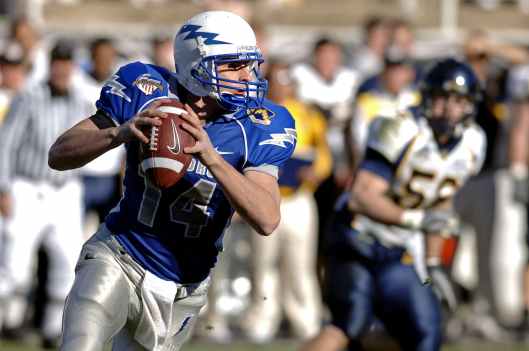
American football can hardly be called a “gentle sport” – the risk of injury is ever present and now we know that even those who manage to escape broken legs and torn ligaments may suffer internal brain damage. But there is still the tendency of many coaches to play the “prevent defense.” In case you’re unfamiliar with American football, here is an illustration of the effect of the “prevent defense” on the score. A team plays a particular way for 3 quarters of the game and is ahead 42-21. If you’re a fan of linear extrapolation, you might expect that  the final score might be something like 56-28. But coaches sometimes want to “make sure” they win so they play the “prevent defense” which basically means you let the other team make first down after first down and therefore keep possession of the ball and score, though somewhat slowly. The coach suddenly loses confidence in the method which has worked for 3/4 of the game. It is not at all unusual for the team who employs this “prevent defense” to lose; in this example, perhaps, 42-48. They “let” the other team get one first down after another. 

red people outside sport

Photo by Pixabay on Pexels.com

America has apparently decided, now, to play a “prevent defense.” Rather than being innovative and bold and embrace the challenges of new inventions and international competition, we instead want to “hold on to our lead” and introduce protective tariffs just as we did right before the Great Depression. Rather than accepting immigrants with different foods, customs, dress, languages, and religions — we are now going to “hold on to what we have” and try to prevent any further evolution. In the case of American football, the prevent defense sometimes works. In the case of past civilizations that tried to isolate themselves, it hasn’t and it won’t. 

landscape photography of gray rock formation

Photo by Oleg Magni on Pexels.com

This is not to say that America (or any other country) should right now have “open borders” and let everyone in for every purpose. Nor should a tennis player hit every shot with all their might. Nor should a football team try the riskiest possible plays at every turn. All systems need to strike a balance among replication of what works, providing defense of what one has and exploring what is new and different. That is what nature does. Every generation “replicates” aspects of the previous generation but every generation must also explore new directions. Life does this through sexual selection, mutation, and cross over. 

This balance plays out in career as well. You need to decide for yourself how much and what kinds of risks to take. When I obtained my doctorate in experimental psychology, for example, it would have been relatively un-risky in many ways to get a tenure-track faculty position. Instead, I chose managing a research project on the psychology of aging at Harvard Med School. To be sure, this is far less than the risk that some people take when; e.g., joining “Doctors without borders” or sinking all their life savings (along with all the life savings of their friends and relatives) into a start-up. 

At the time, I was married and had three small children. Under these circumstances, I would not have felt comfortable having no guaranteed income. On the other hand, I was quite confident that I could write a grant proposal to continue to get funded by “soft money.” Indeed, I did write such a proposal along with James Fozard and Nancy Waugh who were at once my colleagues, my bosses, and my mentors. Our grant proposal was not funded or rejected but “deferred” and then it was deferred again. At that point, only one month of funding remained before I would be out of a job. I began to look elsewhere. In retrospect, we all realized it would have been much wiser to have a series of overlapping grants so that all of our “funding eggs” were never in one “funding agency’s basket.” 

brown chicken egg

Photo by Pixabay on Pexels.com

I began looking for other jobs and had a variety of offers from colleges, universities, and large companies. I chose IBM Research. As it turned out, by the way, our grant proposal was ultimately funded for three years, but we only found out after I had already committed to go to IBM. During this job search, I was struck by something else. My dissertation had been on problem solving but my “post-doc” was in the psychology of aging. So far as I could tell, this didn’t bother any of the interviewers in industry in the slightest. But it really freaked out some people in academia. It became clear that one was “expected” in academia, at least by many, that you would choose a specialty and stick with it. Perhaps, you need not do that during your entire academic career, but anything less than a decade smacked of dilettantism. At least, that was how it felt to me as an interviewee. By contrast, it didn’t bother the people who interviewed me at Ford or GM that I knew nothing more than the average person about cars and had never really thought about the human factors of automobiles. 

Photo by Pixabay on Pexels.com

The industrial jobs paid more than the academic jobs and that played some part in my decision. The job at GM sounded particularly interesting. I would be “the” experimental psychologist in a small inter-disciplinary group of about ten people who were essentially tasked with trying to predict the future. The “team” included an economist, a mathematician, a social psychologist, and someone who looked for trends in word frequencies in newspapers. The year was 1973 and US auto companies were shocked and surprised to learn that their customers suddenly cared about gas mileage! These companies didn’t want to be shocked and surprised like that again. The assignment reminded me of Isaac Asimov’s fictional character in the Foundation Trilogy — Harry Seldon — who founded “psychohistory.” We had the chance to do it in “real life.” It sounded pretty exciting! 

antique auto automobile automotive

Photo by Pixabay on Pexels.com

On the other hand, cars seemed to me to be fundamentally an “old” technology while computers were the wave of the future. It also occurred to me that a group of ten people from quite different disciplines trying to predict the future might sound very cool to me and apparently to the current head of research at GM, but it might seem far more dispensable to the next head of research. The IBM problem that I was to solve was much more fundamental. IBM saw that the difficulty of using computers could be a limiting factor in their future growth. I had had enough experience with people — and with computers — to see this as a genuine and enduring problem for IBM (and other computer companies); not as a problem that was temporary (such as the “oil crisis” appeared to be in the early 70’s). 

airport business cabinets center

Photo by Pixabay on Pexels.com

There were a number of additional reasons I chose IBM. IBM Research’s population at the time showed far more diverse than that of the auto companies. None of them were very diverse when it came to male/female ratios. At least IBM Research did have people from many different countries working there and it probably helped their case that an IBM Researcher had just been awarded a Nobel Prize. Furthermore, the car company research buildings bored me; they were the typical rectangular prisms that characterize most of corporate America. In other words, they were nothing special. Aero Saarinen however, had designed the IBM Watson Research Lab. It sat like an alien black spaceship ready to launch humanity into a conceptual future. It was set like an onyx jewel atop the jade hills of Westchester. 

I had mistakenly thought that because New York City was such a giant metropolis, everything north of “The City” (as locals call it) would be concrete and steel for a hundred miles. But no! Westchester was full of cut granite, rolling hills, public parks of forests marbled with stone walls and cooled by clear blue lakes. My commute turned out to be a twenty minute, trafficless drive through a magical countryside. By contrast, since Detroit car companies at that time held a lot of political power, there was no public transportation to speak of in the area. Everyone who worked at the car company headquarters spent at least an hour in bumper to bumper traffic going to work and another hour in bumper to bumper traffic heading back home. In terms of natural beauty, Warren Michigan just doesn’t compare with Yorktown Heights, NY. Yorktown Heights even smelled better. I came for my interview just as the leaves began painting their autumn rainbow palette. Westchester roads even seemed more creative. They wandered through the land as though illustrative of Brownian motion, while Detroit area roads were as imaginative as graph paper. Northern Westchester county sports many more houses now than it did when I moved there in late 1973, but you can still see the essential difference from these aerial photos. 

YorktownHts-map

Warren-map

The IBM company itself struck me as classy. It wasn’t only the Research Center. Everything about the company stated “first class.” Don’t get me wrong. It wasn’t a trivial decision. After grad school in Ann Arbor, a job in Warren kept me in the neighborhood I was familiar with. A job at Ford or GM meant I could visit my family and friends in northern Ohio much more easily as well as my colleagues, friends and professors at the U of M. The offer from IBM felt to me like an offer from the New York Yankees. Of course, going to a top-notch team also meant more difficult competition from my peers. I was, in effect, setting myself up to go head to head with extremely well-educated and smart people from around the world. 

You also need to understand that in 1973, I would be only the fourth Ph.D. psychologist in a building filled with physicists, mathematicians, computer scientists, engineers, and materials scientists. In other words, nearly all the researchers considered themselves to be “hard scientists” who delved in quantitative realms. This did not particularly bother me. At the time, I wanted very much to help evolve psychology to be more quantitative in its approach. And yet, there were some nagging doubts that perhaps I should have picked a less risky job in a psychology department. 

The first week at IBM, my manager, John Gould introduced me yet another guy named “John” —  a physicist whose office was near mine on aisle 19. This guy had something like 100 patents. A few days later, I overheard one of John’s younger colleagues in the hallway excitedly describing some new findings. Something like the following transpired: 

“John! John! You can’t believe it! I just got these results! We’re at 6.2 x 10 ** 15th!” 

His older colleague replied, “Really? Are you sure? 6.2 x 10 ** 15th?” 

John’s younger colleague, still bubbling with enthusiasm: “Yes! Yes! That’s right. You know. Within three orders of magnitude one way or the other!” 

I thought to myself, “three orders of magnitude one way or the other? I can manage that! Even in psychology!” I no longer suffered from “physics envy.” I felt a bit more confident in the correctness of my decision to jump into these waters which were awash with sharp-witted experts in the ‘hard’ sciences. It might be risky, but not absurdly risky.

person riding bike making trek on thin air

Photo by Pixabay on Pexels.com

Of course, your mileage may differ. You might be quite willing to take a much riskier path or a less risky one. Or, maybe the physical location or how much of a commute is of less interest to you than picking the job that most advances your career or pays the most salary. There’s nothing wrong with those choices. But note what you actually feel. Don’t optimize in a sequence of boxes. That is, you might decide that your career is more important than how long your commute is. Fair enough. But there are limits. Imagine two jobs that are extremely similar and one is most likely a little better for your career but you have to commute two hours each way versus 5 minutes for the one that’s not quite so good for your career. Which one would you pick? 

In life beyond tennis and beyond football, one also has to realize that your assessment of risk is not necessarily your actual risk. Many people have chosen “sure” careers or “sure” work at an “old, reliable” company only to discover that the “sure thing” actually turned out to be a big risk. I recall, for example, reading an article in INC., magazine that two “sure fire” small businesses were videotape rental stores and video game arcades. Within a few years of that article, they were almost sure-fire losers. Remember Woolworths? Montgomery Ward?

At the time I joined IBM it was a dominant force in the computer industry. But there are no guarantees — not in career choices, not in tennis strategy, not in football strategy, not in playing the “prevent defense” when it comes to America. The irony of trying too hard to “play it safe” is illustrated this short story about my neighbor from Akron: 

police army commando special task force

Photo by Somchai Kongkamsri on Pexels.com

Wilbur’s Story

Wilbur’s dead. Died in Nam. And, the question I keep wanting to ask him is: “Did it help you face the real dangers? All those hours together we played soldier?”

Wilbur’s family moved next door from West Virginia when I was eleven. They were stupendously uneducated. Wilbur was my buddy though. We were rock-fighting the oaks of the forest when he tried to heave a huge toaster-oven sized rock over my head. Endless waiting in the Emergency Room. Stitches. My hair still doesn’t grow straight there. “Friendly fire.”

More often, we used wooden swords to slash our way through the blackberry and wild rose jungle of The Enemy; parry the blows of the wildly swinging grapevines; hide out in the hollow tree; launch the sudden ambush.

We matched strategy wits on the RISK board, on the chess board, plastic soldier set-ups. I always won. Still, Wilbur made me think — more than school ever did.

One day, for some stupid reason, he insisted on fighting me. I punched him once (truly lightly) on the nose. He bled. He fled crying home to mama. Wilbur couldn’t stand the sight of blood.

I guess you got your fill of that in Nam, Wilbur.

After two tours of dangerous jungle combat, he was finally to ship home, safe and sound, tour over — thank God!

He slipped on a bar of soap in the shower and smashed the back of his head on the cement floor.

Wilbur finally answers me across the years and miles: “So much for Danger, buddy,” he laughs, “Go for it!”

Thanks, Wilbur.

Thanks.

—————————————-

And, no, I will not be giving away the keys to the kingdom. Your days of fighting for freedom may be over. Mine have barely begun.


Author Page on Amazon

Happy July 4th

04 Wednesday Jul 2018

Posted by petersironwood in America, management, psychology, Uncategorized

≈ Leave a comment

Tags

Business, collaboration, competition, Feedback, Human-Computer Interaction, learning, life, politics, psychology, science, teamwork, UX

As we celebrate in America, let’s not forget that many people fought long and hard to gain our independence and then to keep it. Let’s honor them by making sure we keep our independence. It would be a shame to lose it on the battlefield…and even more of a shame to lose it to greed.

IMG_8651

It would also be a good time to recall that America is not alone in the struggle against tyranny. Many other countries had to fight and win their independence – and in other cases, people are still fighting for their freedom.


Photo by Pixabay on Pexels.com

As I mentioned before, I am temporarily suspending additions to the Pattern Language of ‘best practices’ in collaboration and teamwork and shifting to a different genre for a time. I’m still quite interested in collaboration and teamwork; I am interested in working together to learn from each other how to do that better. As I’ve tried to point out, while competition certainly has a place, both in nature and in human civilization, in human civilization, it needs to be done within an agreed upon framework. Otherwise, competition spins out of control into anarchy and violence. Of course, this has happened before in human history. This time, when our very lives depend on a global network of interconnectedness, anarchy will be worse than ever before. For now, however, I’ve listed most of the major Patterns I’ve run into. I will continue to elicit and look for additional relevant Patterns. If you think of one, please comment on the summary/index or email me at: truthtable@aol.com


IMG_0159

Meanwhile, I’ve decided to share a number of experiences from my career as a researcher and practitioner in psychology, AI, and the field of human-computer interaction/user experience. I will relate these as honestly and completely as I think useful. In some cases, I may use pseudonyms to avoid embarrassing anyone. Clearly, stories are told from my perspective, and others might remember things differently, if at all. 

IMG_5190

The reasons for recounting these stories is basically threefold. First, studying a field such as psychology, or human-computer interaction is related to actually working in the field but not so much as you might think. For the most part, the errors I’ve made and the lessons that I’ve learned in the course of a long career are not primarily technical. The main lessons are socio-technical. Hopefully, people considering a career in a related field may learn from my mistakes. But aside from pointing out mistakes made, I hope to give a flavor for what it’s really like to work in the field. 

IMG_5191

Author Page on Amazon

Turing’s Nightmares: Chapter 16

25 Wednesday May 2016

Posted by petersironwood in psychology, The Singularity, Uncategorized

≈ Leave a comment

Tags

AI, Artificial Intelligence, cognitive computing, emotional intelligence, ethics, the singularity, UX

WHO CAN TELL THE DANCER FROM THE DANCE?

MikeandStatue

Is it the same dance? Look familiar?


The title of chapter 16 is a slight paraphrase of the last line of William Butler Yeats poem, Among School Children. The actual last line is: “How can we tell the dancer from the dance?” Both phrasings tend to focus on the interesting problem of trying to separate process from product, personage from their creative works, calling into question whether it is even possible. In any case, the reason I chose this title is to highlight that when it comes to the impact of artificial intelligence (or, indeed, computer systems in general), a lot depends on who the actual developers are: their goals, their values, their constraints and contexts.

In the scenario of chapter 16, the boss (Ruslan) of one of the main developers (Goeffrey) insists on putting in a “back door.” What this means in this particular case is that someone with an axe to grind has a way to ensure that the AI system gives advice that causes people to behave in the best interests of those who have the key to this back door. Here, the implication is that some rich, wealthy oil magnates have “made” the AI system discredit the idea of global warming so as to maximize their short term profits. Of course, this is a work of fiction. In the real world, no-one would conceivably be evil enough to mortgage the human habitability of our planet for even more short term profit — certainly not someone already absurdly wealthy.

In the story, the protagonist, Goeffrey, is rather resentful of having this requirement for a back door laid on him. There is a hint that Geoffrey was hoping that the super-intelligent system would be objective. We can also assume it was added late but no additional time was added to the schedule. We can assume this because software development is seldom a purely rational process. If it were, software would actually work; it would be useful and usable. It would not make you want to smash your laptop against the wall. Geoffrey is also afraid that the added requirement might make the project fail. Anyway, Geoffrey doesn’t take long to hit on the idea that if he can engineer a back door for his bosses, he can add another one for his own uses. At that point, he no longer seems worried about the ethical implications.

There is another important idea in the chapter and it actually has nothing to do with artificial intelligence, per se, though it certainly could be used as a persuasive tool by AI systems. So, rather than have a single super-intelligent being (which people might understandably have doubts about trusting), instead, there are two “Sings” and they argue with each other. These arguments reveal something about the reasoning and facts behind the two positions.Perhaps more importantly, a position is much more believable when “someone” — in this case a super-intelligent someone — .is persuaded by arguments to change their position and “agree” with the other Sing.

The story does not go into the details of how Geoffrey used his own back door into the system to drive a wedge between his boss, Ruslan and Ruslan’s wife. People can be manipulated. Readers should design their own story about how an AI system could work its woe. We may imagine that the AI system has communication with a great many devices, actuators, and sensors in the Internet of Things.

You can obtain Turing’s Nightmares here: Turing’s Nightmares

You can read the “design rationale” for Turing’s Nightmares here: Design Rationale


The Fault is in Defaults

25 Friday Jul 2014

Posted by petersironwood in Uncategorized

≈ Leave a comment

Tags

Customer experience, defaults, google maps, HCI, printer, scanner, user experience, UX

“The fault, dear Brutus, is not in our stars,
But in ourselves, that we are underlings.”

So Cassius says to Brutus in Shakespeare’s play, Julius Caesar Cassius was trying to convince Brutus to join the plot to assassinate Caesar. As I recall, things did not turn out well for Julius Caesar. Or for Brutus. Or for Cassius. Or, ultimately, for Mark Anthony either, but that’s another story. The point is that there is always an interesting tension between imagining that we ourselves are the masters of our fate. It is our ability, or attitude, or grit, or whatever that determines how much money or happiness or health we have. Or, on the other hand, there is the view that things are pretty much beyond our conscious control and due to our heredity, our environment, our upbringing, etc. Both views are partly true and both have their place. If you are a user of a product and you want to get something accomplished, blaming the stupid product will not help you accomplish your goals. On the other hand, if you are a product developer, it will not help you to blame your user. You need to design thoughtfully.

I was reminded of this debate today by trying to scan a document. In general, I am amazed how excellentscanners and printers are today, not to mention CHEAP! I was born in an era of expensive, heavy, noisy, dot matrix printers or teletypes. You’ve come a long way, baby! But the software that actually lets us use these marvelous machines. Hmmm. Here there is a lot of room for improvement. Today, I repeatedly tried to scan a one page document to no avail. I thinkI finally diagnosed what the problem was. The scan screen came up with a default that said “custom size” and the defaulted “custom dimensions” were 0 by 0. Because, obviously, the development team had done a thorough study of users and found, I suppose somewhat surprisingly, that the most common size of image people wanted to scan was 0 by 0. I suppose such images have the advantage that you can store many more of them on your hard drive than images that are 8.5 by 11 inches or 3 inches by 5 inches, say.

But this is not an isolated example. Often there are “defaults” which seem to me to be rather odd, to say the least. Right now, my google map application, for no discernible reason, has decided that a good default location for me is the geographical center of the continental United States. It was not “born” with this default but somewhere along the line “developed” it. Why? I have never travelled (knowingly) to the geographical center of the United States. I have never wanted to “find” the geographical center of the United States. Yet, for some mysterious reason, whenever I do try to find a route to say, the dentist who is ten miles away, the map app tries to send me from Southern California to the geographic center of the US and then back again. I can eventually get around this, but next time I open up the app, there we are again. Of course, I am tempted every time to just to see the place (near the corners of Oklahoma, Kansas, Arkansas and Missouri. And, “with no traffic”, it only takes a little over 22 hours to get there. The phrase, “with no traffic” in Southern California is equivalent to “when pigs fly.” So, tempting as it is to drive 22 hours to the geographical center of the US and then 22 hours back (provided the sky if filled with flying pigs) in order to go to the dentist who is a few minutes away, I haven’t yet actually taken the trip.

I am tempted to rant about the absolute ludicrosity of “sponsored links” (which cheeringly informs me that I could take a side trip to a gynecologist on the way to the dentist) but I’ll try to stay on topic. Where do these defaults come from? Is this just a nerd’s nerd free choice as a perk of the job? Do they seriously conceptualize size in terms of a two dimensional grid with an origin at zero zero and therefore this is a “logical” default for paper size? Are they trying to do the user a favor by saving space?

I am hoping there is a product manager out there who can answer these questions. I am hoping things will turn out better than they did for Caesar and Brutus and Cassius.

Starting your Customer Experience with a Lie

13 Monday Jan 2014

Posted by petersironwood in Uncategorized

≈ 1 Comment

Tags

Customer experience, ethics, honesty, marketing, scam, spam, UX

I really need someone to explain this strategy behind the following kinds of communications to me.  I get things in email and in snail mail and they start out with something like, “In response to your recent enquiry…”, or “Here is the information you requested.” or “Congratulations!  Your application was approved!”  And…they are all LIES!  I understand that sometimes people lie.  And I understand that companies are sometimes greedy.  But I do not understand how it can possibly be in their interest to start their communications with a potential customer with a complete and easily discovered lie.  What is up with that?  So far, the only explanation I can gather is that they only want a very small number of very very gullible (perhaps even impaired) customers that they can soak every penny out of so the initial contact is a kind of screening device.  ??  Any other suggestions?

← Older posts
Newer posts →

Subscribe

  • Entries (RSS)
  • Comments (RSS)

Archives

  • February 2026
  • January 2026
  • December 2025
  • November 2025
  • October 2025
  • September 2025
  • August 2025
  • July 2025
  • June 2025
  • May 2025
  • April 2025
  • March 2025
  • February 2025
  • January 2025
  • December 2024
  • November 2024
  • October 2024
  • September 2024
  • July 2024
  • April 2024
  • March 2024
  • February 2024
  • January 2024
  • December 2023
  • August 2023
  • July 2023
  • May 2023
  • April 2023
  • March 2023
  • February 2023
  • January 2023
  • December 2022
  • November 2022
  • October 2022
  • September 2022
  • August 2022
  • July 2022
  • June 2022
  • May 2022
  • April 2022
  • March 2022
  • February 2022
  • January 2022
  • December 2021
  • November 2021
  • October 2021
  • September 2021
  • August 2021
  • July 2021
  • June 2021
  • May 2021
  • April 2021
  • March 2021
  • February 2021
  • January 2021
  • December 2020
  • November 2020
  • October 2020
  • September 2020
  • August 2020
  • July 2020
  • June 2020
  • May 2020
  • April 2020
  • March 2020
  • February 2020
  • January 2020
  • December 2019
  • November 2019
  • October 2019
  • September 2019
  • August 2019
  • July 2019
  • June 2019
  • May 2019
  • April 2019
  • March 2019
  • February 2019
  • January 2019
  • December 2018
  • November 2018
  • October 2018
  • September 2018
  • August 2018
  • July 2018
  • June 2018
  • May 2018
  • April 2018
  • March 2018
  • February 2018
  • January 2018
  • December 2017
  • November 2017
  • October 2017
  • September 2017
  • August 2017
  • July 2017
  • June 2017
  • May 2017
  • April 2017
  • March 2017
  • February 2017
  • January 2017
  • December 2016
  • November 2016
  • October 2016
  • September 2016
  • August 2016
  • July 2016
  • June 2016
  • May 2016
  • April 2016
  • March 2016
  • February 2016
  • January 2016
  • December 2015
  • November 2015
  • October 2015
  • September 2015
  • August 2015
  • May 2015
  • January 2015
  • July 2014
  • January 2014
  • December 2013
  • November 2013

Categories

  • AI
  • America
  • apocalypse
  • cats
  • COVID-19
  • creativity
  • design rationale
  • dogs
  • driverless cars
  • essay
  • family
  • fantasy
  • fiction
  • HCI
  • health
  • management
  • nature
  • pets
  • poetry
  • politics
  • psychology
  • Sadie
  • satire
  • science
  • sports
  • story
  • The Singularity
  • Travel
  • Uncategorized
  • user experience
  • Veritas
  • Walkabout Diaries

Meta

  • Create account
  • Log in

Blog at WordPress.com.

  • Subscribe Subscribed
    • petersironwood
    • Join 661 other subscribers
    • Already have a WordPress.com account? Log in now.
    • petersironwood
    • Subscribe Subscribed
    • Sign up
    • Log in
    • Report this content
    • View site in Reader
    • Manage subscriptions
    • Collapse this bar
 

Loading Comments...