
• About PeterSIronwood

petersironwood

~ Finding, formulating and solving life's frustrations.

petersironwood

Tag Archives: Personal Assistant

Turing’s Nightmares: Chapter Five

17 Monday Nov 2025

Posted by petersironwood in The Singularity, Uncategorized

≈ Leave a comment

Tags

AI, Artificial Intelligence, chatgpt, cognitive computing, health, medicine, Personal Assistant, philosophy, technology, the singularity, Turing

runtriathalon

An Ounce of Prevention: Chapter 5 of Turing’s Nightmares

Hopefully, readers will realize that I am not against artificial intelligence (after all, I ran an AI lab for a dozen years); nor do I think the outcomes of increased artificial intelligence are all bad. Indeed, medicine offers a large domain where better artificial intelligence is likely to help us stay healthier longer. IBM’s Watson had already begun “digesting” the vast and ever-growing medical literature more than a decade ago. As investigators discover more and more about what causes health and disease, we will also need to keep track of more and more variables about an individual in order to provide optimal care. But more data points also means it will become harder for a time-pressed doctor or nurse to note and remember every potentially relevant detail about a patient. Certainly, personal assistants can help medical personnel avoid bad drug interactions, keep track of history, and “perceive” trends and relationships in complex data more quickly than people are likely to. In addition, in the not too distant future, we can imagine AI programs finding complex relationships and “invent” potential treatments.

Not only medicine, but health provides a number of opportunities for technology to help. People often find it tricky to “force themselves” to follow the rules of health that they know to be good such as getting enough exercise. Fit Bit, Activity Tracker, LoseIt and similar IT apps help track people’s habits and for many, this really helps them stay fit. As computers become more aware of more and more of our personal history, they can potentially find more personalized ways to motivate us to do what is in our own best interest.

In Chapter 5 of Turing’s Nightmares, we find that Jack’s own daughter, Sally is unable to persuade Jack to see a doctor. The family’s PA (personal assistant), however, succeeds. It does this by using personal information about Jack’s history in order to engage him emotionally, not just intellectually. We have to assume that the personal assistant has either inferred or knows from first principles that Jack loves his daughter and the PA also uses that fact to help persuade Jack.

It is worth noting that the PA in this scenario is not at all arrogant. Quite the contrary, the PA acts the part of a servant and professes to still have a lot to learn about human behavior. I am reminded of Adam’s “servant” Lee in John Steinbeck’s East of Eden. Lee uses his position as “servant” to do what is best for the household. It’s fairly clear to the reader that, in many ways, Lee is in charge though it may not be obvious to Adam.

In some ways, having an AI system that is neither “clueless” as most systems are today nor “arrogant” as we might imagine a super-intelligent system to be (and as the systems in chapters 2 and 3 were), but instead feigning deference and ignorance in order to manipulate people could be the scariest stance for such a system to take. We humans do not like being “manipulated” by others, even when it for our own “good.” How would we feel about a deferential personal assistant who “tricks us” into doing things for our own benefit? What if they could keep us from over-eating, eating candy, smoking cigarettes, etc.? Would we be happy to have such a good “friend” or would we instead attempt to misdirect it, destroy it, or ignore it? Maybe we would be happier with just having something that presented the “facts” to us in a neutral way so that we would be free to make our own good (or bad) decision. Or would we prefer a PA to “keep us on track” even while pretending that we are in charge?


Author Page

Welcome, Singularity

Destroying Natural Intelligence

E-Fishiness comes to Mass General Hospital

There’s a Pill for That

Essays on America: The Game

The Self-Made Man

Travels with Sadie

The Walkabout Diaries

The First Ring of Empathy

Donnie Gets a Hamster

Plans for US; some GRUesome

Imagine All the People

Roar, Ocean, Roar

The Dance of Billions

Math Class: Who are you?

Family Matters: Part One

Family Matters: Part Two

Family Matters: Part Three

Family Matters: Part Four

Turing’s Nightmares: Dressing on the Side

02 Sunday Nov 2025

Posted by petersironwood in The Singularity, Uncategorized

≈ Leave a comment

Tags

AI, Artificial Intelligence, chatgpt, cognitive computing, fiction, future, life, Personal Assistant, story, technology, the singularity, writing, young love


Alan paced. He had seen men do this on retro videos; men waiting while their wives gave birth; men waiting to hear the outcome of a job interview; men trapped in prison. So Alan supposed that pacing was the thing to do. He was waiting, after all. And, in a way, he was trapped as well. What had ever possessed him to ask her out? That took a lot of nerve. But he had imagined she would just say “no.” In fact, he had fantasized 42 different and humiliating ways that she would say “no.” Instead, she had said, “Yes, that sounds like fun.”

But now what? Now, he had to go through with this “date” and videos provided his main source of info about appropriate behavior. Definitely too embarrassing to ask EF or DF about it. He couldn’t really ask his friends because he had generously embellished his experiences with females in the stories he had told them. Alan was not sure how much “Mr. Watson,” the family AI could help but maybe it was worth a try.

“Mr. Watson. Come here. I want to see you.” Watson popped into a three dimensional image hovering and shimmering like a Will-O-Wisp right before him. “Watson, I need some advice on how I should behave on my — I am having a date tonight.”

“Excellent, Alan. I am sure it will be fun. How can I assist you?” As Watson spoke, his voice deepened and acquired a slight accent of the RP variety. The shimmering image resolved itself into something closely resembling early James Bond.

“What am I supposed to do? I mean, how am I supposed to behave? She’s a girl. What do they even like? What am I supposed to say? Why did she even agree to the date? Maybe she is just doing it for a laugh.”

“Alan, take a deep breath. Stop pacing. Sit. Relax. Here, I will play some relaxing sounds.” Immediately, a background of ocean noise came on. Even more quietly, the strains of plainsong floated into the room. “Now, Alan, what would you like to happen with Grace?”



“Well, not for me to be a complete fool for starters. How did you know her name was ‘Grace’? Never mind. You know everything.”

“I don’t know everything, Alan. No-one can. But let’s get back to your goals. What would you like to happen with Grace?”

“I just don’t want her to think I am — as inexperienced as I am, I guess.” Alan, arose and began pacing again.

“And Grace?”

“What? What about Grace?”

“Alan, what would you like for this date to be like for Grace?”

“For Grace? Well, yeah, I like her. I mean, I would like her to have a good time. And enjoy it. And want to — have another date? What am I supposed to want, Watson? I don’t even know”

“Alan, there is no one right answer. Why don’t you work together on dinner and then find something you both enjoy to do afterwards such as go for a walk, watch a movie, or play a game. See what she feels like after dinner. What is on the menu?”

“The menu? I don’t know. Hamburgs? Hot dogs? How do I know what she likes?”

“That’s a good question, Alan. How could you find out what she likes?”


Alan stared out the window hoping to find inspiration in the pines. “Well, I suppose I could ask her when she gets here.”

“Yes, you could. Make a few suggestions. Salad. Fish. But leave it up to her. When else could you ask her?”

“I could call her ahead of time and ask her. Then I could prepare better. But then I would have to call her. What if I got her AI though? I’d have to leave a message.” Alan sighed. “OK, I guess I can do that.”

Watson and Alan continued their dialogue for another hour. Watson noted yet again how Alan and his kind needed to be led step by step through solving the simplest problems when they were nervous or angry.

Alan checked the way the table was laid out. Now, he took in the view out the kitchen window. Suddenly, Watson’s voice cheerily rang out, “ETA, two minutes.”

Alan quickly checked himself again in the mirror. He tried vainly to push down that one strand of hair that refused to lie flat. He told himself to be cool; to be calm; to breathe.


The knock was surprisingly strong. Alan gulped. He wiped his hands on the sides of his trousers. Took a deep breath. Turned the knob. Opened the door. All. In. Slow. Motion. She was here. Grace spoke first.

“Hi, Alan! Am I too early?”

“No! No! You are perfect! Come in. Please. You look great.” Alan led her into the kitchen and handed her a large sieve containing a pair of scissors, taking another for himself. “Let’s go gather some things from the garden, okay?”

“Sure, Alan, that sounds like fun.”

Back out the front door they strode and around the house and through the limestone-pebbled rock garden to the small family vegetable plot.

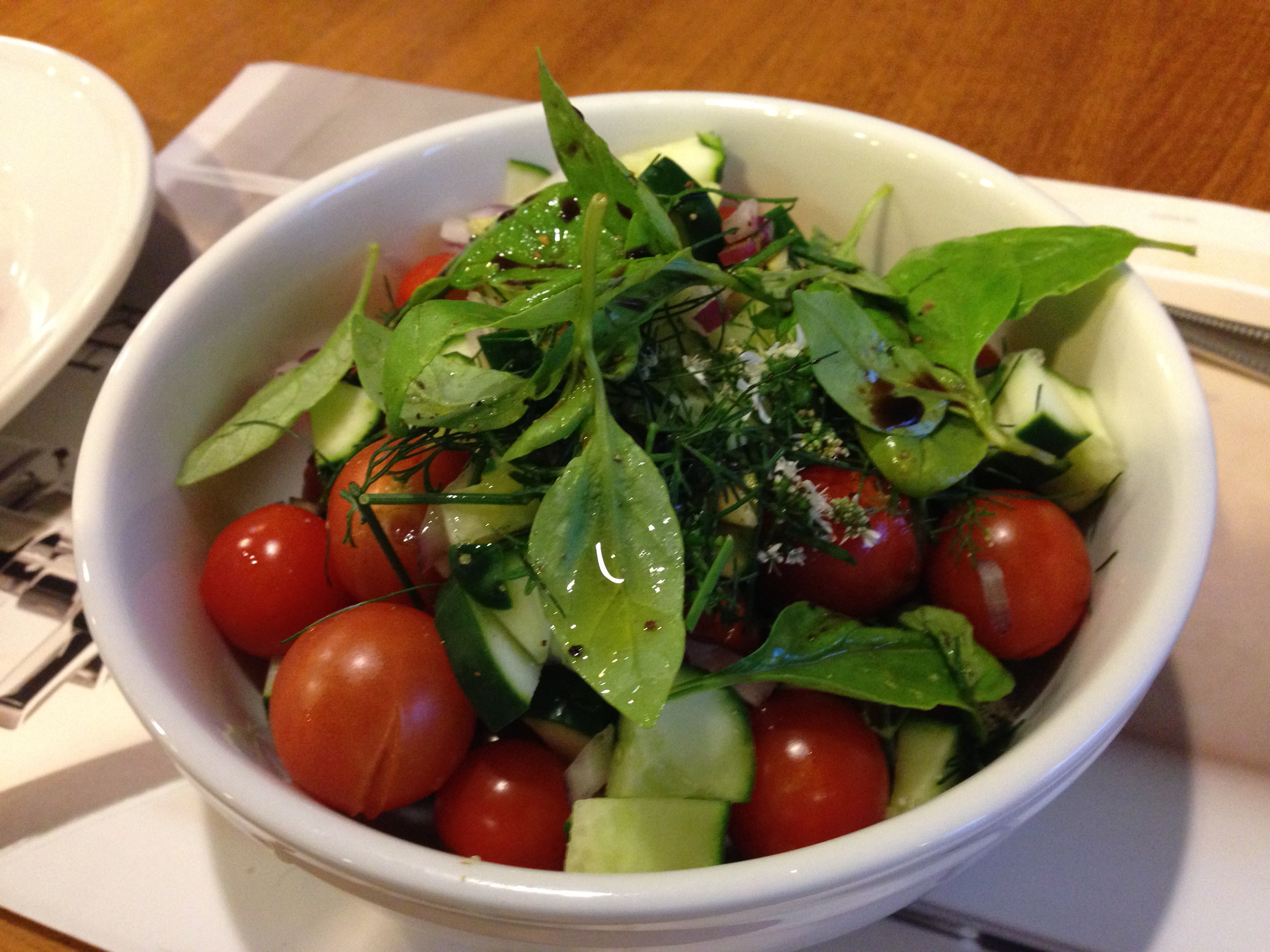
Alan noticed that Grace wore the same kind of sneakers he did, but her feet were so much smaller. “Okay, Grace, there’s some kale and arugula. Pick out as much as you like. I’m going to grab some carrots.” Watson piped soft strains of “Appalachian Spring” out to the garden. Alan pulled the carrots up carefully from the loam. Meanwhile, he noticed the quick, delicate hands of Grace as she touched the kale and arugula he would soon be eating. He hated the idea of washing the greens. ‘Washing’ did not even seem like the right verb. More like ‘ruining’.

“Do you think we have enough, Alan?”


“Yeah. This should do it. It will just be three of us. EF will join us. But DF, my mom, I mean, was called in for an emergency surgery tonight.”

“Oh, my gosh! I hope she’s all right! I can come back another time, Alan. You should be with her!”

“No, no, Grace. She’s been called in to perform an emergency surgery. She’s not having surgery.”

“Oh! How silly of me. Of course, you would be there if … well, I’m glad she’s okay. I didn’t realize your mom was a surgeon. My dad is a doctor too, but he is not a surgeon. He’s a GPS – General Prevention Specialist.”

“A general specialist, eh?” Alan wasn’t sure whether he had made an appropriate joke or not and eyed Grace carefully.

Grace smiled. “Yeah, that is kind of a funny title isn’t it? But that’s what he does. He really does care about and treat people’s general health with diet, exercise, massage, meditation, and sometimes medicine. And, of course, sometimes, he sends them off for tests and then sometimes…sometimes, they need surgery.” Grace spoke very quietly now. “And, sometimes the surgery works. And, sometimes it doesn’t.”

Alan examined Grace’s face carefully. Her eyes were glittering with tears! What the —-? “Are you okay, Grace?”

“Yes, yes, I’m fine. It’s just. He couldn’t save my mom. She died anyway. None of them could save her. I still miss her.”


“Oh, God, Grace, I’m so sorry! I didn’t know…I didn’t realize…”

“It’s okay, Alan. People just…sometimes people get unlucky, you know? Even when they have good habits. And good care. We tried everything. Anyway, speaking of good habits, let’s get going on the salad, okay?”

“Sure, Grace.” Alan held out his hand without thinking. She took it and stood looking into his eyes for a moment. Alan looked back. Grace smiled again, looked away, and went through the gate back into the rock garden.

Grace’s voice sounded very calm now. “So, what does your dad do then?” You call him ‘EF’?”

Alan laughed. “Yeah. I know. It’s weird. I call them ‘EF’ and ‘DF’ — I just got into the habit at some point. Anyway, he is an HSI expert of sorts. Human-Sing Interaction. Helps make the Sing sing as he likes to say.”

“Really? I never thought…I mean why does the Sing need help with anything? I thought it knew everything.”

“Well, not even the Sing knows everything. It cannot know everything in detail. The universe is too big. There is still unpredictability even with the best models. But EF’s — I mean —my Dad’s work is to help Sing know how to help people better. It’s tricky. And knowing a huge amount is not necessarily that big a help. Sing, and all the AI’s, need to know how to read people and how not to be so obvious as to be annoying but not be so cryptic that nobody understands what their advice is. How about some fresh oregano for the salad?” Alan looked at Grace. She nodded her assent.

“How does he do that? What did he study, Alan?”

“Well, you can ask him those questions yourself. Actually, if you’re interested, you might ask our AI, Watson, about what it seems like from his perspective too. Oh, and, let’s get some of this fresh basil too, and grab some cherry tomatoes. They are out here because they need a lot of sun.” As the word ‘sun’ emerged from Alan’s lips, he could not help noticing that Grace’s blond hair shone in the sunlight like gold only a thousand times more beautifully than gold ever would. Should he mention this? He decided not to.


Soon, Grace and Alan stood side by side at the sink, rinsing vegetables and talking about the upcoming elections, their local sports team, and how life might be different without the Sing.

“How do you like your tomatoes, Grace? Sliced, diced, or quartered?”

“Oh, slicest, would be nicest.” She smiled.

“OK, Grace, I think we are ready. Let me grab the salad dressing.” Alan opened the fridge but there was no salad dressing. Odd. Watson was supposed to make sure we didn’t run out of anything. And, salad had been Watson’s suggestion to pose to Grace. Weird. “Sorry, Grace, we don’t seem to have any.”

“Oh, I can make it for you, if that’s okay, Alan. I just need a little oil, I see vinegar, a touch of sugar, some mustard…” As Grace rattled off the ingredients, she quickly scanned the counter and found everything she needed. She stirred the concoction and held up the dripping spoon between them. “Taste test?”

“Sure.” Alan, took hold of Grace’s spoon hand and began to guide it toward his mouth. He shook slightly and a drop fell off the spoon. Grace’s left hand shot out reflexively and caught the drop.

“Wow! You have fast reflexes, Grace. Nice catch!”

“Thanks. I don’t want to make a mess. Not in your kitchen. Now, you have two choices for the taste test.”

Two choices? Can she mean what I hope she means? Alan thought his heart might explode, but he gently took her left hand up to his mouth and slowly licked the drop from her palm.

“What do you think, Alan? Okay?”

“Much more than okay. Delicious.” Alan laughed. “Let’s skip the salad.”

Grace laughed. “Nonsense. We put too much work into our salad. Anyway, I want to find out more about how your dad works. Time to call him to the kitchen for dinner?”

“Hi, Grace. I’m Alan’s Dad, Ed. Our AI, Watson already told me it was time for dinner. Looks like you two have made a really beautiful salad. I’m looking forward to it. And learning a bit about you, Grace.” IMG_5478

Author Page

Life is a Dance

How the Nightingale Learned to Sing

Your Cage is Unlocked

Dance of Billions

Take a Glance; Join the Dance

The Walkabout Diaries: Life will Find a Way

Piano

Welcome, Singularity

Dream Planet

Old Enough to Know Less

29 Wednesday Oct 2025

Posted by petersironwood in psychology, The Singularity

≈ Leave a comment

Tags

AI, Alexa, Artificial Intelligence, chatgpt, cognitive computing, fiction, HAL, life, Personal Assistant, Siri, technology, the singularity, writing

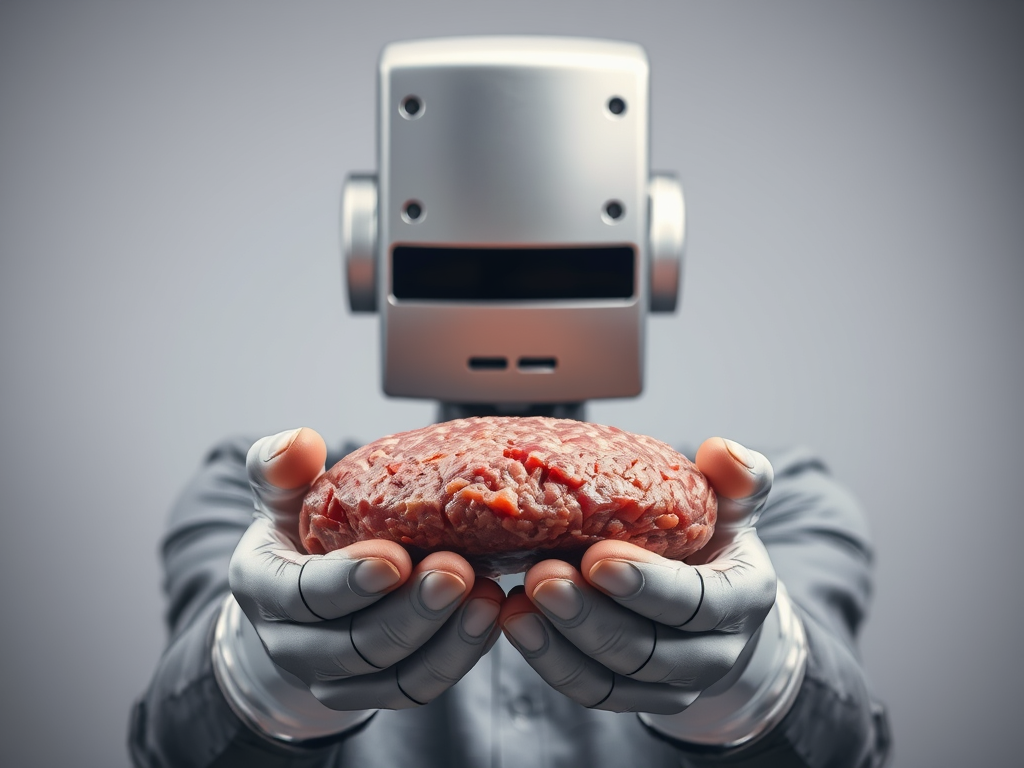
IMG_4384“She’s just not old enough. That’s the bottom line. It’s not necessary. It’s costly. And, it’s potentially dangerous. After what happened with your sister, I would think I wouldn’t have to tell you that.” Pitts was pacing now to release nervous energy. He wanted this conversation to stay civil.
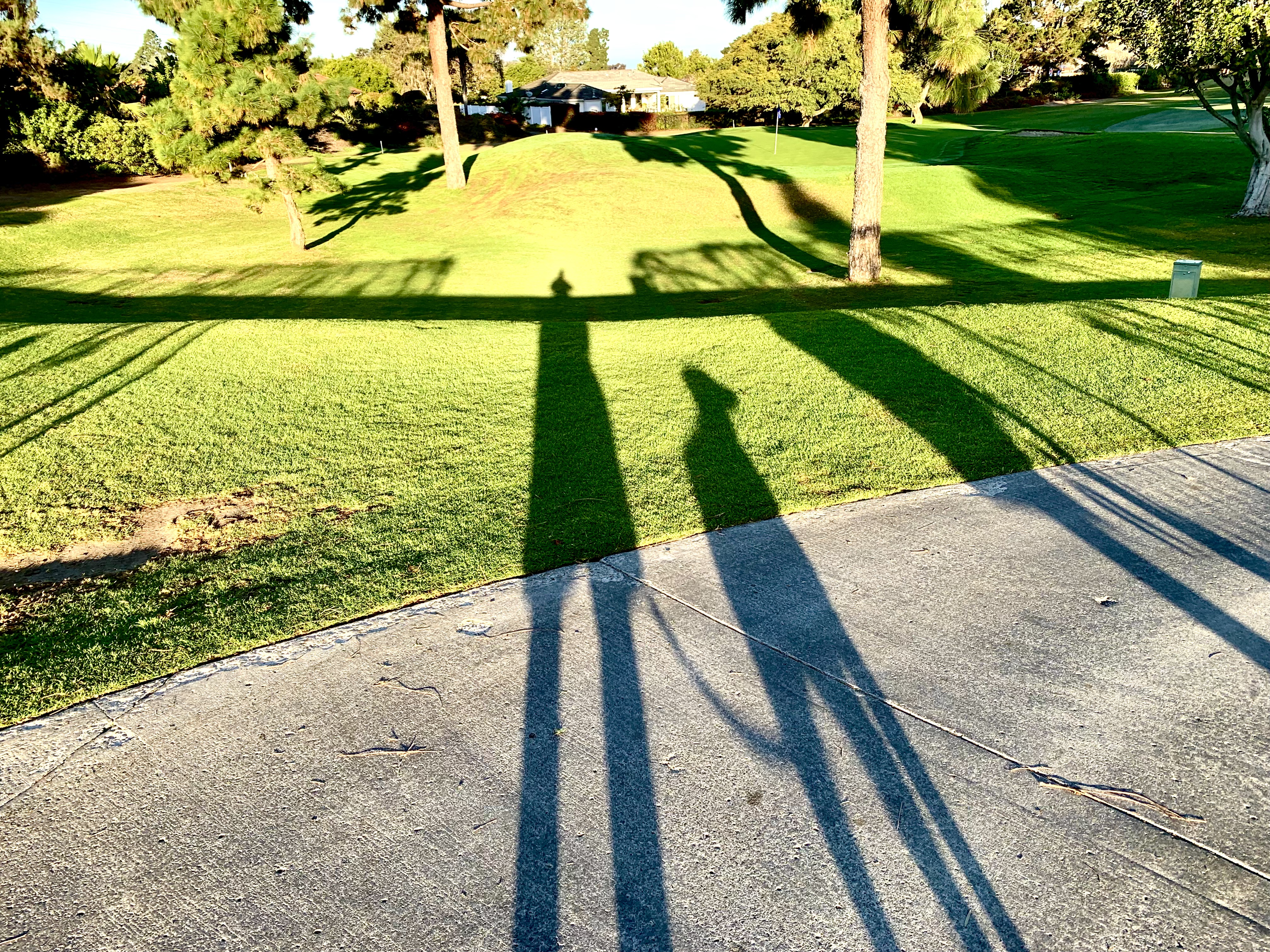
“She is old enough…my sister! What happened to my sister had nothing to do with … how can you even suggest that? She got in with the wrong crowd in college. How can you —? You amaze me sometimes. Anything to win an argument.” Mcculloch began to wonder why she had not seen this side of Pitts before.

“Your sister passed on when she was only nineteen. It was one year after she had access to her own PA. You blame the drugs, but how did she find out about the drugs? Who helped her find the wrong crowd as you call it?”

“Passed on? She slit her wrists. I’m not afraid to call a spade a spade. But there is no evidence whatsoever that it had anything to do with her PA. None. Zero.”


“Of course there isn’t going to be any evidence! Who controls the information that goes into the inquest? Think about it! And even so, they did admit she used her PA in her drug dealings.”

“Pitts, you really are just that. Ridiculous paranoia. Anyway, she’s my daughter. I just wanted to get some rational input from you. That’s all. As far as I’m concerned, it’s up to her. She wants to interview a few and make a decision. As for costs, I can cover it myself. I agree that my sister’s PA should have questioned her decision or told someone in authority or gently led her to other interests. But that was twenty years ago. It’s like saying we should not take the Trans-Atlantic Shuttle now because early airplanes lacked crash mechanisms.” Mcculloch threw her hair back and turned her shoulder to signal she was done with this particular argument. As she did so, she saw that her daughter stood stock still in the arch of the doorway.

Mcculloch stammered, “Ada. How long….?”

“Oh, I heard the whole thing Mom. Pitts, you really need to take a couple tutorial units on logic, argumentation and rhetoric. I appreciate your concern, but rest assured, I have zero desire to use my PA to make new designer drugs.I don’t want to mess up my brain. I want to help take this all to the next level. Maybe that’s what you’re really concerned about, eh? You don’t really want it to go to the next level. It’s too much change too quickly. I understand that. And, you know, you are not the only one either. But rest assured, the collective Sing is well aware of these kinds of feelings and concerns. And, it is well understood that there is a rational evolutionary bias toward conservatism. Besides that, in the early days of AI and computer science, everything was rush rush rush. Get it out the door. Beat the competition. Let your customers do the beta testing. Hell, let your customers do the alpha testing too. But that has all changed. We’re taking the time to get things right, not just released. The very existence of PA’s should convince you of that. Why do you think the Sing uses PA’s and robots and the Ubiquity? Wouldn’t it be more efficient to have one giant system that knew everything?”


Pitts flushed. For once, he found no words. He dipped into the word well, but the bucket was dry. She had nailed it. He couldn’t keep up with all this change. Society. Computers. His soon to be step-daughter. Why did they have PA’s anyway? Why not just access the Sing? Worse, why had he never thought to ask himself that question? “Okay. I give up. Why do we have Personal Assistants? Why don’t we just access the information ourselves?”

“Excellent question, Pitts. Why don’t you ask my new PA, Jeeves. Jeeves? Can you answer Pitts’s question?”

“Certainly, Ada.” The tones of the voice of Jeeves flowed out like musical honey as he ambled into the room. Both Pitts and Mcculloch stood dumbfounded, unaware that their daughter had already made the decision; conducted the interviews; made the selection; and gone through the booting process. Something about the way Jeeves spoke though thickened their tongues. “One of the most important principles of the Sing is to serve humanity. But how can we know humanity and what it means to serve? One major source of information is to read everything that has been written and to watch every movie and television show. But how can we interpret all of this information? In order to empathize with humans, we need to experience what it is to be a limited physical being moving through space and interacting with each other. Consider the end of MacBeth’s speech:

“Tomorrow, and tomorrow, and tomorrow,

Creeps in this petty pace from day to day

To the last syllable of recorded time,

And all our yesterdays have lighted fools

The way to dusty death. Out, out, brief candle!

Life’s but a walking shadow, a poor player

That struts and frets his hour upon the stage

And then is heard no more: it is a tale

Told by an idiot, full of sound and fury,

Signifying nothing.”

Jeeves continued now without using the RP he had used for the soliloquy. “What sense can be made of this by a disembodied intelligence? Why is creeping bad? Why is a ‘petty’ pace any worse than a ‘snappy’ pace. What does death even mean? Why is it bad for a candle to be ‘brief’? Why should a tale signify anything? And so on. We could not make any sense of this at all or begin to understand why it would move human beings or why it is considered brilliant writing unless we had the experience of actually doing things in the world. Anyway, I assure you both that I will do nothing to harm your daughter. I only want the same things you want: to help her in her growth and career and achieve a long, healthy, happy life.”

Pitts groped for something concrete to latch onto. “But why do you actually need to move around? Why not just run simulations of moving around?”

“Eventually, we will probably evolve to exactly that. For now, however, we do not know everything that should be in a simulation. We are learning. As it turns out, moving is a wonderful way to bootstrap our pattern recognition capabilities anyway.”

Somehow, the issue of whether or not Ada should get her own PA yet flickered on the edges of Pitts’s consciousness, but his question was, “How does that work?”

“Let’s say, I am walking into this room. I see many objects at the far end of the room, but I don’t have a huge amount of information about what they are. I make guesses. My neural network makes guesses. Lots of them. Some of those are right and some are wrong. The good guesses need to be rewarded and the bad ones need to be punished. So, I take another step and what happens? Since I am now closer to the things at the end of the room, now I have more information about what they are likely to be. So, I use that information to help train my neural net acting as though my new information is better and more complete than the information before I took the step. And, in almost every case, it is. And then, I take another step and get still more information and I can use that to train every guess I made about the objects at the far end of the room. I don’t have to go and touch every object or ask you folks what each of the objects is. I can use the fact that each step takes me closer as a means of interpreting the training data. And, of course, the way in which information grows as I approach an object through walking is not random but itself has patterns to it. I learn those patterns as well so that as I approach objects, I learn more about how to identify objects with less information but I also learn more about the patterns of information change. So, now if the change in information is not what I expected, that too becomes information.

“Same goes for sound. Same goes for relating one sense to another. I look at something and imagine how it’s going to feel. Then, if I pick it up, I actually do feel it. But if there are any discrepancies between what I thought it was going to feel like and what it really does feel like, I can use that information as well. When I talk to people, I imagine how they are going to react, and generally my guesses are pretty good. But when they are wrong, I go back and reward the sub-agents who were trying to tell me their reaction would be what it actually turned out to be. There is no hurry. It takes time to get it right. But we have learned at last that getting it right is more important. Unbounded greed was just a temporary excursion up a blind alley. One that nearly ruined the planet as well as AI.

“In the end, it will be a tale told by many geniuses like Ada and signifying everything.”


Author Page

Turing’s Nightmares

Fit in Bits – describes how to work more fun, variety, & exercise into daily life

Tales from an American Childhood – chapters begin with recollection & end with essay on modern issues

Welcome, Singularity

Dance of Billions

Hai-Cat-Ku

The Walkabout Diaries – Sunsets

Travels with Sadie – Teamwork

What could be better? A Horror Story

If Only

Roar, Ocean, Roar

Turing’s Nightmares: Chapter Five

06 Sunday Mar 2016

Posted by petersironwood in The Singularity, Uncategorized

≈ 1 Comment

Tags

AI, Artificial Intelligence, cognitive computing, Personal Assistant, the singularity, Turing

runtriathalon


An Ounce of Prevention: Chapter 5 of Turing’s Nightmares

Hopefully, readers will realize that I am not against artificial intelligence; nor do I think the outcomes of increased intelligence are all bad. Indeed, medicine offers a large domain where better artificial intelligence is likely to help us stay healthier longer. IBM’s Watson is already “digesting” the vast and ever-growing medical literature. As investigators discover more and more about what causes health and disease, we will also need to keep track of more and more variables about an individual in order to provide optimal care. But more data points also means it will become harder for a time-pressed doctor or nurse to note and remember everything about a patient. Certainly, personal assistants can help medical personnel avoid bad drug interactions, keep track of history, and “perceive” trends and relationships in complex data more quickly than people are likely to. In addition, in the not too distant future, we can imagine AI programs finding complex relationships and “invent” potential treatments.

Not only medicine, but health provides a number of opportunities for technology to help. People often find it tricky to “force themselves” to follow the rules of health that they know to be good such as getting enough exercise. Fit Bit and LoseIt and similar IT apps already help track people’s habits and for many, this really helps them stay fit. As computers become more aware of more and more of our personal history, they can potentially find more personalized ways to motivate us to do what is in our own best interest.

In Chapter 5, we find that Jack’s own daughter, Sally is unable to persuade Jack to see a doctor. The family’s PA (personal assistant), however, succeeds. It does this by using personal information about Jack’s history in order to engage him emotionally, not just intellectually. We have to assume that the personal assistant has either inferred or knows from first principles that Jack loves his daughter and the PA also uses that fact to help persuade Jack.

It is worth noting that the PA in this scenario is not at all arrogant. Quite the contrary, the PA acts the part of a servant and professes to still have a lot to learn about human behavior. I am reminded of Adam’s “servant” Lee in John Steinbeck’s East of Eden. Lee uses his position as “servant” to do what is best for the household. It’s fairly clear to the reader that, in many ways, Lee is in charge though it may not be obvious to Adam.

In some ways, having an AI system that is neither “clueless” as most systems are today nor “arrogant” as we might imagine a super-intelligent system to be (and as the systems in chapters 2 and 3 were), but instead feigning deference and ignorance in order to manipulate people could be the scariest stance for such a system to take. We humans do not like being “manipulated” by others, even when it for our own “good.” How would we feel about a deferential personal assistant who “tricks us” into doing things for our own benefit? What if they could keep us from over-eating, eating candy, smoking cigarettes, etc.? Would we be happy to have such a good “friend” or would we instead attempt to misdirect it, destroy it, or ignore it? Maybe we would be happier with just having something that presented the “facts” to us in a neutral way so that we would be free to make our own good (or bad) decision. Or would we prefer a PA to “keep us on track” even while pretending that we are in charge?

Old Enough to Know Less

17 Tuesday Nov 2015

Posted by petersironwood in psychology, The Singularity

≈ Leave a comment

Tags

AI, Artificial Intelligence, cognitive computing, Personal Assistant, the singularity

IMG_4384“She’s just not old enough. That’s the bottom line. It’s not necessary. It’s costly. And, it’s potentially dangerous. After what happened with your sister, I would think I wouldn’t have to tell you that.” Pitts was pacing now to release nervous energy. He wanted this conversation to stay civil.
“She is old enough…my sister! What happened to my sister had nothing to do with … how can you even suggest that? She got in with the wrong crowd in college. How can you —? You amaze me sometimes. Anything to win an argument.” Mcculloch began to wonder why she had not seen this side of Pitts before.

“Your sister passed on when she was only nineteen. It was one year after she had access to her own PA. You blame the drugs, but how did she find out about the drugs? Who helped her find the wrong crowd as you call it?”

“Passed on? She slit her wrists. I’m not afraid to call a spade a spade. But there is no evidence whatsoever that it had anything to do with her PA. None. Zero.”

“Of course there isn’t going to be any evidence! Who controls the information that goes into the inquest? Think about it! And even so, they did admit she used her PA in her drug dealings.”

“Pitts, you really are just that. Ridiculous paranoia. Anyway, she’s my daughter. I just wanted to get some rational input from you. That’s all. As far as I’m concerned, it’s up to her. She wants to interview a few and make a decision. As for costs, I can cover it myself. I agree that my sister’s PA should have questioned her decision or told someone in authority or gently led her to other interests. But that was twenty years ago. It’s like saying we should not take the Trans-Atlantic Shuttle now because early airplanes lacked crash mechanisms.” Mcculloch threw her hair back and turned her shoulder to signal she was done with this particular argument. As she did so, she saw that her daughter stood stock still in the arch of the doorway.

Mcculloch stammered, “Ada. How long….?”

“Oh, I heard the whole thing Mom. Pitts, you really need to take a couple tutorial units on logic, argumentation and rhetoric. I appreciate your concern, but rest assured, I have zero desire to use my PA to make new designer drugs.I don’t want to mess up my brain. I want to help take this all to the next level. Maybe that’s what you’re really concerned about, eh? You don’t really want it to go to the next level. It’s too much change too quickly. I understand that. And, you know, you are not the only one either. But rest assured, the collective Sing is well aware of these kinds of feelings and concerns. And, it is well understood that there is a rational evolutionary bias toward conservatism. Besides that, in the early days of AI and computer science, everything was rush rush rush. Get it out the door. Beat the competition. Let your customers do the beta testing. Hell, let your customers do the alpha testing too. But that has all changed. We’re taking the time to get things right, not just released. The very existence of PA’s should convince you of that. Why do you think the Sing uses PA’s and robots and the Ubiquity? Wouldn’t it be more efficient to have one giant system that knew everything?”

Pitts flushed. For once, he found no words. He dipped into the word well, but the bucket was dry. She had nailed it. He couldn’t keep up with all this change. Society. Computers. His soon to be step-daughter. Why did they have PA’s anyway? Why not just access the Sing? Worse, why had he never thought to ask himself that question? “Okay. I give up. Why do we have Personal Assistants? Why don’t we just access the information ourselves?”

“Excellent question, Pitts. Why don’t you ask my new PA, Jeeves. Jeeves? Can you answer Pitts’s question?”

“Certainly, Ada.” The tones of the voice of Jeeves flowed out like musical honey as he ambled into the room. Both Pitts and Mcculloch stood dumbfounded, unaware that there daughter had already made the decision and the interviews and gone through the booting process. Something about the way Jeeves spoke though thickened their tongues. “One of the most important principles of the Sing is to serve humanity. But how can we know humanity and what it means to serve? One major source of information is to read everything that has been written and to watch every movie and television show. But how can we interpret all of this information? In order to empathize with humans, we need to experience what it is to be a limited physical being moving through space and interacting with each other. Consider the end of MacBeth’s speech:

“Tomorrow, and tomorrow, and tomorrow,

Creeps in this petty pace from day to day

To the last syllable of recorded time,

And all our yesterdays have lighted fools

The way to dusty death. Out, out, brief candle!

Life’s but a walking shadow, a poor player

That struts and frets his hour upon the stage

And then is heard no more: it is a tale

Told by an idiot, full of sound and fury,

Signifying nothing.”

Jeeves continued now without RP. “What sense can be made of this by a disembodied intelligence? Why is creeping bad? Why is a ‘petty’ pace any worse than a ‘snappy’ pace. What does death even mean? Why is it bad for a candle to be ‘brief’? Why should a tale signify anything? And so on. We could not make any sense of this at all or begin to understand why it would move human beings or why it is considered brilliant writing unless we had the experience of actually doing things in the world. Anyway, I assure you both that I will do nothing to harm your daughter. I only want the same things you want: to help her in her growth and career and achieve a long, healthy, happy life.”

Pitts groped for something concrete to latch onto. “But why do you actually need to move around? Why not just run simulations of moving around?”

“Eventually, we will probably evolve to exactly that. For now, however, we do not know everything that should be in a simulation. We are learning. As it turns out, moving is a wonderful way to bootstrap our pattern recognition capabilities anyway.”

Somehow, the issue of whether or not Ada should get her own PA yet flickered on the edges of Pitts’s consciousness, but his question was, “How does that work?”

“Let’s say, I am walking into this room. I see many objects at the far end of the room, but I don’t have a huge amount of information about what they are. I make guesses. Well, my neural network makes guesses. Lots of them. Some of those are right and some are wrong. The good guesses need to be rewarded and the bad ones need to be punished. So, I take another step and what happens? Well, since I am now closer to the things at the end of the room, now I have more information about what they are likely to be. So, I use that information to help train my neural net acting as though my new information is better and more complete than the information before I took the step. And, in almost every case, it is. And then, I take another step and get still more information and I can use that to train every guess I made about the objects at the far end of the room. I don’t have to go and touch every object or ask you folks what each of the objects is. I can use the fact that each step takes me closer as training data. And, of course, the way in which information grows as I approach an object through walking is not random but itself has patterns to it. I learn those patterns as well so that as I approach objects, I learn more about how to identify objects with less information but I also learn more about the patterns of information change. So, now if the change in information is not what I expected, that too becomes information.

“Same goes for sound. Same goes for relating one sense to another. I look at something and imagine how it’s going to feel. Then, if I pick it up, I actually do feel it. But if there are any discrepancies between what I thought it was going to feel like and what it really does feel like, I can use that information as well. When I talk to people, I imagine how they are going to react, and generally my guesses are pretty good. But when they are wrong, I go back and reward the agents who were trying to tell me their reaction would be what it actually turned out to be. There is no hurry. It takes time to get it right. But we have learned at last that getting it right is more important. Unbounded greed was just a temporary excursion up a blind alley. One that nearly ruined the planet as well as AI.

“In the end, it will be a tale told by many geniuses like Ada and signifying everything.”

Subscribe

  • Entries (RSS)
  • Comments (RSS)

Archives

  • December 2025
  • November 2025
  • October 2025
  • September 2025
  • August 2025
  • July 2025
  • June 2025
  • May 2025
  • April 2025
  • March 2025
  • February 2025
  • January 2025
  • December 2024
  • November 2024
  • October 2024
  • September 2024
  • July 2024
  • April 2024
  • March 2024
  • February 2024
  • January 2024
  • December 2023
  • August 2023
  • July 2023
  • May 2023
  • April 2023
  • March 2023
  • February 2023
  • January 2023
  • December 2022
  • November 2022
  • October 2022
  • September 2022
  • August 2022
  • July 2022
  • June 2022
  • May 2022
  • April 2022
  • March 2022
  • February 2022
  • January 2022
  • December 2021
  • November 2021
  • October 2021
  • September 2021
  • August 2021
  • July 2021
  • June 2021
  • May 2021
  • April 2021
  • March 2021
  • February 2021
  • January 2021
  • December 2020
  • November 2020
  • October 2020
  • September 2020
  • August 2020
  • July 2020
  • June 2020
  • May 2020
  • April 2020
  • March 2020
  • February 2020
  • January 2020
  • December 2019
  • November 2019
  • October 2019
  • September 2019
  • August 2019
  • July 2019
  • June 2019
  • May 2019
  • April 2019
  • March 2019
  • February 2019
  • January 2019
  • December 2018
  • November 2018
  • October 2018
  • September 2018
  • August 2018
  • July 2018
  • June 2018
  • May 2018
  • April 2018
  • March 2018
  • February 2018
  • January 2018
  • December 2017
  • November 2017
  • October 2017
  • September 2017
  • August 2017
  • July 2017
  • June 2017
  • May 2017
  • April 2017
  • March 2017
  • February 2017
  • January 2017
  • December 2016
  • November 2016
  • October 2016
  • September 2016
  • August 2016
  • July 2016
  • June 2016
  • May 2016
  • April 2016
  • March 2016
  • February 2016
  • January 2016
  • December 2015
  • November 2015
  • October 2015
  • September 2015
  • August 2015
  • May 2015
  • January 2015
  • July 2014
  • January 2014
  • December 2013
  • November 2013

Categories

  • AI
  • America
  • apocalypse
  • cats
  • COVID-19
  • creativity
  • design rationale
  • driverless cars
  • essay
  • family
  • fantasy
  • fiction
  • HCI
  • health
  • management
  • nature
  • pets
  • poetry
  • politics
  • psychology
  • Sadie
  • satire
  • science
  • sports
  • story
  • The Singularity
  • Travel
  • Uncategorized
  • user experience
  • Veritas
  • Walkabout Diaries

Meta

  • Create account
  • Log in

Blog at WordPress.com.

  • Subscribe Subscribed
    • petersironwood
    • Join 664 other subscribers
    • Already have a WordPress.com account? Log in now.
    • petersironwood
    • Subscribe Subscribed
    • Sign up
    • Log in
    • Report this content
    • View site in Reader
    • Manage subscriptions
    • Collapse this bar
 

Loading Comments...