Gerrymandering allows politicians to stay in power no matter how bad a job they do for *all* their constituents; those who voted for him/her or those who didn’t. All suffer from divide & conquer.
You and I and King Cobra and Queen Anne’s Lace and every other living thing on earth are small and temporary little leaves on the ancient (4.5 billion years and counting), vast, and diverse Tree of Life. Typically, you know a lot more about the neighborhood surrounding your little leaf than you do about mine and vice versa. Yet, I may discover things that are of use to you. And, you may discover things that are of use to me. So, humans, have one gift that is valuable above all others.
But before we explore what that valuable gift is, let me ask you a question about how you would react to a hypothetical.
Suppose you were so poor that you barely had enough to eat, no clothes to wear, a small damp cave for shelter. You were cold in the winter and hot in the summer. Now, suppose I gave you a magic ring that changed all that. If you wear this ring — voila! — you now have clean water and sufficient food and plenty of clothes and a house that really shelters you from the extremes of the environment. In return, you must wear the magic ring at all times. If you remove the ring, your life reverts immediately.
How tempted would you be to throw that magic ring in the toilet?
Yet, that is precisely what many people do.
And, if a sufficient number of people throw away the ring, everyone will essentially live the life of a beast.
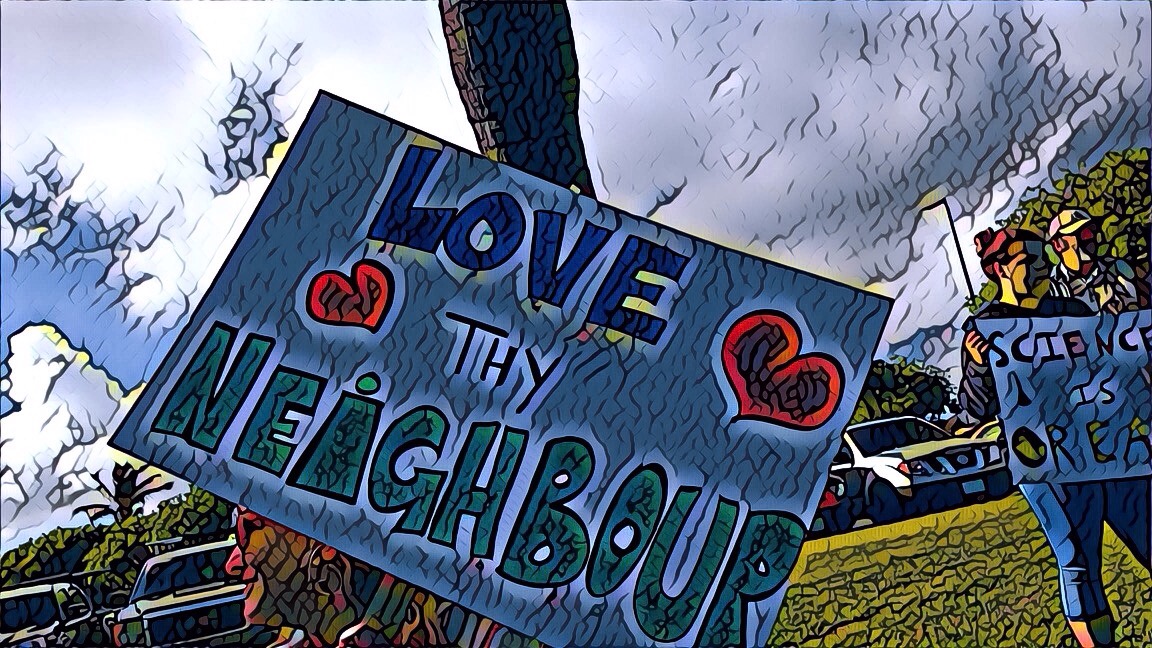
That “magic” ring is, like most rings, circular. It represents the whole of humanity. It represents the family. It represents a club, a marriage, a lodge, a company, a church, a school, a class, a group of friends. It represents our respect for each other as human beings. It represents our ability to communicate with each other.
You could call that ring love and I wouldn’t object. It need not be imbued with so much positivity that people feel love. But it must be overall positive. It represents truth. It represents empathy. Love is strong and it can overcome both a few misdeeds by everyone and many misdeeds by a few. But if lies become more commonplace than truths, civilization will run downhill and eventually cease.
Similarly, if hate and fear and contempt are how we mostly regard each other, the marriage, the family, the club, the school, the church, the party, the lodge, the company, the group of friends will eventually disintegrate. In many cases, it would disintegrate into a self-destructive war except that most people will stop themselves because they don’t want to be ostracized or jailed by the larger society. If, however, the entire society becomes rife enough with hate and fear, no one will come to anyone else’s rescue.
Our entire survival depends on our gift, our ring, our community, our country, our fellow human beings.
Our gift is not our lightning speed of running.
Our ring is not our ability to out-swim the shark.
Our gift is not our powerful jaws, or our steel strong talons.
It is our ability to communicate with each other by sharing experiences. It is truth, caring, and cooperation. That is our one gift that enabled us to survive and thrive.
A democracy can take many specific forms. What it is, at base, is that it recognizes the gift as a fundamental value to be cherished and used. The fundamental purpose is to ensure that government is aware of and takes into account how policies and people and processes actually impact people who live in the democracy. In a representative democracy, the people, in turn, can vote for people to represent them. They can vote for any reason they like; e.g., because they admire a particular person; they believe they will do a competent job; they like the candidate’s promised policy changes; they find that the candidate reminds them of his funny old uncle Al who always had the best candy on offer.
No democracy is perfect. There has to be in its structure and processes more truth than lie; more empathy than indifference; more love than hate; more hope than fear. In some democracies, there are basically two parties; others have dozens. Parties may differ on philosophies, priorities, platforms, programs, etc.
A “party” who rejectsdemocracy itself however, is not an actual political party. The term “political party” only makes sense in the context of a democracy. If “elections” are determined by those in power, they are not actual elections and there is no party. It’s just a group of thugs who want to rule by hate and fear and lies. That is not a political party. It is not a legitimate part of a political process. They want to throw the ring away in the toilet. They want to subvert the truth to lies. They want to severely limit love and enhance fear and hate. They divide rather than unify. Oh, and guess what else? Historically, they want war. They will ensure that war just as Putrid is doing right now.
Democracies have also been known to start wars. When they do, it’s often based on lies. As communication has become more ubiquitous, it has been harder and harder for democracies to lie, cheat, and be cruel. Most people don’t want that! Most people want there to be more truth, love, caring, and cooperation. There are plenty of differences about how to go about that. That’s fine. That’s just the sort of difficult and messy problem that democracy is particularly less bad than any other system.
As I said, I really think most people prefer interacting in a caring and cooperative way. We see that it’s more effective in getting things done and it simply feels better for everyone. For that reason, dick-tater-$hits have to provide lies to help assuage the consciences of its citizens. “Oh, they are all murderers and rapists! You shouldn’t feel bad about being cruel to them!” Another favorite is: “Oh, they aren’t really human beings, the way we are. No need to treat them any better than a fox trying to steal your chickens!”
Photo by u041eu043bu0435u0433 u042fu043au043eu0432u043bu0435u0432 on Pexels.com
Needless to say, this ploy completely fails on many people and isn’t completely effective on anyone. Any time you’re cruel, whatever story you tell yourself about it, you know you are destroying a bit of yourself. Except, what you are really destroying is something much vaster than a bit of yourself. In fact, what you are destroying is something much vaster than all of yourself. What you are destroying by being cruel, whatever story you tell yourself is the human branch of the Tree of Life. Lies weaken that branch. Cruelty weakens that branch. Bullying weakens that branch. So too does cowardice.
The architecture of karma shows that the future impact of your present day behavior is much greater in scope than your present impact. Behaving well is in your interest because what you are is essentially a very small and very temporary part of that ancient, vast, and diverse Tree of Life. The more you can enhance that tree with truth and love, the better for the whole tree.
Don’t throw away the ring. Wear it proudly. It is truly an amazing gift!
One of the best books I ever read: The Architecture of Complexity by Herb Simon, makes a number of stellar points. Three stories that I remember are of the ant, the clockmaker, and the heat dissipation in the building.
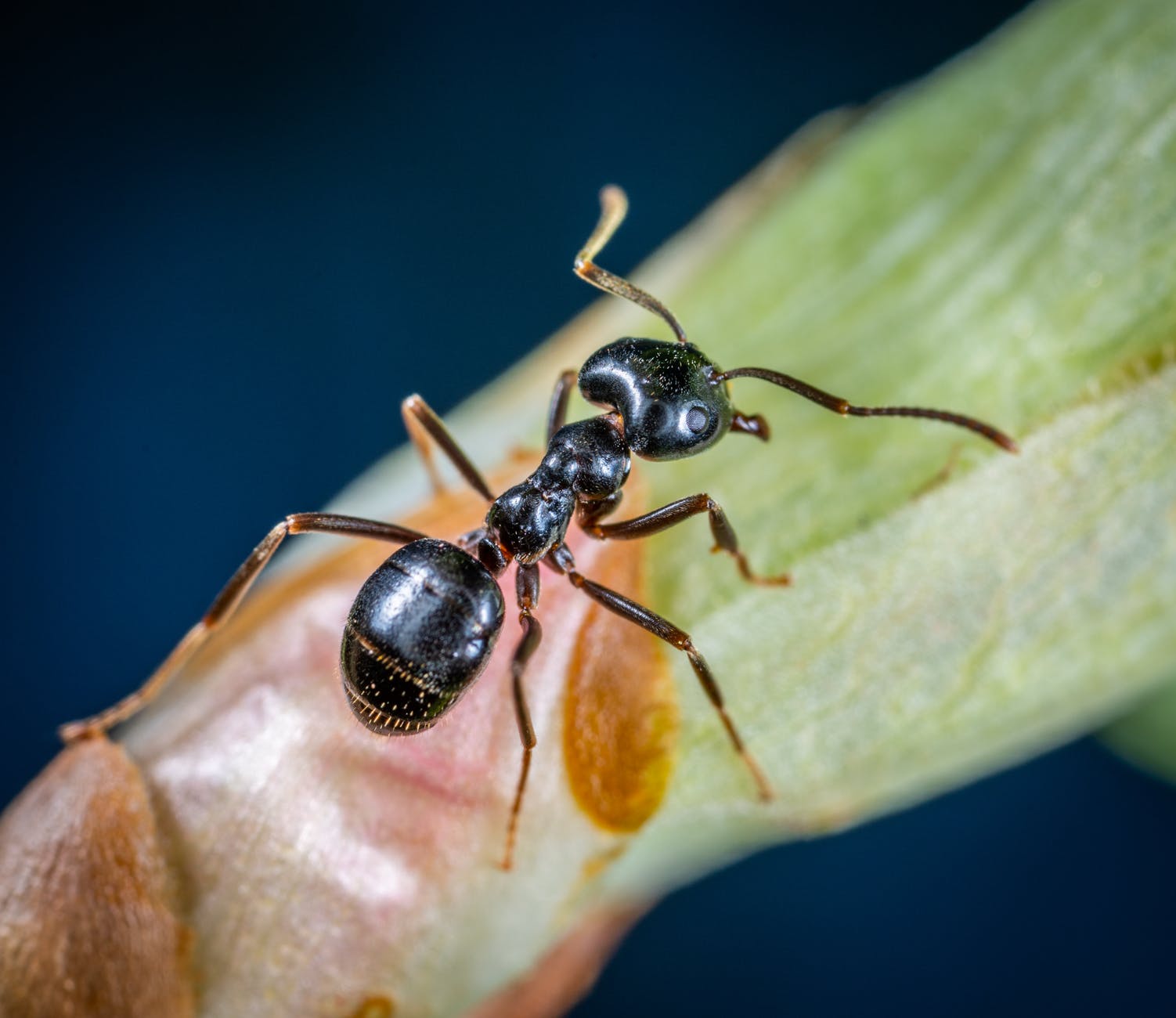
As I recall, the story of the ant opens the book. He basically argues that an ant’s behavior seems complex to us partly because we can’t sense the world of the ant. Simon says that what we might attribute to complexity in the ant’s nervous system is actually due to the complexity in its environment. He’s right, of course, though I think he, like most, vastly underestimates the complexity within the ant as well. A single cell is hugely complex. Nonetheless, it is true that what we observe as complex is behavior that is influenced, and perhaps determined, by both the environment and the internal workings of the ant. That is just as much true for us as individuals, for groups, for nations, and for ecosystems as it is for an individual ant.
Ants, in various circumstances, do things that benefit people, or benefit the ecosystem, or do things that we find destructive or inconvenient. In the case of army ants on the move, they can be highly destructive or even lethal. It seems odd, however, to claim that ants are “evil.”ty
Why is that? It seems as though the ant is simply “following its nature” even if it spoils our picnic or herds aphids so as to ruin our roses. It doesn’t do what it does, we suppose, to “hurt us” or to “destroy beauty.”
When it comes to human beings though, it seems that some individuals do engage in destructive behavior, not because they actually gain anything substantive and useful to themselves but merely because they get pleasure out of inflicting pain and death on others. Every society has such thugs. In a healthy society, such individuals end up in jails or psychiatric institutions. At the least, they need to be put in such situations as to minimize the harm they do to other people as well as to other living things. At best, perhaps therapy can stimulate them to restart their stunted emotional growth.
In some cases, such thugs can gain powerful positions in a society. In the worst case, such thugs become dictators. The playbook they use is so old that it is tattered at the edges. It basically consists of playing on the hates and fears of others in their society in order to divide people against each other. Few would fall for such a ploy except that the dick-tater lies and sets up mechanisms to multiply their own lies and prevent people from knowing the truth about things. The dick-tater builds a clumsy but appealing false narrative so that many people will gladly allow the dick-tater to steal wealth, health, life and choice from his victims. I would use the word “evil” to describe what the dick-tater does.
Like the ant, however, what he does is not particularly “brilliant” or “complex” but it can seem so to those on the outside who don’t understand what the dick-tater is doing. For example, most people, in their daily life, use language to coordinate with others, to bond with others, and sometimes, to enrich life (songs, poetry, puns, comedy, drama, etc.). The dictator relates to language in a completely different way. Their purpose is not to “share experiences” or “solve problems together” or to “enrich life.” Their sole purpose is to manipulate others into doing their bidding.
There is a karmic price to pay for a life of misusing language however. A dictator becomes ever more paranoid and ever more cut off from reality. As a result, the dick-tater becomes ever less effective. This makes them even more paranoid and careful about who they surround themselves with. People willing to speak truth to power are fired, killed, jailed, or disappeared. People who surround the dick-tater are ever more cowardly and sycophantic. This means that the dick-tater becomes even more isolated from reality. The orders of the dick-tater become ever worse in terms of the very ecosystem that the dick-tater needs to survive. Their actions become more short-sighted in time and more restricted in scope.
A perfect example is in a concordance I once saw of the Watergate tapes. Months before Nixon resigned, he used the word need in sentences such as:
“What this country needs….” “What the party needs….” “American needs…”
A week before he was forced to resign, the scope of his interest had narrowed considerably. There was no more talk of what the party needed or what the country needed. It was:
“We need….” “We need…”
“We need…”
And the day before he resigned, it was:
“I need…” “I need…” “I need … “
The ant may have a smaller brain than the dick-tater’s, but the ant is still tethered to her colony mates and to reality. The dictator has no such constraints.
The “beauty” of “Mutually Assured Destruction” (MAD for short) is that no rational person would start an atomic war with another nation because everyone knows that both sides would lose such a war.
And that’s one of many problems with dick-taters. They are eventually guaranteed to become more irrational over time.
An egomaniacal, cut-off from reality, cut-off from those who would speak truth to power — that is just the sort of person a dick-tater-$hit puts in charge of atomic weapons.
The second story I recall from the book is the story of two clock-makers. Both of the clock-makers made clocks that consisted of a thousand pieces. One of the clock-makers, however, had to arrange all thousand pieces before the result was stable. If someone interrupted the clock-maker when they were half-way through (or even 99% of the way through), and they were interrupted to answer the door, they would have to start all over again.
The second clock-maker constructed the clock by putting together 10 super-assemblies, each of which was made out of 10 sub-assemblies. If that clock-maker happened to get interrupted, they only had to redo that specific assemblage. As a result, the progress of the second clock-maker was much more resilient.
If a country’s decision-making is dependent on getting the okay of a dick-tater, it seems to me that it becomes very “fragile” like the work of the first clock-maker. If the dick-tater, for whatever reason, changes the dictated direction, all the work people had been doing is lost. In fact, it’s worse than that because not only is the work done now useless; the people who had been doing that work will not instantly change direction and begin working on the new priority. First, they will have to cover up the work that they had been doing! That takes time and energy. In the case of a particularly inept dictator, this will happen often. Scapegoats must be found so that blame will not fall on those little sycophantic lieutenants who were pursuing the previously approved (but now no longer approved) projects. The same sort of thing will happen if dictator one is assassinated and replaced by dictator two. The work and many of the workers who were doing what they could for dictator one must now be eliminated. Either way, the results are the same: consolidation of power to the dick-tater’s new whim and lack of sustained progress.
A well-functioning democracy is more like the work of the second clock-maker. Things are done at various levels of government and so long as what the mayor or governor does is consistent with the law, there is no need to trash the work (or the workers) simply because someone new gets elected at a higher level. Of course, sometimes that does happen. But it isn’t a perceived necessity as it is in the case of a dick-tater-$hit.
As a result, dick-tater-$hits are fragile when it comes to getting things done. Of course, people are afraid to fail. That can be motivating. You can build pyramids with the threat of a lash. But you cannot build a robust cyber infrastructure. You cannot bully people into being truly creative. In a regime based on hate and fear, a huge amount of energy is wasted on “covering your a$$” and very little is learned from success or failure. In success, those with relatively more power will take the credit and in failure, those with relatively more power will blame others regardless of what really happened. Moreover, neither failures nor successes are experiences to learn much from. It’s only a question of who gets promoted and who gets “sent to Siberia.”
Dick-tater-$hit is a crappy system for learning, improving, or innovating. It isn’t limited to ill-governed countries. There are people who “run their family” like a dick-tater-$hit and there are people who run their company or club that way as well. If the overall society is a democracy, the most capable people will tend to avoid such companies or families. If the country is a dick-tater-$hit, then, the entire culture will be pushed toward authoritarianism and its attendant ills.
The last story I recall from The Architecture of Complexity is about a building that consists of several rooms. Each of the rooms is subdivided by partitions. Simon points out that if someone brings a space heater into one of the small partitions, it will heat up that partition first. Eventually, the heat will dissipate into the whole room. But in a still longer time frame, extra heat will seep out to all the rooms in the building.
I tend to think of karma as operating in this fashion. In the short term, if you are nicer to the people around you, they will tend to be nicer to you. But people circulate. So, to a lesser extent, if you are nicer to the people around you, they will be nicer to people in general, and eventually, the whole society will be moved toward nicer behavior. That will benefit you, other people, and the entire ecosystem. As a result, you will live in a better world, other things being equal. Even more so, it bodes well for a nicer world for your kids, your grand-kids, and your great grand-kids.
Conversely, if you brutalize those around you, it will be bad for you and what you care about. In fact, since we live in an inter-connected world, brutalizing people anywhere will eventually cause pain to your progeny and the Tree of Life more generally. To brutalize means to harm others without any real material benefit to you. If a surgeon removes a cancerous tumor from their patient, that is not brutalization. If you trim injured or diseased branches off of your rose bush, that is not brutalizing the rose bush. But if you wantonly kill animals, plants, or other innocent humans, you will be wreaking havoc upon yourself.
That is not surprising, because bullies bully, essentially, because they hate and fear their own life. Life is too unpredictable and scary for bullies. They want to control the world and especially control other people. They think that this will make the world safer, but it actually just makes it more dead. The death, destruction, and brutality that a dick-tater inflicts on any part of the world is death, destruction, and brutality that is inflicted everywhere and on everyone. It may well be that it will take longer to feel it in some places than in others.
If you have untreated bone cancer in your arm, it may mainly hurt your arm initially. But, if left untreated, it will eventually kill all of you, not just your arm. Like cancer, the greed for power that a dick-tater feels knows no bounds. Remember: the dick-tater is cut off from reality and is very short-sighted in terms of time and space.
The rot of dick-tater-$hit eventually seeps into every aspect of society. Schools will only teach what the dick-tater wants taught. Books that the dick-tater thinks will make people think or dislike him will be banned. Even people’s love lives will be constrained by what the dick-tater likes. The people who get the top jobs will not be the ablest or most productive but the ones who have ki$$ed the most a$$. Since the dick-tater’s entire life is built on cheating, they will encourage cheating in everything: business, sports, science, art. Anything alive and thriving is a potential threat to a paranoid dick-tater — and they will all eventually become paranoid. Of course, all this rot that the dick-tater has themselves instituted into society will ultimately make the machinery of the dick-tater-$hit slow and decay.
Dick-taters do not see that they are quite literally cutting off their nose to spite their face.
Dick-taters do not see that they are are harming all of life with their brutality. Dick-taters do not see that they are harming themselves and everything they might care about. Dick-taters do not see that in their quest for “immortality” they are trying to subvert the very nature of life itself. Dick-taters surround themselves with cowards who will fail to point out to them the futility and folly of their foul ways.
We must point it out.
We must arrange the architecture of our society so that dick-tater-$hit is impossible and discourage anyone and everyone who believes that they are more important than the entire Tree of Life.
Dick-taters are always bad.
Now they are lethally bad.
The end of humanity doesn’t depend on all dick-taters being insane enough to use atomic or biological weapons.
Putting a dick-tater* [see below*] in charge of things has always been a very very bad idea.
But in today’s world, this bad idea is worse than ever!
There is still the problem that such a position appeals mainly to cruel and cowardly people. That results in the person who is in that position surrounding themselves, not with the best experts in the country, nor the most diverse range of opinions, but with people they can cow.
Hence, you end up with someone predisposed to greed, cruelty, and cowardliness surrounding themselves with others who are cruel, greedy, and cowardly. The entire government decision making process ends up narrow, uncreative, and stupid. It was that way in ancient times and in the Middle Ages.
In those days, however, the whole of accurate human knowledge was much more limited than it is today. Today, even an actual genius (not a self-declared one) will know only a small fraction of the knowledge relevant to a given problem. That’s a bit of an issue for democratically elected leaders as well, but at least there is some chance that elected leaders will listen to a range of experts and make a decent decision. But in a dick-tater-$hit**, that almost never happens.
Although a dick-tater is supposed to have infinite power, it’s actually just a public fiction. Of course, the people as a whole are way more powerful than the dick-tater. But the dick-tater tries to put everyone in fear of each other. They divide in order to conquer. If the people would all stop obeying stupid orders, the dick-tater-$hit would crumble. But it takes a lot of bravery to be the first one to disobey their orders. The first one will be killed.
It takes even more bravery to be the second one. Because the second one to defy the Putintate (or whatever it’s called) has already seen the effects of radiation poisoning (or whatever other cowardly action was taken to silence the first). And, perhaps it takes even more courage to be the third person to work for the people rather than just please the dictator.
I enjoy playing chess myself. But it’s not that fun to simply stare at an empty chessboard. (I have actually done that to see how I can allocate my attention to various squares in the matrix, but that’s the subject of a different essay.) It gets old though. It’s certainly more fun to play chess. If you have no pieces however, it’s basically a boring game. It only works because you have pieces to move. If the pieces move on their own and express their basic nature as separate human beings, it’s disconcerting. But it’s even more disconcerting if there are no pieces whatsoever because you’ve murdered them all.
NOTES: * I use the term “dick-tater” because I think it shows a better derivation. Latin for “Say often or prescribe” is where “dictator” comes from. And although some dictators and would-be dictators are mouthy or whiney, they don’t really *say* things at all in the way most of us do. Most people, most of the time, say things so as to better communicate and to coordinate our work for the community. The purpose of a dick-tater is to control, not to share truths. So, I don’t like relating what a dick-tater does with words like “diction” or “predict.”
When we think about toxic masculinity, however, we often refer to someone who only has his own interests at heart with the answer to this question: “What do you call it when a needle when stabs into your skin?” Or, we sometimes use a person’s name — one that rhymes with “ick”. And the use of this word “dick” in that way is not at all inclusive of the many characteristics of male anatomy. When we say someone is a “dick”, we’re not saying he’s shaped like one, or that he changes size a lot, or that he’s used for urination. We refer quite specifically to someone being a dick as acting, perceiving, and actually being a certain way. It doesn’t really even have anything to do with sex, per se, although certainly a “dick” is likely to approach sex, like everything else in a selfish, dickish way. He might be prone to “grab women by the pu$$y” or rape them or pay for sex. But that has nothing to do with, e.g., the actual miniscuality of the mushroom in question. True, microsize might be part of the motivation for someone to “become a dick” (since they don’t really have much of one), but it need not go that way.
The essence of the term refers only to the psychology behind what is being done. What is behind every perception, action, and decision is being an absolute coward. This is basically why the dick-tater seeks absolute power. He or she is too chicken to face a fair contest of any kind. They might lose. That is also why they are prone to pay for sex or sexually assault or molest someone younger. In all cases, they don’t have to face whether or not they will be accepted by their desired partner. It’s too scary for them. They might be rejected. But not if they can be bullied or forced or paid off. The slime invades every aspect of the dick-tater’s life.
No-one really knows exactly what causes people to be extremely (or sightly) sociopathic. It seems correlated with a lack of unconditional love given on the part of the parents. Criminality does tend to run in families but it’s unclear how much of that is due to which sorts of factors. In some ways, maybe it’s a lot like learning any other family business. This family tends to have good cooks. That family tends to have good crooks. In each case, the people in the family learn from each. Within this family there is an innately determined ability to imagine the result of combining tastes, while in that family people seem to have the natural talent to cause great wastes.
Let’s move on to the “tater” part. When I think of a “tater” I think of “tater tot” and that too seems wildly appropriate. The “tater tot” is very appealing. And, it’s also very bad for you compared with most other foods; it’s high in fat, in calories, and in fast-absorbing carbs. And, typically, it comes with added heart-unhealthy sodium. So, in terms of what it means for a society, few things could be more appropriate metaphors. It looks attractive and yummy but what it really does it tend to kill you while it makes you feel good for a moment. But your kids and grandkids and great-grandkids won’t feel that moment that you’ll relish. All they’ll feel is endless frustration and despair of the situation you put them in. And utter hate.
Can you really blame them?
The word “tater-tot” also has within in the two words, “tater” and “tot” and again both of these seem appropriate. A “tater” is a slang word for “potato” — a food which is something we can almost all relate to. I can’t think of anyone I know who doesn’t really like potatoes. Some only like French Fries while other prefer a Baked Potato. I like potatoes every way made that I’ve ever had: Baked, Fried, Scalloped, Potato Salad, German Potato Salad, boiled, mashed. The only “problem” with potatoes is that they don’t really solve the hunger problem very permanently. They are high calorie and the energy is quickly absorbed. This means your pancreas secretes insulin to drive your blood sugar level back down. And, since our biochemistry mainly evolved before French Fries, our pancreas thinks we are having a huge meal and sends way more than enough insulin. And, that drops your blood sugar level again. So fifteen minutes after eating the French Fries with salt & ketchup (Yes, of course, I love them!) You feel wonderful! Yum! But an hour and a half after eating them you may feel hungrier than you did before you started!
At last, we come to “tot.” It’s almost too easy and obvious, isn’t it? Many of us go through a phase as a toddler where we try this “I am the dictator of the world” and everyone must cater to me.” It doesn’t happen to everyone, but to far more than actually become dicks. It takes time and experience to understand how to be kind to people in all its complexity, but the basics are pretty easy, actually. So, most kids are “nice” to others most of the time. But there are a few who are not. And, then almost everyone has a bad day now and again. Now, personally, I was much more of a dick at age 13 than I was at 7, 8, 9, 10, or 11. Hormones? I don’t know. I just know it was so. Your mileage may differ. But, I think generally speaking, we would agree that dick-titorial behavior is childish behavior. It’s childish to be so self-centered that you care more about your own ego than about the fact that you’re killing women and children who have done nothing to hurt you. Nothing.
So, where were we? Ah, yes, a dick-tater-$hit is a balancing act. Everyone around the dick-tater is afraid of that dick-tater. But at the same time, the dick-tater is scared of everyone around them! This means, among other things, that the dick-tater is always looking for external enemies in order to keep his inner ring from turning their gaze toward him and thinking how much better a job of it they could do. To avoid internal division, the dick-tater is always fomenting discord to outside enemies or to the “undesirables” within their own society.
Good luck with that one! Because there is absolutely no way anyone can tell with certainty who or what is going to be called a deadly evil in a dictatorship ten years down the line. Just because a dictatorship begins by forbidding gay marriage in year one doesn’t mean they won’t require it next decade. “No, they couldn’t. They wouldn’t.” Well, don’t be so sure. TFG, would-be tater-tot, was a liberal (gasp!) On many issues such as abortion, before getting into politics. Of course, he needs the support of his fans in order to gain absolute power, but not to keep it. Once the machinery of a dictatorship is well in place, it is very easy to target different groups at different times. If someone thinks they’re safe because the current dick-tater pretends to be a lot like them, they’re simply fooling themselves. First of all, they’re a lot less like the dick-tater than he would have you believe. Second, even if he were your identical twin, he’s out to steal from the people and if he can do that better by throwing you under the bus, he would sacrifice that twin brother. That’s what it means to be a dick-tater: No-one else really matters; you sizzle them with flashy illusion but there’s nothing lasting or substantive; you appeal to the selfish child that lives in everyone. That child was formed before you learned about logic and evidence and facts versus opinions. Why appeal to the rational mind who might (in fact, likely would) see right through your web of lies? Instead, promise them something wonderful and undefined. Whenever you need a bump in popularity, tell them you’ve achieved one of those wonderful things.
You don’t actually have to achieve anything. You simply have to direct newspapers and social media what to say about your wonderful achievement. Oh, and let’s not forget to jail or poison any journalist who reports on the truth. Eventually, people will begin to catch on despite the dick-tater’s insistence on the web of lies. Eventually, everyone knows the emperor has no clothes. But he simply makes it known that anyone who mentions it will be decapitated which is ironic in that it’s actually the state that needs to be decapitated.
[Notes: (cont.) ** The suffix “$hit” is appended dick-tater in order to form the word for the type of government. I find the suffix: “ship” leaves me adrift. Maybe running a country is like running a ship? I think the most we can say about “ship” is that it is used to make a collective out of individuals. Partners form a partnership. Towns form a township. But…? Dick-taters make a dick-tater-ship? I guess to some extent that is true. The people closes to the Dick-Tater also have to be pretty cowardly. And so on. The further away you get from the dick-tater, the braver people tend to be. They almost have to because they have far less power. The dick-tater rules because he has power. But what is that power? He doesn’t physically have control over very many.
There are agreements throughout the society that enforce the power. On any given day, everyone could wake up and simply stop enforcing them. After all, they might ask themselves, “Why should the dick-tater be the only one in the country allowed to break his promises? Anyway, I promised I would protect Mother Russia from attack, not that I would attack my neighbors who pose no threat to me.” Those are uncomfortable questions for a dick-tater to answer. So he won’t. To survive in a dick-tater-$hit you need to bribe people. Hence, the dollar sign. Because the rule of law means nothing and the truth means nothing and fair play means nothing and raw power means everything, you and me and everyone we care about will be in something and believe me that thing we will be in is not a ship.
Destroying the idea of democracy is like trying to chain a cloud, Vlademort. Give it up.
In the attempt to kill off all their enemies, they will make more enemies. Therefore they will stay afraid all their lives. They are not just running from enemies; they are running from life. To embrace life, whether you are dancing, loving, creating, building — there is always some degree of danger.
The alternative chosen by dictators is to surround himself (or, rarely, herself) with sycophants. Sycophants, in case you don’t know, are even more cowardly than the dictator. In return for small favors, they tell the dictator whatever the dictator wants to hear. As a result, the dictator becomes more and more unhinged from reality. This makes them ever less effective. As they grow less effective, they realize that they must lie even more to keep their power. As they do so, it becomes more and more obvious to everyone that they are ineffective. At first, people who are distant from the dictator realize the ineffectiveness of the dictator. But over time, as the ineffectiveness increases, even people close to the web of lies see that how absurd the whole thing is. Yet, if they are close to the dictator, they’re in a bad position. If they do tell the truth, they’ll be the first to go.
This behavior is nicely portrayed in the movie, The Deathly Hallows: Part Two. The destruction of one of Voldemort’s horcruxes staggers him. One of his minions asks whether he’s okay. What does Voldemort do? Does he say, “Thanks for your concern, but I’m fine.”
Oh, no. He performs the killing curse on his own follower; in this case, the follower wasn’t betraying his master or even questioning him explicitly. But implicitly, his comment questioned whether Voldemort was perfect, immortal, invincible. And, to a deranged Voldemort, that is the very issue he is destroying the world in order to keep himself from realizing: that he is vulnerable. Of course he is. Everyone is. The only things that are invulnerable are dead things. But in the extreme case, precisely because vulnerability so obviously is part of all life, Voldemort fights more desperately to deny the truth. As it turns out, it’s precisely the bullies and the cruel dictators of this world who are the actual snowflakes “who can’t handle the truth.”
In honor of Ukraine and Ukrainians. May we all be so brave when we are tested.
Do you remember the song, “Take me for a ride in the car car”? Here’s a link to one popular version. Peter, Paul, & Mary also sang it. Nice song. But you may have experienced it being repeated too often. At a certain age, some kids seem to discover that they can be really annoying simply by singing a song over and over and over and over.
When I was in my early teens, I took a car trip with my Uncle Paul and his wife and three kids out to see his brother Bob who headed up a psychiatric hospital in Pennsylvania. It was a long drive. At some point, to pass the time, we sang some songs. When the last song was over, Paul’s youngest son began to make up new verses for one of the songs. At first, it was rather cute to watch him try to build a story, rhyme, and keep in tune, none of which he actually succeeded in. But after about a quarter hour, he began to annoy people with his off-key, non-rhyming, senseless continuations of the song. After about a half hour he was annoying everyone. After an hour, we began to discuss leaving him by the side of the road and returning in another ten years to see whether he was still there.
On car trips, we used to play a number of games to pass the time; e.g., seeing how many different states license plates we found find. Later, I learned to play “The Alphabet Game.” There are several versions, but basically, you must find, in order, the letters of the alphabet from passing cars, signs, etc. Stuff inside your own car cannot be used. (You could easily find all the letters in a book or magazine). I’ve learned to know where to look for J, Q, and Z. I’ve been in cars where we played twenty questions, Botticelli, Buzz, and Ghost. When I was a kid, I also simply looked out the window to entertain myself. Sometimes, I would imagine that the dotted lines that divide the lanes were like tracer bullets shot from our car. Then, I would watch to see whether another car got “blown up” because they crossed our fire. I would also imagine myself “flying” alongside the car, having to bob and weave to avoid telephone poles, trees, signposts, etc.
Traveling in a car with a family or with a group of friends or your car pool is potentially a social opportunity as well as an opportunity to save money. Since you’re in the same car, you need to agree on destination. To some extent, you need to agree on temperature & what to do about the windows. As a kid, everyone also lived in the same “sonic space.” We would have to “agree” on a game or on a radio station. This is no longer the case. Now, often times, everyone in the family may have their own individual entertainment. Is that a good thing or a bad thing?
Even in the modern day, driving in a car with others is different from driving in a car on your own. If you’re by yourself, you can decide on the temperature and entertainment without having to take into account anyone else’s wishes. If others are in the car, some kind of negotiations have to take place.
At least, that’s what most people do. You could decide: “Hey! It’s my car so I’m going to drive and I get to determine everything about our common space — temperature, entertainment, windows, whether we stop, etc.” This is what is known in academic circles as the “A$$hole theory of cooperation”: Get everything you possibly can for yourself and to hell with everyone else. And after all, they’re doing the same exact thing.
Notice too that to some degree, the amount of accommodation you have to do depends on how much humanity is in the car besides yourself. It also depends on how “luxurious” your vehicle is. If you have a tour bus or a camper, six people might be relatively comfortable. If it’s a VW bug, you won’t be. You’ll not only be crowded; you’ll have to be careful every time you move not to accidentally elbow someone in the eye. Have you ever been in that crowded of a situation for hours at a time or even days at a time?
It isn’t just cars. In general, the more people occupy a given space, the more they are going to have to cooperate in order to survive and thrive. You can provide individuality support with technology, up to a point. In a way, clothing is like that. We can peacefully co-exist in a car without either of us compromising out comfort because I can wear a sweater and you can wear a thin shirt. You can provide everyone an iPhone and everyone can play their own game without having to agree on a common game. Of course, there’s a downside to that. First, we don’t have practice getting along with others. Second, we don’t share a common experience.
Even if the “typical” family of four interrupts their car trip and stops for lunch and agrees to talk, they are likely coming from very different places. Dad has been listening to Mozart and was in good mood until he suddenly remembered he was supposed to have sent out a memo to everyone in the department about last month’s sales figures. Damn. Maybe he can do it from the Motel but it will take longer than it would have at work. His son Sam, meanwhile, was trying to use sexting to convince his girlfriend to “take their relationship to the next level.” As a result, they just broke up. Dad doesn’t know a thing about that; nor does Sam know anything about why Dad suddenly seems put out. Mom meanwhile, was listening to Fox “News” where she “learned” that it’s Biden’s fault Putin “had to” attack the Ukraine because Biden was too tough on Russia and also too easy. Her daughter Sally, on the other hand, has spent the last 45 minutes on twitter learning about the Putin invasion. She is wondering whether atomic war might start.
Now, they stop for lunch. That’s nice. And, maybe they’ll talk about something common; perhaps the weather, or the scenery or the food. But they might just revert to what they were doing before they got together at the restaurant. Even if they all have the willpower to put away their personal devices, they are still coming from very different places emotionally and experientially. Dad might make a comment about how he forgot to write an important e-mail and he’ll have to do it from the Motel. Sam just shakes his head and says, “Important e-mail? My life is ruined! What do you care?”
Dad might say, “What do you mean by saying that your life is ruined?”
Sam might even share, “Jackie broke up with me!”
Dad, meaning well, and wanting to offer a solution before he starts reminiscing about his own high school days, blurts out: “Oh, Sam, don’t worry about it! You’ll have another girlfriend in a week.”
That may well be empirically true. But to Sam? He feels he has just lost the love of his life. His father’s comment seems to him to be dismissive of his feelings to the point of cruelty.
Sally pipes up, “How can you be worried about such trivial things as e-mail and dates when we might be blown to smithereens at any moment? Do you ever pay any attention to the world outside yourself? Putin is a monster killing innocent civilians so he can slake the thirst of his pathetic ego!”
Mom is taken aback. The only news she doesn’t dismiss as “lies that are out to get Trump” has been Fox “News” for the last few years. She says, “Don’t be saying bad things about Putin! He’s a nice man who just wants his Ukraine back.”
Sally’s jaw drops. “Are you serious! He kills journalists who write the truth about him. He’s a corrupt crime lord. He played Trump like a fiddle … no … not that complicated … played him like a drum … no … still too complicated … played him like the triangle. You know. Bang it every once in awhile and it reverberates. Anyway, it isn’t “his” Ukraine. It belongs to the Ukrainian people!”
Some families are better at getting through all this than others. These four have not shared a common experience and are coming from very different places. If they have no practice playing a game according to a common set of rules, what chance to they have to settle deeper differences?
Maybe avoiding little conflicts by giving everyone their own personal entertainment device means that when much bigger and more difficult conflicts arise, no-one remembers how to resolve things. Why shouldn’t everything by how I want it? Let others do the same! Let the best man win!
Except, of course, it isn’t the best man or woman who actually wins in a land where no-one plays by the rules. It’s the most corrupt. And the net result of everyone spending so much time competing and so little, if any, time cooperating is that nothing much is actually accomplished. It doesn’t even work very well in a small group. In a large nation, a dictatorship is almost invariably associated with less for everyone except the dictator and the immediate surround. Dictatorships do sometimes manage to steal from neighbors who are productive because they are cooperative. If all countries were dictatorships, they would all perish, probably in atomic war, but possibly in ecological collapse or just mass suicide.
In 2018, I worked on a “Pattern Language” for collaboration and cooperation. Here’s a link to anindex of the Patterns. One of them is called “Small Successes Early.” Should I be worried that we seem to be moving into a world where there are fewer and fewer opportunities for peacefully resolving small conflicts? Avoiding unnecessary conflict seems like a good thing. But … is the downside that people have no practice resolving conflicts? And, is the further downside, that people eventually end up with huge differences in their notions of reality when it really matters? It seems to be the very thing that Faux News has been counting on; that people would not only listen to them but not listen or dismiss any other views. As a result, people end up with very different models and explanations of the world. That is always a bad thing, but in a world where people are unpracticed at resolving conflicts, it’s even more problematic.
There is always a tradeoff between cooperating as a whole and letting each individual do as they wish. One thing seems crystal clear. As the number of people in your car increases, their individual freedom to do just as they please decreases. So, too, with the world. In my own lifetime, the population of the world has quadrupled. Of course, it’s not equally distributed. People are more concentrated in cities than ever before. Many of these cities are located on ocean coasts. What does the continuation of global warming mean to population migration and crowding?
I’m not sure how many people realize this, but we’re still in a pandemic. If people were very sparsely populated, we probably wouldn’t be. But as we continue to get more crowded, humanity will become more susceptible to pandemics. That in turn, means people will have to accommodate to each other’s needs. As a background rule, a person can choose to wear what they want. There are, of course, many exceptions to that. In many situations, you have to wear a shirt and shoes. In some situations, you have to wear a suit and tie or a uniform. If you might be spraying germs at other people, it seems totally reasonable to change your behavior or clothing to minimize that spread. But some people apparently think that they should be able to do exactly as they want regardless of the consequences to others.
As the earth becomes more crowded, we need to be more cooperative, not less. The presence of a large number of deadly weapons also makes it more important to cooperate. The race to ensure survival by having ever larger numbers of ever more deadly weapons is not a path toward that greater cooperation. Dictators, for instance, tilt toward war to consolidate their power.
For those who seek cooperation rather than violence, these attempts to capture “best practices” in collaboration and teamwork might be useful. Here’s a link to the index.
Here’s a link to the first of two essays about creative negotiation.
These stories (with a link here) explore leadership and empathy.
“There is always light if only we are brave enough to see it; if only we are brave enough to be it.”
— Amanda Gorman
While not being naive about the real dangers of dictatorship, one way to push against that is actually to be more loving and kind and accepting than you already are. Think on that. And have a wonderful day.














































 petersironwood