• About PeterSIronwood

petersironwood

~ Finding, formulating and solving life's frustrations.

petersironwood

Category Archives: Uncategorized

Astronomy Lesson: Invisible Circles

05 Friday Feb 2021

Posted by petersironwood in Uncategorized

≈ 1 Comment

Tags

decision making, experiment, problem finding, problem formulation, problem framing, problem solving, psychology, Skinner, thinking

My senior year at Case-Western Reserve, I went to college full-time but I was also head of a small family. I was married and we had small baby to take care of. I worked three jobs. One of those jobs was as a teaching assistant in downtown Cleveland at a place called “The Supplementary Educational Center.” The job involved a wide range of activities including putting new walls in, painting them, putting up NASA exhibits, running a planetarium and teaching about space and how airplanes worked. The Supplementary Educational Center bussed in sixth grade students (around 11 years old) from diverse parts of the city to learn about American History and about Space Science. 

Another job grew out of my class on Learning. The Professor in the previous story about operant conditioning without awareness recommended me as a research assistant for another professor who was also a Skinnerian. He was doing studies on operant conditioning. I “programmed” the experiments by literally plugging together components such as timers and relays. I also ran the experiments. By sheer coincidence, the “subjects” for the Professor’s experiments on operant conditioning were also sixth graders. 

The kids would go sit in a chair in front of a screen. On the screen, an image of a red circle would appear from time to time. In front of the kids was a lever. If they pulled that lever when the red circle appeared, a nickel would fall down as a reward. They were completely enclosed in what can be fairly described as a large Skinner Box. After a kid pulled the lever and received their nickel a few times, we began to “thin” the schedule. Now, they had to pull the lever 2 or 3 times before getting a nickel. Then, only every 5-7 times. Then, only once every 10-12 times. (Remember, it only “worked” if they pulled the lever while the red circle was there.) Finally, they were put into a phase where they would never get any more nickels no matter how many times they pulled the lever. 

Photo by Dmitry Demidov on Pexels.com

At that point, we (or more accurately, the relays we had programmed) stopped showing the red circle and showed other things such as a smaller red circle or a larger red circle or a green circle or a purple circle or a red ellipse. None of these ever paid off. But the instruments recorded their level pulling and we would soon satisfy our curiosity whether they would “generalize more” (i.e., pull the lever more) to a stimulus that varied in color, shape, or size from what they were originally trained on. I cannot recall how that actually turned out. As I look back on it, the notion that we would have a “general ordering” about the relative importance of these dimensions based on this experiment seems rather…naive.

Although the kids were run as subjects one at a time, it often happened that they came with a friend or two. The kids who were not being a subject just then, sat in a nearby waiting room and stared at the floor. I felt sorry for them. There were no magazines, games, books, etc. The room did have a blackboard though, so I picked up the chalk and began “teaching them” about the planets in the solar system. They seemed to enjoy my mini-lecture so I felt pretty good at having spread some enlightenment among the masses. 

Photo by fauxels on Pexels.com

Despite the fact that the Professor was a devout Skinnerian, he still suggested that I debrief every subject — ask them what they thought they had been doing. So I did. What I discovered to my amazement was that some of them thought that my astronomy lecture was an advance organizer for the task in the Skinner box! “Well, first you showed me a picture of Mars many times and then Jupiter came up….”

In my mind, the little mini-lecture and the Skinner box experiment were two entirely different things that were not at all connected to each other, but each of which was connected with a specific job and conducted miles apart. The people I saw in these two roles were different; the hours were different. In this specific instance, I had used a bit of what I knew — and more importantly, what kids that age were interested in — to help them pass the time while waiting their turn. It never occurred to me how the situation appeared from their perspective. 

From their perspective, they go to this strange place on a college campus and meet this college kid (me) who greets them and takes their permission slips and has them take turns at some weird way to earn nickels involving looking at circles and ellipses. And, this same college kid (still me) teaches them about the solar system with circles and ellipses. Of course, they would think they were related.

For me, there were two distinct circles. For the kids, there was one circle. 

Photo by eberhard grossgasteiger on Pexels.com

—————————————————————-

“O wad some Pow’r the giftie gie us
To see oursels as ithers see us!”

—- Robert Burns, To a Louse

————————————————————————

First in a series of stories about the mythical Veritas tribe who value truth, love, and cooperation and their struggles against the Cupiditas who value power, greed, and cruelty. Our tale begins as the shaman/leader of the Veritas seeks an eventual successor so she devises a series of trials that mainly test empathy.

https://petersironwood.com/2018/08/07/myth-of-the-veritas-the-first-ring-of-empathy/

Author page on Amazon

Training Your Professor for Fun & Profit

04 Thursday Feb 2021

Posted by petersironwood in Uncategorized

≈ 2 Comments

Tags

problem finding, problem formulation, problem framing, problem solving

Photo by Max Fischer on Pexels.com

The name of B. F. Skinner is not often invoked in discussions of User Experience. There are limitations to his basic theory, but perhaps it is time to revisit the baby that was, by many, thrown out with that bathwater. Skinner’s approach has two major limitations that come to mind. First, human behavior is moderated by internal structures such as beliefs, framings, assumptions, labels, and so on. If one ignores these cognitive structures and tries to predict human behavior solely on the basis what behavior is “reinforced” those prediction efforts will often fail. 

Second, humans (and other animals) are not born as “blank slates.” We have a number of inborn predispositions. For example, if you “punish” a rat by shocking the rat after performing a particular action, it will quickly learn to avoid that action. Similarly, if you feed the rat a food with a distinctive taste and that food will make it nauseous, it will quickly learn to avoid that taste. Some readers may have also experienced this. If your first experience with oysters, say, made you vomit, you may never try them for the rest of your life. 

Photo by Rachel Claire on Pexels.com

On the other hand, if you shock the rat after it tastes something, that is a much harder association to master. Or, if you make the rat nauseous after pressing a level, that is also a difficult association to learn. 

Despite these and other limitations of the strictly Skinnerian approach, reinforcement still works in many situations. It is even possible for people to “learn” a behavior because of reinforcement and to learn without any conscious awareness of the fact that they are being trained in this way. 

As an undergraduate at Case-Western Reserve, one of my psychology courses (on learning) was taught by a “Skinnerian.” He was an excellent instructor and I enjoyed the course immensely. Since we had a syllabus, I knew exactly when he would be lecturing on the topic of “unconscious conditioning.” As usual, almost the entire class was seated before the Professor arrived. This gave me time to explain to my classmates my idea for what the class would do: condition him to stand in a corner and comb his hair with his hand. 

I think you will appreciate the fun here. He was giving a lecture about how people could be conditioned without awareness and while he was doing that, we were going to condition him without his awareness. 

Photo by Andrea Piacquadio on Pexels.com

I will return momentarily to explain just how we managed, but first, I must explain the concept of “shaping.” Shaping is an extremely important concept for training your pets or your kids to behave in convenient or useful ways. Basically, the idea is to begin by reinforcing any behavior that is in the direction that you want the behavior to go in. If you want to potty train your child, for instance, you don’t initially wait for complete success. You praise the child even if he or she sits on the potty. You praise the child if they try to make it to the bathroom but have an “accident” on the way. Gradually, your criteria become stricter and you only reinforce behavior closer and closer to the goal. Similarly, if you want to train your dog to “shake hands” you initially praise them for anything even close. For instance, if you put your hand out and they lift their paw even slightly off the ground, you praise them. As they become more adept, you change your criteria for reward. Eventually, you only reinforce them then when they are “shaking hands” as well as you think possible. 

Now, let’s return to the Skinnerian Professor and his lecture on unconscious conditioning. If the class had waited until he stood in the corner and combed his hair with his hand, we never would have succeeded. At first, we only reinforced him (by looking up and looking very eager and interested) when he stood to the right of his lectern (from our perspective). Then, we only began to reinforce him when he was near the corner. Then, we only began to reinforce him when he raised his hand slightly. Then, we only acted eager and interested when his hand went up toward his head or face. Finally, we only acted eager and interested when he stood in the corner and combed his hair with his hand. It took almost the entire hour for this to work. I kept a written record of his behavior and noted the times and the changes in our criteria for success. When the lecture was over, I walked up and explained what we had done. I showed him my records. 

He was astounded! It was awesome. I suppose theoretically, he could have been putting it on, but if he was, it was the best acting performance I saw in all my years attending Eldred Theater or the Cleveland Playhouse. Once he recovered from his initial shock though, to his credit, he didn’t get angry with me or deny the reality of what had actually happened. He just nodded and said (essentially). “Yeah. This stuff really works.” 

Yeah. It really does. And, although B. F. Skinner’s approach to human behavior is overly simplistic, it still does work in many circumstances, including a human’s behavior interacting with a computer system. 

Another important contribution of B. F. Skinner is his work on “schedules of reinforcement.” It’s worth understanding this in some detail, but for now, I just want to focus on one aspect. The “schedule of reinforcement” that leads to the highest rates of behavior is to reinforce, not every time a desired behavior is observed, but very seldom and randomly. 

Photo by David Vives on Pexels.com

Las Vegas comes to mind. I only visited once. For a time, I watched people at the slot machines. Unlike the people who win on TV commercial casinos, in the “real world” (to the extent Las Vegas is part of the “real world”), I saw four people win and not a single one of them showed even a glimmer of pleasure. They simply started feeding their winnings back into the machine. This is how the Casinos make their money. Basically, they are using “a thin Variable Ratio Schedule” to get people hooked on behavior that is statistically guaranteed not to be in their financial interest. (Of course, it’s understood, people also gamble for fun. That’s okay.) But if you are gambling against the Casinos in order to make money. Well….good luck. Remember: they have chauffeurs, yachts, and mansions. You do the math. They say, “What happens in Vegas, stays in Vegas.” But they might instead say, “Money that comes to Vegas, stays in Vegas.”

In most User Experience contexts, we want the relationship between what the user does and the consequences to be consistent. I say “most” because, when it comes to games or learning experiences or computer art, this is not always true. In most work-related applications however, we want the user to be reinforced every time he or she takes appropriate action. I think that’s what designers mainly strive for. 

I believe, however, that the users themselves sometimes fall into doing something that only occasionally pays off. For example, let’s say a college student has ground floor dorm room and connects to the internet via satellite. The connection is flakey. Sometimes it works. Sometimes it doesn’t. But it works much better on the top floor. So, when he or she tries to access the Internet and fails, they walk the three flights of stairs and they successfully connect every single time. But walking three flights of stairs is a pain so the student in question decides it might help if they close all their windows before trying to connect. Now, say that didn’t work so they decided to close all the windows and then reboot. Well! What do you know!? It worked. So, the next time they have trouble connecting, instead of walking up three flights of stairs, the student closes all the windows and reboots the machine. Maybe, by sheer chance, it worked again! 

Photo by Guduru Ajay bhargav on Pexels.com

The next time, perhaps it doesn’t work. But three flights of stairs? That’s a long ways. So, they try again! It works! 

Photo by Harrison Haines on Pexels.com

But winter is coming. 

And with winter comes rain. And with rain comes worse connectivity to the satellite. So, as the rain goes from San Diego rain frequency to San Francisco rain to Portland rain to Seattle rain frequency, our student becomes less and less successful in actually connecting. But every so often, the procedure works. They may have rebooted their machine ten times before it finally connected, but that just makes it more likely they will be willing to try twenty times before giving up. Furthermore, the student may have “given up” on even considering walking up 3 flights of stairs. Having the persistent habit of rebooting the machine multiple times actually prevents the student from either doing the thing that has always worked or working toward a more permanent solution (e.g., changing rooms, getting an antennae, finding a wired hookup, etc.). 

It is possible in this way to train a rat or a pigeon or a college student — or even a professor — to do something they would not have consciously chosen to do — or to do something at a much greater frequency than they would have chosen to do it. 

Photo by Daria Sannikova on Pexels.com

Next (Perhaps): “The Skinner Box and the Box Next Door.”

——————————————————————————-

Author page on Amazon

https://petersironwood.com/2018/07/12/chain-saws-make-the-best-hair-trimmers/

https://petersironwood.com/2020/02/28/essays-on-america-addictions/

https://petersironwood.com/2020/05/08/what-about-the-butter-dish/

https://petersironwood.com/2020/06/02/essays-on-america-my-cousin-bobby/

https://petersironwood.com/2020/07/31/essays-on-america-the-update-problem/

https://petersironwood.com/2020/08/21/the-primacy-effect-the-destroyers-advantage/

https://petersironwood.com/2020/12/17/bounce/

https://petersironwood.com/2020/04/25/process-re-engineering-moves-to-baseball/

https://petersironwood.com/2020/12/03/living-on-the-edge/

https://petersironwood.com/2017/01/09/trumpism-is-a-new-religion/

https://petersironwood.com/2019/07/18/essays-on-america-wednesday/

A Long Day’s Journey into Hangover

03 Wednesday Feb 2021

Posted by petersironwood in Uncategorized

≈ 1 Comment

Tags

alcohol, drama, problem finding, problem formulation, problem framing, problem solving, thinking

Photo by Prem Pal Singh on Pexels.com

Closely aligned with the notion of “Problem Framing” is the notion of “Attribution.” 

My dad was an electrical engineer. My mother was an English and Drama teacher. I’ve always enjoyed acting though I never pursued it as a career. My mother’s mother founded the “Akron Dramatic Club” and held meetings for many years at the house where my mom grew up. Typically, the group would read plays. I happened to have a very good memory at a young age and often I would “fill in” for anyone who was missing, even before I could read. 

In high school, I had the lead in our Senior Class Play, One Foot in Heaven. In college, I continued to take acting classes as well as technical subjects. In one “Studio Production,” we presented a scene from Eugene O’Neil’s drama, Long Day’s Journey into Night. I played the part of Jamie, based on Eugene O’Neil’s older brother. In the particular scene in question, the father and his two sons sit around a table drinking Irish Whiskey and, as they get drunker, blaming themselves and each other for various things including their mother’s drug addiction. 


In preparation, we rehearsed on a dozen occasions. At the time, my friends and I typically went out to bars several times a week and drank “3.2 beer.” In Ohio, at that time, the only alcoholic beverage one could legally drink from age 18 to 21 was beer with no more than 3.2% alcohol. I had gotten a “buzz” a few times, but had never been drunk.

I had, however, seen people drunk in real life a few times and seen them many times on TV and in movies. I pretty much knew how to “act drunk.” So, each time we rehearsed the scene, as I drank more and more tea, I pretended to get drunker and drunker. Some say, “in vino veritas.” I don’t totally agree, but it is true that people will say nastier things to each other sometimes under the influence. Jamie, in O’Neil’s play blamed his mother’s addiction on Eugene having been born and, given enough Irish Whiskey, he told him so in no uncertain terms. 

In our last dress rehearsal, for some reason, our director thought it would be a great idea if we ran through the scene three times using actual Irish Whiskey instead of weak tea. So, we did. As best I can recall, I had about a third of a bottle of wine before we began the rehearsal and each time through, I had a beer mug half filled with water and half with Irish Whiskey. It tasted pretty horrible, but I could down it. I simulated drunkenness pretty well, if I do say so myself. Each time I went through the scene, I would begin by acting “sober” and then gradually become drunker and drunker. Then, we would do the scene again. I still had a good memory, so I didn’t flub my lines. I don’t think the rest of the cast messed up either. Everything was fine. 

Until the rehearsal was over. 

During the rehearsal, I was repeating words and gestures that I had done many times. And in every rehearsal before this one, I had acted as though I was drunk even though I had been perfectly sober. Now that rehearsal was over and I found myself faced with the task of getting off the stage, remembering where my dorm was, and navigating myself home, I realized that I was not acting drunk. I was drunk. Very drunk. Walking was a problem.

While I had been rehearsing, I had attributed my behavior, the numb, fuzzy way I felt, and my slurred speech to my superb acting. 

Attribution can be tricky. 

If feedback is delayed, trying to do the “right thing” can be completely counterproductive. You may attribute good outcomes to actions that are actually making things worse!! 

(Here’s a post on how that might apply to controlling a pandemic).  https://petersironwood.com/2020/04/29/essays-on-america-oops/

Dave Pelz has a Ph.D. in physics from MIT and is a former astronaut. More recently, he has become an expert in the “short game” part of golf. He applies his analytic and scientific skills to the game and has inventions to help the golfer make correct attributions; a foundation for improving skill.

Photo by Jopwell on Pexels.com


Here’s how it works. Let’s say you line up to hit a putt (a short golf stroke) from a spot about ten feet from the hole. You strike the ball and it veers to a position about six inches left of the hole. It’s easy for you to see that you’ve ended up six inches left, but you probably have no idea why. Dave Pelz could tell you that you might have misread the slope; you might have misread the grain; you might have pulled the club a little left; you might have hit the ball slightly off center of the putter head causing it to twist ever so slightly and take energy away from the putt; you might, indeed, have done absolutely nothing wrong at all. Your ball might have hit a teeny unseen pebble or been blown off course by a puff of wind. Your golf ball might even possibly be a little off balance. 

Dave Pelz has invented various devices to help you disambiguate these (and other) potential sources of error. For example, if your ball ended up 6 inches left because you hit the golf ball slightly off the center of your putter, this would be extremely hard to notice. Dave Pelz has a device however, that you can put on your putter blade. It has “prongs” on both sides of the center line. If you hit the middle of the back of a golf ball with the exact center of your putter blade, the golf ball will go straight ahead as it normally would. However, if you’re off center ever so slightly, the ball will careen off at a strange angle. You’ll know immediately that you haven’t hit the center of the putter blade. 

Photo by Andrew Neel on Pexels.com

I’ve played many rounds of golf. I’ve never observed someone miss a putt and then say, “Oh, shoot! I hit the back of the ball, not with the exact center of my putter blade, but with a spot an eighth of an inch away from the center point. Damn!” 

In complex situations, it can be very tricky to discover attributions. And if you make the wrong attributions, you will almost certainly mis-frame the problem to be solved.

Framings exist at different levels. You might seek to improve your putting by discovering mistakes you make while putting and then correcting them. It helps if you have good feedback, whether from a coach or from mechanical devices or from your own nervous system. 

At a higher level, you might also need to reframe your expectations. You see, missing a ten foot putt by six inches is actually a pretty good result! Pro Tour Golfers make less than half of their ten foot putts. What you see on TV coverage of Pro Tour putts is mostly of pros making 10, 20, or 30 foot putts. But that is not, on average, what happens. 

Similarly, society is inundated with stories and images of people seeming to overcome impossible odds to become insanely successful. And quickly. At least, in the movies, it happens quickly, because otherwise, we would lose patience and not keep watching. Only, in real life, it doesn’t happen quickly. If you frame your “life problem” as: “How do I become a millionaire by age 25?” you may be setting yourself up for failure. 

A different framing might be: “What can I do that I love that also contributes to society so much that society will provide me the things I need.” 

Of course, some people may be born rich. In such cases, it is very easy to fall into the misapprehension that all your success is due to your hard work, judgement, intelligence, etc. when, basically, it’s mainly luck of the draw. 

Consider. However brilliant you might be, or physically gifted, how do you think your life would look right now if you had been born 100,000 years ago? You wouldn’t be reading these words on a computer, clearly. You wouldn’t be reading at all. Your surroundings, your clothing, your diet, your tools — these are much more determined by the circumstances you were born into than you likely imagine. 

It’s not crazy to focus on your own decisions. After all, no-one can determine the circumstances of their birth. You can change your decisions though. Usually, therefore, it makes sense to focus on your decisions, not on the circumstances of your birth. 

Usually. 

But not if you use the sheer luck of your birth circumstances to argue that you should have more than your fair share. Making your success out to be the results only of your personal perspiration and perspicacity is petty. 

Consider the gratitude you owe for what was granted. Your generosity grows correspondingly. 

It’s a good antidote for a hangover. You might even call it an antedote. 

Attributions are often made without your awareness. They can easily lead you astray. They can even lead you to becoming drunk without knowing it. You might be drunk on whiskey, as I was on that Long Day’s Journey, but people may also become drunk on power, money, or status.

—————————————-

An essay on mindfulness and gratitude: Corn on the Cob

https://petersironwood.com/2020/04/05/imagine-all-the-people/

https://petersironwood.com/2020/07/13/who-are-the-speakers-for-the-dead/

https://petersironwood.com/2020/08/17/roar-ocean-roar/

https://petersironwood.com/2020/12/14/how-the-nightingale-learned-to-sing/

https://petersironwood.com/2020/02/29/the-lost-sapphire/

Tales from an American Childhood

Turing’s Nightmares

Author Page on Amazon

The Slow-Seeming Snapping Turtle

01 Monday Feb 2021

Posted by petersironwood in Uncategorized

≈ 3 Comments

Tags

affordance, deception, Primacy Effect, problem formulation, problem framing, problem solving, psychology, thinking

Photo by Radovan Zierik on Pexels.com

The Slow-Seeming Snapping Turtle

(Don’t Judge a Book by its Cover Story)

One fine summer day, driving down the long curved driveway of IBM Research in Yorktown Heights, New York, I noticed a manhole-sized snapping turtle in the middle of the driveway. I pulled the car over. I didn’t want someone running into the reptile, looking as he did, such a splendid living fossil. 

Naturally, I knew snapping turtles could be dangerous, though as I watched him plod ever so slowly down the road, I felt no threat. Surely, my mammalian reflexes were far superior to those of this ancient reptilian beast. But, in a seeming excess of caution, I made no attempt to touch him with my bare hands. Instead, I found a thigh-sized dead tree branch that seemed suitable for pushing him off the road and thus to safety. 

Photo by JACK REDGATE on Pexels.com

I pushed hard on one side of his carapace. At first, he just kept plodding ahead, but my superior strength overcame his squat stubborn frame and he gradually angled toward the berm. Then, an unbelievable thing happened. In a split second, the viscous snapped to vicious. His head shot out a good foot from his shell and whipped around to the side, still managing his neck-lengthening trick. He chomped down and completely through the tree limb before I even had a chance to be startled. 

Our first impression of a situation can often lead us to dangerously erroneous actions. 

Here’s another example. 

As most Americans now know, there are 435 people in the House of Representatives. What is the probability that at least two in the House of Representatives share a birthday?

This is actually an exceedingly easy problem to solve. 

Unless…

Unless, you are familiar with a similar-looking problem called “The Birthday Problem” which may be stated something like this:

You are starting a new class of thirty people. What are chances that at least two of them share a birthday? 

https://en.wikipedia.org/wiki/Birthday_problem

It turns out that at least two people will share a birthday in a room with 30 random people over 70% of the time. The “break-even” point where the chances that at least will share a birthday is 23 people. It’s a bit counter-intuitive. But the math is sound. 

So, if you have heard of “The Birthday Problem” before, and now hear the question about The House of Representatives, you’d be likely to think something like this: Oh, that’s the birthday problem and it turns out you don’t need many people for their to be a likely double birthday. So, with 435, it must be very hight. Perhaps 99% or even 99.9%

With 435 people in The House of Representatives, you don’t need to “calculate” any probabilities at all. You cannot arrange any way for more than 365 people to “fit into” 365 days without starting to overlap. 

Beware of approaching problems (or snapping turtles) based on their eternal appearance. It might or might not be a good clue to its actual behavior. 

In the Pattern Language for Collaboration, one is based on this idea and I call it “Context-Setting Entrance.” Because we are prone to pay attention to the entrance, then if we design one, we should ensure that the entrance sets appropriate expectations. 

One type of “entrance” to thinking about something is the label. Labels in language can, however, be quite misleading. A dogfish is not a dog. A starfish is not a fish. On the other hand, it’s probably called a “Snapping Turtle” for a good reason. It snaps! It’s not called a “Plodding Turtle.”

Photo by Pixabay on Pexels.com

————————————

Author Page on Amazon 

The Winning Weekend Warrior focuses on the mental game for all sports.
http://tinyurl.com/ng2heq3

Turing’s Nightmares explores the possible futures of how people communicate with computers and each others. http://tinyurl.com/hz6dg2d

Fit in Bits describes many ways to work more exercise into daily activities. http://tinyurl.com/h6c7fce

Tales from an American Childhood recounts early experiences and relates them to contemporary issues and events. https://tinyurl.com/y9ajvz9j

Beware of Sheep in Wolves’ Clothing

Measure for Measure

28 Thursday Jan 2021

Posted by petersironwood in Uncategorized

≈ 3 Comments

Tags

context, decision making, framing, HCI, problem formulation, problem framing, problem solving, thinking, UX

(More or Less is only More or Less, More or Less)

Confusing. I know. Let’s unpack. 

We like to measure things. And, generally, that can be a very good thing. Once we measure and quantify, we can bring to bear the world’s most incredible toolbox of mathematical, engineering, and scientific methods. However…

Photo by Karolina Grabowska on Pexels.com

It often happens that we can’t really measure what we’d like to measure so instead we measure something that we can measure which we imagine to be a close cousin to what we’d really like to measure. That’s still not a bad thing. But it’s risky. And it becomes a lot more risky if we forget that we are measuring a close cousin at best. Sometimes, it’s actually a distant cousin. 

Here’s an example. Suppose a company is interested in the efficient handling of customer service calls (who isn’t?). A typical measure is the average time per call. So, a company might be tempted to reward their Customer Service employees based on having a short average time per call. The result would be that the customer would get back to whatever they were doing more quickly. AND — they wouldn’t have to be on hold in the service queue so long because each call would be handled, on average, more quickly. Good for the customer. The customer service reps would be saving money for the company by answering questions quickly. Some of the money saved will (hopefully) mean raises for the customer service reps. It’s a win/win/win! 

Or is it? 

Imagine this not unlikely scenario:

The managers of the CSR’s (customer service reps) say that there’s a big push from higher management to make calls go more quickly. They may hint that if the average service time goes down enough, everyone will get a raise. Or, they might set much more specific targets to shoot for. 

In either case, the CSR’s are motivated to handle calls more quickly. But how? One way might be for them to learn a whole lot more. They might exchange stories among themselves and perhaps they will participate in designing a system to help them find relevant information more quickly. It might really turn out to be a win/win/win.

On the other hand, one can also imagine that the CSR’s instead simply get rid of “pesky” users as quickly as possible.


“Reboot and call back if that doesn’t work.” 

“Sounds like an Internet issue. Check your router.” 

“That’s an uncovered item.” 

“What’s your account number? Don’t have it? Find it & call back.” 

With answers like this, the average time to handle a call will certainly go down!

But it won’t result in a win/win/win!

Users will have to call back 2, 3, 4 or even more times to get their issues adequately resolved. This will glut the hold queues more than if they had had their question answered properly in the first place. Endlessly alternating between raspy music and a message re-assuring the customer that their call is important to company XYZ, will not endear XYZ’s customers to XYZ.

Ultimately, the CSR’s themselves will likely suffer a drop in morale if they begin to view their “job” to get off the phone as quickly as possible rather than to be as helpful as possible. Likely too, sales will begin to decline. As word gets around that the XYZ company has lousy customer service and comparative reviews amplify this effect, sales will decline even more precipitously. 

Photo by Denniz Futalan on Pexels.com

There are two approaches executives often take in such a situation. 

Some executives (such as Mister Empathy) may be led to believe that quantification should be less emphasized and the important thing is to set the right tone for the CSR’s; to have them really care about their customers. Often, the approach is combined with better training. This can be a good approach.

Some executives (such as Mister Measure) may be led to believe that they need to do more quantification. In addition to average work time, measures will look at the percentage of users whose problem is solved the first time. Ratings of how effective the CSR was will be taken. Some users might even be called for in-depth interviews about their experience.  This can also be a good approach. 

There is no law against doing both, or trying each approach at different times or different places in order to learn which works better. 

There is a third approach however, which never has good results. That is the approach of Mister Misdirect.

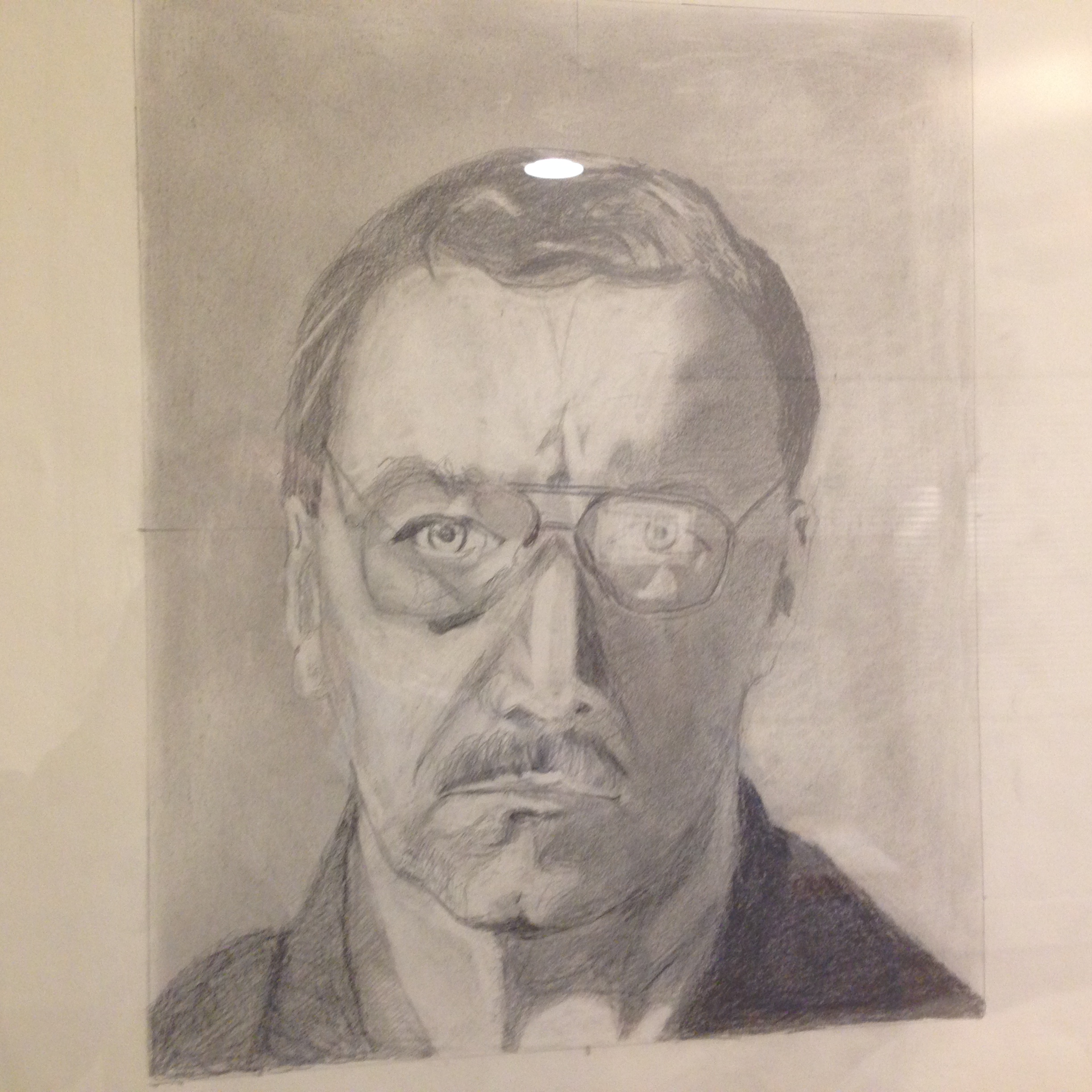
Original drawing by Pierce Morgan


Mister Misdirect’s approach is to deny that there is an issue. Mister Misdirect doesn’t improve training. Mister Misdirect doesn’t put people in a better frame of mind. Mister Misdirect does not add additional measures. Mister Misdirect simply demands that CSR’s continue to drive down the average call time of individual calls and that sales go up! In extreme cases, Mister Misdirect may even fudge the numbers and make it appear that things are much better than they really are. Oh, yes. I have seen this with my own eyes. 

Unfortunately, this way of handling things often makes Mister Misdirect an addict. Once an executive starts down the path of making things worse and denying that they did so, they are easily ensnared in a trap. Initially, they only had to take responsibility for instituting, say an incomplete measure and failed to anticipate the possible consequences. But now, having lied about it, they would have to not only admit that they caused a problem, but also that they lied about it.

The next day, when executive wakes up, they have a choice: 


1. Own up 


OR

2. Continue to deny

If they own up, the consequences will be immediately painful.
If they continue to deny, they will immediately feel relieved. Of course, if they have surrounded themselves with lackeys, they will feel more than simply relieved; they will feel vindicated or even proud. It’s not a “real pride” of course. But it’s some distant relative, I suppose. 

For a developer, UX person — or really any worker in an organization, the lesson from this is to anticipate such situations before they happen. If they happen anyway, try to call attention to the situation as quickly as possible. Yes, it may mean you lose favor with the boss. If that is so, then, you really might want to think about getting a new boss. Mister Misdirect will always ultimately fail and when he does, he will drag down a work team, a group, a division, or even an entire company. Mister Misdirect has one and only one framework for solving problems:

Try whatever pops into consciousness. 

If it works, take the credit. 

If it fails, blame an underling. 

But the real fun begins when he takes credit for something and then it turns out it was really a failure. Then, there is only one choice for Mister Misdirect and that is to claim that the false victory was real. From there on, it is Lose/Lose/Lose.

—————————————————-

  
Author Page on Amazon

————————————

Relevant essays, poems, & fiction about the importance of speaking truth to power:

Pattern Language: “Reality Check”

The Truth Train 

The Pandemic Anti-Academic

How The Nightingale Learned to Sing

Process Re-Engineering Comes to Baseball

——————————————————-

Posts on Problem Framing:

How to Frame Your Own Hamster Wheel

Wordless Perfection

Problem Formulation: Who Knows What?

I Went in Seeking Clarity

I Say Hello

Problem Framing: Good Point

Reframing the Problem: Paperwork & Working Paper

The Doorbell’s Ringing! Can you Get it?

The Great Remembering

24 Sunday Jan 2021

Posted by petersironwood in Uncategorized

≈ Leave a comment

Tags

collaboration, cooperation, fiction, leadership, legend, myth, story, Veritas

Photo by Julia Volk on Pexels.com

Trunk of Tree had been in a foul mood. Hunger made his belly growl. He had had terrible luck even trying to track a deer. But the sight of these two Veritas, well-known to him, and the smell of cooking venison lightened his mood considerably. He said none of that, but instead asked again how they found him.

Cat Eyes explained quickly to Trunk of Tree that they were near her village. She explained that a feast was being prepared right now in honor of the knowledge that had been gained from decoding a substantial part of the great library that had been recently discovered. The Veritas had split up decoding the numerous tomes in the library. It was far too much for any one person although, among all the Veritas, Cat Eyes knew the most of what had been garnered by the people. She had been sharing much of what she learned with Tu-Swift. Now, she explained, a great feast had been arranged and the afternoon was to be spent eating and listening to the lessons that had been gleaned. In the evening, the people planned to reflect on the totality of this information in a great dialogue. 

Cat Eyes explained all this to Trunk of Tree as they took the short hike back to the place where he had emerged from the hidden cleft in the rock wall. Tu-Swift and Cat Eyes marked the place with broken branches and a small rock cairn so they could be sure to find it later.

Photo by nicollazzi xiong on Pexels.com

Then, the trio strode back to the center place of the Veritas across the Mountain. Cat Eyes and Tu-Swift kept having to stop for Trunk of Tree to catch up. At last, Cat Eyes said, “Trunk of Tree. All you all right? You are limping. You are wounded? What happened? I see a bandage and blood. Were you attacked?” 

Trunk of Tree’s mood darkened again. He did not want to explain how he had wounded himself through his anger and carelessness. “I’m fine. Just a scratch.” He swallowed hard. The truth was that the wound was not healing all that well. He grimaced and tried to keep up with the youngsters so they wouldn’t ask any more about his gash. 

The reappearance of Cat Eyes caused more of a stir than usual when people noticed that Trunk of Tree was with them. When he explained briefly how he had come here, the Veritas from the other side of the mountain furrowed their brows. How could a passage out of their valley exist so near that no-one had discovered? Even Trunk of Tree could perceive the skepticism on their faces. He explained that he had only come across the path by sheer accident born of desperate hunger pangs. Tu-Swift explained to the small group how he had marked the trail and three of them jogged off to see for themselves. 

Soon, Tu-Swift, Cat Eyes, and Trunk of Tree were seated on overturned tree trunks. People kept coming to Cat Eyes with small questions about the upcoming feast. As she answered their questions, she simultaneously pulled up the pant leg of Trunk of Tree, ignoring his protestations that nothing was wrong with him. He was immensely powerful and could have easily kicked her away. Although a part of his mind pictured that, some more fundamental part seemed to know that his leg was more important than his pride so he let her unwrap the bandages. 

When she did so, her nose wrinkled up immediately. She glanced at Tu-Swift who noticed it as well. The wound stunk. Just then a young warrior came up to Cat Eyes meaning to ask her opinion about her role in the upcoming knowledge exchange. Cat Eyes answered curtly and then begged the young warrior to bring her the pouch of blue-green mold that sat in a dark corner of Cat Eye’s cabin. Soon, Cat Eyes was applying the mold to the oozing wound of Trunk of Tree despite his objections.

“I already put yellow dock and plantain on it,” he protested. 

“Yes,” replied Cat Eyes, “and that is good. This is even better. We learned about it from one of the many books in the library. There are many things we learned from those books and you will hear about many of those things tonight. I wish all of the Veritas were here to learn what we have decoded in the last few months.” 

Cat Eyes nodded as she noted that the sickness had not spread much from the original injury. She bound up the wound again. She glanced at Tu-Swift. She slowly shook her head. “It’s amazing how much of a great gift we have now from our library — and all the knowledge put there by our ancestors. And to think…it was there when my mother’s mother’s mother lived … and we had no idea what it was. Until now.”

Now, she turned to look at Trunk of Tree. She smiled. “You will see later today, Trunk of Tree, some of the things we have learned. She tilted her head. “There are things in there about fighting and strategy as well as medicine.” She paused, smiled and went on:  “And, to use your imagination to make yourself happier and solve problems — not simply as a tool for hurting yourself.” 

The eyes of Trunk of Tree widened thus confirming her hypothesis. 

Trunk of Tree reddened. Cat Eyes reached out her hand and gently touched his shoulder. “It’s a tendency all of us have, Trunk of Tree. There’s no reason to feel embarrassed. 

An awkward silence grew between them. She looked at Tu-Swift and back to Trunk of Tree. 

Tu-Swift took a deep breath. “For example, when Cat Eyes came to visit our Center Place, I ran off to see her because…well, because I … because I love her.” Now Tu-Swift reddened as well. “Of course, everyone does. I … especially do. But then, Suze died shortly after and I made myself crazy thinking I had somehow been responsible. I didn’t cause her death. That plague though was brought to us intentionally by the Z-Lotz. They’re the ones I should seek revenge on and not on myself. He looked at the face of Trunk of Tree very carefully, the way he imagined that Many Paths would do if she were here. 

Photo by Skitterphoto on Pexels.com

“I can tell you this, Trunk of Tree. I’ve known Shadow Walker all my life. As have you. And, we know Eagle Eyes as well. They are both good people. They will do … whatever they think is best for the Veritas … and for all the people.” Tu-Swift let this thought sink in through the thick skull of Trunk of Tree. He surprised himself by his next words. “Sometimes, we must be apart from those we love. It’s always difficult. But don’t make it worse by imagining things that you know are not true. I don’t know why, but Eagle Eyes likes you. Surely, you must know that.” 

Cat Eyes nodded solemnly. “That’s right. Shadow Walker & Eagle Eyes — these are people we can all trust. Trust is fundamental. You’ll hear more about that at our feast. The destruction of trust is what led to the destruction of … of civilization.” 

Trunk of Tree frowned. “Civilization? What are you talking about?” 

Cat Eyes sighed. “Just listen to our stories tonight. It’s … there were many people … and many wondrous things … but the people lost the one thing more important than all the others.” 

Tu-Swift saw the tears welling up in her cat-irised eyes. “They let their greed, fear, and hate grow … and their love for each other … and for all life … they let that decay … and when it did, it all fell apart. The words that people said came to mean nothing. All trust was lost. And, Trunk of Tree, when all trust was lost, all the energy of the people was put into weapons. Killing sticks were replaced by even less honorable weapons that killed hundreds, thousands, hundreds of thousands. The people thought that somehow, if they hurt others enough, they themselves would live forever, not as part of the great tree of life, but as something separate and apart, as hard as the mountains and as mighty and as immortal. So did the people come to think. 

“The times came of great killing. 

“The times came of great forgetting.” 

The voice of Cat Eyes became stronger and though she spoke to Trunk of Tree, all the people nearby heard her and drew near to her. 

“Now, we are beginning the time of great remembering;

“The great remembering of who we are; 

“The great remembering of what we are not; 

“The great remembering of what makes us a whole people; 

“The great remembering of the importance of truth and trust; 

“The great remembering of the horror and sorrow that comes of the many being misled by the few; 

“The great remembering of what we could become instead; 

“The great remembering that each of us is ourselves but one marvelous leaf on the great abiding tree of life; 

“The great remembering that we cannot make ourselves into something separate and forever by destroying the tree that sustains us.”

Cat Eyes stood and took the hands of Tu-Swift. 

Drums began to play and the people began to sing. 

Cat Eyes and Tu-Swift began to dance. 

All the people began to join in the dance. 

———————————————————-

The Creation Myth of the Veritas

The Myths of the Veritas: The Orange Man

The Myths of the Veritas: The Forgotten Field

The Myths of the Veritas: The First Ring of Empathy

Index to a Pattern Language for Collaboration and Cooperation

Roar, Ocean, Roar

The Only Them that Matters is All of Us

Author Page on Amazon

How to Frame Your Own Hamster Wheel

22 Friday Jan 2021

Posted by petersironwood in Uncategorized

≈ 4 Comments

Tags

decision making, problem formulation, problem framing, problem solving

Graduate school at the University of Michigan (in Ann Arbor, Michigan) provided me with a rich, rewarding experience. I was in a program aimed at understanding more about how human beings perceive, decide, learn, and solve problems. I loved it! I still love thinking about those issues. Part of my joy sprang from interacting with my classmates and sharing experiences with them. I thought I would pass along one of the experiences that a classmate told me about. It might prove valuable to you as well. 

My classmate ran an experiment and one of his subjects ran out of the room screaming that they couldn’t take it any more. My classmate was horrified that he had caused such stress and completely mystified that he had done so. He felt terrible. He calmed the subject down and eventually discovered what had happened. 

In many psychology experiments, one of the things we look at is how long it takes for a person to make a decision. The longer it takes to make a decision, roughly speaking, the more difficult the task and the more thought that it takes to reach a decision. If you were a subject in a psych experiment circa 1970, you might well be part of an experiment to study the “Sternberg Search Task” named after Saul Sternberg (link below). The point is to understand more about people’s “working memory.” This is a facility that comes into play nearly constantly for us in daily life.

Photo by Andrea Piacquadio on Pexels.com

For example, your dinner server knows that they are out of four of the items on the menu right now. Rather than tell you all that up-front, they take orders and many times, no-one asks for the items they’re out of. But every time people order she has to compare what people order to this list in her head and let them know. Either that or they will go back to the kitchen and put in an order that can’t be fulfilled. They would then have to go back and tell them. Time is money in the restaurant business and particularly so for the server, who often relies on tips.

Here’s how it would be for you to be a subject in one of these tasks. You’d be presented for a few seconds with a set of letters such as: {A J D H C Z}. The letters would disappear and then, a few seconds later, a single letter would appear; e.g., “Q” and you would press the left lever as quickly as you could if the letter was not in the list and press the right lever if it had been in the list. After a few seconds, you’d be presented with another set such as {X I U W B M} for a few seconds and then, a single letter would appear and you’d be once again asked to decide whether the letter “W” for instance, had been in the list. 

Ah, but how many variations on that general theme can you create? Does it matter how large the set is? (yes) How much? (a lot) Do people of different ages do differently on this? (they do) How much does it degrade your performance to be doing something else? (depends what it is). So, that was the game for us.

Usually, if you were a “subject” in such an experiment, you would do this task for 30-60 minutes. It would be tedious and a little mentally taxing, but not so mind-wrenching as trying to learn an insane foreign language such as English (for non-native speakers). (Actually, it’s pretty damned hard even for native speakers, but we don’t like to let on). Nor, would it be like trigonometry is to some; nor trying to “analyze” a poem is for others; nor like trying to sing a tune on key is for some of us. I have been a subject many times in such experiments and this one is not over-taxing. It’s perhaps the level of “stress” that solving a moderate crossword puzzle would generate. 

So, I could understand my classmate’s shock. Wouldn’t you be if you handed someone a cross-word puzzle and a few moments later, they ran screaming from the room?

Here’s what happened. Usually, these studies are experimenter-paced. That means, that whatever happens is controlled by a preset schedule. In this study, for instance, a new set of letters might appear every 20 seconds. You would look at the set of letters and it would disappear after 5 seconds. Perhaps you’d look at a blank screen for 5 seconds and then the single letter would appear. You’d have up to five seconds to make your decision and get ready for the next set of letters to appear. 

My classmate, however, decided to be “nicer” so he made the experiment self-paced. The subjects could take as long as they liked to start the next trial. When they were ready, they could press both levers at once and the next set would appear. That certainly doesn’t sound stressful.

How did the subject interpret this situation? They thought that they had to press both levers before the next set appeared. And, from their perspective, every time, they reacted just a little faster. But it didn’t help! They tried to go faster and faster, but no matter how fast they went, the next set appeared immediately after they pressed the levers. Although the “subject” was actually in complete control, they perceived it as though they had zero control. 

Photo by Skitterphoto on Pexels.com

The way you frame a situation may be quite different from the way others frame the situation. It’s no wonder that people may try to solve a problem differently based on their own experience and interests. It’s even more fundamental when people are not even trying to solve the same problem. A problem framed as differently as the Experimenter and the Subject framed the situation in the above scenario is really a completely different problem. In this case, the problem that the experimenter had set for the subject was an easy one: “Decide when you feel like doing another one of these little puzzles and I shall give you one.”

Meanwhile, the problem that the subject was trying to solve was this: “How do I keep speeding up so that I can always press the two levers before the next puzzle comes up?!?!” 

That second problem is a stressful one. 

But it only exists because of the way the Subject framed the problem.

Have you ever framed a problem “into existence?”

I think that it’s not uncommon for “Madison Avenue” (synecdoche for American Advertising Industry) to do just that. Unlike my classmate, Madison Avenue is intentionally framing a problem for their clients. 

“Do you suffer from straight elbow wrinkle? Millions of Americans suffer from straight elbow wrinkles without even knowing! Check right now. It may save you millions! Go to a mirror and straighten your arm. Is your elbow skin nice and tight? Or is it filled with unsightly wrinkles? Don’t be embarrassed! Millions of your fellow Americans also suffer. Now, you need suffer no longer! By use of this ointment, one shilling the box, your elbow skin will stay fit, taught, and youthful looking!” 

Photo by Marlon Schmeiski on Pexels.com

Is this a real problem? It may become one for anyone who succumbs to the advertising pitch above. The company promoting “Elbow Cream” had a problem: “How do we make more money even though we have no decent products that solve real problems?” They transfigured their problem into one for their customers. Some would say this is just business as usual. And, if the Elbow Cream has horrendous side-effects, that’s no big deal so long as you sputter out those side-effects quickly & unintelligibly on your TV commercials against a background of music, dancing, and flowers. 

Photo by Jackson David on Pexels.com

Maybe it’s business as usual. 

There is an alternative though. The “Elbow Cream” company could have instead sought to understand some real problem, figured out how to solve it and then marketed that solution. To me, the difference between the two, in terms of ethics is huge. 

What do you think? 

————————————-

https://en.wikipedia.org/wiki/Working_memory

https://en.wikipedia.org/wiki/Saul_Sternberg

https://www.tutor2u.net/psychology/reference/research-methods-key-term-glossary

https://petersironwood.com/2017/10/02/you-know/

https://petersironwood.com/2017/02/25/the-invisibility-cloak-of-habit/

There’s a Pill for That!There’s a Pill for That!

https://petersironwood.com/2017/03/24/the-great-race-to-the-finish/

Author Page on Amazon

Wordless Perfection

20 Wednesday Jan 2021

Posted by petersironwood in Uncategorized

≈ 6 Comments

Tags

art, drawing, education, intuition, problem formulation, Representation, Right-brain, thinking

————————————

Sirius Black

I like to write. In fact, I like to write so much that I wrote before I could even read. When my early crayon “writings” in my grandfather’s books were discovered, instead of praise, I was spanked. I’m not even sure they really tried hard to read my learned annotations. Their missing the point didn’t deter me though. I like words! I like writing poetry, essays, stories, plays, and even novels. Words help human beings communicate and collaborate. However…

In this essay, I’d like to mention some instances of wordless success.

Photo by lascot studio on Pexels.com


In the neighborhood where I grew up, we spent most of the summer playing baseball, basketball, and football. I had never played golf nor paid much attention to it as a kid and when it came on TV I walked by with hardly a glance. At that point in my life, it was really only a sport if there was a good chance to smash into one of the other players. I had never touched a golf club or a golf ball until one summer day when I was about ten, one of the kids brought one of his uncle’s golf clubs to our baseball field along with a tee and a golf ball. He demonstrated how to hit the ball and showed us how to put our hands on the club. Kids took turns hitting the ball and retrieving it for another go. 

When it came to my turn, I mainly remember just loving the shiny wood of the club. I loved wooden baseball bats back then, but the driver!! Wow! That was in a whole different category of cool. You didn’t need to be an adult or a golfer to know that! It shone opalesquely. I teed up the golf ball, and swung the unfamiliar and impossibly long club.

The resulting sound – exquisite! An explosion! A rifle shot. A cousin of the crack of a home run shot into the upper deck. But more penetrating. More elegant. More poignant.

We all looked up in amazement. My golf shot started low and straight. Then it rose and rose and disappeared far beyond the dirt road that marked the outer limit of our makeshift baseball field. It rose over the hill beyond the road and disappeared into the field beyond. There was no hope of retrieving the golfball. None of us even suggested trying. My shot was wordless perfection. 


Fast forward to graduate school. In the summer afternoons, I got into the habit of playing frisbee with the neighbors. One day, I parked my car and ran into the back yard. My neighbor saw me and threw me the frisbee, I noticed that they had placed an empty beer can atop a utility box about a hundred feet away. I caught the frisbee on the run and threw it with the next step. The frisbee sailed with a nice arc and smacked the beer can right off. My neighbors said that they had been trying to knock that beer can off for about a half hour.  My throw was wordless perfection.

Photo by Brixiv on Pexels.com

Meanwhile, at the University of Michigan, several of my friends and classmates like puzzles as much as I did. One such puzzle consisted of a set of triangular “board” with a regular pattern of holes. There were pegs in every hole save one. The goal was to “jump” pegs much as one does in checkers and then remove that peg from the board. Eventually, one was supposed to end up with one and only one peg. I worked on it for awhile and thought about various strategies and moves. I couldn’t seem to solve it. My phone rang. I picked it up and conversed with my friend. Meanwhile, I toyed with the puzzle while my “mind” was on the conversation. I toyed with the puzzle and solved it. Wordless perfection.

A few months or weeks later, we worked on another puzzle. This one consisted of four cubes (aka
“instant insanity”). Each cube had a different arrangement of colors. The goal was to arrange the cubes so that every “row” of faces had four different colors. I fiddled with the puzzle trying out various strategies and noting various symmetries and asymmetries. Once again, someone called and interrupted my musings. Again, I idly fiddled around with the cubes while talking on the phone. And solved it. Wordless perfection strikes again! 

https://en.wikipedia.org/wiki/Instant_Insanity

Fast forward four decades. For best results, borrow Hermione’s time-turner. Otherwise, you’ll have to rely on your imagination. 

Betty Edwards (“Drawing on the Right Side of the Brain”) gave a plenary address at one of the Association of Computing Machinery’s premier conferences: CHI. Among other things, she showed example after example of how much people improved in their drawing skills based on her methods. A few months later, it so happened that my wife and I had an opportunity to go to one of her five day classes. 

I would have to honestly say, that course was one of the best educational experiences of my life! It was an immensely pleasurable experience in and of itself. Beyond that, the results in terms of improved drawing skills were dramatic. And, as if that were not enough, I looked at the world differently. I noticed visual things about the environment that I had not seen before. 

The essence of the method Betty Edwards uses is to get you to observe and draw — while “shutting up” or “turning off” the part of your brain (or mind) that talks and plans and categorizes. In one exercise, for instance, we took a line drawing and turned it upside down. Then, we copied that image onto our pad of paper by carefully observing and drawing what we saw. She also instructed us not to try to “guess” what they were drawing, but just to copy the line. When every line had been copied, we turned the drawings right side up again. The result jolted me! I had created an excellent likeness of the original! The quality stunned me. Wordless Perfection.

There’s a larger lesson here, too. 

I had within me, the capacity to make a very decent copy of a drawing, but had never achieved that result for 60 years! All it took was five minutes of instruction to enable me to achieve that. 

What else is like that? Imagine that we have, not just one, but a dozen or even a dozen dozen “hidden talents.” Some of them, like drawing, may depend more on Not-Doing than on Doing; on Being rather than Achieving.

There was a longer lasting side-effect of the drawing course. My day to day life, as is typical of most achievement-driven people had been very much “goal-driven” and there was always an ongoing plan and dialogue. After having learned to turn that off in order to draw, I can also turn it off in order to see, whether or not I draw. Seeing (or otherwise sensing or feeling) in the moment also makes me much less judgmental. If you decide to think about the physical appearance of people in terms of how interesting they would be to draw, you end up with an entirely different way of thinking about people’s appearance. 

What are your hidden talents? 

——————————————

The Invisibility Cloak of Habit 

Big Zig-Zag Canyon 

The Great Race to the Finish!

You Fool!

Horizons University

How the Nightingale Learned to Sing

Comes the Dawn

Author Page on Amazon

Problem Formulation: Who Knows What?

18 Monday Jan 2021

Posted by petersironwood in Uncategorized

≈ 5 Comments

Tags

browser, HCI, problem formulation, problem framing, problem solving, query, search, thinking, usability, UX

Photo by Nikolay Ivanov on Pexels.com

This post focuses on the importance of discovering who knows what. It’s easy to think (without thinking!) that everyone knows what you know. 

At IBM Research, around the turn of the century, I was asked to look at improving customer satisfaction about the search function on IBM’s website. Rather than using someone else’s search engine, IBM used one developed at IBM’s Haifa Research lab. It was a very good search engine. Yet, customers were not happy. By way of background, it’s worth noting that compared with many companies who have websites, IBM’s website was meant for a wide variety of users and contained many kinds of information. It was meant to support people buying their first Personal Computer and IT experts at large banks. It had information about a wide variety of hardware, software, and services. The site was designed to serve as an attractor for investors, business partners, and potential employees. In other words, the site was vast and diverse. This made having a good search function particularly important.  

A little study of the existing data which had been collected showed that the mean number of search terms entered by customers was only 1.2. What?? How can that be? Here’s a website with thousands of products and services and designed for use by a huge diversity of users and they were only entering a mean of 1.2 search terms? What were they thinking?!


Of course, there were a handful of situations when one search term might work; e.g., if you wanted to find out everything about a specific product that had a unique one-word name (which was rare) or acronym. For most situations though, a more “reasonable” search might be something like: “Open positions IBM Research Austin” or “PC external hard drives” or “LOTUS NOTES training.” 

We invited a sample of users of IBM products & services to come into the lab and do some tasks that we designed to illuminate this issue. In the task, they would need to find specified information on the IBM website while I observed them. One issue became immediately apparent. The search bar on the landing page was far too small. In actuality, users could enter as many search terms as they liked. Their terms would keep scrolling and scrolling until they hit “ENTER.” The developers knew this, but most of our users did not. They assumed they had to “fit” their query into the very small footprint that presented itself visually. Recommendation one was simply to make that space much larger. Once the search bar was expanded to about three times its original size, the number of search terms increased dramatically, as did user satisfaction. 

In this case, the users framed their search problem in terms of: “How can I make the best query that fits into this tiny box.” (I’m not suggesting they said this to themselves consciously, but the visual affordance led them to that constraint). The developers thought the users would frame their search problem in terms of: “What’s the best sequence of terms I can put into this virtually infinite window to get the search results I want.” After all, the developers knew that any number of terms could be entered. 

Although increasing the size of the search bar made a big difference, the supposedly good search engine still returned many amazingly bad results. Why? The people at the Haifa lab who had developed the search engine were world class. At some point, I looked at the HTML of some of the web pages. Many web pages had masses of irrelevant metadata! I found some of the people who developed these web pages and discussed things with them. Can you guess what was going on?


Many of the developers of web pages were the same people who had been developing print media for those same products and services. They had no training and no idea about metadata. So, to put up the webpage about product XYZ, they would go to a nice-looking web page about something else, say, training opportunities for ABC. They would copy that entire page, including the metadata, and then set about changing the text about ABC to text about product XYZ. In many cases, they assumed that the strange stuff in angle brackets was some bizarre coding stuff that was necessary for the page to operate properly. They left it untouched. Furthermore, when they “tested” the pages they had created about XYZ, they looked okay. The information about XYZ was there. Problem solved.

Only of course, the problem wasn’t solved. The search engine considered the metadata that described the contents to be even more important than the contents themselves. So, the user would issue a query about XYZ and receive links about ABC because the XYZ page still had the “invisible” metadata about ABC. In this case, many of the website developers thought their problem was to put in good data when what they really needed to do was put in good data and relevant metadata. 

A third issue also revealed itself from watching users. In attempting to do their tasks, many of them suggested that IBM should provide a way for more than one webpage to appear side by side on the screen so that they could, for instance, compare features and functions of two different product models rather than having to copy the information from the web page about a particular model and then compare their notes to the second page. 

Good suggestion. 

Of course, IBM & Microsoft had provided this function. All one had to do was “Right Click” in order to bring up a new window. Remember, these were not naive users. These were people who actually used IBM products. They “knew” how to use the PC and the main applications. Yet, they were still unfamiliar with the use of Right Click. Indeed, allowing on-screen comparisons is one of the handiest uses of Right-Click for many people. 

This issue is indicative of a very pervasive problem. Ironically, it is an outgrowth of good usability! When I began working with computers, almost nothing was intuitive. No-one would even attempt to start programming in FORTRAN or SNOBOL, let alone Assembly Language or Machine Code without looking at the manual. But LOTUS NOTES? A browser? A modern text editor? You can use these without even looking at the manual. That’s a great thing. But — 

…there’s a downside. The downside is that you may have developed procedures that work, but they may be extremely inefficient. You “muddle through” without ever realizing that there’s a much more efficient way to do things. Generally speaking, many users formulate their problem, say, in terms like: “How do I create and edit a document in this editor?” They do not formulate it in terms of: “How do I efficiently create and edit a document in this editor?” The developers know all the splendid features and functions they’ve put into the hardware and software, but the user doesn’t. 

It’s also worth noting that results in HCI/UX are dependent on the context. I would tend to assume that in 2021 (when I first published this post), most PC users knew about right-clicking in a browser even though in 2000, none of the ones I studied seemed to realize it. But —

I could be wrong. 

————————————

The Invisibility Cloak of Habit

Essays on America: Wednesday

Index to a catalog of “best practices” in teamwork & collaboration. 

Author Page on Amazon

I Went in Seeking Clarity

16 Saturday Jan 2021

Posted by petersironwood in Uncategorized

≈ 3 Comments

Tags

parallel programming, problem formulation, problem framing, problem solving, programming, thinking, tools, X10

“I stopped by the bar at 3 A.M.
To seek solace in a bottle or possibly a friend
And I woke up with a headache like my head against a board
Twice as cloudy as I’d been the night before
And I went in seeking clarity” — Lyrics from The Indigo Girls: Closer to Fine

If you think programming is cognitively difficult, try parallel programming. It is generally harder to design, to code, and to debug than its sequential cousin. One of the fun projects I worked on at IBM Research was on the X10 language which was designed to enable parallel programmers to be more productive. Among other things, I fostered community among X10 programmers and used analytic techniques to show that X10 “should be” more productive. Although these analytic techniques are very useful, we also wanted to get some empirical data that the language was, in actuality, more productive. 


Photo by Dominika Greguu0161ovu00e1 on Pexels.com


One part of those empirical studies involved comparing people doing a few parallel programming tasks in X10 to those using a popular competitor. But, like many other “chicken and egg” problems, there were no X10 programmers (other than the inventors and their colleagues). I was part of a team who travelled to Rice University in Houston. The design called for one group to spend a chunk of time learning X10 (perhaps half a day) and another chunk of time coding some problems.

Besides the three behavioral scientists like me who were there to make observations, there were also three high-powered Ph.D. computer scientists present who would teach the language. Programmers tend to be very smart. Parallel programmers tend to be very very smart. People who can invent better languages to do parallel programming? You do the math.


Anyway, after the volunteers students had arrived, one of the main designers of the language began to “teach them” X10. 

But — there was a problem. 

The powerpoint presentation designed to teach the students X10 was far too blurry to read!

Immediately, the three computer scientists tried to issue commands to the projector to put the images in focus. Nothing worked. The three of them began a fascinating problem solving conversation about what communication protocol(s) among the PC, the projector, and the controller was the likely source of the problem. I suppose it might not have been fascinating to everyone, but it was to me. First, it fascinated me because I was learning something about computer science and communication protocols. Second, it fascinated me because I loved to watch these people think. I suppose many of the advanced computer science students who were in this classroom to learn X10 also found it interesting. But the study had completely stalled. 

After a few minutes of fascinating conversation that did nothing to focus the images, something possessed me to walk over to the projector and turn the lens by hand. The images were immediately clear and the rest of the experiment continued. 

The three computer scientists had “framed” the problem as a computer science problem and I found the discussion that sprang from that framing to be fascinating. But one of the part-time jobs I had had as an undergraduate was as a “projectionist” at Case-Western, and it was that experience that allowed me to try framing the problem differently. All of us have huge reservoirs of experience outside of our professional “training” and those experiences can sometimes be important sources of alternative ways to frame a problem, issue, or situation.

———————————-

Essays on America: Wednesday 

Essays on America: The Update Problem 

Essays on America: The Stopping Rule

The Invisibility Cloak of Habit

Author Page on Amazon


← Older posts
Newer posts →

Subscribe

  • Entries (RSS)
  • Comments (RSS)

Archives

  • April 2026
  • March 2026
  • February 2026
  • January 2026
  • December 2025
  • November 2025
  • October 2025
  • September 2025
  • August 2025
  • July 2025
  • June 2025
  • May 2025
  • April 2025
  • March 2025
  • February 2025
  • January 2025
  • December 2024
  • November 2024
  • October 2024
  • September 2024
  • July 2024
  • April 2024
  • March 2024
  • February 2024
  • January 2024
  • December 2023
  • August 2023
  • July 2023
  • May 2023
  • April 2023
  • March 2023
  • February 2023
  • January 2023
  • December 2022
  • November 2022
  • October 2022
  • September 2022
  • August 2022
  • July 2022
  • June 2022
  • May 2022
  • April 2022
  • March 2022
  • February 2022
  • January 2022
  • December 2021
  • November 2021
  • October 2021
  • September 2021
  • August 2021
  • July 2021
  • June 2021
  • May 2021
  • April 2021
  • March 2021
  • February 2021
  • January 2021
  • December 2020
  • November 2020
  • October 2020
  • September 2020
  • August 2020
  • July 2020
  • June 2020
  • May 2020
  • April 2020
  • March 2020
  • February 2020
  • January 2020
  • December 2019
  • November 2019
  • October 2019
  • September 2019
  • August 2019
  • July 2019
  • June 2019
  • May 2019
  • April 2019
  • March 2019
  • February 2019
  • January 2019
  • December 2018
  • November 2018
  • October 2018
  • September 2018
  • August 2018
  • July 2018
  • June 2018
  • May 2018
  • April 2018
  • March 2018
  • February 2018
  • January 2018
  • December 2017
  • November 2017
  • October 2017
  • September 2017
  • August 2017
  • July 2017
  • June 2017
  • May 2017
  • April 2017
  • March 2017
  • February 2017
  • January 2017
  • December 2016
  • November 2016
  • October 2016
  • September 2016
  • August 2016
  • July 2016
  • June 2016
  • May 2016
  • April 2016
  • March 2016
  • February 2016
  • January 2016
  • December 2015
  • November 2015
  • October 2015
  • September 2015
  • August 2015
  • May 2015
  • January 2015
  • July 2014
  • January 2014
  • December 2013
  • November 2013

Categories

  • AI
  • America
  • apocalypse
  • cats
  • COVID-19
  • creativity
  • design rationale
  • dogs
  • driverless cars
  • essay
  • family
  • fantasy
  • fiction
  • HCI
  • health
  • management
  • nature
  • pets
  • poetry
  • politics
  • psychology
  • Sadie
  • satire
  • science
  • sports
  • story
  • The Singularity
  • Travel
  • Uncategorized
  • user experience
  • Veritas
  • Walkabout Diaries

Meta

  • Create account
  • Log in

Blog at WordPress.com.

  • Subscribe Subscribed
    • petersironwood
    • Join 662 other subscribers
    • Already have a WordPress.com account? Log in now.
    • petersironwood
    • Subscribe Subscribed
    • Sign up
    • Log in
    • Report this content
    • View site in Reader
    • Manage subscriptions
    • Collapse this bar
 

Loading Comments...