• About PeterSIronwood

petersironwood

~ Finding, formulating and solving life's frustrations.

petersironwood

Tag Archives: learning

Cats Eyes Shows her Gift

20 Tuesday Aug 2019

Posted by petersironwood in America, psychology, Uncategorized, Veritas

≈ 1 Comment

Tags

learning, legends, myths, politics, ROI, stories, trust, truth, Veritas

Shadow Walker sighed and grimaced and ground his teeth. The more he considered the words of Cat Eyes, the angrier he made himself. Meanwhile, Jaccim drew back, afraid now that his “healer” was about to destroy him instead. The women drew back as well, feeling the tension grow steadily higher. 

reflection of clouds on body of water

Photo by Johannes Plenio on Pexels.com

Tu-Swift spoke next. “What is wrong, Shadow Walker? I think you are scaring our patient. And everyone, actually.”

Shadow Walker looked back over his shoulder at Tu-Swift. “Yes. I will talk no more of this right now, but I do want to learn more about — many things. But first, let me finish administering these cooling herbs.” 

Jaccim soon abated his whimpering and seemed to sleep. A large part of Shadow Walker’s brain remained suspicious. He still wasn’t sure he believed the story of Cat Eyes, but if there were another branch of the Veritas, it would extremely desirable to make contact. He motioned everyone to draw away from the sleeping ROI. He gestured for them to sit in a small circle. They obeyed without question and it seemed to Shadow Walker that their immediate compliance wasn’t just because he was a man with a killing sword. It seemed as though these women … expected to obey. He chuckled as he thought about Many Paths or She Who Saves Many Lives “obeying” someone. Well, maybe he could work this to his advantage, he thought. 

Shadow Path looked to Cat Eyes, “Do the other women also speak Veritas?” 

IMG_3192

Cat Eyes shook her head. “No, not really. We’ve all come from different places. We’ve taught each other a few words of each other’s language, but they won’t understand you if you speak that fast. If you ask me to, I can speak what you say in ROI. We all speak that. All of us were stolen at an early age for … well, as I said, as slaves.” 

Shadow Walker shook his head. “I still don’t see. Why steal children? You have to feed them for years before they can do useful work.” 

Cat Eyes stared at Shadow Walker for a long while. Her lip trembled and it seemed to Shadow Walker that she now looked through him to another place and another time. At last, she said, “Early taken; easily shaken; slaves will see: it is their destiny. That’s not a very good translation, but the ROI, and the Z-LOTZ as well, have such a saying. It means that you steal a child early and train them to be a slave and they won’t expect anything different. If you steal a grown man or woman, they will sabotage you when they can, possibly even murder you in your sleep. You have no such danger if you steal a child young enough.”

Shadow Walker glanced at Tu-Swift whose jaw had fallen open. At last, he spoke. “Can this be true? They steal children young just so they can … train them to be slaves with no spirit?” 

OLYMPUS DIGITAL CAMERA

OLYMPUS DIGITAL CAMERA

Cat Eyes nodded. “Yes, I’m afraid that is their reasoning. It does’t always work, by the way. Sometimes, even small children learn how to rebel in small ways. But the ROI and Z-LOTZ believe in the wisdom of stealing small children. In fact, it’s even one of the sayings in … well, in this gift I have. Please don’t ask me about how I obtained it, but I wanted to show it to you. I don’t quite understand it, but I think it’s important.” She pointed to a small bag nearby. “Can I show you?” 

“This is not a weapon, I take it?” asked Shadow Walker. 

Cat Eyes laughed a bit. “No, it’s not a weapon. At least, I don’t see how it can be such. But I do not totally understand it.” She strode off a few feet, rummaged through her bag, and brought out a smaller bag which she brought over the circle. From within the smaller bag, she took out a large skin with many markings on it. There were also two smaller skins, also with many markings. In addition to markings, there were several nicely made pictures of different animals. Several small stones also fell out. 

Shadow Walker frowned. He glanced at the others. No-one seemed to understand. “What is this?” 

Cat Eyes shook her head. “I don’t really know. But it is used by the children of the Z-LOTZ to learn ROI and by the ROI to learn Z-LOTZ. I have seen them use this and when they point at this mark, for example, they almost always say the same thing which is not a word but only a part of a word.”

Tu-Swift tilted his head to one side and looked at Cat Eyes. She did have rather intriguing green eyes. “Part of a word? What do you mean?” 

Cat Eyes replied, “You know the creation myth, of course?” 

Tu-Swift humpfed. “Of course!” 

Cat Eyes nodded. “So, you recall the part about taking sounds from different animals. The ‘z’ from the bee and so on. The ‘z’ of the bee is what I mean by part of a word. It doesn’t mean anything till it’s put together with the sounds of other animals or things.” 

animal bee bloom blooming

Photo by Pixabay on Pexels.com

Tu-Swift bent over the markings on the large skin and stared at them in more detail. “What on earth are these drawings of? They all look like firewood that’s been dropped at odd angles. What is this a picture of?” He pointed to one of the many marks.

“I really don’t know, Tu-Swift. I’m really sorry. I was a slave. My job…one of my jobs… was to watch the children of one of the priests of the Z-LOTZ. I watched them play and every so often my master would come in and watch as well. He seemed very pleased when his children would point to these markings and say parts of words. It was one of the most puzzling things I saw in the giant center place of the Z-LOTZ and that was indeed a place of many puzzling things.”

Shadow Walker then said, “Who are these Z-LOTZ and where are they? A giant center place? What do you mean by that?” 

Cat Eyes had been trying to swat away the constant droning questions from her two female friends, but she could ignore them no longer. She quickly spoke in ROI, summarizing for them the conversation thus far. Then, she turned back to Shadow Walker. 

“If our Center Place over Snow Mountain is an acorn, this village you burned down is a seedling. But the Center Place of the Z-LOTZ is a full-sized oak of the forest. I never saw all of it. There is a wall to keep all the slaves inside so we could not escape. It is not too far from here. Perhaps two or three day’s ride.” 

1D7E4F0C-4489-4E1C-8494-A3591EA5A295

Tu-Swift and Shadow Walker asked two different questions at the same time. 

Tu-Swift: “Have you ridden a horse?”

Shadow Walker: “Why were you there?”

Cat Eyes looked at one and then the other. “Let me answer Tu-Swift’s question first as it is much easier. No. I never really controlled a horse. I have been tied onto a horse. It is not fun. As for…”

Tu-Swift cut in, “Me too! I agree! I was bruised.” 

Cat Eyes nodded. “Yes. I don’t remember much about how I felt after they stole me. I mean, in terms of bruises. But I was older when the ROI took me to a Z-LOTZ priest for … well, that’s where I found this — which might be a game. I was there to watch smaller children and … learn other things.” 

Shadow Walker could feel that Cat Eyes knew more but something about her time there was deeply troubling. “What can you tell us about the Z-LOTZ and the ROI?” 

Cat Eyes responded, “They have an alliance but they are quite different people. As different from each other as they are from the Veritas — except that both are quite cruel people. I don’t recall a lot from the time before I was stolen, but I know we Veritas were kind people. And you seem kind. The ROI only care about doing everything quickly and making a lot of something. They mainly steal children for the Z-LOTZ. Some, like the three of us, have been used as slaves here as well, usually after…after a time with the Z-LOTZ. The Z-LOTZ — they have elaborate rituals and feasts. They have elaborate myths that everyone is required to repeat word for word. And everyone is supposed to believe them. So far as I can tell, the actual priests of the Z-LOTZ don’t really believe any of it. When my master had other priests and their wives over for feasts, they joked about how they used these myths to control the people. I think, in their view, it wasn’t just the stolen children who were slaves. Everyone was.”

baby child close up crying

Photo by Pixabay on Pexels.com

Tu-Swift listened to this with ever-widening eyes. He found Cat Eyes to be fascinating and believed every word that she uttered. Shadow Walker still had his doubts. 

“If you were a slave, how did you come to find out so much?” asked Shadow Walker.

Cat Eyes frowned. She appeared to be taking this question seriously. At last she said, “I think I found out so much because they treated me as a slave. They didn’t actually think of me as a real person. As for the Z-LOTZ, I also don’t think they realized how much I understood their language. I had already learned a little of their language before I was sent there. The ROI don’t really talk all that much. They rely a lot on sign language — which is not that different from the Veritas. You were able to make yourself understood just now when you convinced them about the medicine.” She paused, and added, “I may be good at learning languages? I don’t know. But some of us — we did things — bad things, I guess. To get back at them. Some of the slaves though.” Here Cat Eyes paused, bit her lip, and a small tear appeared at the corner of her eye. “Some did not recall anything about their homes and they thought…they thought being a slave was just what they were supposed to do. But I remembered that not everyone is cruel. My people…our people were not cruel.” 

As she had said all this in Veritas, the other two women began pelting her with questions in ROI so she turned to them and quickly explained that she was just telling what she knew about the ROI and the Z-LOTZ. 

Then, Cat Eyes turned back and smiled at Tu-Swift. “I am glad you didn’t … I am glad you got rescued, even if you had to burn down our village to do it. When you appeared and I heard some words of Veritas, it gave me hope again.” 

IMG_3071

Shadow Walker shook his head. “I need to say one thing. We did not burn down this village. The ROI did that themselves! They meant to burn our small rescue party up with fire arrows. They shot them behind us into the dry grass and the wind blew the fire toward us and the fire nearly killed us all. I am still not sure whether or not all of the others in our party escaped. But we outran the fire, though we could not see very well as we ran and both Tu-Swift and I were injured. But the fire kept spreading into the forest and on to the village. We don’t use fire arrows. Only the ROI do that. As we know from the Legend of the Orange Man, fire, like hatred, is hard to control, once unleashed.”

Cat Eyes nodded. “I know. That is why…I am not proud of all the things I did against the Z-LOTZ and the ROI. I was only a child. There were so many of them. I could not fight them in the normal way. I used … other methods. Poisons for one. My mother was a medicine woman and I already knew things that she began to teach me when I was very young. I didn’t kill anyone. But I made many of them just slightly sick in some way. Just enough that they would not suspect poison. Sometimes, I would weaken their walls.  And a few times, I put small holes in buckets so some grain would seep out as they carried it thus making a path for the rats to follow to their pantries. I put other irritants in their clothing. I taught some others to do the same. We had to be very careful. But they — we never showed our hatred outwardly. They thought of us…they didn’t really think of us as people and therefore not as enemies from within capable of doing damage. But damage — we did do damage. Anyway, what now? You said some of your party are yet unaccounted for?” 

Shadow Walker found her story amazing, but he was still not convinced. He glanced at Tu-Swift and could see that he, at least, believed every word. 

Shadow Walker said at last, “Thank you for sharing your story. I hope you don’t take this the wrong way, but Tu-Swift and I need to hold our own small council for a time. I need to go above and do a more thorough search to make sure there are no other ROI around.”

Cat Eyes looked him in the eyes. “Yes. I think most of the ROI escaped and were heading to the giant Center Place of the Z-LOTZ. We hid out here so we wouldn’t be given once again as slaves. I don’t think there are any left behind as guards. Is there anything up there left to guard? It seemed the entire village was about to be destroyed.”

Shadow Walker looked at her face which seemed so open and honest. “Indeed, there is not much left of your village. Nor have the horses returned. But I did meet one ROI on the way here. He tried to kill me — with this — (here he flicked the newly acquired sword) and I was very lucky to have escaped with my life. I have seen no sign of others — yet. One cannot be too careful. We will go and take a look. And, we need to decide on our next steps. We will guard you and search for food. We will talk again when the sun rises.” Shadow Walker stood, bowed, and began to back toward the stairs. 

silhouette of fireman holding hose

Photo by Denniz Futalan on Pexels.com

Cat Eyes bowed back to Shadow Walker and Tu-Swift. “I understand. You would be safer down here I should think. But you do not yet know me well enough to trust me.”

“I trust you!” said Tu-Swift. 

Shadow Walker looked into Cat Eyes. “I mostly trust you. But it’s a lot to take in. We might be safer down here, but is there any other way in or out of this cellar?” 

Cat Eyes shook her head. “No, just those stairs.”

Shadow Walker said, “Well, it would be easy to move heavy things from the armory across the trap-door and make it quite impossible for any of us to leave. We would be trapped down here to slowly die of hunger and thirst.” 

Cat Eyes nodded. “Yes. But maybe then we should all leave? Except, I don’t think Jaccim is well enough. Maybe, in the morning, he will be recovered enough to travel.”

Shadow Walker said, “Yes. We will — do you think you can lend me all this until morning? I would like to contemplate this more.” He gestured at the marked skins. 

Cat Eyes nodded solemnly. “Yes. I hope you can make more sense of it than I could.” She quickly gathered up the skins and stones and put them back in the small bag which she handed to Tu-Swift. She looked him directly in the eyes now, “Sweet dreams. I will see you in the morning. But before you go, do you mind if I take a look at your knee, Tu-Swift?”

2B367736-ADF2-4730-A2D7-F76951E03CCA

Tu-Swift assented and she began to feel his knee and his entire leg. She massaged it gently and at one point not so gently. Tu-Swift cried out suddenly and Shadow Walker raised his sword. Without taking her eyes off Tu-Swift she addressed Shadow Walker. “I am not going to hurt Tu-Swift. I think his knee will feel better in the morning though. You go and ‘guard us’ as you put it. We will reconvene in the morning if you like. Hopefully, you will not pull heavy things over the trap door and trap us in here to starve slowly.” She then looked up at Shadow Walker and smiled at him. 

Shadow Walker looked at her and said, “No, we will not trap you in here. I did think of that when we first came here, but no.” 

Tu-Swift thanked Cat Eyes, for his knee did feel less … misplaced. Cat Eyes smiled back and again said, “Sweet Dreams.” 

Tu-Swift muttered something and followed Shadow Walker up the stairs. They pulled the heavy trap door over the opening and sat on the ground. Tu-Swift immediately took out the marked skins and the stones and begin looking at them intently. Tu-Swift glanced up to ask Shadow Walker a question but he could see that Shadow Walker felt exhausted. Tu-Swift offered to keep first watch and looked at the marks. 

Hours later, when the Starry Hunter was overhead, Shadow Walker awoke and said he would stand watch for awhile so that Tu-Swift might sleep. He immediately fell into a deep sleep and began a strange and wondrous dream.

fullsizeoutput_1377

Author Page on Amazon

The Myths of the Veritas, Book One

The Myths of the Veritas, Book Two

The Creation Myth of the Veritas 

Finding the Mustard

12 Monday Aug 2019

Posted by petersironwood in America, apocalypse, politics, psychology, Uncategorized

≈ 17 Comments

Tags

environment, experiment, Feedback, learning, life, politics, racism, truth

{A departure from the Myths of the Veritas, this is just some thoughts while making dinner}

MustardJar

To the best of my ability, this is the view I had when I was poaching salmon for dinner tonight and realized I had almost forgotten the mustard. I spied it immediately.

Then, (while using the mustard) I began to ponder a blog post from a few weeks ago on the importance of making sure that you looked for “the whole enchilada.” But just now, I relied on a small number of cues and it all worked out fine. What’s the difference?

The difference is that I am looking in my refrigerator for something that I know I have. Even in a large grocery store, there are a limited number of products in jars. But in my fridge? Very few. And, let’s face it; much of modern life is like this. We spend time at work, at home, at the gym, on our commute and we are on familiar ground. We see familiar things. We talk to familiar people. So, all these little algorithms we develop *work* pretty well most of the time.

IMG_9189

But — they do not work very well at all if applied to *new* situations, or *new* places, or *new* knowledge or *new* people. If I were to find myself looking in the refrigerator in Italy or Malaysia and relied on the exact same cues, it would be far less likely to work!

It isn’t so much that these little algorithms or pattern recognitions don’t work. They don’t. But so what? The problem comes when we *assume* or even *insist* that they still work. Mostly, they don’t. So, when you are in different situations, you need to slow down and search & ask for help & think & test. And, if you do, it’s mostly all OK.

IMG_1238

But if you insist that your knowledge *should* work in situations where it does not…you are going to make yourself uncomfortable much more than you need to.

Quite apart from the unfairness that xenophobia wreaks upon “others”, it is sad to me that it prevents so much that is interesting and wonderful about living in the 21st century. We have this *astounding* and *amazing* opportunity to learn from a thousand cultures and peoples. Instead, we are ignoring them, or destroying them, or sometimes incorporating a useful piece of technology.

Left to their own devices, people from different places, cultures, races, etc. can generally work it out. But if a rabble rouser preys on your feelings of discomfort and helps you focus on it, they destroy that natural accommodation and mutual learning. Of course, they are doing it to gain power over you, and they don’t care that they are blinding you to a cornucopia of possibilities.

OLYMPUS DIGITAL CAMERA

Once the flames of hatred are sufficiently fanned, you will never be able to see that “other” as a human being who is fundamentally just like you, but whose ancestors and cultures learned different skills and customs in order to survive. You will never see all that you can learn from each other. You will never see that you have been manipulated into fearing, and hating, and even killing so that someone else can become richer, or more powerful, or be able to flout laws that they don’t like. And that is a very sad thing.


Myths of the Veritas: Book One

Myths of the Veritas: Book Two

Myths of the Veritas: Diversity as a Testament to Our Success as a Species

The Whole Enchilada 

Author Page on Amazon


The Eyes of the Cat (MOTV)

08 Thursday Aug 2019

Posted by petersironwood in America, apocalypse, Uncategorized, Veritas

≈ 1 Comment

Tags

learning, legends, mercy, myth, ROI, stories, trust, Veritas

IMG_9641

When entering a dark place from a very light place, as all Veritas learned at an early age, prudence demanded using caution. The current situation of Tu-Swift and Shadow Walker demanded still more caution. Both had been injured; though not seriously; both felt limited mobility. Beyond that, the three women and one man that Tu-Swift had recounted as the occupants the cellar were all members of the tribe of People Who Steal Children! 

All of these factors weighed on the mind of Shadow Walker. He glanced around what was left of the ancient armory. He spied no more swords but there were a few spears and clubs which could prove useful. Though they would be heavy to carry far, even had they both been whole-bodied. Still, there is enough weight here that I could prevent them from ever leaving this cellar, if indeed, they are even still in there. Tu-Swift thinks they’re safe, but he is really still a child. 

Shadow Walker leaned close to Tu-Swift. “How sure are you that they are still in there? This could be a trap.” 

abstract arachnid blur bright

Photo by Pixabay on Pexels.com

“I am certain that they are still in there.” 

Shadow Walker chewed his lip thoughtfully. “How can you be so sure?”

Tu-Swift smiled, “This twig tells me so.” 

Shadow Walker frowned, “What? What do you mean, the twig…ah.” Shadow Walker’s broad smile now supplanted the frown. “You put an inconspicuous twig on the edge so that if this door were moved you would know because the twig would be moved. Ingenious!” 

Tu-Swift smiled too. It really warmed his heart to see Shadow Walker. “My tribe, especially including you and Many Paths, has taught me well, and for that I am grateful. As to the motives of Those Who Steal Children — of that I am less sure. But these four below seemed very … frightened. The man never struck me as personally cruel in the first place. And now, he’s in serious pain and has been for some time. Whatever his motives in the long term, I don’t think he’s likely to attack us.” 

Tu-Swift continued, “There is something else. These people … are … odd. I mean, they never laugh or sing or dance. I think they … follow orders. And, now they have no leader. I think if their leader were here, and he told them to attack us, they would! But without their leader encouraging them to do it … I don’t think so. Their leader though … even though I never saw him … I could feel a kind of cold wind of evil ever blowing outward from him. Or, as though he were a river of evil from another world, flowing into and poisoning our own.” 

86A389C7-4CD7-42E3-ABFA-A555A5BB24CB

At last, after a long shared look, they creaked open the heavy trap-door — just a crack. The cellar didn’t just seem dark; it appeared to have sucked all the light out of the area. At least they could see that no-one crouched at the top of the stairs ready to ambush them. After some moments, their eyes began to adjust and they could see that the stairway was clear. They could hear the moaning of Jaccim Nohan, and Tu-Swift noted that it seemed somewhat weaker than when he had left.

Tu-Swift descended first. He used his sword now as a bit of a crutch. He greeted the people with a combination of sign language, Veritas (though he thought none of them knew it), and a few words of greeting he had overheard. He tried to explain that his friend, Shadow Walker, was of his tribe and had come with medicine to help Jaccim Nohan. 

{Translator’s Note}: It was indeed a few words — one to be exact. The closest modern American equivalent might be a flat-toned: “Hey.” It seems, so far as we can calculate, by far the most common form of greeting. The ROI rarely went beyond this. But I will render it into the more common polite Veritas expression: ‘How does it go with you?.’ 

Shadow Walker took a quick look around to ensure no-one else was nearby and descended after Tu-Swift. He patted his chest and said, “Shadow Walker.” He held up the leaves and pointed to them. “Medicine. Heal you.” He pointed to Jaccim. 

FE330504-4067-401B-9EAA-E0B393F875CE

Shadow Walker’s eyes had now adjusted completely to the dim and flickering torchlight in the cellar. As he approached these odd people, he began to further appreciate Tu-Swift’s assessment: these folks hardly had the demeanor of warriors. They exuded fear, bewilderment, and confusion; he felt no anger or hatred whatsoever. That, of course, did not mean that there was no danger; not at all. A confused and fearful animal might attack even when the odds were stacked against it. Shadow Walker would continue to be wary, but he definitely wanted to reassure these people, not dominate them. 

Although the Veritas language and that of the ROI were very distinct, there were some similarities. Using a combination of speech and sign language, Shadow Walker gained their confidence enough to approach closely. First, he pointed to his ankle, still visibly swollen. He hopped and grimaced. He applied a small portion of the herb to his knee. Then, he hopped without grimacing.

Eventually, he “convinced” them to try the medicine. He prepared the leaves in boiling water and spun them about to cool them down before applying them. These “burns” were not of fire but moving across too long and too hard which also causes “burns.” Only as Shadow Walker gently lay the leaves did he realize the strangest sensation — as though he were laying these leaves here and now but also there and then. Not only that: he had the distinct impression that he was not himself but a different person. A woman. One that he knew. But the image flickered out before he could place her. How could he…? 

IMG_4202

Shadow Walker returned his attention to the task at hand, the here and now. The more he looked in the eyes of this man, the less danger he felt. Suddenly, he spun around as one of the women spoke from right beside his ear. 

“Thank you for helping Jaccim Nohan. I am called “The Cat-Eyed One,” for clear reasons.” 

Shadow Walker looked at her wide-eyed and simply shook his head from side to side. “If you speak Veritas, why didn’t you say so, Cat-Eyed One?” And now, Shadow Walker could see that indeed, her pupils were as those of a cat. 

“I had to learn whether or not it was safe to trust you. Once I was sure you meant us no malice, I thought I should let you know.” 

Shadow Walker frowned, “But how? How do you know Veritas?”

“I was brought up in a branch of the Veritas over the snow mountains,” began Cat Eyes. 

landscape photography of snowy mountain

Photo by eberhard grossgasteiger on Pexels.com

“There is no such tribe! Not of Veritas! No-one has survived going over the snow mountains! There is legend of a band trying, but they all perished and never returned!” 

Cat Eyes smiled. “And, if no-one else crossed the mountains and no-one returned, how do you know they all perished?” 

Shadow Walker replied quickly, “Because they would have let us know! That is our way. To share knowledge!” 

Cat Eyes smiled still more widely, “Indeed it is. And that is why I am sharing this knowledge with you. Though you seem rather an ungracious recipient, she chuckled. No, no. Patience, please. I will explain why no-one returned. On our ancestor’s journey, they crossed the mountains and some of that was on a sheet of solid ice. Once we had settled in a fertile valley, far beyond the snow mountains, and were sure that we were secure and not beset by enemies or disease and would survive, we sent a party up to re-cross and re-connect with our center place. But they came back saddened to tell us that the solid ice sheet was no longer solid at all. It was too treacherous to cross. The leader of their band stepped on ice and it broke, he begin to slip through a crack. His hands grabbed frantically at the edge as he slid down.  His friends could hear his screams — which thankfully only lasted a few long minutes — and that scream arose from a place far, far below. 

“After that, people were very cautious and tested the ice and walked with long poles, but the ice never improved. In fact, it got worse every year. I suppose some day, the ice may be totally melted and then we could make our way on dirt or, more likely, mud.”

Shadow Walker listened and began to take seriously this notion that he had close cousins he had not been known about. “But then, Eyes of Cat, how did you get here?”

Cat Eyes nodded and her face grew grim; her voice, quiet. “I was stolen. I was a child. They came on their horses and took me. I don’t really know whether anyone cared enough to try to track me… or… “ Her voice trailed off.

Shadow Walker still didn’t understand why someone would steal children. “But why did they steal you from your own family? I don’t — that’s what happened to Tu-Swift as well. Why?”

Cat Eyes replied, “I recognize Tu-Swift. I knew he was Veritas and that he too had been stolen. But I never had an opportunity — the freedom — to contact him. You see, the ROI stole me to be a slave.”

Shadow Walker sighed. “I still don’t see why they would bother to go to all the trouble to steal someone else’s child. It makes no sense. Can’t they just use their own children? They are called the ‘ROI’?” 

Cat Eyes sighed as well. “Yes. That’s what they call themselves The ROI. Don’t you see? They use us for things they never want their own children to experience. They did things to me that they would never do to their own children.” 

IMG_3122—————————————————

The Myths of the Veritas: Book One.

The Myths of the Veritas: Book Two.

How Social Media Might Exaggerate Division. 

City Living vs. Country Living. 

Author Page on Amazon

Thinking Tools: The Whole Enchilada

25 Thursday Jul 2019

Posted by petersironwood in America, politics, psychology, science, Uncategorized

≈ 5 Comments

Tags

alcohol, back pain, experiment, Feedback, learning, logic, politics, science, testing, truth

————————————-

Tools of Thought: The Whole Enchilada

B82CB493-B373-492D-90F9-71D8FA694458

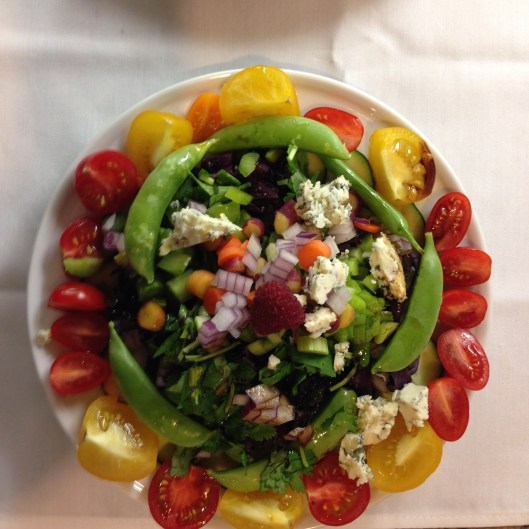
A home made salad. NOT an enchilada.

This is NOT an enchilada.
This is a salad.
This is a salad.

Do you like enchiladas? I do. I like the combination. It’s much better than just the corn tortilla. It’s better than just eating sauce by itself. And, although I like the fillings, even the fillings are better to me when they are part of the whole enchilada. Sometimes, things only “work” when all the ingredients are present.

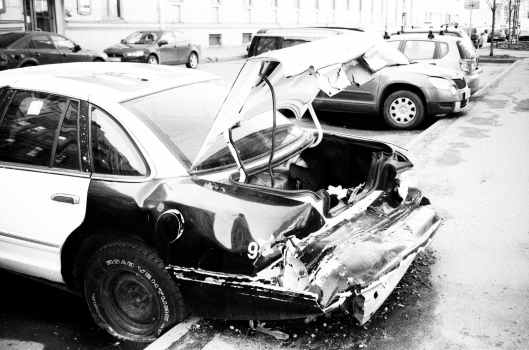
Do you think it’s safe to drink and drive? What if I told you that 13% of the drivers involved in fatal traffic accidents had been drinking? Would that convince you that drinking and driving don’t mix?

grayscale photo of wrecked car parked outside

Photo by Aleksandr Neplokhov on Pexels.com

It shouldn’t. Not by itself. Not only does that statistic, in and of itself, not show causality, it does not even show correlation! 

What else would you need in order to show that there was at least a correlation between drinking and driving? You would need to know what proportion of people who were not involved in fatal traffic accidents had been drinking. What if that percentage were 50%? What if it were only 1%? 

Let’s take another example. What is the cause of your back pain? Imagine that you went to the doctor and that you had an MRI and it showed that you had a bulging disc or some other back abnormality. Your doctor tells you that you need surgery to fix the bulging disc and that this will get rid of your pain. In fact, the doctor says that 50% of the people who have back pain have a bulging disc or other spine anomaly. What can you conclude from this about the relationship between spine abnormalities and back pain? Nothing. Not yet.

person holding x ray film

Photo by rawpixel.com on Pexels.com

You cannot logically conclude anything from this statistic in and of itself. You have to know what percentage of people who do not have back pain also have a spinal abnormality. What if it’s exactly 50%?

What if it’s only 1%? If it’s only 1%, it would seem that having a spine anomaly might be a good indicator (though not necessarily the cause) of potential back pain. 

What if 90% of the people without back pain have bulging discs? Then, it might seem that having a spine anomaly is a good thing! 

Once again, before we can even establish that there is a correlation or association between back pain and spine abnormalities, we must know four numbers:

How many people have back pain AND a spine abnormality. 

How many people have back pain and NO spine abnormality. 

How many people have NO back pain AND a spine abnormality. 

How many people have NO back pain AND NO spine abnormality. 

Then, we can test these numbers of find out whether there’s a statistical association between back pain and spine abnormality. Even if we find that there is a statistical association between the two, it would not prove that the abnormality causes the back pain. For example, it might be that some other factor is responsible for both. For instance, it might be that people who regularly run, swim, walk, or otherwise exercise have far less back pain and far fewer spine abnormalities. Conversely, it might be that people who experience back pain exercise far less and this lack of exercise is what causes more spinal abnormalities.

woman girl fitness

Photo by Scott Webb on Pexels.com

Or, it might be that older people have both more spine abnormalities and more back pain. It might really be age that causes an increase in both. 

But be careful. If you take a snapshot in time, it might be true that today’s old people have more spine abnormalities and more back pain than today’s young people. But does that prove that age itself is to blame? No. It might be that people who are old today were exposed to more pollutants than younger people. Or, it might be that people who are young today are exposed to many more artificial preservatives and that one of these actually helps prevent spine abnormalities and back pain. 

The point is not that science is impossible. It isn’t. But neither is it trivial. 

Most people who are scientists were good in science and math and they enjoyed it. While most people were struggling through science, some people, like me, loved it. In the first grade, we had a “science text book.” I found it fascinating. But I didn’t stop there. I went to our local public library on Arlington Street, and discovered that they had our textbook on the shelves — but right next to it, they also had the science text books for grades two through six. I read all of them in order and immediately the day I discovered them. 

fullsizeoutput_1375

My grandfather subscribed to Sky and Telescope, Scientific American, and The Natural History Magazine. I began reading these at an early age. If I didn’t understand something, Grandpa would explain it to me. By the third grade, I was very familiar with much of the simple “nomenclature” of anatomy, paleontology, astronomy, biology. I read 2-4 science books every week during my childhood. Mr. Wizard was one of my favorite TV shows. He was the “Bill Nye” of the 1950’s. I got a chemistry set and joined another “club” that sent a different science experiment every month. 

Most, but not all, people who are scientists today also loved science as kids. And, in high school, they — like me — continued to study and read about science. And most of them took further science and math courses in college. And most of the people who are “scientists” then went to graduate school and studied science for another four or more years. Graduate school  for science is the intense study of science. The grad student doesn’t take physical education or literature courses or “Western Civilization” courses. If they are in a science Ph.D. program, that is what they are studying. Most then do some sort of “Post-Doc” meaning that they get a job, but continue to learn on the job under the tutelage of someone already expert in the field. 

One of the things that I find fascinating about current American society is that a huge proportion of people no longer trust what scientists say. Most folks would never go to a forest ranger to have their teeth fixed. They would never go to a professional golfer to have their gall bladder removed. They would not rely on a car mechanic for open heart surgery. Yet, when it comes to climate change or the safety of vaccinations, they are willing to rely on very rich people with a vested interest to tell them what to think over a body of experts who have devoted their lives to learning about a particular field. And the “arguments” of those with vested interests are generally like the opening example. They do not tell the public all the facts or observations needed to make rational decisions.  

alcohol bar black background close up

Photo by Prem Pal Singh on Pexels.com

Let’s now return to our alcohol example. When I was an undergraduate, one of my part-time jobs was as a projectionist. One week I worked all week during spring break for a week-long conference at Case-Western Reserve on the effects of alcohol on driving. It turns out that (as you might expect), there is an association between drinking and being in an accident. People who are scientists not only collected data on this but also studied driving and performance under a wide variety of circumstances. 

This is also crucial to understand. Scientist do not typically just go work in a lab by themselves and come to a conclusion. They present and publish their work so that they get feedback from other experts. Of course, like other human beings, they would prefer that their work be “perfect” but at the same time they welcome feedback from these other experts. They don’t just keep asserting over and over and ever more loudly that they are “right.” A person who insists like that will soon find themselves shunned by the scientific community. 

So these scientists studying the impact of alcohol on driving came together from all over the world in order to get feedback from each other. Each became a teacher and a student. People who are done with school and don’t want to be students or teachers any more should not really become scientists. 

I am very good at finding other people’s typos. I am horrible at finding my own. That’s why I ask other people to proofread my work. 

It’s the same with science. Despite having worked for years as a scientist, individuals do still make mistakes in logic. That’s why the consensus of a large group of scientists means more than the conclusion of one scientist who has come to a conclusion. 

adult automotive blur car

Photo by JESHOOTS.com on Pexels.com

As for alcohol, some scientists at that conference at Case-Western measured the impact of alcohol on “reaction time” — how quickly a person reacted to a simple stimulus. They measured, for instance, how long it took people to push a button after a light came on. In more “realistic” tests, people sat in a driving simulator and scientists measured how quickly they put on the brakes when a red light came on. In those studies, it turned out that simple reaction time didn’t really become noticeably impacted until the person had three stiff drinks on an empty stomach! 

Someone from the insurance industry who had studied accidents in the real world, however, found that even a half drink significantly increased the chances of being the driver in an accident! That’s quite a discrepancy! 

But scientists do not throw up their hands at this point and say, “Oh, my! Science is hard! Let’s give up and go watch TV.” No. Scientists find this an interesting problem. Why is it that it takes three drinks to find a significant impairment in reaction time, but in the real world even having half a drink causes a significant increase in accidents? So, they begin to tease this apparent contradiction apart with more experiments. 

Does it have to do with particular people? People who agree to participate in lab experiments are not a random group of people from the whole population. They tend to be younger, healthier, and better educated. Could that be part of the apparent discrepancy? 

What about mood and motivation? When you come into a laboratory and people measure how quickly you can respond, you might tend to be in a “serious” mood and typically, in our competitive society, you are motivated to be as fast as possible. When you are out partying, you may be in a much different mood. Perhaps your motivation, especially if you are a teen-ager, is to “impress friends” that you are not “chicken.” So, maybe 1/2 drink might induce you to do stupid things that you wouldn’t do when you are sober. At the same time, if you’ve been drinking, chances are that your fellow passengers may have also been drinking so they may cheer you on in your choice to pass on a curve or engage in a high speed race or chase on the highway. Even if they don’t cheer you on, having friends there talking, laughing, and singing may distract you from your main task which is to keep everyone safe. Indeed, it does turn out that while simple reaction time takes three drinks to show a significant slowing, your ability to switch between tasks and to control your attention begins to suffer immediately under the influence of alcohol. 

What about back surgery to cure your back abnormality? I am not an expert on backs. Here’s a nice summary of things to think about before having back surgery. 

https://www.uofmhealth.org/health-library/aa6282

And I highly recommend the books by John Sarno. Reading this book completely cured my sciatica. Naturally, that doesn’t prove it will work for you, but you may want to try a $10 book before you go under the knife for $10,000, $100,000 or more! 

For instance: 

https://www.amazon.com/Healing-Back-Pain-Mind-Body-Connection/dp/0446557684

Take-aways: 

Don’t drink and drive. 

Science works. But it’s not trivial. Experts know more than you do. But the knowledge isn’t inaccessible. It’s not some secret hidden knowledge that scientists want to keep from you. You can become an expert in some field. But it will take time, effort, and an open mind. Or, you can take the word of experts. Or, you can decide that you’d really be okay with a forest ranger fixing your teeth or a car mechanic doing your open heart surgery. Or, you can decide to rely on people funded by fossil fuel companies to tell you whether climate change is real. 

Scientists mainly work together to seek the truth. Their “culture” is not to lie, cheat and steal in order to get rich. They get their kicks in other ways. 

If someone tries to imply a causal narrative about A causing X, you have to see the number of cases in FOUR categories before you even have evidence of an association. If they only tell you how many cases are in A & X, they are trying to convince you of something, not in having you see the truth. You need to find out how many: 

A & X

A & ~X

~A & X

~A & ~X. 

Even if A & X are statistically associated, it doesn’t prove causality. Proving causality depends on careful study using a variety of methods to converge on the truth. 

If all your doctor tells you is that you have a back abnormality and you have pain, and that therefore you need back surgery, get a second opinion. 

Of course, it’s a free country. So far. And, if you want to go to a Mexican restaurant, you’re free to order enchiladas and scrape all the sauce out and then scoop out all the ingredients and just eat the corn tortillas. You are missing out though. And if you then declare that Mexican food isn’t that great…? Well, you do the math. You really should have gone for the whole enchilada. 

————————————-

Author Page on Amazon.

Introduction to A Pattern Language for Collaboration.

Stories and Storytelling. 

The Pros and Cons of Artificial Intelligence.

The Myths of the Veritas: Book One. 

The Myths of the Veritas: Book Two.  

Mueller Time?Or Just the First Draft

25 Thursday Jul 2019

Posted by petersironwood in America, politics, psychology, Uncategorized

≈ 4 Comments

Tags

#Cult, Democracy, learning, Nazi, Racist, Trumpism, truth

In some ways, the Mueller testimony was disappointing. In other ways, it was very damning for Trump, though in a completely undramatic way. Then, I got to thinking: what could Mueller have said or done to change the minds of Trump’s supporters? 

fullsizeoutput_11b4fullsizeoutput_11b1fullsizeoutput_11b2fullsizeoutput_1385

I really can’t think of anything. He could have said, for instance, “Well, Trump came to me and said that he thought the American public were stupid and it was his right to fool them because they were so stupid they deserve to be fooled. Of course, I got help from Russian! How the hell else could I have been elected. But you ain’t see nothing yet. I’m going to win in a landslide next time. You guys are losers! I’m a winner and I’m going to be dictator!” 

Trump’s supporters would simply say that Mueller was lying; that Trump never said that. 

Suppose Mueller said, “Well, actually there were 5000 witnesses to the meeting. Here are their names and phone numbers.” 

Those people would immediately be decried as part of the effort to “get Trump.” In fact, at least one person on Fox News would suggest they were being paid to say that by George Soros and that they would be better off dead. They would all be seen as part of a vast conspiracy. 

fullsizeoutput_1372

Amazingly, though people across the earth cannot address global climate change in order to survive, they can all get together in a multi-billion person conspiracy to oust Donald Trump. 

Does that sound too ridiculous? It is ridiculous, but many of the base already think that global warming and its attendant increase in flooding, drought, climate-related deaths, species extinction, sea level rising, worse forest fires, etc. — is a conspiracy — a conspiracy which require millions of people to be “on board” with faking data, photos, eye witness accounts, etc.

These are not just random people either. In tens of thousands of cases, these are scientists for whom truth is the highest value. They have dedicated their lives to finding the truth and yet, somehow, they’ve been corrupted in a single stroke. 

So, I’m forced to conclude that Trumpism has gone beyond a religion to replace Christianity. It is indeed a cult. To me, the distinction is not in the sheer numbers of people, but the extent to which their belief is impervious to feedback from the real world. 

There are many people who hold traditional faiths very much in reverence, whether it is Christianity or something else. But these religions focus on things that are spiritual in nature. The mainstream of such religions do not ask their adherents to believe things that are provably wrong about the physical world. The Catholic church, for instance, does not insist that the Earth is the center of the Universe just because they once believed it. They are very conservative, but they are not impervious to facts — not in the long run. 

BB5C9D28-2E09-4A42-AA68-DB63C8A0B72E

Here are links to some popular articles about religious cults. It would seem that Nazi Germany under Hitler was also something of a giant cult. Anyway, I wonder whether anyone is aware of first hand accounts of people from Germany who initially welcomed Hitler and Nazism and later realized the horrible and horrendous error of their ways. 

https://www.insider.com/most-infamous-cults-in-history-2018-8#members-of-heavens-gate-were-told-that-god-was-an-alien-39-members-died-by-suicide-2

https://allthatsinteresting.com/insane-cults

https://www.huffpost.com/entry/understanding-jonestown_b_8282188

https://www.huffpost.com/entry/what-is-a-cult_b_11729868

https://slate.com/technology/2011/05/apocalypse-2011-what-happens-to-a-doomsday-cult-when-the-world-doesn-t-end.html

If video is more your style. 

https://www.aetv.com/shows/cults-and-extreme-belief

Essays on America: Wednesday

18 Thursday Jul 2019

Posted by petersironwood in America, creativity, politics, psychology, Uncategorized

≈ 127 Comments

Tags

advertising, bait and switch, economics, fairness, Feedback, flimflam, learning, politics, problem solving, truth, wealth

How you see where you are depends on how you got there.

It’s Wednesday. And that means, at least for most of us, that yesterday was Tuesday. Mundane, right? Obvious, right? 

C3B9202A-2605-4E21-90F8-1B78BA735C72

But suppose that it’s Wednesday for you but that yesterday was Thursday! 

Oh, my! You would be in quite a different “Wednesday” than the rest of us would. How could this happen? 

Many ways. You could be a character in a Sci-Fi movie. Maybe you were in a coma for six days. Or, you could have retrograde amnesia from a blow to the head. Or, maybe you have some weird form of temporal lobe epilepsy. No matter how you got from Thursday to Wednesday, you will treat the day quite differently from those of use who experienced yesterday as Tuesday. 

And this is generally true of human beings. 

How you experience your current reality depends a lot on how you got there. 

IMG_9724

It so happens that my dissertation studied human problem solving. I used a problem called the “Hobbits and Orcs problem.” You may have heard of it.

There are three Hobbits and three Orcs on one side of a river and you have to get them all over to the other side. The only way to cross the river is by use of a small boat. (No flying, swimming, catapulting, disapparating, etc. allowed). For the boat to operate and not simply float off downstream, it must have at least one creature in it. But the boat can only hold one or two creatures. It cannot hold more. Orcs, as you probably already know, are suspected of eating Hobbits. You cannot ever let more Orcs than Hobbits on either side of the river, even briefly. You can try the problem for yourself.  Remember though…you cannot let there be more Orcs than Hobbits on either side of the river — not even briefly. 

fullsizeoutput_120c

I compared how people solved this problem to an early AI system modestly called, “The General Problem Solver.” As you might expect, even though both humans and the AI system (GPS) can solve the problem, they behave quite differently. For instance, the places where humans have trouble (take more time; make more mistakes) are quite different from the places where GPS slows down. 

Start – HHHOOO (boat) {river}

Goal –                             {river} (boat) HHHOOO

Spoiler alert — now, I have to talk about the solution.

At one point, you will feel as though you’ve been making good progress and you have two hobbits and two orcs on the far side of the river along with the boat. Now, comes the sticking point (for humans). If an Orc brings back the boat, you’ll have two Orcs and one Hobbit on the near side. The two Orcs will gang up on the Hobbit and eat it. Fail! But if the Hobbit brings back the boat, the far side of the river will have two Orcs and one Hobbit so that Hobbit will get eaten. 

Here is the situation: 

HO {river} (boat) HHOO 

The “trick” is to use one Hobbit and one Orc to bring the boat back. Now, you use two Hobbits to take the boat to the far side, and it’s pretty easy to solve from there. The “trick” is only “tricky” because it feels as though you are undoing the progress you’ve already made! You took two over and you need to bring two back. In fact, many subjects wanted to “give up” rather than bring two creatures back over. They claimed it was “insoluble.” 

But wait. 

It gets even stranger. 

Half of my subjects began with a “half problem.” They started in this position. 

Start: HO {river} (boat) HHOO 

Goal:        {river} (boat) HHHOOO

These subjects had very little trouble solving the problem. They began by taking the boat to the left side by using one Hobbit and one Orc. They quickly solved the rest of the problem. 

Then I gave those same people, the entire problem again, but starting here: 

Start – HHHOOO (boat) {river}

Goal –                             {river} (boat) HHHOOO

They had little problem at the beginning. 

But when they got to the position shown below, many wanted to quit. Many said the problem was “impossible” once they got to this position: 

Now: HO {river} (boat) HHOO 

Goal:        {river} (boat) HHHOOO

Does that pattern look familiar to you? It should! 

This is exactly the problem that they themselves had just solved a few minutes earlier! When they started there, it was easy. But when they got there by arriving at it through their own effort, that same position was now daunting. They didn’t even recognize or realize that they had just been there. (None of this behavior was like that of the General Problem Solver, by the way). 

fullsizeoutput_124a

A number of economists were interested in this result. Why? Because “classic” economics operates like GPS. It looks at the Starting Point. It looks at the Goal. It looks at various possible moves. It doesn’t “care” how it got there. According to classical economics, if you buy IBM stock at $50 and I buy it at $150 and now it’s at $100, if we have the same knowledge, then we should make the same decision about whether to buy or sell. In reality, people do not. If you bought it at $50, you’ve made a huge profit and are happy to sell it. If I bought it at $150, I’m going to suffer a loss. How people view a situation is heavily dependent on how they got there. 

Now, let’s play another little “what if” game. 

What if you were an extremely rich person who also happened to be extremely selfish. In America, for instance, worker productivity has increased decade after decade. This meant that the wealthiest people in the country kept getting wealthier and wealthier. But the workers, who made a lot less than the owners, also benefited by getting wealthier. 

Until around 1974. Then, a strange thing happened. The productivity of American workers continued to grow. However, the increased wealth that accrued from all those people learning new technology, learning new methods, using the suggestion box, etc. — none of that increased wealth went to the workers. All of it went to the richest people in the country.  

https://economics.stackexchange.com/questions/15558/productivity-vs-real-earnings-in-the-us-what-happened-ca-1974

There had been a kind of partnership between owners and workers. The owners of large companies said, in effect: “if you keep being more productive by working harder, smarter, and faster, we will all benefit. We’ll have more profits and you’ll have higher wages.”

Then, the owners stopped living up to that implicit agreement. They took all the increased profits for themselves. Basically, that’s what happened in 1974. And it also happened in 1975, 1976, 1977, 1978, 1979, 1980, 1981, 1982, 1983, 1984, 1985, 1986, 1987, 1988, 1989, 1990, 1991, 1992, 1993, 1994, 1995, 1996, 1997, 1998, 1999, 2000, 2001, 2002, 2003, 2004, 2005, 2006, 2007, 2008, 2009, 2010, 2011, 2012, 2013, 2014, 2015, 2016, 2017, 2018. It varied, of course, somewhat from industry to industry, and month to month, and company to company but that is the big picture. 

People who had organized their lives and the lives of their families around their jobs found that they had no job. Their jobs were shipped overseas or given over to automation. They were pissed off. As they should have been. Notice that this trend continued unabated under both Republican administrations and under Democratic administrations. It’s hard to even see a difference in the divergence that occurred between the ever-increasing wealth that workers contributed through their increased productivity and the stagnation in their real wages. 

Then, we come to 2016 and someone said, “You can’t trust these politicians. They’re all the same. They are in cahoots with their rich donors. You know who you can trust? ME!” 

IMG_8380

The very worst fear of many of the wealthiest .001% of the country is that all workers will get together and demand their fair share! The workers are at least as responsible for the increased overall wealth as the owners. But while real wages for workers has been basically unchanged for decades, the compensation for owners has skyrocketed. Of course, they know it’s unfair! They don’t care if it is unfair. But they do care greatly that the yacht party of caviar and champagne continues unabated. 

How to deal with this? What can you do if you’re wealthy because of other people’s work and this becomes common knowledge? You divide and conquer. You shout long enough and hard enough in every possible medium of communication that it isn’t the greed of the wealthy that has kept your wages from going up. Oh, no, not at all. It’s the foreign competition. It’s the people of color. It’s the gays. It’s the Muslims. It’s the Jews. It’s the uppity women. It’s the video games. It’s violence on TV. It’s sunspots. It’s aliens from other planets hidden in area 51. It’s lack of ambition on your part. It’s because you haven’t taken responsibility. It’s because of liberals who want to take all your guns away and make you eat quiche or salad. 

IMG_6566

Those that want it all for themselves are terrified that you’ll catch on to their game. And, if you do catch on, you may just choose not to play any longer. So, they buy politicians. They buy air time for commercials. They indoctrinate you to hate workers that look different; that speak differently; that eat different foods; that wear different clothes; that worship in buildings with a different shape. They plant lies about all of these “other” people so that you will hate those “other” people — meanwhile trying to convince you that they are on your side; that they are just like you really. After all, you’re both “white” or “straight” or “Christian” or “Midwestern” or whatever. But the truth is — the lives they live are quite different. Despite being extremely wealthy, many of them pay far less tax than you do. If their kids goof off in high school or aren’t very bright — no problem! They’ll just bribe the way for their kids to get into a top university.  

So far, their little game has worked. By using the same methods that get you to buy skin products you don’t really need; the same methods that get you to buy sugared water at a high price; the same methods that get you hooked on sugar; the same methods that make you feel guilty about being overweight; the same methods that induce you to buy products and systems to help you lose weight; the same methods that fool you in a thousand ways — they get you to hate other people — people who are superficially different are “sold” as being fundamentally different. While the people whose lives really are fundamentally different from yours are being touted as living lives that are very similar to yours.  

IMG_3408

Once you begin voting for the folks who are paid for by these very wealthy people, you will tend to listen to them. You will tend to believe them. Not because you are stupid or gullible. You will do it because that’s what you’ve done in the past. The more you vote for them, the more you want to believe them. And, here’s the kicker: if they are outrageous  in behavior and speech, you will want to believe them even more. After a few years, it doesn’t matter how absurd or ridiculous what they say is. You’ll still believe them. It’s not your fault, really. But it does keep you, and all the rest of us, trapped in a vicious circle. 

You got to this Wednesday from yesterday. But your yesterday was Thursday. It’s comforting to know that there are millions of others who also got here from Thursday. 

You don’t have to keep choosing this way. But many of you will. And, that’s precisely the way that the wealthiest .001% like it. They don’t want to share with you the wealth that you created. They’d much rather keep things the way they are. They’d much rather keep that wealth for themselves. After all, caviar, champagne, yachts, and beautiful teen-agers are expensive. 

There is, of course, a much easier solution to the Hobbits and Orcs problem. Hobbits and Orcs could stop hating and mistrusting and killing each other. Then, crossing the river to the other side is easy. And that benefits everyone. 

Everyone, that is, except the .001%. 

—————————————————

Author Page on Amazon. 

Abstract of article in Cognitive Psychology


Mobility of Body & Mind

12 Wednesday Jun 2019

Posted by petersironwood in America, psychology, Uncategorized

≈ 2 Comments

Tags

innovation, learning, politics, sports, truth

As many of you know, I am using fiction (The Myths of the Veritas) to explore how various values interact. In our story currently, two of the Veritas barely escaped a forest fire and in the process, both injured themselves. This limited their mobility led me, not for the first time, to think about mobility more broadly. How does it relate to strategy and tactics in games, sports, and life? Are our concepts of mobility always useful? How else might one think about mobility? 

This is also of interest because I recently fell down and broke some ribs. As the saying goes, “It only hurts when I laugh.” But that’s not very accurate. It also hurts to cough, hiccup, stand up, sit down, turn over, and lie down. I began to write about people with limited mobility and then my own mobility became limited, at least temporarily. So, now, I take a very short break from the Veritas and instead riff on mobility. 

In college, one of my quad mates, Andy, happened to be an excellent chess player. I had enjoyed chess ever since I was about 10, but I had never actually studied it much. Andy introduced me to Emmanuel Lasker’s chess manual (an awesome and recommended book, by the way) and to think about chess positionally and strategically. Before that, I had mainly relied on “seeing” combinations (an unexpected and brilliant sequence of moves & counter-moves) as a way of winning. 

white black game fun

Photo by Pixabay on Pexels.com

In the process of showing the values of chess, including mobility, Andy introduced me to a game called “Monster.” In this chess variant, one side has all the pieces and plays “normally.” The other side has only a king and four pawns. That’s right. A king and four pawns against a king, queen, eight pawns, two knights, two bishops, and two rooks! It sounds vastly one-sided. But here’s the twist. The side with only a king and four pawns gets two moves to every one move of the other side. 

Unless the side with all the pieces plays quite well, it will quickly be overwhelmed by the side with double mobility. Perhaps this should not have been so surprising to me. Imagine you could run twice as fast as a “normally fast person.” In other words, you could run the 100 yard dash in 5 seconds rather than 10 and run 40 yards in 3 seconds. Not only would you be the world’s fastest sprinter, you could also run out most ground balls in baseball; if your basketball team got a rebound on the opponent’s side, they would pretty much be able to just throw the ball to the other side for the world’s fastest fast break. You would be pretty amazing in soccer or American football as well. 

IMG_9737

Needless to say (?), greater speed isn’t always an asset. In molecular terms, greater molecular velocity means a higher temperature. Humans and other warm-blooded animals employ various mechanisms (shivering, sweating, goose bumps, blood flow regulation, etc.) to keep their temperature fairly constant. If those molecules start moving around twice as fast as they normally do, the organism will quickly die. If the molecules move too slowly, the organism will also die.  

As we age, thought, as well as movement, tends to slow down, other things being equal. Of course, other things are seldom equal. If you are highly experienced and well-practiced at something like playing piano, typing, coding, or doing cross-words, you will typically not slow down much and be much faster than a much younger but much less experienced pianist, typist, coder, or cross-word solver. 

fire wallpaper

Photo by Pixabay on Pexels.com

Life is a dance of opposites; e.g., stability and change; duplication and diversity; movement and stasis. Long ago, our ancestors chose mobility and became animals while another whole branch of life chose stability and became plants. Even so, as time-lapse photography reveals, plants do move. Occasionally, they move much more rapidly as anyone who has touched the “triggers” of “touch-me-not” knows.  

https://www.youtube.com/watch?v=oJ5dQ_Pdfac

Conversely, sometimes, animals move very little; e.g, bears hibernate; caterpillars form a chrysalis; people sleep (though they move during some phases of sleep). The male angler fish is much smaller than the female and spends its life essentially as an immobile parasite perched on the female until their blood supplies merge. 

https://www.youtube.com/watch?v=J4LPmjQoc_A

On the whole though, our great branch of the tree of life evolved to move. And, when we do not move, there are problems for us physically. A complication to watch out for with broken ribs, for instance, is pneumonia. Why? For two reasons, I believe. First, because when it hurts to move generally, you generally move less. I won’t be playing tennis for a few weeks. That can affect overall health and decrease the amount of air that I need to exchange with my lungs as well. Second, it specifically hurts to take a deep breath. So, that also discourages me from taking deep, cleansing breaths. It discourages me, but I do it anyway. 

It seems as though we may be touching on a general principle here. When an organism believes, for whatever reason, that the result of an action will be pain, it tends not take that action. Sometimes, it will be otherwise goaded into that action to avoid still great pain, but all the while, that organism will procrastinate, avoid, distract, and only take the painful action if absolutely cornered. It’s good to breathe deep even though it’s painful. 

This piece of knowledge turns out to be quite useful in understanding the behavior of others as well. If I observe you to be avoiding doing something even though it has an obvious benefit to you, I then tend to assume that you fear something else even more; you anticipate pain. Just to take a random example, let’s suppose that a court demands that you present a piece of evidence and you refuse even though it would be a chance to clear you name. It’s at least a reasonable assumption, that you fear something else more; e.g., that the truth would implicate you in wrongdoing. You would want to slow everything down as much as possible. This would be particularly effective in the court of public opinion because any one particular topic might eventually become boring to the public. 

IMG_5510

It could work in more minor cases as well. If you are a kid and you steal cookies from the cookie jar, you could take the tack of denying it, blaming your little brother, suggesting the tooth fairy did it, convince your little brother than he should claim he stole them in order to win your favor, etc. There are a variety of tactics that could be employed. Most kids, however, are taught that honesty is the best policy. Although they don’t instantaneously become ethical on that account, eventually most see, by virtue of their own experience, that honesty really is the best policy. 

Even for those who continue to lie in their words, their actions typically betray them. 

Mother: “Who stole the cookies?” 

Kid: “What cookies? It wasn’t me!” 

Mother: “Can I inspect your hands?” 

Kid (hastily thrusting his hands behind his back): “It wasn’t me! There’s nothing on my hands! No cookie crumbs! No cookie crumbs! (Kid brushes hands together audibly behind his back). Better check on my sister! She probably did it!” 

red string lights on clear mason har

Photo by Rahul on Pexels.com

The poor kid continues to lie, but the structure of his actions; viz., to block Mom’s investigation, betrays the truth.  

It will pretty obvious to Mom. Unless —unless, Mom went into the room already convinced that sister stole the cookies. Because the body is not the only thing that it takes energy to move. It also takes energy, in some sense, to change one’s mind. It also takes energy to block out the truth, of course, but only at first. If you do it often enough, it becomes painless and effortless. 

One nearly universal example is the “blind spot” in the human retina. The place where the optic nerve exits the eyeball does not, itself, have any sensors. If you close your left eye, it appears that your right eye has no blind spot. It seems as though you have “full view” of what’s out there. In actuality, some of what you “see” has been constructed by the rest of your nervous system. 

https://en.wikipedia.org/wiki/Blind_spot_(vision)

What other blind spots do we have? We like to be mobile. We’re all in a hurry. But if we have blind spots and don’t even know that they’re there, we might just miss a step and break a rib or two. Maybe we’ve learned to ignore the kid brushing the cookie crumbs from his hands behind his back for far too long. But are we also so blind we cannot see the kid who’s still got his hand  in the cookie jar? Yes, that one. The one six inches in front of our face.  

It might be painful at first. But take a deep breath. Move the fresh air in and out of your lungs. It may hurt a bit, but it’s a cure that’s far better than the disease. 


UPDATE: Today is December 24th, 2024 and I came across the post above first published about five and half years ago and wanted to add some new observations.

I love playing tennis. Now, at nearly 80, my mobility is not nearly what it was when I was younger. No big surprise there. I mainly play doubles. Even so, I often miss shots simply because I cannot get to them. The folks I play with are mostly my age so we have similar mobility issues.

What I find interesting is that many of the folks I play with handle their mobility issues by moving less whereas I believe it’s better to move more. I don’t mean that I move faster than I used to. I can’t. But I move more often and more strategically.

There are several benefits from moving more often:

First, it makes it much more difficult for the opposing team to hit just the right shot. If instead, my partner stays stock still until they realize a shot is coming close to them, it is trivial for our opposition to attempt to hit a shot that neither of us can reach. Conversely, if my partner moves just before they strike the ball, the shot becomes much more difficult for at least three reasons. It is more difficult to calculate the optimal attempted shot. It is also more likely that they will take their eye off the ball and glance at my partner. It is also harder for the opponents to hit the shot with confidence.

Beyond making the opponents job more difficult, if my partner and I are in nearly constant motion are muscles, joints, and nervous systems are being more active. This means, other things being equal, that we’re less likely to injure ourselves and more likely to react quickly and appropriately.

These advantages work best with good timing. If I move too soon or overcommit to a radical position, the opponents could take advantage. Ideally, one moves just before the opponent strikes the ball and stops, in balance, just as they strike it so that once you determine where they are hitting to, you can move without being “wrong-footed” (leaning or moving in the “wrong” direction).

In the longer term, moving more tends to keep you, the player, in better shape. You burn more calories; you use your muscles more; keep your bones stronger, and see things from a broader perspective. Theoretically, I suppose it’s possible to move too much, and wear yourself out, but I don’t see that happening at our age.

These comments manifest for me in tennis right now, but earlier in life, I also played a lot of softball. I never understood why the outfielders in softball typically never move until the ball is hit, particularly in slow pitch. If the “gaps” in the outfield are stable, it’s very easy to hit into them, but if they’re moving, it’s much more difficult. All but the very least fit outfielder is capable of moving with every pitch. In fact, in slow pitch you can actually tell somewhat where the ball is going to be hit by watching the pitch before the hit. If it’s inside, the hitter is more likely to pull and if it’s outside, the hitter is more likely to push the ball late into the opposite field. It’s far from a guarantee, but why not play the averages? In any case, by moving until right before the moment of contact, the outfielder has made their body more active and more able to move quickly than if they’ve been standing stock still for some minutes.


Author Page on Amazon

Fit in Bits on Amazon

The Winning Weekend Warrior on Amazon

Myths of the Veritas: The Beginning of the First Book

Myths of the Veritas: The Beginning of the Second Book

The Invisibility Cloak of Habit

Trees Die at the Edges

16 Tuesday Apr 2019

Posted by petersironwood in America, creativity, psychology, Uncategorized, Veritas

≈ 3 Comments

Tags

despression, fear, innovation, learning, legends, myths, politics, psychology, stories, truth

When Tu-Swift had awakened after his first day of stable duty, he initially thought that these people who stand atop horses must have beaten him. When he considered the matter, he realized it was simply that his body was not used to the particular work. That did not lessen the pain. 

IMG_2607

When he awoke after the second day of duty with the horses, however, he was even sorer and his hands were blistered. As he awoke, and the dim light shattered his night dreams, the physical pain stabbed most when he first began moving. He had long ago learned, as had all the Veritas, to put physical pain out of mind. He chose not to do this. Focusing on his physical pain helped fuel his resolve to escape this place and to take his small companion with him. The aches and burns also kept a deeper, darker pain at bay — the doubt that he would ever be rescued. 

He imagined the voice of his sister, Many Paths, encouraging him not to fill his belly with the first plausible hypothesis that came to mind. Yes, it was possible that the Veritas had been utterly destroyed in the surprise attack, but was it likely? He reminded himself that the Veritas had not only defeated the surprisingly numerous Cupiditas, but also withstood two potential enemies — the Nomads of the South and the Fierce and Formidable Warriors of the North without even fighting them. 

The Veritas might still be engaged in battle with the horse people. Or, they may be on their way to rescue him but it would take longer on foot. They might have already been here with a small party and seen that this compound is too heavily guarded for a small force. That seemed somewhat unlikely, but still possible. Surely, if they had gotten close, they would have signaled or queried him with the modified calls of birds. And, he would have responded to let them know he was here. The modified bird call language was not sufficiently nuanced for him to know how to warn them that there was another child here in need of rescue. 

IMG_3606

He silently thanked his tribe for all that they had taught him about survival. But Day-Nah was a problem. It wasn’t his “fault” that he was so young and small, nor that he knew so little Veritas. While even Fleet of Foot could surely not outrun a horse on open ground, Tu-Swift felt he stood a good chance to outrun his pursuers if he could find the right kind of terrain. But Day-Nah? A better option for him would probably be to hide high in a tree or in a small hole until they gave up looking for him. Tu-Swift realized he knew little about these people who stand on horses and steal children. Day-Nah was not much use as a slave so perhaps they would give up on the search without much persistence. 

Three large, well-muscled men came to awaken the children and left them each a bowl of food. Soon, they were pushed and pulled out into the large open place with horses and foals again. The men gestured and made it clear that Tu-Swift should separate and catch more foals and tie them up. As they entered the clearing, Tu-Swift noticed that poison ivy vines hung heavy on the trees surrounding the paddock. 

He recalled the words of She-Who-Saves-Many-Lives when he had remarked to her a few summers ago about the poison ivy in his own village. The elder shaman had explained how trees needed each other to survive high winds and to kill off parasitic intruders such as poison ivy and boring insects. In the manner of such a teacher, she had gone on to say that it was the same with the Veritas. Each member of the tribe helped nurture and protect all the others.

fullsizeoutput_1977

“Tress die at the edges. That is the way of it. And, so it is with us. A person alone in the vast world is much more at risk than the tribe,” she had pointed out.

At the time, he had take much comfort in her words. 

Today, however, a great sadness and despair threatened to overwhelm him because now he himself was a “tree at the edge.” 

A memory now flashed into his mind — a huge spider web that he and Shadow Walker had happened upon. Shadow Walker had invited him to observe with him for a time. The spider hung out at the very center of his web. Whenever a flying insect strayed into its web, it would rush to the bug, bite it, and wrap it with webbing. Once, however, it happened that two bugs hit the trapping web at the same instant. The spider rushed off to wrap up the larger one for later consumption. Spider then returned to the center. Spider seemed unable to remember where the second insect had landed. One by one, he carefully and methodically thrummed the strings, one by one, at last, one of the strings caused a renewed struggling by the insect. Instantly, the spider travelled up that spine of his string to the hapless bug, bit it, and prepared it for later consumption. Shadow Walker had questioned Tu-Swift who at last saw that the bug’s fear had caused it to give away its position and hastened its own death. 

blur close up design focus

Photo by Pixabay on Pexels.com

Shadow Walker waited until Tu-Swift had seen this before putting it into words. “Fear is natural when one is trapped. But we are humans. We can wrap our fear in our own thoughts for a time and hide it – and ourselves – until we find a way to escape. To further cement the point, Shadow Walker grabbed Tu-Swift by the wrist and held him tight. “Get loose!” 

Tu-Swift had tried to jerk his hand away. He pulled and tugged, but Shadow Walker was much stronger. It seemed hopeless. Then, he realized that Shadow Walker was encouraging him to think — not simply to react. He looked at his wrist and noticed that it was more of an oblong than a circle across. And Shadow Walker’s hand was not a completed circle but a circle with a gap. Rather than struggle, Tu-Swift had relaxed. He imagined sliding the edge of his wrist out through the slight opening where Shadow Walker’s thumb and fingertips came together. Tu-Swift imagined a swift jerk of his wrist through that opening. He forced himself to relax still further. Then…zip! He slipped his wrist out through the gap before Shadow Walker could react.  

IMG_7215

Fear could kill you. And calm thought could save you. Tu-Swift had learned his lessons well. 

Tu-Swift took deep breaths of the cool clean air. Even the horses smelled good to him as he breathed in their sweet odor. He looked around at all the life that thrived around him. None of it survived and thrived through sadness. Feeling sorry for oneself might be “justified” but it was not the path to survival. The path offering promise, the path of resolve spoke to his inner heart of courage. He would wrap his fear and sadness up for now so that these captors of kids could not see it. He would think instead.

He gestured to one of the three burly ones who accompanied Dah-Nah and Tu-Swift to give him a switch such as they all carried to whip the horses with. The man complied assuming that Tu-Swift wished to use the whip to help separate mare and foal. Instead, Tu-Swift used the handle of the switch to draw his plan quickly in the sandy soil outside the paddock. When he began, one of the men reached to take the switch away, mumbling some words in anger. Then, the men began talking to each other in their odd and unfathomable language. At last, they allowed him to continue his drawing.

He first made a drawing in the shape of the current paddock. Then, he showed an addition with many narrow quick turns. Now, he used his hand as a horse to show that his hand was too big to fit through these narrow passages. He reinforced this analogy by making sounds mimicking the horses and whinnying when his hand was “stuck.” He gently took one of Day-Nah’s hands in his and showed how the small boy’s hand would fit through these narrow passages. Then, he gestured out to the horses. He pointed to one of the nearby mares, a beautiful palomino. Again, he showed how his hand unable to get through the passage. Next, he pointed to her foal and used Dah-Nah’s hand to go through the narrow passage. Dah-Nah’s face lit up. He understood. Surely, the men would as well, he hoped. 

Original Masks by Sarah Morgan

Original Masks by Sarah Morgan

And, slowly, one by one, the men’s faces revealed that they all “got” Tu-Swift’s idea. They felt a little chagrin that they had not thought of such an obvious ploy themselves, but the ROI were a practical lot. If they found an idea that they could use, they used it. They did not reject it out of hand as the Z-Lotz might have done simply because they had not thought of it themselves. 

The men made it clear that the boys themselves were to construct this addition. The largest of the burly men pointed to a large set of cut planks that had already been cut to use for fence repairs.

Tu-Swift nodded enthusiastically. He returned to his drawing. He showed how he would keep the existing fence in place while they constructed the maze addition and a smaller place for the foals to gather. When all that was finished, they could remove the piece of fence that would prevent the foals from entering. 

Tu-Swift had transformed his fear and despair into a plan. He thought to himself, “Not all trees die at the edges. Not these two.” 

IMG_2342

————————————————

Author Page on Amazon. 

The Winning Weekend Warrior focuses on strategy, tactics, and the ‘mental game’ for all sports including golf, tennis, baseball, and others. 

Turing’s Nightmares illustrates possible ethical issues around AI and robotics with 23 scenarios of the future. 

Fit in Bits suggests numerous ways for the ultra-busy to work more fun and exercise into daily activities such as sitting in meetings, walking to your car, shopping, traveling, playing with kids, etc. 

Tales from an American Childhood recounts early experiences and relates them to contemporary issues and events. 

—————————————————-

Resonance

20 Thursday Dec 2018

Posted by petersironwood in America, management, psychology, Uncategorized

≈ 2 Comments

Tags

creativity, Design, Feedback, golf, harmonics, learning, politics, programming, resonance, sports, testing, thinking, timing

Resonance

If you have ever pushed your kids on a swing, you know that timing is important. If you add the power of your next push just as the child reaches the apex and begins to fall back, you will swing your child higher and higher with little effort. On the other hand, if you add the power of your next swing at the bottom of the arc just as the swing is moving toward you at maximum speed, you will nearly stop the swing and likely injure yourself and/or your kid. Please don’t try it.

boy wearing blue shirt sitting on swing

Photo by Git Stephen Gitau on Pexels.com

In sports as well, the timing of when you add your effort is critical. In golf, for instance, many beginners think a lot about their hands, probably because we use our hands for many daily tasks such as texting, flipping burgers, playing video games, etc. While the hands are certainly important in the golf swing, they are the last thing to bring to bear on the golf swing, not the first. If you add your hands and wrists at the last moments right before you hit the ball, you will  be accelerating the club face as you hit the golf ball. You will have greater velocity and also more stability and hence more accuracy for the shot. 

woman playing golf

Photo by Jopwell x PGA on Pexels.com

The golf swing is a complex athletic move that I cannot describe in detail. Here’s what is important in this context. Some parts of the golf swing (notice the word: swing) are much like a pendulum. The longer parts of the body (e.g., the arms) take longer to swing on their own. The shorter parts of the body take a shorter time to swing on their own (e.g., the hands). In addition, the shortest pendulum (the hands) is at the end of the longer arm swing. This means that for the arm swing and the hand/wrist moves to multiply effectively, you must engage the hands and wrists toward the bottom of the arm swing when the arms are already moving at top speed. 

What is True in Mechanics and Sports is also True in Social Engineering.  

If you work in a highly competitive, even cut-throat sales environment, in which there is a long tradition of stealing commissions, grabbing each other’s customers, etc., having the sales manager say something like, “You know what? Let’s cooperate! Put the customer’s interests first, not your own commission” is pretty much useless. A manager’s exhortation to cooperate is a short term high frequency “push” but it will be just as ineffective as trying to start your golf swing with your hands, or trying to push a swing with all your might when your kid is swinging toward you at top speed. If the cultural milieu is cut-throat, the manager’s statement will not be sufficient to change that culture. What the sales people will do is make sure that they have a semi-plausible story ready about how stealing someone else’s commission was really best for the customer. 

group of people raising right hand

Photo by rawpixel.com on Pexels.com

On the other hand, imagine instead that sales people have shared commissions for years and that the company takes many steps to build social capital and cooperation among everyone on the sales force. Now, the manager may do something publicly to praise an actual instance of cooperation. It doesn’t have to be heavy-handed or over the top. It is a gentle push that adds energy to what people are already doing. This is akin to adding the hands to a good golf swing or adding your swing push just as your kid begins to descend. 

Don’t get me wrong. If your house is on fire, you should leave. Grab your kids and pets but don’t bother with last weeks losing lottery tickets. 

But — you also need to understand why your house caught fire – perhaps faulty wiring – and why the fire was not immediately doused – e.g., your fire extinguishers are out of date. If you don’t fix underlying problems, your next house is likely to catch fire as well. 

If your culture is so materialistic and superficial that a blow-hard sleaze bag who seems to have great material wealth is celebrated no matter how he or she came by that wealth and fame, you may have to deal with the short term problem first, but unless you also deal with the underlying cultural, social, and economic problems, you’ll likely find yourself in precisely the same situation again. The same or other foreign enemies will attempt to exploit those same weaknesses again by finding a different celebrity with deep underlying character defects. Those enemies will push particularly hard during a crisis or an election and they will push particularly hard in the errant directions that society is already trending toward. 

The String’s the Thing Wherein We’ll Capture the Conscience of a King

Next time you have access to a piano, try the following experiment. Gently push down the C, E, and G keys above middle C. Keep them pressed down with your right hand and then strike middle C sharply with your left hand and let it go. What you will hear is that the strings of C major (C, E, G) will vibrate for quite a time after you release the middle C key. If instead, you gently push and hold down the D, F, and A keys above middle C, you will hear very little sound coming from them. Why? Because the harmonic resonance of  middle C is greater with the C, E, and G than it is the D, F and A keys. Similarly, some people will tend to “resonate” with certain messages more than others will. 

close up photo of person playing piano

Photo by Juan Pablo Arenas on Pexels.com

This is why, for example, Russian fake news that was meant to suppress the black vote carried false stories to indicate Democratic candidates didn’t care about the “Black Lives Matter” movement, while false stories about how Democratic candidates don’t care about gay rights were targeted toward the LGBTQ community. Of course, even putting Russian election interference aside, candidates typically target their messages to those that will “resonate” with particular voters. For instance, a candidate who believes in an isolationist foreign policy, forgiving student loans, low estate taxes, and better benefits for veterans might focus a speech to a group of veterans on their desire to see better benefits for veterans.  The same politician, when speaking to college students, will tend to focus on forgiving student loans. That has been “business as usual” for my entire adult life. What was really new to me in 2108 was this: an entire raft of Republican candidates promoted the idea that they were concerned about making sure that insurance companies covered pre-existing conditions. In fact, they had always voted against it and were suing to make this provision of Obamacare illegal. 

Prior to the existence of lying news networks and fake web sites who would echo such lies, politicians of either party would be reluctant to employ blatant lying about their positions because, even putting ethics aside, they would be easily discovered. However, if some of their constituents only believe fake news networks, then such politicians feel that they can lie with impunity The news presented on such networks resonates with what the lying politicians say and resonates with what those viewers want to hear and believe about the people toward whom they are already favorably disposed.

person woman music musician

Photo by Skitterphoto on Pexels.com

Resonance and the Overly Long Time                                                     Lag.

While managing a research project on the psychology of aging at Harvard Med School, I lived in a suburb called Woburn. This rented house had a hot water heating system, and at some point, during a particularly bitter cold New England winter, the furnace stopped working. I could have called in a professional, but instead, I tried to fix it myself. As a part of this system, there was a small gauge that looked a lot like the gauges in a level, but this one was upright and generally half filled with water. I noticed that now, instead of being half filled with water, it was only about 1/10 filled with water. I didn’t exactly understand why this could be problematic but the instructions said it should be half filled with water and there was a valve to let more water in. So, slowly and cautiously, I opened the valve. Nothing happened. I opened it a bit more. Nothing happened. I opened it a bit more. Nothing. I was about to give up and call a repair person. All at once, the little vial began to fill. Yay, me! I turned the valve off because the instructions also said the gauge should not be overfilled. But it kept filling. And filling. Damn! I made sure the valve was closed tightly. It kept filling anyway! Double damn! The gauge exploded! I had been the victim of — well hubris, of course, because I thought I could figure it out — but also a victim of delayed feedback. When feedback is delayed, all sorts of havoc can ensue. 

photography of green and red fire works display

Photo by Anna-Louise on Pexels.com

You may have experienced a similar time lag issue with hotel showers. You turn up the hot water and the shower water stays cold. You turn it up more. It stays cold. You turn it up more and it still stays cold. And then…all at once you’re being boiled to death in your own shower and you begin wondering who will find the naked body. 

Back in the early days of using LOTUS NOTES, there was a button on my screen that said, “REPLICATE.” And if I clicked on that button, a replication process would start. (Basically, it was downloading my email from the server to my ThinkPad). But sometimes, the mouse click did not register. This might not be a giant issue. In other cases, I would simply click again and this worked for most applications. But in this case, NOTES put up another button, in the same exact spot as the REPLICATE button, that said, “STOP REPLICATION.” The State of the Replication Process, however, was not accurately reflected by the State of the Button on the screen! This was endlessly annoying and could easily have been avoided. There was plenty of screen real estate to put a “REPLICATE” button along side the “STOP REPLICATION” button. Once connection speeds were faster and the computational facilities themselves were faster, this UX issue ceased to be an issue because there was no noticeable time lag between the state of the process and the state of the button. 

man holding remote control

Photo by JESHOOTS.com on Pexels.com

However, I still run into similar issues with Cable TV remotes. Do you? The time lags associated with clicking something on the remote and something happening on the screen is so long, that you begin to wonder whether the battery has gone dead or whether it is aimed wrong or whether the button was not fully depressed. Indeed, I sometimes wonder whether the entire system is truly electronic. I have begun to believe that the button press actually sends an ultrasonic dog whistle to a pack of hungry weasels who hear the whistle. To them, it’s a signal that they are about to be fed. They begin scampering in unseen cages toward their food dishes. The scampering of their feet is picked up by sensors under the floors of the cages. These sensors cause dials to change in a control room staffed by retired school janitors who push a series of buttons that change the channel or the input designation or turn on captioning, but only after they finish the New York Times crossword puzzle they are working on. Then, and only then, does the desired action take place. But if and only if you’ve been patient enough not to hit the button a second time. 

adult audio concert control panel

Photo by Roman Pohorecki on Pexels.com

Of course, if you are the user in this scenario, there is a fix. Push the button once and only once. Now, go outside and run around the neighborhood for fifteen minutes before interacting a second time with the remote. Sure, it takes a long time to get to your program but you’ll be in much better shape after just a few months of this regimen. 

On the other hand, if you are the designer of such systems, you might consider that it would be less expensive in the long run to replace the ultrasonic dog whistles, the weasels and the retired janitors with an actual system of electronics which, after all, is supposed to run at nearly the speed of light.

landscape photography of field with wind mill with rainbow

Photo by Paweł Fijałkowski on Pexels.com

The Takeaway

In comedy, timing, as in life, and UX design, and pushing your kid on the swing, and your golf swing, and social interventions, and election interference, and human short term memory limitations, is everything. 

—————————-

Author Page on Amazon. 

Fraught Framing: The Presumed Being-ness of State-ness

17 Monday Dec 2018

Posted by petersironwood in America, creativity, psychology, Uncategorized

≈ 2 Comments

Tags

#therapy, framing, fun, HCI, human factors, innovation, learning, politics, problem formulation, sports, UX

Fraught Framing: The Presumed Being-ness of State-ness

OLYMPUS DIGITAL CAMERA

OLYMPUS DIGITAL CAMERA

As I understand it, in Spanish and Portuguese, for example, there is a linguistic distinction between current state of being and habitual state of being that is signaled by the use of different verbs. In English, we say, “That is an angry dog” to mean “That is a dog who is generally and habitually angry” and also to mean, “That dog is in an angry mood right now.” 

woman and man wearing brown jackets standing near tree

Photo by Vera Arsic on Pexels.com

But, regardless of what native languages we write and speak, we humans often make statements about something and treat something according to the unstated and untenable presupposition that what is true about the current state of affairs is true about eternity. 

This habit of mind, reinforced by language, is often incredibly useful. For instance, near me right now are a table, and on the table, among other things are a coffee cup filled with coffee and a checkbook. The table is mainly composed of wood and marble. For many purposes, this is an adequate description. Of course, none of these so-called objects were always in their current state. Once, the wood was part of a tree. And, before that, the material in the tree was mainly rainwater and dirt. It was transformed into a tree by a mere seed of information using energy from the sun. 

close up colors dry nature

Photo by Pok Rie on Pexels.com

Meanwhile, even the marble portion of the table was not always in its current state. At one point, in the distant past, this marble was limestone. The limestone was transformed by temperature and pressure into marble. Before the limestone was limestone it was mainly the shells of tiny animals living in the ocean. If we trace the table back far enough we will come to the “Big Bang” that started the universe as we know it. The transformation of the table from one sort of thing into another did not end when it became a table nor when I bought the table. Some day, it will no longer be a table. Eventually, the material nature of the wood, and eventually even the marble will be different. The checkbook and the coffee cup will likely cease to be a checkbook and a coffee cup long before that. 

For the purpose of drinking my coffee, it is just fine to think of this cup as being a cup. It holds my coffee and keeps it somewhat warm. The table works just fine as a place to hold the coffee cup. I don’t need to think more deeply about the lifecycle of the table or the cup or the checkbook. 

Usually. 

But sometimes, it is useful to deconstruct these categories. A fairly common test of creativity, for example, is to think of alternative uses. What could this table be used for besides a table? It is a pretty sturdy looking table, so I would say it could be used as a seat by one or two people pretty safely. It could be used as a deadly if awkward weapon. The bracing cross-piece could be detached and used as less awkward weapon.  It could be used as a barrier. The wood part could be used as firewood. The thing that I habitually use as a coffee cup could be used as a container for many types of liquids or solids and even, with the help of the checkbook, could be used to hold gasses though not very effectively. The checkbook can be used as a weapon against a mosquito. In a very different way, the checkbook could be used as a weapon against a person or even as a weapon against a nation; e.g., by writing checks to steal an election. 

adult beverage breakfast celebration

Photo by Pixabay on Pexels.com

While all of these “objects” have histories, they also have futures. Generally speaking, the people I know give little thought to the future of the objects that they interact with. But slowly, and likely too slowly, this is gradually changing. We often now recycle or reuse objects. Thinking about the future of an object also influences my choices about what I buy. This kind of thinking is particularly important to when it comes to radioactive material which can pose very long term hazards or it can be stolen and used to cause fairly short term mayhem. Collectively, the plastic that we use gets discarded and then, does not vanish into nothingness. It finds its way into the air we breathe and the water we drink. Now that the population of the earth is 7 billion, we can no longer afford to ignore how the objects we interact with were created and we cannot afford to ignore what becomes of them. What we call a “table” or a “cup” or a “checkbook” is really only a “table for now”, “a cup for now” and a “checkbook for now.” 

The fluidity of things also applies to human beings. It should be pretty obvious to most adults that someone we call “a toddler” or a “teen-ager” is not in that category forever. Most people evolve over time both physically and mentally. The change from “toddler” to “teen-ager” takes many years. Physically, the person usually seems stable from one hour to the next (even physical stability is an illusion; we create over 200 billion new cells a day!). Socially and psychologically, however, we are unstable even at a macro level. A sixteen year old, for instance, may act very much like a mature adult in hundreds of different circumstances. Yet, if they are overly influenced by “friends” or under the influence of alcohol for the first time, their behavioral self-control may easily revert to that more like a ten year old or even a two year old. 

girls on white red jersey playing hand game

Photo by Pixabay on Pexels.com

We Limit Others by our Categories

It is human and common but not useful to observe a small slice of someone else’s behavior and thereby make inferences about their habitual behavior. Even if we know about someone’s habitual behavior, it doesn’t mean that they always behave that way and it doesn’t mean that they can’t change over time. When we say, “Oh, don’t pick Chuck for the baseball team; he’s such a spaz” or “No, I’m sure Sally wouldn’t like to join us; she’s really a loner” or “You can’t count on Jim; he never follows through” we are almost certainly over-generalizing. Perhaps Chuck never learned baseball as a kid and he simply needs to learn and practice basic skills. Maybe Sally has no real friends precisely because no-one asks her to join them because everyone thinks she’s a loner because she’s always alone – because no-one ever asks her to join them. Or maybe her idea of a good time is hiking and she’d be happy to do that, but has no interest in going clubbing and getting drunk every day. Maybe Jim is completely overworked and/or needs to learn better time management skills. 

light light bulb bulb heat

Photo by Pixabay on Pexels.com

“How many psychologists does it take to change a light bulb? Only one, but the light bulb has to want to change.” 

People may be changed by circumstances but therapy often works too. As the joke implies, it won’t work very well if the main reason the “light bulb” goes to the therapist is to feel better rather than to get better, it’s an opportunity lost. Others who frequently interact with the “light bulb” often hold views and use names that subvert therapy. For example, a person who is never assertive and wants to change that may find that when they do so, their family and colleagues at work, who have been taking advantage of them for their own purposes may say things like this: “Oh, you used to be so nice!” {Translation: I used to be able to manipulate you for my own purposes so much more easily}.   

We Limit Ourselves by our Categories

While we unwittingly define others into boxes that may serve to limit what they can do, we humans are generally “equal opportunity destroyers” and also limit our own potential through self-talk as well. I like to play golf and have therefore asked many people over the course of my life, “Do you play golf?” 

Take a guess what response I have heard at least two dozen times. “Golf? Oh, no. I tried that a couple times. I’m no good.” 

silhouette of man playing golf during sunset

Photo by Pixabay on Pexels.com

After picking myself up off the floor, I try to explain as nicely and politely as possible that if you’ve literally tried it a couple times, you have no idea whether you would be any good at it. You very likely have no idea whether you would like it either. The same goes for painting, writing poetry, playing video games, eating healthy food, exercising regularly, and so on. In each case, your initial level of skill and your initial level of enjoyment are very poor predictors of the long term. It is most often, not our ability, but our self-definitional boundaries and self-talk that limits us. 

Exercises for Flexibility.

girl on beach

Photo by Tim Savage on Pexels.com

Life is complicated and complex so I understand that many folks may be reluctant to expand the scope of what they and others are capable of. But if you do want to become more flexible in your behavioral repertoire, there are several things you can do. 

First, you can become aware of your statements about yourself and others. When you find yourself thinking, “Jim never follows through,” try to restate that in terms of empirical evidence. It could be: “Well, once I asked Jim to help plan the office party and he never showed up for the first meeting. Another time, he said he would help teach my daughter how to parallel park, but nothing ever came of it.” You might immediately see that you have precious little evidence to back up your claim that Jim never follows through. You might also ask yourself whether you ever asked Jim about these incidents. There may be hundreds of legitimate reasons that he didn’t “follow through.” His name might have been left off the distribution list for the party planning meeting. And so on. Generating these alternatives is explored in more detail in “The Iroquois Rule of Six” which basically says before acting on an explanation that is inferred you should generate five alternative explanations. 

Second, you can read fiction, watch movies, attend stage plays, do some amateur theater or even answer a questionnaire from someone else’s perspective. In working with Heather Desurvire at NYNEX, on a usability evaluation of a prototype, we did a variation on heuristic evaluation in which we had people look for issues and offer suggestions from a variety of different perspectives; e.g., a behaviorist, a cognitive psychologist, a worried mother, a physical therapist and so on. With the total amount of time controlled for, people found more issues and offered more suggestions when they looked at the application from the perspectives of many people. 

Third, and my current favorite, is “Attitude Dancing.” I’m not sure this is what Carly Simon and Jacob Brackman meant by their song title, but when I turn on music while I am cooking or cleaning, I spent part of my dancing time dancing as though I were in a completely different mood or even as though I were a completely different person. 

Give it a try! 

——————————

Author Page on Amazon. 

Desurvire, H. and Thomas, J.C. Enhancing the Performance of Interface Evaluators Using Non-Empirical Usability Methods. In the Proceedings of the Human Factors Society 37th Annual Meeting, October, l993


← Older posts
Newer posts →

Subscribe

  • Entries (RSS)
  • Comments (RSS)

Archives

  • June 2026
  • May 2026
  • April 2026
  • March 2026
  • February 2026
  • January 2026
  • December 2025
  • November 2025
  • October 2025
  • September 2025
  • August 2025
  • July 2025
  • June 2025
  • May 2025
  • April 2025
  • March 2025
  • February 2025
  • January 2025
  • December 2024
  • November 2024
  • October 2024
  • September 2024
  • July 2024
  • April 2024
  • March 2024
  • February 2024
  • January 2024
  • December 2023
  • August 2023
  • July 2023
  • May 2023
  • April 2023
  • March 2023
  • February 2023
  • January 2023
  • December 2022
  • November 2022
  • October 2022
  • September 2022
  • August 2022
  • July 2022
  • June 2022
  • May 2022
  • April 2022
  • March 2022
  • February 2022
  • January 2022
  • December 2021
  • November 2021
  • October 2021
  • September 2021
  • August 2021
  • July 2021
  • June 2021
  • May 2021
  • April 2021
  • March 2021
  • February 2021
  • January 2021
  • December 2020
  • November 2020
  • October 2020
  • September 2020
  • August 2020
  • July 2020
  • June 2020
  • May 2020
  • April 2020
  • March 2020
  • February 2020
  • January 2020
  • December 2019
  • November 2019
  • October 2019
  • September 2019
  • August 2019
  • July 2019
  • June 2019
  • May 2019
  • April 2019
  • March 2019
  • February 2019
  • January 2019
  • December 2018
  • November 2018
  • October 2018
  • September 2018
  • August 2018
  • July 2018
  • June 2018
  • May 2018
  • April 2018
  • March 2018
  • February 2018
  • January 2018
  • December 2017
  • November 2017
  • October 2017
  • September 2017
  • August 2017
  • July 2017
  • June 2017
  • May 2017
  • April 2017
  • March 2017
  • February 2017
  • January 2017
  • December 2016
  • November 2016
  • October 2016
  • September 2016
  • August 2016
  • July 2016
  • June 2016
  • May 2016
  • April 2016
  • March 2016
  • February 2016
  • January 2016
  • December 2015
  • November 2015
  • October 2015
  • September 2015
  • August 2015
  • May 2015
  • January 2015
  • July 2014
  • January 2014
  • December 2013
  • November 2013

Categories

  • AI
  • America
  • apocalypse
  • cats
  • COVID-19
  • creativity
  • design rationale
  • dogs
  • driverless cars
  • essay
  • family
  • fantasy
  • fiction
  • HCI
  • health
  • leadership
  • management
  • nature
  • pets
  • poetry
  • politics
  • psychology
  • Sadie
  • satire
  • science
  • sports
  • story
  • The Singularity
  • Travel
  • Uncategorized
  • user experience
  • Veritas
  • Walkabout Diaries

Meta

  • Create account
  • Log in

Blog at WordPress.com.

  • Subscribe Subscribed
    • petersironwood
    • Join 648 other subscribers
    • Already have a WordPress.com account? Log in now.
    • petersironwood
    • Subscribe Subscribed
    • Sign up
    • Log in
    • Report this content
    • View site in Reader
    • Manage subscriptions
    • Collapse this bar

Loading Comments...