• About PeterSIronwood

petersironwood

~ Finding, formulating and solving life's frustrations.

petersironwood

Tag Archives: ethics

Anti-Pattern: Cascading Betrayal

23 Saturday Jun 2018

Posted by petersironwood in America, management, sports, Uncategorized

≈ 1 Comment

Tags

authoritarianism, Business, competition, Democracy, ethics, Facism, life, pattern language, politics, religion, Totalitarianism

Cascading Betrayal

IMG_5916

A very interesting little book that I recommend is Jane Jacobs’s Systems of Survival. In it she argues that there are two systems of ethics and morality: an older one, the “Guardian Syndrome” whose values include: Shun trading; exert prowess; be obedient and disciplined; adhering to tradition, respecting hierarchy, being loyal, deceiving for the sake of the task, making rich use of leisure; being ostentatious; and taking vengeance. Most of us might recognize these from history and stories about the Middle Ages in Europe but many other kingdoms and empires of earlier times also valued such things more than most of us do today. On the other hand, a newer system of values has been developing since the Renaissance. In the “Commerce Syndrome,” people tend to value things such as shunning force, competing, being efficient, being open to inventiveness and novelty, being honest, collaborating easily with strangers and aliens, dissenting for the sake of the task, respecting contracts, investing for productive purposes. 

fullsizeoutput_139d

In modern societies worldwide, both systems are at play and they can often be in conflict. For instance, you have friends that you feel loyalty to (Guardian Syndrome) and you work for a corporation which asks you to sign a contract that says you will not steal from the corporation and that you will report anyone who does (Commerce Syndrome). You observe your good friend taking supplies from the company storeroom for personal use. You ask the friend to return the goods but they say, “Oh, come on. The company makes billions. They can afford it. It’s just our little secret.” You can’t dissuade your friend. Now, the conflict in values causes you a conflict. Do you “betray” your friend and honor your contract? Or do you betray your contract and collude with your friend? 

person holding queen chess piece

Photo by rawpixel.com on Pexels.com

Within American society (the one I happen to be most familiar with), these values are not evenly distributed. For instance, Silicon Valley seems quite centered on the “Commerce Syndrome” while small towns, sports teams, and the Catholic Church, for example, seem more centered on the “Guardian Syndrome.” 

People whose values are almost totally aligned with the “Guardian Syndrome” will tend to stay loyal to their boss, leader, team, political party, even when the boss, leader, team or political party does something stupid, cruel, unethical, or illegal. For a time, people in positions of great power can keep their power through, for example, the dispensing of favors, defining agreed upon untruths, or taking vengeance on the disloyal. 

abandoned architecture auschwitz auschwitz concentration camp

Photo by Pixabay on Pexels.com

Such a system is always somewhat fragile as demonstrated by the constant stream of rebellions, crusades, and wars in the Middle Ages. A state or organization based purely on the “Guardian Syndrome” is even more difficult today. If one tries to keep to a pure “Guardian System” in the midst of a highly interconnected and interdependent world, it will fail sooner and more spectacularly. 

One issue is that it is no longer possible for people not to be exposed to the actual truth. Lying to a populace in which only 1% of the population could read and write was fairly easy. Trying to do it in the computerized and recorded world of today is nearly impossible. Some people will remain loyal and refuse to call out the Emperor for having no clothes. But someone will. And, it will be caught on tape. And, the tape will be shown to vast numbers of other people who have no loyalty to the Emperor. They will all see he’s naked and have no compunction about saying so. 

rattlesnake-toxic-snake-dangerous-38438.jpeg

As a result, a modern “Emperor” will find it difficult to keep all but the most fanatic fans from dismissing his attempts to control through politics and pageantry. The Medieval mechanisms of dispensing favors and wreaking havoc via vengeance will largely prove ineffective. Once such an Emperor begins to lose power, more and more people will begin to realize that they are much better off to “play by the rules” of the Commerce Syndrome. As a result, people who might have stayed loyal to the death to the Emperor will instead begin to defect. As more and more people defect, this will further weaken the Emperor’s power base and make it more likely for even more people to defect. 

IMG_9628

Naturally, the Emperor will attempt to use whatever power they have left to prevent defections, but in our modern interdependent and interconnected world, this is increasingly difficult. Most modern countries — and their leaders — realize that material prosperity in the 21st Century depends on many of the values of the Commerce Syndrome. A society that tries to remain “closed” like North Korea, for instance, will find themselves at a distinct disadvantage when it comes to invention, comfort, prosperity, and the happiness of its citizens. What little resources such a country does have will be increasingly funneled toward weapons of war, security, police, prisons, and the suppression of truth. While these measures may serve to consolidate the power of a modern emperor in the short term, in the long term, too many people will have too little physical comforts to feel much loyalty to the emperor. Support will continue to erode and eventually everyone will see beneath the invisible clothes. An early signal of such a collapse will be a cascade of betrayals. 

By contrast, in a modern state, loyalty is earned through such virtues as fairness, competence, innovation, and collaboration. In other words, people dispense loyalty on the basis of what people do, not because of what they promise to do and not on the basis of some bogus claim to royalty based on how and where they were born. Cascading betrayal is typically a symptom of an attempt to revert to an earlier state of human social evolution. It is another descriptive short-hand Anti-Pattern. It can be avoided by allowing feelings of loyalty to grow naturally from watching someone in a role of power make and keep promises over time and by watching them do what is in the best interest of the State; not by watching them take actions which mainly enrich the emperor. 

pexels-photo-210703.jpeg

Photo by Pixabay on Pexels.com

———————-

https://en.wikipedia.org/wiki/Systems_of_Survival

My Author Page on Amazon

Speak Truth to Power

10 Thursday May 2018

Posted by petersironwood in America, management, psychology, Uncategorized

≈ 1 Comment

Tags

Business, collaboration, cooperation, ethics, learning, organizational learning, pattern language, politics

Speak Truth to Power

IMG_9266

Prolog/Acknowledgement: 

This is a well-known phrase and also served as the subtitle to an on-line course I took recently on political consulting. I thought it would be useful as a follow-up to the last blog post which comprised the Anti-Pattern: Power Trumps Good. It is all well and good to say that one should speak truth to power. But how exactly does one go about that? Most people realize that exercise is good for them and eating lots of refined sugar is not; but knowing that is not enough to make those lifestyle changes happen. It is easy to forgo exercise; it is easy to get hooked on sugar; it is easy to “go along” with whoever is in power and accept or acquiesce in whatever they say. Hopefully, the pattern Speak Truth to Power can help motivate people but also provide some guidance in how to go about it. The result will be organizations that are more effective and efficient as well as being more life-promoting to interact with or belong to. That said, if you are like most people, it will be uncomfortable initially to speak truth to power just as it will be uncomfortable to start an exercise program or stop your sugar addiction. But that doesn’t mean it’s impossible.

A committed individual can accomplish a lot. In many cases, however, an organization can accomplish a lot more. Most organizations have some kind of power structure. In order to collaborate and cooperate most effectively, it is important to understand, not only how to be an outstanding individual contributor to the goals of that organization; it is also important to know how to help the organization as a whole meet its goals. The next few Patterns should help with being effective in your work for and with organizations: Speak Truth to Power; Find Allies; Seek Forgiveness, not Permission; Servant Leadership; Prioritize; Seek to Work Down, not Up the Chain of Command.  

Author, reviewer and revision dates: 

Created by John C. Thomas in May, 2018

IMG_9136

Synonyms: 

Be Yourself. Be Honest.

Abstract: 

Human beings often need to form large groups in order to accomplish great things. In order to coordinate the actions of a large group, the most commonly used mechanism is to form a hierarchy of power and control. In the best of circumstances, information flows up such a chain of command only so far as it needs to; decisions are made; these decisions are carried out through the chain of command. Such “command and control” structures can be efficient, but they are subject to the difficulty that people in positions of power may use their power, not to achieve the goals of the organization but instead use the organization only for their own ends. People in power may concoct a rationalization or story or outright lie that makes it seem as though they are doing things for the common good when they are only doing things to consolidate their own power or to make themselves comfortable. People in power may discourage subordinates from giving them honest feedback about the effects of their decisions. As an antidote, it is important for everyone in the organization to speak truth to power. That is, you must find a way to insure that important information, including “bad news,” is made available to the organization.

Context: 

Complex problems and large problems can often only be solved by groups. In many cases, these groups have considerable structure including, importantly, a hierarchical control structure which gives some people the power to make decisions. Often, these decisions are not just about the appropriate course of action for the group as a whole; they also include decisions about the other people in the group; e.g., who to promote, give a raise to, fire, okay a transfer, write a recommendation and so on. Hopefully, the person “in charge” of a group or team within a larger organization knows or makes sure to learn a good deal about the domain as well as the people he or she works with. Ideally, people use their power to gather information, facilitate fruitful discussion, and make decisions that people within the group understand even if they don’t always agree. However, as point out in the Anti-Pattern: Power Trumps Good, it is also possible that the person “in charge” uses power primarily for their own benefit; in extreme cases, they will use it for sexual exploitation, to blame others for their bad decisions, to take credit for things they didn’t do and so on. Such bosses often only want to hear about the good that comes from their decisions. They only want to hear data and arguments that support their positions.

fullsizeoutput_17ed

Problem:

Groups function better if decisions are based on facts. Yet, sometimes the person in charge does not want to hear facts that argue for a different course of action from the one they want or if the facts show that a previous decision turned out to be a bad one. People who work for such a boss may well know these “uncomfortable facts” but the boss has the power to promote them, fire them, give them a raise, and so on. This puts pressure on those who work for such a boss to tell the boss what he or she wants to hear so as to stay in their good graces. If a bad decision is made it is generally bad for the overall organization, the team, and at least some of the individuals on the team.

Forces:

  • Having power tempts many people to abuse that power.
  • A person in power can bestow positive and negative sanctions based on obedience and compliance rather than competence.
  • People in an organization know they are supposed to be working for the best interests of the organization as a whole.
  • If a person in power signals (implicitly or explicitly) that they will use that power to put everyone under them in compliance with their wishes rather than what is best for the organization, it is tempting to be compliant.
  • When faced with an ethical dilemma, if people do what is expedient rather than what is right, they can generally find a way to “rationalize” their unethical decision.
  • An organization that runs on personal power as the driver for decision making will make inept decisions that are often at cross-purposes.
  • An organization that runs on personal power will tend to attract and keep the kind of person who will fail ethical tests.
  • If some people in an organization are willing to forgo the facts in order to please the boss, it will tend to encourage others to do the same.
  • If some people in an organization are willing to speak truth to power, it will encourage others to do the same.


fullsizeoutput_1987

Solution:

Speak truth to power. There are many ways to do this. Depending on circumstances and the character (or lack of character) of the person in power, it may help to be bombastic, quiet, rational, emotional, respectful, or find a way to demonstrate that taking facts into account is in their interests as well. In many traditional and highly hierarchical Japanese companies, the workers always defer during working hours and publicly. After hours, a junior person may “unfortunately” get drunk and “accidentally” let the truth out to his superiors. Later, after sobering up, they apologize. In the Middle Ages, the Court Jester might tell the King truth. However you do it, speak truth to power. And, if you are in power, encourage everyone to speak the truth to you.

Examples: 

  1. To understand this example, it takes a while to set the stage. You need that background in order to understand how necessary it was to speak truth to power. For a time, I was the Executive Director for an AI lab. The company that I worked for was having a problem with their credibility. Fewer than 15% of the union people trusted top management. The figure for people in management like me, was even lower. The CEO called in a top consultant who told them about what Sam Walton did (who, at that time, enjoyed high trust among his employees). Every week, he had an hour long conference call. Each of his 700 store managers were on the call. Each manager had a chance to describe in one minute, a problem that he or she had encountered and how they had solved it. Part of the reason this process worked for Sam Walton was that he already had a lot of credibility. He would spend fully half his time traveling the country in jeans and a pick-up truck with two dogs in the back. He knew each of his store managers personally. Beyond that, while clearly some problems are local, any given store manager might very well have a solution to a problem that the other 699 could use.

By contrast, in the company I worked for, at this time, there were 70,000 “managers” in the company. The range of jobs among these 70,000 was tremendous. Some, like me, were in R&D. Others were telecom engineers or personnel counselors or accountants or software engineers. Our CEO at that time was definitely not someone wear jeans nor to ride around in a pickup truck with dogs in the back. He definitely was someone who “stood on ceremony” and expected others to do the same.

Management realized that 70,000 was far too many for everyone to speak about problems and solutions, but they still thought it important to make this weekly experience interactive. So, they decided that each week, the CEO would talk at the 70,000 managers for an hour about something important such as that they had a clear understanding of their precise role and duties. After the talk, each of the 70,000 managers would be asked to react with the touch-tone keypad. In this example, they were supposed to indicate on a 10-point scale how much they had a clear understanding of their precise role and duties. The basic structure of this had been decided. They came to me, because I was an “expert” in human-computer interaction. They wanted to know whether the “0” key should be used to indicate a “ten” or whether it was better to use “9” as the top of the scale and “0” as the bottom of the scale.

cuts

Wow.

I made it very clear that this plan was a disaster waiting to happen and would do nothing to improve trust between people in the company and top management. After explaining this as clearly, yet politely as I could, the person from Corporate who presented the plan said, in essence:

“Well, when my boss asks me what the best way to do something is, it isn’t my job to tell him that it’s a bad idea. It’s my job to figure out the best way to do it.”

I said, in essence:

“Well, if my boss asks me what sort of chain saw he should use to trim his  hair, I think it is definitely my job to tell him that trimming his hair with a chain saw is a really bad idea.”

The guy from Corporate was not pleased. Eventually, however, before implementing this plan, they did run some focus groups and I am happy to report that this plan was never implemented.

Of course, it’s uncomfortable to be a nay-sayer, particularly when the CEO of the company has already been involved in choosing (what I saw as) a disastrous course of action. But the alternative would have been to dishonest. The alternative would ultimately done a disservice to myself, my work colleagues, the stockholders of the company and, indeed, to the CEO himself.

In my opinion, you should always be mentally prepared to lose your job even before you accept the job offer. You should be prepared to be fired for insubordination, laid off for no reason, or suffer at the hands of someone in power who is not really doing what is best for the organization. Then, when you are surprised by someone making an absurd request, you already know where you stand.

fullsizeoutput_11a6

2. In the 1990’s, I became intrigued with the idea of a “Learning Organization.” The idea is simple in essence but non-trivial to implement. Just as individual animals (including humans) learn, so too can an organization be set up so that lessons learned by a few can be shared by the many. (Some of the Story Patterns just posted are meant to encourage just that). Working with consultants, my colleague Bart Burns and I made the outline of a plan to help turn our company into one that was a “Learning Organization.” In order to modify this plan appropriately and ensure its acceptance, it would be necessary to get the CEO’s backing. (FYI, this was a different CEO than in example 1). I decided that I wanted to present this to our CEO directly. This is, of course, not how things are typically done. Good manners would be to convince my boss. If I convinced him it was a good idea, I would still have to convince him to try to convince his boss. And, not only would I have to convince my boss to convince his boss; I would have to convince him to convince his boss to convince his boss. And so on. I knew the company. I knew it would never happen. The further up the management chain you went, the more conservative the people were about “shaking the boat.”

Instead, I set up an appointment with the CEO directly, went to the meeting, made the pitch. I immediately told my boss what I had done and why. It was a gamble, but my boss was a smart man. He realized I was right that it would never go up the hierarchy to the CEO. Furthermore, even if I had convinced my boss, he might still appear foolish to his boss, or his boss’s boss. Basically, by not telling my boss, I had actually saved him some potential embarrassment and hassle. This is not a method I would try many times in a career and you’d better be ready for consequences. In this case, I felt that the transformation that it might have made to the organization was worth the risk. The “truth” here was not something that could be proven with the kind of certainty we have about, say, global climate change. I could not “prove” that being a Learning Organizations was a good idea. So, it was speaking my truth to power, not an objectively provable truth.

fullsizeoutput_1991

3. In The Shawshank Redemption, a crucial turning point in the movie occurs when the main character, Andy, overhears one of the prison guards talking about some tax problems. He asks the guard whether he trusts his wife. The guard is ready to kill him, but Andy persists. If the guard can really trust his wife, Andy can show him how to avoid the taxes by putting everything in the name of the guard’s wife. This allows Andy to begin working for all he guards and indeed making lots of money for the prison officials. He eventually uses the information to his great benefit. In this plot, Andy was taking a chance. It would have been easier just to keep his head down and say nothing.

Resulting Context:

Speaking truth to power tends to help an organization be effective. It tends to prevent people in power from trying to dictate truth to suit their private agenda. In addition, when people speak the truth, it makes for a more creative, more peaceful workplace. People can concentrate on finding out what’s what and doing what’s correct, not dwell on what the likes and dislikes of the next person in the hierarchy are or how to curry favor with them. “The truth shall make you free.”

Related Patterns: 

Reality Check.

References: 

https://en.wikipedia.org/wiki/Speaking_truth_to_power

https://en.wikipedia.org/wiki/The_Shawshank_Redemption

https://en.wikipedia.org/wiki/Profiles_in_Courage

——————————————————————-

https://www.amazon.com/author/truthtable


Fool’s Gold

31 Tuesday Oct 2017

Posted by petersironwood in America, apocalypse, psychology, Uncategorized

≈ 4 Comments

Tags

commercialism, competition, environment, ethics, family, life, morality, values

IMG_5126

Fools Gold

The Lost Sapphire

(Appeared summer 1997 in the e-zine, The Empty Shelf, slightly re-edited, here).

I can’t recall how that giant blue sapphire first veered into the orbit of my life. Of course, even at five years, I knew it might not be a real sapphire; at least, that’s what my parents insisted. They called it “just glass.” But, they might just possibly be wrong, I secretly thought. After all, I could look into it forever. And, if I looked real hard, I could see the dim, midnight blue outline of things beyond and through the stone, transformed by the magic of the stone into something quite out of the ordinary; something heavenly, mysterious, almost certainly good rather than evil. Almost. And, so far as I could tell, my parents never actually saw the stone; certainly they never looked through it. They’d just glance at it and say, “Oh, yeah, it’s blue glass.”

Well, it seemed to me that it could very well be a real sapphire. Besides making things look beautiful, there was something else — something mom and dad never even tried to understand. It was this. If something happened I didn’t like; if I were sad because my dog was “put to sleep” or scared of getting a shot, I could look at this sapphire and it made me feel better! It made it all, “Okay.” If I listened carefully, it spoke wordless tales of wisdom and comfort. It was obviously worth a lot, lot more than my parents knew.

True, there was a tiny chunk broken out of one corner. But that didn’t really matter. The stone was still perfect…perfect: something to be kept forever.

Forever, that is, until Jimmy moved next door. Jimmy was ten years old and had a two-wheeled bike. Jimmy towered up nearly as thick and high as an adult. But Jimmy was still young enough to see the powerful magic in the sapphire. One bright Saturday morning, on the green grass of the “devil strip” between the white sidewalk and the forbidden black street where the deadly cars zoomed, I sat in the grass watching the magic sapphire, listening for its words of wisdom. Jimmy rode up and tossed his bike onto the devil strip and hopped off in one smooth move. He plopped down beside me. He flashed the red reflector from his bike in the sunlight. Oh, how it sparkled into my eyes!

“Do you want this ruby?” asked Jimmy innocently.

“Oh! Okay. Thanks!”

Jimmy handed it to me and let me flash it in the sun. It was so much brighter than the sapphire! It sparkled fire!

“Great,” said Jimmy, “Let me have the sapphire.”

He snatched it from the grass where I had lain it, jumped up sped away on his bike.

I stared dumbly at his vanishing figure, then back down at the red reflector in my hand. Maybe this was a good trade after all, I thought. It was really bright all right. And when you moved it in the sun, it made different starburst patterns. After all, it had come from a full-sized two-wheeler. But still…something was missing. Then, a buzzing filled my ears. I suddenly realized that the reflector was just pretty glass! There was no magic to it. It didn’t speak; it just buzzed its foolish empty buzz. I couldn’t look through it to other things. It had no depth. And worst of all, it could never make anyone feel better, not even a little bit. “I thought you meant…for a minute…” I said to the big kid now behind his own front door.

I considered telling my mom and dad. Maybe they could get the sapphire back! I hated telling them. You just don’t tell parents about kid troubles; it’s against the main unwritten law of being a kid. But maybe they could get my sapphire back! When I finally told them what had happened, they said, “Well, you made a trade.” I tried to get Jimmy to trade back, but he had none of it. Jimmy soon moved away, never to be seen again. But I kept the red reflector — not to look at — because that would seem somehow unfaithful to the spirit of the sapphire — but just in case Jimmy came by one day wanting to trade back.

And later, much later, I used my allowance to buy special clear marbles — called “Peeries” — emerald green and dark blue with bubbles in them, and my dad got me a cool science kit with a clear rainbow prism that threw color into everything, and then one day I looked into the deep, sparking blue eyes of a blond girl named Jennifer and later into the sparkling blue eyes of a beautiful woman named Wendy and then into real diamonds and computer screens and experimental results and statistical analyses and conclusions, insights, and science fiction. And all of those things were good and all of these spoke to me.

Still, I wonder where the blue sapphire is and how to get it back. How to get it back? The magic. Not clever illusion, not something made to look nice, but true magic. Are you out there, Jimmy? Because I still have your red reflector if you want to trade back.

——————————————————————

I don’t know whether society can trade back either. We used to have some kind of balance between competition and the other valuable things about life. We seem mainly to have traded it in on a newer model. In the new model, money is the only thing that matters. Winning is the only thing that matters. Math definitely does not matter. People who are rich and powerful can pretty much get away with anything. The only exception would be someone like Bernie Madoff who was silly enough to include some wealthy people among those he bamboozled. But the Bernie Madoffs of Wall Street that sunk the economy in 2008 walked away scot free.

“All that glitters is not gold.” The normal interpretation of this means that not everything that glitters (like gold) really is gold. Normally, this is meant in a metaphorical way but based on the real phenomenon of “Fool’s Gold” (Iron Pyrite) which does glitter like polished gold but is of far less conventional value.

IMG_4695

I like to consider a different interpretation: What if all gold is “Fool’s Gold”? Naturally, I’m not denying the existence of metallic gold. I’m wearing a (mostly) gold wedding ring. So, I believe in real gold. What is meant is that striving after gold is itself a foolish thing to do. If that’s true, then, it’s all “Fool’s Gold” whether or not it’s Iron Pyrite or Real Gold.

How could this possibly be so? Isn’t life a contest to see who can make the most money? Isn’t money (and before that gold) an easier way to exchange goods and services that having to strike each deal uniquely? It is indeed easier. Does that necessarily mean it’s better?

Society is growing more and more differentiated. We do vastly different jobs from each other. For example, for many centuries, farming was a common occupation. In the USA in 1900, for example, about a third of the entire workforce were still farmers.  Now, that percentage of farmers is about a tenth that. It isn’t only that there are now many different fields such as computer science and forestry. Even within a field such as computer science or forestry, there are more and more subspecialties. It’s as though the tree of humanity is growing larger and larger and branching out farther and farther.

IMG_9489

At the same time, this entire enterprise called “society” is not stable. It is spinning; spinning faster and faster. This means that this whole enterprise will eventually fly apart — unless, the cohesive strength of the whole enterprise continues to increase. Unfortunately, it seems that just when we need to increase that bonding strength, it is weakening.

What is the real gold? Anything that strengthens the ties is real gold. Anything that weakens the ties will tend to cause the entire enterprise to disintegrate. Even if some bars of heavy shiny metal accrue to those who strive to break us apart, they are causing overwhelming harm to others, including generations and generations of their own offspring.  The last time, the European Dark Ages occurred, it last centuries. Science, engineering, agriculture, learning, medicine — all these things were worse for a half millennium before they started to get better again. Meanwhile, the toll in terms of human misery was immense. And for what?

IMG_6881

Our fall from the advanced civilization to the next Dark Ages will be a much harder fall than what much of Europe experienced after the fall of Rome. People in a Roman society were closer to the land and to the world of real things than many people are today. Many moderns in the so-called Global North have no idea how to live off the land, plant a garden, hunt or fish. Even if they did, we wouldn’t be close to being able to feed 7 billion people without modern agriculture, distribution, knowledge of crops, irrigation systems.

My history lessons focused on Western Europe and the United States, so when I think of the “Dark Ages”, I think in terms of Western Europe. But we should remember that that minimal impact, for instance, on most of the people of the planet at that time including North and South America, Australia, most of Africa, and most of Asia. This time, it would be different. Such a catastrophic Dark Ages would today be global. No-one would really escape.

IMG_7168

No-one would escape the new Dark Ages and that includes extremely rich and powerful people. Yes, they could have more absolute power over other people as a Newmedieval Tyrant than as the leader of a democracy. And, granted, that may be the most important thing in the life of that kind of person. But it isn’t the only thing. They have no idea how inconvenienced every other aspect of their life would be if civilization fell.

We, as a species, are not “set up” for the Dark Ages. There are way, way too many to feed without the science and engineering behind today’s agricultural processes. There are way too many to obtain fresh water without modern infrastructure. Of course, it isn’t just that we are physically unable to deal with this kind of downfall. We are nowise prepared mentally either. Most of the knowledge we currently have for living in a complex, technological society would be completely useless and we’d know very little of what we should actually know in order to survive.

Maybe hell is not the punishment for one person’s life of sin, but the collective punishment wreaked upon all of our descendants for the collective current sins of humanity. After all, isn’t extinction a kind of hell for the species? We wouldn’t be the first extinguished species. Not by a long shot. Most of them were “hit without warning” by the after-effects of a meteor or a met by a human-powered bulldozer clearing away amazing rain forests for a few more bars of fools gold.

I know one thing for certain. Jimmy’s not coming back to trade you back what you really care about for that shiny red reflector that caught your momentary eye.


Author Page on Amazon

You Know

02 Monday Oct 2017

Posted by petersironwood in America, family, psychology, story, Uncategorized

≈ 17 Comments

Tags

character, ecology, environment, ethics, Native American, resonsibility, science


David's DreamDeeply


You know perhaps of various versions of the story of the “two wolves” that live within us. I have heard it various ascribed to Native Americans of the Dakota tribe as well as the Cherokees. Basically, a grandfather, or other such wise person tells his grandson that there are two wolves inside him: a good wolf who is kind and generous and a bad wolf who is mean, spiteful and selfish. These wolves are in a constant battle with each other. The grandson asks which wolf will win and the grandfather replies “whichever one you feed.”

http://www.firstpeople.us/FP-Html-Legends/TwoWolves-Cherokee.html

We have probably all seen cartoons in which an angel perches on one shoulder of a cartoon character inspiring them toward good actions and a devil slouching on the other shoulder whispering rationalizations for bad actions. I suspect that variants of this story exist in many cultures. It seems to me that there is more than a speck of truth in it.

I would love to report that I was born without any bad wolves and that I never had such a struggle myself. That, however, would be a lie. To lie about it would be feeding the bad wolf. In fact, I have experienced the bad wolf as well as the good wolf. I also find the that the bad wolf has weakened considerably over my life-time though he is far from completely dead.

IMG_4087

At boy scout camp, for example, when I was about 10 or 11, three of us sat around a campfire, getting ready to make some simple biscuits. So far as I can recall, I have always loved being outdoors and especially in forests, wood, fields, mountainsides. I don’t even recall feeling any conflict whatever about this. I suppose both the “good wolf” and the “bad wolf” must love the outdoors. On the other hand, I don’t love everything about the outdoors equally. Trees, flowers, clouds, streams, deer, rabbits — always my friends. Spiders, ticks, mosquitoes and deer flies — not so much. I never understood why on earth a person would pick a tarantula for a pet, for instance. On the other hand, I realize that most spiders are harmless to humans and even helpful because most of them catch things like mosquitoes that are much more harmful. Your chances of getting a lethal spider bite are nearly non-existent. Even at eleven, I could not really say I “hated” spiders although having one fall unexpectedly onto my body caused me to jump and try frantically to brush it off. I didn’t really care if I killed it in the process.

While we waited for the fire to heat up enough to cook our primitive trail biscuits however, one of my companions found a spider on a stick and placed it on the hot pan atop the grill. He shook the stick until the spider fell onto the hot pan. For a moment, the spider sprung into action, jumping and hopping excitedly. When he made it to the edge of the pan, my pack mate pushed him back to the middle with the stick. The spider didn’t last long after that. He collapsed and died.

IMG_4429

This simple scene did not last long, but it certainly stirred a tornado of emotions inside me. I thought about objecting but didn’t. I really wanted to see what would happen to a spider subjected to that kind of environment. In other words, I was curious. At the same time, I felt a strange kind of gratitude that the spider was on the hot grill and not me. I had already gotten a rather nasty burn so I knew that burns were horrifically painful. I felt a kinship to the other two guys in this. We were humans after all, and therefore more powerful and clever than a mere spider. I was superior to the spider as were they. We could control the life of the spider more than it could control us. And though I had never actually been bitten by a spider of any kind, let alone been seriously injured, I had been frightened when they dropped on my arm or hair. So, I also felt a kind of vindication; I told myself the creepy spider deserved to die for being so creepy and — well, spidery. Yet, despite all this, I kind of hoped the spider would make it off the hot grill and just learn their lesson (which was what exactly? I guess not to be a spider?) and go on with their life being a more enlightened spider. Anyway, my camp companion prevented any of that from happening by pushing the spider back onto the middle of the grill.

While there had been a whole dark rainbow of emotions in that twisting tornado, I didn’t have any doubt that this was feeding the evil wolf. This was an evil deed and I knew it. When my body is attacked, I am going to defend it. I would defend my life and those of my family by killing any attacker, whether it be an attack from a virus, a bacterium, a spider or an actual wolf. But this spider had not actually attacked anyone. We had gone out of our way to kill it. Not only that, we had killed it in a way that, to all appearances, pained the spider considerably. We hadn’t exactly laughed at the spider’s plight but we had certainly enjoyed it and exclaimed about how he bounced around so vigorously. I did not go home and brag about this incident to my parents or grandparents. Killing unnecessarily, and especially killing another creature in a painful way, is not something anyone in my family would have praised me for.

Of course, considerations of when killing is “necessary” versus “unnecessary” could be the topic of an entire book. <grin> That book might conclude that killing is never really necessary; it’s only convenient. As for pain, I have largely been trained as a scientist and in that training, we were always told to employ parsimony and avoid “anthropomorphism” — that is, to hold to the simplest explanation and not to assume that mammals and birds (let alone spiders) have consciousness and feelings like humans do.

For example, many years later in college biology class, we dissected a surprisingly large live crayfish and this mantra was repeated. So, for example, we were reassured that the crayfish would feel no actual pain because its nervous system was too primitive. First on the agenda: badly injure one of its arms by crush-crunching it with pliers. The crayfish hesitated a few moments and then reached over with one of his major claws, clamped on to his injured arm and yanked it hard. This caused the arm to snap off at one of the joints. The crayfish could then re-grow its arm from that point. The jerking of its own arm was termed as a “reflex.” This “reflex” serve the crayfish well in the wild because the crayfish will grow back a complete arm. This particular crayfish, however, never had that opportunity because the next little trick on the agenda was to remove its beating heart.

So, I cut out the heart and put it in a separate little dish that had some small dosage of adrenaline in it. Immediately, the teeny heart started beating faster. Meanwhile, the heartless crayfish continued to totter about its cramped living quarters. Perhaps it was searching for its missing heart.

OLYMPUS DIGITAL CAMERA

OLYMPUS DIGITAL CAMERA

I accepted the explanations given as to why the crayfish felt no pain. (And, by the way, while I did feel some curiosity as I did all this, I did not have any of those earlier feelings of the crayfish “deserving this” or of my being “superior to it.”) The Teaching Assistant explained, that after all, the crayfish’s nervous system was “primitive” compared with a human’s. We have these enormous brains, you know. It also made a lot of sense to me to take the most “parsimonious” explanation. I believed that then and I believe it now. However, my assumptions about what constitutes “parsimonious” have evolved quite a bit.

You know, I’ve always been something of a pain to my parents, teachers, and probably many others. Starting that tradition early, my mother was in labor for 72 hours before I was born. As best I can recall (which is not at all) I must have been reluctant to enter some new environment head first. By the way, in movies people are always diving head first into ponds, rivers, lakes and so on without the slightest knowledge of how deep the water is or what is in that body of water (such as a submerged log, for instance). So, generally, it is a much better idea, if you have to enter such a body of water, to enter feet first. You might twist your ankle or even break your leg, but you are unlikely to spend the rest of your life paralyzed from the neck down. So, the strategy of “feet first” is a good one.

Except it isn’t a good strategy at all, while you are being born. Anyway, in the various gymnastics I performed to get into the right position, no doubt, with plenty of encouragement and prodding of the doctor, I managed to get a hernia. I was born with a hernia and operated on at about six months and the hernia was fixed. I later discovered, to my great surprise, that this operation had almost certainly been performed with no anesthesia whatsoever. Why? Because a baby’s nervous system was thought too primitive to feel pain. Sure, babies cried and writhed, but those actions were just reflexes, according to accepted medical doctrine at the time.

Of course, if you’ve ever been in close contact with a baby, your own opinion, like mine, is likely that this is utter non-sense! Of course, babies feel pain. You may also be surprised to learn that about that time, the medical profession also believed that babies could not see until they were about six months old. Professor Robert Fantz conducted some of the initial research on this question while I was studying psychology at Case-Western Reserve. Though I wasn’t personally involved in the experiments, I was personally involved in the idea because I had a newborn daughter at home. The work of Fantz was cool and showed that infants preferred human faces and a moderate level of complexity. Infant research is amazing in its own right. Researchers use gaze direction, heart rate deceleration and other clever measures to find out what babies perceive. But how on earth could doctors have ever believed that babies couldn’t really see until they were six months old? As a new father, I found that completely preposterous. My daughter could most certainly see from day one.

iPhoneDownloadJan152013 1150

My brother is eleven years younger than I am. When he was an infant, I used to carry him around and show him various things in the house and later, in the yard. Of course, he could see from day one. But how could the medical profession have thought otherwise, even before Fantz’s work at Case-Western?

The next year, I moved on to grad school in Ann Arbor and delved more deeply into infant development and perception. That is when I discovered that those bastards had almost undoubtedly operated on me without giving me any pain killers or anesthetic. No, I kid, of course. No hard feelings. They were no doubt just doing what they thought best. For them.

Therein lies the problem. I now think the most parsimonious explanation is that every living thing feels pain. While the precise quality of the pain may differ among crayfish, spiders, and humans, I see no reason whatever to believe that our human pain is more excruciating because we have bigger brains. In fact, it seems equally plausible, that because of our much bigger brains, our experience is more removed from actual pain than is that of a crayfish. I believe that people define away consciousness and pain for others because it is more convenient for them in making decisions and living with themselves without guilt.

Saying that the crayfish’s nervous system is more primitive doesn’t really cut it either. That firstly implies a doctrine disavowed by most scientists that the “point” of evolution is to make humans and that other branches are necessarily more “primitive” if they have been here longer. For instance, horseshoe crabs have been around for 500 million years, basically unchanged so far as we can tell. Humans have been around for a much shorter time. Of course, if you measure how advanced a species is by how quickly it can destroy things for its own convenience (not just survival) then, yes, humans win hands down. Congrats to all.

Humans have several kinds of sensory nerve fibers on the periphery. We have, for example, A fibers. These are myelinated, and this allows nerve conduction to go much faster than impulses travel in their slower cousins, the C fibers.  So, when a human touches the proverbial hot stove, the A fibers go right into a quick feedback loop to get you to jerk your hand away. A noticeable time lag and you actually feel the pain. The C fibers take longer. It is thought that one way acupuncture might work is to stimulate A fibers to that they inhibit the C fibers.

It turns out that these C fibers have been around a long time and they are the types of fibers in our friend the crayfish. In over-simple terms, “advanced species” have fast and slow fibers while “primitive species” only have the slow pain fibers. Well, if that’s true, and particularly in consideration that the fast fibers may actually serve to dull pain under certain conditions, how on earth does it make any sense to say the crayfish cannot feel pain because its nervous system is too primitive? No. It makes more sense to say that the crayfish cannot help but feel pain. It is the only signal coming in.

twinsthreemonthbirthday

It seems the same thing applies developmentally within an individual. Indeed, if you look at the behavior of babies without any preconceptions to the contrary, I think a normal reading of the reality would conclude that babies are feeling way more completely and overwhelmingly than are adults. It seems to me much more likely that babies feel pain more intensely than do adults.

One could argue that, despite the pain of the crayfish, it’s worth it because the doctors being trained (most of the class was pre-med) will certainly end up saving way more pain among their human brothers and sisters than they will cause this crayfish. I think that’s probably valid. But it does require thinking about a conscious tradeoff among species which is a weird kind of decision that we’ve never had to consciously make before in our history.

Our ancestors may or may not have measured the pain of their prey against their own hunger. Now, however, we literally have to ask ourselves whether it is worth saving one human life through economic growth if it means obliterating an entire species of whales? Of fish? Of plankton? How about saving one human a trip to the grocery every week? Is it worth killing off a species for that? How about twelve? How about 1000?

I feel a little out of joint now with much of society because I’ve been feeding the wolf that says to me: “Those living things all have lives and those lives are just as precious to them as yours is to you. Keep that in mind. Oh, and by the way, you bet they feel pain just as you do. Don’t tell yourself some bullshit that they don’t feel pain because they are too primitive. We all feel pain: wolf, rabbit, fish, bird.” Meanwhile, I feel as though many parts of our society, because of the nature of our economy, has been listening to a different wolf.

That wolf says, “Humans are special. They deserve special treatment. And just as the human species is the just ruler of every other species which is only put here for your pleasure, so too, there are some humans who are above and superior to others. And those humans deserve special things. And those humans who are above deserve special favors, sexual and otherwise. And those “up there” humans, who are more evolved, deserve to inconvenience you if it serves their pleasure. But don’t worry about feeling spat upon and made to feel small. There’s a whole lot of things inferior to you and you can take your hate out on them! Kick the dog! Stomp on the ant! Trash the environment! You’re human! You can do whatever you want to destroy earth. It’s your earth after all.”

A few months ago, I found a rather large grand-daddy longlegs in the house. I did consider simply crushing it in a paper towel. Instead I used a paper plate and a cup to take him outside and deposit him intact onto our pathetic brown-leafed gardenia bush. Guess what? That gardenia bush now has wonderful looking leaves. No curling. No browning. Coincidence? Perhaps. What do you think?

I’m pretty sure the following is not coincidence. For a time, I rented a house in Woburn Massachusetts. It had a basement with windows at the top. At one point those windows all became covered with spider webs. I took down all the spider webs. Yay for me. Mission accomplished. The next day, our basement was infested with wasps. It can’t always be “follow the butterflies,” you know. So which wolf will you be feeding? Only you know.

IMG_9722

Author Page on Amazon

You Fool!

15 Tuesday Aug 2017

Posted by petersironwood in America, family, psychology, story, Uncategorized

≈ 2 Comments

Tags

advertising, Business, ethics, family, life, magic, marketing, politics, stories

snowfall


Make no mistake. You have an *amazing* brain! Whether you flunked out of high school or aced every test at Princeton, your brain has astounding and amazing capabilities! Perceiving things in space, watching a soccer match, engaging in small talk, navigating your way to the front door without tripping over the cats…it doesn’t matter. You and your brain are doing amazing things all the time! In fact, one of the beneficial side-effects of doing research in “Artificial Intelligence” is that it makes you realize how flipping amazing the human brain is. Everyone is creative. Everyone learns, adapts, solves problems and so on. You have a good brain.

However. Make no mistake. You (and me and everyone else) are prone to many kinds of illusions and delusions. I cannot recount them all in one blog post, or even in one thick psychology textbook. At one point, soon after joining IBM, I wrote a speculative research report entitled, “Cognitive psychology from the standpoint of wilderness survival.” (IBM Research Report, RC-6647. Yorktown Heights, NY: IBM Corporation). The thesis of that report was that some of the many illusions and delusions we are prone to are because we evolved for over 4 billion years in a series of “natural” environments and now we live in a very “artificial” one. For example, people have a lot of trouble with the concept of true randomness. Suppose you have a “fair” coin and you flip the coin five times and it comes up heads every time. Now, you go and flip it again. What are the chances that it comes up heads this time? The answer is that it is still equally likely to be heads or tails. The coin has no “memory” and no “desire to be fair.” It has no ability to “go on a hot streak.” If it really is a fair coin toss, the probability of each toss remains the same. Here’s another related problem. You throw a coin a hundred times. What are the chances of getting 50 head and 50 tails?  Perhaps surprising to many, this will happen only about 8% of the time. The chances of getting fairly close to a fifty-fifty split is fairly high, but the chance of getting exactly a fifty-fifty split is fairly low. I speculated in the aforementioned article that one reason these types of problems are difficult for people is that in nature, true randomness is rare, at least at the scale that we typically care about. Mountains are not “randomly” strewn across the planet. Blackberry bushes are not randomly distributed. Bison are not randomly distributed. Good flint for making axes or arrowheads is not randomly distributed. Fresh water is not randomly distributed. Nearly everything is “clustered.” If you find a mountain, you are likely to find other mountains nearby. If you find a blackberry, other blackberries are likely to be close by. If you find a bison, others are likely to be close by. And so on. The same goes for most events we care about. Is it raining? Chances are much greater it will be raining in five minutes than not. Is it extremely hot out? Chances are it will also be extremely hot in five minutes. “Things we care about” are very likely to be clustered in space and in time. So, when we present people with problems that presuppose true randomness, yes, human brains have trouble with it.

iPhoneDownloadJan152013 955

Well, at least humans are the “smartest” species on the planet, right? Not so fast. We are the only species in serious danger of making the planet uninhabitable for our own species. That doesn’t strike me as particularly brilliant. Leaving that aside, consider this very simple problem. There are three levers. If you press the left-most lever you get something good 1/3 of the time on a random basis. If you press the middle lever or the right most lever, you never get something good. If you want to get as much good stuff as you can, your best bet is to press the leftmost lever every single time. And, so you will…eventually. But you know who is better at this problem than you are? A kid. Yes, a two-year old will very quickly press only the left most lever. You know who else will beat you at this problem? A monkey, a dog, a cat, a bird, and a fish. All of them will focus on pressing the left-most lever all the time and will do so fairly quickly. You and me? Not so much. No, we are too “smart” for that! We will think that there must be some “system” for getting something good every time. So we think, “Let’s see. If I press the left one the number of letters in my grandmother’s maiden name and then press the middle one six times and then the right one once and then the left one with the successive digits of pi….” Yeah. We tend to assume that there must be some really complicated rule and that we are smart enough to figure it out. And, in fact, in life there often are some complicated rules. But it won’t work for you in this experiment. And, it won’t make you rich in Vegas. People have palaces because of gamblers in Vegas. But it isn’t the gamblers who get rich. It’s the people who sucker in the gamblers. They are the only ones who profit consistently. Once upon a time, you could win by counting cards, so they added more cards. And when people could still count cards, they made it illegal. And, they watch on cameras to make sure you don’t. And, if you did come up with a fool-proof system based on the phases of the moon and the number of letters in the title of the pop chart-topper, they wouldn’t let you play any more! (If you’re lucky). See, they want to make money. They are not in the business of making you rich. They are in the business to make themselves rich. And, they rely on these illusions and delusions we have about probability to do it.

Consider a lottery game. Let’s say there are 75 numbers and you are to pick five. If all five of your numbers come up, you win! So, you pick 5, 22, 37, 68 and 75. The winning numbers are: “5, 22, 45, 60 and 75” and you think, “Damn! I was so close! I had three of the five numbers!” Yeah. How close were you? If I somehow told you ahead of time what three of the numbers were and you only had to guess the remaining two, you would have a 72×71 divided by 2 chance of winning: one chance in 2556. In other words, when you had “three out of five” numbers correct, you were not close at all. People are also good at finding “patterns.” The problem is that finding a “pattern” after the fact, doesn’t really “prove” anything because there are pretty much an unlimited number of patterns to be found. You might think, in the example above, “Oh, man! I was so close! My third number was just 8 less than the winning 45 and my fourth number  was also just off by 8 from the winning number!” But suppose the winning numbers had instead been: “5, 22, 44, 60, and 75.” Then, you might think, “Oh, man, I was so close! My third number was 7 off and my next number missed by 8. Damned! Next time, I’ll get two lottery cards and add 7 to my third number and 8 to my fourth number.”

IMG_9136

Seeing patterns isn’t just limited to numbers, of course. When people look up at clouds, trees, rocks, marble, inkblots,  they often see faces, animals, etc. Our brains are great at finding patterns. And, often we see patterns that aren’t even there. In the wilderness environment, however, what are the relative costs? If we look up in the sky and see a horse head that isn’t really there, what harm is done? You “know” it isn’t really a horse. If you look in the bushes and see a bear and the bear isn’t really there, it might cost you an unnecessary spear throw, but if you fail to see a bear that really is there, you could get eaten. It’s not surprising that we tend to “see” patterns even when they aren’t really there. This generally works well. However, since other people are well aware that people tend to see patterns that aren’t really there, they can use that information to “fool you” into thinking there’s a pattern when there isn’t.

In the case of the wealthy casino operators, they are perfectly happy to get rich off your tendency to imagine that you can find a pattern in random events. But casino operators aren’t the only ones. People who make a percentage on all your stock trades are essentially doing the same thing; they are hoping you will trade a lot based on some imagined pattern. The casino owner and the stockbroker are involved in legal business practices but both take advantage of human illusions and delusions. The real experts on human illusions and delusions, however, are the experts in marketing and advertising.

Their actual job is to get you to spend your hard-earned money on things you don’t want, don’t need, and in many cases are actually harmful to you and your family. True enough, for example, humans did evolve in situations where salt, sugar, and fat were hard to find. But in many (but by no means all) parts of the world now, over-eating is more of a problem than starvation and malnutrition. Most people “know” that too much sugar and too many calories are detrimental to health. Yet, the people who put together commercials are able to convince you to spend money on a kid’s cereal that is not at all good for them. A short visual vignette, for instance, may imply that your kid will love you if you provide this cereal. To assuage your guilt, they may also “fortify” the cereal with some vitamin that the kids are actually very unlikely to be deficient in if they have a natural diet. In other cases, commercials are designed to convince you that a product will make you “cool” or “desirable” or “smart.” Some commercials go further and convince you that you have a problem you didn’t even know you had! “Do you suffer from crenelated elbow skin? When your arms hang down at your sides, you may not see the ugly ridges and valleys of your crenelated elbow skin, but your your friends do. And, let’s face it, that cute junior executive will not be asking you out after all, once he sees the giant crevices of your unsightly flapping elbow skin. Sad, but not incurable! The good news is that now, there is “SMOOTHAWAY” the wonderful new patented elbow cream that dissolves extra flaps of extra elbow skin! Not available in stores, you can order from our toll-free number where our operators are standing by to take your order. If you order in the next five seconds, we will give you two tubes of SMOOTHAWAY, each a $150 value (says who?) for the low, low price of $49.95 plus shipping and handling.”

IMG_9659

I have already mentioned in previous posts that there seems to be almost no accountability any more in advertising. “Unscented” cat litter is actually scented — with a scent whose trade name is “Unscented.” “Air Fresheners” do not actually “freshen” the air at all. The contain three ingredients know to cause cancer, mess with your hormone balance, and destroy your sense of smell. “All natural fruit drink” might contain almost nothing that is natural and as little as five per cent fruit juice. There is also the common tactic advertisers of product X use of making you believe that the competitors to product X are really bad for you.” “Our apples are guaranteed gluten free!” “Be confident! Keep your child safe! Our disposable diapers are not made from radioactive wastes.” (Of course, none of them actually are…but it does make you wonder).

Magic shows also “work” because the magician plays on all your illusions and delusions. One of the most persistent illusions is that we “see” everything before us in color and detail. This is completely untrue! You actually see, at any one time, a very small part of the visual field in front of you in color and in detail. Your brain remembers a lot of color and detail as you scan around the scene. But if something changes, you might or might not see it depending on where your attention and your eyes are currently focused.

I remember my Uncle Karl, who landed with the Allies at Omaha Beach, doing “card tricks” for me when I was about five or six. He would take an ordinary deck of cards and show me the four Jacks. He very carefully put the four Jacks into four seemingly random spots in the middle of the deck and then told me an elaborate story about the four Jacks, who were all friends, and their shenanigans. Amazingly, somehow these four Jacks ended up together at the end on the top of the deck. It was utterly impossible, yet Uncle Karl managed it. I don’t recall enough of the details of the trick now to describe how it was actually done but I’m sure you’ve seen similar card tricks. Maybe Karl used real magic. While he was involved in jogging up the beach in Normandy, a point came where suddenly everyone around him disappeared, blown to bit. Only he survived and moved forward from that group of bloody corpses. He didn’t tell me a lot about his experiences in WWII fighting the Nazis except that, toward the end of the war, the German “troops” that they faced consisted largely of boys aged 11-13. That’s the kind of thing an egomaniacal dictator ends up doing to save his delusions of power.

IMG_8483

Some magic tricks depend on “sleight of hand.” Others primarily depend on subtle mathematical relationships so that the outcome is guaranteed. One of my favorite tricks is to “force” a card on someone. This one depends on people’s long established habits. If someone hands you something, you take it. It is so ingrained, that you don’t even know you’re doing it, particularly, if I am saying something that requires or entrains your attention. So, I fan out the cards face down, mainly holding them with my thumbs. I ask you to pick a card. Since you are looking down at the cards, you cannot see that underneath the fanned cards, my right middle finger is on the card I want to “force” on you. As I fan the cards back and forth, I move the whole stack as well as the relations slightly. You have some trouble picking a card because of the motion. At last, when the time is right, and your own finger is about to choose a card near the one I want you to pick, I change the angle slightly and flick the desired card into your hand. You believe you’ve made a free choice, but you really haven’t. I keep making it hard to take a card until you are nearly picking the one I want and then I “promote” that card, just a little.

Now, this little trick does not always work. And, it wouldn’t be prudent to try it more than once on someone. (If done repeatedly, most people will eventually catch on that they are being manipulated).  If someone does stubbornly take a different card, you simply move to a different trick. But if they do take your card, oh, my that is a breathtaking moment. Imagine this. You know what card they have already. They think that they have chosen a card at random and you do not yet have any idea what it is. So, now you are free to do anything at all! The sky (and your imagination) are the limit. You can have them shred the card, burn the card, eat the card, put in an envelope and send it Certified Mail to White House. It doesn’t matter. You already know it’s the Four of Clubs. You can open a book at random and pretend to pick a word at random. It has four letters. Now you start turning over cards for “vibrations” and then you turn over a club, you keep going but then, say, “Wait!” and go back to it. “Yes, Yes” you say, “there is something here. Clubs. Definitely the four of clubs.”

IMG_3071 - Version 2

One favorite variant on this trick is to have the person put the card back in the deck and have another person shuffle and cut the cards. Now you take the deck and start turning over the cards so they are face up. Once you find the “targeted card”, say the Four of Clubs, you turn over a few more and then say, “OK. I’ll bet you $20 that the next card I turn over is your card.” 95% of the time they will take this bet since you have already turned over their card. You shake on the bet and then rifle through the cards already turned over till you find the Four of Clubs. Now you turn it over. And collect the $20. I don’t actually take people’s money, by the way. And the reason I don’t think it’s fair is that I knew something that they didn’t and I intentionally misled them in several ways. I’m tricking them into taking a “bet” which is for me a sure thing (although they also think it’s a sure thing for them because they’ve already seen me turn their card over). I’ve turned over most likely around 25 cards and each time, I’ve turned it from back to front. I’ve already turned their card over from back to front, so naturally they think my next act is to turn the next card in sequence over from back to front as well. But I don’t. Instead, I turn over their card from front to back. So, our oral contract actually meant one thing to the audience member and something else entirely to me. However, the words that I actually said were consistent with both interpretations. So, in a written contract, I could have collected on this bet. But I still don’t think it would be fair to do so.

Make no mistake. Don’t be fooled. Just because I wouldn’t take your $20 doesn’t mean there aren’t plenty of others who would. Oh, yes! They would be happy to take your money by making you believe one thing was going to happen while in fact something else entirely happened. If you notice, even professional magicians have the audience pay for the show. They don’t bet them for money or possessions that they are going to keep because they too think it’s unfair. I think that most people would consider actually taking the money unfair under the circumstances above. What do you think?

I am convinced that there are at least a small percentage of people who not only think it fair to take money under these circumstances; they think it is smart. In fact, they would think I’m being ridiculous for not taking the money. Of course, it need not stop with one bet. A person can parlay one bet into much more because of another little aspect of the human psyche “cognitive dissonance.”

trapped bee

Basically, the idea is that you don’t like it when two apparently contradictory statements are in your head. For example, let’s say you lost the bet above. You think: “Wow. What a sucker I am. I just lost $20!” But, at the same time, you have a concept about yourself which is: “I’m pretty damned clever. I am hard to fool. I am careful with my money. I am a winner!” So, now I offer you a chance to make your money back — and then some. What are you going to do? Well, you might want to reduce that “cognitive dissonance” and think something along these lines. “Hah. I can beat this guy at his own game. I’m smarter than he is. I’ll come out on top in the end and walk away richer.” But you see — no, you aren’t. You might actually be smarter in general, but I know the game. I am setting the rules. This is not some “fair” contest of wits or will. It’s a “game” that I invented. For my benefit.

So “cognitive dissonance” is a kind of potential multiplier on every other illusion and delusion that humans fall prey to. We all make mistakes of perception, judgement, inference, and so on. We all see bears in the clouds. But what if someone points out to you that there is no bear in the clouds? How do you react? Do you say, “Oh, okay, thanks for pointing that out.” Or, do you say, “Oh, yeah?! Well, I see a bear there so there’s a bear there.” If you have that defensive reaction, people will tend to avoid you and if they do run across you, they have no interest in giving you honest feedback. Over time, you will come to have another delusion: “That you are much more often right than anyone else you know.” Why? Because you contradict a lot of other people but they hardly ever contradict you.” You attribute this to your being right, but it’s actually only because you’re much more of a dick than most people when it comes to being confronted with the truth.

Before there were mass e-mails with variations on the “Nigeria scam”, people sent out actual snail mail with essentially the same ruse. I received one such letter in the mail in the 1980’s. At the time, I had not actually heard of this scam. Luckily, I did not reply. It sounded too good to be true, so I figured it probably was. Such scams offer a huge reward if only you will put a little cash up front. Of course, if you do put a little cash up front, you will be asked for more — either more cash or more information or both. The more you “put into” this scam, the more you are willing to risk further in order to get the reward. The mechanism at work here may be similar to what happens to people who go along with abusive relationships as well. “I’ve already invested all this time and energy and pain. Maybe this time, he (or she) really will change and stop (drinking/beating me/lying/being unfaithful, etc.).

Although I did not fall for the Nigerian riches scam, I have had my share of being fooled. Not only was my Uncle Karl’s magic beyond my ken. Most stage magic still astounds me even though I know the general principles that are at work. It still seems that they are doing the “impossible.” The closer I am to the trick, the more amazing it becomes. For instance, at our high school senior prom, we had a stage magician. I was one of four “volunteers” who held a rope around a box that held (or at least thought I held) the magician’s scantily clad female assistant. This was done on the gym floor at Ellet High School. Unlike a stage, I knew quite well that there were no “trap doors” here. All at once the assistant was gone. She literally disappeared right in front of my eyes from a box no more than six feet away. In a magic show, it’s all for fun, but the same principles of playing on your expectations and illusions can be used against you.

IMG_1245

As I’ve mentioned before, my older cousin took great delight in manipulating me to my detriment. Among other things, he once “tricked me” into ranting about the failings of our grandfather. He found a moment when I was slightly ticked off at grandpa. Then he took me aside and told me all sorts of bullshit about grandpa. Most of it was just made up, but some of it had some truth to it. Grandpa was skinny. He was old. He was strict. He didn’t like to be interrupted when classical music or opera was playing. But my cousin ranted and raved about this and how unfair Grandpa was and so on. Of course, I wanted to be like my older and bigger cousin. At some point not long after, all of us were together along with the whole family and my cousin said something that triggered one of those aroused dislikes I now had for my grandfather. My mouth began to spout almost exactly what my cousin had just said. Everyone was horrified, especially my cousin. When I called him on it, he simply denied it and said I was just trying to shift the blame for such an unfair and outrageous display against the man we all loved, Grandpa. What a frigging fool I was! Hopefully, you have never been tricked into being mean-spirited to someone who deserved your respect.

Here’s an illusion of a quite different sort. For the first decade I worked at IBM Research, my commute through the beautiful woods and reservoirs of northern Westchester took me through a steel truss bridge. My Datsun at that time only had an AM radio. So, every time I went through the metal bridge, the bridge prevented receiving a strong signal and the volume for “Imus in he Morning” faded. The sound would diminish remarkably upon entering the bridge and then, on the other side, it would return to normal. One day, after work, I “treated myself” to a decent stereo system that included an FM radio as well as a cassette tape player. This was great because now I could listen to “Books on Tape” during my commute. So, the next day, I was driving to work, when all at once, the volume of the tape I was listening to went way up! Then, a few seconds later, the sound went back down to normal. It flashed through my mind that there must be a loose wire from the new installation so that when I went over the bump at the beginning of the bridge…wait a second! I’m so used to the sound going down when I enter the bridge and up when I exit it, that when I had a sound source of constant volume, it sounded as though it was changing!

Technology, of course, can itself be another source of illusions.  One rainy Saturday afternoon in my sixth year, the four main adults in my life were in the living room watching TV. (Now, it is important to your understanding of what follows to know that when I am talking about our “TV” of 1951, it is nothing like the TV you have today. Apart from the fact that there were only three channels, and that it was only black and white, the resolution was far less than what you have today. In addition, the image flickered noticeably. Content-wise, it was all rated G. In fact, even most of the things that are G today would not have been allowed on commercial television. Sex was portrayed on TV by implication, not demonstration. And, the implications were carefully aimed to be above the level of an innocent (no Internet) child so that sometimes there were really two shows going on at once; one for children and a slightly edgier version for adults. There was no way that nudity would be presented on TV!)

IMG_4695

Anyway, I was in my room and I didn’t hear anything but quiet music coming from the living room of our tiny one floor bungalow. The adults were hardly talking. It sounded boring. But eventually, it also bored me to play with my toys all alone. So, at some point, I wondered out to see what they were watching that enforced such quiet among the normally chatty adults. As I turned the corner into the living room, my mouth literally fell open — for there right in front of me on the TV screen were men and women dancing naked! I like to call a spade a spade so I remarked in amazement, “Mom! Dad! They’re dancing *naked*!” My mom, dad, and grandfather all immediately over-talked each other telling me the same story: “Oh, they’re not naked; they’re wearing their tights!” “Oh,” I replied sagely and went back to my bedroom, whereupon I immediately stripped completely and then re-entered the living room stark naked, dancing in joyful imitation of the professional dancers leaping and twisting on TV. Well, okay, maybe not precisely as they did, but as close as I could manage. As you might imagine, the four adults erupted in unison. “John!! You’re dancing naked!” “No,” I calmly replied, “I’m wearing my tights.” And, I folded my naked arms over my naked chest in triumph and nodded my chin down in a note of finality.

My brilliant answer did not go over well.

But at least the day was no longer boring.


author page on amazon

More on “Cognitive Dissonance”

“Obedience” studies of Stanley Milgram


Pies on Offer: Rhubarb & Mincemeat

20 Thursday Jul 2017

Posted by petersironwood in America, Uncategorized

≈ 6 Comments

Tags

competition, creativity, ethics, life, politics, sports, stories

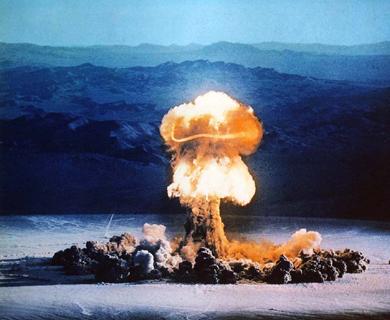
So, here we all are, somewhere on earth, each of us is unique; a product of our evolutionary, cultural, and personal histories. I am convinced that the vast majority of us are trying to do their best regardless of country, party, religion, race, or background. And, before launching into a discussion of anything else, it is worth at least a few moments of reflection on the fact that we have changed our world tremendously even in the space of my personal lifetime. I was born in 1945, the year the atomic bomb first devastated human lives. Since Hiroshima and Nagasaki, seventy two more years have passed and we have not had an atomic war. Of course, there is no guarantee that we won’t ever have one but we have survived decades when we might have wreaked this kind of heartless havoc on each other. And, we haven’t.

Another thing that impresses me is that we regularly communicate and cooperate with people across the world. Countries share ideas, products, services, and people. True enough, war persists. Yet, generally, people today enjoy the lowest death rate by violence at any time in our history. (Of course, if you or a loved one is a casualty, there is little comfort in knowing that “in general” people aren’t killed as much by violence as they used to be). But the general decrease is fairly remarkable when you consider a few vital accompanying changes. First, we have far deadlier weapons than ever before. Don’t get me wrong, if you smash someone’s skull with a large rock they are every bit as “dead” as if you drop a bomb on them or poison them. But, today we can kill a great many people at a very great distance. And whereas the strongest and healthiest and best-trained knights may have had a much better chance of survival than weaker or less able cousins, today it does not matter how well-trained you are or how much you can bench press. You will not survive in close proximity to an all-out attack whether by atomic weapons, chemical weapons, or biological ones. Second, we have far more people on earth than we ever have before. More people have been born since I was born than were born from the beginning of history until my birth. We evolved to be hunter-gatherers. We lived in small tribes. Now, we have 7 billion people on this planet.

IMG_1285

Imagine that there is only one large pie and four people all must satiate their appetites from that one pie. They might discuss things a bit. Maybe one person would claim to be famished while another does not really care that much for pie but would like to taste it. I would not foresee much trouble with four people. Would you?

Now, imagine that instead of four people, you had four hundred people and they only had one pie to stem their hunger. Wouldn’t you expect a much louder level of argument if not actual fighting to break out? Now, imagine that instead of four hundred people, there were 40,000 people and the only thing to eat was that one pie? Of course, there is a good chance for violence. However, it might also be possible that they would realize one pie split 40,000 ways is not much improvement over nothing. Why fight? It might be better to do a lottery and have the winner lay claim to the whole pie. If they liked, they could share with their friends and family. This may not be great, but it is probably still better than having everyone fight for the pie. Or, people might decide that they will have a contest based on what they value most. If they value physical strength more than any other human attribute, they might have a shot put contest or a wrestling match. The winner of the contest would get the whole pie and would be free to wolf it down themselves or share as they see fit.

twinsthreemonthbirthday

Suppose that everyone agreed to a wrestling contest and as the semi-finalists entered the ring, many were shocked at the discrepancy between their apparent physical abilities. Odysseus, let’s call him, sported legs like tree trunks, arms thick with banded muscles. Despite his giant proportions, he walked like a lion displaying a quick, easy grace. By contrast, Cassius, say, appears a bit on the thin side. His gait impresses the crowd as someone who might stumble or fall frequently. How can they both be one match away from champion?

Here’s how. Cassius isn’t using his strength at all. He’s using poison. As in ancient Greece, contestants wear gloves and Cassius, for each of his previous matches, has put a nearly undetectable ointment on the outside of his gloves. He touches his opponent, and they begin to get weary; they nearly fall asleep. But before they are so clearly drugged that foul play would be obvious, Cassius headlocks his disabled and wobbly opponent. The crowd mainly attributes his success to having, despite appearances, a terrifically effective headlock. Why do they do this? They are prone to give Cassius the benefit of the doubt. They do not assume or presume that when someone is successful despite a rather obvious lack of relevant talent, that every one of his previous matches was due to nastiness and breaking the rules.

Now at last, it has become clear. Cassius has succeeded only by some foul means even though the precise nature of that means is not yet clear. The crowd grows restless. Cassius was supposed to embody what the crowd agreed was the most important, best defining characteristic of their hero: physical strength. Instead, Cassius does embody a trait — treachery — a willingness to say one thing and do another; a willingness to break any and all rules in order to win the entire pie for himself to then further dole out as he wishes.

It would be wrong to say that treachery is never a good trait and it would be equally incorrect to say that immense physical strength is always a good thing. For example, what if you appear to agree to be a spy for space aliens but meanwhile tipped off the humans and thus saved humanity from certain annihilation? It seems to me that an ability to be that “treacherous” would be good. On the other side, imagine  two people get extremely frustrated trying to level a door. The weaker one pounds the side of his fist on the door twice to vent their frustration then goes back to leveling the door. The stronger one, however, whams the door with his fist hard enough to break the door and embed his hand into the splintered wood. He becomes trapped there and bleeds out through his shredded brachial artery.

IMG_9333

However…

It needs to be noted that everyone agreed that the they wanted their hero to be the one with the most physical strength, not the one most willing and able to be treacherous. Odysseus played the agreed upon game and stood poised to win. Cassius on the other hand, did not argue with the crowd and try to convince them that treachery trumped strength and therefore they should have a treachery contest. No. Cassius pretended to agree to play the game of “who is stronger than whom” but what he really played was the treachery game all along. In a way, this is not all that surprising because that is the game he is best at. Cassius isn’t so deluded as to think that he is better at actual wrestling than Odysseus.

The thing that I find surprising about this scenario is that people didn’t catch on much sooner that Cassius was not winning his matches through ability but through treachery. As I said, I believe one reason for this is simply that most people are willing to give others the benefit of the doubt. Second, while many might have admired Odysseus, others may have been secretly resentful. They realized that they could never be as agile, as strong, as skilled as Odysseus. On the other hand, when they looked at Cassius, they might think, “Hey. Here’s a regular guy like me. If he can win the pie, it’ll be almost as good as if I get the pie! Anyway, he promised to distribute ten of these pies to everyone if he wins, so maybe, just maybe, I won’t think about other possible ways he could have ousted bigger, stronger, faster opponents.” Of course, once more and more people come to recognize the fundamental treachery of Cassius, the ones who knew the longest become more and more vested not to admit that they knew all along. They keep on cheering for Cassius: “Look at those biceps! No wonder he beat all those others! Killer headlock! Go Cassius!” Others in the crowd look at the biceps of Cassius and what they see is pretty damned ordinary arms; if anything, a bit on the puny side. There is nothing to their eyes, that trumpets: “Look out! Killer headlock!”

IMG_9373

So, here we find a divided crowd. Those people who believe ability is most important believe basically this: “This is insane. Has the rest of the crowd gone blind? How can they speak of the ability of Cassius as being the cause of his success. It’s poison and we will prove it. And people guilty of treachery will be punished.”

The Cassiusists, on the other hand, believe: “…that treachery wins the day and, in fact, that it is a kind of wily intelligence. The human race didn’t get where it is because of strength. We aren’t anywhere near the strongest. But we may well be the wiliest. We set traps for other animals. We learn their habits and hunt them down. We bait hooks for fish. We domesticate other animals for our purpose. All of it hinges on a kind of treachery. As they say, hunting is the only sporting event where only one side knows it’s playing. Anyway, there’s always been treachery in politics, hasn’t there? It’s smart to win any way you can.”

Yes, I agree it is smart to win any way you can. Under the following two conditions: 

  1. What counts as “you” winning is only what happens to the protoplasm inside your skin. This attitude is off by orders of magnitude. As discussed in an earlier blog post, most of you is outside the boundaries of your own skin. Most of what is in the interest of Cassius is not within the boundaries of his own skin but in everyone else in the entire crowd and therefore how his actions impact them, is on the whole, hugely more important than the impact on himself, even from the standpoint of self-interest. 
  2. One note does not make a symphony. The pie splitting contests are not a one-time deal. People play over and over and over again. If you use treachery, you encourage treachery in others. Yes, if everyone else is trusting, you will gain a lot in the very short term. But in the long term, you will be punished right back. And your descendants will live in world that much more ruled by treachery than ability. It’s actually a long-term lose for everyone, including those who are “best” at treachery and that is true regardless of whether you are “found out.”

Meanwhile, of course, what is even more important is what is not happening to the extent it could while people argue about how the pie should be split and who should get to decide. Diseases are not being cured to the extent and rapidity to which they could. People are not getting the education to the extent they could. Better international cooperation and mutual respect is not being accomplished. Better roads are not being built. Crumbling bridges are not being repaired. Scientific discoveries are not expanding our knowledge of the universe as quickly as they could. Affordable healthcare and wellness are not improving in the country.

IMG_9136

What this all amounts to is that we are not creating more pies. We are too busy fighting about who should be awarded the pie we have. This is the other reason why treachery is not a reasonable value for a society to hold dear, let alone primary. Treachery leads to treachery. And, although it is true that those in power can do a lot of dictating, no matter how heavy-handed a reign of terror becomes, it is always subject to overthrow and revolution. And, during such a struggle, we are essentially fighting over who gets how much of the pie and — oh, by the way — killing each other in the process. We are not during tyranny or revolution making all that many pies. That’s why, to me, it is antithetical to the whole idea of any society whatsoever; any form of cooperation; to reward treachery.

There is room for legitimate debate about which qualities are most important for someone who gets to decide who gets how much pie. If that same person also gets to decide how much energy we put into making which additional pies, this adds another set of important qualifications. If splitting pies is the hero’s only job, being fair-minded, open-minded, generous, would seem to be good qualities. If the hero also had a large role in determining how many and what kinds of new pies to create, then, being vastly knowledgeable and intelligent would be vital; being able to communicate across disciplines and interests in order to make difficult tradeoffs would be important. In the best case scenario, this person would take in good ideas from all angles and help produce even better ones on output.

IMG_1245

The only scenario that makes sense for me to have a treacherous leader would be to imagine that we live in a completely treacherous world internationally and in that sense, there is a “fixed pie” model of the world economy. What France gains, I necessarily lose and vice versa. This is, by the way, an insanely incorrect model of the world. It is far more cooperative than competitive. Of course, this is not to say that countries do not sometimes compete for Olympic venues or airline contracts. But this is overwhelmingly accomplished without treachery by staying within agreed upon rules of the game. People don’t always agree with every specific rule; they may try to change them, but for now, everyone’s agreed to play by them.

Yes, under the incorrect scenario of a treacherous world, having a treacherous leader would make some sense, but only provided treacherousness was “maxed out” because otherwise it is still in someone’s best interest not to be treacherous. Of course, the other critical proviso is that we would have to completely trust that the person would be treacherous to other countries but honest and above-board with its own crowd or citizens. A Medieval king or queen may have been able to pull this off. I submit it’s impossible today except for a few dictatorships where news from the outside world is heavily censored. When people have access to the internet and social media, for example, you cannot say one thing to one nation or group or crowd and a completely different thing to a different crowd or nation or reporter. So, it seems completely paradoxical to have a leader who is maximally “treacherous” to be of any long-term value. You couldn’t trust him on a long-term basis and neither could any other nation. Once trust is completely gone, it takes a long time to win it back. As a strategy, treachery seems a really out-dated one. If you really love treachery, I can see why you would want to cut back on education, quash any dissenting views and so on. Without that, you couldn’t get it to work against your own citizens more than once or twice. But if you prevent people from ever finding out, it will take longer. It won’t take forever. But it will take awhile. And meanwhile, treachery metastasizes throughout the land. I like to think the immune system of the crowd is sufficiently strong to treat the tumor successfully or isolating it from the rest of the body. These are the best ways.

(The story above and many cousins like it are compiled now in a book available on Amazon: Tales from an American Childhood: Recollection and Revelation. I recount early experiences and then related them to contemporary issues and challenges in society).

Author Page

Citizen Soldiers, Part Two: What Fathers can Learn from their Kids

16 Friday Jun 2017

Posted by petersironwood in America, family, psychology, sports, Uncategorized

≈ 4 Comments

Tags

baseball, childhood, civility, debate, dialogue, ethics, fairness, rules, school, sports

caution


Growing up in the semi-developed neighborhoods I did, we never had enough kids of the same age to play football, baseball, or even basketball with full teams. One upside of that was that we played modified games according to how many people showed up. For example, we often played basketball one on one or two on two. More rarely, we played three on three. One common variant of baseball we called “Three Dollars.” One person batted by throwing the ball in the air themselves, then quickly positioning that throwing hand onto the bat in order to hit the ball. The other two, three or four players were “fielders” and if they caught a fly ball, they would receive “$1.00.” If they caught it on the first hop, it was $.50 and a deftly caught a grounder netted you  $.25.  In effect, this was just a way to keep score. No money ever actually changed hands. Whoever earned at least three dollars, then got to take the batter’s position. In my experience, everyone would rather be the batter than one of the fielders. Anyway, fielders also lost this symbolic money. If you went for a fly ball and dropped it, you lost a dollar. Similarly, you would lose money for bobbling a one-bouncer or grounder. This game seemed to be pretty well-known throughout America so I’m sure we didn’t invent it.

https://en.wikipedia.org/wiki/Glossary_of_baseball

However, we did try tweaking the rules. For example, we sometimes played without the penalty clause. You gained but never lost “money.” But we decided to go back to the “original” rules. Then, another time, we decided to try it with a different goal, five dollars. After we tried that a few times, we all agreed it took too long to get a turn at bat. So, again, we returned to the original rules. Another slight variant that came up was that not all fly balls were equally difficult. On the one hand, a sharply curving rocket line drive is very difficult to grab! A blooper fly ball is easy; in fact, easier than many grounders. On the other hand, for us at least, a towering fly ball was again quite difficult. So, we experimented with awarding various amounts such as $.75 for an easy blooper but as much as $1.50 for a sharp line drive. It proved that there were too many “boundary cases” to make this a pleasant way to spend an afternoon. None of us really wanted to waste time arguing instead of playing baseball! That was the sort of nonsense that parents engaged in, but kids were smarter than that. On the other hand, each of us instinctively knew that we also had to “stick up for ourselves.” We could not just acquiesce in the face of injustice. Quite naturally, we would tend to see things a bit differently. Let’s say I am in the outfield and have $2.00. Now, you, as the batter, hit a looping fly ball/line drive which curves and sinks. I make a nice catch. Yay me. But now I start trotting up to the plate because $2.00 plus $1.50 for a line drive puts me at $3.50 and it’s my turn to swing that sweet honey colored bat and knock that little ball for a loop. But you say, “Whoa! Hang on there, John. You only have $2.75!” And I say, (and, please note that there is no baseball going on during this exchange) “No way. That was a line drive! That was a hard one too!” (And, I mean that in the sense that it curved and sank and it was actually quite a hard catch to make.) So, then, you say, “What? That wasn’t hard! I caught a lot of line drives that were harder than that one.” (And, what you mean by “hard” is that it was high velocity.) Generally speaking, we resolved these disputes but after 3 or four of them, we made a firm decision to revert to the original rules. In an entire season, under the “normal rules”, there might be one questionable call as to whether a ball was caught at the very end of the first bounce or just after the second bounce began. But the categories of fly ball, one bounce, two or more bounces — these withstood the test of time.

MikeandStatue

Learning by modeling; in this case by modeling something in the real world.

There are some interesting balancing acts inherent in the “design” of these rules. I am positive that this game was not invented by a single individual who used a mathematical algorithm to determine the appropriate “values” for the various fielding plays and what the stopping rule was and whether or not to extract penalties. Kids tried out various things and found out what “worked.” The rules and the consequences were simple enough (and easily reversible enough) for our small group to determine what worked for us. For example, if we make the changeover goal dollar amount too little; e.g., $1.50, the turnover is too fast. Too much time is spent running in to take the bat one minute and then running back out again later to field.  No-one gets to “warm up” in their position enough to play their best. To the batter, if feels like a real win to be able to hit the ball and, in a way control the game. Because, any half way decent batter, if they are hitting from their own toss can easily direct the ball to left, center or right field and can determine whether they are hitting a likely fly ball, one bouncer or grounder. So, for my own selfish reasons, I wanted the game to go as long as possible with me as batter. So, it made sense to hit more often to those players who had low amounts so as to “even up” the game. This also made it more exciting for the fielders because it made the game “closer” for them. An unwritten code however, also kept this from getting out of hand. For instance, if I began by hitting two hard line drives to the left fielder, and they made great catches, it wasn’t really okay to simply ignore them and never hit to them again until everyone had caught up.

IMG_9382

Many potential rule changes never even came up in conversation. For example, no-one ever said, “Hey, let’s count $.98 for a fly ball, $.56 for a one-hopper and $.33 for a grounder.” We wanted to spend the summer (or at least much of it) honing our baseball skills, not our arithmetic skills. And, while we soon discovered that we did not want to spend our time arguing about the boundary between a line drive and a fly ball, we knew without even trying that we definitely didn’t want to spend our time practicing mental arithmetic. And, we further instinctively knew that people would make errors of addition as well as memory. It was pretty easy for the batters and other fielders to keep track of what three people had when left fielder had $2.50, center fielder only had $1.50 and right fielder had $2.75. No way did anyone want to remember current scores such as, $2.29, $2.85 and $2.95. Then, the left fielder misses a grounder and you subtract $.33 to get to $1.96. No. Not happening.

We wanted rules. We never simply had one person bat as long as they felt like it. And, we definitely didn’t want to argue after every single strike of the ball whether it was time for someone else to bat and if so, who that might be. So, the rules were really helpful! They were simple. They were fair. And they minimized arguments. We experimented with rule changes but in every case, decided to go back to the original rules. And, there were many potential rules that we never even discussed because they would be silly, at least for my neighbors and friends.

IMG_2547

In addition to all the formal rules, unwritten and mostly unspoken codes of conduct also impinged upon our play. If someone “had to” bring their much younger sibling along, for example, we didn’t hit a line drive at them as hard as we could. We knew that that wasn’t “fair” even though it was within the rules. Fielders tended to “know” how far each batter could hit a fly ball and positioned themselves accordingly. Someone could have pretended not to be able to hit farther than 100 feet; keep drawing the fielders in and then bang it over their heads so they had no chance of getting a valuable fly ball. But no-one did that. It was understood that you hit the ball as far as you could. Fielders also positioned themselves far enough away from each other so that running into each other’s implicit “territory” proved rare. “Calling for” a ball occurred but not very often. We never had to say, as best I can recall, that you were not allowed to “interfere” with each other’s catches. Implicitly, even though the fielders were competing with each other to take the next turn at bat, the fielders were modeled after a real baseball game and so, in effect, the fielders were all on the “same team” just as they would be in a real outfield or infield.

A number of interesting phenomena occurred around this and similar games but the one I want to focus on now is that we experimented with the rules, we changed the rules, and if we didn’t like the new results or process, we changed the rules back to the way they were. And I find this relevant today because I find that many of my colleagues, classmates and friends seem to want to “return” to a set of conditions that no longer exist. I totally get that and in many ways can relate. It seems doable because many of us have had similar experiences both in sports and in other arenas where we try out a new way of doing things and then decide the old way is better. In my experience, this worked and with very little argument. I don’t recall spending time in my childhood screaming about whether a $5.00 limit or a $3.00 limit was better for the game. We started with a $3.00 limit, tried a $5.00 limit and then we all agreed $3.00 was better. There may well be places where the particular group of kids decided on $2.50 or $5.00 limits. But is there any group of kids who beat each other up over this? Is there even a group of kids who preferred the $2.50 limit who refused to play with the $5.00 kids? I don’t really know, but in my observations of kids whether parental, grandparental; whether familiar or professional; whether at camps I attended or ones where I was a counselor; whether in a psychiatric hospital or a school setting, I have never seen it. That doesn’t mean it doesn’t exist, but it can’t be very common.

In our small group of neighborhood kids, we were able to “roll back” rules pretty easily and smoothly. It seems as though we should be able to do this on a larger scale, but I just don’t think that is possible. It may or may not be desirable for various specific instances, but I don’t think for many situations, it is even possible; or, at the very least, the costs are far higher than we would be willing to pay.

Consider some examples from nutrition. When I was growing up, my parents and grandparents inculcated in me that I was supposed to eat “good” meals which included meat or fish every single day. At some point during my adult life, there came to be concern about cholesterol in the diet. The theory was that cholesterol contributed to heart disease and that you should avoid eating foods like beef, eggs, and shrimp which contained a relatively large amount of cholesterol. Now, we believe that refined sugar and artificial sweeteners are both far worse sources of calories than beef, eggs and shrimp. In fact, most of the cholesterol in your blood is made by you and only a little comes from your diet. But eating a lot of sugar causes you to store rather than burn body fat and also makes your cells eventually “immune” to the regulatory effects of insulin.

IMG_3071 - Version 2

Now, people have always had differing tastes when it comes to food. Some people have completely ignored every bit of nutritional advice that’s ever been put out there. They eat what they feel like eating. Others are willing to try any new fad that comes out. Most people are somewhere in between. But because there have always been people eating beef, eggs, and shrimp, repopulating these into my diet or your diet is pretty easy. It is one case where we really can roll back guidelines.

But imagine instead of having a change in nutritional guidelines, we all subscribed to a religion which made eating any birds or bird products strictly taboo for the last thousand years. And, let’s imagine that was true world-wide. Now, a revelation comes that actually, birds are quite good to eat and so are eggs. Now what? There are no chicken farms. There are no boxes made to carry eggs. There are no companies whose business is to provide eggs. There are no egg inspectors. There are no regulations about breeding chickens or gathering eggs. Indeed, it is a lost art. There are no recipes that use eggs or chicken. People don’t realize that some people are quite allergic to eggs. People don’t realize that eggs “spoil” if they are kept warm too long. The point is, that unlike my little coterie of kids deciding to go back to $3.00 instead of $5.00 (which was easy), the adjustment of adding chicken and eggs back into our diets will be a big deal. There will be many mistakes along the way. A few people will even die of food poisoning. Still, my guess is that it would prove possible. The benefits would outweigh the costs. Even so, there would be a lot of disruption. People who sell soy products, for instance, might well claim that the religious revelation was bogus and that eggs and chicken should still be banned. Even people who are persuaded that it is not a sin to eat eggs might still think they are pretty gross because they have been brought up that way. Family stories have been passed down over generations. Perhaps Aunt Sally once tried an egg when she was little and that’s why she grew up cross-eyed. (This isn’t the real reason, but it might be the reason in a family story).

The point is that we can “change” this way of doing things, but it will be much more disruptive than changing the rules of our ersatz baseball game. Other changes are even more difficult to pull off. Partly this is because in a complex interconnected society like ours, any change away from the status quo will hit some people harder than others. Just like our “soy producer” in the egg example, whoever is “hurt” by a reversion to something older will not like it and will struggle socially, politically, and legally to keep things they way they are now. They will not want to go back to how things were (or, for that matter, into a future which is different either).
IMG_3220

Most of our ways of doing things are now highly interconnected and global. For example, the computer I am writing on at this moment is far, far, more powerful than all the computing power worldwide that existed when I was ten. While I know something about how to use this computer, I do not know the details of how the hardware works, the operating system, the application that I am using, and so on. This computer was produced and delivered by means of an extremely complex global network and supply chain. The materials came from somewhere on the planet and probably no-one knows exactly where every part of the raw material even came from. The talent that conceived of the computer, designed it and built it was again from all over the world. Apple does business in at least 125 countries throughout the world. Other major companies are similar. The situation is nothing like having 125 separate companies in 125 different countries. These companies are all linked by reporting relationships, training programs, supply chains, communication links, personnel exchanges, and so on. If, for whatever reason, Apple decided to become 125 different independent companies — one for each country, they would, I believe, fail pretty quickly. It would be nearly as difficult (and as sensible) as if you decided that you would no longer be an integrated human person but instead your arms, your legs, your head and your trunk would now operate as six separate entities.

We are now vastly interconnected. Certainly, WWI and WWII were deadly global conflicts. Not only were these wars costly in money and human life, but they were horrendously disruptive as well. Families were broken apart, infrastructure was destroyed, supply chains were interrupted. New hatreds flared. But even as lethal and costly as these wars were, WWIII would be much worse even if no atomic, biological or chemical weapons were used. Why? Because nearly every country in the world is now tightly interconnected with every other country. Maybe that was a great idea. Maybe it was a horrible idea. Maybe it’s a good idea in general, but we should have been much more thoughtful and deliberate about the details of how we inter-relate. Regardless of how wise or unwise globalization has been, we cannot simply “change the rules” back to the way they were 100 years ago.

thumb_img_8068_1024

If we attempt to destroy globalization, and have each country “fend for itself,” it will be incredibly expensive both in dollars and in human lives lost. This genie, however much you hate it or love it, will not squeeze back into that bottle. If we attempt to go back 100 years, we will actually go back about 2000 years. Again, consider this computer I am using. I worked in the computing field for 50 years. And, I would be completely helpless to try to make anything like this computer from scratch. But the computer is far from the only example. Could I fix my car? Some things I could but the engine diagnostics now require a computer hook up. Could I fix my TV? Not much. My dad was an electrical engineer. The most common cause of problems with a TV in my youth was that a vacuum tube stopped operating properly. When the TV was “on the blink” we would take one or more tubes out of the TV and take them to a testing machine at the grocery, drug store, or hardware store and see which tube needed to be replaced and then buy that replacement, go back home, put in the new tube and *bingo* the TV worked again! Can I do that today? No. Can you? I doubt it. But it isn’t simply electronics and automotive industries that are global and complex. It is nearly ever aspect of life: financial, medical, informational, entertainment, sports, and so on. What about your local softball team? You know all those people personally just as I knew the folks I played $3.00 with. But where are you spikes made? How about your softballs? Bats? Mitts? The last bat I bought — a beautiful, heavy aluminum bat — it came sheathed in plastic. I think that was unneeded pollution, but there it was. Where was that plastic made? Where did the bat come from? Where was the metal mined? Where was it fashioned?

Personally, on the whole, I think the highly interconnected world we live in is more fun and interesting. In a typical week, I literally eat food inspired by Mexican, Japanese, Indian, and Thai recipes. In many cases, it is prepared by people originally from those countries. Books, plants for gardens, music, movies, games — these things are made worldwide and distributed worldwide. To me, it makes life much more interesting. If you don’t like globalization as much as I do, you can certainly stick to American authors and “traditional” American dishes (although almost all of them came originally from another country), American composers, etc. You’re missing out, but it’s your call. But no matter how you try, you cannot “disentangle” yourself completely from the larger world.

The inter-connectedness often wreaks havoc as well. Little bits of plastic micro-trash that come from the United States pollute oceans everywhere. Air pollution that originates in Asia comes across the Pacific to affect people in North America. If the Japanese kill too many whales, it affects the ecosystem world-wide. Pollutants that come from Belgium may kill bees in Argentina. A plague that begins in Thailand may kill people in New Jersey or Sweden. We cannot wish this interconnectedness away. Today’s “Citizen Soldier” needs to be smart as well as brave and loyal. You are not standing in a long line dressed in a red uniform facing a long line of soldiers dressed in blue (who are your enemy). You are going about your own business. But you must understand that how you treat people from every other country whether you are visiting a country or they are visiting your country — how you treat them will impact people globally. If you treat people badly it will impact you and your neighbors badly in the long run. We really have to think globally even while we act locally. I think it’s the “right” thing to do. It’s a little hard to imagine a serious world religion or world philosophy that justifies trying to get as much as possible for you or your tight-knit group of friends at everyone else’s expense. But even if you somehow convince yourself that it’s morally “okay” to be a complete isolationist, reality will not let you do it.

You can take your turn at bat. But you also have to go out in the field and take that turn. Kids who take their first turn at bat and then “go home” as soon as they have to go out in the field do not get called upon to play a second or third time. You might most enjoy being a bazooka shooter. But you are going to have to spend a fair amount of your time being “Claude the Radioman” (See earlier blog post) because with seven billion people on the planet, more coordination than ever is needed. It won’t work to have everyone be a “hunter-gatherer” any more. It won’t work for everyone to “do their own thing.” It won’t work to roll back the rules of the last 100 years and have every country do their own thing either. We cannot smoothly “undo” history. We cannot jam the genie of globalization back into the bottle. I have a much better chance of fitting into the pants of my first wedding suit (waist 29”).

IMG_6777

I mentioned that in my neighborhood, we typically did not have full teams. One day, however, while we were playing American football (five on five) in a vacant field two blocks down from my house, an older kid approached us explaining  that he wanted “his team” to play “our team.” We didn’t actually have a “team” at all. We would get together and chose captains who would then take turns picking kids for their (very temporary) “team” for that particular game. We had a football. That was pretty much the extent of our “equipment” though someone did occasionally bring a kicking tee. The vacant lot did not have any goal posts so there were no field goals. We generally played a variant of American football, wherein the defenders were not allowed to cross the line of scrimmage and tackle the quarterback until they had counted “One Chimpanzee, Two Chimpanzee, Three Chimpanzee, Four Chimpanzee, Five Chimpanzee” — and then, they could rush in and tackle the quarterback. In the five on five variant, the center was generally a blocker while the other three ran down the field and tried to “get open” so that the quarterback could hit them with a pass. Occasionally, a quarterback would try a run. If they could “fake” a pass and get the rusher (usually only one person) to jump up off the ground, the quarterback could generally sprint past them before they got back on the ground and gain a reasonable number of yards before the other defenders realized it was a run. (In case you aren’t familiar with American football, once the quarterback goes beyond the point where the ball was hiked from, they are no longer allowed to throw a forward pass).

http://www.understanding-american-football.com/football-rules.html

In any case, although five on five football was fun, it also seemed to us that it would be fun to play eleven on eleven like “real” American football. So, we agreed to come back the next day after school and face “his team.” Weather cooperated and we showed up the next day after school and so did the other team. In uniform. We didn’t have uniforms. But not only were they all wearing the same colors. These kids had helmets, shoulder pads, thigh pads, elbow pads and shin pads!  They were armored!  But we weren’t! Every time their center hiked the ball to the quarterback, a bunch of us would try to rush in to get the quarterback. No “one-chimpanzee”, “two-chimpanzee” business now. We were playing real football. And getting real bruises.

I can tell you from personal experience, that it hurt an unnatural amount to run into these other guys but we held our ground any way. It did seem unfair to us but they never wavered or offered to take off their pads or helmets. The first few times were not so bad, but once your body is already bruised, then it does hurt to run into someone with full body armor. I suppose it sometimes seemed equally unfair to Medieval peasants without armor who were attacked by armored knights. Hardly a “fair fight” as we would say. Nor does it seem a very “fair fight” for a little kid walking on some distant jungle path to suddenly have their leg blown off from a land mine. And, I suppose some would judge it an unfair fight for a village of unarmed farmers to have a rocket or drone smash their village to pieces along with many of the men, women, children and livestock. Just guessing, but that’s my sense of it.

This older kid who arranged our game did not actually play, as I recall, but served not only as coach for his team but also as the one and only referee for the game. That didn’t seem particularly fair either, but he was pretty impartial. As it began to get dark though and we were still tied, he did make something of an unfair call, at least in my opinion. Anyway, I think they won by only one touchdown. We did pretty well against these armored kids from another part of town. But we were a sore lot the next day. None of us suffered any major injury such as a broken bone though we were all pretty black and blue from the battering. None of us were very eager to have a rematch though. We talked briefly about the possibility of getting our own uniforms but we were way short of that financially. Even if we had actually collected all the pretend money we talked about in “$3.00” we couldn’t afford that kind of equipment.

Does it matter whether a game — or a war — is a “fair” fight? Or, does it only matter who “wins”? In sports, we generally have a lot of rules and regulations to insure fair play. We would consider it a gross misconduct of justice to have one NFL team denied equipment! Some readers may be old enough to recall the controversy over using fiberglass poles in the Olympics. See the link below for a fascinating story regarding the “fairness” of Olympic pole vaulting.

http://bleacherreport.com/articles/2335693-munich-olympics-1972-the-other-controversy-you-may-have-forgotten

I think it may matter more than many think as to whether a fight is a fair one. A fair loss leads most people to acceptance and adaptation; in many cases, it can serve as motivation to do better . But if they think the fight is unfair, resentment will often linger and eventually result in another fight. Chances are that this time, the party who feels they had been treated unfairly will no longer care about having a “fair fight” and do anything they can to win. Anything. So, it serves us well to think long and hard about winning an unfair fight. What will happen next?  It seems to me that when we win an unfair fight, there are many negative consequences and they almost always outweigh the benefits of the win.

IMG_9723

First of all, whoever loses the unfair fight will resent you. Second, people not involved at all in the unfair fight and who don’t even care about the outcome, will care about the process and the vast majority will dislike whoever behaves unfairly. Third, it makes it more likely that other people will be unfair in their own transactions.

In the days of childhood sports, we sometimes disagreed about what was fair. But we never disagreed about whether it was okay not to even try to be fair. We all assumed we were supposed to be “fair.” You must understand, this was unsupervised child’s play. We did not play baseball with parents around coaching, umping, and spectating. Of course, we had disagreements and sometimes we lost our tempers. On rare occasions, someone might walk off in a huff. But, there really weren’t that many huffs to go around back then, so it was rare. And, whoever did walk off in a huff was back the next day ready to play $3.00 again. Their huff dissolved in the cool night breezes. When they went to their closet the next day, no wearable huff remained. There may have been a few tattered huff-shreds in the bottom of the closet, but not even enough to wear as a bathing suit, let alone a three piece suit of huff complete with huff vest, huff pants, and a huff coat. I don’t think any of us even owned a huff tie.

I think part of the reason was that all of our disagreements and arguments were face to face. We never sent e-mail. And, we certainly never hired a lawyer to “represent” us. For some reason, when one person “represents” another, they feel it is more “okay” to do unfair things than the person themselves would feel comfortable with. We kids simply discovered that it was a lot more fun to play baseball, in any of the variants, wearing a shirt, sneakers and jeans. A huff suit was simply too confining and too easily torn. Kids all seem to know this instinctively, but as they grow up, they may begin to fill their closet with huffs and wear them on many occasions.

IMG_9452

Imagine a world in which adults all gave their huff suits to the Goodwill. In this world, they talked, solved problems, had some fun, and when they disagreed, tried to do what was fair for everyone. It sounds kind of crazy, I know. But we live in a world of miracles, don’t we? And, that world is embedded in a universe of miracles. Very slowly we are coming to understand more of it. Our understanding of this amazing universe grows and some of that understanding even sheds light on how our bodies and brains work as well as the fundamental characteristics of the universe. Maybe somewhere in this vast universe of miracles, there is a way to experiment with the rules of the game until we find a way that works for everyone who wants to play. Perhaps we could pay $.25 when someone can restate what you said to your satisfaction. If someone can think of another example of the same principle, they get $.50. And, if someone has a brand new sharable insight on the topic, they get $1.00. First one to $3.00 gets to direct the dialogue for awhile. Come dressed for serious play. No huff allowed.


(The story above and many cousins like it are compiled now in a book available on Amazon: Tales from an American Childhood: Recollection and Revelation. I recount early experiences and then related them to contemporary issues and challenges in society).

Author Page on Amazon

City Mouse and Country Mouse

04 Saturday Mar 2017

Posted by petersironwood in America, psychology, Uncategorized

≈ 5 Comments

Tags

architecture, culture, ethics, politics, psychology

thumb_img_8068_1024

In our childhood, many of us heard the fable of the city mouse and country mouse. Briefly, the city mouse invites his cousin, country mouse, to visit him in the city. At first, the country mouse is quite impressed with the array of food available in the city mouse’s home. Then, the house cat comes with sharp claws and long pointed teeth and nearly rips them both apart. In the end, the country mouse scampers back and shouts back to his city cousin something to the effect that he’s happy to have his bread crumbs in peace rather than risking life and limb in the city. The exact words, I don’t recall, but they have probably suffered in the translation from Aesop’s ancient Greek to modern English and even more severely in the translation from mousespeak to human speech. Most likely, the original sounded something like this: “Squeak. Squeak. Squeak.”

Aesop Fable of the Mice

No doubt there are advantages and disadvantages for a mouse to live in the city or the country. Both places have sources of food and both have predators. But what about human beings? Here too, there are advantages and disadvantages of living in a large city versus living in the country or a small town. While human beings undoubtedly have many behaviors that are influenced by “instinct”, people are also capable of learning. Moreover, because we humans can talk and write and are fundamentally social beings, not only do urban and rural environments result in different kinds of individual skills, in a fairly short time, they also result in different cultures. These differences are not arbitrary but are adaptations to characteristics of the two environments.

In cities (and especially coastal cities), people typically come in contact with a huge variety of people. Many metropolitan areas feature different cuisines, attractions, races, religions, sexual preferences, and so on. Take the matter of cuisine. It is easy in New York City, San Francisco, Atlanta, Boston, Washington DC, Seattle, Minneapolis, Los Angeles, or San Diego to find restaurants that serve excellent Italian, French, Japanese, Chinese, Mexican, Vegetarian, Vegan, Ethiopian, Jewish or Indian food. I happen to love them all! But if someone hates any of these options, it is also easy to avoid that option. You don’t care for Indian food? No problem. Don’t go. Suppose however, you are with a group of friends and everyone else wants to go for sushi which you happen to hate. The vast majority of urban Japanese restaurants in the USA offer other options that are “close to” traditional American cuisine. So, you can go to a Japanese restaurant with your friends and order steak teriyaki while they all eat raw fish.

But let’s just suppose that for whatever reason, you are so appalled by raw fish that you get sick watching someone else eating it. Well, you simply don’t watch. Now, the thing about living in a big city is that you don’t have to create this solution on your own. That’s what everyone does. If they see something they don’t like, they look away. They learn not to dwell on it. It’s very crowded in a city. If you walk around or take public transportation being “offended” or “put off” by anyone who speaks differently, dresses differently, eats differently, worships differently, looks different, etc. you are going to quickly become completely stressed out and become one completely unhappy camper. People in large cities learn to be polite and focus their energy on the places and people that give them joy. It takes time to find friends but eventually you find people who share fundamental interests and values. They might be next door, but more likely, they are are a subway ride or long walk away. There are literally more than a million people in any large city that you never get to know. Because there are so many choices, plenty of opportunities arise to do what you like and many people who will join you. You might love tennis, roller skating, and art museums. You might never step foot in the science museum or the public library or the parks. It’s all fine. The culture of the city is tolerance for everyone. Yet, people find those they relate to from a huge pool. If you come from, say, China, and you want to stick with other Chinese people, you can easily do that. You can survive in New York City or San Francisco without having to experience Mexican food or even without learning much English. On the other hand, if you want to become assimilated into more “mainstream” American culture and eat pizza every day and listen to jazz and dress like an American Indian — hey, you’re welcome to do that too. Because everyone passes by people that are so different every day, almost everyone learns tolerance. In essence, you see, there is not “one” New York City or Los Angeles, there are thousands! People essentially live in their own version of these cities and become close only with a small group of like-minded people. Of course, your “tennis friends” might be different from your “roller skating friends” which might be a slightly different group than your “art museum friends.” But even putting all your friends together, the people you know are only 1/10,000 or 1/100,000 of the people in the city.

thumb_img_8442_1024

There is a down side. You may never get to know your next door neighbors. You and they may simply have very different tastes and interests. Besides that, there is a lot of turnover in a city. Often, there doesn’t seem to be much point in becoming friends simply because you live next door partly because they (or you) are quite likely to move away in a month. There is a worse down side as well. At the extreme, the distance that people create mentally to accommodate the extremely close physical proximity and the culture of leaving others alone also makes it possible for someone to be stabbed on the street without anyone helping. This phenomenon has been studied and called “bystander behavior.” People are actually much more likely to help if they are the only witness than if they are one of 100. Each of the 100 looks around and sees that none of the other 99 are doing anything and so conclude, all evidence to the contrary, that nothing much is happening or else the other 99 people would be helping. In any case, the “culture” that arises in cities is typically quite tolerant of differences, somewhat distant from the vast majority of your fellow citizens but certainly allows for close friendships based on any combination of a hundred different factors. Because large cities develop a culture of tolerance for other types of people, that fact becomes known and attracts still more diversity which in turn encourages more tolerance and diversity.

There is another important aspect of living in a large city. It is crowded and complex. You constantly have to “trust” people you don’t know who drive the taxis, deliver the food, come to fix your cable, police the streets and so on. These are typically not people you know. In fact, for the most part, you won’t even see them again. But it is impractical not to trust all these strangers. Most of the time, the trust works out though on rare occasions, it backfires.

thumb_img_8311_1024

The experience of living in a small rural town is completely different. There are not 400 different restaurants to choose from. There might be three. Possibly one of the three is ethnic, but it is far less likely. A Korean restaurant in New York City can be quite profitable if only .01% of the NYC population goes there regularly. That won’t work in Woburn MA or Bend OR though, let alone in a town of 5000. A small town in America may well have a baseball diamond and a public library. But they are unlikely to have a holography museum or a laser tag facility. The sheer small number of people living in a small town means, in essence, that the citizens must agree on what types of restaurants are available, what recreational facilities are available, what clothing stores are in town and so on. In addition, everyone in town is likely to run into everyone else again and again. Rather than learning to avoid and look away and ignore things you don’t personally care for, people in small towns instead lean in. They want to know what exactly is going on with everyone else in town. Everyone soon knows who the town drunk is and who is having an affair with whom. People in small towns do not typically think, “It’s none of my business” but that’s exactly what they think in large cities.

For these reasons, people in small towns are less likely to learn the skill of looking away. If they personally hate sushi and end up visiting a relative in a big city and then end up in a Japanese restaurant, they are both fascinated and disgusted by watching their cousin eat sushi. They could theoretically just look away, but that is not a very well learned skill for most. For these reasons, the culture of the small town also evolves to be different. People who thrive on diversity and believe strongly in tolerance feel as though they don’t belong and they also feel deprived of interesting possibilities so most end up moving away. Of course, that makes the town even more homogeneous. The small town ends up being much more “tight knit” than a random group of 5000 people in a large city. It seems much less likely people would fail to help someone being stabbed on the street (though I haven’t actually tried that experiment).

img_5254_1024

In a small town, since people know almost everyone they interact with, they don’t really have to trust strangers all that much. If someone new delivers the mail, the small town person is likely to ask whether they just moved in town, where they live and so on. This would be considered quite rude and even weird in a big city. People in a small town probe to know people in their small town. They tune in not out. They are much more likely to choose friends partly on the basis of location rather than vocation. Because of this cluster of factors, people in one small town are more likely to stay in that small town. It is probably much more “disruptive” to move from Woburn MA to Bend OR than to move from New York City to Los Angeles. Of course, either move means you will have to learn where things are, get a new driver’s license, make new friends etc., but the “culture” of cities is becoming similar all across America and indeed, all across the world. Two small towns can have quite different cultures.

People from large cities are likely to feel quite different on a number of issues compared with people from small towns. People in large cities have been trained and acculturated to simply look away and ignore things and people that they don’t like and to focus on what they do like. Conversely, people in small towns have learned to depend on everyone and so want everyone to agree on a much larger range of issues. There are enough resources in a large city to have scores of museums and hundreds of restaurants and scores of clothing stores. People don’t need to agree on taste. But in a small town, that’s not true. There is much greater pressure to agree on what the “right” museum is for the town, what the “right” kind of food is to serve at the handful of restaurants and what the “right” kind of clothing might be.

People in a small town are likely to know the police that they come in contact with. If a police officer in a small town arrests someone or even shoots them, people in a small town are much more likely to know both the police officer and the person arrested. Provided the police officer is known as a generally fair-minded person, the people in the small town are much more likely to be sympathetic. In addition, they may well known that the person arrested (or even shot) is and has been a “bad guy” the whole time he’s been in town.

In a large city, by contrast, people who read or hear about someone making an arrest or very unlikely to know personally either the policeman or the suspect. They probably still have a presumption that the police probably acted correctly. However, their reactions are much more likely to vary from person to person that what you would find in a small town.

Needless to say, cities do differ from each other in terms of culture and so do small towns. For example, Murray Hill, New Jersey is not a huge city (population around 3500). However, many of the people there were from Bell Labs, a large famous research institute long part of AT&T but now part of Nokia. That particular small area includes residents from many countries, liberal and very well funded schools, and so on. Small towns that grow up around trade centers, farming communities, research centers and universities, or coal mining undoubtedly have very different typical “cultures.” Similarly, a large city like New York that has people from all over the world is quite different than one of the Chinese cities around large-scale manufacturing facilities (e.g., Guangzhou or Shenzhen. Nonetheless, as a general rule, living in a small town versus a large city tends to produce different skill sets and a different outlook and culture.

img_2795

What can small town cultures and big city cultures learn from each other? How can these cultures tolerate each other? Is there a way to have the advantages of both? If humanity keeps exponentially increasing population, will there even be any “small towns” left in 100 or 500 years? To me, city culture and small town/rural culture mirror many of the distinctions made by Jane Jacobs in “Systems of Survival.” I recommend this as an interesting (and short) read.

Systems of Survival


(The story above and many cousins like it are compiled now in a book available on Amazon: Tales from an American Childhood: Recollection and Revelation. I recount early experiences and then related them to contemporary issues and challenges in society).

author page on Amazon

The Crabs are Biting

17 Tuesday Jan 2017

Posted by petersironwood in psychology, Uncategorized

≈ 2 Comments

Tags

ethics, fishing, politics, story

IMG_0049

My dad led the design team for the electrical system of the original Goodyear Blimp. One summer, between the third and fourth grade, his work on airships called him away from Akron and we spent the summer in Tom’s River, New Jersey. After returning from Portugal, we had stuck close to Akron so was looking forward to a trip that took us hundreds of miles to the sea-side.  I could smell the ocean when we still an hour away from Tom’s River. Our small apartment in Tom’s River sat a mere two blocks from the public library, a library that contained the “Powers of Ten” book which takes the reader on a journey from the innermost workings of the atomic nucleus to the outermost regions of the galaxy.


While my dad worked at Lakehurst, my mom and I spent part of the day watching the “McCarthy Hearings.” I was too young to understand it thoroughly, but I could quickly discern that McCarthy was a liar. I had a harder time telling whether he was genuinely a very hating hateful person or whether he just appeared to be full of hate in order to popular with other hating people. Hating others has never come very naturally to me. I always felt connected to my family, my friends, other people and even other forms of life. So, hating, to me, has always consisted of nine parts self-loathing plus one part prideful ignorance. Don’t get the idea that I am a saint. I’m far from it and anger comes quite easily to me when I’m frustrated. My parents claimed that, as a toddler, frustration would propel me to run across the floor and smack my head down on the floor. By the time I was nine, I had developed less self-destructive ways to express anger. But whether McCarthy really was a tiny person filled with hate or simply a person who tried to impress those who really were haters in order to win their support, I couldn’t tell. I have no idea how “large” McCarthy was physically. I call him “tiny” because it seems essential in order to hate that you must pull in your sense of wonder and appreciation to the boundaries of your own physical skin. When people hate, something has happened to them and it shouldn’t happen to them because, after all, they are the center of the universe. Apparently, haters have never seen the book, Powers of Ten.

Probably so they could have some adult time, my parents also enrolled me in summer church school. I became friends with one of the kids in church school and he invited me onto his Cabin Cruiser. My parents met with his parents before accepting this and they ended up being invited too. A bright sunny day and off we sped onto the sparkling ocean! At some point, the kids, under the supervision of my new friend’s dad, went crab fishing. Although I had never gone crab fishing before, I understood the basic concept from several fishing trips with my Uncle Karl. Karl lived in a fancified log cabin on Comet Lake near Akron. Fishing consisted of going out into the lake on a row boat, putting a live worm onto a hook, putting a fishing pole over the side of the boat and then sitting quiet and still for hours on end. I think I may have caught one small fish in my three trips. It seemed frankly like a huge amount of boredom for a very small reward. So, when crab fishing was announced as the next activity on the Cabin Cruiser, I tried to steel myself for hours of boredom. I didn’t want to end up running across the deck and smacking my head in frustration.

The baiting was easier and instead of poles, we put out some lines with multiple baits. Over the side of the boat they went. That wasn’t so bad as pithing the worms. Now would come the endless hours of waiting for a nibble. Two or three minutes later, for no reason I could discern, we started pulling up the lines. They were filled with crabs! While the trout, bass, perch, and bluegill in Comet Lake were shy and crafty little critters who would try stealthily to nibble away the worm without getting barbed on the hook, the crabs of the Atlantic seemed to have no greater goal in life than to clamber into our boat as fast as possible. This fishing sped along more in synch with my natural rhythm. No need for head-banging here! Line after line went over the side and minutes later, back each one would come with a meal’s worth of crabs. Now this fishing was more like it!

After sunset scattered scarlet shards across the ocean, the kids went down below to sleep in the bunks. There were portholes in the bow and we could see through those portholes into an ever-darkening starry sky. We could hear the murmuring of the alcohol-plied adults above discussing whatever it was that adults discussed back then; perhaps the McCarthy Hearings; perhaps something about a popular movie or TV show. We kids below however had more serious things to discuss. Mainly, we discussed the fact that we could see stars that were (or at least had been) far, far away. We speculated whether, at this very moment, there might be a planet circling one of those distant stars. It seemed that if there were planets, they too might have oceans and Cabin Cruisers and kids. And those kids would also be looking up into the night sky seeing a faraway star — our sun! And, they might well be thinking, those alien kids, of how there might be a planet circling Sol and how on that planet could be kids looking up at the night sky at them…or at least at their sun. Of course, we might be years or even thousands of years “out of synch” which only added to the mystery.

These possible aliens might be like us in every way. More likely, they would be like us in some ways and unlike us in some ways. They might be wondering whether we would be friendly to them just as we wondered whether they would be friendly to us. And, probably, we concluded, a lot would depend on the particular alien you encountered. For some reason, that particular small group of kids didn’t talk much about “categories” of people. It seemed to me, and to my new-found friends, that everyone was quite different. We had learned in school that every snowflake was different. If something as simple as a snowflake is unique, how much more true that must be of people. And, it seemed completely and obviously true. My Aunt Emma and my Aunt Mary were completely different from each other as each was from my Grandmother Ada. Of course, people were all different. As I listened to the voice of the other kids, I could see that person’s face in my mind’s eye. Yes, we all had one nose, one mouth, and two eyes, but we were all really different. We sounded different. We looked different. We moved differently. We were from different states hundreds of miles apart. But we all were interested in whether there were aliens and what they would be like. Though we were somewhat mindful of the potential danger, we were much more excited about learning about them and from them than protecting ourselves from them. And we all understood that all the thoughts and feelings we were having about them were quite possibly mirrored by their thoughts and feelings about us even if separated by lightyears of space-time and by biological lineages.

None of our group of nine-year olds were such “scaredy cats” that we were terrified of the aliens and therefore filled with hate for them. It never occurred to any of us. I don’t think that’s just because we were all going to “church school.” It’s just more natural to assume that the kids on the faraway planet would be wondering about us in much the same way as we wondered about them regardless of the number of eyes and legs they might have. I think that in order for us to have hated or feared the aliens, an adult would have to come into our cramped quarters to tell us that all the aliens were the same; that they were all out to get us; that they should all be hated and destroyed. Maybe McCarthy would be good for that job. It’s honestly hard to believe any of us would have taken him seriously. But, I suppose, if we heard that hate day in and day out, complete with fake news features filled with fake facts and fake figures, we might eventually find ourselves in a state of hate and fear.

Of course, no such adult came down below decks to sell us that particular bogus bill of bads. Why would someone like McCarthy decide to make their fame and fortune by filling young minds and hearts with hate and fear? I still don’t know whether he was really so filled with hate and fear himself that he couldn’t help it. I did, years later, read a biography of Joe McCarthy and something his wife said made me very much think it was all fake and he didn’t actually believe any of it. That just makes it all the more disturbing. A hate-monger such as McCarthy, who does it all as an act to gain power, does not just hate communism and communists. He also hates the people he is hoodwinking. He totally disrespects them through his dishonesty and dissembling. Eventually, Joe McCarthy soon found himself completely discredited and disgraced but not before wantonly laying waste to the lives of many innocent individuals.

Of course, in the right circumstances, almost everyone lies on occasion. What most people do when they are caught in a lie is apologize and try to explain why they lied. What a McCarthy does, however, is quite different. Instead of apologizing, they simply shout the lie more and more loudly. On other occasions, they will deny ever having told the lie in the first place. The screaming gets louder and louder. When no-one believes their lies, they are left with the only recourse left to them: violence. War, incarceration, murder — all of these seem a nothing compared with the ego bruising hurt of admitting that they had been lying. In the meantime, Joe McCarthy did provide a summer’s worth of entertainment. It’s too bad it came with ruining innocent lives.

I wonder whether those far planets we hypothesized as revolving around those far suns in our night sky hold their own McCarthy-like beings. It seems hard to believe an entire species would survive if they were all McCarthy-like. Imagine a river full of piranha that attacked each other! The species wouldn’t long survive. Is there some utility to having a small proportion of the population of an otherwise intelligent species be McCarthy-like? I don’t really think so. At least I haven’t been able to come up with a scenario yet in which actual witch hunts are useful to the group as a whole.

A partly related phenomenon might be called “Cassandra-like” in which someone thinks they see a danger which no-one else does. But such a person is useful to the society as a whole only to the extent that they are willing to share their concern and work together with others to determine whether the danger is real, how to assess it, how to protect against it etc. On the other hand, if the person simply insists that there is a danger regardless of whether others see and just tries to prove it by screaming more loudly, that is not very helpful. If the “danger” is premised on something which is absurd on its face (e.g., because you were friends with a communist, that meant you must be communist as well; or, because some communists wanted to overthrow the US government, if you were a communist, that meant you were a traitor as well) then, it can’t lead to very effective action. A McCarthy-like person is completely unhelpful in locating and protecting against actual danger because their cognition is too damaged to be helpful in itself and their communication style is so warped that it actively interferes with the attempts of others to do actual problem solving.

In the years after the summer of McCarthyism, I worked with kids in many capacities. For instance, I worked as a child care worker and camp counselor. I can tell you that kids often engage in conversations about deep topics. They are concerned about their world and other worlds that might be. Kids care passionately to learn about the world. But despite their passion, they tend to be pretty careful about discriminating the bait from the hook. In my experience, they are more like the Comet Lake trout, perch, bass, and bluegill than the crabs off the New Jersey coast. However, if people of any age are desperate enough; if they are told the big lie often enough, many will stop acting like discerning vertebrate fish and just latch on to the first shiny thing that appears before them. Perhaps that is why the McCarthy’s of the world, if they had their way, would outlaw public libraries, gut public education, and discredit the independent press. They wouldn’t want the fish to be able to discriminate the bait from the hook. They are much too impatient for trout fishing. Throw a line over the side of the boat and make sure that people are so desperate that they clamp right onto the empty line. Who knows what exactly goes on in the mind of a crab? Perhaps they clamp on in hate. Perhaps they latch on in fear. Perhaps it is a little of both. But what we do know is that whatever motivates the crab to grab hold of that shiny line, it is always the crab itself, not its enemies, who ends up in the belly of the beast. One can still hope that this will be a good year.

—————

@John Thomas, 1/16/17

(The story above and many cousins like it are compiled now in a book available on Amazon: Tales from an American Childhood: Recollection and Revelation. I recount early experiences and then related them to contemporary issues and challenges in society.

https://www.amazon.com/author/truthtable 

McCarthy in Wikipedia

Trumpism is a New Religion

09 Monday Jan 2017

Posted by petersironwood in apocalypse, health, Uncategorized

≈ 76 Comments

Tags

ethics, learning, politics, religion, Trump

(This blog post is a temporary departure from Schooled Haze and contemplations of AI/HCI).

finalpanel1

Trumpism is less a political offshoot of Republicanism than it is a new religion, at least for a substantial number of Trump supporters. I keep seeing posts from various liberal friends recounting nasty infantile things that Trump has done or said as though as to say, “Well, now! That is so completely outrageous, stupid, mean-spirited, vain, or evil that surely you Trump voters will now see how you were wrong.” No. That is never going to happen. I think the “mistake” is to think that Trump is a political leader when he is actually, for many, a religious leader. 

As Trump himself once famously bragged, he could shoot people in the middle of the street in broad daylight and his followers wouldn’t desert him. It doesn’t matter what he does. His value is taken as a given and everything else flows from that. You won’t convince people who are Hindu, Buddhist, Christian, or Muslim to change religions because you claim to have “facts” about how bad some particular religious figure is. It will simply mean they will discount your facts and their source.

Why and how could Trump become a religious figure? He seems offhand to be the complete antithesis of what most of the major religions espouse. Well, yes, but those religions I mentioned earlier arose in earlier times…much earlier. In the USA, 70% of the people claim to be Christians. But what really matters are people’s actions, not their claims. The evidence is all around us that for many people, the real religion of America is quite different from Christianity.

We have a TV culture and a popular culture and what many people really value (as measured by their actions) are things like money, greed, vanity, self-promotion, immediate gratification, superficiality, anti-intellectualism, self-righteousness, fame, and arrogance. We call people who hold high positions in a company “business leaders” regardless of whether they are or are not actual leaders. We have articles written about which colleges are “best” when the entire analysis is about the ROI of your tuition dollars. Social media are filled with “top ten” lists of ways to advance your career that take three minutes to read. We talk about someone’s “actual worth” when what we’re really talking about is their financial worth. We rank order tennis stars, golf stars, baseball stars, and basketball stars according to how much they earn. Where is the list according to their skill, elegance, mentorship, or how much they build team spirit? These things are still talked about on occasion but many people accept that the only “objective” measure of value is money.

We have transmogrified what are essentially cooperative activities like dancing, cooking, dating, and singing and made all of them into competitive contests on TV.  Many of us have accepted as “normal” that all a corporation is expected to do is make the most money possible. What used to be “beyond the pale” ethically is now treated as just taking care of the bottom line. A few random examples follow. It is “normal” business practice now to send snail mail that appears from the envelope to be a check or official government business when it is, in fact, nothing but advertising. E-mail and snail mail are labelled as “In response to your query” or “As you requested” when there is no such query or request. Drinks that consist of high fructose corn syrup and water with dyes (and quite possibly FDA-grandfathered addictive ingredients) are labelled as “Natural” and “Healthy.” Did you know that “Unscented” is the name of an actual fragrance? So if you buy cat litter or fabric softener that is “unscented” thinking that you are avoiding the nasty chemicals, you are simply buying stuff that is scented with a scent called “unscented.” Recently, Wells Fargo which you don’t typically think of as a “fly by night” outfit, was caught charging customers for setting up accounts that were never asked for. Minors cannot purchase cigarettes, alcohol, or marijuana. However, your ten year old can go into any grocery store and get “air fresheners.” These typically contain ingredients which include a known carcinogen, a chemical known to mess up your hormone balance, and a chemical which deadens your sense of smell. Essentially, an “air freshener” does nothing of the sort. It pollutes your air; it doesn’t “freshen” it whatsoever. Meanwhile, sports figures such as Lance Armstrong, who vigorously denied doing performance enhancing drugs apparently not only did them but threatened other athletes not to expose his drug use.

I do not want to overstate this. Most people most of the time are still honest, hard-working, and fair. The media gets paid by advertising dollars however and is therefore motivated to report only on the worst of human behavior. Very few will buy a newspaper whose headline reads, “2.5 million US Muslims worked peacefully today.” But if one goes on a shooting rampage, you can bet it will be a headline. Do you recall any headlines about Timothy McVeigh being a Christian?

Our elections and politicians are bought and paid for largely by a few multi-billionaires. A long term campaign to encourage people not to trust “intellectuals”, scientists, educators, and journalists has left people believing in fake news and social media instead. In some cases, even such blatantly obvious absurdities as “January 2017 Friday the 13th! — There will not be another Friday the 13th for 666 years!” are posted and reposted on Facebook. “Mars will never be closer to the earth!” (This with a picture that shows Mars the apparent size of the Moon). The only reason for such things is basically to serve as click bait. “Copy and Share if you are against the senseless killing of helpless kittens.”

That is the background against which we need to understand Trump and Trumpists. It doesn’t matter to Trumpists that he made more money by stiffing people. It doesn’t matter that he bragged about being able to grab women by their private parts. In fact, these are seen as plusses. He embodies the values and behaviors that symbolize a new “religion.” The problem with Christianity as a religion is that it (at least in many versions) champions the downtrodden, teaches humility, asks us to love our neighbor as ourselves, warns us not to judge lest we be judged, encourages us do to unto others as we would have them do unto us. That’s okay for a couple hours on Sunday. But it really doesn’t jibe with perceived success in the modern business world. Actually, you certainly could run a business and be successful that way. But being merely successful isn’t enough. If you want to be sure to be a billionaire despite having only mediocre talent, then the path of lying, cheating, and stiffing people seems more promising. The tension between what the Bible says is good and what society actually rewards is too much for many people to bear. As a result, some churches, ministers, and practitioners focus on little slivers of decontextualized Christianity such as homophobia or a prohibition about birth control. Some even promulgate the idea that if you are rich in worldly goods, it is proof that God is smiling on you. And these tactics kind of work a little bit. But it doesn’t work nearly so well for some people as embracing a new religion that celebrates the same values as our “civil” society.

How does this perspective on Trumpism help? First, it helps us understand that Trump supporters will not be shocked if he fills cabinet posts with second rate people who appear to be joining government to line their own pockets. This is expected behavior by adherents to the new religion. Trumpists may well discount evidence of this as being fabricated by liberal media or they simply think it is evidence they are “hard-headed business people” who will make government “more efficient and effective” like private enterprise. Well, I have interacted with government agencies. And, I have worked in some of the best companies in America. You know what? They are both “inefficient.” How is your Montgomery Ward stock doing these days? How about Enron? Borders? Companies go out of business all the time. They have no magic formula that makes them efficient and effective. The idea that government is “inefficient” and private enterprise is “efficient” is just nonsense invented by people who want to send more of your dollars to private enterprises in which they have a vested interest.

Second, seeing Trumpism as a religion explains the passionate fire of many Trump supporters. It also explains how they can rationalize hate crimes in their own minds. As the religious leader of Trumpism, Trump has given permission and even encouraged violence in his name.

Third, Trumpism as a new religion explains the shallowness of thought that pervades it. Most major religions have centuries of debate and discussion about how to interpret various passages in sacred writings etc. During many parts of the history of these religions, many of the smartest most thoughtful people ended up studying — even devoting their life — to these older religions. There hasn’t been time for that yet with Trumpism. Whatever Trump tweets is the on-going gospel to the Trumpists. Trumpists themselves do not typically call it a religion. They may think their extremism is patriotism. Others may think it is simply practical. In any case, the shallowness and sloganism of Trumpists is seen as a feature, not a bug.

Fourth, understanding that our society is so ripe for Trumpism suggests that simply voting out Trump or even having him impeached, while it might prevent or delay atomic war or dictatorship, is not the complete answer. Our entire society needs to become more patient, less greedy, more cooperative, less competitive in matters that don’t require competition, more accepting and less self-righteous. We need to celebrate the people of substance and ability in every field from bricklaying and carpentry to science and teaching. We need to stop celebrating people simply because they are in the news or have inherited a lot of wealth. Trump and Trumpism are symptoms of something much more pervasive. Trump may be the cancerous tumor in the body politic, but our immune system is badly compromised or that tumor would never have grown so fat and ugly. We must also understand that our body politic still contains many healthy cells! Don’t despair! Instead, repair! Be one of those healthy cells. Survive and thrive. Civilization hasn’t fallen yet. During 2017, we can collectively perform a Billion Acts of Compassion and Kindness. #BACK2017.

← Older posts
Newer posts →

Subscribe

  • Entries (RSS)
  • Comments (RSS)

Archives

  • May 2026
  • April 2026
  • March 2026
  • February 2026
  • January 2026
  • December 2025
  • November 2025
  • October 2025
  • September 2025
  • August 2025
  • July 2025
  • June 2025
  • May 2025
  • April 2025
  • March 2025
  • February 2025
  • January 2025
  • December 2024
  • November 2024
  • October 2024
  • September 2024
  • July 2024
  • April 2024
  • March 2024
  • February 2024
  • January 2024
  • December 2023
  • August 2023
  • July 2023
  • May 2023
  • April 2023
  • March 2023
  • February 2023
  • January 2023
  • December 2022
  • November 2022
  • October 2022
  • September 2022
  • August 2022
  • July 2022
  • June 2022
  • May 2022
  • April 2022
  • March 2022
  • February 2022
  • January 2022
  • December 2021
  • November 2021
  • October 2021
  • September 2021
  • August 2021
  • July 2021
  • June 2021
  • May 2021
  • April 2021
  • March 2021
  • February 2021
  • January 2021
  • December 2020
  • November 2020
  • October 2020
  • September 2020
  • August 2020
  • July 2020
  • June 2020
  • May 2020
  • April 2020
  • March 2020
  • February 2020
  • January 2020
  • December 2019
  • November 2019
  • October 2019
  • September 2019
  • August 2019
  • July 2019
  • June 2019
  • May 2019
  • April 2019
  • March 2019
  • February 2019
  • January 2019
  • December 2018
  • November 2018
  • October 2018
  • September 2018
  • August 2018
  • July 2018
  • June 2018
  • May 2018
  • April 2018
  • March 2018
  • February 2018
  • January 2018
  • December 2017
  • November 2017
  • October 2017
  • September 2017
  • August 2017
  • July 2017
  • June 2017
  • May 2017
  • April 2017
  • March 2017
  • February 2017
  • January 2017
  • December 2016
  • November 2016
  • October 2016
  • September 2016
  • August 2016
  • July 2016
  • June 2016
  • May 2016
  • April 2016
  • March 2016
  • February 2016
  • January 2016
  • December 2015
  • November 2015
  • October 2015
  • September 2015
  • August 2015
  • May 2015
  • January 2015
  • July 2014
  • January 2014
  • December 2013
  • November 2013

Categories

  • AI
  • America
  • apocalypse
  • cats
  • COVID-19
  • creativity
  • design rationale
  • dogs
  • driverless cars
  • essay
  • family
  • fantasy
  • fiction
  • HCI
  • health
  • management
  • nature
  • pets
  • poetry
  • politics
  • psychology
  • Sadie
  • satire
  • science
  • sports
  • story
  • The Singularity
  • Travel
  • Uncategorized
  • user experience
  • Veritas
  • Walkabout Diaries

Meta

  • Create account
  • Log in

Blog at WordPress.com.

  • Subscribe Subscribed
    • petersironwood
    • Join 662 other subscribers
    • Already have a WordPress.com account? Log in now.
    • petersironwood
    • Subscribe Subscribed
    • Sign up
    • Log in
    • Report this content
    • View site in Reader
    • Manage subscriptions
    • Collapse this bar

Loading Comments...