• About PeterSIronwood

petersironwood

~ Finding, formulating and solving life's frustrations.

petersironwood

Tag Archives: competition

Anti-Pattern: Cascading Betrayal

23 Saturday Jun 2018

Posted by petersironwood in America, management, sports, Uncategorized

≈ 1 Comment

Tags

authoritarianism, Business, competition, Democracy, ethics, Facism, life, pattern language, politics, religion, Totalitarianism

Cascading Betrayal

IMG_5916

A very interesting little book that I recommend is Jane Jacobs’s Systems of Survival. In it she argues that there are two systems of ethics and morality: an older one, the “Guardian Syndrome” whose values include: Shun trading; exert prowess; be obedient and disciplined; adhering to tradition, respecting hierarchy, being loyal, deceiving for the sake of the task, making rich use of leisure; being ostentatious; and taking vengeance. Most of us might recognize these from history and stories about the Middle Ages in Europe but many other kingdoms and empires of earlier times also valued such things more than most of us do today. On the other hand, a newer system of values has been developing since the Renaissance. In the “Commerce Syndrome,” people tend to value things such as shunning force, competing, being efficient, being open to inventiveness and novelty, being honest, collaborating easily with strangers and aliens, dissenting for the sake of the task, respecting contracts, investing for productive purposes. 

fullsizeoutput_139d

In modern societies worldwide, both systems are at play and they can often be in conflict. For instance, you have friends that you feel loyalty to (Guardian Syndrome) and you work for a corporation which asks you to sign a contract that says you will not steal from the corporation and that you will report anyone who does (Commerce Syndrome). You observe your good friend taking supplies from the company storeroom for personal use. You ask the friend to return the goods but they say, “Oh, come on. The company makes billions. They can afford it. It’s just our little secret.” You can’t dissuade your friend. Now, the conflict in values causes you a conflict. Do you “betray” your friend and honor your contract? Or do you betray your contract and collude with your friend? 

person holding queen chess piece

Photo by rawpixel.com on Pexels.com

Within American society (the one I happen to be most familiar with), these values are not evenly distributed. For instance, Silicon Valley seems quite centered on the “Commerce Syndrome” while small towns, sports teams, and the Catholic Church, for example, seem more centered on the “Guardian Syndrome.” 

People whose values are almost totally aligned with the “Guardian Syndrome” will tend to stay loyal to their boss, leader, team, political party, even when the boss, leader, team or political party does something stupid, cruel, unethical, or illegal. For a time, people in positions of great power can keep their power through, for example, the dispensing of favors, defining agreed upon untruths, or taking vengeance on the disloyal. 

abandoned architecture auschwitz auschwitz concentration camp

Photo by Pixabay on Pexels.com

Such a system is always somewhat fragile as demonstrated by the constant stream of rebellions, crusades, and wars in the Middle Ages. A state or organization based purely on the “Guardian Syndrome” is even more difficult today. If one tries to keep to a pure “Guardian System” in the midst of a highly interconnected and interdependent world, it will fail sooner and more spectacularly. 

One issue is that it is no longer possible for people not to be exposed to the actual truth. Lying to a populace in which only 1% of the population could read and write was fairly easy. Trying to do it in the computerized and recorded world of today is nearly impossible. Some people will remain loyal and refuse to call out the Emperor for having no clothes. But someone will. And, it will be caught on tape. And, the tape will be shown to vast numbers of other people who have no loyalty to the Emperor. They will all see he’s naked and have no compunction about saying so. 

rattlesnake-toxic-snake-dangerous-38438.jpeg

As a result, a modern “Emperor” will find it difficult to keep all but the most fanatic fans from dismissing his attempts to control through politics and pageantry. The Medieval mechanisms of dispensing favors and wreaking havoc via vengeance will largely prove ineffective. Once such an Emperor begins to lose power, more and more people will begin to realize that they are much better off to “play by the rules” of the Commerce Syndrome. As a result, people who might have stayed loyal to the death to the Emperor will instead begin to defect. As more and more people defect, this will further weaken the Emperor’s power base and make it more likely for even more people to defect. 

IMG_9628

Naturally, the Emperor will attempt to use whatever power they have left to prevent defections, but in our modern interdependent and interconnected world, this is increasingly difficult. Most modern countries — and their leaders — realize that material prosperity in the 21st Century depends on many of the values of the Commerce Syndrome. A society that tries to remain “closed” like North Korea, for instance, will find themselves at a distinct disadvantage when it comes to invention, comfort, prosperity, and the happiness of its citizens. What little resources such a country does have will be increasingly funneled toward weapons of war, security, police, prisons, and the suppression of truth. While these measures may serve to consolidate the power of a modern emperor in the short term, in the long term, too many people will have too little physical comforts to feel much loyalty to the emperor. Support will continue to erode and eventually everyone will see beneath the invisible clothes. An early signal of such a collapse will be a cascade of betrayals. 

By contrast, in a modern state, loyalty is earned through such virtues as fairness, competence, innovation, and collaboration. In other words, people dispense loyalty on the basis of what people do, not because of what they promise to do and not on the basis of some bogus claim to royalty based on how and where they were born. Cascading betrayal is typically a symptom of an attempt to revert to an earlier state of human social evolution. It is another descriptive short-hand Anti-Pattern. It can be avoided by allowing feelings of loyalty to grow naturally from watching someone in a role of power make and keep promises over time and by watching them do what is in the best interest of the State; not by watching them take actions which mainly enrich the emperor. 

pexels-photo-210703.jpeg

Photo by Pixabay on Pexels.com

———————-

https://en.wikipedia.org/wiki/Systems_of_Survival

My Author Page on Amazon

Anti-Pattern: Conjure a Common Enemy

20 Wednesday Jun 2018

Posted by petersironwood in America, management, psychology, Uncategorized

≈ 1 Comment

Tags

authoritarianism, Bete noir, bully, Business, competition, Dictator, fascism, history, innovation, learning, military, pattern language, politics

Conjure a Common Enemy

OLYMPUS DIGITAL CAMERA

Of course, it is quite a commonly used technique among leaders to arouse people to work together by pointing to something that they all want. For example, leaders may use visions of a better future to motivate diverse people to work together to build a bridge, say, or find a cure for cancer or to put a person on the moon. And, sometimes, as when an army stands on the border about to cross into a country, the leader may call upon everyone to work to defeat that enemy. 

The difference between working together to create something and working together to destroy something is quite palpable. Working to create something tends to make people feel happy and behave and think creatively. Working to destroy an enemy tends to arouse fear and anger. It is stressful and stress tends to foster doing the same thing rather than doing something new. At the end of the day, when people work together to build something good, that may provide positive value for a long time to come. When people work together to destroy something, they feel good temporarily, but what they have at the end of the day is, at best, nothing. 

I claim nothing is the best long-term outcome for destroying a common enemy. This may strike you as odd because, after all, if you defeat an enemy, you might be able to enslave their children or sexually abuse some of the survivors. You may also be able to steal some of their wealth. I still claim that these “benefits” are worse than nothing as an outcome because they will tend to corrupt and demean everyone involved in the effort. The gold that is extracted from people’s teeth and given to you as the spoils of war is not really a benefit. The gold may not tarnish. But you will. And so will your children.

bullion gold gold bars golden

Photo by Pixabay on Pexels.com

Note however, that the title of this Anti-Pattern is not: “Fighting a Common Enemy.” I chose “Conjuring a Common Enemy” quite deliberately. These are not enemies that are about to take your life and property. These are enemies conjured out of thin air, or more accurately, out of the disappointments, fears, humiliations, and angers that people have suffered. The Anti-leader essentially claims that any failure you have experienced and all that attendant negative emotion you felt is not your fault. The disappointments of the past are not due to your own faulty actions, bad choices, bad luck, or being born into unfortunate circumstances. No, the Anti-leader proclaims that your illness, unemployment, lack of wealth, lack of a loving relationship  – they are all caused by an enemy. 

IMG_9628

The Anti-leader wants to make it really easy to distinguish these conjured common enemies from everyone else. They might therefore choose dress, age, gender, race, or location as “magic markers.” They are “magic” because in real life, all one finds are, at best, tenuous correlations between the markers and actual behavior. But in the conjured enemy, they are all alike. It is a magic marker of ability, motivation, or behavior. If it is too hard to tell enemies apart from the “good guys,” the Anti-leader will mark the conjured enemy. Jews might be required to wear yellow stars. The “good guys” might all wear brown shirts or red hats while they “spontaneously” destroy things. 

In some cases, leaders try to cast inanimate and abstract things as “enemies.” Thus, we have the “War on Poverty” and the “War on Drugs.” While this framing is not so nasty and despicable as a “War on Immigrants” or a “War on Jews” or a “War on Blacks,” it is still an ineffective framing. Instead of a “War” on “Poverty” it would make more sense to build a bridge to prosperity, to my way of thinking. A “War on Drugs” is just plain silly. It would be laughable if it hadn’t cost so much money ($ 1,000,000,000,000 – one trillion dollars and counting) and ruined so many lives (many more than drug misuse and abuse has). Among the important questions that a “War on Drugs” glosses over are: “What is a ‘drug’?”, “Isn’t it really drug abuse that you are against?” “Why are some powerful and addictive drugs like caffeine, alcohol, Ritalin, and nicotine deemed okay while others like marijuana deemed not okay?”

shallow focus photography of cannabis plant

Photo by Michael Fischer on Pexels.com

One problem with blaming all your troubles on a conjured enemy is that, even if you do destroy this “enemy,” you’ll be left with the same set of issues that you had before. Stemming immigration to the USA in 2018, will not land you a job in 2018 or in 2019 nor in 2020. Making homosexual marriage illegal will not improve your own marriage in the slightest. Making it illegal for Buddhists to practice their religion will not make you a better Jew; making Islam illegal will not make you a better Christian; making Christianity illegal will not make you a better Hindu. 

There is also a more systemic and pernicious problem with Conjuring a Common Enemy. Eventually, a society, business, or team who never faces the real causes of their failures will never improve and will be relatively disadvantaged in any competition with similar organizations who do face facts. In addition, once people are in the habit of blaming others for their troubles, they become ever more pushed into an “us vs. them” mentality; they will be unable to see win/win solutions for what they really are.

OLYMPUS DIGITAL CAMERA

They may well eventually turn on their Anti-leaders the way they did on Mussolini. Since the enemies are conjured, it is also necessary to spin an illusion about them. This was fairly easy to do in ancient times or in Medieval times. With mass media and the Internet, one cannot simply assert some absurdity and have it go unchallenged. The Anti-leader will therefore tend to destroy people’s access to sources of information that might challenge his or her lies; e.g., TV news, newspapers, websites, etc. and instead try to fill people’s minds with so much doubt that they will be tempted to make the “easiest” decision; that is, simply to believe the liar and their lies.  

Comments welcome; e.g., agreements, disagreements, references, examples, suggested Patterns or Anti-Patterns. 

———————————

Here are some of my books. Perhaps I should do the next one on Pattern Language? 

The Winning Weekend Warrior focuses on strategy, tactics, and the ‘mental game’ for all sports as well as business and life. The Winning Weekend Warrior

Turing’s Nightmares depicts possible scenarios in the world filled with Artificial Intelligence. What might that mean for humanity? Turing’s Nightmares

Fit in Bits is for anyone with a desire to stay in shape but an extremely hectic, busy, or unpredictable life. Fit in Bits suggests many ways to work various exercises into other daily activities. My own favorite is to dance while cooking or washing and drying dishes. 

Tales from an American Childhood: Recollection and Reflection. Actually, this one is related to and inspired by the Pattern: Build from Common Ground. In Tales I recount early memories and then relate them my current values and what that says to me about contemporary issues in society. I invite you to take a little of my journey, not because it is your journey, but precisely because it isn’t. Therefore, we have observed different things and then come perhaps to observe the same things differently. It is simply my recollections and reflections – not the “correct” ones. Tales from an American Childhood

All are available on Amazon from links on my Author Page. 

Anti-Pattern: Gratuitous Push Down

11 Monday Jun 2018

Posted by petersironwood in America, management, psychology, Uncategorized

≈ 2 Comments

Tags

authoritarianism, Business, collaboration, competition, cooperation, cruelty, Democracy, fascism, Pattern Langauge, politics, teamwork

Anti-Pattern: Gratuitous Push Down

IMG_9414

Prolog/Acknowledgement/History: 

This is the first of a planned series of “Anti-Patterns.” These are things to avoid. “Anti-Patterns” is admittedly a kind of odd name. Anyway, I simply mean that while the Patterns are something to be used in many cases to enhance collaboration and cooperation, these Anti-Patterns should never be used. While I think the focus of improving teamwork and collaboration should be on using the Patterns; I do think it is worth pointing out some of the Anti-Patterns to avoid. While forcing the behavior you want on others may result in coercion or obedience, they are antithetical to real teamwork or cooperation. 

Of course, some people feel that coercion and obedience are enough. There are at least two major issues with trying to control a world through coercion and obedience. 

First, no-one is that smart. No one person or even small group can know enough to make the best choices. The inevitable result of top-down control with autocratic powers with no checks and balances is that the group insulates itself from what is really happening. No-one wants to tell the King that they have no clothes. In the Anti-Pattern world which values “obedience,” the messenger will be shot unless the news is quite excellent indeed. As a result, every dictatorship spirals more and more out of touch with reality as time goes on. In the middle ages, knowledge and situations often changed slowly so an Empire as vast as that of the Romans might last hundreds of years. In the middle of the 20th century, a dictatorship might last a decade before it makes decisions on completely out-of-date information about what works. Now, it will be even less. A dictatorship can still take more time to completely disintegrate into chaos, foreign invasion, or anarchy; particularly, if it starts with a lot of resources already in place. But eventually, when no money is spent on public education or basic research; when people are appointed and promoted on the basis of how they were born or who they know rather than their abilities and experience, people who succeed in such organizations are the ones who are most capable of lies and deceit. There is little time and not motivation left over for learning what is really going on. Eventually, dictatorships fail, and they will do so even more quickly if they begin with basically flawed doctrines that are already “out of date” when the administration begins. 

fullsizeoutput_1169

The second fundamental flaw with authoritarian dictatorships that demand obedience is that people will never be motivated to do their best and in many cases, behind the back of the dictator, where they can’t be seen, they will do actual damage and sabotage. The more the dictator tries to “crack down” and make sure everyone is “pulling their weight,” the more insidious becomes the sabotage. 

The third fundamental problem with authoritarianism coercion, as opposed to cooperative democracy, is that administering cruelty and mediocrity necessarily dehumanizes the “successful” people in a dictatorship. They become nastier and nastier people. It’s inevitable. And they will become less and less capable of giving and receiving love, not only from strangers, but even from their own family.  

Author, reviewer and revision dates: 

Created by John C. Thomas in June, 2018 

Related Patterns: Anti-Pattern: Power Trumps Good.

Abstract: 

In dictatorships of any size, people at the top have absolute power. In order to rationalize the inhuman behavior toward others that they exhibit, they rationalize that everyone is like them (mean and egocentric); the dictator believes they are just better at it. In other words, they live in a world limited by their own concepts to one composed only of zero-sum games. Whatever one person loses, they gain and vice versa. They do mean things to others, not only to gain some real benefit, but just because they can. Such acts are meant to demean, dispirit, harm, enslave or kill others. Such acts are antithetical to actual teamwork and collaboration. And, let’s not forget that they are also unethical. 

Context: 

I believe that every person has some mixture of behaving so as to maximize their own interests and maximizing for the “greater good.” Normally, as people mature, they begin to gain confidence in themselves and their ability to deal with the world including dealing with other people. Humans are intrinsically very social animals. In societies, there develops a basic sense of trust in others. Of course, in every society, that trust is sometimes betrayed. But most people have enough confidence in themselves and in the society that they live in so as to believe that when trust is betrayed, they can recover. In a few cases, people have so little confidence in themselves and/or have such bad experiences with trusting others that they will do anything to avoid cooperation. Instead, they want power. They want to dictate the terms of every situation. If someone trusts them, they will simply exploit that trust. They don’t view this as “wrong” or “unethical” because they don’t really believe in ethics. They believe everyone is out to get whatever they can for themselves, regardless of the cost to others. All the social “niceties” are basically viewed as a scam to “trick people” into trusting so that you can scam them better. 

cards casino chance chip

Photo by Pixabay on Pexels.com

Often this type of psychopathic personality will also have poor impulse control and run afoul of the law on multiple occasions. They cause a lot of pain and suffering to the victims of their crimes, and some to everyone they come in contact with. Generally, they become incarcerated early and their influence on the larger society is minimal. Sometimes, however, they are capable of “kissing up” or at least “holding their tongues” when interacting with those who have power over them. People such as their managers, bosses, and parents may not see their gratuitous push-downs. The people who work for them; or their students or children will see them for what they are. They may be clever enough to avoid adverse consequences to themselves by directing all of their gratuitous cruelty to people who have no power to push back. These are the coaches who molest children; petty dictators; bosses who publicly berate employees; Hollywood directors who insist on sexual favors and so on. 

In order to dramatize and illustrate this Anti-Pattern, I have characterized the behavior as being related to particular people and the way that they have often been brought up. In reality, of course, everyone’s behavior has multiple determinants, only one of which is their character. The situation also has a huge effect. For example, for most people, there is some tendency to use the Gratuitous Push Down occasionally. It is not uncommon for an older sibling or upper classmate to use such a ploy. 

Situations do make a difference. When people suffer no consequences of any severity, they are much more likely to employ this Anti-Pattern. When people are removed from the consequences to others, it is also easier for most to use this Anti-Pattern. Most people would not, for example, walk over to a troop of Girl Scouts selling cookies and scream at them to go away and never come back. The would-be miscreant would be embarrassed to act like this in public. They might, however, very well vote for an ordinance to make selling Girl Scout cookies illegal even though there were no real consequences for the person casting the vote. That’s what makes it “gratuitous.” They are denying someone else the achievement of that someone else even though it doesn’t really cost the other person anything. 

black and white dark decoration faces

Photo by George Becker on Pexels.com


Problem: 

When people have no desire for “true” cooperation but instead view each transaction as an opportunity to gain for themselves at the expense of others, this tends to decrease social capital within the society. Such people will often show their true colors by using the Anti-Pattern: Gratuitous Push Down. The true psychopath feels immediate pleasure in doing this, but also feels that they will gain more later because the person that they have demeaned, assaulted, insulted, stolen from, raped, etc. will have less power in the future as a consequence of their act (and in their minds, less power for others automatically means more power for them). 

Such mean-spirited behavior will tend to destroy social capital in a society generally, but it will also have much more specific and localized effects. For one thing, eventually everyone the psychopath comes in contact with will realize that such a person, whatever they say, is in it for their own gain and has no honor; their word means nothing. Because people come to trust the psychopath less and less, the psychopath sees this as vindication for their stance of treating everything as a zero-sum game. In reality, it is the major cause. Having never experienced unconditional love or even a win/win solution, they forever fail to see their own role in creating this “micro-climate” of mistrust around them. What they experience becomes increasingly confrontational until it destroys them and many nearby. 

Any kind of gratuitous push-down tends to send waves of mistrust and negativity throughout the environment. A person insulted or humiliated is more likely to exhibit similar behavior with others. Similarly, people who experience child abuse or sexual abuse are more likely to wreak these behaviors on others.  

abandoned ancient antique architecture

Photo by Pixabay on Pexels.com

Forces:

  • Normally people trust more than mistrust others.
  • Mutual trust typically leads to good outcomes for all parties. 
  • Having trust rewarded with good outcomes tends to improve the chances of future trust. 
  • People who grow up with constant demeaning and criticism will tend not to trust others.  
  • Some of these people will become true psychopaths who view others only in terms of tools to be used for one’s own gain, typically by making “agreements” and then breaking them. 
  • True psychopaths will often say or do mean things, not because there is an immediate material gain, but “just because they can.”   
  • A person who uses the Anti-Pattern: Gratuitous Push Down will tend to generate a self-fulfilling prophesy because eventually more and more people will not deem them trustworthy. 
  • People who do not trust others, but have minimal power themselves will sometimes look for a “powerful” leader to tell them what to do. In return, they expect to be able to use the Gratuitous Push Down on others who are “below” them in status due to age, race, place in a hierarchy or gender. 
  • When people making decisions suffer no real consequences regardless of result and when they are “distanced” from the bad consequences others feel, they are generally more likely to use this Anti-Pattern.   

Solution: 

There are (at least) four known solutions to help avoid this Anti-Pattern. 1) Watch for signs of the Gratuitous Push Down and do not promote, elect, select or choose someone who does this to be put in a position of power. 2) Make sure that anyone who uses Gratuitous Push Down is as close as possible to the impact that they are causing. 3) Insure that the perpetrator’s behavior is made public as widely as possible and do not let them get away with lying about their behavior. 4) Remove such a person from power as soon as possible. You do not want a Minister, Judge, Boss, Coach, Teacher, Lab Head, Director, etc. to use Gratuitous Push Down. Replace them with a cooperative person who cares about others.  

Examples: 

  1. A coach molests boys in the shower and then makes them feel too guilty and vulnerable to say anything. 

2. A Director has a choice of many actors for a particular role. Instead of simply choosing the best actor for the role, they insist on sexual favors for the one that is promised the actual role. (Of course, they could still promise the role to multiple actors, extort sexual favors and then deny the role to all of them). Again, they will tend to arrange things so that no-one can verify their behavior. And, they will say anything and do anything to lower the credibility of the person making the accusation.

 3. A research manager suggests to a new researcher that they do a particular project for their first year. The new researcher expresses some doubts to the manager but the manager insists. Then, the new researcher works on the project for a year and then presents the work to higher management. Higher management dismisses the work as being not very original and of no practical value. As soon as this is obvious, the research manager says quite forcefully, “I told you this was a bad idea that we never should have pursued!” 

man in brown long sleeved button up shirt standing while using gray laptop computer on brown wooden table beside woman in gray long sleeved shirt sitting

Photo by rawpixel.com on Pexels.com

4. A kid walks across a field and deviates toward every anthill he sees and then kicks it apart. Or, a kid likes to pull the wings off insects. Or, a kid gets a slingshot and likes to kill songbirds just for the hell of it. One might question whether cruelty to animals is in the same category as cruelty to people. Regardless, the research shows this kind of cruelty to animals is correlated with being cruel to people (See references). 

Resulting Context:

When the Anti-Pattern Gratuitous Push Down is used, it immediately makes the person so pushed feel bad. But it also may have longer term effects on their behavior. It increases the chances that they themselves us the Gratuitous Push Down. But there are additional possibilities, almost all of them negative. The person may try to avoid the situation. The boy in example 1 may quit wrestling to avoid the coach. The actor in example 2 may give up on their Hollywood dreams. The researcher in example 3 may go work for another company. In other cases, the person may secretly vow to get more power for themselves so that they can be the one doing mean and humiliating things to others. The researcher may decide, for instance, that politics is more important than science, fake results, document assignments, kiss up, and otherwise maneuver themselves into a position of power. Once they are head of the lab 15 years later, they might finagle things until their first year research manager is fired in the most humiliating way that they can manage. 

IMG_9628

Regardless of precisely how an individual reacts, the use of Gratuitous Push Down poisons the organization in which it occurs. Whether it is a wrestling team, a movie cast, a research organization or an entire nation, when there are gratuitous cruelties going around, people’s attention is diverted from the actual tasks at hand. Wrestlers are not focused on wrestling. Actors are not focused on the quality of their performance. Researchers are not focused on doing the best possible research. There is this other vector of motivation: petty power struggles. 

Of course, the negative effects above are the extrinsic and instrumental aspects of gratuitous cruelty. There is also an intrinsic and experiential aspect of gratuitous cruelty. It denigrates and devalues human experience for both the person who performs cruelly and the person on whom it is performed. 

References: 

http://lifestyle.inquirer.net/129343/the-link-between-animal-cruelty-and-antisocial-personality-disorders/

https://www.psychologytoday.com/us/blog/in-excess/201611/the-psychology-animal-torture

https://www.researchgate.net/publication/233706971_Children_Who_Are_Cruel_to_Animals_A_Review_of_Research_and_Implications_for_Developmental_Psychopathology

—————————————-

Author Page on Amazon

(New Release). 

The Day From Hell: Why Does Anyone Care? 

05 Tuesday Jun 2018

Posted by petersironwood in America, management, psychology, Uncategorized

≈ 14 Comments

Tags

anarchy, Business, collaboration, competition, cooperation, Democracy, pattern language, politics, Rule of Law, sports, teamwork

The Day From Hell: Why Does Anyone Care? 

apple applications apps cell phone

Photo by Tracy Le Blanc on Pexels.com

I oversleep. The alarm did not go off and it feels late. I glance at my watch and sure enough, I’m late. I grab my iPhone to see whether I forgot to set it. Nothing works. I cannot even turn it on or reboot it. I’ll have to deal with it later. I will be late for my tennis match or have to skip breakfast. I decide to compromise and just grab a protein shake out of the fridge. Something’s wrong. It’s not cold. In fact, the refrigerator is not cold at all. Nor did the light go on when I opened the door. I try the kitchen lights. Nothing. Power is off throughout the house. I’m sure the bill was paid on time. I’ll deal after tennis. 

assorted trophies

Photo by Francesco Paggiaro on Pexels.com

I arrive at the court for my doubles match. The other three are already there. John says, “You’re late. We’ve decided we’re playing you.” 

“What? Very funny. Yeah, I’m good but not that good.” 

“No, it’s not a joke. We’re tired of losing. The three of us will stand you.” John’s face is deadpan. I look at the others and there is no sign of japery anywhere. 

“Well…that makes no sense whatever. Sorry I’m late. My phone alarm isn’t working. In fact, my phone isn’t working at all. But I’m sure this isn’t April First. How about if Tom and I take you two on?” 

“No. We’ve decided we’ll take you on.” 

I think that sounds crazy but whatever. I’ll call their bluff. At least I’ll get a lot of exercise! “Fine,” I say, “let’s just warm up for a few minutes.” 

“No. No warm-up. We’re already warmed up,” explains Tom.

“OK, fine. Just go ahead and serve.” 

“No, you have first serve,” says Larry. 

I quickly unsheathe my racquet and walk to the baseline, one ball in each pocket and one in my left hand. I position myself near the middle. It looks really weird to look across the net and see all three of them positioned there. “First in?” I query. 

“No,” they sing out in unison. “Serve it in.” 

“What is this joke, guys?” 

“No joke. Just serve.” 

“Fine.” I think to myself, I will play along till the joke gets old. Since I’m not warmed up, I just hit an easy serve into the middle of the box to start the point. 

“OUT!” shouts Tom, who generally makes fair calls. 

“WHAT?! That was in the middle of the box! It wasn’t even close to the line! Enough’s enough.” 

“Our call,” says Larry. 

“Yeah, it’s your call, but come on. You all know that was well in.” 

Our debate, if you can call it that, is interrupted by screaming tires and a loud crash coming from the nearby street. “What the hell was that?” 

No-one reacts or answers my question. Larry says, “Second serve.” 

I shake my head. “Guys. We should go up there and see if anyone needs to call 911. I mean, it would have to be one of you. My phone doesn’t work.”

Don, still with a bland, blank look on his face says, “None of the phones work. That was just a car crash. Probably intentional. Let’s just play.” 

I know I am not dreaming. But what is going on? “You seriously think someone crashed their car on purpose? What is with you guys this morning?” 

“Yeah,” says Larry. “It’s been going on all morning. Let’s just play. Second serve. Wait. Tom! Come over here. I want to play deuce court.” 

“No way,” says Tom. “I’m already here.” 

Larry wields his racquet above his head and charges at Tom. In seconds, they are both bleeding profusely and keep swinging at each other. Don joins in the fray. They are completely oblivious to my shouts so I pick up my stuff and head for the clubhouse to call for help. Maybe someone put some kind of drug in the water? Just then, another screech of breaks, squeal of tires and a loud crash. Another car crash? 

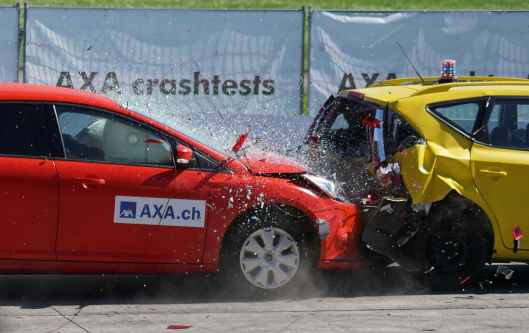
red and yellow hatchback axa crash tests

Photo by Pixabay on Pexels.com

By now, I am jogging through the parking lot toward the front desk at the tennis club. Something is terribly wrong. It all looks wrong. Then, I notice that virtually none of the cars are parked inside the white lines meant to indicate parking spaces. Some appear to have been left in the drive. Several are on the grass and one is in the flower bed near the gym. Many of the cars have smashed windshields.  

Collaboration? Cooperation? Teamwork? Who cares? 

I am very grateful for readers and commenters on my blog. Since the beginning of the year, I’ve been cataloging “best practices” in collaboration and teamwork in the form of Patterns. I think it may be time to “take stock” and make it clear why I am doing this, in case it isn’t obvious. 

I don’t “own” these Patterns. I don’t get any money from people using them. Why should I care whether people do a good job or a horrible job at collaborating? And, isn’t life all about competition anyway? 

IMG_9850

There was a time, not so long ago, that I really didn’t think it would be necessary to “explain” why it was important to cooperate. There was a time, not so long ago, when I thought most people knew that life was not all about competition. But lately, so-called “civil society” has been so rife with uncivil words and actions, at least in the “United” States, that I think it’s time to re-iterate why cooperation is vital. I also want to point out that, while there is certainly competition in life, there is also cooperation. 

Why all of life is not competition. 

In the natural life of animals and plants, there are, for some species, some specific times and places for competition. That is true. And, some of those competitions can be pretty fierce; e.g., antler-smashing bucks competing for mates. And, you could say that the rabbit eats a plant and that the coyote eats the rabbit. But there are far more ways that plants and animals cooperate. 

adult and cub tiger on snowfield near bare trees

Photo by Pixabay on Pexels.com

First, plants and animals participate in the recycling of material. Generally, plants gain energy from sunlight, and put some of that energy into compounds that are high energy and fit for consumption by some animals. In the process, plants also take carbon dioxide out of the air and replace it with oxygen. Animals breathe in oxygen and breathe out carbon dioxide. Animals eliminate “wastes” from their food and that “waste” replenishes nitrogen and minerals into the soil. Plants use the nitrogen and minerals. And, when animals and plants die, their bodies further enrich the soil for plants. 

Cooperation within the great tree of life doesn’t stop there, however. Flowering plants often cooperate with each other and with bees to flower so that there is a more or less a constant supply of pollen. Sucker fish take parasites off large fish. Butterflies collaborate with flowering plants. Rabbits collaborate with berry bushes. When there is danger, many animals and birds cry in such a way as to warn others. 

Let’s move on to consider what cooperation means for human beings. A single human being, however smart, will die soon after birth without the aid of more adult human beings. Apart from providing physical needs for the infant such as food and water, older humans immediately begin teaching the infant and then the child much of what he or she needs to know in order to survive. People have typically hunted, gathered, and prepared food in cooperative groups. People build shelters together. Cooperation among human beings has become more wide-spread and more complex over time. Most of the people in the so-called civilized world now rely on complex supply chains for food, water, clothing, electricity, security and learning. Dancing, playing music, playing sports, business, government — all of these activities depend on cooperation. 

photography of people stacking hands together

Photo by rawpixel.com on Pexels.com

Cooperation and competition in sports. 

Right now, the French Open tennis tournament is going on in Paris. The competitive spirit of the players is amazing! In some of the matches, shot after shot looks like a sure winner – only to be returned with another difficult-to-return shot. The players push themselves mentally and physically to the very limit and sometimes beyond. They are indeed fierce competitors.

But guess what? They follow the rules. And they show sportsmanship. No-one arranges to secretly injure another player or sabotage their racquet. The players cooperate to compete. After many of the most savage hard fought contests, the contestants often fall in each other’s arms. 

IMG_2818

In life, there is both competition and cooperation. In a world of 7 billion people, cooperation is more important than ever. In a world that relies on international supply chains and agreements and laws, cooperation is more important than ever before. In a world with nuclear, biological, and chemical weapons, cooperation trumps competition. The natural world has never been a zero-sum game; it has never been a fixed pie. Look around! Life has covered the planet largely through cooperation. To solve problems such as global climate change and the plastification of our oceans, we need widespread and effective cooperation more than ever. Of course, there is a role for competition as well. But competition is only fruitful within the bounds of cooperative frameworks. If we try to run this world under a non-cooperative and purely competitive framework, we will guarantee our own extinction. I had thought that was obvious to everyone, but apparently it isn’t. 

That’s why I’m trying to catalog best practices in collaboration and teamwork. 

————————-

Examples of cooperation: 

http://nectunt.bifi.es/to-learn-more-overview/cooperation-in-animals-ants-case/

https://listverse.com/2015/02/23/10-amazing-cooperations-between-different-animal-species/

http://vetsci.co.uk/2011/05/16/cooperation-between-species/#

https://epdf.tips/making-democracy-work-civic-traditions-in-modern-italy.html

Putnam, Robert D. (2000). Bowling Alone: The Collapse and Revival of American Community. New York: Simon & Schuster. ISBN 0-7432-0304-6.

—————————

Author Page on Amazon. 

Use Diversity as a Resource

31 Thursday May 2018

Posted by petersironwood in management, psychology, Uncategorized

≈ 6 Comments

Tags

collaboration, competition, Design, diversity, innovation, learning, pattern language, politics, problem solving, Representation

Use Diversity as a Resource

IMG_9333

Prolog/Acknowledgement/History: 

On the one hand, I’ve always been fascinated with biology. If you learn or recall even a little about biology, you’ll know that diversity is a fundamental aspect of life. Life repeats patterns. But it balances that repetition with variation and diversity. 

At the same time, I’ve found it much more interesting in nearly every aspect of life to seek some substantial level of variety rather than constancy. That includes everything from flowers to fields of study to people to interact with. My “favorite color” is blue. But the last thing I want is to see only my favorite shade of blue. That is, after all, equivalent to being blind. While I love eating cashews, it would be hell to have only them for every meal. 

My first job after grad school was managing a project on the “Psychology of Aging” at Harvard Med School. We focused on such tasks as reaction time and memory but I also looked into adjacent fields; for example, it was clear that “ageism,” as well as sexism and racism, was alive and kicking. True enough, there are general trends of age-related slowing and memory issues, but there are several caveats. First of all, there is huge variability within an age group. In our studies of generally healthy veterans from their 20’s to 70’s, the differences within an age group were about 2.5 x as large (roughly speaking) as the overall age-related changes that we saw. The fastest individual in the whole study of several hundred people was not in their 20’s nor in their 30’s. In fact, it was a 55-year old school superintendent who raced motorcycles cross-country on the weekend. The effect of the way various tasks were constructed was far more important than individual differences. In over-simple but basically accurate terms, age is a weak variable when it comes to “mental performance,” individual differences are a moderate variable and the conditions of the tasks are strong variables. In my experience, having individuals with a diversity of ages produces better results. (Relevant studies of aging, not empirical proof of the immediately previous statement: 9, 10, 22, 28, 31, 37 in references below). 

portrait promenade la nature homme

Photo by hermaion on Pexels.com

When I started the Artificial Intelligence Lab at NYNEX, I learned something of the history of the phone company including the fact that the telephone was invented to try to help people with special needs (in this case, hearing loss). There are many other cases where inventions that are of great use to huge numbers of people were first inspired by trying to aid those with special needs. Already aware of the possible enrichment of the field of human-computer interaction by making it more accessible to people outside of Western Europe and North America, I helped organize and run workshops on “cross-cultural issues in HCI” and as I met people from different cultures, I became even more convinced that diversity offered a resource for innovation and excellence. (Reports on a few of these activities: 2, 8, 32, 33, 36).

OLYMPUS DIGITAL CAMERA

Working with people in other cultures or people with special needs, in my experience, provides a much greater wealth of possibilities than sticking with only one. (Some studies of relevance that I have been personally involved with: 11, 15, 16, 27, 30, 35, 38, 39, 40, 41).

Excellent arguments have been made by many as to why supporting diversity is the ethical thing to do and I quite agree with those arguments. Here, however, I am not making an argument on the basis of what is right; I am merely claiming that it is in everyone’s interest to support diversity and use it as a resource for creativity and innovation. 

Author, reviewer and revision dates: 

Created by John C. Thomas in May, 2018 


Related Patterns: 

Who Speaks for Wolf?, Build from Common Ground.

Abstract: 

Human societies have widely different customs about what is appropriate behavior. As people grow up in a culture, they generally learn one (or, more rarely two) ways to dress, eat, speak, walk, and so on. Diverse groups of people, regardless of how that diversity arises, will have a wider range of skills, experiences, perspectives, and attitudes to apply to solving a problem. This diversity is a resource that can help throughout problem solving to improve the chances of solving a problem, generating a good design, or resolving an issue. Therefore, when faced with a problematic situation, improve your chances of success by bringing to bear diversity on the problem. 

Context: 

Cultures developed separately in many places around the world. Partly to adapt to specific conditions and partly by accident, these cultures developed different cultural practices. In addition, humans, like every other living species, exhibits diversity on thousands of dimensions even at birth. Beyond that, people are further influenced to develop differently based on their families of origin and their peer groups. These differences are critical in having allowed us to develop a complex, highly interconnected society of many specialists. People can become incredibly skilled at tennis or playing the piano or writing poetry or programming in LISP or fixing plumbing problems or planting trees or hunting or cooking, to name a few of the thousands of specialities that now exist. Everyone doesn’t have to do every single task for themselves. If we did, we would all be moderately good at the same relatively small set of skills. Instead, we can mainly rely on others who are extremely good at doing what they do and trade the fruits of our labors at what we are expert at for the fruits of their labors. 

All these differences mean that it often takes slightly longer to find and work from common ground; to understand each other, than it might if everyone were born and raised identically. 

Many of us live in societies that push for the fastest possible answer, solution, design, or resolution. There is an absurd push toward speed at the expense of quality. This tends to make people impatient to “just get on with it” by which they actually mean, “just get on with it the way I want to do it.” 

IMG_2480

Problem: 

When people push to the fastest possible solution, it tends to compromise quality in every way. One of the most important ways it compromises quality is that it pushes people not to consider a large variety of ideas but instead to pick the first one or two that come to mind. Generally, the first few ideas that come to mind are not original in any significant way. The ideas will be largely deployed or implicit in the dominant culture already. There will be very few real innovations. 

There is another problem with such an approach. Whatever the “answer” is, it will typically not appeal to everyone or even be in everyone’s interest. As a result, a design will fail to gain the widest possible audience and may instigate a backlash among those whose needs are not being met or whose needs are actually being subverted. 

In a fairly homogeneous group, it is very likely that some vital aspects of the problem or situation will be overlooked. A solution will be derived based on limited data and then marketed based on limited appeal. This failure will be surprising to the homogeneous group because they are only looking at it from one perspective; viz., their own. 

Forces:

  • Diversity of background leads to diversity of experiences.
  • The expectations of any one person are primarily based on their own past experiences.
  • The behavior of any other person is largely based on that person’s past experiences. 
  • People in fairly homogeneous groups tend to focus on their similarities rather than their differences; in some cases, they may even denigrate or make fun of other groups. 
  • Fairly homogeneous groups who focus on their similarities will further reduce the space of possible ideas to ones that are shared by the entire group. In other words, the group will work within the constraints of the intersection of their experiences rather than the union of their experiences. 
  • Ideas and approaches that appeal to those in a fairly homogeneous group will engender a false sense of universality of the appeal. It is easy to believe that the idea will be liked by everyone as much as it is by this particular group.  
  • The same unconscious close-mindedness that prevents the fairly homogenous group from generating very innovative ideas will also make it very difficult to accurately diagnose the real source of the failure.  
  • People in a diverse group will provide that group with an initial set of ideas that is far larger than the set of ideas generated by a homogeneous group. 
  • Moreover, people in a diverse group, if they see diversity as a resource, will tend to more often work from the union of their ideas than limiting themselves only to the intersection of their ideas and experiences.   
  • Ideas can play off against each other and produce still other new ideas. Thus, the diverse group who views their diversity as a strength will start off with a larger pool of ideas; will produce still more “recombinant” new ideas; and will more likely allow a look at the large space formed by the union of ideas rather than being limited by the intersection. 
  • Moreover, people in a diverse group will not only be more likely to produce an innovative service, product, or solution; they will also be more able to see how to market the idea, or specialize it, or localize it to any population represented within the group.    

Solution: 

When facing any particularly challenging situation, try to construct a highly diverse group of people to face that challenge. Respect and learn from each other’s differences. Focus on your diversity as a resource to be capitalized on rather than a handicap to be overcome. 

IMG_9325


Examples: 

  1. Artists as diverse as Frank Lloyd Wright, Vincent Van Gogh, and The Beatles intentionally allowed themselves to be exposed to Asian versions of their art in order to enhance and extend their own styles.

2. High level chefs who specialize in a particular type of cuisine may also become conversant in other types of cuisine to expand the palette of tastes from which to select. 

3. In problem solving, it often happens that the representation a person uses can have a huge impact on how easy a problem is to solve. Similarly, different things are often better said in different languages.  Even when it comes to advances in an entire field, they often follow new ways of representing things. For example, understanding human speech began making much more progress once the sonogram (which shows time on the X-axis, frequency on the Y-axis and amplitude as darkness) came into use as a representation (rather than the earlier representation of a speech waveform with time on the X-axis and amplitude on the Y-axis). Modern medicine today relies on many kinds of “scans” – not just X-rays, though X-rays certainly allowed a big advance over guesswork. (Studies indicating the importance of representation: 1, 3, 4, 5, 6, 13, 18, 19, 20, 23, 24, 25, 26).  

Resulting Context:

Generally speaking, when diverse groups work together and view their diversity as a resource, the result is a better product, service, solution, or resolution. In addition, it typically happens as a kind of side-effect, that the roads to marketing in diverse markets are also opened up. Finally, everyone within the group learns from the others in the group. Inclusion and diversity have another very powerful positive impact. Everyone sees that what one does is the basis for reward rather than what one is or who they know. (Studies on the impact of diversity on team performance: 7, 12, 17, 42). 

This is a huge win for teams, groups, companies, and nations. If people feel that they will be rewarded based on what they do, then people are incentivized to do the best they can. If people feel that they are rewarded based on their age, race, sex, national origin etc. — that is, things over which they have no control, then no-one is motivated to do their best. Those in the out-group feel it is fairly pointless and those in the in-group feel it is unnecessary. 

Of course, there are many other factors besides diversity that impact creativity and innovation. The latter depend on leadership, organizational context, process, support, incentives, etc. In the short term, if people are under time pressure, some may perceive that they haven’t been as productive even if they have if there more ideas and more varied ideas are discussed. Arranging the context so that people are motivated to do well rather than do quickly will be critical to success. 

IMG_6566

References: 

[1] Bellamy, R., Erickson, T., Fuller,B., Kellogg, W.,  Rosenbaum, R., Thomas, J. and Vetting Wolf, T (2007) Seeing is believing: Design visualization for managing risk and compliance. IBM Systems Journal 46:2, 207-218.

[2] Best, M., Deardon, A., Dray, S., Light, A., Thomas, J.C., Buckhalter, C., Greenblatt, D., Krishnan, S., Sambasivan, N. (2007). Sharing perspectives on community centered design and international development.  Human-Computer Interaction, INTERACT 2007. New York: Springer.

[3] Carroll, J. and Thomas, J.C. (1982). Metaphor and the cognitive representation of computer systems. IEEE Transactions on Man, Systems, and Cybernetics., SMC-12 (2), pp. 107-116. 

[4] Carroll, J. Thomas, J. Miller, L. & Friedman, H.  (1980). Aspects of solution structure in design problem solving. American Journal of Psychology, 93 (2), 269-284.

[5] Carroll, J., Thomas, J.C. and Malhotra, A. (1980). Presentation and representation in design problem solving. British Journal of Psychology/,71 (1), pp. 143-155. 

[6] Carroll, J., Thomas, J.C. and Malhotra, A. (1979). A clinical-experimental analysis of design problem solving. Design Studies, 1 (2), pp. 84-92. 

[7]Chow, I. (2018) “Cognitive diversity and creativity in teams: the mediating roles of team learning and inclusion”, Chinese Management Studies, 12 (2), 369-383, https://doi.org/10.1108/CMS-09-2017-0262

[8] Dearden, A., Dunckley, L, Best, M., Dray, S., Light, A. & Thomas, J.C. (2007).  Socially responsible design in the context of international development. Panel presented at INTERACT 2007, Rio de Janiero, BZ,

[9] Fozard, J. L., Thomas, J. C., and Waugh, N. C. (1976). Effects of age and frequency of stimulus repetitions on two-choice reaction time. Journal of Gerontology, 31, (5), pp. 556-563. 

[10] Fozard, J. and Thomas, J. (1975). Psychology of aging: Basic findings and some psychiatric implications.  In J. Howells (Ed). Modern Perspectives in the psychiatry of old age. NY: Brunner/Mazel.

[11] Friedman, B., Brok, E., Roth. S. K., Thomas, J. C. (1996). Minimizing bias in computer systems. SIGCHI Bulletin, 28(1), pp. 48-51. 

[12] Kurtzberg, T. (2005). Feeling creative, being creative: An empirical study of diversity and creativity in teams. Creativity Research Journal, 17(1), 51-65.

[13] Malhotra, A., Thomas, J.C., Carroll, J. & Miller, L. (1980). Cognitive processes in design. International Journal of Man-Machine Studies, 20 , 119-140.

[14] Malhotra, A., Thomas, J.C. and Miller, L. (1980). Cognitive processes in design. International Journal of Man-Machine Studies, 12, pp. 119-140. 

[15] Srivastava, S., Dhanesh, K., Basson, S., Rajput, N., Thomas, J., Srivastava, K. (2012). Voice user interface and growth markets. India HCI conference.

[16] Srivastava, S., Rajput, N, Dhanesha, K., Basson, S., and Thomas, J. (2013). Community-oriented spoken web browser for low literate users. CSCW, San Antonio, TX, 2013.

[17] Stahl, G., Maznevski, M., Voigt, A., and Jonsen, K. (2009). Unraveling the effects of cultural diversity in teams: A meta-analysis of research on multi-cultural work groups. Journal of International Business Studies, 1-20. 

[18] Thomas, J.C. (1991). The human factors of voice interfaces. Journal of the Washington Academy of Sciences 80 (3), 138-151. 

[19] Thomas, J.C. and Schneider, M. (1982). A rose by any other alphanumeric designator would smell as sweet. Behavior and Information Technology, 1 (4), 323-325. 

[20] Thomas, J.C. (1978). A design-interpretation analysis of natural English. International Journal of Man-Machine Studies, 10, pp. 651-668. 

[21] Thomas, J.C. and Carroll, J. (1978). The psychological study of design. Design Studies, 1 (1), pp. 5-11. 

[22] Thomas, J. C., Fozard, J. L. and Waugh, N. C. (1977). Age-related differences in naming latency. American Journal of Psychology, 90(3), pp. 499-509. 

[23] Thomas, J.C. (1974). An analysis of behavior in the hobbits-orcs problem. Cognitive Psychology 6 , pp. 257-269. 

[24] Thomas, J. (2015). Chaos, Culture, Conflict and Creativity: Toward a Maturity Model for HCI4D. Invited keynote @ASEAN Symposium, Seoul, South Korea, April 19, 2015.

[25] Thomas, J. (2014). Mobile Systems for Computational Social Science: A Perfect Storm. Invited keynote address at UbiComp workshop, Sept. 13, 2014, Seattle, WA.

[26] Thomas, J., Diament,J., Martino, J. and Bellamy, R., (2012). Using “Physics” of Notations to Analyze a Visual Representation of Business Decision Modeling. Presented at VL/HCC 2012 conference in Salzburg, Austria.

[27] Thomas, J. C. , Basson, Sara H., and Gardner-Bonneau, D.  (2008 & 1999) Universal access and assistive technology. In D. Gardner-Bonneau (Ed.), Human factors and voice interactive systems. Norwell, MA: Kluwer. 

[28] Thomas, J.C. (2003), Social aspects of gerontechnology.  In Impact of technology on successful aging N. Charness & K. Warner Schaie (Eds.). New York: Springer.

[29] Thomas, J. C. (2001). An HCI Agenda for the Next Millennium: Emergent Global Intelligence. In R. Earnshaw, R. Guedj, A. van Dam, and J. Vince (Eds.), Frontiers of human-centered computing, online communities, and virtual environments. London: Springer-Verlag. 

[30] Thomas, J.C. (1997). Steps toward universal access in a telecommunications company. In B. Friedman (Ed.), Human values and the design of computer technology. Stanford, CA: CSLI. 

[31] Thomas, J. C. (2017). Old People and New Technology: What’s the Story? Presented at Northwestern University Symposium on the Future of On-Line Interactions, Evanston, Ill, 4/22/2017. 

[32] Thomas, J.C. (2007). Panelist, Meta-design and social creativity: Making all voices heard. INTERACT 2007, Rio de Janeiro, BZ, Nov., 2007.

[33] Thomas, J.C. (2007).  E-learning: An opportunity to meld modern technology and ancient wisdom? Panelist, E-learning.  INTERACT 2007, Rio de Janeiro, BZ, Nov. 2007.

[34] Thomas, J.C. (2005). Patterns to promote individual and collective creativity.  Presented at the Human Computer Interaction International, Las Vegas, NV, July 27, 2005.

[35] Thomas, J.C. (1996). Invited panel presenter at the National Research Council’s workshop: Toward an every-citizen interface to the national information infrastructure, Washington, DC., August 23, 1996.

[36] Thomas, J.C. & Kellogg, W. (1993). Cross-cultural perspectives on human-computer interaction: report on the CHI ’92 workshop. SIGCHI Bulletin, 25 (2), 40-45.

[37] Trewin, S., Richards, J., Hanson, V., Sloan, D., John, B., Swart, C., Thomas, J. (2012). Understanding the role of age and fluid intelligence in information search. Presented at the ASSETS Conference, Boulder CO.

[38] Trewin, S., Bellamy, R., Thomas, J., Brezin, J., Richards, J., Swart, C., and John, B.E., (2010). Designing for Auditory Web Access: Accessibility and Cellphone Users.  The 7th International Cross-Disciplinary Conference on Web Accessibility, W4A.

[39] Trewin, S, Richards, J.,Bellamy, R, John, B.E.,Thomas, J.C., Swart, C.Brezin, J. (2010). Toward Modeling Auditory Information Seeking Strategies on the Web. CHI Work In Progress. 

[40] Trewin, S., Bellamy, R., Thomas, J., Brezin, J., Richards, J., Swart, C., and John, B.E., (2010). Designing for Auditory Web Access: Accessibility and Cellphone Users.  The 7th International Cross-Disciplinary Conference on Web Accessibility, W4A.

[41] Trewin, S, Richards,J.,Bellamy, R, John, B.E.,Thomas, J.C., Swart, C.,Brezin,J. (2010). Toward Modeling Auditory Information Seeking Strategies on the Web. CHI Work In Progress. 

[42] Yap, C., Chai, K. & Lemaire, P. (2005). An empirical study on functional diversity and innovation in SMEs. Creativity and Innovation Management, 14 (2), 176-190. 

Negotiate from Needs, not Positions

24 Saturday Mar 2018

Posted by petersironwood in America, psychology, Uncategorized

≈ 1 Comment

Tags

competition, cooperation, innovation, negotiation, pattern language, politics, problem solving, teamwork

fullsizeoutput_17f9

Negotiate from Needs, not Positions

Prolog/Acknowledgement: 

So long as I can recall, I’ve seen negotiation as an arena for creativity, but most people don’t like to play that way so I was very happy to learn about the Harvard Negotiation Project. When I was Executive Director of the NYNEX AI lab, Beth Adelson developed a short course in negotiation based on the Harvard Negotiation Project. (That project later evolved into the Project on Negotiation).

I have been struggling with a recurrent issue in writing these Patterns. The issue nearly every time is separating the “Problem” from the “Context.” In the format that I’ve been trying to use consistently, the “Problem” comes first and then the context. But in attempting to tell a compelling story, I typically find myself needing to say at least something about the context early on in order for the reader (or at least my mental representation of the reader) to make sense of why the problem arises. I had thought that Christopher Alexander might finesse the issue because people are typically already familiar with towns, cities, buildings etc. and because he uses an evocative image to remind people of the context. It generally seems much more difficult to point unambiguously to a social situation with a picture. I returned to A Pattern Language in order to find out how CA and his team handled this issue. Well, it turns out, A Pattern Language does not make anything like these separate categories! Patterns typically begin with a lead-in which contextualizes the problem. I think the format I was trying to use might work for the Object-Oriented Programming Language community because, in a sense, programming solutions are typically themselves decontextualized. Having separate and well-defined sections also helps someone using a Pattern Language navigate to a specific point. However, it may damage the logical and compelling presentation of the idea to begin with. This provides something of a puzzle, but for now, I am going to try to follow the spirit of CA’s original Pattern Languages for a time and thought I will attempt to keep separate sections, I will put Context before Problem.

The following Pattern is especially relevant today because as of this writing, there seem to be an increasing number of “leaders” in the world who are presuming that negotiating by positions is the only way to go and every negotiation leads to winners and losers. 

https://en.wikipedia.org/wiki/Harvard_Negotiation_Project

Author, reviewer and revision dates: 

Created by John C. Thomas March 15-24, 2018

Abstract: 

Especially in highly competitive societies, it is common to view negotiation in terms of a zero sum game. In this view, a “good negotiator” is someone who gets more of what they want at the expense of the other person. Instead of assuming that everyone else is just like us in every way and therefore wants the same exact things as we do, one might explore a more open problem solving space by finding out what the other person actually wants and discovering what you really want. Put another way, each negotiator might put on the table what their actual needs are rather than simply their position about one or a few things. Often both (or all) sides can work together to creatively construct a solution that satisfies the needs of all parties. If parties to a negotiation view each issue as unidimensional, monotonic, and independent, it tends to induce a competitive frame of mind. If parties to a negotiation instead view issues together in multiple dimensions, it is often possible to induce a problem solving frame of mind and all parties end up better off in terms of meeting their real needs. In addition, negotiating in this way tends to increase mutual trust and cooperation over time.

IMG_2764

Context: 

Complex problems can often only be solved by groups. Typically, really large scale groups are not homogeneous but have subgroups within them. This works at many levels of scale. For example, the world as a whole needs to solve the problems of climate change and pollution. Yet, it seems it would be efficient to implement some solutions on a country by country basis. But the countries will then tend to argue about how much is “their share” of the solution. Or, a nation needs to improve its solar energy research program. But some states will fight over where research money is invested. Others will argue all that money should go to oil and coal. There may be negotiation between son and father about how long to walk the dog. In every case of negotiation, there is both some sort of common goal and some difference of opinion about how to get there. In the case of Labor and Management, for instance, both want to avoid a strike. In the case of the countries, all the countries presumably want to have a livable planet for their descendants.

earthfromspace

There is another habit of work common at least in my cultural context (American business) that plays into typical negotiations. When people of many industries organize meetings, a key part of that organization is the agenda – the linear list of topics to be addressed. When applied to negotiations, this is translated into a list of individual issues that need to be addressed. The implication is that they are to be addressed one by one. An important underlying assumption is if the best solution is found on every issue, then we will also find the best solution overall. This is not necessarily so, but it is a common default way of addressing issues: one by one.

iPhoneDownloadJan152013 533

My own cultural experience of contemporary America is that it is insanely competitive. Competition has its place. Personally, I love competition in sports and games. My first book is titled, The Winning Weekend Warrior. It deals with strategy, tactics, and the mental game as applied to all sports. It also points out that this competition only “works” because people agree on a framework of competition and stick to that framework. Sportsmanship is fundamental to good competition. But I call out my current society as insanely competitive because we now apply it to nearly every human activity. You can turn on TV and not only find competitions in basketball, soccer, and tennis (which make sense) but also for activities which have historically been cooperative, enjoyable fun such as singing, dancing, cooking, and even dating! It has come to apply particularly to politics. There is almost no cooperative attempt to identify and solve important national issues. It is all a question of ratings, polls, press coverage, donation dollars and votes. This competitive mindset is then reinforced when people negotiate according to positions. Not only are such negotiations unlikely to yield any creative solutions, they encourage viewing the “other” in the negotiations as “the enemy” or even something sub-human. While competitive athletics at least works within an agreement about rules and procedures, in politics, there seems no longer to be any agreement about what is appropriate.

IMG_3240

Problem:

Especially in competitive societies, it’s easy to fall into the trap of viewing every negotiation as a contest with winners and losers. Labor, e.g.,  says they must have at least 20$/hour to prevent a strike and management says they can’t possibly afford more than 10$/hour to avoid bankruptcy. Of course, these are not necessarily true statements. Privately, labor may know that their membership would settle for 15$/hour. Privately, management might know that they could pay 30$/hour and not go bankrupt – but that would require cutting executive bonuses and dividends. So, here, in a nutshell is the situation. Two parties are both being dishonest and yet, they are relying on the other to solve a problem that requires trust.

Not only are the parties unlikely to end up even close to the “best” solution. Hard feelings and mistrust are likely to spill over into the work itself or any implementation of the solution. If either side feels “betrayed” they will be even more “hard-nosed” in the next negotiation. In some cases, the parties will no longer work together for their common good. Instead, there will be at various levels such effects as war between nations, secession and civil war, riots among citizens who feel unfairly disadvantages, or divorce between two people who fight to win – about what should be honest, mutual problem solving.

Forces:

  • Groups of groups must sometimes work together to achieve common goals.
  • Subgroups may disagree with each other about the best use of resources to achieve those common goals.
  • Honesty on every side and mutual trust is most effective and efficient in solving problems and implementing solutions.
  • When negotiating on the basis of positions, negotiation becomes viewed as a zero sum game.
  • In a zero sum game, it can work to your advantage to be dishonest.

* Negotiations that always treat every issue independently cannot always converge on the best solutions.

  • Zero sum games induce a highly competitive mindset.
  • Negotiating from real needs tends to induce a cooperative mindset.
  • Negotiating from real needs tends to increase trust.

* Higher levels of mutual trust lead to better outcomes and more pleasant experiences for all stakeholders.

Solution:

When it is necessary to negotiation among two or more sub-groups within a larger group, negotiate from actual needs not positions. Work together to discover the best solutions for the larger groups while minimizing undue pain for any one subgroup.

IMG_0745

Examples: 

1. A quintessential example used in the Harvard Negotiation Project is the story of the two sisters. They spied a lemon in the kitchen and both went for it at the same time. Each said they wanted the lemon. Eventually, the grudgingly cut the lemon in two. In this way, it would seem that they had reached a “fair” solution in that each one had met the other half-way. It turned out, however, that one of the sisters actually wanted the lemon peel for a cake recipe while her sister wanted to drink the juice of the lemon. It turned out they could have each had 100% of what they wanted. Perhaps they could have even planted a lemon tree from the seeds as well.

IMG_6578

2. Two countries are each trying to achieve more economic prosperity for its citizens. Some countries have relative advantages in the production of some goods and services over others; e.g., because of differences in natural resources, availability of necessary labor and expertise, cultural resonance with the required activity, or existing infrastructure. It makes much more sense for some countries to specialize in some rather than all goods and services. Over time, these differential advantages change. At one time, for instance, India and China, among others, had a huge advantage in terms of cheap labor but relatively less advantage in science and engineering expertise compared with, say, the United States. Labor costs in India and China are now higher (though still much less than in the US) while expertise in science and technology has skyrocketed. In any case, the US government has now decided to embark on a “trade war” with one of our most productive trading partners. In this case, the results will probably be bad for everyone except for a few very wealthy American executives who might make more money in the short term.

Instead, negotiators from China and the United States could get together and identify a number of issues that could be better solved by having the United States and China work together. As one example, as China becomes more proficient in science and engineering, they may find it increasingly in their interest to promote a more universal and more enforceable way to deal with intellectual property. As automation, robotics, and AI become more capable of replacing more jobs in both countries, they could work together on how to avoid massive unemployment. They could work together to define specific areas of scientific and engineering cooperation; e.g., how to provide clean water, how to slow and reverse climate change, how to ameliorate its effects, how to develop and share best practices in managing emergencies such as earthquakes or large fires. It’s infantile to imagine that there are a finite number of jobs available which must be apportioned between the US and China so that every job is either “given” to one party of the other.

IMG_1587

3. Joe and Suzi are New Yorkers who are already sick of the hot, hazy, humid weather in early July and they decide it’s time for planning a vacation for late August. Joe wants to take a vacation to Orlando while his wife Suzi wants to go to Aspen. These are their initial positions. If each “insists” on getting their way, there are several options that seem “fair.” They could flip a coin. They could agree to alternate vacations between the two places and flip a coin to decide which one “wins” first. They could find a place half-way between. In this case, that might be Little Rock, Arkansas. They could arm wrestle over it. Of course, they might want their own vacation site so much that they agree to take separate vacations.  There are options available but they are limited. Joe has no idea why Suzi wants to go to Aspen and he may not even be fully aware of why he wants to go to Orlando. He just remembers having a good time there as a Columbia college student on winter break. Suzi, for her part, has no idea why Joe wants to go to Orlando and may not even be fully aware of why she wants to go to Aspen. She remembers going to a design conference there about 15 years ago and she had a really good time and loving seeing the mountains in the background.

If Joe and Suzi are willing to trust each other and jointly figure out what they both want from a vacation, the space of possibilities for meeting their needs expands tremendously. As it turns out, Joe loves to bake in the sun. He likes to swim in the ocean. He likes to look for pretty rocks and shells. He likes to run along the beach. He likes to watch women in bikinis walk by. In college, he got uproariously drunk, but he has no such desire now. Suzi, for her part, enjoyed the design conference, more than Aspen. It was fun to meet new people doing interesting design projects.  She did enjoy a bit of some cross-country skiing and the way it got her heart racing. She also recalls that the town itself had pretty flowers and buildings.

IMG_3947

Once both parties become aware of their needs and wants rather than their positions, several things become clear to them as a team. First of all, when Joe went to Orlando as college student in the winter, he was getting away from the cold and lying on the beach in the sun seemed great. Now, it’s late August and hot. Orlando will only be hotter. Suzi will not be doing any cross-country skiing in Aspen in late August. More importantly, the Aspen Design conference is in the Spring. With more mutual planning and problem solving, they discover that San Diego has a design conference during their vacation time frame. They can drive into the mountains in an hour and there are plenty of beaches for Joe. Running along the beach, renting bikes, playing beach volleyball, or playing tennis could be pleasurable exercise. San Diego has plenty of flowers and nice looking houses. The climate is much more temperate than that of New York City. San Diego provides a much better “solution” to their needs than does Little Rock (which would be even more hot and humid than New York City in August and actually provide almost none of the desires for either Joe or Suzi). In their research about San Diego, they may discover things that they both want to do that they had not even thought about when their thinking was limited to trying to recreate something from their past. For instance, they may both want to visit the San Diego Zoo.

It might seem contrived to the reader that two adults might stick stubbornly to a preconceived “position” rather than attempt a mutual problem solving activity. In my experience, it isn’t the least bit contrived. As I mentioned earlier, this is precisely the kind of stance the American government seems determined to take toward negotiations.

4. To return to the Labor and Management example, this may seem to be one case where “positional” negotiation makes sense. After all, every penny management pays to workers means less pay for executives and stockholders. Even here, it is extremely likely that this is not really the case. A large company, for instance, will have much more leverage in providing affordable health care than will the individual workers. So, a dollar less in salary might mean $.50 goes to management and stockholders but another $.50 goes to health care that will actually save the employees $1.50 in healthcare costs.  While the employees say they want higher wages, what they really want might be worried about is paying their mortgage and sending their kids to college. Money is one way to help make that happen. But there could be other ways to help that might be much cheaper for the company. A large company, for instance, could put its considerable political pull behind cheaper government college loans, debt forgiveness or universal, government-sponsored 2 year degrees for everyone. Perhaps under certain conditions, they would co-sponsor housing loans. Another part of why workers might want more money is that, in our society, a person’s “worth” is erroneously equated with their financial worth. Workers might be willing to trade some dollars of salary for earned respect. In far too many companies, management may have very little or very limited perspective on how the work is actually done, instead relying on abstract and greatly over-simplified flow charts. Management issues orders to workers and workers are expected to follow those orders, however stupid they are in practice. Instead, workers and management together could identify and solve problems, agree on metrics of improvement, measure those improvements, engage in general profit-sharing and provide bonuses to workers who help identify and implement improvements.

Many studies also indicate that workers often produce more net in a 30 hour week than in a 60 hour week because the 60 hour week causes fatigue, burn-out, costly errors and accidents, work stoppages, and turnover. For some businesses and workers, four ten-hour days might improve the quality of life for workers at the same time that it reduced costs for the employers. The general point is this: No matter how “obvious” the unidimensional nature of a negotiation is, that obviousness is almost invariably an illusion.

Resulting Context:

Once people participate in joint problem solving to identify and agree upon ways to satisfy people’s needs rather than compromise on initial positions, they will be more likely to trust each other in future negotiations as well.  Furthermore, they will behave more cooperatively and civilly to each other between negotiations as well.

Related Patterns: 

Reality Check, Small Successes Early, Build from Common Ground.

Metaphors: 

In nature, competition certainly exists. But so does cooperation. Even when competition is “life and death” it is almost never treated as monotonic. A hungry fox will eat a rabbit. That’s nice for the fox but not so nice for the rabbit. Or, the rabbit gets away which is not so great for the fox. But the foxes do not “decide” that their hunger is due to rabbits and they are now going to set out to destroy every last one of them so they’ll never be hungry again. Clearly, if the foxes “succeeded” they would be full for a while — and then they would all starve to death. Foxes seem smart enough to intuit this. With humans, the jury is still out.

References: 

https://en.wikipedia.org/wiki/Program_on_Negotiation

https://en.wikipedia.org/wiki/The_Evolution_of_Cooperation

https://en.wikipedia.org/wiki/Finite_and_Infinite_Games

Thomas, J. C. (2017). Building Common Ground in a Wildly Webbed World: A Pattern Language Approach. PPDD Workshop, 5/25/2017, San Diego, CA.

———————————

https://www.amazon.com/author/truthtable

Indian Wells Tennis Tournament

19 Monday Mar 2018

Posted by petersironwood in management, sports, Uncategorized

≈ 6 Comments

Tags

Business, collaboration, competition, cooperation, Indian Wells, life, pattern language, sports, teamwork, Tennis

IMG_2778

This blog post is a short break from my attempts to build a “Pattern Language” of best practices for teamwork, collaboration, coordination, and cooperation. I wish to re-iterate why I feel the enterprise is important. I have been attending the  Indian Wells tennis tournament and watched some amazing matches. While it’s tempting to write about the matches, I will leave that aside. What struck me about the tournament, aside from the athleticism and grit of the players, was the widespread and effective teamwork, collaboration, coordination, and cooperation that the tournament represents. This is obviously related to the Pattern Language because it gives an example of what can result from excellent teamwork and cooperation. In other words, this tennis tournament is just one illustration of why it matters.

IMG_2764

It’s nicer in some ways to sit in your living room and watch sporting events on TV. You don’t have to deal with glaring hot sun at noon or chilly winds in the evening. You can get up to hit the bathroom any time you want and snacks are right there in the kitchen. However, you do not get a feel for just how incredible is the athletic ability of the players nor the velocity and precision of the shots when you watch on TV. More important in the context of cooperation is that when you watch on TV, every time there is a break in the action, you are treated to commercials. When you are at the actual venue, however, there is also ample opportunity for observing a little bit of the incredible collaboration and teamwork that an event like this requires. Even at the venue, all you see is the snow that dusts the surface of that tenth of the iceberg that rises above the ocean. With a little imagination, you can get an inkling of how much more collaboration must be required that you do not see.

IMG_2773

The reason I want to dwell on this for just a little is that collaboration and cooperation permeate a healthy society. Indeed, widespread collaboration and cooperation are critical for society’s existence. Yet, it is easy to take cooperation for granted like the air we breathe. People like me, who have lived almost their lives in peaceful and kind circumstances, may easily forget that it need not be so. People have lived in circumstances of war, oppression, and slavery. We should never take cooperation for granted. Even in a very peaceful circumstances, there are many screw-ups in collaboration and while we notice the screw-ups when they affect us directly, we tend not to realize the vast interconnected threads of collaboration and cooperation that we rely on every day.

IMG_2823

Let’s return then to the Indian Wells tennis tournament and examine just a few of the many collaborative aspects. First, there are the professional athletes, of course. Let’s return to this later, to understand a little of the massive cooperation required for there to be professional athletes in general and what’s required in cooperation to make any particular athlete operate at their amazing level of skill. What other roles are there? Possibly coaches, trainers, officials, and the ball boys and ball girls come to mind. It’s quite likely that if you watch tennis (or any other sport) on TV, one of the most salient roles is that of the TV announcers. They are a major part of most people’s experience of pro sports. Yet, when you are actually at the venue, they are relatively invisible. If we watch TV, we are cooperating in making the TV announcer a major part of our sports experience.

IMG_2810

At the venue itself, there are many other obvious roles. There are police assigned to the area. There are hundreds of volunteers who help people park, answer questions, check bags and check tickets. There are vendors selling various wares as well as offering up a variety of food items. This is all much more obvious when you attend a sports event in person. But the cooperation doesn’t stop there. How do the clothing and food get to the venue? How are we able to eat food that is grown far away and sometimes packaged? Where did the recipes come from? Why do people share recipes? At this point in our cultural evolution, you can attend an event in Southern California and enjoy some excellent Japanese food at Nobu. Japanese speak Japanese. And Japan is more than 5000 miles away. So, somehow, through a giant network of collaborative and cooperative relationships, people in Southern California are able to produce delicious meals that reflect a cuisine developed in a different culture with a different language. Of course, Japanese is not the only cuisine represented at the venue. There are hundreds of options that originated elsewhere.

There is also clothing on offer, much of it designed in one place, manufactured in another place, and shipped via complex supply chains. You can buy it with a credit card. But how does that work? You guessed it. It works because of other giant networks of cooperation and trust. Yes, it’s true that some people steal credit cards and there are elaborate systems to minimize losses but even those elaborate systems work on trust.

IMG_2791

The venue comprises parking, stadiums, parks, practice courts, with running water and electricity, working toilets, wheelchair access, and gates for crowd control. Again, the existence of the venue requires widespread cooperation among various levels of government, financial institutions, tennis organizations, volunteer organizations, and fans. But it isn’t even just contemporary cooperation that’s involved. These kinds of large scale venues go back in our history thousands of years. We’ve been collaboratively building best practices in city planning, architecture, crowd control, with many idea exchanges across cultures. We must remember that, by and large, the fans also cooperate. They don’t simply mob the gates to crash in without paying. The vast majority of fans are quiet during actual play, sit in their assigned seats, get up to allow others to pass and so on. This kind of cooperation also depends, in part, on widespread public education in how to be civil.

IMG_2811

Let’s return for a moment now to consider that our society has professional athletes. Some people make a career out of playing a sport extremely well. But playing the game extremely well does not, in and of itself, enable professional athletics to exist. There have to be fans both at the venue and watching TV who pay, either with dollars or with taxes or with their attention to commercials. There are organizations who administer the sport. There are, in this example, thousands of coaches and tennis venues to develop the sport and spot prodigies early who then receive additional coaching and training. There are ranking systems and systems to seed players in tournaments. There are manufacturers who make tennis balls and tennis racquets which have evolved over time to allow more elegant play which pushes the game toward more extremes of human performance. This kind of evolution of artifacts does not happen “automatically.” It too requires communication and cooperation.

IMG_2787

Indian Wells is just one event in one sport. If you dig beneath the surface just a little, you will see that nearly everything on the planet is the result of thousands of years of mainly cooperative enterprise. Of course, the players compete. They try their hardest to win. But they try to win within an agreed upon set of rules and regulations. If no-one followed the rules, there would be nothing very interesting to watch. If you’ve seen one bar fight, you’ve seen them all. There is no elegance and no beauty in watching thugs slug it out and waste time and resources. I dwell on this because it is critical to keep in mind that having a decent society that helps people thrive depends on having cooperation, teamwork, collaboration, and coordination. The individual human brain may be relatively large compared to an ape’s. But what really sets us apart is not our individual intelligence. Abandon a baby with a perfectly good brain into a forest by themselves and, if they survive at all, they will not behave much differently from an ape or a raccoon. They may scrabble for food and water, but they will not end up building a tennis court or constructing a tennis racquet.

IMG_2816

It’s not turtles all the way down. It’s trust. It’s cooperation. That’s what makes us human. If we just grab everything for ourselves and lie about it, it subverts the very foundation of human life. Our human nature is to control our competition to acting within agreed upon boundaries for the good of all. If we forget that, we are not “lowering ourselves” to the level of wild animals. We are way below that. We are like a wild cat who refuses to use its hearing and fast reflexes to hunt. We are like a redwood tree who refuses to use the sun’s rays. We are like a deer in the forest who refuses to forage but instead expects other deer to bring them food. Willfully ignoring that we are a social species; intentionally lying in order to gain advantage to ourselves will never help create a bigger pie. In the short term, it can get you a bigger piece. But the cost is that you despoil what it means to be human. Grabbing all you can for yourself subverts the very essence of what makes humanity such a successful species. This has always been true throughout human history. Now, however, cooperation is more vital than ever both because we are on the brink of destroying the ecosystem we depend on for life itself and because we have even more brutally destructive weapons than ever before. We have cooperated through much of our human history. Now, we need to do it even more intelligently and more consistently — or face extinction. The earth doesn’t need us. But we need the earth. And, each other.

IMG_2818———————————————————

Author Page on Amazon: https://www.amazon.com/author/truthtable

Use Thoughtful Group Feedback Structures and Processes

07 Wednesday Mar 2018

Posted by petersironwood in management, psychology, Uncategorized

≈ 1 Comment

Tags

Business, competition, Feedback, innovation, learning, military, pattern language, Peer Learning, RET, sports

caution

Use Thoughtful Group Feedback Structures & Processes

Prolog/Acknowledgement: 

The idea for this Pattern comes mainly from my experience as a Fellow at the Institute for Rational Living. In my two-year Fellowship in Rational-Emotive Therapy (a variant of cognitive, emotive, & behavioral therapy developed by Albert Ellis), I saw about 6-8 individual clients a week as well as running a weekly group therapy session. I participated in a two hour group supervision session with a more experienced senior therapist each week and received very useful feedback. In addition, I participated in several “Pattern Workshops” at various SIGCHI conferences where a similar though slightly different structure of feedback was used. I also have had experiences teaching, tutoring, and providing feedback on scientific papers and grant proposals. These all overwhelmingly positive experiences on the whole. Like most of us, however, I’ve also been subject to a variety of diatribes, harangues, and reviews which were useless as learning experiences.

Author, reviewer and revision dates: 

Created by John C. Thomas March 6-8, 2018

IMG_5216

Synonyms: 

Hamburger feedback. Writer’s Workshop.

Abstract: 

Life is complicated! The human brain is finite. We all make mistakes. Mistakes provide excellent opportunities to learn. Sometimes, we can learn all on our own, but in complex situations, even when we know we have failed, we often cannot tell why or how to improve. More experienced people can provide feedback to help us learn more effectively and efficiently. However, there are many different ways to point out errors and suggest improvements. Some of these ways provide much better learning experiences than others. Therefore, in providing feedback, choose a feedback structure and process designed to maximize the opportunity for learning and minimize negative emotions that can interfere with learning.

Problem:

When it comes to complex behavior in nearly every human domain (e.g., playing tennis or golf, writing a grant proposal or scientific paper, writing a short story, acting in a play, or providing therapy, cooking an omelet, drawing a portrait) there are many ways to go wrong. Generally speaking, people who are just learning a field know when they fail but often they cannot tell what they did wrong or how to improve. To the expert, the error is sometimes obvious. Since the expert teacher has seen the same mistakes made by over and over, it is easy to become impatient. The teacher may forget that even though they have pointed out this same error a thousand times in their career, it may only be the first time it has been pointed out to this particular learner. Even if it’s the tenth or twentieth time, it’s human nature for the learner to “revert” to a bad habit.

Furthermore, as Tversky and Kahnemann pointed out, coaches and teachers may find themselves “drifting” over time toward more and more emphasis on negative criticism rather than praise for a job well done. The reason posited by Tversky and Kahnemann is “regression to the mean.” Basically, performance in anything varies somewhat randomly over time. This random variation can be fairly large even as performance on the whole is improving. If a coach or teacher says something positive after an unusually good performance, chances are that the next performance will be somewhat worse. On the other hand, if a coach or teacher says something negative after a particularly bad performance, regression to the mean says that the next performance will usually be somewhat better. Over time, coaches and teachers tend to be punished for praising good performance and rewarded for criticizing bad performances. (I expanded on this idea to our self-criticism in “Why do I Self-Down? Because I’m an Idiot?”). Both praise and criticism can provide informative feedback. However, they are quite different in terms of the emotional impact that they make. Except for the very least self-motivated students, criticism will tend to provide too much stress for optimal learning. The newer or less intuitive the thing being learned is, the lower is the optimal level of stress.

In addition to the emotional impact, there is another problem with criticism. It often tends to fixate the attention of the person on the wrong things making further errors even more likely. If a golf coach, for example, says, “I’ve told you a hundred times! Don’t life your head up while you putt! You keep missing left because you keep lifting your head up, lifting your head up, lifting your head up!” Well! Even apart from making the student more nervous (which will make it harder to learn), by focusing on the student’s error, the coach has put it firmly in their student’s thought pattern: “Putt coming up. Don’t LIFT UP YOUR HEAD.”

IMG_1699

Even without the social and emotive element, providing feedback that is really useful can be difficult. In the case of putting, for instance, you may miss a putt left for many reasons: you might have misread the slope; you might have misread the grain; you might have been aiming the putter blade left; you may have hit the ball of the center of the putting blade; you might have hit the grass behind the ball; you might have swung the putter on a curved path (and, indeed, one cause of that could be lifting up your head too early); there are imperceptible imperfections in the green; you might not have noticed the extremely brisk wind. Even a marvelously skilled instructor is going to have difficulty knowing which of these many reasons is in fact the case.

Context: 

Complex skills require long training. Generally speaking, people will get much further in any field of human endeavor if they have formal or informal training and teaching in that field. The more complex the field, the more training is required. The better the coaching, training, teaching, or mentoring the student has along the way, the better will be their ultimate level of skill, other things being equal. Teaching is often done in classroom settings with only one teacher and many students. If the teacher does criticize a student, it is generally done in front of the whole class. The teacher seldom has the resources to find out why a student made an error. Feedback in the form of public ridicule can be worse than no feedback at all.

While formal teaching and training form one set of contexts for which it is useful to provide structured group feedback, there are many others. For instance, ten people submit a paper to a conference but only one gets in; ten people with a realistic chance try to win a gold medal in ice skating but only one does; ten people vie for one job with a job interview. None of these are primarily meant to be teaching experiences, but there is no reason that they cannot be. In fact, it is not just contests that provide opportunities for structured feedback from others; any time people face a challenge and meet it, is an opportunity for learning.

Forces:

  • Our brains are not infinite but finite. We all make mistakes.
  • Learning from others who have relevant experience can shorten learning time.
  • Humans are social creatures. We feel good when we get praise from others and feel worse when we get criticism.
  • Even a good teacher cannot see all the circumstances of a complex situation as well as a student’s peers might.
  • Because teachers are way beyond the learning phase of elementary skills, a students peers, who are closer to the learning phase, can sometimes offer better feedback.
  • We tend to believe informative feedback about our behavior more as more people give that same feedback.
  • Due to regression to the mean, over time, some instructors and teachers come to rely much more on punishment than praise.

* Instructors often see and correct the same wrong behavior thousands of times. They may tend to be impatient, forgetting that it isn’t this student who has made all those errors.

  • Each person only knows a small proportion of another person’s situation and individuality. Feedback from a group of peers may all convey the same information but someone may say exactly the “right thing” for this person in this situation.

Solution:

Whenever a group is attempting to solve problems and address issues of any kind and wishes to improve its abilities over time, then it pays to provide feedback to those attempting to learn from peers as well as superiors in thoughtfully structured ways. The method should provide the optimal information but also the right emotional tone to optimize experience as well as learning outcomes.

Examples: 

  1. At the Institute for Rational-Emotive Therapy, all the Fellows, including me, tape-recorded all our sessions (with the client’s knowledge). Each week, a small group of us (3 or 4) met with a Supervisor (a much more experienced therapist). We would typically play a segment of one of our sessions that we had found particularly troublesome in some way. After that, the Supervisor would fist ask the therapist who had played the tape what they were trying to accomplish and what they felt they had done very well at. Then, the Supervisor would ask that therapist what they saw that they could have improved upon and how.

The Supervisor then asked the peers for additional feedback, beginning each time with some additional positive thing. This was followed by suggestions for improvement. It would not be helpful, for instance, to say, “Be more empathic.” If someone did say that, the Supervisor might say something like, “Can you offer some specific suggestions; e.g., what has worked for you in becoming more empathic?”

At last, the Supervisor would give additional feedback and again beginning with additional positive aspects of the interaction and ending with additional suggestions for improvements or a summary of what everyone else had said. Although this sounds very formal, it typically felt quite natural. As psychologists, we all knew why this feedback was being provided in this manner and appreciated it.

IMG_1541

2. At Patterns Workshops, those who write a proposed Pattern present it to the group for feedback. These feedback sessions are structured in a very particular way which seems to work quite well. In broad outline, the writer supplies a written version of their Pattern. The are then asked to briefly summarize the pattern and read aloud a small part of it. Then they are asked to sit outside the rest of the group who are in a circle. Now, they are to be silent and listen (to be a “fly on the wall”). The rest of the presentation of the Pattern and the feedback will be hosted by someone else. The author is not to talking except for a brief clarification question. Everyone in the group is invited to give feedback on both Structure/Content. They are always asked for positive comments first and then suggestions for improvement. If someone has essentially the same comment as someone else, they can simply say, “Ditto.” When all the relevant feedback has been collected or time runs out, the author is thanked, invited back into the circle, and someone tells an irrelevant story or joke.

From my personal experience, not being allowed to talk during feedback and hearing the same thing from ten people is a truly amazing experience. By not being allowed to prepare your rebuttal — because there is no rebuttal — you instead listen to what is being said and are able to process what is said at a much deeper level. You think about what it means to your Pattern. What is outlined above are what I consider to be the main features that are most relevant to this Pattern. However, if you are interested in a succinct yet detailed suggested structure, see Jim Coplien’s Pattern for Patterns Workshops linked below.

https://sites.google.com/a/gertrudandcope.com/info/Publications/Patterns/WritersWorkshop

3. Readers will see similarities among the first two examples. In other contexts and in other cultures, different types of feedback sessions will be seen as effective. Ideally, the structure will have been developed through experience so as to maximize group learning, as opposed say, to feeding the ego of the most experienced member of the group. Another example of a structure process is in Code Reviews.

https://en.wikipedia.org/wiki/Code_review

4. Toastmasters is an organization designed to teach people how to give better presentations and provide peer feedback. Here is a link to a nice feedback guide by one of their members.

http://blog.toastspot.com/22-tips-for-giving-effective-feedback

5. After Action Reviews. The US military conducts After Action Reviews (AARs) as a standard part of learning from training exercises and field experience. Some of the same suggestions appear again: the spirit of the investigation is key; preparation is key; the purpose is not to point fingers but to learn how to do better.

Claude

Click to access tc25-20.pdf

Resulting Context:

Once a group experiences useful feedback delivered in a clear and constructive fashion, it maximizes the chances that learning will take place, and that the process itself is a positive one. Over time, a group may become even more effective over time as mutual trust is gained and people begin to gain proficiency in the process.

fullsizeoutput_1fcd

Rationale:

People learn from feedback more effectively if feedback includes positive statements; is specific and actionable; if they have a chance to suggest their own improvements first.

Related Patterns: 

Reality Check,

Metaphors: 

Make love not war. In all seriousness, feedback can feel more like the exercise of power — a kind of intellectual bullying — than it does like a learning experience. Poor feedback or even accurate feedback ineptly delivered feels like a sales person trying to guilt trip you into buying something. You feel manipulated and slightly dirty. It’s also a lot like a neighbor playing their rock music at full blast. It mostly feels obnoxious and not suited to your current situation or needs.

References: 

Thomas, J. (1978). Why do I self-down?  Because I’m an idiot? In Rational Living.

Pattern Language Overview

02 Friday Mar 2018

Posted by petersironwood in management, psychology, Uncategorized

≈ 5 Comments

Tags

Business, collaboratoin, competition, cooperation, innovation, pattern language, teamwork

Pattern Language Overview 

Prolog/Acknowledgement: 

An old story recounts a person walking down a path and noticing two workers laying stones and cementing them into place. The walker noticed that one of the workers walked with a bounce in their step and a whistle on their lips. The other worker, however, trudged from stone pile to wall with a scowl. The walker imagined that perhaps the disgruntled worker was being paid less or was ill or had suffered a recent tragedy. Because the walker was familiar with the “Iroquois Rule of Six” however, they knew that it would be better to test their hypotheses than make assumptions about the reasons. He asked the disgruntled worker what they were doing. “Isn’t it obvious? I have to take these stones from the pile over there and lay them in that wall over there and cement them in place.” When asked the same question, the worker with the sunny disposition answered, “Isn’t it obvious? I’m building a cathedral!”

IMG_6052

Many years ago, I read in IBM’s company magazine, Think, about a training program that IBM had provided in Kingston for people working in their chip fabrication plant. Management had decided to give an overview of the entire process to the assembly line workers. According to the story, one older worker jumped up in class and yelled, “Oh, NO! I’ve been doing it wrong! All these years!” Upon questioning, it turned out that the worker’s career had been in inspecting masks. Each mask was, in turn, used to make tens or hundreds of thousands of chips. Since so much effort went into the making of a mask, the worker had always thought it would be counter-productive to toss out masks that only had one or two flaws in them.

Astronauts who see the earth from space see things in a new and different perspective. In some cases, it causes them to better see the inter-relatedness of all nations and the desperate necessity of working together to ensure the ecological viability of the earth.

earthfromspace

These stories illustrate that an overview, map, or vision can serve two important purposes in collaboration and coordination. First, it can serve as a motivation. Who wouldn’t rather be building a cathedral rather than merely moving stones? Second, an overview can inform people about how their work interacts with the work of others and thereby allow them to make choices that positively impact the project, product, or campaign as a whole.

I’m talking a pause from posting specific Patterns to provide a preview/overview of the proposed Pattern Language on “best practices” for teamwork, collaboration, coordination, and cooperation. There are many things that have caused me to believe we need such a Pattern Language. Among them, the most important reason for me is the recent up-tick in uncivil communication and in turning nearly every single human activity into a “competition.” I’ve also seen a continued misuse of the biological metaphor that evolution proceeds by fierce competition. Of course, competition is important in evolution. So is cooperation. So, I argue, is individual choice (See blog post: “Ripples”.)

This Pattern Language is still a “Work in Progress” so I cannot yet give a highly coherent and motivating overview, but I hope this list will at least give some better notion of where this project might be heading. I briefly summarize the Patterns for the first two months of 2018 and to preview some upcoming Patterns by presenting only their essence. Providing this overview is itself attempting to make use of a Pattern – “Provide a Motivating Map.” As you read through a larger number quickly, I am hoping that you will begin to see that these Patterns are not a set of independent disconnected parts but more like an inter-connected web of ideas. There are, I believe, a number of different ways to organize this web for particular purposes. More on that later, but so far, I have thought of at least two ways to categorize the Patterns.

First, the Patterns could be categorized into four basic classes of human needs; 1) to acquire new things or experiences, 2) to defend, 3) to bond, 4) to learn. Often a large scale human activity may have 2, 3 or even all 4 of these as goals. But, at least in terms of the focus of current activity, one of these predominates. I would argue that when having a Synectics session (a kind of structured brainstorming), the primary goal is to acquire new ideas or solutions. It may result in a product that “defends” a company’s position in the marketplace; it may well increase social bonding in the group; and participants will almost certainly learn something. But, the most relevant Patterns to the situation at hand are those whose primary purpose is to better acquire things. The primary purpose of Meaningful Initiation, however is social bonding.

A second way of categorizing the Pattern is in terms of the current stage of development of a product, service, or work one is currently in. If you are engaged in problem finding, or problem formulation, Bohm Dialogue is particularly well-suited to the current task at hand. After Action Review, however, is better suited to looking back at or near the end of a project, development, construction, or campaign. There are no hard and fast boundaries implied. These are heuristics meant to help deal with the complexity of an entire Pattern Language. One could use a slightly altered After Action Review as a jumping off place for new product idea generation. Instead of asking, “What could we do better next time to avoid making error X?” you could ask instead, “How could a mobile phone app be used to help make sure people would avoid making error X?”

A third thing to note about Patterns, is that they form an inter-connected lattice. They are not a strict hierarchy, but some Patterns are higher level than others. A higher level Pattern may have lower level Patterns as components or as alternatives. Two high level Patterns are: Special Processes for Special Purposes and Special Roles for Special Functions. Some alternatives for special purposes are Synectics for generating alternatives and stimulating divergent thinking, the K-J Method of Clustering, and Voting Schemes for prioritizing ideas to pursue. Some examples of various alternative roles include Moderator, Facilitator, and Authority Figure.

Author, reviewer and revision dates: 

Created by John C. Thomas on First of March, 2018

Already Published in January – February.  

Who Speaks for Wolf? 

Make sure to hear from all relevant stakeholders and areas of expertise (or their able proxies).

Reality Check. 

For convenience, we often use an ersatz measure that’s somewhat correlated with what we are really interested in because it’s easier. In such cases, you must check to insure the correlation is still valid.

Small Successes Early. 

We like to jump right into large, complex tasks. When this is done with a large group of people meant to work smoothly on a large project, it is counter-productive. Instead, begin with a task that is fairly easy, fun and/or relevant and fairly assured of success.

Radical Collocation. 

When problems are complex and the sub-parts heavily interact in unpredictable ways, it is worth having the entire group work in very close proximity.

Meaningful Initiation. 

When done properly and meaningfully in the right context and controlled by appropriate Authority Figures, initiations may increase group cohesiveness.

The Iroquois Rule of Six. 

Human behavior is very tricky to interpret. When you observe behavior, and generate a reason for that behavior, before acting, generate at least five more plausible reasons.

Greater Gathering. 

Periodically and/or on special occasions, everyone should have a chance to get together with all of their work colleagues(and in some contexts, their families) and have some fun.

Context-Setting Entrance. 

It really helps social interaction if people know what is expected of them. The entrance, metaphorical or physical, can serve a vital role in setting the mood, tone, and formality of the upcoming social interaction.

Bohm Dialogue. 

Let someone speak. Listen to what they say without rehearsing your own answer. Reflect on what they say. Share your reflection. A Dialogue seeks to create some shared truth without setting into “sides” or “camps” or judging each statement made on the basis of what it means for me.

Build from Common Ground. 

People all share tremendous common ground even across the entire globe. Yet, we often try to jump into resolving our “differences” without first re-affirming what our common ground is. That’s a mistake. Start with discovering common ground and build from that.

To Be Elaborated On:

Use an Appropriate Pattern of Criticism.

For example: first, ask the person for positives and how they could improve; then, ask their peers for the same; then, the Authority Figure adds their feedback in the same order.

Negotiate from Needs, not Positions. 

Win/win solutions are much more likely if people negotiate from their needs than from positions. Example: Two sisters fight over the single orange. They both say they want it. At last they compromise and split the orange in half. Neither one is completely satisfied nor dissatisfied. Had they been honest about their real needs, they would have discovered that one wanted the peel for a cake flavoring and the other wanted to eat the fruit inside.

https://en.wikipedia.org/wiki/Harvard_Negotiation_Project

Give a Sympathetic Read. 

Natural language is incredibly ambiguous and vague. A reader should take a “sympathetic” stance toward what they read (or hear or feel). Instead of trying to find the “holes” in someone else’s arguments, first try to interpret it so that it does make sense to you.   

After Action Review. 

After a significant event takes place, parties who were involved in the decision making, should all get together with appropriate facilitators to see what can be learned from the situation. This is neither a “witch hunt” nor a “finger-pointing exercise” but an opportunity to see how to improve the organization over time.

Positive Deviance. 

(From book by the same title). The idea is that in any complex situation that you might want to “improve” or “fix” there are some who are in that situation and have already figured out how to succeed. Instead of designing and imposing a solution, you can find out who the success stories are, observe what they are doing, get feedback from the observed and then encourage the success stories to share what they do with the larger community.

https://en.wikipedia.org/wiki/Positive_deviance

Provide a Motivating Map. 

Everyone would rather help build a cathedral than simply lay stones atop each other. It’s more motivating to see that you are building something greater than the sum of its parts.

Provide an Overview Map. 

The purpose of this map is to let people understand how their particular tasks fit into the grand scheme. This proves useful in many situations. Sometimes, the same Map can serve both as an Overview and Motivating Map.

Collaborating Music. 

There is value to be gained in terms of social capital with listening to common music, more in dancing to common music and more still in the creation of common music. Of course, many collaborative activities can create social capital, but music seems to be one of the most “whole-brain” experiences we have and is particularly well-suited to building social capital.

IMG_2185

Making Music Together

Narrative Insight Method. 

People exchange and build on each other’s stories in specified ways to create and organize insights and lessons learned.

Elicit from Cultural Diversity. 

Empirical research shows that more diverse groups can produce more creative and innovative outcomes. Even if such a group cannot work together always, at least use this during divergent thinking, though there is value in diversity for convergent thinking as well. Below is a (badly distorted) map of the world showing the nations from which readers of this blog hailed so far. (Invite your friends from all over the world!)

Map of Readers of Blog

Help Desk Feeds Design. 

(I really want a more general title.) People who work at “help desks” are under time pressure but there should be mechanisms in place for what they learn about customers, tasks, contexts, pain points, to be fed back to development. In a similar fashion, in any domain, whatever information is garnered from interacting face to face with uses, customers, stakeholders, friends, enemies should be fed back to people who design systems, services, products, or governance.

Queue of Communicating Peers.

In many instances, people in queue, whether physical or electronic, share certain concerns in common. (There is always common ground). Rather than have them “stand in line” staring at the back of someone else’s head, encourage them to help enhance mutual understanding among the group.

Palaver Tree. 

This name comes from some places in sub-Saharan Africa where people from a village gather to respectfully discuss what concerns the whole village. Generally, this is near a big tree that can provide shade during dry seasons. In colder climates, a communal fire can serve as the focal point. There may be other special places that are conducive to this kind of Dialogue.

Click to access jbe-thesis.pdf

Talking Stick. 

Often, when confronting a problem that is pressing, complex, or anxiety-provoking, everyone wants to talk at once. No progress is made because people cannot even hear what is being said in the resulting din and no-one is paying attention to anything but getting their own point heard. A Talking Stick provides a visible cue as to who “has the floor.” Only one person at a time can hold the Talking Stick and only they can talk.

Round Robin Turn Taking.

In a group, it often happens that a small group of people tend to “monopolize” the discussion if it is held in a free-wheeling manner. An alternative is to have an Authority Figure or Moderator or Facilitator make sure that every person gets a chance to speak and that every person, including the shiest are encouraged to give their perspectives.

Mentoring Circle. 

It is often easiest for us to learn from people who have recently faced and solved the same problems that we are now facing. A Mentoring Circle provides a way for people to learn from other individuals and from the group.

iPhoneDownloadJan152013 533

Levels of Authority.

As one becomes more experienced and more trusted by a group, it is normal to grant more authority to that person to act on behalf of the group and to have more access to its resources.

Anonymous Stories for Organizational Learning

Often individuals make errors that can provide a learning experience, not only for them, but for others as well. Unfortunately, the competitive nature of many organizations makes admitting to errors costly for the person who made the mistake. An anonymized story can provide a way for the organization as a whole to learn from individuals without their accruing blame and ridicule.  

iPhoneDownloadJan152013 955

Registered Anonymity.

In Amy Bruckman’s MIT dissertation (Moose Crossing), she provided a space for middle school kids to teach each other object-oriented programming. She wanted to make sure the kids “behaved” appropriately despite their being anonymous and on-line despite the fact that these conditions often spawn inappropriate and even mean-spirited comments. While using real identities could help prevent that, it could also lead to even worse behavior. Instead, she used Registered Anonymity. That is, she knew everyone’s real identity and made it clear that inappropriate behavior would not be tolerated. But the child participants were not allowed to share their real identities.

Answer Garden. 

People are busy and don’t want to answer the same simple question over and over. In Answer Garden, developed by Mark Ackerman for his MIT dissertation, people with expertise claimed a part of the tree of knowledge that they were familiar with and agreed to answer questions about that specific subject area. Once the question was answered however, newcomers were expect to first look through the tree for the answer they needed. If there are no appropriate answer, they would post their question at the nearest node to the requested answer. The expert would come by and answer that question, not only for the person who initially asked it, but the tree would grow with that newly posted answer as well.

fullsizeoutput_1a5a

Community of Communities. 

Complex wide-ranging problems such as ensuring that the world economy is organized to sustain the ecosystem require many people to address various problems. While a very large group of people may be concerned that they leave a livable planet for their descendants, everyone cannot work on every aspect. Better is to have communities work on those aspects for which they have particular interest and expertise. In Sweden, for example, Karl-Henrik Robert (https://en.wikipedia.org/wiki/Karl-Henrik_Robèrt) developed a program called “The Natural Step.” This led to the development of specific communities aiding in the way they best could; e.g., lawyers for a sustainable Sweden might concentrate on legislation and regulation, psychologists for a sustainable Sweden might concentrate on methods to raise public awareness; traffic engineers for a sustainable Sweden might concentrate on making more efficient kinds of roundabouts.

Special Roles for Special Purposes. 

Every culture seems to have developed this notion. There are many specific roles that have been developed for specific purposes. Below are just a few.

Master of Ceremonies. 

This is literally someone in charge of a ceremony, ritual, or rite. It has come to include an entertainer who serves to welcome guests and introduce them. A closely related concept is the “Session Chair” who introduces speakers, makes sure they have what they need, keeps track of time, and moderates audience participation.

Storyteller

In many oral cultures, one person, often chosen because of interest or ability, is chosen to memorize and repeat the oral history. In such cases, the role typically lasts a lifetime, not just a project.

Stake Warrior

The idea of a “stake warrior” is that they literally pound a stake into the ground and then tether themselves to that stake during battle. They can advance, go laterally or retreat, but only so far. Conceptually, a stake warrior shows some flexibility in discussion or negotiation, but there are boundaries beyond which they refuse to go.

DeBono’s Colored Hats. 

Edward DeBono has written a number of books about creativity and innovation. One of his ideas is to use colored hats either physically or conceptually to signal which role a person is speaking in. For example, a person wearing a Black Hat is judging ideas while a Green Hat is more for creativity and provocation. More empirical research is needed to validate whether using hats (even metaphorically) actually improves performance.

Moderator

A Moderator’s main job is to make sure that a group actually follows whatever rules it has set out for itself about time limits, civility, taking turns, etc. A Moderator may also adjudicate disputes between two sides.

Facilitator

A Facilitator’s main job is to keep the group moving forward. They might, for instance, suggest a different way of looking at a topic, or try to invoke a metaphor or to draw out less forthcoming group members.

Setting Expectations. 

Promise a person five dollars and give them ten. They will be very happy. Promise another person twenty and give them ten. The will be unhappy about it. What’s different? They both get ten dollars. Many books on developing projects will recommend “under-promising and over delivering.” In some cases, because of science fiction, TV programs, and the popular press, people may come to think anything is possible.

Support Flow and Breakdown. 

When designing a new system, there is an anticipated way for it to work, whether it’s traffic flow in a city, water flow in the plumbing or information flow in an organization. However, eventually, there will be breakdowns in any of these systems. Breakdowns are always a hassle, but they will be far less so if the possibility of a breakdown has been anticipated ahead of time and then planned for.

Ratchet Social Change with Infrastructure. 

Social changes are initially subject to falling back into previous patterns. In some cases, it may help make a social change more permanent by creating an infrastructure that supports the new system. For instance, if you want to improve relations between two countries, you could fund projects jointly that have a long completion time. Or, if you wanted to divide people, you could make it harder for people to see news and information from people across that divide.

Authority Figure. 

Sometimes, a decision needs to be made quickly. Or, perhaps consensus will never be reached. In such cases, it is sometimes useful to have an agreed upon Authority Figure who can be trusted to make an informed decision that takes into account all the relevant interests. Naturally, Authority Figure who makes decisions from a position of ignorance or self-interest must be removed as quickly as possible.

IMG_5935

Celebrate Local Successes Globally. 

Often a very large-scale collaboration project such as developing a new product or service, governing a country, or trying to manage a cross-cultural non-profit stands to lose coherence and motivation when compared with a small co-located team. One way to help both with organizational learning and with encouraging high spirits is to celebrate local successes with the global team. If done correctly, this can be motivating for both the successful team members and the larger team.

Special Processes for Special Purposes. 

This is another high level Pattern. People have developed numerous special purpose processes. Below I review a few. The reason for having different processes for different purposes is that a process can take into account the number of people, the type of goal, the time constraints, and other conditions so that a process is particularly likely to help insure success. A process can fail if it is badly executed but it can also fail simply because it is not appropriate to the task at hand.

Synectics. 

Originally, the term derived from the work of Prince and Gordon as a way to describe a suite of techniques for creative problem solving. It is similar to brainstorming in that the emphasis is on generating many ideas quickly and without taking time out of idea generation in order to evaluate and debate each idea. Also like brainstorming, people are encouraged to build on each other’s ideas. In addition, they describe various clever ways to incorporate metaphorical thinking into the process. They also allow each person to work on the “Problem As Understood” and this can be slightly different for each person. I have personally found synectics to be extremely useful. It “works” in generating many ideas, some of which can be quite useful and novel. For example, many years ago, I facilitated such a session and the foreign equivalent of the American IRS decided that increasing tax revenue was their goal but that to achieve that, there were other methods than increasing tax rates and increasing compliance.

https://en.wikipedia.org/wiki/Synectics

Speed Dating. 

Although there are actual speed dating venues, here this term refers to a way for a moderate sized group of people to get to know each other quickly by spending two minutes with one other person in the group quickly recounting their backgrounds and interests and then moving on to form new pairs.

OLYMPUS DIGITAL CAMERA

KJ Method. 

This is a way to cluster ideas. Many people are now familiar with this as a way of clustering ideas from a brainstorming or synectics session or for clustering ethnographic observations in order to later address product features and functions to address them. Basically, a large number of post-in notes are put on a wall and re-arranged by the group, some of whom may focus on a particular area of the overall cognitive map that is being build or spend their time thinking more about the whole. This method is often used, for example, in CHI Program Committee meetings to take a first pass at developing sessions. There have also been attempts to automate such processes.

OLYMPUS DIGITAL CAMERA

Rating and Ranking.

Often a large number of ideas are generated but the resources available do not allow all of them to be pursued. Therefore, a variety of voting, ranking and rating systems have been developed so that the group as a whole has input into the direction taken.

Incremental Value. 

It is difficult for people, either as groups or individuals, to move from a current way of doing things to a new one. Almost invariably, people will find the old way of doing things more “comfortable.” The transition to a new way will be much easier if there are incremental improvements in performance along the way rather than the mere promise of some wondrous new state at the conclusion of a long process of change.

Jump Start. 

Sometimes, change in an organization or process needs to be “jump-started” by providing additional incentives or special organizational support in some way.

Active Reminders. 

As people are learning new methods, processes, and skills, it is helpful to have Active Reminders so that people are less likely to fall into old habits. For example, in attempting to do brainstorming, many people find it very difficult to withhold judgment and criticism from ideas that others put forth. It can be helpful in such cases to have the “Rules” of brainstorming prominent displayed or to have someone whose role is mainly to remind people to build on each other’s ideas when someone critiques an idea.

Controlling Growth. 

While people often want their company, non-profit, or movement to grow as quickly as possible, growth without restraint is often called “cancer.” Growth needs to be controlled so that unanticipated side-effects do not destroy the entire company, non-profit or movement. People Express Airlines, for instance, is often thought to have have tanked because their success led to such rapid growth that they could not sustain what made them successful in the first place.

Expressive Communication Builds Mutual Trust.

Studies of cooperation in games such as the “Prisoner’s Dilemma” show that when people communicate something personal and apart from the game such as sharing photos, backgrounds, hobbies, etc. it tends to increase the chances of cooperation.

These Patterns (or really, more accurately, hints of Patterns, are not meant to be exhaustive. But hopefully, there are enough Patterns in this post to give readers a better idea of the wide variety of Patterns than might cohere into a Socio-Technical Pattern Language for Collaboration and Teamwork.

References: 

https://socialworldsresearch.org/sites/default/files/j-ag.final-fmt.pdf

https://www.cc.gatech.edu/fac/Amy.Bruckman/thesis/

Fincher, S., Finlay, J., Green, S., Matchen, P., Jones, L., Thomas, J.C., Molina, P. (2004) Perspectives on HCI patterns: Concepts and tools.  Workshop at CHI 2004, ACM Conference on Human Factors and Computing Systems.

Pan, Y., Roedl, D., Blevis, E., & Thomas, J. (2015). Fashion Thinking: Fashion Practices and Sustainable Interaction Design. International Journal of Design, 9(1), 53-66.

http://www.it.bton.ac.uk/staff/lp22/HF2000.html

Schuler, D. (2008).  Liberating Voices: A Pattern Language for Social Change. Cambridge MA: MIT Press.

Thomas, J. C., Kellogg, W.A., and Erickson, T. (2001) The Knowledge Management puzzle: Human and social factors in knowledge management. IBM Systems Journal, 40(4), 863-884.

Thomas, J.C. and Carroll, J. (1978). The psychological study of design. Design Studies, 1 (1), pp. 5-11.

Thomas, J. C. (2012). Patterns for emergent global intelligence. In Creativity and Rationale: Enhancing Human Experience By Design J. Carroll (Ed.), New York: Springer.

Thomas, J. C. & Richards, J. T. (2012). Achieving psychological simplicity: Measures and methods to reduce cognitive complexity. In The Human-Computer Interaction Handbook. J. Jacko (Ed.) Boca Raton, FL: CRC Press.

Thomas, J.(2008).  Fun at work: Managing HCI from a Peopleware perspective. HCI Remixed. D. McDonald & T. Erickson (Eds.), Cambridge, MA: MIT Press.

Thomas, J.C. (2003), Social aspects of gerontechnology.  In Impact of technology on successful aging N. Charness & K. Warner Schaie (Eds.). New York: Springer.

Thomas, J. C. (2001). An HCI Agenda for the Next Millennium: Emergent Global Intelligence. In R. Earnshaw, R. Guedj, A. van Dam, and J. Vince (Eds.), Frontiers of human-centered computing, online communities, and virtual environments. London: Springer-Verlag.


Thomas, J.C. (1996). The long-term social implications of new information technology. In R. Dholakia, N. Mundorf, & N. Dholakia (Eds.), New Infotainment Technologies in the Home: Demand Side Perspectives. Hillsdale, New Jersey: Lawrence Erlbaum.

Thomas, J.C., Lee, A., & Danis, C (2002). “Who Speaks for Wolf?” IBM Research Report, RC-22644. Yorktown Heights, NY: IBM Corporation.

Thomas, J. C. (2017). Building Common Ground in a Wildly Webbed World: A Pattern Language Approach. PPDD Workshop, 5/25/2017, San Diego, CA.

Thomas, J. C. (2017). Old People and New Technology: What’s the Story? Presented at Northwestern University Symposium on the Future of On-Line Interactions, Evanston, Ill, 4/22/2017.

Bohm Dialogue

21 Wednesday Feb 2018

Posted by petersironwood in America, management, psychology, Uncategorized

≈ 2 Comments

Tags

A Pattern Language., Bohm Dialogue, Business, competition, dialogue, innovation, learning, politics


IMG_0706Bohm Dialogue

Prolog/Acknowledgement: 

The idea for this Pattern comes from the work of David Bohm. Bohm was a quantum physicist who, later in life, became interested in human communication. He would not say he “invented” dialogue; rather, he felt it was common in so-called “primitive” societies. Indeed, it seems to have been a common occurrence in the recounting of Paula Underwood in The Walking People. I learned more about Dialogue from Peter Senge and Bill Isaacs while working in “Knowledge Management” at NYNEX and IBM.

Author, reviewer and revision dates: 

Created by John C. Thomas on February 21, 2018


OLYMPUS DIGITAL CAMERA

Synonyms: 

Campfire Reflections. Quaker meeting.

Abstract: 

In a hyper-competitive society, conversations that might be related to actions that affect more than one person are framed as contests with winners and losers, much like a sporting event or a court case. Sometimes, this might be appropriate, but it is not generally a good method. An alternative method to debate and discussion is Dialogue. In discussion and debate, as soon as one person begins saying something in favor of X, others decide whether they are for or against X. Then, based on a superficial hearing of what the person is saying, they determine how to best add weight to X or detract from it. They typically want to be able to “jump in” as soon as there is the slightest gap in the conversation. As a result, they are typically rehearsing their own upcoming argument and not even listening to the other person beyond the first few words. By contrast, in Bohm Dialogue, one person says something and everyone else listens to them respectfully. After listening, everyone reflects on what has been said. Then, they might or might not make a comment. This comment does not have to be an argument pro or con. It can be an analogy, a story, a reflection, a question, an example, or an observation. Rather than dividing into “camps” or “teams” and trying to “win” an argument about whether X or ~X is better, everyone works collaboratively and cooperatively to understand the space of possibilities and consequences. In such cases, the group might end up doing X, ~X, or .5X. Or, they may decide to gather more data; they may invent Y; they might decide to experiment in a small way with X. It is a joint construction process.

Problem:

Groups consists of individuals who never have precisely the same interests or the same experiences. In some cases, people simply make their own choices. It isn’t necessary for everyone to eat the same food or read the same books. But in some cases, appropriate action requires that people agree. Do we drive on the left side of the road or the right side? Do we penalize companies for polluting the environment or not? Do we have daylight savings time or not?

In a competitive society, it is easy to fall into the trap of framing problems in terms of who will benefit and who will lose. Everyone on the “losing side” will tend to find arguments to support their position even before understanding the other side. Such a process rarely results in innovation or breakthrough thinking. In a rush to win, people tend to ignore subtleties and interactions so even the framing of the problem becomes over-simplified. If people become angry or fearful, their ability to process information deteriorates and they most often stick with something they already know. In extreme cases, people will literally “freeze” with fear and be unable to perform even a simple yet critical action such as pulling the ripcord on their parachute.

In addition, if group action is decided through a process that is framed in terms of winning and losing, those on the losing side may not fully cooperate with the group decision. Consciously or unconsciously, they may even act to thwart the implementation of the group decision.

In the rush to “win,” those on the winning side may not even listen to important concerns from the other “side” and even if the “correct” decision “wins out,” important implementational details are overlooked. In this way, the implementation of the group decision will be flawed even if everyone tries to cooperate.

By framing the group decision process in terms of “winners” and “losers,” group cohesion and mutual trust can often be lost. This is particularly true if the group process is so contentious that people use propaganda or outright lies to try to “win” the debate. This not only makes this particular problem solving exercise less than optimal; it also means that future interactions will be less cordial, less civil, and less likely to result in what is best for the group as a whole.

Context: 

Complex problems and large problems can often only be solved by groups. In addition, sometimes, decisions must necessarily impact the entire group. Groups may be as small as a couple deciding where to go on vacation or tennis doubles team deciding on an effective approach to their next match or as large as all of humanity deciding on how to deal with population growth and pollution.

Groups must not only decide on a collective course of action; generally, they must also implement that decision.

Forces:

  • Everyone wants to protect their “own interests.”
  • People may think of their “own interests” at varying levels; e.g., their own body, their own belief system, their own family, their own tribe, their own party, their own nation, all of humanity, or even all of life.
  • The expectations of any one person are primarily based on their own experiences.
  • The behavior of any other person is largely based on that person’s experiences.
  • If one person acts uncivilly or hyper-competitively, it tends to increase the chances that others will do the same.
  • In some societies, competition has become the default way to interact.
  • Competition tends to induce high stress levels in people.
  • High stress levels tend to make people less willing to listen, change, or think creatively.

* Everyone is an expert when it comes to their own experience.

Solution:

Instead of having a group debate or discuss two or a few alternatives to determine which one is the winner, instead use Bohm Dialogue to cooperatively, cooly, and calmly have the group examine a situation using everyone’s experience together. Have people listen respectfully to everyone’s contribution. Have everyone reflect on what they say. It helps if people frame their contribution in terms of their own experience rather than abstract and sweeping generalities and pronouncements. Let the group cooperatively build a joint understanding of the problem. This often results in an emergent solution. Even when it does not and, in the end, a vote on X or ~X must be taken, everyone feels respected by everyone else and people are much more likely to help implement the solution.

IMG_5216

Example: 

Imagine a tribe of people sitting around a fire at the end of the day. They reflect on their experiences. One says, “I gathered acorns today. There were very few though. This is not like the other years.” Everyone listens. They reflect.

Another says, “It would be nice if we could eat the acorns as the squirrels do, without having to wait.”

Another says, “Yes, though even they do not eat them all right away.”

Another: “Are there fewer oak trees? Or, is each tree making fewer acorns?”

The first says, “I am not sure. Let me think back. Each tree has fewer than in years past.”

Another says, “Speaking of fewer, I only caught two fish today in my favorite fishing spot. And the water was shallower.”

Another adds: “This spring I gathered fiddlehead ferns. There were only a few. Odd.”

Another: “There were so many nice sunny days this spring and summer. I guess there was a lot less rain.”

Another: “It would be nice if we could make it rain more.”

An older woman adds, “It has been raining less as I’ve grown older. Less and less each year.”

Another: “How can we make it rain more?”

Another: “I don’t know how we can make it rain more. But we could save the water when it does rain.”

Another: “I like water. Sometimes the small raindrops join together to make larger ones.”

Another: “Indeed, it is the nature of water to like the company of others.” Laughter.

Another, “Perhaps we can encourage water from the big river to visit us. We can dig a trench. If we encourage some water to go into that trench, other drops may follow into our stream.”

Another: “More water in our stream would encourage fish as well as fiddleheads and oaks to visit us more often.”

To the typical “modern person,” this dialogue seems needlessly random and inefficient. But is it really?

Sure, the typical business meeting has an agenda and it seems as though it’s efficient. The meeting below is pure fiction — but it is precisely in line with my typical experiences from a lifetime of meetings in “efficient corporate America.”

IMG_3898

10:10- 10:30 Discuss ways to get more acorns.

Chairperson: “We need more acorns. How can we get them?”

Person 1: “I need help. They are hard to find.”

Person 2: “Well, I can’t do it. I’m having enough trouble getting fish. That takes all my time.”

Person 3: “You think you’ve got troubles? I can’t find enough fiddleheads either, so I can’t help.”

Person 4 – speaking directly to Person 1: “You sure you’re really hunting acorns and not just ogling the women? Just kidding.”

Person 1: “You come gather the acorns then. You’ll see.”

Person 4: “I said I was just kidding.”

Person 2: “When can we talk about getting more help fishing? Can we put that on the agenda for next week?”

Chairperson: “It’s next on the agenda.”

Person 5: “The real solution is incentives. I hate to say it, but I just don’t think everyone is really pulling their own weight around here.”

Person 6: “The key is better metrics. Words like ‘fewer’ are very fuzzy. We need an accounting of all the acorns. And fish. And fiddleheads. Then, we will be able to quantify the extent of the problem.”

Person 1: “Who is going to count the acorns? You? I know I got fewer and it isn’t from not trying.”

Chairperson: “Hey, we’re almost out of time. Let’s table this discussion for now and put it on the agenda for next week. It seems to me, in the meantime, Person 1, you’re going to have to get up a little earlier in the morning and gather more acorns that way. Let’s vote. All in favor of Person 1 getting up earlier to gather more acorns, raise your hands.”

[Everyone raises their hands except Person 1].

Chairperson: “OK, motion carried. Person 1, give us a report next week on exactly how many acorns you got every day.”

Person 1: “Look, the acorns are largely gone now. Getting up earlier isn’t going to help.”

Chairperson: “Sorry, Person 1. Do the best you can. We need to move to the next item on the agenda which concerns fishing.”

Person 1: “I always do the best I can. But I’m telling you that there will still be fewer acorns next week.”

Chairperson: “OK, we need to take this off-line and talk about fishing. If you can’t gather acorns, we’ll find someone who can. Enough.”

What are the likely outcomes from this “efficient” meeting? First, it is quite likely that Person 1 is pretty pissed off. Second, the group is unlikely to ever realize that there is a problem with the acorn supply rather than the extent or manner in which Person 1 is gathering them. Third, the group is way far away from realizing the systemic nature of the problem and the fact that the “real problem” is a diminishing source of water, let alone making any progress toward solving that actual problem.

Resulting Context:

Generally speaking, using dialogue will be more not less efficient for finding and implementing solutions to root problems than will competitive debates or discussions. The solutions arising from Dialogue will be “owned” by the entire group and it is more likely that everyone will be working together to make sure the solution actually works. In addition, the long term effect on the group is to increase mutual trust and cooperation.

Rationale:

Actions are always better based on reality than on fantasy. Yet, humans often latch onto a particular interpretation of events very quickly and with insufficient data. As a consequence, people often work within the constraints of their own limited thought patterns. Treating what is essentially and quintessentially group problem solving as a competition between people for which of two or three solutions most often results in solving the wrong problem or at best only solving a sub-problem. In addition, “solutions” arrived at in this competitive way often result in decreased effectiveness of a group over time because of growing envy, resentment and mistrust.

By contrast, Bohm Dialogue encourages people to work together with respect and to understand a problematic situation from many angles. In this way, the real or more basic problem is understood as well as how it impacts everyone present.

As Bohm points out, many people mistakenly believe the word “Dialogue” comes from the Greek word logos for truth and the Latin root di for two implying that a dialogue is a two-sided debate.  Instead, “Dialogue” comes from the Greek logos and the Greek root dia which does not mean two but through. It is coming to the truth through interaction.

IMG_5400

Related Patterns: 

“Who Speaks for Wolf.” Reality Check.

Known Uses: (See the Incarnations section of the Wikipedia article on 2014)David Bohm referenced below). I have also had personal success running Dialogue sessions as Executive Director of the NYNEX AI lab and in SIGCHI meetings. If you explain the “rules of the game” people can fairly easily learn to Dialogue.

Quaker meetings are often run in this same fashion and the group does not “vote” to choose among a couple possible actions but instead reflects as a group until a consensus is reached.

Metaphors: 

Bohm, as I mentioned, was a quantum physicists and he likened what happens in dialogue to having people be in a “super-cooled” and therefore “super-conductive” state. When people are “agitated” to “win,” they are bouncing around like hot molecules and conducting information among them is difficult. The more you heat up a wire, the less well it conducts current or information. Near absolute zero, the wire instead becomes “superconductive.” When people relax and do not have an “axe to grind” and are not ego-invested in a predetermined outcome, they behave quite intelligently in discovering truths.

References: 

https://en.wikipedia.org/wiki/Bohm_Dialogue

 Bohm, D. (1996). On dialogue. New York: Routledge.

Holman, P & Devane,T. (1999). The change handbook: Group methods for shaping the future. San Francisco: Berrett-Koehler Publishers.

Isaacs, W. (1999). Dialogue and the Art of Thinking Together: A Pioneering Approach to Communicating in Business and in Life. Bantam Doubleday Dell Publishing Group.

Krishnamurti, J. and Bohm, D. (2014). The ending of time: Where philosophy and physics meet. New York: Harper/Collins.

Senge, P. M. (2006). The fifth discipline: the art and practice of the learning organization. Doubleday.

Shaw, P. (2002). Changing Conversations in Organizations. A complexity approach to change. London: Routledge.


Author Page on Amazon

← Older posts
Newer posts →

Subscribe

  • Entries (RSS)
  • Comments (RSS)

Archives

  • December 2025
  • November 2025
  • October 2025
  • September 2025
  • August 2025
  • July 2025
  • June 2025
  • May 2025
  • April 2025
  • March 2025
  • February 2025
  • January 2025
  • December 2024
  • November 2024
  • October 2024
  • September 2024
  • July 2024
  • April 2024
  • March 2024
  • February 2024
  • January 2024
  • December 2023
  • August 2023
  • July 2023
  • May 2023
  • April 2023
  • March 2023
  • February 2023
  • January 2023
  • December 2022
  • November 2022
  • October 2022
  • September 2022
  • August 2022
  • July 2022
  • June 2022
  • May 2022
  • April 2022
  • March 2022
  • February 2022
  • January 2022
  • December 2021
  • November 2021
  • October 2021
  • September 2021
  • August 2021
  • July 2021
  • June 2021
  • May 2021
  • April 2021
  • March 2021
  • February 2021
  • January 2021
  • December 2020
  • November 2020
  • October 2020
  • September 2020
  • August 2020
  • July 2020
  • June 2020
  • May 2020
  • April 2020
  • March 2020
  • February 2020
  • January 2020
  • December 2019
  • November 2019
  • October 2019
  • September 2019
  • August 2019
  • July 2019
  • June 2019
  • May 2019
  • April 2019
  • March 2019
  • February 2019
  • January 2019
  • December 2018
  • November 2018
  • October 2018
  • September 2018
  • August 2018
  • July 2018
  • June 2018
  • May 2018
  • April 2018
  • March 2018
  • February 2018
  • January 2018
  • December 2017
  • November 2017
  • October 2017
  • September 2017
  • August 2017
  • July 2017
  • June 2017
  • May 2017
  • April 2017
  • March 2017
  • February 2017
  • January 2017
  • December 2016
  • November 2016
  • October 2016
  • September 2016
  • August 2016
  • July 2016
  • June 2016
  • May 2016
  • April 2016
  • March 2016
  • February 2016
  • January 2016
  • December 2015
  • November 2015
  • October 2015
  • September 2015
  • August 2015
  • May 2015
  • January 2015
  • July 2014
  • January 2014
  • December 2013
  • November 2013

Categories

  • AI
  • America
  • apocalypse
  • cats
  • COVID-19
  • creativity
  • design rationale
  • driverless cars
  • essay
  • family
  • fantasy
  • fiction
  • HCI
  • health
  • management
  • nature
  • pets
  • poetry
  • politics
  • psychology
  • Sadie
  • satire
  • science
  • sports
  • story
  • The Singularity
  • Travel
  • Uncategorized
  • user experience
  • Veritas
  • Walkabout Diaries

Meta

  • Create account
  • Log in

Blog at WordPress.com.

  • Subscribe Subscribed
    • petersironwood
    • Join 664 other subscribers
    • Already have a WordPress.com account? Log in now.
    • petersironwood
    • Subscribe Subscribed
    • Sign up
    • Log in
    • Report this content
    • View site in Reader
    • Manage subscriptions
    • Collapse this bar
 

Loading Comments...