• About PeterSIronwood

petersironwood

~ Finding, formulating and solving life's frustrations.

petersironwood

Category Archives: health

Cancer Always Loses in the End

12 Wednesday Feb 2020

Posted by petersironwood in America, apocalypse, health, politics, psychology, Uncategorized

≈ 45 Comments

Tags

cancer, Corruption, Dictatorship, environment, fascism, Hitler, learning, Mussolini, pollution, Rule of Law

I would have to suppose that 45’s supporters are very happy tonight. The President tweeted that his friend Roger Stone had been treated unfairly and should get a lighter sentence. Roger Stone has been at “dirty tricks” his entire career. (This man was convicted in court. He not only lied under oath and failed to keep his promise not to comment on the case but even sought to intimidate other witnesses). 

But #45 tweets to let him off easy and Bill Barr demands it. Four long-time competent prosecutors quit the case. Yay! A win for #45! 

That’s a win for #45 in precisely the same way that it’s a “win for a cancer cell” who manages to hide from surgery or recover from chemotherapy. Make no mistake. Whatever lies you have chosen to believe about #45, he is not on your payroll. Just as cancer cells are capable of misleading and misdirecting the body’s immune system from destroying them, so too #45 has used, among other things, Fox News, pep rallies, lies, and Russian bot accounts and fake news propagation through social media to convince the immune system of the country to treat him as a legitimate member of society. A cancer cell is not a legitimate member of your body. #45 is not a legitimate politician. He doesn’t do a brilliant job of competing; he does a brilliant job of cheating. 

86A389C7-4CD7-42E3-ABFA-A555A5BB24CB

Cancer though? Cancer is stupid. Sometimes, the immune system is not fooled or the surgery works or the radiation works or the chemo works and the rogue liver cell dies along with all its neighbors. Or, cancer succeeds and produces more and more cancer cells. Cancer will eventually kill its host body. And, then it dies anyway. If had kept being a decently functioning liver cell, it would have been a part of the tree of life that extends and grows. 

Instead, that liver cell’s overblown sense of self-importance led it to stop functioning as a liver cell and instead simply spend its time sucking all the resources possible to itself and grow without bound. 

As you know, if you have cancer in any part of your body, there’s a chance that it will spread to other parts and, if unchecked, it will spread to every part. 

photo of landfill

Photo by Leonid Danilov on Pexels.com

It isn’t just government that grows corrupt when the government is corrupt. It’s every organ of the society. You like watching the Academy Awards? Will it be more fun when you know that the “Best Picture Award” (and all the others) will be determined by Putin? Will it be more fun when the “Best Pictures” aren’t even made because they don’t win the favor of the “National Cultural Purity Board.” 

Will you enjoy the Super Bowl, or the World Series or the Kentucky Derby when the outcome is determined ahead of time by politicians? Don’t you think that the managers will work as hard? Will the officials care as much about the accuracy of their calls? Will the athletes train as hard or try as hard? 

Will technologists and industrialists work hard and think hard to improve products and customer service? Why? What’s the point? The brands that will succeed are the ones that are favored by the most powerful. 

094B8A3E-B81C-4362-B83E-89FA50F9646B

Corruption, like cancer, spreads everywhere. At some point, the dysfunction grows so large that the body politic dies. The society devolves into Civil War, anarchy, or it falls like a ripe plum into the waiting hand of the man who got #45 Putin office.

Will you even remember what it was like to taste an organic, vine-ripened tomato, or have a free & fair election, or a fair athletic contest, or a fair trial, or trust in the police to help you when you’re in trouble? 

Cancer doesn’t care. It feels good. For awhile. It gets a richer blood supply than it used to! It can grow faster! Whoopee! But — of course — it only lasts for awhile. The tumor can’t go hunting and gathering. The tumor can’t prepare a meal or even digest the meal. Cancer needs the body for its survival — but it imagines it doesn’t and thereby kills itself. 

Some people treat everything as a zero sum game. In life, however, many situations are win/win scenarios. Cancer, however, is not a “win/win” or a zero sum game. It’s a lose/lose situation. The cancer always dies and sometimes so does its victim. But even if the body recovers, the body is harmed, often irreparably. 

So, too, corruption is a lose/lose scenario. Rigged horse races lead to hurting horses, jockeys, and fans. Those who “control” the outcome lose too. They become greedy and rig more and more until no-one has any interest any more. 

IMG_3191

Original drawing by Pierce Morgan

Cancer is stupid. 


Author Page on Amazon

Cancer and Air Pollution

Cancer and Water Pollution

Cancer and Food Additives

Pollution and Autoimmune Disease

Click to access CAPH1_Parallel_sessions_III.3_3_AP_major_risk_factor_for_cancer_Weiderpass.pdf

Metaphors We Live and Die By: Part 2

13 Thursday Dec 2018

Posted by petersironwood in America, health, management, psychology, Uncategorized

≈ 2 Comments

Tags

cancer, disease, HCI, human factors, innovation, politics, testing, UX, war

Metaphors We Live and Die By: Part 2

men holding rifle while walking through smoke grenade

Photo by Pixabay on Pexels.com

Today, I want to delve further into the topic of metaphors that we often unconsciously adopt. In particular, I want to look at a common metaphor in four areas: disease, business, politics, and and the role of UX in the entire cycle of product development. 

Although I am fascinated by other cultures, my experience is overwhelmingly USA-centric. I am aware that all of the four areas I touch on may be quite different in other countries and cultures. If readers have examples of how different metaphors are used in their culture, I would love to hear about it. 

Disease is an Enemy to be Destroyed. 

In most cases, American doctors view disease as an enemy to be destroyed. In fact, this metaphor is so pervasive that American readers are likely puzzled that I used the verb “view” rather than “is” in the previous sentence. In American culture, there is also a strong thread of another metaphor about disease: “Disease is a punishment.” This latter metaphor is behind such statements as, “Oh, they had a heart attack! Oh, my! Were they overweight? Did they smoke?” Perhaps I will consider this more fully another time, but for now, I want to examine the view that disease is an enemy to be destroyed. 

It seems as though it is an apt metaphor. After all, aren’t many diseases caused by other organisms invading our bodies and doing harm? There are many examples: bacteria (Lyme Disease, pneumonia, ulcers, TB, syphilis), viruses (herpes, Chicken Pox, flu, common cold),  protozoa (malaria, toxoplasmosis) or even larger organisms (trichinosis, tapeworms, hookworm). 

male bugs illness disease

Photo by Pixabay on Pexels.com

When it comes to considering causality, our thoughts usually travel along linear chains of causes. So, we may admit that while Lyme disease is “caused by” Borrelia bacteria, the “deer tick” that spreads the disease is also partly at fault. Similarly, although malaria is caused by a protozoa, the most effective prevention is to reduce the mosquito population or to use netting to keep the mosquitos from biting people. Similarly, you might try to prevent Lyme disease by wearing light clothing, using spray to keep the ticks off, checking for ticks after being in tick infested areas, etc. So, even in common practice, we realize that saying that the little organism causes the disease is an over-simplification. 

Once one “gets” a disease, however, the most commonly invoked metaphor is war. We know what the enemy is and we must destroy it! I grant you that is one approach that can be very effective, but consider this. The “human” body contains approximately as many bacterial cells as human cells. What you think of as your “human” body is only half human! It is half bacteria! Furthermore, since we all have trillions of bacteria in us when we are well, the picture of treating bacteria as an enemy to be destroyed is at best an over-simplification. In fact, more recently, medical science seems to indicate that under-exposure to bacteria in childhood can make you more not less susceptible to disease. If you use anti-antibiotics to “destroy” the “enemy” bacteria in your body, many of the “good” bacteria necessary for digestion are also destroyed. This sometimes, though rarely, requires exotic treatment to return to health. 

In cancer, both doctors and the general public mainly think of the cancer cells as “enemies” who must be destroyed! And yet, it seems that people may often have mutations that could lead to cancer but don’t. There are even very rare cases of spontaneous cures of cancer. What are some alternatives to thinking of cancer as an “enemy” that must be destroyed? 

Clearly, I don’t know of a definite answer or you would have already heard about it on the news! But let’s consider a couple alternatives. First, instead of thinking you have to “destroy” this enemy, imagine you thought of cancer cells as confused. People get confused all the time. Sometimes, we put them in jail. Sometimes we put them in mental hospitals. Sometimes, we simply teach them what they need to know. Sometimes, we do end up killing them. But it is not our approach to kill someone just because they make a mistake. So, we might seek a way to “re-educate” cancer cells so that they “realize” that they are part of something even larger and more wonderful – the human body! How would one go about this? Using the metaphor of a confused person, we would have to understand just why they were acting confused. Then we would have to provide situations so that they could learn (or re-learn) what they needed to know in order to become a productive member of “society.” We could “remind” a liver cell that, after all, they were born to be a liver cell and they’re potentially quite good at that. We could think of cancer as cells that are misinformed or have amnesia about their true nature. 

grey metal hammer

Photo by Pixabay on Pexels.com

We might also think along a different line. We could try to discover the best possible environment for these cancer cells to thrive – and then offer it to them somewhere else. For example, perhaps they really prefer an extremely acidic environment. Say you have a skin cancer on the back of your hand that thrives in a really acidic environment. You provide a gradient of acidity next to the tumor and encourage all those acid-seeking cancer cells to migrate into a really acid tube that is next to the tumor. The farther away it gets from you, the more acidic the environment. 

You might also think of cancer cells as being rebellious. For whatever reason, they “feel” as though they are not experiencing enough of the “good life” being part of your body so they “take matters into their own hands” and begin leading a rebellion of cells out to steal the food supply and multiply in an unrestrained fashion. A solution might be to “convince” them that they are better off retaining their initial function rather than becoming a lawless gang of cells. I am not sure what the best metaphor for thinking about infection or cancer is, but surely it is worth imagining others rather than sticking to just one based on war as a metaphor. 

IMG_5572

Business is a Sport. 

I treat this at greater length in The Winning Weekend Warrior, but the basic idea is simple. Yes, there are many strategies and tactics from sports that apply to business. But there is at least one crucial difference. Sports are designed to be difficult. They typically require skill and training if you are to do well. The parameters of the sport are fixed at any given time though they will vary somewhat over time. In golf, for instance, the hole is small and the distances are great. Though the rules of golf are complex, there is one over-arching principle. If it would help you to do something, doing that thing is penalized!

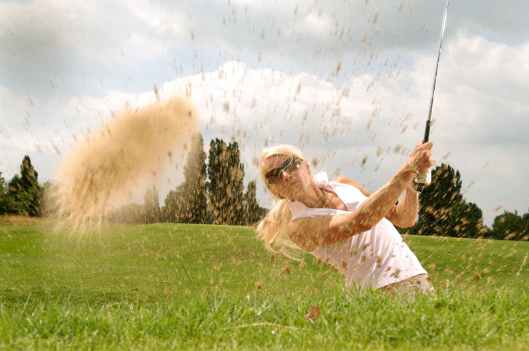
woman playing golf during daytime

Photo by Pixabay on Pexels.com

If golf were a business, many CEO’s would nonetheless approach it as a sport. They would try to hire the “best people” – that is, people with a proven track record of good golfing. They would then proceed to offer incentives for people to do even better. If people shot a high score repeatedly, they would be fired. Eventually, such a CEO might get good results by having skilled people who are well motivated and well trained. But why? If putting a golf ball in the hole is what gained you profit, simply shorten the fairways, widen the hole, and eliminate the hazards! Of course, as a sport this would make golf no challenge and no fun. Everyone could win. But having everyone win is exactly what you should do to maximize profit. Yet many in management are so taken with the “business is a sport” metaphor that they do not change the situation. Some do “change he game” and with spectacular results. Google and Amazon come to mind. 

Politics is War. 

If you belong to a political party and believe the “other” party or parties are enemies to be destroyed, you are failing to understand the dialectic value that parties with different views can bring to complex situations. Life is a balanced dance between strict replication and structure on the one hand, and variation, exploration, and diversity on the other hand. A species who had no replication of structure from one generation to the next would die off. But so too would a species that had no variation because the slightest change in environment would also cause the species to die off. So it is with human cultures. If every generation had to start from scratch in determining what was edible, how to get along, how to avoid predators and so on, humans would have died out long ago. On the other hand, if a culture were completely unable to evolve and change, they would also die out. Typically, “conservative” parties want to keep things the same for longer and “liberal” parties want to change things more quickly. There is no obvious answer here. But what is vital is that members of each party see that there is value in the debate; in the dialogue; in the dialectic. 

architecture bright building capitol

Photo by Pixabay on Pexels.com

The other party is not an enemy; it is the balance so that you can do what you do best. If you are predisposed toward exploration, science, new experiences, and so on, great! On the other hand, if you are more predisposed toward tradition and loyalty and repetition, great! If you did not have the people of the opposite predisposition, you would have to incorporate all that within yourself. Conservatives are what allows liberals to be liberal. And liberals are what allows conservatives to be conservatives. A huge problem arises, as it has recently in American politics, when one party decides they are just “right” all on their own and “victory” is worth lying, cheating, and stealing to get it. This is not unique to contemporary America of course. History is littered with administrations who were so convinced that they were “right” that they wanted to destroy all opposition. It has always ended badly. Politics is not war. (Though the failure of politics often leads to war.)

UX is All that Matters vs. UX Does Not Matter. Development is war!

As you might guess, neither of these extreme positions is useful. Price matters. Time to market matters. Marketing matters. Having good sales people matters. Having excellent service matters. Having a good user experience matters. It all matters. Depending on the situation, various factors matter relatively more or less. 

IMG_4214

(Original artwork by Pierce Morgan)

As in the case of political ideologies, it is just fine for UX folks to push for the resources to understand users more deeply; to test interaction paradigms more thoroughly; to collect and observe from more and more users under a wider variety of circumstances. Similarly, while you are pushing for all that and doing your best to argue your case, remember that the other people who are pushing for tighter deadlines, and more superficial testing are not evil; they simply have different perspectives, payoffs, and responsibilities. Naturally, I hope the developers and financial people do not view UX folks as simply “roadblocks” to getting the product out quickly and cheaply either. 

The first half of 2018, I tried to catalog many of the “best practices” in collaboration and teamwork. You might find some of these useful if you are embroiled in “UX wars.” You and your colleagues from other disciplines might also find it useful to consider that it is worth taking the time to affirm your common purpose and common ground. You are meant to work together. Development is not war! 

IMG_5216


Author Page on Amazon


Myths of the Veritas: The Prophesy Dream of She-Who-Saves-Many-Lives

27 Monday Aug 2018

Posted by petersironwood in apocalypse, family, health, Uncategorized, Veritas

≈ Leave a comment

Tags

celerity, dream, ecology, haste, myth, prophesy, speed, story

The Prophesy Dream of She-Who-Saves-Many-Lives

IMG_9414

She-Who-Saves-Many-Lives wondered how effective the promised dream-catcher of She-of-Many-Paths would prove. Lately, the Shaman’s dreams had been more troubled than usual. In the distance, she could hear the skies rumbling and grumbling in the distance. She could smell the approaching storm; as yet though, no raindrops drummed and not a whisper of wind swayed the nearby oaks. She-Who-Saves-Many-Lives drifted into a fitful dream. 

{Translator’s Note}: Needless (?) to say, the Veritas, like many so-called primitive people took great store in dreams and dream interpretation. Nonetheless, they also realized that the outside conditions influence dreams as the reader is also no doubt aware from their own experience. Therefore, before recounting the contents of a prophetic dream itself, they recorded the physical circumstances and physiological state of the dreamer. 

She-Who-Saves-Many-Lives began her journey in the spirit world walking along one of the broad paths that the many branches of the Veritas used for commerce among themselves. She walked soundlessly along the path, whose dirt had been pounded into hard-baked clay by the elements and the numerous feet, large and small, who had trod, run, shuffled, and plodded along this path. Presently, the Shaman came across a blueberry bush and snatched off a handful, anticipating the rich, sweet, aromatic taste. But there was no taste. She coughed and noticed that her eyes watered. Breath came with difficulty, and the air itself seemed to filled with dust or ash — the worst tasting ash ever. She looked toward distant peaks but they were dim as though the air was no longer air but a thin gray smoke, tinged with yellow. Smoke seemed to grow from leafless, limbless trees.

sky clouds building industry

Photo by Pixabay on Pexels.com

She-Who-Saves-Many-Lives looked down at her feet and was surprised to see that the baked dirt was not yellow-brown dirt. Instead, the path was a dirty silvery gray flecked with tiny pieces of mica. The road was hard under her feet – much harder than usual. She stopped in her tracks. Something was making an odd noise. No, not a noise. It was silence. 

No crow scolded. No robin tweeted and twittered. No unseen tiny feet scurried through the brush. No squirrels chattered in the trees. She-Who-Saves-Many-Lives saw the rock-hard road beneath her feet spread out like a cancer growing ever larger. As the strange and ugly whitish rock spread out in all directions, She-Who-Saves-Many-Lives could see it destroying all in its path: blueberry bushes, oak trees, deer, squirrels. Everything flying fell from the sky. Everything crawling or running found themselves mired in the ever-expanding death rock. Initial silence was replaced by deafening screeching and rumbling. 

IMG_1775

She-Who-Saves-Many-Lives still found herself wanting to run from this terrible thing that ate her world but found herself instead lashed to the spot, unable to move. She called for her tribe but no-one came. Perhaps they could not even hear her over the din. In the distance, at last, she saw other people coming toward her. Like every other adult in the tribe, she knew everyone and could recognize each such person at a distance. But here she saw none that she recognized. As the throng grew closer, she saw that their faces were also white and flecked like the rock itself and their eyes had no light. Each marched as though to a drumbeat that only they could hear. Their faces showed nothing and their mouths all moved constantly but nothing meaningful issued forth. 

As people in such close proximity inevitably do, some few tripped upon each other. A few such blank people fell. Rather than laughing and spreading out more to avoid further tripping, they began fighting and screaming at each other. Each such person blamed other such people and everyone pointed fingers at someone else and screamed. Some such persons now drew forth magic black rocks and pointed not fingers only but also these magic black rocks at each other. Such pointing came with a loud noise such as a moist shale makes in exploding when placed too close to the fire. Such magic pointing caused blood to appear in the person pointed to. Many such people pointed and many such people of white death in so pointing caused others to fall bleeding and screaming. 

IMG_0130

She-Who-Saves-Many-Lives tried to minister to some who were bleeding and screaming. She began to tear off some of the clothing of these people of white death to make tourniquets. The touch of such clothing repulsed her; nonetheless, she persisted. She saw that no-one else helped her with her ministrations. She began to wonder whether these magic black fire rocks would also cause blood to appear if pointed at her. She stood to look about for anyone from among the Veritas who might help her, but all she saw was an endless sea of the people of the white death coming down the broad white road. Now, each had a magic black rock of fire and all pointed at someone else and made blood appear. They no longer waited for someone to trip. They simply seemed to want to cause harm and kill another living human being. 

The Shaman became concerned for her own people and ran to hide in the Lake of Reeds until such time as she could conceive of appropriate action for no such plan could she yet devise. When, she came to the Lake of Reeds, however, there were no reeds at all. The beautiful blue lake had been replaced with one of brown and it was covered with scum. She walked to the edge and touched some of the scum. It was not a plant however as she had sometimes seen. This scum was not of life but of death. It was mainly white or clear. And, when she touched it, it seemed not of this earth but appeared instead to be of the land of death. When she touched it, she felt no connection whatever to life. 

IMG_9924

She-Who-Saves-Many-Lives decided to head back to her own cabin and call a council meeting. She knew a path over the ridge and hoped that the white road of death had not yet killed such path. Suddenly, she was at her cabin door. Sitting in front of the cabin door, laughing, was Fleet-of-Foot wearing a white death-mask. She-Who-Saves-Many-Lives spoke urgently. “Fleet-of-Foot, be true to your name and run quickly to summon the tribe. There is a great plague upon the land and I fear it will kill all things unless we act quickly.”

Fleet-of-Foot just grinned at her, and replied, “Do your own errands, old lady. I am from the future where I am king.”

“King? What is a ‘king’ and do you not hear me? It is urgent that we summon all the people now. There is a giant white rock of death covering all things. I cannot stop it alone.” 

Fleet-of-Foot shook his head. “No, old woman, that is just a better kind of path. It is faster and allows more people to travel. It kills nothing but useless trees, bushes, and animals.” 

“Useless? How can you say trees, bushes and animals are useless? We depend on them for our survival.” She-Who-Saves-Many-Lives now saw that Fleet-of-Foot seemed enclosed in a giant shiny bubble. His voice seemed to have lost its rhythm and music. Indeed, he spoke quickly but without any connection to his own heart. 

IMG_9553

“Listen, Old One,” continued Fleet-of-Foot, “we have better ways to find food now and everything else. We have no more need for animals, bushes, and trees. Everything is done more quickly and efficiently now. Perhaps you do not yet see the wisdom of this new way, but you will. Everyone does eventually. Well, everyone who survives. You see, One-Too-Old-To-Save-Many-Lives, now everyone has only one way of how-to. My way. The way of As-Fast-As-Possible.”

“Fleet-of-Foot, there is some good to that way of how-to, but it must be balanced with other ways. Where are the other candidates?” 

“Not really, One-Too-Old, speed is really all that counts. I killed all the other candidates. Too much trouble. They didn’t seem to realize that my way is the only way. My way of how to has made many weapons as well for fast killing. Such weapons as these end arguments very quickly indeed. And, I have wasted too much time already talking with you.”

At this, Fleet-of-Foot pulled out a magic black killing rock and pointed it at her. 

Before he could use his weapon, a hundred eagles dove from the sky onto every part of Fleet-of-Foot, and tore him apart with their talons. Fleet-of-Foot screamed. 

At this, She-Who-Saves-Many-Lives awoke and realized it was she herself who was screaming. Outside, she could now hear the storm outside bringing life-giving rain and the crack of nearby lighting and the ripping of trees struck by such. The Shaman decided this was a dream that she needed to share. She decided that when the storm had passed, she would call together first the Six-Who-See-With-Animal-Eyes, including Fleet-of-Foot, to see what possible meanings could be gathered and whether such a dark dream should be shared with all of the Veritas. Beyond meanings, however, she wished to amplify her own wisdom about whether such an imbalanced world as the one she had seen could ever truly come to pass. 

fullsizeoutput_2514

Further sleep that night proved impossible, even for one so disciplined as She-Who-Saves-Many-Lives. She turned the problem this way and that in her mind, trying to see if such path of inharmonious blindness could ever be. Could the Veritas, or indeed, any people, come to view speed as so important that they put no value whatever on any other way of how-to? Being in harmony counted for nothing? Making something that lasted for many winters counted for nothing? The pleasure of the making itself counted for nothing?  It seemed unlikely. It was also unlikely that one tree could grow through another. Yet, she had seen such herself and not far from here. But to see trees, bushes, and animals as being without value? To replace such with a huge block of ugly white flat stone? To make a gray white pond scum to cover lakes? To laugh at and mock other ways of knowing? These seemed impossible, not just unlikely. Still it would be good to see whether fresher eyes on the world could see a path to this not-life way of life. Often, she well knew, a perfectly good fruit with a slight crack may become first a home for a few tiny mold plants and soon the entire plant is encrusted with foul-tasting mold. Some few ants could begin chewing on logs and eventually destroy an entire lodging as she herself had pointed out to Pond Mud. Could something like that happen to an entire world? Wouldn’t the people stop such an infestation long before it was too late?

Enlight1


——————-

“Magic Portal” to Other Worlds! 

Positive Deviance

07 Saturday Apr 2018

Posted by petersironwood in health, management, psychology, sports, Uncategorized

≈ 1 Comment

Tags

cooperation, family, Feedback, innovation, life, pattern language, Peer Learning, sports

IMG_9659

Positive Deviance

Prolog/Acknowledgement: 

The idea for this Pattern comes from a book of that title.

I am continuing in the style of trying to write something that explains the Pattern and why it works along the lines of Christopher Alexander’s original book. For this particular suggested Pattern, it seems important to point out some of the caveats and challenges. I may be that this is important for all Patterns but I’m still puzzling over how much these should be a specific part of each Pattern.

Author, reviewer and revision dates: 

Created by John C. Thomas March 23-April 7, 2018

Abstract: 

In any complex situation that you might want to “improve” or “fix,” there are some who are in that situation and have already figured out how to succeed. Instead of designing and imposing a solution, you can find out who the success stories are, observe what they are doing, get feedback from the observed and then encourage those involved in the success stories to share what they do with their larger community. 

https://en.wikipedia.org/wiki/Positive_deviance

Context: 

Complex problems can often only be solved by groups. In some cases, a problem seems overwhelming, impossible, or insoluble.  People from the “Global North” for example, see a situation such as illiteracy or malnutrition and wish to use their resources and knowledge to solve a problem for others who are experiencing the problem. It is certainly worthy to want to help others and to share abundant resources. However, even when one is careful, it is easy to intervene in such a way that the problem is not really solved but only temporarily ameliorated. In other cases, the problem is actually made worse or the problem that is focused on is solved, but other even more severe problems result.

For example, a so-called primitive society may rely on hunting and gathering for its existence. The people are okay under normal circumstances but have no extra resources to “better” their life. Instead, they are taught by well-meaning people in the “Global North” to grow a cash crop that brings in enough money that they can buy a variety of foods as well as more clothing, medical supplies, and housing. This all works fine until the monoculture crop gets a disease. If the “primitive society” is lucky, this happens fairly quickly while the tribe still retains the necessary hunting, fishing, and gathering skills to survive. In worse cases, perhaps the skills or the lands needed no longer exist and the people are much worse off than they were before the intervention by the “Global North.”

Of course, not every such intervention is well-intentioned. In some cases, the real goal of the interveners is to make a lot of money off a crop of tea, coffee, opium, or cocaine. In other cases, the natives become miners for diamonds or precious metals. It might or might not also be an intention to destroy any possibility that the natives in the land can still live off that land in the way that they and their ancestors have done for millennia.

Even in the best of circumstances, there will be unknown and often deleterious side-effects of interventions. For example, perhaps the women of a particular tribe used to spend considerable time together in the village center pounding roots and talking with each other. Because they were doing this in the center of the village, they also easily helped each other watch all the village’s children and to watch for predators. During this time, all sorts of other “work” might also have been done. The women as a group may have solved many budding feuds within the tribe, or done gentle match-making, or experimented with different shaped tools and so on. Because they bonded with each other, they may have also made family break-ups due to infidelity less likely. The point is that an outside look at the culture may only see “inefficiency” in what is actually an effective social and economic system.

fullsizeoutput_11a7

Regardless of how it came to be, the fact of today is that many people in various parts of the world are in dire need of clean water, food, shelter, or medical care. Within the so-called “developed” world or Global North, there are other widespread problems such as the opioid crisis, obesity, vast wealth inequalities, and, in the United States, mass shootings. We tend to think of such large scale problems, regardless of the geography, as being both general and systemic. And we typically look to use analytical tools to diagnose problems and generate solutions to be imposed by the government or NGO. Such imposed solutions will almost always have unintended consequences, some of which will be negative.

Problem:

There are many problems in the world and the most severe have to do with people’s basic needs not being met. If one tries to solve a problem and then impose that solution, there is a good chance that the solution will be wrong. Even if it’s “correct” in solving the given problem, there’s a good chance that it will have negative side-effects that may be worse than the original problem. Moreover, even if the solution is “perfect” and avoids negative side-effects, it may still fail to be adopted because the people necessary for implementing the solution were insufficiently involved initially in finding, formulating, and solving the problem.

When it comes to problems in logic and mathematics, there can be some reasonable notion of the “goodness” of a solution which people will agree on, given enough background and training. However, problems in real world settings are generally too complex to allow of legitimate “proof.” People will have different values, preferences, and experiences so that they will tend not to agree unless everyone involved at least has a chance to feel as though they have been involved throughout the process.

IMG_3524

Forces:

  • Real world problems dealing with basic needs are likely to be complex. (If there were “simple” solutions, they would already have been found).
  • An outside group may have knowledge or perspective that allows them to see possible solutions that the people experiencing the problem may not know about or see.
  • Sometimes, people intentionally mislead others; they claim to have a solution to a problem based on superior knowledge or technology but actually, they are just manipulating others.
  • Even when operating with the best of intentions, outside problem solvers may not understand enough about the context, values, and culture to design solutions that will work.
  • People generally want to be consulted on decisions that impact their lives.

* Typically, people within a community are more trusted than outsiders.

  • When feedback loops are slow, delayed, or noisy, people may not know when they have solved a problem or made progress on it.
  • Most solutions to complex problems require the active cooperation of the people most affected in order to be implemented and maintained.
  • A proposed solution is more likely to be adopted if the solution comes from community members.

* In complex problems in the real world, there will often be a large variation in how well people are solving these on their own.

Solution:

When facing a complex, real world problematic situation, instead of having an outside group find, formulate and solve a problem and then try  to implement that solution, instead, seek to find people within the community who have already solved it or partially solved it. Help to understand the nature of the solution and facilitate the communication so that those who have solved it are aware of how they solved the problem and communicate it to the larger community.

Examples: 

1. The idea of “positive deviance” is similar to the progress in “best practices” that is often achieved in sports, arts, and crafts. For instance, in tennis, hitting the ball harder means your opponent has less time to get to the ball and more trouble judging how to hit their own shot. However, if a player hits the ball too hard, it will tend to go out of bounds. Some tennis players have experimented with hitting the ball with a huge amount of topspin. This allows the ball to be hit fast but with a trajectory that allows it to clear the net but still dive down into the court. Because such tennis players have tended to be successful, newer players try to copy these techniques.  Similarly, good weavers, painters, and writers try to understand how those who are “best” at the particular craft achieve the results that they do.

IMG_2562

2. In the opening example in Positive Deviance, aid workers are concerned about malnutrition among rural children in Viet Nam.  Various charities have, in the past, handed out additional foodstuffs to families and the children do better…for a time. Once the charity moves on or runs out of money, however, the nutritional needs stop being met and kids are just as bad off as they were before.

Instead, the authors of Positive Deviance discovered that among a large number of extremely poor rural families in Viet Nam, there were a few who had kids who were not suffering from malnutrition. In order to to find out why, they initially interviewed both these families and the (much larger) group of families whose kids did have malnutrition. These interviews revealed no differences. Of course, there are many possible explanations including luck of getting or not getting diseases or parasites or possibly genetic factors.

When the authors investigated by careful observation, however, they discovered three crucial differences between the numerous underweight kids and the few normal weight kids. First, the families of the normal weight kids included an older relative who fed the kids a noon meal every day. Most of the families fed the kids in the morning before going out to work in the rice fields all day and again upon coming home. The kids could only eat so much during two meals; though hungry, their stomachs were small capacity. The kids ate more total during three meals. Second, the families with healthier kids included in the daily soup, not only rice, but tiny crustaceans and bitter herbs that grew among the rice stalks. Third, the parents of healthier kids were more rigorous about hand-washing. All the kids were supposed to wash their hands before eating, but in the case of the healthier kids, if the family dog came up and the kid petted the dog during a meal, that kid would have to go wash their hands again.

After these discoveries were made, the authors of Positive Deviance did not “explain” to the villagers what the solution was. Instead, the kids were publicly weighed each week. The families of those who were of “normal” weight explained what they were doing. Some families adopted these practices and everyone could see that, over time, these kids began to thrive too. The community became convinced on the basis of what worked for others within the community and as explained by others in the community and they altered their behavior to match those in the community who had a better solution.

3. Of course, in some sense, having the whole species “learn” from the cases of “positive deviance” is more or less how major mechanisms of evolution work. There is always variation along many dimensions among the individuals of a species. In any given environment, there are some variations which will confer a relative advantage compared with others. Those with an “advantage” will tend to prosper and have more offspring that those who do not have this advantage. Over time, most of the members of the species will come to have the advantageous trait.

tennisinstruction

Resulting Context:

Once people participate in a community-wide effort to see who and what is being successful and then understand what they need to change in their own behavior. The cohesion and self-efficacy of the community is increased. The solution tends to have fewer “side-effects” and is necessarily respectful of the community culture.

Related Patterns: 

Reality Check, Small Successes Early, Build from Common Ground.

Caveats and Limitations: 

There were no reported bad side-effects to implementing the nutrition and lifestyle changes suggested by the observations in the study. However, we must realize that there could be. For instance, it might have been the case that when everyone started harvesting the bitter herbs and crustaceans, those species might have been killed off. As a result, it could have turned out that none of the kids would now have that advantage.

In general, a solution that “works” for a small minority might not work if everyone does it. We can easily imagine a situation where a few people in a village of farmers are rich while most people are not. A thorough investigation might reveal that the few who are rich got that way because they cheated when they weighed their produce and stole from the church collection plate. This is obviously not a “solution” that will work when everyone does it!

References: 

Pascale, Richards & Sternin, Jerry. (2010). The Power of Positive Deviance: How Unlikely Innovators Solve the World’s Toughest Problems. Cambridge, MA: Harvard Business Press.

http://www.betterevaluation.org/en/plan/approach/positive_deviance

—————————————————-

Author Page on Amazon:

https://www.amazon.com/author/truthtable

Too Much!

03 Sunday Sep 2017

Posted by petersironwood in America, health, psychology, sports, Uncategorized

≈ 9 Comments

Tags

#excess, #GoldenMean, #stress, #therapy, #USOpen, Business, innovation, sports, Tennis

RainWaterGutters

A  tennis player hoping some day to be at the US Open improves their serve; hits it harder and deeper. Good! They practice more; hit it harder and deeper. Now, every serve is rocketing over the net and sliding off the service line. But should they hit it even harder, they will double fault their games, their sets, their matches and their careers away.

A baseball pitcher learns to throw faster and faster, hitting the corners of the strike zone. Too far left or right and no-one will swing. Right in the middle risks at least a single and probably worse.

The surgeon cuts beside the heart. The tumor must go. The cut must be made but should the scalpel slide too far from the target, the surgeon could prove more lethal than the tumor.

A life lesson hard to learn is that there really can be too much of a good thing.

How much is too much varies according to circumstances.

Yet, individuals and businesses seem so easily to fall into the trap of “If some is good, more is better.” This is almost never the case except within extremely narrow contexts and under many sets of assumptions. Much more common is the case where some is good, more is better, and too much is worse than none at all.

OLYMPUS DIGITAL CAMERA

OLYMPUS DIGITAL CAMERA

Cases in point litter the annals of human misery throughout the centuries. No vitamin A is very bad. A little is better than none. More is better. But only up to a point. Beyond that, it becomes toxic. Too much.

There are often natural boundaries and tradeoffs in nature that do some of the work for us by keeping things within reasonable boundaries. For example, we think it’s really cool if a football player (whether American football or soccer) is extremely fast. But by “extremely fast”, we mean humanly possibly fast. It would ruin the game if one player could run 300 miles per hour.

IMG_5126

Like most kids, I liked candy. Favorites came and went though themes repeated such as chocolate, nuts, and crunchiness. Caramel and peanut butter — yum. I would always opt for more rather than less candy.  Parents though consistently pushed toward less candy. Nonetheless, I found and developed clever ways to cajole and trick them into letting me have enough candy to ruin my teeth. Too much of a good thing.

One of the chief ways that companies make too much of a good thing is when it comes to motivation. It has long been known that the performance of people tends to increase with increasing motivation, but only up to a point. After that, further motivation reduces performance. This so-called “inverted U” is true, not only for humans, but throughout the animal kingdom. In work that involves more than one person, companies often multiply the error. As pointed out by Frederick Brooks many years ago in “The Mythical Man-Month” when a software project gets behind schedule, the typical response of management is to require tighter reporting on progress and to add more people to the project. Requiring more reporting obviously puts people under more pressure and takes time away from actually accomplishing anything. Adding more people is typically even worse because they don’t know what is going on in the project and the people who actually are being productive have to take time away in order to instruct them!

The optimal level of motivation interacts with other things of course. For one thing, how you take external stress depends a lot on how you take it. Some people begin to awfulize when things get hot; they take things personally; they imagine the worst, etc. So, to an extent, it depends on the person’s own character how they react, but it also does depend a lot on the external stress. No-one is most productive under too much stress.

IMG_5574

The optimal level also interacts with how creative is the task at hand. For an extremely simple task, higher motivation can work well. If I ask you to hang suspended onto a bar as long as possible, you may be able to do it for a minute. If I offer you a thousand dollars, you’ll probably hang on longer. Suspend you over the grand canyon and you may be able to hold on still longer. But now imagine instead, I ask you type, without error, a page of text at your maximum keying speed. You may do better for a thousand dollars than doing it for free, but if you’re life’s on the line you are almost certain to make errors. When it comes to a task requiring you to do something completely new or do something creative, you will most likely to best under very low levels of stress. The more stress you experience, the more you are likely to stick to what you already know.

Again, these relations can be moderated by personality but they are pretty robust across gender, age, education and, in fact, even apply to other animals. If you want to teach your pet a new trick, you will have much better success if they are motivated but not overly so. A simple “creativity” task for animals is the “Umweg” test. “Umweg” means “way around” in German. You place the animal and a treat on a platform separated by a screen that does not go all the way across the platform. A lizard may starve to death instead of walking around the screen. They are too bent on going straight for the treat. A dog will typically have zero or little problem with this task, unless the dog is extremely hungry. As for humans?

iPhoneDownloadJan152013 807

I recall reading about such a test that was performed on US army recruits. Each recruit in the experiment was put in a large room they had never been in before. This room had a large number of doors. An announcement came over the loudspeaker asking them to leave. Each recruit would go to a door, typically find it locked, move to another door, etc. At last, they would find the door that was unlocked and leave the room. Sounds easy, right? You and I could probably solve this without any real difficulty.

Now, comes the “fun” condition. In that condition, the announcement comes on while a simulated fire is right outside. The announcement now says to leave because the building is on fire. What happens? The vast majority of recruits go to the nearest door, try to open it and upon finding it locked, do not try another door. Instead, they try harder and harder to open this same door, jiggling the handle ever more vigorously. Yes, under enough stress, people cannot solve this simple problem. 

In my sophomore year at college, my girlfriend at the time was a Freshman at Oberlin. As part of her requirement for introductory psychology, she ran an experiment about the inverted U of motivation with lab rats. I helped. Here is how the study went. Rats were in one of three states of “stress” before having to swim a small underwater maze. The maze was quite simple. The rat had to go down a long corridor, make a left turn and then come back another long corridor. The “stress” was induced by holding them under water for a small, medium, or long period of time before they started. (I don’t really like this as a way of inducing “stress” because brains don’t work as well with less oxygen but I didn’t design the experiment). Anyway, my job was to get the designated rat out of the cage, hold under water for a few seconds and then let it go so it could swim the simple maze.

All went well until I went to get one of the rats who was in the “high stress” condition. All the other rats were pretty tame, but not Mr. “High Stress Condition.” Oh, no. He ran around the cage trying to avoid my hands. When I finally grabbed him around the belly, he grabbed hold of the cage wire with all four paws! He began barking like a dog! I had done various training exercises with rats before and this was the first one that did anything like bark! I had to pry his little paws off the cage one by one. I can tell you that at this point, this poor rat was already in the “high stress” condition. And so were Janet and I!

And, now I needed to hold him under water for the longest time before letting him swim the maze. I felt horrible. I was well aware that this rat was already stressed and was already probably exhibiting an oxygen debt from his vigorous attempts to avoid capture and escape my clutches. Nonetheless, we decided to go forward with the experiment. I held the poor critter under water the requisite time. Now, we could hear him swimming down the long corridor, make a quick turn and swim toward his freedom. As long as we could hear him swimming, we knew he hadn’t drowned. He was indeed the slowest of the rats so far. We didn’t care at this point. We just wanted him to survive. Down the long corridor he came to the open place where he could escape the water at last. He got there! Whew! We both sighed in relief.

But only for a second! Unlike every other rat, when this one got to the open space instead of surfacing so he could get to the air, he immediately made a U-turn and began back the other way! Oh, crap! I hadn’t really signed up for drowning rats! We could still hear his little rat paws churning through the water. Janet and I were trying to figure out whether we could break into this apparatus and save the rat if he stopped swimming. Meanwhile, Mr. “High Stress Condition” kept paddling along. He came all the way back to the origin of the maze, turned and went back. Freedom was there for the taking for this poor rat, but he was too stressed to look up and see it. Sigh.

At long last, after Mr. “High Stress Condition” had swum three times as far as his mates, he finally came out of the water. He looked a lot like a … well, a drowned rat. I patted the poor fellow off with a towel and put him back in his cage. His stress level hopefully fell at that point, but I know Janet and I were both relieved that he survived. Our pulse rates eventually returned to normal too.

iPhoneDownloadJan152013 778

As a therapist at the “Institute for Rational Emotive Therapy” I had plenty of chance to work with people who were just as over-stressed as poor Mr. “High Stress Condition” had been. This is not to say that people are just like rats. Of course, they aren’t. But when it comes to reactions to stress, we are very similar to our animal cousins. What people can learn to do is to moderate their stress by what the focus on and what they tell themselves.

To take a sports example, if you are playing in the US Open tennis round of 16, you are in much higher stakes game than someone who is just having a friendly social match. But every world class athlete learns to control their stress level. They do this by focusing on their process and on the current condition. If they start thinking much about the score, the stakes, the errors they’ve made, they will get in trouble. And if they start saying things like, “Oh, you idiot! How could miss that shot? Now, if you don’t get this next point, your chances to win are ruined.” Humans can intentionally make themselves more stressed or less stressed than the objective situation would justify. This is a skill that everyone should learn, by the way, not just athletes.

Our society seems to have forgotten how to motivate people “just enough” and instead puts too much stress on employees, encouraging them to work too many hours and thereby lowering productivity and greatly lowering creativity. Once again, it’s no accident that IBM was successful for so many years and had the motto: “THINK” and every employee had this on their desk. Mr. “High Stress Condition” rat would have done better had he kept this in mind.

Our society’s obsession with overdoing is not limited to over-stressing employees. We tend to overeat, overuse drugs, over stimulate ourselves, drive too fast, spend too much money, buy way more than we need, and use way, way more energy than we need. It’s just too much! Too much of a good thing is bad for you personally and even too much success can be bad for a company in the long run. (See, for instance, the link below about how Kodak actually invented the digital camera but then got on board too little and too late because of their overwhelming success with film and cameras). And, in that spirit, rather than continue to argue the point, I will end with The Jewels of November. 

OLYMPUS DIGITAL CAMERA


The Jewels of November

(Third prize winner in the Chatfield National Poetry contest)

Winter ripped into our neighborhood last night;
Gale and pail of rain turned flake by morning;
Gutters filled to overflowing; my basement flooded.
And the riot of yesterday’s autumn light
Gone as though it never burned its magic riots of red and gold.
All the tallest tulip trees and oaks stand naked now,
Black, bucking wet twigs against the steel gray sky.

Bundled in my leather hat, jacket and gloves,
I walk out to survey the carnage of fallen leaf and broken branch.
The wind still gusts to make my eyes smart and my cheeks burn.
Low black clouds swim and swirl.
Somewhere a flag cord bangs against an empty pole.

So off I go through deserted streets of a condo Sunday morning
Into the drear of pale November.
The wind sings a shriller note when the leaves are gone,
The hush is replaced by a whistle.

And, walking down the hill toward the main road
I see beneath the broken canopy the first Jewels of November —
Coral leaves laid in relief against the wet black woods
The amber leaves, the carmine leaves of shrubs
Protected by the barren trunks of their taller cousins.

Beside the road, a head of goldenrod casts against green grass.
A few lonely wood asters, white and an occasional blue.
Hanging from the dead vines, clusters of gold and red.
Before me, the sky breaks for a moment only
And a hawk wheels through a single shaft of sunlight
Rejoicing, so it seems, in the thick cold air,
His outstretched white wing fingers glowing white for a moment.

And so I find, here in this gray and lifeless world
Treasures of color and texture and form — and music too
For the overflowing brooks are singing quiet giggles
Just as ten black crows careen and crackle through the trees.

I look down and see a broken piece of branch
Bedecked with lichens, the palest possible shade of blue-green.
I bend to pick it up and out of my jacket pocket coins tumble
Tinkling on the black macadam roadway, they splay themselves:
A shiny copper penny, dime, quarter, nickel and a dark penny.
How fine when I was a child to find a few coins like this! How rich!
I knew the different smell and taste of every coin,
My parents’ dire warnings not to put them in my mouth
Making the taste so much more exotic and exciting.
Now my money comes to me as a blue paper note
Claiming the check was deposited directly in my account.
How efficient, I note.

Another shaft of sunlight strikes me from the briefly parting clouds
As I retrieve my coins one by one
And remember that today is the New York City marathon.
Phillipides, so the story goes, died after bringing the news
Of a Greek victory back, from exhaustion, so we suppose.
But I wonder: was it simply that his life’s best work was done?
Or could it even be the sheer clear joy of the news delivered?
Or, the ecstasy of the swinging legs and arms, the hot heart,
The heaving chest — feeling so alive that pain itself is joy.

The wind is at my back and I wonder what it would feel like
To run today that long race through the windy streets of New York.
But a walk through the woods is enough for me, enough today,
Stopping to watch the hundred precious scenes laid out before me.
I wonder where all these treasures were last week-end
When I walked this same path.
The answer is, of course, that they were drowned in a sea of color
The neon chaos of autumnal carnival showing off.

I turn back toward home now.
Lonely snowflakes hit and actually bounce once off the black road
Before settling down to melt their brief beauty on still warm tar.

The wind is fully furious in my face.
I dream what lunch I might fix once out of this blowing cold
A steaming chicken broth thick with onions, carrots, and peppers.
And I recall a time when I was a senior in college and had the flu;
The medicine the doctor gave me made me worse
And I ended up not eating for three days
But the at-last, ah-ah, taste of the clear broth I savored oh so slowly!
A feast from a magic bullion cube!

And I wonder as I begin the ascent up the long hill toward home,
Whether winter might not be the whirling earth’s greatest gift.
What would autumn, full summer, or the tender spring be
Without the deadly in-between, the waiting, the wail, the white.

In a land of endless plenty and eternal life, would we ever see
The Jewels of November?

short stories and poems by author

Author page on amazon

Kodak

What if…?

21 Friday Jul 2017

Posted by petersironwood in America, family, health, Uncategorized

≈ 4 Comments

Tags

competition, creativity, culture, family, life, politics, stories

IMG_8651

This is a kind of print medium, backed-up electronically. So, it will still be here in a few minutes, hours, and days. Here’s my suggestion. Read through once while your inner “Yeah-but”-ite chorus is otherwise occupied. You know the “Yeah-but”-ites. We all do. “Yeah but, You can’t possibly afford that.”  “Yeah but, you aren’t smart enough to do that.” “Yeah but, no-one would be that kind.” “Yeah but, yeah but, yeah but.” Give the Yeah-but chorus a TV show to watch, knock em out with whiskey — whatever it takes. Read the following once and see where the train of thought takes you. I have been thinking about this in terms of “America” because that’s where I happen to have been born and where I live now. But I suspect you can read what is below and substitute the name of your own country wherever it says “America.” If you do that, can you see these suppositions as equally applicable to your own?

You can always go back and rip my suppositions to shreds when you go through it a second time. In fact, knock yourself out. Read it fifty times and find fifty things wrong every time. First, read it once though, without doing that. Just flow along with the story. I realize it’s a story. I’m not trying to steal your pocketbook or convince you of tax reform or against it or any of that. It’s simply a “what-if” train of thought. I don’t know exactly where it will lead and neither will you, although the “Yeah-but”-ite chorus would insist after line one, that they knew exactly what I am going to say and why it would never work. By the way, if you do go back and read it a second time and find some better alternative, unstated assumption, another line of speculation, etc., I really would like to know. Anyway, here goes…

What if…

The vast majority of Americans actually wanted pretty much the same things for the country?

What if…

The vast majority of Americans wanted the basics for everyone and a few luxuries and a better life for their kids?

What if…

There actually is enough wealth for everyone to have the basics and a few luxuries and build a better life for their kids?

What if…

That were true regardless of political party, religion, region of the country, education level, gender, race, generation, or occupation?

IMG_9291

What if…

Agreements and Cooperation actually occur across every boundary in this country far far more often than acts of crime, or even nastiness?

What if…

Acts of crime or violence or scandal are reported far, far more often than the much more numerous cooperative actions?

What if…

Media have discovered that they make a lot more money if they report on sensational rather than inspirational or informational content.

What if…

The politicians, in order to gather our contributions, tend to exaggerate the negative attributes of their opponents and minimize their own while meanwhile exaggerating their own positive qualities and down-playing those of their opponents.

What if…

There were a vast number of improvements that could be made that everyone would agree on?

riverrushing

What if…

Our roads, bridges, and schools could be repaired and rebuilt?

What if…

We discovered that whether buildings and bridges stood or fell depended on physics and not on the political persuasions of the architects?

What if…

We made education a higher priority and spent more money on it than on cosmetics?

IMG_9489

What if…

We worked together to improve health in the country by encouraging everyone, male and female, young and old, to exercise more, eat healthier meals, and spend more time interacting with each other than watching TV?

What if…

We forced politicians to do what was best for their constituents rather than what was best for their wealthiest donors (when those are in conflict — they are not always in conflict)?

What if…

We focused on working together to accomplish what we agree on while we have a full and open debate on those things we don’t agree on?

IMG_9595

What if…

We took it upon ourselves every day to give each other the benefit of the doubt?

What if…

The next time we are stuck in bumper to bumper traffic, instead of weaving frantically in and out to “save” a few seconds, we kept up as smooth and steady a pace as possible while minimizing lane changes, accelerations, and breaking?

What if…

When we disagree about ends or means, we first recount what we have in common and how we want to deal with disagreements rather than rushing to resolve things once and for all immediately.

IMG_3066

What if…

We thought that life itself was a pretty cool gift to be enjoyed and that many human activities such as gardening, dancing, reading, making love, making music, teaching, participating in sports, walking, eating — that they are all pleasurable in and of themselves and not means to some other end like making more money?

What if…

It were possible for people to get together in neighborhoods, cities, states, nations, and world-wide to find, formulate, and solve problems even without governments?

What if…

We saw every human being to be an individual with their own desires, talents, ideas, issues, that to them were just as important as our own are to us?

IMG_5452

What if…

The successes, failures, short-comings and talents of each individual were partly based on luck and individual effort, but were also largely based on the actions of their parents, grandparents, neighbors, great-grandparents, uncles, aunts, strangers, teachers, doctors, Founding Fathers, explorers, scientists, artists, writers, bakers, truck drivers, fire fighters, police officers, farmers…?

What if…

A major way to reduce abortions would be to educate women better and to give them economic opportunity, and if they did get pregnant without wanting to, they had a much wider variety of choices than: 1. carry to term and give them up for adoption and never see them again or 2. carry to term and then struggle to make ends meat while trying to take care of a a kid on their own or 3. abortion?

What if…

Everyone promised to take care of every child born and make sure any mother who wanted to had the economic, social, and educational resources to give that child an opportunity for a full happy life with the mother being as involved as she wanted to be?

What if…

People viewed jury duty as a civic responsibility rather than something idiotic to be avoided so they can concentrate on more important things?

IMG_9428

What if…

People cared as much for the looks of their neighborhood and yard as much as they cared for the appearance of their clothes and hair?

What if…

Every American realized that people from other countries had just as much pride and hope for their own country as we do for ours?

What if…

People who made millions of dollars despite not producing any tangible work product or useful service were not viewed as some higher form of life, but as a kind of parasite on society?

What if…

In other words, actually providing direct value by building, discovering, cooking, growing, teaching, for instance, were viewed as much more valuable than redistributing money that was created by primary work.

What if…

We all realized that we are someplace we’ve never been before and no-one knows for sure what the path forward is, but that whatever the correct path is, it cannot be based on mutual fear and hate but must be based on love and trust?

IMG_2644

What if…

Realizing that, we collectively tried to determine how to follow or build paths of love and trust and found ways to overcome hate and fear?

What if…

We used our choices of media to watch and products to buy, not just on how much momentary pleasure they gave us, but also on how they were impacting the world and its people?

What if…

By working together we can build a better world for everyone?

hubble3

What if…

By respecting everyone, we can come to a better appreciation for the complexity that we live in?

What if…

Things are just a means to ends while life is an end in itself?

What if…

People came to see that everyone on earth is closely related?

What if…

People saw life on earth as something precious and worth saving and that that was even more important even than getting a new pair of sneakers?

What if…?

earthfromspace


Author Page on Amazon.

Family Matters, Part 3: The Whole is Greater than the Sum of its Parts

27 Saturday May 2017

Posted by petersironwood in America, family, health, The Singularity, Uncategorized

≈ 5 Comments

Tags

AI, Artificial Intelligence, cognitive computing, decision making, family

IMG_8925


Some my earliest and fondest memories centered around family dinners at my grandpa and grandma’s house. For Thanksgiving, for example, there was turkey, mashed potatoes, gravy, sweet potatoes, green beans, olives, rolls, salad and several pies for dessert. But beyond the vast array of food, it was fun to see my grandparents, parents, three aunts and three uncles, and various numbers of cousins. On a few occasions, my second cousin George appeared and early on my Aunt Mary and Aunt Emma. All of these people were so different! We had more fun because we were all there together.

You have heard “The Whole is Greater than the Sum of its Parts” before, no doubt, but I think this is what it means when applied to a family setting. All families argue (although ours never did in these larger Holiday settings. And, almost all families love. But a fundamental question is this: do the people in the family tend to “thrive” more than they would on their own. If the family is functional, this should be the case. They balance each other; they support each other; they help each other improve. They cooperate when it counts. You will not always agree on everything. Far from it. You might be a slob like Oscar while your sibling might be very Felix-like. And, you’re both “right” under different circumstances and for different tastes.

Many sports teams will have a variety of people who excel more in running, or in blocking, or in throwing, or scoring. In baseball, for instance, or American Football, there are very different people in different roles, both physically and temperamentally. An offensive lineman in football will typically be stronger and bigger than a quarterback. Moreover, if the lineman gets “angry”, they might be able to block better on the next play. By contrast, the quarterback must remain calm, cool, and confident under pressure. He must try to put away any fear or anger or depression he feels on the way to the huddle before he gets there and certainly before the snap. When teams are working well together, they don’t criticize each other for differences and they work together to win the game rather than wasting time pointing fingers or trying to assign blame. In a baseball or football team, there is no question that the individual does better because of his teammates. Working together they can solve problems, win trophies, and have more fun than they could individually.

IMG_2979

You right eye sees the world a little differently from your left eye. Thank goodness! Your brain normally puts these two someone different flat, 2-D pictures into a 3-D picture! Your brain does not argue as to which one of these views is “correct.” It certainly does not instigate religious wars over it. I say that the brain “normally” does this. However, if a person is born and their eyes do not move or align smoothly, or if one eye is extremely near-sighted, it can happen that the brain “chooses” one eye to pay attention to. In this case, it seems the two images are so discrepant that the brain “gives up” trying to integrate them and instead chooses one image to use. In a condition such as “amblyopia” the brain mainly relies on the input from one eye. This condition is a distinct disadvantage in many sports.

In boxing, for example, it is literally a show-stopper. A fighter might look like hamburger, but the fight goes on. If, however, there is a cut above his or her eye so that blood drips down to obscure vision in one eye, the fight is stopped. That fighter can no longer see in depth (as well as losing some peripheral vision). It is no longer deemed a “fair” fight. Anyway, it seems the human brain does have some limits as to how much two discrepant views can be reconciled, at least when it comes to vision. Is there a limit to how much a family may disagree productively and still be functional? This is a good question, but one to return to later. Instead, let’s first turn to what are called “dysfunctional families.”

We said in a functional family or team, people are better off than they would be doing something on their own. On the other hand, consider a dysfunctional family. Here, people get mostly grief, judgement, criticism, competition, and lies. Why does this happen? Often dysfunctional behaviors are handed down from generation to generation through social learning, among other things. If too many dysfunctional behaviors are in one family, this causes a “vicious circle” that makes things worse and worse. For example, imagine a family is basically healthy but they do not engage in “alternatives thinking.” They see a situation, come up with an idea, and unless there is imminent danger, execute the idea as soon as possible. They will end up in a lot of trouble with that strategy. However, if they don’t engage in blame-finding, but instead they engage in collective improvement, they will learn over time to make fewer and fewer mistakes. People will all benefit from being in the family. But if a family instead fails to consider multiple alternatives before committing to a course of action and has a cycle of blaming each other without ever improving, then it will probably be dysfunctional. People will give more and get less in return than if they have been working alone. That does not mean there are zero benefits within a dysfunctional family. They may still cover for each other, help each other, provide emotional support, etc. But the costs outweigh the benefits in the long run.

People who come from functional families tend to see the world in a very different way as compared with people who come from dysfunctional families. Obviously, there are all sorts of exceptions as well as other factors at play, but other things being equal, these families of origin color our perceptions of daily life and predispose us to certain actions. Depending on the circumstances, it is even true that some of what we think of as “dysfunction” could actually be “function” instead. Suppose, for instance, you and two siblings suddenly found yourself attacked by a bear. It may be the best thing imaginable to take the first action you think of without trying to over-analyze the situation. Or not. It may well depend on the bear. And, therein lies the rub.
IMG_5994

Our own personal experiences are always a teeny sliver of all possible situations. So, your experience with a bear, bee, or bank may be quite different from mine. As a consequence, we may have different ideas about what constitutes function or dysfunction. In terms of the argument I am about to make, it doesn’t really matter which is “better” or “worse.” All that matters is that we agree some families provide a healthier environment than others. And attitudes are not all that are handed down; so are “ways to do things.”

Perhaps the arbitrary nature of what we consider “intelligent” wisdom handed down in families is best illustrated by a story about making a Holiday Ham. In the kitchen, a 10 year old boy asks: “How come you’re slicing off the ends of the ham?”

His mom answers, “Oh, that’s the way your grandpa always did it.”

Son: “So, why did he do it?”

Mom: “Oh, well. Uh. I don’t really know. Let’s go ask him.”

Son: “Hey, Grandpa, how come you cut the ends of the ham off?”

Grandpa: “Well, sonny. It’s because….it’s because…let’s see. That’s way my mom always did it.”

As it turns out, the 90 year old great-grandma was at the feast as well. Though she was a bit hard of hearing, they eventually got her to understand the question and thus she answered, “Oh, I always used to cut off the ends because I only had one small pan and it wouldn’t fit. No reason for you all to do it now.”

And there you have it in a nutshell. We are all walking around with thousands if not millions of little bits of “folk wisdom” we learned through our family interactions. In most cases, we’re not even aware of them. In virtually no case did we ask about where this folk wisdom came from. Have any of us actually tested one of these out in our own life to see whether it still holds up? And then what? Are you going to inform the others in the family that what everyone believes may not actually be true, at least in every case. Maybe. Most do not, in my experience. In addition, it seems that if you are from a “functional” family, you are much more likely to share this kind of experience (but they still don’t do it 100% of the time). People will often be interested in it and want to learn more. If you are from a more dysfunctional family, you might be more likely to realize they would put you down and try to shoot holes in your example. They might laugh at you. They might just not talk to you. So, what do you do?

volleyballvictory

We can extend these ideas to much broader notions such as a clan, a team, a business, a nation. For people who were not lucky enough to grow up in a functional family, the notions of trust and cooperation come hard. And, that’s a sad thing. Because your experience of what a bee or a bear or a bank will tend to be based on your own experience with very little reliance on the experiences of others. You are one person. There are 7 billion on the planet. So, yes, you can rely on your own experience and dismiss everyone else’s. Good luck.

Even a functional family may draw the boundaries around itself so tightly and firmly that anyone “inside” the circle of trust is trusted but anyone outside is fair game to take unfair advantage of. At the same time, such a family regards anyone outside as a threat who must “obviously” be out to get their family. People from this type of family do know cooperation and trust, but find it nearly impossible to extend the concept across boundaries of family, culture, or nation.  They are happy to hear about their brother’s experiences with bees but they are not much interested in the experiences of their cousins from half way around the world.

Everyone must decide for themselves how much to rely on their own experiences and how much to rely on close relatives, authority figures, ancient teachings, or the vast collective experience of humanity. Of course, it doesn’t have to be an either/or thing. You might “weight” different experiences differently. And, that weighting may reasonably be quite different for different types of situations and strangers. For instance, if your cousin is a smoother talker, vastly handsome, and twenty years younger, you might not put much stock in his or her advice about how to “hook up.” You might instead put more credence in someone at work who is in a similar situation. You might put very little stock in the experiences from a culture that relies on arranged marriages. Surprisingly, exactly because they are from a very different situation and therefore a quite different take on matters, they may give you very new and creative ways to approach your situation. For example, you might find that if you “pretend” you are already “pledged” to a partner your parents chose, dating might be less anxiety provoking and more fun. You might actually be more successful. I’m not saying this specific strategy would work or that ideas from other cultures are always better than ones from your own culture. I am just saying that they need not be dismissed out of hand, not because it’s “politically correct” but because it is in your own selfish interest.

I’ve already mentioned in previous blogs that people are highly related and inter-connected via genetics, their environmental interchanges, their informational interchanges and through the emotional tone of their interactions. Because people are highly interconnected, you can find much wisdom in the experiences of others. But there is another, largely underused aspect of this vast inter-relatedness. I call it familial gradient cognition. Or, if you like, “Mom’s somewhat like me.”

To understand this concept and why it is important, let’s first take a medical example. However, this potential type of thinking is not limited to medical problems. It basically applies to everything. So, you have a pain in your right hip. What is the cause and how do you fix it? That’s your question for the doctor, or more likely, nurse practitioner. They will typically ask questions about your activity, diet, what you’ve done lately, when the pain comes and goes etc. They may run various tests and decide you have sciatica. This in turn leads to a number of possible treatments. When I had sciatica, I got referred to a sports medicine doctor and got acupuncture. It worked. (Later, I discovered an even better treatment — the books of John Sarno). Anyway, we would call this a success and it seems like a reasonable process. But is it?

The medical professional’s knowledge is based on watching other experts, book learning, their own experience etc. And so they basically engage in this multiplication of experience. The modern doctor’s observations are based on literally many millions of cases; far more than he or she could possibly observe first hand. But what potentially useful information was completely omitted from the process described above? Hint: blogpost title.

Yes, exactly. Throughout this whole process, no-one asked me whether anyone in my family; e.g., my mom, dad, or brother had had these symptoms. No one asked whether they had had any kind treatment, and if so, what had worked and not worked for them.   Now, my brother, mom and dad are especially closely related but so are my four children and my grandparents, aunts, uncles, nieces, nephews and grandchildren. And, in the most usual cases, it isn’t merely that we share even slightly more genes than all of humanity. We are also likely to share diet, routines, climate, history and family stories and values. These too can play a part in promoting health. For example, did people in your family believe in “toughing it out” or were they more of a hypochondriac?  The chances are, you will tend to have similar attitudes.

In medicine, would it be better to make decisions based, not just on the data of the one individual under treatment, but on the entire tree with more weight given to the data for other individuals based on how closely related they were? Of course, family relations are only one way in which the data of some individuals will be more likely relevant to your case than will others. For instance, people in the same age cohort, people who live in the same area, people who are in similar professions or who work out the same number of hours a week that you do will be, other things being equal, of more relevance than their opposites.

Of course, as I’ve already mentioned, modern medicine does take into account the life experiences of many other people. But these other “people” are completely unknown. Studies are collectively based on a hodgepodge of people. Some studies use random sampling, but that is still going to be a random sample limited by geography, age, condition, etc. Other studies will use “stratified sampling” that will report on various groups differently. Some studies are meta-studies of other studies and so on. But how similar or dissimilar these people were to each other on a thousand or a million potentially relevant factors is more than 99% lost in the reporting of the data. But that doesn’t really matter because the doctor would typically not look at any article in response to your case because he or she will base their judgement on just you and the information they know “in general” which is based on a total mishmash of people.

Imagine instead that every person’s medical issues were known as well as how everyone was related to everyone else, not only genetically but historically, environmentally, etc. And now imagine that in doing diagnosis decisions as well as treatment options, the various trees of people who were “related” to you in these thousands of ways were weighted by how close they were on all these factors. Over time, the factors themselves could become weighted differently under different circumstances and symptoms, but for now, let’s just imagine they are treated equally. It seems clear that this would result in better decision making. Of course, one reason no-one does this today is that keeping track of all that data is mind boggling. Even if you had access to all the relevant data, we can’t layout and overlay all these relationships mentally to make a decision (at least not consciously).

IMG_0469

However, a powerful computer program could do this. And, the result would almost certainly be better decisions. There are obvious and serious ethical concerns about such a system. In addition, the temptation for misuse might be overwhelming. Such a system, if it did exist, would have to be cleverly designed to avoid any one power from “taking it over” for its own ends. There would also have to be a way to use all these similarities and prevent the revelation of the identities of the individuals. All of that, however, is grist for another mill. Let’s return to the basic idea of the decision making by using multiple matrices of similarity to the existing case rather than relying on general rules based on what has been found to be true “of people.”

This may be essentially what the human brain already does. A small town doctor in the last century would see people on multiple occasions; see entire families; and would undoubtedly perceive patterns of similarity that were based on those specific circumstances. The Smith family would all come in with allergies when the cottonwood trees bloomed. And so on. But he or she only sees a limited number of cases even in his entire lifetime. Suppose instead, she or he could “see” millions of cases as well as their relationships to each other? Such a doctor might well be able to perform as well as the computer and much better than they would today.

Can it be better done by collecting huge families of data and having a computer do the decision making? Or can it be done better by giving access to human experts to much larger data bases of inter-related case studies? What are the potential societal and ethical implications and needed safeguards for each approach?

The medical domain is only one of thousands of domains that could do better decision making this way. For example, one could use a similar approach in diagnosing problems with automobiles, tires, students’ learning trigonometry functions, which fertilizers and watering schedules work best for which crops in which soils for what results? You might call this “whole body” decision making. It is a term also reminiscent of the phrase, “Put your whole body into it” (as when cracking a home run into the upper deck!).

It is also reminiscent of the following situation. When you accidentally burn your finger, it does not just affect your finger. You jump back with your whole body. There are longer last effects in your brain, your stress hormones, your blood pressure. And, various organs and cell types will be involved in healing the burn on your finger. Your body works as a whole. But it is not an undifferentiated whole. Your earlobe may not be much involved with healing your finger. It is tuned to have communication paths and supply chains where they are needed. It’s had four billion years to work this out.

Of course, the way the body interacts is largely, though not wholly, determined by architecture. Even if your body decided that your earlobe should be involved, there is no way for the body to do that. To some extent, it can modify the interactions but only within very predefined limits. On the other hand, the brain is much more flexible when it comes relating one thing to another. We can learn virtually any association., But, at least consciously, we are limited to the number of things and experiences we knowingly take into account while making a decision.

What people might say would lead you to believe that they very often base decisions on only one similar case. “Sciatica you say? Oh, yeah. My cousin Billy had that. Had an operation to remove a disk and the pain totally vanished. Of course, three months later it was back. In his …well… back in his back.” It could be the case that there is more sophisticated pattern matching going on than meets the eye. Sadly though, most laboratory experiments reveal that most of the time, under controlled conditions people seem to suffer from a number of reasoning flaws. I believe that the current crop of difficulties people have with reasoning is not inevitable. I think it’s because of cultural stories and with new cultural stories, we could do a better job of thinking. And, we might be able to further multiply our thinking ability by giving the right kind of high speed access to thousands or millions of similar cases along with presentations based on how various cases are related. Or, we could have the computer do it.

Indeed, speaking of “family stories” that are common in our culture, I actually think that we have a “hierarchy” of thinking based on a patriarchal family structure. We do experiments and report on a teeny and largely preset sliver of the reality that was the experiment. A person reads about this and remembers a teeny sliver of what was in the paper. When it comes to a specific case, the person may or may not consciously remember that sliver. This is the “rule based” approach and it is probably better than nothing. A more holistic experience-based approach is to allow the current case to “resonate” with a vast amount of experience.  Of course, both methods can be deployed as well and perhaps there can even be a meaningful dialogue between them. But it may be worth considering taking a more “whole body” approach to complex decision making.


(The story above and many cousins like it are compiled now in a book available on Amazon: Tales from an American Childhood: Recollection and Revelation. I recount early experiences and then related them to contemporary issues and challenges in society).

https://www.amazon.com/author/truthtable

twitter: JCharlesThomas@truthtableJCT

Trumpism is a New Religion

09 Monday Jan 2017

Posted by petersironwood in apocalypse, health, Uncategorized

≈ 76 Comments

Tags

ethics, learning, politics, religion, Trump

(This blog post is a temporary departure from Schooled Haze and contemplations of AI/HCI).

finalpanel1

Trumpism is less a political offshoot of Republicanism than it is a new religion, at least for a substantial number of Trump supporters. I keep seeing posts from various liberal friends recounting nasty infantile things that Trump has done or said as though as to say, “Well, now! That is so completely outrageous, stupid, mean-spirited, vain, or evil that surely you Trump voters will now see how you were wrong.” No. That is never going to happen. I think the “mistake” is to think that Trump is a political leader when he is actually, for many, a religious leader. 

As Trump himself once famously bragged, he could shoot people in the middle of the street in broad daylight and his followers wouldn’t desert him. It doesn’t matter what he does. His value is taken as a given and everything else flows from that. You won’t convince people who are Hindu, Buddhist, Christian, or Muslim to change religions because you claim to have “facts” about how bad some particular religious figure is. It will simply mean they will discount your facts and their source.

Why and how could Trump become a religious figure? He seems offhand to be the complete antithesis of what most of the major religions espouse. Well, yes, but those religions I mentioned earlier arose in earlier times…much earlier. In the USA, 70% of the people claim to be Christians. But what really matters are people’s actions, not their claims. The evidence is all around us that for many people, the real religion of America is quite different from Christianity.

We have a TV culture and a popular culture and what many people really value (as measured by their actions) are things like money, greed, vanity, self-promotion, immediate gratification, superficiality, anti-intellectualism, self-righteousness, fame, and arrogance. We call people who hold high positions in a company “business leaders” regardless of whether they are or are not actual leaders. We have articles written about which colleges are “best” when the entire analysis is about the ROI of your tuition dollars. Social media are filled with “top ten” lists of ways to advance your career that take three minutes to read. We talk about someone’s “actual worth” when what we’re really talking about is their financial worth. We rank order tennis stars, golf stars, baseball stars, and basketball stars according to how much they earn. Where is the list according to their skill, elegance, mentorship, or how much they build team spirit? These things are still talked about on occasion but many people accept that the only “objective” measure of value is money.

We have transmogrified what are essentially cooperative activities like dancing, cooking, dating, and singing and made all of them into competitive contests on TV.  Many of us have accepted as “normal” that all a corporation is expected to do is make the most money possible. What used to be “beyond the pale” ethically is now treated as just taking care of the bottom line. A few random examples follow. It is “normal” business practice now to send snail mail that appears from the envelope to be a check or official government business when it is, in fact, nothing but advertising. E-mail and snail mail are labelled as “In response to your query” or “As you requested” when there is no such query or request. Drinks that consist of high fructose corn syrup and water with dyes (and quite possibly FDA-grandfathered addictive ingredients) are labelled as “Natural” and “Healthy.” Did you know that “Unscented” is the name of an actual fragrance? So if you buy cat litter or fabric softener that is “unscented” thinking that you are avoiding the nasty chemicals, you are simply buying stuff that is scented with a scent called “unscented.” Recently, Wells Fargo which you don’t typically think of as a “fly by night” outfit, was caught charging customers for setting up accounts that were never asked for. Minors cannot purchase cigarettes, alcohol, or marijuana. However, your ten year old can go into any grocery store and get “air fresheners.” These typically contain ingredients which include a known carcinogen, a chemical known to mess up your hormone balance, and a chemical which deadens your sense of smell. Essentially, an “air freshener” does nothing of the sort. It pollutes your air; it doesn’t “freshen” it whatsoever. Meanwhile, sports figures such as Lance Armstrong, who vigorously denied doing performance enhancing drugs apparently not only did them but threatened other athletes not to expose his drug use.

I do not want to overstate this. Most people most of the time are still honest, hard-working, and fair. The media gets paid by advertising dollars however and is therefore motivated to report only on the worst of human behavior. Very few will buy a newspaper whose headline reads, “2.5 million US Muslims worked peacefully today.” But if one goes on a shooting rampage, you can bet it will be a headline. Do you recall any headlines about Timothy McVeigh being a Christian?

Our elections and politicians are bought and paid for largely by a few multi-billionaires. A long term campaign to encourage people not to trust “intellectuals”, scientists, educators, and journalists has left people believing in fake news and social media instead. In some cases, even such blatantly obvious absurdities as “January 2017 Friday the 13th! — There will not be another Friday the 13th for 666 years!” are posted and reposted on Facebook. “Mars will never be closer to the earth!” (This with a picture that shows Mars the apparent size of the Moon). The only reason for such things is basically to serve as click bait. “Copy and Share if you are against the senseless killing of helpless kittens.”

That is the background against which we need to understand Trump and Trumpists. It doesn’t matter to Trumpists that he made more money by stiffing people. It doesn’t matter that he bragged about being able to grab women by their private parts. In fact, these are seen as plusses. He embodies the values and behaviors that symbolize a new “religion.” The problem with Christianity as a religion is that it (at least in many versions) champions the downtrodden, teaches humility, asks us to love our neighbor as ourselves, warns us not to judge lest we be judged, encourages us do to unto others as we would have them do unto us. That’s okay for a couple hours on Sunday. But it really doesn’t jibe with perceived success in the modern business world. Actually, you certainly could run a business and be successful that way. But being merely successful isn’t enough. If you want to be sure to be a billionaire despite having only mediocre talent, then the path of lying, cheating, and stiffing people seems more promising. The tension between what the Bible says is good and what society actually rewards is too much for many people to bear. As a result, some churches, ministers, and practitioners focus on little slivers of decontextualized Christianity such as homophobia or a prohibition about birth control. Some even promulgate the idea that if you are rich in worldly goods, it is proof that God is smiling on you. And these tactics kind of work a little bit. But it doesn’t work nearly so well for some people as embracing a new religion that celebrates the same values as our “civil” society.

How does this perspective on Trumpism help? First, it helps us understand that Trump supporters will not be shocked if he fills cabinet posts with second rate people who appear to be joining government to line their own pockets. This is expected behavior by adherents to the new religion. Trumpists may well discount evidence of this as being fabricated by liberal media or they simply think it is evidence they are “hard-headed business people” who will make government “more efficient and effective” like private enterprise. Well, I have interacted with government agencies. And, I have worked in some of the best companies in America. You know what? They are both “inefficient.” How is your Montgomery Ward stock doing these days? How about Enron? Borders? Companies go out of business all the time. They have no magic formula that makes them efficient and effective. The idea that government is “inefficient” and private enterprise is “efficient” is just nonsense invented by people who want to send more of your dollars to private enterprises in which they have a vested interest.

Second, seeing Trumpism as a religion explains the passionate fire of many Trump supporters. It also explains how they can rationalize hate crimes in their own minds. As the religious leader of Trumpism, Trump has given permission and even encouraged violence in his name.

Third, Trumpism as a new religion explains the shallowness of thought that pervades it. Most major religions have centuries of debate and discussion about how to interpret various passages in sacred writings etc. During many parts of the history of these religions, many of the smartest most thoughtful people ended up studying — even devoting their life — to these older religions. There hasn’t been time for that yet with Trumpism. Whatever Trump tweets is the on-going gospel to the Trumpists. Trumpists themselves do not typically call it a religion. They may think their extremism is patriotism. Others may think it is simply practical. In any case, the shallowness and sloganism of Trumpists is seen as a feature, not a bug.

Fourth, understanding that our society is so ripe for Trumpism suggests that simply voting out Trump or even having him impeached, while it might prevent or delay atomic war or dictatorship, is not the complete answer. Our entire society needs to become more patient, less greedy, more cooperative, less competitive in matters that don’t require competition, more accepting and less self-righteous. We need to celebrate the people of substance and ability in every field from bricklaying and carpentry to science and teaching. We need to stop celebrating people simply because they are in the news or have inherited a lot of wealth. Trump and Trumpism are symptoms of something much more pervasive. Trump may be the cancerous tumor in the body politic, but our immune system is badly compromised or that tumor would never have grown so fat and ugly. We must also understand that our body politic still contains many healthy cells! Don’t despair! Instead, repair! Be one of those healthy cells. Survive and thrive. Civilization hasn’t fallen yet. During 2017, we can collectively perform a Billion Acts of Compassion and Kindness. #BACK2017.

The Pros and Cons of AI: Part One

24 Saturday Sep 2016

Posted by petersironwood in health, The Singularity, Uncategorized

≈ 11 Comments

Tags

AI, Artificial Intelligence, cognitive computing, ethics, health care, the singularity, user experience, utopia

IMG_5478

This is the first of three connected blog posts on the appropriate uses and misuses of AI. In this blog post, I’ll look at “Artificial Ingestion.” (Trust me, it will tie back to another AI, Artificial Intelligence).

While ingestion, and therefore “Artificial Ingestion” is a complex topic, I begin with ingestion because it is a bit more divorced from thought itself. It is easier to think of digestion as separate from thinking; that is, to objectify it more than artificial intelligence because in writing about intelligence, it is necessary to use intelligence itself.

Do we eat to live or live to eat? There is little doubt that eating is necessary to the life of animals such as human beings. Our distant ancestors could have taken a greener and more photosynthetic path but instead, we have collectively decided to kill other organisms to garner our energy. Eating has a utilitarian purpose; indeed, it is a vital purpose. Without food, we eventually die. Moreover, the quality and quantity of the food we eat has a profound impact on our health and well-being. Many of us live in a paradoxical time when it comes to food. Our ancestors often struggled mightily to obtain enough food. Our brains are thus genetically “wired” to search for high sugar, high fat, high salt foods. Even though many of us “know” that we ingest too many calories and may have read and believe that too much salt and sugar are bad for us, it is difficult to overcome the “programming” of countless generations. We are also attracted to brightly colored food. In our past, these colors often signaled foods that were especially high in healthful phytochemicals.

Of course, in modern societies of the “Global North” our genetic predispositions toward high sugar, high fat, high salt, highly colored foods are manipulated by greedy corporate interests. Foods like crackers and chips that contain almost nothing of real value to the human diet are packaged to look like real foods. Beyond that, billions of dollars of advertising dollars are spent to convince us that if we buy and ingest these foods it will help us achieve other goals. For example, we are led to believe that a mother who gives her children “food” consisting of little other than sugar and food dye will be loved by her children and they will be excited and happy children. Children themselves are led to believe that ingesting such junk food will lead them to magical kingdoms. Adult males are led to believe that providing the right kinds of high fat, high salt chips will result in male bonding experiences. Adult males are also led to believe that the proper kinds of alcoholic beverages will result in the seduction of highly desirable looking mates.

Over time, the natural act of eating has been enhanced with rituals. Human societies came to hunt and gather (and later farm) cooperatively. In this way, much more food could be provided over a more continuous basis. Rather than fight each other over food, we sit down in a “civilized” manner and enjoy food together. Some people, through a combination of natural talent and training become experts in the preparation of foods. We have developed instruments such as chopsticks, spoons, knives and forks to help us eat foods. Most typically, various cultures have rituals and customs surrounding food. In many cases, these seem to be geared toward removing us psychologically from the life-giving functionality of food toward the communal enjoyment of food. For example, in my culture, we wait to eat until everyone is served. We eat at a “reasonable” pace rather than gobbling everything down as quickly as possible (before others at the table can snatch our portion). If there are ten people at the table and eleven delicious deserts, people turn many social summersaults in order to avoid taking the last one.

For much of our history, food was confined to what was available in the local region and season. Now, many people, but by no means all, are well off enough to buy foods at any season that originally were grown all over the world. When I was a child, very few Americans had even tried sushi, for example, and the very idea of eating raw fish turned stomachs. At this point, however, many Americans have tried it and most who have enjoy it. Similarly, other cuisines such as Indian and Middle Eastern have spread throughout the world in ways that would have been impossible without modern transportation, refrigeration, and modern training with cookbooks, translations, and videos supplementing face to face apprenticeships.

Some of these trends have enabled some people to enjoy foods of high quality and variety. We support many more people on the planet than would have been possible through hunting and gathering. These “advances” are not without costs. First, there are more people starving in today’s world than even existed on the planet 250,000 years ago. So, these benefits are very unevenly distributed. Second, while fine and delicious foods are available to many, the typical diet of many is primarily based on highly processed grains, soybeans, fat, refined sugar, salt and additives. These “foods” contain calories that allow life to continue; however, they lack many naturally occurring substances that help provide for optimal health. As mentioned, these foods are made “palatable” in the cheapest possible way and then advertised to death to help fool people into thinking they are eating well. In many cases, even “fresh” foods are genetically modified through breeding or via genetic engineering to provide foods that are optimized for cheap production and distribution rather than taste. Anyone who has grown their own tomatoes, for example, can readily appreciate that home grown “heirloom” tomatoes are far tastier than what is available in many supermarkets. While home farmers and small farmers have little in the way of government support, at least in the USA, mega-farming corporations are given huge subsidies to provide vast quantities of poor quality calories. As a consequence, low income people can generally not even afford good quality fresh fruits and vegetables and instead are forced through artificially cheap prices to feed their families with brightly packaged but essentially empty calories.

While some people enjoy some of the best food that ever existed, others have very mediocre food and still others have little food of any kind. What comes next? On the one hand, there is a move toward ever more efficient means of production and distribution of food. The food of humans has always been of interest to a large variety of other animals including rats, mice, deer, rabbits, birds, and insects. Insect pests are particularly difficult to deal with. In response, and in order to keep more of the food for “ourselves”, we have largely decided it is worth the tradeoff to poison our food supply. We use poisons that are designed to kill off insect pests but not kill us off, at least not immediately. I grow a little of my own food and some of that food gets eaten by insects, rabbits, and birds. Personally, I cannot see putting poison on my food supply in order to keep pests from having a share. However, I am lucky. I do not require 100% of my crop in order to stay alive nor to pay off the bank loan by selling it all. Because I grow a wide variety of foods in a relatively small space, there is a lively ecosystem and I don’t typically get everything destroyed by pests. Farmers who grow huge fields of corn, however, can be in a completely different situation and a lot of a crop can fall prey to pests. If they have used pesticides in the past, this is particularly true because they have probably poisoned the natural predators of those pests. At the same time, the pests themselves continue to evolve to be resistant to the poisons. In this way, chemical companies perpetuate a vicious circle in which more and more poison is needed to keep the crops viable. Luckily for the chemical companies, the long-term impact of these poisons on the humans who consume them is difficult to prove in courts of law.

There are movements such as “slow food” and eating locally grown food and urban gardens which are counter-trends, but by and large, our society of specialization has moved to more “efficient” production and distribution of food. More people eat out a higher percentage of the time and much of that “eating out” is at “fast food” restaurants. People grab a sandwich or a bagel or a burger and fries for a “quick fix” for their hunger in order to “save time” for “more productive” pursuits. Some of these “more productive” pursuits include being a doctor to cure diseases that come about in part from people eating junky food and spending most of their waking hours commuting, working at a desk or watching TV. Other “more productive” pursuits include being a lawyer and suing doctors and chemical companies for diseases. Yet other “more productive pursuits” include making money by pushing around little pieces of other people’s money. Still other “more productive pursuits” include making and distributing drugs to help people cope with lives where they spend all their time in “more productive pursuits.”

Do we live to eat or eat to live? Well, it is a little of both. But we seem to have painted ourselves into a corner where most people most of the time have forgone the pleasure of eating that is possible in order to eat more “efficiently” so that we can spend more time making more money. We do this in order to…? What is the end game here?

One can imagine a society in which eating itself becomes a completely irrelevant activity for the vast majority of people. Food that requires chewing takes more time so let’s replace chewing with artificial chewing. Using a blender allows food with texture to be quickly turned to a liquid that can be ingested in the minimum necessary time. One extreme science fiction scenario was depicted in the movie “Soylent Green” which, as it turns out, is made from the bodies of people killed to make room for more people. The movie is set in 2022 (not that far away) and was released in 1973. Today, in 2016, there exists a food called “soylent” (https://en.wikipedia.org/wiki/Soylent_(food)) whose inventor, Rob Rhinehart took the name from the movie. It is not made from human remains but the purpose is to provide an “efficient” solution to the Omnivore’s Dilemma (Michael Pollan). More efficient than smoothies, shakes, and soylent are feeding tubes.

Of course, there are medical conditions where feeding tubes are necessary as a replacement or supplement to ordinary eating as is being “fed” via an IV. But is this really where humanity in general needs to be headed? Is eating to be replaced with “Artificial Ingestion” because it is more efficient? We wouldn’t have to “waste our time” and “waste our energy” shopping, choosing, preparing, chewing, etc. if we could simply have all our nutritional needs met via an IV or feeding tube. With enough people opting in to this option, I am sure industrial research could provide ever less invasive and more mobile forms of IV and tube feeding. At last, humanity could be freed from the onerous task of ingestion, all of which could be replaced by “Artificial Ingestion.” The dollars saved could be put toward some more worthy purpose; for example, making a very few people very very rich.

There are, of course, a few problematic issues. For one thing, despite years of research, we are still discovering nutrients and their impacts. Any attempt to completely replace food with a uniform liquid supplement would almost certainly leave out some vital, but as yet undiscovered ingredients. But a more fundamental question is to what end would we undertake this endeavor in the first place? What if the purpose of life is not, after all, to accomplish everything “more efficiently” but rather, what if the purpose of life is to live it and enjoy it? What then?

Author’s Page on Amazon

Turing’s Nightmares

Love Your Enemies?

21 Thursday Apr 2016

Posted by petersironwood in health, Uncategorized

≈ Leave a comment

Tags

cancer, disease, health care, pathogens, sports, wellness

IMG_4429

(A short break from discussions of Turing’s Nightmares which we will return to tomorrow).

Jesus reportedly said this. When it comes to other human beings, one could take this attitude for religious reasons because we are all the creatures of God. One could also take this stance because, after all, we humans are all very closely related genetically. We like to say “Are you related to that person?” We share 40 percent of our genes with crayfish and 90 per cent with horses. We share over 99% with so-called “unrelated” people. It makes no sense to call them “unrelated.” But what about when it comes to non-human diseases? Can we “love” deadly bacteria, viruses, and cancer cells?

There is a sense in which the answer may be “yes”, not in the sense that we feel affection for them, but in the sense that we need to understand them. As explained, in The Winning Weekend Warrior, if you can “understand” where your sports opponent is coming from, empathize with their perspective, see what they like and don’t like, you can do a much better job of winning the points, the games, and competing well.

When it comes to disease, I think most people view pathogens as so “evil” or “despicable” that they never bother to ask themselves what the pathogen “wants.” Because of this attitude, the vast majority of treatments are designed to “kill off” the pathogen. A few approaches are to boost the body’s natural defense mechanisms. But let us examine, for a moment, what other approaches are possible if we instead try to learn to see the world from the perspective of the pathogens.

The Pied Piper Approach. In the fairy tale about the Pied Piper, a talented musician gets rid of rats in a town by playing beautiful music so that they follow him out of the town. When the townspeople renege on their promise to pay him, he wreaks revenge by using his music to lead all the children out of the town never to be heard from again. Suppose we apply such a technique to bacteria, viruses, or metastasizing cancer cells. Instead of trying to poison and therefore kill cancer cells inside the human body (which typically also kills many healthy cells), suppose we discovered for a particular type of cancer cells what the environment was that they found most “attractive.” We could imagine applying a gradient of whatever that environment was so that, instead of migrating to other organs inside the human body, they found it more desirable to migrate to something outside but “connected” to the human body via a one-way shunt. Perhaps such an approach could be applied to viruses, bacteria, or protozoan infections as well. Of course, the shunt might not “really be” something “good for” the virus, cancer, etc., but merely something that appears to be so based on a deep understanding of how these enemy cells “perceive” the world.

The Entrapment Approach. The old saying goes that you can “catch more flies with honey than with vinegar.” Honey is attractive but also “sticky” so that the flies cannot easily leave the honey. Similarly, vice officers sometimes perform “sting operations” to catch people attempting to buy drugs or use prostitutes. One can imagine that various “traps” could be laid inside the body. The “trap” would consist of a “bait” inside the trap along with one-way “valves” that make it easy for pathogens to get into the trap but difficult or impossible to leave the traps. This approach is already used for “pantry moths.” In effect, little traps have a tiny amount of a pheromone that the moths find fairly irresistible. The moths go inside the traps “in order” to find a mate, but instead find themselves trapped inside.

The Mimicry Approach. Monarch butterflies “taste bad” to a number of predators. A number of other butterflies, which do not “taste bad,” have evolved to look very similar to Monarchs in order to discourage predators. When applied to human disease, this approach would make people look “deadly” or “dangerous” to pathogens. Such an approach would require that we understand what sorts of situations these pathogens would want to avoid. As in the case of the Monarch mimics, there may be a disconnect between what is really toxic to the pathogens and what appears to be toxic. There may be chemicals that are harmless to humans (and even to the pathogens) but trigger an aversive response in the pathogen so that they “steer away” from humans. For larger pests, such as mosquitos, there may be clothing that, to the mosquito appears to be covered in, what for them, appear to be deadly enemies.

These are just three of many possible variations on a theme. The theme is to understand what pathogens or pests “want” as a goal state and how they “perceive” the world. The, we use knowledge of these two things to design a way to have them, from their perspective, appear to move toward their goals (or away from undesirable states) without harming human lives in the process.


Newer posts →

Subscribe

  • Entries (RSS)
  • Comments (RSS)

Archives

  • February 2026
  • January 2026
  • December 2025
  • November 2025
  • October 2025
  • September 2025
  • August 2025
  • July 2025
  • June 2025
  • May 2025
  • April 2025
  • March 2025
  • February 2025
  • January 2025
  • December 2024
  • November 2024
  • October 2024
  • September 2024
  • July 2024
  • April 2024
  • March 2024
  • February 2024
  • January 2024
  • December 2023
  • August 2023
  • July 2023
  • May 2023
  • April 2023
  • March 2023
  • February 2023
  • January 2023
  • December 2022
  • November 2022
  • October 2022
  • September 2022
  • August 2022
  • July 2022
  • June 2022
  • May 2022
  • April 2022
  • March 2022
  • February 2022
  • January 2022
  • December 2021
  • November 2021
  • October 2021
  • September 2021
  • August 2021
  • July 2021
  • June 2021
  • May 2021
  • April 2021
  • March 2021
  • February 2021
  • January 2021
  • December 2020
  • November 2020
  • October 2020
  • September 2020
  • August 2020
  • July 2020
  • June 2020
  • May 2020
  • April 2020
  • March 2020
  • February 2020
  • January 2020
  • December 2019
  • November 2019
  • October 2019
  • September 2019
  • August 2019
  • July 2019
  • June 2019
  • May 2019
  • April 2019
  • March 2019
  • February 2019
  • January 2019
  • December 2018
  • November 2018
  • October 2018
  • September 2018
  • August 2018
  • July 2018
  • June 2018
  • May 2018
  • April 2018
  • March 2018
  • February 2018
  • January 2018
  • December 2017
  • November 2017
  • October 2017
  • September 2017
  • August 2017
  • July 2017
  • June 2017
  • May 2017
  • April 2017
  • March 2017
  • February 2017
  • January 2017
  • December 2016
  • November 2016
  • October 2016
  • September 2016
  • August 2016
  • July 2016
  • June 2016
  • May 2016
  • April 2016
  • March 2016
  • February 2016
  • January 2016
  • December 2015
  • November 2015
  • October 2015
  • September 2015
  • August 2015
  • May 2015
  • January 2015
  • July 2014
  • January 2014
  • December 2013
  • November 2013

Categories

  • AI
  • America
  • apocalypse
  • cats
  • COVID-19
  • creativity
  • design rationale
  • dogs
  • driverless cars
  • essay
  • family
  • fantasy
  • fiction
  • HCI
  • health
  • management
  • nature
  • pets
  • poetry
  • politics
  • psychology
  • Sadie
  • satire
  • science
  • sports
  • story
  • The Singularity
  • Travel
  • Uncategorized
  • user experience
  • Veritas
  • Walkabout Diaries

Meta

  • Create account
  • Log in

Blog at WordPress.com.

  • Subscribe Subscribed
    • petersironwood
    • Join 661 other subscribers
    • Already have a WordPress.com account? Log in now.
    • petersironwood
    • Subscribe Subscribed
    • Sign up
    • Log in
    • Report this content
    • View site in Reader
    • Manage subscriptions
    • Collapse this bar
 

Loading Comments...