• About PeterSIronwood

petersironwood

~ Finding, formulating and solving life's frustrations.

petersironwood

Category Archives: America

Family Matters, Part 3: The Whole is Greater than the Sum of its Parts

27 Saturday May 2017

Posted by petersironwood in America, family, health, The Singularity, Uncategorized

≈ 5 Comments

Tags

AI, Artificial Intelligence, cognitive computing, decision making, family

IMG_8925


Some my earliest and fondest memories centered around family dinners at my grandpa and grandma’s house. For Thanksgiving, for example, there was turkey, mashed potatoes, gravy, sweet potatoes, green beans, olives, rolls, salad and several pies for dessert. But beyond the vast array of food, it was fun to see my grandparents, parents, three aunts and three uncles, and various numbers of cousins. On a few occasions, my second cousin George appeared and early on my Aunt Mary and Aunt Emma. All of these people were so different! We had more fun because we were all there together.

You have heard “The Whole is Greater than the Sum of its Parts” before, no doubt, but I think this is what it means when applied to a family setting. All families argue (although ours never did in these larger Holiday settings. And, almost all families love. But a fundamental question is this: do the people in the family tend to “thrive” more than they would on their own. If the family is functional, this should be the case. They balance each other; they support each other; they help each other improve. They cooperate when it counts. You will not always agree on everything. Far from it. You might be a slob like Oscar while your sibling might be very Felix-like. And, you’re both “right” under different circumstances and for different tastes.

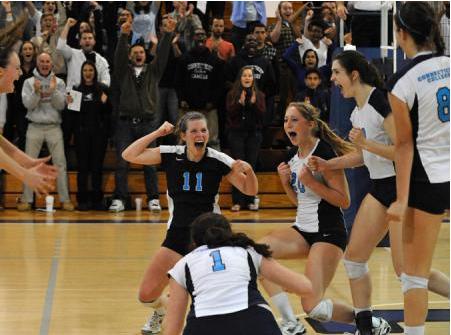
Many sports teams will have a variety of people who excel more in running, or in blocking, or in throwing, or scoring. In baseball, for instance, or American Football, there are very different people in different roles, both physically and temperamentally. An offensive lineman in football will typically be stronger and bigger than a quarterback. Moreover, if the lineman gets “angry”, they might be able to block better on the next play. By contrast, the quarterback must remain calm, cool, and confident under pressure. He must try to put away any fear or anger or depression he feels on the way to the huddle before he gets there and certainly before the snap. When teams are working well together, they don’t criticize each other for differences and they work together to win the game rather than wasting time pointing fingers or trying to assign blame. In a baseball or football team, there is no question that the individual does better because of his teammates. Working together they can solve problems, win trophies, and have more fun than they could individually.

IMG_2979

You right eye sees the world a little differently from your left eye. Thank goodness! Your brain normally puts these two someone different flat, 2-D pictures into a 3-D picture! Your brain does not argue as to which one of these views is “correct.” It certainly does not instigate religious wars over it. I say that the brain “normally” does this. However, if a person is born and their eyes do not move or align smoothly, or if one eye is extremely near-sighted, it can happen that the brain “chooses” one eye to pay attention to. In this case, it seems the two images are so discrepant that the brain “gives up” trying to integrate them and instead chooses one image to use. In a condition such as “amblyopia” the brain mainly relies on the input from one eye. This condition is a distinct disadvantage in many sports.

In boxing, for example, it is literally a show-stopper. A fighter might look like hamburger, but the fight goes on. If, however, there is a cut above his or her eye so that blood drips down to obscure vision in one eye, the fight is stopped. That fighter can no longer see in depth (as well as losing some peripheral vision). It is no longer deemed a “fair” fight. Anyway, it seems the human brain does have some limits as to how much two discrepant views can be reconciled, at least when it comes to vision. Is there a limit to how much a family may disagree productively and still be functional? This is a good question, but one to return to later. Instead, let’s first turn to what are called “dysfunctional families.”

We said in a functional family or team, people are better off than they would be doing something on their own. On the other hand, consider a dysfunctional family. Here, people get mostly grief, judgement, criticism, competition, and lies. Why does this happen? Often dysfunctional behaviors are handed down from generation to generation through social learning, among other things. If too many dysfunctional behaviors are in one family, this causes a “vicious circle” that makes things worse and worse. For example, imagine a family is basically healthy but they do not engage in “alternatives thinking.” They see a situation, come up with an idea, and unless there is imminent danger, execute the idea as soon as possible. They will end up in a lot of trouble with that strategy. However, if they don’t engage in blame-finding, but instead they engage in collective improvement, they will learn over time to make fewer and fewer mistakes. People will all benefit from being in the family. But if a family instead fails to consider multiple alternatives before committing to a course of action and has a cycle of blaming each other without ever improving, then it will probably be dysfunctional. People will give more and get less in return than if they have been working alone. That does not mean there are zero benefits within a dysfunctional family. They may still cover for each other, help each other, provide emotional support, etc. But the costs outweigh the benefits in the long run.

People who come from functional families tend to see the world in a very different way as compared with people who come from dysfunctional families. Obviously, there are all sorts of exceptions as well as other factors at play, but other things being equal, these families of origin color our perceptions of daily life and predispose us to certain actions. Depending on the circumstances, it is even true that some of what we think of as “dysfunction” could actually be “function” instead. Suppose, for instance, you and two siblings suddenly found yourself attacked by a bear. It may be the best thing imaginable to take the first action you think of without trying to over-analyze the situation. Or not. It may well depend on the bear. And, therein lies the rub.
IMG_5994

Our own personal experiences are always a teeny sliver of all possible situations. So, your experience with a bear, bee, or bank may be quite different from mine. As a consequence, we may have different ideas about what constitutes function or dysfunction. In terms of the argument I am about to make, it doesn’t really matter which is “better” or “worse.” All that matters is that we agree some families provide a healthier environment than others. And attitudes are not all that are handed down; so are “ways to do things.”

Perhaps the arbitrary nature of what we consider “intelligent” wisdom handed down in families is best illustrated by a story about making a Holiday Ham. In the kitchen, a 10 year old boy asks: “How come you’re slicing off the ends of the ham?”

His mom answers, “Oh, that’s the way your grandpa always did it.”

Son: “So, why did he do it?”

Mom: “Oh, well. Uh. I don’t really know. Let’s go ask him.”

Son: “Hey, Grandpa, how come you cut the ends of the ham off?”

Grandpa: “Well, sonny. It’s because….it’s because…let’s see. That’s way my mom always did it.”

As it turns out, the 90 year old great-grandma was at the feast as well. Though she was a bit hard of hearing, they eventually got her to understand the question and thus she answered, “Oh, I always used to cut off the ends because I only had one small pan and it wouldn’t fit. No reason for you all to do it now.”

And there you have it in a nutshell. We are all walking around with thousands if not millions of little bits of “folk wisdom” we learned through our family interactions. In most cases, we’re not even aware of them. In virtually no case did we ask about where this folk wisdom came from. Have any of us actually tested one of these out in our own life to see whether it still holds up? And then what? Are you going to inform the others in the family that what everyone believes may not actually be true, at least in every case. Maybe. Most do not, in my experience. In addition, it seems that if you are from a “functional” family, you are much more likely to share this kind of experience (but they still don’t do it 100% of the time). People will often be interested in it and want to learn more. If you are from a more dysfunctional family, you might be more likely to realize they would put you down and try to shoot holes in your example. They might laugh at you. They might just not talk to you. So, what do you do?
volleyballvictory

We can extend these ideas to much broader notions such as a clan, a team, a business, a nation. For people who were not lucky enough to grow up in a functional family, the notions of trust and cooperation come hard. And, that’s a sad thing. Because your experience of what a bee or a bear or a bank will tend to be based on your own experience with very little reliance on the experiences of others. You are one person. There are 7 billion on the planet. So, yes, you can rely on your own experience and dismiss everyone else’s. Good luck.

Even a functional family may draw the boundaries around itself so tightly and firmly that anyone “inside” the circle of trust is trusted but anyone outside is fair game to take unfair advantage of. At the same time, such a family regards anyone outside as a threat who must “obviously” be out to get their family. People from this type of family do know cooperation and trust, but find it nearly impossible to extend the concept across boundaries of family, culture, or nation.  They are happy to hear about their brother’s experiences with bees but they are not much interested in the experiences of their cousins from half way around the world.

Everyone must decide for themselves how much to rely on their own experiences and how much to rely on close relatives, authority figures, ancient teachings, or the vast collective experience of humanity. Of course, it doesn’t have to be an either/or thing. You might “weight” different experiences differently. And, that weighting may reasonably be quite different for different types of situations and strangers. For instance, if your cousin is a smoother talker, vastly handsome, and twenty years younger, you might not put much stock in his or her advice about how to “hook up.” You might instead put more credence in someone at work who is in a similar situation. You might put very little stock in the experiences from a culture that relies on arranged marriages. Surprisingly, exactly because they are from a very different situation and therefore a quite different take on matters, they may give you very new and creative ways to approach your situation. For example, you might find that if you “pretend” you are already “pledged” to a partner your parents chose, dating might be less anxiety provoking and more fun. You might actually be more successful. I’m not saying this specific strategy would work or that ideas from other cultures are always better than ones from your own culture. I am just saying that they need not be dismissed out of hand, not because it’s “politically correct” but because it is in your own selfish interest.

I’ve already mentioned in previous blogs that people are highly related and inter-connected via genetics, their environmental interchanges, their informational interchanges and through the emotional tone of their interactions. Because people are highly interconnected, you can find much wisdom in the experiences of others. But there is another, largely underused aspect of this vast inter-relatedness. I call it familial gradient cognition. Or, if you like, “Mom’s somewhat like me.”

To understand this concept and why it is important, let’s first take a medical example. However, this potential type of thinking is not limited to medical problems. It basically applies to everything. So, you have a pain in your right hip. What is the cause and how do you fix it? That’s your question for the doctor, or more likely, nurse practitioner. They will typically ask questions about your activity, diet, what you’ve done lately, when the pain comes and goes etc. They may run various tests and decide you have sciatica. This in turn leads to a number of possible treatments. When I had sciatica, I got referred to a sports medicine doctor and got acupuncture. It worked. (Later, I discovered an even better treatment — the books of John Sarno). Anyway, we would call this a success and it seems like a reasonable process. But is it?

The medical professional’s knowledge is based on watching other experts, book learning, their own experience etc. And so they basically engage in this multiplication of experience. The modern doctor’s observations are based on literally many millions of cases; far more than he or she could possibly observe first hand. But what potentially useful information was completely omitted from the process described above? Hint: blogpost title.

Yes, exactly. Throughout this whole process, no-one asked me whether anyone in my family; e.g., my mom, dad, or brother had had these symptoms. No one asked whether they had had any kind treatment, and if so, what had worked and not worked for them.   Now, my brother, mom and dad are especially closely related but so are my four children and my grandparents, aunts, uncles, nieces, nephews and grandchildren. And, in the most usual cases, it isn’t merely that we share even slightly more genes than all of humanity. We are also likely to share diet, routines, climate, history and family stories and values. These too can play a part in promoting health. For example, did people in your family believe in “toughing it out” or were they more of a hypochondriac?  The chances are, you will tend to have similar attitudes.

In medicine, would it be better to make decisions based, not just on the data of the one individual under treatment, but on the entire tree with more weight given to the data for other individuals based on how closely related they were? Of course, family relations are only one way in which the data of some individuals will be more likely relevant to your case than will others. For instance, people in the same age cohort, people who live in the same area, people who are in similar professions or who work out the same number of hours a week that you do will be, other things being equal, of more relevance than their opposites.

Of course, as I’ve already mentioned, modern medicine does take into account the life experiences of many other people. But these other “people” are completely unknown. Studies are collectively based on a hodgepodge of people. Some studies use random sampling, but that is still going to be a random sample limited by geography, age, condition, etc. Other studies will use “stratified sampling” that will report on various groups differently. Some studies are meta-studies of other studies and so on. But how similar or dissimilar these people were to each other on a thousand or a million potentially relevant factors is more than 99% lost in the reporting of the data. But that doesn’t really matter because the doctor would typically not look at any article in response to your case because he or she will base their judgement on just you and the information they know “in general” which is based on a total mishmash of people.

Imagine instead that every person’s medical issues were known as well as how everyone was related to everyone else, not only genetically but historically, environmentally, etc. And now imagine that in doing diagnosis decisions as well as treatment options, the various trees of people who were “related” to you in these thousands of ways were weighted by how close they were on all these factors. Over time, the factors themselves could become weighted differently under different circumstances and symptoms, but for now, let’s just imagine they are treated equally. It seems clear that this would result in better decision making. Of course, one reason no-one does this today is that keeping track of all that data is mind boggling. Even if you had access to all the relevant data, we can’t layout and overlay all these relationships mentally to make a decision (at least not consciously).

IMG_0469

However, a powerful computer program could do this. And, the result would almost certainly be better decisions. There are obvious and serious ethical concerns about such a system. In addition, the temptation for misuse might be overwhelming. Such a system, if it did exist, would have to be cleverly designed to avoid any one power from “taking it over” for its own ends. There would also have to be a way to use all these similarities and prevent the revelation of the identities of the individuals. All of that, however, is grist for another mill. Let’s return to the basic idea of the decision making by using multiple matrices of similarity to the existing case rather than relying on general rules based on what has been found to be true “of people.”

This may be essentially what the human brain already does. A small town doctor in the last century would see people on multiple occasions; see entire families; and would undoubtedly perceive patterns of similarity that were based on those specific circumstances. The Smith family would all come in with allergies when the cottonwood trees bloomed. And so on. But he or she only sees a limited number of cases even in his entire lifetime. Suppose instead, she or he could “see” millions of cases as well as their relationships to each other? Such a doctor might well be able to perform as well as the computer and much better than they would today.

Can it be better done by collecting huge families of data and having a computer do the decision making? Or can it be done better by giving access to human experts to much larger data bases of inter-related case studies? What are the potential societal and ethical implications and needed safeguards for each approach?

The medical domain is only one of thousands of domains that could do better decision making this way. For example, one could use a similar approach in diagnosing problems with automobiles, tires, students’ learning trigonometry functions, which fertilizers and watering schedules work best for which crops in which soils for what results? You might call this “whole body” decision making. It is a term also reminiscent of the phrase, “Put your whole body into it” (as when cracking a home run into the upper deck!).

It is also reminiscent of the following situation. When you accidentally burn your finger, it does not just affect your finger. You jump back with your whole body. There are longer last effects in your brain, your stress hormones, your blood pressure. And, various organs and cell types will be involved in healing the burn on your finger. Your body works as a whole. But it is not an undifferentiated whole. Your earlobe may not be much involved with healing your finger. It is tuned to have communication paths and supply chains where they are needed. It’s had four billion years to work this out.

Of course, the way the body interacts is largely, though not wholly, determined by architecture. Even if your body decided that your earlobe should be involved, there is no way for the body to do that. To some extent, it can modify the interactions but only within very predefined limits. On the other hand, the brain is much more flexible when it comes relating one thing to another. We can learn virtually any association., But, at least consciously, we are limited to the number of things and experiences we knowingly take into account while making a decision.

What people might say would lead you to believe that they very often base decisions on only one similar case. “Sciatica you say? Oh, yeah. My cousin Billy had that. Had an operation to remove a disk and the pain totally vanished. Of course, three months later it was back. In his …well… back in his back.” It could be the case that there is more sophisticated pattern matching going on than meets the eye. Sadly though, most laboratory experiments reveal that most of the time, under controlled conditions people seem to suffer from a number of reasoning flaws. I believe that the current crop of difficulties people have with reasoning is not inevitable. I think it’s because of cultural stories and with new cultural stories, we could do a better job of thinking. And, we might be able to further multiply our thinking ability by giving the right kind of high speed access to thousands or millions of similar cases along with presentations based on how various cases are related. Or, we could have the computer do it.

Indeed, speaking of “family stories” that are common in our culture, I actually think that we have a “hierarchy” of thinking based on a patriarchal family structure. We do experiments and report on a teeny and largely preset sliver of the reality that was the experiment. A person reads about this and remembers a teeny sliver of what was in the paper. When it comes to a specific case, the person may or may not consciously remember that sliver. This is the “rule based” approach and it is probably better than nothing. A more holistic experience-based approach is to allow the current case to “resonate” with a vast amount of experience.  Of course, both methods can be deployed as well and perhaps there can even be a meaningful dialogue between them. But it may be worth considering taking a more “whole body” approach to complex decision making.


(The story above and many cousins like it are compiled now in a book available on Amazon: Tales from an American Childhood: Recollection and Revelation. I recount early experiences and then related them to contemporary issues and challenges in society).

https://www.amazon.com/author/truthtable

twitter: JCharlesThomas@truthtableJCT
Family Matters: Part Two – Garlic Cloves and Puffer Fish

11 Thursday May 2017

Posted by petersironwood in America, family, management, psychology, Uncategorized

≈ 6 Comments

Tags

diversity, evolution, family, life, religion, school


PicturesfromiPhoneChinaParisPrinceton 177There are many directions to go for the first sequel to “Family Matters: Part One.” That blog focused mainly on my family of origin, so one obvious place to go is to talk about my children and grandchildren. But I don’t really want to speak for them. After all, they can still talk back. My parents and grandparents cannot. But the real reason is that everyone should get to define themselves, at least to the extent that it’s possible. I think it is possible to a great extent, but not completely. Not everyone can become a pro athlete or a great musician even if they try really really hard. Luck and innate predispositions play a role in our fate.

Certainly, there are many “how to” books out there that would lead you to believe that the only thing that stands between you and owning the universe is your attitude. It isn’t a totally bad thing to imagine that you can do anything and have no limitations due to circumstances or your innate abilities and predispositions. It’s a fiction, of course. It’s a complete and utter fiction. If you spent the first five years of your life drinking lead tainted water, e.g., no amount of the proper “attitude” is going to undo the harm. But, for people whose main obstacle to a fulfilled life is self-doubt, it could provide a good antidote, or at the very least, a few good anecdotes that arise from a series of unfortunate incidents taking place from following such advice.

What I have in mind however, is something different; viz., trying to show how family situations tend to be continuous threads in a way that is analogous to the continuous genetic threads. For example, my grandmother used to tell “Old Pete” stories and ran a dramatic club. My mother became an English and Drama teacher. I have always loved acting and storytelling. Several of my kids and grandkids have also written originally and extensively. My mother’s brothers all were jokesters and storytellers. Her oldest brother Karl was a principal and then superintendent of schools. The middle boy, Bob, became a psychiatrist. The youngest, Paul, became a lawyer. The next generation included two psychologists, two lawyers, a neurosurgeon, a teacher. I could elaborate further but the point is that storytelling, art, psychology, and education as well as science and engineering are threads throughout this very local part of my family tree.

Before I go any further, however, I need to explain why I subtitled this, “Garlic Cloves and Puffer Fish.” As a side note, it’s good to remember that both garlic and puffer fish are our distant cousins. The same basic machinery that makes the cells of a garlic plant “work” and live and reproduce is what does all those same things in our cells. And our other, somewhat less distant cousin, the Puffer Fish has that same machinery in every one of its cells. Of course, beyond that we even have most of the same organs and types of symmetry as the Puffer (or any other) Fish. Now, I bring up our relation to these distant cousins because I would like to have you view what I am about to say about various people as being observational and not rendering value judgements. It would be silly to go out to a garlic plant and yell, “Why can’t you be more like a Puffer Fish?!  What’s wrong with you?!” It would be equally ridiculous, of course, to go snorkeling and when you encounter a Puffer Fish scream at it: “What are you doing out here in the ocean? Why can’t you be more like your cousin Garlic who at least makes wonderful tasting (to most) and health-giving nutrients? No, instead, you poison people! What’s wrong with you?”

IMG_6609

Now, when it comes to people, of course, it isn’t just their genes that determines behavior. The family, neighborhood, culture, religion, and physical environment that they grow up in determines, at least in large measure, who they become. Humans come in many varieties. This is both because, when it comes to our own life, we can actually make ourselves different in some ways on purpose (there is a grain of truth in the “positive thinking will win you the universe” genre) and secondly, when it comes to someone perceiving us, their own background and character will determine what they see in you. Similarly, your background will help determine what you see in others. If you think back on your own experience, you’ll see this is true. Anyway, among these many ways that people differ is how neatness-oriented they are. The hit TV series, The Odd Couple, featured two bachelors living together; one was an utter slob (Oscar) and the other was a neatnik (Felix). We all probably know people close to those extremes. We may even know two such people in our family as defined with a small circle to say your second cousins. I’m not trying to say one of these characteristics is better or worse than the other. But I would like to point out that each makes a lot of sense, under certain conditions.

Some years ago, I was watching a TV program about Alice Waters, a famous chef, restaurant owner, and author. She believes in such things as organic, locally grown ingredients. In any case, she happened to make this offhand comment that “it didn’t really matter if a little piece of the garlic skin clings to a clove” {at least in the context of the sauce they were making for a huge fish}. Anyway, I do most of the cooking in my house and I do try to remove the skin of garlic cloves. Most of the time, it’s fairly easy. But every once in a while I have encountered a clove of garlic that is as pathologically stubborn about giving up its skin as a corrupt politician is about giving up the illusion of sanctity. Even a garlic plant has its own personality, I suppose. On the scale of neatnik to slob, I would put myself near the middle. Of course, to anyone who thinks it’s good to be super neat, I will seem like a slob. And to anyone who thinks cleaning is just not worth the trouble, I may seem like a neatnik. Anyway, my point is that maybe there comes a point where you don’t generally have to be absolutely precise in cooking. And I would guess that this rings true with your experience as well. There are some cooks whose approach is very intuitive and, although they may follow a recipe, their measurements may not be totally accurate. And, then their are cooks who will follow directions extremely carefully. Generally speaking, it doesn’t make that much difference. I tend to prefer dishes such as mixed ginger/curry vegetables, burritos, or omelets. In these dishes, you can get away with a huge variation in proportions and specific ingredients. I give these dishes care and attention to detail, but all within very broad parameters.

IMG_6516

In at least one case, however, it is crucial to be a “neatnik” cook and that is in the preparation of the Puffer Fish. The Puffer Fish contains a highly potent neurotoxin called tetrodotoxin. Most of this toxin is in the liver, skin, and other internal organs. It is very easy if you are even the least bit sloppy — and we are not talking Oscararian sloppihood, just normal college guy sloppihood — to nick something and release the poison into the flesh making it potentially deadly. Under those circumstances, being a neatnik is vital. In some cases, expert chefs push a little further and allow a tiny bit of the toxin to bleed into the flesh which will cause a “high” in the eater, but not be fatal. Personally, I think I’ll stick with tuna. The point is that being extremely neat and careful can be a very good thing. Packing your parachute — good to be careful! Performing cataract surgery — be precise!

On the other hand, suppose that you are spear fishing or out gathering nuts. A “neatnik” might want to make sure every fish is skewered in exactly the same way. Except, perhaps for Puffer Fish, it doesn’t matter that much; the point is to catch the fish. Similarly, if you are gathering walnuts, there generally isn’t much point in arranging them by size. Suppose you are making a rock wall. You would do well to make sure it doesn’t fall down but the way to do that is by careful arrangement and filling in the cracks carefully with cement. An alternative approach is to insist that every rock is exactly the same. This would make building the wall much easier. On the other hand, it would be absurdly time consuming to search for rocks of precisely the same size. Other approaches are to have one group of people cut rocks to preset measures and then the job of building the walls is easier or to make artificial rocks called “bricks.” Under various circumstances, any of these methods will work just fine. In other circumstances, any of these approaches might fail. It isn’t quite so simple a matter as Disney and the Three Little Pigs would have you believe.

When it comes to recipes, whether for bricks or for soufflés, It is difficult to know ahead of time which aspects of the process require a Felixian attention to detail and which aspects are fine for a more Oscarian approach. And, just as there are situations that are particularly suitable and best done by Neatniks there are other situations particularly well suited to Slobs, this same principle holds true for every approach and personality trait that I can think of. So when I describe people in my more extended family, I am not trying to pass judgement on who is better than whom. You might imagine that there is an attempt on my part to make out someone as “bad” or “good” based on your own personality preferences. Similarly, it’s quite possible that I accidentally make one or the other kind of personality sound better based on my own preferences than they really are.

Although it is quite natural for people to express different preferences on the neatnik to slob dimension, it is often a source of tension, argument, fights, and in extreme cases, probably divorce and murder. Most often, when an “Oscar” does something annoyingly sloppy, (and which to Oscar is actually typically exactly nothing), Felix will not try to dialogue about the situation and negotiate a solution. Rather, Felix’s first move is more often to call out Oscar’s character as being deficient because he is such a slob. Immediately and quite predictably, Oscar’s defenses go up. His next move is to point out that Felix is insanely OCD. And thus, the problem moves from what is immediate, simple, and fixable to one that is long-term, complex, and unfixable. Oscar will never convince Felix to be like Oscar and Felix will not ever convince Oscar to be like Felix. In fact, for Felix to even expect Oscar to act Felixian is rather silly.

You have undoubtedly heard the expression that you “marry the family” as well as your own spouse. I found this unfathomably silly when I was younger, but now I see that in many ways it is true. For example, if your spouse has unresolved issues from their childhood, those can impact your relationship. If your spouse’s family is into crime or drugs or unnecessary drama, those will certainly impact you. These people will almost certainly interact with you and your kids so they will impact your lives directly and indirectly.

Keeping all this in mind, let’s tune into “Uncle Al.” Al worked at one point as a commercial artist. In such a position, being something of a “Felix” probably worked to his benefit. But not every situation calls for OCD. Al lived in one of two houses at the end of a dead end street. What would you do if you drove to the end of his narrow, dead end street? Well, one possible action would be to abandon your car at the end of the street and walk home to buy another car or just wait there until you were beamed up by aliens. Most people however, would instead go into one of the two driveways at the end of the street, turn their car around and drive back out the dead end street. Al didn’t like that. I suppose most of us might be mildly annoyed. But after all, what else could people do other than abandon their car or back out the entire length of the street? So, while most people might be a little annoyed at strangers using their driveway for a U-turn maneuver, Al was instead, very annoyed. So annoyed was Uncle Al that he paid to have five steel posts put into the end of his drive. Indeed, this completely prevented any stranger from using his driveway as a place to turn around. Chalk one up for Uncle Al.

steelposts

Now, you may have detected a slight flaw in Al’s plan. He could no longer use his driveway either. For that matter, he could no longer use his garage to house his car either. But to Al’s way of thinking, that was worth it because he had achieved his goal. The phrase, “cutting off one’s nose to spite one’s face” comes to mind.  At another point, several of my ex-brothers-in-laws went over to clean Uncle Al’s house. When they opened up the refrigerator, the shelves were all filled with the same thing. Can you guess what it was? No, you probably can’t. Every shelf was filled with tiny paper mini-ramekins. And in each of those tiny paper mini-ramekins was tartar sauce. Upon questioning, the story finally came out. Every Friday, Al went to a nearby diner where they had an “all you can eat fish” special. The fish came with tartar sauce. Uncle Al hated tartar sauce. But he had paid for the tartar sauce! So, when he left the restaurant, he took the tartar sauce with him each and every time.

This seems a little on the crazy side, but I would guess that almost everyone has sometimes taken something that they have access to even though they end up not using it. In fact, it’s a little odder and more selfish than that. We might even know when we take the items that it’s very unlikely we use them. For example, in the IBM cafeteria, I would often take an extra napkin. Why? Because on rare occasions, someone, possibly even me, would spill something and having an extra napkin that could be deployed jack-knife quick proved very handy.  But most of the time, these hypothetical emergencies failed to eventuate. Now, what to do with the extra napkin? I could put it in the trash, or since it was clean, put it in the recycling. To me, taking the time and effort to recycle is completely worth it. Not everyone does that. We can return to that later, but re-use (or in this case, first use) trumps recycling. So, I would take the napkins back to my office. I had one drawer in particular that ended up with a collection of napkins as well as tea bags, plastic forks, tiny packets of salt and pepper, and other food-related items. Small stuff. There were no stashes of candy bars or soda cans or deer carcasses.

However, this example of hoarding was not an idle and useless exercise in hoarding. When people in the lab had birthdays or other types of celebration, it actually turned out to be quite handy to have a nearby supply of napkins and plastic forks. When I thought about the design rationale for this procedure, I never thought to myself, “I paid for this dinner and there’s no rule against taking two napkins, so I want to keep what is mine.” In terms of explanation, my saving napkins and Uncle Al’s taking tartar sauce are light-years apart. But looked at in terms of situations and behavior, there are actually a lot of similarities. As already explained, all of us are closely related. Although Uncle Al was not “related” in the way that people generally use that word, our ancestors were common for billions of years. So, I would hypothesize, the behavior of keeping something that is not of immediate use but could be used in the future is one that is found broadly in the animal kingdom and in plants. We imagine that the desert plant that stores water in it’s thick leaves does not “think about it.” It seems pretty silly to think it thinks at all. But let’s expand the idea of how information is coded just a little. It wouldn’t make a difference if the rationale were written in Spanish or English or French would it? It wouldn’t matter if the design rationale were printed in 14 point Helvetica or 12 point Times New Roman. It wouldn’t matter whether it was coded in ascii or EBCDIC. So, why not extend the concept a little further. The “design rationale” for the plant’s behavior is coded in it’s DNA.  We may not be able to “read” this design rationale quite as readily as we could one printed in our native language. But that is basically a matter of convenience, not a matter of underlying truth. The plant does have a design rationale for being “greedy.”

When it comes to human behavior, of course, there are not only genetic determiners but also social ones. (Actually, this can be true of non-human animals as well). So, it isn’t just that people may have a genetic propensity for keeping extra items for future use; their particular culture has inculcated values and design rationals and ethics around greed, waste, generosity, and so forth. The design rationale that Al gave, I find too self-centered for my taste. My Mom was generous to a fault. And, when I say she was generous to a “fault” what I mean is that she was so generous that she would often give away the same item to several people. So, perhaps being overly generous can be a fault?

In any case, just as people come in all sizes and shapes, they come in all kinds of behavioral predispositions. These predispositions are probably weakly related to your immediate family both because of where you live, among other things. There is no one “right answer” as to which characteristics are “best” under all circumstances. Some may innately be predisposed to Felixism while others may become that way because of strict teachings by their parents and schools. Regardless of why Felix is a neatnik, Oscar is never going to convince him that he (Felix) should be like Oscar. That was true in paragraph ten and it is true in paragraph 17. One thing should be clear to both Felix and Oscar: if they can work together effectively, they will be able to solve a wider range of problems than they would working alone.

Creativity and diversity are always vital, but probably never more so than right this minute. Humanity has changed so much in every external way in the last two thousand years and most of that since the industrial revolution and most of that after the computer revolution. Change is not only rapid, it is rapidifying. Yes, I made that word up. That’s another symptom of the same thing. Change in media, language, meaning are all happening more and more rapidly. So, in times of such great change and such great uncertainty, it has always seemed to me to absolutely and vitally important to include every viewpoint on the problem that we possibly can.

If I am lying on the beach under a sunny sky, feeling healthy and happy, I don’t really need your advice much, at least not this second. Yes, I may not be as neat as you would like or I am far too neat but I don’t really care and it doesn’t matter. You be you, and I’ll be me.

On the other hand, if I am thrown into something beyond my comprehension, I would want to have as many eyes on the problem as possible. Of course, it feels more comfortable to surround yourself only with those who already agree with you rather than a highly diverse group. You won’t argue as much about what the problem is or about what “fairness” really means or even argue about the right process is for combining your insights. A diverse group can initially provide a slight “shell” of added awkwardness for some. In my experience, when people are focused on a situation or a problem, they get past that very quickly and every stage of the process is enhanced. There are more ideas generated, higher quality ideas, the evaluation of ideas is more robust; they generate more ways to fit ideas together. Not only is the output of the group improved. It is just plain more fun during the entire process. Perhaps a better term would be to say that it is more engaging. If someone has a slight accent, you need to listen more closely. If someone comes from a different background, not only do they provide a different way of looking at things or even solution; they also stretch your mind. It may not be as broadening as  traveling to another culture, but it is more than one step in that direction. An all-celery salad gets old fast.

IMG_6371

Beyond all that, it seems important to remember that these variations in human predisposition are not entirely new human inventions. Many species of plants and animals exhibit different “philosophies” or “strategies” for dealing with the same issues: getting food and water, finding a mate, reproducing, avoiding predators, etc. (Yes, plants do these things). What works for a plant in one climate will not do in another climate. Of course, it isn’t just the climate. It also depends on what other species are present, the nature of the soil, etc. Some plants, for instance, put time and energy into making flowers to attract bees, having the bees fertilize the flowers, grow the fertilized flower into a fruit that is both colorful and tasty. This means the fruit (e.g., wild strawberries or raspberries) are eaten by our cousins the rabbits and carried in many directions out from tree by the rabbits. The rabbits excrete the digested seeds which now find themselves in a tiny pre-fertilized plot. Come on!  How about a hand of applause? Do you see how many ducks have be lined up her for this plan to work?

I may have had a reputation for being a little off the wall, but this plan? This is my craziest idea on a combination of illegal drugs and then put through a cognitive blender. I worked in “Corporate America” for about 40 years. I worked for IT companies, but let’s imagine instead a company that made self-reproducing garden ornaments. The way they worked was that each ornament, after one year split in two. Anyway, they were making good money. Now, I go into the top management and say, “Hey, I have a great idea for how to have these ornaments reproduce. No more just splitting in two. Instead, each element will grow a little ornament on top of the ornament but brightly colored. This will undoubtedly attract some sort of something which will fertilize —- oh, wait, did I tell you about the whole “two sexes” deal? Anyway, we’ll then have a process for turning a fertilized element into a fruitling. The fruitling will be fortified with vitamins and sugar so that … um … something will come along and put this into its belly and carry it away into the neighbors yards where they will help build the first step of the new ornament. Give me funding for about 100 million years of experimentation and I can pretty much guarantee….” No, they would not fund a project like that. Evolution is a slow smart cookie. That tree of living things? That’s our tree. And that little teeny branch way over there? That includes Oscar and Felix and everyone else regardless of gender, age, race, religion, or hoardingness.  Does it really make sense for us to destroy the whole branch if we can’t go in exactly the direction we want? And what about how the decisions affect every other part of the tree? It is, after all, a family matter.

(The story above and many cousins like it are compiled now in a book available on Amazon: Tales from an American Childhood: Recollection and Revelation. I recount early experiences and then related them to contemporary issues and challenges in society).

Tales from an American Childhood

Family Matters: Part One

30 Sunday Apr 2017

Posted by petersironwood in America, psychology, Uncategorized

≈ 15 Comments

Tags

family, life, school


IMG_5452


———————————-

Perhaps you recall, as I do, that in the very earliest memories, parents are huge! My mother was huge and my dad was huge! Of course, they not only loomed gigantic physically, they also had a huge influence on me. That, I never thought about as a child, but we’ll return to influence later.

The other remarkable thing about my parents, in early memories, is how different they were from each other. My mother was soft, gentle, smooth-skinned with a soprano voice. My dad was completely different. He was even larger, but besides that, he was hard, physical, hairy and his voice boomed so loud I could feel as well as hear the vibrations. Needless to say, they smelled completely different and I generally saw them at different times of the day, or, more accurately, I saw my mother most of the day and my dad only for small segments on most days. They did different things, said different things, held me differently. There was no way as a child that I saw them as two different examples of a larger class of things called “people.” They were as different as night and oranges to me.

These differences were not just physical and perceptual. As I grew older, I also realized that the species of “Dad” and the species of “Mom” also behaved quite differently.  For example, I could generally count on my dad to remain calm and to get things done whereas in an emergency, my mother generally fell to pieces emotionally. No, come to think of it, she always fell to pieces.

When I was about five years old, my parents took me to a stranger’s house for one of their “Bridge Parties.” To me, “Bridge” was a complete mystery. I understood the concept of games; e.g., “Mother May I”, “Red Light Green Light”, “Pick Up Sticks”, “Checkers”, and (my personal favorite), “Red Rover, Red Rover.” In Red Rover, Red Rover, the opposing team formed a human chain by holding hands. Everyone on a team would chant in unison, “Red Rover, Red Rover, let Tommy come over.” (Tommy was my nick-name at the time). There were two really cool parts to this game in addition to the chanting. One, when it was your turn to make a human chain, you might get to hold hands with a pretty girl. Two, when you were called, you were allowed, indeed encouraged, to run as fast you could, and then SMASH right into the opposing team! That was fun. Honestly, I think I’d like to do that right now. But “Bridge?” The adults just took turns throwing cards on the table. Yet, they were generally screaming and laughing while playing this game. They seemed to be enjoying themselves but I had no idea why.

In any case, however much Mom and Dad enjoyed “Bridge Club”, I certainly didn’t. My parents took me into some random bedroom and said, “you will sleep in here.” Right. I’m five years old in a strange place and I am supposed to go to sleep while there is, basically, a mini-version of Woodstock going on about ten feet from my five year old (and therefore highly sensitive) ears. No, I’m not going to sleep. Even as a five year old, I knew that wasn’t happening. I’m not sure how my parents could have deluded themselves, but apparently they managed. Since sleep was out of the question, I needed to find some way to occupy myself.  What I can do? I’m going to explore the room!

I rather liked the room. It had wall to wall carpeting and dark, heavy, solid wood furniture. I padded about the room looking at this and that, but there wasn’t much to see really. This is what necessitated me to go to phase two of exploring the room; that is, looking under and in things. I looked under the bed, but it was just dusty. I knew it was a long shot that anyone else was trying to invent a new color and keeping the best results under the bed in little jars that had held maraschino cherries, but you never know. Well, actually, yes, eventually you do know. But I didn’t know then because I didn’t know that many people so I didn’t really know how many might be trying to invent new colors. Since then, I’ve met many people who do exactly that although not quite so literally as I was trying to do way back then. I have eleven grandchildren and every one of them is inventing new colors, each in their unique way.

My explorations of the bedroom bureau began very disappointingly. Drawer after drawer was filled with clothes. Sigh. Then, as they say, my eyes actually did become as big as saucers. Large saucers. Because lying right there atop some boring gray gaberdine pants was the coolest biggest gun I had ever seen! I liked my guns! In fact, one of my earliest memories was of a red plastic one. But now, as a “big boy”, I had metal guns. Even better, when I pulled the trigger, they went “BAM” “BAM” because of the caps. I liked my own guns all right, but this gun was way, way cooler. For one thing, it was all metal. Mine were partly plastic. And, the gun was shiny with a depth of its own — except for the handle which had a wonderful pebbled grain.


handgun

I could have enjoyed looking at that black gun (similar to, but not identical to the one above) for an hour. But, of course, I had to pick it up. Well, if the look of that gun had been exquisite, and it was, the feel of the gun thrilled me, filled me with uncertain terrors never felt before — to quote Mr. Poe. But alongside the terror was admiration that quickly blossomed into love. The object that constituted the gun seemed so beautifully and solidly built. Had I ever before held something that heavy and dense? I don’t think so.

I knew that my parents had told me to stay in the room and go to sleep. But they were the two people I loved most in the universe. How could I keep the discovery of something this cool, go unshared? I had to let them find out just how cool this gun was. I probably also thought that no little credit would be coming my way for being the discoverer of this marvelous instrument. (Somehow, it never once crossed my mind that the people who owned the house probably already knew about this gun). I definitely thought of it as my discovery, and so it was, in a way. And, if I were never going to get any credit from Grandpa for inventing a new color, at least I would have this great accomplishment forever written into my plus column.

Out into the living room full of laughing, screaming adults somehow getting pleasure out of “Bridge” I tottered, slightly off balance from the weight of the gun, though I was able to hold it one hand, just the way the cowboys and policemen did. “Look what I found.” Now, listening to  the memory of how I said it, I realize it probably was getting credit for my discovery rather than sharing it that most motivated me. Ah, well. Live and learn, as they say. I expected to gain some credit for my discovery and some appreciation for the gun, but I never expected the eruption of adult action and concern and panic and fear and anger and utter surprise. They provided such a sensory overload that my memory is like a loud noise and a great white light. Not only did I receive no plaudits for my wonderful discovery, I definitely had done something unspeakably wrong. (I later discovered that the gun had been loaded with the safety off). But at the time, I felt only bewildered disappointment. However, the one thing I do recall through the white noise was that Dad remained calm and managed to take the gun from me without my trying it out on him for fun. Meanwhile, Mom was being her usual “hysterical in an emergency” self.

At the time, I did not think that my mother was “typical” of all women nor did I think that she was “atypical.” It’s just that I knew this about my mother, but my mother formed one edge or point on  the growing conceptual map of people. And, everything that was true about her was all there together in her own rather large corner of my mind: soft, smooth, soprano, hysterical, gentle, slightly hard of hearing, illogical, loving, beautiful, and fun. Her body positively writhed when she found something funny. Early on, I tried to learn how to cause one of those paroxysms of laughter. Dad, on the other hand, could be counted on in a crisis. He was also hard and hairy and loud and undemonstrative. When, he laughed, most of the time, it was “UH!” That’s it! One sort of half snort, half laugh. I do that too sometimes. On the other hand, I also go into a full out writhe with laughter as well. I am part Mom; part Dad just like most of us with respect to our parents.

My parents had two different professions as well. Dad was an engineer. He was very logical; yes, even as a very young kid I saw this. Mom was an English and Drama teacher. Years later, at CHI in Atlanta, talking with Doug Engelbart, I discovered his parents had the same combination. As an adult, I can imagine that their professions not only seemed to be choices that sprung from their native talents, but that the professions, in turn, helped cement these traits in place.

I met other family members at a young age and each of them was quite different as well. My mother’s mother, Ada was smart, soft, and she told me “Old Pete” stories. We listened to radio programs together such as “The Lone Ranger”, “Roy Rogers”, “Hop-along Cassidy”, and “Tom Corbett and the Space Cadets.” Grandma was the Superintendent of Sunday School at the Methodist church we went to. She also founded the Firestone Park Dramatic Club and ran it for decades. Meetings were held at my grandparents’ house and the women (all the members were women) read plays. This turned out to be a cool deal for me because, as a little kid, whenever someone didn’t show up, I filled in because my memory was so good, that even without trying, I knew all the parts. Grandma also had to take “iron shots” because she was anemic. The best thing though was that she baked peanut butter cookies and when she made a pie, she made butter, sugar, and cinnamon roll-ups!

Her obituary from the Akron Beacon Journal begins this way: “Ada Weimer: Founder Of Drama Club Mrs. Ada P. Weimer, 78, founder of the Firestone Park Dramatic Club and its director for 30 years, died at Edwin Shaw Hospital Wednesday after a six-month illness. Born in Akron, Mrs. Weimer, 1384 Grant St., attended Greensburg High School and Heidelberg College. For many years, she was a Sunday school superintendent at Firestone Park Methodist Church, of which she was a member.” Apart from that, it lists her three sons and daughter whom she “left behind.” No mention of her peanut butter cookies though. Occasionally, after much begging, she would also make popcorn “from scratch” in a kettle. Not mentioned. She also spent a lot of time canning for the extensive “root cellar” my grandparents had in their basement. Not mentioned. Sometimes, she would walk with me up Grant Street to meet Grandpa at the bus stop. On the way, she never failed to scowl at the “beer joint” up the street where the overwhelming odor of beer and alcohol would flood out onto the street. Not mentioned. On rainy days, Grandma would take out two large shoe boxes that contained her extensive post card collection. Each had a photo, or more rarely, a cartoon, on one side and a hand-written or hand-printed note on the other side. They had come from many US states and from many countries around the world. The foreign ones also had interesting stamps to ponder with miniature scenes or portraits or animals from far-away places. I found all of it fascinating: the varieties of handwriting, the stamps, the pictures, the addresses. I would often ask her who these people were and what their comments meant. Usually, she would answer, but occasionally she wouldn’t. The newspaper was silent on the whole matter. Not one single post card was cited.

Grandma was affectionate as was her sister Mary, but their sister Emma took the cake. She was forever pawing, fawning, making a fuss, telling me nursery rhymes, hugging, kissing, etc. All three of these women were somewhat overweight and typically wore loose print dresses. I tend to think of my grandmother mainly wearing white, or off-white dresses with small flowers printed on them. Mary, on the other hand, the largest of the three, tended to wear dark blue dresses with white flowers. Emma typically wore brown or yellow dresses but made up for it with bright red lipstick and lots of make up. That entire branch of the family held family reunions every year. Much later, I met a cousin of Mom’s that had grown up with her family for a time.  He eventually became a psychology professor at an Ivy League School. Although I met numerous distant uncles and cousins over the years, I don’t much recall any of these more distant relatives. Grandma’s mother had come from Wales. My Grandpa painted a picture of the Welsh cottage that she was born in. It was beautiful and set in beautiful country but quite modest in size.

Now, speaking of Grandpa, he was as different and distinct from Grandma as Mom was from Dad. Grandpa smelled of pipe tobacco and although he too, like Dad, seldom laughed very demonstrably, he always seemed to have a twinkle in his grey eyes. Grandpa was extremely smart and knew about everything; or so it seemed at the time. Besides that, he was multi-talented. He worked as an engineer, but he was also an artist of some note. He was also an accomplished musician. Best of all, from my perspective, he was an excellent teacher. When we went out to the garden to pick corn on the cob, he taught me something about plants, soil or gardening. Einstein died when I was almost ten years old. Grandpa showed me the item about it in the Akron Beacon Journal and then proceeded to tell me about Einstein’s work (in elementary terms). He subscribed to “Sky and Telescope” as well as “The Atlantic” and “Scientific American” and the magazine of the American Museum of Natural History. He would point out particular articles to me and then discuss them with me or explain something in more detail.

No need to point out and describe every single person in my family. The main point is that each of these people seemed very very different from the others. Much later, I can see many “family resemblances” in terms of skills, interests, psychology and physical characteristics. But as a child, I perceived none of that. It never even occurred to me that we all needed to breathe or had two arms and two legs. If someone had asked me, I could have answered correctly, of course, but the similarities among these people never crossed my mind. Every week, I listened as The Lone Ranger and Tonto found someone in trouble, tracked down the bad guys, shot a gun out of their hand and rode away. After they were gone, the beneficiaries of their bravery would remark that they didn’t know the true identity of The Lone Ranger, but he had left behind a single silver bullet. In retrospect, these stories were quite formulaic. But at the time, every story was just a different story. And so it was with folks in my family. They were different. They were individuals. Beyond that, they collectively made up the space of possible individuals.

As childhood continued, of course, that people-space continued to grow. New people often revealed, not just that people could be more extreme on existing dimensions such as age, size, or how much they laughed, but they forced me to consider and construct entirely new dimensions as well. People, it turned out, came in different colors; they spoke with different accents. In fact, they spoke in entirely different languages! When I was about three and a half, Mom, Dad and I all left for Portugal. My Mom told me later that I was frustrated that a bunch of Greek sailors could not communicate with me. I don’t recall this. But I do recall a little of learning to speak Portuguese although to me, it was not “learning to speak a different language.” It was just that I encountered people who spoke differently and I learned to communicate with them. Some people don’t laugh much while others laugh quite a lot. Similarly, some people spoke the way I was used to and others spoke some entirely different way. It never occurred to me, as a child, that they spoke an entirely different language and certainly not that they spoke that strange other way because of their own family and their own country. If asked, I imagine that I might have answered that they chose to speak Portuguese rather than English. But mainly, it just was. I didn’t consider why people were fat or skinny; why they spoke with an accent or not; why some people were male and some female; why some were old and some were young. Each person was simply and completely the way they were. They went about their business and as I interacted with them they punched at the edges of the net of my ideas about what people were like. Each person punched outwards in their own direction and the space of people grew larger and larger and larger.

I guess not everyone reacts that same way. It now seems to me, as an adult, that some people only expand their space of people a little ways from the points laid down by their first family and friends. When someone is too different, they are not really part of the whole human condition, but instead, are assigned to some other category such as “old person” or “toddler” or “professional athlete” or “foreigner” or “cripple” or “gay.” For some, each category requires special treatment different from all the rest. If, for instance, a “professional athlete” assaults or rapes someone, that might be okay because there are special rules for such folks. If, on the other hand, a “foreigner” assaults or rapes someone, they should at least be put in prison and quite possibly killed.

Indeed, even my own family gave some hints that this was the way to think about people. You had to be careful with grandparents because they were “old” and could be easily injured or broken into small pieces. When my cousin threw a xylophone across the room and hit me in the head, no punishment was forthcoming because he was “just a little kid” and “didn’t know any better.” When I went to the hospital, people did not seem to be treated as people but rather as “patients” or perhaps as “pneumonia” or “burn victim” or “appendicitis.” Given names were rarely used. Although, even as an adult, I see that there are commonalities in the way doctors need to treat patients with particular diseases, it seems to me that there are also often important differences as well.

One way that people differ quite a bit is how they treat and categorize other people. To me, every new individual I meet still seems quite different although the differences I see now are not nearly so gigantic as the differences that I saw as a child. It might be similar to the way in which both our house and my grandparents’ houses seemed gigantic in that there were so many separate places or regions to the house.

In the next blog, I examine further implications of family matters.

——————————————

(The story above and many cousins like it are compiled now in a book available on Amazon: Tales from an American Childhood: Recollection and Revelation. I recount early experiences and then related them to contemporary issues and challenges in society).

Tales from an American Childhood

Author Page on Amazon: https://www.amazon.com/author/truthtable

The Great Race to the Finish!

24 Friday Mar 2017

Posted by petersironwood in America, apocalypse, Uncategorized

≈ 5 Comments

Tags

conflict, future, life, suicide, war

I really wondered how that whitish-green hard puffy leaf worked. What was it made of? How hard would it be to burst it? And when I did, what would come out? At the age of four, ooze, jelly, a million tiny red spiders, or an emerald all seemed about equally likely. I began to squeeze it with my fingernail, slowly and carefully increasing the pressure. I concentrated so hard I didn’t notice my grandpa coming up behind me. He told me not to hurt the plant. I asked him to clarify that statement. (Of course, I didn’t use those words but I knew the word “hurt” could mean to damage or to cause pain.)  He insisted it was both. I remained skeptical. But I did know he took great care of his plants so I didn’t molest them again.

UPDATE: More evidence that plants can “hurt.”

http://www.businessinsider.com/plants-know-they-are-being-eaten-2014-10?utm_content=buffere1fec&utm_medium=social&utm_source=facebook.com&utm_campaign=buffer-bi

IMG_7123

On the other hand, I never had the slightest doubt that other animals actually feel pain much as we do. For that matter, I still don’t have any doubts. We co-evolved for billions of years and then much more recently grew separated into species such as human, dog, cat, horse. To me, it is much more “parsimonious” to believe emotions and consciousness are in all living things in some degree and in vertebrates to much the same degree as we have it — than to imagine that emotions and consciousness “emerged” when our brains passed some critical threshold of complexity; one that just happens to give us a great excuse to kill anything else we please, not so co-incidentally.

IMG_3106

So even at an early age I at least credited all living animals as being pretty much like us. That is why it shocked me to read in a Walt Disney comic (of all places!) about lemmings following each other over a cliff to drown in the ocean! Why would they do that? Can’t they see there’s a cliff there? Are the ones in front doing it on purpose? I could imagine some of them get pushed by the ones behind, but what about the last rank? At least they should be scraping their tiny claws into the earth in a last ditch attempt to save their lives. And, if all the lemmings drown in the sea, how can there be more lemmings?

Only a few short months later, this time in school, I learned that buffalo did the same thing! Buffalo! Big headed buffalo. What are they thinking? “Hey, everybody wouldn’t be stampeding if we weren’t headed to the lushest greenest most goodiest pastures of plenty our herd has ever seen!” And then, in that last second before the terrible and explosive rib smashing landing do they think in their bisonic code equivalent, “Damn!” or “What the…?” or “Oops!” or “Take me God!” Perhaps it’s more likely they think, in essence, “Hey, everybody wouldn’t be stampeding unless we were being chased by a horrendous bison-eating monster!” I doubt they think something like, “Whoopee! A stampede! Great chance for me to work a few pounds off. I don’t mean to be putting it on, but the grass here is like, sooooooo good, man. I eat one blade and the next thing I know, I’ve munched down 10000000. (Not that big a number; bison use binary).

PicturesfromiPhoneChinaParisPrinceton 126

Of course, from our perspective outside the herd, it looks as though all the lemmings or bison or beached whales agree that the self-destructive behavior is a great idea. It might well be that one, or two, or even many of the bison are just as bewildered as we would be. They might be thinking, “Hold on. Why is everybody rushing so madly toward…what was it exactly? Shouldn’t a couple of us go up a hill and see where we’re heading? Hello! Let me take a minute…hey! Quit shoving! I’m trying to get a better look! I’m not sure this is…Arghhhh….I knew it!” They are wondering whether a stampede is wise but they are so pressed by the others on all sides, they can’t convince the herd to slow down. It is even possible that someone in the herd actually knows they are headed for doom and they still can’t do anything. “Wait, guys! I recognize this patch of sweet clover! We’re headed for the cliff! Stop! Stop!” Over they go along with everyone else.

All kidding aside, these were serious questions to me at the time. I certainly wanted to live. And, from everything I could tell in life or on the radio or on TV or in the movies or the cartoons or books, everybody and every thing wanted to live. But somehow, these creatures were doing something that caused their own deaths! That just seemed perverted. Odd. Weird. Life should be propagating life, not destroying itself. I don’t even need a Bible lesson on that one.

Although non-human animals most likely feel emotions and are conscious, I don’t actually think they think in words in the way we humans do or communicate with all the subtlety that we do (despite all those Disney movies). So, it came as another shock to learn that sometimes people commit suicide. Still later, I learned that they sometimes do it in packs! (See, for instance, an article on Heaven’s Gate cult).

http://www.sandiegouniontribune.com/sdut-heavens-gate-tragedy-remains-the-countrys-worst-2007mar26-story.html

Meanwhile, even more commonly, huge numbers of people march off to wars. Many are maimed or killed. In this case, people are generally convinced that they are doing something for their group, tribe, or country. For instance, with two armies lined up at the border, it is pretty much assumed, with some justification, that simply giving up will also result in death or slavery. This behavior is not unique to humans. At about the age I was learning about suicide, my cousin and I observed an ant war between red and black ants in my grandfather’s garden. At that point, I already knew about human wars, at least in broad outline, but watching ants fight made it seem perhaps more inevitable that humans too must fight rather than that they choose to fight.

http://serious-science.org/ant-wars-6652

It often happens in war, that the soldiers, and indeed, the whole nation is more or less tricked into fighting and in that sense, it is effectively a kind of mass suicide but with a lottery system thrown in. Not everyone who fights dies, but it is by no means an impossible or even unlikely outcome. From the perspective of those fighting, it is a brave thing to do — a selfless act that is designed to help save their people and their nation. After the fact, looking back, it sometimes seems that only a few people such as arms dealers and leaders actually benefit much from wars. For example, Hitler convinced people in Germany that aggression and conquest would be to their benefit and in newsreels, the masses of people saluting him look every bit as mindless as lemmings following each other over a cliff to drown in the ocean.

IMG_1289

And what about our human species? On the one hand, we devote a large proportion of our resources to fighting each other, committing crimes, defending against crimes, punishing crimes, defending against invaders, and building machines to help us in fighting other humans. These conflicts always cause massive suffering and always benefit a few people but occasionally help reach some national objective that has broader benefits. Meanwhile, we are collectively headed for numerous cliffs. Although population growth may be slowing, we are in danger of reproducing way beyond the earth’s carrying capacity in terms of food and drinkable water.

http://www.susps.org/overview/numbers.html

At the same time, our activities are contributing to global climate change and to pollution. As our population density increases, and as our immune systems are assaulted with an ever greater quantity and variety of chemicals that make it harder to fight off disease, we face increased odds of a pandemic. And, we are not spending money on preventing it.

http://www.npr.org/sections/goatsandsoda/2016/01/13/462950704/stinging-report-on-pandemics-makes-louis-pasteur-look-like-a-prophet

https://www.urmc.rochester.edu/news/story/4233/u.s.-slipping-as-global-leader-in-medical-research.aspx

The threat of atomic war still looms.

https://en.wikipedia.org/wiki/Doomsday_Clock

We can disagree, argue, do more research on which cliff we are headed for, but why are we headed toward any cliff? Why don’t we simply decide collectively that we are better than that; that we don’t have to plummet off any cliff at all. We can just decide that we need to make this planet habitable for a long long time and collectively decide how to do it. We would not only save the lives of countless people in future generations but also the lives of many of our fellow living beings.

Or, we could wait until we are over the cliff in free fall and as the ground appears to loom up to us faster and faster think to ourselves, “Oh, darn, we should have…”

But we are not lemmings after all, nor bison. We are human beings who are capable of seeing where we are going and changing direction. Right? Right?

IMG_3071

(The story above and many cousins like it are compiled now in a book available on Amazon: Tales from an American Childhood: Recollection and Revelation. I recount early experiences and then related them to contemporary issues and challenges in society).

Tales from an American Childhood

Math Class: Who are You?

09 Thursday Mar 2017

Posted by petersironwood in America, Uncategorized

≈ 56 Comments

Tags

genetics, greed, life, math, religion

David's DreamDeeply

What better way to drive traffic to your blog than title the entry “Math Class.” As most of you probably recall, math was your favorite class?! All kidding aside, I actually found math fun but that’s probably because I learned a lot of it outside of regular classes which can admittedly be pretty boring. Rest assured, the “math” in this entry does not require integral calculus, differential equations, trigonometry, or even algebra. In fact, if you prefer, you can call the post “Christianity” or “Buddhism” because you would reach the same conclusions but from a very different pathway.

Part of the inspiration for this post came from visiting the Smithsonian Institute about 20 years ago. They displayed a large graph with the population of the earth plotted against the year. I looked at my birth year and could easily see that more than half the total earth’s population came after my birth year. And, that was 20 years ago.

Another inspiration comes from having led the artificial intelligence lab at NYNEX. I worked for an ex-Bell Labs engineer, Ed Thomas. People were always asking me whether we were “related.” I found this question extremely amusing. Why? Because we are all related! In fact, we share about 40% of our genes with crayfish and 90% with horses. We’re closely related to chimps and bonobos though we did not “descend” directly from apes.  Yet, in our society, we chose to “draw the line” between being “related” and “not related” way over at one end of the scale. Ed Thomas and I only share about 99.9% of our genes so we are called “unrelated” while my brother and I share 99.95% and so we are (closely) related. Most people would say they are “unrelated” to a horse even though you share 90% of your genes. Weird.

A few days ago, I read that new fossils indicate life on earth is at least 4.75 billion years old. When I was a kid, starting around age 7, I became (like many others) fascinated by dinosaurs. At that point, the best guesses were that life was somewhere between 500 million years and 1 billion years. In the course of my lifetime, that estimate has increased a lot.

Who cares and why does all this matter? Apart from curiosity, it matters because it allows us to put in perspective our own individual lives in the context of life on planet earth.

Most people, most of the time, love their children and generally put the welfare of their kids even above their own. This is how life progresses. So far as we know, individuals never live forever, at least in this physical world. However, life as a whole continues to live and our direct descendants and relatives continue to live after our death. So, how much of your genetic material is actually in you versus all your cousins?

To simplify, let’s start with just other human beings. There are currently 7 billion people on the planet. You are one of them. You share 99.9% of your genes with those folks.

How much do we share genes?

So, let’s see. There’s you. And there are 7 billion relatives. Some are slightly more related than 99.9% identical genes, but let’s just say 99.9%. That means the total genome of your genes is in one person (you) who has 100% of your genes and 7 billion others who “only” have 99.9% of your genes. 99.9% of 7 billion is 6,993,000,000 while 100% of 1 is 1.000. In other words, the total amount of “your” genes that is in other people is 6,993,000,000 as much lies within the physical boundaries of your own skin. Not an equal amount. Not 10x as much. Not 100x as much. Not even a million times as much. No. Nearly seven billion times as much.

From the standpoint of genes, this vastly understates the case because there are 7-10 million species on earth besides humans. All of these share some of your genes and many of them share a lot of your genes. Of course, we humans are relatively big and while there are some plants and animals much bigger than we are, there is more mass of life in bacteria than blue whales or redwoods. In principle, one can calculate a better number by taking into account, for each of 7-10 million species how many cells are in each; how populous they are, and what percentage of genes are in common between humans (and therefore you) and each of these species. It’s straightforward but tedious. I gave up after 100,000 species. No, I didn’t. I never started because I knew I would give up way before I got to 100,000. In many cases, we don’t even have a very good estimate of the populations. Given all the trees, grasses, bacteria, insects, fish, plankton, etc. I would guesstimate that adding all the genes in all the other plants and animals would mean the genes in your body represent at most about one in a trillion of all the copies of those genes on earth. So, from the standpoint of ensuring the propagation of your genes, caring about your own physical life represents about 1/1000000000000 of the total.

life on earth

I grant you that genes are not all that matters in human life. And, I want to explore some of the other aspects of the interconnectedness of life apart from a common genetic heritage. However, first, it is really worth taking a moment to let that fraction sink in.

It isn’t as though the “you” inside your skin weighs, say, 150 pounds while the “you” that is outside your skin is, say, the size of a blue whale. No. In fact, even 1000 blue whales compared with your physical body is not so lop-sided a comparison. Imagine thirty galactic clusters of stars. Each of those thirty clusters has 100 stars. Each of those stars has 10 planets to support life. Each of those planets has 100 oceans and each of those oceans has 1000 blue whales. Versus you.

Another way to think about is that when you physically die, it is a little like “trimming” or “pruning” the “Tree of Life.” But your dying would not be like cutting off a branch. Or a twig. Or a leaf. It would be like shaving an invisible razor thin strip off one needle of one twig of one branch of a huge Redwood.

redwoods

It is understood that life is partly (and by no means wholly) about competition. Each and every one of those bits of “you” that is in other life-forms is not necessarily your best bud. You may share a lot of DNA with a great white shark but you might not wish him well. Or, you might not much like your cousins the mosquitoes and deer flies and pneumonia germs. The problem is that we are not collectively anywhere near to being smart enough to understand the effects of deleting certain species and not others. Perhaps, some day in a hundred years or so, we might understand enough to intelligently redesign an ecosystem. Don’t hold your breath though. Despite the fact that some of those individual species and some individuals within a species are annoying, we really have no idea how to extract some one thing. It is not a set of legos. Every species is connected with a variety of chemical and mechanical connections to hundreds of others. It is more like trying to extract your iPhone adapter from your backpack which also contains headphones, power cords, adapters for five other devices and, for good measure, a couple stray shoelaces.

You could also point out, quite rightly, that not all genes are as “fundamental” to making you you as are other genes. There are genes, perhaps, that make your eyes blue or brown. Does that seem fundamental to you? Or, perhaps there’s a gene that makes your thumb fingerprints whorls or loops. Does that seem fundamental to who you are and to your life? On the other hand, there are genes that make you want to live and find love and raise a family and contribute and play and learn. To me, those are the genes that are fundamental and guess what? Those are the very genes that you share with millions of other species. Naturally, we humans like to think of ourselves as fundamentally different from other species on the planet and in some ways we are. As discussed below, being able to communicate so many messages with other people across time and space and even after death indeed makes people “different” but when it comes the things you are likely to care the most about: staying alive, avoiding pain, keeping your family healthy, fighting off disease — those are pretty common across animals and even plants and bacteria, at least in rudimentary form. Just because an ant doesn’t do calculus doesn’t mean it doesn’t work to stay alive and help it’s colony do the same.  See video links below and you will hopefully see how similar other animals at least are to us.

https://www.youtube.com/results?search_query=animals+helping+each+other

And, speaking of math classes, let us turn to some of the other aspects of how our own individual life fits with the larger web of life. Let us think about learning. Pretty much all life is able learn.  Humans, however, are able to communicate through speech, writing, and pictures. This means that we can learn across continents and generation. Eventually, communications affect behavior. Everyone ends up getting exposed to unique information and delivered under different circumstances so that people also end up acting very differently and even perceiving things differently. So, when it comes to human beings, many of the differences we think important are in terms of the ideas and attitudes various people have as well as their actual behavioral differences. To put it simplistically, we largely feel akin to others on the basis of how we think and feel. Many of the labels that we put on people — in fact, the vast majority of them — focus on differences among people. For example, we have: extrovert, introvert, flirt, workaholic, physicist, physician, psychologist, psychic, pscyho, Republican, Democrat, liberal, heterosexual, homosexual, creative, drudge. But what percentage is different and what percentage is the same and how fundamental are the behaviors and ideas?

How much of the total knowledge and how fundamental is that knowledge? Perhaps people learned approximately linearly through time. We’ve had spoken language for, let us say, 100,000 years although it could be much longer.  At best, people learn about four “chunks” per second. A “chunk” is basically a new configuration of things you already know. We measure the information in a computer in terms of “bits” but this turns out not to be a very good measure for people (or other animals). If you have to learn “A CAD” it is pretty easy. It is essentially only one “chunk.” If you know how to read hexadecimal then “ACAD” is equal to 10-12-10-13. It is easier to remember “a cad” than to remember “10-12-10-13.” That in turn is easier than the binary string: “1010110010101101” though they have the same bits. In the same way, it is much easier to recall the password: “Thistooshallpass” than the password: “ooassllapsTsthih.” That is the basic concept behind “chunks” as a measure. How easily we learn new things depends heavily on what we already know. One major problem with trying to learn a new language is that we keep thinking of it (and even hearing it) in terms of the language we already know. In fact, studies with infants show that by a few weeks of age, they are already less able to distinguish sounds that make no difference in their native language than they were at birth.

Psychology is endlessly fascinating! But let’s return to our calculations. If you are awake, on average for 16 hours a day for your lifetime of 100 years, you would have an opportunity to learn 4 chunks/second x 60 seconds/minute x 60 minutes/hour x 16 hours/day x 365 days/year x 100 years for a total of 12,600,000,000 chunks! That is a lot! Of course, that is rather an ideal case. If you don’t read and instead every week, watch the same TV shows and hang out with the same people you may not get your full 12 billion chunks worth of learning, but it’s still going to be a lot. 

We humans have been communicating and learning through speech though for at least 100,000 years. That is more than 1000 times as long as you’ve been alive. For a long time, the population of the earth was far less than today, but sill likely over a million people for most of that time. Since each person grows up in a different environment, they learn different things. Leaving aside the fact that the population of the earth is now about 7 billion and just using the very conservative 1 million figure, you know about 1/1000000000 or a billionth of what humans collectively have learned.  (For a more in-depth estimate, check out the link below).

http://www.livescience.com/54094-how-big-is-the-internet.html

Of course, a more direct way to think about this is that collectively today, on average, you know about 1/7000000000 of the knowledge of humanity since you are only one person and there are seven billion on the planet. If you’ve been learning for about 70 years (as I have) then you may know a slightly higher fraction of the total knowledge. Let’s just take the conservative estimate that your knowledge is one billionth. But how much is a billion?

One way to think about it is this. You, as an individual, have one “book” of knowledge in your head. (It’s a rather large one, but all of the books in this example will also be large). Now, let’s consider that the whole world of knowledge exists on ten continents. Each continent has 25 countries for a total of 250 countries. Each of these countries has 40 cities. Each of these cities has 10 libraries. Each of these libraries has 10 rooms and each room has 1000 books each of which is every bit as complete and weighty as your own.

IMG_7320

Much of your knowledge is common, but a lot of it is unique. No-one has lived the life you have and so your “book” will contain a lot that is just about your own experience. And that’s true as well for each of the other 7 billion people on earth. So, while the biological stuff that makes you you, is hugely outside your own skin, the knowledge that humanity has collectively has a teeny fraction inside your own skull. Best to share what you know before you die at which point it will become inaccessible. Aside from that sage advice, you might reflect that indeed, none of us knows very much at all compared with what we know as a species.

The other major way that we interact with each other and with every living thing on the planet is through our chemical exchanges. People, such as you and me, for example, inhale air that contains oxygen. We cannot live without it. Where does the oxygen come from? Green plants. To many people, “tree hugger” is a slam, an insult, a term that is meant to be demeaning. Okay, I grant you, actually hugging a tree is probably something that doesn’t mean much to the tree. However, without green plants and the oxygen they produce, people (and other animals) would die off. Not only do plants produce oxygen but they also get rid of carbon dioxide. Of course, without green plants, there would be few foods from plants and we would have to “eat” mostly animals for the short time the supply lasted. A lack of green plants would really have four ways to end humanity: greatly increased carbon dioxide causing global warming, lack of sufficient food, lack of sufficient oxygen, too much carbon dioxide to survive. Probably, the lack of food would do us in first. You could actually hug much worse things than trees.

In any case, the oxygen – carbon dioxide and food cycles are two of the important ways that we are chemically interconnected with the entire web of life on the planet. Another important cycle is the nitrogen cycle. While plants are ultimately at the root of what we eat, the bodies of humans and other animals eventually provide important nitrogen for plants. Most plants are quite patient about waiting passively for us to die before partaking of our bodies. But there are some much pluckier plants such as the pitcher plant, sundew, and Venus flytrap which actually trap animals such as insects and small frogs in order to “feed” their nitrogen needs.

trapped bee

These cycles have been going on for a very long time. What’s new that humans bring to the party is not a nice cabernet or chardonnay, but rather a toxic cocktail of chemicals that never existed before. Some of these are intentionally produced and others are side-effects of other things. But rest assured, these “new” chemicals are overwhelmingly bad for everything in the biosphere. They are bad for you, for your kids, for your grandchildren, for frogs, redwoods, and honeybees. They are bad for almost everybody. For instance, you may find it convenient to buy “air fresheners.” These do not actually “freshen” the air. They have three important classes of chemicals: something that screws up your hormones; something that is a known carcinogen; something that destroys your sense of smell. “Air freshener” indeed.

http://www.toxipedia.org/display/toxipedia/Air+Fresheners

It strikes me as odd that adults in many parts of the world are “not allowed” to buy “street drugs” while any seven year old can walk in and buy “air freshener” which could cause numerous problems. Of course, the other problem is that even though you exercise your freedom to buy air freshener, eventually those chemicals end up in my lungs and the lungs of my descendants as well as monkeys, parrots and rabbits. The polluting chemicals eventually end up pretty well scattered throughout the world. China’s air pollution eventually gets to Americans and American air pollution gets to China. Speaking of math, here’s an interesting calculation to show how much we exchange air molecules with others.

Have you breathed air molecules from Jesus?

To make an overly long story overly short, we are all highly interconnected and most of what makes you, you is not inside the confines of your own body.  For me, this puts unfettered greed in the category of just being plain silly.


(The story above and many cousins like it are compiled now in a book available on Amazon: Tales from an American Childhood: Recollection and Revelation. I recount early experiences and then related them to contemporary issues and challenges in society).

Author Page on Amazon

City Mouse and Country Mouse

04 Saturday Mar 2017

Posted by petersironwood in America, psychology, Uncategorized

≈ 5 Comments

Tags

architecture, culture, ethics, politics, psychology

thumb_img_8068_1024

In our childhood, many of us heard the fable of the city mouse and country mouse. Briefly, the city mouse invites his cousin, country mouse, to visit him in the city. At first, the country mouse is quite impressed with the array of food available in the city mouse’s home. Then, the house cat comes with sharp claws and long pointed teeth and nearly rips them both apart. In the end, the country mouse scampers back and shouts back to his city cousin something to the effect that he’s happy to have his bread crumbs in peace rather than risking life and limb in the city. The exact words, I don’t recall, but they have probably suffered in the translation from Aesop’s ancient Greek to modern English and even more severely in the translation from mousespeak to human speech. Most likely, the original sounded something like this: “Squeak. Squeak. Squeak.”

Aesop Fable of the Mice

No doubt there are advantages and disadvantages for a mouse to live in the city or the country. Both places have sources of food and both have predators. But what about human beings? Here too, there are advantages and disadvantages of living in a large city versus living in the country or a small town. While human beings undoubtedly have many behaviors that are influenced by “instinct”, people are also capable of learning. Moreover, because we humans can talk and write and are fundamentally social beings, not only do urban and rural environments result in different kinds of individual skills, in a fairly short time, they also result in different cultures. These differences are not arbitrary but are adaptations to characteristics of the two environments.

In cities (and especially coastal cities), people typically come in contact with a huge variety of people. Many metropolitan areas feature different cuisines, attractions, races, religions, sexual preferences, and so on. Take the matter of cuisine. It is easy in New York City, San Francisco, Atlanta, Boston, Washington DC, Seattle, Minneapolis, Los Angeles, or San Diego to find restaurants that serve excellent Italian, French, Japanese, Chinese, Mexican, Vegetarian, Vegan, Ethiopian, Jewish or Indian food. I happen to love them all! But if someone hates any of these options, it is also easy to avoid that option. You don’t care for Indian food? No problem. Don’t go. Suppose however, you are with a group of friends and everyone else wants to go for sushi which you happen to hate. The vast majority of urban Japanese restaurants in the USA offer other options that are “close to” traditional American cuisine. So, you can go to a Japanese restaurant with your friends and order steak teriyaki while they all eat raw fish.

But let’s just suppose that for whatever reason, you are so appalled by raw fish that you get sick watching someone else eating it. Well, you simply don’t watch. Now, the thing about living in a big city is that you don’t have to create this solution on your own. That’s what everyone does. If they see something they don’t like, they look away. They learn not to dwell on it. It’s very crowded in a city. If you walk around or take public transportation being “offended” or “put off” by anyone who speaks differently, dresses differently, eats differently, worships differently, looks different, etc. you are going to quickly become completely stressed out and become one completely unhappy camper. People in large cities learn to be polite and focus their energy on the places and people that give them joy. It takes time to find friends but eventually you find people who share fundamental interests and values. They might be next door, but more likely, they are are a subway ride or long walk away. There are literally more than a million people in any large city that you never get to know. Because there are so many choices, plenty of opportunities arise to do what you like and many people who will join you. You might love tennis, roller skating, and art museums. You might never step foot in the science museum or the public library or the parks. It’s all fine. The culture of the city is tolerance for everyone. Yet, people find those they relate to from a huge pool. If you come from, say, China, and you want to stick with other Chinese people, you can easily do that. You can survive in New York City or San Francisco without having to experience Mexican food or even without learning much English. On the other hand, if you want to become assimilated into more “mainstream” American culture and eat pizza every day and listen to jazz and dress like an American Indian — hey, you’re welcome to do that too. Because everyone passes by people that are so different every day, almost everyone learns tolerance. In essence, you see, there is not “one” New York City or Los Angeles, there are thousands! People essentially live in their own version of these cities and become close only with a small group of like-minded people. Of course, your “tennis friends” might be different from your “roller skating friends” which might be a slightly different group than your “art museum friends.” But even putting all your friends together, the people you know are only 1/10,000 or 1/100,000 of the people in the city.

thumb_img_8442_1024

There is a down side. You may never get to know your next door neighbors. You and they may simply have very different tastes and interests. Besides that, there is a lot of turnover in a city. Often, there doesn’t seem to be much point in becoming friends simply because you live next door partly because they (or you) are quite likely to move away in a month. There is a worse down side as well. At the extreme, the distance that people create mentally to accommodate the extremely close physical proximity and the culture of leaving others alone also makes it possible for someone to be stabbed on the street without anyone helping. This phenomenon has been studied and called “bystander behavior.” People are actually much more likely to help if they are the only witness than if they are one of 100. Each of the 100 looks around and sees that none of the other 99 are doing anything and so conclude, all evidence to the contrary, that nothing much is happening or else the other 99 people would be helping. In any case, the “culture” that arises in cities is typically quite tolerant of differences, somewhat distant from the vast majority of your fellow citizens but certainly allows for close friendships based on any combination of a hundred different factors. Because large cities develop a culture of tolerance for other types of people, that fact becomes known and attracts still more diversity which in turn encourages more tolerance and diversity.

There is another important aspect of living in a large city. It is crowded and complex. You constantly have to “trust” people you don’t know who drive the taxis, deliver the food, come to fix your cable, police the streets and so on. These are typically not people you know. In fact, for the most part, you won’t even see them again. But it is impractical not to trust all these strangers. Most of the time, the trust works out though on rare occasions, it backfires.

thumb_img_8311_1024

The experience of living in a small rural town is completely different. There are not 400 different restaurants to choose from. There might be three. Possibly one of the three is ethnic, but it is far less likely. A Korean restaurant in New York City can be quite profitable if only .01% of the NYC population goes there regularly. That won’t work in Woburn MA or Bend OR though, let alone in a town of 5000. A small town in America may well have a baseball diamond and a public library. But they are unlikely to have a holography museum or a laser tag facility. The sheer small number of people living in a small town means, in essence, that the citizens must agree on what types of restaurants are available, what recreational facilities are available, what clothing stores are in town and so on. In addition, everyone in town is likely to run into everyone else again and again. Rather than learning to avoid and look away and ignore things you don’t personally care for, people in small towns instead lean in. They want to know what exactly is going on with everyone else in town. Everyone soon knows who the town drunk is and who is having an affair with whom. People in small towns do not typically think, “It’s none of my business” but that’s exactly what they think in large cities.

For these reasons, people in small towns are less likely to learn the skill of looking away. If they personally hate sushi and end up visiting a relative in a big city and then end up in a Japanese restaurant, they are both fascinated and disgusted by watching their cousin eat sushi. They could theoretically just look away, but that is not a very well learned skill for most. For these reasons, the culture of the small town also evolves to be different. People who thrive on diversity and believe strongly in tolerance feel as though they don’t belong and they also feel deprived of interesting possibilities so most end up moving away. Of course, that makes the town even more homogeneous. The small town ends up being much more “tight knit” than a random group of 5000 people in a large city. It seems much less likely people would fail to help someone being stabbed on the street (though I haven’t actually tried that experiment).

img_5254_1024

In a small town, since people know almost everyone they interact with, they don’t really have to trust strangers all that much. If someone new delivers the mail, the small town person is likely to ask whether they just moved in town, where they live and so on. This would be considered quite rude and even weird in a big city. People in a small town probe to know people in their small town. They tune in not out. They are much more likely to choose friends partly on the basis of location rather than vocation. Because of this cluster of factors, people in one small town are more likely to stay in that small town. It is probably much more “disruptive” to move from Woburn MA to Bend OR than to move from New York City to Los Angeles. Of course, either move means you will have to learn where things are, get a new driver’s license, make new friends etc., but the “culture” of cities is becoming similar all across America and indeed, all across the world. Two small towns can have quite different cultures.

People from large cities are likely to feel quite different on a number of issues compared with people from small towns. People in large cities have been trained and acculturated to simply look away and ignore things and people that they don’t like and to focus on what they do like. Conversely, people in small towns have learned to depend on everyone and so want everyone to agree on a much larger range of issues. There are enough resources in a large city to have scores of museums and hundreds of restaurants and scores of clothing stores. People don’t need to agree on taste. But in a small town, that’s not true. There is much greater pressure to agree on what the “right” museum is for the town, what the “right” kind of food is to serve at the handful of restaurants and what the “right” kind of clothing might be.

People in a small town are likely to know the police that they come in contact with. If a police officer in a small town arrests someone or even shoots them, people in a small town are much more likely to know both the police officer and the person arrested. Provided the police officer is known as a generally fair-minded person, the people in the small town are much more likely to be sympathetic. In addition, they may well known that the person arrested (or even shot) is and has been a “bad guy” the whole time he’s been in town.

In a large city, by contrast, people who read or hear about someone making an arrest or very unlikely to know personally either the policeman or the suspect. They probably still have a presumption that the police probably acted correctly. However, their reactions are much more likely to vary from person to person that what you would find in a small town.

Needless to say, cities do differ from each other in terms of culture and so do small towns. For example, Murray Hill, New Jersey is not a huge city (population around 3500). However, many of the people there were from Bell Labs, a large famous research institute long part of AT&T but now part of Nokia. That particular small area includes residents from many countries, liberal and very well funded schools, and so on. Small towns that grow up around trade centers, farming communities, research centers and universities, or coal mining undoubtedly have very different typical “cultures.” Similarly, a large city like New York that has people from all over the world is quite different than one of the Chinese cities around large-scale manufacturing facilities (e.g., Guangzhou or Shenzhen. Nonetheless, as a general rule, living in a small town versus a large city tends to produce different skill sets and a different outlook and culture.

img_2795

What can small town cultures and big city cultures learn from each other? How can these cultures tolerate each other? Is there a way to have the advantages of both? If humanity keeps exponentially increasing population, will there even be any “small towns” left in 100 or 500 years? To me, city culture and small town/rural culture mirror many of the distinctions made by Jane Jacobs in “Systems of Survival.” I recommend this as an interesting (and short) read.

Systems of Survival


(The story above and many cousins like it are compiled now in a book available on Amazon: Tales from an American Childhood: Recollection and Revelation. I recount early experiences and then related them to contemporary issues and challenges in society).

author page on Amazon

The Invisibility Cloak of Habit

25 Saturday Feb 2017

Posted by petersironwood in America, psychology, Uncategorized

≈ 41 Comments

Tags

adaptability, flexibility, habit, learning

stopsign

“No, you’re not wrong; I’m wrong!”

How often have you heard, or uttered these words? Seldom is my guess. In fact, you may have even misread these words.

Michigan winters are hard. Even in the lower peninsula at the University of Michigan where I went to grad school, winters are long, snowy, bitter cold, and often feature treacherous ice storms. But that made springtime that much more soul-saving. Often, when it was sunny and warm, I would teach my introduction to psychology classes outside on the lawn near Angel Hall. Nearby ran one of the “main drags” in town including a T-shaped intersection. The street going into the main drag included a stop sign for the first three years I lived in Ann Arbor.  And, then, there was a change. Whatever the design rationale, the highway department reversed the situation so that traffic on the main drag now had stop signs both ways and the other street was free to turn onto the main drag. That doesn’t seem  like a tsunami of a change, does it?

Yet, my classes were often interrupted by screeching tires, and honking horns. Society had not yet evolved to the point of pulling a gun and shooting someone for a traffic faux pas. That would still require years of work on the part of the NRA to convince people that they needed “protection” for road rage (which coincidentally made road rage that much more deadly). But back in the 1970’s, my classes were not interrupted with gunshots. But aside from the screeching tires and honking horns, we could hear plenty of screamed profanity.

What made that an interesting situation to discuss in the intro psych class was that it was never the people who actually had the right of way who did the honking and screaming. It was always (at least so far as I observed) the people who sailed right through the new — and unseen stop signs! These stop signs were in plain view. This was not at all like the stop sign I sailed through years later in Westchester. That stop sign was well-hidden behind trees and then made more invisible by spray paint. I guess some teen-agers thought it would be pretty cool to cause an auto accident. Sigh. But let’s teleport back again through time and space to Ann Arbor a couple decades earlier. Those new Ann Arbor stop signs were large and clearly visible to anyone. In fact, both signs were both easily visible to the psych class from 75 yards away. But they were apparently under a magic spell because these same stop signs were invisible to drivers who had driven the main drag for many years. They “knew” the stop signs were not there. They “knew” there was a stop sign on the cross street. So, to many (not all) drivers, these stops signs were under an “invisibility cloak” created by their own expectations.

Furthermore, when drivers did sail through the stop sign and then found themselves almost in an accident, slamming on their breaks and swerving to avoid the accident, it was invariably followed by a loud blaming exercise. The “blame” of course, was always on the other driver — the one actually following the law. In the 5-6 near misses we observed, we never saw someone sail through a stop sign and then realize their mistake and apologize. Nope. Not once. It was always an anger display at the “idiot” who had gone right through the (non-existent) stop sign. If you read the last blog post about “Big Zig Zag Canyon” you are already familiar with how our expectations of reality can be slow to match actual reality.

Such situations remind me a little of tether ball. As a reminder, tether ball is played with a ball that is…tethered. The ball is much like a volleyball but connected by a rope to a pole. The players try to hit the ball and wind it completely around the pole in “their” direction. (This game is made for two righties or two lefties). Anyway, as the cord wraps itself around the pole once, the cord shortens and the radius of the ball path is shorter meaning it comes around more quickly. So you need to adjust your timing. But the typical behavior, at least for beginners, is to jump up a little late because everyone bases their timing on the previous cycle rather than the next cycle. The player realizes they are late and adjusts their timing. Unfortunately, they typically adjust to the last cycle and are once again late. They do keep adjusting but always one revolution too late. As a result, the ball whips around faster and faster wrapping itself into the pole.

In attempts to build artificial intelligence systems, computer scientists encounter the “update problem.” As the world changes, so too must the reactions of the system change. But what kind of change in the environment is related to which changes in necessary reactions? In many cases, humans are pretty good at this. In other cases, not so much. Let’s say, for instance, that you routinely set your clock radio for 7 am in the morning. One evening, you go out for dinner at the Fish Market and bring home left-overs which you put in your fridge. Now, you immediately go and make sure your alarm is set for 7 am, right? No, of course not! You have a model of the world that enables you to realize without any conscious thought that putting leftovers into the fridge in the kitchen will not change your alarm setting.

Let’s take another example. You drive to a golf course and park. You take out your clubs and get ready to play a round. But you realize you need a new golf glove so you buy one at the check-in desk. Fine. But now you play the entire round wondering where your car will be when you’re done. No you don’t! Of course not! Again, your model of the world allows you to realize that there is no way buying a new golf glove can cause your car to appear in a different place. This is not in actuality completely true. Someone at the check-in desk could look at the credit card you used to buy the glove, ask for ID, realize you are going to be occupied with golf for the next 3-5 hours, call their buddy at the DMV, find out your license plate and then call their car thief buddy who finds your car and steals it. That’s extremely unlikely but theoretically possible.

Anyway, what is mainly easy for humans is not that easy for AI systems. It might be configured in such a way that whenever anything changes, it needs to recheck everything. But occasionally, people are confused about the update problem as well. As AI becomes more ubiquitously integrated with the Internet of Things, our own models of what is related to what may well be as outmoded as an Ann Arbor driver. You believe putting something in your fridge cannot affect your alarm setting. And that is true for your “dumb” fridge. But what about a “smart” fridge? It might infer, based on your past behavior, that you typically eat leftovers for breakfast. Your home command center reads the bar codes on your leftovers and realizes it will take you an extra five minutes to consume the dinner-breakfast you brought home. So, it automatically changes your alarm to 6:55. Helpful? Even today, how many of us can really say for certain what the interactions might be among the remote controls and settings for the various components of our home entertainment systems?

Although humans are still much better than computer systems at solving the update problem, we still make errors. Here’s one I remember. We had a small workout room at NYNEX Science and Technology where I ran the Artificial Intelligence lab. In this small workout room was an ordinary wall clock. For years, I used the workout room at noon, and glanced at the clock to check the time. At one point, the equipment was moved around and I realized that the clock would be much easier to see on the opposite wall. So, I moved the clock to the opposite wall. I got on the treadmill and about ten minutes later glanced at the clock to check the time. Only I did not glance at the clock. I glanced at where the clock used to be. Think about that. I myself had moved the clock a few minutes earlier. Obviously, I “knew” where the clock was now positioned. And yet, I felt like a clueless Ann Arbor driver.

Another common sighting of the “invisibility cloak of expectation” came at IBM Watson Research Center. This is a place where Nobel Prize winners work. Anyway, the computer science department was housed for many years at an office building in Hawthorne. Restrooms were conveniently located near the stairwells on every floor. On three of the four floors, the men’s room was on the right. But on one of the floors, the women’s room was on the right. Whether the designers did this knowingly for a joke, I am not sure. But on the “odd” floor, men often wandered into the women’s room and women into the men’s room. Now, the doors for these restrooms were not marked in Kanji characters or ancient Greek. No, they were clearly marked in English. Although the computer science department consisted of people from all over the world, they all read English quite well. But expectations apparently trump perception. That seems to be the case for everyone some of the time and for some people nearly all the time regardless of intelligence or education. People very often see (or don’t see) based on expectations rather than the evidence of their senses.

Is there anything that can be done to help us remove our blinders and see what is really there? I think so, but it isn’t easy. The first line of defense is social. What do other people see? Chances are, if you were milling around in a park and suddenly everyone else starting running and screaming away from the swing set, you probably would too even if you saw nothing at all unusual. However, in the Mysterious Case of the Ann Arbor Stop Sign, people immediately interpreted the other driver’s behavior, not as another source of information, but as proof that the other person was a careless or demented driver. Not only did the drivers not see the “obvious” stop sign but they completely overlooked the possibility that they may have been wrong themselves.

This may be “human nature” but I suspect that aspect is exaggerated by an overly competitive school system and society. In school, we are molded to try to get good grades. Ideally, “grades” would not be so much about comparing people but about realizing what you still needed to learn. In society, we have perverted such intrinsically social and cooperative activities as dancing, cooking, singing, and dating into “contests.” At work, too often, a project failure results in finger-pointing rather than problem solving and prevention. Whatever the reason, it seems incontrovertible that people in our society are bunny-quick to blame others and tortoise-slow to blame themselves.

In The Walking People by Paula Underwood, she describes the “Iroquois Rule of Six.” This is a rule of thumb they use to avoid over-focusing on the very first explanation of behavior that springs into mind. Suppose you work for a large multi-national IT company and find yourself sitting alone in meeting room P-45. You glance at the clock. 10:10. You take out your calendar, whether paper or electronic, and re-read your note: Meet Joe, 10 am, P-45. Here it is 10:10 and he hasn’t shown up! It is natural to have some thought like this trounce through your head, “What he hell? What’s wrong with Joe? I guess he just doesn’t really care about our project!” Maybe. But the Iroquois Rule of Six might get you to consider at least five alternatives such as: 1. Maybe Joe is from a culture where 10:15 is “on time” for a 10 am meeting. 2. Maybe you wrote down the wrong room. 3. Maybe you wrote down the wrong time. 4. Maybe you wrote down the wrong date. 5. Maybe you are not actually in P-45. 6. Maybe the clock is wrong. 7. Maybe Joe cares about the project but is stuck in traffic. And so on. It isn’t so much that we human beings grab on to the first thing that pops into mind. The problem is that once we do grab onto an interpretation of events, we never let go!  We don’t consider other possibilities.


My grade school friend Butch had had an uncle who had fought in the Pacific in WWII. He gave Butch this really cool book about how to survive off the land. One thing I read stuck with me. Monkeys are among the easiest wild animals to catch, not because they are stupid but because they are smart. One simple technique is to put two holes in a coconut shell and hollow it out as much as possible. Then, you slip a treat like a nut or small piece of fruit inside. The monkey comes along and grabs hold of the treat. Their hand, which went easily into the hole cannot get out while their fists are balled up holding the treat. So, you walk up to the monkey and club it and cook it and eat it. Monkeys are fast. It would be easy for the monkey to let go of the treat and scamper away. But they won’t. (At least, that is what the manual claimed). How much are we like the monkey? We grab at an explanation that makes us feel good and stick with it. We cannot let go. And we cannot accept the possibility that we ourselves might be wrong. Only in that last split second before the monkey’s skull is split open does it perhaps think, “Let go. Run. Too late.” Can we do better?

The United States, among other countries, has the intellectual capacity and the urgent need to quickly and fully develop new energy sources that are cheap, reliable, renewable, clean, and not dependent on foreign wars. And we are. In a trickle. But we are giving corporate welfare to old energy oil company kingpins because they are lavish campaign donors in a torrential river of cash. If you had a huge hole in your pocket that was draining all your cash, you’d see to fixing it quickly. But the oil drain isn’t so obvious. It steals far more of your money than a pickpocket could. But it’s well-hidden. Of course, at least until lately, oil money doesn’t come right out and say, “We know we’re rich but we deserve it. Give us more!” But we are so much in the habit of using non-renewable resources that we don’t think twice about it. And, those habits and expectations are played on plenty so that we are trained to think: “EPA- who needs it?” “Climate Change – unproven science”, “Solar and wind power are great but way off in the future”, “Pollution may cause cancer and asthma but that’s the price of civilization.”

The cheap oil prize that we so greedily grabbed hold of is now the trap that will get us killed, quite literally. It’s what we’ve been doing for many years. Why let go now? Instead, it’s easier to scream at others: “There is no stop sign here!!” Eventually of course, people change and civilizations change. But to change too slowly means you could be the cause of an accident; you glance on the wrong wall to see the time; you miss the tether ball on every cycle. Or, it could just mean complete annihilation. Maybe you could at least let go for a little while. Maybe you could at least let go with one hand. Maybe you could just forget the prize and the coconut and get away before it’s too late. I hope so.


(The story above and many cousins like it are compiled now in a book available on Amazon: Tales from an American Childhood: Recollection and Revelation. I recount early experiences and then related them to contemporary issues and challenges in society).

Author Page on Amazon

Home Page

Twitter: JCharlesThomas@truthtableJCT

Big Zig Zag Canyon

20 Monday Feb 2017

Posted by petersironwood in America, Uncategorized

≈ 4 Comments

Tags

America, ecology, hiking, Mt. Hood, politics

Big Zig Zag Canyon

mthood

Ever since I can remember, I have enjoyed hiking. Where I grew up, in Northeastern Ohio, woods, fields, streams and hills provided the typical backdrop. I still cannot deny that every new vista, every turn of the path provides a coursing-through-your-body pleasure…unless of course, the path becomes actually dangerous rather than simply breathtaking. People differ a lot on where that boundary lies between thrilling and insanely stupid. Personally, I find that I get plenty of “adrenaline rushes” simply from being a driver or pedestrian or cyclist. Walking across a fallen log 50 feet above a ravine has never been my idea of a good time. I would, of course, try it if necessary but I wouldn’t enjoy it. On the other hand, speaking in public has always seemed pleasurable although it is definitely nerve-wracking. In any case, it has always seemed to me that there are millions of interesting, beautiful, unique paths, in just America’s own 50 states, that have very little intrinsic danger. All of them are worth pursuing.

I never saw “real” mountains till I visited the West Coast. I hiked a few times on Mt. Ranier with my brothers-in-law. When some of them attended college at Reed in Portland, we decided to take a hike on Mt. Hood in order to take advantage of the clear day. The odd thing about climbing a mounting, at least in the Pacific NW is that often your view of the mountain becomes more and more obscured as you come closer to the parking lot where you begin your journey. By the time you park, you actually possess zero sensory evidence that you are anywhere near a mountain and have to believe it must be there somewhere because of your general orientation in space and because of your belief in social cooperation in providing actual rather than false trails, accurate maps, compasses that more or less work, etc.

Imagine instead that we lived in a society where it was more common to make false trails than real ones; a society where it was more common to publish false maps than real ones; a society where compasses were all digital — and regularly hacked. Would you still bother to try to climb a mountain for pleasure? At the very least, you would build a completely different strategy.

For our actual hike, however, we lived in a society wherein we could generally trust people. We had a map and headed out for what we estimated to be a hike to get us back to the car right before dark. We were not attempting the summit, but it certainly appeared to be a serious hike. We were basically doing a kind of helical partial circumference trek. The scenery began as spruce and pine gradually giving way to more scrub and less forest. Occasionally, we were rewarded with glimpses of the summit. A fair amount of the hike soon consisted of taking zig zag paths up and down small canyons. As we continued these became larger. And larger. And larger. Now our elevation map indeed warned us of “Little Zig Zag Canyon” and “Big Zig Zag Canyon” but we weren’t precisely sure where we were.

As we encountered ever larger canyons, we kept revising our idea about where we were. As we finished one canyon, we would always say, “Well, that must have been Big Zig Zag Canyon, so we must be *here* on the map.” At one point, after just deciding that we had conquered Big Zig Zag Canyon, we emerged from a grove of hemlock to a gaping maw of the mountain. It completely dwarfed anything we had seen before. Obviously, the much lesser giant we had already conquered was only “Little Zig Zag Canyon” and we were only now facing “Big Zig Zag Canyon.” It probably took at least an hour to descend and re-ascend. As those of you who have ever climbed on a mountain know, changing elevation is much like traveling in time. As we descended, the cold frozen ground of winter gave way to the first signs of spring. As we continued our descent, weeds and flowers abound and trees bud and leaf.  At the bottom of the ravine, it felt like a summer day. And, again, on the way up, there was the feeling of time travel compression. We were climbing through weeks of season change in minutes.  At last we reached the top of the trail and looked back at this canyon which would have been much better named “Gargantuan Zig Zag Canyon”! One last look and we turned back to the path into another forests. At the entrance to the forest, I noticed there was a small wooden sign oriented toward people leaving the forest and entering the canyon. Curious, I ventured forth and looked back to read: “Little Zig Zag Canyon.” What!!?? That enormous chasm in the earth was little Zig Zag Canyon?

Up to this point, our hike had been vigorous but not dangerous. However, now a small and subtle danger did present itself. We might be lucky to make it back to the car by dark. We had not bought provisions for an over-night stay. Hiking in the dark is dangerous. And, it gets really cold at night. So, now the question was, could we still cross the next canyon and still get back by dark? We decided we could. We did make it back before dark, but barely. Clearly, “Big” Zig Zag Canyon was a name chosen in a paroxysm of understatement while “Little” Zig Zag Canyon was just a bald-faced lie.

Like it or not, we journey now on spaceship earth. We are traveling together with everyone else on the planet. Neither a single person on the planet nor all of us collectively have a guaranteed comprehensive well thought out plan for how to avoid any one of a number of ecological disasters. Throughout the planet, there are numerous religions and cultures. Getting along with each other is critical, even if many countries did not have nuclear weapons, which we do. To enhance the adrenaline rush, these various countries and cultures and religions are associated with many different languages and stories about how we got to where we are today. Everyone, in other words, has a different map. There are no posted signs. And no-one owns a compass.

I could say, “Fasten Your Seat Belts Folks. We are in for turbulence.” I could say that to bend the spaceship metaphor. But if we think of ourselves as passengers on a plane that someone else, perhaps even someone competent, is piloting, I believe that stance pretty much guarantees that humanity’s day’s are numbered. No, I think a vigorous and potentially dangerous hike is more in order. Sometimes, it will feel as though you are going backwards in time and sometimes forward at lightning speed. Everywhere along the path, you will have to watch your step, even as you take the time to appreciate the beauty still surrounding you. And just when you think you have conquered the biggest challenge we have ever faced, a still larger challenge will appear.

I am hopeful.


panorama of Big Zig Zag Canyon

(The story above and many cousins like it are compiled now in a book available on Amazon: Tales from an American Childhood: Recollection and Revelation. I recount early experiences and then related them to contemporary issues and challenges in society).

Tales from an American Childhood

Author Page on Amazon

website of stories, poems

Newer posts →

Subscribe

  • Entries (RSS)
  • Comments (RSS)

Archives

  • January 2026
  • December 2025
  • November 2025
  • October 2025
  • September 2025
  • August 2025
  • July 2025
  • June 2025
  • May 2025
  • April 2025
  • March 2025
  • February 2025
  • January 2025
  • December 2024
  • November 2024
  • October 2024
  • September 2024
  • July 2024
  • April 2024
  • March 2024
  • February 2024
  • January 2024
  • December 2023
  • August 2023
  • July 2023
  • May 2023
  • April 2023
  • March 2023
  • February 2023
  • January 2023
  • December 2022
  • November 2022
  • October 2022
  • September 2022
  • August 2022
  • July 2022
  • June 2022
  • May 2022
  • April 2022
  • March 2022
  • February 2022
  • January 2022
  • December 2021
  • November 2021
  • October 2021
  • September 2021
  • August 2021
  • July 2021
  • June 2021
  • May 2021
  • April 2021
  • March 2021
  • February 2021
  • January 2021
  • December 2020
  • November 2020
  • October 2020
  • September 2020
  • August 2020
  • July 2020
  • June 2020
  • May 2020
  • April 2020
  • March 2020
  • February 2020
  • January 2020
  • December 2019
  • November 2019
  • October 2019
  • September 2019
  • August 2019
  • July 2019
  • June 2019
  • May 2019
  • April 2019
  • March 2019
  • February 2019
  • January 2019
  • December 2018
  • November 2018
  • October 2018
  • September 2018
  • August 2018
  • July 2018
  • June 2018
  • May 2018
  • April 2018
  • March 2018
  • February 2018
  • January 2018
  • December 2017
  • November 2017
  • October 2017
  • September 2017
  • August 2017
  • July 2017
  • June 2017
  • May 2017
  • April 2017
  • March 2017
  • February 2017
  • January 2017
  • December 2016
  • November 2016
  • October 2016
  • September 2016
  • August 2016
  • July 2016
  • June 2016
  • May 2016
  • April 2016
  • March 2016
  • February 2016
  • January 2016
  • December 2015
  • November 2015
  • October 2015
  • September 2015
  • August 2015
  • May 2015
  • January 2015
  • July 2014
  • January 2014
  • December 2013
  • November 2013

Categories

  • AI
  • America
  • apocalypse
  • cats
  • COVID-19
  • creativity
  • design rationale
  • driverless cars
  • essay
  • family
  • fantasy
  • fiction
  • HCI
  • health
  • management
  • nature
  • pets
  • poetry
  • politics
  • psychology
  • Sadie
  • satire
  • science
  • sports
  • story
  • The Singularity
  • Travel
  • Uncategorized
  • user experience
  • Veritas
  • Walkabout Diaries

Meta

  • Create account
  • Log in

Blog at WordPress.com.

  • Subscribe Subscribed
    • petersironwood
    • Join 662 other subscribers
    • Already have a WordPress.com account? Log in now.
    • petersironwood
    • Subscribe Subscribed
    • Sign up
    • Log in
    • Report this content
    • View site in Reader
    • Manage subscriptions
    • Collapse this bar
 

Loading Comments...