
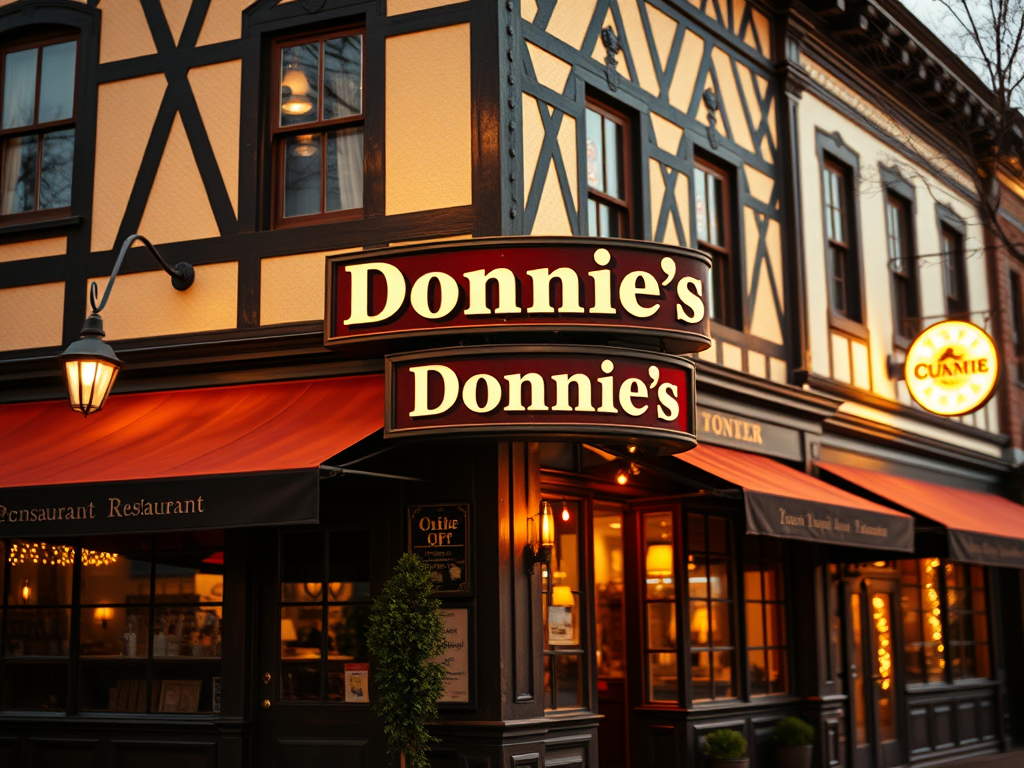
(AI generated image above)
“Donnie’s Restaurant,” located in the town center of Lancaster, Pennsylvania, began business in 1854, a quarter of a century before Franklin Winfield Woolworth opened his first five and dime store in 1879. Of course, back then, it wasn’t called “Donnie’s Restaurant.” It was originally called “George’s” named after the original proprietor, George Oglethorpe Parsons. Lancaster was originally named “Hickory Town.” Indeed, for many years, a stately grove of shagbarks abutted the estate upon which George decided to open his general store and tavern.
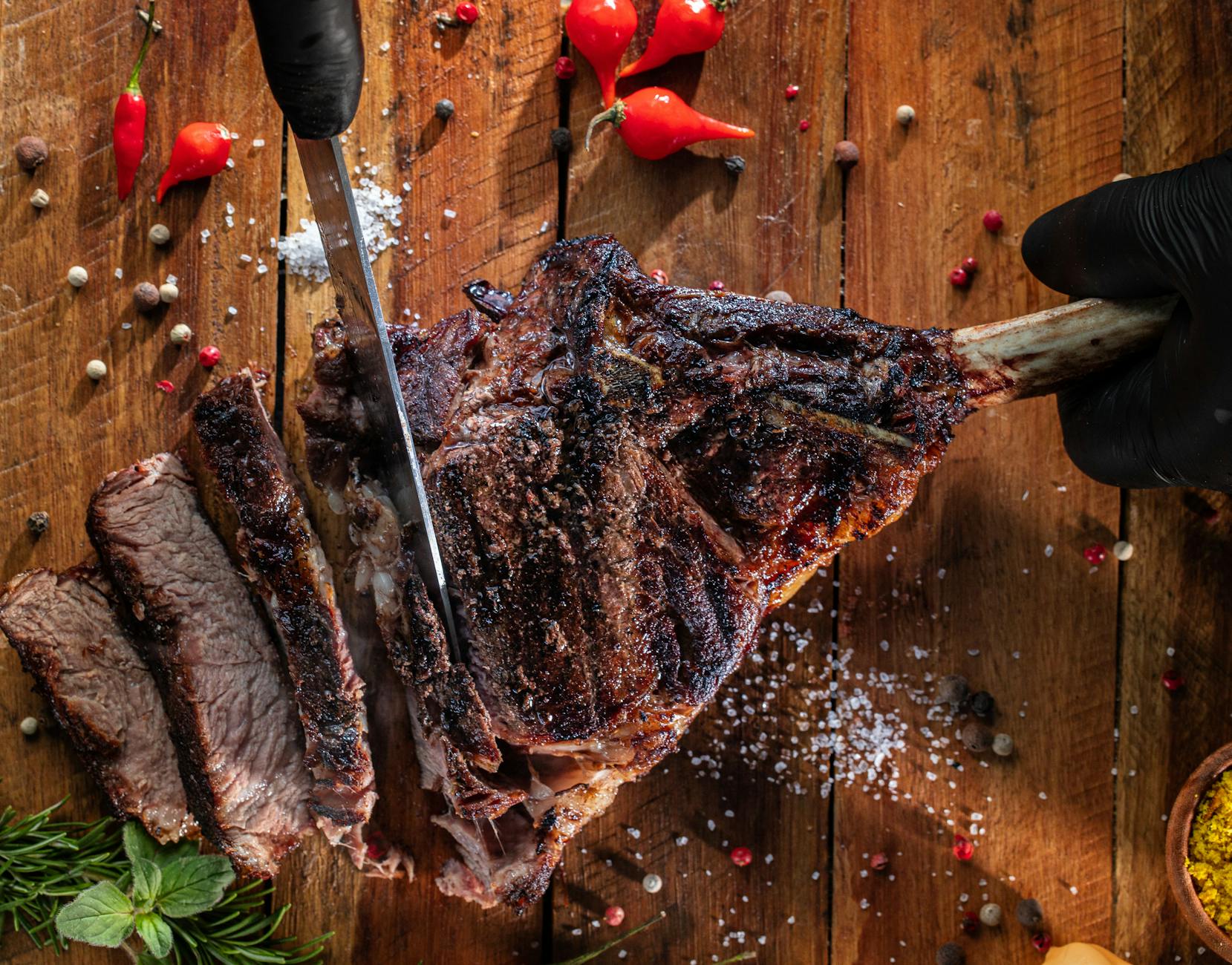
If we now fast forward (and who, these days, doesn’t love to fast forward?) to 1985, the name was changed to “Donnie’s Restaurant” by one of George Parsons’s descendants Donnie Parsons. Donnie continued many of the Restaurant’s traditions, including hickory nut pancakes with real maple syrup and local butter; beans and franks in homemade basil tomato sauce; and a one pound serving of prime rib. The prime rib came from local Holsteins. Though not officially “organic,” both beef and butter were free from toxic concentrations of antibiotics and pesticides.
In the summer of 2015, the restaurant changed hands again and for the first time, the proprietor bore no known blood relationship to the earlier owners. Nonetheless, as luck would have it, his name was also “Donald” so he decided to keep the name “Donnie’s Restaurant” as well as the “Pennsylvania Dutch” architecture fused with Italianate features.
The restaurant’s popularity grew under the new owner during the first few months. He kept the traditional dishes and promised to lower prices considerably as soon as possible. He also promised that he would increase the salaries of the cooks and waiters as soon as economically feasible. He fired most of the servers and replaced them with more attractive women.

(AI generated image above)
If one had judged the success of the restaurant by Donnie’s residence, one would have concluded that the restaurant was doing quite well indeed. Donnie found it expedient to cut costs by replacing some of the daily and weekly cleaning routines of the former owners with well-timed bribes for the health inspectors. At first, the bribing was initially more expensive but Donnie recorded the health inspector’s bribe-taking which reduced the necessary fee considerably.
Donnie kept the menu unchanged although he found ways to save more money by replacing the most absurdly expensive ingredients. For example, Donnie’s famous hickory nut pancakes were still listed that way on the menu, but instead of paying a fortune for hand-picked hickory nuts, he bought walnuts in bulk from China. Instead of paying a fortune for locally produced butter, he bought butter in bulk from India. Instead of using real maple syrup, he found that most people could not distinguish it from “Aunt Jemima’s” provided he simply ordered staff to pour the sugar syrup into a serving container that was labelled “100% pure Vermont Maple Syrup.”

(AI generated image above)
By greatly reducing the cost of hygiene and ingredients, Donnie had the option of raising wages or lowering prices or both. He decided it would be more prudent however, to increase profits. After all, Donnie found that if one promised to lower prices and increase wages, it worked nearly as well as actually doing it. This is particularly true if one promises with passion and sincerity.
Despite all the time and effort Donnie put into the restaurant, he found that after several months, fewer people actually went to the restaurant. There were still a large group of faithful customers who showed up on a regular basis, but he was not attracting any new clientele and even the faithful didn’t always show up. Donnie considered spending money on an advertising campaign but decided it was too expensive. Instead, he launched his own anti-advertising campaign aimed at discouraging people from dining at other local restaurants. He wrote letters to the editor. He dropped hints in conversation. He privately told several of his staff members that if they wanted to keep their jobs, they had better join in with his whispering campaign.

A local diner was said to be adding rat turds to bulk up their pecan pie. A fried chicken house went bankrupt from continual reports of Salmonella poisoning despite the fact that there were no actual cases of Salmonella. A sandwich shop, famous for its sourdough bread, had to close doors because one of the bakers had been “caught” urinating in the dough. This too was an out and out lie, but, more importantly, from Donnie’s perspective, it cut his competitor’s business in half. The local “Ponderosa Steakhouse” was said to be using horse meat instead of beef. Again, although completely unfounded, this persistent rumor cut their business in half.
It worked! As the number of options for restaurant-goers diminished, more business returned to Donnie’s. To celebrate the uptick in business, he painted a lot of gold trim on the doors to the restrooms which were newly labelled “Women ONLY” and “Men ONLY.” He found other ways to cut costs. For inspiration, he needed to search no further than his own smear campaigns. He bulked up his pies with rat turds. He told his chefs to save time by not cleaning cutting boards between cutting raw chickens and preparing fresh vegetables. He substituted horse meat for prime beef. Initially, these changes increased his margins and he was happy.
These changes, however, did not go completely unnoticed by his customers. Let’s zoom in for a moment (and who, these days, doesn’t love to zoom?) to a couple of long-term customers of “Donnie’s Restaurant” as they sit in their kitchen and contemplate dinner plans.

(AI generated image above)
Mildred sighed and banged the cupboard shut. She peered over at Gerald whose brow furrowed as convoluted and hateful as an Alito decision rationale. He grunted a single syllable: “Well?” Mildred sighed again and tip-toed across the kitchen to the table and sat beside him.
“We have no pasta, Ger. Sorry. We haven’t been to “Donnie’s” for a while. On the way home, I could run in to Walmart & grab some pasta for tomorrow. Doesn’t a prime rib sound good? You used to love them.”
Gerald grunted. “Yeah. I dunno. Lately, their steaks and prime rib haven’t been as good. Tough. I think maybe they overcook them. I dunno. Also, they replaced their home fries with whipped potatoes but they kind of suck. I think they may be powdered.”
Mildred nodded and bit her lip. “Funny you say that. I used to like the meatloaf. But lately, it has tasted…I dunno…off somehow.”
Gerald peered up at the ceiling and once again thought about what could possibly be causing the ever-widening stain. He shook his head slightly and thought, I’ll deal with that later. First things first. Gerald said, “Well, it can’t really be that different. After all, it’s got the same menu and the same name.”
Mildred and Gerald sat in silence for a few moments before Gerald said, “Not much else in town these days. Such a string of gross stuff. You could stand to lose a few pounds anyway. How ‘bout we just go have a couple slices of pie and a cup of coffee? Skip the main course? What say?”
“That sounds good, actually. Hard to mess up a pie, after all.”
Hard, but not impossible.
Unlikely as it might seem, most people don’t care much for the taste of rat feces. Sure, Donald had the chef throw in loads of extra sugar but it didn’t completely obscure the vermin taste. Privately, neither Mildred nor Gerald cared at all for their desserts. An observer wouldn’t guess that from their conversation however.

“You’re pickin’ at your pie, Mildred. Any good?”
“Oh, fine. Yeah, it’s fine. I should have ordered pecan, I think. I generally like pumpkin, but I think this whole season, I’ve been close to ODing on pumpkin spice. How’s yours?”
“Um. Great. Really. Not like I remember it when gramma used to make peach pie. She got fresh peaches from the Farmer’s Market. Can’t expect the same from canned fruit, I suppose. But it’s good. Yeah. I’m not all that hungry.”
“Yeah.”
“Yeah.”
“Donnie’s” became popular with tourists who wanted to see “what all the outsized complaints were about.” Tourists soon found out for themselves that the various reviews they have read were not exaggerations. The service was terrible. The prices never fell but continued to rise. The ingredients were low quality and having them put together haphazardly by inept cooks didn’t really help much. Still, it was fun to watch “Crazy Donald” come storming out of the kitchen and swear at the servers, the busboys, the hostess, and often, even the customers. Although neither Mildred nor Gerald liked the food, they were not disappointed when it came to the show. Sure enough, right before they paid their bill, Donnie stormed out through one of the kitchen’s swinging doors and knocked a large tray of drinks smashing onto the floor. He ignored his bleeding employee and screamed at no-one in particular:
“What the hell do you mean, it’s not good! It tastes good to me! What the hell’s wrong with you people! I’ll tell you what’s wrong! You’ve had your sense of taste destroyed by fast food and TV dinners and foreign sushi and pho soup and sauerkraut and some of those foreign restaurants even serve raw shark and cooked dog! If you don’t like my food, just leave! Give the receptuous, the receptive, the velocitoraptor! Damn! Whaddayacallit. The bitch. Give the bitch your credit card number and I give you double your money back.”

(AI generated image above)
Mildred and Gerald smiled at each other. Fifty bucks for two pieces of pie and coffee? Seriously overpriced, but the show was worth it they both thought (and, these days, who doesn’t like a good show?)
At least they had thought the show was worth it until they awoke around midnight and spent the wee hours alternating between diarrhea and vomiting. (These days, very few people enjoy the consequences of doing business with a liar).

—————
 petersironwood