• About PeterSIronwood

petersironwood

~ Finding, formulating and solving life's frustrations.

petersironwood

Tag Archives: psychology

Myths of the Veritas: The Friendship/Not-Friendship of POND MUD & ALT-R

14 Friday Sep 2018

Posted by petersironwood in America, psychology, Uncategorized, Veritas

≈ Leave a comment

Tags

bullying, empathy, innovation, myth, politics, psychology, story, truth, Veritas
IMG_1055

{Translator’s Note}: What follows is not contained in the “official” version of “The Seven Rings of Empathy.” That does not mean it’s any less true. It was not included in the original version because the majority of those who decided what went into the “official” oral history of the Veritas apparently thought this story too irrelevant to the main points of “The Seven Rings of Empathy.” Beyond that, several thought that the danger of providing a “bad model” for future generations outweighed the potential benefits of being forewarned. But none of the judges thought the story untrue. 

I agree, however, with the “minority report” – the judge who deemed that it should be included. If treachery and selfishness are part of human nature, why should we not know that? It does not mean, of course, that we should simply give in what is worst in our natures and use the excuse that we couldn’t help it. But knowing the sorts of errors we may fall into should both help prevent those who could be tempted and forewarn those who could minimize the damage done by such people. 

I do understand, nonetheless, the other point of view. Some of the work of Dan Ariely, for instance, which empirically studies ethics, suggests that telling people about some evil thing that some people do may actually increase the chances of more doing the same thing. For instance, some years ago, the US Park Service became concerned that too many people were taking little pieces of the Petrified Forest. So they put up signs that said something like: “Every year, 1000 pounds of this national treasure are stolen by people just like you. If this continues, the Petrified Forest will be destroyed.” So, people thought: “Hmmm, I hadn’t really thought of taking a piece for myself.” And, people thought, “Oh, so many people are doing it; I guess it can’t be that bad.” And, people thought, “I’d better get my piece before it’s all gone!.” A better sign might have read, “Every year thousands of visitors come to the Petrified Forest and the vast majority of them leave this majestic and unique beauty unmarred for future generations. We’re sure you’re another such person.” 

Or, to take an even more recent example, I would have thought it a good thing for everyone to know the atrocities that were committed under the direction of egomaniacal dictators so that it would never happen again. In the first place, if someone did have the tendency to lie, cheat, and steal their way to world domination, they would see that it actually never works out that way. Hitler ended up committing suicide and Mussolini was beaten to death by a crowd of his own people. I would hope that someone with tendencies like that, even if they weren’t moved to avoid becoming the sort of person who would commit atrocities would at least see that it was not going to end well for them either. Then, they would be encouraged to feed the “good wolf” and not become that kind of monster. It is, ultimately, the set of choices one makes that decide what kind of person they become. That was true for the Veritas tribe and it’s true for all of humanity.

Secondly, I would have thought everyone else would realize in an eye-blink how horrible it would be for everyone in a country if that country became a dictatorship. It’s pretty obvious from a priori arguments, but there is also empirical evidence. So, I had naively thought, “Well, thank God, we don’t have to go through that again!” 

We’ll see. But so far, I am thinking, if humanity “can’t handle the truth” as Jack Nicholson accused, then, we’re sunk anyway. The truth is the only way we can live and prosper. What does it mean to want the truth? It means you are becoming knowledgeable enough to react in an intelligent way to what happens. Any compromise with the truth means lessening of trust and therefore of cooperation and coordination. That in turn, means less of everything good for everyone. Therefore, I am of the opinion that the minority judge was right that the story of POND MUD and ALT-R is relevant to the teachings of “The Seven Rings of Empathy.” I am also of the opinion that, on balance, the story will prevent more people from being mean and stupid than it will promote. 

One short word though on my use of the word “official.” As I mentioned before, many people in “modern” and “sophisticated” and “techophilic” (or maybe that’s spelled “technophalic”?) civilizations believe that oral histories are completely distorted and wildly unreliable. That may be so in some instances, but the Veritas were quite aware of the possible influences to corrupt stories over time and therefore instituted a whole range of measures to keep the learnings from stories immaculately accurate (and I may delve into that more precisely at some future date). In any case, as I already mentioned, none of the judges doubted the truth of the following story. 

———————— 

The Friendship/Not-Friendship of POND MUD & ALT-R

Neither ALT-R nor POND MUD had been given the third, fourth or fifth ring of empathy. Yet, each secretly hoped that She-Who-Saves-Many-Lives might reconsider. Indeed, She-Who-Saves-Many-Lives still held out some hope for ALT-R who was, in her estimation, one of the smartest in her lifetime. And, he had promised to feed the “good wolf.” She hoped that ALT-R and POND MUD might learn from one another and become more complete persons even if they never gained further rings. 

For their parts, POND MUD and ALT-R speculated who the eventual successor to the shaman might be. This provided only one of many topics that they talked about. Having been culled from the trials at the same time and for similar reasons encouraged their friendship. Such a pair could potentially help each other considerably. POND MUD had indeed been endowed with unusual strength while ALT-R showed remarkable cleverness in many respects. Their secret hope of somehow still winning the leadership of the tribe was one of the very few things that they failed to share with each other. For each was intelligent enough to see the wisdom of forming a partnership. POND MUD realized, though he hated to admit it, that he would never be so smart as ALT-R. And, ALT-R knew full well that he would never be so strong physically as POND MUD. Each, however, secretly cherished the notion that some how, a day would come that would make each to be the leader of the Veritas. Of course, POND MUD would push to have ALT-R to be his trusted advisor, for it always seemed to POND MUD that whenever their preferred plans differed, it was ALT-R that had the better plan. 

person holding hands

Photo by rawpixel.com on Pexels.com

For his part, ALT-R held just such a similar dream in his own heart. He saw himself as the leader of the Veritas with POND MUD as his personal bodyguard. Neither ALT-R nor POND MUD shared either this central tenet of their dreams or the machinations against the other to ensure their eventual dominance. For dominance over others was what each desired. 

close up photography of blueberries

Photo by Roman Carey on Pexels.com

On one occasion, POND MUD and ALT-R decided to go foraging for blueberries. Each youth journeyed with a basket and a stave. When they came to a narrow path allowing only a leader and a follower, ALT-R led the way. From behind, POND MUD found it quite irresistible to use his stave to trip ALT-R. After the third such time, ALT-R turned and confronted POND MUD with a red face and a racing pulse, his stave held before him, his basket discarded on the ground. POND MUD laughed, “So, you want to challenge me? Have at it!” ALT-R proved skillful but he was still no match for the strength of POND MUD who basically pushed ALT-R down and then sat on his chest pinning his arms until ALT-R admitted that POND MUD was indeed much stronger. POND MUD let him up and led the way. “Good! Now, you know I am the leader. Follow me and we’ll be there quickly.” They walked in silence for a time. 

IMG_5572

POND MUD was so happy to have won the contest and so busy fantasizing about becoming the leader of the Veritas that he failed to take the proper path to the top of the blueberry hill. ALT-R, for his part, fumed still and though he could see that POND MUD had missed the turn, he had no intention of telling him for he knew that the path POND MUD travelled and knew that it led to a quagmire. Gradually, ALT-R let POND MUD get farther and farther ahead. They walked by witch hazel and spicebush and ALT-R gathered some leaves of each for they would be useful in later making a poultice that would help to treat the bruises that POND MUD had inflicted with his stave. POND MUD glanced back over his shoulder to note ALT-R gathering leaves. Again, he felt compelled to force his will on another. “Hey, hurry up! What are you doing? We’re here for blueberries. Not leaves. Follow me! We’re almost there! If you were the leader, it would take us forever to get to blueberry hill!” 

ALT-R’s voice dripped with enough irony to satisfy himself but be undetectable by the less subtle mind of POND MUD. “Yes, very lucky that you’re the one leading us down to blueberry hill.” 

birch clouds fall grass

Photo by Skitterphoto on Pexels.com

Though not so subtle as ALT-R, nonetheless, that phrase bothered POND MUD though he couldn’t quite discern what it was about ALT-R’s words that rung strangely. The journey was taking too long, he thought, so he yelled back to ALT-R yet again. “Hurry it up! It never takes this long to get to blueberry hill. You’re so slow! If I were on my own…Yech! What?! This path is flooded! Or mudded. I don’t recall this.” Now POND MUD’s feet were sinking. He tried to lift one and then the other foot out of the thick mud but each time, he only succeeded in sinking more deeply. He saw what appeared to be more solid ground ahead and struggled forward sinking still more deeply. Soon, his yelling and struggling succeeded in putting him in mud up to his chest. “What’s going on! Come here and help me!”

ALT-R responded to POND MUD’s panic with cold calm. That was fairly easy because ALT-R was still on rock solid ground. “No sense in both of us getting stuck. Stop struggling. Put your stave out to the side like this and drape your arms over it.” He demonstrated what was to be done. “Yes, that’s it. Now, I know this seems scary, but lean forward so your chest is on the mud. Go on. Do it if you don’t want to be stuck there forever. Keep the stave under you. Yes. And swim slowly toward me with the breast stroke. Eventually your legs will come up behind you. Let them lay along the mud as well.” 

POND MUD felt only slightly less panicked but ALT-R’s instructions did seem to be working. Very slowly, he swam through the mud toward the edge of the quagmire. 

A sudden inspiration hit ALT-R. “That’s it! You’re doing great. Slow and easy. Put your face down in the mud and blow some bubbles. That will get you here more quickly.” 

POND MUD frowned. “Why? How does that work?” 

ALT-R smiled, “I don’t know; I just know it works. Do it.”

desktop

In another circumstance, POND MUD might not have followed ALT-R’s directions, but in the current situation, he would have grasped at any straw, had there been any. He took a deep breath, lay his face down in the mud and blew bubbles till his lungs were empty. Then, he cautiously lifted up his face, tried to shake some of the mud off by shaking his head back and forth. 

“That’s great. You’re doing well. Better take a breath and then put your face back in the mud and blow some more bubbles. You’ll be here in no time.” The next time, POND MUD came up for air, ALT-R yelled, “Wait! POND MUD, where’s your basket?” 

basket catering cooking food

Photo by Valeria Boltneva on Pexels.com

“Who cares?” answered POND MUD. “It’s back there. It probably sunk.” 

“No, it didn’t sink. I see it. It’s only a few feet behind you. Isn’t that the basket She-of-Many-Paths made you? She won’t still fancy you if you lose that basket that she worked so hard on.” 

POND MUD tried to keep the panic out of his voice. “NO! You get it. I can’t go back.” 

ALT-R laughed just the slightest possible bit. “Oh, POND MUD, it’s just a little mud. Surely you can go back a few feet and get it. You’re not afraid of a little mud are you? After all, you are POND MUD.” 

POND MUD gritted his teeth, “I’m not going back! It’s too dangerous. You get it if you’re so smart.” 

ALT-R appeared to consider this. “Well, OK. I’ll get it, but then everyone will know you are too afraid of a little mud to get the basket of the young woman who loves you. A basket, I should add, that is only a few feet away.” 

“I don’t care! You get it! But don’t tell anyone! Tell her I got it. In fact, don’t tell her anything. Just get the basket! Please!” POND MUD was still inching his way forward through the mud. 

ALT-R meanwhile, had been inching backwards imperceptibly. “I’ll get it for you, POND MUD, but you definitely owe me one. No more talk from you about my following you. You’re following me from now on. But we have a bigger problem. You’re not making any more progress. You’d better put your face down in the mud and blow some more bubbles.” POND MUD complied.  

mudface

ALT-R knew that if he gave POND MUD too much time to overcome his panic, he’d begin to see that ALT-R was toying with him. So, while POND MUD had his face in the mud, ALT-R came forward to the edge of solid ground and had POND MUD advance his stave to him while ALT-R thrust his stave out toward POND MUD. As soon as POND MUD felt the tug, he begin to try to stand upright. 

“NO!” yelled ALT-R. “Stay level. Don’t try to stand up yet! Stay on your belly till you’re on solid ground!” ALT-R struggled backwards bracing his feet as best he could on protruding rocks and roots. At last, POND MUD lay on solid ground, presently sat up, and began trying to wipe mud off his face.

ALT-R had never before summoned so much self-control but now successfully forced himself not to laugh at POND MUD covered in pond mud. It wasn’t really pond mud, but close enough to be absurdly funny to ALT-R. 

When POND MUD at last recovered his composure, he said, “Don’t forget your promise! Now, it’s your turn to get that basket. Let’s see how you like getting doused in mud!” 

“And what about your end of the bargain, POND MUD? If I retrieve that basket, you promise to follow my leadership?” Or, shall you be the one to tell She-of-Many-Paths that you managed to lose the basket she so lovingly wove for you? Or, shall I tell her?” 

“No. No. Okay. I’ll follow your lead. I swear.” 

“Good decision, POND MUD. Let me get that basket for you.” ALT-R turned and began walking back up the path away from the swamp. 

POND MUD screamed, “Where are you going? You promised to get the basket!” 

ALT-R did not turn back, but stopped a few feet farther up the path to the place he had noticed a ten foot sapling, dead, but not rotted. He broke the small brittle trunk and used his hands to break off a few remnant branches. He ignored the shouts of POND MUD and calmly walked back to the edge of the quagmire. He held the small end of the trunk in his hand and hooked one of the broken branch stems onto the handle of the basket on the very first try. He was able to use two hands to leverage the basket up and then pull it in without getting it any muddier. He handed it to POND MUD. “Here you are. As promised.” 

POND MUD seemed confused. “But…but you didn’t get muddy!”

ALT-R replied cooly, “Why would I do that? Would that make She-of-Many-Paths love you any the more? She would be a strange woman indeed who would love you more because I went needlessly through mud to get the basket she made for you. Wouldn’t you agree?” 

POND MUD shook his head, half in puzzlement, half in further attempts to free his face of mud. “But I could have done that myself! I didn’t need to swim through the mud.” 

ALT-R replied, “Perhaps you are correct, but a promise is a promise and your word is your bond. But if you like, we can relate everything that happened to She-of-Many-Paths and let her decide who she likes more. Of course, I would feel honor bound to tell her the truth. That you were too afraid to go back and get the basket yourself and had me do it. And, in return that you promised to follow me if I got the basket for you. I could be wrong, of course. I think that if we tell her the truth…well, you know women are so unpredictable. She might think you don’t really care for her if you won’t even bear a little mud for the time of a few breaths though it took her at least a day’s work to make this basket.” 

POND MUD grumbled but picked up his stave and his basket and followed ALT-R. They gathered no blueberries that day, however. Instead, they went to a nearby clear stream and washed off. For even ALT-R has a bit splattered with mud. Once again, it took all his self-control not to laugh at POND MUD as he washed off the now-dried mud of the swamp. ALT-R thought, and not for the last time, that he indeed he would one day become the leader of the Veritas, regardless of the trials set by the Shaman. Outsmarting her would be more difficult than outsmarting POND MUD. This he recognized and acknowledged. But he saw no reason why he should fail. 

white king chess piece on chess board

Photo by Pixabay on Pexels.com


————————————


Dan Ariely’s book: predictably irrational


My author page on Amazon

In the Brain of the Beholder

17 Tuesday Jul 2018

Posted by petersironwood in America, management, psychology, Uncategorized

≈ 1 Comment

Tags

Design, experiment, HCI, human factors, politics, psychology, science, UX

In the Brain of the Beholder. 

MikeHurdles

Most people in the related fields of “Human Factors”, “User Experience”, and “Human Computer Interaction” learn how to run experiments. Formal study often largely focuses on experimental design and statistics. Indeed, these are important subjects. In today’s post though, I want to relate three experiences with actually running experiments. Just for fun, let’s go in reverse chronological order. 

In graduate school at the University of Michigan Experimental Psychology department, one of my classmates told us about an experiment he had just conducted. Often, we designed experiments in which a strictly timed sequence of stimuli (e.g., printed words, spoken words, visual symbols) were presented and then we measured how long it took the “subject” to respond (e.g., press a lever, say a word). Typically, these stimuli were presented fairly quickly, perhaps 1 every second or at most every 4-5 seconds. This classmate, however, had felt this was too stressful and wanted to make the situation less so for the subjects. So, instead of having the stimuli presented, say, every 4 seconds, my classmate decided to be more humane and make the experiment “self-paced.” In other words, no matter how long the subject took to make a response, the next stimulus would be presented 1 second later. So, how did this “kindness” work out in practice? 

IMG_9172

A few days later, I heard a scream in the lab down the hall and ran in to see whether everyone was okay. One of my classmate’s first subjects had just literally ran out of the experimental room screaming “I can’t take it any more! I quit!” My classmate was flabbergasted. But eventually, he got the subject to calm down and explain why they had been so upset. The subject had begun by responding carefully to the stimuli. So, perhaps they took ten seconds for the first item, and the new stimulus came up one second later. On the second go, they took perhaps 9.5 seconds and then the next stimulus came up one second later. As time went on, the subject responded more and more quickly so the next stimulus also came up more and more quickly. In the subject’s mind, the experiment was becoming more and more difficult as determined by the experimenter. They had no idea that had they slowed back down to responding once every 10 seconds, they’d only be presented with stimuli at that, much slower speed. 

So, here we have one way that these so-called subjects differ from each other. They may not interpret the experiment in the framework in which it is thought of by the experimenter. In this particular case, there was a difference in the attribution of causality, but there are many other possibilities. This is one of many reasons for doing a pilot experiment and talking with the subjects. 

The next earlier example took place at Case-Western Reserve. In my senior year, I was married and had a kid so I worked three part time jobs while going to school full-time. One of the jobs was teaching “Space Science” and “Aeronautics” to some sixth graders at the Cleveland Supplementary Educational Center. Another one of the jobs was as a Research Assistant to a Professor in the Psychology Department. We were doing an experiment with kids in an honest-to-God “Skinner Box.” The kids pulled a lever and won nickels. Meanwhile, on a screen in front of them, there appeared a large red circle and then we looked at how much the kid continued to press the lever (without winning any more nickels) when confronted with the same red circle, a smaller red circle, a red ellipse, etc. 

SolarSystem

There was a small waiting room next to the Skinner Box and that had a greenboard on it. So, since there was another kid waiting there just twiddling his thumbs, I decided to give him a little mini-lecture on the solar system: sun at the center, planets in order, some of the major moons, etc. 

After each kid had finished the experiment, I always asked them what they thought was going on during the experiment. (This was despite the fact that the Professor I was working for was a “strict behaviorist”). When I asked this kid what he thought was going on, he referred back to my lecture about the solar system! 

Oops! Just because the lecture and the experiment were two completely unrelated things in my mind didn’t mean they were for the kid! Of course, they seemed related to him! Both involved circles and they both took place at the same rather unique and unusual place: a psychology laboratory. 

And this too is worth thinking about. We psychologists and Human Factors people typically report on the design of the experiment and hopefully relate the instructions. We, however, do not typically report on a host of other things that we think of as irrelevant but may impact the subject and influence their behavior. Was the receptionist nice to them or rude? What did their friends say about going to do a psychology experiment or a UX study? When the experimenter explained the experiment and asked whether there were any questions, was that a sincere question? Or, was it just a line delivered in a rather mechanical monotone that encouraged the subject not to say a word? 

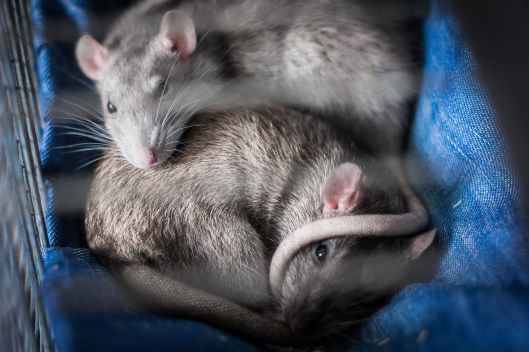
Of course, the very fact that humans differ so much is why some psychologists prefer to use rats. And, the psychologists (as well as a variety of biologists and medical doctors) don’t just use any old rats. They use rats that are carefully bred to be “lab rats.” They are expected to act in a fairly uniform fashion. And, for the most part, they do.

two gray mice

Photo by Alex Smith on Pexels.com

I was helping my girlfriend with her intro psych project. We were replicating the Yerkes-Dodson Law. This states that as you increase stress, performance improves, but only to a point. After that, additional stress causes performance to deteriorate (something that software development managers would do well to note). One of the ways I helped was to get some of the rats out of their cages. I would open up the top of the cage, reach around the rat behind their next and pull them out. Not a big deal. All the rats were quite placid and easy to handle. They all acted the same. Then, it was time to get the day’s last rat who was to be placed in the “high stress” condition. I went to the cage and opened it just as I had done for the last dozen rats. But instead of sitting there placidly and twitching it’s nose, this rat raced to the bars of his cage and hung on with both of his little legs and both of his little arms with all his might! Which might was not equal to mine but was rather incredible for such a tiny fellow. Rats sometimes squeak rather like a mouse does. But not this one! This carefully bred clone barked! Loudly! Like a dog. Whether this rat had suffered some previous trauma or was subject to some kind of odd mutation, I cannot say. 

But this I can say. Your “users” or “subjects” are not identical to each other. And, while modeling is a very useful exercise, they will never “be” identical to your model. They are always acting and reacting to a reality as beheld by them. And their reality will always be somewhat different from yours. That does not mean, however, that generalizations about people — or rats — are always wrong or that they are never useful. 

It does not mean that gravity will not affect people just because they refuse to believe in it. There really is a reality out there. And, that reality can kill rats or people in an eye blink; especially those who actively refuse to see what is happening before their very eyes. 

halloween2006006

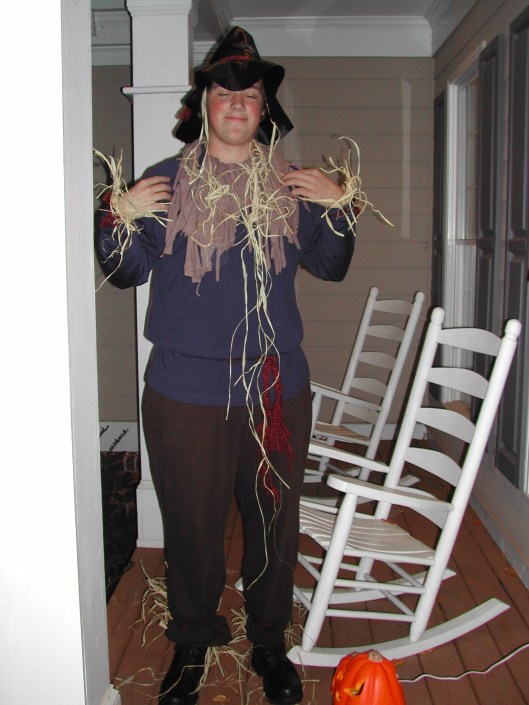
Who knows? You might be about to be placed in the “High Stress” condition no matter how tightly you hang on to the bars of your cage – or, to your illusions.  

————————————-

Author Page on Amazon

Happy July 4th

04 Wednesday Jul 2018

Posted by petersironwood in America, management, psychology, Uncategorized

≈ Leave a comment

Tags

Business, collaboration, competition, Feedback, Human-Computer Interaction, learning, life, politics, psychology, science, teamwork, UX

As we celebrate in America, let’s not forget that many people fought long and hard to gain our independence and then to keep it. Let’s honor them by making sure we keep our independence. It would be a shame to lose it on the battlefield…and even more of a shame to lose it to greed.

IMG_8651

It would also be a good time to recall that America is not alone in the struggle against tyranny. Many other countries had to fight and win their independence – and in other cases, people are still fighting for their freedom.


Photo by Pixabay on Pexels.com

As I mentioned before, I am temporarily suspending additions to the Pattern Language of ‘best practices’ in collaboration and teamwork and shifting to a different genre for a time. I’m still quite interested in collaboration and teamwork; I am interested in working together to learn from each other how to do that better. As I’ve tried to point out, while competition certainly has a place, both in nature and in human civilization, in human civilization, it needs to be done within an agreed upon framework. Otherwise, competition spins out of control into anarchy and violence. Of course, this has happened before in human history. This time, when our very lives depend on a global network of interconnectedness, anarchy will be worse than ever before. For now, however, I’ve listed most of the major Patterns I’ve run into. I will continue to elicit and look for additional relevant Patterns. If you think of one, please comment on the summary/index or email me at: truthtable@aol.com


IMG_0159

Meanwhile, I’ve decided to share a number of experiences from my career as a researcher and practitioner in psychology, AI, and the field of human-computer interaction/user experience. I will relate these as honestly and completely as I think useful. In some cases, I may use pseudonyms to avoid embarrassing anyone. Clearly, stories are told from my perspective, and others might remember things differently, if at all. 

IMG_5190

The reasons for recounting these stories is basically threefold. First, studying a field such as psychology, or human-computer interaction is related to actually working in the field but not so much as you might think. For the most part, the errors I’ve made and the lessons that I’ve learned in the course of a long career are not primarily technical. The main lessons are socio-technical. Hopefully, people considering a career in a related field may learn from my mistakes. But aside from pointing out mistakes made, I hope to give a flavor for what it’s really like to work in the field. 

IMG_5191

Author Page on Amazon

City Mouse and Country Mouse

04 Saturday Mar 2017

Posted by petersironwood in America, psychology, Uncategorized

≈ 5 Comments

Tags

architecture, culture, ethics, politics, psychology

thumb_img_8068_1024

In our childhood, many of us heard the fable of the city mouse and country mouse. Briefly, the city mouse invites his cousin, country mouse, to visit him in the city. At first, the country mouse is quite impressed with the array of food available in the city mouse’s home. Then, the house cat comes with sharp claws and long pointed teeth and nearly rips them both apart. In the end, the country mouse scampers back and shouts back to his city cousin something to the effect that he’s happy to have his bread crumbs in peace rather than risking life and limb in the city. The exact words, I don’t recall, but they have probably suffered in the translation from Aesop’s ancient Greek to modern English and even more severely in the translation from mousespeak to human speech. Most likely, the original sounded something like this: “Squeak. Squeak. Squeak.”

Aesop Fable of the Mice

No doubt there are advantages and disadvantages for a mouse to live in the city or the country. Both places have sources of food and both have predators. But what about human beings? Here too, there are advantages and disadvantages of living in a large city versus living in the country or a small town. While human beings undoubtedly have many behaviors that are influenced by “instinct”, people are also capable of learning. Moreover, because we humans can talk and write and are fundamentally social beings, not only do urban and rural environments result in different kinds of individual skills, in a fairly short time, they also result in different cultures. These differences are not arbitrary but are adaptations to characteristics of the two environments.

In cities (and especially coastal cities), people typically come in contact with a huge variety of people. Many metropolitan areas feature different cuisines, attractions, races, religions, sexual preferences, and so on. Take the matter of cuisine. It is easy in New York City, San Francisco, Atlanta, Boston, Washington DC, Seattle, Minneapolis, Los Angeles, or San Diego to find restaurants that serve excellent Italian, French, Japanese, Chinese, Mexican, Vegetarian, Vegan, Ethiopian, Jewish or Indian food. I happen to love them all! But if someone hates any of these options, it is also easy to avoid that option. You don’t care for Indian food? No problem. Don’t go. Suppose however, you are with a group of friends and everyone else wants to go for sushi which you happen to hate. The vast majority of urban Japanese restaurants in the USA offer other options that are “close to” traditional American cuisine. So, you can go to a Japanese restaurant with your friends and order steak teriyaki while they all eat raw fish.

But let’s just suppose that for whatever reason, you are so appalled by raw fish that you get sick watching someone else eating it. Well, you simply don’t watch. Now, the thing about living in a big city is that you don’t have to create this solution on your own. That’s what everyone does. If they see something they don’t like, they look away. They learn not to dwell on it. It’s very crowded in a city. If you walk around or take public transportation being “offended” or “put off” by anyone who speaks differently, dresses differently, eats differently, worships differently, looks different, etc. you are going to quickly become completely stressed out and become one completely unhappy camper. People in large cities learn to be polite and focus their energy on the places and people that give them joy. It takes time to find friends but eventually you find people who share fundamental interests and values. They might be next door, but more likely, they are are a subway ride or long walk away. There are literally more than a million people in any large city that you never get to know. Because there are so many choices, plenty of opportunities arise to do what you like and many people who will join you. You might love tennis, roller skating, and art museums. You might never step foot in the science museum or the public library or the parks. It’s all fine. The culture of the city is tolerance for everyone. Yet, people find those they relate to from a huge pool. If you come from, say, China, and you want to stick with other Chinese people, you can easily do that. You can survive in New York City or San Francisco without having to experience Mexican food or even without learning much English. On the other hand, if you want to become assimilated into more “mainstream” American culture and eat pizza every day and listen to jazz and dress like an American Indian — hey, you’re welcome to do that too. Because everyone passes by people that are so different every day, almost everyone learns tolerance. In essence, you see, there is not “one” New York City or Los Angeles, there are thousands! People essentially live in their own version of these cities and become close only with a small group of like-minded people. Of course, your “tennis friends” might be different from your “roller skating friends” which might be a slightly different group than your “art museum friends.” But even putting all your friends together, the people you know are only 1/10,000 or 1/100,000 of the people in the city.

thumb_img_8442_1024

There is a down side. You may never get to know your next door neighbors. You and they may simply have very different tastes and interests. Besides that, there is a lot of turnover in a city. Often, there doesn’t seem to be much point in becoming friends simply because you live next door partly because they (or you) are quite likely to move away in a month. There is a worse down side as well. At the extreme, the distance that people create mentally to accommodate the extremely close physical proximity and the culture of leaving others alone also makes it possible for someone to be stabbed on the street without anyone helping. This phenomenon has been studied and called “bystander behavior.” People are actually much more likely to help if they are the only witness than if they are one of 100. Each of the 100 looks around and sees that none of the other 99 are doing anything and so conclude, all evidence to the contrary, that nothing much is happening or else the other 99 people would be helping. In any case, the “culture” that arises in cities is typically quite tolerant of differences, somewhat distant from the vast majority of your fellow citizens but certainly allows for close friendships based on any combination of a hundred different factors. Because large cities develop a culture of tolerance for other types of people, that fact becomes known and attracts still more diversity which in turn encourages more tolerance and diversity.

There is another important aspect of living in a large city. It is crowded and complex. You constantly have to “trust” people you don’t know who drive the taxis, deliver the food, come to fix your cable, police the streets and so on. These are typically not people you know. In fact, for the most part, you won’t even see them again. But it is impractical not to trust all these strangers. Most of the time, the trust works out though on rare occasions, it backfires.

thumb_img_8311_1024

The experience of living in a small rural town is completely different. There are not 400 different restaurants to choose from. There might be three. Possibly one of the three is ethnic, but it is far less likely. A Korean restaurant in New York City can be quite profitable if only .01% of the NYC population goes there regularly. That won’t work in Woburn MA or Bend OR though, let alone in a town of 5000. A small town in America may well have a baseball diamond and a public library. But they are unlikely to have a holography museum or a laser tag facility. The sheer small number of people living in a small town means, in essence, that the citizens must agree on what types of restaurants are available, what recreational facilities are available, what clothing stores are in town and so on. In addition, everyone in town is likely to run into everyone else again and again. Rather than learning to avoid and look away and ignore things you don’t personally care for, people in small towns instead lean in. They want to know what exactly is going on with everyone else in town. Everyone soon knows who the town drunk is and who is having an affair with whom. People in small towns do not typically think, “It’s none of my business” but that’s exactly what they think in large cities.

For these reasons, people in small towns are less likely to learn the skill of looking away. If they personally hate sushi and end up visiting a relative in a big city and then end up in a Japanese restaurant, they are both fascinated and disgusted by watching their cousin eat sushi. They could theoretically just look away, but that is not a very well learned skill for most. For these reasons, the culture of the small town also evolves to be different. People who thrive on diversity and believe strongly in tolerance feel as though they don’t belong and they also feel deprived of interesting possibilities so most end up moving away. Of course, that makes the town even more homogeneous. The small town ends up being much more “tight knit” than a random group of 5000 people in a large city. It seems much less likely people would fail to help someone being stabbed on the street (though I haven’t actually tried that experiment).

img_5254_1024

In a small town, since people know almost everyone they interact with, they don’t really have to trust strangers all that much. If someone new delivers the mail, the small town person is likely to ask whether they just moved in town, where they live and so on. This would be considered quite rude and even weird in a big city. People in a small town probe to know people in their small town. They tune in not out. They are much more likely to choose friends partly on the basis of location rather than vocation. Because of this cluster of factors, people in one small town are more likely to stay in that small town. It is probably much more “disruptive” to move from Woburn MA to Bend OR than to move from New York City to Los Angeles. Of course, either move means you will have to learn where things are, get a new driver’s license, make new friends etc., but the “culture” of cities is becoming similar all across America and indeed, all across the world. Two small towns can have quite different cultures.

People from large cities are likely to feel quite different on a number of issues compared with people from small towns. People in large cities have been trained and acculturated to simply look away and ignore things and people that they don’t like and to focus on what they do like. Conversely, people in small towns have learned to depend on everyone and so want everyone to agree on a much larger range of issues. There are enough resources in a large city to have scores of museums and hundreds of restaurants and scores of clothing stores. People don’t need to agree on taste. But in a small town, that’s not true. There is much greater pressure to agree on what the “right” museum is for the town, what the “right” kind of food is to serve at the handful of restaurants and what the “right” kind of clothing might be.

People in a small town are likely to know the police that they come in contact with. If a police officer in a small town arrests someone or even shoots them, people in a small town are much more likely to know both the police officer and the person arrested. Provided the police officer is known as a generally fair-minded person, the people in the small town are much more likely to be sympathetic. In addition, they may well known that the person arrested (or even shot) is and has been a “bad guy” the whole time he’s been in town.

In a large city, by contrast, people who read or hear about someone making an arrest or very unlikely to know personally either the policeman or the suspect. They probably still have a presumption that the police probably acted correctly. However, their reactions are much more likely to vary from person to person that what you would find in a small town.

Needless to say, cities do differ from each other in terms of culture and so do small towns. For example, Murray Hill, New Jersey is not a huge city (population around 3500). However, many of the people there were from Bell Labs, a large famous research institute long part of AT&T but now part of Nokia. That particular small area includes residents from many countries, liberal and very well funded schools, and so on. Small towns that grow up around trade centers, farming communities, research centers and universities, or coal mining undoubtedly have very different typical “cultures.” Similarly, a large city like New York that has people from all over the world is quite different than one of the Chinese cities around large-scale manufacturing facilities (e.g., Guangzhou or Shenzhen. Nonetheless, as a general rule, living in a small town versus a large city tends to produce different skill sets and a different outlook and culture.

img_2795

What can small town cultures and big city cultures learn from each other? How can these cultures tolerate each other? Is there a way to have the advantages of both? If humanity keeps exponentially increasing population, will there even be any “small towns” left in 100 or 500 years? To me, city culture and small town/rural culture mirror many of the distinctions made by Jane Jacobs in “Systems of Survival.” I recommend this as an interesting (and short) read.

Systems of Survival


(The story above and many cousins like it are compiled now in a book available on Amazon: Tales from an American Childhood: Recollection and Revelation. I recount early experiences and then related them to contemporary issues and challenges in society).

author page on Amazon

Newer posts →

Subscribe

  • Entries (RSS)
  • Comments (RSS)

Archives

  • March 2026
  • February 2026
  • January 2026
  • December 2025
  • November 2025
  • October 2025
  • September 2025
  • August 2025
  • July 2025
  • June 2025
  • May 2025
  • April 2025
  • March 2025
  • February 2025
  • January 2025
  • December 2024
  • November 2024
  • October 2024
  • September 2024
  • July 2024
  • April 2024
  • March 2024
  • February 2024
  • January 2024
  • December 2023
  • August 2023
  • July 2023
  • May 2023
  • April 2023
  • March 2023
  • February 2023
  • January 2023
  • December 2022
  • November 2022
  • October 2022
  • September 2022
  • August 2022
  • July 2022
  • June 2022
  • May 2022
  • April 2022
  • March 2022
  • February 2022
  • January 2022
  • December 2021
  • November 2021
  • October 2021
  • September 2021
  • August 2021
  • July 2021
  • June 2021
  • May 2021
  • April 2021
  • March 2021
  • February 2021
  • January 2021
  • December 2020
  • November 2020
  • October 2020
  • September 2020
  • August 2020
  • July 2020
  • June 2020
  • May 2020
  • April 2020
  • March 2020
  • February 2020
  • January 2020
  • December 2019
  • November 2019
  • October 2019
  • September 2019
  • August 2019
  • July 2019
  • June 2019
  • May 2019
  • April 2019
  • March 2019
  • February 2019
  • January 2019
  • December 2018
  • November 2018
  • October 2018
  • September 2018
  • August 2018
  • July 2018
  • June 2018
  • May 2018
  • April 2018
  • March 2018
  • February 2018
  • January 2018
  • December 2017
  • November 2017
  • October 2017
  • September 2017
  • August 2017
  • July 2017
  • June 2017
  • May 2017
  • April 2017
  • March 2017
  • February 2017
  • January 2017
  • December 2016
  • November 2016
  • October 2016
  • September 2016
  • August 2016
  • July 2016
  • June 2016
  • May 2016
  • April 2016
  • March 2016
  • February 2016
  • January 2016
  • December 2015
  • November 2015
  • October 2015
  • September 2015
  • August 2015
  • May 2015
  • January 2015
  • July 2014
  • January 2014
  • December 2013
  • November 2013

Categories

  • AI
  • America
  • apocalypse
  • cats
  • COVID-19
  • creativity
  • design rationale
  • dogs
  • driverless cars
  • essay
  • family
  • fantasy
  • fiction
  • HCI
  • health
  • management
  • nature
  • pets
  • poetry
  • politics
  • psychology
  • Sadie
  • satire
  • science
  • sports
  • story
  • The Singularity
  • Travel
  • Uncategorized
  • user experience
  • Veritas
  • Walkabout Diaries

Meta

  • Create account
  • Log in

Blog at WordPress.com.

  • Subscribe Subscribed
    • petersironwood
    • Join 662 other subscribers
    • Already have a WordPress.com account? Log in now.
    • petersironwood
    • Subscribe Subscribed
    • Sign up
    • Log in
    • Report this content
    • View site in Reader
    • Manage subscriptions
    • Collapse this bar
 

Loading Comments...