• About PeterSIronwood

petersironwood

~ Finding, formulating and solving life's frustrations.

petersironwood

Tag Archives: philosophy

Turing’s Nightmares: Variations on Prospects for The Singularity.

01 Wednesday Oct 2025

Posted by petersironwood in AI, essay, psychology, Uncategorized

≈ Leave a comment

Tags

AI, Artificial Intelligence, chatgpt, cognitive computing, philosophy, technology, the singularity, Turing

caution IMG_1172


The title of this series of blogs is a play on a nice little book by Alan Lightman called “Einstein’s Dreams” that explores various universes in which time operates in different ways. This first blog lays the foundation for these variations on how “The Singularity” might play out.

For those who have not heard the term, “The Singularity” refers to a hypothetical point in the future of human history where a super-intelligent computer system is developed. This system, it is hypothesized, will quickly develop an even more super-intelligent computer system which will in turn develop an even more super-intelligent computer system. It took a fairly long time for human intelligence to evolve. While there may be some evolutionary pressure toward bigger brains, there is an obvious tradeoff when babies are born in the traditional way. The head can only be so big. In fact, human beings are already born in a state of complete helplessness so that the head and he brain inside can continue to grow. It seems unlikely, for this and a variety of other reasons, that human intelligence is likely to expand much in the next few centuries. Meanwhile, a computer system designing a more intelligence computer system could happen quickly. Each “generation” could be substantially (not just incrementally) “smarter” than the previous generation. Looked at from this perspective, the “singularity” occurs because artificial intelligence will expand exponentially. In turn, this will mean profound changes in the way humans relate to machines and how humans relate to each other. Or, so the story goes. Since we have not yet actually reached this hypothetical point, we have no certainty as to what will happen. But in this series of essays, I will examine some of the possible futures that I see.


Of course, I have substituted “Turing” here for “Einstein.” While Einstein profoundly altered our view of the physical universe, Turing profoundly changed our concepts of computing. Arguably, he also did a lot to win World War II for the allies and prevent possible world domination by Nazis. He did this by designing a code breaking machine. To reward his service, police arrested Turing, subjected him to hormone treatments to “cure” his homosexuality and ultimately hounded him literally to death. Some of these events are illustrated in the recent (though somewhat fictionalized) movie, “The Imitation Game.”

Turing is also famous for the so-called “Turing Test.” Can machines be called “intelligent?” What does this mean? Rather than argue from first principles, Turing suggested operationalizing the question in the following way:

A person communicates with something by teletype. That something could be another human being or it could be a computer. If the person cannot determine whether or not he is communicating with a computer or a human being, then, according to the “Turing Test” we would have to say that machine is intelligent.

Despite great respect for Turing, I have always had numerous issues with this test. First, suppose the human being was able to easily tell that they were communicating with a computer because the computer knew more, answered more accurately and more quickly than any person could possibly do. (Think Watson and Jeopardy). Does this mean the machine is not intelligent? Would it not make more sense to say it was more intelligent? 


Second, people are good at many things, but discriminating between “intelligent agents” and randomness is not one of them. Ancient people as well as many modern people ascribe intelligent agency to many things like earthquakes, weather, natural disasters plagues, etc. These are claimed to be signs that God (or the gods) are angry, jealous, warning us, etc. ?? So, personally, I would not put much faith in the general populous being able to make this discrimination accurately.



Third, why the restriction of using a teletype? Presumably, this is so the human cannot “cheat” and actually see whether they are communicating with a human or a machine. But is this really a reasonable restriction? Suppose I were asked to discriminate whether I were communicating with a potato or a four iron via teletype. I probably couldn’t. Does this imply that we would have to conclude that a four iron has achieved “artificial potatoeness”? The restriction to a teletype only makes sense if we prejudge the issue as to what intelligence is. If we define intelligence purely in terms of the ability to manipulate symbols, then this restriction might make some sense. But is that the sum total of intelligence? Much of what human beings do to survive and thrive does not necessarily require symbols, at least not in any way that can be teletyped. People can do amazing things in the arenas of sports, art, music, dance, etc. without using symbols. After the fact, people can describe some aspects of these activities with symbols.But that does not mean that they are primarily symbolic activities. In terms of the number of neurons and the connectivity of neurons, the human cerebellum (which controls the coordination of movement) is more complex that the cerebrum (part of which deals with symbols).



Photo by Tanhauser Vu00e1zquez R. on Pexels.com

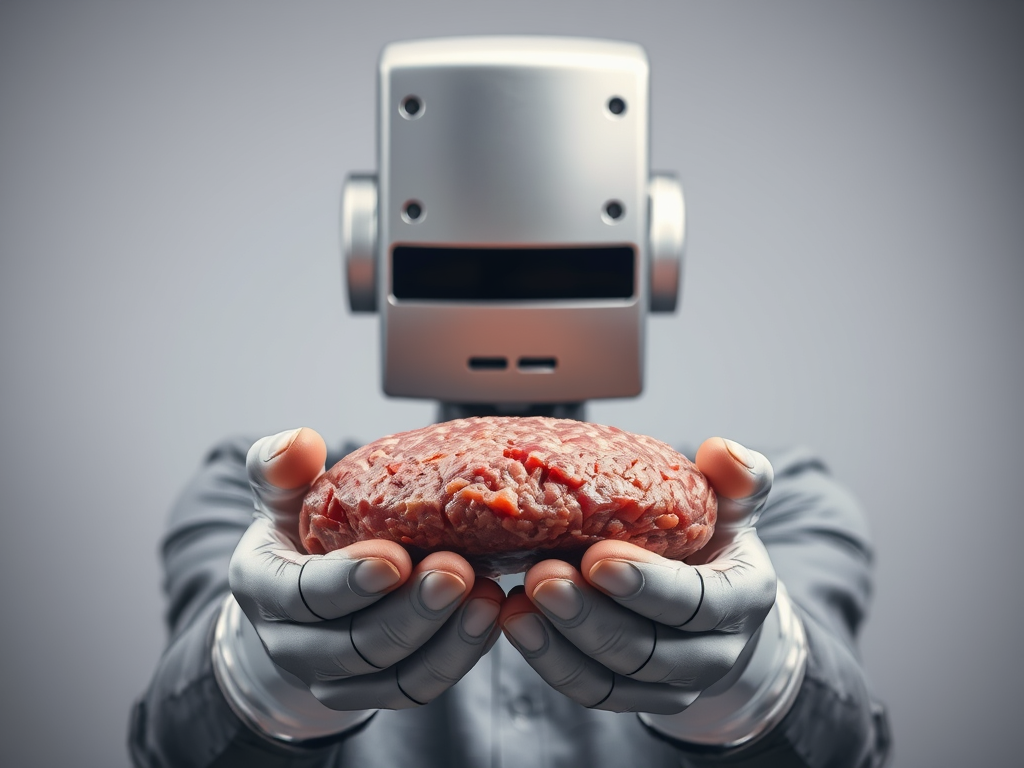
Fourth, adequately modeling or simulating something does not mean that the model and the thing are the same. If one were to model the spread of a plague, that could be a very useful model. But no-one would claim that the model was a plague. Similarly, a model of the formation and movement of a tornado could prove useful. But again, even if the model were extremely good, no-one would claim that the model constituted a tornado! Yet, when it comes to artificial intelligence, people seem to believe that if they have a good model of intelligence, they have achieved intelligence.


When humans “think” things, there is most often an emotional and subjective component. While we are not conscious of every process that our brain engages in, there is nonetheless, consciousness present during our thinking. This consciousness seems to be a critical part of what it means to have human intelligence. Regardless of what one thinks of the “Turing Test”, per se, there can be no doubt that machines are able to act more accurately and in more domains than they could just a few years ago. Progress in the practical use of machines does not seem to have hit any kind of “wall.”

In the following blog posts, we began exploring some possible scenarios around the concept of “The Singularity.” Like most science fiction, the goal is to explore the ethics and the implications and not to “argue” what will or will not happen. 


Turing’s Nightmares is available in paperback and ebook on Amazon. Here is my author page.

A more recent post on AI

One issue with human intelligence is that we often use it to rationalize what we find emotionally appealing though we believe we are using our intelligence to decide. I explore this concept in this post.


This post explores how humans use their intelligence to rationalize.

This post shows how one may become addicted to self-destructive lies. A person addicted to heroin, for instance, is also addicted to lies about that addiction. 

This post shows how we may become conned into doing things against our own self-interests. 


This post questions whether there are more insidious motives behind the current use of AI beyond making things better for humanity. 

Cooperation is More Common than Disruption

06 Wednesday Aug 2025

Posted by petersironwood in America, essay, politics, psychology

≈ 1 Comment

Tags

Democracy, life, philosophy, politics, truth, USA

These are perilous times, no doubt. 

But let’s not forget that most people, most of the time cooperate. It’s much more pleasant for normal people to cooperate and the results are also much more pleasant.

Is there road rage? Does that exist? Yes, but statistically, the vast majority of people cooperate when they drive. 

Photo by Pixabay on Pexels.com

And, when they do anything else. We depend on many people from many places cooperating in order to eat. First, the efficiency and effectiveness of our food growing, harvesting, transporting and preparing depends on the cooperation of millions of people in the past who found out what was edible, how to grow it, which crops worked best in various conditions, how to irrigate, how to fertilize, how to harvest and so on. The food we have available today depends on the collaborative efforts of many previous generations. These dependencies are not just on food per se, but also depend on scientific advances, transportation advances, financial advances, and so on. 

Photo by Pixabay on Pexels.com

Much of our food also depends on people from many parts of the world cooperating today. The prevalence of cooperation is not just true of driving and food production but also on the construction of buildings and cities; it’s true of our clothing, our medical care, our learning. 

Despite the fact that cooperation is much more prevalent than criminality, evil, and violence, there are at least three reasons that the evil of human behavior seems much more prevalent than it really is. These are: 1. Effect Size, 2. Cognitive Bias, and 3. Media Bias.

Effect Size:

First of all, it takes many people working smart and hard over a long period of time to provide value through cooperation. By contrast, it only takes a few people working stupidly over a short period of time to destroy something. The effort to make a pane of glass is immense. To make it efficiently takes a large number of people with different skills. To destroy a pane of glass requires only one second of bad action by one unskilled bratty child.

AI-generated image


Think about how much work goes into planting, growing, and harvesting an acre of corn versus what it takes to burn it down. Think about how much time and effort it takes to raise a child for the first ten years of their life versus destroying that life with an assault weapon. Think about what was required to build a functioning democracy over the course of hundreds of years by cooperation versus how easy it is for a very small group of greedy stupid people to destroy it. The examples are endless. Writing a novel versus burning a book; training to become a world class figure skating versus putting an ice pick in someone’s knee; becoming a skilled artist and painting the Mona Lisa versus splashing it with black paint. 

It’s the same with a functioning human body. To be healthy requires the coordination of trillions of cells. The kind of cooperation found in the human body (or an eagle or wolf or whale) took billions of years of evolution. To destroy the health of the body only takes a few stupidly greedy cancer cells. So, although evil destruction is far less prevalent than constructive cooperation, evil destruction can undo the effort of many over the course of a long time. 

Photo by Waseem Istanbuli on Pexels.com

Cognitive Bias:

Second, because destruction can so quickly undo so much good work, our nervous system is very reactive to evil and violence. We perceive it more easily and we remember it more easily. In a crowded city, you might pass by hundreds of people every day. Most of them, most of the time, you don’t notice. But if one of them robs you at gunpoint, you will notice and remember.


Media Bias:

The first two reasons we perceive evil to be more common than it really have existed for millions of years. Now, however, in our modern society, we have people whose job is to report on the news. 

When is the last time you saw a headline like: “Two hundred thousand people drove into San Diego from Mexico yesterday with zero fatalities!” Or, “Three million people ate dinner in San Diego county last night! Zero died of food poisoning!”

Photo by Ashutosh Sonwani on Pexels.com


It is sometimes said that “No news is good news.” It’s also generally the case that good news is no news. There are some exceptions. When World War Two ended, there were headlines. What we don’t see is this headline: “Canada, for the 57,670th consecutive day did not attack the United States of America.” Understanding this, a complete sociopath with an audience might try to increase their own fame by declaring: “America should annex Canada!” An actual war will definitely result in a headline. But threatening war, especially with a friendly country might also result in a headline.

The tendency to report bad news over good news has always been a “feature” of the media. But now that much of our news is basically click-bait for advertisements, the tendency is worse than ever. When I was on the school newspaper, we were taught to put the most important information in the headline; add the most important details in the first paragraph and add more detail in the rest of the article. Now, most headlines are fairly meaningless and important information is hidden behind a paywall or an advertisement.

“Is Earth About to Plunge into the Sun?!” 

AI-generated image to prompt: “The earth plunges into the sun.”

Ka-ching!

(No, but we could sure use some extra cash, so click here to find out.)

“Does T-Rump have Proof that Obama was Born in Kenya!?”

An AI-generated image

Ka-ching!

(No, actually, but if you want to find out, click here and pay us money.) 

“Could Space Invaders have Brought Life to Earth?!” 

AI-generated image to prompt: “A fleet of UFOs hovers over the earth”

Ka-ching!

(Well, sure, anything’s possible. And, while we have no evidence of that, thanks for making one of the greediest people on earth a little richer!) 

Dishonesty, greed, and mistrust work in a vicious circle. As you discover that more people are lying; that more people are evil, you yourself become more cynical and more tempted to lie, cheat, and steal. If you succumb to that temptation, it makes others more likely to lie, cheat, and steal. 

Here’s the important thing to remember about a positive feedback loop though. It works in both directions. To the extent you can behave in a trustworthy fashion and be kind to others, it increases the chances that others will be inspired also to behave well. Cooperating is the natural and normal course for humanity. You will be happier doing that and you’ll help build a better world. 

Yeah. 

Let’s do that.

The golden sunrise glows through delicate leaves covered with dew drops.


———————

As Gold as it Gets

A Horror Story

Timeline for RICE

An NICE circle

I can’t be Bothered

Absolute is not Just a Vodka

Just Desserts?

D4

Dick-Taters

Cancer Always Loses in the End

Karma

Imagine all the People

Roar, Ocean, Roar

Dance of Billions

Newer posts →

Subscribe

  • Entries (RSS)
  • Comments (RSS)

Archives

  • June 2026
  • May 2026
  • April 2026
  • March 2026
  • February 2026
  • January 2026
  • December 2025
  • November 2025
  • October 2025
  • September 2025
  • August 2025
  • July 2025
  • June 2025
  • May 2025
  • April 2025
  • March 2025
  • February 2025
  • January 2025
  • December 2024
  • November 2024
  • October 2024
  • September 2024
  • July 2024
  • April 2024
  • March 2024
  • February 2024
  • January 2024
  • December 2023
  • August 2023
  • July 2023
  • May 2023
  • April 2023
  • March 2023
  • February 2023
  • January 2023
  • December 2022
  • November 2022
  • October 2022
  • September 2022
  • August 2022
  • July 2022
  • June 2022
  • May 2022
  • April 2022
  • March 2022
  • February 2022
  • January 2022
  • December 2021
  • November 2021
  • October 2021
  • September 2021
  • August 2021
  • July 2021
  • June 2021
  • May 2021
  • April 2021
  • March 2021
  • February 2021
  • January 2021
  • December 2020
  • November 2020
  • October 2020
  • September 2020
  • August 2020
  • July 2020
  • June 2020
  • May 2020
  • April 2020
  • March 2020
  • February 2020
  • January 2020
  • December 2019
  • November 2019
  • October 2019
  • September 2019
  • August 2019
  • July 2019
  • June 2019
  • May 2019
  • April 2019
  • March 2019
  • February 2019
  • January 2019
  • December 2018
  • November 2018
  • October 2018
  • September 2018
  • August 2018
  • July 2018
  • June 2018
  • May 2018
  • April 2018
  • March 2018
  • February 2018
  • January 2018
  • December 2017
  • November 2017
  • October 2017
  • September 2017
  • August 2017
  • July 2017
  • June 2017
  • May 2017
  • April 2017
  • March 2017
  • February 2017
  • January 2017
  • December 2016
  • November 2016
  • October 2016
  • September 2016
  • August 2016
  • July 2016
  • June 2016
  • May 2016
  • April 2016
  • March 2016
  • February 2016
  • January 2016
  • December 2015
  • November 2015
  • October 2015
  • September 2015
  • August 2015
  • May 2015
  • January 2015
  • July 2014
  • January 2014
  • December 2013
  • November 2013

Categories

  • AI
  • America
  • apocalypse
  • cats
  • COVID-19
  • creativity
  • design rationale
  • dogs
  • driverless cars
  • essay
  • family
  • fantasy
  • fiction
  • HCI
  • health
  • leadership
  • management
  • nature
  • pets
  • poetry
  • politics
  • psychology
  • Sadie
  • satire
  • science
  • sports
  • story
  • The Singularity
  • Travel
  • Uncategorized
  • user experience
  • Veritas
  • Walkabout Diaries

Meta

  • Create account
  • Log in

Blog at WordPress.com.

  • Subscribe Subscribed
    • petersironwood
    • Join 648 other subscribers
    • Already have a WordPress.com account? Log in now.
    • petersironwood
    • Subscribe Subscribed
    • Sign up
    • Log in
    • Report this content
    • View site in Reader
    • Manage subscriptions
    • Collapse this bar

Loading Comments...