• About PeterSIronwood

petersironwood

~ Finding, formulating and solving life's frustrations.

petersironwood

Tag Archives: health care

The word “simply” should be banned.

24 Wednesday Sep 2025

Posted by petersironwood in America, HCI, psychology, satire, Uncategorized, user experience

≈ Leave a comment

Tags

books, Complexity, consumer products, food, health care, packaging, Simplicity, UX

So, in 2013, I changed from four medical plans to four different medical plans to six plans for 2014.  Thank goodness we don’t have a “single payer” system because there is nothing I love more than pouring through a hundred pages of text for each plan which is mainly garbage but occasionally has important information.  There is nothing more fun than ping-ponging among doctors every time your plan changes.  Oh, wait!  I forgot that in addition to the plans I *actually* had, IBM also sent me huge packets of information on plans that were no longer relevant.  In the midst of all this, I was heartened to find a concise 72 page document from my dental plan which also informs me: “Please note: if you are a previous user of MyBenefits, you can still enjoy all the same features under the new plan. Simply visit (our website) and re-register with an updated username and password for access to your new plan.”  It is the word, “simply” that I object to. Indeed, in some parallel universe, there is probably a time and place for the word “simply” but in has no legitimate place in actual 21st century America.  It *invariably* signals this message: “We are going to make this difficult for you.  But we don’t want to come out and say that so we will preface our instructions with the word ‘simply’ so when you do have trouble you won’t have anyone to blame but yourself.”

(Why do I need a different userid and password?).   Anyway, you know the drill.  You go to the website and the first six userids that bear any resemblance to your name are taken.  But they don’t typically tell you that till you also enter a password.  And, of course, there are the typical “security questions” such as “What sized underwear did you wear in the fourth grade?”  “What was your second grade teacher’s maiden name?”  “What was the name of the company you bought your first ant farm from?”  And so on.

This ironic use of “simply” is not confined to websites.  It also applies to packaging as in, “SIMPLY remove the plastic overwrap.” Yeah. But, what if you left your chain saw in the garage?  “Simply, tear the plastic along the indicated line.”  In the rare case, when it is physically possible to tear, it never tears evenly.  More typically it is some semi-metalic plastic that requires an industrial laser cutter. the most recent example involved two different kinds of dry cat food.  These were nearly impossible for me to “simply” open.  I left the bags for a few minutes to get an exacto knife and when I returned two minutes later, my CATS had indeed simply opened the packages and spread the contents around the hallway.  For all I know, they might have actually ingested a piece of cat food but it was clear that their main intent was simply to cause a mess.  The reason they could open the packages simply is that they have cat claws!  I don’t!   Not sure what genius came up with the idea that packages of cat food should be opened simply by cats but not simply by humans.

A variant on the use of industrial grade titanium plastic the requires war-appropriate hardware to open, is the soft, slippery plastic around cheese or ham that actually does open easily under a specific set of conditions. You have to be young. You have to have a strong grip. You have to have fingerprints–mine are gone (because of using too many touch screens?) Most importantly, your hands must be completely dry and free of any trace of any kind of oil.

Luckily, when preparing food, one’s hands never get damp or oily. Not if everything you touch is already pre-packaged in a box or a can. Of course, if you’re foolish enough to use fresh vegetables or fruits, you may be tempted to wash off bacteria and poison. You can do that, but you have to wait at least forty hours before attempting to open a package that requires you to “simply” tear off the tab.

And, while we’re on the subject of tear off tabs, did you ever wonder what kind of a bonus the MBA whiz kid who first mathematically modeled the MRA (Minimally Required Area) for a pull-off tab? I sometimes add a dollop of milk to my coffee and get one of two brands of milk. One has a pull-off tab of aluminum foil that allows me to use my bare hands to tear off the tab (even if they are a bit moist). The second brand sometimes has a plastic tab which is usable. But sometimes, it has a tab of aluminum foil carefully calculated to bear a visual resemblance to a usable tab but which, in fact, is only about 1/20th the surface area required to actually use it. The marketers however, have made it quite clear that I can open it by “simply” pulling the tab. And that is true, provided I use pliers.

Since the word “simply” has simply gone out of fashion in its true meaning, I think we should simply ban its use.  Period.

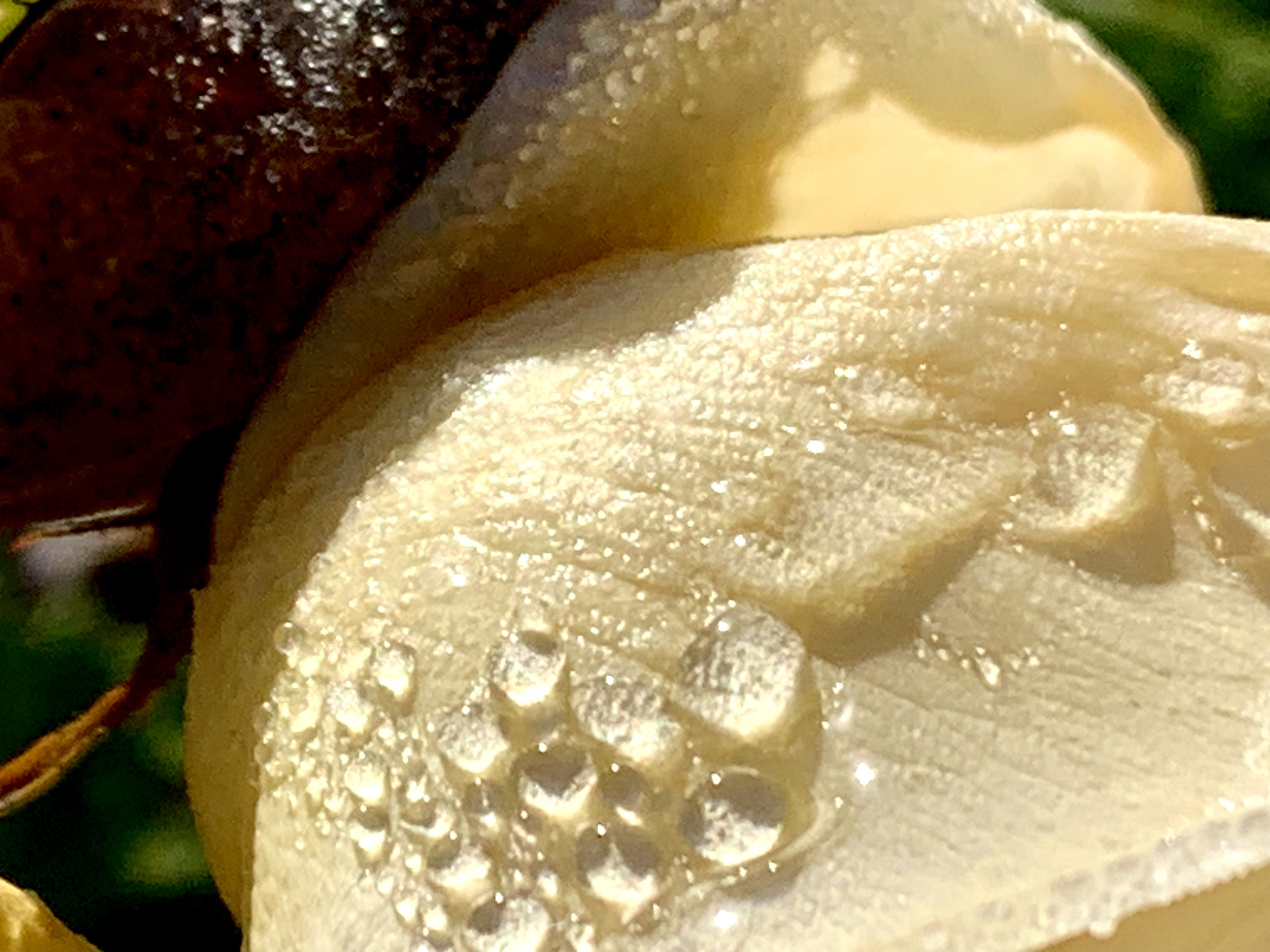
Photo by Element5 Digital on Pexels.com

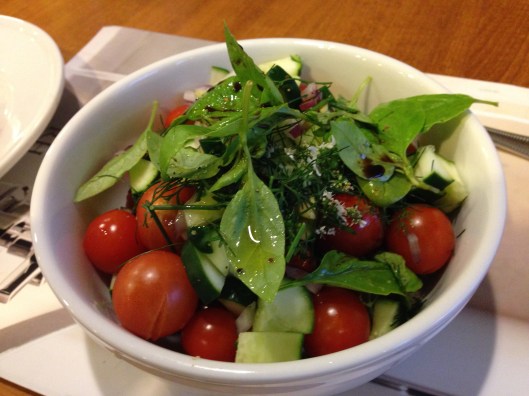
Photo by lil artsy on Pexels.com


Corn on the Cob

Doing the Dishes

The Self-Made Man

How the Nightingale Learned to Sing

Plans for US; Some GRUesome

The Last Gleam of Twilight

A once-baked potato

Sunsets

After All

Dance of Billions

The Pros and Cons of AI: Part One

24 Saturday Sep 2016

Posted by petersironwood in health, The Singularity, Uncategorized

≈ 11 Comments

Tags

AI, Artificial Intelligence, cognitive computing, ethics, health care, the singularity, user experience, utopia

IMG_5478

This is the first of three connected blog posts on the appropriate uses and misuses of AI. In this blog post, I’ll look at “Artificial Ingestion.” (Trust me, it will tie back to another AI, Artificial Intelligence).

While ingestion, and therefore “Artificial Ingestion” is a complex topic, I begin with ingestion because it is a bit more divorced from thought itself. It is easier to think of digestion as separate from thinking; that is, to objectify it more than artificial intelligence because in writing about intelligence, it is necessary to use intelligence itself.

Do we eat to live or live to eat? There is little doubt that eating is necessary to the life of animals such as human beings. Our distant ancestors could have taken a greener and more photosynthetic path but instead, we have collectively decided to kill other organisms to garner our energy. Eating has a utilitarian purpose; indeed, it is a vital purpose. Without food, we eventually die. Moreover, the quality and quantity of the food we eat has a profound impact on our health and well-being. Many of us live in a paradoxical time when it comes to food. Our ancestors often struggled mightily to obtain enough food. Our brains are thus genetically “wired” to search for high sugar, high fat, high salt foods. Even though many of us “know” that we ingest too many calories and may have read and believe that too much salt and sugar are bad for us, it is difficult to overcome the “programming” of countless generations. We are also attracted to brightly colored food. In our past, these colors often signaled foods that were especially high in healthful phytochemicals.

Of course, in modern societies of the “Global North” our genetic predispositions toward high sugar, high fat, high salt, highly colored foods are manipulated by greedy corporate interests. Foods like crackers and chips that contain almost nothing of real value to the human diet are packaged to look like real foods. Beyond that, billions of dollars of advertising dollars are spent to convince us that if we buy and ingest these foods it will help us achieve other goals. For example, we are led to believe that a mother who gives her children “food” consisting of little other than sugar and food dye will be loved by her children and they will be excited and happy children. Children themselves are led to believe that ingesting such junk food will lead them to magical kingdoms. Adult males are led to believe that providing the right kinds of high fat, high salt chips will result in male bonding experiences. Adult males are also led to believe that the proper kinds of alcoholic beverages will result in the seduction of highly desirable looking mates.

Over time, the natural act of eating has been enhanced with rituals. Human societies came to hunt and gather (and later farm) cooperatively. In this way, much more food could be provided over a more continuous basis. Rather than fight each other over food, we sit down in a “civilized” manner and enjoy food together. Some people, through a combination of natural talent and training become experts in the preparation of foods. We have developed instruments such as chopsticks, spoons, knives and forks to help us eat foods. Most typically, various cultures have rituals and customs surrounding food. In many cases, these seem to be geared toward removing us psychologically from the life-giving functionality of food toward the communal enjoyment of food. For example, in my culture, we wait to eat until everyone is served. We eat at a “reasonable” pace rather than gobbling everything down as quickly as possible (before others at the table can snatch our portion). If there are ten people at the table and eleven delicious deserts, people turn many social summersaults in order to avoid taking the last one.

For much of our history, food was confined to what was available in the local region and season. Now, many people, but by no means all, are well off enough to buy foods at any season that originally were grown all over the world. When I was a child, very few Americans had even tried sushi, for example, and the very idea of eating raw fish turned stomachs. At this point, however, many Americans have tried it and most who have enjoy it. Similarly, other cuisines such as Indian and Middle Eastern have spread throughout the world in ways that would have been impossible without modern transportation, refrigeration, and modern training with cookbooks, translations, and videos supplementing face to face apprenticeships.

Some of these trends have enabled some people to enjoy foods of high quality and variety. We support many more people on the planet than would have been possible through hunting and gathering. These “advances” are not without costs. First, there are more people starving in today’s world than even existed on the planet 250,000 years ago. So, these benefits are very unevenly distributed. Second, while fine and delicious foods are available to many, the typical diet of many is primarily based on highly processed grains, soybeans, fat, refined sugar, salt and additives. These “foods” contain calories that allow life to continue; however, they lack many naturally occurring substances that help provide for optimal health. As mentioned, these foods are made “palatable” in the cheapest possible way and then advertised to death to help fool people into thinking they are eating well. In many cases, even “fresh” foods are genetically modified through breeding or via genetic engineering to provide foods that are optimized for cheap production and distribution rather than taste. Anyone who has grown their own tomatoes, for example, can readily appreciate that home grown “heirloom” tomatoes are far tastier than what is available in many supermarkets. While home farmers and small farmers have little in the way of government support, at least in the USA, mega-farming corporations are given huge subsidies to provide vast quantities of poor quality calories. As a consequence, low income people can generally not even afford good quality fresh fruits and vegetables and instead are forced through artificially cheap prices to feed their families with brightly packaged but essentially empty calories.

While some people enjoy some of the best food that ever existed, others have very mediocre food and still others have little food of any kind. What comes next? On the one hand, there is a move toward ever more efficient means of production and distribution of food. The food of humans has always been of interest to a large variety of other animals including rats, mice, deer, rabbits, birds, and insects. Insect pests are particularly difficult to deal with. In response, and in order to keep more of the food for “ourselves”, we have largely decided it is worth the tradeoff to poison our food supply. We use poisons that are designed to kill off insect pests but not kill us off, at least not immediately. I grow a little of my own food and some of that food gets eaten by insects, rabbits, and birds. Personally, I cannot see putting poison on my food supply in order to keep pests from having a share. However, I am lucky. I do not require 100% of my crop in order to stay alive nor to pay off the bank loan by selling it all. Because I grow a wide variety of foods in a relatively small space, there is a lively ecosystem and I don’t typically get everything destroyed by pests. Farmers who grow huge fields of corn, however, can be in a completely different situation and a lot of a crop can fall prey to pests. If they have used pesticides in the past, this is particularly true because they have probably poisoned the natural predators of those pests. At the same time, the pests themselves continue to evolve to be resistant to the poisons. In this way, chemical companies perpetuate a vicious circle in which more and more poison is needed to keep the crops viable. Luckily for the chemical companies, the long-term impact of these poisons on the humans who consume them is difficult to prove in courts of law.

There are movements such as “slow food” and eating locally grown food and urban gardens which are counter-trends, but by and large, our society of specialization has moved to more “efficient” production and distribution of food. More people eat out a higher percentage of the time and much of that “eating out” is at “fast food” restaurants. People grab a sandwich or a bagel or a burger and fries for a “quick fix” for their hunger in order to “save time” for “more productive” pursuits. Some of these “more productive” pursuits include being a doctor to cure diseases that come about in part from people eating junky food and spending most of their waking hours commuting, working at a desk or watching TV. Other “more productive” pursuits include being a lawyer and suing doctors and chemical companies for diseases. Yet other “more productive pursuits” include making money by pushing around little pieces of other people’s money. Still other “more productive pursuits” include making and distributing drugs to help people cope with lives where they spend all their time in “more productive pursuits.”

Do we live to eat or eat to live? Well, it is a little of both. But we seem to have painted ourselves into a corner where most people most of the time have forgone the pleasure of eating that is possible in order to eat more “efficiently” so that we can spend more time making more money. We do this in order to…? What is the end game here?

One can imagine a society in which eating itself becomes a completely irrelevant activity for the vast majority of people. Food that requires chewing takes more time so let’s replace chewing with artificial chewing. Using a blender allows food with texture to be quickly turned to a liquid that can be ingested in the minimum necessary time. One extreme science fiction scenario was depicted in the movie “Soylent Green” which, as it turns out, is made from the bodies of people killed to make room for more people. The movie is set in 2022 (not that far away) and was released in 1973. Today, in 2016, there exists a food called “soylent” (https://en.wikipedia.org/wiki/Soylent_(food)) whose inventor, Rob Rhinehart took the name from the movie. It is not made from human remains but the purpose is to provide an “efficient” solution to the Omnivore’s Dilemma (Michael Pollan). More efficient than smoothies, shakes, and soylent are feeding tubes.

Of course, there are medical conditions where feeding tubes are necessary as a replacement or supplement to ordinary eating as is being “fed” via an IV. But is this really where humanity in general needs to be headed? Is eating to be replaced with “Artificial Ingestion” because it is more efficient? We wouldn’t have to “waste our time” and “waste our energy” shopping, choosing, preparing, chewing, etc. if we could simply have all our nutritional needs met via an IV or feeding tube. With enough people opting in to this option, I am sure industrial research could provide ever less invasive and more mobile forms of IV and tube feeding. At last, humanity could be freed from the onerous task of ingestion, all of which could be replaced by “Artificial Ingestion.” The dollars saved could be put toward some more worthy purpose; for example, making a very few people very very rich.

There are, of course, a few problematic issues. For one thing, despite years of research, we are still discovering nutrients and their impacts. Any attempt to completely replace food with a uniform liquid supplement would almost certainly leave out some vital, but as yet undiscovered ingredients. But a more fundamental question is to what end would we undertake this endeavor in the first place? What if the purpose of life is not, after all, to accomplish everything “more efficiently” but rather, what if the purpose of life is to live it and enjoy it? What then?

Author’s Page on Amazon

Turing’s Nightmares

Love Your Enemies?

21 Thursday Apr 2016

Posted by petersironwood in health, Uncategorized

≈ Leave a comment

Tags

cancer, disease, health care, pathogens, sports, wellness

IMG_4429

(A short break from discussions of Turing’s Nightmares which we will return to tomorrow).

Jesus reportedly said this. When it comes to other human beings, one could take this attitude for religious reasons because we are all the creatures of God. One could also take this stance because, after all, we humans are all very closely related genetically. We like to say “Are you related to that person?” We share 40 percent of our genes with crayfish and 90 per cent with horses. We share over 99% with so-called “unrelated” people. It makes no sense to call them “unrelated.” But what about when it comes to non-human diseases? Can we “love” deadly bacteria, viruses, and cancer cells?

There is a sense in which the answer may be “yes”, not in the sense that we feel affection for them, but in the sense that we need to understand them. As explained, in The Winning Weekend Warrior, if you can “understand” where your sports opponent is coming from, empathize with their perspective, see what they like and don’t like, you can do a much better job of winning the points, the games, and competing well.

When it comes to disease, I think most people view pathogens as so “evil” or “despicable” that they never bother to ask themselves what the pathogen “wants.” Because of this attitude, the vast majority of treatments are designed to “kill off” the pathogen. A few approaches are to boost the body’s natural defense mechanisms. But let us examine, for a moment, what other approaches are possible if we instead try to learn to see the world from the perspective of the pathogens.

The Pied Piper Approach. In the fairy tale about the Pied Piper, a talented musician gets rid of rats in a town by playing beautiful music so that they follow him out of the town. When the townspeople renege on their promise to pay him, he wreaks revenge by using his music to lead all the children out of the town never to be heard from again. Suppose we apply such a technique to bacteria, viruses, or metastasizing cancer cells. Instead of trying to poison and therefore kill cancer cells inside the human body (which typically also kills many healthy cells), suppose we discovered for a particular type of cancer cells what the environment was that they found most “attractive.” We could imagine applying a gradient of whatever that environment was so that, instead of migrating to other organs inside the human body, they found it more desirable to migrate to something outside but “connected” to the human body via a one-way shunt. Perhaps such an approach could be applied to viruses, bacteria, or protozoan infections as well. Of course, the shunt might not “really be” something “good for” the virus, cancer, etc., but merely something that appears to be so based on a deep understanding of how these enemy cells “perceive” the world.

The Entrapment Approach. The old saying goes that you can “catch more flies with honey than with vinegar.” Honey is attractive but also “sticky” so that the flies cannot easily leave the honey. Similarly, vice officers sometimes perform “sting operations” to catch people attempting to buy drugs or use prostitutes. One can imagine that various “traps” could be laid inside the body. The “trap” would consist of a “bait” inside the trap along with one-way “valves” that make it easy for pathogens to get into the trap but difficult or impossible to leave the traps. This approach is already used for “pantry moths.” In effect, little traps have a tiny amount of a pheromone that the moths find fairly irresistible. The moths go inside the traps “in order” to find a mate, but instead find themselves trapped inside.

The Mimicry Approach. Monarch butterflies “taste bad” to a number of predators. A number of other butterflies, which do not “taste bad,” have evolved to look very similar to Monarchs in order to discourage predators. When applied to human disease, this approach would make people look “deadly” or “dangerous” to pathogens. Such an approach would require that we understand what sorts of situations these pathogens would want to avoid. As in the case of the Monarch mimics, there may be a disconnect between what is really toxic to the pathogens and what appears to be toxic. There may be chemicals that are harmless to humans (and even to the pathogens) but trigger an aversive response in the pathogen so that they “steer away” from humans. For larger pests, such as mosquitos, there may be clothing that, to the mosquito appears to be covered in, what for them, appear to be deadly enemies.

These are just three of many possible variations on a theme. The theme is to understand what pathogens or pests “want” as a goal state and how they “perceive” the world. The, we use knowledge of these two things to design a way to have them, from their perspective, appear to move toward their goals (or away from undesirable states) without harming human lives in the process.


The word “simply” should be banned.

02 Thursday Jan 2014

Posted by petersironwood in Uncategorized

≈ Leave a comment

Tags

Complexity, consumer products, health care, packaging, Simplicity, UX

So, in 2013, I changed from four medical plans to four different medical plans to six plans for 2014.  Thank goodness we don’t have a “single payer” system because there is nothing I love more than pouring through a hundred pages of text for each plan which is mainly garbage but occasionally has important information.  There is nothing more fun than ping-ponging among doctors every time your plan changes.  Oh, wait!  I forgot that in addition to the plans I *actually* had, IBM also sent me huge packets of information on plans that were no longer relevant.  In the midst of all this, I was heartened to find a concise 72 page document from my dental plan which also informs me: “Please note: if you are a previous user of MyBenefits, you can still enjoy all the same features under the new plan. Simply visit (our website) and re-register with an updated username and password for access to your new plan.”  It is the word, “simply” that I object to. Indeed, in some parallel universe, there is probably a time and place for the word “simply” but in has no legitimate place in actually 21st century America.  It *invariably* signals this message: “We are going to make this difficult for you.  But we don’t want to come out and say that so we will preface our instructions with the word simply so when you have trouble you won’t blame us but yourself.”  

(Why do I need a different userid and password?).   Anyway, you know the drill.  You go to the website and the first six userids that bear any resemblance to my name are taken.  But they don’t typically tell you that till you also enter a password.  And, of course, there are the typical “security questions” such as “What sized underwear did you wear in the fourth grade?”  “What was your second grade teacher’s maiden name?”  “What was the name of the company you bought your first ant farm from?”  And so on.  

This ironic use of “simply” is not confined to websites.  It also applies to packaging as in, “SIMPLY remove the plastic overwrap.” Yeah. But, what if you left your chain saw in the garage?  “Simply, tear the plastic along the indicated line.”  In the rare case, when it is physically possible to tear, it never tears evenly.  More typically it is some semi-metalic plastic that requires an industrial laser cutter. the most recent example involved two different kinds of dry cat food.  These were nearly impossible for me to “simply” open.  I left the bags for a few minutes to get an exacto knife and when I returned two minutes later, my CATS had indeed simply opened the packages and spread the contents around the hallway.  For all I know, they might have actually ingested a piece of cat food but it was clear that their main intent was simply to cause a mess.  The reason they could open the packages simply is that they have cat claws!  I don’t!   Not sure what genius came up with the idea that packages of cat food should be opened simply by cats but complexly by humans.  

Since the word “simply” has simply gone out of fashion in its true meaning, I think we should simply ban its use.   Period.

Subscribe

  • Entries (RSS)
  • Comments (RSS)

Archives

  • December 2025
  • November 2025
  • October 2025
  • September 2025
  • August 2025
  • July 2025
  • June 2025
  • May 2025
  • April 2025
  • March 2025
  • February 2025
  • January 2025
  • December 2024
  • November 2024
  • October 2024
  • September 2024
  • July 2024
  • April 2024
  • March 2024
  • February 2024
  • January 2024
  • December 2023
  • August 2023
  • July 2023
  • May 2023
  • April 2023
  • March 2023
  • February 2023
  • January 2023
  • December 2022
  • November 2022
  • October 2022
  • September 2022
  • August 2022
  • July 2022
  • June 2022
  • May 2022
  • April 2022
  • March 2022
  • February 2022
  • January 2022
  • December 2021
  • November 2021
  • October 2021
  • September 2021
  • August 2021
  • July 2021
  • June 2021
  • May 2021
  • April 2021
  • March 2021
  • February 2021
  • January 2021
  • December 2020
  • November 2020
  • October 2020
  • September 2020
  • August 2020
  • July 2020
  • June 2020
  • May 2020
  • April 2020
  • March 2020
  • February 2020
  • January 2020
  • December 2019
  • November 2019
  • October 2019
  • September 2019
  • August 2019
  • July 2019
  • June 2019
  • May 2019
  • April 2019
  • March 2019
  • February 2019
  • January 2019
  • December 2018
  • November 2018
  • October 2018
  • September 2018
  • August 2018
  • July 2018
  • June 2018
  • May 2018
  • April 2018
  • March 2018
  • February 2018
  • January 2018
  • December 2017
  • November 2017
  • October 2017
  • September 2017
  • August 2017
  • July 2017
  • June 2017
  • May 2017
  • April 2017
  • March 2017
  • February 2017
  • January 2017
  • December 2016
  • November 2016
  • October 2016
  • September 2016
  • August 2016
  • July 2016
  • June 2016
  • May 2016
  • April 2016
  • March 2016
  • February 2016
  • January 2016
  • December 2015
  • November 2015
  • October 2015
  • September 2015
  • August 2015
  • May 2015
  • January 2015
  • July 2014
  • January 2014
  • December 2013
  • November 2013

Categories

  • AI
  • America
  • apocalypse
  • cats
  • COVID-19
  • creativity
  • design rationale
  • driverless cars
  • essay
  • family
  • fantasy
  • fiction
  • HCI
  • health
  • management
  • nature
  • pets
  • poetry
  • politics
  • psychology
  • Sadie
  • satire
  • science
  • sports
  • story
  • The Singularity
  • Travel
  • Uncategorized
  • user experience
  • Veritas
  • Walkabout Diaries

Meta

  • Create account
  • Log in

Blog at WordPress.com.

  • Subscribe Subscribed
    • petersironwood
    • Join 664 other subscribers
    • Already have a WordPress.com account? Log in now.
    • petersironwood
    • Subscribe Subscribed
    • Sign up
    • Log in
    • Report this content
    • View site in Reader
    • Manage subscriptions
    • Collapse this bar
 

Loading Comments...