• About PeterSIronwood

petersironwood

~ Finding, formulating and solving life's frustrations.

petersironwood

Category Archives: sports

Madison Keys, Francis Scott Key, the “Prevent Defense” and giving away the Keys to the Kingdom. 

07 Saturday Jul 2018

Posted by petersironwood in America, family, management, psychology, sports, Uncategorized

≈ 1 Comment

Tags

Business, career, HCI, human factors, IBM, life, school, sports, UX

Madison Keys, Francis Scott Key, the “Prevent Defense” and giving away the Keys to the Kingdom. 

Madison Keys, for those who don’t know, is an up-and-coming American tennis player. In this Friday’s Wimbledon match, Madison sprinted to an early 4-1 lead. She accomplished this through a combination of ace serves and torrid ground strokes. Then, in an attempt to consolidate, or protect her lead, or play the (in)famous “prevent defense” imported from losing football coaches, she managed to stop hitting through the ball – guiding it carefully instead — into the net or well long or just inches wide. 

IMG_2601

Please understand that Madison Keys is a wonderful tennis player. And, her “retreat” to being “careful” and playing the “prevent defense” is a common error that many professional and amateur players fall prey to. It should also be pointed out that what appears to be overly conservative play to me, as an outside observer, could easily be due to some other cause such as a slight injury or, even more likely, because her opponent adjusted to Madison’s game. Whether or not she lost because of using the “prevent defense” no-one can say for sure. But I can say with certainty that many people in many sports have lost precisely because they stopped trying to “win” and instead tried to protect their lead by being overly conservative; changing the approach that got them ahead. 

Francis Scott Key, of course, wrote the words to the American National Anthem which ends on the phrase, “…the home of the brave.” Of course, every nation has stories of people behaving bravely and the United States of America is no exception. For the American colonies to rebel against the far superior naval and land forces (to say nothing of sheer wealth) of the British Empire certainly qualifies as “brave.” 

IMG_8499

In my reading of American history, one of our strengths has always been taking risks in doing things in new and different ways. In other words, one of our strengths has been being brave. Until now. Now, we seem in full retreat. We are plunging headlong into the losing “prevent defense” borrowed from American football. 

American football can hardly be called a “gentle sport” – the risk of injury is ever present and now we know that even those who manage to escape broken legs and torn ligaments may suffer internal brain damage. But there is still the tendency of many coaches to play the “prevent defense.” In case you’re unfamiliar with American football, here is an illustration of the effect of the “prevent defense” on the score. A team plays a particular way for 3 quarters of the game and is ahead 42-21. If you’re a fan of linear extrapolation, you might expect that  the final score might be something like 56-28. But coaches sometimes want to “make sure” they win so they play the “prevent defense” which basically means you let the other team make first down after first down and therefore keep possession of the ball and score, though somewhat slowly. The coach suddenly loses confidence in the method which has worked for 3/4 of the game. It is not at all unusual for the team who employs this “prevent defense” to lose; in this example, perhaps, 42-48. They “let” the other team get one first down after another. 
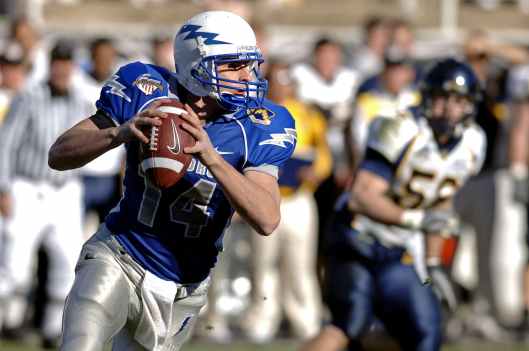
red people outside sport

Photo by Pixabay on Pexels.com

America has apparently decided, now, to play a “prevent defense.” Rather than being innovative and bold and embrace the challenges of new inventions and international competition, we instead want to “hold on to our lead” and introduce protective tariffs just as we did right before the Great Depression. Rather than accepting immigrants with different foods, customs, dress, languages, and religions — we are now going to “hold on to what we have” and try to prevent any further evolution. In the case of American football, the prevent defense sometimes works. In the case of past civilizations that tried to isolate themselves, it hasn’t and it won’t. 

landscape photography of gray rock formation

Photo by Oleg Magni on Pexels.com

This is not to say that America (or any other country) should right now have “open borders” and let everyone in for every purpose. Nor should a tennis player hit every shot with all their might. Nor should a football team try the riskiest possible plays at every turn. All systems need to strike a balance among replication of what works, providing defense of what one has and exploring what is new and different. That is what nature does. Every generation “replicates” aspects of the previous generation but every generation must also explore new directions. Life does this through sexual selection, mutation, and cross over. 

This balance plays out in career as well. You need to decide for yourself how much and what kinds of risks to take. When I obtained my doctorate in experimental psychology, for example, it would have been relatively un-risky in many ways to get a tenure-track faculty position. Instead, I chose managing a research project on the psychology of aging at Harvard Med School. To be sure, this is far less than the risk that some people take when; e.g., joining “Doctors without borders” or sinking all their life savings (along with all the life savings of their friends and relatives) into a start-up. 

At the time, I was married and had three small children. Under these circumstances, I would not have felt comfortable having no guaranteed income. On the other hand, I was quite confident that I could write a grant proposal to continue to get funded by “soft money.” Indeed, I did write such a proposal along with James Fozard and Nancy Waugh who were at once my colleagues, my bosses, and my mentors. Our grant proposal was not funded or rejected but “deferred” and then it was deferred again. At that point, only one month of funding remained before I would be out of a job. I began to look elsewhere. In retrospect, we all realized it would have been much wiser to have a series of overlapping grants so that all of our “funding eggs” were never in one “funding agency’s basket.” 

brown chicken egg

Photo by Pixabay on Pexels.com

I began looking for other jobs and had a variety of offers from colleges, universities, and large companies. I chose IBM Research. As it turned out, by the way, our grant proposal was ultimately funded for three years, but we only found out after I had already committed to go to IBM. During this job search, I was struck by something else. My dissertation had been on problem solving but my “post-doc” was in the psychology of aging. So far as I could tell, this didn’t bother any of the interviewers in industry in the slightest. But it really freaked out some people in academia. It became clear that one was “expected” in academia, at least by many, that you would choose a specialty and stick with it. Perhaps, you need not do that during your entire academic career, but anything less than a decade smacked of dilettantism. At least, that was how it felt to me as an interviewee. By contrast, it didn’t bother the people who interviewed me at Ford or GM that I knew nothing more than the average person about cars and had never really thought about the human factors of automobiles. 

Photo by Pixabay on Pexels.com

The industrial jobs paid more than the academic jobs and that played some part in my decision. The job at GM sounded particularly interesting. I would be “the” experimental psychologist in a small inter-disciplinary group of about ten people who were essentially tasked with trying to predict the future. The “team” included an economist, a mathematician, a social psychologist, and someone who looked for trends in word frequencies in newspapers. The year was 1973 and US auto companies were shocked and surprised to learn that their customers suddenly cared about gas mileage! These companies didn’t want to be shocked and surprised like that again. The assignment reminded me of Isaac Asimov’s fictional character in the Foundation Trilogy — Harry Seldon — who founded “psychohistory.” We had the chance to do it in “real life.” It sounded pretty exciting! 

antique auto automobile automotive

Photo by Pixabay on Pexels.com

On the other hand, cars seemed to me to be fundamentally an “old” technology while computers were the wave of the future. It also occurred to me that a group of ten people from quite different disciplines trying to predict the future might sound very cool to me and apparently to the current head of research at GM, but it might seem far more dispensable to the next head of research. The IBM problem that I was to solve was much more fundamental. IBM saw that the difficulty of using computers could be a limiting factor in their future growth. I had had enough experience with people — and with computers — to see this as a genuine and enduring problem for IBM (and other computer companies); not as a problem that was temporary (such as the “oil crisis” appeared to be in the early 70’s). 

airport business cabinets center

Photo by Pixabay on Pexels.com

There were a number of additional reasons I chose IBM. IBM Research’s population at the time showed far more diverse than that of the auto companies. None of them were very diverse when it came to male/female ratios. At least IBM Research did have people from many different countries working there and it probably helped their case that an IBM Researcher had just been awarded a Nobel Prize. Furthermore, the car company research buildings bored me; they were the typical rectangular prisms that characterize most of corporate America. In other words, they were nothing special. Aero Saarinen however, had designed the IBM Watson Research Lab. It sat like an alien black spaceship ready to launch humanity into a conceptual future. It was set like an onyx jewel atop the jade hills of Westchester. 

I had mistakenly thought that because New York City was such a giant metropolis, everything north of “The City” (as locals call it) would be concrete and steel for a hundred miles. But no! Westchester was full of cut granite, rolling hills, public parks of forests marbled with stone walls and cooled by clear blue lakes. My commute turned out to be a twenty minute, trafficless drive through a magical countryside. By contrast, since Detroit car companies at that time held a lot of political power, there was no public transportation to speak of in the area. Everyone who worked at the car company headquarters spent at least an hour in bumper to bumper traffic going to work and another hour in bumper to bumper traffic heading back home. In terms of natural beauty, Warren Michigan just doesn’t compare with Yorktown Heights, NY. Yorktown Heights even smelled better. I came for my interview just as the leaves began painting their autumn rainbow palette. Westchester roads even seemed more creative. They wandered through the land as though illustrative of Brownian motion, while Detroit area roads were as imaginative as graph paper. Northern Westchester county sports many more houses now than it did when I moved there in late 1973, but you can still see the essential difference from these aerial photos. 

YorktownHts-map

Warren-map

The IBM company itself struck me as classy. It wasn’t only the Research Center. Everything about the company stated “first class.” Don’t get me wrong. It wasn’t a trivial decision. After grad school in Ann Arbor, a job in Warren kept me in the neighborhood I was familiar with. A job at Ford or GM meant I could visit my family and friends in northern Ohio much more easily as well as my colleagues, friends and professors at the U of M. The offer from IBM felt to me like an offer from the New York Yankees. Of course, going to a top-notch team also meant more difficult competition from my peers. I was, in effect, setting myself up to go head to head with extremely well-educated and smart people from around the world. 

You also need to understand that in 1973, I would be only the fourth Ph.D. psychologist in a building filled with physicists, mathematicians, computer scientists, engineers, and materials scientists. In other words, nearly all the researchers considered themselves to be “hard scientists” who delved in quantitative realms. This did not particularly bother me. At the time, I wanted very much to help evolve psychology to be more quantitative in its approach. And yet, there were some nagging doubts that perhaps I should have picked a less risky job in a psychology department. 

The first week at IBM, my manager, John Gould introduced me yet another guy named “John” —  a physicist whose office was near mine on aisle 19. This guy had something like 100 patents. A few days later, I overheard one of John’s younger colleagues in the hallway excitedly describing some new findings. Something like the following transpired: 

“John! John! You can’t believe it! I just got these results! We’re at 6.2 x 10 ** 15th!” 

His older colleague replied, “Really? Are you sure? 6.2 x 10 ** 15th?” 

John’s younger colleague, still bubbling with enthusiasm: “Yes! Yes! That’s right. You know. Within three orders of magnitude one way or the other!” 

I thought to myself, “three orders of magnitude one way or the other? I can manage that! Even in psychology!” I no longer suffered from “physics envy.” I felt a bit more confident in the correctness of my decision to jump into these waters which were awash with sharp-witted experts in the ‘hard’ sciences. It might be risky, but not absurdly risky.

person riding bike making trek on thin air

Photo by Pixabay on Pexels.com

Of course, your mileage may differ. You might be quite willing to take a much riskier path or a less risky one. Or, maybe the physical location or how much of a commute is of less interest to you than picking the job that most advances your career or pays the most salary. There’s nothing wrong with those choices. But note what you actually feel. Don’t optimize in a sequence of boxes. That is, you might decide that your career is more important than how long your commute is. Fair enough. But there are limits. Imagine two jobs that are extremely similar and one is most likely a little better for your career but you have to commute two hours each way versus 5 minutes for the one that’s not quite so good for your career. Which one would you pick? 

In life beyond tennis and beyond football, one also has to realize that your assessment of risk is not necessarily your actual risk. Many people have chosen “sure” careers or “sure” work at an “old, reliable” company only to discover that the “sure thing” actually turned out to be a big risk. I recall, for example, reading an article in INC., magazine that two “sure fire” small businesses were videotape rental stores and video game arcades. Within a few years of that article, they were almost sure-fire losers. Remember Woolworths? Montgomery Ward?

At the time I joined IBM it was a dominant force in the computer industry. But there are no guarantees — not in career choices, not in tennis strategy, not in football strategy, not in playing the “prevent defense” when it comes to America. The irony of trying too hard to “play it safe” is illustrated this short story about my neighbor from Akron: 

police army commando special task force

Photo by Somchai Kongkamsri on Pexels.com

Wilbur’s Story

Wilbur’s dead. Died in Nam. And, the question I keep wanting to ask him is: “Did it help you face the real dangers? All those hours together we played soldier?”

Wilbur’s family moved next door from West Virginia when I was eleven. They were stupendously uneducated. Wilbur was my buddy though. We were rock-fighting the oaks of the forest when he tried to heave a huge toaster-oven sized rock over my head. Endless waiting in the Emergency Room. Stitches. My hair still doesn’t grow straight there. “Friendly fire.”

More often, we used wooden swords to slash our way through the blackberry and wild rose jungle of The Enemy; parry the blows of the wildly swinging grapevines; hide out in the hollow tree; launch the sudden ambush.

We matched strategy wits on the RISK board, on the chess board, plastic soldier set-ups. I always won. Still, Wilbur made me think — more than school ever did.

One day, for some stupid reason, he insisted on fighting me. I punched him once (truly lightly) on the nose. He bled. He fled crying home to mama. Wilbur couldn’t stand the sight of blood.

I guess you got your fill of that in Nam, Wilbur.

After two tours of dangerous jungle combat, he was finally to ship home, safe and sound, tour over — thank God!

He slipped on a bar of soap in the shower and smashed the back of his head on the cement floor.

Wilbur finally answers me across the years and miles: “So much for Danger, buddy,” he laughs, “Go for it!”

Thanks, Wilbur.

Thanks.

—————————————-

And, no, I will not be giving away the keys to the kingdom. Your days of fighting for freedom may be over. Mine have barely begun.


Author Page on Amazon

Anti-Pattern: Cascading Betrayal

23 Saturday Jun 2018

Posted by petersironwood in America, management, sports, Uncategorized

≈ 1 Comment

Tags

authoritarianism, Business, competition, Democracy, ethics, Facism, life, pattern language, politics, religion, Totalitarianism

Cascading Betrayal

IMG_5916

A very interesting little book that I recommend is Jane Jacobs’s Systems of Survival. In it she argues that there are two systems of ethics and morality: an older one, the “Guardian Syndrome” whose values include: Shun trading; exert prowess; be obedient and disciplined; adhering to tradition, respecting hierarchy, being loyal, deceiving for the sake of the task, making rich use of leisure; being ostentatious; and taking vengeance. Most of us might recognize these from history and stories about the Middle Ages in Europe but many other kingdoms and empires of earlier times also valued such things more than most of us do today. On the other hand, a newer system of values has been developing since the Renaissance. In the “Commerce Syndrome,” people tend to value things such as shunning force, competing, being efficient, being open to inventiveness and novelty, being honest, collaborating easily with strangers and aliens, dissenting for the sake of the task, respecting contracts, investing for productive purposes. 

fullsizeoutput_139d

In modern societies worldwide, both systems are at play and they can often be in conflict. For instance, you have friends that you feel loyalty to (Guardian Syndrome) and you work for a corporation which asks you to sign a contract that says you will not steal from the corporation and that you will report anyone who does (Commerce Syndrome). You observe your good friend taking supplies from the company storeroom for personal use. You ask the friend to return the goods but they say, “Oh, come on. The company makes billions. They can afford it. It’s just our little secret.” You can’t dissuade your friend. Now, the conflict in values causes you a conflict. Do you “betray” your friend and honor your contract? Or do you betray your contract and collude with your friend? 

person holding queen chess piece

Photo by rawpixel.com on Pexels.com

Within American society (the one I happen to be most familiar with), these values are not evenly distributed. For instance, Silicon Valley seems quite centered on the “Commerce Syndrome” while small towns, sports teams, and the Catholic Church, for example, seem more centered on the “Guardian Syndrome.” 

People whose values are almost totally aligned with the “Guardian Syndrome” will tend to stay loyal to their boss, leader, team, political party, even when the boss, leader, team or political party does something stupid, cruel, unethical, or illegal. For a time, people in positions of great power can keep their power through, for example, the dispensing of favors, defining agreed upon untruths, or taking vengeance on the disloyal. 

abandoned architecture auschwitz auschwitz concentration camp

Photo by Pixabay on Pexels.com

Such a system is always somewhat fragile as demonstrated by the constant stream of rebellions, crusades, and wars in the Middle Ages. A state or organization based purely on the “Guardian Syndrome” is even more difficult today. If one tries to keep to a pure “Guardian System” in the midst of a highly interconnected and interdependent world, it will fail sooner and more spectacularly. 

One issue is that it is no longer possible for people not to be exposed to the actual truth. Lying to a populace in which only 1% of the population could read and write was fairly easy. Trying to do it in the computerized and recorded world of today is nearly impossible. Some people will remain loyal and refuse to call out the Emperor for having no clothes. But someone will. And, it will be caught on tape. And, the tape will be shown to vast numbers of other people who have no loyalty to the Emperor. They will all see he’s naked and have no compunction about saying so. 

rattlesnake-toxic-snake-dangerous-38438.jpeg

As a result, a modern “Emperor” will find it difficult to keep all but the most fanatic fans from dismissing his attempts to control through politics and pageantry. The Medieval mechanisms of dispensing favors and wreaking havoc via vengeance will largely prove ineffective. Once such an Emperor begins to lose power, more and more people will begin to realize that they are much better off to “play by the rules” of the Commerce Syndrome. As a result, people who might have stayed loyal to the death to the Emperor will instead begin to defect. As more and more people defect, this will further weaken the Emperor’s power base and make it more likely for even more people to defect. 

IMG_9628

Naturally, the Emperor will attempt to use whatever power they have left to prevent defections, but in our modern interdependent and interconnected world, this is increasingly difficult. Most modern countries — and their leaders — realize that material prosperity in the 21st Century depends on many of the values of the Commerce Syndrome. A society that tries to remain “closed” like North Korea, for instance, will find themselves at a distinct disadvantage when it comes to invention, comfort, prosperity, and the happiness of its citizens. What little resources such a country does have will be increasingly funneled toward weapons of war, security, police, prisons, and the suppression of truth. While these measures may serve to consolidate the power of a modern emperor in the short term, in the long term, too many people will have too little physical comforts to feel much loyalty to the emperor. Support will continue to erode and eventually everyone will see beneath the invisible clothes. An early signal of such a collapse will be a cascade of betrayals. 

By contrast, in a modern state, loyalty is earned through such virtues as fairness, competence, innovation, and collaboration. In other words, people dispense loyalty on the basis of what people do, not because of what they promise to do and not on the basis of some bogus claim to royalty based on how and where they were born. Cascading betrayal is typically a symptom of an attempt to revert to an earlier state of human social evolution. It is another descriptive short-hand Anti-Pattern. It can be avoided by allowing feelings of loyalty to grow naturally from watching someone in a role of power make and keep promises over time and by watching them do what is in the best interest of the State; not by watching them take actions which mainly enrich the emperor. 

pexels-photo-210703.jpeg

Photo by Pixabay on Pexels.com

———————-

https://en.wikipedia.org/wiki/Systems_of_Survival

My Author Page on Amazon

Positive Deviance

07 Saturday Apr 2018

Posted by petersironwood in health, management, psychology, sports, Uncategorized

≈ 1 Comment

Tags

cooperation, family, Feedback, innovation, life, pattern language, Peer Learning, sports

IMG_9659

Positive Deviance

Prolog/Acknowledgement: 

The idea for this Pattern comes from a book of that title.

I am continuing in the style of trying to write something that explains the Pattern and why it works along the lines of Christopher Alexander’s original book. For this particular suggested Pattern, it seems important to point out some of the caveats and challenges. I may be that this is important for all Patterns but I’m still puzzling over how much these should be a specific part of each Pattern.

Author, reviewer and revision dates: 

Created by John C. Thomas March 23-April 7, 2018

Abstract: 

In any complex situation that you might want to “improve” or “fix,” there are some who are in that situation and have already figured out how to succeed. Instead of designing and imposing a solution, you can find out who the success stories are, observe what they are doing, get feedback from the observed and then encourage those involved in the success stories to share what they do with their larger community. 

https://en.wikipedia.org/wiki/Positive_deviance

Context: 

Complex problems can often only be solved by groups. In some cases, a problem seems overwhelming, impossible, or insoluble.  People from the “Global North” for example, see a situation such as illiteracy or malnutrition and wish to use their resources and knowledge to solve a problem for others who are experiencing the problem. It is certainly worthy to want to help others and to share abundant resources. However, even when one is careful, it is easy to intervene in such a way that the problem is not really solved but only temporarily ameliorated. In other cases, the problem is actually made worse or the problem that is focused on is solved, but other even more severe problems result.

For example, a so-called primitive society may rely on hunting and gathering for its existence. The people are okay under normal circumstances but have no extra resources to “better” their life. Instead, they are taught by well-meaning people in the “Global North” to grow a cash crop that brings in enough money that they can buy a variety of foods as well as more clothing, medical supplies, and housing. This all works fine until the monoculture crop gets a disease. If the “primitive society” is lucky, this happens fairly quickly while the tribe still retains the necessary hunting, fishing, and gathering skills to survive. In worse cases, perhaps the skills or the lands needed no longer exist and the people are much worse off than they were before the intervention by the “Global North.”

Of course, not every such intervention is well-intentioned. In some cases, the real goal of the interveners is to make a lot of money off a crop of tea, coffee, opium, or cocaine. In other cases, the natives become miners for diamonds or precious metals. It might or might not also be an intention to destroy any possibility that the natives in the land can still live off that land in the way that they and their ancestors have done for millennia.

Even in the best of circumstances, there will be unknown and often deleterious side-effects of interventions. For example, perhaps the women of a particular tribe used to spend considerable time together in the village center pounding roots and talking with each other. Because they were doing this in the center of the village, they also easily helped each other watch all the village’s children and to watch for predators. During this time, all sorts of other “work” might also have been done. The women as a group may have solved many budding feuds within the tribe, or done gentle match-making, or experimented with different shaped tools and so on. Because they bonded with each other, they may have also made family break-ups due to infidelity less likely. The point is that an outside look at the culture may only see “inefficiency” in what is actually an effective social and economic system.

fullsizeoutput_11a7

Regardless of how it came to be, the fact of today is that many people in various parts of the world are in dire need of clean water, food, shelter, or medical care. Within the so-called “developed” world or Global North, there are other widespread problems such as the opioid crisis, obesity, vast wealth inequalities, and, in the United States, mass shootings. We tend to think of such large scale problems, regardless of the geography, as being both general and systemic. And we typically look to use analytical tools to diagnose problems and generate solutions to be imposed by the government or NGO. Such imposed solutions will almost always have unintended consequences, some of which will be negative.

Problem:

There are many problems in the world and the most severe have to do with people’s basic needs not being met. If one tries to solve a problem and then impose that solution, there is a good chance that the solution will be wrong. Even if it’s “correct” in solving the given problem, there’s a good chance that it will have negative side-effects that may be worse than the original problem. Moreover, even if the solution is “perfect” and avoids negative side-effects, it may still fail to be adopted because the people necessary for implementing the solution were insufficiently involved initially in finding, formulating, and solving the problem.

When it comes to problems in logic and mathematics, there can be some reasonable notion of the “goodness” of a solution which people will agree on, given enough background and training. However, problems in real world settings are generally too complex to allow of legitimate “proof.” People will have different values, preferences, and experiences so that they will tend not to agree unless everyone involved at least has a chance to feel as though they have been involved throughout the process.

IMG_3524

Forces:

  • Real world problems dealing with basic needs are likely to be complex. (If there were “simple” solutions, they would already have been found).
  • An outside group may have knowledge or perspective that allows them to see possible solutions that the people experiencing the problem may not know about or see.
  • Sometimes, people intentionally mislead others; they claim to have a solution to a problem based on superior knowledge or technology but actually, they are just manipulating others.
  • Even when operating with the best of intentions, outside problem solvers may not understand enough about the context, values, and culture to design solutions that will work.
  • People generally want to be consulted on decisions that impact their lives.

* Typically, people within a community are more trusted than outsiders.

  • When feedback loops are slow, delayed, or noisy, people may not know when they have solved a problem or made progress on it.
  • Most solutions to complex problems require the active cooperation of the people most affected in order to be implemented and maintained.
  • A proposed solution is more likely to be adopted if the solution comes from community members.

* In complex problems in the real world, there will often be a large variation in how well people are solving these on their own.

Solution:

When facing a complex, real world problematic situation, instead of having an outside group find, formulate and solve a problem and then try  to implement that solution, instead, seek to find people within the community who have already solved it or partially solved it. Help to understand the nature of the solution and facilitate the communication so that those who have solved it are aware of how they solved the problem and communicate it to the larger community.

Examples: 

1. The idea of “positive deviance” is similar to the progress in “best practices” that is often achieved in sports, arts, and crafts. For instance, in tennis, hitting the ball harder means your opponent has less time to get to the ball and more trouble judging how to hit their own shot. However, if a player hits the ball too hard, it will tend to go out of bounds. Some tennis players have experimented with hitting the ball with a huge amount of topspin. This allows the ball to be hit fast but with a trajectory that allows it to clear the net but still dive down into the court. Because such tennis players have tended to be successful, newer players try to copy these techniques.  Similarly, good weavers, painters, and writers try to understand how those who are “best” at the particular craft achieve the results that they do.

IMG_2562

2. In the opening example in Positive Deviance, aid workers are concerned about malnutrition among rural children in Viet Nam.  Various charities have, in the past, handed out additional foodstuffs to families and the children do better…for a time. Once the charity moves on or runs out of money, however, the nutritional needs stop being met and kids are just as bad off as they were before.

Instead, the authors of Positive Deviance discovered that among a large number of extremely poor rural families in Viet Nam, there were a few who had kids who were not suffering from malnutrition. In order to to find out why, they initially interviewed both these families and the (much larger) group of families whose kids did have malnutrition. These interviews revealed no differences. Of course, there are many possible explanations including luck of getting or not getting diseases or parasites or possibly genetic factors.

When the authors investigated by careful observation, however, they discovered three crucial differences between the numerous underweight kids and the few normal weight kids. First, the families of the normal weight kids included an older relative who fed the kids a noon meal every day. Most of the families fed the kids in the morning before going out to work in the rice fields all day and again upon coming home. The kids could only eat so much during two meals; though hungry, their stomachs were small capacity. The kids ate more total during three meals. Second, the families with healthier kids included in the daily soup, not only rice, but tiny crustaceans and bitter herbs that grew among the rice stalks. Third, the parents of healthier kids were more rigorous about hand-washing. All the kids were supposed to wash their hands before eating, but in the case of the healthier kids, if the family dog came up and the kid petted the dog during a meal, that kid would have to go wash their hands again.

After these discoveries were made, the authors of Positive Deviance did not “explain” to the villagers what the solution was. Instead, the kids were publicly weighed each week. The families of those who were of “normal” weight explained what they were doing. Some families adopted these practices and everyone could see that, over time, these kids began to thrive too. The community became convinced on the basis of what worked for others within the community and as explained by others in the community and they altered their behavior to match those in the community who had a better solution.

3. Of course, in some sense, having the whole species “learn” from the cases of “positive deviance” is more or less how major mechanisms of evolution work. There is always variation along many dimensions among the individuals of a species. In any given environment, there are some variations which will confer a relative advantage compared with others. Those with an “advantage” will tend to prosper and have more offspring that those who do not have this advantage. Over time, most of the members of the species will come to have the advantageous trait.

tennisinstruction

Resulting Context:

Once people participate in a community-wide effort to see who and what is being successful and then understand what they need to change in their own behavior. The cohesion and self-efficacy of the community is increased. The solution tends to have fewer “side-effects” and is necessarily respectful of the community culture.

Related Patterns: 

Reality Check, Small Successes Early, Build from Common Ground.

Caveats and Limitations: 

There were no reported bad side-effects to implementing the nutrition and lifestyle changes suggested by the observations in the study. However, we must realize that there could be. For instance, it might have been the case that when everyone started harvesting the bitter herbs and crustaceans, those species might have been killed off. As a result, it could have turned out that none of the kids would now have that advantage.

In general, a solution that “works” for a small minority might not work if everyone does it. We can easily imagine a situation where a few people in a village of farmers are rich while most people are not. A thorough investigation might reveal that the few who are rich got that way because they cheated when they weighed their produce and stole from the church collection plate. This is obviously not a “solution” that will work when everyone does it!

References: 

Pascale, Richards & Sternin, Jerry. (2010). The Power of Positive Deviance: How Unlikely Innovators Solve the World’s Toughest Problems. Cambridge, MA: Harvard Business Press.

http://www.betterevaluation.org/en/plan/approach/positive_deviance

—————————————————-

Author Page on Amazon:

https://www.amazon.com/author/truthtable

Indian Wells Tennis Tournament

19 Monday Mar 2018

Posted by petersironwood in management, sports, Uncategorized

≈ 6 Comments

Tags

Business, collaboration, competition, cooperation, Indian Wells, life, pattern language, sports, teamwork, Tennis

IMG_2778

This blog post is a short break from my attempts to build a “Pattern Language” of best practices for teamwork, collaboration, coordination, and cooperation. I wish to re-iterate why I feel the enterprise is important. I have been attending the  Indian Wells tennis tournament and watched some amazing matches. While it’s tempting to write about the matches, I will leave that aside. What struck me about the tournament, aside from the athleticism and grit of the players, was the widespread and effective teamwork, collaboration, coordination, and cooperation that the tournament represents. This is obviously related to the Pattern Language because it gives an example of what can result from excellent teamwork and cooperation. In other words, this tennis tournament is just one illustration of why it matters.

IMG_2764

It’s nicer in some ways to sit in your living room and watch sporting events on TV. You don’t have to deal with glaring hot sun at noon or chilly winds in the evening. You can get up to hit the bathroom any time you want and snacks are right there in the kitchen. However, you do not get a feel for just how incredible is the athletic ability of the players nor the velocity and precision of the shots when you watch on TV. More important in the context of cooperation is that when you watch on TV, every time there is a break in the action, you are treated to commercials. When you are at the actual venue, however, there is also ample opportunity for observing a little bit of the incredible collaboration and teamwork that an event like this requires. Even at the venue, all you see is the snow that dusts the surface of that tenth of the iceberg that rises above the ocean. With a little imagination, you can get an inkling of how much more collaboration must be required that you do not see.

IMG_2773

The reason I want to dwell on this for just a little is that collaboration and cooperation permeate a healthy society. Indeed, widespread collaboration and cooperation are critical for society’s existence. Yet, it is easy to take cooperation for granted like the air we breathe. People like me, who have lived almost their lives in peaceful and kind circumstances, may easily forget that it need not be so. People have lived in circumstances of war, oppression, and slavery. We should never take cooperation for granted. Even in a very peaceful circumstances, there are many screw-ups in collaboration and while we notice the screw-ups when they affect us directly, we tend not to realize the vast interconnected threads of collaboration and cooperation that we rely on every day.

IMG_2823

Let’s return then to the Indian Wells tennis tournament and examine just a few of the many collaborative aspects. First, there are the professional athletes, of course. Let’s return to this later, to understand a little of the massive cooperation required for there to be professional athletes in general and what’s required in cooperation to make any particular athlete operate at their amazing level of skill. What other roles are there? Possibly coaches, trainers, officials, and the ball boys and ball girls come to mind. It’s quite likely that if you watch tennis (or any other sport) on TV, one of the most salient roles is that of the TV announcers. They are a major part of most people’s experience of pro sports. Yet, when you are actually at the venue, they are relatively invisible. If we watch TV, we are cooperating in making the TV announcer a major part of our sports experience.

IMG_2810

At the venue itself, there are many other obvious roles. There are police assigned to the area. There are hundreds of volunteers who help people park, answer questions, check bags and check tickets. There are vendors selling various wares as well as offering up a variety of food items. This is all much more obvious when you attend a sports event in person. But the cooperation doesn’t stop there. How do the clothing and food get to the venue? How are we able to eat food that is grown far away and sometimes packaged? Where did the recipes come from? Why do people share recipes? At this point in our cultural evolution, you can attend an event in Southern California and enjoy some excellent Japanese food at Nobu. Japanese speak Japanese. And Japan is more than 5000 miles away. So, somehow, through a giant network of collaborative and cooperative relationships, people in Southern California are able to produce delicious meals that reflect a cuisine developed in a different culture with a different language. Of course, Japanese is not the only cuisine represented at the venue. There are hundreds of options that originated elsewhere.

There is also clothing on offer, much of it designed in one place, manufactured in another place, and shipped via complex supply chains. You can buy it with a credit card. But how does that work? You guessed it. It works because of other giant networks of cooperation and trust. Yes, it’s true that some people steal credit cards and there are elaborate systems to minimize losses but even those elaborate systems work on trust.

IMG_2791

The venue comprises parking, stadiums, parks, practice courts, with running water and electricity, working toilets, wheelchair access, and gates for crowd control. Again, the existence of the venue requires widespread cooperation among various levels of government, financial institutions, tennis organizations, volunteer organizations, and fans. But it isn’t even just contemporary cooperation that’s involved. These kinds of large scale venues go back in our history thousands of years. We’ve been collaboratively building best practices in city planning, architecture, crowd control, with many idea exchanges across cultures. We must remember that, by and large, the fans also cooperate. They don’t simply mob the gates to crash in without paying. The vast majority of fans are quiet during actual play, sit in their assigned seats, get up to allow others to pass and so on. This kind of cooperation also depends, in part, on widespread public education in how to be civil.

IMG_2811

Let’s return for a moment now to consider that our society has professional athletes. Some people make a career out of playing a sport extremely well. But playing the game extremely well does not, in and of itself, enable professional athletics to exist. There have to be fans both at the venue and watching TV who pay, either with dollars or with taxes or with their attention to commercials. There are organizations who administer the sport. There are, in this example, thousands of coaches and tennis venues to develop the sport and spot prodigies early who then receive additional coaching and training. There are ranking systems and systems to seed players in tournaments. There are manufacturers who make tennis balls and tennis racquets which have evolved over time to allow more elegant play which pushes the game toward more extremes of human performance. This kind of evolution of artifacts does not happen “automatically.” It too requires communication and cooperation.

IMG_2787

Indian Wells is just one event in one sport. If you dig beneath the surface just a little, you will see that nearly everything on the planet is the result of thousands of years of mainly cooperative enterprise. Of course, the players compete. They try their hardest to win. But they try to win within an agreed upon set of rules and regulations. If no-one followed the rules, there would be nothing very interesting to watch. If you’ve seen one bar fight, you’ve seen them all. There is no elegance and no beauty in watching thugs slug it out and waste time and resources. I dwell on this because it is critical to keep in mind that having a decent society that helps people thrive depends on having cooperation, teamwork, collaboration, and coordination. The individual human brain may be relatively large compared to an ape’s. But what really sets us apart is not our individual intelligence. Abandon a baby with a perfectly good brain into a forest by themselves and, if they survive at all, they will not behave much differently from an ape or a raccoon. They may scrabble for food and water, but they will not end up building a tennis court or constructing a tennis racquet.

IMG_2816

It’s not turtles all the way down. It’s trust. It’s cooperation. That’s what makes us human. If we just grab everything for ourselves and lie about it, it subverts the very foundation of human life. Our human nature is to control our competition to acting within agreed upon boundaries for the good of all. If we forget that, we are not “lowering ourselves” to the level of wild animals. We are way below that. We are like a wild cat who refuses to use its hearing and fast reflexes to hunt. We are like a redwood tree who refuses to use the sun’s rays. We are like a deer in the forest who refuses to forage but instead expects other deer to bring them food. Willfully ignoring that we are a social species; intentionally lying in order to gain advantage to ourselves will never help create a bigger pie. In the short term, it can get you a bigger piece. But the cost is that you despoil what it means to be human. Grabbing all you can for yourself subverts the very essence of what makes humanity such a successful species. This has always been true throughout human history. Now, however, cooperation is more vital than ever both because we are on the brink of destroying the ecosystem we depend on for life itself and because we have even more brutally destructive weapons than ever before. We have cooperated through much of our human history. Now, we need to do it even more intelligently and more consistently — or face extinction. The earth doesn’t need us. But we need the earth. And, each other.

IMG_2818———————————————————

Author Page on Amazon: https://www.amazon.com/author/truthtable

Build from Common Ground

25 Sunday Feb 2018

Posted by petersironwood in America, psychology, sports, Uncategorized

≈ 6 Comments

Tags

A Pattern Language., collaboration, Common Ground, family, innovation, life, music, religion, sports, teamwork

OLYMPUS DIGITAL CAMERA

CHI Workshop Activity: Working Together to Create World Map (Florence, 2008)

Build From Common Ground

Prolog/Acknowledgement: 

The idea for this Pattern comes from long personal experience trying in many contexts to get to solutions quickly without first bothering to try to find common ground. In addition, I am working on a project to provide a platform to support civil discussion, debate, Dialogue, and deliberations. One of the other founders has a long history with The Interactivity Foundation which also uses various methods to build from common ground.

Author, reviewer and revision dates: 

Created by John C. Thomas on February 20-25, 2018

IMG_2979

Synonyms: 

Abstract: 

Human beings share a large majority of their genes. Life on earth began 4.75 billion years ago. Only around 100,000 years ago people began migrating out of Africa, going to different places and evolving different cultures, religions, and languages. In addition to our long common history, people across the globe want many of the same things: freedom, food, water, safety, love, friendship, a space to be themselves, a life with some pleasure and a sense of meaning or higher purpose.

In the so-called developed world, there is an emphasis on doing things as quickly and efficiently as possible. To accomplish that, many people are extremely specialized in their education and profession in addition to whatever differences they have in culture and family background. Often, in a highly populated, highly interconnected world, people must collaborate and cooperate at a very large scale. Since some of the problems we face (e.g., preventing atomic war; preventing plagues; reducing global climate change) are vital, people are passionate about getting to solutions. They want to do this quickly. There is often a natural tendency to focus immediately on the problem as initially defined, and then to focus on differences and to resolve those differences as quickly and efficiently as possible. This does not generally work. People are invested in their own solutions which depend on their own background and experiences in their various cultures, families, education and training. Focusing from the onset on differences sets up a competitive mindset which then has everyone thinking how to “win” against their competitors. Unlike athletic competitions, people are unlikely even to agree initially on the “rules” for deliberations and debate, and often have pre-existing “positions” to sell to everyone else or force on everyone else.

Therefore, for any group trying to solve a problem collaboratively, it works better to first identify and build on common ground. Later, after some degree of trust is established, people may (or may not) find it useful to examine as well their differences as a source of ideas for how to solve the larger problem.  They may choose from a variety of methods to make progress. Starting with common ground can help everyone involved to see that they are all part of one big and quite similar “in-group” with a problem to solve rather than focusing on everyone else as being in an “out-group” that needs to be defended against.

IMG_3240

Problem:

Groups function better under a wide variety of circumstances if there is a high degree of internal mutual trust. If people work together over a long period of time, trust will usually develop if warranted. This is what happens in most (but not all) work groups, teams, standing committees, etc. However, it often happens that other problems need to be understood and solved by groups that span pre-existing organizations. For example, a town needs to collectively decide whether to sell a beautiful community park to a mall developer who promises tax revenue and convenient shopping for the town. A state needs to decide whether to legalize marijuana or to ban assault weapons. A nation needs to decide whether or not to work with other nations to reduce air and water pollution. People addressing such issues will often have to address them in combination with others that they do not already know well and may not trust.

Often such decisions as those mentioned above must be made under some time pressure. Some people will have vested interests in a “solution” that is particularly favorable to them regardless of how much it hurts others. When people begin by stating their own position and trying to “sell it” to others, an adversarial atmosphere is created so that “winning” rather than “solving” becomes the dominant tone of subsequent conversations and actions. This almost always results in sub-optimal solutions and, in addition, almost always results in reducing trust and social capital among the people deciding.

Even under the best of circumstances, with everyone committed to finding a “good” solution for all, people will tend to misunderstand each other simply because language is ambiguous and vague. People have different assumptions based on their experiences, culture, and training what process to follow as well as what constitutes acceptable rules and boundaries. If we add to these inherent difficulties the further (and avoidable) difficulty that people are focused on the ways people are different, it will tend to prevent mutual trust and prevent the emergence of new ways to find, formulate and solve the problems at hand.

IMG_5159

Context: 

Complex problems can often only be solved by groups. Even when the nature of the problem is simple enough for one person to solve, people want to feel that they or their representatives are engaged in the process if the outcome will impact them. For the group to work well together to solve problems, it is useful for them to understand each other’s situations and motivations. When in a hurry or under stress, people often perceive others and their motivations, not on the basis of inquiry into what those are but on group membership and the way that group differentiates itself from other groups.

Our nervous systems (and those of other animals) are constructed to be particularly sensitive to differences and changes. Our education and society teach us to differentiate as much as possible. We celebrate the wine connoisseur who can tell you the year and vineyard and scoff at the person who simply says, “I like all wine.” Sometimes, of course, fine differentiation is critical, particularly for an omnivore. We need, for instance, to be able to differentiate the three leaves of a wild strawberry from the three leaves of poison ivy. In biology class, we get high grades for correctly labeling 100 different parts of the earthworm and get no credit for simply saying, “Look! These are all parts of an earthworm! How cool! I had no idea it was that complex inside or that it has so many of the same parts we do!” In many contexts, being able to further differentiate things is a good thing. Even in group problem solving, there are situations where this is true. However, we typically do not ask ourselves whether this is one of those situations. We tend to dive unthinkingly into exploring differences.

Forces:

  • Our brains are not infinite but finite. We, along with other animals, generally focus on foreground while ignoring or presuming the background. Our nervous system is especially tuned to differences and changes, not to similarities and constancies.
  • Our educational systems typically focuses on teaching people to make even finer and further differentiations beyond what our senses immediately show.
  • Societies typically celebrate finding additional differences rather than finding additional similarities. Experts are typically defined by their ability to detect differences rather than their ability to see similarities.
  • People are quintessentially social animals. Therefore we tend to join groups. Each group coheres around a group identity which tends to define itself in terms of differences from other groups and seldom mentions similarities.
  • Each person only knows a small proportion of another person’s situation and individuality. Often, we treat each person according to their differentiating group membership(s) rather than their similarities to ourselves or according to the complexity of their individual selves.

Solution:

When a group begins to address a situation that impacts many people in various ways, and especially if people already have opinions and positions on the situation, begin by stressing, creating, or fostering their common ground before even starting any other problem solving activity.

OLYMPUS DIGITAL CAMERA

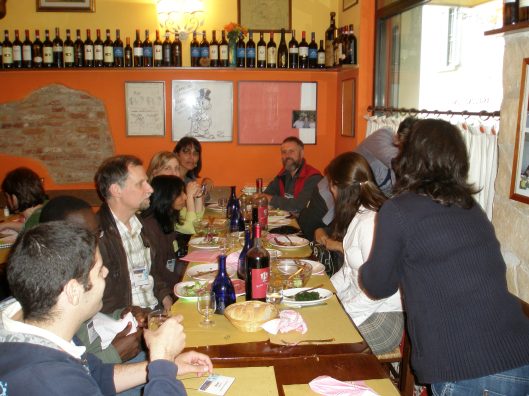
Sharing a Meal at CHI 2008 Workshop

Examples: 

1. At IBM Research, for several years, I managed a research project on the “business uses of stories and storytelling.” I worked with a small team of researchers & consultants to develop tools and techniques. One patent (Story-based organizational assessment and effect system) was originally inspired by trying to help companies involved in mergers and acquisitions deal with cultural differences between companies. The suggested technique essentially involved collecting stories from the two original companies, analyzing them for the underlying values that were expressed in the stories, finding common values in the stories from both original companies, creating new stories using the values and situations from the originals but making sure the new stories were constructed to be memorable and motivating; and finally re-introducing these stories to the people from both companies. The reason for this whole process was to stress common ground so that people from two companies could work better together.

StoryPatent

2. At a workshop at the 1992 ACM Conference on Human Factors in Computing Systems (CHI ’92), I co-organized and co-led a workshop on “Cross-cultural issues in HCI.” At the beginning of the workshop, the participants entered the assigned workshop room to find that it had been set up in a “classroom style” with one small table and two chairs at the front of the room and all the other chairs and desks set up for the “listeners.” We wanted the room set up as a large circle. Everyone pitched in to re-arrange the room into this large circle. This physical activity provided additional common ground for the team. One outcome of the Pattern “Small Successes Early” is to provide common ground. Having people work together to perform a physical task is one way to establish common ground.

We also played a game called “Barnga.” In my introduction to the game, I explained that it was much like Bridge, Whist, or Euchre. To my surprise, none of the participants attending from Asia had any idea how to play such games or what I meant by “tricks” or “following suit.” That experience illustrates how easy it is (at least for me!) to over-estimate how much common ground exists in a group.  (http://www.acadiau.ca/~dreid/games/Game_descriptions/Barnga1.htm)

In a later workshop (2008) on “Human Computer Interaction for International Development,” at the suggestion of Andy Dearden, we began by cooperatively building a map of the world from materials at hand (illustrated above) before delving into the details of the workshop. Starting with this as “common ground” we then explored some of our differences by standing on the representation of where we were from, a favorite place we had visited, a place we wanted to visit, etc.

3. Religions regularly practice rites and rituals. For practitioners of the religion, this provides common ground regardless of a host of differences among the adherents. Of course, it is a double-edged sword because differences among these rites and rituals can also separate people. One of the more brilliant scenes from West Wing cuts among scenes of people attending religions services that are variously Jewish, Muslim, and Christian while the viewer knows that there is an unsuccessful peace effort underway. In this case, the uncommented footage helps to illustrate the common ground among these three religions.

earthfromspace

4. The Family of Man was both an ambitious photography exhibit and a book (definitely worth buying) that portrays people across the world to illustrate precisely that we do have common ground.

https://en.wikipedia.org/wiki/The_Family_of_Man

5. In an earlier blog post, I showed with back of the envelope calculations just how “related” humanity is in terms of genetics, experience, ideas, and matter. In fact, all of life on earth is highly inter-related and it has been for its entire 4.75 billion years.

https://petersironwood.wordpress.com/2017/03/09/math-class-who-are-you/

6. In a recent episode of the TV series, Madam Secretary, the Secretary of State is trying to resolve a conflict between two nations A and B. The diplomats from A say they cannot trust B and the diplomats from B say that they cannot trust A. She suggests that they start from their mutual distrust as part of common ground. In other words, rather than treating the mistrust of A and B as two separate issues, she begins by suggesting that A and B both share two things in common: not only a desire for peace but also a difficulty in trusting the other side. Even mutual distrust can be framed as a basis for common ground. This is more than a linguistic trick. It is an important reframing. It may well turn out that a single event such as a soccer game with teams that have members from both nations may help reduce mistrust on both sides at the same time.

7. Holiday celebrations, the preparation and consumption of food, listening to music, or appreciating the beauty of nature may all provide additional ways of beginning with common ground. Of course, there are cultural differences in all of these as well so one must take some care to provide something that actually is common ground and not something that tends to emphasize the differences among people in these activities.

8. One of the plenary speakers at CHI 1989 in Austin Texas was an astronaut who had been in space. I spoke with him after and during our conversation, he claimed that all astronauts, whatever country they were from, shared the same experience of seeing earth from space; viz., that the national boundaries we typically think so much about were only political; most are not physical. He said all the astronauts were struck by how thin and fragile our atmosphere is and that the earth is the only place around that is capable of sustain the breadth and depth of life. Many of them found this realization of “common ground” the most transformative of all their experiences in the space program.

Resulting Context:

Once people experience common ground, they may still disagree, debate, discuss, or hopefully dialogue in order to identify issues and problems. Experiencing common ground makes it harder to “dehumanize” the other side. It decreases the chances that people will engage in counter-productive actions such as “name calling” or using propaganda techniques to “prove” that they are right and their “opponents” are wrong.

Rationale:

Actions are always better based on reality than on fantasy. Reality is that people share much in common. Reality is that there are also many remaining differences. The entire problem solving process (including problem finding, problem formulation all the way through to finding issues with solutions and re-solving, re-negotiating, re-designing, or re-developing a solution) is enhanced when it is based on a balanced view that includes both real similarities and real differences. We already have a culture and an educational system that focuses on differences. Focusing on common ground is a critical factor in balancing our view so that we do not try to solve problems based on the partial truth that we are all different.

Related Patterns: 

Reality Check, Check-In, Small Successes Early.

Metaphors: 

It is a windy day in San Diego as I write this. We have a set of wind chimes outside the bedroom. Whichever direction the wind blows; however windy it gets (within bounds); and even if the wind is quite chaotic, the sound that emerges is always harmonic and tuneful. This is because of the structure and relationships of the chimes. It would be nice if we could have a platform that encouraged and promoted civility. I think that could work because of the nature of the platform. One of the “chimes” could be Bohm Dialogue; another could be “Building from Common Ground.”

Another musical example is Jazz Improvisation. If a group of musicians who know each other get together, they can improvise some very nice music. If they’ve never met, they will almost certainly agree on a few boundaries before beginning such as style, time signature, key signature. They may well start by having the percussion set up a “beat” that everyone relates to.

Now, imagine instead that seven random people are thrown together from seven different cultures. Each has an instrument that none of the others has ever seen. They have completely different musical experiences and expectations. Does it not make sense that they will take more time to converge on anything good? Doesn’t it seem as though they first need to discover some kind of common ground in terms of scales, rhythms, degree of repetition before achieving a good result? Or, do you think they should argue about which kind of music is best first? Do you think any of the seven will be able to convince the other six that “their” kind of music is superior? Suppose instead of having as one mutual goal making good music, instead, they are in a contest and only one of them will “win” and go on to the next round. Surely, this will only further confound any possible teamwork. Add to this, that they only have two minutes. What kind of performance would you expect now? And, yet, we seem to expect people from very different backgrounds to get on-line and instantly “make good music together.” Whether it’s 140 characters, 280 characters or a whole paragraph, it seems unlikely you will be able to sway anyone to move from “their position” to “your position.”

IMG_3524

International sports competitions such as the Olympics provide a setting where people from around the world get together and compete. These are not random people; they are all immensely talented and skilled; however, they are also all highly competitive. Yet, the venue provides a framework for competition that provides a structure for competing within common ground. Despite being from different cultures and using different languages, the athletes push each other to amazing performances with a minimum of rancor. Every athlete realizes as well that every other athlete has also gone through a rigorous selection and training process involving many sacrifices to get where they are — more common ground. The Olympics might be thought of as a particularly interesting example of finding common ground despite people having different backgrounds, language, and goals. Sports may also be thought of as a compelling metaphor. When politics are reported in the media, they are most often treated as a sporting event. But it is a strange kind of sporting event in that such reporting seldom stresses common ground and instead focuses on strategy, polls, winning, losing, and differences. It almost never reports on common ground in politics. In reporting on actual sporting events, however, the reporting focus often does cover the common ground that athletes face; e.g., the training, the dedication, the sacrifices that families must make, the importance of coaching, etc.

References: 

https://www.goodreads.com/book/show/197193.The_Family_of_Man

https://www.johngraham.org/coach/17-finding-common-ground-negotiating-and-resolving-conflicts-part-i

http://www.tandfonline.com/doi/full/10.1080/03057267.2016.1206351

http://journals.sagepub.com/doi/abs/10.1177/1049732306289705

https://www.researchgate.net/publication/221517384_Video_Helps_Remote_Work_Speakers_Who_Need_to_Negotiate_Common_Ground_Benefit_from_Seeing_Each_Other

Thomas, J. C. (2017). Building Common Ground in a Wildly Webbed World: A Pattern Language Approach. PPDD Workshop, 5/25/2017, San Diego, CA.

Thomas, J.C. & Kellogg, W. (1993). Cross-cultural perspectives on human-computer interaction: report on the CHI ’92 workshop. SIGCHI Bulletin, 25 (2), 40-45.


Greater Gathering

08 Thursday Feb 2018

Posted by petersironwood in America, management, psychology, sports, Uncategorized

≈ 3 Comments

Tags

Business, collaboration, cooperation, coordination, innovation, pattern language, social capital, sports, teamwork, trust


IMG_9267

Greater Gathering.

Author, reviewer and revision dates:

Created by John C. Thomas on Dec. 11, 2004

Reviewed by <> on <>

Revised by JCT on Feb. 7, 2018.

Prologue and Acknowledgements. 

This pattern can be found in many teams, companies, NGO’s, families, and religious organizations. If you are interested in how this happened to strike me as a pattern, feel free to read this section Otherwise, you can skip it. I began to notice this pattern after two events happened to coincide.

While working at IBM Research many years ago, I played in an inter-company tennis league in Westchester County, New York. During those matches, I met many IBMers from outside of IBM Research. One of the people I met worked in the corporate tax department. In those days, long before Google, we used a Key Word In Context system (ITERC?) to scan for potentially useful documents. Every week, I would get a long list of abstracts based on my list of keywords. This system was not nearly so accurate as what many of us have access to today. While there were many “hits” for me, there were also quite a few false positives. For example, I was interested in the psychological process of “induction” – learning a rule based on examples. I often got abstracts, however, about “induction motors.” One day, I got one of those “false positives” about a new tax law that allowed highly profitable companies like IBM to “trade” tax liabilities with companies who were struggling like the tire companies in my home town of Akron. According to the abstract, it was in the financial interests of both companies to use this “trading” mechanism. I had little interest in it, but I liked the guy I had met from corporate and we had traded contact information for tennis purposes. I sent him the abstract. As it turned out, this was precisely applicable to IBM and saved them a lot of money.

At the same time, I was reading about the history of IBM and particularly thought it interesting that they had put so much time and effort into the 100% club meetings. This was a country-wide meeting to bring together sales people from all over the US who had met or exceeded their sales quotas. I was never in sales, but even at Research, we had “annual picnics” in which everyone in IBM Research was invited to come with their families. As I began thinking about it, I realized that these kinds of “larger gatherings” were common across many different cultures, domains, and types of groups. The tax example showed a very specific financial benefit to the IBM company but I realized there were many other potential benefits as well.

IMG_9895

Synonyms:

Conference. Congress. Convention. Jamboree. National Holidays.

Abstract:

When moderate to large groups work to solve large, complex problems, it is often necessary for them to subdivide the work into distinct subgroups. This results in the group being more efficient and effective. However, it also means that each group comes to develop their own vocabulary, search for people who are particularly good at certain things,  and in various other ways, the people within the subgroup communicate a lot, come to trust each other, and have clear common interests. They are often at conflict with other subgroups for resources. In addition, there is less trust across these organizational boundaries than within such a boundary. Often, the people themselves come to be somewhat different kinds of people. Large effective groups therefore participate at least annually in a “Greater Gathering” which allows people to meet and co-mingle across these organizational boundaries. These meetings are constructed to emphasize “common ground” within the larger group. As a result, new lines of communication are lined up; mutual trust is enhanced; sometimes, real problems are solved.

Problem: 

As large, complex problems are broken down into pieces and assigned to different groups, efficiency and effectiveness increase. Not only that, the individuals within each of these various subgroups typically grow more trusting of each other within that sub-group.  They learn about each other’s skills and motivations, so over time, the sub-group as a whole grows more effective and efficient.

However, this high intra-group cohesion comes at a price. People in one part of an organization consider themselves the “in-group” and may begin to limit their learning because of a lack of diversity in that one perspective. Furthermore, they may come to work so hard to solve their own sub-problem that they lose sight of the larger problem and make sub-optimizing decisions. In some cases, the ideas of various subgroups about how to handle something will differ and result in conflict. Even worse, sometimes, decisions made in Group A help them a little but make life for Group B much more difficult and make the overall objective of the group, whatever it is, more difficult to achieve and no-one ever realizes it. There may be lack of trust between different sub-groups or even outright mistrust among sub-groups. Often sub-groups that are “at odds” with each other, not only have different management chains and objectives; they may also be geographically apart; they may be from different cultures; they may be of different professions, etc. For these reasons, a suspicion may grow over time while mutual trust diminishes. Information sharing becomes strained. The overall organization is not doing as well as it might nor are the people within that organization doing as well as they might.

IMG_9320

Context: 

A group of people has been attempting to accomplish some task as effectively and efficiently as possible. In order to do this, one common method is to breakdown a large, complex task into smaller, less complex tasks. Often, those people working on a subtask naturally spend more time with others on that subtask than on other subtasks. It naturally occurs in this context that since people spend a lot of time together, they may develop common interests and also spend leisure time together as well. Sharing common sub-goals, physical contexts, and leisure activities as well as working on the same subtasks may eventually lead to an “in-group” feeling.

Over time, these subgroups develop different methods, procedures, values, customs, terms of art. They become, in a sense, different sub-cultures. But just as cooperation and communication can be trickier when two historical cultures are involved, so too, it can more difficult for, say, someone from each of the legal department, the accounting department and the R&D department to understand each other than, say, three accountants. Sometimes, various departments actually want the same thing. They simply don’t know it because they are speaking different languages.

Some degree of “antagonism” of purpose is often built in to the organization. The R&D department will ask for more money. Finance will say no. But these kinds of one-sided or even two-sided or multi-sided competitions are much healthier both for the organization and its people if they are done with respect and rules. Having completely different sub-cultures can enhance the difficulty of such negotiations.

Forces:

*People are naturally gregarious.

*People working on a common problem often bond as well.

*People working on a common sub-problem often lose sight of the larger problem.

*Social sanctions can lead to a lack of diversity of perspectives.

*All people share certain basic drives.

*Shared special events help build social bonds.

*People enjoy novel experiences and viewpoints, under some circumstances

*An expectation of what happens (based on story and experience) can help mold what does happen.

  • The possibility of one person harming another and not doing so increases mutual trust.
  • Shared experiences tend to increase mutual trust.

Solution:

All the sub-groups that need to cooperate in a larger group should get together periodically for a meeting of “Greater Gathering.” This should be periodic and structured. Activities need to be formulated that help everyone visualize and experience common ground. Eating, drinking, dancing, singing, athletic contests, and other physical activities should also be included since these are experiences people will relate to and enjoy regardless of which sub-group they belong to or which sub-problem they are working on.

OLYMPUS DIGITAL CAMERA

Examples:

Companies generally used to have many of these events when such companies were run by people who cared about the companies and the people within those companies rather than simply caring about using companies as a tool to enhance the power and wealth of a few. For example, when I first joined IBM, they sponsored many sports leagues within IBM Research including tennis, golf, softball, and soccer. Furthermore, they participated, as in the prologue of this pattern, in sports leagues across nearby IBM locations which included sales, CHQ, Engineering, Programming and Technology, Marketing, and Advanced Ad Tech. Every year, there was an elaborate company picnic. There was a Holliday Party and fairly frequent less formal award ceremonies with refreshments. There were also numerous recognition events which were attended by people outside your sub-group.

Other examples are numerous. Boy Scouts and Girl Scouts have national Jamborees. Families have extended family reunions. Sometimes, these can be at a civic level such as Mardi Gras or a local annual parade that most people work on or attend.

I’ve been very active for a long time in a group called “CHI” for “Computer-Human Interaction.” It’s a Special Interest Group of the Association for Computing Machinery. (ACM). Anyway, the people who do research in this field are scattered across the globe. They work for different university departments or companies or non-profits or governments or as individual consultants. We have full professors and undergraduate students; we have people with original backgrounds in electrical engineering, philosophy, psychology, design, architecture, fine arts, English, human-computer interaction, mathematics, mechanical engineering and many more. Some are doing research whose application is out at least 20 years and others are worried about whether their start-up will survive the quarter. Some work for giant multi-nationals and others are one person companies. Every year, we have a rather challenging conference where all of these folks are invited. The conference centers around the technical program, but there are also many things meant to provide a larger gathering; to foster mutual trust; to have a great time together so that we can better respect each other, communicate more effectively and achieve common goals.

fullsizeoutput_1b3b

Resulting Context:

The result of the first example above is that people throughout IBM at that time almost universally thought of themselves as IBMers rather than someone from the accounting department. What this meant was that there was a high level of trust for people from other parts of the company. I’m not saying it was perfect but it was much higher with more people honestly trying to do what was best for the company rather than what was best for them or their immediate manager. Now, that’s largely reversed. Of course, it’s hard to know how much is due to the “cutting out of all the fat” like annual picnics and sport’s leagues.

In the second example, Boy Scouts get a chance to see that people of different shades of skin, creeds, geographical locations share a lot in common.

In the third example, the CHI conference continues, I believe, to be an important reason that people in such a wide variety of circumstances can collaborate and communicate so well.

Rationale:

It is easy to imagine that people we rarely or never see are not only different from us superficially, but that they are different in essence. If you meet people from various parts of your organization in a neutral informal situation that stresses your commonality such as a picnic, a sporting even, an ice-cream social, or a walk-a-thon, you will see that you have some common ground, trust, and makes communication easier.

IMG_3898

Related Patterns:

Conversational Support at the Boundaries.

Known Uses:

Metaphors: 

Many species go to a common place at least annually. We humans attribute this to the benefits of cross-fertilization or more global competitions in survival of the fittest. Is it also possible that they are also exchanging information that is useful for the species as a whole?

Fable: 

I think I will defer, at least temporarily, to that excellent fable of Norton Juster’s: The Phantom Tollbooth. In that fable, Rhyme and Reason are banished to separate kingdoms and the results are not good.

References:

Meaningful Initiation

29 Monday Jan 2018

Posted by petersironwood in America, management, psychology, sports, Uncategorized

≈ 2 Comments

Tags

Business, collaboration, coming of age, cooperation, coordination, Design, initiation, life, pattern language, ritual

Meaningful Initiation

Prolog: 

I have mixed feelings about the phenomenon of “initiation.” I’d be very interested to hear about other people’s experiences, intuitions, and studies related to this very common social phenomenon.

IMG_1033

Author, reviewer and revision dates: 

Created by John C. Thomas on January 29, 2018


Synonyms: 

Appropriate Initiation

Abstract: 

Persistent social groups typically require people who want to join the group to pass an initiation ceremony, rite, or test. Some of these “initiations” include meaningful tests of skill, knowledge, or loyalty. Such initiations prevent people who are deemed unworthy or not ready from joining the group. This has several additional effects. People who pass the initiation, especially if it is severe, value the group more. The initiation also tends to prevent people who do not really value the group enough (or even seek to subvert it) from joining. In addition, people who have no interest in joining the group may also value it more highly if they know it is difficult to join. Initiations may be severe by virtue of having the test of skill itself be difficult, or by requiring endurance, pain, or embarrassment on the part of the would-be joiner.

Problem:

Groups function better under a wide variety of circumstances if there is a high degree of internal mutual trust. If people work together over a long period of time, trust will develop if warranted. However, often even a newcomer to a group can cause chaos and mistrust due to lack of experience, competence, or in some cases, intentionally. Groups therefore need some way to ensure that everyone in the group is minimally competent, values the group and works for the group’s benefit, not just their individual benefit. It’s important for the group work that everyone value the group and trust each other.

Context: 

Complex problems and large problems can often only be solved by groups. For the group to work well together to solve ill-defined or wicked problems, they need to have a common way of communicating, have knowledge of what each other knows, and have a high degree of trust. At the other extreme, consider slaves chained to their oars, slaves picking cotton, or even volunteers, each of whom scans a very small pre-assigned segment of the night sky. In these cases, someone outside the group is typically “in charge” and the cooperation and coordination required among the members of the group is determined, not by the group, but by an overseer. As the problem space becomes more complex however, it becomes more and more necessary for the group to be able to re-prioritize, re-arrange how they work together, and even for fundamental values and goals to evolve. In these latter contexts, it is very important for the group members to share common experiences and trust each other.

In some cases, the normal progression of education, joining a sports league or becoming a full-fledged member of a profession has an initiation aspect even if its accidental. For instance, becoming a tennis professional will require submitting to the requests of coaches and doing a lot of repetition of the fundamentals. It may also require many hours of working out for flexibility, strength, balance, and cardio fitness. In addition, as the person gains skill, their opponents and the venues will tend to produce more and more stressful situations that must be mastered in order to progress to the next level. Similarly, to become a medical doctor requires hundreds of hours of study as well as practical, hands on experiences which will typically require higher and higher levels of skill and stress. Sometimes there are actual specific ritual initiations in addition, but sometimes the structure of the profession itself serves an initiative function.

fullsizeoutput_1164

Forces:

  • If someone works harder, or suffers more pain or embarrassment to be accepted into a group, they will tend to value the group more (though this findings has not always been replicated).
  • For groups to work well together, they need common ways to communicate.
  • Common experiences tend to increase mutual trust.
  • For many groups, it is vital that the members of the group are selected so as to have adequate speed, strength, vision, courage, training, skill, or other characteristics.
  • Groups which are perceived to be very difficult to join may be viewed as being higher prestige than those which are easy to join.
  • Groups with higher prestige may enjoy more benefits from the larger society such as special laws, exceptions to general regulations, or a better pool of candidates.
  • Some people may use the excuse of an initiation in order to satisfy their own need to inflict cruelty on others regardless of the impact of that cruelty on the individual being initiated or on the effectiveness and cohesion of the group.

Solution:

Before someone is allowed to join a group, they have to “prove themselves” by undergoing an initiation. This insures they have some minimal qualifications. It also increases the strength of loyalty, social capital, and trust within the group. It may also increase the “cachet” of the group among others.

Examples: 

As Royal Dutch Petroleum was nearing its hundredth year of existence, they commissioned Aries de Gues to find out whether corporations ever existed as long as a century and if so, what were the characteristics. He found that indeed, there were companies that old and they had four common characteristics. One was a high degree of mutual trust. A second was “strong boundaries.” This latter characteristic meant that it was difficult to join such companies and people tended to stay for a long time. Both these characteristics are logically related to having meaningful initiations. (The other two are not strongly related to this Pattern; Tolerance for Exploration at the Edges and Financial Conservatism).

IMG_3898

See link for examples of religious initiations: https://en.wikipedia.org/wiki/Religious_initiation_rites

Many so-called “primitive” cultures had initiations and rites of passage. Here are a few references.

https://www.artofmanliness.com/2015/09/30/lessons-from-the-sioux-in-how-to-turn-a-boy-into-a-man/

https://mightywrites.wordpress.com/2012/02/21/maori-ta-moko-a-ritual-of-passage-a-study-of-tattoing/

http://www.maasai-association.org/ceremonies.html

https://video.nationalgeographic.com/video/us-apachegirl-pp

Resulting Context:

Presumably and hopefully, the resulting context is a self-sustaining group over time whose members trust each other, communicate well, and highly value their group membership.

Rationale:

Initiations are supposed to have these benefits: 1) The initiation screens out anyone who is incapable or not sufficiently interested to undergo bad things in order to join the group. 2) The initiation causes members of the group to value the group more highly. 3) The initiation provides a common experience that all group members can share. 4) The initiation may make the group seem more “selective” to people outside.

Related Patterns: 

Special Roles; Strong Boundaries; Levels of Trust; Bell, Book, and Candle; Apprenticeships; Official Sanctions of Competency.

Known Uses:

College fraternities and sororities, clubs, sports teams, commercial groups in many settings, military groups, religious groups, and professional societies among others, all require tests and/or initiations before one becomes a full-fledged member. In some cases, such as a Ph.D. dissertation and defense, the “initiation” is mainly a test and an educational experience, but there is often an “endurance” aspect as well. While college fraternity initiations may include tests of knowledge of the participants; e.g., about the fraternity, it’s origins and members; it seems mainly to require the pledge to endure humiliation, discomfort, endurance and sometimes physical danger.

Known Misuses:

(Note: This is not a standard section in the Patterns of a Pattern Language. In this case, I think it’s important. While I do think this overall Pattern can be a useful one, it is particularly prone to misuse as well. I’d like to hear other people’s thoughts and experiences of initiations and what could be done to insure that this is a positive pattern.)

College fraternities in particular are known for so-called “hazing” that sometimes results in deaths. The most common cause of death is from drinking too much alcohol in too short a period of time.

Although part of what internships for medicine do is teaching and testing the ability of doctors to handle pressure, the schedules and attitudes often seem to include an element of cruelty and possibly even danger to the health and well-being of both interns and patients. Many professionals in other fields as well have experienced abuse of one sort or another from superiors during or associated with such tests.

In the movie, A Few Good Men, a commander orders a “Code Red” on a recruit who has repeatedly fallen short in various physical tests. The recruit dies. It turns out that his inability to perform some of the physical requirements of Marine training were because of an undiagnosed heart problem. This is at least arguably an example (albeit fictional) of initiation gone horribly wrong. Even though the fallen soldier was “in” the Marines, he was still in basic training which consists of a combination of skills training, conditioning, and repeated “initiation rituals.”

IMG_5348

When I was a Boy Scout, my “initiation” consisted of supposedly being branded by a hot poker. Three of us were to be initiated during a week-end long camp outing. The kids who were already in the troop were in the main common room and we three were told to wait our turn in another, smaller room. The main room had a roaring fire and fireplace tools including a poker. I volunteered to go first. I was blindfolded and led into the main room where I had to lay down on a bench next to the fire. My shirt was pulled up and after a few minutes, when my torso felt hot from the fire, an ice cube was laid on my stomach. As you can easily verify for yourself, if you sense both hot and cold at the same time, it produces a burning sensation. I was instructed to scream bloody murder for the benefit of the guys still in the other room. As best I can recall at the time, I had been fairly well convinced that I was not actually going to be branded. (But either way, I thought it better to go first). For one thing, I had been swimming with all these guys and never noticed any kind of a scar that would be consistent with being branded with a hot poker. The second guy went through a similar procedure and was also told to scream bloody murder. After his “branding” the troop members took a towel and put ketchup on it to simulate blood. They took this in to show the third and last one of tonight’s “initiates.” The two of us who had already been initiated still moaned mournfully as though in pain, as per our instructions. When the boys went to blindfold and bring the last initiate in however, he completely freaked out. He not only refused; he fought as though his life depended on it, punching, kicking, biting, and otherwise wreaking mayhem on the older and larger boys who were trying to subdue him for the initiation. Realizing how extreme was his fear, they tried to intimate that he was not really going to be branded but this last boy was far too wound up to pay attention to what was being “intimated.” The troop eventually gave up on his initiation. That boy was seriously traumatized. I can’t really say whether he ever believed us that no-one really meant him physical damage, but he never looked any of us in the eye again or spoke much during the remainder of the camping trip. He never asked for another go at an initiation and, to the best of my recollection, everyone else in the troop felt very bad. Rather than increase social cohesion in the group, this misadventure backfired completely. Whatever the reason, this particular troop soon disbanded. This example serves as a cautionary tale about “initiations” because none of the people involved foresaw this particular outcome or were operating out of conscious cruelty.

Early in high school, I got a volunteer job as a “Y leader” at the local YMCA. I basically taught and supervised younger kids in basketball and various fitness tests. My manager was a young man probably in college. He said I would have to pass a “test” first which consisted, basically, of doing a chore for him; I was supposed to go to a nearby department store and pick up a shade that he had bought and paid for. I went to the department store but no-one in the drapery department had the least knowledge of this guy and the shade he had supposedly bought. I had to return empty handed and figured I had failed my “test.” He explained, however, that he hadn’t bought window shades but lamp shades. Back to the store I trudged and returned with his lamp shades. It all struck me as weird and irrelevant to my job as a Y-leader. But there was more to come.

In order to be fully admitted into this little “club” of the Y-leaders we had to go through an initiation. We had several weeks to memorize every athletic record of that local Y, as well as their times or weights or distances. There was also additional material about the procedures and the hierarchy of the YMCA and so on. Then, we came to the initiation night. I think there were four of us who were initiates. We initiates took turns and had to answer questions given by this same manager mentioned above. While doing this, we stared into a very bright light. He was behind the light so that I could only see a slight shadow of the outline of his head. He and the rest of the Y leaders called us “worms” during this little ritual. On the other hand, the initiates were supposed to begin and end each of our utterances with “sir.” Well, I hadn’t really cared much about the material and quickly got three wrong. Now, I was given a choice: I could either delay being initiated and try again next month, or I could take 40 whacks with a wooden paddle. I opted for the 40 whacks. I had been paddled before with wooden paddles, but never more than a few times.

As I soon discovered, there was another crucial difference. My other paddling had been by teachers. Although they certainly wanted to make the paddling punishment hurt, they also certainly wanted to avoid a lawsuit. Although back then, lawsuits were not so plentiful as raindrops, there were some. In any case, I don’t think any of them actually wanted to physically injure us. This paddling was done by all the boys who were already Y leaders. This paddling was done by my peers. They were not adults but young teen-aged boys. As they took their turns, a few went easy on me and most hit fairly hard — around “teacher” velocity. Two brothers, however, had some kind of sadistic streak. They took several steps forward during the “wind-up” and swung the paddle with both hands like a baseball bat. Anyway, I “passed” the initiation. My backside was black and blue however, not just on my buttocks, which I would have been capable of hiding, but also on the back of my thighs. Two of my co-initiates also received 40 whacks. The last guy had taken the task very seriously and knew an incredible amount of trivia about a bunch of local athletes. But as he answered question after question, the manager simply made the questions more and more obscure, venturing well outside the scope of what we had been told we needed to learn. I realized that the point of the whole exercise was not to have us learn anything but to get to have us paddled. At last, the last boy got three wrong, but to my surprise, when it came to the question, he said he would study again for next month.

Eventually, my parents found out (because the bruising was visible, not just on my buttocks but all the way down the back of my legs) and complained to the Y about this whole initiation. Again, this “initiation” seems to have backfired in every sense. One has to wonder whether overly powerful initiation rituals are also part of why sexual abuse and child abuse often go unreported when it occurs in certain tightly knit groups. Initiation is a tool that needs to be used appropriately, carefully, and protected from the misuse of those who are really interested in inflicting cruelty to others merely under the ruse of carrying out an “initiation.” Need initiations be “secret”? They often are and this increases the tendency for them to be subject to perversion from being what is potentially good for the group into a private exercise in cruelty.

Metaphor:

A sperm cell, whether human animal or flowering plant, must be healthy enough to traverse some distance before getting to an egg. It then has to penetrate the cell wall of the egg. While we do not expect the sperm to therefore “value” the joining with the egg, this process does perform a kind of screening function.

In some team competitions, there are a series of “rounds” before the final round. One could think of these earlier rounds as a kind of trial that has some aspects of initiation. Only the best teams continue on in further into the tournament. In addition, it probably also has the effect of increasing social capital within the team.

Apprenticeship programs often require new apprentices to perform the most menial tasks. This process of gradually assigning more responsibility as the initiate gains more skill is necessary for safe and productive work, but it also may partly serve an initiation function as well.

IMG_0327

References: 

Aronson, E., & Mills, J. (1959). The effect of severity of initiation on liking for a group. The Journal of Abnormal and Social Psychology, 59(2), 177-181.

http://dx.doi.org/10.1037/h0047195

https://en.wikipedia.org/wiki/List_of_hazing_deaths_in_the_United_States

De Gues, Arie. (1997), The Living Company. London: Nicholas Brealy.

Gerard, H. & Matthewson, G. (1966),  The effect of severity of initiation on liking for a group: a replication, Journal of Experimental Social Psychology, 2(3), 278-287.

Walsh, A. (1990). Becoming an American and liking it as a function of social distance and severity of initiation. Sociological Inquiry, 60(2), 177-189.

New Fools.

23 Monday Oct 2017

Posted by petersironwood in America, psychology, sports, story

≈ 3 Comments

Tags

#fakenews, #socialmedia, advertising, Business, life, marketing, spam, sports

iPhoneDownloadJan152013 1150

They say there is “no fool like an old fool.” I may be an old fool, but I am now being fooled in entirely new ways.

Despite my injured knee, I went out onto the tennis court in the San Diego sun today to practice. Mainly, I focused on one important, simple, yet difficult skill: keeping my eye on the ball all the way onto the racquet and then, a split second beyond that, keeping my eye fixed on the point of contact. If you would like to see what this looks like in a professional tennis player, watch a slow motion video of Roger Federer. All the professionals typically do this, but no-one does it more obviously, more consistently, or more effectively than Roger.

Most athletes are aware that watching the ball longer allows you to make any needed adjustments as late as possible. It increases your chances of making good contact. There is a second, and more subtle reason for this technique however. We humans are social animals. We have evolved to be extremely good at reading social signals. One of those social signals we’re expert at is judging where someone else is looking. The “natural” thing for me to do is to intend to hit the ball into a particular place, say deep into my opponent’s backhand corner. And, the “natural” way to do this is to look right into that corner an instant before I hit the ball. Then, I will easily see where the ball actually goes. Unfortunately, this increases the chances that I will mis-hit the ball. More importantly, it signals to my opponent where I am intending to hit the ball. They can tell from my gaze where the ball is headed, at least roughly, much sooner than they can by tracking and extrapolating the path of the ball. The trick which I was practicing today was to simultaneously have a clear intentional target but keep my eyes on the point of contact. Keeping your eyes on the point of contact still leaves plenty of time to then look over and see where the ball is going and how your opponent is moving toward it.

IMG_1428

Not “telegraphing” your punches is vitally important in boxing and other martial arts. Similarly, a good basketball player will try to “fake” one direction and go another. A good football play often hinges on misdirection. In fact, in any sport in which the players interact in real time, avoiding doing anything to “signal” what you’re about to do is crucial. In baseball, for instance, if pitchers are not careful, they may develop a habit of giving away the pitch they are about to throw.

In sports which do not involve this kind of direct interaction such as weight lifting, hurdling, pole vaulting, shot putting, bowling, etc. there is no need to “fool” your opponent about your intentions. No pole vaulter thinks, “I’m going to run real slow down the runway so my opponent thinks I won’t be able to clear the bar. Then, I’ll put on a burst of speed at the last second and clear it! They’ll all be so surprised!” No.

Conversations among friends generally involve people sharing news or information or feelings in a straightforward way. You tell a story about what happened to you because you want to share the experience with your friends. You might introduce humor or some exaggeration, but if the whole purpose of your stories is to manipulate your friends into doing something that’s for your benefit, you won’t keep many friends for very long. Conversation is supposed to be a cooperative enterprise.

On the other hand, in other venues such as courtrooms and debates, skilled speakers may try various tricks, not aimed at working together to share information in order to reach a more profound or broader truth, but to manipulate someone into doing what the speaker wants; e.g., to confound the opposing debater and win the trophy or, more seriously, to render a “not guilty” verdict and to let the murderer walk.

I love acting. In acting, of course, I play a role and my intention is to be believable. In this case, I am not only saying things that are false, I am faking everything. I am pretending to do things I am not really doing (e.g., drinking whiskey but it’s really tea), speaking lines with absolute sincerity that are complete lies, and expressing feelings that I may not be feeling at all. There is some sense in which I “believe” in the story I am participating in, but I’m willing to bet that if I’m in a production of The Importance of Being Earnest and the theater curtain catches fire, I will not run for the fake phone, imagine hearing a dial tone and place a pretend call to the fire department and then engage in a conversation with an imaginary fire department dispatcher. I will dial 911 on my iPhone.

https://en.wikipedia.org/wiki/The_Importance_of_Being_Earnest

We put up with this “dishonest charade” because everyone knows its for entertainment purposes. As you may recall from history class, plays were not always regarded kindly by custom or law. Some religious regimes have banned or regulated stage plays.

https://en.wikipedia.org/wiki/London_theatre_closure_1642

IMG_6744

Personally, I love watching live theater as well as participating. I believe that overall, it has beneficial impacts on society by showing other ways that things could be. But theater is only positive so long as everyone is clear that these are fantasies, not realities. (Even if a play rests on historical fact as its basis, it will still be a vastly simplified account from one angle). We are basically all in this together. And the more people that inhabit the planet, the closer we all get. None of us can know everything. We must rely on each other in order to make our complex system work. It’s fine to play “what-if” games for entertainment or as part of a scenario planning process. But we should never mislead each other about whether something is a fantasy or a truth or something partially true. Are there exceptions?

Yes. One can generate scenarios in which a lie can save someone’s life. An obvious example: your depressed friend comes to your apartment agitated and asks for your gun so they can kill themselves. Your gun is right under your pillow. Instead of locating it for them, you lie, “I don’t own a gun! Why would I? Anyway, sit down here and tell me why you’re so upset.”

It is sometimes fun to play harmless pranks on people although even these have a tendency to go awry. I recall a kid at YMCA camp saw one of our cabin-mates approaching and decided it would be really cool to scare him by jumping up and screaming like a wildcat just as he opened the door. The unsuspecting camper-to-be-pranked (in a primitive 10 year old way) pulled open the door. The “practical joker” sprang up all of about two inches before hitting his head on a protruding nail. Instead of screaming like a wildcat, he screamed like a wounded ten-year old.

While I love acting, I do not really enjoy scamming people or fooling them for my benefit. I really think it’s really bad. Our information and actions are so interconnected and interdependent that every positive or negative thing you do has completely unseen ramifications. If you lie, even a little, you have no idea how gigantic those implications might be 25 steps removed. In other words, there is no such thing as a “harmless lie” because every lie has a cost. That cost is hard to predict.

I did, nonetheless, break this general rule on rare occasion. My older cousin Bob kindly demonstrated the general concept by conning me repeatedly. Eventually, I wised up. But not before being tricked into doing things against my own interest just for Bob’s amusement.

I spent two of my teen summers as a counselor at a camp (e.g., a Rotary Camp) for kids with special needs. This was a coed camp on the shore of a beautiful lake (Let’s randomly call it “Rex Lake” for convenience). We took kids out on motorboats, canoes, and rowboats. We played kickball, sang camp songs, swam like every other camp. Since the camp was coed, so were the counselors. One of the women counselors my age was headed to one of the prestigious “Seven Sisters.” Let’s just pick one: Bryn Mawr. She was very well read and intelligent. I bring this up because, despite her intelligence and knowledge, she was one of the most gullible people I’d met, up to that point in my life. I probably would never have had occasion to discover this if left to my own devices. At least, I like to think that.

IMG_7320

I must explain that the “boy counselors” (yes, only the boys) went to this camp a week early to refurbish it. We peeled old paint, applied new paint, washed windows, replaced light bulbs, scrubbed floors, etc. Though pretty hard labor, much of it allowed us to talk. I heard many stories about this woman (let’s call her Susan) because she had been a counselor before. So, a week before I actually met her, I was told a number of stories about her. For example, one of the daily chores was to sweep the shiny red floor of the recreation room. A long handled, black-brushed broom provided the main tool along with “sweeping compound” which consisted of oil and sawdust and had a very sweet odor to it. The camp counselor, let’s still call her Susan, found sweeping more enjoyable, apparently, when done bare-foot. When my companion counselor happened upon her, his brain immediately hatched a plot. “Oh, my God, Susan! You stepped in the sweeping compound with bare feet! Go see the head counselor (let’s call her Gracie) at once! She’ll have to rush you to the hospital for immediate treatment!”

Meanwhile, Gracie was serving tea to some would-be potential donors to the camp. Normally, we counselors would knock politely on the door to Gracie’s tiny ivied cottage. Instead, Susan turned the knob, threw open the door and yelled, “Gracie, I stepped in the sweeping compound!” Gracie lowered her teacup gently onto the crystal table, turned to Susan and asked, “So?”

Susan purportedly next said, “But I mean, I stepped right in it barefoot!”

Gracie: “So?”

Susan: “Well, I mean, don’t I have to go to the hospital? Isn’t it poisonous?”

Gracie: “No. Go finish sweeping.”

This might have been a “harmless” joke that kept a hundred thousand dollars of donations from flowing to the Rotary camp.

Another lengthy example, while — let’s call him Stan — and I washed a thousand window panes involved convincing Susan that she had accidentally married Stan in a legally binding ceremony. Setting aside for a moment, the cruelty of such a joke, if believed, let’s again remind ourselves that this young woman was intelligent and well read. She was headed, remember, for Bryn Mawr.

Every week, at one of the evening gatherings, each cabin put on a skit. Working with these kids to design, rehearse and perform these skits — priceless. Anyway, according to Stan, she and Stan were in a joint skit with her cabin and Stan’s cabin in which, she and Stan get married. Stan’s older sister (let’s just call her Lynda) played the part of the minister. A day later, Stan approaches Susan all trembly and nervous apologizing for the horrible accident.

Susan said, “What accident?”

Stan claimed, “I am so sorry. I forgot that my sister is an ordained lay minister. That makes our marriage legal. Since I’m catholic, divorce is out of the question. I’m so sorry, Susan. I never meant for this to happen.”

In the world according to Stan, she took this bait hook, line and sinker.

Of course, I didn’t really know this Stan counselor. So, I didn’t take just his word for it. When I met Susan, I probed her about these events and she confirmed that she had fallen for both of these pranks and several more besides. Beyond that, the very first 3 weeks, sad to say, I participated in one of these scams.

Our motorboats ran on gasoline and periodically, we would need to motor over to a nearby dock called (let’s just say) Dusty’s Landing. Typically, one of the counselors would motor over with a bunch of empty gas tanks, obtain and pay for the fuel and motor back to the Rotary Camp. I understood this from the very first week and Susan had been a counselor for two previous years.

Nonetheless, we convinced her that we had changed the procedure and that she was to go out in the middle of the lake and wait there. Dusty would be along any minute as part of his new weekly mobile gas run around Rex Lake. Sigh. What disturbs me even more than being mean enough to have been part of this is that she fell for it. 

IMG_3071 - Version 2

To fully understand why that was so disappointing, you have to understand that Dusty’s was very much a one-person shop. Dusty himself was quite a character. Probably around 60 at the time, he had some interesting shows of strength he could perform such as plant his hands on the ground and stick both legs straight out in front of him parallel to the floor. He sold all sorts of things besides gasoline in his dusty, musty clapboard store. His was a “convenience store” whose wares included one of my favorites, “Reese’s Peanut Butter Cups.” Whenever it was my turn to go buy gas, I, like the other counselors, could buy a piece of candy from the change. So I picked the Reese’s. Unfortunately, as I discovered on the way back to our landing, the chocolate was infested with worms. Who knows how long those two cups been sitting there on the dusty shelf?

Anyway, the idea that Dusty would leave shop in the middle of the day is pretty far-fetched to begin with. While the camp had a pretty regular schedule, the shore of the lake was dotted by small mansions whose owners came and went as they pleased. It would be impossible to make any kind of efficient distribution of the gas by having Dusty cruise around the lake to meet people. It made infinitely more sense to have the patrons come to Dusty.

One must also understand, that unlike the case of stepping in “poison” sweeping compound, there was no urgency here. Even if, God forbid, we missed the mythical “Dusty’s gas run”, we could still motor over and get gas the “old-fashioned way.” Moreover, you need to understand that the camp was small. It would take no more than five minutes to find Gracie or another authority to confirm this new procedure. And, Susan had been fooled into so many pranks before. My own role was even more rotten because Susan already had good reason to distrust Stan, but not (yet) to distrust me. So, I really was “feeding the evil wolf” here. I remain more upset though about Susan. Why would she fall for any of these. It’s bothersome, of course, not just because of Susan but because by this time, I knew she had gone to a private school that had the best reputation in the area (let’s call it the Akron area). Come to think of it, this was an all girl’s school. Perhaps the one lesson they were not well-equipped to teach was how treacherous men can be. Then, you would think they would make double the effort, unless, of course, the whole point was to make intelligent sounding wives who were extremely gullible?

Susan is not the only one, of course. Criminals would stop phishing if it didn’t sometimes work. There lots of dishonest people out there. In many cases, they are not just trying to “make a harmless joke” or “get your goat.” They are out to steal your money, rob you blind, get you vote against your own interest, and ultimately to take arms against your neighbors. That’s not for your benefit. It’s not for your neighbor’s benefit. It’s for their benefit.

When someone appears to be sincere in their communications, how can you tell it’s a manipulation? It’s not easy. I have to say, Stan was a pretty convincing liar. I think in the pranks pulled on Susan, she could have reasoned that they didn’t make sense. Would the camp really ask the counselors to sweep the floor where the kids played every day with a deadly poisonous substance? Seems absurd to me, but then it also seems absurd that human beings would knowingly ruin the habitability of their planet. It seems pretty absurd that the people of Flint Michigan would be given poisonous water knowingly.

Just as some people are more gullible than others, some people are much better liars and manipulators than others. Any great salesperson is a great manipulator. They may or may not also be a great liar. In some cases, such as tech sales, a sales person is primarily a problem solver and to a large extent that can apply to other sales people as well. The real sleaze occurs when there is no repeat business.

SeaMonkeys

What sales people can do is read you. For example, a smart sales person (actually, I think Stan became a salesman) may think the best feature of a used car is its engine. But if the sales person is smart they are going to tell you all the wonderful features and see which ones light your fire. Maybe all you care about are the tail fins. Is the sales person going to say, “Oh, yeah, but who cares? Right? They’re just gingerbread. The real nice thing about this car is the engine.” You are the one buying the car. So, they are going to appeal to your values, not try to make you take on their values.

A politician who gives speeches live must be able to “read the crowd.” In a similar way, he will test the reaction of the crowd to various things and see which ones trigger a really good response. Since everyone in the crowd can hear everyone else, it becomes something of a positive feedback loop. Once the crowd as a whole latches onto something, then everyone is even more prone to join in. Reading a crowd, however, is much harder than reading a single individual, up close and personal. For this reason, most politicians, put some kind of control over the setting, the timing, the audience, for their speeches or other events. People who disagree, protest, heckle are really not all that welcome. Some politicians go further and only allow in avid supporters. When this kind of a crowd then appears on TV, viewers at home may assume this is a random cross section of America. No. It is a very select group. “Reading the crowd” becomes much easier within a fairly homogeneous group. A great politician can do it no matter what the group composition or initial position. Though clearly fiction, Shakespeare’s play Julius Caesar displays Marc Anthony believably turn the crowd from applauding the conspirators who slew Caesar to searching to destroy them. But even the most mediocre politician can rouse a group who already strongly supports him or her.

The sales person (and the politician) are operating on two levels at the same time. Remember Roger Federer and his watching the ball with his eyes while he is mentally prepared to hit the ball down the line to his opponent’s backhand? Roger knows the plan. But he is not sharing that plan with his opposition.

Although a sales person is not your opponent or your enemy, they do have an agenda. They want to sell you a car, or a house, or a pig in a poke, or a life insurance policy. They are appearing to have a conversation with you and are indeed exchanging information. In the case of the car, they might talk about how reliable the company is, how great the service is (even though it’s never needed) or about how roomy the back seat is. But always, always, while they are watching the ball of the conversation, they also have a very clear intention in their mind to close. If you would like to hear a funny genius at sales discuss this, check out any one of Zig Ziggler’s books or tapes.

A politician often does the same thing. They are trying to manipulate the crowd in some way; to make noise, to scream, to applaud, to go out and vote, and sometimes, on rare occasions in recent American politics, they are actually inciting people to riot or commit actual crimes. One way you can tell a politician is doing this kind of desperate manipulation is to listen to the form of their speech. Unless they are intelligent, being totally occupied with trying to read and manipulate the crowd while they are also talking, will render their speech marred with errors, vagueness, and non sequiturs. They will repeat themselves over and over. By contrast, some politicians are mostly speaking from the heart. Even when their words are crafted partly or solely by professional speech writers, those people know what the politician really believes. If it is real belief, the politician can not only appear glib; they can also probe and respond in a deep way to complex issues. If they are overwhelmed with the dual tasking of manipulation and speaking about something they don’t care about, they will stumble and bumble about, simply repeating, repeating, repeating words and constructing “sentences” that do not really form complete sentences.

That inarticulateness is an important cue but it isn’t a perfect one. Some politicians are smart enough to lie eloquently and still have enough intellectual capacity to try to move you in your beliefs or actions from point A to point B. After all, many politicians have been lawyers and that’s practice. In fact, Congress and car salesman are perceived to be the least honest professions in the United States. (If you’d like to learn more about the demographics of your Congress, you can check it out here).

https://fas.org/sgp/crs/misc/R44762.pdf

You would probably be hard-pressed to come up with a belief so whacky that no-one in America believes it. Generally, that’s not such a big deal. It’s been historically difficult for any politician to pull together funding from the “People who believe our brains are in our armpits” Foundation. Until now. Because now, the politician does not have to try to cajole the nut cases from all over the country to a $2500 a plate dinner so they can listen to him blab about how he has long believed our brains are in our armpits and thank God  for these brave souls in the audience withstand the daily ridicule of their neighbors to help bring out the real truth. The politician in such a mythical $2500/plate dinner would say he agrees with the audience about the cover-up and he’s sure something stinks. The press does nothing to ensure fair coverage. For the past 50 years, the story scape on this vital topic has been arid, says the politician.

Because this fringe is so scattered however, the logistics make such a dinner unworkable. Until now. Furthermore, there is always the chance that a videotape of his acceptance of this tripe will appear on the evening news. Until now.

Now, the politician does not have to appeal in a traceable way to such fringe groups. Nor, does he have to even communicate with them. Instead, he can pay people to make up stories that support their beliefs, whatever they are, and add in some manipulative message. For example, let’s imagine the politician in question is being investigated by the New York Times for tax evasion. He can have fake stories sent almost exclusively to people who already believe that their brains are in their armpits. “New York Times found guilty of complicit coverup. Newly discovered files confirm the Times knew all along people’s brains were in their armpits but failed to break the story.” This helps the politician’s cause of course, but it can’t be tied back to him. The politician no longer needs to be able to read the crowd. He can have the computer do it for him.

Claude

Every time you “like” or “dislike” something on Facebook or retweet on Twitter or google something, a record gets created. Those records are collated over time and compared with the records of millions of other Americans. That can be used by software programs to make a damned good guess as to whether you are part of the .05% of Americans who believe our brains are in our armpits. This process is many times more effective than the most tuned-in politician in history trying to watch people in the physical crowd before them.

Tuning fake news stories to appeal to very small audiences could be used to sway elections. Right now, here in America, and apparently elsewhere, these fake news stories are not aimed primarily at swaying an election. They are aimed squarely at destroying America and other western democracies by exaggerating our differences until we are so distracted and weakened by internal disagreements that we can be taken over without firing a shot.

Susan, now you have lots of company. We will all join you as the New Fools. We will sit in our rowboats in the middle of the lake until past dinner time.

Author Page on Amazon

Too Much!

03 Sunday Sep 2017

Posted by petersironwood in America, health, psychology, sports, Uncategorized

≈ 9 Comments

Tags

#excess, #GoldenMean, #stress, #therapy, #USOpen, Business, innovation, sports, Tennis

RainWaterGutters

A  tennis player hoping some day to be at the US Open improves their serve; hits it harder and deeper. Good! They practice more; hit it harder and deeper. Now, every serve is rocketing over the net and sliding off the service line. But should they hit it even harder, they will double fault their games, their sets, their matches and their careers away.

A baseball pitcher learns to throw faster and faster, hitting the corners of the strike zone. Too far left or right and no-one will swing. Right in the middle risks at least a single and probably worse.

The surgeon cuts beside the heart. The tumor must go. The cut must be made but should the scalpel slide too far from the target, the surgeon could prove more lethal than the tumor.

A life lesson hard to learn is that there really can be too much of a good thing.

How much is too much varies according to circumstances.

Yet, individuals and businesses seem so easily to fall into the trap of “If some is good, more is better.” This is almost never the case except within extremely narrow contexts and under many sets of assumptions. Much more common is the case where some is good, more is better, and too much is worse than none at all.

OLYMPUS DIGITAL CAMERA

OLYMPUS DIGITAL CAMERA

Cases in point litter the annals of human misery throughout the centuries. No vitamin A is very bad. A little is better than none. More is better. But only up to a point. Beyond that, it becomes toxic. Too much.

There are often natural boundaries and tradeoffs in nature that do some of the work for us by keeping things within reasonable boundaries. For example, we think it’s really cool if a football player (whether American football or soccer) is extremely fast. But by “extremely fast”, we mean humanly possibly fast. It would ruin the game if one player could run 300 miles per hour.

IMG_5126

Like most kids, I liked candy. Favorites came and went though themes repeated such as chocolate, nuts, and crunchiness. Caramel and peanut butter — yum. I would always opt for more rather than less candy.  Parents though consistently pushed toward less candy. Nonetheless, I found and developed clever ways to cajole and trick them into letting me have enough candy to ruin my teeth. Too much of a good thing.

One of the chief ways that companies make too much of a good thing is when it comes to motivation. It has long been known that the performance of people tends to increase with increasing motivation, but only up to a point. After that, further motivation reduces performance. This so-called “inverted U” is true, not only for humans, but throughout the animal kingdom. In work that involves more than one person, companies often multiply the error. As pointed out by Frederick Brooks many years ago in “The Mythical Man-Month” when a software project gets behind schedule, the typical response of management is to require tighter reporting on progress and to add more people to the project. Requiring more reporting obviously puts people under more pressure and takes time away from actually accomplishing anything. Adding more people is typically even worse because they don’t know what is going on in the project and the people who actually are being productive have to take time away in order to instruct them!

The optimal level of motivation interacts with other things of course. For one thing, how you take external stress depends a lot on how you take it. Some people begin to awfulize when things get hot; they take things personally; they imagine the worst, etc. So, to an extent, it depends on the person’s own character how they react, but it also does depend a lot on the external stress. No-one is most productive under too much stress.

IMG_5574

The optimal level also interacts with how creative is the task at hand. For an extremely simple task, higher motivation can work well. If I ask you to hang suspended onto a bar as long as possible, you may be able to do it for a minute. If I offer you a thousand dollars, you’ll probably hang on longer. Suspend you over the grand canyon and you may be able to hold on still longer. But now imagine instead, I ask you type, without error, a page of text at your maximum keying speed. You may do better for a thousand dollars than doing it for free, but if you’re life’s on the line you are almost certain to make errors. When it comes to a task requiring you to do something completely new or do something creative, you will most likely to best under very low levels of stress. The more stress you experience, the more you are likely to stick to what you already know.

Again, these relations can be moderated by personality but they are pretty robust across gender, age, education and, in fact, even apply to other animals. If you want to teach your pet a new trick, you will have much better success if they are motivated but not overly so. A simple “creativity” task for animals is the “Umweg” test. “Umweg” means “way around” in German. You place the animal and a treat on a platform separated by a screen that does not go all the way across the platform. A lizard may starve to death instead of walking around the screen. They are too bent on going straight for the treat. A dog will typically have zero or little problem with this task, unless the dog is extremely hungry. As for humans?

iPhoneDownloadJan152013 807

I recall reading about such a test that was performed on US army recruits. Each recruit in the experiment was put in a large room they had never been in before. This room had a large number of doors. An announcement came over the loudspeaker asking them to leave. Each recruit would go to a door, typically find it locked, move to another door, etc. At last, they would find the door that was unlocked and leave the room. Sounds easy, right? You and I could probably solve this without any real difficulty.

Now, comes the “fun” condition. In that condition, the announcement comes on while a simulated fire is right outside. The announcement now says to leave because the building is on fire. What happens? The vast majority of recruits go to the nearest door, try to open it and upon finding it locked, do not try another door. Instead, they try harder and harder to open this same door, jiggling the handle ever more vigorously. Yes, under enough stress, people cannot solve this simple problem. 

In my sophomore year at college, my girlfriend at the time was a Freshman at Oberlin. As part of her requirement for introductory psychology, she ran an experiment about the inverted U of motivation with lab rats. I helped. Here is how the study went. Rats were in one of three states of “stress” before having to swim a small underwater maze. The maze was quite simple. The rat had to go down a long corridor, make a left turn and then come back another long corridor. The “stress” was induced by holding them under water for a small, medium, or long period of time before they started. (I don’t really like this as a way of inducing “stress” because brains don’t work as well with less oxygen but I didn’t design the experiment). Anyway, my job was to get the designated rat out of the cage, hold under water for a few seconds and then let it go so it could swim the simple maze.

All went well until I went to get one of the rats who was in the “high stress” condition. All the other rats were pretty tame, but not Mr. “High Stress Condition.” Oh, no. He ran around the cage trying to avoid my hands. When I finally grabbed him around the belly, he grabbed hold of the cage wire with all four paws! He began barking like a dog! I had done various training exercises with rats before and this was the first one that did anything like bark! I had to pry his little paws off the cage one by one. I can tell you that at this point, this poor rat was already in the “high stress” condition. And so were Janet and I!

And, now I needed to hold him under water for the longest time before letting him swim the maze. I felt horrible. I was well aware that this rat was already stressed and was already probably exhibiting an oxygen debt from his vigorous attempts to avoid capture and escape my clutches. Nonetheless, we decided to go forward with the experiment. I held the poor critter under water the requisite time. Now, we could hear him swimming down the long corridor, make a quick turn and swim toward his freedom. As long as we could hear him swimming, we knew he hadn’t drowned. He was indeed the slowest of the rats so far. We didn’t care at this point. We just wanted him to survive. Down the long corridor he came to the open place where he could escape the water at last. He got there! Whew! We both sighed in relief.

But only for a second! Unlike every other rat, when this one got to the open space instead of surfacing so he could get to the air, he immediately made a U-turn and began back the other way! Oh, crap! I hadn’t really signed up for drowning rats! We could still hear his little rat paws churning through the water. Janet and I were trying to figure out whether we could break into this apparatus and save the rat if he stopped swimming. Meanwhile, Mr. “High Stress Condition” kept paddling along. He came all the way back to the origin of the maze, turned and went back. Freedom was there for the taking for this poor rat, but he was too stressed to look up and see it. Sigh.

At long last, after Mr. “High Stress Condition” had swum three times as far as his mates, he finally came out of the water. He looked a lot like a … well, a drowned rat. I patted the poor fellow off with a towel and put him back in his cage. His stress level hopefully fell at that point, but I know Janet and I were both relieved that he survived. Our pulse rates eventually returned to normal too.

iPhoneDownloadJan152013 778

As a therapist at the “Institute for Rational Emotive Therapy” I had plenty of chance to work with people who were just as over-stressed as poor Mr. “High Stress Condition” had been. This is not to say that people are just like rats. Of course, they aren’t. But when it comes to reactions to stress, we are very similar to our animal cousins. What people can learn to do is to moderate their stress by what the focus on and what they tell themselves.

To take a sports example, if you are playing in the US Open tennis round of 16, you are in much higher stakes game than someone who is just having a friendly social match. But every world class athlete learns to control their stress level. They do this by focusing on their process and on the current condition. If they start thinking much about the score, the stakes, the errors they’ve made, they will get in trouble. And if they start saying things like, “Oh, you idiot! How could miss that shot? Now, if you don’t get this next point, your chances to win are ruined.” Humans can intentionally make themselves more stressed or less stressed than the objective situation would justify. This is a skill that everyone should learn, by the way, not just athletes.

Our society seems to have forgotten how to motivate people “just enough” and instead puts too much stress on employees, encouraging them to work too many hours and thereby lowering productivity and greatly lowering creativity. Once again, it’s no accident that IBM was successful for so many years and had the motto: “THINK” and every employee had this on their desk. Mr. “High Stress Condition” rat would have done better had he kept this in mind.

Our society’s obsession with overdoing is not limited to over-stressing employees. We tend to overeat, overuse drugs, over stimulate ourselves, drive too fast, spend too much money, buy way more than we need, and use way, way more energy than we need. It’s just too much! Too much of a good thing is bad for you personally and even too much success can be bad for a company in the long run. (See, for instance, the link below about how Kodak actually invented the digital camera but then got on board too little and too late because of their overwhelming success with film and cameras). And, in that spirit, rather than continue to argue the point, I will end with The Jewels of November. 

OLYMPUS DIGITAL CAMERA


The Jewels of November

(Third prize winner in the Chatfield National Poetry contest)

Winter ripped into our neighborhood last night;
Gale and pail of rain turned flake by morning;
Gutters filled to overflowing; my basement flooded.
And the riot of yesterday’s autumn light
Gone as though it never burned its magic riots of red and gold.
All the tallest tulip trees and oaks stand naked now,
Black, bucking wet twigs against the steel gray sky.

Bundled in my leather hat, jacket and gloves,
I walk out to survey the carnage of fallen leaf and broken branch.
The wind still gusts to make my eyes smart and my cheeks burn.
Low black clouds swim and swirl.
Somewhere a flag cord bangs against an empty pole.

So off I go through deserted streets of a condo Sunday morning
Into the drear of pale November.
The wind sings a shriller note when the leaves are gone,
The hush is replaced by a whistle.

And, walking down the hill toward the main road
I see beneath the broken canopy the first Jewels of November —
Coral leaves laid in relief against the wet black woods
The amber leaves, the carmine leaves of shrubs
Protected by the barren trunks of their taller cousins.

Beside the road, a head of goldenrod casts against green grass.
A few lonely wood asters, white and an occasional blue.
Hanging from the dead vines, clusters of gold and red.
Before me, the sky breaks for a moment only
And a hawk wheels through a single shaft of sunlight
Rejoicing, so it seems, in the thick cold air,
His outstretched white wing fingers glowing white for a moment.

And so I find, here in this gray and lifeless world
Treasures of color and texture and form — and music too
For the overflowing brooks are singing quiet giggles
Just as ten black crows careen and crackle through the trees.

I look down and see a broken piece of branch
Bedecked with lichens, the palest possible shade of blue-green.
I bend to pick it up and out of my jacket pocket coins tumble
Tinkling on the black macadam roadway, they splay themselves:
A shiny copper penny, dime, quarter, nickel and a dark penny.
How fine when I was a child to find a few coins like this! How rich!
I knew the different smell and taste of every coin,
My parents’ dire warnings not to put them in my mouth
Making the taste so much more exotic and exciting.
Now my money comes to me as a blue paper note
Claiming the check was deposited directly in my account.
How efficient, I note.

Another shaft of sunlight strikes me from the briefly parting clouds
As I retrieve my coins one by one
And remember that today is the New York City marathon.
Phillipides, so the story goes, died after bringing the news
Of a Greek victory back, from exhaustion, so we suppose.
But I wonder: was it simply that his life’s best work was done?
Or could it even be the sheer clear joy of the news delivered?
Or, the ecstasy of the swinging legs and arms, the hot heart,
The heaving chest — feeling so alive that pain itself is joy.

The wind is at my back and I wonder what it would feel like
To run today that long race through the windy streets of New York.
But a walk through the woods is enough for me, enough today,
Stopping to watch the hundred precious scenes laid out before me.
I wonder where all these treasures were last week-end
When I walked this same path.
The answer is, of course, that they were drowned in a sea of color
The neon chaos of autumnal carnival showing off.

I turn back toward home now.
Lonely snowflakes hit and actually bounce once off the black road
Before settling down to melt their brief beauty on still warm tar.

The wind is fully furious in my face.
I dream what lunch I might fix once out of this blowing cold
A steaming chicken broth thick with onions, carrots, and peppers.
And I recall a time when I was a senior in college and had the flu;
The medicine the doctor gave me made me worse
And I ended up not eating for three days
But the at-last, ah-ah, taste of the clear broth I savored oh so slowly!
A feast from a magic bullion cube!

And I wonder as I begin the ascent up the long hill toward home,
Whether winter might not be the whirling earth’s greatest gift.
What would autumn, full summer, or the tender spring be
Without the deadly in-between, the waiting, the wail, the white.

In a land of endless plenty and eternal life, would we ever see
The Jewels of November?

short stories and poems by author

Author page on amazon

Kodak

Citizen Soldiers, Part Two: What Fathers can Learn from their Kids

16 Friday Jun 2017

Posted by petersironwood in America, family, psychology, sports, Uncategorized

≈ 4 Comments

Tags

baseball, childhood, civility, debate, dialogue, ethics, fairness, rules, school, sports

caution


Growing up in the semi-developed neighborhoods I did, we never had enough kids of the same age to play football, baseball, or even basketball with full teams. One upside of that was that we played modified games according to how many people showed up. For example, we often played basketball one on one or two on two. More rarely, we played three on three. One common variant of baseball we called “Three Dollars.” One person batted by throwing the ball in the air themselves, then quickly positioning that throwing hand onto the bat in order to hit the ball. The other two, three or four players were “fielders” and if they caught a fly ball, they would receive “$1.00.” If they caught it on the first hop, it was $.50 and a deftly caught a grounder netted you  $.25.  In effect, this was just a way to keep score. No money ever actually changed hands. Whoever earned at least three dollars, then got to take the batter’s position. In my experience, everyone would rather be the batter than one of the fielders. Anyway, fielders also lost this symbolic money. If you went for a fly ball and dropped it, you lost a dollar. Similarly, you would lose money for bobbling a one-bouncer or grounder. This game seemed to be pretty well-known throughout America so I’m sure we didn’t invent it.

https://en.wikipedia.org/wiki/Glossary_of_baseball

However, we did try tweaking the rules. For example, we sometimes played without the penalty clause. You gained but never lost “money.” But we decided to go back to the “original” rules. Then, another time, we decided to try it with a different goal, five dollars. After we tried that a few times, we all agreed it took too long to get a turn at bat. So, again, we returned to the original rules. Another slight variant that came up was that not all fly balls were equally difficult. On the one hand, a sharply curving rocket line drive is very difficult to grab! A blooper fly ball is easy; in fact, easier than many grounders. On the other hand, for us at least, a towering fly ball was again quite difficult. So, we experimented with awarding various amounts such as $.75 for an easy blooper but as much as $1.50 for a sharp line drive. It proved that there were too many “boundary cases” to make this a pleasant way to spend an afternoon. None of us really wanted to waste time arguing instead of playing baseball! That was the sort of nonsense that parents engaged in, but kids were smarter than that. On the other hand, each of us instinctively knew that we also had to “stick up for ourselves.” We could not just acquiesce in the face of injustice. Quite naturally, we would tend to see things a bit differently. Let’s say I am in the outfield and have $2.00. Now, you, as the batter, hit a looping fly ball/line drive which curves and sinks. I make a nice catch. Yay me. But now I start trotting up to the plate because $2.00 plus $1.50 for a line drive puts me at $3.50 and it’s my turn to swing that sweet honey colored bat and knock that little ball for a loop. But you say, “Whoa! Hang on there, John. You only have $2.75!” And I say, (and, please note that there is no baseball going on during this exchange) “No way. That was a line drive! That was a hard one too!” (And, I mean that in the sense that it curved and sank and it was actually quite a hard catch to make.) So, then, you say, “What? That wasn’t hard! I caught a lot of line drives that were harder than that one.” (And, what you mean by “hard” is that it was high velocity.) Generally speaking, we resolved these disputes but after 3 or four of them, we made a firm decision to revert to the original rules. In an entire season, under the “normal rules”, there might be one questionable call as to whether a ball was caught at the very end of the first bounce or just after the second bounce began. But the categories of fly ball, one bounce, two or more bounces — these withstood the test of time.

MikeandStatue

Learning by modeling; in this case by modeling something in the real world.

There are some interesting balancing acts inherent in the “design” of these rules. I am positive that this game was not invented by a single individual who used a mathematical algorithm to determine the appropriate “values” for the various fielding plays and what the stopping rule was and whether or not to extract penalties. Kids tried out various things and found out what “worked.” The rules and the consequences were simple enough (and easily reversible enough) for our small group to determine what worked for us. For example, if we make the changeover goal dollar amount too little; e.g., $1.50, the turnover is too fast. Too much time is spent running in to take the bat one minute and then running back out again later to field.  No-one gets to “warm up” in their position enough to play their best. To the batter, if feels like a real win to be able to hit the ball and, in a way control the game. Because, any half way decent batter, if they are hitting from their own toss can easily direct the ball to left, center or right field and can determine whether they are hitting a likely fly ball, one bouncer or grounder. So, for my own selfish reasons, I wanted the game to go as long as possible with me as batter. So, it made sense to hit more often to those players who had low amounts so as to “even up” the game. This also made it more exciting for the fielders because it made the game “closer” for them. An unwritten code however, also kept this from getting out of hand. For instance, if I began by hitting two hard line drives to the left fielder, and they made great catches, it wasn’t really okay to simply ignore them and never hit to them again until everyone had caught up.

IMG_9382

Many potential rule changes never even came up in conversation. For example, no-one ever said, “Hey, let’s count $.98 for a fly ball, $.56 for a one-hopper and $.33 for a grounder.” We wanted to spend the summer (or at least much of it) honing our baseball skills, not our arithmetic skills. And, while we soon discovered that we did not want to spend our time arguing about the boundary between a line drive and a fly ball, we knew without even trying that we definitely didn’t want to spend our time practicing mental arithmetic. And, we further instinctively knew that people would make errors of addition as well as memory. It was pretty easy for the batters and other fielders to keep track of what three people had when left fielder had $2.50, center fielder only had $1.50 and right fielder had $2.75. No way did anyone want to remember current scores such as, $2.29, $2.85 and $2.95. Then, the left fielder misses a grounder and you subtract $.33 to get to $1.96. No. Not happening.

We wanted rules. We never simply had one person bat as long as they felt like it. And, we definitely didn’t want to argue after every single strike of the ball whether it was time for someone else to bat and if so, who that might be. So, the rules were really helpful! They were simple. They were fair. And they minimized arguments. We experimented with rule changes but in every case, decided to go back to the original rules. And, there were many potential rules that we never even discussed because they would be silly, at least for my neighbors and friends.

IMG_2547

In addition to all the formal rules, unwritten and mostly unspoken codes of conduct also impinged upon our play. If someone “had to” bring their much younger sibling along, for example, we didn’t hit a line drive at them as hard as we could. We knew that that wasn’t “fair” even though it was within the rules. Fielders tended to “know” how far each batter could hit a fly ball and positioned themselves accordingly. Someone could have pretended not to be able to hit farther than 100 feet; keep drawing the fielders in and then bang it over their heads so they had no chance of getting a valuable fly ball. But no-one did that. It was understood that you hit the ball as far as you could. Fielders also positioned themselves far enough away from each other so that running into each other’s implicit “territory” proved rare. “Calling for” a ball occurred but not very often. We never had to say, as best I can recall, that you were not allowed to “interfere” with each other’s catches. Implicitly, even though the fielders were competing with each other to take the next turn at bat, the fielders were modeled after a real baseball game and so, in effect, the fielders were all on the “same team” just as they would be in a real outfield or infield.

A number of interesting phenomena occurred around this and similar games but the one I want to focus on now is that we experimented with the rules, we changed the rules, and if we didn’t like the new results or process, we changed the rules back to the way they were. And I find this relevant today because I find that many of my colleagues, classmates and friends seem to want to “return” to a set of conditions that no longer exist. I totally get that and in many ways can relate. It seems doable because many of us have had similar experiences both in sports and in other arenas where we try out a new way of doing things and then decide the old way is better. In my experience, this worked and with very little argument. I don’t recall spending time in my childhood screaming about whether a $5.00 limit or a $3.00 limit was better for the game. We started with a $3.00 limit, tried a $5.00 limit and then we all agreed $3.00 was better. There may well be places where the particular group of kids decided on $2.50 or $5.00 limits. But is there any group of kids who beat each other up over this? Is there even a group of kids who preferred the $2.50 limit who refused to play with the $5.00 kids? I don’t really know, but in my observations of kids whether parental, grandparental; whether familiar or professional; whether at camps I attended or ones where I was a counselor; whether in a psychiatric hospital or a school setting, I have never seen it. That doesn’t mean it doesn’t exist, but it can’t be very common.

In our small group of neighborhood kids, we were able to “roll back” rules pretty easily and smoothly. It seems as though we should be able to do this on a larger scale, but I just don’t think that is possible. It may or may not be desirable for various specific instances, but I don’t think for many situations, it is even possible; or, at the very least, the costs are far higher than we would be willing to pay.

Consider some examples from nutrition. When I was growing up, my parents and grandparents inculcated in me that I was supposed to eat “good” meals which included meat or fish every single day. At some point during my adult life, there came to be concern about cholesterol in the diet. The theory was that cholesterol contributed to heart disease and that you should avoid eating foods like beef, eggs, and shrimp which contained a relatively large amount of cholesterol. Now, we believe that refined sugar and artificial sweeteners are both far worse sources of calories than beef, eggs and shrimp. In fact, most of the cholesterol in your blood is made by you and only a little comes from your diet. But eating a lot of sugar causes you to store rather than burn body fat and also makes your cells eventually “immune” to the regulatory effects of insulin.

IMG_3071 - Version 2

Now, people have always had differing tastes when it comes to food. Some people have completely ignored every bit of nutritional advice that’s ever been put out there. They eat what they feel like eating. Others are willing to try any new fad that comes out. Most people are somewhere in between. But because there have always been people eating beef, eggs, and shrimp, repopulating these into my diet or your diet is pretty easy. It is one case where we really can roll back guidelines.

But imagine instead of having a change in nutritional guidelines, we all subscribed to a religion which made eating any birds or bird products strictly taboo for the last thousand years. And, let’s imagine that was true world-wide. Now, a revelation comes that actually, birds are quite good to eat and so are eggs. Now what? There are no chicken farms. There are no boxes made to carry eggs. There are no companies whose business is to provide eggs. There are no egg inspectors. There are no regulations about breeding chickens or gathering eggs. Indeed, it is a lost art. There are no recipes that use eggs or chicken. People don’t realize that some people are quite allergic to eggs. People don’t realize that eggs “spoil” if they are kept warm too long. The point is, that unlike my little coterie of kids deciding to go back to $3.00 instead of $5.00 (which was easy), the adjustment of adding chicken and eggs back into our diets will be a big deal. There will be many mistakes along the way. A few people will even die of food poisoning. Still, my guess is that it would prove possible. The benefits would outweigh the costs. Even so, there would be a lot of disruption. People who sell soy products, for instance, might well claim that the religious revelation was bogus and that eggs and chicken should still be banned. Even people who are persuaded that it is not a sin to eat eggs might still think they are pretty gross because they have been brought up that way. Family stories have been passed down over generations. Perhaps Aunt Sally once tried an egg when she was little and that’s why she grew up cross-eyed. (This isn’t the real reason, but it might be the reason in a family story).

The point is that we can “change” this way of doing things, but it will be much more disruptive than changing the rules of our ersatz baseball game. Other changes are even more difficult to pull off. Partly this is because in a complex interconnected society like ours, any change away from the status quo will hit some people harder than others. Just like our “soy producer” in the egg example, whoever is “hurt” by a reversion to something older will not like it and will struggle socially, politically, and legally to keep things they way they are now. They will not want to go back to how things were (or, for that matter, into a future which is different either).

IMG_3220

Most of our ways of doing things are now highly interconnected and global. For example, the computer I am writing on at this moment is far, far, more powerful than all the computing power worldwide that existed when I was ten. While I know something about how to use this computer, I do not know the details of how the hardware works, the operating system, the application that I am using, and so on. This computer was produced and delivered by means of an extremely complex global network and supply chain. The materials came from somewhere on the planet and probably no-one knows exactly where every part of the raw material even came from. The talent that conceived of the computer, designed it and built it was again from all over the world. Apple does business in at least 125 countries throughout the world. Other major companies are similar. The situation is nothing like having 125 separate companies in 125 different countries. These companies are all linked by reporting relationships, training programs, supply chains, communication links, personnel exchanges, and so on. If, for whatever reason, Apple decided to become 125 different independent companies — one for each country, they would, I believe, fail pretty quickly. It would be nearly as difficult (and as sensible) as if you decided that you would no longer be an integrated human person but instead your arms, your legs, your head and your trunk would now operate as six separate entities.

We are now vastly interconnected. Certainly, WWI and WWII were deadly global conflicts. Not only were these wars costly in money and human life, but they were horrendously disruptive as well. Families were broken apart, infrastructure was destroyed, supply chains were interrupted. New hatreds flared. But even as lethal and costly as these wars were, WWIII would be much worse even if no atomic, biological or chemical weapons were used. Why? Because nearly every country in the world is now tightly interconnected with every other country. Maybe that was a great idea. Maybe it was a horrible idea. Maybe it’s a good idea in general, but we should have been much more thoughtful and deliberate about the details of how we inter-relate. Regardless of how wise or unwise globalization has been, we cannot simply “change the rules” back to the way they were 100 years ago.

thumb_img_8068_1024

If we attempt to destroy globalization, and have each country “fend for itself,” it will be incredibly expensive both in dollars and in human lives lost. This genie, however much you hate it or love it, will not squeeze back into that bottle. If we attempt to go back 100 years, we will actually go back about 2000 years. Again, consider this computer I am using. I worked in the computing field for 50 years. And, I would be completely helpless to try to make anything like this computer from scratch. But the computer is far from the only example. Could I fix my car? Some things I could but the engine diagnostics now require a computer hook up. Could I fix my TV? Not much. My dad was an electrical engineer. The most common cause of problems with a TV in my youth was that a vacuum tube stopped operating properly. When the TV was “on the blink” we would take one or more tubes out of the TV and take them to a testing machine at the grocery, drug store, or hardware store and see which tube needed to be replaced and then buy that replacement, go back home, put in the new tube and *bingo* the TV worked again! Can I do that today? No. Can you? I doubt it. But it isn’t simply electronics and automotive industries that are global and complex. It is nearly ever aspect of life: financial, medical, informational, entertainment, sports, and so on. What about your local softball team? You know all those people personally just as I knew the folks I played $3.00 with. But where are you spikes made? How about your softballs? Bats? Mitts? The last bat I bought — a beautiful, heavy aluminum bat — it came sheathed in plastic. I think that was unneeded pollution, but there it was. Where was that plastic made? Where did the bat come from? Where was the metal mined? Where was it fashioned?

Personally, on the whole, I think the highly interconnected world we live in is more fun and interesting. In a typical week, I literally eat food inspired by Mexican, Japanese, Indian, and Thai recipes. In many cases, it is prepared by people originally from those countries. Books, plants for gardens, music, movies, games — these things are made worldwide and distributed worldwide. To me, it makes life much more interesting. If you don’t like globalization as much as I do, you can certainly stick to American authors and “traditional” American dishes (although almost all of them came originally from another country), American composers, etc. You’re missing out, but it’s your call. But no matter how you try, you cannot “disentangle” yourself completely from the larger world.

The inter-connectedness often wreaks havoc as well. Little bits of plastic micro-trash that come from the United States pollute oceans everywhere. Air pollution that originates in Asia comes across the Pacific to affect people in North America. If the Japanese kill too many whales, it affects the ecosystem world-wide. Pollutants that come from Belgium may kill bees in Argentina. A plague that begins in Thailand may kill people in New Jersey or Sweden. We cannot wish this interconnectedness away. Today’s “Citizen Soldier” needs to be smart as well as brave and loyal. You are not standing in a long line dressed in a red uniform facing a long line of soldiers dressed in blue (who are your enemy). You are going about your own business. But you must understand that how you treat people from every other country whether you are visiting a country or they are visiting your country — how you treat them will impact people globally. If you treat people badly it will impact you and your neighbors badly in the long run. We really have to think globally even while we act locally. I think it’s the “right” thing to do. It’s a little hard to imagine a serious world religion or world philosophy that justifies trying to get as much as possible for you or your tight-knit group of friends at everyone else’s expense. But even if you somehow convince yourself that it’s morally “okay” to be a complete isolationist, reality will not let you do it.

You can take your turn at bat. But you also have to go out in the field and take that turn. Kids who take their first turn at bat and then “go home” as soon as they have to go out in the field do not get called upon to play a second or third time. You might most enjoy being a bazooka shooter. But you are going to have to spend a fair amount of your time being “Claude the Radioman” (See earlier blog post) because with seven billion people on the planet, more coordination than ever is needed. It won’t work to have everyone be a “hunter-gatherer” any more. It won’t work for everyone to “do their own thing.” It won’t work to roll back the rules of the last 100 years and have every country do their own thing either. We cannot smoothly “undo” history. We cannot jam the genie of globalization back into the bottle. I have a much better chance of fitting into the pants of my first wedding suit (waist 29”).

IMG_6777

I mentioned that in my neighborhood, we typically did not have full teams. One day, however, while we were playing American football (five on five) in a vacant field two blocks down from my house, an older kid approached us explaining  that he wanted “his team” to play “our team.” We didn’t actually have a “team” at all. We would get together and chose captains who would then take turns picking kids for their (very temporary) “team” for that particular game. We had a football. That was pretty much the extent of our “equipment” though someone did occasionally bring a kicking tee. The vacant lot did not have any goal posts so there were no field goals. We generally played a variant of American football, wherein the defenders were not allowed to cross the line of scrimmage and tackle the quarterback until they had counted “One Chimpanzee, Two Chimpanzee, Three Chimpanzee, Four Chimpanzee, Five Chimpanzee” — and then, they could rush in and tackle the quarterback. In the five on five variant, the center was generally a blocker while the other three ran down the field and tried to “get open” so that the quarterback could hit them with a pass. Occasionally, a quarterback would try a run. If they could “fake” a pass and get the rusher (usually only one person) to jump up off the ground, the quarterback could generally sprint past them before they got back on the ground and gain a reasonable number of yards before the other defenders realized it was a run. (In case you aren’t familiar with American football, once the quarterback goes beyond the point where the ball was hiked from, they are no longer allowed to throw a forward pass).

http://www.understanding-american-football.com/football-rules.html

In any case, although five on five football was fun, it also seemed to us that it would be fun to play eleven on eleven like “real” American football. So, we agreed to come back the next day after school and face “his team.” Weather cooperated and we showed up the next day after school and so did the other team. In uniform. We didn’t have uniforms. But not only were they all wearing the same colors. These kids had helmets, shoulder pads, thigh pads, elbow pads and shin pads!  They were armored!  But we weren’t! Every time their center hiked the ball to the quarterback, a bunch of us would try to rush in to get the quarterback. No “one-chimpanzee”, “two-chimpanzee” business now. We were playing real football. And getting real bruises.

I can tell you from personal experience, that it hurt an unnatural amount to run into these other guys but we held our ground any way. It did seem unfair to us but they never wavered or offered to take off their pads or helmets. The first few times were not so bad, but once your body is already bruised, then it does hurt to run into someone with full body armor. I suppose it sometimes seemed equally unfair to Medieval peasants without armor who were attacked by armored knights. Hardly a “fair fight” as we would say. Nor does it seem a very “fair fight” for a little kid walking on some distant jungle path to suddenly have their leg blown off from a land mine. And, I suppose some would judge it an unfair fight for a village of unarmed farmers to have a rocket or drone smash their village to pieces along with many of the men, women, children and livestock. Just guessing, but that’s my sense of it.

This older kid who arranged our game did not actually play, as I recall, but served not only as coach for his team but also as the one and only referee for the game. That didn’t seem particularly fair either, but he was pretty impartial. As it began to get dark though and we were still tied, he did make something of an unfair call, at least in my opinion. Anyway, I think they won by only one touchdown. We did pretty well against these armored kids from another part of town. But we were a sore lot the next day. None of us suffered any major injury such as a broken bone though we were all pretty black and blue from the battering. None of us were very eager to have a rematch though. We talked briefly about the possibility of getting our own uniforms but we were way short of that financially. Even if we had actually collected all the pretend money we talked about in “$3.00” we couldn’t afford that kind of equipment.

Does it matter whether a game — or a war — is a “fair” fight? Or, does it only matter who “wins”? In sports, we generally have a lot of rules and regulations to insure fair play. We would consider it a gross misconduct of justice to have one NFL team denied equipment! Some readers may be old enough to recall the controversy over using fiberglass poles in the Olympics. See the link below for a fascinating story regarding the “fairness” of Olympic pole vaulting.

http://bleacherreport.com/articles/2335693-munich-olympics-1972-the-other-controversy-you-may-have-forgotten

I think it may matter more than many think as to whether a fight is a fair one. A fair loss leads most people to acceptance and adaptation; in many cases, it can serve as motivation to do better . But if they think the fight is unfair, resentment will often linger and eventually result in another fight. Chances are that this time, the party who feels they had been treated unfairly will no longer care about having a “fair fight” and do anything they can to win. Anything. So, it serves us well to think long and hard about winning an unfair fight. What will happen next?  It seems to me that when we win an unfair fight, there are many negative consequences and they almost always outweigh the benefits of the win.

IMG_9723

First of all, whoever loses the unfair fight will resent you. Second, people not involved at all in the unfair fight and who don’t even care about the outcome, will care about the process and the vast majority will dislike whoever behaves unfairly. Third, it makes it more likely that other people will be unfair in their own transactions.

In the days of childhood sports, we sometimes disagreed about what was fair. But we never disagreed about whether it was okay not to even try to be fair. We all assumed we were supposed to be “fair.” You must understand, this was unsupervised child’s play. We did not play baseball with parents around coaching, umping, and spectating. Of course, we had disagreements and sometimes we lost our tempers. On rare occasions, someone might walk off in a huff. But, there really weren’t that many huffs to go around back then, so it was rare. And, whoever did walk off in a huff was back the next day ready to play $3.00 again. Their huff dissolved in the cool night breezes. When they went to their closet the next day, no wearable huff remained. There may have been a few tattered huff-shreds in the bottom of the closet, but not even enough to wear as a bathing suit, let alone a three piece suit of huff complete with huff vest, huff pants, and a huff coat. I don’t think any of us even owned a huff tie.

I think part of the reason was that all of our disagreements and arguments were face to face. We never sent e-mail. And, we certainly never hired a lawyer to “represent” us. For some reason, when one person “represents” another, they feel it is more “okay” to do unfair things than the person themselves would feel comfortable with. We kids simply discovered that it was a lot more fun to play baseball, in any of the variants, wearing a shirt, sneakers and jeans. A huff suit was simply too confining and too easily torn. Kids all seem to know this instinctively, but as they grow up, they may begin to fill their closet with huffs and wear them on many occasions.

IMG_9452

Imagine a world in which adults all gave their huff suits to the Goodwill. In this world, they talked, solved problems, had some fun, and when they disagreed, tried to do what was fair for everyone. It sounds kind of crazy, I know. But we live in a world of miracles, don’t we? And, that world is embedded in a universe of miracles. Very slowly we are coming to understand more of it. Our understanding of this amazing universe grows and some of that understanding even sheds light on how our bodies and brains work as well as the fundamental characteristics of the universe. Maybe somewhere in this vast universe of miracles, there is a way to experiment with the rules of the game until we find a way that works for everyone who wants to play. Perhaps we could pay $.25 when someone can restate what you said to your satisfaction. If someone can think of another example of the same principle, they get $.50. And, if someone has a brand new sharable insight on the topic, they get $1.00. First one to $3.00 gets to direct the dialogue for awhile. Come dressed for serious play. No huff allowed.


(The story above and many cousins like it are compiled now in a book available on Amazon: Tales from an American Childhood: Recollection and Revelation. I recount early experiences and then related them to contemporary issues and challenges in society).

Author Page on Amazon

← Older posts
Newer posts →

Subscribe

  • Entries (RSS)
  • Comments (RSS)

Archives

  • January 2026
  • December 2025
  • November 2025
  • October 2025
  • September 2025
  • August 2025
  • July 2025
  • June 2025
  • May 2025
  • April 2025
  • March 2025
  • February 2025
  • January 2025
  • December 2024
  • November 2024
  • October 2024
  • September 2024
  • July 2024
  • April 2024
  • March 2024
  • February 2024
  • January 2024
  • December 2023
  • August 2023
  • July 2023
  • May 2023
  • April 2023
  • March 2023
  • February 2023
  • January 2023
  • December 2022
  • November 2022
  • October 2022
  • September 2022
  • August 2022
  • July 2022
  • June 2022
  • May 2022
  • April 2022
  • March 2022
  • February 2022
  • January 2022
  • December 2021
  • November 2021
  • October 2021
  • September 2021
  • August 2021
  • July 2021
  • June 2021
  • May 2021
  • April 2021
  • March 2021
  • February 2021
  • January 2021
  • December 2020
  • November 2020
  • October 2020
  • September 2020
  • August 2020
  • July 2020
  • June 2020
  • May 2020
  • April 2020
  • March 2020
  • February 2020
  • January 2020
  • December 2019
  • November 2019
  • October 2019
  • September 2019
  • August 2019
  • July 2019
  • June 2019
  • May 2019
  • April 2019
  • March 2019
  • February 2019
  • January 2019
  • December 2018
  • November 2018
  • October 2018
  • September 2018
  • August 2018
  • July 2018
  • June 2018
  • May 2018
  • April 2018
  • March 2018
  • February 2018
  • January 2018
  • December 2017
  • November 2017
  • October 2017
  • September 2017
  • August 2017
  • July 2017
  • June 2017
  • May 2017
  • April 2017
  • March 2017
  • February 2017
  • January 2017
  • December 2016
  • November 2016
  • October 2016
  • September 2016
  • August 2016
  • July 2016
  • June 2016
  • May 2016
  • April 2016
  • March 2016
  • February 2016
  • January 2016
  • December 2015
  • November 2015
  • October 2015
  • September 2015
  • August 2015
  • May 2015
  • January 2015
  • July 2014
  • January 2014
  • December 2013
  • November 2013

Categories

  • AI
  • America
  • apocalypse
  • cats
  • COVID-19
  • creativity
  • design rationale
  • dogs
  • driverless cars
  • essay
  • family
  • fantasy
  • fiction
  • HCI
  • health
  • management
  • nature
  • pets
  • poetry
  • politics
  • psychology
  • Sadie
  • satire
  • science
  • sports
  • story
  • The Singularity
  • Travel
  • Uncategorized
  • user experience
  • Veritas
  • Walkabout Diaries

Meta

  • Create account
  • Log in

Blog at WordPress.com.

  • Subscribe Subscribed
    • petersironwood
    • Join 661 other subscribers
    • Already have a WordPress.com account? Log in now.
    • petersironwood
    • Subscribe Subscribed
    • Sign up
    • Log in
    • Report this content
    • View site in Reader
    • Manage subscriptions
    • Collapse this bar
 

Loading Comments...