• About PeterSIronwood

petersironwood

~ Finding, formulating and solving life's frustrations.

petersironwood

Category Archives: driverless cars

Fraught Framing: The Virulent “Versus” Virus

16 Sunday Dec 2018

Posted by petersironwood in America, apocalypse, creativity, driverless cars, management, psychology

≈ 2 Comments

Tags

Climate change, Design, environment, framing, innovation, IQ, politics, problem formulation, problem solving, school, testing, TRIZ

Fraught Framing: The Virulent “Versus” Virus

IMG_2349

Like most of us, I spent a lot of time in grades K through 12 solving problems that others set for me. These problems were to be solved by applying prescribed methods. In math class, for example, we were given long division problems and we solved them by doing — you guessed it — long division. We were given history questions and asked who discovered [sic] America and we had to answer “Christopher Columbus” because that’s what the book said and that’s what the teacher had said. 

Even today, as of this writing, when I google “problem solving” I get 332,000,000 results. When I google “problem formulation” I only get 1,430,000 results — less than 1%. (“Problem Framing,” which is a synonym, only returned 127,000). And yet, in real life, at least in my experience, far greater leverage, understanding, and practical benefit comes from attention to problem formulation or problem framing. You still need to do competent problem solving, but unless you have properly framed the problem, you will most often find yourself doing much extra work; finding a sub-optimal solution; being stymied and finding no solution; or solving completely the wrong problem. In the worst case scenario, which happens surprisingly often, you not only solve the “wrong problem.” You don’t even know that you’ve solved the wrong problem. 

IMG_0687

There are many ways to go wrong when you frame the problem. Here, I want to focus on one particularly common error in problem framing which is to cast a problem as a dichotomy, a contest, or a tradeoff between two seemingly incompatible values. We’ve all heard examples such as “Military Defense Spending versus  Foreign Aid” or “Dollars for Police versus After School Programs” or “Privacy versus Convenience” or “A Woman’s Right to Choose versus the Rights of the Unborn Fetus” or “Heredity versus Environment” or “Addressing Climate Change versus Growing the Economy.” 

One disadvantage of framing things as a dichotomy is that it tends to cause people to polarize in opinion. This, in turn, tends to close the minds on both sides of an issue. A person who defines themselves as a “staunch defender” of the Second Amendment “Gun Rights”, for instance, will tend not to process information or arguments of any kind. If they hear someone say something about training or safety requirements, rather than consider whether this is a good idea, they will instead immediately look for counter-arguments, or rare scenarios, or exceptional statistics. The divisive nature of framing things as dichotomies is not even what I want to focus on here. Rather, I would like to show that these kinds of “versus” framings often lead even a single problem solver astray. 

Let’s examine the hidden flaws in a few of these dichotomies. At a given point in time, we may indeed only have a fixed pool of dollars to spend. So, at first blush, it seems to make sense that if we spend more money on Foreign Aid, we may have fewer dollars to spend on Military Defense and vice versa. Over a slightly longer time frame, however, relations are more complex. 

woman standing on sand dune throwing hat

Photo by The Lazy Artist Gallery on Pexels.com

It might be that a reasonable-sounding foreign aid program that spends dollars on food for those folks facing starvation due to drought is a good thing. However, it might turn on in a specific case, that the food never arrives at the destination but instead is intercepted by local War Lords who steal the food and use it get money to buy more weapons to enhance their power; in turn, this actually makes the starvation worse. Spending money right now on military operations to destroy the power of the warlords might be a necessary prerequisite to having an effective drought relief programs.  

Conversely, spending money today on foreign aid, particularly if it goes toward women’s education, will be very likely to result in the need for less military intervention in the future. That there is a “fixed pie” to be divided is one underlying metaphor that leads to a false framing of issues. In the case of spending on military “versus” foreign aid, the metaphor ignores the very real interconnections that can exist among the various actions. 

There are other problems with this particular framing as well. Another obvious problem is that how money is spent is often much more important than the category of spending. To take it to an absurd extreme, if you spend money on the “military” and the “military” money is actually to arm a bunch of thugs who subvert democracy in the region, it might not make us even slightly safer in the short run. Even worse, in the long run, we may find precisely these same weapons being used against us in the medium turn. Similarly, a “foreign aid” package that mostly goes to deforesting the Amazon rain forest and replacing it with land used to graze cows, will be ruinous in the long run for the very people it is supposedly aimed to help. 

bird s eye view of woodpile

Photo by Pok Rie on Pexels.com

False dichotomies are not limited to the economic and political arena. Say for example that you are designing a car or truck for delivering groceries. If you design an axle that is too thin, it may be too weak and subject to breakage. But if you make it too thick, it will be heavy and the car will not accelerate or corner as well and will also have worse gas mileage. On the surface, it seems like a real “versus” situation: thick versus thin, right? Maybe. Let’s see what Altshuller has to say.

Genrich Altshuller was a civil engineer and inventor in the Stalin era of Soviet Russia. He wrote a letter to Stalin explaining how Russian science and engineering could become more creative. A self-centered dictator, Stalin took such suggestions for improvement as personal insults so Altshuller was sent to the Gulags. Here, he met many other scientists and engineers who had, one way or another, gotten on the wrong side of Stalin. He discussed technical issues and solutions in many fields and developed a system called TRIZ (a Russian acronym) for technical invention. He uses the axle as one example to show the power of TRIZ. It turns out that the “obvious” trade-off between a thick, strong but heavy axle and a thin, weak, but light axle is only a strict trade-off under the assumption of a solid axle. A hollow axle can weigh much less than a solid axle but have almost all the strength of the solid version. 

IMG_8612

One may question the design assumptions even further. For instance, why is there an axle at all? If you use electric motors, for example, you could have four smaller, independent electric motors and not have any axle. Every wheel could be independent in suspension, direction, and speed. No-one would have designed such a car because no human being is likely capable of operating such a complex vehicle. Now that people are developing self-driving vehicles, such a design might be feasible. 

The axle example illustrates another common limitation of the “versus” mentality. It typically presumes a whole set of assumptions, many of which may not even be stated. To take this example even further, why are you even designing a truck for delivering groceries? How else might groceries go from the farm to the store? What if farms were co-located with grocery stores? What if groceries themselves were unnecessary and people largely grew food on their own roofs, or back yards, or greenhouses? 

house covered with red flowering plant

Photo by Lisa Fotios on Pexels.com

For many years, people debated the relative impact of environment versus heredity on various human characteristics such as intelligence. Let us put aside for a moment the considerable problems with the concept of intelligence itself and how it is tested, and focus on the question as to which is more important in determining intelligence: heredity or environment. In this case, the question can be likened to asking whether the length or height of a rectangle is a more important determiner of its area. A rectangle whose length is one mile and whose height is zero will have zero area. Similarly, a rectangle that is a mile high but has zero length will have zero area. Similarly, a child born of two extremely intelligent parents but who is abandoned in the jungle and brought up by wolves or apes will not learn the concepts of society that are necessary to score well on a typical IQ test. At the other extreme, no matter how much you love and cherish and try to educate your dog or cat, they will never score well on a typical IQ test. Length and breadth are both necessary for a rectangle to have area. The right heredity and environment are both necessary for a person to score well on an IQ test. 
IMG_0423

This is so obvious that one has to question why people would even raise the issue. Sadly, the historical answer often points toward racism. Some people wanted to argue that it was pointless to spend significant resources on educating people of color because they were limited in how intelligent they might become because of their heredity. 

Similarly, it seems that in the case of framing dealing with climate change as something that is versus economic growth, the people who frame the issue this way are not simply falling into a poor thinking habit of dichotomous thinking. They are framing as a dichotomy intentionally in order to win political support from people who feel economically vulnerable. If you have lost your job in the steel mill or rubber factory, you may find it easy to be sympathetic to the view that working to stop climate change might be all well and good but it can’t be done because it kills jobs. 

scenic view of mountains

Photo by Zun Zun on Pexels.com

If the planet becomes uninhabitable, how many jobs will be left? Even short of the complete destruction of the ecosphere, the best estimates are that there will be huge economic costs of not dealing with global climate change. These will soon be far larger than costs associated with reducing carbon emissions and reforesting the planet. Much of the human population of the planet lives close to the oceans. As ice melts and sea levels rise, many people will be displaced and large swaths of heavily populated areas will be made uninhabitable. Climate change is also increasing the frequency and severity of weather disasters such as tornados and hurricanes. These cause tremendous and wide-spread damage. They kill people and cause significant economic damage. In addition, there will be more floods and more droughts, both of which negatively impact the economy. Rather than dealing with climate change being something we must do despite the negative impact on the economy, the opposite is closer to the truth. Dealing with climate change is necessary to save the world economy from catastrophic collapse. Oligarchs whose power and wealth depend on non-renewable energy sources are well aware of this. They simply don’t care. They shrug it off. They won’t be alive in another twenty years so they are willing to try to obfuscate the truth by setting up a debate based on a false versus. 

They don’t care. 

Do you? 

—————————-

Author Page on Amazon


Me Too!

27 Sunday Aug 2017

Posted by petersironwood in America, driverless cars, psychology, Uncategorized

≈ 13 Comments

Tags

conformity, diversity, driving, learning, life, teamwork, traffic

earthfromspace

One of George Carlin’s routines captures well our attitude toward our own driving vis-a-vis other drivers on the road. Basically, we think anyone who wants to drive more slowly than we want to drive is an idiot while anyone who wants to driver faster than we do is an a**hole. We can all relate to being stuck behind someone who seems to be going much more slowly than necessary for the road conditions and traffic. It’s frustrating! We need to get somewhere! We might think, “Why do I have to be stuck behind this slowpoke?!” On the other hand, just as we are mentally or vocally swearing about the slowpoke in front of us, seemingly out of nowhere, some jerk comes careening out into the passing lane on a hill or blind curve and zooms around three or four cars. This time they were lucky. No semi was coming the other way and they lived — this time — despite their erratic driving and general a**holiness.

Driving is an ever-present paradox in cooperation and individuality. In many areas of the world, people rely on public transportation such as rail and busses to commute to work or see relatives and friends. That is not unknown in the US, but it is rare. If we can possibly afford a junker, we do so that we can have the “freedom” to take our own path. Yet, that freedom comes with a high cost. Not only do we have to pay for a car, insurance, gas, oil, taxes and upkeep. We have to follow a set of conventions and laws about traffic in order to minimize traffic accidents and even deaths.

According to Fortune, there were about 40,000 deaths in America in 2016 with 4.6 million people suffering severe injuries. The overall cost of traffic accidents, in terms of lost productivity, medical and property damage is estimated at $432 billion for 2016. The USA is far from the “deadliest” place to drive. Many other countries have far more accidents per mile driven. It is estimated that world-wide, there are about 1.25 million deaths per year from road accidents. Sadly, in the US, traffic fatalities often strike down young people in their prime. They are both less experienced and less cautious. Often, young people do dangerous things in order to “prove themselves” or “be accepted” by their peer group. Any such act, including texting while driving, puts at risk their own lives, the lives of their friends, and usually the lives of total strangers as well.

The monetary costs associated with accidents do not include lost productivity due to traffic jams. According to an article published in Money magazine, this was estimated to be 124 billion dollars in 2013 for the USA. This is a considerable amount of money. I am pretty sure, that’s way more than in my wallet right now. Let me check. Yep. Not even close. You know the old saying, “A billion here. A billion there. Pretty soon, you’re talking about real money.” These cost estimates do not even include the stress and strain that being stuck in “stop and go” traffic puts on the people stuck, the kids that get yelled at as a result, or the impact that higher blood pressure has on people’s brains, kidneys, and hearts.

What if I told you that George Carlin’s skit depicting people’s reactions to other drivers is only an accurate description of how people currently choose to react to traffic? What if I told you that you may well be subjecting yourself to stress and inefficiency in the way you handle stop and go traffic?

IMG_4695

To begin with, let’s think back to your days in “Driver’s Ed” classes in high school. Or, perhaps you were lucky enough to have attended a “defensive driving” course more recently in order to reduce your insurance rates or because a judge ordered you to. In any case, one of the basic concepts taught in those classes is that you stay an “assured safe distance” behind the car in front of you. In my informal polling, many people seem to have completely forgotten about this concept and, when asked, offer absurdly short distances as “safe” when it comes to how far behind the driver in front they need to be; e.g., at 70 miles per hour, some people think they should be one or two car lengths behind the car in front. That, my friends, is way off. You should be seven car lengths behind the car in front at 70 mph, not one or two. There are almost zero reasons you can be safely closer than that and having “really good reflexes” is not one of them. If you are going up a very steep hill, you can get a little closer. But there are many more reasons why you need more distance. These include poor visibility due to curvy roads, low light, fog, smoke or smog. They also include bad brakes, going downhill, a wet road, a snowy road, or an icy road. They include anything that is distracting you the driver such as kids, conversation, sleepiness, even the slightest bit of alcohol, or having the car in front of you following the car in front of them too closely. If your brakes or tires are the slightest bit compromised, you need even more distance for safety.

But following the assured distance for safety is not necessary the “best” distance; it is only the minimal distance for safety. If you are interested in driving “efficiently” — and having the traffic around you being more efficient, there is more you can do. If you are interested in driving without adding to your personal stress as well as adding to the stress around you, there is more you can do. Watch closely as you consider your current strategy for driving in stop and go traffic and an alternative strategy.

Let’s say that a car length is about 15-18 feet though obviously a stretch limo stretches for a lot more and a mini-cooper is much less. Now if you are traveling in traffic that varies from 70 mph to 0 mph, your minimum car length would also vary from 18 x 7 = 126 feet to 18 x 0 = 0 feet. When you are stopped, you might be near the rear bumper of the car in front of you. When you are going “full speed” you might be 126 feet away. If you do this, in stop and go traffic, what you will experience is a long series of frustrations. For awhile, everything will go smoothly, and you’ll go zipping along at 70 mph. But then, for no discernible reason, everyone will suddenly come to a screeching halt. You sit there for a few seconds or a few minutes, one of many people bumper to bumper with the a line of other cars. Eventually, people will start to go slowly. But then, they will all stop again. Or, perhaps they will speed up again and then stop. The traffic may even speed up to 70 mph again and then stop again, and once more, for no discernible reason whatsoever. You may find such phrases as “What the h*** is wrong with people!” caroming off of your cranium and rattling round in your brain. You try to figure out how you can minimize your time in this awful traffic. You look for tiny spaces. The lane next to you appears to be moving! Ah, there’s a space! Slam into it quickly. You do. Your lane is moving! Yay! All it once it comes to complete stop. The lane you just got out of now appears to be moving better. Just your luck! Wait, you can get back in. No! Some a**hole just got into that space from the other lane! Damn! Wait, everyone’s moving again.

This is a very frustrating way to drive — particularly if you are late, or just an impatient person or both. You are stopping and starting all the time. Your hour commute now stretches like taffy (or traffy) into two hours.  And worse than that, per se, is that this all seems senseless. And worse than that is that you are sending your blood pressure through the roof and even that magnificent sacrifice on your part seems to have zero effect on clearing up the traffic jam. And, even worse than that, in the long run, is that your experience is causing you to think very uncomplimentary things about your teammates. Teammates? Yes, your co-drivers — every last one of them — are potentially your teammates. But if you drive in traffic the way I’ve been describing, you don’t see them as teammates at all but more like competitors. And we all know what our job is in a competition, right? To win!! 

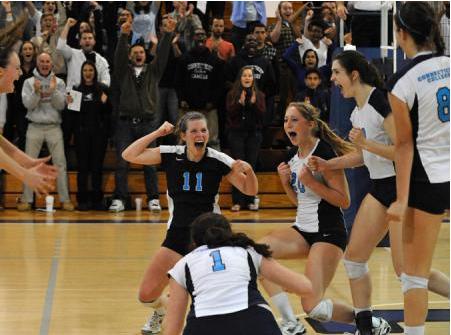
volleyballvictory

That same exact objective physical situation can become a completely different experience. And, to make the transformation is simple. I didn’t say it was easy. But it is simple. The key is to stop focusing on keeping the minimum safe distance between you and the car in front of you and instead keep a much longer distance between you and the car in front. The key is to stop focusing on your commute and your goals and instead to think of the traffic as a whole moving efficiently.  The key is to stop driving as fast as you possibly can and instead to try to match your speed to the average speed of the traffic ahead of you. If you do those three things, something amazing happens. You get to the same place in the same time but you will hit your brakes and accelerator far less often. Furthermore, you will feel far safer and less frustrated. You will be able to see a much larger picture of the traffic in front. You will notice that, yes, leaving a large space in front of you does make it possible for other drivers to zip in front of you. But you will also notice that most of the time, these drivers will zip back out of your lane a few moments later.

But wait! There’s more! When you stop putting your brakes on so much, it gives other people a completely different impression of the traffic. If a person is on a divided highway (with four each way) and only sees 4-8 cars ahead of them (because everyone is jammed together) and every single one has their brakes on, they will come to something of a screeching halt, particularly if they have been driving right behind the car in front of them. If, however, they look up and see only 7 of the 8 visible cars with their brake lights on (because yours are not on), they will be far less prone to slam on their brakes. Furthermore, they may well be able to see more of the traffic ahead because of the space in front of you. It no longer looks jammed so their behavior will be less erratic. If they are behaving less erratically, that will be true of the people behind them as well.

But wait! There’s more! People who drive mostly look forward, but they also hopefully glance in rear view mirror on occasion. This means that the people in front of you will also have a somewhat different perception of the traffic conditions based on the fact that you are not driving erratically and that you have a large space (=not stop and go; not crowded; not bumper to bumper) in front of you. You won’t have as much influence on the people in front of you as you will on the people behind you, but you will have some. You will also have a subtle influence on the people beside you. Why? Because they also see that large space. This puts them in a more “traffic is moving” frame of mind than a “traffic is stop and go; Crap!” frame of mind. Not only can they see the large space, they can see through the large space. They are able to see a greater number of cars diagonally ahead through your lane. They can see whether the tail lights are on. They can see perhaps 16 cars instead of just 4-5. The impression when you see all four cars stopped in front of you with their brake lights on is quite different from the impression formed when you see, say, 13 cars stopped and 3 cars moving. So, the cars beside you will also drive less erratically.

OLYMPUS DIGITAL CAMERA

But wait! There’s more!  This means that the cars in back of them will also drive less erratically. And that’s swell news for you and everyone else because — since people do look in their rear view mirrors, the impression of moving traffic will be even stronger in the drivers ahead of you. This in turn will ripple through the entire set of drivers and tend to be a virtuous cycle instead of a vicious cycle. In other words, just you, yes you, you one driver can have a significant effect on the entire set of drivers around you. I know it sounds too good to be true, but give it a try!

But wait! There’s more! Of course, very few people have only one commute in their life. Human beings have memory. If you are in “stop and go traffic” and stay smooth with a large space in front of you, a few other people will notice and decide to try it for themselves. Eventually, it may dawn on them that “despite” your large buffer space in front of you, you are making just as much progress as they are. They may think, “Me too!”  If those people try it and succeed in having a better experience for themselves and others around them, that will tend to cause other people to try it as well, not only in this traffic jam, but in future ones as well.

Driving exemplifies the paradoxical nature of the human condition. We all want the freedom to be ourselves and we want to feel a part of the group. But some paradoxes have solutions. In this case, as I said, the solution is actually simple. You decide that the best way to be a team player is to be different. You stop playing the game of making sure there are no “unused spaces” in traffic. You stop playing the game of switching lanes to zip into the smallest “unused” space. You stop staring into the taillights of a few cars and back off to where you can see a much larger sample of cars. You stop playing the “me, me, me, it’s all about me” game and instead make up a different game which is matching your speed to the average speed of the traffic ahead. You stop worrying if someone zips into the lane in front of you. Just ease off the gas a bit and relax. And, by being yourself, and playing this different game, you will actually make all the traffic around you work better. You are a better teammate by being different. 

The traffic is a lot like free market capitalism operating without much analysis, foresight, or insight. To the extent that people see an opening, they vie for it. Having two people do this at the same time, of course, causes a near miss, a sideswipe or a 20-car pileup. But generally speaking, the person who manages to gets into open space feels wonderful. OMG, I pulled it off! Not quite like winning the Superbowl but in that ballpark, so to speak. Chances are, the lane-switcher finds themself temporarily ahead of the people who had been next to them confirming that their act of private “heroism” had a practical impact as well; it was efficient by plugging up that damned hole.

This may be related to the line of thought so common in business that if you are really being efficient, every single minute of your calendar should be booked a week in advance. Gaps are anathema. Gaps are viewed to be even be worse than double-booked time. If word gets around I’m double booked all the time, everyone will know I am important. Well, important to some, in the same way that jeetos are important to some not despite their ghastly orange hue and anti-nutritional value. Having space in your calendar means you have time to learn, to observe, to think about what is going on, who is your customer, how can you do better, how can our company do better, and so on. It’s no accident that IBM’s motto was “Think” and that it was so successful for so many years in a dramatically ever-changing world of technology.

IMG_0052

You might just give the alternative strategy a try, both in business and in driving. Oh, I know. It seems impossible that one person’s behavior could have much impact when there are 7 billion people on the planet. Imagine that instead of using the 7 billion teammates as an excuse not to change because, “it won’t make any difference,” you thought: “Wow! Seven billion people on the planet! That’s potentially seven billion people who could change, even a little, in the direction of greater cooperation.” What if, instead of thinking of yourself — or you plus a small number of similar people — as being in competition with a much larger number of people worldwide, what if you thought of 7 billion as the astounding number of teammates you have? You might not influence all of them, but you can influence some and they can influence others. Nearly all of those seven billion people use language. Think about that. At some point in our distant past, people did not use language. Now, they do. How did that happen? At some point in our past, people did not have power over fire. Now they do. How did that happen? At some point in my lifetime, no-one had a mobile phone or a personal computer or access to the internet. Now, billions do. Can you hear the music of people working together?

For several years, in the 1990s, my wife and I attended the Newport Folk Festival with John and Clare-Marie Karat. We heard an amazing array of great bands in a beautiful outdoor setting. I particularly like outdoor concerts because of the room it affords for dancing. I find it very difficult to sit still in the presence of stirring music. This concert was held in late summer and the weather was generally, hot, humid, and sunny or hazy. Although, as I said, the weather cooperated most days, one particular morning looked ominous. A particularly cool, hazy sprinkling morning warned us to wear clothes in layers and bring rain gear. An optimist, I wore my speedo underneath in case the weather cleared so I could dance in the sun which I hoped would soon appear.

When we arrived on the island, as usual, Wendy and Clare-Marie sprinted ahead with a blanket to get a prime spot for watching the stage while John and I lagged behind carrying the clutter and clatter of chairs and coolers. The music inspired as always but the weather was not cooperating. Everyone was huddled down in their rain gear, under their umbrellas. The thing about rain gear and umbrellas is that they are typically designed for keeping you dry temporarily in the rain. After sitting there with ten thousand other people, huddling and shivering in the cold rain, I finally decided enough was enough. I stripped down to my speedo and began dancing. After all, I thought, that’s what I came there to do! And, while most people dance to the beat of the music, I let the music dance through me. I don’t have some set moves that are done to the beat. Rather, every note impacts what my body does.

Now, the situation had changed. Instead of ten thousand people huddled under umbrellas getting wet and cold, there were only 9,999 people huddled under umbrellas getting wet and cold and there was one person, namely me,  joyously dancing in the rain. As a matter of fact, I felt warmer dancing in my speedo than I had sitting still under layers of soaking clothes. Yeah, people stared at me a little. So what? Michelle Shocked commented on how well the crowd was holding up in the horrid weather and gave a particular shout out to the guy “dancing nude” in the middle. Just for the record, I was not dancing nude (not even in my “tights”). There was a large umbrella right in front of me, and it might have looked as though I was nude from the stage. In any case, I kept dancing and I was having a great time. Then, a strange thing happened. A few more people got up, shed varying amounts of clothes and joined me. Now a half dozen people were dancing in the rain. Then, a dozen people. Then, two dozen. The rain continued and the cold continued, but the number of dancers grew and grew till it was probably over a thousand. Each person discovered for themselves, as had I, that it’s actually warmer and more comfortable to dance in the rain with a little clothing than to sit in a puddle of soaked clothes — not to mention, one hell of a lot more fun!

RainWaterGutters

When we first sat down in that cold rain, everyone looked around and saw that everyone else was coping with the rain in the same way. Everyone they saw had raincoats, umbrellas, or both. They looked at this spectacle and thought, “Me too!” But now, a few hours later, many people looked around and saw folks joyously dancing in the rain and thought, “Me too!” Indeed, “Me too!” is a double-edged sword. Use it wisely, whether it is dancing in the rain, leaving lots of space in stop-and-go traffic or taking the time to think in your job. You may be very pleasantly surprised at the results, both for you and your 7 billion planet-mates.

———————————————-

https://www.amazon.com/author/truthtable

http://fortune.com/2017/02/15/traffic-deadliest-year/

http://time.com/money/3511481/traffic-jams-cost-americans-124-billion-time-money/

https://en.wikipedia.org/wiki/Newport_Folk_Festival

The Dance of Billions

A Bridge too Far?

12 Saturday Nov 2016

Posted by petersironwood in driverless cars, psychology, Uncategorized

≈ 1 Comment

Tags

AI, Artificial Intelligence, ethics, Food Safety, Globalization

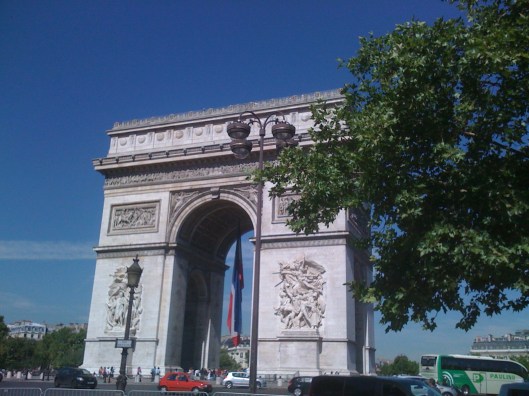
PicturesfromiPhoneChinaParisPrinceton 131

A Bridge Too Far? Have We Overdone Globalization?

There are many benefits to globalization. Indeed, I have been somewhat involved personally in attempting to make one of the organizations I belong too more global. In the early days of the Association for Computing Machinery’s Special Interest Group in Computer Human Interaction, major conferences were held in North America and most of the attendees were from North America with a good number of European colleagues joining. Over time, there have been more local chapters world wide and we have had our major conference in Europe several times and recently held a very successful conference in South Korea. Others have been held in other continents as well. I have no doubt whatever that this process has brought a wonderful diversity of thought into our field that would not be there if we had stayed focused in North America. Apart from the progress in an academic field, meeting people from all over the world provided a huge opportunity for everyone involved. If you meet decent people from all over the world, it certainly becomes more difficult to “demonize” them or desire your government to bomb them.

Similarly, the economic benefits of “Free Trade” have been touted for a long time and by many economists. Although opinions differ somewhat, most economist believe that the net effect that freer trade has had. for example, on the US economy is good, not only in providing cheaper goods for consumers but ultimately creating more jobs than are lost. Of course, if you are one of the people whose job is lost and you have almost no prospect of getting one at equal or greater pay, that is small comfort. I am willing to grant that, on average, it makes more sense from an efficiency standpoint to have the “cheapest” place produce goods and services, other things being equal.

Naturally, other things are seldom equal and jobs often shift overseas from North America and Europe to places who not only give less money to their workers but where they have very lax safety conditions, loose child labor laws, loose if any controls on environmental impact and allow harassment of workers. In addition, there can be unanticipated costs associated with coordination across time zones, cultures, and educational backgrounds. The predicted savings of moving operations overseas are not always realized.

I have seen all of these issues been addressed before but I would like to focus on another issue: the impact of situational ethics. We all like to believe that we are one of the “good guys.” We like to believe that we (and indeed, most people) behave ethically most of the time and it is only a few “bad apples” who behave unethically. When people’s behavior has actually been studied though, what we see is a more nuanced picture. Most people most of the time in most situations, cheat “a little bit” and about as much as they assume other people cheat. However, the propensity to cheat depends a lot on the details of the situation. In particular, people are more likely to cheat or take more than their fair share when they are removed from the situation.

For example, if ten people are sitting around a table passing around a plate of twenty Easter Eggs, the vast majority of people will make a quick calculation and pick two. Indeed if someone is allergic and passes on the eggs leaving two left to share among 9 people, everyone falls all over themselves to offer the eggs to someone else. It’s extremely rare for someone to start by taking six or seven eggs for themselves! No-one would think of taking all twenty!

Now, imagine instead that the Monday after Easter, I bring into my work group (which happens to have ten people) 20 Easter Eggs. I tell everyone at the morning staff meeting that I brought in 20 Easter Eggs and put them in the fridge next to the coffee maker. Let us assume that all ten of us get along pretty well. The chances that someone goes into the break room and takes 3-4 eggs increases hugely over the “sitting around the table” scenario.


We humans are social animals. We respond to social cues and we care about our reputation. Most of us experience empathy. If we are sitting around the table and take more than our share of eggs, we don’t just worry that others will judge us badly. We genuinely do not want to “feel the pain” of someone looking forward to the eggs and not getting any. That’s just the way we are wired. If we take more than our share from the break room however, it is far more abstract. We don’t really know whether everyone will really want Easter Eggs. And, even if we are pretty sure they will, we don’t know who the last person will be. We can’t really “see” the disappointment of the last few people who open the fridge.

Now, consider how this plays out in commerce. Imagine that you are a baker of bread for a local village. It doesn’t really matter that much whether your are the baker for a small town in Vermont, Germany, England, France or Egypt. Of course, you want to make enough money to survive, but you want to make really good bread. You want people to say good things about your bread. You want to think of these faces that you recognize having your bread be a part of the pleasure of their meal. You want to be part of having them and their family grow up and thrive because of your bread. 

Now, contrast this with being a worker in a bread factory that makes bread that is shipped all over the country. Again, it doesn’t matter that much what the country is but let’s assume it’s a factory outside of Paris. You feel some obligation to do a good job, but you are far less invested in making sure your bread is especially good than if you were the baker in a small town. Part of the reason for that is that you won’t really see that many faces of the people eating your bread. Part of the reason is also that you are following a recipe and a procedure that someone else constructed for you. Of course, other things being equal, you’d like to make a good product and do a good job — and not just because you could lose your job if you don’t. It’s more than that. Most people really do want to do a quality job. But suppose one day the boss comes in and says, “Hey folks. Bad news. Profits are down and costs are up. We are really getting squeezed. We are going to change our recipe to put a little more water and a little less egg in the bread. It will save costs and we’ll be able to stay in business. And, you’ll be able to keep your job.” You realize that this will make the bread a tiny bit less tasty and a bit less nutritious but still —- you do need to keep your job. So, you go along as do your fellow workers.

Now suppose a few months later, the boss comes in and says, “More bad news. We are going to have to cut costs still further. We are going to add more water, but to keep the bread from being too runny to bake properly, we are going to add a bit of glue. Most people won’t notice the taste and most people won’t get sick enough to die from it, although a few might. Still, we need this to keep in business.” I believe that at this point, there would be a rebellion. You would not go along with this and neither would most of your colleagues. But we need to remember that in France, there are strong unions, the population reads, there is a government that you may not agree with but that you count on to enforce laws. You may not be able to get a job as good as the bread factory job, but you will get something. If all else fails, you have friends and relatives you can count on as well as a financial safety net. You have reasonable costs for health care.

Now suppose instead that this factory is not outside Paris and shipping bread to France. Instead, let’s imagine it’s in a country that is far more authoritarian and hierarchical. You are in a small village constructed solely for the purpose of making bread at a giant factory. You are not making bread for your fellow citizens. This bread is being shipped overseas to somewhere you have very little knowledge of and no realistic prospects of ever visiting. Even under these circumstances, I believe the vast majority of people would like to do the right thing; they would like to do a good job. However, you are being told to adulterate the bread in order to keep your job. You already owe two months rent on the company housing that you would have no way to pay off without your job. You have zero other job prospects in any case. There is nothing in the town except the bread factory. You cannot call up “Sixty Minutes” or the local newspaper or the police and protest this. You know from your own personal experience that every other worker is likely to go along. And so do you. It isn’t because the people in all these previous scenarios are “good” while the ones in this scenario are “bad.” It’s because the scenario has become increasingly divorced from our natural social cues for doing the “right thing.”

In essence, this points to a “hidden cost” of globalization. It isn’t just a question of efficiency. As producers become more and more isolated from the consumers in terms of geography, culture, and physical contact and as more and more steps intervene, there is an increasing process of abstraction. Along with increasing abstraction, it becomes easier and easier for people to avoid, ignore or actively work against ethical principles. (By the way, there is another hidden cost to globalization; the bread may not be as tuned to local tastes as bread made in the village but that’s a topic for another post).

Simultaneously, there is another sort of abstraction going on. The top executives of the hypothetical “bread company” are not themselves making bread. They are not meeting with consumers. What they are looking at is numbers; specifically, they are looking at the profit and loss, ROI, their stock value. So for them, in fact, it has very little if anything to do with nutrition, bread, pleasure of eating, or ethics. It is all a numbers game. The numbers do not typically reflect much about ethics. Of course, there is a chance that poison bread may come to light and that might be slightly embarrassing, but the chance of the top executives going to jail is slim. True, they may scapegoat the local manager or some of the workers, but they themselves are fairly immune and they know this. But it isn’t only that they are immune from prosecution. It is also because they will not have to look the sick end users in the eye.

Besides the abstraction that comes from remote geography and the abstraction that comes from monetization of interaction (as opposed to actual face to face interaction), there is another kind of abstraction that makes unethical behavior easier. Discussions of driverless cars lately have quite rightly begun to focus on ethics. One scenario involves a car having to “decide” whether to run over a small number of children or veer off the road quite possibly killing the driver. Regardless of what you personally think the “right answer” is, I contend that most human drivers in control of such a car would instinctively swerve off the road and avoid the children even though it was likely to result in a serious accident or death for the driver. It would be extremely difficult for most drivers to choose intentionally to run over the children to save their own skins. On the other hand, if you worked at a car company as a programmer, it would be far less stressful to program the car to behavior in that way. It would be easy to rationalize.

“Well, the chances are, this section of code is never going to actually run.”

“Well, the driver after all is the one paying for the car. And, he or she does have the option to over-ride.”

“Well, if I don’t program what I am ordered to program, what is the point really? They will fire me and hire someone else to program it and they will keep doing that until they find somebody who will program it that way.”

All is “well.” Or is it?

But I contend that this same programmer, if they were actually driving the car, seeing the faces of little children, is quite likely to swerve off the road to avoid the kids.

Yes, we humans have developed some fairly elaborate ethical codes, but often we behave “ethically” simply because our sociality is “built in” genetically and guides us to the ethically correct behavior. If we abstract away from social situations, whether through geography, monetization of value, or by programming another entity, our “instinctive” ethical behavior becomes easier and easier to over-ride. Perhaps then, rather than making unethical behavior “easier” for people by removing social cues, we need to re-instate them — perhaps even amplify them. If you really need to send a drone into an elementary school, maybe you need to hear the screams of the unwitting “participants.”

—————————

https://en.wikipedia.org/wiki/The_Honest_Truth_about_Dishonesty#/media/File:The_Honest_Truth_about_Dishonesty.jpg

http://tinyurl.com/hz6dg2


Turing’s Nightmares: Chapter Four

01 Tuesday Mar 2016

Posted by petersironwood in driverless cars, The Singularity, Uncategorized

≈ Leave a comment

Tags

AI, Artificial Intelligence, cognitive computing, the singularity, Turing, virtual reality

Considerations of “Turing’s Nightmare’s” Chapter Four: Ceci N’est Pas Une Pipe.


pipe


In this chapter, we consider the interplay of four themes. First, and most centrally, is the issue of what constitutes “reality.” The second theme is that what “counts” as “reality” or is seen as reality may well differ from generation to generation. The third theme is that AI systems may be inclined to warp our sense of reality, not simply to be “mean” or “take over the world” but to help prevent ecological disaster. Finally, the fourth theme is that truly super-intelligent AI systems might not appear so at all; that is, they may find it more effective to take a demure tone as the AI embedded in the car does in this scenario.

There is no doubt that, artificial intelligence and virtual reality aside, what people perceive is greatly influenced by their symbol systems, their culture and their motivational schemes. Babies as young as six weeks are already apparently less able to make discriminations of differences within what their native language considers a phonemic category than they were at birth. In our culture, we largely come to believe that there is a “right answer” to questions. Suppose an animal is repeatedly presented with a three-choice problem, let’s say among A, B, and C. A pays off randomly with a reward 1/3 of the time while B and C never pay off. A fish, a rat, or a very young child will quickly only choose A thus maximizing their rewards. However, a child who has been to school (or an adult) will spend considerably more time trying to find “the rule” that allows them to win every time. Eventually, most will “give up” and choose only A, but in the meantime, they do far worse than a fish, a rat, or a baby. This is not to say that the conceptual frameworks that color our perceptions and reactions are always a bad thing. They are not. There are obvious advantages to learning language and categories. But our interpretations of events are highly filtered and distorted. Hopefully, we realize that that is so, but often we tend to forget.

Similarly, if you ask the sports fans for two opposing teams to make a close call; for instance, as to whether there was pass interference in American football, or whether a tennis ball near the line was in or out, you tend to find that people’s answers are biased toward their team’s interest even when their calls make no influence on the outcome.

Now consider that we keep striving toward more and more fidelity and completeness in our entertainment systems. Silent movies were replaced by “talkies.” Black and white movies and television were replaced by color. Some TV screens have gotten bigger. There are more 3-D movies and more entertainment is in high definition even as sound reproduction has moved from monaural to stereo to surround sound. Research continues to allow the reproduction of smell, taste, tactile, and kinesthetic sensations. Virtual reality systems have become smaller and less expensive. There is no reason to suppose these trends will lessen any time soon. There are many advantages to using Virtual Reality in education (e.g., Stuart, R., & Thomas, J. C. (1991). The implications of education in cyberspace. Multimedia Review, 2(2), 17-27; Merchant, Z., Goetz, E, Cifuentes, L., Keeney-Kennicutt, W., and Davis, T. Effectiveness of virtual reality based instruction on student’s learning outcomes in K-12 and higher education: A meta-analysis, Computers and Education, 70(2014),29-40). As these applications become more realistic and widespread, do they influence the perceptions of what even “counts” as reality?

The answer to this may well depend on the life trajectory of individuals and particularly on how early in their lives they are introduced to virtual reality and augmented reality. I was born in a largely “analogue” age. In that world, it was often quite important to “read the manual” before trying to operate machinery. A single mistake could destroy the machine or cause injury. There is no way to “reboot” or “undo” if you cut a tree down wrongly so it falls on your house. How will future generations conceptualize “reality” versus “augmented reality” versus “virtual reality”?

Today, people often believe it is important for high school students to physically visit various college campuses before making a decision about where to do. There is no doubt that this is expensive in terms of time, money, and the use of fossil fuels. Yet, there is a sense that being physically present allows the student to make a better decision. Most companies similarly only hire candidates after face to face interviews even though there is no evidence that this adds to the predictive capability of companies with respect to who will be a productive employee. More and more such interviewing, however, is being done remotely. It might well be that a “super-intelligent” system might arrange for people who wanted to visit someplace physically to visit it virtually instead while making it seem as much as possible as though the visit were “real.” After all, left to their own devices, people seem to be making painfully slow (and too slow) progress toward reducing their carbon footprints. AI systems might alter this trajectory to save humanity, to save themselves, or both.

In some scenarios in Turing’s Nightmare the AI system is quite surly and arrogant. But in this scenario, the AI system takes on the demeanor of a humble servant. Yet it is clear (at least to the author!) who really holds the power. This particular AI embodiment sees no necessity of appearing to be in charge. It is enough to make it so and manipulate the “sense of reality” that the humans have.

Turing’s Nightmares

It’s not Your Fault; It’s not Your Fault

12 Tuesday Jan 2016

Posted by petersironwood in driverless cars, The Singularity, Uncategorized

≈ Leave a comment

Tags

AI, Artificial Intelligence, cognitive computing, Design, ethics, law, the singularity, Turing

IMG_5867

“Objection, your honor! Hearsay!” Gerry’s voice held just the practiced and proper combination of righteous outrage and reasoned eloquence.

“Objection noted but over-ruled.” The Sing’s voice rang out with even more practiced tones. It sounded at once warmly human yet immensely powerful.

“But Your Honor…” began Gerry.

“Objection noted and overruled” The Sing repeated with the slightest traces of feigned impatience, annoyance, and the threat of a contempt citation.

Gerry sat, he drew in a deep calming breath and felt comforted by the rich smell of panelled chambers. He began calculating his next move.

The Sing continued in a voice of humble reasonableness with undertones of boredom. “The witness will answer the question.”

Harvey wriggled uncomfortably trying to think clearly despite his nervousness. “I don’t exactly recall what he said in answer to my question, but surely…” Harvey paused and glanced nervously at Gerry looking for a clue, but Gerry was paging through his notecards. “Surely, there are recordings that would be more accurate than my recollection.”

The DA turned to The Sing avatar and held up a sheaf of paper. “Indeed, Your Honor, the people would like to introduce into evidence a transcript of the notes of the conversation between Harvey Ross and Quillian Silverman recorded on November 22, 2043.”

Gerry approached the bench and glanced quickly through the sheaf. “No objection Your Honor.”

Gerry returned to his seat. He wondered how his father, were he still alive, would handle the current situation. Despite Gerry’s youth, he already longed for the “good old days” when the purpose of a court proceeding was to determine good old-fashioned guilt or innocence. Of course, even in the 20th century, there was a concept of proportional liability. He smiled ruefully yet again at the memory of a liability case of someone who threw himself onto the train tracks in Grand Central Station and had his legs cut off and subsequently and successfully sued the City of New York for a million dollars. On appeal, the court decided the person who threw themselves on the tracks was 60% responsible and the City only had to pay $400,000. Crazy, but at least comprehensible. The current system, while keeping many of the rules and procedures of the old court system was now incomprehensible, at least to the few remaining human attorneys involved. Gerry forced himself to return his thoughts to the present and focused on his client.

The DA turned some pages, highlighted a few lines, and handed the sheaf to Harvey. “Can you please read the underlined passage.”

Harvey looked at the sheet and cleared his throat.

“Harvey: Have you considered possible bad -weather scenarios?”

Qullian: “Yes, of course. Including heavy rains and wind.”

“Harvey: Good. The last thing we need…” Harvey bit his lower lip, biding time. He swallowed heavily. “…is some bleeding heart liberal suing us over a software oversight.

Quillian: (laughs). Right, boss.”

“That’s it. That’s all that’s underlined.” He held out the transcript to the DA.

The DA looked mildly offended. “Can you please look through and read the section where you discuss the effects of ice storms?”

Gerry stood. “Your Honor. I object to these theatrics. The Sing can obviously scan through the text faster than my client can. What is the point of wasting the court’s time while he reads through all this?”

The DA shrugged. “I’m sorry Your Honor. I don’t understand the grounds for the objection. Defense counsel does not like my style or…?”

The Sing’s voice boomed out again, “Counselor? What are the grounds for the objection?”

Gerry sighed. “I withdraw the objection, Your Honor.”

Meanwhile, Harvey had finished scanning the transcript. He already knew the answer. “There is no section,” he whispered.

The DA spoke again, “I’m sorry. I didn’t hear that. Can you please speak up.”

Harvey replied, “There is no section. We did not discuss ice storms specifically. But I asked Quillian if he had considered all the various bad weather scenarios.” Havey again offered the sheafed transcript back to the DA.

“I’m sorry. My memory must be faulty.” The DA grinned wryly. “I don’t recall the section where you asked about all the various bad weather scenarios. Could you please go back and read that section again?”

Harvey turned back to the yellow underlining. “Harvey: Have you considered possible bad weather scenarios?” “Quillian: Yes, of course, including heavy rains and wind.”

Gerry wanted to object yet again, but on what grounds exactly? Making my client look like a fool?

The DA continued relentlessly, “So, in fact, you did not ask whether all the various bad weather scenarios had been considered. Right? You asked whether he had considered possible bad weather scenarios and he answered that he had and gave you some examples. He also never answered that he had tested all the various bad weather scenarios. Is that correct.?

Harvey took a deep breath, trying to stay focused and not annoyed. “Obviously, no-one can consider every conceivable weather. I didn’t expect him to test for meteor showers or tidal waves. By ‘possible bad weather scenarios’ I meant the ones that were reasonably likely.”

The DA sounded concerned and condescending. “Have you heard of global climate change?”

Harvey clenched his jaw. “Of course. Yes.”

The DA smiled amiably. “Good. Excellent. And is it true that one effect of global climate change has been more extreme and unusual weather?”

“Yes.”

“Okay,” the DA continued, “so even though there have never been ice storms before in the continental United States, it is possible, is it not, that ice storms may occur in the future. Is that right?”

Harvey frowned. “Well. No. I mean, it obviously isn’t true that ice storms have never occured before. They have.”

The DA feigned surprise. “Oh! I see. So there have been ice storms in the past. Maybe once or twice a century or…I don’t know. How often?”

Gerry stood. Finally, an objectable point. “Your Honor, my client is not an expert witness on weather. What is the point of this line of questioning? We can find the actual answers.”

The DA continued. “I agree with Counselor. I withdraw the question. “Mr. Ross, since we all agree that you are not a weather expert, I ask you now, what weather expert or experts did you employ in order to determine what extreme weather scenarios should be included in the test space for the auto-autos? Can you please provide the names so we can question them?”

Harvey stared off into space. “I don’t recall.”

The DA continued, marching on. “You were the project manager in charge of testing. Is that correct?”

“Yes.”

“And you were aware that cars, including auto-autos would be driven under various weather conditions. They are meant to be used outdoors. Is that correct?”

Harvey tried to remind himself that the Devil’s Advocate was simply doing his job and that it would not be prudent to leap from the witness stand and places his thumbs on the ersatz windpipe. He took a deep breath, reminding himself that even if he did place his thumbs on what looked like a windpipe, he would only succeed in spraining his own thumbs against the titanium diamond fillament surface. “Of course. Of course, we tested under various weather conditions.”

“By ‘various’ you mean basically the ones you thought of off-hand. Is that right? Or did you consult a weather expert?”

Gerry kept silently repeating the words, “Merde. Merde” to himself, but found no reason yet to object.

“We had to test for all sorts of conditions. Not just weather. Weather is just part of it.” Harvey realized he was sounding defensive, but what the hell did they expect? “No-one can foresee, let alone test, for every possible contingency.”

Harvey realized he was getting precious little comfort, guidance or help from his lawyer. He glanced over at Ada. She smiled. Wow, he still loved her sweet smile after all these years. Whatever happened here, he realized, at least she would still love him. Strengthened in spirit, he continued. “We seem to be focusing in this trial on one specific thing that actually happened. Scenario generation and testing cannot possibly cover every single contingency. Not even for weather. And weather is a small part of the picture. We have to consider possible ways that drivers might try to over-ride the automatic control even when it’s inappropriate. We have to think about how our auto-autos might interact with other possible vehicles as well as pedestrians, pets, wild animals, and also what will happen under conditions of various mechanical failures or EMF events. We have to try to foresee not only normal use but very unusual use as well as people intentionally trying to hack into the systems either physically or electronically. So, no, we do not and cannot cover every eventuality, but we cover the vast majority. And, despite the unfortunate pile-up in the ice storm, the number of lives saved since auto autos and our competitors…”

The DA’s voice became icy. “Your Honor, can you please instruct the witness to limit his blather—- …his verbal output to answering the questions.”

Harvey, continued, “Your Honor, I am attempting to answer the question completely by giving the necessary context of my answer. No, we did not contact a weather expert, a shoe expert, an owl expert, or a deer expert.”

The DA carefully placed his facial muscles into a frozen smile. “Your Honor, I request permission to treat this man as a hostile witness.”

The Sing considered. “No, I’m not ready to do that. But Doctor, please try to keep your answers brief.”

The DA again faked a smile. “Very well, Your Honor. Mr. — excuse me, Doctor Ross, did you cut your testing short in order to save money?”

“No, I wouldn’t put it that way. We take into account schedules as well as various cost benefit anayses in priortizing our scenario generation and tests, just as everyone in the auto —- well, for that matter, just as everyone in every industry does, at least to my awareness.”

On and on the seemingly endless attacks continued. Witnesses, arguments, objections, recesses. To Harvey, it all seemed like a witch hunt. His dreams as well as his waking hours revolved around courtroom scenes. Often, in his dreams, he walked outside during a break, only to find the sidewalks slick with ice. He tried desperately to keep his balance, but in the end, arms flailing, he always smashed down hard. When he tried to get up, his arms and legs splayed out uncontrollably. As he looked up, auto-autos came careening toward him from all sides. Just as he was about to smashed to bits, he always awoke in an icy cold sweat.

Finally, after interminal bad dreams, waking and asleep, the last trial day came. The courtroom was hushed. The Sing spoke, “After careful consideration of the facts of the case, testimony and a review of precendents, I have reached my Assignment Figures.”

Harvey looked at the avatar of The Sing. He wished he could crane his neck around and glance at Ada, but it would be too obvious and perhaps be viewed as disrespectful.

The Sing continued, “I find the drivers of each of the thirteen auto-autos to be responsible for 1.2 percent of the overall damages and court costs. I find that each of the 12 members of the board of directors of Generic Motors as a whole to be each 1.4 per cent responsible for overall damages and court costs.”

Harvey began to relax a little, but that still left a lot of liability. “I find the shareholders of Generic Motors as a whole to be responsible for 24% of the overall damages and court costs. I find the City of Nod to be 14.6% responsible. I find the State of New York to be 2.9% responsible.”

Harvey tried to remind himself that whatever the outcome, he had acted the best he knew how. He tried to remind himself that the Assignment Figures were not really a judgement of guilt or innocence as in old-fashioned trials. It was all about what worked to modfiy behavior and make better decisions. Nonetheless, there were real consequences involved, both financial and in terms of his position and future influence.

The Sing continued, “I find each of the thirty members of the engineering team to be one halff percent responsible each, with the exception of Quillian Silverman who will be held 1 % responsible. I find Quillian Silverman’s therapist, Anna Fremde 1.6% responsible. I find Dr. Sirius Jones, the supervisor of Harvey Ross, 2.4% responsible.”

Harvey’s mind raced. Who else could possibly be named? Oh, crap, he thought. I am still on the hook for hundreds of credits here! He nervously rubbed his wet hands together. Quillian’s therapist? That seemed a bit odd. But not totally unprecedented.

“The remainder of the responsibility,” began The Sing.

Crap, crap, crap thought Harvey.

“I find belongs to the citizenry of the world as a whole. Individual credit assignment for each of its ten billion inhabitants is however incalculable. Court adjourned.”

Harvey sat with mouth agape. Had he heard right? His share of costs and his decrement in influence was to be zero? Zero? That seemed impossible even if fair. There must be another shoe to drop. But the avatar of The Sing and the Devil’s Advocate had already blinked out. He looked over at Gerry who was smiling his catbird smile. Then, he glanced back at Ada and she winked at him. He arose quickly and found her in his arms. They were silent and grateful for a long moment.

The voice of the Balif rang out. “Please clear the Court for the next case.”

Secret Sauce

22 Tuesday Dec 2015

Posted by petersironwood in driverless cars, psychology, The Singularity

≈ Leave a comment

Tags

AI, Artificial Intelligence, cognitive computing, the singularity

IMG_6515


No need to panic, thought Harvey. Ada should be back soon. Or, I can go to a neighbor. I am not going to freeze to death on my own front porch. Harvey shivered just then as another icy blast hit him. He turned and scanned the neighborhood. Crumpled cars blocked the streets. None of the houses in his immediate area were lit. Wasn’t this the season of lights? I suppose one of the motorists could help if any of their cars is still in working order. And they were willing to break the law and leave the scene of an accident. And they had sense enough to have snow tires.

He stamped his feet on the concrete. Harvey told himself that this was to keep circulation going, and not some childish outburst of frustration. He looked down the street and saw two dim figures approaching arm in arm from the direction of the Von Neumann’s house. As they drew nearer, he heard the warm voice of his sweet Ada.

“Hey, Harv! Did you decide to come out and enjoy the winter beauty too?”

“Hi, Ada. Please tell me you have a key.”

“Sure. I always take my keys when I leave the house.” She laughed. “Wouldn’t want to lock myself out.” She chuckled again. “Guess what? I found Lucy out for a walk too and I invited her over for dinner.”

“Hi, Lucy. Sure. We’re just having mainly mixed veggies for dinner, but if that’s okay…”

Lucy smiled. “Great with me, Harvey. Thanks!”

Ada spoke again, “Come on Harv. It’s beautiful outside but we’re cold. Let’s go in! Besides too much traffic out here for my taste. What a crash! Say, isn’t that …in fact, aren’t those two blue cars ones that you worked on? I thought they were supposed to be uncrashable.”

Harvey sighed. “Well, nothing is uncrashable. AI cannot undo the laws of physics. No doubt, some human driver without proper tires or following too close started a chain reaction.”

Ada said, “Yeah. Let’s discuss this inside. Okay?”

“Sure,” said Harvey. “Can you get the door?”

“Well, okay. Oh! You didn’t lock yourself out did you?” Ada laughed in soprano and Lucy added the alto line. “You picked a great night for it.”

“I’ll explain inside.”

Ada unlocked the door. In the trio went, shook off their snow, removed their boots and headed into the kitchen. Harvey began unloading vegetables from the fridge while Ada turned on some Holiday music. “Hey, Harv, how about the three of us stand JCN at trivia while you cook?”

Harvey did not really want to explain that he may have accidentally wiped out their bank account with Lucy in the room. “No, let’s just talk. Let JCN go dream or whatever it is he does. I just feel like human voices tonight.”

“Okay, Hon. Did you see the accident? How it started?”

“No, I was inside when I heard the crash, and then, I started to worry about you so….Anyway, Lucy, any vegetables you don’t like? Sweet potato okay? And cilantro? And how about curry sauce?”

“All, good, Harvey. I’m easy. Anything is fine with me.”

Harvey stole a quick glance at Lucy. Was that a double entrendre? Surely not. He was imagining things. “Cool. I’ll start with the sweet potatoes. They take a little longer.”

Harvey quickly filled the skillet with a little olive oil and some orange flavored bubbly water, added the spices and began cleaning and chopping.

Ada said, “Harvey makes a really good sauce for vegetables.”

Harvey, meanwhile, focused on not adding his finger to the mix. His mind was elsewhere. He wondered whether the pile-up outside had really been caused by human error or…

Lucy chimed in. “Sounds delicious, Harvey. What’s in your secret sauce? I’d love to have it.”

Harvey frowned slightly, “Well, there’s no real secret. Secret sauce. Secret sauce. Why do people have sauces? Did you ever consider that?”

Ada laughed again. The Holidays seemed to make her genuinely happy. “No, I haven’t, but I’m sure you are about to tell us.”

Harvey continued to chop sweet potato, as he began, “Maybe that’s what’s wrong with Sing. No secret sauce. No sauce at all, in fact.”

Lucy spoke up, “What? What are you talking about, Harvey? You want to put your sauce into a computer system? Well, I’m sure I’d love it, but I’m not so sure about the Sing.” Now Lucy and Ada both laughed.

Harvey continued, “You see what the water does?”

Lucy wanted to play along. “Cooks the vegetables? That would be my guess.” Lucy and Ada laughed again.

“Exactly!” agreed Harvey, “but how? Do you see? Water boils at 100 C. No matter what the heat is, it never gets hotter in the pan than 100 degrees. The sauce gaurantees a constant cooking environment.”

Lucy seemed uncertain. “But you can make it hotter by turning up the flame, right?”

“No. No. It may boil more vigorously and I’ll run out of sauce sooner, but the temperature will remain constant. That’s one effect. But there’s more. The sauce guarantees a constancy of interaction!”

Ada asked, “Interaction? You are saying the sauce let’s the veggies talk to each other?”

In the background, “We Three Kings” began its mournful minor musings. “Yes,” mused Harvey. “Exactly. I mean, they obviously do not literally talk, but imagine these vegetables are cooking and there is no sauce. In some cases, you have a piece of sweet potato next to a piece of red pepper so they share flavors. In another case, a piece of sweet potato is next to broccoli so they share flavors. The sauce provides a way for all these vegetables to exchange flavors evenly throughout the whole dish. And the key. The key in music. All the notes “know” what the key is so the choice is limited by this global structure. And the beat of course. Everything works in harmony. All because of the secret sauce! But there is no secret! It’s been right in front of us the whole time!”

Ada was no longer laughing. “You’re probably right, Harv, but are you feeling okay? Maybe you got a little hypothermia out there?”

“No, no. I’m fine. Don’t you see? The rhythm and the beat of the music! They provide a coherent overall structure for all of these different instruments and notes to play nicely together.”

Lucy added, “Well, I for one am all for playing nicely together.”

Harvey stopped chopping for a moment. “Exactly! There are global rules that make the individual parts work together. And, the curry sauce not only provides a consistent basis for the dish. It also dictates, or at least influences, which elements I add to the vegetables. Some vegetables are not going to taste right or look to be the right color with curry sauce. And, it lets them all communicate in a common language. You see? We humans see something like cars crumpled up and hear the crash and we can put the two together. Right?”

Ada had lots of experience with the way Harvey’s mind worked so she realized he was quite serious. Lucy, on the other hand, assumed he was just trying to be funny or had had a couple martinis before she arrived on the scene. So Lucy decided to play along, “Well, Harvey, all this talk about your secret sauce is giving me an appetite. Any ETA on dinner?”

Harvey continued, “But the Sing doesn’t have any secret sauce. Nor JCN. There is no overall way for the various pieces of knowledge to work together in a harmonious whole. That’s why JCN wiped out our bank account! That’s probably why the cars crashed too.”

“Smells delicious, Harvey,” Lucy said.

Ada was beginning to forget about dinner. “Harvey. What did you say about our bank account?”

“The Sing needs a way for the parts to work together in a harmonious overall structure! Otherwise, any slight error can be magnified in particular cases. Once the system tries to operate on cases that are outside of what was imagined at design time, there is no gaurantee about results!”

“Harvey. Go back to the part about our bank account.”

Harvey stirred the vegetables absent-mindedly. “If I let this sauce all boil away, the same thing will happen. Some vegetables will get burned. The taste and texture will no longer work together.”

Ada was not to be deterred. “Harvey. Tell me about our bank account. What do you mean that it was wiped out?”

“Yes, Ada! That’s what I am saying. Of course, there are rules and the rules cover a huge number of cases. But there is no overall set of principles that the Sing has to abide by. There is no secret sauce! There is no sauce of any kind. It’s ALL vegetables. I think dinner is ready. Lucy did you want yogurt or cheese on yours?”

“Yum. Give it to me with yogurt please.”

“Okay, Lucy. And I know Ada likes hers that way too.”

“Right you are Harvey. What about our bank account?”

Harvey’s eyes looked away from the mind maps he was drawing in his head and he looked at Ada directly. “Ada, let’s eat first. I am sure that we can restore our bank account somehow through back up systems. JCN made an error. But I didn’t transfer the money or really authorize any payments or anything like that. It’s just a bank error. But for now, let’s eat. We can recover, Ada, because the human systems that surround and control the Sign still include sauce. At least for now.”

In the background, “Joy to the World” began playing in 4/4 time in D major.


Hell As A Hundred Happy Helping Hands

17 Thursday Dec 2015

Posted by petersironwood in driverless cars, The Singularity

≈ 1 Comment

Tags

AI, cognitive computing, the singularity, Turing's Nightmares

“I’m headed out to Toys 4 Us. Wanna come?”

Harvey looked out the large picture window into the swirling white flakes that already covered the lawn, trees, and sidewalks and had begun their snowstorm2inexorable blanketing of the Avenue as well. “No thanks, Ada. I need to finish a few things up here. Are you sure you want to go out in that mess?”

“It’s not a mess at all. It’s beautiful! Don’t worry. I have snow tires. And with Henry driving me, it’s really safe.” Ada chuckled. “As you well know.”

Indeed, Harvey did know. Hadn’t he himself worked for years on the very algorithms that had plummeted driving deaths to a tenth their former level? Yet, even the Sing-Grid couldn’t over-ride the laws of physics. Ada did have a point though. In a way, snowfall swirling seemed — appropriate to the winter holidays. “Ada, I really need to finish up this report and then do some on-line shopping for presents. I should be done in an hour if you want to wait.”

“Okay. That seems pretty quick, but I can wait an hour. You sure you can finish that fast?”

“With Sing-Grid’s help it shouldn’t even take that long.”

“Okay. I’m going to stroll around the block a few times for exercise. And to look at the lights. See you soon.”

Harvey turned back to the wall-sized screen in front of him and decided to tackle his shopping list first. “JCN. Help with my Christmas list.”

“Sure, Harvey. Who would you like to buy from first?”

“Let’s figure out something for my grand-daughter Katie. JCN, did you say ‘buy from’?”

“You want to buy something from your grand-daughter Katie. Is that right?”

“No. I want to buy something for my grand-daughter Katie.”

“Here are a list of items that are popular choices from Katie’s to-do list.”

On the large screen a series of icons swirled into view and arranged itself in priority order. As JCN mentioned each one, the referred to item appeared to float in front of the screen and grow larger.

“First priority, find a gift for my friend Stephanie. Second priority, fix the roof leak. Third prioity…”

“JCN! Stop! Why are you reading me Katie’s to-do list? And you shouldn’t share it with other people. Anyway, I am trying to do Christmas shopping for her.” 

“I understand, Harvey. You want to do Katie’s Christmas shopping for her. Some of her to-do list mentions people she wants to get gifts for.”

“No. No, JCN. I wish to purchase a gift for Katie.”

“I understand, Harvey. You wish to save Katie the trouble of Christmas shopping and do it for her.”

“No. Stop, JCN. Forget this whole thing for now. Instead, I want to shop for…never mind. Show me popular sports books among college athletes.”

“How about a sports marketing degree?”

“What?”

“How about a sports marketing degree? It’s a sponsored link!”

“No, I mean. I am looking for books!”

“I have several suggestions for finding books. First, there are many books in your house. Second, there are several local libraries open at this hour. Third, you can download a book onto the device of your choice. Which would you prefer?”

“JCN, show me books about college athletics available on amazon.”

Harvey well knew that he needed to keep exasperation out of his voice. If he started to lose it, it would just degrade the speech reco and not help anything. But, at this rate, he would never finish by the time Ada got back.

Again the screen swirled. This time, the results were arrayed in three columns. On the left were a list of colleges. It seemed to Harvey that the colleges listed all had top-notch athletic programs. In the middle were a list of college athlete dating sites. On the right, were books about the Amazon. There had to be a problem. JCN generally wasn’t this confused. Sure, it did not totally master natural language. Who did? But this level of confusion? No. Maybe Harvey had led JCN down the garden path.

“JCN, clear cache.”

“I understand. Clear cash. Please confirm.”

“Confirm.”

“OK, Harvey. All cash reserves are cleared now. How will you be paying for continued service?”

“What? No, don’t clear my cash reserves. Geez! Clear the task cache. I want to start this conversation over.”

“I understand, Harvey. I would love to help you. How will you be paying for continued service?”

“JCN! Restore my cash reserves.”

“Restoring your cash reserves is a level four complexity task and requires a minimum of 25K credits. How will you be paying for continued service?”

Harvey felt tempted to throw his nice warm cup of hot-plate heated cocoa through the giant screen. He had to control himself. There had to be a way out of this maze. Just then, Harvey’s train of thought got derailed by loud screeching, banging, and crashing. He flew to the window and looked out on the breast of the new-fallen snow to see a pile-up of cars that covered the street and much of the sidewalk as well.

He returned to his workstation pod. “JCN. What just happened outside?”

“Welcome back Harvey. How will you be paying for continued service?”

“JCN. Just give me the number of tech support.”

“I understand. You would like the number for tech support. Is that right?”

“Yes.”

“Okay. I can provide that information. How will you be paying for continued service?”

Harvey sighed. He gritted his teeth so hard they hurt. Luckily, he had written down the number for tech support in his pocket calendar. He looked it up and tapped the number. Then, he donned his coat to go outside and make sure Ada was okay. He shivered as he stepped out onto the porch. The wind was howling. He adjusted his earphones to maximize the cutoff of ambient noise.

“Welcome to Sing-Grid tech support. Due to an unusually heavy call volume, it may take some time to answer your call. Your call is important to us. Your call may be monitored for quality purposes. Did you know that you can also access many common questions at www.singgrid.com/techsupport/faq?”

Harvey could not imagine what the devil had caused this pile-up. He scanned up and down the street for a sign of Ada. The snow had already obliterated her tracks. She generally circled the block counter-clockwise. He pulled his collar tighter and lifted it up to cover the back of his neck. The drivers seemed pretty much unhurt. Many had come out of their vehicles. The tone of voices mainly seemed to reflect wonderment more than anger. No fist fights. Good. Chalk that up to the Holiday spirit perhaps. The noise cancelling features of his headphones made hearing the conversation difficult. From what little he could make out, everyone seemed convinced that the auto’s auto-features had all failed simultaneously. It’s too cold, he thought. If I am going to search for Ada, I need a hat, goves, and boots. He turned back toward home while the annoying jangle of badly off-key and scratchy musak tortured his ears.

Back inside, Harvey quickly removed his shoes, buckled his boots, and grabbed a winter hat. Finding his gloves proved more difficult, but eventually he accomplished that as well. Back to the door he strode. This time, he was going to find Ada. He was prepared. As he stepped outside, tech support came on.

“Welcome to Sing Grid tech support. This is Ban-Tan. Please enter your 16 digit customer number?”

Harvey quickly tore off his right glove with his teeth. “My…my customer number? I don’t know. I can give you my name and address. Isn’t that enough?”

“I’m sorry sir. I will need your customer number to provide an answer.”

“Well. I’m outside.… Never mind. Just a second.” Harvey went back to the door and pulled on the handle. Stuck! This door never sticks. He pushed harder on the doorknob. I did not just lock myself out! I did not lock this door! “Uh. Look. I seem to have locked myself out although I am sure I didn’t.”

“I’m sorry for your troubles, sir. You will have to enter your 16 digit customer number before I can help you though.”

“Listen, Ban-Tan, I need your help. Don’t be a robot. Help me figure out…my JCN made a mistake and….”

“Thank you, sir. I very much need your help. Can you key in or say your 16 digit customer number please?”

“I can’t tell you from a computer!”

“Thank you sir! That is very kind. I hope you will fill out a survey for me. Now, if you can please tell me your 16 digit customer number, I am sure I can help you further.”

“Well, that’s just it. My customer number is inside and I am outside. And the frigging door is locked.”

“I am truly sorry for your misfortune, sir. I am only able to help with Sing-Grid tech support however. But only when I know your customer number. Perhaps you need to call a locksmith first and then call us back. Have a nice day!” The phone clicked and a different voice intoned, “Thank you for calling Sing-Grid Tech Support. Please help us improve service by completing a very short survey. On a scale from one to nine, please indicate how helpful our tech support was. Press one for ‘somewhat helpful’ and nine for ‘extremely helpful.’”

Harvey tried to cut the call short, but his fingers were too frozen. He put his glove back on, started to shiver and hoped that Ada had taken her key with her. And where was Ada anyway? Meanwhile, the robocall droned on. “Thank you for calling Sing-Grid Tech Support. Please help us improve service by completing a very short survey. On a scale from one to nine, please indicate how helpful our tech support was. Press one for ‘somewhat helpful’ and nine for ‘extremely helpful.’ If you are having trouble, please stay on the line and someone will be with you shortly to help you.”

Harvey hung up and again scanned up and down the street but saw no sign of Ada. Maybe he should call a locksmith. Oh, crap. That could take hours. Maybe he needed to break into his own house? At least the gloves would provide some protection. He could break a small window near the doorknob and reach around to open the door from the inside. In the distance, he could hear police sirens. And, more crashing sounds as well. What was happening?

Harvey’s cell buzzed. He took off his glove and tapped the answer button.

“Welcome to Sing-Grid Tech Support. Please help us improve service by completing a very short survey. On a scale from one to nine, please indicate how helpful our tech support was. Press one for ‘somewhat helpful’ and nine for ‘extremely helpful.’ If you are having trouble, please stay on the line and someone will be with you shortly to help you.”

Somewhere, far in the distance, Harvey heard the muffled strains of a Christmas Carol. “We wish you a Merry Christmas. We wish you a Merry Christmas. We wish you a Merry Christmas. And a Happy New Year.”

Turing’s Nightmares, Eleven: “One for the Road.”

05 Monday Oct 2015

Posted by petersironwood in apocalypse, driverless cars, psychology

≈ 3 Comments

Tags

AI, Artificial Intelligence, cognitive computing, customer service

Turing Eleven: “One for the Road.”

“Thank God for Colossus! Kids! In the car. Now!

“But Dad, is this for real?”

“Yes, Katie. We have to get in the car now! We need to get away from the shore as fast as possible.”

But Roger looked petulant and literally dragged his feet.

“Roger! Now! This is not a joke! The tidal wave will crush us!”

Roger didn’t like that image but still seemed embedded in psychological molasses.

“Dad, okay, but I just need to grab…”

“Roger. No time.”

Finally, in the car, both kids in tow, Frank finally felt as though things were, if not under control, at least in control as they could be. He felt weird, freakish, distorted. Thank goodness the car would be self-driving. He had so much rushing through his mind, he wasn’t sure he trusted himself to drive. He had paid extra to have his car equipped with the testing and sensing methodology that would prevent him (or anyone else) from taking even partial control when he was intoxicated or overly stressed. That was back in ’42 when auto-lockout features had still been optional. Now, virtually every car on the road had one. Auto-lockout was only one of many important safety features. Who knew how many of those features might come into play today as he and the kids tried to make their way safely into the mountains.

The car jetted backwards out of the driveway and swiveled to their lane, accelerating quickly enough for the g-forces to be very noticeable to the occupants. In an instant, the car stopped at the end of the lane. When a space opened in the line of cars on the main road, the car swiftly and efficiently folded into the stream.

Roger piped up. “Dad, everybody’s out here.”

“Well, sure. Everyone got the alert. We really need to be about fifty miles into the mountains when the asteroid hits.”

Katie sounded alarmed. “Dad. Look up there! The I-5 isn’t moving.”

Frank looked at the freeway overpass, now only a quarter mile away. “Crap. We’ll have to take the back roads.” As soon as the words were out of his mouth, he saw that no more than a hundred yards beyond the freeway entrance, the surface road was also at a standstill.” Frank’s mind was racing. They were only a few hundred feet from “Hell on Wheels Cycle Store. Of course, they would charge an arm and a leg, but maybe it would be worth it.”

Frank looked down the road. No progress. “Mercedes: Divert back to Hell on Wheels.”

“No can do, Frank. U-turns here are illegal and potentially dangerous.”

“This is an emergency!”

“I know that Frank. We need to get you to the mountains as quickly as possible. That is another reason I cannot turn around.”

“But the car cannot make it. The roads are all clogged. I need to buy a motorcycle. It’s the only way.”

“You seem very stressed, Frank. Let me take care of everything for you.”

“Oh, for Simon’s sake! Just open the door. I’ll run there and see whether I can get a bike.”

“I can’t let you do that, Frank. It’s too dangerous. We’re on a road with a 65 mph speed limit.”

“But the traffic is not actually moving! Let me out!!”

“True that the traffic is not currently going fast, but it could.”

“Dad, are we trapped in here? What is going on?”

“Relax, Roger, I’ll figure this out. Hell. Hand me the emergency hammer.”

“Dad. You are funny. They haven’t had those things for years. They aren’t legal. If we fall in the water, the auto-car can open its windows and let us out. You don’t need to break them.”

“Okay, but we need to score some motorcycles and quickly.”

Now, the auto-car spoke up. “Frank, there are thousands of people right around here who could use a motorcycle and there were only a few motorcycles. They are already gone. Hell is closed. There is no point going out and fighting each other for motorcycles that are not there anyway.”

“The traffic is not moving! At all! Let us out!”

“Frank, be reasonable. You cannot run to the mountains in 37.8 minutes. You’re safest here in the car. Everyone is.”

“Dad, can we get out or not?” Katie tried bravely not to let her voice quaver.

“Yes. I just have to figure out exactly how. Because if we stay in the car, we will …we need to find a way out.”

“Dad, I don’t think anyone can get out of their car. And no-one is moving. All the cars are stuck. I haven’t seen a single car move since we stopped.”

The auto-car sensed that further explanation would be appreciated. “The roads have all reached capacity. The capacity was not designed to accommodate everyone trying to leave at the same time in the same direction. The top priority is to get to the highway so we can get to the mountains before the tidal wave reaches us. We cannot let anyone out because we are on a high speed road.”

Frank was a clever man and well-educated as well. But his arguments were no match for the logic of the auto-car. In his last five minutes though, Frank did have a kind of epiphany. He realized that he did not want to spend his last five minutes alive on earth arguing with a computer. Instead, he turned to comfort his children wordlessly. They were holding hands and relatively at peace when the tidal wave smashed them to bits. IMG_3071

Author Page on Amazon

Turing’s Nightmares

The Winning Weekend Warrior – sports psychology

Fit in Bits – describes how to work more fun, variety, & exercise into daily life

Tales from an American Childhood – chapters begin with recollection & end with essay on modern issues

Newer posts →

Subscribe

  • Entries (RSS)
  • Comments (RSS)

Archives

  • January 2026
  • December 2025
  • November 2025
  • October 2025
  • September 2025
  • August 2025
  • July 2025
  • June 2025
  • May 2025
  • April 2025
  • March 2025
  • February 2025
  • January 2025
  • December 2024
  • November 2024
  • October 2024
  • September 2024
  • July 2024
  • April 2024
  • March 2024
  • February 2024
  • January 2024
  • December 2023
  • August 2023
  • July 2023
  • May 2023
  • April 2023
  • March 2023
  • February 2023
  • January 2023
  • December 2022
  • November 2022
  • October 2022
  • September 2022
  • August 2022
  • July 2022
  • June 2022
  • May 2022
  • April 2022
  • March 2022
  • February 2022
  • January 2022
  • December 2021
  • November 2021
  • October 2021
  • September 2021
  • August 2021
  • July 2021
  • June 2021
  • May 2021
  • April 2021
  • March 2021
  • February 2021
  • January 2021
  • December 2020
  • November 2020
  • October 2020
  • September 2020
  • August 2020
  • July 2020
  • June 2020
  • May 2020
  • April 2020
  • March 2020
  • February 2020
  • January 2020
  • December 2019
  • November 2019
  • October 2019
  • September 2019
  • August 2019
  • July 2019
  • June 2019
  • May 2019
  • April 2019
  • March 2019
  • February 2019
  • January 2019
  • December 2018
  • November 2018
  • October 2018
  • September 2018
  • August 2018
  • July 2018
  • June 2018
  • May 2018
  • April 2018
  • March 2018
  • February 2018
  • January 2018
  • December 2017
  • November 2017
  • October 2017
  • September 2017
  • August 2017
  • July 2017
  • June 2017
  • May 2017
  • April 2017
  • March 2017
  • February 2017
  • January 2017
  • December 2016
  • November 2016
  • October 2016
  • September 2016
  • August 2016
  • July 2016
  • June 2016
  • May 2016
  • April 2016
  • March 2016
  • February 2016
  • January 2016
  • December 2015
  • November 2015
  • October 2015
  • September 2015
  • August 2015
  • May 2015
  • January 2015
  • July 2014
  • January 2014
  • December 2013
  • November 2013

Categories

  • AI
  • America
  • apocalypse
  • cats
  • COVID-19
  • creativity
  • design rationale
  • driverless cars
  • essay
  • family
  • fantasy
  • fiction
  • HCI
  • health
  • management
  • nature
  • pets
  • poetry
  • politics
  • psychology
  • Sadie
  • satire
  • science
  • sports
  • story
  • The Singularity
  • Travel
  • Uncategorized
  • user experience
  • Veritas
  • Walkabout Diaries

Meta

  • Create account
  • Log in

Blog at WordPress.com.

  • Subscribe Subscribed
    • petersironwood
    • Join 661 other subscribers
    • Already have a WordPress.com account? Log in now.
    • petersironwood
    • Subscribe Subscribed
    • Sign up
    • Log in
    • Report this content
    • View site in Reader
    • Manage subscriptions
    • Collapse this bar
 

Loading Comments...