• About PeterSIronwood

petersironwood

~ Finding, formulating and solving life's frustrations.

petersironwood

Tag Archives: wellness

Plastics!

03 Thursday Jul 2025

Posted by petersironwood in America, essay, health

≈ 3 Comments

Tags

cancer, diet, environment, food, health, heart, life, nutrition, plastics, politics, truth, USA, wellness

Photo by DS stories on Pexels.com

Here’s a bit of a puzzle.

What are the biggest causes of death in America?

Photo by Brett Sayles on Pexels.com

If you guesses heart disease and cancer, you’re right! Yay! RFK Junior and the Second Putin Misadministration may well change that in the next few years. By discouraging vaccinations, rolling back regulations for food quality, air quality, and water quality; by making proper nutrition much harder for non-wealthy families, the causes of death may change and infectious diseases my well rise to the top of the list again.

The First Putin Misadministration had a dry run by mishandling COVID. They did just about everything they could to kill additional Americans. By modeling disease-spreading behavior, waffling on whether vaccines were good, pooh-poohing the very existence of the disease for the critical early months, and, importantly, by making sure that the logistics of tests, masks, & other protective equipment was put in the hands of an over-spoiled teenager rather than any one of the hundreds of world class logistics experts in America, they did what they could but COVID only rose to third.

We could argue about the details, however, because it is undeniable that, because of the pandemic, many people did not get tests and interventions designed for early diagnosis of cancer and heart disease. So some of the deaths attributed to cancer and heart disease may also have been partly due to COVID. Nonetheless, cancer and heart disease do cause a lot of deaths even without any help from COVID.

Photo by Marta Branco on Pexels.com

Both “cancer” and “heart disease” are very broad labels. And, in both cases, we know that there are a number of factors that influence the incidence of various types of cancer and heart disease. A large number of genetic factors play a part. So too do diet and exercise. A completely sedentary life-style is bad for your health in many ways. One of the motivations for my book, Fit in Bits, is to make it easier for people to incorporate more exercise into daily life.

However, there is evidence that the environment also plays a large part in the prevalence of both cancer and heart disease. Almost all of these studies are understandably correlational in nature. I say “understandably” because most people are unwilling to have their behavior dictated for twenty years. So, we are left with comparing people who, left primarily to their own devices, encounter different environmental factors. However, lab rats and cell cultures do not object to being mistreated so we have additional indirect evidence that plastics are bad for life. For these reasons, one environmental factor that is drawing increasing attention is the “one word” for Benjamin in The Graduate: “Plastics!”

I don’t like plastic. I’m not saying that because I don’t like sea turtles and sea birds strangled with plastic. Of course, I don’t like those things either, but I’m talking about my sensory experience. I’m saying that for me, plastic doesn’t smell, taste, sound, or feel good. For that matter, it doesn’t even look that nice.

Materials I do like include metal, rock, wood, glass, and ceramics. I like them at a sensory level.

Recently, it has struck me just how prevalent plastic has become in my own life. When I was a kid, I had some things that were plastic, but it was much less prevalent than it is today. Let’s take a little look.

One of the first things I do in the morning is have coffee. That’s made from a bean. That’s not plastic.

Or, is it?

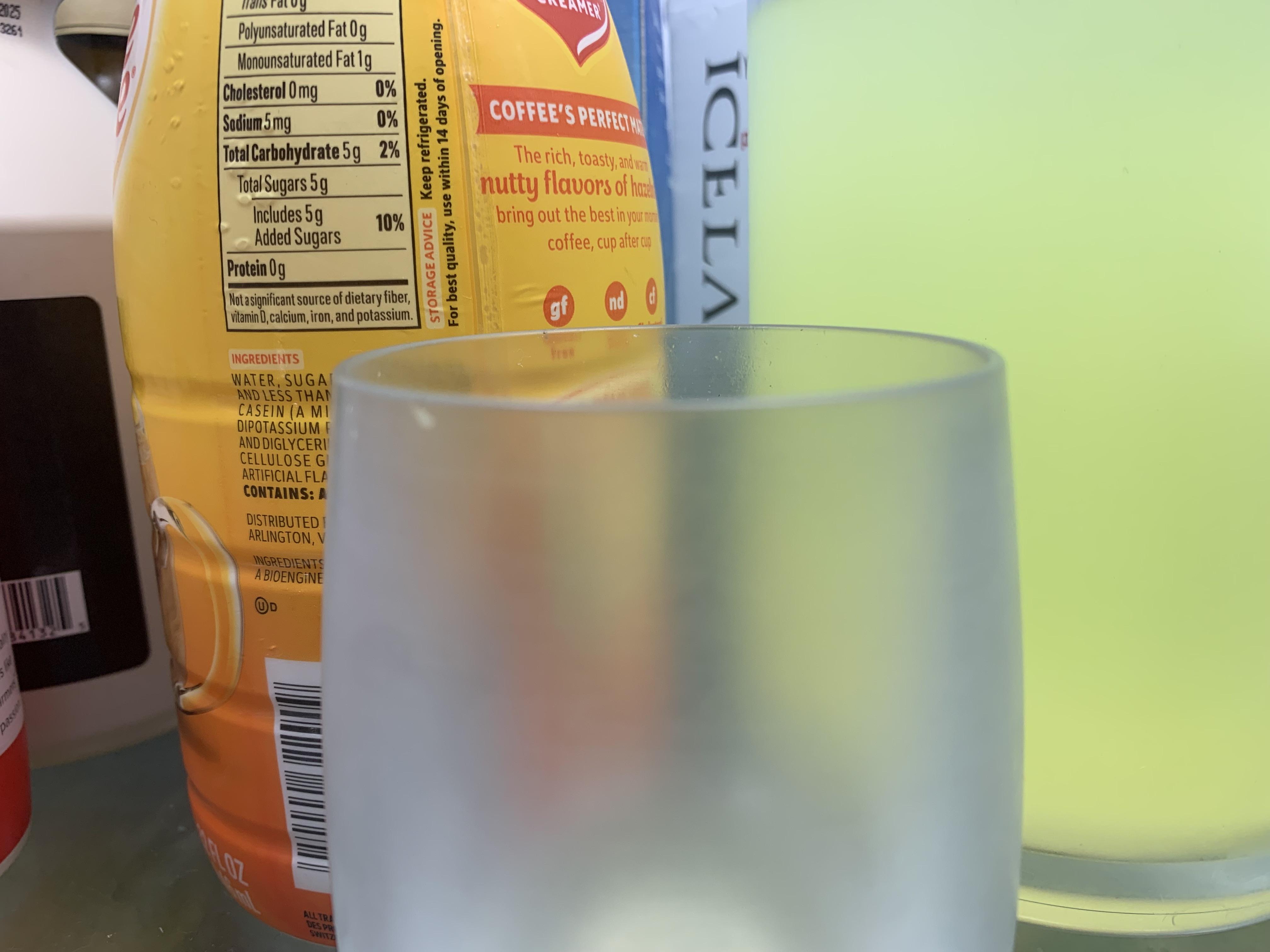
Lately, I make it in this coffee maker which holds coffee in little plastic capsules. The water sits in a plastic reservoir. The sugar sits in a plastic jar. I put in a little milk and hazelnut creamer. Guess what? They also come in plastic.
The cup, at least, is ceramic. I often have a whole wheat English muffin. The muffin comes in a container that is part paper and part plastic. I often like to put peanut butter on it. The peanut butter I usually buy comes in plastic. I often put honey or berries on the peanut butter. They come in plastic.
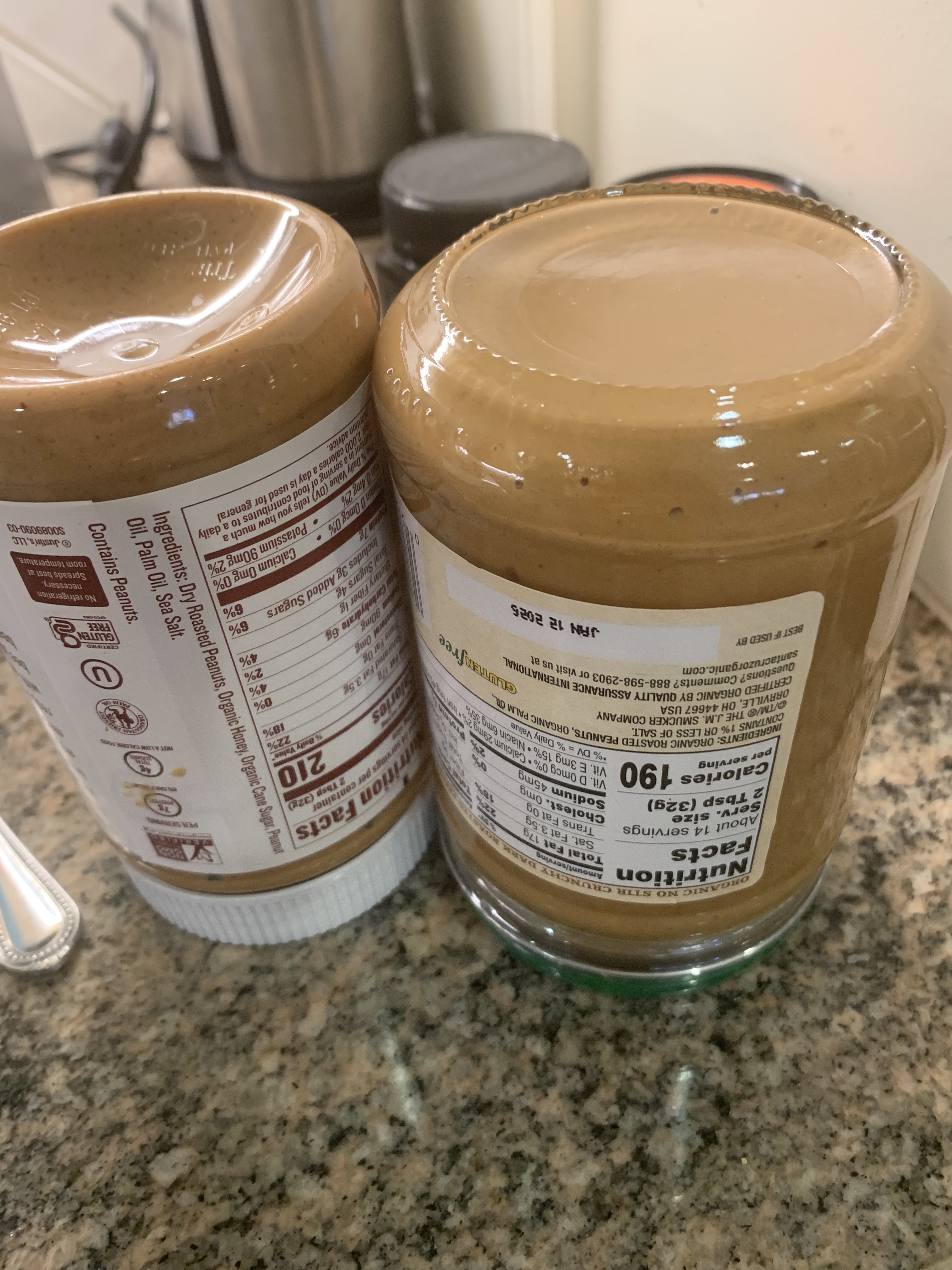
Sometimes, rather than a high fiber English Muffin, I enjoy a bread which is called “Fitness Bread.” It’s high fiber and tasty. And, it comes wrapped in plastic. I often spread hummus or guacamole on it. These are also pretty healthy choices. But they spend a lot of their life in plastic.

As I side dish, I like cherry tomatoes. They are colorful and tasty and low calorie. And they come packaged in–did you guess? Plastic. On sandwiches, I often put ketchup or mayo. They also come in handy squeeze bottles made of…let’s say it together: “Plastic.”

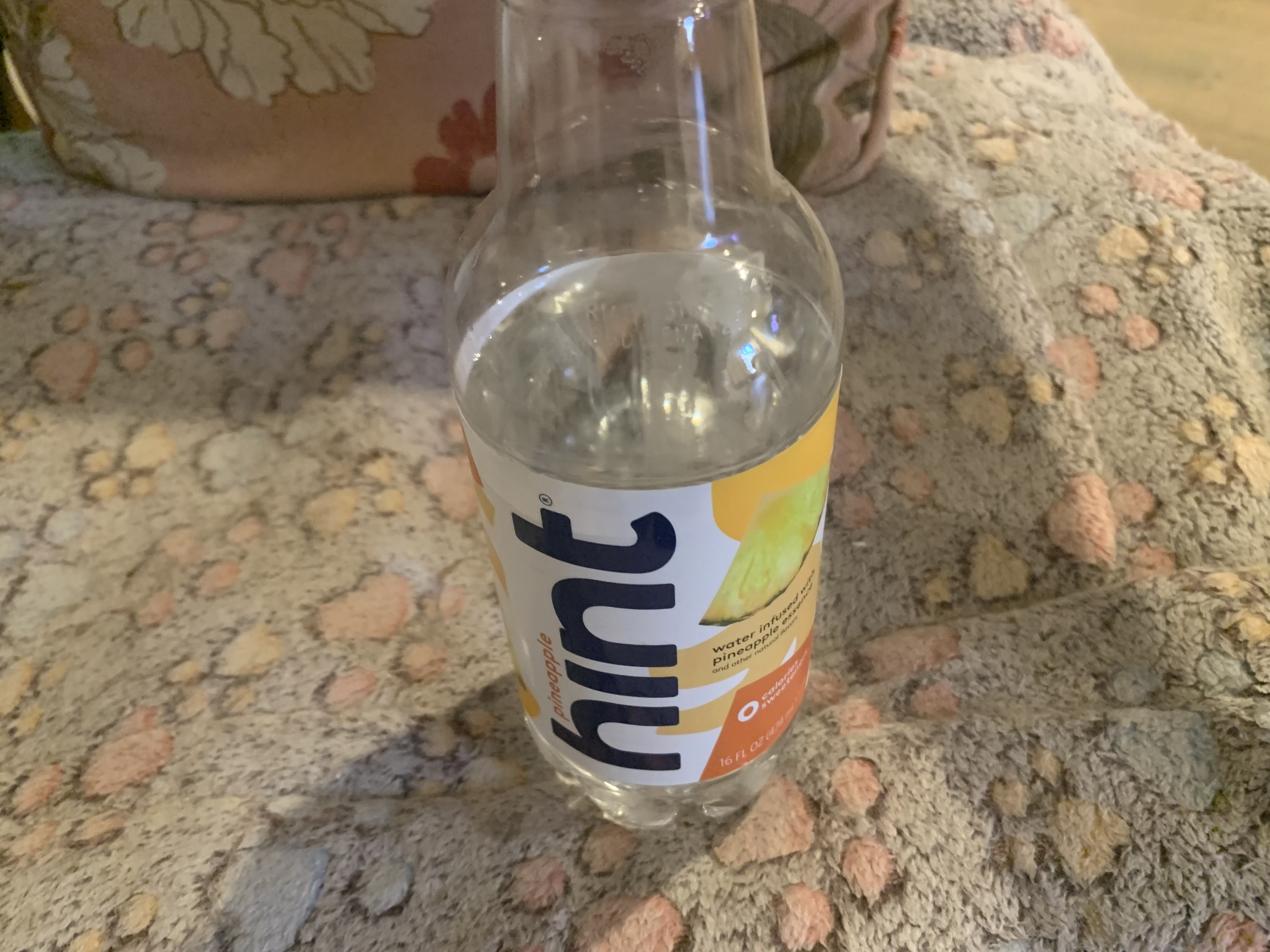
I don’t drink any alcohol, and often drink Hint or BAI, both of which I like quite a lot and both of which come only in plastic containers. This is not great for the environment at large, but also not good for the environment of my body. We also sometimes drink a powdered lemonade mix which comes in plastic packets. Then, a pitcher in the fridge keeps it cold. The pitcher is plastic. Then it is served in a “glass” which is, in fact, not glass, but plastic.

There’s an advantage to plastic over glass. We have cats and dogs and they have a tendency to knock things onto the floor. Plastic things are far less likely to break. Plastic glasses also weigh less than glass.

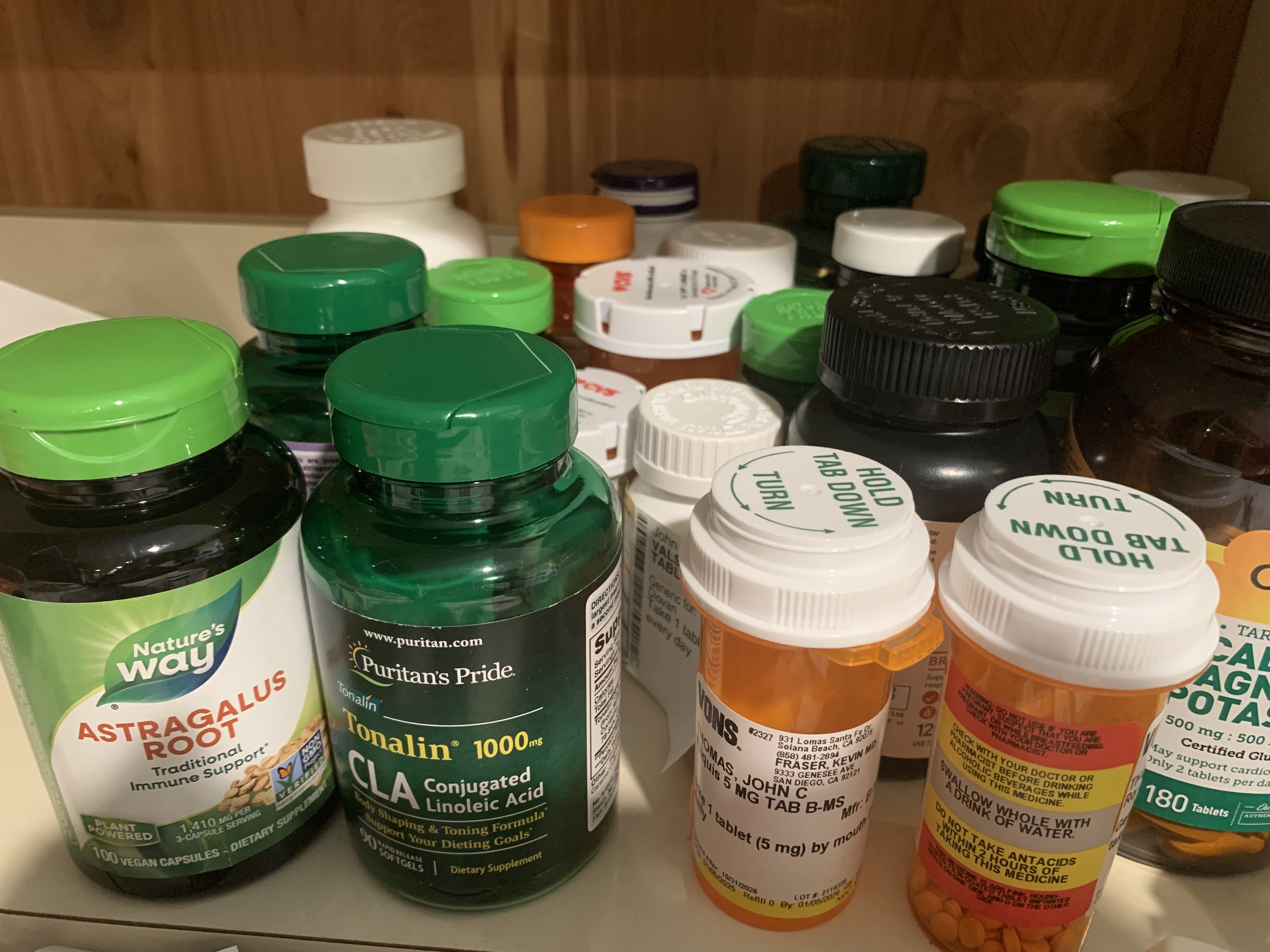
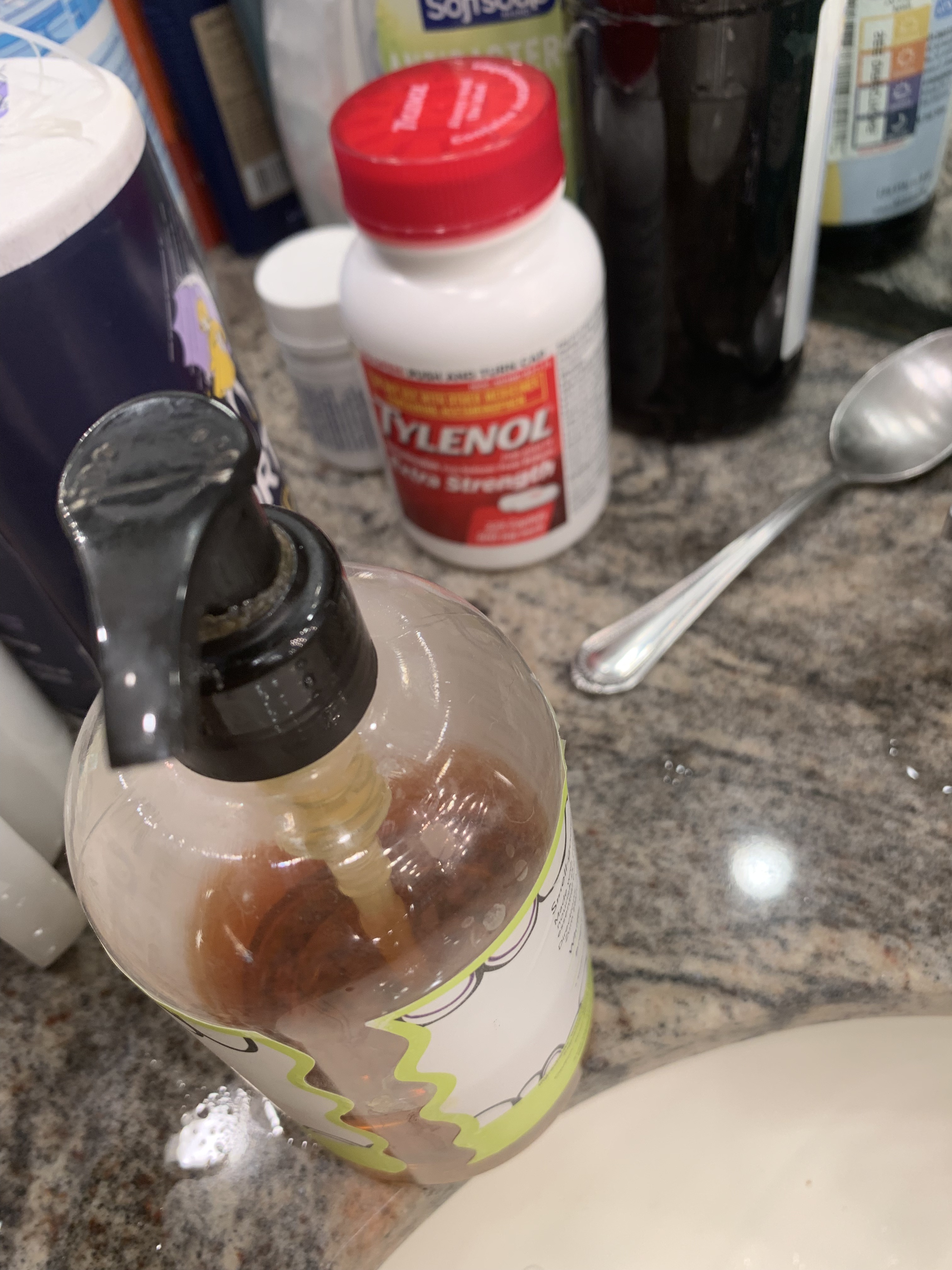
After breakfast, it’s time to take some supplements for my health. These almost always come in plastic containers as do the prescribed medications I take.
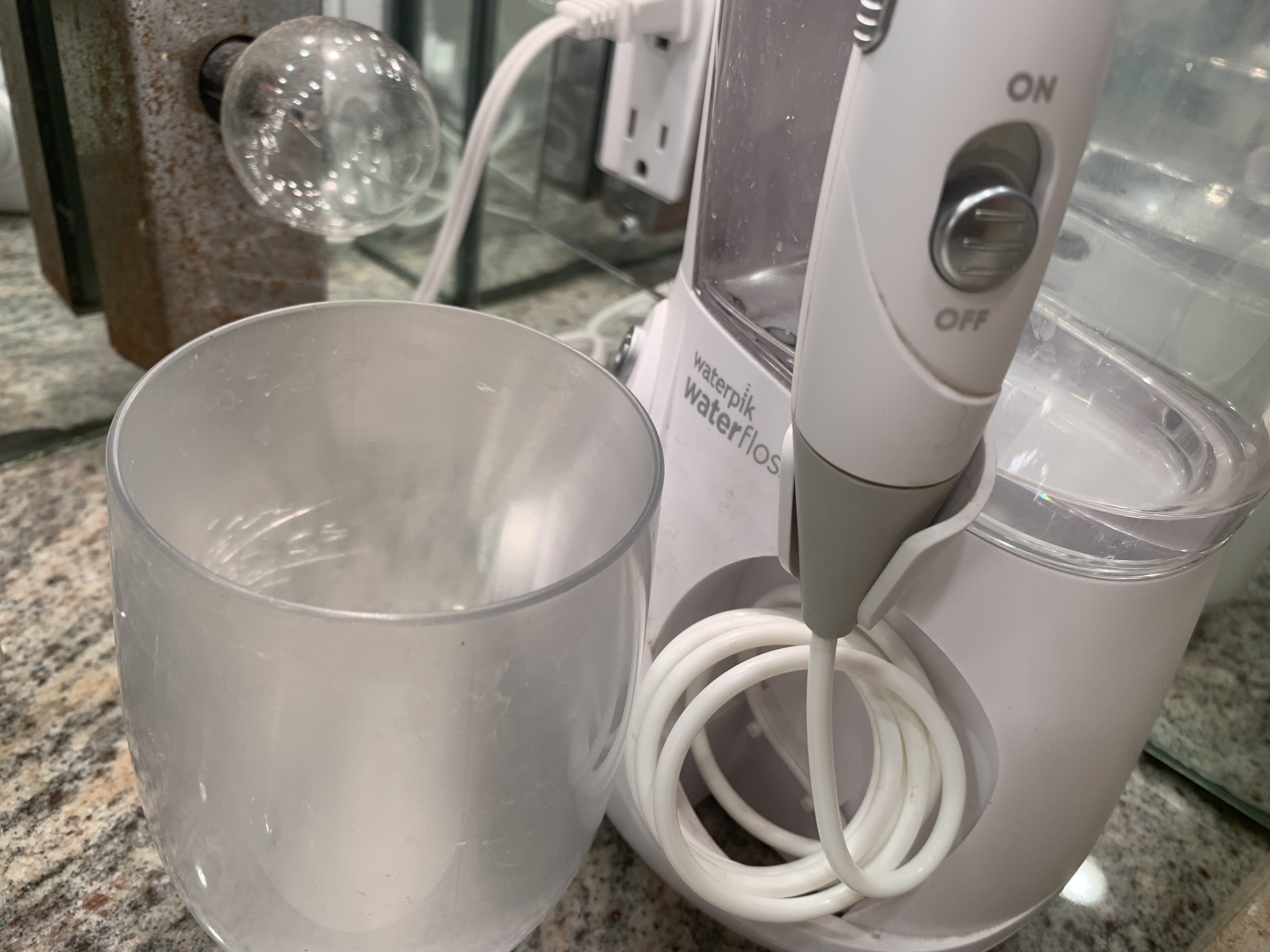
I brush my teeth. That’s a health-promoting activity. But the water glass I use is plastic. The toothbrush bristles are plastic. Lately, I’ve started using a water pick as well, which I highly recommend, by the way, though the reservoir for the water and the entire mechanism is made of plastic.
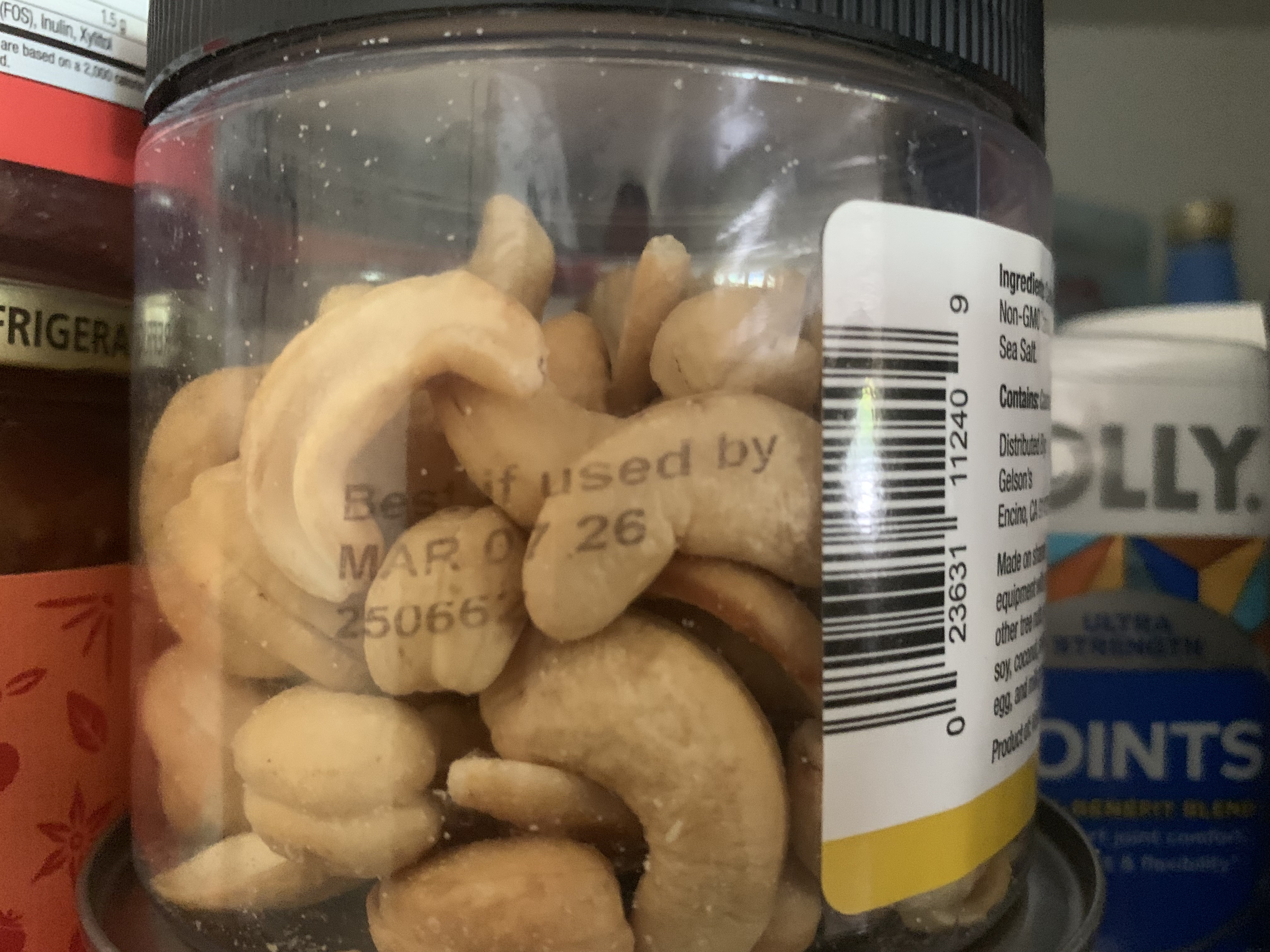
I often cook for the two of us. Lately, I’ve been using cutting boards made of…you guessed it! Plastic! For healthy snacks, I like dried fruit and nuts. Guess what? They come in…


What’s to be done?

In today’s America, with science and truth becoming illegal, it probably won’t make a huge difference. I’m more likely to die of infection or Civil War or unprovoked police violence than from plastic, but I am making some changes.

We bought bamboo cutting boards and paper cups. I’m cutting out the BAI and Hint and exploring options for drinks that come in glass or non-BHA coated metal. I am trying out another type of peanut butter that comes in a glass container. But the vast majority of products at the grocery store come in plastic. Even the vegetables and fruits.

Despite all the years of increasing the percentage of items that are plastic, I still do not actually like plastic.

I’m switching out what I can, and it may be too late in life to make a lot of difference for me personally, especially with a Misadministration that wants to end American lives (and brags about it!). But it may not be too late for you.

Do your own inventory. Hopefully, you will find things you like that are not wrapped in that one word of biological disaster wrapped up with economic faux-prosperity. The word? Here’s a


Plastics.

Fit in Bits

Author Page on Amazon

D4

The Truth Train

That Long Walk Home

Absolute is not Just a Vodka

What is the Link Between Plastics and Cancer?

https://www.nejm.org/doi/full/10.1056/NEJMoa2309822

Cancer Always Loses in the End

COVID-19

12 Thursday Mar 2020

Posted by petersironwood in America, apocalypse, COVID-19, health, Uncategorized

≈ 2 Comments

Tags

coronavirus, COVID-19, environment, exercise, health, healthcare, life, pandemic, wellness

COVID-19

7551D277-6606-4C1B-9E06-5E4E44C81A64

We interrupt our regularly scheduled blog posts to address our health crisis. 

It’s quite natural for us to want to survive as individuals, so what can we do to maximize our chances of survival? 

Much of the advice you’ve already heard is valid. 

  • Avoid unnecessary travel and gathering in groups. 
  • Telecommute.
  • Wash your hands frequently and thoroughly. 
  • Make and use some alcohol wipes. 
  • Use gloves.
  • You may want to implement the “left hand dirty, right hand clean” rule (which already exists in many countries). That is, if you must touch a public surface without having the opportunity to immediately wash, or in case you forget, use your left hand. Use your right hand for eating, rubbing your eyes, etc. Better is to disinfect immediately, or even better avoid touching public surfaces without gloves.
  • Don’t touch your face. I personally find this pretty much impossible, but I have cut down. 

A13D392E-DFD8-47ED-9D4C-5C3F3E6318CF

As someone that began life with many respiratory infections, I’ve devised a few additional things to help prevent myself from getting sick. I am not a medical doctor. I am not advising you to do these things, but I will report below on what works based mainly on my own experience. Your mileage may differ.

Eat healthy foods. Make sure you eat as healthily as you possibly can. Avoid refined sugar as much as possible. Include lots of fiber. A so-called Mediterranean diet is good. You may include fish, lots of fresh vegetables and fresh fruit. Typically, whole foods are better than vitamins. Garlic and shiitake mushrooms may be especially helpful for the immune system. When exposed to a cold, I typically cut cloves of garlic and inhale the fumes. It seems to help with a cold. I don’t know that it will help with COVID-19, but I’m going to keep doing it.

cooked meat with vegetables

Photo by Dana Tentis on Pexels.com

Exercise. I have found this greatly reduces my chances of getting a cold. You probably do not want to go to a gym, however, because it will greatly increase your exposure. Better would be walking or running in fresh air or doing yoga or dancing at home. If you’ve been sedentary for the past months or years, you don’t want to try to “make up for it” by suddenly running a marathon. Small steps. But even if you’re out of shape, at home watching TV, get up and stretch, pace, use your own body as resistance, find some free easy yoga or stretching tapes. 

F7CA676E-E4E2-4BF7-973B-9B57EBB6C77F_1_105_c

Stay positive. Your mental health impacts your physical health. Yes, we face a kind of crisis, but being depressed, angry, or anxious will not help you. You do want to be vigilant and concerned, but also calm, cool, and collected. Make sure you give love and get love. Enjoy some comedy. Engage in activities that you love but that are also safe in terms of avoiding crowds. Your body contains about 70 trillion cells! You’ve evolved over 4.5 billion years! Every one of your ancestors lived long enough to reproduce. I don’t just mean those folks who wore bear skins and sat around campfires. Way before that, every little critter on land, every fish in the sea, every microbe in the ocean — they all survived all sorts of attempts to kill them off — chances are good that you will too. And, in the unlikely chance you don’t, you may as well enjoy your own life and do good for others and for life on the planet, not just during this pandemic, but always. 

cascade creek environment fern

Photo by Pixabay on Pexels.com

Stay hydrated. Since you will be spending more time at home, this should be fairly easy. 

woman drinking from glass

Photo by Adrienn on Pexels.com

Get some sunshine. Recent studies indicate that sunlight not only helps you make vitamin D; it also helps your body produce nitric oxide. Both help your immune system. 

IMG_3071

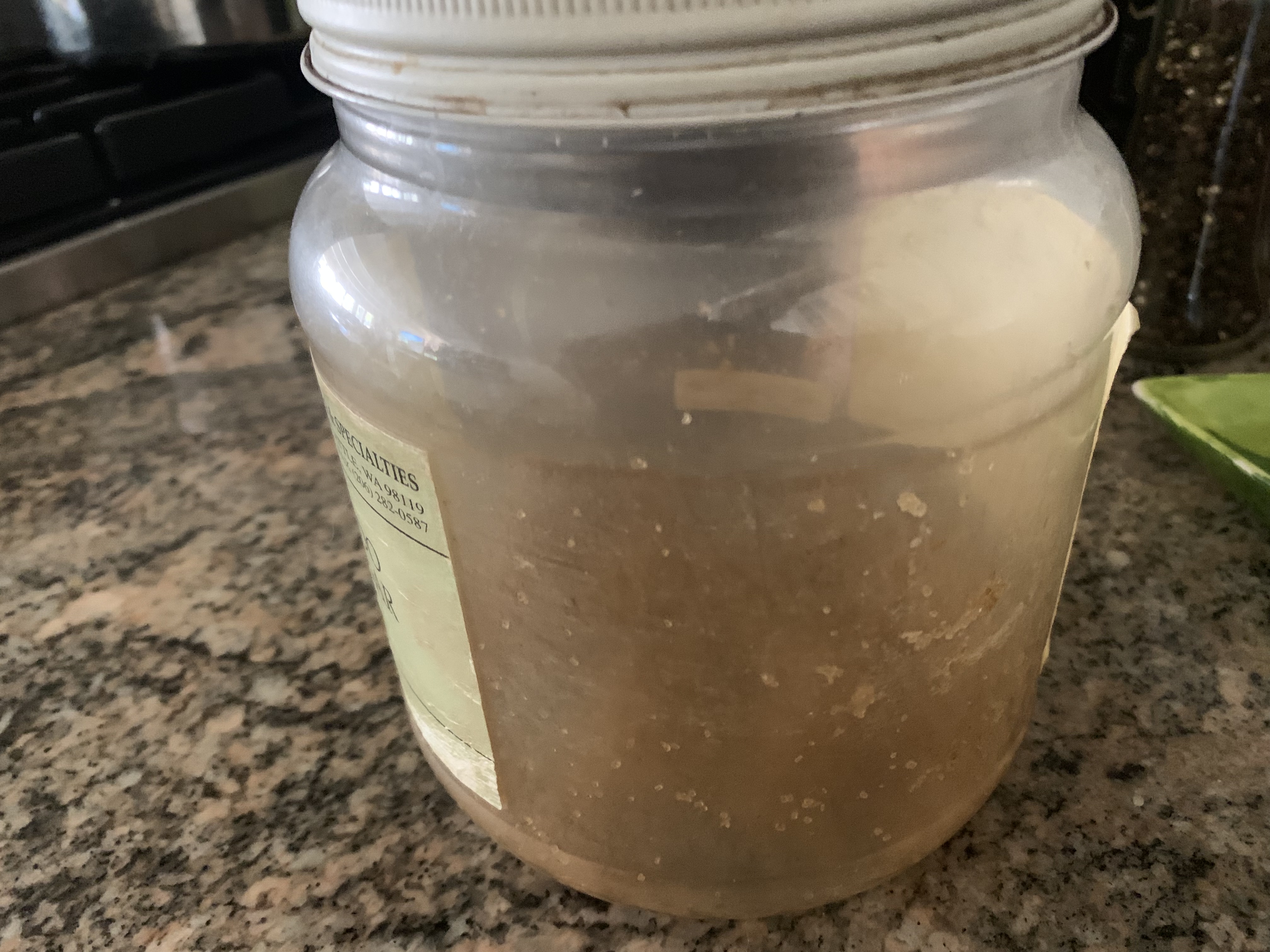
Salt showers. I noticed that I seldom got sick when I was near the seashore. Then, about 20 years ago, I ran across a very old book from John Harvey Kellogg about his sanitarium in Battle Creek. One of the things he recommended was salt showers. I routinely do this and I think it helps me avoid colds and sinus infections. Will it help with COVID-19? I have no idea. But I’m going to keep doing it. When I take a shower, I simply sprinkle the floor of the shower with iodized salt. 

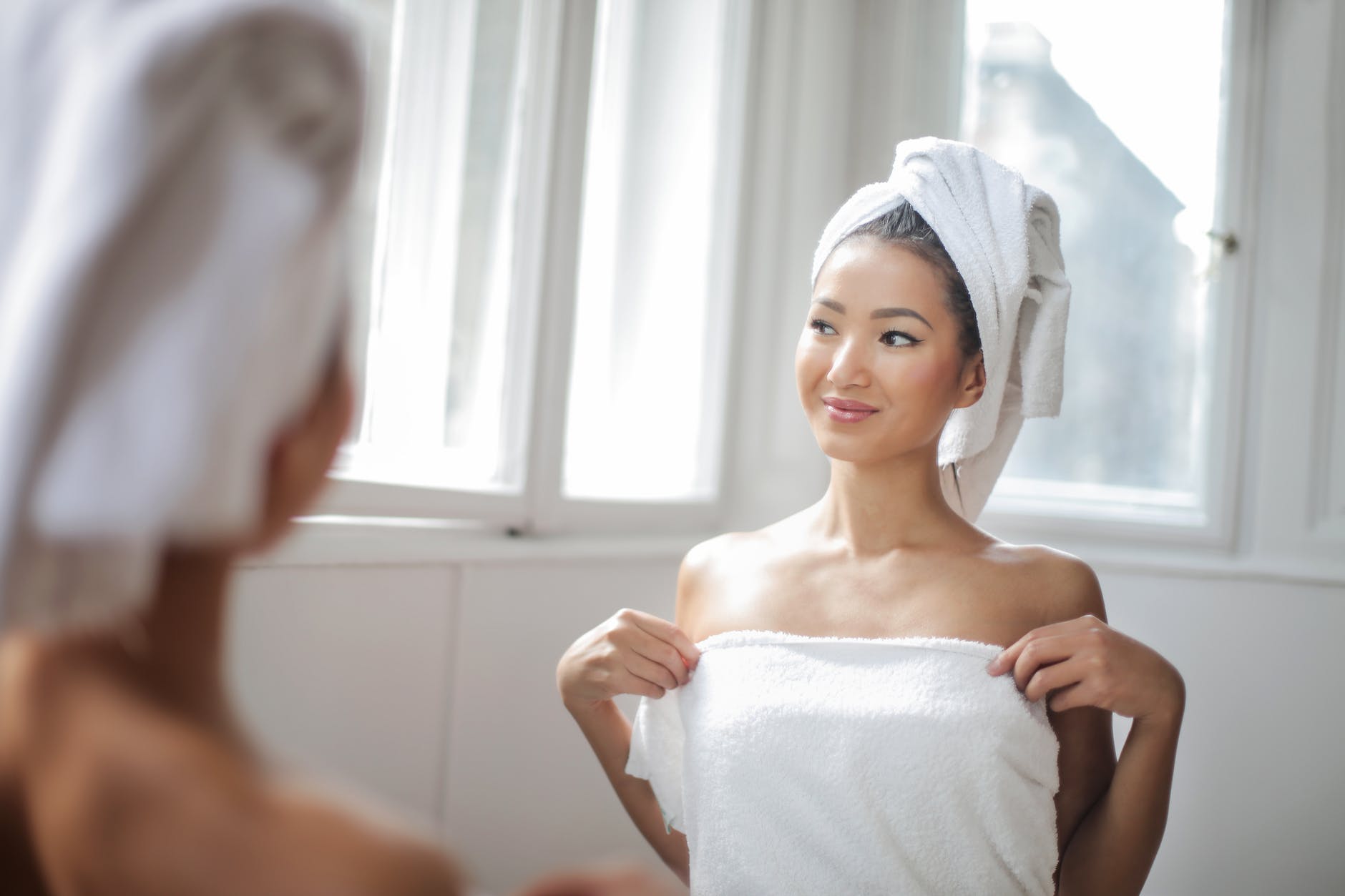
woman in white towel standing in front of the mirror

Photo by Andrea Piacquadio on Pexels.com

Find and enjoy beauty. I obviously don’t mean head to a museum. Look for beauty in your garden or in your house or on-line. Listen to music, especially music that is upbeat and energetic. If you can’t find any beauty, create some. Paint, draw, write, take photos. 

4299C386-2C7D-4F31-88D3-E84AFE551465

Learn something. Most companies and individuals spend way too much resource trying to maximize productivity based on what they know now. If you have a forced pause in that, use the time to learn something new. 

earth space universe globe

Photo by Pixabay on Pexels.com

Make a contribution. Human beings are social animals. If you are making a contribution, you will tend to stay healthier. That contribution could be pretty much anything. It includes making others feel better; creating art; helping others by virtue of your work; giving a financial contribution; growing food; making a meal; washing clothes; loving your kids; staying positive. 

man hug pinnochio photo

Photo by Pixabay on Pexels.com

Plan your path; practice pathogen paranoia. Treat every doorknob, handrail, light switch, car door, mobile phone, computer keyboard, ATM, shopping cart, etc. that you touch as being contaminated with COVID-19. It may not be true quite yet, but it will be soon. So, take precautions now and change your behavior now. It’s not so easy as you might think to avoid touching your face, doorknobs, etc. so start practicing now. 

IMG_7590

———————————-

Author Page on Amazon. 

The Declaration of Interdependence. 

The Myths of the Veritas (which explore #Leadership #ethics and #empathy). 

An Introduction to the Pattern Language for Cooperation and Collaboration. 

An Index to the Pattern Language for Collaboration and Cooperation. 

Your interconnectedness to all life on this planet. 

There’s a pill for that. 

Fit in Bits suggests numerous ways to work more exercise into daily life. I wrote this way before the current pandemic. Be sure to avoid touching public surfaces.


Love Your Enemies?

21 Thursday Apr 2016

Posted by petersironwood in health, Uncategorized

≈ Leave a comment

Tags

cancer, disease, health care, pathogens, sports, wellness

IMG_4429

(A short break from discussions of Turing’s Nightmares which we will return to tomorrow).

Jesus reportedly said this. When it comes to other human beings, one could take this attitude for religious reasons because we are all the creatures of God. One could also take this stance because, after all, we humans are all very closely related genetically. We like to say “Are you related to that person?” We share 40 percent of our genes with crayfish and 90 per cent with horses. We share over 99% with so-called “unrelated” people. It makes no sense to call them “unrelated.” But what about when it comes to non-human diseases? Can we “love” deadly bacteria, viruses, and cancer cells?

There is a sense in which the answer may be “yes”, not in the sense that we feel affection for them, but in the sense that we need to understand them. As explained, in The Winning Weekend Warrior, if you can “understand” where your sports opponent is coming from, empathize with their perspective, see what they like and don’t like, you can do a much better job of winning the points, the games, and competing well.

When it comes to disease, I think most people view pathogens as so “evil” or “despicable” that they never bother to ask themselves what the pathogen “wants.” Because of this attitude, the vast majority of treatments are designed to “kill off” the pathogen. A few approaches are to boost the body’s natural defense mechanisms. But let us examine, for a moment, what other approaches are possible if we instead try to learn to see the world from the perspective of the pathogens.

The Pied Piper Approach. In the fairy tale about the Pied Piper, a talented musician gets rid of rats in a town by playing beautiful music so that they follow him out of the town. When the townspeople renege on their promise to pay him, he wreaks revenge by using his music to lead all the children out of the town never to be heard from again. Suppose we apply such a technique to bacteria, viruses, or metastasizing cancer cells. Instead of trying to poison and therefore kill cancer cells inside the human body (which typically also kills many healthy cells), suppose we discovered for a particular type of cancer cells what the environment was that they found most “attractive.” We could imagine applying a gradient of whatever that environment was so that, instead of migrating to other organs inside the human body, they found it more desirable to migrate to something outside but “connected” to the human body via a one-way shunt. Perhaps such an approach could be applied to viruses, bacteria, or protozoan infections as well. Of course, the shunt might not “really be” something “good for” the virus, cancer, etc., but merely something that appears to be so based on a deep understanding of how these enemy cells “perceive” the world.

The Entrapment Approach. The old saying goes that you can “catch more flies with honey than with vinegar.” Honey is attractive but also “sticky” so that the flies cannot easily leave the honey. Similarly, vice officers sometimes perform “sting operations” to catch people attempting to buy drugs or use prostitutes. One can imagine that various “traps” could be laid inside the body. The “trap” would consist of a “bait” inside the trap along with one-way “valves” that make it easy for pathogens to get into the trap but difficult or impossible to leave the traps. This approach is already used for “pantry moths.” In effect, little traps have a tiny amount of a pheromone that the moths find fairly irresistible. The moths go inside the traps “in order” to find a mate, but instead find themselves trapped inside.

The Mimicry Approach. Monarch butterflies “taste bad” to a number of predators. A number of other butterflies, which do not “taste bad,” have evolved to look very similar to Monarchs in order to discourage predators. When applied to human disease, this approach would make people look “deadly” or “dangerous” to pathogens. Such an approach would require that we understand what sorts of situations these pathogens would want to avoid. As in the case of the Monarch mimics, there may be a disconnect between what is really toxic to the pathogens and what appears to be toxic. There may be chemicals that are harmless to humans (and even to the pathogens) but trigger an aversive response in the pathogen so that they “steer away” from humans. For larger pests, such as mosquitos, there may be clothing that, to the mosquito appears to be covered in, what for them, appear to be deadly enemies.

These are just three of many possible variations on a theme. The theme is to understand what pathogens or pests “want” as a goal state and how they “perceive” the world. The, we use knowledge of these two things to design a way to have them, from their perspective, appear to move toward their goals (or away from undesirable states) without harming human lives in the process.


Subscribe

  • Entries (RSS)
  • Comments (RSS)

Archives

  • January 2026
  • December 2025
  • November 2025
  • October 2025
  • September 2025
  • August 2025
  • July 2025
  • June 2025
  • May 2025
  • April 2025
  • March 2025
  • February 2025
  • January 2025
  • December 2024
  • November 2024
  • October 2024
  • September 2024
  • July 2024
  • April 2024
  • March 2024
  • February 2024
  • January 2024
  • December 2023
  • August 2023
  • July 2023
  • May 2023
  • April 2023
  • March 2023
  • February 2023
  • January 2023
  • December 2022
  • November 2022
  • October 2022
  • September 2022
  • August 2022
  • July 2022
  • June 2022
  • May 2022
  • April 2022
  • March 2022
  • February 2022
  • January 2022
  • December 2021
  • November 2021
  • October 2021
  • September 2021
  • August 2021
  • July 2021
  • June 2021
  • May 2021
  • April 2021
  • March 2021
  • February 2021
  • January 2021
  • December 2020
  • November 2020
  • October 2020
  • September 2020
  • August 2020
  • July 2020
  • June 2020
  • May 2020
  • April 2020
  • March 2020
  • February 2020
  • January 2020
  • December 2019
  • November 2019
  • October 2019
  • September 2019
  • August 2019
  • July 2019
  • June 2019
  • May 2019
  • April 2019
  • March 2019
  • February 2019
  • January 2019
  • December 2018
  • November 2018
  • October 2018
  • September 2018
  • August 2018
  • July 2018
  • June 2018
  • May 2018
  • April 2018
  • March 2018
  • February 2018
  • January 2018
  • December 2017
  • November 2017
  • October 2017
  • September 2017
  • August 2017
  • July 2017
  • June 2017
  • May 2017
  • April 2017
  • March 2017
  • February 2017
  • January 2017
  • December 2016
  • November 2016
  • October 2016
  • September 2016
  • August 2016
  • July 2016
  • June 2016
  • May 2016
  • April 2016
  • March 2016
  • February 2016
  • January 2016
  • December 2015
  • November 2015
  • October 2015
  • September 2015
  • August 2015
  • May 2015
  • January 2015
  • July 2014
  • January 2014
  • December 2013
  • November 2013

Categories

  • AI
  • America
  • apocalypse
  • cats
  • COVID-19
  • creativity
  • design rationale
  • driverless cars
  • essay
  • family
  • fantasy
  • fiction
  • HCI
  • health
  • management
  • nature
  • pets
  • poetry
  • politics
  • psychology
  • Sadie
  • satire
  • science
  • sports
  • story
  • The Singularity
  • Travel
  • Uncategorized
  • user experience
  • Veritas
  • Walkabout Diaries

Meta

  • Create account
  • Log in

Blog at WordPress.com.

  • Subscribe Subscribed
    • petersironwood
    • Join 663 other subscribers
    • Already have a WordPress.com account? Log in now.
    • petersironwood
    • Subscribe Subscribed
    • Sign up
    • Log in
    • Report this content
    • View site in Reader
    • Manage subscriptions
    • Collapse this bar
 

Loading Comments...