• About PeterSIronwood

petersironwood

~ Finding, formulating and solving life's frustrations.

petersironwood

Tag Archives: religion

Peace and Love, Part 2: SHRUGS & SHILLS

14 Thursday Dec 2017

Posted by petersironwood in America, apocalypse, psychology, Uncategorized

≈ 2 Comments

Tags

Business, competition, family, greed, life, peace, politics, religion, war

(This is the second in a series of blog posts about Peace, Love, and the pros and cons of war and peace).

fullsizeoutput_11fd

Two trillion dollar wars with little to show but dead bodies. But at least America learned its lesson. We will never again elect someone with a financial and political interest in having the nation go into a needless war. Whew! Finally. But wait a moment. We already are in a war. A cold war. And by a “cold” war, I mean a war that is not being waged against an enemy on our borders ready to cross over with warm bodies. I mean, we are in a war in which the enemy without is in cahoots with an enemy within. And, it is a cold, long, and calculating war. America, or what’s left of it, is fighting a war on two fronts. (Silly, silly Napoleon; silly, silly Hitler). On the one hand, we are being attacked from the outside by Russian leaders who would like to divide and weaken Western democracies of every stripe. Main targets are the UK, American, and Germany, but others will have their turns as well. Their goal is to consolidate their power within and to strive once more toward world domination.  I’ve already addressed the divisiveness that arises from the way social media work combined with outside influences pushing on leverage points. This might be a moderately effective method of waging war with pretty much zero Russian casualties and only moderate expense. However the war is made much more effective by having a second and internal front. We have far right “parties” within Western democracies that are aiding and abetting these enemies by dividing the countries with hate speech, fanning the flames of fear, executive orders, laws and, at least in America, the infestation of the federal government with incompetent administrators who will do everything in their power to ruin all that is good with the federal government including public education, research, fair-minded judges, public lands, and so on.

In the short term, most of these internal allies of the external enemies are not really doing it to “Make America Grovel Again” but are doing it to satisfy a few extremely wealthy donors. The extremely wealthy donors want your wealth and my wealth. This is not a recent phenomenon. Extremely greedy people are never satisfied. If you are like most people and you see that there are ten people at the table and ten donuts, you would take one for yourself and leave nine for the other nine. But extremely greedy people would be inclined to take all ten. Then, there are the ultra-greedy and they would not take all ten. They would convince you that they have 100 donuts for each of you. Unfortunately, they need to eat all ten of the first batch of donuts themselves for right now. Then, they need you to go out and make 1000 donuts. They will give you all the equipment you need to make 1000 donuts. When you spend a week of your time making 1000 donuts and then bring back the 1000 donuts to split, they will actually take 910 for themselves and give you 90 donuts to split among the other nine people. It seems a little unfair, but you are still better off, right? Before, you would have only gotten ONE donut. Now, you get 10 donuts. A definite improvement! And that is what capitalism is all about. Until lately. (The article below tends to blame the growing inequality of wealth on new technology, but I believe that is secondary to the new (im)morality.

https://www.huffingtonpost.com/nathan-newman/great-decoupling-of-wages_b_7451212.html

Now, we have a small number of hyper-ultra greedy people. They will make the same deal and take all ten of the original donuts for themselves. After getting you to use their equipment to make 1000 donuts, they will give you only half a donut each. They will tell you that if you want a whole donut, you’ll have to figure out a way to make 2000 donuts first. So, you and your nine co-workers put your heads together and figure out a way to make 2000 donuts instead of 1000. Now, when you come back with the 2000 donuts, you will get 1/9 donut each. The hyper-ultra greedy will take 1999 of the donuts and let you and your coworkers split the one remaining donut. If you happen to be a female donut-maker, he might promise to give you a donut but only if you have sex with him first. You must understand one thing. They don’t feel bad about doing this. They just think it is their right by virtue of their being “smarter” than you are. They think they deserve all the donuts, and they are actually being quite wonderful to let you have a whole donut in return for sex.

IMG_9845

In America, until around 1970, productivity gains were split between — on the one hand, the workers who largely invented new technologies, techniques and methods; learned the new techniques and skills — and on the other hand, the people who owned the means of production. Since 1970, the greedy have been, through mergers and acquisitions, mostly replaced by the hyper-ultra greedy. Unions, environmental safeguards, safety regulations, inspections, and the right to vote are now all under attack. The hyper-ultra-greedy are now being replaced by the super-hyper-really-ultra greedy who not only will take every last frigging donut you produce, but they have no qualms whatever about making you do it in a way that makes you burn every last one of your fingers off. They have absolutely no qualms about making sure that you have no time or energy left to learn a new trade. They have absolutely no qualms about making sure that your children will also be making donuts for nothing and getting your “chicks” for free, even if those particular “chicks” are only 13 or 14 years old.

IMG_1245

Most of us do not actually meet these people face to face and our experience is with other people like us so we find it hard to believe that someone would be that greedy. Of course, making donuts is not their only business. They also hire people to put on their make up, write speeches for them, handle publicity, write up fake stories about them, broadcast for them and otherwise make you think that they are just ordinary folks like you but more successful because they are smarter. They aren’t smarter. They just refuse to play the game by the rules. They don’t really view what they are doing as “lying” because for them, truth doesn’t matter. While most of us are involved in a giant cooperative enterprise of trying to find more truth about the universe and tell each other so we can all collectively make better decisions about how to make more and better donuts for everyone, they are only concerned with themselves. They do not think of you as “another human being” but as a tool to be used in whatever way is most efficient to meet their ends. While they don’t care about the truth, they do care about “communicating” which for them means manipulating you into doing what they want. (By the way, please realize that not all extremely wealthy people are SHRUGS and not all SHRUGS are necessarily wealthy. It isn’t the amount of owned wealth that defines SHRUGS; rather what defines SHRUGS is their attitude toward ethics and particularly their base belief that stealing everything from others while claiming to be working for the good of all or doing “God’s work” is perfectly natural.)

IMG_9803

These are deeply flawed human beings. Why? Because without you, they are, for the most part, completely unable to make or find even a single donut on their own. They are ultimately so greedy that they are killing “the goose that lays the golden egg.” Currently, they are doing everything in their power to divide (at least) America according to race, religion, national origin, sexual orientation, etc. Their goal is to redirect the anger you quite naturally feel at working harder and getting nowhere toward women, minorities, foreigners, etc. and away from the SHRUGS themselves. These super-hyper-ultra greedy people are unable to function without your active cooperation. So, it’s really important for you not to realize just how much you are being taken for a ride. Some of them may realize that their actions are also greatly helpful to the destruction of America as a world leader. But mostly they don’t really care much about that because they are convinced they will have even more power under, say, Russian rule.

IMG_5159

This is actually quite a humorous miscalculation. As soon as America’s role in the world is sufficiently diminished, the super-hyper-really-ultra greedy (SHRUGs for short) will be the first to go. They will be the victims of the first Putsch. Why would the super-hyper-ultra greedy among the Russians not replace the American super-hyper-ultra greedy with their own? Of course they will. If American SHRUGS took as long as two minutes to actually think about it, the American SHRUGs would realize this is exactly what they would do if they took over Russia (or any other country). In point of fact, when banana Republic dictators do not go along with American orders, they are eliminated in the same way. So, all the facts and history are there, but you need to understand that the power and position and privilege that American SHRUGS enjoy ultimately gives them an extremely warped view of their own abilities. They come to believe that they are not SHRUGS but a different species altogether: SHILLS (Super-Hyper Intelligent Lovely Leaders). SHRUGS, in fact, need not be particularly intelligent at all, but they do gain that illusion. It’s easy to see why. You play a game of chess with a SHRUG. You play by the rules. You are about to win when the SHRUG knocks all the pieces on the floor and yells, “I win!” When they do this enough times, they come to think that they actually are a very very shrewd chess player. It sounds crazy and it actually is in the sense that their perception of reality is completely divorced from it.

The second to go will be those unwilling or unable to be slaves to the new set of masters. If you care to live a long life, you might want to start learning Russian now. In the meantime, we might yet be able to prevent the SHRUGS from taking over America. But if the control of the SHRUGS persists even for another year, they will disenfranchise enough Americans so that there will never be another fair election. They will make many more things illegal and exact horrific penalties for minor crimes. They will put in place judges who will exact punishments depending on people’s political views. They will prevent more than a few more people from coming to America – particularly those who might not already be brainwashed into thinking the SHRUGS are really SHILLS.

What do we do about that? We begin to explore this topic in the next blog post.

(By the way, I do not believe that Russian people or the Russian nation is particularly prone to SHRUGS any more than America is. Trying to blame all Russians for the actions of the Russian SHRUGS is as unfair as blaming all the sins of American SHRUGS on America as a whole. Most of us would not approve many of the “dirty tricks” we end up playing on other nations in order to placate our own SHRUGS.)


Author Page on Amazon

Family Matters: Part Two – Garlic Cloves and Puffer Fish

11 Thursday May 2017

Posted by petersironwood in America, family, management, psychology, Uncategorized

≈ 6 Comments

Tags

diversity, evolution, family, life, religion, school


PicturesfromiPhoneChinaParisPrinceton 177There are many directions to go for the first sequel to “Family Matters: Part One.” That blog focused mainly on my family of origin, so one obvious place to go is to talk about my children and grandchildren. But I don’t really want to speak for them. After all, they can still talk back. My parents and grandparents cannot. But the real reason is that everyone should get to define themselves, at least to the extent that it’s possible. I think it is possible to a great extent, but not completely. Not everyone can become a pro athlete or a great musician even if they try really really hard. Luck and innate predispositions play a role in our fate.

Certainly, there are many “how to” books out there that would lead you to believe that the only thing that stands between you and owning the universe is your attitude. It isn’t a totally bad thing to imagine that you can do anything and have no limitations due to circumstances or your innate abilities and predispositions. It’s a fiction, of course. It’s a complete and utter fiction. If you spent the first five years of your life drinking lead tainted water, e.g., no amount of the proper “attitude” is going to undo the harm. But, for people whose main obstacle to a fulfilled life is self-doubt, it could provide a good antidote, or at the very least, a few good anecdotes that arise from a series of unfortunate incidents taking place from following such advice.

What I have in mind however, is something different; viz., trying to show how family situations tend to be continuous threads in a way that is analogous to the continuous genetic threads. For example, my grandmother used to tell “Old Pete” stories and ran a dramatic club. My mother became an English and Drama teacher. I have always loved acting and storytelling. Several of my kids and grandkids have also written originally and extensively. My mother’s brothers all were jokesters and storytellers. Her oldest brother Karl was a principal and then superintendent of schools. The middle boy, Bob, became a psychiatrist. The youngest, Paul, became a lawyer. The next generation included two psychologists, two lawyers, a neurosurgeon, a teacher. I could elaborate further but the point is that storytelling, art, psychology, and education as well as science and engineering are threads throughout this very local part of my family tree.

Before I go any further, however, I need to explain why I subtitled this, “Garlic Cloves and Puffer Fish.” As a side note, it’s good to remember that both garlic and puffer fish are our distant cousins. The same basic machinery that makes the cells of a garlic plant “work” and live and reproduce is what does all those same things in our cells. And our other, somewhat less distant cousin, the Puffer Fish has that same machinery in every one of its cells. Of course, beyond that we even have most of the same organs and types of symmetry as the Puffer (or any other) Fish. Now, I bring up our relation to these distant cousins because I would like to have you view what I am about to say about various people as being observational and not rendering value judgements. It would be silly to go out to a garlic plant and yell, “Why can’t you be more like a Puffer Fish?!  What’s wrong with you?!” It would be equally ridiculous, of course, to go snorkeling and when you encounter a Puffer Fish scream at it: “What are you doing out here in the ocean? Why can’t you be more like your cousin Garlic who at least makes wonderful tasting (to most) and health-giving nutrients? No, instead, you poison people! What’s wrong with you?”

IMG_6609

Now, when it comes to people, of course, it isn’t just their genes that determines behavior. The family, neighborhood, culture, religion, and physical environment that they grow up in determines, at least in large measure, who they become. Humans come in many varieties. This is both because, when it comes to our own life, we can actually make ourselves different in some ways on purpose (there is a grain of truth in the “positive thinking will win you the universe” genre) and secondly, when it comes to someone perceiving us, their own background and character will determine what they see in you. Similarly, your background will help determine what you see in others. If you think back on your own experience, you’ll see this is true. Anyway, among these many ways that people differ is how neatness-oriented they are. The hit TV series, The Odd Couple, featured two bachelors living together; one was an utter slob (Oscar) and the other was a neatnik (Felix). We all probably know people close to those extremes. We may even know two such people in our family as defined with a small circle to say your second cousins. I’m not trying to say one of these characteristics is better or worse than the other. But I would like to point out that each makes a lot of sense, under certain conditions.

Some years ago, I was watching a TV program about Alice Waters, a famous chef, restaurant owner, and author. She believes in such things as organic, locally grown ingredients. In any case, she happened to make this offhand comment that “it didn’t really matter if a little piece of the garlic skin clings to a clove” {at least in the context of the sauce they were making for a huge fish}. Anyway, I do most of the cooking in my house and I do try to remove the skin of garlic cloves. Most of the time, it’s fairly easy. But every once in a while I have encountered a clove of garlic that is as pathologically stubborn about giving up its skin as a corrupt politician is about giving up the illusion of sanctity. Even a garlic plant has its own personality, I suppose. On the scale of neatnik to slob, I would put myself near the middle. Of course, to anyone who thinks it’s good to be super neat, I will seem like a slob. And to anyone who thinks cleaning is just not worth the trouble, I may seem like a neatnik. Anyway, my point is that maybe there comes a point where you don’t generally have to be absolutely precise in cooking. And I would guess that this rings true with your experience as well. There are some cooks whose approach is very intuitive and, although they may follow a recipe, their measurements may not be totally accurate. And, then their are cooks who will follow directions extremely carefully. Generally speaking, it doesn’t make that much difference. I tend to prefer dishes such as mixed ginger/curry vegetables, burritos, or omelets. In these dishes, you can get away with a huge variation in proportions and specific ingredients. I give these dishes care and attention to detail, but all within very broad parameters.

IMG_6516

In at least one case, however, it is crucial to be a “neatnik” cook and that is in the preparation of the Puffer Fish. The Puffer Fish contains a highly potent neurotoxin called tetrodotoxin. Most of this toxin is in the liver, skin, and other internal organs. It is very easy if you are even the least bit sloppy — and we are not talking Oscararian sloppihood, just normal college guy sloppihood — to nick something and release the poison into the flesh making it potentially deadly. Under those circumstances, being a neatnik is vital. In some cases, expert chefs push a little further and allow a tiny bit of the toxin to bleed into the flesh which will cause a “high” in the eater, but not be fatal. Personally, I think I’ll stick with tuna. The point is that being extremely neat and careful can be a very good thing. Packing your parachute — good to be careful! Performing cataract surgery — be precise!

On the other hand, suppose that you are spear fishing or out gathering nuts. A “neatnik” might want to make sure every fish is skewered in exactly the same way. Except, perhaps for Puffer Fish, it doesn’t matter that much; the point is to catch the fish. Similarly, if you are gathering walnuts, there generally isn’t much point in arranging them by size. Suppose you are making a rock wall. You would do well to make sure it doesn’t fall down but the way to do that is by careful arrangement and filling in the cracks carefully with cement. An alternative approach is to insist that every rock is exactly the same. This would make building the wall much easier. On the other hand, it would be absurdly time consuming to search for rocks of precisely the same size. Other approaches are to have one group of people cut rocks to preset measures and then the job of building the walls is easier or to make artificial rocks called “bricks.” Under various circumstances, any of these methods will work just fine. In other circumstances, any of these approaches might fail. It isn’t quite so simple a matter as Disney and the Three Little Pigs would have you believe.

When it comes to recipes, whether for bricks or for soufflés, It is difficult to know ahead of time which aspects of the process require a Felixian attention to detail and which aspects are fine for a more Oscarian approach. And, just as there are situations that are particularly suitable and best done by Neatniks there are other situations particularly well suited to Slobs, this same principle holds true for every approach and personality trait that I can think of. So when I describe people in my more extended family, I am not trying to pass judgement on who is better than whom. You might imagine that there is an attempt on my part to make out someone as “bad” or “good” based on your own personality preferences. Similarly, it’s quite possible that I accidentally make one or the other kind of personality sound better based on my own preferences than they really are.

Although it is quite natural for people to express different preferences on the neatnik to slob dimension, it is often a source of tension, argument, fights, and in extreme cases, probably divorce and murder. Most often, when an “Oscar” does something annoyingly sloppy, (and which to Oscar is actually typically exactly nothing), Felix will not try to dialogue about the situation and negotiate a solution. Rather, Felix’s first move is more often to call out Oscar’s character as being deficient because he is such a slob. Immediately and quite predictably, Oscar’s defenses go up. His next move is to point out that Felix is insanely OCD. And thus, the problem moves from what is immediate, simple, and fixable to one that is long-term, complex, and unfixable. Oscar will never convince Felix to be like Oscar and Felix will not ever convince Oscar to be like Felix. In fact, for Felix to even expect Oscar to act Felixian is rather silly.

You have undoubtedly heard the expression that you “marry the family” as well as your own spouse. I found this unfathomably silly when I was younger, but now I see that in many ways it is true. For example, if your spouse has unresolved issues from their childhood, those can impact your relationship. If your spouse’s family is into crime or drugs or unnecessary drama, those will certainly impact you. These people will almost certainly interact with you and your kids so they will impact your lives directly and indirectly.

Keeping all this in mind, let’s tune into “Uncle Al.” Al worked at one point as a commercial artist. In such a position, being something of a “Felix” probably worked to his benefit. But not every situation calls for OCD. Al lived in one of two houses at the end of a dead end street. What would you do if you drove to the end of his narrow, dead end street? Well, one possible action would be to abandon your car at the end of the street and walk home to buy another car or just wait there until you were beamed up by aliens. Most people however, would instead go into one of the two driveways at the end of the street, turn their car around and drive back out the dead end street. Al didn’t like that. I suppose most of us might be mildly annoyed. But after all, what else could people do other than abandon their car or back out the entire length of the street? So, while most people might be a little annoyed at strangers using their driveway for a U-turn maneuver, Al was instead, very annoyed. So annoyed was Uncle Al that he paid to have five steel posts put into the end of his drive. Indeed, this completely prevented any stranger from using his driveway as a place to turn around. Chalk one up for Uncle Al.

steelposts

Now, you may have detected a slight flaw in Al’s plan. He could no longer use his driveway either. For that matter, he could no longer use his garage to house his car either. But to Al’s way of thinking, that was worth it because he had achieved his goal. The phrase, “cutting off one’s nose to spite one’s face” comes to mind.  At another point, several of my ex-brothers-in-laws went over to clean Uncle Al’s house. When they opened up the refrigerator, the shelves were all filled with the same thing. Can you guess what it was? No, you probably can’t. Every shelf was filled with tiny paper mini-ramekins. And in each of those tiny paper mini-ramekins was tartar sauce. Upon questioning, the story finally came out. Every Friday, Al went to a nearby diner where they had an “all you can eat fish” special. The fish came with tartar sauce. Uncle Al hated tartar sauce. But he had paid for the tartar sauce! So, when he left the restaurant, he took the tartar sauce with him each and every time.

This seems a little on the crazy side, but I would guess that almost everyone has sometimes taken something that they have access to even though they end up not using it. In fact, it’s a little odder and more selfish than that. We might even know when we take the items that it’s very unlikely we use them. For example, in the IBM cafeteria, I would often take an extra napkin. Why? Because on rare occasions, someone, possibly even me, would spill something and having an extra napkin that could be deployed jack-knife quick proved very handy.  But most of the time, these hypothetical emergencies failed to eventuate. Now, what to do with the extra napkin? I could put it in the trash, or since it was clean, put it in the recycling. To me, taking the time and effort to recycle is completely worth it. Not everyone does that. We can return to that later, but re-use (or in this case, first use) trumps recycling. So, I would take the napkins back to my office. I had one drawer in particular that ended up with a collection of napkins as well as tea bags, plastic forks, tiny packets of salt and pepper, and other food-related items. Small stuff. There were no stashes of candy bars or soda cans or deer carcasses.

However, this example of hoarding was not an idle and useless exercise in hoarding. When people in the lab had birthdays or other types of celebration, it actually turned out to be quite handy to have a nearby supply of napkins and plastic forks. When I thought about the design rationale for this procedure, I never thought to myself, “I paid for this dinner and there’s no rule against taking two napkins, so I want to keep what is mine.” In terms of explanation, my saving napkins and Uncle Al’s taking tartar sauce are light-years apart. But looked at in terms of situations and behavior, there are actually a lot of similarities. As already explained, all of us are closely related. Although Uncle Al was not “related” in the way that people generally use that word, our ancestors were common for billions of years. So, I would hypothesize, the behavior of keeping something that is not of immediate use but could be used in the future is one that is found broadly in the animal kingdom and in plants. We imagine that the desert plant that stores water in it’s thick leaves does not “think about it.” It seems pretty silly to think it thinks at all. But let’s expand the idea of how information is coded just a little. It wouldn’t make a difference if the rationale were written in Spanish or English or French would it? It wouldn’t matter if the design rationale were printed in 14 point Helvetica or 12 point Times New Roman. It wouldn’t matter whether it was coded in ascii or EBCDIC. So, why not extend the concept a little further. The “design rationale” for the plant’s behavior is coded in it’s DNA.  We may not be able to “read” this design rationale quite as readily as we could one printed in our native language. But that is basically a matter of convenience, not a matter of underlying truth. The plant does have a design rationale for being “greedy.”

When it comes to human behavior, of course, there are not only genetic determiners but also social ones. (Actually, this can be true of non-human animals as well). So, it isn’t just that people may have a genetic propensity for keeping extra items for future use; their particular culture has inculcated values and design rationals and ethics around greed, waste, generosity, and so forth. The design rationale that Al gave, I find too self-centered for my taste. My Mom was generous to a fault. And, when I say she was generous to a “fault” what I mean is that she was so generous that she would often give away the same item to several people. So, perhaps being overly generous can be a fault?

In any case, just as people come in all sizes and shapes, they come in all kinds of behavioral predispositions. These predispositions are probably weakly related to your immediate family both because of where you live, among other things. There is no one “right answer” as to which characteristics are “best” under all circumstances. Some may innately be predisposed to Felixism while others may become that way because of strict teachings by their parents and schools. Regardless of why Felix is a neatnik, Oscar is never going to convince him that he (Felix) should be like Oscar. That was true in paragraph ten and it is true in paragraph 17. One thing should be clear to both Felix and Oscar: if they can work together effectively, they will be able to solve a wider range of problems than they would working alone.

Creativity and diversity are always vital, but probably never more so than right this minute. Humanity has changed so much in every external way in the last two thousand years and most of that since the industrial revolution and most of that after the computer revolution. Change is not only rapid, it is rapidifying. Yes, I made that word up. That’s another symptom of the same thing. Change in media, language, meaning are all happening more and more rapidly. So, in times of such great change and such great uncertainty, it has always seemed to me to absolutely and vitally important to include every viewpoint on the problem that we possibly can.

If I am lying on the beach under a sunny sky, feeling healthy and happy, I don’t really need your advice much, at least not this second. Yes, I may not be as neat as you would like or I am far too neat but I don’t really care and it doesn’t matter. You be you, and I’ll be me.

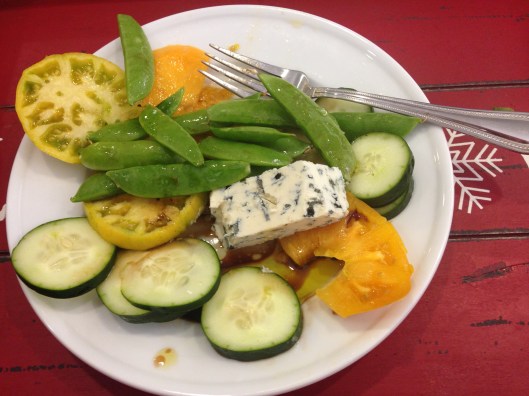
On the other hand, if I am thrown into something beyond my comprehension, I would want to have as many eyes on the problem as possible. Of course, it feels more comfortable to surround yourself only with those who already agree with you rather than a highly diverse group. You won’t argue as much about what the problem is or about what “fairness” really means or even argue about the right process is for combining your insights. A diverse group can initially provide a slight “shell” of added awkwardness for some. In my experience, when people are focused on a situation or a problem, they get past that very quickly and every stage of the process is enhanced. There are more ideas generated, higher quality ideas, the evaluation of ideas is more robust; they generate more ways to fit ideas together. Not only is the output of the group improved. It is just plain more fun during the entire process. Perhaps a better term would be to say that it is more engaging. If someone has a slight accent, you need to listen more closely. If someone comes from a different background, not only do they provide a different way of looking at things or even solution; they also stretch your mind. It may not be as broadening as  traveling to another culture, but it is more than one step in that direction. An all-celery salad gets old fast.
IMG_6371

Beyond all that, it seems important to remember that these variations in human predisposition are not entirely new human inventions. Many species of plants and animals exhibit different “philosophies” or “strategies” for dealing with the same issues: getting food and water, finding a mate, reproducing, avoiding predators, etc. (Yes, plants do these things). What works for a plant in one climate will not do in another climate. Of course, it isn’t just the climate. It also depends on what other species are present, the nature of the soil, etc. Some plants, for instance, put time and energy into making flowers to attract bees, having the bees fertilize the flowers, grow the fertilized flower into a fruit that is both colorful and tasty. This means the fruit (e.g., wild strawberries or raspberries) are eaten by our cousins the rabbits and carried in many directions out from tree by the rabbits. The rabbits excrete the digested seeds which now find themselves in a tiny pre-fertilized plot. Come on!  How about a hand of applause? Do you see how many ducks have be lined up her for this plan to work?

I may have had a reputation for being a little off the wall, but this plan? This is my craziest idea on a combination of illegal drugs and then put through a cognitive blender. I worked in “Corporate America” for about 40 years. I worked for IT companies, but let’s imagine instead a company that made self-reproducing garden ornaments. The way they worked was that each ornament, after one year split in two. Anyway, they were making good money. Now, I go into the top management and say, “Hey, I have a great idea for how to have these ornaments reproduce. No more just splitting in two. Instead, each element will grow a little ornament on top of the ornament but brightly colored. This will undoubtedly attract some sort of something which will fertilize —- oh, wait, did I tell you about the whole “two sexes” deal? Anyway, we’ll then have a process for turning a fertilized element into a fruitling. The fruitling will be fortified with vitamins and sugar so that … um … something will come along and put this into its belly and carry it away into the neighbors yards where they will help build the first step of the new ornament. Give me funding for about 100 million years of experimentation and I can pretty much guarantee….” No, they would not fund a project like that. Evolution is a slow smart cookie. That tree of living things? That’s our tree. And that little teeny branch way over there? That includes Oscar and Felix and everyone else regardless of gender, age, race, religion, or hoardingness.  Does it really make sense for us to destroy the whole branch if we can’t go in exactly the direction we want? And what about how the decisions affect every other part of the tree? It is, after all, a family matter.

(The story above and many cousins like it are compiled now in a book available on Amazon: Tales from an American Childhood: Recollection and Revelation. I recount early experiences and then related them to contemporary issues and challenges in society).

Tales from an American Childhood

Math Class: Who are You?

09 Thursday Mar 2017

Posted by petersironwood in America, Uncategorized

≈ 56 Comments

Tags

genetics, greed, life, math, religion

David's DreamDeeply

What better way to drive traffic to your blog than title the entry “Math Class.” As most of you probably recall, math was your favorite class?! All kidding aside, I actually found math fun but that’s probably because I learned a lot of it outside of regular classes which can admittedly be pretty boring. Rest assured, the “math” in this entry does not require integral calculus, differential equations, trigonometry, or even algebra. In fact, if you prefer, you can call the post “Christianity” or “Buddhism” because you would reach the same conclusions but from a very different pathway.

Part of the inspiration for this post came from visiting the Smithsonian Institute about 20 years ago. They displayed a large graph with the population of the earth plotted against the year. I looked at my birth year and could easily see that more than half the total earth’s population came after my birth year. And, that was 20 years ago.

Another inspiration comes from having led the artificial intelligence lab at NYNEX. I worked for an ex-Bell Labs engineer, Ed Thomas. People were always asking me whether we were “related.” I found this question extremely amusing. Why? Because we are all related! In fact, we share about 40% of our genes with crayfish and 90% with horses. We’re closely related to chimps and bonobos though we did not “descend” directly from apes.  Yet, in our society, we chose to “draw the line” between being “related” and “not related” way over at one end of the scale. Ed Thomas and I only share about 99.9% of our genes so we are called “unrelated” while my brother and I share 99.95% and so we are (closely) related. Most people would say they are “unrelated” to a horse even though you share 90% of your genes. Weird.

A few days ago, I read that new fossils indicate life on earth is at least 4.75 billion years old. When I was a kid, starting around age 7, I became (like many others) fascinated by dinosaurs. At that point, the best guesses were that life was somewhere between 500 million years and 1 billion years. In the course of my lifetime, that estimate has increased a lot.

Who cares and why does all this matter? Apart from curiosity, it matters because it allows us to put in perspective our own individual lives in the context of life on planet earth.

Most people, most of the time, love their children and generally put the welfare of their kids even above their own. This is how life progresses. So far as we know, individuals never live forever, at least in this physical world. However, life as a whole continues to live and our direct descendants and relatives continue to live after our death. So, how much of your genetic material is actually in you versus all your cousins?

To simplify, let’s start with just other human beings. There are currently 7 billion people on the planet. You are one of them. You share 99.9% of your genes with those folks.

How much do we share genes?

So, let’s see. There’s you. And there are 7 billion relatives. Some are slightly more related than 99.9% identical genes, but let’s just say 99.9%. That means the total genome of your genes is in one person (you) who has 100% of your genes and 7 billion others who “only” have 99.9% of your genes. 99.9% of 7 billion is 6,993,000,000 while 100% of 1 is 1.000. In other words, the total amount of “your” genes that is in other people is 6,993,000,000 as much lies within the physical boundaries of your own skin. Not an equal amount. Not 10x as much. Not 100x as much. Not even a million times as much. No. Nearly seven billion times as much.

From the standpoint of genes, this vastly understates the case because there are 7-10 million species on earth besides humans. All of these share some of your genes and many of them share a lot of your genes. Of course, we humans are relatively big and while there are some plants and animals much bigger than we are, there is more mass of life in bacteria than blue whales or redwoods. In principle, one can calculate a better number by taking into account, for each of 7-10 million species how many cells are in each; how populous they are, and what percentage of genes are in common between humans (and therefore you) and each of these species. It’s straightforward but tedious. I gave up after 100,000 species. No, I didn’t. I never started because I knew I would give up way before I got to 100,000. In many cases, we don’t even have a very good estimate of the populations. Given all the trees, grasses, bacteria, insects, fish, plankton, etc. I would guesstimate that adding all the genes in all the other plants and animals would mean the genes in your body represent at most about one in a trillion of all the copies of those genes on earth. So, from the standpoint of ensuring the propagation of your genes, caring about your own physical life represents about 1/1000000000000 of the total.

life on earth

I grant you that genes are not all that matters in human life. And, I want to explore some of the other aspects of the interconnectedness of life apart from a common genetic heritage. However, first, it is really worth taking a moment to let that fraction sink in.

It isn’t as though the “you” inside your skin weighs, say, 150 pounds while the “you” that is outside your skin is, say, the size of a blue whale. No. In fact, even 1000 blue whales compared with your physical body is not so lop-sided a comparison. Imagine thirty galactic clusters of stars. Each of those thirty clusters has 100 stars. Each of those stars has 10 planets to support life. Each of those planets has 100 oceans and each of those oceans has 1000 blue whales. Versus you.

Another way to think about is that when you physically die, it is a little like “trimming” or “pruning” the “Tree of Life.” But your dying would not be like cutting off a branch. Or a twig. Or a leaf. It would be like shaving an invisible razor thin strip off one needle of one twig of one branch of a huge Redwood.

redwoods

It is understood that life is partly (and by no means wholly) about competition. Each and every one of those bits of “you” that is in other life-forms is not necessarily your best bud. You may share a lot of DNA with a great white shark but you might not wish him well. Or, you might not much like your cousins the mosquitoes and deer flies and pneumonia germs. The problem is that we are not collectively anywhere near to being smart enough to understand the effects of deleting certain species and not others. Perhaps, some day in a hundred years or so, we might understand enough to intelligently redesign an ecosystem. Don’t hold your breath though. Despite the fact that some of those individual species and some individuals within a species are annoying, we really have no idea how to extract some one thing. It is not a set of legos. Every species is connected with a variety of chemical and mechanical connections to hundreds of others. It is more like trying to extract your iPhone adapter from your backpack which also contains headphones, power cords, adapters for five other devices and, for good measure, a couple stray shoelaces.

You could also point out, quite rightly, that not all genes are as “fundamental” to making you you as are other genes. There are genes, perhaps, that make your eyes blue or brown. Does that seem fundamental to you? Or, perhaps there’s a gene that makes your thumb fingerprints whorls or loops. Does that seem fundamental to who you are and to your life? On the other hand, there are genes that make you want to live and find love and raise a family and contribute and play and learn. To me, those are the genes that are fundamental and guess what? Those are the very genes that you share with millions of other species. Naturally, we humans like to think of ourselves as fundamentally different from other species on the planet and in some ways we are. As discussed below, being able to communicate so many messages with other people across time and space and even after death indeed makes people “different” but when it comes the things you are likely to care the most about: staying alive, avoiding pain, keeping your family healthy, fighting off disease — those are pretty common across animals and even plants and bacteria, at least in rudimentary form. Just because an ant doesn’t do calculus doesn’t mean it doesn’t work to stay alive and help it’s colony do the same.  See video links below and you will hopefully see how similar other animals at least are to us.

https://www.youtube.com/results?search_query=animals+helping+each+other

And, speaking of math classes, let us turn to some of the other aspects of how our own individual life fits with the larger web of life. Let us think about learning. Pretty much all life is able learn.  Humans, however, are able to communicate through speech, writing, and pictures. This means that we can learn across continents and generation. Eventually, communications affect behavior. Everyone ends up getting exposed to unique information and delivered under different circumstances so that people also end up acting very differently and even perceiving things differently. So, when it comes to human beings, many of the differences we think important are in terms of the ideas and attitudes various people have as well as their actual behavioral differences. To put it simplistically, we largely feel akin to others on the basis of how we think and feel. Many of the labels that we put on people — in fact, the vast majority of them — focus on differences among people. For example, we have: extrovert, introvert, flirt, workaholic, physicist, physician, psychologist, psychic, pscyho, Republican, Democrat, liberal, heterosexual, homosexual, creative, drudge. But what percentage is different and what percentage is the same and how fundamental are the behaviors and ideas?

How much of the total knowledge and how fundamental is that knowledge? Perhaps people learned approximately linearly through time. We’ve had spoken language for, let us say, 100,000 years although it could be much longer.  At best, people learn about four “chunks” per second. A “chunk” is basically a new configuration of things you already know. We measure the information in a computer in terms of “bits” but this turns out not to be a very good measure for people (or other animals). If you have to learn “A CAD” it is pretty easy. It is essentially only one “chunk.” If you know how to read hexadecimal then “ACAD” is equal to 10-12-10-13. It is easier to remember “a cad” than to remember “10-12-10-13.” That in turn is easier than the binary string: “1010110010101101” though they have the same bits. In the same way, it is much easier to recall the password: “Thistooshallpass” than the password: “ooassllapsTsthih.” That is the basic concept behind “chunks” as a measure. How easily we learn new things depends heavily on what we already know. One major problem with trying to learn a new language is that we keep thinking of it (and even hearing it) in terms of the language we already know. In fact, studies with infants show that by a few weeks of age, they are already less able to distinguish sounds that make no difference in their native language than they were at birth.

Psychology is endlessly fascinating! But let’s return to our calculations. If you are awake, on average for 16 hours a day for your lifetime of 100 years, you would have an opportunity to learn 4 chunks/second x 60 seconds/minute x 60 minutes/hour x 16 hours/day x 365 days/year x 100 years for a total of 12,600,000,000 chunks! That is a lot! Of course, that is rather an ideal case. If you don’t read and instead every week, watch the same TV shows and hang out with the same people you may not get your full 12 billion chunks worth of learning, but it’s still going to be a lot. 

We humans have been communicating and learning through speech though for at least 100,000 years. That is more than 1000 times as long as you’ve been alive. For a long time, the population of the earth was far less than today, but sill likely over a million people for most of that time. Since each person grows up in a different environment, they learn different things. Leaving aside the fact that the population of the earth is now about 7 billion and just using the very conservative 1 million figure, you know about 1/1000000000 or a billionth of what humans collectively have learned.  (For a more in-depth estimate, check out the link below).

http://www.livescience.com/54094-how-big-is-the-internet.html

Of course, a more direct way to think about this is that collectively today, on average, you know about 1/7000000000 of the knowledge of humanity since you are only one person and there are seven billion on the planet. If you’ve been learning for about 70 years (as I have) then you may know a slightly higher fraction of the total knowledge. Let’s just take the conservative estimate that your knowledge is one billionth. But how much is a billion?

One way to think about it is this. You, as an individual, have one “book” of knowledge in your head. (It’s a rather large one, but all of the books in this example will also be large). Now, let’s consider that the whole world of knowledge exists on ten continents. Each continent has 25 countries for a total of 250 countries. Each of these countries has 40 cities. Each of these cities has 10 libraries. Each of these libraries has 10 rooms and each room has 1000 books each of which is every bit as complete and weighty as your own.

IMG_7320

Much of your knowledge is common, but a lot of it is unique. No-one has lived the life you have and so your “book” will contain a lot that is just about your own experience. And that’s true as well for each of the other 7 billion people on earth. So, while the biological stuff that makes you you, is hugely outside your own skin, the knowledge that humanity has collectively has a teeny fraction inside your own skull. Best to share what you know before you die at which point it will become inaccessible. Aside from that sage advice, you might reflect that indeed, none of us knows very much at all compared with what we know as a species.

The other major way that we interact with each other and with every living thing on the planet is through our chemical exchanges. People, such as you and me, for example, inhale air that contains oxygen. We cannot live without it. Where does the oxygen come from? Green plants. To many people, “tree hugger” is a slam, an insult, a term that is meant to be demeaning. Okay, I grant you, actually hugging a tree is probably something that doesn’t mean much to the tree. However, without green plants and the oxygen they produce, people (and other animals) would die off. Not only do plants produce oxygen but they also get rid of carbon dioxide. Of course, without green plants, there would be few foods from plants and we would have to “eat” mostly animals for the short time the supply lasted. A lack of green plants would really have four ways to end humanity: greatly increased carbon dioxide causing global warming, lack of sufficient food, lack of sufficient oxygen, too much carbon dioxide to survive. Probably, the lack of food would do us in first. You could actually hug much worse things than trees.

In any case, the oxygen – carbon dioxide and food cycles are two of the important ways that we are chemically interconnected with the entire web of life on the planet. Another important cycle is the nitrogen cycle. While plants are ultimately at the root of what we eat, the bodies of humans and other animals eventually provide important nitrogen for plants. Most plants are quite patient about waiting passively for us to die before partaking of our bodies. But there are some much pluckier plants such as the pitcher plant, sundew, and Venus flytrap which actually trap animals such as insects and small frogs in order to “feed” their nitrogen needs.

trapped bee

These cycles have been going on for a very long time. What’s new that humans bring to the party is not a nice cabernet or chardonnay, but rather a toxic cocktail of chemicals that never existed before. Some of these are intentionally produced and others are side-effects of other things. But rest assured, these “new” chemicals are overwhelmingly bad for everything in the biosphere. They are bad for you, for your kids, for your grandchildren, for frogs, redwoods, and honeybees. They are bad for almost everybody. For instance, you may find it convenient to buy “air fresheners.” These do not actually “freshen” the air. They have three important classes of chemicals: something that screws up your hormones; something that is a known carcinogen; something that destroys your sense of smell. “Air freshener” indeed.

http://www.toxipedia.org/display/toxipedia/Air+Fresheners

It strikes me as odd that adults in many parts of the world are “not allowed” to buy “street drugs” while any seven year old can walk in and buy “air freshener” which could cause numerous problems. Of course, the other problem is that even though you exercise your freedom to buy air freshener, eventually those chemicals end up in my lungs and the lungs of my descendants as well as monkeys, parrots and rabbits. The polluting chemicals eventually end up pretty well scattered throughout the world. China’s air pollution eventually gets to Americans and American air pollution gets to China. Speaking of math, here’s an interesting calculation to show how much we exchange air molecules with others.

Have you breathed air molecules from Jesus?

To make an overly long story overly short, we are all highly interconnected and most of what makes you, you is not inside the confines of your own body.  For me, this puts unfettered greed in the category of just being plain silly.


(The story above and many cousins like it are compiled now in a book available on Amazon: Tales from an American Childhood: Recollection and Revelation. I recount early experiences and then related them to contemporary issues and challenges in society).

Author Page on Amazon

Trumpism is a New Religion

09 Monday Jan 2017

Posted by petersironwood in apocalypse, health, Uncategorized

≈ 76 Comments

Tags

ethics, learning, politics, religion, Trump

(This blog post is a temporary departure from Schooled Haze and contemplations of AI/HCI).

finalpanel1

Trumpism is less a political offshoot of Republicanism than it is a new religion, at least for a substantial number of Trump supporters. I keep seeing posts from various liberal friends recounting nasty infantile things that Trump has done or said as though as to say, “Well, now! That is so completely outrageous, stupid, mean-spirited, vain, or evil that surely you Trump voters will now see how you were wrong.” No. That is never going to happen. I think the “mistake” is to think that Trump is a political leader when he is actually, for many, a religious leader. 

As Trump himself once famously bragged, he could shoot people in the middle of the street in broad daylight and his followers wouldn’t desert him. It doesn’t matter what he does. His value is taken as a given and everything else flows from that. You won’t convince people who are Hindu, Buddhist, Christian, or Muslim to change religions because you claim to have “facts” about how bad some particular religious figure is. It will simply mean they will discount your facts and their source.

Why and how could Trump become a religious figure? He seems offhand to be the complete antithesis of what most of the major religions espouse. Well, yes, but those religions I mentioned earlier arose in earlier times…much earlier. In the USA, 70% of the people claim to be Christians. But what really matters are people’s actions, not their claims. The evidence is all around us that for many people, the real religion of America is quite different from Christianity.

We have a TV culture and a popular culture and what many people really value (as measured by their actions) are things like money, greed, vanity, self-promotion, immediate gratification, superficiality, anti-intellectualism, self-righteousness, fame, and arrogance. We call people who hold high positions in a company “business leaders” regardless of whether they are or are not actual leaders. We have articles written about which colleges are “best” when the entire analysis is about the ROI of your tuition dollars. Social media are filled with “top ten” lists of ways to advance your career that take three minutes to read. We talk about someone’s “actual worth” when what we’re really talking about is their financial worth. We rank order tennis stars, golf stars, baseball stars, and basketball stars according to how much they earn. Where is the list according to their skill, elegance, mentorship, or how much they build team spirit? These things are still talked about on occasion but many people accept that the only “objective” measure of value is money.

We have transmogrified what are essentially cooperative activities like dancing, cooking, dating, and singing and made all of them into competitive contests on TV.  Many of us have accepted as “normal” that all a corporation is expected to do is make the most money possible. What used to be “beyond the pale” ethically is now treated as just taking care of the bottom line. A few random examples follow. It is “normal” business practice now to send snail mail that appears from the envelope to be a check or official government business when it is, in fact, nothing but advertising. E-mail and snail mail are labelled as “In response to your query” or “As you requested” when there is no such query or request. Drinks that consist of high fructose corn syrup and water with dyes (and quite possibly FDA-grandfathered addictive ingredients) are labelled as “Natural” and “Healthy.” Did you know that “Unscented” is the name of an actual fragrance? So if you buy cat litter or fabric softener that is “unscented” thinking that you are avoiding the nasty chemicals, you are simply buying stuff that is scented with a scent called “unscented.” Recently, Wells Fargo which you don’t typically think of as a “fly by night” outfit, was caught charging customers for setting up accounts that were never asked for. Minors cannot purchase cigarettes, alcohol, or marijuana. However, your ten year old can go into any grocery store and get “air fresheners.” These typically contain ingredients which include a known carcinogen, a chemical known to mess up your hormone balance, and a chemical which deadens your sense of smell. Essentially, an “air freshener” does nothing of the sort. It pollutes your air; it doesn’t “freshen” it whatsoever. Meanwhile, sports figures such as Lance Armstrong, who vigorously denied doing performance enhancing drugs apparently not only did them but threatened other athletes not to expose his drug use.

I do not want to overstate this. Most people most of the time are still honest, hard-working, and fair. The media gets paid by advertising dollars however and is therefore motivated to report only on the worst of human behavior. Very few will buy a newspaper whose headline reads, “2.5 million US Muslims worked peacefully today.” But if one goes on a shooting rampage, you can bet it will be a headline. Do you recall any headlines about Timothy McVeigh being a Christian?

Our elections and politicians are bought and paid for largely by a few multi-billionaires. A long term campaign to encourage people not to trust “intellectuals”, scientists, educators, and journalists has left people believing in fake news and social media instead. In some cases, even such blatantly obvious absurdities as “January 2017 Friday the 13th! — There will not be another Friday the 13th for 666 years!” are posted and reposted on Facebook. “Mars will never be closer to the earth!” (This with a picture that shows Mars the apparent size of the Moon). The only reason for such things is basically to serve as click bait. “Copy and Share if you are against the senseless killing of helpless kittens.”

That is the background against which we need to understand Trump and Trumpists. It doesn’t matter to Trumpists that he made more money by stiffing people. It doesn’t matter that he bragged about being able to grab women by their private parts. In fact, these are seen as plusses. He embodies the values and behaviors that symbolize a new “religion.” The problem with Christianity as a religion is that it (at least in many versions) champions the downtrodden, teaches humility, asks us to love our neighbor as ourselves, warns us not to judge lest we be judged, encourages us do to unto others as we would have them do unto us. That’s okay for a couple hours on Sunday. But it really doesn’t jibe with perceived success in the modern business world. Actually, you certainly could run a business and be successful that way. But being merely successful isn’t enough. If you want to be sure to be a billionaire despite having only mediocre talent, then the path of lying, cheating, and stiffing people seems more promising. The tension between what the Bible says is good and what society actually rewards is too much for many people to bear. As a result, some churches, ministers, and practitioners focus on little slivers of decontextualized Christianity such as homophobia or a prohibition about birth control. Some even promulgate the idea that if you are rich in worldly goods, it is proof that God is smiling on you. And these tactics kind of work a little bit. But it doesn’t work nearly so well for some people as embracing a new religion that celebrates the same values as our “civil” society.

How does this perspective on Trumpism help? First, it helps us understand that Trump supporters will not be shocked if he fills cabinet posts with second rate people who appear to be joining government to line their own pockets. This is expected behavior by adherents to the new religion. Trumpists may well discount evidence of this as being fabricated by liberal media or they simply think it is evidence they are “hard-headed business people” who will make government “more efficient and effective” like private enterprise. Well, I have interacted with government agencies. And, I have worked in some of the best companies in America. You know what? They are both “inefficient.” How is your Montgomery Ward stock doing these days? How about Enron? Borders? Companies go out of business all the time. They have no magic formula that makes them efficient and effective. The idea that government is “inefficient” and private enterprise is “efficient” is just nonsense invented by people who want to send more of your dollars to private enterprises in which they have a vested interest.

Second, seeing Trumpism as a religion explains the passionate fire of many Trump supporters. It also explains how they can rationalize hate crimes in their own minds. As the religious leader of Trumpism, Trump has given permission and even encouraged violence in his name.

Third, Trumpism as a new religion explains the shallowness of thought that pervades it. Most major religions have centuries of debate and discussion about how to interpret various passages in sacred writings etc. During many parts of the history of these religions, many of the smartest most thoughtful people ended up studying — even devoting their life — to these older religions. There hasn’t been time for that yet with Trumpism. Whatever Trump tweets is the on-going gospel to the Trumpists. Trumpists themselves do not typically call it a religion. They may think their extremism is patriotism. Others may think it is simply practical. In any case, the shallowness and sloganism of Trumpists is seen as a feature, not a bug.

Fourth, understanding that our society is so ripe for Trumpism suggests that simply voting out Trump or even having him impeached, while it might prevent or delay atomic war or dictatorship, is not the complete answer. Our entire society needs to become more patient, less greedy, more cooperative, less competitive in matters that don’t require competition, more accepting and less self-righteous. We need to celebrate the people of substance and ability in every field from bricklaying and carpentry to science and teaching. We need to stop celebrating people simply because they are in the news or have inherited a lot of wealth. Trump and Trumpism are symptoms of something much more pervasive. Trump may be the cancerous tumor in the body politic, but our immune system is badly compromised or that tumor would never have grown so fat and ugly. We must also understand that our body politic still contains many healthy cells! Don’t despair! Instead, repair! Be one of those healthy cells. Survive and thrive. Civilization hasn’t fallen yet. During 2017, we can collectively perform a Billion Acts of Compassion and Kindness. #BACK2017.

Seeing Seeing Double Double

03 Saturday Dec 2016

Posted by petersironwood in Uncategorized

≈ Leave a comment

Tags

education, perception, radiation, religion, science

OLYMPUS DIGITAL CAMERA

As I recall, a bunch of us first-graders were waiting for to take our turns in some kind of race. While we waited on the edge of the playground to be called, I looked at and then through the hurricane fence in front of us. I discovered that I could look through the fence and see another fence. This second fence was gigantic and far away. Yet, it was also quite close! Indeed, it seemed as though this was no ordinary fence, but a magic fence that I could place where I liked just by changing something in my head. I know I tried to share this information about the magic fence with the other kids waiting with me but I failed to get them to see the magic fence. I didn’t have long. It was my turn to race.

And race I did — but rather badly. I was amazed to discover that I was not the fastest kid in first grade. It had always seemed to me that I ran extremely fast!  That’s how I felt inside. But many kids in my class ran faster than I did. Even many girls ran faster than I did which seemed at the time absolutely impossible. How could I feel so fast running and yet be slower than so many other kids? Even the fattest kid in the class ran faster!

Later in first grade, upon returning from ten days at the hospital, my parents bought me bunk beds and the bunk beds were covered with a green bedspread which had a repeating pattern of identical and quite stylized white flowers. I could lay on the bedspread, look at the pattern and then look through the bedspread to another larger bedspread father away. In fact, I could find several bedspreads at various distances. I experimented by getting closer or father away from the bedspread and by fooling with my eyes. I did not understand exactly what was happening, but one thing was clear. The world that I had thought was “out there” proved very changeable under my own actions and volitions. I could “change” the world out there — or at least how it appeared — by what I did in my own head.

My grandmother supervised the Sunday School at the Methodist church my family attended. Sunday School proved fairly neat. For instance, I memorized the most verses from the Bible and as a result, won a glow-in-the-dark cross. I was supposed to look at this at night and derive comfort from it. I don’t recall that working but what I did discover, which was really cool was this: if I put my eye right up to that cross in total darkness, I could see tiny flashes of light. The cross, like so many “glow in the dark” items back then included both phosphorescent paint and radium laced paint. Same with my “glow in the dark” watch. When the lights first went out, these items would glow quite brightly from the phosphorescence. But even hours later, when that effect had completely vanished, there was still a faint glow from the radium paint. When placed directly on the eye, however, there was an effect like looking at a blurry bout of heat lightening.

Our Sunday School teacher told us that when we prayed, we went to heaven! That certainly seemed kind of cool. I wasn’t exactly sure what heaven was like, but in at least some of the pictures, there were some beautiful angels and it would certainly be fun to meet them. So, I decided to test out our Sunday School’s promise. I would sit in the pews, close my eyes, and pray just as sincerely as I possibly could. When I was praying up a storm, I would suddenly snap my eyes open! And there I was! In Sunday School. I hadn’t even moved to a different seat. No clouds. No heaven. And worst of all, no angels. I would try it again. Same result. I wondered whether opening my eyes could somehow instantly bring me back from heaven to Akron, Ohio. That seemed unlikely. But I tried a few experiments where I would pray hard and then not open my eyes, but just notice whether I still felt the hard wooden pew, and smell the same musty curtain smell and hear the same kids breathing and fidgeting around me. Well, in case you are wondering, it didn’t matter which sense or senses I used, I never got the slightest hint that I had gone to heaven. It not only didn’t look like heaven; it didn’t sound like it, smell like it or feel like it either. This was disappointing because one of the angels pictured in my “Red Letter Testament” Bible Study book looked out of that book right at me! Her beautiful eyes seemed to invite me to join her in heaven. But how? I don’t think I had quite figured out that this was an “artist’s conception” of what a beautiful angel might look like (e.g., a girl and just my age!). No, I knew she was there and I wanted to meet her.

About this time, I began to notice that my grandfather never joined us at Church. This seemed odd. At last I asked about it and he said he didn’t go because he didn’t believe in God! What? This seemed pretty inconceivable to me because everyone else around me kept talking about God as though He were real and definite. The way people talked gave not the slightest hint that God was something only some people believed in. God was portrayed as definitely there. There were paintings of God, for instance. Some of the illustrations in my books looked almost photographic in their realism. It made no sense that people would treat God as real if He were not.

My next door neighbor on Johnson Street played all sorts of games with me. I don’t recall her name; she was cute though occasionally mean. She liked to tie up people or put tape over their moths. But I really didn’t have that many choices of people to play with. One day, on the way to Sunday School, my parents and I ran into her and her parents. We were all dressed, as they say, in our “Sunday finest.” So, I did the polite thing and greeted her warmly, “Hello, little S*** A**.” All at once everyone’s faces including the little girl’s exploded into horrified expressions. I just used one of the main greetings that she used. I had no idea what the phrase meant or even the individual words. Later, after I was punished, I still persisted to try to find out how these words could possibly have so much power. My parents couldn’t even bring themselves to tell me. My mother delegated this task to my grandfather. Perhaps looking back on it, his being an atheist meant he could say words like this or at least explain them.

He took me with him into the landing area in the stairway to the basement. Grandpa’s house had some of the coolest features including a “Root Cellar”, a “Coal Cellar” and a “Disappearing Stairway.” In addition, Grandpa had a rock garden, a vegetable garden, a staircase and the house had three doors. There was a front door into a small entry off the living room. The back door went directly into the kitchen from a passageway near the garage. And, there was a third door that led off the basement stairs onto the patio near the apple tree that my mom had planted as a kid. My grandfather kept that door locked and no-one was allowed to use it. And that seemed a shame because our house only had two doors. It seemed to me, if you had a house with three doors, you would want to use all three! Anyway, it was near that door as he was emptying some trash that he explained what those magic words referred to.

He did not explain why they were powerful. He did not explain why my companion acted shocked when I used the words when I had learned them from her and she often referred to me and other playmates with this phrase. He did not explain why everyone had been upset. Once he explained what it referred to, I could kind of understand why she might not want to be called that although that was what she called everyone else. But why had her parents been so upset and why had my parents been so upset? It was one of those “explanations” that only explained the surface of a complex tangle of issues.

With a longer perspective, I can say that most so-called explanations are like that. They tell you  why someone picked a particular color to paint their car. They don’t explain how cars work or why we have so many cars in this country and such limited public transportation. When it comes to religion, most explanations seem very much about the color of the paint. It’s very hard to dig beneath that to find out how people really relate to their religion. And, this too always struck me as odd, especially for people who claim that their religion is a central part of who they are. Perhaps, it is not so much that people are unwilling to explain how religion works for them as they are unable to explain it.

After all, I was able to alter my perception of the hurricane fence and the repeating pattern bedspread long before I understood how I was doing it. In fact, I never found anyone else who either could or wanted to use this technique until much much later. In college, I read a book (I think by John Dewey but I’m not sure) and discovered that this author had also learned this same trick at an early age. Indeed, I still find it a useful skill many years later. For example, if I am sitting somewhere across from people at a table, I can “merge” the images of their heads to make a composite image. That’s kind of fun. In grad school, before “COMP” functions, I found it useful to compare hexadecimal disk dumps by putting them side to side and crossing my eyes until the two dumps overlapped character by character. Anything that changed from one disk dump to another popped out instantly. While I thought it might be a useful skill for others and explained how to do it when asked, I never felt the slightest urge to make everyone learn this skill. I never claimed it was the only way to look at the world or even the best way to look at the world.

I never seemed to get into an argument with people about forming clear double images. If I decided to see two apples — one image with each eye — instead of converging my views to see one image, it never seemed much of a big deal to me or to anyone else. If I said, “It looks to me right now like there are two apples” and someone said, “Yes, but there is really only one” then I would just say, “Yeah, I know. But it’s kind of fun to see double sometimes.” If they didn’t feel like doing that, why would that bother me?

Of course, one could argue that seeing double is just a private exercise but that religion comes into play when it comes to cooperative endeavors. For example, in a complex society like ours, there are laws, rules, customs, taxes, and all sorts of systems that require cooperation. If there are going to be taxes, there have to be some rules about the taxes. If some people believe that cigarettes and booze are “evil”, then they might argue to tax these things more heavily than say, a health club membership. This makes a certain amount of sense in the abstract, but specifically, it does not seem to explain much. For example, though America has never been nor is it a “Christian” nation in the sense of a state sponsored religion, 70% of the population identify themselves as “Christian.”  Although I have forgotten the many Bible verses that won me my radium painted glow in the dark cross, I still know that a main message of the New Testament is to love your neighbor as yourself; to turn the other cheek; to do unto others as you would have them do unto you. Yet, the United States has more billionaires than any other country. And the highest incarceration rate. Odd. Meanwhile, China purports to be a “Communist” country and one of the main tenets of Communism is “from each according to their abilities and to each according to their needs.” And China has the second highest number of billionaires. So, in the very places where coordination is necessary, there is a huge disconnect between what people claim are central principles guiding their lives and what they actually chose to do.

The mystery behind seeing double clearly is basically this. Our eyes adapt as we look at something near or far. When we look at something far away, our eyes are pointed at infinity. At the same time, we allow our lens to “thin” and the eyes are also focused at infinity. (There isn’t much difference in either of these beyond forty feet. When I look out my office window at the ocean, I can tell the ocean is father away than the palm trees because of other cues such as interposition (the palm trees partly obscure my view of the ocean so they are closer than the ocean) and aerial perspective (the ocean is slightly “fuzzier” than the palm trees because there is more distortion due to the air). If we look at something close, normally our eyes converge (point inward slightly toward the object) and we focus at the same time; that is, we make the lens thicker. However, it is possible to “train” oneself to separate these two actions. For example, I can converge (“cross”)  my eyes to look at my nose but accommodate (to the extent I still can) to distance so that objects in the distance look “sharp” — it’s just that there are two of them. Even though I am capable of seeing double, I don’t walk around seeing double all the time. It would be very impractical and inconvenient.

So, perhaps religion is like that for some people. Looking at things from a “Christian” perspective is, for some, something one learns to do at church, but it is too inconvenient or too impractical to keep doing it when it comes to actually interacting with other people. When you meet someone dressed in their “Sunday Finest” and they call you a S*** A**, you act really offended and shocked. But that doesn’t mean you can’t call them that the other six days of the week. And, if you own a factory where you hire young girls to paint the dials on glow in the dark watches, you encourage them to use their tongue and lips to repoint the little camel hair brushes that they use. And after a few years, they may not look much like angels any more. But you can still deny that your radioactive paint had anything to do with it. Because, apparently, although Jesus may have said, “Do unto others as you would have them do unto you,” that has nothing to do with killing actual human beings in order to maximize profit. After all, “Business is business” trumps the Golden Rule. If you’re having trouble understanding that, maybe it will help if you learn to cross your eyes. Don’t learn to see too clearly though. No, we wouldn’t want that.

——————————————————————————

Radium Girls (in Wikipedia)

Author Page on Amazon


Newer posts →

Subscribe

  • Entries (RSS)
  • Comments (RSS)

Archives

  • December 2025
  • November 2025
  • October 2025
  • September 2025
  • August 2025
  • July 2025
  • June 2025
  • May 2025
  • April 2025
  • March 2025
  • February 2025
  • January 2025
  • December 2024
  • November 2024
  • October 2024
  • September 2024
  • July 2024
  • April 2024
  • March 2024
  • February 2024
  • January 2024
  • December 2023
  • August 2023
  • July 2023
  • May 2023
  • April 2023
  • March 2023
  • February 2023
  • January 2023
  • December 2022
  • November 2022
  • October 2022
  • September 2022
  • August 2022
  • July 2022
  • June 2022
  • May 2022
  • April 2022
  • March 2022
  • February 2022
  • January 2022
  • December 2021
  • November 2021
  • October 2021
  • September 2021
  • August 2021
  • July 2021
  • June 2021
  • May 2021
  • April 2021
  • March 2021
  • February 2021
  • January 2021
  • December 2020
  • November 2020
  • October 2020
  • September 2020
  • August 2020
  • July 2020
  • June 2020
  • May 2020
  • April 2020
  • March 2020
  • February 2020
  • January 2020
  • December 2019
  • November 2019
  • October 2019
  • September 2019
  • August 2019
  • July 2019
  • June 2019
  • May 2019
  • April 2019
  • March 2019
  • February 2019
  • January 2019
  • December 2018
  • November 2018
  • October 2018
  • September 2018
  • August 2018
  • July 2018
  • June 2018
  • May 2018
  • April 2018
  • March 2018
  • February 2018
  • January 2018
  • December 2017
  • November 2017
  • October 2017
  • September 2017
  • August 2017
  • July 2017
  • June 2017
  • May 2017
  • April 2017
  • March 2017
  • February 2017
  • January 2017
  • December 2016
  • November 2016
  • October 2016
  • September 2016
  • August 2016
  • July 2016
  • June 2016
  • May 2016
  • April 2016
  • March 2016
  • February 2016
  • January 2016
  • December 2015
  • November 2015
  • October 2015
  • September 2015
  • August 2015
  • May 2015
  • January 2015
  • July 2014
  • January 2014
  • December 2013
  • November 2013

Categories

  • AI
  • America
  • apocalypse
  • cats
  • COVID-19
  • creativity
  • design rationale
  • driverless cars
  • essay
  • family
  • fantasy
  • fiction
  • HCI
  • health
  • management
  • nature
  • pets
  • poetry
  • politics
  • psychology
  • Sadie
  • satire
  • science
  • sports
  • story
  • The Singularity
  • Travel
  • Uncategorized
  • user experience
  • Veritas
  • Walkabout Diaries

Meta

  • Create account
  • Log in

Blog at WordPress.com.

  • Subscribe Subscribed
    • petersironwood
    • Join 664 other subscribers
    • Already have a WordPress.com account? Log in now.
    • petersironwood
    • Subscribe Subscribed
    • Sign up
    • Log in
    • Report this content
    • View site in Reader
    • Manage subscriptions
    • Collapse this bar
 

Loading Comments...