• About PeterSIronwood

petersironwood

~ Finding, formulating and solving life's frustrations.

petersironwood

Tag Archives: Feedback

Thinking Tools: The Whole Enchilada

25 Thursday Jul 2019

Posted by petersironwood in America, politics, psychology, science, Uncategorized

≈ 5 Comments

Tags

alcohol, back pain, experiment, Feedback, learning, logic, politics, science, testing, truth

————————————-

Tools of Thought: The Whole Enchilada

B82CB493-B373-492D-90F9-71D8FA694458

A home made salad. NOT an enchilada.

This is NOT an enchilada.
This is a salad.
This is a salad.

Do you like enchiladas? I do. I like the combination. It’s much better than just the corn tortilla. It’s better than just eating sauce by itself. And, although I like the fillings, even the fillings are better to me when they are part of the whole enchilada. Sometimes, things only “work” when all the ingredients are present.

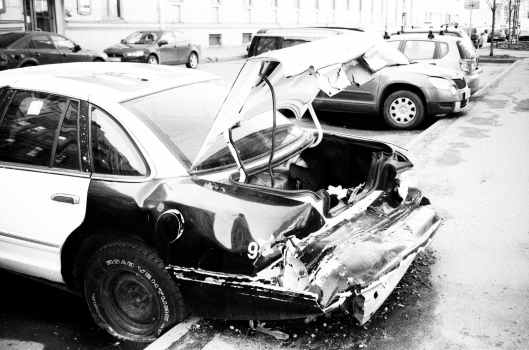
Do you think it’s safe to drink and drive? What if I told you that 13% of the drivers involved in fatal traffic accidents had been drinking? Would that convince you that drinking and driving don’t mix?

grayscale photo of wrecked car parked outside

Photo by Aleksandr Neplokhov on Pexels.com

It shouldn’t. Not by itself. Not only does that statistic, in and of itself, not show causality, it does not even show correlation! 

What else would you need in order to show that there was at least a correlation between drinking and driving? You would need to know what proportion of people who were not involved in fatal traffic accidents had been drinking. What if that percentage were 50%? What if it were only 1%? 

Let’s take another example. What is the cause of your back pain? Imagine that you went to the doctor and that you had an MRI and it showed that you had a bulging disc or some other back abnormality. Your doctor tells you that you need surgery to fix the bulging disc and that this will get rid of your pain. In fact, the doctor says that 50% of the people who have back pain have a bulging disc or other spine anomaly. What can you conclude from this about the relationship between spine abnormalities and back pain? Nothing. Not yet.

person holding x ray film

Photo by rawpixel.com on Pexels.com

You cannot logically conclude anything from this statistic in and of itself. You have to know what percentage of people who do not have back pain also have a spinal abnormality. What if it’s exactly 50%?

What if it’s only 1%? If it’s only 1%, it would seem that having a spine anomaly might be a good indicator (though not necessarily the cause) of potential back pain. 

What if 90% of the people without back pain have bulging discs? Then, it might seem that having a spine anomaly is a good thing! 

Once again, before we can even establish that there is a correlation or association between back pain and spine abnormalities, we must know four numbers:

How many people have back pain AND a spine abnormality. 

How many people have back pain and NO spine abnormality. 

How many people have NO back pain AND a spine abnormality. 

How many people have NO back pain AND NO spine abnormality. 

Then, we can test these numbers of find out whether there’s a statistical association between back pain and spine abnormality. Even if we find that there is a statistical association between the two, it would not prove that the abnormality causes the back pain. For example, it might be that some other factor is responsible for both. For instance, it might be that people who regularly run, swim, walk, or otherwise exercise have far less back pain and far fewer spine abnormalities. Conversely, it might be that people who experience back pain exercise far less and this lack of exercise is what causes more spinal abnormalities.

woman girl fitness

Photo by Scott Webb on Pexels.com

Or, it might be that older people have both more spine abnormalities and more back pain. It might really be age that causes an increase in both. 

But be careful. If you take a snapshot in time, it might be true that today’s old people have more spine abnormalities and more back pain than today’s young people. But does that prove that age itself is to blame? No. It might be that people who are old today were exposed to more pollutants than younger people. Or, it might be that people who are young today are exposed to many more artificial preservatives and that one of these actually helps prevent spine abnormalities and back pain. 

The point is not that science is impossible. It isn’t. But neither is it trivial. 

Most people who are scientists were good in science and math and they enjoyed it. While most people were struggling through science, some people, like me, loved it. In the first grade, we had a “science text book.” I found it fascinating. But I didn’t stop there. I went to our local public library on Arlington Street, and discovered that they had our textbook on the shelves — but right next to it, they also had the science text books for grades two through six. I read all of them in order and immediately the day I discovered them. 

fullsizeoutput_1375

My grandfather subscribed to Sky and Telescope, Scientific American, and The Natural History Magazine. I began reading these at an early age. If I didn’t understand something, Grandpa would explain it to me. By the third grade, I was very familiar with much of the simple “nomenclature” of anatomy, paleontology, astronomy, biology. I read 2-4 science books every week during my childhood. Mr. Wizard was one of my favorite TV shows. He was the “Bill Nye” of the 1950’s. I got a chemistry set and joined another “club” that sent a different science experiment every month. 

Most, but not all, people who are scientists today also loved science as kids. And, in high school, they — like me — continued to study and read about science. And most of them took further science and math courses in college. And most of the people who are “scientists” then went to graduate school and studied science for another four or more years. Graduate school  for science is the intense study of science. The grad student doesn’t take physical education or literature courses or “Western Civilization” courses. If they are in a science Ph.D. program, that is what they are studying. Most then do some sort of “Post-Doc” meaning that they get a job, but continue to learn on the job under the tutelage of someone already expert in the field. 

One of the things that I find fascinating about current American society is that a huge proportion of people no longer trust what scientists say. Most folks would never go to a forest ranger to have their teeth fixed. They would never go to a professional golfer to have their gall bladder removed. They would not rely on a car mechanic for open heart surgery. Yet, when it comes to climate change or the safety of vaccinations, they are willing to rely on very rich people with a vested interest to tell them what to think over a body of experts who have devoted their lives to learning about a particular field. And the “arguments” of those with vested interests are generally like the opening example. They do not tell the public all the facts or observations needed to make rational decisions.  

alcohol bar black background close up

Photo by Prem Pal Singh on Pexels.com

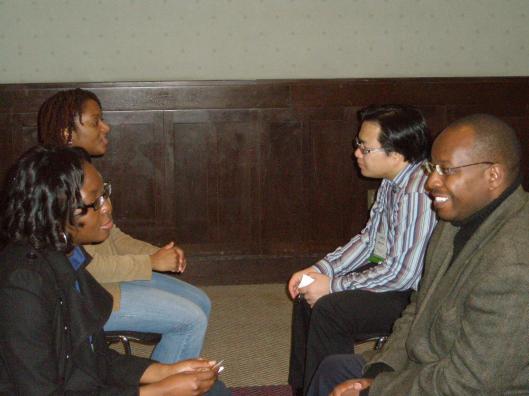
Let’s now return to our alcohol example. When I was an undergraduate, one of my part-time jobs was as a projectionist. One week I worked all week during spring break for a week-long conference at Case-Western Reserve on the effects of alcohol on driving. It turns out that (as you might expect), there is an association between drinking and being in an accident. People who are scientists not only collected data on this but also studied driving and performance under a wide variety of circumstances. 

This is also crucial to understand. Scientist do not typically just go work in a lab by themselves and come to a conclusion. They present and publish their work so that they get feedback from other experts. Of course, like other human beings, they would prefer that their work be “perfect” but at the same time they welcome feedback from these other experts. They don’t just keep asserting over and over and ever more loudly that they are “right.” A person who insists like that will soon find themselves shunned by the scientific community. 

So these scientists studying the impact of alcohol on driving came together from all over the world in order to get feedback from each other. Each became a teacher and a student. People who are done with school and don’t want to be students or teachers any more should not really become scientists. 

I am very good at finding other people’s typos. I am horrible at finding my own. That’s why I ask other people to proofread my work. 

It’s the same with science. Despite having worked for years as a scientist, individuals do still make mistakes in logic. That’s why the consensus of a large group of scientists means more than the conclusion of one scientist who has come to a conclusion. 

adult automotive blur car

Photo by JESHOOTS.com on Pexels.com

As for alcohol, some scientists at that conference at Case-Western measured the impact of alcohol on “reaction time” — how quickly a person reacted to a simple stimulus. They measured, for instance, how long it took people to push a button after a light came on. In more “realistic” tests, people sat in a driving simulator and scientists measured how quickly they put on the brakes when a red light came on. In those studies, it turned out that simple reaction time didn’t really become noticeably impacted until the person had three stiff drinks on an empty stomach! 

Someone from the insurance industry who had studied accidents in the real world, however, found that even a half drink significantly increased the chances of being the driver in an accident! That’s quite a discrepancy! 

But scientists do not throw up their hands at this point and say, “Oh, my! Science is hard! Let’s give up and go watch TV.” No. Scientists find this an interesting problem. Why is it that it takes three drinks to find a significant impairment in reaction time, but in the real world even having half a drink causes a significant increase in accidents? So, they begin to tease this apparent contradiction apart with more experiments. 

Does it have to do with particular people? People who agree to participate in lab experiments are not a random group of people from the whole population. They tend to be younger, healthier, and better educated. Could that be part of the apparent discrepancy? 

What about mood and motivation? When you come into a laboratory and people measure how quickly you can respond, you might tend to be in a “serious” mood and typically, in our competitive society, you are motivated to be as fast as possible. When you are out partying, you may be in a much different mood. Perhaps your motivation, especially if you are a teen-ager, is to “impress friends” that you are not “chicken.” So, maybe 1/2 drink might induce you to do stupid things that you wouldn’t do when you are sober. At the same time, if you’ve been drinking, chances are that your fellow passengers may have also been drinking so they may cheer you on in your choice to pass on a curve or engage in a high speed race or chase on the highway. Even if they don’t cheer you on, having friends there talking, laughing, and singing may distract you from your main task which is to keep everyone safe. Indeed, it does turn out that while simple reaction time takes three drinks to show a significant slowing, your ability to switch between tasks and to control your attention begins to suffer immediately under the influence of alcohol. 

What about back surgery to cure your back abnormality? I am not an expert on backs. Here’s a nice summary of things to think about before having back surgery. 

https://www.uofmhealth.org/health-library/aa6282

And I highly recommend the books by John Sarno. Reading this book completely cured my sciatica. Naturally, that doesn’t prove it will work for you, but you may want to try a $10 book before you go under the knife for $10,000, $100,000 or more! 

For instance: 

https://www.amazon.com/Healing-Back-Pain-Mind-Body-Connection/dp/0446557684

Take-aways: 

Don’t drink and drive. 

Science works. But it’s not trivial. Experts know more than you do. But the knowledge isn’t inaccessible. It’s not some secret hidden knowledge that scientists want to keep from you. You can become an expert in some field. But it will take time, effort, and an open mind. Or, you can take the word of experts. Or, you can decide that you’d really be okay with a forest ranger fixing your teeth or a car mechanic doing your open heart surgery. Or, you can decide to rely on people funded by fossil fuel companies to tell you whether climate change is real. 

Scientists mainly work together to seek the truth. Their “culture” is not to lie, cheat and steal in order to get rich. They get their kicks in other ways. 

If someone tries to imply a causal narrative about A causing X, you have to see the number of cases in FOUR categories before you even have evidence of an association. If they only tell you how many cases are in A & X, they are trying to convince you of something, not in having you see the truth. You need to find out how many: 

A & X

A & ~X

~A & X

~A & ~X. 

Even if A & X are statistically associated, it doesn’t prove causality. Proving causality depends on careful study using a variety of methods to converge on the truth. 

If all your doctor tells you is that you have a back abnormality and you have pain, and that therefore you need back surgery, get a second opinion. 

Of course, it’s a free country. So far. And, if you want to go to a Mexican restaurant, you’re free to order enchiladas and scrape all the sauce out and then scoop out all the ingredients and just eat the corn tortillas. You are missing out though. And if you then declare that Mexican food isn’t that great…? Well, you do the math. You really should have gone for the whole enchilada. 

————————————-

Author Page on Amazon.

Introduction to A Pattern Language for Collaboration.

Stories and Storytelling. 

The Pros and Cons of Artificial Intelligence.

The Myths of the Veritas: Book One. 

The Myths of the Veritas: Book Two.  

Essays on America: Wednesday

18 Thursday Jul 2019

Posted by petersironwood in America, creativity, politics, psychology, Uncategorized

≈ 127 Comments

Tags

advertising, bait and switch, economics, fairness, Feedback, flimflam, learning, politics, problem solving, truth, wealth

How you see where you are depends on how you got there.

It’s Wednesday. And that means, at least for most of us, that yesterday was Tuesday. Mundane, right? Obvious, right? 

C3B9202A-2605-4E21-90F8-1B78BA735C72

But suppose that it’s Wednesday for you but that yesterday was Thursday! 

Oh, my! You would be in quite a different “Wednesday” than the rest of us would. How could this happen? 

Many ways. You could be a character in a Sci-Fi movie. Maybe you were in a coma for six days. Or, you could have retrograde amnesia from a blow to the head. Or, maybe you have some weird form of temporal lobe epilepsy. No matter how you got from Thursday to Wednesday, you will treat the day quite differently from those of use who experienced yesterday as Tuesday. 

And this is generally true of human beings. 

How you experience your current reality depends a lot on how you got there. 

IMG_9724

It so happens that my dissertation studied human problem solving. I used a problem called the “Hobbits and Orcs problem.” You may have heard of it.

There are three Hobbits and three Orcs on one side of a river and you have to get them all over to the other side. The only way to cross the river is by use of a small boat. (No flying, swimming, catapulting, disapparating, etc. allowed). For the boat to operate and not simply float off downstream, it must have at least one creature in it. But the boat can only hold one or two creatures. It cannot hold more. Orcs, as you probably already know, are suspected of eating Hobbits. You cannot ever let more Orcs than Hobbits on either side of the river, even briefly. You can try the problem for yourself.  Remember though…you cannot let there be more Orcs than Hobbits on either side of the river — not even briefly. 

fullsizeoutput_120c

I compared how people solved this problem to an early AI system modestly called, “The General Problem Solver.” As you might expect, even though both humans and the AI system (GPS) can solve the problem, they behave quite differently. For instance, the places where humans have trouble (take more time; make more mistakes) are quite different from the places where GPS slows down. 

Start – HHHOOO (boat) {river}

Goal –                             {river} (boat) HHHOOO

Spoiler alert — now, I have to talk about the solution.

At one point, you will feel as though you’ve been making good progress and you have two hobbits and two orcs on the far side of the river along with the boat. Now, comes the sticking point (for humans). If an Orc brings back the boat, you’ll have two Orcs and one Hobbit on the near side. The two Orcs will gang up on the Hobbit and eat it. Fail! But if the Hobbit brings back the boat, the far side of the river will have two Orcs and one Hobbit so that Hobbit will get eaten. 

Here is the situation: 

HO {river} (boat) HHOO 

The “trick” is to use one Hobbit and one Orc to bring the boat back. Now, you use two Hobbits to take the boat to the far side, and it’s pretty easy to solve from there. The “trick” is only “tricky” because it feels as though you are undoing the progress you’ve already made! You took two over and you need to bring two back. In fact, many subjects wanted to “give up” rather than bring two creatures back over. They claimed it was “insoluble.” 

But wait. 

It gets even stranger. 

Half of my subjects began with a “half problem.” They started in this position. 

Start: HO {river} (boat) HHOO 

Goal:        {river} (boat) HHHOOO

These subjects had very little trouble solving the problem. They began by taking the boat to the left side by using one Hobbit and one Orc. They quickly solved the rest of the problem. 

Then I gave those same people, the entire problem again, but starting here: 

Start – HHHOOO (boat) {river}

Goal –                             {river} (boat) HHHOOO

They had little problem at the beginning. 

But when they got to the position shown below, many wanted to quit. Many said the problem was “impossible” once they got to this position: 

Now: HO {river} (boat) HHOO 

Goal:        {river} (boat) HHHOOO

Does that pattern look familiar to you? It should! 

This is exactly the problem that they themselves had just solved a few minutes earlier! When they started there, it was easy. But when they got there by arriving at it through their own effort, that same position was now daunting. They didn’t even recognize or realize that they had just been there. (None of this behavior was like that of the General Problem Solver, by the way). 

fullsizeoutput_124a

A number of economists were interested in this result. Why? Because “classic” economics operates like GPS. It looks at the Starting Point. It looks at the Goal. It looks at various possible moves. It doesn’t “care” how it got there. According to classical economics, if you buy IBM stock at $50 and I buy it at $150 and now it’s at $100, if we have the same knowledge, then we should make the same decision about whether to buy or sell. In reality, people do not. If you bought it at $50, you’ve made a huge profit and are happy to sell it. If I bought it at $150, I’m going to suffer a loss. How people view a situation is heavily dependent on how they got there. 

Now, let’s play another little “what if” game. 

What if you were an extremely rich person who also happened to be extremely selfish. In America, for instance, worker productivity has increased decade after decade. This meant that the wealthiest people in the country kept getting wealthier and wealthier. But the workers, who made a lot less than the owners, also benefited by getting wealthier. 

Until around 1974. Then, a strange thing happened. The productivity of American workers continued to grow. However, the increased wealth that accrued from all those people learning new technology, learning new methods, using the suggestion box, etc. — none of that increased wealth went to the workers. All of it went to the richest people in the country.  

https://economics.stackexchange.com/questions/15558/productivity-vs-real-earnings-in-the-us-what-happened-ca-1974

There had been a kind of partnership between owners and workers. The owners of large companies said, in effect: “if you keep being more productive by working harder, smarter, and faster, we will all benefit. We’ll have more profits and you’ll have higher wages.”

Then, the owners stopped living up to that implicit agreement. They took all the increased profits for themselves. Basically, that’s what happened in 1974. And it also happened in 1975, 1976, 1977, 1978, 1979, 1980, 1981, 1982, 1983, 1984, 1985, 1986, 1987, 1988, 1989, 1990, 1991, 1992, 1993, 1994, 1995, 1996, 1997, 1998, 1999, 2000, 2001, 2002, 2003, 2004, 2005, 2006, 2007, 2008, 2009, 2010, 2011, 2012, 2013, 2014, 2015, 2016, 2017, 2018. It varied, of course, somewhat from industry to industry, and month to month, and company to company but that is the big picture. 

People who had organized their lives and the lives of their families around their jobs found that they had no job. Their jobs were shipped overseas or given over to automation. They were pissed off. As they should have been. Notice that this trend continued unabated under both Republican administrations and under Democratic administrations. It’s hard to even see a difference in the divergence that occurred between the ever-increasing wealth that workers contributed through their increased productivity and the stagnation in their real wages. 

Then, we come to 2016 and someone said, “You can’t trust these politicians. They’re all the same. They are in cahoots with their rich donors. You know who you can trust? ME!” 

IMG_8380

The very worst fear of many of the wealthiest .001% of the country is that all workers will get together and demand their fair share! The workers are at least as responsible for the increased overall wealth as the owners. But while real wages for workers has been basically unchanged for decades, the compensation for owners has skyrocketed. Of course, they know it’s unfair! They don’t care if it is unfair. But they do care greatly that the yacht party of caviar and champagne continues unabated. 

How to deal with this? What can you do if you’re wealthy because of other people’s work and this becomes common knowledge? You divide and conquer. You shout long enough and hard enough in every possible medium of communication that it isn’t the greed of the wealthy that has kept your wages from going up. Oh, no, not at all. It’s the foreign competition. It’s the people of color. It’s the gays. It’s the Muslims. It’s the Jews. It’s the uppity women. It’s the video games. It’s violence on TV. It’s sunspots. It’s aliens from other planets hidden in area 51. It’s lack of ambition on your part. It’s because you haven’t taken responsibility. It’s because of liberals who want to take all your guns away and make you eat quiche or salad. 

IMG_6566

Those that want it all for themselves are terrified that you’ll catch on to their game. And, if you do catch on, you may just choose not to play any longer. So, they buy politicians. They buy air time for commercials. They indoctrinate you to hate workers that look different; that speak differently; that eat different foods; that wear different clothes; that worship in buildings with a different shape. They plant lies about all of these “other” people so that you will hate those “other” people — meanwhile trying to convince you that they are on your side; that they are just like you really. After all, you’re both “white” or “straight” or “Christian” or “Midwestern” or whatever. But the truth is — the lives they live are quite different. Despite being extremely wealthy, many of them pay far less tax than you do. If their kids goof off in high school or aren’t very bright — no problem! They’ll just bribe the way for their kids to get into a top university.  

So far, their little game has worked. By using the same methods that get you to buy skin products you don’t really need; the same methods that get you to buy sugared water at a high price; the same methods that get you hooked on sugar; the same methods that make you feel guilty about being overweight; the same methods that induce you to buy products and systems to help you lose weight; the same methods that fool you in a thousand ways — they get you to hate other people — people who are superficially different are “sold” as being fundamentally different. While the people whose lives really are fundamentally different from yours are being touted as living lives that are very similar to yours.  

IMG_3408

Once you begin voting for the folks who are paid for by these very wealthy people, you will tend to listen to them. You will tend to believe them. Not because you are stupid or gullible. You will do it because that’s what you’ve done in the past. The more you vote for them, the more you want to believe them. And, here’s the kicker: if they are outrageous  in behavior and speech, you will want to believe them even more. After a few years, it doesn’t matter how absurd or ridiculous what they say is. You’ll still believe them. It’s not your fault, really. But it does keep you, and all the rest of us, trapped in a vicious circle. 

You got to this Wednesday from yesterday. But your yesterday was Thursday. It’s comforting to know that there are millions of others who also got here from Thursday. 

You don’t have to keep choosing this way. But many of you will. And, that’s precisely the way that the wealthiest .001% like it. They don’t want to share with you the wealth that you created. They’d much rather keep things the way they are. They’d much rather keep that wealth for themselves. After all, caviar, champagne, yachts, and beautiful teen-agers are expensive. 

There is, of course, a much easier solution to the Hobbits and Orcs problem. Hobbits and Orcs could stop hating and mistrusting and killing each other. Then, crossing the river to the other side is easy. And that benefits everyone. 

Everyone, that is, except the .001%. 

—————————————————

Author Page on Amazon. 

Abstract of article in Cognitive Psychology


Resonance

20 Thursday Dec 2018

Posted by petersironwood in America, management, psychology, Uncategorized

≈ 2 Comments

Tags

creativity, Design, Feedback, golf, harmonics, learning, politics, programming, resonance, sports, testing, thinking, timing

Resonance

If you have ever pushed your kids on a swing, you know that timing is important. If you add the power of your next push just as the child reaches the apex and begins to fall back, you will swing your child higher and higher with little effort. On the other hand, if you add the power of your next swing at the bottom of the arc just as the swing is moving toward you at maximum speed, you will nearly stop the swing and likely injure yourself and/or your kid. Please don’t try it.

boy wearing blue shirt sitting on swing

Photo by Git Stephen Gitau on Pexels.com

In sports as well, the timing of when you add your effort is critical. In golf, for instance, many beginners think a lot about their hands, probably because we use our hands for many daily tasks such as texting, flipping burgers, playing video games, etc. While the hands are certainly important in the golf swing, they are the last thing to bring to bear on the golf swing, not the first. If you add your hands and wrists at the last moments right before you hit the ball, you will  be accelerating the club face as you hit the golf ball. You will have greater velocity and also more stability and hence more accuracy for the shot. 

woman playing golf

Photo by Jopwell x PGA on Pexels.com

The golf swing is a complex athletic move that I cannot describe in detail. Here’s what is important in this context. Some parts of the golf swing (notice the word: swing) are much like a pendulum. The longer parts of the body (e.g., the arms) take longer to swing on their own. The shorter parts of the body take a shorter time to swing on their own (e.g., the hands). In addition, the shortest pendulum (the hands) is at the end of the longer arm swing. This means that for the arm swing and the hand/wrist moves to multiply effectively, you must engage the hands and wrists toward the bottom of the arm swing when the arms are already moving at top speed. 

What is True in Mechanics and Sports is also True in Social Engineering.  

If you work in a highly competitive, even cut-throat sales environment, in which there is a long tradition of stealing commissions, grabbing each other’s customers, etc., having the sales manager say something like, “You know what? Let’s cooperate! Put the customer’s interests first, not your own commission” is pretty much useless. A manager’s exhortation to cooperate is a short term high frequency “push” but it will be just as ineffective as trying to start your golf swing with your hands, or trying to push a swing with all your might when your kid is swinging toward you at top speed. If the cultural milieu is cut-throat, the manager’s statement will not be sufficient to change that culture. What the sales people will do is make sure that they have a semi-plausible story ready about how stealing someone else’s commission was really best for the customer. 

group of people raising right hand

Photo by rawpixel.com on Pexels.com

On the other hand, imagine instead that sales people have shared commissions for years and that the company takes many steps to build social capital and cooperation among everyone on the sales force. Now, the manager may do something publicly to praise an actual instance of cooperation. It doesn’t have to be heavy-handed or over the top. It is a gentle push that adds energy to what people are already doing. This is akin to adding the hands to a good golf swing or adding your swing push just as your kid begins to descend. 

Don’t get me wrong. If your house is on fire, you should leave. Grab your kids and pets but don’t bother with last weeks losing lottery tickets. 

But — you also need to understand why your house caught fire – perhaps faulty wiring – and why the fire was not immediately doused – e.g., your fire extinguishers are out of date. If you don’t fix underlying problems, your next house is likely to catch fire as well. 

If your culture is so materialistic and superficial that a blow-hard sleaze bag who seems to have great material wealth is celebrated no matter how he or she came by that wealth and fame, you may have to deal with the short term problem first, but unless you also deal with the underlying cultural, social, and economic problems, you’ll likely find yourself in precisely the same situation again. The same or other foreign enemies will attempt to exploit those same weaknesses again by finding a different celebrity with deep underlying character defects. Those enemies will push particularly hard during a crisis or an election and they will push particularly hard in the errant directions that society is already trending toward. 

The String’s the Thing Wherein We’ll Capture the Conscience of a King

Next time you have access to a piano, try the following experiment. Gently push down the C, E, and G keys above middle C. Keep them pressed down with your right hand and then strike middle C sharply with your left hand and let it go. What you will hear is that the strings of C major (C, E, G) will vibrate for quite a time after you release the middle C key. If instead, you gently push and hold down the D, F, and A keys above middle C, you will hear very little sound coming from them. Why? Because the harmonic resonance of  middle C is greater with the C, E, and G than it is the D, F and A keys. Similarly, some people will tend to “resonate” with certain messages more than others will. 

close up photo of person playing piano

Photo by Juan Pablo Arenas on Pexels.com

This is why, for example, Russian fake news that was meant to suppress the black vote carried false stories to indicate Democratic candidates didn’t care about the “Black Lives Matter” movement, while false stories about how Democratic candidates don’t care about gay rights were targeted toward the LGBTQ community. Of course, even putting Russian election interference aside, candidates typically target their messages to those that will “resonate” with particular voters. For instance, a candidate who believes in an isolationist foreign policy, forgiving student loans, low estate taxes, and better benefits for veterans might focus a speech to a group of veterans on their desire to see better benefits for veterans.  The same politician, when speaking to college students, will tend to focus on forgiving student loans. That has been “business as usual” for my entire adult life. What was really new to me in 2108 was this: an entire raft of Republican candidates promoted the idea that they were concerned about making sure that insurance companies covered pre-existing conditions. In fact, they had always voted against it and were suing to make this provision of Obamacare illegal. 

Prior to the existence of lying news networks and fake web sites who would echo such lies, politicians of either party would be reluctant to employ blatant lying about their positions because, even putting ethics aside, they would be easily discovered. However, if some of their constituents only believe fake news networks, then such politicians feel that they can lie with impunity The news presented on such networks resonates with what the lying politicians say and resonates with what those viewers want to hear and believe about the people toward whom they are already favorably disposed.

person woman music musician

Photo by Skitterphoto on Pexels.com

Resonance and the Overly Long Time                                                     Lag.

While managing a research project on the psychology of aging at Harvard Med School, I lived in a suburb called Woburn. This rented house had a hot water heating system, and at some point, during a particularly bitter cold New England winter, the furnace stopped working. I could have called in a professional, but instead, I tried to fix it myself. As a part of this system, there was a small gauge that looked a lot like the gauges in a level, but this one was upright and generally half filled with water. I noticed that now, instead of being half filled with water, it was only about 1/10 filled with water. I didn’t exactly understand why this could be problematic but the instructions said it should be half filled with water and there was a valve to let more water in. So, slowly and cautiously, I opened the valve. Nothing happened. I opened it a bit more. Nothing happened. I opened it a bit more. Nothing. I was about to give up and call a repair person. All at once, the little vial began to fill. Yay, me! I turned the valve off because the instructions also said the gauge should not be overfilled. But it kept filling. And filling. Damn! I made sure the valve was closed tightly. It kept filling anyway! Double damn! The gauge exploded! I had been the victim of — well hubris, of course, because I thought I could figure it out — but also a victim of delayed feedback. When feedback is delayed, all sorts of havoc can ensue. 

photography of green and red fire works display

Photo by Anna-Louise on Pexels.com

You may have experienced a similar time lag issue with hotel showers. You turn up the hot water and the shower water stays cold. You turn it up more. It stays cold. You turn it up more and it still stays cold. And then…all at once you’re being boiled to death in your own shower and you begin wondering who will find the naked body. 

Back in the early days of using LOTUS NOTES, there was a button on my screen that said, “REPLICATE.” And if I clicked on that button, a replication process would start. (Basically, it was downloading my email from the server to my ThinkPad). But sometimes, the mouse click did not register. This might not be a giant issue. In other cases, I would simply click again and this worked for most applications. But in this case, NOTES put up another button, in the same exact spot as the REPLICATE button, that said, “STOP REPLICATION.” The State of the Replication Process, however, was not accurately reflected by the State of the Button on the screen! This was endlessly annoying and could easily have been avoided. There was plenty of screen real estate to put a “REPLICATE” button along side the “STOP REPLICATION” button. Once connection speeds were faster and the computational facilities themselves were faster, this UX issue ceased to be an issue because there was no noticeable time lag between the state of the process and the state of the button. 

man holding remote control

Photo by JESHOOTS.com on Pexels.com

However, I still run into similar issues with Cable TV remotes. Do you? The time lags associated with clicking something on the remote and something happening on the screen is so long, that you begin to wonder whether the battery has gone dead or whether it is aimed wrong or whether the button was not fully depressed. Indeed, I sometimes wonder whether the entire system is truly electronic. I have begun to believe that the button press actually sends an ultrasonic dog whistle to a pack of hungry weasels who hear the whistle. To them, it’s a signal that they are about to be fed. They begin scampering in unseen cages toward their food dishes. The scampering of their feet is picked up by sensors under the floors of the cages. These sensors cause dials to change in a control room staffed by retired school janitors who push a series of buttons that change the channel or the input designation or turn on captioning, but only after they finish the New York Times crossword puzzle they are working on. Then, and only then, does the desired action take place. But if and only if you’ve been patient enough not to hit the button a second time. 

adult audio concert control panel

Photo by Roman Pohorecki on Pexels.com

Of course, if you are the user in this scenario, there is a fix. Push the button once and only once. Now, go outside and run around the neighborhood for fifteen minutes before interacting a second time with the remote. Sure, it takes a long time to get to your program but you’ll be in much better shape after just a few months of this regimen. 

On the other hand, if you are the designer of such systems, you might consider that it would be less expensive in the long run to replace the ultrasonic dog whistles, the weasels and the retired janitors with an actual system of electronics which, after all, is supposed to run at nearly the speed of light.

landscape photography of field with wind mill with rainbow

Photo by Paweł Fijałkowski on Pexels.com

The Takeaway

In comedy, timing, as in life, and UX design, and pushing your kid on the swing, and your golf swing, and social interventions, and election interference, and human short term memory limitations, is everything. 

—————————-

Author Page on Amazon. 

Metaphors We Live By and Die By

12 Wednesday Dec 2018

Posted by petersironwood in America, family, management, psychology, Uncategorized

≈ 5 Comments

Tags

Democracy, elections, Feedback, government, life, metaphor, politics, programming, thinking

Metaphors We Live By and Die By

PicturesfromiPhone2 087

I love metaphors.I always have. I admit it. I think every youngster does, at least until they are exposed to poetry in English class. I was lucky to have an awesome English teacher who deepened rather than destroyed my natural love of metaphors. There are plenty in my own poems.  but in this post, I am not focusing on metaphors for poetry so much as metaphors that we use in our thinking. Metaphors impact the way we approach situations at work and at home. I was influenced to see this by two main sources. First, Lakoff & Johnson’s book, Metaphors we Live By  was first published in 1980. This book greatly influenced, among other things, our IBM Research team’s study of human-computer interaction. At this point in the history of human-computer interaction and user experience, researchers and practitioners began to explore how various metaphors (e.g.,desktop, trash can, windows, drag and drop) could be used to help users understand the capabilities of computers and how to invoke them. (See, e.g., Carroll, J. and Thomas, J.C. (1982). Metaphor and the cognitive representation of computer systems. IEEE Transactions on Man, Systems, and Cybernetics., SMC-12 (2), pp. 107-116). 

Consider the error messages “Illegal Syntax” and “User Error.” They both put the responsibility for an undesirable state of affairs squarely on the shoulders of the user. “Hey you! User! You did something dastardly! You used illegal syntax.”

man wearing jacket and peaked cap grayscale photo

Photo by Brett Sayles on Pexels.com

Generally, the term “illegal” implies that you did something that was against the law. It usually implies you did something unethical too. Gerry Weinberg, one of the pioneers of UX/HCI (a keynote speaker at the Gaithersburg Conference),  pointed out that the “legal” syntax of languages often has arbitrary restrictions. It might be more accurate to have an error message that says, “Our programmers were unable to take the time to allow dates to be entered in European or Chinese format. Please enter dates as MM/DD/YYYY as in 08/04/1961 for August 4th, 1961.” This longer message tells the user what was “wrong” with their input and how to correct it as well as conveying the very real truth that the limitation is with the software, not with the user. Similarly, what is called “User Error” actually comes up as a message when the user does something that seemed reasonable to the user and would most likely be interpretable by another human being but was not anticipated or could not be dealt with by the programming team. Suppose it said instead, “Software error. We did not anticipate this kind of input so we can’t deal with it.” Or, in many cases, a more honest message might be: “Software error. We knew people would want to do this, but we didn’t have budget to program properly.”  

silver and gold coins

Photo by Pixabay on Pexels.com

 At the same time I was thinking about metaphors and Human Factors in Computing Systems, I was also conducting therapy as a Fellow at the Institute for Rational Living. I was learning and supervising cognitive behavioral therapy under the direction of Albert Ellis. Here I observed how people used metaphors to help make sense of their lives and make decisions about their lives. For example, as pointed out by Lakoff & Johnson, people often viewed romantic love as a sickness! It is also common to view romantic love as a journey over which you have little or no control. It is understandable why it sometimes feels that way, but such a metaphor is not empowering. It does little to lead you to make reasonable decisions about love or about those whom you love. Think instead of love as a collaborative work of art. 

man standing beside his wife teaching their child how to ride bicycle

Photo by Agung Pandit Wiguna on Pexels.com

The “Love is a collaborative work of art” metaphor encourages you to realize that you must collaborate with your partner to make a relationship work over time. You can’t really collaborate very well unless you communicate. It also encourages you to realize that work is involved. It encourages you to realize that it is a creative endeavor. While you can certainly learn from the successes and mistakes of others, in the end, your relationship is unique. It will take creativity to make your relationship work. It puts the responsibility for the relationship on you and your partner, not on forces beyond your control. 

It isn’t only love about which people often use inappropriate metaphors. For example, when it comes to overcoming addiction, overeating, under-exercising, people often use sin as their over-arching metaphor. “I was bad last night. I had two pieces of pumpkin pie.” “I was horrible all week. I had those evil donuts every morning.” The metaphor that “eating is evil” is inaccurate. After all, you have to eat to live. Furthermore, that metaphor doesn’t lead to any solutions except to try harder to be “good.” Worse than that, if often subverts a person’s efforts. “I didn’t want to have any ice cream but I did. Oh, well, the night is blown. I may as well eat the whole quart.” (Now that I’ve sinned, I may as well enjoy it). Weight is best thought of in purely physical terms. If you ingest more calories than you burn you will gain weight. If you burn more calories than you consume, you will lose weight. That’s it! That’s all there is. Making it about good and evil does not help and, in my experience, is completely counter-productive. 

donuts and bagel display

Photo by Igor Ovsyannykov on Pexels.com

Speaking of counter-productive metaphors, I have been annoyed and concerned for decades that the media have largely (though not wholly) reported on political matters as they report on sporting events. During election season, you will hear relatively little about the candidates, their positions, their backgrounds or their ethics. You will hear a lot about strategy and where they stand in the polls. Often you will literally hear nothing more than a sound bite per day about major candidates. Then, pundits will unendingly discuss and debate how this or that sound bite will work or not work with various voter groups. No matter how outrageous, unethical, or disgusting a candidate’s behavior is, the media will spend most of their coverage on how it will affect the “score.”

Metaphors have consequences. 

We now find ourselves in an extremely weird position, at least in America. One candidate has “won” the “World Series” of elections (American Presidency). Many of the people who voted for him think of themselves as his “fans” and “supporters.” They believe their guy “won” so they want to continue to support “their team.” After all, imagine that you are a Yankees fan and the Yankees won the World Series. You get to have bragging rights until the next World Series. If one of the Yankees turns out to be a tax evader, you’re still going to be a Yankees fan. If one of the Yankee pitchers turns out to have cheated during the games, say, by putting illegal substances on the baseball, you’ll still be a Yankees fan. Another Yankee might be a wife beater. But, hey, they won the World Series! So you’re still a loyal Yankees fan. 

man wearing new york yankees cap

Photo by Oleksandr Pidvalnyi on Pexels.com

Here’s the thing. It doesn’t make a whole lot of real difference in your life who won the World Series. It doesn’t matter materially to your kids. It doesn’t matter materially to your grandkids. Don’t get me wrong. It will make some difference in how you feel. You and your whole family might be happy they won. But it won’t make the air you breathe cleaner or dirtier. It won’t make the water you and your family drink pure or contaminated with carcinogenic toxins. It won’t make or break the economy. Having the Yankees or Boston Red Sox win the World Series will have zero impact on global climate change. Even if Chicago wins the World Series, it won’t start an atomic war. If the Phillies win, it won’t mean you will lose your health care. Stay loyal to those Yankees! Or to the Green Bay Packers. Or to Manchester United. Or to the India National Cricket Team. Or whoever your favorite team is. Why not? 

Politics though, regardless of how it is reported by the news media, is vastly and vitally different from a sporting event!  Who is in office can have a huge influence on what happens in the lives of people. In the case of an American President, who is in office can have a huge influence on the lives of people around the globe, not only today and tomorrow, but also for decades to come. 

white and grey voting day sign

Photo by Element5 Digital on Pexels.com

Collectively, those Americans who voted (about 137.5 million) in the last Presidential election hired someone for a job. (Actually, nearly 63 million voted to hire him while nearly 66 million voted to hire Hilary Clinton). POTUS is an important job and how that person does that job impacts your life in a very real way. It impacts the lives of your friends and your family. It impacts the lives of people around the world. Every action that person takes, every speech they give, every statement they tweet has an impact. You or I might send out a nasty tweet about people. But our nasty tweets are very unlikely to cause someone to construct and send pipe bombs to the people we tweeted about. We have hired someone to do a very important job. It isn’t a sporting event.

IMG_2349

Imagine instead of rooting for your favorite sports team that you hired a guy to take care of your kids. To you, that is certainly an important job. After you hire him, you discover that the person you hired lied to get the job. He lies to you every single day. He steals from you! Not only that. Every day, he trashes your house a little more. He has parties at your house and the people he invites include known criminals. Worst of all, this guy you hired is a child molester! That’s obviously a nightmare scenario. What makes it worse is that many people knew that the person you hired was a crook and a child molester. 

What do you do when there is a mountain of evidence that he is lying to you; stealing from you; trashing your house; consorting with known criminals; and is a child molester? 

IMG_9150
IMG_3123

Do you keep him on to watch your kids anyway out of a sense of loyalty? 

Do you feel so guilty about hiring him that you insist to all your friends and relatives that this guy is doing a great job? (Because, after all, that’s what he keeps saying). 

Do you keep him on until he is convicted in a court of law? 

Of course you don’t! You fire him immediately. 

You have the power to choose the metaphors you use. You don’t have to stick with a metaphor just because it was the first one to occur to you. 

Metaphors have consequences. Whether in your personal life, work life, or political life, choose your metaphors with care. Don’t latch on to one simply because it’s the one the mainstream media discovered rakes in the most ad revenue.

IMG_5126

Author Page on Amazon

 Representation 

11 Tuesday Dec 2018

Posted by petersironwood in America, management, psychology

≈ 3 Comments

Tags

Business, Design, Dictatorship, Feedback, measurement, politics, programming, Representation, science, symbol, testing, truth

 Representation 

“Choose your words carefully.” We have all heard that advice. It’s good advice and choosing a good representation is key to solving problems, but the general point extends beyond choosing words. Take a few moments now to divide DCXXXV by IX without translating to Arabic numerals. Go ahead. I’ll wait. 

PicturesfromiPhone 080

Choosing the “best” representation for a problem depends on the nature of the problem but it also depends on your own skills and experience with a representation. If you have memorized the multiplication tables up to 99 x 99 (rather than only up to 9 x 9), you can use different techniques for multiplication than if you haven’t. If you already know how to program in FORTRAN and LISP, some algorithms will be easier to program in FORTRAN and some will be easier in LISP. But if the only language you know is R, then under most circumstances, it will be far faster and less error prone to use R than to learn another language and then use that one. 

Every representation of a real-world situation will necessarily make some features of the situation obvious and other features will be hidden or less obvious. An elevator, for instance, might say, “Capacity: 12 people.” If all of the people are wildly obese, then 12 may not fit into the elevator. The capacity sign is assuming that the people will be somewhat average. If there are 12 adults in the elevator, and one of them is holding a newborn, it won’t make much difference. If there are only 10 people in the elevator and each one has a large suitcase full of gold bullion, there may be room for all 10 to stand, but the total weight of the cargo may exceed the capacity of the elevators, snap the cable, and plummet you to your death. Remember that the next time you get on an elevator filled with folks who have suitcases of gold bullion. 

bullion gold gold bars golden

Photo by Pixabay on Pexels.com

Every representation has its limitations. If you’re familiar with a field, you will hopefully learn to recognize what those limitations are. In a famous book, The Mythical Man-Month, (still worth reading, though it should be called “Person-Month”), Fred Brooks shows that such a metric as “man-month” or “person-month” has serious limitations in planning and executing software projects. Some have paraphrased his message this way: “You can’t use nine women to make one baby in one month.” According to Brooks, who had plenty of experience as a high level manager of large software projects, when management finds that a software project is behind schedule (which is quite often), there are two major reactions of management: 1) require more measurements, reports, and presentations to management and 2) hire more people. 

batch books document education

Photo by Pixabay on Pexels.com

The issue with reaction 1 is partly that it takes time away from the managers and workers in order to make those measurements, prepare those reports and presentations, and to attend the meetings. Beyond that, it puts the focus of attention on those measurements (representations) which will only be at best, modestly correlated with what the real problems are. If, for instance, requirements keep changing, or there are incompatibilities in the requirements, measuring lines of code produced is not only useless in itself; it keeps people from tackling the hard problem. A solution to a hard problem might be telling the client that there can be no more changes in requirements. A solution to a hard problem might be resolving the incompatibility in requirements. One can count lines of code pretty easily. One can count other things like “function points” with a little more work but it doesn’t require getting into the “hard” and people-oriented problems that really need to be solved. 

fullsizeoutput_12f8

Reaction 2 – adding more people – will put more “resources” on the project. You can easily count the people. You can easily count the hours they work. The problem is that a person-hour is, like the elevator capacity, an over-simplified metric. In fact, it is a much worse representation of the resources on the project than the elevator metric. First of all, studies show that even among programmers with equal training, there are often ten-fold differences in productivity. The second, and even bigger issue is that even really productive programmers who are added late to a project will have to learn about the project: the people, the requirements, and the code base. If these new people are stolen from an existing project, that will also put that project in jeopardy as well. If they are instead new hires, then in addition to all the technical knowledge that they need to come up to speed on, they will also have to learn all sorts of administrivia that will take time and brain space away from the project: how to commute to work, where the cafeteria is, how to fill out time cards. Most likely, they’ll have to attend ethics training, and diversity training, and safety training. Even worse, a lot of the knowledge that they will need to become a productive member of the team mainly exists in the heads of the very people who are doing the programming now! This means that the busiest, most productive people on the project will have to take time away from programming to spend it instead on answering questions that the new people will have. 

Even this understated the real impact however. Let’s look at that phrase I just used, “…will have to take time away from programming to spend it instead…” What hidden assumption about representation is buried in this phrase? It gets the reader to think along the lines that time is additive. If I am deeply involved in programming and I get an IM or phone call from a newbie asking me a question about the project, it might take an hour to answer. Does that mean I have subtracted an hour from my own productive programming? No. It’s probably much worse than that. Why? Because I am not a machine, but a human being. It will cost me much more than the hour to get back to the same state of flow that I was in when I was interrupted. 

I was involved for a time in looking at programmer productivity for high performance computing  using various tools and the X programming language. One of the people I interviewed put it this way: “My manager calls for an hour meeting for 10 am when I am in the middle of a complex [parallel programming] problem. He thinks he’s taken an hour of my time. For him it’s an hour long meeting. But for me, he’s really destroyed the whole morning.”  

fullsizeoutput_1163

These representational issues apply far beyond software development. For example, in the USA and in many other countries, we look at GDP as a measure of the economic productivity of the country. But how does this metric shape — or distort — our view of productivity? If a parent stays home with small children and they both love the time together, and the parent uses that time to help grow a loving, educated, productive citizen, it adds to the well-being of the country as well as that child and that parent and that family. But GDP? Nada. If instead, the parent paid money to put the child in mediocre day care, that would add to the GDP. 

man and woman holding wine glasses

Photo by rawpixel.com on Pexels.com

Similarly, if I go to the grocery and buy a hard, tasteless tomato for myself, I will pay for the growing of that tomato, advertising it, shipping it, warehousing it, displaying it, and for the genetic alterations so that the tomato, while tasteless, is easy to transport without spoiling. Yay me! I have added to the GDP. But if I go to a friend’s house and taste a wonderful tomato, ask for some seeds or a cutting and grow my own heirloom tomato, watering it lovingly with rainwater, weeding around it, and fertilizing it with compost, I have added zero to the GDP. Yet, the tomato will give me more pleasure, not less, than the croquet balls they have in the store. 

Representation is a good thing! Humans use symbolic thinking to do many things that would be difficult or impossible without these kinds of representations. But we must remember the limitations and not confuse reality with our representations of reality. 

This is not a new phenomenon. In the American Revolutionary War, high ranking British military officers could not understand why the British navy “refused” to navigate their warships up the Bronx River to attack revolutionary positions upriver. If you’ve ever seen the Bronx River, you’ll realize why immediately. But the maps that the British brass looked at showed a navigable river! 

river inside forest near brown leaf trees

Photo by Nashwan guherzi on Pexels.com

Yes, we need to use representation in our thinking. But we also need to think about our representations. You cannot assume that the one that is customarily used is “right” in all circumstances. People of different backgrounds and cultures will often use somewhat different representations of a problem or situation. (This is one of the advantages of diversity). However you do it, it’s worth questioning whether the way you are representing a situation or problem is optimal, or even adequate, for the problem at hand. 

Suppose you are measuring “number of user errors” that users make while using a prototype text editor. You move from prototype A which averaged 10 user errors per half hour test to prototype B which only averages 5 user errors per half hour. Yay! You’ve cut user errors in half! But what if the errors you eliminated were all fairly trivial; e.g., people with version A couldn’t figure out how to number their footnotes with Roman numerals instead of Arabic. In version B, that error, along with other trivial errors, was eliminated. But one of the new errors causes the system to crash and all the user’s work to be lost. Have you really made progress? 

All errors are not alike. All dollars are not alike. All people are not alike. Not even all tomatoes are equivalent. We constantly over-simplify and yet in some cases it’s necessary in order to deal with complexity. I don’t see how all such errors can be avoided. But it’s crucial for everyone, but especially for managers and executives, to be open to the cases where the representation that is being used has become counter-productive rather than “doubling down” on such errors. Finding and fixing errors of representation are generally harder to diagnose and fix than errors made with a representation. That is all the more reason why everyone, but especially leaders, must be open to changing the way issues are represented. 

IMG_9627

It is no accident that dictatorships generally result in nations wherein people have both less material wealth and less enjoyment and freedom. A dictator typically refuses to admit mistakes and fix them even if it means murdering someone to make the problem appear to go away. Ultimately, this process ruins any organization. Such a person need not be a national leader. They can be a company manager, a coach, a corporate executive, or a parent. Everyone makes errors, including errors of representation. But a reasonable person is open to fixing it when new information becomes available. You can be like that too. 

sunset beach people sunrise

Photo by Pixabay on Pexels.com

———————————-

Author Page on Amazon

————————————


Regression to the Mean

10 Monday Dec 2018

Posted by petersironwood in America, management, psychology, sports

≈ 2 Comments

Tags

Business, experiment, family, Feedback, HCI, learning, life, politics, science, sports, testing, usability, UX

Regression to the Mean

selective focus photography of yellow leaves

Photo by Haugenzhays Zhang on Pexels.com

While working full-time at IBM Research, I was also a Fellow at the Institute for Rational-Emotive Therapy in Manhattan. I wrote an article in 1978 for their Journal, Rational Living.  The title was: “Why Do I Self-Down? Because I’m an Idiot?” Indeed, many people put themselves down and it is not helpful. I hypothesized several different causes for this kind of self-slamming behavior. Most of these causes you could probably figure out on your own. But one in particular is subtle and non-intuitive. It is based on a statistical phenomenon which few people know about despite the fact that it is extremely pervasive. This phenomenon is called “Regression to the Mean.” 

I want to define this term by explaining some examples. Imagine that you have a new soft drink which contains a combination of herbs that will purportedly make you smarter; e.g., gingko and bacopa. (There is some evidence these may actually work but let’s assume that they don’t or that your tea has too little to be effective). Here’s what you do to “prove” that it works anyway. You give an IQ test to 10,000 people and choose the 50 who score the lowest on the test and have them drink your tea for the next six months. At the end of that time, you give those 50 people an IQ test again and — Voila! The average (or mean) of the IQ scores has almost certainly gone up. Yay! It works! 

Or does it? One of your competitors is not too happy about your study. In fact, they aren’t even happy you put your tea on the market. They decide to prove that your tea is not only ineffective but that it makes people less smart. So what do they do? They give an IQ test to 10,000 people and they pick the 50 who score the highest. They have them drink your tea for six months and at the end of that time, they have them take another IQ test. In this case, the mean (average) score is lower than the first time! Ouch! They say your tea causes brain damage! 

photo of head bust print artwork

Photo by meo on Pexels.com

How can the same tea make people smarter and make them dumber? In this case, it does neither. What is going on? Here’s what is going on. When you measure something, there is always some error. Whether you are measuring your weight, your height, your blood pressure, or your IQ, the measurement is never exactly perfect. Your weight may vary slightly because of atmospheric pressure and more so because of water retention. If you take an IQ test, your score will partly reflect how well you do on such tests in general, but it will partly depend on luck. You may have felt particularly good that day, or a few of the questions might have been on topics you just heard about on TV the day before, or you may have made some lucky guesses. Or, you may have been unlucky on a particular day. You might have had a cold or misread one of the questions or forgotten your morning coffee. On any given day, some people will be a little lucky and some people will be a little unlucky. These things tend to balance out in a large group and if you tested all 10,000 people after six months, then assuming the tea has no real effect, no effect will be shown in the data. 

cards casino chance chip

Photo by Pixabay on Pexels.com

However, if you select the very best scores, you are partly picking smart people, of course, but you are also picking the people who were lucky that day. When you test just those people six months later, they will generally be just as smart but there is no reason to suppose they will be lucky again. Some will be lucky both times, most will not be particularly lucky or unlucky and a few will be unlucky. The average score will be lower. Conversely, if you choose the lowest scoring people, you will partly be choosing people who don’t do well on such tests in general. But you will also be choosing people who were tired, sick, guessed wrong or were otherwise unlucky that day. When you retest, those people will still tend to be people who do poorly on such tests, but they won’t necessarily all be unlucky again. Some will. Some won’t. On average, the scores will be higher than they were the first time. 

The phenomenon of “Regression to the Mean” was first noted by Francis Galton in the 1880’s. Tversky and Kahneman, so far as I know, were the first to note that this phenomenon could easily cause managers, coaches, and parents to end up being unnecessarily negative. Here’s how it works. Let’s say you are learning to hit tennis serve. Although you will likely improve in general, over time, there will also be a lot of variation in your performance. Sometimes, everything will work well together and you’ll hit an excellent serve, one that is above your average level. At first, the coach’s natural inclination will be to praise this by saying, “Wow! Great serve!” or something like that. Unfortunately, your next serve, due to regression to the mean is very likely not to be quite as good as that one was. Your coach’s praising behavior was thereby punished. On the other hand, if you hit a particularly poor serve for your level, your coach might say, “Oh, come on. You can do better than that!” If they choose to say such things only on your very worst performances, then, due to regression to the mean, your next serve is likely to be somewhat better. In other words, their slamming you will be rewarded by your doing better the next time. The same general tendencies will apply to managers and parents as well.  

adult athlete body bodybuilding

Photo by Pixabay on Pexels.com

The same applies to you! Whatever you are doing, your performance will vary somewhat over time. If you begin by praising yourself internally whenever you hit a particularly great shot, your next shot will most likely be not so great. On the other hand, if you put yourself down when you find your performance particularly bad, “You idiot! How could you miss that!?” Your next shot will tend to be somewhat better. Over time, your positive self-talk will tend to be punished and your negative self-talk will tend to be rewarded. 

It’s no wonder then that many managers, coaches, and parents end up saying very negative things about their charges. It’s also no wonder that many people say (or more likely think) many more negative things about themselves than they say positive things.  

Is there anything to be done? First, simply be aware of this phenomenon. That is step one. If you are running a study, you need to be careful in selecting. The study about your tea could be fixed by re-testing the entire population; by selecting a random group of 50 rather than the best or worst; or by using a control group who did not drink tea but was retested anyway. When praising or punishing someone’s performance, do not bother with trying to reward or punish outcomes based on one trial. That’s actually a pretty poor way to coach yourself or others in any case. See The Winning Weekend Warrior for more on this. Also watch out for this when you read about various conclusions of other studies. Did the investigators select either the “best” or the “worst” for their study? If they did such a selection, did they talk about the bias this introduces? Did they have a control group? 

Meanwhile, treat your mistakes as opportunities to learn, not as opportunities to put yourself down. There’s really no point in self-downing. But if you do find yourself self-downing, remember that it’s common; relax; smile at this human foible; then quit doing it. At least give yourself a break for the holidays. 

beautiful christmas fashion female

Photo by freestocks.org on Pexels.com

————————————-

Tversky, A., & Kahneman, D. Judgment under uncertainty: Heuristics and biases. Science, 1974, 185, 1124-1131. 

Author Page on Amazon


Meta-Cognition

08 Saturday Dec 2018

Posted by petersironwood in management, psychology

≈ 2 Comments

Tags

bias, cognition, Feedback, Halo Effect, politics, Primacy Effect, psychology, science, sports, truth

Meta-Cognition

“Cognition” refers to thinking activities such as problem solving, learning, decision making, and imagining. “Meta-Cognition” refers to thinking about thinking. The science of psychology, over the last 150 years, has learned a lot about human thinking. If you are reading this blog post, the chances are pretty good that you are a human being. Although there are important individual differences in how people solve problems, learn, make decisions, and use their imaginations, there are also huge similarities. To the extent that you understand your own thinking, you can use that knowledge to do a better job of problem solving, learning, decision making and using your imagination. 

woman working girl sitting

Photo by Alexander Dummer on Pexels.com

Here are a few examples that you may already be aware of. I really like chocolate. And I really like almonds. Chocolate-covered almonds are one of my very favorite foods. I know this about myself. I also know that I am easily distracted. I’m not the sort of person who begins to write a blog post, thinks about chocolate almonds and then stops writing to rush out to the store and buy a package. In fact, there is almost no activity that I can be engaged in which I would interrupt in order to go buy chocolate almonds no matter how much I craved them. On the other hand, if there were a bowl of chocolate almonds right beside me, in easy reach, I would definitely reach over and grab some whenever I paused in my writing. So, how do I use the knowledge about my own behavior to control my own behavior? 

person holding chocolates and white ceramic mug

Photo by rawpixel.com on Pexels.com

I don’t often buy chocolate almonds. It’s very easy to simply not go to the part of the grocery store where these little devils hang out. If I walk by, I know that they will start singing to me like the Lorelei of legend: “Come get me! I am so tasty. Get me now. Please. I want to go home with you.” But I can’t really hear them that well beyond about five feet. Probably this is because they have a very rudimentary vocal apparatus. 

I do buy them perhaps once a month and when I do buy them I put them in a closed drawer so they are mainly out of earshot. Then, I will have a few and get back to work. I may not have them for days at a time. If, however, I put them in a bowl right beside my computer, I am fairly certain that I would eat the whole box the first day; indeed, quite possibly in the first hour. 

This is an example of using what I know about how I think about things to think about arranging the environment to my own long-term benefit. 

Another example, which I may describe in more detail later, is the so-called “Primacy Effect.” This is known in popular terms as the power of “First Impressions.” If your first experience with something — whether it’s dogs, cats, Chinese food, or computer programming — is negative, it will be difficult to overcome that later. This is not only true of emotional reactions. It’s also true about what you recall about something. 

Suppose that you meet someone named Joseph Josephson at a party and John has a beard and long black hair. Perhaps you talk to Joseph for ten minutes. You meet Joseph a few months later at a tennis match and now he is clean shaven and has short hair. You play tennis with him for an hour. A few months later, someone happens to ask you if you know Joseph Josephson. Chances are, an image will pop into your head of Joseph with long black hair and a beard. Of course, sales people, politicians and wise people applying for jobs make use of this and want to make a “good first impression.” Since you now know that first impressions are particularly important, you can use this knowledge about how people think to make sure that first impression is a good one. 

agreement beard brainstorming business

Photo by rawpixel.com on Pexels.com

You can also use that knowledge to help modify your own thinking and decision making. Suppose someone comes to you for a job interview and the first thing they do when they walk in your office is trip over a chair and spill their papers on the floor. That’s unfortunate! It is quite natural to immediately conclude that they are unsuited for the job. At this point, you could remind yourself though that this is only a first impression and that you should not let it color your judgement about whether they are the best candidate for the job. You probably won’t be entirely successful in not letting it cloud your judgement, but you will be somewhat successful. 

As I explain in The Winning Weekend Warrior, you can also use the “Primacy Effect” in sports. For example, if you are serving in tennis doubles, if you mainly want to hit a flat serve and stay back after serving, you might serve a kick-serve and follow it to the net a few times at the beginning. Even if you never do this again, your opponents will continue to be “looking for” that kick serve and may prepare their return on that basis. 

girl in white and orange stripe tank top holding black tennis racket

Photo by Public Domain Pictures on Pexels.com

When it comes to evaluating candidates for jobs, you must also be wary of the “Halo Effect.” If you find out something good about a candidate, it will tend to cloud your judgement about other aspects of their qualifications, even if that “good thing” is likely irrelevant to the job. A physically attractive candidate will tend to be judged as more qualified overall even if the job has nothing to do with physical attractiveness. But now that you know this about human judgements (and therefore also your judgements), you can take steps to minimize the “Halo Effect.” It may help, for instance, if you specifically judge candidates on several dimensions of background or experience. The more “objective” you can make the criteria, the less susceptible the judgments are to the “Halo Effect.” So, if the candidate is very attractive, for example, if you simply say whether they are suitable for the job, there will be a relatively large impact of their attractiveness. On the other hand, if you are asked to separately rate the candidate on Work Experience, Educational Background, Appearance, and Relevant Skills, the Halo Effect from their physical appearance will tend to be mainly (but not wholly) focused on the “Appearance” factor. If you answer even more specific and objective questions such as: “Does the candidate have an advanced degree?” or “Does the candidate have more than two years programming in C?” the “Halo Effect” is further minimized. 

two men holding pen and calendar sitting beside table

Photo by rawpixel.com on Pexels.com

One of the most common ways that people use meta-cognition is simply to write things down. You and I both know that we have a tendency to forget. Most of us, therefore have paper or electronic calendars. We don’t typically rely on our own memory to keep track of a complex schedule of appointments. Why? Presumably, we do this because we know that we are likely to forget an appointment if we rely on our brains. Most of us do not bother to put our own birthday on the calendar because we realize that we are quite aware of it and not likely to forget. People who celebrate Christmas often do not bother to put that date on the calendar either. We know that it would be rather hard to forget! Similarly, many people who go grocery shopping and buy milk, eggs, and bread every week do not bother to put it on the list. If your aunt Mary is coming to visit and she requires soy milk, you probably will put that on your shopping list. You realize (through meta-cognition) that this is an item you are likely to forget. 

food healthy vegetables potatoes

Photo by Stokpic on Pexels.com

These are just a few examples. Findings about human cognition abound. You can use these findings to do a better job in your own thinking; you can use those same findings to help you in competitive situations in predicting what others will do. If you are interested in more such findings about psychology, you might find these fascinating and well-written books of interest.

Thinking Fast & Slow, by Daniel Kahneman

Predictably Irrational by Dan Ariely  

———————-

Holiday Gift Ideas: 

For busy professionals who wish to live a long and healthy life: Fit in Bits shows many ways to work exercise into otherwise sedentary activities. 

For amateur athletes who would like to win more, The Winning Weekend Warrior focuses on strategy, tactics, and the mental game for all sports including tennis, golf, softball, etc. 

For Sci-Fi fans, Turing’s Nightmares presents 23 short stories that explore the practical and ethical implications of Artificial Intelligence. 

For those interested in what it was like to grow up in mid-America in the 1950’s, Tales from an American Childhood recounts early memories and then relates them to contemporary events and issues. 

Systems Thinking: Positive Feedback Loops

07 Friday Dec 2018

Posted by petersironwood in America, creativity, psychology, Uncategorized

≈ 2 Comments

Tags

Design, Feedback, innovation, learning, politics, POTUS, science, systems thinking, thinking, vicious circle

Systems Thinking: Positive Feedback Loops

brown wooden stairs

Photo by Jimmy Chan on Pexels.com

One of the most important tools of thought that anyone can learn: “Systems Thinking.” I touched on this in yesterday’s post “And Then What.” I pointed out that when you take an action that impacts a system such as a human being, a family, or a country, it does not react in a mechanical way. 

Here are some examples. For many years, the United States and the USSR were involved in a cold war arms race. Every time the USSR added more nuclear missiles to their arsenal, the people in America felt less safe. Since they felt less safe, they increased their armaments. When the USA increased nuclear weapons, this made the Soviet Union feel less safe so they increased their arms again and so on. This is what is known in Systems Thinking as a “Positive Feedback Loop.” It is also popularly known as a “Vicious Circle” or “Vicious Cycle.” 

Let’s say that you are in pretty good shape physically and regularly run, play tennis, or work out. The more you exercise (up to a point), the better you feel. Feeling better makes you feel more like exercise and more exercise makes you feel better. People call this a “Virtuous Cycle” or “Virtuous Circle” because we think the outcome is good. But formally, it is the same kind of cycle. 

active adult athlete body

Photo by Pixabay on Pexels.com

The most important thing to recognize about a Positive Feedback Loop is that it can be run in either direction. At some point, the US reduced their nuclear arsenal and this decreased the perceived threat to folks in the Soviet Union so the soviets felt that they could also reduce their nuclear arsenal which in turn, made people in the US feel safer and led to further reductions and so on. 

grey jet plane

Photo by Pixabay on Pexels.com

Similarly, if you stop exercising for a month, you will tend to feel pretty crappy. Feeling crappy makes you feel less like exercising and this in turn makes you exercise less which in turn makes you even more out of shape, feel worse and be even less likely to exercise. You can break such a “vicious circle” by starting to exercise – even it it’s just a little to start moving the circle in the “virtuous” direction. (Incidentally, that’s why I wrote “Fit in Bits” which describes many easy exercises to get you started). 

woman in white bed holding remote control while eating popcorn

Photo by JESHOOTS.com on Pexels.com

“Vicious circles” also often cause disagreements to escalate into arguments and arguments into fights. Each person feels “obligated” not to “give in” and the nastier their opponent becomes, the nastier they become. 

“Fawlty Towers” (https://en.wikipedia.org/wiki/Fawlty_Towers), a British sit-com uses “Positive Feedback Loops” in the escalating action of the comedy plots. John Cleese plays the co-owner Basil (with his wife, Sybil) of a small hotel. Typically, John Cleese makes some rather trivial but somewhat embarrassing mistake which he wants to hide from his wife. In the course of trying to cover up this rather small mistake, he has to lie, avoid, or obfuscate. This causes an even more egregious mistake which makes him even more embarrassed so he must result to still more outlandish lies and trickery in order to cover up the second mistake which in turn causes an even bigger mistake, and so on. 

That pattern of behavior reminds me of the current POTUS who is famously unable to admit to an error or lie and uses a second and bigger error or lie to try to cover up the first lie and so on. He seems, in fact, completely incapable of “systems thinking.” 

IMG_9150

For example, he may see (and exaggerate) a real, but containable threat such as a trade deficit. He sees the US send more money out of the country than the US takes in from trade. That’s a legitimate issue. But the approach he takes is to ZAP the other parties by slapping on tariffs without any real appreciation of the fact that our trading partners are extremely unlikely to react to tariffs on their products by simply doing nothing. One could use logic, empathy, or a look at history to determine that what is much more likely is that the other countries will put tariffs on our goods (which, of course, is precisely what happened). 

Similarly, he demands absolute loyalty. He repeatedly puts himself and his own interests above the law, the Constitution, the good of the country and the good of his party. He expects everyone loyal to him to do the same. But he betrays these loyal appointees, friends, and wives whenever it suits him. He thinks he is being “smart” by doing what seems to be in his best interest at that moment. But what he fails to see is that by being disloyal to so many people who have been mainly loyal to him, he encourages his allies to only be loyal to him while it suits their interests.  

In the Pattern “Reality Check,” I point out that such behavior is an occupational hazard for dictators. Apparently, it can even be such a hazard for would-be dictators as well. By surrounding himself with those who always lie, cover for him, laud him, cater to his insane whims, etc., such a dictator (or would-be dictator) loses touch with what is really going on. He becomes more and more disconnected from sensible action yet those who remain loyal must say and do more and more outrageous things to keep the dictator from finding out just how bad things really are. Eventually, the Emperor with no clothes may die of hypothermia because no-one has the courage to tell him that he’s actually wearing no protection against the elements! 

IMG_2557

Positive feedback loops exist in purely natural systems as well as biological and social systems. For example, increased global mean temperatures mean less arctic ice which means more solar radiation will be absorbed by the earth’s dark oceans rather than reflected back into space by the white ice and snow. This, of course, makes the earth hotter still. In addition, the thawing of tracts of arctic tundra also releases more methane gas into the atmosphere which is even more effective at trapping the earth’s heat than is carbon dioxide. Global climate change also makes forest fires more prevalent which directly spews more carbon dioxide into the air and reduces the number of trees that help mitigate the emissions of carbon dioxide by turning it into oxygen through photosynthesis.

asphalt dark dawn endless

Photo by Pixabay on Pexels.com

A concept closely related to “Vicious Cycles” is that of “Cognitive Dissonance.” Basically, people like to believe that they are honest and competent. Much like John Cleese (Basil) in Falwty Towers, once they do something dishonest or incompetent, their first reaction is not to believe that they did something dishonest or incompetent. They will now try to distort reality by misperceiving, mis-remembering, or distracting. 

For example, at the height of the Vietnam War, I was horrified at the beatings perpetrated by the police on peaceful protestors at the Democratic National Convention. I was also disturbed at the techniques the Democrats used at their convention to silence the voices of dissension within the convention. Candidate Nixon claimed he had a “secret plan” to end the War in Vietnam. I voted for Nixon. As it became clear that Nixon was a crook, I decided that I had made a mistake voting for the man. But I could have taken another path which would be to “double down” on the original mistake by continuing to support Nixon and dismiss all the growing evidence of his misdeeds. As his malfeasance became more and more egregious, it made the egregiousness of my original mistake of voting for him grow as well. So, it would be possible to become ever more invested in not believing the overwhelming evidence of his treachery. (Now, it turns out, it was even worse than we knew at the time. He actively thwarted the peace efforts of Johnson!). Perhaps because I’ve been trained as a scientist and science values the truth very highly, I did not fall prey to that particular instance of “Cognitive Dissonance.” I readily admitted it was a stupid mistake to vote for Nixon. 

Of course, today, we see many people not just backed into a corner to support the current POTUS but backed into a corner of a corner. Instead of believing that a liar is lying, they protect their “integrity” by insisting that everything and everyone else is lying: the newspapers, the reporters, his opposition, people in other countries, his former business partners, his former customers, the CIA, the FBI, the NSA. Ironically, for some people, it would be easier to admit that voting for a slightly inferior candidate was a mistake than to admit that voting for a hugely inferior candidate was a mistake. Voting for a slightly inferior candidate is easily understood but if they voted for a candidate that bad and bad in so many ways it was a huge error. And now, as each new revelation comes to light, it is more and more and more embarrassing to admit what a huge mistake it was.  

Another common example of a “Vicious Circle” is addiction. A small amount of alcohol, nicotine or heroine makes you feel better. But taking the drug increases your tolerance for it. So, next time, to feel better, you need to take a little more. Taking a little more increases your tolerance still further so now you need to take a still higher dosage in order to feel better. When you do, however, your tolerance increases still more. Whether it is drugs, gambling, addictive sex, or unbridled greed, the mechanism is the same. You need more and more and more over time due to the nature of the “Positive Feedback Loop.” 

fullsizeoutput_11fc

A similar mechanism may be at work in the minds of apologists for the NRA (National Rifle Association). As more and more innocent people are killed partly because of easy access to guns, the mistake of supporting the NRA in their refusal to support mandatory vetting, training, and competency demonstrations for gun owners becomes an ever-more obviously egregious error. But, rather than making this more likely for supporters to admit to such an error and therefore change their position, every new slew of innocent children killed for no reason makes them actually less likely to change their position. According to Cognitive Dissonance, every such death makes their earlier decision worse – unless there is some counter-balancing argument. As the number of innocent deaths arises, and indeed, as more and more evidence of the perfidy of the NRA becomes clear, many who previously supported the NRA become ever more entrenched because they “buy into” the great value of unlimited access to guns ever more. Why? They continue their support because not to do so makes them complicit in more and more horrendous crimes.  

black rifle

Photo by Specna Arms on Pexels.com

If you can see such patterns in your own behavior and in others, you can better choose the correct course of action for yourself and be more thoughtful in how you communicate with others about their errors. Hint: Trying to make people feel more guilty for their stupid decisions will likely backfire. 

white and tan english bulldog lying on black rug

Photo by Pixabay on Pexels.com

————————

Author Page on Amazon. 

And, then what?

06 Thursday Dec 2018

Posted by petersironwood in creativity, psychology, Uncategorized

≈ 5 Comments

Tags

Business, consequences, Feedback, innovation, learning, science, testing, thinking

And then what? 

IMG_5566

When it comes to increasing the drama in TV crime shows, westerns, and spy thrillers, both the brilliant, evil villain and the smart, brave, good-looking protagonist display one common and remarkable weakness: they rush into action without much thought as to the possible consequences of their actions. 

Here’s a scene that you and I have probably seen a thousand times. The hero has a gun drawn and a bead on “The Evil One” but the Evil One has a knife to the throat of the friend or lover of The Hero. The Evil One, as both we in the audience and The Hero know, cannot be trusted. Most likely, The Evil One has caused the death of many people already, is treacherous, and lies as easily as most people breathe. Nonetheless, The Evil One promises to release the hero’s friend or lover provided only that The Hero put down their gun and slide it over to The Evil One. And The Hero complies! Often, The Hero will elicit a “promise” from The Evil One: “OK, I’ll give you my gun, but you have to let them go!” The Evil One, for whom promises mean nothing, “promises” and then The Hero slides the gun over. At this point, The Evil One is obviously free to kill both The Hero and their friend or lover immediately. Instead, The Evil One will begin chatting them up. This allows time for magic, skill, accident, God, unknown allies, or brilliance to turn the tables on The Evil One.

Here’s another scene that we’ve both witnessed. The Hero suddenly finds out some crucial piece of information that lets them know the whereabouts of The Evil One. Often this is an abandoned warehouse filled to the brim with minions of The Evil One. But, it might be the cave deep beneath the island stronghold of The Evil One; a stronghold filled to the brim with his minions. The Hero rushes in with a woefully inadequate force and without informing anyone concerning his whereabouts. He or she confronts The Evil One who not only confesses to past misdeeds but outlines their future plans to The Hero as well. 

abandoned architecture building concrete

Photo by Rene Asmussen on Pexels.com

In the TV series or the movies, the sequence of events is determined by the writer(s) so even though The Hero faces impossible odds, he or she will almost certainly overcome those impossible odds. That makes for an exciting story!

But in life? 

In real life, you’ll typically do a lot better if you think about the likely consequences of your actions. 

Sometimes, people fail to do this because they have simply never developed the habit of thinking ahead. 

Sometimes, people let their wishes completely color their decisions. For instance, an addicted gambler, despite their actual experience, believes that gambling more will result in a favorable outcome for them rather than the truth which would be that there is an extremely small chance that they will win overall. 

Sometimes, people are too ignorant to realize that there are potential negative consequences. For instance, when I was a youngster, I had a “glow in the dark” watch and cross; each glowed partly because of radium. I enjoyed putting these right up to my eyes in order to observe the flashes of individual photons. I also put together model airplanes with glue. When I applied too much glue, I dissolved it with Carbon Tetra-choloride. I loved the exotic smell of Carbon Tet. Now, it is deemed too dangerous to be used in this way. 

flight flying airplane jet

Photo by Pixabay on Pexels.com

In many cases, it seems to me that people do think about consequences but use an overly simple model of reality on which to base their predictions. In particular, people often treat individuals and social systems as mechanical systems and base their decisions on those mechanical models rather than actuality. For example, your kid does not, in your opinion, eat enough broccoli so you simply force them to eat broccoli. Your “prediction” of the consequences of this may include that the kid will eat more broccoli, be healthier, eventually like broccoli, etc. Depending on the individual child, it may be that none of these will actually occur. In some cases, it may even happen that the exact opposite of your goals will be achieved. The kid may eat less broccoli, be unhealthier, and hate broccoli more than ever. There are many other possible consequences as well. The kid may end up hating meals with the family or hating you or hating the color green. 

When it comes to individuals and social systems, it is hard to know what the net effect might be. Often though, the most significant cognitive problem that people have is that they are so sure of their prediction that they base their actions on what they think should happen rather than what actually does happen. 

As recounted in some detail in the Pattern, “Reality Check,” instituting a new social reward or punishment system often does indeed change behavior, but not necessarily in the desired manner. If, for instance, programmers are now rewarded on the basis of lines of code written, they might indeed write more lines of code but many of those lines of code may be unnecessary. You might write 1000 lines of code or you could spend time thinking about the problem and then write two lines of code that accomplish the same result. Will you do so if you are only rewarded 1/500 th of the bonus?  

man wearing brown suit jacket mocking on white telephone

Photo by Moose Photos on Pexels.com

Similarly, you may measure the performance of service technicians by how many calls they “handle” during their shift. But if that is the main or sole measure, you may also end up having those service people tend to offer trivial or even useless advice based on insufficient information. In all these cases, if management keeps seeing what really happens, any damage done by having an inaccurate predictive model of what will happen as a result of a change will be mitigated. But in a system, whether private or governmental, where people are mainly motivated to keep management happy by telling them what they want to hear, instead of correcting a poor intervention, the problems caused by inadequate models will tend to multiply, fester, or explode. 

So: 

Think of possible consequences and try to determine which ones are most likely. Then, observe what really does happen. This helps avoid turning an issue into a disaster and, over time, it also helps you develop more realistic models of reality. It will also tend to put you in the habit of taking a flexible and reality-based approach to your decisions rather than one that is based on a rigid and inaccurate model of how things should be. The latter approach to decisions will not only make you individually ineffective; it will also make it almost impossible to work well with others (unless everyone involved shares the same inaccurate model). 

IMG_9333

Author Page on Amazon. 

Buggy Whips to Fingertips

26 Thursday Jul 2018

Posted by petersironwood in America, management, psychology, Uncategorized

≈ 1 Comment

Tags

computers, Democracy, Dictatorship, experiment, Feedback, HCI, human factors, Human-Computer Interaction, politics, programming, UX

three women and two men watching on laptop computer on table

Photo by rawpixel.com on Pexels.com

My degrees are in psychology.  I have also been fascinated by computers. One main reason I went into HCI/UX/Human Factors was that I saw computers as devices that would amplify collective human intelligence. Thereby, with a mixture of people and computers, we would be able to solve such complex problems as world hunger, overpopulation, disease, global climate change, wars, and so on. I definitely saw myself as most interested in the people side though I thought comparing and contrasting computers and people shed new light on the people side. If you only have one type of computational mechanism; viz., us, then it’s hard to know how much of what happens in trying to solve a problem is because of our common human heritage and hardware and how much is intrinsic to the problem. 

This interest in the novel light that computing could shine on human intellect was what initially drew me to computers, but I later saw them as fascinating in their own right as well as being extremely important tools for a psychologist. For example, I used a PDP-8 to run experiments on the psychology of aging and to analyze the data. Only when I joined IBM did I begin to change my focus from how computers could be useful tools for psychologists, but how psychology could be useful tools for improving computers (or at least the actual performance of the computer in doing useful work when used by a person). 

IMG_5190

Although I took a number of programming courses, I only ever became an amateur programmer. My main method for programming some task was to think about how I would do it and then step by step, make the computer do it. This process has many limitations, a few of which are obvious even to me. For example, when doing my dissertation work, I had the computer register the time whenever any one of five subjects made a response. While sitting in the computer room (while the subjects were in their booths), I was sitting and reading something while the disk kept buzzing next to me: Bz-b-bz-bz. Bz-b-bz-bz. Bz-b-bz-bz. 

fullsizeoutput_139d

I had used my “What would John do?” method of programming. If I saw a long number and had to go write it down, I would want to do it immediately, and then be ready for the next number. But this was insane for the computer! The computer could “remember” hundreds of these numbers and then write them out to the disk en masse. Anyone who had gone through even an introductory programming course would approach the problem differently than I had — at least until the computer used its disk buzzing to wake me up to its modus operandi which are really quite different from mine. 

Like every other human, I make mistakes all the time in every sort of endeavor. For example, I like to play tennis and I like to hit a serve that’s hard to return. So, I am typically trying to serve to a particular spot. I’m not dead on accurate. I might miss long or wide by a couple inches or hit the net. But I will not (or at least haven’t yet) turned around and sailed the ball out of the court behind me. Nor have I ever yet struck the ball straight down at my feet. Nor, have I tossed the ball sideways into the screen and then swung anyway (!), and accidentally let go and flung the racquet across the net. But if you have ever programmed a computer, you know any of these behaviors might be possible based on the slightest error you can imagine. 

IMG_3394

It is ironic because most people think people are unreliable while computer are reliable. Well, it’s not that simple. Most people are pretty reliable most of the time and especially when they are acting within their bailiwick. Yes, they slip up and make mistakes but they are usually (not always) both understandable and fixable. A computer can do anything. The hardware is typically reliable but can still fail. Much more likely is that there are differences between what the programmer thought she or he was telling the computer and what the programmer actually told it to do. But wait! There’s more! Even more likely is that the intent of the programmer solves only a small part of the overall problem, solves the wrong problem, or actually makes the situation worse. That is not — or at least not solely — the fault of the programmer (more likely, the fault of an entire bureaucratic process). 

This kind of weird and catastrophic error appeared in the program that ran my dissertation experiment at Michigan. Worse, it was a different weird and catastrophic error that appeared every time I ran the program! Often, the program would run correctly for five minutes or fifty minutes and then – BANG – unrecoverable error. 

active ash cloud ashes blaze

Photo by Pixabay on Pexels.com

The program was in FORTRAN 2. Someone had added some useful macro functions for doing experiments. For instance, there were a number of initializations for the displays. We had five displays so these functions all had the form FUNCTION1(2) which applied the function1 to the second display. To make it even more convenient, if you wanted to do the same thing to all five displays (which was always the case for me), you could simply pass it the argument (7) and the macro code would apply it to all five displays. So, I had a list of about 5-6 commands of that form: Function1(7), Function2(7), Function3(7) etc. Having initialized the displays, the next thing on my agenda was to initialize the array that held the timing information. Since I wanted to do this for all five of the arrays, it seemed as easy as rolling off a cliff to use the (7) convention and thereby apply it to all five reaction time arrays. In more modern version of FORTRAN, they won’t allow you to do that (you will get a compile time error). But back when Joy to the World by Three Dog Night topped the charts, there was no error message at compile time. Secretly, of course, you just know that compiler was snickering as it thought: “Oh, you want to write some time stamp into the seventh element of a five element array? Fine. The customer is always right. Be my guest. Good luck with that.” This is the computer trying to “serve” and instead smashing the ball directly into the ground. 

Yet, keep in mind that there are some (not all) very rich and powerful people out there who sincerely wish that “people” could just be more like computers and do precisely as they’re told, always, and without question. And, when I say there are “people” they want to control like a computer, I mean you. That is exactly what they want. For you to do what they insist you do. They are about to get away with it – and if they do, there will be no Joy to the World – not for a very long time. Because if someone else lays out all the choices for you, you are not living your life at all. You are a tool in their life. 

IMG_5572

It isn’t even really a good system for them. Willing collaborations yield insights and creativity and productivity. It is precisely what has taken us from buggy whips to fingertips in an astoundingly short time. Society and technology and learning progressed at a snail’s pace in Medieval times. I don’t mean those really speedy thoroughbred racing snails either; I’m referring to the garden variety garden snail. A politician who has competition will want to show some sort of real progress. But a dictator? Maybe if they are particularly partial to scientific advancement or the fine arts, they might throw a few dollars that way. And some have. But many have not. What they typically put time, energy and thought into is war and the weapons of war. 

grayscale photo of explosion on the beach

Photo by Pixabay on Pexels.com

Now, instead of, or at least in addition to, having computers help provide a coordinating infrastructure of knowledge so that human beings can collaborate and solve more interesting problems as I had initially hoped a half century ago, computers and social media are being used to trick people into denying the validity of their own experience and existence. How do we debug this situation before it’s too late? I sometimes think that part of the problem is that we have tried to jam seven elements of serious social and technological change into an array that can only hold five elements. But maybe that’s irrelevant. What is relevant is that people are at their best when they are free to be people and at their worst when they are made to pretend that they are machines. 

IMG_5216


← Older posts
Newer posts →

Subscribe

  • Entries (RSS)
  • Comments (RSS)

Archives

  • May 2026
  • April 2026
  • March 2026
  • February 2026
  • January 2026
  • December 2025
  • November 2025
  • October 2025
  • September 2025
  • August 2025
  • July 2025
  • June 2025
  • May 2025
  • April 2025
  • March 2025
  • February 2025
  • January 2025
  • December 2024
  • November 2024
  • October 2024
  • September 2024
  • July 2024
  • April 2024
  • March 2024
  • February 2024
  • January 2024
  • December 2023
  • August 2023
  • July 2023
  • May 2023
  • April 2023
  • March 2023
  • February 2023
  • January 2023
  • December 2022
  • November 2022
  • October 2022
  • September 2022
  • August 2022
  • July 2022
  • June 2022
  • May 2022
  • April 2022
  • March 2022
  • February 2022
  • January 2022
  • December 2021
  • November 2021
  • October 2021
  • September 2021
  • August 2021
  • July 2021
  • June 2021
  • May 2021
  • April 2021
  • March 2021
  • February 2021
  • January 2021
  • December 2020
  • November 2020
  • October 2020
  • September 2020
  • August 2020
  • July 2020
  • June 2020
  • May 2020
  • April 2020
  • March 2020
  • February 2020
  • January 2020
  • December 2019
  • November 2019
  • October 2019
  • September 2019
  • August 2019
  • July 2019
  • June 2019
  • May 2019
  • April 2019
  • March 2019
  • February 2019
  • January 2019
  • December 2018
  • November 2018
  • October 2018
  • September 2018
  • August 2018
  • July 2018
  • June 2018
  • May 2018
  • April 2018
  • March 2018
  • February 2018
  • January 2018
  • December 2017
  • November 2017
  • October 2017
  • September 2017
  • August 2017
  • July 2017
  • June 2017
  • May 2017
  • April 2017
  • March 2017
  • February 2017
  • January 2017
  • December 2016
  • November 2016
  • October 2016
  • September 2016
  • August 2016
  • July 2016
  • June 2016
  • May 2016
  • April 2016
  • March 2016
  • February 2016
  • January 2016
  • December 2015
  • November 2015
  • October 2015
  • September 2015
  • August 2015
  • May 2015
  • January 2015
  • July 2014
  • January 2014
  • December 2013
  • November 2013

Categories

  • AI
  • America
  • apocalypse
  • cats
  • COVID-19
  • creativity
  • design rationale
  • dogs
  • driverless cars
  • essay
  • family
  • fantasy
  • fiction
  • HCI
  • health
  • management
  • nature
  • pets
  • poetry
  • politics
  • psychology
  • Sadie
  • satire
  • science
  • sports
  • story
  • The Singularity
  • Travel
  • Uncategorized
  • user experience
  • Veritas
  • Walkabout Diaries

Meta

  • Create account
  • Log in

Blog at WordPress.com.

  • Subscribe Subscribed
    • petersironwood
    • Join 662 other subscribers
    • Already have a WordPress.com account? Log in now.
    • petersironwood
    • Subscribe Subscribed
    • Sign up
    • Log in
    • Report this content
    • View site in Reader
    • Manage subscriptions
    • Collapse this bar

Loading Comments...