• About PeterSIronwood

petersironwood

~ Finding, formulating and solving life's frustrations.

petersironwood

Tag Archives: environment

Fool’s Gold

31 Tuesday Oct 2017

Posted by petersironwood in America, apocalypse, psychology, Uncategorized

≈ 3 Comments

Tags

commercialism, competition, environment, ethics, family, life, morality, values
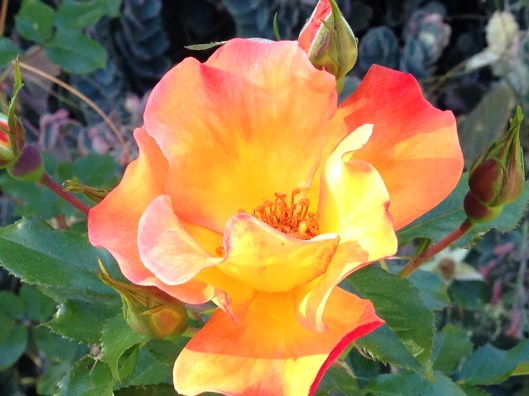
IMG_5126

Fools Gold

The Lost Sapphire

(Appeared summer 1997 in the e-zine, The Empty Shelf, slightly re-edited, here).

I can’t recall how that giant blue sapphire first veered into the orbit of my life. Of course, even at five years, I knew it might not be a real sapphire; at least, that’s what my parents insisted. They called it “just glass.” But, they might just possibly be wrong, I secretly thought. After all, I could look into it forever. And, if I looked real hard, I could see the dim, midnight blue outline of things beyond and through the stone, transformed by the magic of the stone into something quite out of the ordinary; something heavenly, mysterious, almost certainly good rather than evil. Almost. And, so far as I could tell, my parents never actually saw the stone; certainly they never looked through it. They’d just glance at it and say, “Oh, yeah, it’s blue glass.”

Well, it seemed to me that it could very well be a real sapphire. Besides making things look beautiful, there was something else — something mom and dad never even tried to understand. It was this. If something happened I didn’t like; if I were sad because my dog was “put to sleep” or scared of getting a shot, I could look at this sapphire and it made me feel better! It made it all, “Okay.” If I listened carefully, it spoke wordless tales of wisdom and comfort. It was obviously worth a lot, lot more than my parents knew.

True, there was a tiny chunk broken out of one corner. But that didn’t really matter. The stone was still perfect…perfect: something to be kept forever.

Forever, that is, until Jimmy moved next door. Jimmy was ten years old and had a two-wheeled bike. Jimmy towered up nearly as thick and high as an adult. But Jimmy was still young enough to see the powerful magic in the sapphire. One bright Saturday morning, on the green grass of the “devil strip” between the white sidewalk and the forbidden black street where the deadly cars zoomed, I sat in the grass watching the magic sapphire, listening for its words of wisdom. Jimmy rode up and tossed his bike onto the devil strip and hopped off in one smooth move. He plopped down beside me. He flashed the red reflector from his bike in the sunlight. Oh, how it sparkled into my eyes!

“Do you want this ruby?” asked Jimmy innocently.

“Oh! Okay. Thanks!”

Jimmy handed it to me and let me flash it in the sun. It was so much brighter than the sapphire! It sparkled fire!

“Great,” said Jimmy, “Let me have the sapphire.”

He snatched it from the grass where I had lain it, jumped up sped away on his bike.

I stared dumbly at his vanishing figure, then back down at the red reflector in my hand. Maybe this was a good trade after all, I thought. It was really bright all right. And when you moved it in the sun, it made different starburst patterns. After all, it had come from a full-sized two-wheeler. But still…something was missing. Then, a buzzing filled my ears. I suddenly realized that the reflector was just pretty glass! There was no magic to it. It didn’t speak; it just buzzed its foolish empty buzz. I couldn’t look through it to other things. It had no depth. And worst of all, it could never make anyone feel better, not even a little bit. “I thought you meant…for a minute…” I said to the big kid now behind his own front door.

I considered telling my mom and dad. Maybe they could get the sapphire back! I hated telling them. You just don’t tell parents about kid troubles; it’s against the main unwritten law of being a kid. But maybe they could get my sapphire back! When I finally told them what had happened, they said, “Well, you made a trade.” I tried to get Jimmy to trade back, but he had none of it. Jimmy soon moved away, never to be seen again. But I kept the red reflector — not to look at — because that would seem somehow unfaithful to the spirit of the sapphire — but just in case Jimmy came by one day wanting to trade back.

And later, much later, I used my allowance to buy special clear marbles — called “Peeries” — emerald green and dark blue with bubbles in them, and my dad got me a cool science kit with a clear rainbow prism that threw color into everything, and then one day I looked into the deep, sparking blue eyes of a blond girl named Jennifer and later into the sparkling blue eyes of a beautiful woman named Wendy and then into real diamonds and computer screens and experimental results and statistical analyses and conclusions, insights, and science fiction. And all of those things were good and all of these spoke to me.

Still, I wonder where the blue sapphire is and how to get it back. How to get it back? The magic. Not clever illusion, not something made to look nice, but true magic. Are you out there, Jimmy? Because I still have your red reflector if you want to trade back.

——————————————————————

I don’t know whether society can trade back either. We used to have some kind of balance between competition and the other valuable things about life. We seem mainly to have traded it in on a newer model. In the new model, money is the only thing that matters. Winning is the only thing that matters. Math definitely does not matter. People who are rich and powerful can pretty much get away with anything. The only exception would be someone like Bernie Madoff who was silly enough to include some wealthy people among those he bamboozled. But the Bernie Madoffs of Wall Street that sunk the economy in 2008 walked away scot free.

“All that glitters is not gold.” The normal interpretation of this means that not everything that glitters (like gold) really is gold. Normally, this is meant in a metaphorical way but based on the real phenomenon of “Fool’s Gold” (Iron Pyrite) which does glitter like polished gold but is of far less conventional value.

IMG_4695

I like to consider a different interpretation: What if all gold is “Fool’s Gold”? Naturally, I’m not denying the existence of metallic gold. I’m wearing a (mostly) gold wedding ring. So, I believe in real gold. What is meant is that striving after gold is itself a foolish thing to do. If that’s true, then, it’s all “Fool’s Gold” whether or not it’s Iron Pyrite or Real Gold.

How could this possibly be so? Isn’t life a contest to see who can make the most money? Isn’t money (and before that gold) an easier way to exchange goods and services that having to strike each deal uniquely? It is indeed easier. Does that necessarily mean it’s better?

Society is growing more and more differentiated. We do vastly different jobs from each other. For example, for many centuries, farming was a common occupation. In the USA in 1900, for example, about a third of the entire workforce were still farmers.  Now, that percentage of farmers is about a tenth that. It isn’t only that there are now many different fields such as computer science and forestry. Even within a field such as computer science or forestry, there are more and more subspecialties. It’s as though the tree of humanity is growing larger and larger and branching out farther and farther.

IMG_9489

At the same time, this entire enterprise called “society” is not stable. It is spinning; spinning faster and faster. This means that this whole enterprise will eventually fly apart — unless, the cohesive strength of the whole enterprise continues to increase. Unfortunately, it seems that just when we need to increase that bonding strength, it is weakening.

What is the real gold? Anything that strengthens the ties is real gold. Anything that weakens the ties will tend to cause the entire enterprise to disintegrate. Even if some bars of heavy shiny metal accrue to those who strive to break us apart, they are causing overwhelming harm to others, including generations and generations of their own offspring.  The last time, the European Dark Ages occurred, it last centuries. Science, engineering, agriculture, learning, medicine — all these things were worse for a half millennium before they started to get better again. Meanwhile, the toll in terms of human misery was immense. And for what?

IMG_6881

Our fall from the advanced civilization to the next Dark Ages will be a much harder fall than what much of Europe experienced after the fall of Rome. People in a Roman society were closer to the land and to the world of real things than many people are today. Many moderns in the so-called Global North have no idea how to live off the land, plant a garden, hunt or fish. Even if they did, we wouldn’t be close to being able to feed 7 billion people without modern agriculture, distribution, knowledge of crops, irrigation systems.

My history lessons focused on Western Europe and the United States, so when I think of the “Dark Ages”, I think in terms of Western Europe. But we should remember that that minimal impact, for instance, on most of the people of the planet at that time including North and South America, Australia, most of Africa, and most of Asia. This time, it would be different. Such a catastrophic Dark Ages would today be global. No-one would really escape.
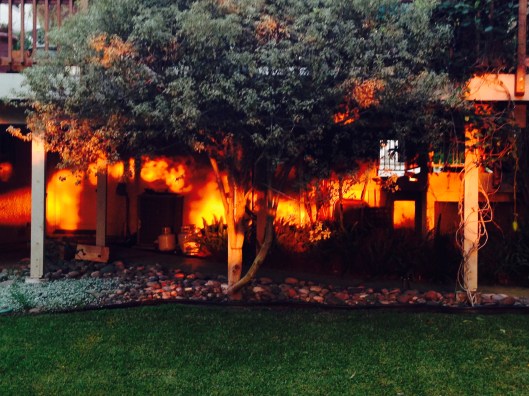
IMG_7168

No-one would escape the new Dark Ages and that includes extremely rich and powerful people. Yes, they could have more absolute power over other people as a Newmedieval Tyrant than as the leader of a democracy. And, granted, that may be the most important thing in the life of that kind of person. But it isn’t the only thing. They have no idea how inconvenienced every other aspect of their life would be if civilization fell.

We, as a species, are not “set up” for the Dark Ages. There are way, way too many to feed without the science and engineering behind today’s agricultural processes. There are way too many to obtain fresh water without modern infrastructure. Of course, it isn’t just that we are physically unable to deal with this kind of downfall. We are nowise prepared mentally either. Most of the knowledge we currently have for living in a complex, technological society would be completely useless and we’d know very little of what we should actually know in order to survive.

Maybe hell is not the punishment for one person’s life of sin, but the collective punishment wreaked upon all of our descendants for the collective current sins of humanity. After all, isn’t extinction a kind of hell for the species? We wouldn’t be the first extinguished species. Not by a long shot. Most of them were “hit without warning” by the after-effects of a meteor or a met by a human-powered bulldozer clearing away amazing rain forests for a few more bars of fools gold.

I know one thing for certain. Jimmy’s not coming back to trade you back what you really care about for that shiny red reflector that caught your momentary eye.

Author Page on Amazon

You Know

02 Monday Oct 2017

Posted by petersironwood in America, family, psychology, story, Uncategorized

≈ 15 Comments

Tags

character, ecology, environment, ethics, Native American, resonsibility, science


David's DreamDeeply


You know perhaps of various versions of the story of the “two wolves” that live within us. I have heard it various ascribed to Native Americans of the Dakota tribe as well as the Cherokees. Basically, a grandfather, or other such wise person tells his grandson that there are two wolves inside him: a good wolf who is kind and generous and a bad wolf who is mean, spiteful and selfish. These wolves are in a constant battle with each other. The grandson asks which wolf will win and the grandfather replies “whichever one you feed.”

http://www.firstpeople.us/FP-Html-Legends/TwoWolves-Cherokee.html

We have probably all seen cartoons in which an angel perches on one shoulder of a cartoon character inspiring them toward good actions and a devil slouching on the other shoulder whispering rationalizations for bad actions. I suspect that variants of this story exist in many cultures. It seems to me that there is more than a speck of truth in it.

I would love to report that I was born without any bad wolves and that I never had such a struggle myself. That, however, would be a lie. To lie about it would be feeding the bad wolf. In fact, I have experienced the bad wolf as well as the good wolf. I also find the that the bad wolf has weakened considerably over my life-time though he is far from completely dead.

IMG_4087

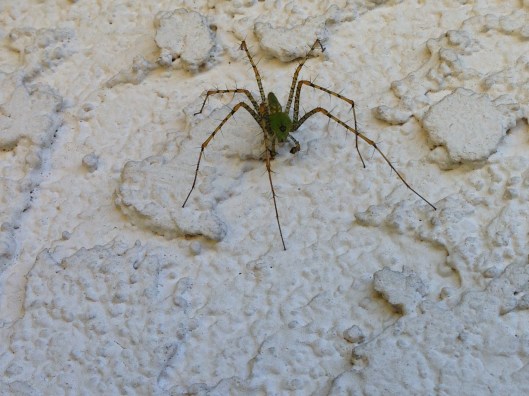
At boy scout camp, for example, when I was about 10 or 11, three of us sat around a campfire, getting ready to make some simple biscuits. So far as I can recall, I have always loved being outdoors and especially in forests, wood, fields, mountainsides. I don’t even recall feeling any conflict whatever about this. I suppose both the “good wolf” and the “bad wolf” must love the outdoors. On the other hand, I don’t love everything about the outdoors equally. Trees, flowers, clouds, streams, deer, rabbits — always my friends. Spiders, ticks, mosquitoes and deer flies — not so much. I never understood why on earth a person would pick a tarantula for a pet, for instance. On the other hand, I realize that most spiders are harmless to humans and even helpful because most of them catch things like mosquitoes that are much more harmful. Your chances of getting a lethal spider bite are nearly non-existent. Even at eleven, I could not really say I “hated” spiders although having one fall unexpectedly onto my body caused me to jump and try frantically to brush it off. I didn’t really care if I killed it in the process.

While we waited for the fire to heat up enough to cook our primitive trail biscuits however, one of my companions found a spider on a stick and placed it on the hot pan atop the grill. He shook the stick until the spider fell onto the hot pan. For a moment, the spider sprung into action, jumping and hopping excitedly. When he made it to the edge of the pan, my pack mate pushed him back to the middle with the stick. The spider didn’t last long after that. He collapsed and died.

IMG_4429

This simple scene did not last long, but it certainly stirred a tornado of emotions inside me. I thought about objecting but didn’t. I really wanted to see what would happen to a spider subjected to that kind of environment. In other words, I was curious. At the same time, I felt a strange kind of gratitude that the spider was on the hot grill and not me. I had already gotten a rather nasty burn so I knew that burns were horrifically painful. I felt a kinship to the other two guys in this. We were humans after all, and therefore more powerful and clever than a mere spider. I was superior to the spider as were they. We could control the life of the spider more than it could control us. And though I had never actually been bitten by a spider of any kind, let alone been seriously injured, I had been frightened when they dropped on my arm or hair. So, I also felt a kind of vindication; I told myself the creepy spider deserved to die for being so creepy and — well, spidery. Yet, despite all this, I kind of hoped the spider would make it off the hot grill and just learn their lesson (which was what exactly? I guess not to be a spider?) and go on with their life being a more enlightened spider. Anyway, my camp companion prevented any of that from happening by pushing the spider back onto the middle of the grill.

While there had been a whole dark rainbow of emotions in that twisting tornado, I didn’t have any doubt that this was feeding the evil wolf. This was an evil deed and I knew it. When my body is attacked, I am going to defend it. I would defend my life and those of my family by killing any attacker, whether it be an attack from a virus, a bacterium, a spider or an actual wolf. But this spider had not actually attacked anyone. We had gone out of our way to kill it. Not only that, we had killed it in a way that, to all appearances, pained the spider considerably. We hadn’t exactly laughed at the spider’s plight but we had certainly enjoyed it and exclaimed about how he bounced around so vigorously. I did not go home and brag about this incident to my parents or grandparents. Killing unnecessarily, and especially killing another creature in a painful way, is not something anyone in my family would have praised me for.

Of course, considerations of when killing is “necessary” versus “unnecessary” could be the topic of an entire book. <grin> That book might conclude that killing is never really necessary; it’s only convenient. As for pain, I have largely been trained as a scientist and in that training, we were always told to employ parsimony and avoid “anthropomorphism” — that is, to hold to the simplest explanation and not to assume that mammals and birds (let alone spiders) have consciousness and feelings like humans do.

For example, many years later in college biology class, we dissected a surprisingly large live crayfish and this mantra was repeated. So, for example, we were reassured that the crayfish would feel no actual pain because its nervous system was too primitive. First on the agenda: badly injure one of its arms by crush-crunching it with pliers. The crayfish hesitated a few moments and then reached over with one of his major claws, clamped on to his injured arm and yanked it hard. This caused the arm to snap off at one of the joints. The crayfish could then re-grow its arm from that point. The jerking of its own arm was termed as a “reflex.” This “reflex” serve the crayfish well in the wild because the crayfish will grow back a complete arm. This particular crayfish, however, never had that opportunity because the next little trick on the agenda was to remove its beating heart.

So, I cut out the heart and put it in a separate little dish that had some small dosage of adrenaline in it. Immediately, the teeny heart started beating faster. Meanwhile, the heartless crayfish continued to totter about its cramped living quarters. Perhaps it was searching for its missing heart.

OLYMPUS DIGITAL CAMERA

OLYMPUS DIGITAL CAMERA

I accepted the explanations given as to why the crayfish felt no pain. (And, by the way, while I did feel some curiosity as I did all this, I did not have any of those earlier feelings of the crayfish “deserving this” or of my being “superior to it.”) The Teaching Assistant explained, that after all, the crayfish’s nervous system was “primitive” compared with a human’s. We have these enormous brains, you know. It also made a lot of sense to me to take the most “parsimonious” explanation. I believed that then and I believe it now. However, my assumptions about what constitutes “parsimonious” have evolved quite a bit.

You know, I’ve always been something of a pain to my parents, teachers, and probably many others. Starting that tradition early, my mother was in labor for 72 hours before I was born. As best I can recall (which is not at all) I must have been reluctant to enter some new environment head first. By the way, in movies people are always diving head first into ponds, rivers, lakes and so on without the slightest knowledge of how deep the water is or what is in that body of water (such as a submerged log, for instance). So, generally, it is a much better idea, if you have to enter such a body of water, to enter feet first. You might twist your ankle or even break your leg, but you are unlikely to spend the rest of your life paralyzed from the neck down. So, the strategy of “feet first” is a good one.

Except it isn’t a good strategy at all, while you are being born. Anyway, in the various gymnastics I performed to get into the right position, no doubt, with plenty of encouragement and prodding of the doctor, I managed to get a hernia. I was born with a hernia and operated on at about six months and the hernia was fixed. I later discovered, to my great surprise, that this operation had almost certainly been performed with no anesthesia whatsoever. Why? Because a baby’s nervous system was thought too primitive to feel pain. Sure, babies cried and writhed, but those actions were just reflexes, according to accepted medical doctrine at the time.

Of course, if you’ve ever been in close contact with a baby, your own opinion, like mine, is likely that this is utter non-sense! Of course, babies feel pain. You may also be surprised to learn that about that time, the medical profession also believed that babies could not see until they were about six months old. Professor Robert Fantz conducted some of the initial research on this question while I was studying psychology at Case-Western Reserve. Though I wasn’t personally involved in the experiments, I was personally involved in the idea because I had a newborn daughter at home. The work of Fantz was cool and showed that infants preferred human faces and a moderate level of complexity. Infant research is amazing in its own right. Researchers use gaze direction, heart rate deceleration and other clever measures to find out what babies perceive. But how on earth could doctors have ever believed that babies couldn’t really see until they were six months old? As a new father, I found that completely preposterous. My daughter could most certainly see from day one.

iPhoneDownloadJan152013 1150

My brother is eleven years younger than I am. When he was an infant, I used to carry him around and show him various things in the house and later, in the yard. Of course, he could see from day one. But how could the medical profession have thought otherwise, even before Fantz’s work at Case-Western?

The next year, I moved on to grad school in Ann Arbor and delved more deeply into infant development and perception. That is when I discovered that those bastards had almost undoubtedly operated on me without giving me any pain killers or anesthetic. No, I kid, of course. No hard feelings. They were no doubt just doing what they thought best. For them.

Therein lies the problem. I now think the most parsimonious explanation is that every living thing feels pain. While the precise quality of the pain may differ among crayfish, spiders, and humans, I see no reason whatever to believe that our human pain is more excruciating because we have bigger brains. In fact, it seems equally plausible, that because of our much bigger brains, our experience is more removed from actual pain than is that of a crayfish. I believe that people define away consciousness and pain for others because it is more convenient for them in making decisions and living with themselves without guilt.

Saying that the crayfish’s nervous system is more primitive doesn’t really cut it either. That firstly implies a doctrine disavowed by most scientists that the “point” of evolution is to make humans and that other branches are necessarily more “primitive” if they have been here longer. For instance, horseshoe crabs have been around for 500 million years, basically unchanged so far as we can tell. Humans have been around for a much shorter time. Of course, if you measure how advanced a species is by how quickly it can destroy things for its own convenience (not just survival) then, yes, humans win hands down. Congrats to all.

Humans have several kinds of sensory nerve fibers on the periphery. We have, for example, A fibers. These are myelinated, and this allows nerve conduction to go much faster than impulses travel in their slower cousins, the C fibers.  So, when a human touches the proverbial hot stove, the A fibers go right into a quick feedback loop to get you to jerk your hand away. A noticeable time lag and you actually feel the pain. The C fibers take longer. It is thought that one way acupuncture might work is to stimulate A fibers to that they inhibit the C fibers.

It turns out that these C fibers have been around a long time and they are the types of fibers in our friend the crayfish. In over-simple terms, “advanced species” have fast and slow fibers while “primitive species” only have the slow pain fibers. Well, if that’s true, and particularly in consideration that the fast fibers may actually serve to dull pain under certain conditions, how on earth does it make any sense to say the crayfish cannot feel pain because its nervous system is too primitive? No. It makes more sense to say that the crayfish cannot help but feel pain. It is the only signal coming in.

twinsthreemonthbirthday

It seems the same thing applies developmentally within an individual. Indeed, if you look at the behavior of babies without any preconceptions to the contrary, I think a normal reading of the reality would conclude that babies are feeling way more completely and overwhelmingly than are adults. It seems to me much more likely that babies feel pain more intensely than do adults.

One could argue that, despite the pain of the crayfish, it’s worth it because the doctors being trained (most of the class was pre-med) will certainly end up saving way more pain among their human brothers and sisters than they will cause this crayfish. I think that’s probably valid. But it does require thinking about a conscious tradeoff among species which is a weird kind of decision that we’ve never had to consciously make before in our history.

Our ancestors may or may not have measured the pain of their prey against their own hunger. Now, however, we literally have to ask ourselves whether it is worth saving one human life through economic growth if it means obliterating an entire species of whales? Of fish? Of plankton? How about saving one human a trip to the grocery every week? Is it worth killing off a species for that? How about twelve? How about 1000?

I feel a little out of joint now with much of society because I’ve been feeding the wolf that says to me: “Those living things all have lives and those lives are just as precious to them as yours is to you. Keep that in mind. Oh, and by the way, you bet they feel pain just as you do. Don’t tell yourself some bullshit that they don’t feel pain because they are too primitive. We all feel pain: wolf, rabbit, fish, bird.” Meanwhile, I feel as though many parts of our society, because of the nature of our economy, has been listening to a different wolf.

That wolf says, “Humans are special. They deserve special treatment. And just as the human species is the just ruler of every other species which is only put here for your pleasure, so too, there are some humans who are above and superior to others. And those humans deserve special things. And those humans who are above deserve special favors, sexual and otherwise. And those “up there” humans, who are more evolved, deserve to inconvenience you if it serves their pleasure. But don’t worry about feeling spat upon and made to feel small. There’s a whole lot of things inferior to you and you can take your hate out on them! Kick the dog! Stomp on the ant! Trash the environment! You’re human! You can do whatever you want to destroy earth. It’s your earth after all.”

A few months ago, I found a rather large grand-daddy longlegs in the house. I did consider simply crushing it in a paper towel. Instead I used a paper plate and a cup to take him outside and deposit him intact onto our pathetic brown-leafed gardenia bush. Guess what? That gardenia bush now has wonderful looking leaves. No curling. No browning. Coincidence? Perhaps. What do you think?

I’m pretty sure the following is not coincidence. For a time, I rented a house in Woburn Massachusetts. It had a basement with windows at the top. At one point those windows all became covered with spider webs. I took down all the spider webs. Yay for me. Mission accomplished. The next day, our basement was infested with wasps. It can’t always be “follow the butterflies,” you know. So which wolf will you be feeding? Only you know.

IMG_9722

Author Page on Amazon

Newer posts →

Subscribe

  • Entries (RSS)
  • Comments (RSS)

Archives

  • January 2026
  • December 2025
  • November 2025
  • October 2025
  • September 2025
  • August 2025
  • July 2025
  • June 2025
  • May 2025
  • April 2025
  • March 2025
  • February 2025
  • January 2025
  • December 2024
  • November 2024
  • October 2024
  • September 2024
  • July 2024
  • April 2024
  • March 2024
  • February 2024
  • January 2024
  • December 2023
  • August 2023
  • July 2023
  • May 2023
  • April 2023
  • March 2023
  • February 2023
  • January 2023
  • December 2022
  • November 2022
  • October 2022
  • September 2022
  • August 2022
  • July 2022
  • June 2022
  • May 2022
  • April 2022
  • March 2022
  • February 2022
  • January 2022
  • December 2021
  • November 2021
  • October 2021
  • September 2021
  • August 2021
  • July 2021
  • June 2021
  • May 2021
  • April 2021
  • March 2021
  • February 2021
  • January 2021
  • December 2020
  • November 2020
  • October 2020
  • September 2020
  • August 2020
  • July 2020
  • June 2020
  • May 2020
  • April 2020
  • March 2020
  • February 2020
  • January 2020
  • December 2019
  • November 2019
  • October 2019
  • September 2019
  • August 2019
  • July 2019
  • June 2019
  • May 2019
  • April 2019
  • March 2019
  • February 2019
  • January 2019
  • December 2018
  • November 2018
  • October 2018
  • September 2018
  • August 2018
  • July 2018
  • June 2018
  • May 2018
  • April 2018
  • March 2018
  • February 2018
  • January 2018
  • December 2017
  • November 2017
  • October 2017
  • September 2017
  • August 2017
  • July 2017
  • June 2017
  • May 2017
  • April 2017
  • March 2017
  • February 2017
  • January 2017
  • December 2016
  • November 2016
  • October 2016
  • September 2016
  • August 2016
  • July 2016
  • June 2016
  • May 2016
  • April 2016
  • March 2016
  • February 2016
  • January 2016
  • December 2015
  • November 2015
  • October 2015
  • September 2015
  • August 2015
  • May 2015
  • January 2015
  • July 2014
  • January 2014
  • December 2013
  • November 2013

Categories

  • AI
  • America
  • apocalypse
  • cats
  • COVID-19
  • creativity
  • design rationale
  • dogs
  • driverless cars
  • essay
  • family
  • fantasy
  • fiction
  • HCI
  • health
  • management
  • nature
  • pets
  • poetry
  • politics
  • psychology
  • Sadie
  • satire
  • science
  • sports
  • story
  • The Singularity
  • Travel
  • Uncategorized
  • user experience
  • Veritas
  • Walkabout Diaries

Meta

  • Create account
  • Log in

Blog at WordPress.com.

  • Subscribe Subscribed
    • petersironwood
    • Join 661 other subscribers
    • Already have a WordPress.com account? Log in now.
    • petersironwood
    • Subscribe Subscribed
    • Sign up
    • Log in
    • Report this content
    • View site in Reader
    • Manage subscriptions
    • Collapse this bar
 

Loading Comments...