• About PeterSIronwood

petersironwood

~ Finding, formulating and solving life's frustrations.

petersironwood

Tag Archives: Democracy

Buggy Whips to Fingertips

26 Thursday Jul 2018

Posted by petersironwood in America, management, psychology, Uncategorized

≈ 1 Comment

Tags

computers, Democracy, Dictatorship, experiment, Feedback, HCI, human factors, Human-Computer Interaction, politics, programming, UX

three women and two men watching on laptop computer on table

Photo by rawpixel.com on Pexels.com

My degrees are in psychology.  I have also been fascinated by computers. One main reason I went into HCI/UX/Human Factors was that I saw computers as devices that would amplify collective human intelligence. Thereby, with a mixture of people and computers, we would be able to solve such complex problems as world hunger, overpopulation, disease, global climate change, wars, and so on. I definitely saw myself as most interested in the people side though I thought comparing and contrasting computers and people shed new light on the people side. If you only have one type of computational mechanism; viz., us, then it’s hard to know how much of what happens in trying to solve a problem is because of our common human heritage and hardware and how much is intrinsic to the problem. 

This interest in the novel light that computing could shine on human intellect was what initially drew me to computers, but I later saw them as fascinating in their own right as well as being extremely important tools for a psychologist. For example, I used a PDP-8 to run experiments on the psychology of aging and to analyze the data. Only when I joined IBM did I begin to change my focus from how computers could be useful tools for psychologists, but how psychology could be useful tools for improving computers (or at least the actual performance of the computer in doing useful work when used by a person). 

IMG_5190

Although I took a number of programming courses, I only ever became an amateur programmer. My main method for programming some task was to think about how I would do it and then step by step, make the computer do it. This process has many limitations, a few of which are obvious even to me. For example, when doing my dissertation work, I had the computer register the time whenever any one of five subjects made a response. While sitting in the computer room (while the subjects were in their booths), I was sitting and reading something while the disk kept buzzing next to me: Bz-b-bz-bz. Bz-b-bz-bz. Bz-b-bz-bz. 

fullsizeoutput_139d

I had used my “What would John do?” method of programming. If I saw a long number and had to go write it down, I would want to do it immediately, and then be ready for the next number. But this was insane for the computer! The computer could “remember” hundreds of these numbers and then write them out to the disk en masse. Anyone who had gone through even an introductory programming course would approach the problem differently than I had — at least until the computer used its disk buzzing to wake me up to its modus operandi which are really quite different from mine. 

Like every other human, I make mistakes all the time in every sort of endeavor. For example, I like to play tennis and I like to hit a serve that’s hard to return. So, I am typically trying to serve to a particular spot. I’m not dead on accurate. I might miss long or wide by a couple inches or hit the net. But I will not (or at least haven’t yet) turned around and sailed the ball out of the court behind me. Nor have I ever yet struck the ball straight down at my feet. Nor, have I tossed the ball sideways into the screen and then swung anyway (!), and accidentally let go and flung the racquet across the net. But if you have ever programmed a computer, you know any of these behaviors might be possible based on the slightest error you can imagine. 

IMG_3394

It is ironic because most people think people are unreliable while computer are reliable. Well, it’s not that simple. Most people are pretty reliable most of the time and especially when they are acting within their bailiwick. Yes, they slip up and make mistakes but they are usually (not always) both understandable and fixable. A computer can do anything. The hardware is typically reliable but can still fail. Much more likely is that there are differences between what the programmer thought she or he was telling the computer and what the programmer actually told it to do. But wait! There’s more! Even more likely is that the intent of the programmer solves only a small part of the overall problem, solves the wrong problem, or actually makes the situation worse. That is not — or at least not solely — the fault of the programmer (more likely, the fault of an entire bureaucratic process). 

This kind of weird and catastrophic error appeared in the program that ran my dissertation experiment at Michigan. Worse, it was a different weird and catastrophic error that appeared every time I ran the program! Often, the program would run correctly for five minutes or fifty minutes and then – BANG – unrecoverable error. 

active ash cloud ashes blaze

Photo by Pixabay on Pexels.com

The program was in FORTRAN 2. Someone had added some useful macro functions for doing experiments. For instance, there were a number of initializations for the displays. We had five displays so these functions all had the form FUNCTION1(2) which applied the function1 to the second display. To make it even more convenient, if you wanted to do the same thing to all five displays (which was always the case for me), you could simply pass it the argument (7) and the macro code would apply it to all five displays. So, I had a list of about 5-6 commands of that form: Function1(7), Function2(7), Function3(7) etc. Having initialized the displays, the next thing on my agenda was to initialize the array that held the timing information. Since I wanted to do this for all five of the arrays, it seemed as easy as rolling off a cliff to use the (7) convention and thereby apply it to all five reaction time arrays. In more modern version of FORTRAN, they won’t allow you to do that (you will get a compile time error). But back when Joy to the World by Three Dog Night topped the charts, there was no error message at compile time. Secretly, of course, you just know that compiler was snickering as it thought: “Oh, you want to write some time stamp into the seventh element of a five element array? Fine. The customer is always right. Be my guest. Good luck with that.” This is the computer trying to “serve” and instead smashing the ball directly into the ground. 

Yet, keep in mind that there are some (not all) very rich and powerful people out there who sincerely wish that “people” could just be more like computers and do precisely as they’re told, always, and without question. And, when I say there are “people” they want to control like a computer, I mean you. That is exactly what they want. For you to do what they insist you do. They are about to get away with it – and if they do, there will be no Joy to the World – not for a very long time. Because if someone else lays out all the choices for you, you are not living your life at all. You are a tool in their life. 

IMG_5572

It isn’t even really a good system for them. Willing collaborations yield insights and creativity and productivity. It is precisely what has taken us from buggy whips to fingertips in an astoundingly short time. Society and technology and learning progressed at a snail’s pace in Medieval times. I don’t mean those really speedy thoroughbred racing snails either; I’m referring to the garden variety garden snail. A politician who has competition will want to show some sort of real progress. But a dictator? Maybe if they are particularly partial to scientific advancement or the fine arts, they might throw a few dollars that way. And some have. But many have not. What they typically put time, energy and thought into is war and the weapons of war. 

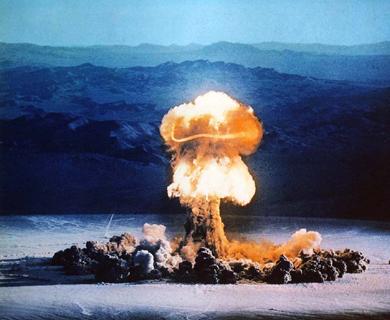
grayscale photo of explosion on the beach

Photo by Pixabay on Pexels.com

Now, instead of, or at least in addition to, having computers help provide a coordinating infrastructure of knowledge so that human beings can collaborate and solve more interesting problems as I had initially hoped a half century ago, computers and social media are being used to trick people into denying the validity of their own experience and existence. How do we debug this situation before it’s too late? I sometimes think that part of the problem is that we have tried to jam seven elements of serious social and technological change into an array that can only hold five elements. But maybe that’s irrelevant. What is relevant is that people are at their best when they are free to be people and at their worst when they are made to pretend that they are machines. 

IMG_5216


Anti-Pattern: Taking Credit & Spreading Blame.

27 Wednesday Jun 2018

Posted by petersironwood in America, management, psychology, Uncategorized

≈ 2 Comments

Tags

Anti-Pattern, bully, Business, collaboration, competition, Democracy, fascism, innovation, learning, pattern language, politics

man in brown long sleeved button up shirt standing while using gray laptop computer on brown wooden table beside woman in gray long sleeved shirt sitting

Photo by rawpixel.com on Pexels.com

Think back to the worst boss you ever had or ever observed. Maybe one stands out immediately. Or, maybe you had two so it’s hard to say which was worse. If you have been very lucky and had reasonable bosses throughout your life, then, maybe you can think back to a very nasty teacher. In either case, I’m hoping you can think of someone who was not only strict, but pig-headed, arbitrary, unfair, and liked to demean employees (or students) in front of everyone. Not only that, they would take credit for the work of others and blame others when they had actually made the mistake themselves. 

fullsizeoutput_137a

These are the sorts of people who practice the Anti-Patterns that I’ve been writing about lately. And it occurs to me that most people have had some experience with something similar to fascism in its mildest form: having an “intolerable” boss or teacher. It’s a very mild cousin, but it  is a cousin. 

The major difference is that if you have a horrible boss: a bully, a liar, a person who uses their position to hide their incompetence and blame it on others, it bothers you at work and you may lie awake thinking about it, but you do have other things in your life. You don’t have to have it affect your personal life; it doesn’t necessarily mean you can’t have fun playing a sport or dancing or singing. But actually living under fascism is a 24×7 business. Your bosses now are in charge of everything in your life that they want to bother with being in charge of. In the post below, I describe another one of the Anti-Life Anti-Patterns that they will tend to use: Taking Credit and Spreading Blame. 

OLYMPUS DIGITAL CAMERA

————————————————-

Taking Credit and Spreading Blame. 

The basic idea of this Anti-Pattern is simple. The “boss” controls information into and out of their group. They are in a position to present the work of the group to higher management. The workers under the boss, in some corporate cultures will have little recourse when they are mistreated or their actions are misrepresented. If someone comes up with a good idea, for example, it may be ridiculed by a boss who knows less. Let’s say, for instance, a member of a research group at a camera/film company comes up with the idea of an electronic camera, the boss may well call the idea ridiculous. If it later turns out that the camera/film company goes out of business due to competition from electronic camera companies, the boss who originally pooh-poohed the idea will now claim that they were all in favor but that they had asked the employee who originally thought of it to look into it. That employee had come back with such a negative assessment of the market, that they had all convinced the boss not to pursue it. This is an example of “Spreading the Blame.” 

On the other hand, if the boss had decided to pursue it and it had made the company successful, that kind of boss would lead everyone to believe that it had been their idea all along. They might even go so far as to discredit, transfer, or fire the employee who had actually thought of it. One might be tempted to think the “truth would out” and it might, but the boss has more control over how the group and the individuals within it are perceived than the employees do.

animal arachnid close up eerie

Photo by Pixabay on Pexels.com

In an organization without any form of checks and balances, a tyrannical boss may gain a stellar reputation among higher management by the use of this tactic. This may result in promotions and an ever-expanding scope of power with which to ruin people’s lives. If you can convince the people above you that you never make a mistake yourself because you convincingly blame others; and you manage to take credit for everything that happens in your organization (and possibly even credit for some of what happens even in neighboring organizations) then you will gain more control over the information flow. 

Ultimately, the efficiency and effectiveness of the organization suffers when Anti-Patterns such as Taking Credit and Spreading Blame are employed. People will begin to see little reason to work hard or imaginatively since the boss will take the credit. People who gain pleasure from friendly and collegial interactions will work somewhere else if they possibly can. Similarly, people who are primarily motivated at work by the work itself and doing it well will tend not to thrive under such a boss and will also go work somewhere else as soon as the opportunity arises. However, people who like to be told what to do, and enjoy power themselves, might collaborate with a boss who uses Anti-Patterns because the employee may feel as though helping the boss is the best way to open a promotion for themselves as well. 

brown wooden ladder

Photo by Pille Kirsi on Pexels.com

What “Anti-Patterns” have you observed in a boss, petty bureaucrat, teacher? 

————————————————————

 Author Page on Amazon

Anti-Pattern: Cascading Betrayal

23 Saturday Jun 2018

Posted by petersironwood in America, management, sports, Uncategorized

≈ 1 Comment

Tags

authoritarianism, Business, competition, Democracy, ethics, Facism, life, pattern language, politics, religion, Totalitarianism

Cascading Betrayal

IMG_5916

A very interesting little book that I recommend is Jane Jacobs’s Systems of Survival. In it she argues that there are two systems of ethics and morality: an older one, the “Guardian Syndrome” whose values include: Shun trading; exert prowess; be obedient and disciplined; adhering to tradition, respecting hierarchy, being loyal, deceiving for the sake of the task, making rich use of leisure; being ostentatious; and taking vengeance. Most of us might recognize these from history and stories about the Middle Ages in Europe but many other kingdoms and empires of earlier times also valued such things more than most of us do today. On the other hand, a newer system of values has been developing since the Renaissance. In the “Commerce Syndrome,” people tend to value things such as shunning force, competing, being efficient, being open to inventiveness and novelty, being honest, collaborating easily with strangers and aliens, dissenting for the sake of the task, respecting contracts, investing for productive purposes. 

fullsizeoutput_139d

In modern societies worldwide, both systems are at play and they can often be in conflict. For instance, you have friends that you feel loyalty to (Guardian Syndrome) and you work for a corporation which asks you to sign a contract that says you will not steal from the corporation and that you will report anyone who does (Commerce Syndrome). You observe your good friend taking supplies from the company storeroom for personal use. You ask the friend to return the goods but they say, “Oh, come on. The company makes billions. They can afford it. It’s just our little secret.” You can’t dissuade your friend. Now, the conflict in values causes you a conflict. Do you “betray” your friend and honor your contract? Or do you betray your contract and collude with your friend? 

person holding queen chess piece

Photo by rawpixel.com on Pexels.com

Within American society (the one I happen to be most familiar with), these values are not evenly distributed. For instance, Silicon Valley seems quite centered on the “Commerce Syndrome” while small towns, sports teams, and the Catholic Church, for example, seem more centered on the “Guardian Syndrome.” 

People whose values are almost totally aligned with the “Guardian Syndrome” will tend to stay loyal to their boss, leader, team, political party, even when the boss, leader, team or political party does something stupid, cruel, unethical, or illegal. For a time, people in positions of great power can keep their power through, for example, the dispensing of favors, defining agreed upon untruths, or taking vengeance on the disloyal. 

abandoned architecture auschwitz auschwitz concentration camp

Photo by Pixabay on Pexels.com

Such a system is always somewhat fragile as demonstrated by the constant stream of rebellions, crusades, and wars in the Middle Ages. A state or organization based purely on the “Guardian Syndrome” is even more difficult today. If one tries to keep to a pure “Guardian System” in the midst of a highly interconnected and interdependent world, it will fail sooner and more spectacularly. 

One issue is that it is no longer possible for people not to be exposed to the actual truth. Lying to a populace in which only 1% of the population could read and write was fairly easy. Trying to do it in the computerized and recorded world of today is nearly impossible. Some people will remain loyal and refuse to call out the Emperor for having no clothes. But someone will. And, it will be caught on tape. And, the tape will be shown to vast numbers of other people who have no loyalty to the Emperor. They will all see he’s naked and have no compunction about saying so. 

rattlesnake-toxic-snake-dangerous-38438.jpeg

As a result, a modern “Emperor” will find it difficult to keep all but the most fanatic fans from dismissing his attempts to control through politics and pageantry. The Medieval mechanisms of dispensing favors and wreaking havoc via vengeance will largely prove ineffective. Once such an Emperor begins to lose power, more and more people will begin to realize that they are much better off to “play by the rules” of the Commerce Syndrome. As a result, people who might have stayed loyal to the death to the Emperor will instead begin to defect. As more and more people defect, this will further weaken the Emperor’s power base and make it more likely for even more people to defect. 

IMG_9628

Naturally, the Emperor will attempt to use whatever power they have left to prevent defections, but in our modern interdependent and interconnected world, this is increasingly difficult. Most modern countries — and their leaders — realize that material prosperity in the 21st Century depends on many of the values of the Commerce Syndrome. A society that tries to remain “closed” like North Korea, for instance, will find themselves at a distinct disadvantage when it comes to invention, comfort, prosperity, and the happiness of its citizens. What little resources such a country does have will be increasingly funneled toward weapons of war, security, police, prisons, and the suppression of truth. While these measures may serve to consolidate the power of a modern emperor in the short term, in the long term, too many people will have too little physical comforts to feel much loyalty to the emperor. Support will continue to erode and eventually everyone will see beneath the invisible clothes. An early signal of such a collapse will be a cascade of betrayals. 

By contrast, in a modern state, loyalty is earned through such virtues as fairness, competence, innovation, and collaboration. In other words, people dispense loyalty on the basis of what people do, not because of what they promise to do and not on the basis of some bogus claim to royalty based on how and where they were born. Cascading betrayal is typically a symptom of an attempt to revert to an earlier state of human social evolution. It is another descriptive short-hand Anti-Pattern. It can be avoided by allowing feelings of loyalty to grow naturally from watching someone in a role of power make and keep promises over time and by watching them do what is in the best interest of the State; not by watching them take actions which mainly enrich the emperor. 

pexels-photo-210703.jpeg

Photo by Pixabay on Pexels.com

———————-

https://en.wikipedia.org/wiki/Systems_of_Survival

My Author Page on Amazon

Anti-Pattern: Gratuitous Push Down

11 Monday Jun 2018

Posted by petersironwood in America, management, psychology, Uncategorized

≈ 2 Comments

Tags

authoritarianism, Business, collaboration, competition, cooperation, cruelty, Democracy, fascism, Pattern Langauge, politics, teamwork

Anti-Pattern: Gratuitous Push Down

IMG_9414

Prolog/Acknowledgement/History: 

This is the first of a planned series of “Anti-Patterns.” These are things to avoid. “Anti-Patterns” is admittedly a kind of odd name. Anyway, I simply mean that while the Patterns are something to be used in many cases to enhance collaboration and cooperation, these Anti-Patterns should never be used. While I think the focus of improving teamwork and collaboration should be on using the Patterns; I do think it is worth pointing out some of the Anti-Patterns to avoid. While forcing the behavior you want on others may result in coercion or obedience, they are antithetical to real teamwork or cooperation. 

Of course, some people feel that coercion and obedience are enough. There are at least two major issues with trying to control a world through coercion and obedience. 

First, no-one is that smart. No one person or even small group can know enough to make the best choices. The inevitable result of top-down control with autocratic powers with no checks and balances is that the group insulates itself from what is really happening. No-one wants to tell the King that they have no clothes. In the Anti-Pattern world which values “obedience,” the messenger will be shot unless the news is quite excellent indeed. As a result, every dictatorship spirals more and more out of touch with reality as time goes on. In the middle ages, knowledge and situations often changed slowly so an Empire as vast as that of the Romans might last hundreds of years. In the middle of the 20th century, a dictatorship might last a decade before it makes decisions on completely out-of-date information about what works. Now, it will be even less. A dictatorship can still take more time to completely disintegrate into chaos, foreign invasion, or anarchy; particularly, if it starts with a lot of resources already in place. But eventually, when no money is spent on public education or basic research; when people are appointed and promoted on the basis of how they were born or who they know rather than their abilities and experience, people who succeed in such organizations are the ones who are most capable of lies and deceit. There is little time and not motivation left over for learning what is really going on. Eventually, dictatorships fail, and they will do so even more quickly if they begin with basically flawed doctrines that are already “out of date” when the administration begins. 

fullsizeoutput_1169

The second fundamental flaw with authoritarian dictatorships that demand obedience is that people will never be motivated to do their best and in many cases, behind the back of the dictator, where they can’t be seen, they will do actual damage and sabotage. The more the dictator tries to “crack down” and make sure everyone is “pulling their weight,” the more insidious becomes the sabotage. 

The third fundamental problem with authoritarianism coercion, as opposed to cooperative democracy, is that administering cruelty and mediocrity necessarily dehumanizes the “successful” people in a dictatorship. They become nastier and nastier people. It’s inevitable. And they will become less and less capable of giving and receiving love, not only from strangers, but even from their own family.  

Author, reviewer and revision dates: 

Created by John C. Thomas in June, 2018 

Related Patterns: Anti-Pattern: Power Trumps Good.

Abstract: 

In dictatorships of any size, people at the top have absolute power. In order to rationalize the inhuman behavior toward others that they exhibit, they rationalize that everyone is like them (mean and egocentric); the dictator believes they are just better at it. In other words, they live in a world limited by their own concepts to one composed only of zero-sum games. Whatever one person loses, they gain and vice versa. They do mean things to others, not only to gain some real benefit, but just because they can. Such acts are meant to demean, dispirit, harm, enslave or kill others. Such acts are antithetical to actual teamwork and collaboration. And, let’s not forget that they are also unethical. 

Context: 

I believe that every person has some mixture of behaving so as to maximize their own interests and maximizing for the “greater good.” Normally, as people mature, they begin to gain confidence in themselves and their ability to deal with the world including dealing with other people. Humans are intrinsically very social animals. In societies, there develops a basic sense of trust in others. Of course, in every society, that trust is sometimes betrayed. But most people have enough confidence in themselves and in the society that they live in so as to believe that when trust is betrayed, they can recover. In a few cases, people have so little confidence in themselves and/or have such bad experiences with trusting others that they will do anything to avoid cooperation. Instead, they want power. They want to dictate the terms of every situation. If someone trusts them, they will simply exploit that trust. They don’t view this as “wrong” or “unethical” because they don’t really believe in ethics. They believe everyone is out to get whatever they can for themselves, regardless of the cost to others. All the social “niceties” are basically viewed as a scam to “trick people” into trusting so that you can scam them better. 

cards casino chance chip

Photo by Pixabay on Pexels.com

Often this type of psychopathic personality will also have poor impulse control and run afoul of the law on multiple occasions. They cause a lot of pain and suffering to the victims of their crimes, and some to everyone they come in contact with. Generally, they become incarcerated early and their influence on the larger society is minimal. Sometimes, however, they are capable of “kissing up” or at least “holding their tongues” when interacting with those who have power over them. People such as their managers, bosses, and parents may not see their gratuitous push-downs. The people who work for them; or their students or children will see them for what they are. They may be clever enough to avoid adverse consequences to themselves by directing all of their gratuitous cruelty to people who have no power to push back. These are the coaches who molest children; petty dictators; bosses who publicly berate employees; Hollywood directors who insist on sexual favors and so on. 

In order to dramatize and illustrate this Anti-Pattern, I have characterized the behavior as being related to particular people and the way that they have often been brought up. In reality, of course, everyone’s behavior has multiple determinants, only one of which is their character. The situation also has a huge effect. For example, for most people, there is some tendency to use the Gratuitous Push Down occasionally. It is not uncommon for an older sibling or upper classmate to use such a ploy. 

Situations do make a difference. When people suffer no consequences of any severity, they are much more likely to employ this Anti-Pattern. When people are removed from the consequences to others, it is also easier for most to use this Anti-Pattern. Most people would not, for example, walk over to a troop of Girl Scouts selling cookies and scream at them to go away and never come back. The would-be miscreant would be embarrassed to act like this in public. They might, however, very well vote for an ordinance to make selling Girl Scout cookies illegal even though there were no real consequences for the person casting the vote. That’s what makes it “gratuitous.” They are denying someone else the achievement of that someone else even though it doesn’t really cost the other person anything. 

black and white dark decoration faces

Photo by George Becker on Pexels.com


Problem: 

When people have no desire for “true” cooperation but instead view each transaction as an opportunity to gain for themselves at the expense of others, this tends to decrease social capital within the society. Such people will often show their true colors by using the Anti-Pattern: Gratuitous Push Down. The true psychopath feels immediate pleasure in doing this, but also feels that they will gain more later because the person that they have demeaned, assaulted, insulted, stolen from, raped, etc. will have less power in the future as a consequence of their act (and in their minds, less power for others automatically means more power for them). 

Such mean-spirited behavior will tend to destroy social capital in a society generally, but it will also have much more specific and localized effects. For one thing, eventually everyone the psychopath comes in contact with will realize that such a person, whatever they say, is in it for their own gain and has no honor; their word means nothing. Because people come to trust the psychopath less and less, the psychopath sees this as vindication for their stance of treating everything as a zero-sum game. In reality, it is the major cause. Having never experienced unconditional love or even a win/win solution, they forever fail to see their own role in creating this “micro-climate” of mistrust around them. What they experience becomes increasingly confrontational until it destroys them and many nearby. 

Any kind of gratuitous push-down tends to send waves of mistrust and negativity throughout the environment. A person insulted or humiliated is more likely to exhibit similar behavior with others. Similarly, people who experience child abuse or sexual abuse are more likely to wreak these behaviors on others.  

abandoned ancient antique architecture

Photo by Pixabay on Pexels.com

Forces:

  • Normally people trust more than mistrust others.
  • Mutual trust typically leads to good outcomes for all parties. 
  • Having trust rewarded with good outcomes tends to improve the chances of future trust. 
  • People who grow up with constant demeaning and criticism will tend not to trust others.  
  • Some of these people will become true psychopaths who view others only in terms of tools to be used for one’s own gain, typically by making “agreements” and then breaking them. 
  • True psychopaths will often say or do mean things, not because there is an immediate material gain, but “just because they can.”   
  • A person who uses the Anti-Pattern: Gratuitous Push Down will tend to generate a self-fulfilling prophesy because eventually more and more people will not deem them trustworthy. 
  • People who do not trust others, but have minimal power themselves will sometimes look for a “powerful” leader to tell them what to do. In return, they expect to be able to use the Gratuitous Push Down on others who are “below” them in status due to age, race, place in a hierarchy or gender. 
  • When people making decisions suffer no real consequences regardless of result and when they are “distanced” from the bad consequences others feel, they are generally more likely to use this Anti-Pattern.   

Solution: 

There are (at least) four known solutions to help avoid this Anti-Pattern. 1) Watch for signs of the Gratuitous Push Down and do not promote, elect, select or choose someone who does this to be put in a position of power. 2) Make sure that anyone who uses Gratuitous Push Down is as close as possible to the impact that they are causing. 3) Insure that the perpetrator’s behavior is made public as widely as possible and do not let them get away with lying about their behavior. 4) Remove such a person from power as soon as possible. You do not want a Minister, Judge, Boss, Coach, Teacher, Lab Head, Director, etc. to use Gratuitous Push Down. Replace them with a cooperative person who cares about others.  

Examples: 

  1. A coach molests boys in the shower and then makes them feel too guilty and vulnerable to say anything. 

2. A Director has a choice of many actors for a particular role. Instead of simply choosing the best actor for the role, they insist on sexual favors for the one that is promised the actual role. (Of course, they could still promise the role to multiple actors, extort sexual favors and then deny the role to all of them). Again, they will tend to arrange things so that no-one can verify their behavior. And, they will say anything and do anything to lower the credibility of the person making the accusation.

 3. A research manager suggests to a new researcher that they do a particular project for their first year. The new researcher expresses some doubts to the manager but the manager insists. Then, the new researcher works on the project for a year and then presents the work to higher management. Higher management dismisses the work as being not very original and of no practical value. As soon as this is obvious, the research manager says quite forcefully, “I told you this was a bad idea that we never should have pursued!” 

man in brown long sleeved button up shirt standing while using gray laptop computer on brown wooden table beside woman in gray long sleeved shirt sitting

Photo by rawpixel.com on Pexels.com

4. A kid walks across a field and deviates toward every anthill he sees and then kicks it apart. Or, a kid likes to pull the wings off insects. Or, a kid gets a slingshot and likes to kill songbirds just for the hell of it. One might question whether cruelty to animals is in the same category as cruelty to people. Regardless, the research shows this kind of cruelty to animals is correlated with being cruel to people (See references). 

Resulting Context:

When the Anti-Pattern Gratuitous Push Down is used, it immediately makes the person so pushed feel bad. But it also may have longer term effects on their behavior. It increases the chances that they themselves us the Gratuitous Push Down. But there are additional possibilities, almost all of them negative. The person may try to avoid the situation. The boy in example 1 may quit wrestling to avoid the coach. The actor in example 2 may give up on their Hollywood dreams. The researcher in example 3 may go work for another company. In other cases, the person may secretly vow to get more power for themselves so that they can be the one doing mean and humiliating things to others. The researcher may decide, for instance, that politics is more important than science, fake results, document assignments, kiss up, and otherwise maneuver themselves into a position of power. Once they are head of the lab 15 years later, they might finagle things until their first year research manager is fired in the most humiliating way that they can manage. 

IMG_9628

Regardless of precisely how an individual reacts, the use of Gratuitous Push Down poisons the organization in which it occurs. Whether it is a wrestling team, a movie cast, a research organization or an entire nation, when there are gratuitous cruelties going around, people’s attention is diverted from the actual tasks at hand. Wrestlers are not focused on wrestling. Actors are not focused on the quality of their performance. Researchers are not focused on doing the best possible research. There is this other vector of motivation: petty power struggles. 

Of course, the negative effects above are the extrinsic and instrumental aspects of gratuitous cruelty. There is also an intrinsic and experiential aspect of gratuitous cruelty. It denigrates and devalues human experience for both the person who performs cruelly and the person on whom it is performed. 

References: 

http://lifestyle.inquirer.net/129343/the-link-between-animal-cruelty-and-antisocial-personality-disorders/

https://www.psychologytoday.com/us/blog/in-excess/201611/the-psychology-animal-torture

https://www.researchgate.net/publication/233706971_Children_Who_Are_Cruel_to_Animals_A_Review_of_Research_and_Implications_for_Developmental_Psychopathology

—————————————-

Author Page on Amazon

(New Release). 

The Day From Hell: Why Does Anyone Care? 

05 Tuesday Jun 2018

Posted by petersironwood in America, management, psychology, Uncategorized

≈ 15 Comments

Tags

anarchy, Business, collaboration, competition, cooperation, Democracy, pattern language, politics, Rule of Law, sports, teamwork

The Day From Hell: Why Does Anyone Care? 

apple applications apps cell phone

Photo by Tracy Le Blanc on Pexels.com

I oversleep. The alarm did not go off and it feels late. I glance at my watch and sure enough, I’m late. I grab my iPhone to see whether I forgot to set it. Nothing works. I cannot even turn it on or reboot it. I’ll have to deal with it later. I will be late for my tennis match or have to skip breakfast. I decide to compromise and just grab a protein shake out of the fridge. Something’s wrong. It’s not cold. In fact, the refrigerator is not cold at all. Nor did the light go on when I opened the door. I try the kitchen lights. Nothing. Power is off throughout the house. I’m sure the bill was paid on time. I’ll deal after tennis. 

assorted trophies

Photo by Francesco Paggiaro on Pexels.com

I arrive at the court for my doubles match. The other three are already there. John says, “You’re late. We’ve decided we’re playing you.” 

“What? Very funny. Yeah, I’m good but not that good.” 

“No, it’s not a joke. We’re tired of losing. The three of us will stand you.” John’s face is deadpan. I look at the others and there is no sign of japery anywhere. 

“Well…that makes no sense whatever. Sorry I’m late. My phone alarm isn’t working. In fact, my phone isn’t working at all. But I’m sure this isn’t April First. How about if Tom and I take you two on?” 

“No. We’ve decided we’ll take you on.” 

I think that sounds crazy but whatever. I’ll call their bluff. At least I’ll get a lot of exercise! “Fine,” I say, “let’s just warm up for a few minutes.” 

“No. No warm-up. We’re already warmed up,” explains Tom.

“OK, fine. Just go ahead and serve.” 

“No, you have first serve,” says Larry. 

I quickly unsheathe my racquet and walk to the baseline, one ball in each pocket and one in my left hand. I position myself near the middle. It looks really weird to look across the net and see all three of them positioned there. “First in?” I query. 

“No,” they sing out in unison. “Serve it in.” 

“What is this joke, guys?” 

“No joke. Just serve.” 

“Fine.” I think to myself, I will play along till the joke gets old. Since I’m not warmed up, I just hit an easy serve into the middle of the box to start the point. 

“OUT!” shouts Tom, who generally makes fair calls. 

“WHAT?! That was in the middle of the box! It wasn’t even close to the line! Enough’s enough.” 

“Our call,” says Larry. 

“Yeah, it’s your call, but come on. You all know that was well in.” 

Our debate, if you can call it that, is interrupted by screaming tires and a loud crash coming from the nearby street. “What the hell was that?” 

No-one reacts or answers my question. Larry says, “Second serve.” 

I shake my head. “Guys. We should go up there and see if anyone needs to call 911. I mean, it would have to be one of you. My phone doesn’t work.”

Don, still with a bland, blank look on his face says, “None of the phones work. That was just a car crash. Probably intentional. Let’s just play.” 

I know I am not dreaming. But what is going on? “You seriously think someone crashed their car on purpose? What is with you guys this morning?” 

“Yeah,” says Larry. “It’s been going on all morning. Let’s just play. Second serve. Wait. Tom! Come over here. I want to play deuce court.” 

“No way,” says Tom. “I’m already here.” 

Larry wields his racquet above his head and charges at Tom. In seconds, they are both bleeding profusely and keep swinging at each other. Don joins in the fray. They are completely oblivious to my shouts so I pick up my stuff and head for the clubhouse to call for help. Maybe someone put some kind of drug in the water? Just then, another screech of breaks, squeal of tires and a loud crash. Another car crash? 

red and yellow hatchback axa crash tests

Photo by Pixabay on Pexels.com

By now, I am jogging through the parking lot toward the front desk at the tennis club. Something is terribly wrong. It all looks wrong. Then, I notice that virtually none of the cars are parked inside the white lines meant to indicate parking spaces. Some appear to have been left in the drive. Several are on the grass and one is in the flower bed near the gym. Many of the cars have smashed windshields.  

Collaboration? Cooperation? Teamwork? Who cares? 

I am very grateful for readers and commenters on my blog. Since the beginning of the year, I’ve been cataloging “best practices” in collaboration and teamwork in the form of Patterns. I think it may be time to “take stock” and make it clear why I am doing this, in case it isn’t obvious. 

I don’t “own” these Patterns. I don’t get any money from people using them. Why should I care whether people do a good job or a horrible job at collaborating? And, isn’t life all about competition anyway? 

IMG_9850

There was a time, not so long ago, that I really didn’t think it would be necessary to “explain” why it was important to cooperate. There was a time, not so long ago, when I thought most people knew that life was not all about competition. But lately, so-called “civil society” has been so rife with uncivil words and actions, at least in the “United” States, that I think it’s time to re-iterate why cooperation is vital. I also want to point out that, while there is certainly competition in life, there is also cooperation. 

Why all of life is not competition. 

In the natural life of animals and plants, there are, for some species, some specific times and places for competition. That is true. And, some of those competitions can be pretty fierce; e.g., antler-smashing bucks competing for mates. And, you could say that the rabbit eats a plant and that the coyote eats the rabbit. But there are far more ways that plants and animals cooperate. 

adult and cub tiger on snowfield near bare trees

Photo by Pixabay on Pexels.com

First, plants and animals participate in the recycling of material. Generally, plants gain energy from sunlight, and put some of that energy into compounds that are high energy and fit for consumption by some animals. In the process, plants also take carbon dioxide out of the air and replace it with oxygen. Animals breathe in oxygen and breathe out carbon dioxide. Animals eliminate “wastes” from their food and that “waste” replenishes nitrogen and minerals into the soil. Plants use the nitrogen and minerals. And, when animals and plants die, their bodies further enrich the soil for plants. 

Cooperation within the great tree of life doesn’t stop there, however. Flowering plants often cooperate with each other and with bees to flower so that there is a more or less a constant supply of pollen. Sucker fish take parasites off large fish. Butterflies collaborate with flowering plants. Rabbits collaborate with berry bushes. When there is danger, many animals and birds cry in such a way as to warn others. 

Let’s move on to consider what cooperation means for human beings. A single human being, however smart, will die soon after birth without the aid of more adult human beings. Apart from providing physical needs for the infant such as food and water, older humans immediately begin teaching the infant and then the child much of what he or she needs to know in order to survive. People have typically hunted, gathered, and prepared food in cooperative groups. People build shelters together. Cooperation among human beings has become more wide-spread and more complex over time. Most of the people in the so-called civilized world now rely on complex supply chains for food, water, clothing, electricity, security and learning. Dancing, playing music, playing sports, business, government — all of these activities depend on cooperation. 

photography of people stacking hands together

Photo by rawpixel.com on Pexels.com

Cooperation and competition in sports. 

Right now, the French Open tennis tournament is going on in Paris. The competitive spirit of the players is amazing! In some of the matches, shot after shot looks like a sure winner – only to be returned with another difficult-to-return shot. The players push themselves mentally and physically to the very limit and sometimes beyond. They are indeed fierce competitors.

But guess what? They follow the rules. And they show sportsmanship. No-one arranges to secretly injure another player or sabotage their racquet. The players cooperate to compete. After many of the most savage hard fought contests, the contestants often fall in each other’s arms. 

IMG_2818

In life, there is both competition and cooperation. In a world of 7 billion people, cooperation is more important than ever. In a world that relies on international supply chains and agreements and laws, cooperation is more important than ever before. In a world with nuclear, biological, and chemical weapons, cooperation trumps competition. The natural world has never been a zero-sum game; it has never been a fixed pie. Look around! Life has covered the planet largely through cooperation. To solve problems such as global climate change and the plastification of our oceans, we need widespread and effective cooperation more than ever. Of course, there is a role for competition as well. But competition is only fruitful within the bounds of cooperative frameworks. If we try to run this world under a non-cooperative and purely competitive framework, we will guarantee our own extinction. I had thought that was obvious to everyone, but apparently it isn’t. 

That’s why I’m trying to catalog best practices in collaboration and teamwork. 

————————-

Examples of cooperation: 

http://nectunt.bifi.es/to-learn-more-overview/cooperation-in-animals-ants-case/

https://listverse.com/2015/02/23/10-amazing-cooperations-between-different-animal-species/

http://vetsci.co.uk/2011/05/16/cooperation-between-species/#

https://epdf.tips/making-democracy-work-civic-traditions-in-modern-italy.html

Putnam, Robert D. (2000). Bowling Alone: The Collapse and Revival of American Community. New York: Simon & Schuster. ISBN 0-7432-0304-6.

—————————

Author Page on Amazon. 

Anti-Pattern: Power Trumps Good

09 Wednesday May 2018

Posted by petersironwood in America, psychology, Uncategorized

≈ 2 Comments

Tags

Anti-Pattern, Balance of Powers, Corruption, Democracy, Impeachment, learning, pattern language, politics

Anti-Pattern: Power Trumps Good

IMG_3193

Drawing courtesy of Pierce Morgan

Prolog/Acknowledgement: 

Sometimes, learning works quite well when it’s based on negative examples. We learn what not to do. Negative examples, however, may also prove problematic for at least two reasons.

First, when one has to make decisions quickly, as in sports, having an image or rule about what not to do can actually make it more likely that you do the exact thing you are trying to avoid! My least favorite thing to hear on the golf tee is someone familiar with the course pointing out the rather large obvious lake lying before us – a lake that the tee shot must carry. “Well, you can see that there’s a giant lake right in front of you. Be sure not to hit it in the lake. No. You don’t want to go into that lake. Believe me, I’ve hit the lake a hundred times. Don’t go in the lake.” Of course, as pointed out in The Winning Weekend Warrior, before even beginning your pre-shot routine, you need to turn this into a positive image. Pick a very specific spot on the green where you will be landing the ball.

Some readers may remember the ancient vector graphics video game, Asteroids, in which the user controls the image of a tiny rocket ship which must shoot the asteroids to break them up while at the same time avoiding being hit by one of the asteroids. I discovered that it was much more effective for me to find paths and steer my ship through the paths than it was to “look out for the asteroids.” That latter method got me staring at the asteroid as it smashed into my wavering, wobbling ship.

Second, and aside from the psychological effect of putting a negative in your head, the other problem with negative examples is that it may not be obvious what to do even if you are able to understand and avoid what not to do. You may hear, at various points, a thousand different things not to do while trying to hit a golf ball; e.g., don’t look up so soon; don’t let your foot slip; don’t swing so hard; don’t be so tense; etc. Put them all together — and there are still a thousand wrong ways to swing the golf club!

Despite these potential cautions, I decided to try blogging about an Anti-Pattern: something to be avoided while trying to foster teamwork and collaboration. My aim, in the course of the discussion, is to clarify what one should do instead as well as point out the many and varied problems that can arise from letting Power Trumps Good. Of course, hopefully, the Patterns already suggested comprise a large set of positive best practices to foster effective teamwork and collaboration. By the way, in addition to avoiding Power Trumps Good,  the Anti-Patterns mentioned in the link below, in my opinion, are to be avoided, not only for software development but any time you are trying to be productive in a collaborative way.

Author, reviewer and revision dates: 

Created by John C. Thomas May, 2018.

IMG_8483

Abstract: 

For various reasons, cultures throughout history have found it practical to award and assign specific powers to particular people. When this is done, it sometimes happens that people in power, instead of fulfilling their duty to do what is best for all within their purview, they simply do what is best for themselves or a small group. This is considered an Anti-Pattern in that it is bad for that individual, for the institution they have a duty to, and for the society as a whole. In order to prevent such corruption, specific preventative and curative counter-measures must be undertaken such as “Balance of Powers” or “Removal from Office.”

Context: 

Groups across many contemporary cultures and throughout history have found it useful to have some people in specific roles and these roles sometimes include the power to make decisions. This is not the only possible method. One can insist on consensus for every decision. However, consensus-based decision making can become quite inefficient, slow, and contentious. In much of Medieval Europe, a widespread mythology held that royalty was beyond question and reproach; that their powers came from God. The monarch sometimes bestowed lesser rights, powers, and responsibilities on others. The preamble to the Declaration of Independence set forth quite a different view:

We hold these truths to be self-evident, that all men are created equal, that they are endowed by their Creator with certain unalienable Rights, that among these are Life, Liberty and the pursuit of Happiness.

“That to secure these rights, Governments are instituted among Men, deriving their just powers from the consent of the governed,

In this view (influenced by European intellectuals but also quite likely by the practices and philosophy of the Iroquois Nation – see Forgotten Founders) rights do not come from government. They are considered natural rights. The power of the government does not come from God. The power of the government comes from the people governed. This is a crucial change. Power is not, in the fundamental view of America, absolute and it certainly does not come from above; it comes from the people governed. People in governmental positions of power, whether elected or selected, are not above the law. Indeed, they swear to uphold the law. Their power is limited and temporary. Later in this Anti-Pattern, we will see why this is crucial.

OLYMPUS DIGITAL CAMERA

Power can trump good in other spheres besides government. In our capitalistic society, we have often chosen to put property rights above human rights. In order to accomplish many sorts of complex work that takes place over long periods of time, several fundamental elements must be brought together: a place to do the work; competent labor to do the work; tools to allow the work to be done more efficiently; money or capital to pay for the place, the workers’ labors, and the tools. Most typically, the capital is required before any actual goods or services are provided. It is possible to imagine many ways to organize such work and many ways have been effectively tried. But most commonly, in the United States, the people who provide the capital choose various leaders who have power to decide many things about the work practices, the work process, the workers, and the workplace. This is not logically necessary, but it is common. (For example, in a frontier town, people spontaneously organized themselves into a “bucket brigade” to transport water from a source and use it to try to douse a fire).

Whenever a person finds themselves in a position of power, whether it is because of a capitalistic endeavor, a government office, a volunteer, effort, or even by virtue of being a parent, babysitter, or older sibling, it is sometimes tempting to use that power to make decisions that are good for one’s self as opposed to what is good for the organizational role that one has been entrusted with. For example, a boss may push for an inefficient process that will require them to hire many more people thus giving them more power (even though it will lose money for the organization whose interests they are supposed to be looking out for). A US government official might make “deals” with foreign dignitaries, not because it is good for the country, but because it is good for them. A volunteer in charge of decorations for a party might pay twice the going rate for balloons to his brother-in-law in order to get a good deal later on wedding decorations. A babysitter might find it conducive to studying homework by putting the kids to bed earlier than the parents requested and before the kids wanted to go to bed.

fullsizeoutput_11b2

In the worst-case scenarios, people use their positions of power to hurt someone out of vengeance, or to sexually or physically abuse someone just because they can. A person in power always has some sort of duty, often even a solemnly sworn duty, to do what’s best for some other entity. Whether it be a mayor, a councilman, a US Senator, a CEO, a supervisor, a teacher, a movie producer — there is always some entity on whose behalf that person is supposed to be working. They are not meant to use their power on their own behalf and particularly not when their interests are counter to the interests of the body for whom they are supposedly using their power. Lord Acton famously said that “…power tends to corrupt and absolute power corrupts absolutely.”

Problem:

A person in power who abuses that power will inevitably (and by definition) do things that are ineffective, inefficient, and unethical with respect to the goals that it is his or her duty to work toward reaching. This weakens the organization and corrupts anyone who goes along with the charade of doing good while doing bad. People tend to lose faith in the corrupted organizations, not just in the corrupting individuals.

PicturesfromiPhone2 115

Forces:

  • For purely practical reasons, it is often efficient to invest one person or a small group of people with special powers.
  • People who have the power to make a class of decisions may often be chosen because they have particular experiences or skills in making that class of decisions.
  • Most human beings take their responsibilities seriously most of the time.
  • It is tempting to use power to do what’s best for one’s self, one’s family, or one’s political faction as opposed to doing what’s best for the organization for which one has sworn to make decisions.
  • When people find out that someone has abused their power, they are necessarily upset and will try to prevent further abuses.
  • When someone knows that they have abused their power, they will try to use their power to cover up that abuse.
  • Among secondary abuses of power, lying about what is done and the reasons for what is done will be foremost.
  • When people in power “get away with” abusing their power, they will tend to do it again in a more and more outrageous fashion.
  • When people in an organization come to know that the person in charge makes decisions on the basis of what they perceive to be best for them, they either leave the organization or “go along” in which case, they will no longer try to do or argue for what is best for the organization as a whole, but only what will be approved by the authority figure.
  • When a power abuser ends up surrounded by sycophants who only them them what they want to hear, they may come to believe the lies they tell. In any case, a power abuser almost always ends up “disconnected” from reality. No-one whom the abuser puts stock in will speak “truth to power.”

Solution:

Institutions must fight against the tendency of people in power to misuse that power. There are a number of specific methods. For example, in the United States, people in the Federal Government who abuse their power can be impeached; that is, they can be removed from office. In many cases, there are limits to the length of time someone can hold an office or at least until they are again chosen.

Most companies move their executives around to different positions. Partly this is to reduce their ability to abuse power. Many companies have alternative channels of communication to help stem power corruption; e.g., IBM has an “Open Door” policy which basically means that an employee may go outside their normal hierarchy of control if they believe someone above them is doing something illegal, unethical, or clearly counter-productive. Many organizations, both governmental and non-governmental have policies to protect “whistle blowers.” The United States Constitution was written to ensure a “balance of power.” The three main branches of government: Executive, Congressional, and Judicial have separate powers and the ability to check each other’s power. In addition, in truly democratic countries, there is a “Free Press” which acts as a kind of limit on potential abuses of power by finding out and reporting on such abuses.

rattlesnake-toxic-snake-dangerous-38438.jpeg

Examples: 

  1. At one point in IBM’s history, the executives in charge of any one branch of the company had a lot of power over that particular branch. This made it tempting for the executive in charge to maximize profits for their part of the company rather than for the company as a whole. For example, the person in charge of very large computers might wish to extend their product line to medium and even to very small computers in order to enhance their overall revenue. This might increase revenue for that part of the company (as well as that executive’s power, prestige, and bonus) but lower overall revenue and particularly lower it for those parts of the company who were supposed to make medium-sized or small computers. IBM therefore had a “non-concurrence” process. All executives were required to share their plans with other executives. If the plan seemed problematic for some other part of IBM, that other part of IBM could “non-concur” with the proposed plan and the Central Management Committee would have final say on each of the plans. This is another example of “checks and balances” on absolute power.

2. Within the Federal Government, there is an Office of Government Ethics. The purpose is to have an agency not under the power of those in charge to be able to make independent determinations of the ethics of various situations. However, the Director of that office, Walter Shaub, resigned in July of 2017 because the White House refused to follow the same rules that other White Houses have followed for the past four decades. https://www.npr.org/2017/07/06/535781749/ethics-office-director-walter-shaub-resigns-saying-rules-need-to-be-tougher

3. Ultimately, when people feel that power has been misused for personal gain or to benefit a small group at the expense of a much larger group, some kind of chaotic change seems inevitable. For example, The Magna Carta was designed to balance power between King John and some rebellious Barons. It seemed to work for awhile, but soon Kings came to repudiate it and various wars and bloodshed resulted. It would seem that anyone in power (at least anyone with even a passing knowledge of history) would realize that misusing power is ultimately a bad idea, even for the power abuser. But apparently, the process of surrounding oneself only with those who are afraid to speak truth to power eventually makes the person or coterie “in charge” too divorced from reality to make good decisions.

https://en.wikipedia.org/wiki/Magna_Carta

fullsizeoutput_129c

Resulting Context:

If the abuse of power goes unchecked, the entire purpose and structure of an organization becomes corrupted much as untreated cancer can over-run an entire human body and end up killing it. Power abuse, as described above, has a negative effect on the one doing the abuse. It tends to make them disconnected from reality. As their decisions become worse and worse and more and more blatantly self-serving, people will tend to leave positions around the power-monger whether actually resigning from positions or mentally “giving up.” Those who stay will tend to be the least capable and most cowardly. This in turn, means that qualities such as being ethical, knowledgeable, effective, efficient, reflective, and generous will not be rewarded while qualities such as being sycophantic, duplicitous, and weak-willed will be rewarded. As a result, those with ethical standards or even simple competence to do a good job will tend to avoid working near the center of corruption.

In the Anti-Pattern Power Trumps Good, the word “Good” has many meanings. Those in power will tend to make decisions that are not for the common good, but only for personal gain or the gain of a small group. In this sense, “power trumps good.” But other “good” things even without much ethical content such as being effective and efficient tend to suffer as well. Orders are carried out without much question even if those orders are contradictory, plainly stupid, and when they are not actually producing anything “good” even for those in power. Not only is the system that arises from power abuse ineffective and inefficient in getting things done; it is also mean-spirited. It fosters cruelty, exploitation, dishonestly, and ignorance. People in such a system often feel trapped and feel bad about themselves. They are often subject to abuse from above and they then transmit this abuse to those below them in the hierarchy. Those people, in turn, promulgate more cruelty to others below them in the hierarchy as well as to their family members and pets. Such people seldom take it upon themselves to learn more or to improve their skills. They are typically too worried about keeping their position to “waste time” in any intellectual pursuits.

fullsizeoutput_17

Related Patterns: 

Reality Check.

References: 

Johansen, B. (1982), Forgotten Founders: How the American Indian Helped Shape Democracy. Cambridge, MA: Harvard Commons Press.

Thomas, J. C. (2012). Patterns for emergent global intelligence. In Creativity and Rationale: Enhancing Human Experience By Design J. Carroll (Ed.), New York: Springer.

Thomas, J. C. (2001). An HCI Agenda for the Next Millennium: Emergent Global Intelligence. In R. Earnshaw, R. Guedj, A. van Dam, and J. Vince (Eds.), Frontiers of human-centered computing, online communities, and virtual environments. London: Springer-Verlag.

https://en.wikipedia.org/wiki/John_Dalberg-Acton,_1st_Baron_Acton

Thomas, J. C. (2015). The Winning Weekend Warrior: How to Succeed at golf, tennis, baseball, football,  basketball, hockey, volleyball, business, life, etc. CreateSpace. http://tinyurl.com/ng2heq3

https://en.wikipedia.org/wiki/Anti-pattern

———————————————-

Note to readers and followers: I am planning to end the current project of best practices in collaboration and teamwork around the end of June. If anyone would like to suggest a Pattern to be added, now would be a good time! Even if you don’t have a specific Pattern, any comments or suggestions are welcome. You might also enjoy some of my books which are all available on Amazon.

https://www.amazon.com/author/truthtable

Create Peace!

05 Tuesday Dec 2017

Posted by petersironwood in America, apocalypse, family, Uncategorized

≈ 9 Comments

Tags

civil discource, Democracy, history, innovation, learning, life, politics

IMG_9452

Monday, I had so-called secondary cataracts lasered off the back of the membrane that holds in my clear plastic lens. I now feel that my vision, in terms of acuity, is the best it has been in my entire life. Just let that sink in for a moment. I’m 72 years old and experiencing the best my vision has ever been in terms of detail. My grandfather was an artist. When in his 60’s, he developed cataracts. He had surgery but his results were disappointing; the results are far better today. I am not sure he was even checked for secondary cataracts. His vision at 72 was frighteningly bad — especially when he drove. Wednesday, I played tennis for the first time since the laser treatment. The little fuzz hairs on the chartreuse ball, the grimace on the opponent’s face, the serve that misses the mark by a half inch and I can call it out because I am 100% certain it’s out- this is the joy of good vision, or at least a tiny sampling thereof. The result of Monday’s surgery is a moment to moment miracle for me personally, but it is also a miracle in cooperation across many kinds of borders.

It so happens one of my former colleagues at IBM Research, Jim Wynne was one of the co-inventors of laser surgery. People that do this procedure, or any other avant-garde medical procedure, typically share information around the world. They do this to benefit everyone, themselves included. Progress works best when information is shared. Over time, a very complex process has been developed in science to help insure that only truthful information is shared and that the most important information is more widely distributed (not necessarily the most sensational information). The system also provides a nice balance of tools for the researcher to find the information most relevant to what he is doing and tools for the publishers of information to guide it in directions likely to find interested consumers/reactors to that information.

People sometimes disagree in the scientific community about something, but violence rarely breaks out! Why? Because everyone values the truth? Well, that is part of it. Most people in the scientific community do respect the truth pretty much above all else. But not everyone feels that way all the time. So, just as the American Constitution is designed to provide good governance despite selfish or evil intentions of particular individuals, so too, the scientific community has processes and procedures to resolve differences and, for the most part, those processes and procedures work very well even if a particular scientist fakes data, say. He or she will be found out. And they will be held accountable. Even if they are not fired, their reputation is forever sullied in their scientific community.

fullsizeoutput_1379

There is a downside to settling differences the way the scientific community does. It can take time. In fact, almost every method of settling differences takes time. This should not be surprising. But let’s just make sure it’s front of mind. The only method that can resolve things extremely quickly is total power hierarchical chain of command. That’s its rep at least. But does it really work? Let’s just take another look at that. Imagine two hypothetical countries, let’s arbitrarily call them Russia and America just for fun. Let’s imagine that one of these countries — let’s say Russia — is essentially headed by a dictator who wants to exert personal control over the country. The dictator has an advantage of being able to decide things quickly and exert power over the press. Now, imagine that there are nuclear disasters in both countries. How are these handled?

In a dictatorship, it might take time for the truth to even be known that there was a nuclear disaster. People in charge of a nuclear plant will not want to let anyone else know. Eventually, of course, the truth will out. Eventually, the dictator will know. But the dictator will lie about it and then try to minimize what happened. This is really evil. People world-wide and probably even within Russia will fail to take adequate steps to minimize injury and will also fail to learn how to prevent such accidents in the future; they will fail to have the information available to make intelligent trade-offs about safety versus having a renewable energy source. If the Russian government lies about where and how much radiation leaked, then it also means people’s health will continue to be worse than it otherwise could be. People will be led to believe certain places are safe to live even though they are not. Mutations in the genes will cause medical problems for generations to come. The total cost of attempting to hide and obscure information about the nuclear accident will outweigh the initial cost of the disaster.

finalpanel1

In a democratic country with a free press such as America still has, it will be much more difficult for the government to hide and obscure information. People in America will learn far faster about the proper tradeoffs between safety and renewable energy. More will be learned about how to recover from nuclear accidents as well as how to prevent them. Having a free society doesn’t mean there won’t be mistakes. Of course, there will be. But we can all learn from them much more easily than we can in a fascist state.

Dictatorships almost always promulgate wars and violence. By getting everyone in a country to see enemies “out there”, and by being at war, anyone who disagrees or tries to work against the war is jailed for the excuse of being a “traitor.” The populace may be bombed, taxed, and conscripted — but they are brainwashed into believing it is all for a good cause. Meanwhile, people are too busy scrambling to stay alive to ask themselves who actually benefits from the war. In most cases, only a very small percentage of the population of a state benefits from war. But everyone in the nation feels it’s time for celebration when a major victory is “won” even though that “win” probably costs hundreds, thousands or even millions of innocent human lives.

IMG_8483

In the long run, I have no doubt whatever that democracy will prevail over autocracy. Though not the main topic of this post, I’ll outline the argument briefly. Dictatorships bring out the worst in people and especially where novelty and creativity are necessary. Yes, you can build pyramids with slave labor but you cannot really invent the transistor with it. When people are stressed to deliver exactly what is required on a short fuse, they will tend to stick to the tried and true. It isn’t just technological innovation that lags behind under dictatorship; it is also learning about every craft, every process, every art. Since income and privilege are so unevenly distributed in a dictatorship, it will always be the case that the dictator is inches from being mobbed and killed. In order to secure their position, they see their chief enemy as a free press and dictators will do just about anything to destroy truth. While this may keep them on their throne longer, it has the unfortunate side-effect of making it much more difficult for everyone in the society to learn from their mistakes or to make good decisions about anything. Being fed false information over a long period of time ruins people’s intuitions about what’s what. Although dictatorships claim to have the advantage of efficiency because of speed of decision making and centralized coordination, in point of fact, the dictatorship becomes more inefficient over time, both due to a lessened creativity but also just the general incompetence implied by “might makes right.” At every point in the hierarchy, there will be a growing likelihood of that position being filled by a power-hungry individual rather than one interested in getting the job done. Of course, these two goals are not always in direct conflict, but generally speaking they lead in somewhat different directions. Bureaucracies come to be more and more staffed with incompetents who have “powerful friends” rather than people who are more competent. Almost all decisions are better when the input of all who have knowledge are consulted. But the bully in power doesn’t want to do this. In his mind, gathering the opinions of experts just reinforces the fact that the bully is not an expert. Knowing how petty and egomaniacal the tyrant is, on rare occasions when he does ask for opinions, most of his underlings will try to guess what the tyrant wants to do (or, when possible, what will enhance their own position) and state that. So, first of all the type of social interaction that predominates in these two governmental forms is quite different. In the democratic case, people are focused primarily on how to identify and solve problems. In the autocratic case, people’s attention will be on kissing ass, figuring out how to advance their position, how to avoid making a mistake, how to pin the blame on someone else if they do make a mistake. Of course, both types of thinking take place in both a meritocracy and an autocracy, but how can there not be a correlation between prevalence of type of action and what is valued in the society? For these reasons, whatever initial advantage a particular autocratic nation may have had will soon be lost and that nation will tend to be surpassed by democratic ones.

OLYMPUS DIGITAL CAMERA

Autocratic nations at that point (or slightly before once losing position becomes clear) will decide  under the autocrat’s authority that it’s time to go to war. All sorts of reasons may be given to try to rationalize why there needs to be war but the real reason is always the same: to maintain or consolidate the power of the autocrat. There may have been a time when kings and queens physically led their troops in battle but that is not happening today. The autocrat knows he will be safe as long as possible. Lots of other people will die, but who cares?

So, therein lies the puzzle. Let’s posit that other things being equal, most people would rather live in peace than war. Most people would prefer not having their friends and neighbors shot dead in front of them. Most people would prefer not having their homes and fields destroyed by bombs and flames. Most people would prefer not having to give up their own dreams and ambitions in order to fulfill a military goal. But even if we assume peace is more desirable than war, what can be done to avoid war when autocratic nations are determined to go to war?

twinsthreemonthbirthday

There may be alternative answers to this question but one answer seems obvious: the international community — the entire population of the planet —  should work to ensure that all nations are ruled by some variant of democracy. If that happens, it won’t necessarily put an end to all wars, but two democratic nations at least have the possibility of talking through their disagreements because they both value truth over power. Autocratic nations, on the other hand, will eventually fall behind economically and in pretty much every other way because of the inherent inefficiency of dictatorships. So, those countries will necessarily go to war because that will be the only way a dictator sees to keep power.

In some cases, a deal might be made between many democracies and a dictator. Essentially, the democracies might say, “Hey, we’ll help keep you in power but don’t go to war (or at lest, not too much, and definitely not with us) or otherwise thwart our interests. Because if you do, we will crush you.” So, the dictator who is a successful bully in his country cannot pull that off on the international stage. The bully/dictator will probably make a condition of his being propped up and beholden to the democracies that that fact not be made known to the people of his own country. The bully/dictator will posture and speechify (and more recently tweet) that he is in control and has everyone else over a barrel. The only thing that the dictator (and its supporters) really value is power. So, the bully/dictator must keep up the illusion that he has power. Otherwise, his supporters will simply dessert him or her.

So we have a somewhat uneasy peace between dictators and the democratic countries of the world. The democratic countries typically don’t want war. Unless they are able to lie convincingly about the war and/or keep domestic casualties to a minimum, they’ll be voted out of office. This is why the US, for instance, engages in bombing, drones, or small strike forces rather than sending thousands of people out to die in a ground war. Those moves prove very unpopular. Most people don’t like seeing their friends and relatives come back in body bags.

fullsizeoutput_11fd

Dictators don’t really care how many civilians are killed so long as there are sufficient protections and compensations for them and their supporters. They can’t be voted out of office by the population as a whole. Democratic countries realize that having a dictator in charge of any country is a potential threat to them because the dictator has far less to lose in a war, other things being equal. Of course, they are not equal and collectively, the democracies of the world enjoy a higher standard of living. The dictators don’t really care because they can always steal enough from their own people to keep themselves and their handful of supporters happy. But if any dictatorship creates a hazard for democracies, why let them survive? Why don’t all the democracies simply get together and eliminate all the dictatorships by force? Although non-peaceful and destructive in the short terms, wouldn’t there be more peace in the long term?

Not necessarily. It is possible for a democracy to become a dictatorship. The way that works is fairly simple. A candidate in a democracy appears or pretends to be an ordinary candidate who is “playing the game” of democracy. If such a candidate comes to power however, they will immediately wage a campaign that has absolutely nothing to do with improving their country (though they may claim that) but has everything to do with consolidating their power; i.e., making them a dictator. For example, they will see which people in the democracy are statistically likely to vote for them. These people will be favored over people who are statistically unlikely to vote for them. The latter will be disadvantaged economically and various roadblocks will be enacted to prevent them from voting. Government positions will not be filled by those most experienced or most able to fill the roles. Instead, government positions will be filled by those most willing to forgo a sense of duty to the common good of the citizens and instead to subjugate such motives to absolute loyalty to the would-be dictator. In many cases, the dictator will fill important roles with family and personal friends regardless of how incompetent such people are to fill the post they are supposed to be assigned to.

The free press will come under attack at the same time the would-be dictator spews forth a string of “big lies.” Political opponents will come under attack; in many cases, they will be accused of crimes. However absurd such charges will be, the loyal backers of the would-be dictator will join the chorus of accusers. The would-be dictator will also try to fill courts with people whose decisions are based only loosely on the law or the facts of particular cases, but who are willing to hand down decisions based on what will help the dictator consolidate their power. In some cases, this means putting political opponents in jail. In other cases, it means handing down decisions that simply make life extremely difficult for those who would vote the dictator out of power. For example, let’s imagine a country where there are people of different colors. (It doesn’t really matter much what the difference is; it could be religion, region, origin, color, style of walking, education level or all of the above). What matters is that there is a statistical difference in voting patterns. Suppose, people whose skin is colored green vote for the dictator while people whose skin is colored purple do not typically vote for the dictator. Then, people who are colored purple will be vilified, lied about, and, thanks to the courts, incarcerated much more often and for much longer than green people. The lies about purple people will be initially seen as absurd and ridiculous. But after constant repetition for years and years, even gray people and pink people will begin to wonder. (And of course, the would be dictator’s supporters — largely green folk — will immediately take it on faith that purple people all deserve to be in prison).

IMG_5572

I’ve already mentioned that such dictatorships are ultimately inefficient and don’t really work very well from a practical standpoint. Beyond that, they are much more horrible to live under for most people than are democracies. And, beyond that, they almost always will end up in wars. Dictatorships kill. Often, democracies do as well. But it isn’t a requirement for a democracy to get into a war. Dictatorships will always strive toward war. So, part of creating “Peace on Earth” is to prevent dictatorships from arising from democracies. This is apparently harder than it would seem. Part of the reason is that most people who have grown up in a democracy have been taught to “play by the rules” and to cooperate. They tend to assume that others will do the same. The would be dictator pretends to play by the rules, but in fact, will break absolutely any rule to consolidate power for themselves. In most cases, there are plenty of signs that the would be dictator is just that. In today’s world, there are many public records of behavior from tweets to tax records that give insights into the character of a candidate. No dictator, no matter how clever, or well-connected can possibly come to power without the willing support of a substantial fraction of people in the democracy. Remember that Hitler was initially voted into power and so were many other dictators.

We must therefore ask ourselves the question why people would vote in someone who wants to be a dictator. Why would people give up democracy for autocracy? There are many possible reasons; these reasons need not be the same for everyone. Some people in a democracy may feel that they are “losers.” Since democracy is not “working for them,” they are willing to try anything else if it might mean they will now be “winners.” This is not completely irrational. After all, if someone has voted for various seemingly different stripes of competent candidates who are playing the “democracy game” and yet, the voter’s real purchasing power continues to fall, why not try someone playing some other game? Maybe things will be better. Of course, the would-be dictator plays into this and tells such voters that their lives will be so much better once the dictator is in charge. In some cases, the would be dictator will blame other groups of people; in Hitler’s case, for instance, he mainly railed against Jews. In our hypothetical case, recall that it was the purple people who are responsible for all the bad in the world.

I think some people don’t believe anything the would-be dictator says. They actually see right through the childish lies. However, some believe that once a dictator is in charge, they too can literally get away with murder. Such a supporter can become a corrupt judge, police officer, petty bureaucrat and then kiss ass and lie and manipulate until they reach a position of personal power that allows them to force sexual favors, destroy lives, demand respect etc. While everyone probably has an element of this nastiness in them, most people work against it and try to feed “the good wolf” within them. A few people, however, just say, in effect, “Hell with it! I’m going to feed the bad wolf!” And so they do. In many cases, their fantasy never actually materializes. All it takes, after all, is one misstep and they piss off their superior. In fact, they might not even make any missteps. All that happens is that they are a handy scape-goat for their superior.

Some people who support the would be dictator do not feel as though they are losers at all. They are already rich and powerful. They literally have everything they need and nearly everything they could even imagine wanting. However, they may have gotten all this and feel immensely lucky. But luck can change. And, it is a normal human tendency, if you have 435 pies and your neighbor has zero pies to feel as though you should share some of the 435 pies. Most of us would normally do that. But some people instead keep all 435 pies and instead come up with a rationalization for keeping them all. “Well, you know, that next door neighbor of mine is purple and we know that once they get one pie, they will want more!” Or, “My next door neighbor doesn’t have any pies because he never learned to make any! Why should I give him mine?” Or, “My next door neighbor isn’t really a Christian. He doesn’t deserve any pies.” Or…well, you are probably just as good at making up bogus excuses as the next person. This kind of supporter of the would be dictator wants a system in which keeping the 435 pies is seen as the “right thing to do” rather than the rather selfish and cowardly act that it actually is.

A variety of other rationales, excuses, reasons etc. help prop up an unpopular dictator among his or her supporters. But how can we help prevent democracy from devolving into dictatorship? There will never be world-wide peace until we can solve that puzzle. We certainly cannot expect that the would be dictators will simply wake up one morning and say to themselves, “Gee. I’ve been focused way too much on enhancing my own power. I need to think about what I can really do to help my country.” Or, “Gee. It just occurs to me that if everyone acted as I do, we humans would never have invented the wheel or controlled fire. We’d be little more than chimps throwing feces at each other. I’d better change.” No, that kind of insight is not going to happen. It might be, as Socrates purportedly said, that the unexamined life is not worth living. But the would-be dictator just uses that as motivation to make as sure as possible that no-one else’s life is worth living either.

IMG_3193

In order to solve problems, people tend to focus their attention on what is different. We ask ourselves how this situation is different or how that person is different or which car has more horsepower or which stock will likely have a better ROI. We seldom think about how people are the same or what cars, in general, do to us and the environment or why we have a stock market. So too, when it comes to people we immediately gravitate toward what is different among people. When it comes to collective decisions, we tend to focus on how we differ. What would happen if, instead, we focused first on how we were the same? What if we went through a process that helped us identify what is similar or even identical in what we wanted and then worked together on ways to make those things more likely to become true? In other words, what if we identified and solved problems rather than characterizing each other in unflattering and overblown terms? On some items, maybe we would not agree. But to me, it seems exceedingly likely that any two people would find things that they did agree were desirable states of affair.

If that hypothesis is true, then, what would happen if these two people worked together to try to bring those states of affair into existence? It seems to me likely that they would make some progress toward their mutual goals. In the process, they would come to trust each other more. If they saw the world in different ways, or had different ideas how to proceed, could they not find a peaceful way to resolve those differences and continue to make progress? Wouldn’t they continue to learn from each other? If they worked together using a peaceful process on a problem — however large or small — it seems to me that they would be likely to plant seeds of peace on a small scale that could contribute to peace on a much, much larger scale.

We can do this. I see it quite clearly now.


Author Page on Amazon

IMG_7660

Citizen Soldiers 1: Early Enlistment; No Retirement.

07 Wednesday Jun 2017

Posted by petersironwood in America, Uncategorized

≈ 6 Comments

Tags

advertising, Democracy, progaganda, school, school days, war

Citizen Soldiers — Part One: Early Enlistment; No Retirement

Congratulations! You’re in the army now. Well, maybe not exactly in the army and hopefully, you will never have to face combat situations month after month. But make no mistake — regardless of your age, mobility, fitness and so on, you might well find yourself in a “combat situation.” Instead of a an AK-47, you might not have any real military weapons at your disposal. You may only have your wits, your experience, and whatever is at hand.

IMG_5574

We are all now a new kind of soldier in a new kind of war. This much seems obvious. And although we mostly won’t have to face combat or terrorist situations, we will have to be brave and loyal. But we will also have to be smart. It won’t be enough to follow orders. Rather than a clear chain of command issuing orders to a loyal army fighting another loyal army, you have already become one of 7 billion game pieces in a complex and giant “game” of war in which the sides are unclear; the objectives are unclear; the boundaries are unclear; and the weapons are anyone’s guess. At least one way to think about what to call the “sides” in this war: Life versus Death.

In a traditional war whether tribal warfare, Roman conquests, Medieval wars, WWI, WWII, Korea, Viet Nam, Iraq, and so on, death is always a possibility. Life and death are always at stake. But what I mean is that in the changing panoply of various sides and nations, there are two large themes in play. One of these is pushing toward those things that foster life: competition with rules, love, creativity, innovation, science, play, freedom, democracy, listening to all sides, cooperation — these are things that foster life. They do not just foster modern human life. Freedom, for instance, isn’t just another word for nothing left to do. Animals caught in a trap will chew their arm off to be free. Diversity isn’t some liberal invention of the 20th century. Diversity is central to the very existence of life. Life is about experimentation and seeing what actually works. Letting people play, paint, write, speak as they like — these are extensions of the great human experiment to find out more about our universe and share that information with everyone. These are the values of life, not because some political party tries to claim them, but because they are central to life itself.

Top-down central control of everything; restricting people’s religion, dress, dancing, games, speech — these are not characteristics of life. These are characteristics of anti-life. Above all, the forces of Death want to take away from you knowledge of how life really is. Whether it is making it illegal to paint pictures of birds with naked legs in Afghanistan under the Taliban or defunding public libraries and public education in the USA, the goal is the same: to make sure that your children and your children’s children grow up in enslaved ignorance to someone in power. The people who are pro-Death don’t say this of course. They will make up some crap about how this is in the service of Allah or God or that it’s to grow the economy and therefore to everyone’s benefit. Guess what? It is not in everyone’s interests. It is not in your interests. The very same techniques that have been honed over the centuries to push your buttons and induce  you to buy the brand new horseradish & sea slug ointment that will forever rid you of unsightly elbow wrinkles is also used to make you think you will not only thrive but survive under the new slave order. But you won’t. Not only won’t the horseradish and sea slug concoction not cure your elbow wrinkles. Guess what? It isn’t even a problem!  You skin is supposed to wrinkle at the elbows when you straighten your arm. Of course, once you buy the cream and apply it twice a day as instructed, and you find that nothing in your life has improved, it is embarrassing to admit you’ve been hoodwinked into spending $29.99 for a month’s supply. No-one likes to be tricked. But even less do people like to admit they’ve been tricked.

IMG_5126

How did you end up in the army now? How did I end up in the army? As a kid, I dreamed of being a great warrior, space ranger, or fighter pilot. When did these dreams begin? When did my battles start?

I lived in Firestone Park with my mom, grand-parents and great-grandma till the middle of Kindergarten. The two story white house with green shutters, commanded a strategic view at the corner from which any potential enemy could be spotted.  I didn’t really play much with other kids during the first half of Kindergarten there in Firestone Park. When I was five, my dad returned from Portugal and Mom, Dad, and I moved to North Firestone Boulevard. In that neighborhood were enough kids my own age to play with. At school, there were no “battles” because teachers separated kids before it got that far. Even so, those would have been more fights than battles. Cowboys and Indians as well as Cops and Robbers served that role. We played and of course I wanted to “win.” It’s just more fun not to be the dead one. Since we didn’t use live ammo or even paintball ammo, who “won” was mostly a matter of negotiation really. When we first began these games, we tried saying “I got you” but I discovered quickly that others would simply say, “I got you first!.” without any regard to who actually got whom first. If one of us were the policeman, we might argue that the good guy should always win. Then, we might argue about that. And so on. Although these games offered some fun, they generally lacked the kind of clear-cut victories I sought.

IMG_0052

Later, we learned to play checkers and then chess. You don’t exactly get your blood boiling as you might with Cops and Robbers, but at least checkers and chess offered a clear winner. Still later, we learned to play Risk, which I found an enormously fun game. The goal is quite simply to “take over” the world. In case you’ve never had the pleasure of playing Risk, it’s a fairly large game board overlaid onto a vastly simplified map of the world. (Of course, every war map is necessarily vastly simplified. It would make decisions about where to bomb, for example, even more complicated if you were distracted by the death and destruction to people, animals and property that you really have no beef with). No, the Risk “armies” consisted of tiny painted wooded cubes. I believe my original set contained “armies” of bright yellow, bright blue, bright red, black, pine green and pink. The map was divided into the Continents. The Australian Continent (which included Australia, New Zealand, and all of Indonesia) consisted of four “countries.” Europe had seven “countries,” Africa 6, South America 4 and so on. The version I own now has plastic armies which are not nearly so cool as the original wooden ones.

Risk was also cool because, although there was a definite element of luck, strategy played a huge part in whether I won or lost. I generally won. I think I liked winning mainly because of this: as I won more and more land and acquired more and more armies, this meant I had more and more choices in where I deployed my armies and where I attacked. Meanwhile, my “enemy” had fewer and fewer armies, territory and fewer choices about what they could do.

My strategy (hardly original) was to capture Australia and Siam. If you occupied “all” of Australia, you got an extra two armies every turn. Over time, this is a big advantage. If you owned all of Asia, on the other hand, you got seven extra armies every turn. The problem though, with trying to occupy all of Asia was that you could be attacked from many different other countries. On the other hand, to attack Australia you only had one choice. You had to attack from Siam. This meant you had to occupy Siam before you could attack Australia. Conversely, if I could hold on to Siam, I could “protect” my occupation in Australia. And, equally important, I would be preventing anyone else from owning all of Asia. Anyway, during the many years I played Risk, I seldom related it in any way to real war. Although it was played, as I said, on this crude multicolored map with little bits of wood. Is it possible the obsession with the “Domino Theory” and its application to southeast Asia was based partly on childhood experiences with “Risk”? I don’t think so. The timing is wrong. Risk came out in 1957 so people born in 1945 would only be 12 when it came out. I would only be old enough to die in Viet Name; but not make any policy decisions. Military generals with enough power to shape US policy would have had to take up playing Risk when they were at least in their thirties.

IMG_0442

I played a game after all. The game’s objective was clearly stated in the rules. The objective was to take over the world. It never occurred to me that this might be something “bad.” I understood, even at 12, that the other players also wanted to take over the world for themselves. Someone winning didn’t result even in a hiccup in friendships. Angry words were never spoken. However, if someone thought someone else was cheating, then that was an entirely different matter. We had to try to resolve that before moving on. Generally, on the few occasions that that occurred, I think the person accused of cheating said it never happened and we all said something like, “OK, but don’t let it happen again.” This kind of indicates that we did not totally believe the story. Actually, it isn’t quite true that my friends never got angry during play. When we played with two sides, we didn’t get angry. Three or four sided Risk did result in some angry words. The reason was that when one person began to win (usually me), the remaining players would gang up. But these alliances were only temporary. Once another player became dominant, the alliances would shift to prevent the new dominant person from “winning.”  Then, the old allies might begin to fight verbally. Managing these fluid relationships was much more difficult than managing how to arrange the armies on the board. It involved another set of skills entirely. Moreover, to “win” at that game never struck me as being quite as honest as winning at two-person Risk or at checkers or chess. To win at 3-person or 4-person Risk, you needed to manipulate others into seeing your interests and their interests as being aligned knowing full well that at some point in the future, you would have to attack your ally in order to win the game. I could never really put my heart into this aspect of the game. As a result, I eventually much preferred 2-person play which was an overt and obvious all-out competition from the beginning to end.

My cousin Bob (3 years older and who also became a psychologist) liked multi-person Risk. He spent a lot of time trying to manipulate me into doing things I didn’t really want to do.  Perhaps we can delve another time into my credulousness when it came to my cousin. In my own defense, I would remind readers that when you are a little kid, you generally believe that someone three years older knows more than you about how the world works; he is someone to learn from, after all. In fact, not only does the older kid know more, they actually are most likely smarter. Their brains are not just filled with an additional three years of knowledge; their brains are more mature; the wiring is more complete. Anyway, on one particular occasion, we were having a toy soldier fight in a sandbox at his house. His dad, a psychiatrist who ran hospitals for the criminally insane, often moved from city to city and one of our typical summer vacations was to visit him in his new location. At this point, he ran a maximum security psychiatric hospital  for the “criminally insane” in Altoona, PA and lived in nearby Hollidaysburg. He owned a large house with a dog run for Bob’s Collie, Laddie (who was now, sadly, nearing the end of his life) and included a large, hand-made sandbox. This formed the backdrop for the pitched battles cousin Bob and I set up.

IMG_0745

We employed the cool hollow lead soldiers that were hand-painted. Anyway, we had each set up our soldiers and we were about to go through our elaborate process to see who would “win” this battle, when my cousin brought up the idea that he wanted to use a firecracker. I objected that this was unfair and that it might actually blow up some of my soldiers besides giving him overwhelming odds of winning. He countered by saying that it isn’t just about winning. More importantly, it’s about having a good time. And wouldn’t it be cool to have an actual explosion in our battle? Now it occurs to me that I might have asked him to let me determine where to place the “dynamite” since it didn’t really matter to him who “won.” Alas, I didn’t think of it at the time and so I relented. He ran inside, got the firecracker and some matches, ran back out, carefully placed the firecracker to do the most damage to my troops (and probably therefore win the “game” that doesn’t really count so much as having a good time, let’s not forget). He lit the firecracker and there was a very short dramatic moment while we awaited the inevitable. We had stood a safe distance away so now, after the surprisingly loud CRACK-KOOM we walked back to the sandbox, Bob with a happy grin and me more in a resigned frame of mind. Well, I thought, at least it would be interesting to see the exact pattern of destruction suffered by my troops.

And that pattern was…impossible.  In fact, none of the considerable damage from the firecracker had been wreaked onto my troops. All of the fire-cracker damage slaughtered his troops. As this slowly dawned on the two of us, I burst out into laughter. My cousin, however, sprang into tears and ran inside. I found that extreme a reaction disturbing in someone so much older and wiser. Anyway, I surveyed the battle scene for awhile. I never did come up with a very good explanation of how this (and quite possibly Karmic) “smart fire-cracker” actually managed to hit only my cousin’s troops, especially since Bob had so carefully positioned it to harm mine, or so we both thought. Soon my thoughts turned back to my cousin. Why had he been so upset? It occurred to me that it really did matter to him who “won” our toy solider battle — enough to make him cry, at least when prompted by my laugh. But besides that, and more importantly, it taught me that he had misrepresented how he actually felt in order to manipulate me into doing something mainly in his interests while making it seem as though it was in my interest.

They say hunting is the only sport where one side doesn’t know they’re playing. That’s how I felt though. I had been playing a game of toy soldiers with my cousin. We had established norms and rules to decide who “won” a battle. Apparently though, my cousin was also playing another game— a game of psychological manipulation. This was a game that no-one told me we were playing. Of course, it you are three years older than another kid and the other kid doesn’t even know you are in a game of manipulation, it’s pretty easy to manipulate them.  But now, Bob had spilled the beans. For him, it wasn’t just about winning at toy soldiers or checkers or chess. It was also about winning a psychological game I hadn’t even known we were playing. I’d like to say that he never succeeded in manipulating me psychologically again. I don’t think that’s quite true, but at least there were far fewer incidents after that.

IMG_0727

And that brings us back to the war that we are all in today. Here. Now. This minute. It is partly a war of soldiers and positions and weaponry. On that front, the USA is well positioned. However, it is also a war of diplomacy, communication, and finding common cause with reliable allies. It is also an economic war and a scientific war. Although finding and maintaining superior weapons are not by any means the only values to having a healthy economy and a large established scientific community, it is one value. If a country finds any type of superior weapon before anyone else can develop it, they have a huge advantage; quite possibly one that cannot be overcome in any other way.

What might such a weapon look like? It’s hard to say. It could be chemical, biological, nanotechnological. It could be superior robotics or AI. Or, it could be having a huge advantage in know-how about psychological manipulation, especially if the citizen soldiers don’t even know they are playing —- and being played.

If I were in charge of trying to “take over the world” today, even if I had a large arsenal of atomic, biological and chemical weapons, I would still have a giant problem. And that problem would be international cooperation in general and NATO in particular. And the “worst” part of NATO would be its strongest partner, the United States of America. If I use atomic weapons or biological or chemical weapons, yes, I can destroy many countries. But they will destroy me and my country. So, that won’t work. But what if, instead, I destroy a country from the inside out? What if I destroy the trust and cooperation of nations in general and of NATO and the USA in particular? If I can accomplish that, I can indeed, end up taking over the world.

Okay, that’s easy enough to say. But how on earth can you manipulate a country into destroying itself? If I thought this had not already been figured out by many other people a long time ago, I wouldn’t publish it here, but they have so I will. You first look for real problems in that country. Let’s take, as a random example, America. There were real problems even in 2016. A small selection in no particular order: gun violence, crime, opioid addiction, unemployment, crumbling infrastructure, soaring medical costs, giant and growing wealth inequality, soaring cost of higher education, insane levels of greed and corruption, a distracted public that wants to “get” everything in two minutes or less, polluted air and water. So, these are real problems that could be used as scaffolding for a full scale attack on our country. These are like the Medieval ladders that allowed the enemy to scale the castle walls. But ladders alone won’t do the trick. After all, these are all problems that can be ameliorated with intelligent direction and hard work provided people cooperate. First, they need to cooperate on a way to prioritize these issues and pay for them. Second, they need to cooperate in the execution on every one of the necessary plans. So, no, scaling ladders alone won’t do it.

The second weapon that must be brought to bear is the catapult. And, this catapult is not your grandmother’s catapult. It is an “intelligent” catapult. It doesn’t just uselessly careen boulders into a mud puddle in the courtyard. No, these flying rocks are guided to the fault lines in the castle walls. Where are the fault lines? What fault lines, you ask? Well, the “fault lines” are the lines drawn in the sand between people when they can be psychologically manipulated into pointing fingers. “It’s your fault!” “No, it’s your fault!!” Everywhere you can find people divided on an issue, you can aim a rock to catapult there. It doesn’t even matter how trivial the issue is! All that matters is that there are at least two sides (two is probably best) and that they fervently disagree. It can be much more entertaining to point fingers and yell at another group of people than to sit down and calmly pick a problem and then go solve it together. I swear that there are very very few people who would not experience much better feelings doing the second than the first. And, yet, the “finding fault” is addicting. It makes you high. It really does. And, like heroin it actually solves precisely the same number of real problems in the real world. Zero. Zip. Nada. Two groups of people can scream at each other for hours, days, months, years, decades. They can throw insults; they can point fingers; they can lob bombs. But not one thing has been accomplished that way that even begins to counterbalance the damage done in the process. And, meanwhile, there is the opportunity costs of not working together to create something useful, or beautiful, or just awesome!

America has always been something of a delicate balancing act. We celebrate freedom of speech, for example, and this results in some very extreme views. We embrace diversity which engenders huge creativity and resiliency. On the other hand, it also means it may take a little longer to understand each other. And so on. But what if someone sought to upset the balance? What if someone’s idea of how best to destroy America is to put their fingers ever so slightly on the plates of those scales? And what if the way that did that was to exaggerate and inflame the various “fault lines” in America and in so doing, greatly weakening the castle walls so that scaling them would be much easier?

That is why every Citizen Soldier in any country, needs to be wary of psychological manipulation and to try to avoid focusing on finding fault and differences and instead focus on finding a soluble problem and then going out and just solving the damned thing. Yes, it’s great to be brave and loyal. But you’ve also got to be smart. Think about it. Companies spend millions of dollars on commercials to get people to buy their products. Do you think they would do that if advertising were ineffective? Now imagine a country that wants to weaken the US. Do you think they would line up atomic weapons and tanks to shoot us but then fall short of using techniques of psychological manipulation that inflame your hatred and exaggerate differences? They sure as heck would not be sponsoring radio programs to air uplifting stories of cooperation across our differences!  No. It is a war. We are all soldiers. But we must be smart. Think this through.


(The story above and many cousins like it are compiled now in a book available on Amazon: Tales from an American Childhood: Recollection and Revelation. I recount early experiences and then related them to contemporary issues and challenges in society).

My Author Page

Parametric Recipes and American Democracy

11 Saturday Feb 2017

Posted by petersironwood in psychology, Uncategorized

≈ 8 Comments

Tags

America, Cooking, Democracy, Recipes, Resist, Vote

On the Value of Parametric Recipes and American Democracy

IMG_5478

Most people are familiar with the concept of a recipe. It typically lists a set of proportions or amounts of various ingredients and the steps that should be taken in producing a food item for consumption. The goal of a recipe is to encapsulate a “best practice” which has been developed over time. Following the steps is important for a good result. If you cook a cake too little, it will be gooey but if you cook it too much, it will be burned. If you put in too much sugar or too little or too much flour or too little, the result will not be as good in terms of texture or taste.

If you stray from a recipe, there are many ways to go wrong. My mother used to make peanut butter cookies. Homemade peanut butter cookies still warm from the oven are amazing! And, this wonderful taste treat was repeated every time…except for the time that she accidentally put in salt instead of sugar. Randomly replacing one ingredient with another typically results in a recipe for disaster.

A “parameter” is something that can be changed from one situation to another. While randomly changing ingredients does not often work, there are many recipes which allow for huge flexibility among some of their ingredients. For example, I often make a salad for lunch. On top of the fresh vegetables and greens, I use pepper and one teaspoon of olive oil along with one teaspoon of balsamic vinegar. But which greens and vegetables are in these salads?

That depends. In every salad, I include vegetables according to which ones are the freshest. I also include a variety of colors. To me, a green salad that is all green is not so attractive as one with bits of color. Adding red peppers, radishes, tomatoes, yellow peppers, carrots, red onion, radicchio, or cheese makes it more appealing. To some extent, that is probably just because variety itself is interesting. Beyond that, people may react to the bright colors that typically signal important and biologically useful phytochemicals.  While people have long known the value of vegetables, more recent research has confirmed that brightly colored fruits and vegetables often contain substances that help prevent cancer among other benefits.

A salad is more interesting, at least to me, when there is a variety of textures as well as colors and tastes. A carrot, cucumber, tomato, lettuce and snap peas all have quite different textures and this adds to the pleasure of the salad. So, when I “create” a salad, I take care to include a variety of textures as well as colors and tastes. The only substances which are “measured” are the olive oil and vinegar. I do not need to follow a strict recipe regarding the vegetables. Since I typically shop and prepare food only for two people, I need to “use up” ingredients while they are still fresh. Indeed, the choice is even more complicated. I know from experience approximately how long various vegetables will still be fresh and so choose, not just the very freshest, but also vegetables that are fresh today but may not be so tomorrow. Parametric recipes, when appropriate, prevent boredom, are economical and healthy.

Salads are not the only example of a “parametric recipe.” I also use such a scheme for making an omelet. My omelet always contains eggs and cheese but could include any number of a host of other vegetables. There are “constraints” on the vegetables. I would not typically make an omelet with only hot peppers, onions, and garlic for example, because it would be too hot for my taste. I use a variety for color and texture, but to a large extent, the omelets I make are never the same twice. I also use a variety of cheeses. I suppose if I had access to numerous types of eggs, I could also vary the egg type but I do not do that in practice. Other common “parametric recipes include stews, soups, fried rice, beans and greens, curried vegetables, baked potato with vegetable/cheese toppings, burritos, tacos, fruit salads, bean salads, and pizza. To be sure, some parts of these “recipes” are more parametric than others. The pizza dough must be prepared according to much stricter “rules” than the selection and proportion of toppings.

IMG_6515

Needless to say, many recipes require very strict adherence. Many recipes for baking must be followed closely in terms of ingredients, proportions, and the steps taken in preparation. Even more vitally, you do not want your pharmacist improvising in compounding your prescriptions. In other words, there are cases where parametric recipes are extremely useful and practical. There are other situations where strict adherence to recipes is better. And, there are many situations where certain aspects of the recipe require strict adherence while other aspects of the same recipe can be varied quite a bit. When you use a parametric recipe, some attention is required along the way. Simply adding different vegetables to an omelet or salad will always add variety, but for best results, you need to think about what you are adding in order to optimize color, texture, etc. as well as individual tastes.  While my wife and I both love kale, collard greens, garlic, onions, and cilantro, for example, I know that not everyone likes these ingredients so when making an omelet for a guest, I enquire about the vegetables and cheeses that are incorporated.

OK. So what does the culinary conundrum of “parametric recipes” have to do with American Democracy?

Everything.

Anarchy is much like grabbing a handful of ingredients that are closest at hand and simply throwing them in a pot and cooking them for a random period of time. There is no structure and there is no learning from best practices and there is no accountability. On the other hand, fascism is like finding one recipe you like, if you are the one in power, and insisting that everyone like it because you like it. Imagine you were a guest in my house and I insisted you eat my blue cheese and shiitake mushroom omelet even though you hated blue cheese and hated mushrooms. I could say, “Well it’s my house! Eat what I make!” Some people were pretty much brought up that way. At the other extreme, some parents will end up making four omelets for four different people because they want to please everyone. With infinite time and resources, this may not be a horrible way to go. But most people are limited both with respect to time and with respect to resources so when it comes to making an omelet for four very different people some compromise may be necessary. Indeed, in some cases, omelets may not be the best option.

The problem with a purely fascist approach is not simply that it is mean and mean spirited. It is worse than that. First of all, if you never get the omelet you want (or indeed any omelet you can even stomach) eventually, you are going to try to “overthrow” the damned chef and make your own omelet. You might not like omelets at all and prefer cereal for breakfast. In “normal” American Democracy, that’s fine. I can make an omelet for myself and you can have cereal. But if I have forced you to eat omelets for a year even though you hate them, you can bet that once you’re in power, you’ll be forcing me to eat your ridiculous cereal for at least a year. Fascism leads to power grabs and ultimately to violence.

The second problem with fascism is that only a very few people in power are really happy with the results. I force my “optimal recipe” omelet on everyone all the time and more and more people get sick of it over time. The person in power, I suppose, gets some kind of pleasure from “forcing” their will on everyone else, but it is nothing compared with the pleasure that normal people get from creating something that “works” for all the people involved. Fascism is not about love, cooperation, or pleasure. It feeds on fear, hate, and meanness. It doesn’t really matter whether the fascism has some quasi-religious affiliation (like the Taliban who outlaw music and trees) or some racial bias like Hitler’s Germany. Such a regime is not conducive to people’s pleasure.

Third, fascism is ultimately not very practical. At first, it might seem “efficient.” Someone in power gets the “best” recipe for an omelet and then everyone has to fall in line and eat that kind of omelet whether or not it tastes good. If the omelet calls only for asparagus as the vegetable, then the entire supply chain can be geared toward asparagus. Efficient! But only under extremely limited circumstances. Suppose that the lack of crop rotation and variety helps cause an asparagus mold plague. Asparagus first becomes very expensive and then non-existent. Or, suppose a foreign agent, knowing everyone has to eat asparagus, finds a way to poison the supply chain. Now, instead of only a few people dying from the poison, everyone will. Or, suppose science discovers that asparagus actually causes kidney stones. Even worse, fascism hates change. In order to prevent change, fascism hates news, science, opinion variety, free speech etc. So, under fascism, when science discovers that the state-approved asparagus is actually poisonous or causes kidney stones, rather than changing the omelet recipe, fascism imprisons the scientist who discovered the problem and tortures him or her until then recant their findings. Problem solved! Recipe unchanged! Efficient! But meanwhile, people are dying from being required to use the recipe.

If everyone is an island unto themselves, there would be no information sharing and people would have to come up with their own omelet recipes. Instead, imagine a world in which people trade recipes informally, are free to discuss, restaurants introduce people to a variety of tastes, people write, publish and read cook books. In that world, people are free to improvise, experiment,  find what works, share the information, cater to the situation of what’s available, cater to their specific guests, and so on. All this culinary activity is carried out in a very broad context of rules that cannot be broken without penalty. You cannot willingly poison your guests with your omelet without going to prison. You cannot even cook in peanut oil when you know your guest is allergic to peanut oil. People are not allowed knowingly to sell you tainted eggs. This is a good system. This is, essentially, American Democracy. We have collectively decided that some rules are necessary. (Don’t poison people). But we don’t demand that everyone use the same recipe. We don’t demand that everyone eat the same food. We do not try to enforce our preferences on other people, even when we have the power to.

To me, the advantages of a Democracy over fascism are so obvious that I never imagined for an instant that we might get rid of Democracy in America in favor of fascism. Until now.

img_9198

Now, we have elected a mean-spirited egomaniac who wants to tell us what to eat, whose clothing to wear, what facts we’re allowed to pay attention to, who we are allowed to be friends with, who we can have sex with, and who we can marry. Democracy is not yet dead, but it is already severely wounded. The Clown has limited powers so long as Congress has the guts to limit the powers of the Clown. So far, they haven’t. But they can. We all need to learn which people in Congress are “ours” and make sure they reign in the Clown immediately. Anyone who fails to do that needs to be voted out as soon as possible and never elected to any public office ever again. Even if you agree with some of the Clown’s executive orders, you have to understand that without a Congress willing to check the Clown, the Clown becomes the Dictator. The Clown has already surrounded himself with people who are chosen because he believes they will enhance his power completely irrespective of whether they have the slightest experience or ability to do the job. You must do what you can to make your Congress accountable to you. If you let the Congress be accountable only to the Clown, then you are dooming your children and your children’s children to live in a Fascist Circus run by a demented Clown. And, in another four years, you won’t have a say in Congress. And, you will be required to eat the omelet made with rancid cheese, moldy asparagus, and bad eggs. Every morning. Forever.

constitution

———————————


(The story above and many cousins like it are compiled now in a book available on Amazon: Tales from an American Childhood: Recollection and Revelation. I recount early experiences and then related them to contemporary issues and challenges in society).

https://www.amazon.com/author/truthtable

http://www.truthtable.com

http://tinyurl.com/ng2heq3

Newer posts →

Subscribe

  • Entries (RSS)
  • Comments (RSS)

Archives

  • April 2026
  • March 2026
  • February 2026
  • January 2026
  • December 2025
  • November 2025
  • October 2025
  • September 2025
  • August 2025
  • July 2025
  • June 2025
  • May 2025
  • April 2025
  • March 2025
  • February 2025
  • January 2025
  • December 2024
  • November 2024
  • October 2024
  • September 2024
  • July 2024
  • April 2024
  • March 2024
  • February 2024
  • January 2024
  • December 2023
  • August 2023
  • July 2023
  • May 2023
  • April 2023
  • March 2023
  • February 2023
  • January 2023
  • December 2022
  • November 2022
  • October 2022
  • September 2022
  • August 2022
  • July 2022
  • June 2022
  • May 2022
  • April 2022
  • March 2022
  • February 2022
  • January 2022
  • December 2021
  • November 2021
  • October 2021
  • September 2021
  • August 2021
  • July 2021
  • June 2021
  • May 2021
  • April 2021
  • March 2021
  • February 2021
  • January 2021
  • December 2020
  • November 2020
  • October 2020
  • September 2020
  • August 2020
  • July 2020
  • June 2020
  • May 2020
  • April 2020
  • March 2020
  • February 2020
  • January 2020
  • December 2019
  • November 2019
  • October 2019
  • September 2019
  • August 2019
  • July 2019
  • June 2019
  • May 2019
  • April 2019
  • March 2019
  • February 2019
  • January 2019
  • December 2018
  • November 2018
  • October 2018
  • September 2018
  • August 2018
  • July 2018
  • June 2018
  • May 2018
  • April 2018
  • March 2018
  • February 2018
  • January 2018
  • December 2017
  • November 2017
  • October 2017
  • September 2017
  • August 2017
  • July 2017
  • June 2017
  • May 2017
  • April 2017
  • March 2017
  • February 2017
  • January 2017
  • December 2016
  • November 2016
  • October 2016
  • September 2016
  • August 2016
  • July 2016
  • June 2016
  • May 2016
  • April 2016
  • March 2016
  • February 2016
  • January 2016
  • December 2015
  • November 2015
  • October 2015
  • September 2015
  • August 2015
  • May 2015
  • January 2015
  • July 2014
  • January 2014
  • December 2013
  • November 2013

Categories

  • AI
  • America
  • apocalypse
  • cats
  • COVID-19
  • creativity
  • design rationale
  • dogs
  • driverless cars
  • essay
  • family
  • fantasy
  • fiction
  • HCI
  • health
  • management
  • nature
  • pets
  • poetry
  • politics
  • psychology
  • Sadie
  • satire
  • science
  • sports
  • story
  • The Singularity
  • Travel
  • Uncategorized
  • user experience
  • Veritas
  • Walkabout Diaries

Meta

  • Create account
  • Log in

Blog at WordPress.com.

  • Subscribe Subscribed
    • petersironwood
    • Join 662 other subscribers
    • Already have a WordPress.com account? Log in now.
    • petersironwood
    • Subscribe Subscribed
    • Sign up
    • Log in
    • Report this content
    • View site in Reader
    • Manage subscriptions

    • Collapse this bar
 

Loading Comments...