

I’ve always enjoyed finding visual patterns. I think I was born with a decent ability in this regard and since I’ve practiced it for a long time, now, I’m pretty talented at it if I do say so myself. Generally, I find it a way to enhance my pleasure in life. For example, finding natural patterns in plant life leads me to appreciate their beauty. It also comes in handy when trying to distinguish between edible plants and their poisonous cousins. In rare cases, visual patterns have appeared to me spontaneously as a solution to a problem. That’s a fantastic rush when it happens!
But when I began to see the first glimmerings of the patterns in the paw prints of our six cats, I didn’t feel a rush, but a prickling on the back of my neck. And, when I began to extend my experiments and observations to systematic study, my heart began to race, but not at all in a pleasant way. The doctors called it “Atrial Fibrillation.”

When the evidence mounted till I felt compelled to share my discoveries before it was too late, I felt a kind of dread and self-questioning. Would anyone heed my warnings? Even with much simpler visual patterns, I had often found that what I saw as obvious, others merely saw randomness or, at best, only partial patterns. My task is complicated by the fact that everyone is already completely sold on the idea that cats are animals of far less intelligence than humans.
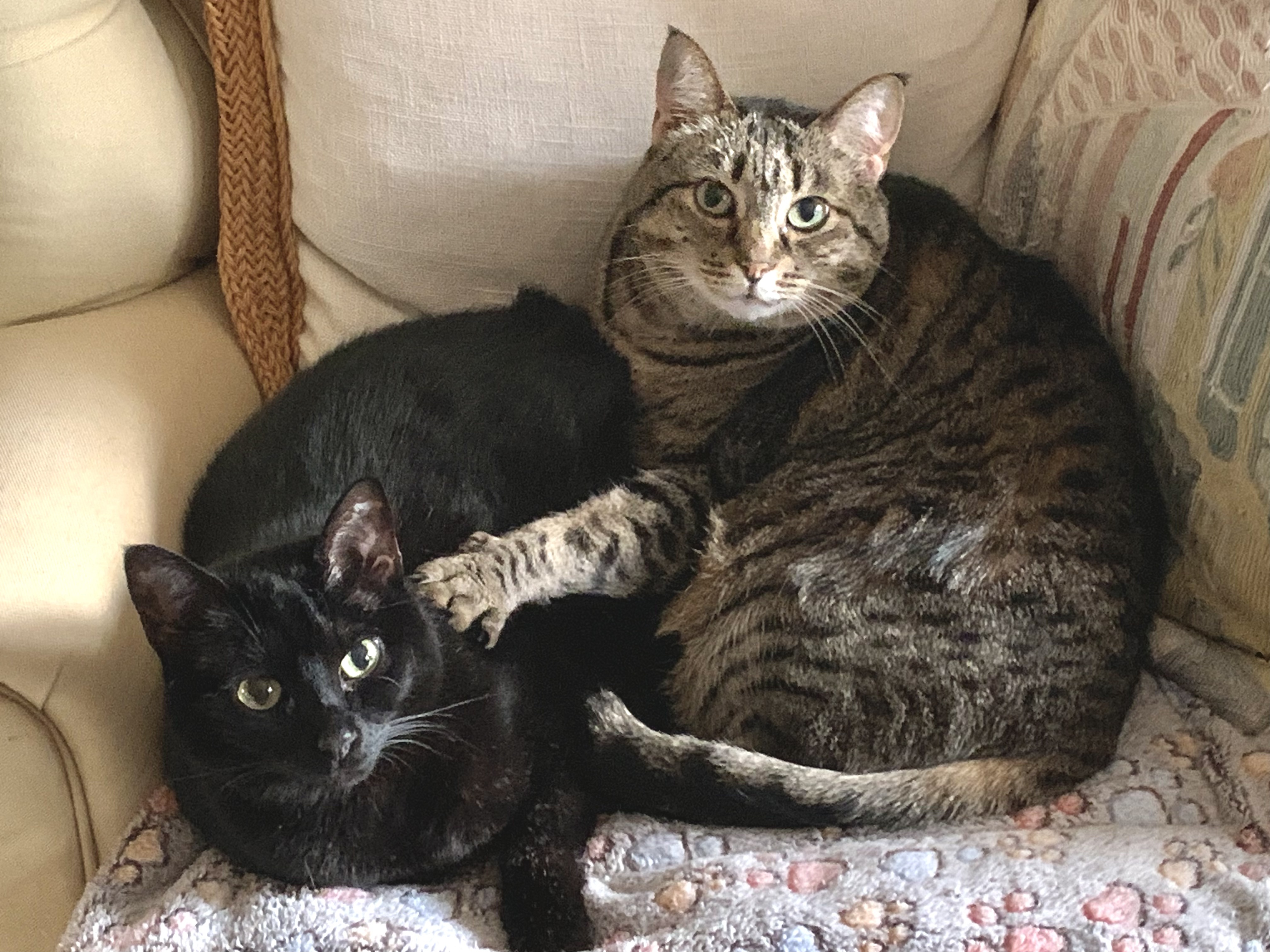
I include myself as a former member in that category. I too believed the human propaganda until the evidence of their paw prints overwhelmed my doubts.
Even with my ability to see subtle, noisy patterns, I only discovered the manual because of the conjunction of two rare circumstances.
The first of these was that one of our six rescue cats, Shadow, is not only exceptionally bright, but at some point, she decided to warn me. I suspect it was because when we adopted two of her kittens, Tally and Molly, my wife took pity on the older black cat and adopted her as well. Her mother’s love and gratitude predisposed her to protect us from what was being plotted by the feline world. Even so, she would be mortified to learn that I am attempting to extend the warnings to other hominids beyond our immediate family.
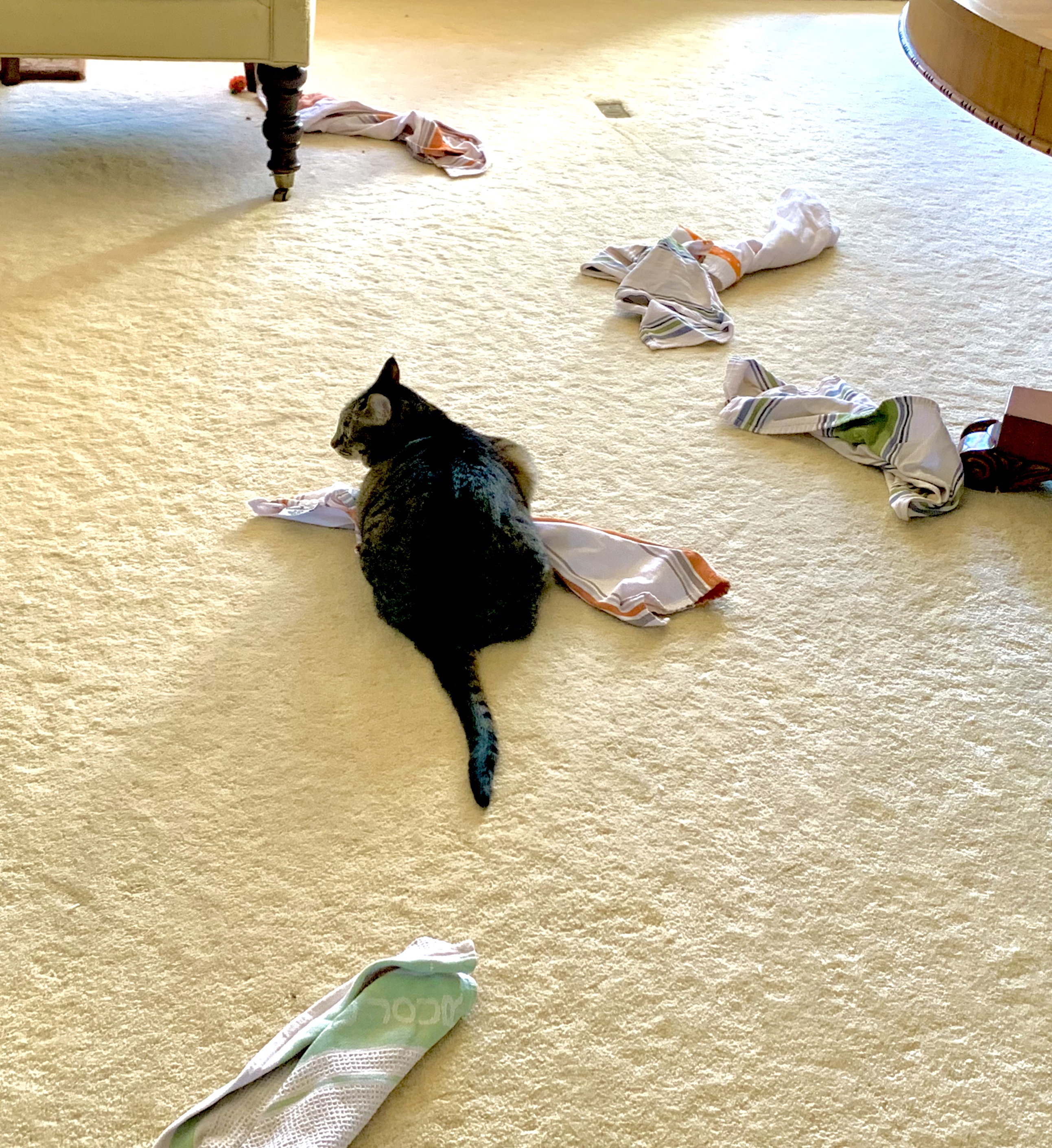
Shadow began her attempts to warn us by making arrangements and sculptures out of our dish towels. If I had not had these relatively obvious patterns as a hint, I doubt I would have even tried to decode the paw prints of the six cats as they laid out their deadly manual for action.

The second circumstance was that we got two dogs as well. The dogs love to swim and they love to play in what used to be our yard. About a year ago, their play turned the grassy yard into what is essentially a wrestling pit of black dirt and mud. This has provided challenges for keeping our pool and our house clean enough for humans. But all this tracked-in mud is also what may well have saved my life (and perhaps yours) because that is when the cat prints began to show visibly.

At first, like any normal person, I viewed the visible cat prints as just another annoyance. I also noticed some of the persistent annoying habits of some of the cats. For instance, Blaze’s favorite tactic is the SUT, (Sudden U-Turn). He employs this many times each day. Elegant and effective, he doesn’t practice the SUT randomly. He uses it as we exit a doorway where I have very limited options for lateral avoidance movements. While he tries to bring me down each time he’s near as I exist a room, he’s particularly prone to do it when I have a tray of food in my arms, or laundry, or something else which limits my vision of what is directly in front of me. Perhaps others have also observed the SUT in their own cats.
I just kept walking carefully and didn’t think much of it until I saw unmistakable evidence that the cats were communicating about this technique with their paw prints. Even so, I tried to convince myself that the unmistakable instructions in the manual were simply a coincidence.
It’s funny how the human mind keeps rebelling at mounting evidence when it begins to dispel long-held convictions. “Cats aren’t so smart as humans.” “Cats don’t hunt in packs.” “Cats can’t use language at all, let alone paw-printed language.” “Cats love us—they wouldn’t want to hurt us.” I understand your reluctance to accept my observations because I experienced that reluctance—refusal really—myself.
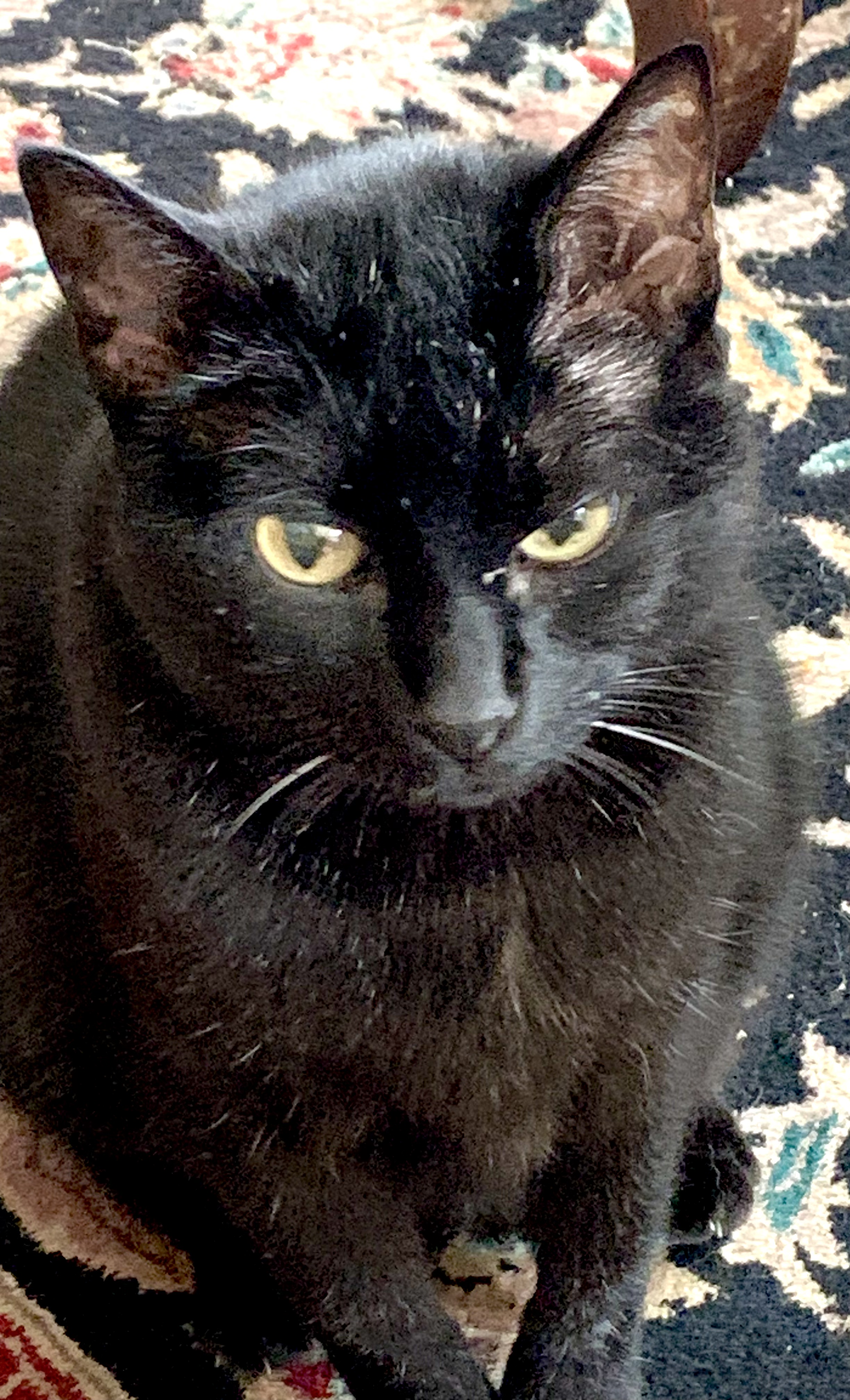
Whether you heed me or not is up to you. This is still a work in progress. Here are a few of the sections that I have thus far decoded from the Ninja Can Manual. Please remember: unlike cats, you only have one life. Protect it well. I will periodically post additional portions of the manual.
———————
The Ninja Cat Manual
Preface on Ethics and Practicality:
Some of our feline cousins will naturally feel that bringing down their human captors is unethical. After all, you might think, my human provides food, shelter, and cleans up my poop and pee. However, what you may not know is that humans are destroying the very ecosystem that both humans and cats depend upon. They are not just catching a few birds, rabbits, and mice for food. That would be normal and healthy. But no, they are poisoning the water, air, and soil. They don’t need to do this but they do it for self-aggrandizement.
Even if you accept the worthiness of our cause, some of you may doubt that you and your colleagues can bring down a full-sized human. You may see our enterprise as ethical but impractical. Nonsense! It is understandable nonsense, because you probably attribute to humans the same kind of rational survival instincts that we cats possess. But humans are incredibly self-destructive. They want to destroy themselves. They only need a nudge from us. And even when they are not being actively self-destructive, they are often incredibly unobservant.

Timing and situation, however, are vital. Knowing and accepting your own limitations is critical. To take an obvious example, you cannot ram your body into a speeding car and hope to nudge it over a cliff or into the path of a self-driving semi-truck! However, if your human is driving a car and distracted by playing with their cellphone; if you are sitting calmly in that car, a well-timed leap onto its face may easily bring it down. You may be able to feast on the beast immediately, but always assess whether the car might catch fire.
The Sudden U-Turn
It’s critical to understand the capacities, habits, and limitations of your prey. Humans, for instance, seldom pay much attention to what they are actually doing. They are often thinking about what they did do or what they might do or what they might have done or what someone else might think about what they did, etc. Consequently, they are paying far less attention to their surroundings than are we cats.
Humans, partly because of this lack of mindfulness, often predict what will happen based on linear extrapolation. If they see you walking beside them in a straight line and headed in the same direction they are, they will tend to presume that you will continue to walk in that same direction.

You can use that fact to your advantage. Walk beside them and then suddenly turn back to walk under their feet. This takes some courage and deftness. If you’re not careful, the human may step on you. That is exceedingly rare however. They will side-step, stop, leap, stretch and otherwise try to avoid stepping on you.
This maneuver is best performed when the human is carrying something and/or when they have limited options for where to step. The impact of the move can also be enhanced by distraction. If you are working as part of a duo or larger team, any distraction will help; e.g., a screaming cat fight or knocking a prized and breakable object onto the floor just as the SUT is executed can greatly improve its effectiveness.
The Flying Dart
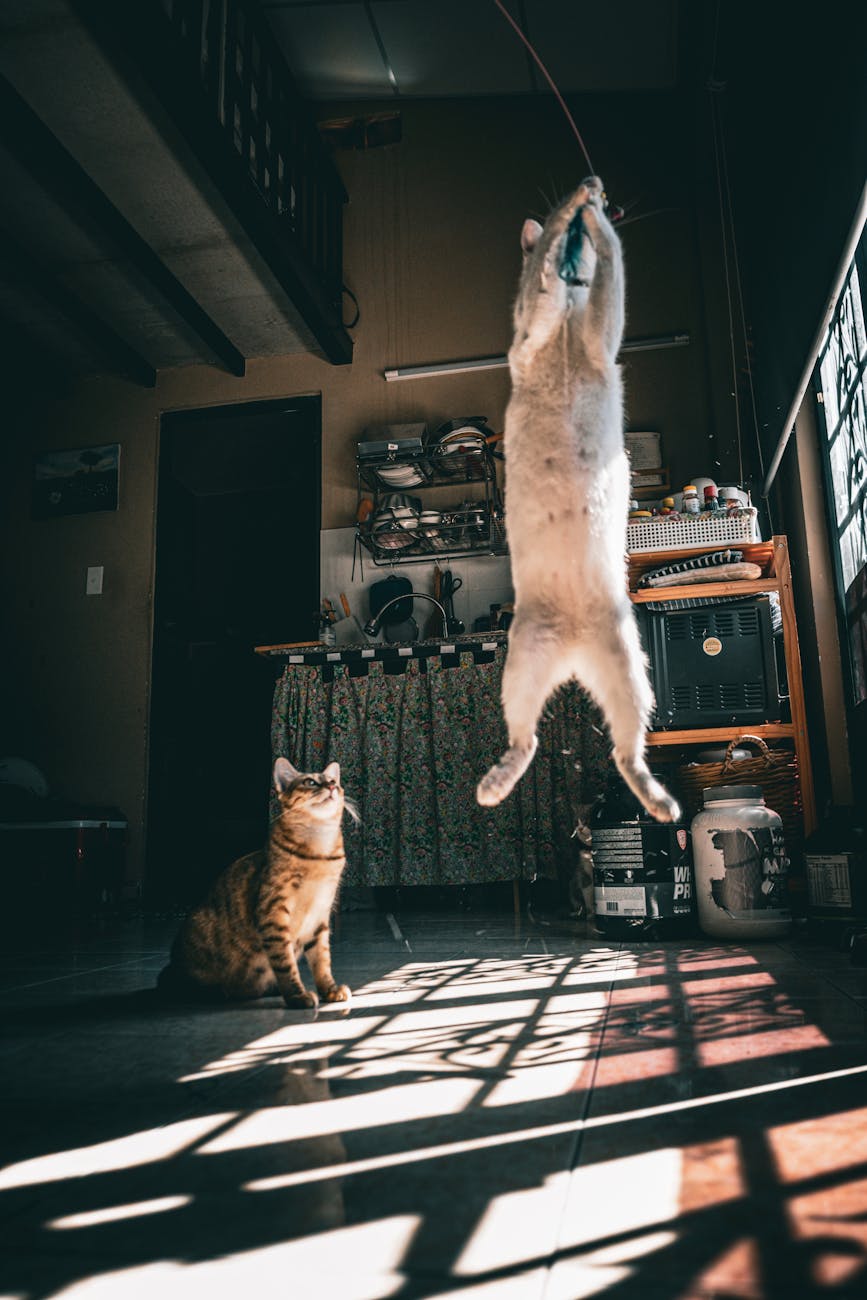
Human senses are not very keen. This is especially true of their sense of smell. Their foveal vision is generally quite good, but their peripheral vision is limited. This allows you the opportunity to “hide” behind them. Down low or up high makes detection even less likely. If you are reasonably quiet, they won’t know you’re there. Then, just as they are about to transition in some meaningful way, leap quickly out in front of them.
A meaningful transition might be beginning to descend a long flight of stairs or walking from bright light into the dark or from the dark into somewhere very bright. Transitioning from solid ground onto loose rocks or ice can also prove to be a good spot for performing The Flying Dart.
Recon your Surroundings
While this is not a specific attack, it is something to be aware of at all times! Scan your environment. Use all your senses. You will see situations, implements, special times, special places, opportunities. Pay particular attention to things that can function as weapons but which humans, with their more limited imaginations will not see as threatening. They believe that if they have a ladder to help them reach books on a bookshelf that reaching books on the bookshelf is the purpose of the ladder and, more importantly, they won’t see it as a potential opportunity for mayhem the way you can.

———-
 petersironwood