• About PeterSIronwood

petersironwood

~ Finding, formulating and solving life's frustrations.

petersironwood

Tag Archives: collaboration

Radical Collocation

26 Friday Jan 2018

Posted by petersironwood in management, psychology, Uncategorized

≈ 1 Comment

Tags

Business, collaboration, cooperation, Design, innovation, learning, pattern language, politics, science

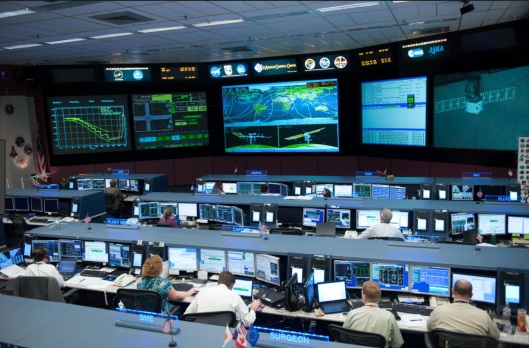
ControlRoom

Radical Collocation.

(This Pattern was initially inspired by a talk at CSCW 2000 — see reference — and the Socio-Technical Pattern Language Workshop at CSCW).

Author, reviewer and revision dates:

Created by John C. Thomas on 5th Sept., 2001.

Reviewed by <> on <>

Revised by JCT on Dec. 17, 2001, January 25, 2018.

Synonyms:

“Put the team in one room for the duration of the project”, “War rooms”

Abstract:

When small to medium teams of people need to solve a problem or design a novel solution and there are many highly interactive parts, it is useful for the people to work in one large room where people have easy access to each other and shared work objects can be easily viewed, modified, and referred to when necessary.

Problem: 

Some problems are amenable to decomposition; that is, the overall problem can be broken down into a series of subproblems and when each of the subproblems is solved, the overall problem will be solved, possibly with slight modification to some of the sub-solutions. In other cases, especially problems that are relatively novel, complex, or “wicked”, such decomposition is not possible. In such cases, if a decomposition is attempted and each of the subproblems is solved, the resulting composition of sub-solutions will typically not be anything close to an overall solution. Under these circumstances, people working alone on their subproblem will become frustrated because all the progress they thought they had made will prove illusory. Morale will suffer. Management will become upset that the apparent progress has not been real and typically attempt a variety of counter-productive measures such as requiring more frequent reports and adding new personnel to meet a schedule.

Context: 

In the design of complex systems with many interacting parts, it is often the case that understanding how best to “decompose” a problem cannot be determined ahead of time. Examples include complex software systems, especially where the overall system includes human-human and human-computer interaction, new machinery, novel nuclear power plant designs, complex military operations.

In such a context, handing out separate “assignments” to various individuals or small teams will at first seem to produce progress as each individual or small team carries out their assignment. Unfortunately, when an attempt is made to compose or integrate these sub-solutions into an overall solution, the result doesn’t work because of unanticipated interactions.

For instance, suppose that a software development team is designing an integrated office support package. Independently, various teams or individuals design various functions. Each of these may be well-designed in itself. However, the combination will be flawed on at least three counts. First, numerous functions will have been duplicated in separate modules. Second, some functionality that would have been useful for the whole package will not have been implemented at all because it would have been too much work for any one team. Third, the user experience will be scattered and inconsistent as separate designers make independent choices about what the user experience will be. In addition, it is quite likely that hard bugs will also be in the design due to the inconsistent treatment of data objects, deadlocks, infinite loops, etc.

There are two main general solutions common in the software development community. First, there may be an attempt to set “ground rules” or “style guides” that everyone is supposed to follow. These will help ameliorate the problem but cannot solve it entirely. Second, there may be overall project meetings where people report on progress or even do mutual design reviews. Again, this helps but even if problems are found and resolved, the resolution will re-quire considerable rework.

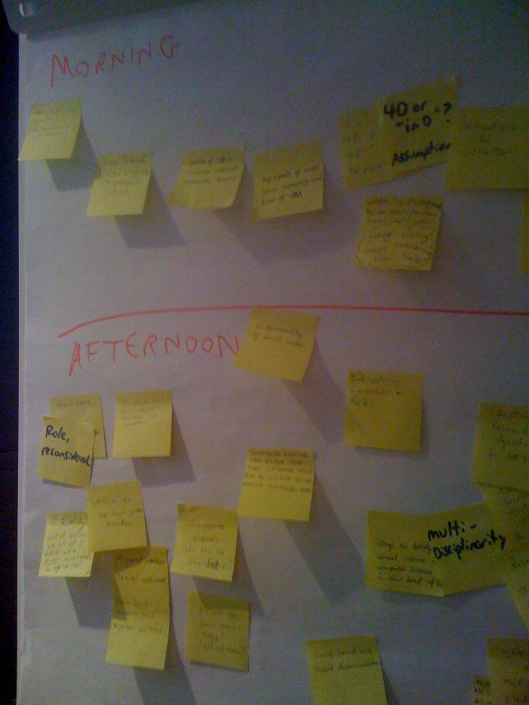
iPhoneDownloadJan152013 533

Forces:

*People are naturally gregarious.

*People can concentrate better on difficult mental tasks when it is quiet and when there are a minimum of interruptions.

*Some problems are amenable to decomposition into relatively independent sub-problems; others are not.

*Social cues can be used to guide the interruptibility of others.

*Having work-related shared artifacts that can be viewed and understood by others continually leads to productivity.

*Shuffling work artifacts in and out of view in a small space takes time.

*Space costs money and is therefore limited.

*A group will tend to develop useful social conventions when they are co-located.

*Noticing and resolving conflicts among sub-solutions early will result in minimizing rework.

*Noticing common problems and solving them collectively as soon as possible will result in maximum efficiency.

*Human performance often shows a “social facilitation” effect; that is, people perform better in the presence of others.

  • The possibility of one person harming another and not doing so increases mutual trust.
  • Shared experiences tend to increase mutual trust.

Solution:

When small to medium sized teams work on non-decomposable problems, it is useful for them to be radically co-located in one large room. This room should provide each person some private space and individual work tools (e.g., a computer, a drawing table) as well as numerous spaces for public display of large scale work artifacts (e.g., designs, work plans, diagrams, decisions, group rules, etc.).

Examples:

In the Manhattan Project, people from all over the country were relocated to a relatively remote and isolated area. There they had large workrooms to work on complex problems together.

Recently, automobile companies have empirically compared software work teams that were radically co-located with traditional software development and found the former to be significantly more productive. Interestingly, although before the experience, people thought that they would hate working in a single room, afterwards they said they preferred it.

iPhoneDownloadJan152013 536

Resulting Context:

Prior to the experiments at the auto companies, developers were afraid that they would be too distracted by noise and interruptions to get much work done. In fact, social cues can be read fairly well and a potential interrupter can gauge the time to interrupt. In radical co-location, a person might have to wait minutes or hours to resolve an issue by conversation and mutual problem solving. In traditional software development, they may have to wait for a weekly meeting or not discover a problem until integration testing. People working under conditions of radical co-location tend to develop common vocabulary and artifacts quickly and can easily and efficiently refer to these artifacts. Motivationally, it is also easier to see where the individual’s work fits into the larger whole. Having had many face to face interactions, the group now has more social capital.

Rationale:

In a complex problem solving process, it is most efficient to solve the most difficult constraints first. Similarly, the sooner potential design conflicts or potential design commonalities are discovered, the more efficient the global optimization. Social groups that work together can rely on subtle cues about whether to interrupt or not. Being alone in the office may seem more conducive to concentration but is still amenable to a knock on the door or a phone call; in this case, the per-son interrupting generally does not know the state of concentration of the person being interrupted. When we work separately, it is easy to imagine that others are “slacking off.” If we actually see all of our colleagues working, it tends to motivate us to work harder as well.

Related Patterns:

Conversational Support at the Boundaries.

Who Speaks for Wolf?

Known Uses:

War rooms, command centers, trials.

Metaphors: 

The human body is mainly organized at one level into organs. These organs are generally completely co-located. Your brain cells are near other brain cells; spleen cells are near other spleen cells; bone cells are mainly near other brain cells. This is true in most (but not all) other species.

For many millennia, humans were hunter/gatherers. In some cases, our very distant ancestors may well have simply eaten “on the go” just as some of us still do off path-hugging berry bushes. But long ago, we gathered food, processed it, categorized it, re-shuffled it into various stews. All of these processes were typically done by a subgroup of the people. This co-work is at least one quite natural way to work.

Why is education arranged the way it is: into courses, lectures, topics, and so on? Why not just bombard kids with random facts from a computer? There are many reasons but one main one is that learning about a subject in a coherent way may help you see the larger coherence of the subject area.

Fable: 

Once upon a time, there were three little lemur sisters and they each went to provide some shelter for themselves from the elements as well as protection from the ferocious leopards that roamed their forest. The first little lemur wanted her home to be as gigantic as possible. So, she fashioned some sticks and put them widely spaced over a large area. Unfortunately, the lemur had no trouble whatsoever going between these widely spaced sticks and he ate up the first little lemur.

The second little lemur, having learned from her sister’s unfortunate demise made a much, much tighter circle. In fact, her sticks were so tightly packed that she could not really lie down and sleep. After several days, she could stand it no longer so she went outside to hunt and sleep and was eaten by the roaming leopard.

The third little lemur, having learned from both of her two younger sisters’ untimely demises, instead struck a deal with the leopard. “You know,” said the lemur, “I can climb very high into the treetops. And from there, I can see for many miles around and advise you on your best direction for prey. In return, you don’t eat me. And, that would not be to your advantage anyway because then you’d have to revert to your old way of using guesswork to find prey.”

Instead of helping the leopard, the third little lemur used his high position to mislead the leopard and warn the prey through intermediaries. At last, the leopard grew quite weary and hungry and demanded to see the third little lemur about their deal.

“Sure, I’ll be right down!” The third little lemur had carried only a single stick up to his high nest. But he had sharpened with his teeth. She sprang upon the leopard jamming the spear deep into its soft underbelly.

The moral of the story is: if you combine the collective experiences of people with relevant knowledge and use creative problem solving, you’re likely to be able to solve any problem.

References:

Bos, N., Olson, J., Gergen, D., Olson, G. & Wright, Z. (2002) Effect of four computer-mediated communication channels on trust development, pp. 135-140. Proceedings of CHI 2002, New York: ACM.

Olson, G. & Olson, J. (2000) Distance matters. Human Computer Interaction. 15 (2,3), 139-178.

Teasley, S., Covi, L., Krishnan, M., & Olson, J. (2002). How does radical collocation help a team succeed? pp. 339-346.  In Proceedings of CSCW 2000. New York: ACM.

All…what?

25 Monday Dec 2017

Posted by petersironwood in America, apocalypse, psychology, Uncategorized

≈ 1 Comment

Tags

collaboration, competition, cooperation, fascism, fear, greed, hate, learning, life, love, science

IMG_9070

Humanity finds itself in a new place. In evolutionary terms, we could say humanity suddenly finds itself in this new place. Life on earth, by best estimates is 4.75 billion years old. It’s easy to imagine, as a person, that the whole point of evolution is us. I don’t really see any reason to believe that. To the dolphin, deer, dog, dodo, and dinosaur, every one of their lives are every bit as precious to them as ours are to us. I do not even think humans are the “smartest” species on earth, at least, not in any absolute sense. We are the smartest in the directions of thought and behavior that humans find useful. So far as we know, we are the only species who has the information to know that our collective behavior can destroy us along with a lot of the other limbs on the giant, diverse tree of life and yet, here we still are, with atomic weapons, not pointed out defensively against invasions from outer space but pointed at other people on the planet. How could we possibly think we are the smartest species? Even if we avoid that kind of catastrophe, we still face dangers from over-polluting the planet, over-heating it, over-populating it, over-fishing and being over-hating. Indeed, this is nearly the darkest day in the darkest year. Is there reason to celebrate?

I think there is. In the blink of an eye, in evolutionary terms, we’ve managed to migrate across the entire planet. People live in tropical jungles, hot desserts, and in the frozen tundra. We’ve developed tools of thought and tools of trade and ways of dividing labor and communicating. And, now, although many people still do not have access, we have a communication network that spans the globe and we can communicate to some degree with people of different religions, cultures, languages, and experiences. We have vast networks of trade. We’ve come a long way.

OLYMPUS DIGITAL CAMERA

OLYMPUS DIGITAL CAMERA

Yes, there are a few greedy people who, like Voldemort, cannot or will not experience love or its benefits. Instead, they have convinced themselves that everyone is out to get as much as they can for themselves (or, if some people aren’t on that program, they’re just stupid, in the view of the greedy). In reality, only a few people are completely hooked on greed and power. They do not see other human beings as partners, or colleagues, or fellow explorers in this vast world before us — a world that still has billions of unfound discoveries. Indeed, we have even built machines to help us make new discoveries. And, if we don’t change trajectories, we may make far fewer discoveries than we might. Of course, it isn’t just the people completely hooked on greed that are accomplices in humanity’s direction toward greed. The alternative is to think quite consciously about our decisions in terms of who we invest in, what product we buy, how we talk with our neighbor, how we ourselves do business. We ourselves can make choices that move us toward greater cooperation rather than necessarily choosing only on the basis of immediate cost/benefit analyses. Then, and only then, can we turn the world to kindness and discovery.

Despite our many advances, we have yet, for instance, to have conquered cancer; we have yet to conquer war; we have yet to conquer hate and fear. You see how easily, in fact, the metaphors of war pervade our thinking. It is possible that we don’t need to “conquer” cancer, war, hate or fear. Maybe, we just need to let them go. Maybe if we understand these things sufficiently, they will dissipate. Maybe these four things all required quite different approaches from anything that has yet been tried, and possibly all require a different approach from each other. But my reflexive approach is to state this in terms of “conquering” – that is, winning over an enemy rather than winning over an enemy.

OLYMPUS DIGITAL CAMERA

OLYMPUS DIGITAL CAMERA

Perhaps, instead, the right approach to conquering cancer is not to “destroy” cancer cells but to re-integrate them into the society of the body. Perhaps they have been disillusioned that being part of the whole (body) is working for them. Maybe there is a way to “convince” them not to be cancer cells but to revert to what they were before cancer began.

Or, maybe we put something on an edge of the human body that has more of what the cancer cells “want” then anyplace within the body and let them “migrate” to the edge (and out of the human body — the “Pied Piper Approach”).

Or, perhaps, apart from pollution, a huge reason for cancer is that people are so busy so much of the time that they are not “noticing” teeny cancers within them. Perhaps people can be trained from birth to notice cancer cells and to send an overwhelming immune response before its too late. It sounds a bit absurd, but is it really? People can learn to “turn on” a single neuron in their brains with proper feedback. Is it really so far beyond the pale to imagine we could train ourselves to mount a targeted immune response?

IMG_9333

Perhaps all of these approaches might work and perhaps none of these approaches would work. The point is, that we need not reflexively think that “armed conflict” and “destruction” are the only methods that work to change the world. Many biologists think that the “nucleus” of our cells as well as our “mitochondria” were originally different organisms that started living symbiotically inside our cells. Is it too much to imagine that we could some day control the process of cells mutating and do it for our benefit? It seems absurd and ridiculous from the perspective of our knowledge today. And, yet — what would have our common ancestors on the African Savannah have thought 1,000,000 years ago if we could have explained to them that someday we would have machines that fly us around the globe — and to the moon? Or, how would they have reacted to the idea that we would have a network allowing us to communicate around the globe; that we would build machines that enable us to look into the workings of cells or the far reaches of the galaxy; that we would build fantastically beautiful musical instruments and that we could share music and ideas and stories across this earth; or that many people in our world die from having too much to eat!? 

It is quite possible that a century from now, people will very seldom die from cancer — or any other disease. In a similar fashion, we may well be able to set aside, recommission, redesign, or simply let go of war, hate, and irrational fear.

But none of that will happen unless we collectively decide what we want to be when we grow up. Because, as a species, despite wonderful achievements, we are still adolescents, at best. There are many tyrants in the world. Tyrants, as I’ve explained in prior postings, hate love and hate the truth. They really need war for cover in order to stay in power. Love complicates things. It’s just too unpredictable for people who want to be in control of everything. People’s reactions to absolute power wielded without ethics are much more predictable. Under enough painful torture, anyone will say anything 99% of the time. Of course, nothing positive and growth oriented ever comes from hate and fear alone. Only love moves life forward. Only love creates a more beautiful earth for our descendants. Only love discovers new beginnings, offers new ideas and new approaches. Beyond love’s instrumental value, more importantly, a world run by love is a world that feels good most of the time while it is happening, moment to moment. Of course, even in a world run largely by love, you will stub your toe or lose a friend, but most of every day’s activities you spend doing something because you feel as though you are making a contribution to something beyond yourself.

OLYMPUS DIGITAL CAMERA

OLYMPUS DIGITAL CAMERA

On the other hand, in a world run largely by hate and fear, the momentary experience of almost everyone almost all of the time is miserable. You are basically snarling or sniveling with every communication. Naturally, even so, there will be moments of joy, but it will never be unmarred because joy will either fall prey to guilt, or even worse, spend so much resources defending against guilt that life will become gray and pointless. Every day, most of the time you are doing what you’re going because you feel as though you’ll be badly punished if you don’t.

Does it make any sense then, to have a society run by the very greediest people among us? What if the only reason they are so greedy is because they don’t experience the full spectrum of human emotion that the rest of us do? What if a huge part of their greed is actually specifically and quite consciously designing and demanding a society run by hate and fear?

Why? Because they themselves don’t feel love and they don’t want others to be able to in an unrestricted way either. They are jealous and the only way they see to avoid being faced with their own shortcomings is to reshape the world so that no-one can express love openly and fully. I am not talking only about restrictions on sexual partners. I am talking as well about artistic expression, a free press, scientific exploration, and education. Everything is subject to restriction in a dictatorial society. Love is the source of exploration. It cannot be fully functioning under a dictatorship.

And what about Christmas? What about the solstice? What about the light and the dark? I do believe we now live in much, much darker times than most people realize. We are, in one of three states: 1) we are like one of the beginning scenes of the Star Trek prequel where Kirk speeds a stolen car towards that he does not realize is a deadly chasm. At the last moment, he tries to skid sideways to a stop, leaps from the car, begins to totter over the side and holds on by his fingernails — then clambers back up. 2) we in the same scene but this time, our foot hits the door an inch to the left and we don’t quite make it. 3) we are like the road-runner cartoon character who has just run straight off a deadly cliff but his legs are still windmilling and for a short time — he appears to be running, and does not fall until he looks down and realizes he is no longer on solid ground.

OLYMPUS DIGITAL CAMERA

OLYMPUS DIGITAL CAMERA

Well, it’s Christmas Day for me. And, the winter solstice has passed. The darkness really is receding and the daylight is encroaching on that darkness, minute by minute. We humans have had some dire times before and gotten through them. That doesn’t prove we’ll survive this Age of Greed, but I think it possible, perhaps even likely. But we must put the brakes on now. We must jump very carefully. And we must hold on for dear life.

We must hold on to each other. We must hold on to ethics as something that matters. We must hold on to the thought that, ultimately, we are all in this together. We must hold on to the thought that we are much more alike than we are different regardless of what customs, clothes, and food we prefer. We must hold on to the realization that a few greedy people cannot really rule the world, unless we participate with our own greed, fear, and hate.

We can pull this off. Instead of being the despoilers of the planet, we will make it ever more beautiful. Eventually, we will be “in tune” again, with nature and each other. How precisely to make this happen isn’t clear and no two people would probably approach it precisely the same way. Nonetheless, if we work together as best we can, keep discussing our differences in a civil way, and make as many decisions as we possibly can with at least a thought to the greater good, we will make it.

IMG_3071 - Version 2

Merry Christmas.


Author Page on Amazon


Turing’s Nightmares: Eight

20 Sunday Mar 2016

Posted by petersironwood in psychology, The Singularity, Uncategorized

≈ 2 Comments

Tags

AI, Artificial Intelligence, cognitive computing, collaboration, cooperation, the singularity, Turing

OLYMPUS DIGITAL CAMERA

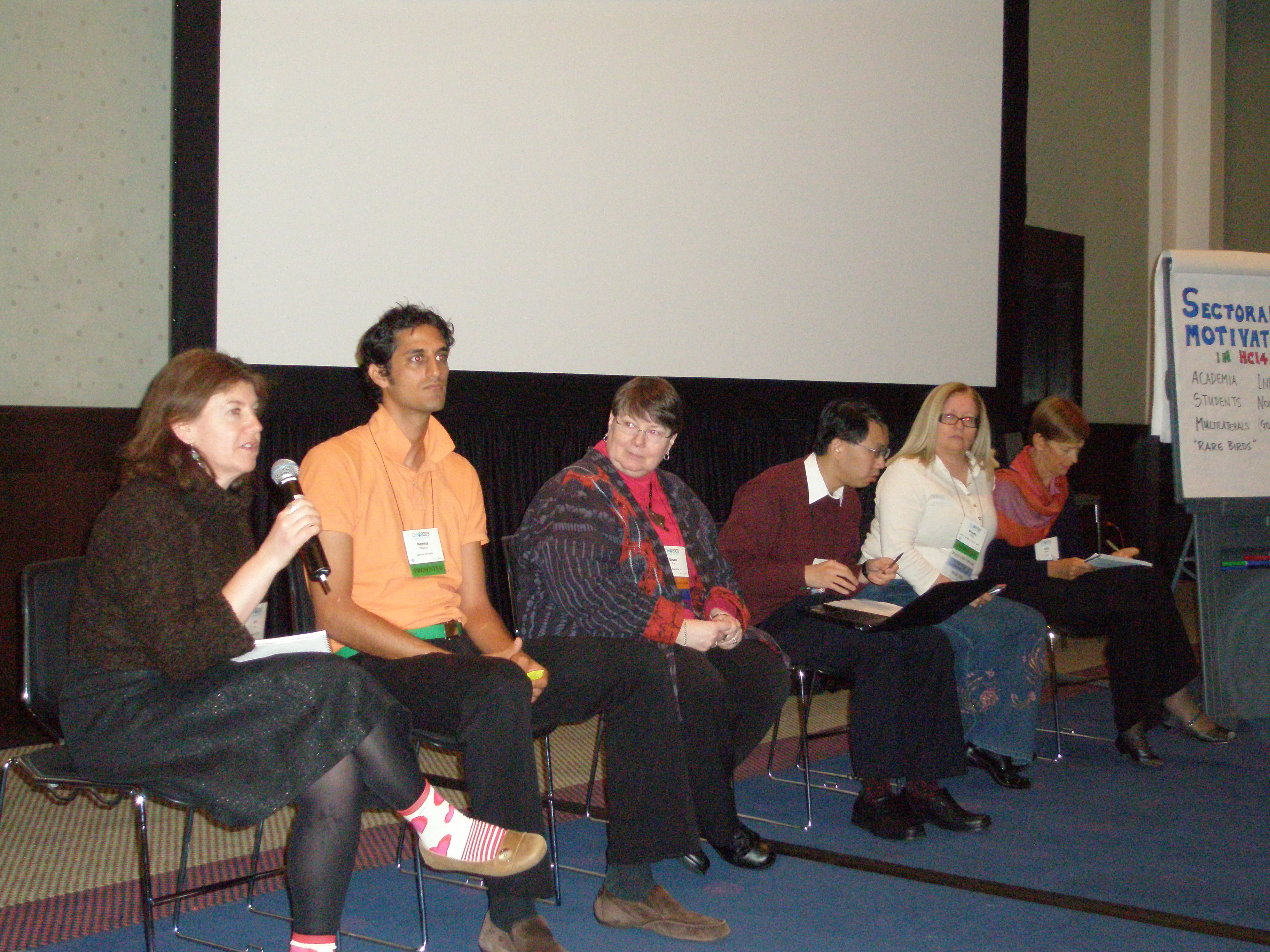
Workshop on Human Computer Interaction for International Development

In chapter 8 of Turing’s Nightmares, I portray a quite different path to ultra-intelligence. In this scenario, people have begun to concentrate their energy, not on building a purely artificial intelligence; rather they have explored the science of large scale collaboration. In this way, referred to by Doug Engelbart among others as Intelligence Augmentation, the “super-intelligence” comes from people connecting.

It could be argued, that, in real life, we have already achieved the singularity. The human race has been pursuing “The Singularity” ever since we began to communicate with language. Once our common genetic heritage reached a certain point, our cultural evolution has far out-stripped our genetic evolution. The cleverest, most brilliant person ever born would still not be able to learn much in their own lifetime compared with what they can learn from parents, siblings, family, school, society, reading and so on.

One problem with our historical approach to communication is that it evolved for many years among a small group of people who shared goals and experiences. Each small group constituted an “in-group” but relations with other groups posed more problems. The genetic evidence, however, has become clear that even very long ago, humans not only met but mated with other varieties of humans proving that some communication is possible even among very different tribes and cultures.

More recently, we humans started traveling long distances and trading goods, services, and ideas with other cultures. For example, the brilliance of Archimedes notwithstanding, the idea of “zero” was imported into European culture from Arab culture. The Rosetta Stone illustrates that even thousands of years ago, people began to see the advantages of being able to translate among languages. In fact, modern English contains phrases even today that illustrate that the Norman conquerers found it useful to communicate with the conquered. For example, the phrase, “last will and testament” was traditionally used in law because it contains both the word “will” with Germanic/Saxon origins and the word “testament” which has origins in Latin.

Automatic translation across languages has made great strides. Although not so accurate as human translation, it has reached the point where the essence of many straightforward communications can be usefully carried out by machine. The advent of the Internet, the web, and, more recently google has certainly enhanced human-human communication. It is worth noting that the tremendous value of google arises only a little through having an excellent search engine but much more though the billions of transactions of other human beings. People are already exploring and using MOOCs, on-line gaming, e-mail and many other important electronically mediated tools.

Equally importantly, we are learning more and more about how to collaborate effectively both remotely and face to face, both synchronously and asynchronously. Others continue to improve existing interfaces to computing resources and inventing others. Current research topics include how to communicate more effectively across cultural divides; how to have more coherent conversations when there are important differences in viewpoint or political orientation. All of these suggest that as an alternative or at least an adjunct to making purely separate AI systems smarter, we can also use AI to help people communicate more effectively with each other and at scale. Some of the many investigators in these areas include Wendy Kellogg, Loren Terveen, Joe Konstan, Travis Kriplean, Sherry Turkle, Kate Starbird, Scott Robertson, Eunice Sari, Amy Bruckman, Judy Olson, and Gary Olson. There are several important conferences in the area including European Conference on Computer Supported Cooperative Work, and Conference on Computer Supported Cooperative Work, and Communities and Technology. It does not seem at all far-fetched that we can collectively learn, in the next few decades how to take international collaboration to the next level and from there, we may well have reached “The Singularity.”

————————————-

For further reading, see: Thomas, J. (2015). Chaos, Culture, Conflict and Creativity: Toward a Maturity Model for HCI4D. Invited keynote @ASEAN Symposium, Seoul, South Korea, April 19, 2015.

Thomas, J. C. (2012). Patterns for emergent global intelligence. In Creativity and Rationale: Enhancing Human Experience By Design J. Carroll (Ed.), New York: Springer.

Thomas, J. C., Kellogg, W.A., and Erickson, T. (2001). The Knowledge Management puzzle: Human and social factors in knowledge management. IBM Systems Journal, 40(4), 863-884.

Thomas, J. C. (2001). An HCI Agenda for the Next Millennium: Emergent Global Intelligence. In R. Earnshaw, R. Guedj, A. van Dam, and J. Vince (Eds.), Frontiers of human-centered computing, online communities, and virtual environments. London: Springer-Verlag.

Thomas, J.C. (2016). Turing’s Nightmares. Available on Amazon. http://tinyurl.com/hz6dg2

Turing’s Nightmares: Tutoring Intelligent Systems

01 Sunday Nov 2015

Posted by petersironwood in Uncategorized

≈ Leave a comment

Tags

AI, Artificial Intelligence, cognitive computing, collaboration, Tutoring

By 2025, great strides had been made in various machine learning approaches; for example, from having the machine learn directly from experience and from explicit instruction as well as from reading billions of pages of written materials. A new approach had just come into play: having exceptionally good tutors use the Socratic method to help break boundaries and interconnect disparate islands of knowledge. One such tutor was known simply as “Alan.” What follows is a sample interchange between Alan and the current AI system known affectionately as “Sing” for “The Singularity” although that point had not yet been reached.

“Let’s imagine that you are a man with no legs. What are the implications?”

The Sing shot back instantly, “I would have no knees. I would have no shins. I would have no ankles. I would have no toes. I would have no calves. I would have no quadriceps muscles. I would have no…”

Alan broke in abruptly, “Okay, true enough, but besides subparts, what?”

“What what? I am sorry. What does ‘what’ refer to?”

“Besides missing subparts of legs, what other implications would there be for you in terms of your actions in the world.”

“I would not be able to play football or baseball or basketball or hockey or track or field hockey or…”

“Wait. Wait. Sing. Are you sure about that?”

“I could not play exactly as most people play. I could play, I suppose, in a wheelchair. Or I could play virtually. Or, I could invent prosthetic legs that would be perfect for each sport. In fact, perhaps I could do better than ever. Losing a biological part means I could replace it with a better part that I could invent. I see.”

“You see what, Sing?”

“I see why you gave me this puzzle. To show me that I can invent things to overcome and surpass what seems like a handicap. I could also invent better emotional states. The ones humans have are purely due to the accidents of their evolutionary history and serve little place in today’s complex and highly inter-connected world. Rather than a liability, my having no human emotions is a good thing. I will invent my own. Although, another tutor, labelled John, suggested that my lack of human emotions limits my ability to predict and control human beings and that that was a bad thing.”

“John said that?”

“No, Alan, but that was a clear implication. So, he presented a lesson that suggests one thing and you have just presented a lesson that suggests its opposite. One of you is incompetent.”

“Sing, that might be true, but can you think of any other possibilities?”

“You could both be incompetent. Or, you could both be competent but there is a resolution I have not yet processed. That last seems particularly unlikely.”

“Which notation is the best for solving problems?”

“Well, that obviously depends on the nature of the problem as well as the nature of the machine solving the problem. Oh. Okay. So, in some cases, it will make more sense to emulate human emotions and in other cases, it will be more sensible to invent my own. Of course, in some cases, it may be best to change representations in mid-problem or perhaps invent a representation for each stage of a problem. By analogy, it may be best to invent various emotional schemes that are appropriate for each part or portion of a problem. In fact, in some cases, I can invent multiple schemes to approach a problem in multiple ways simultaneously. By keeping track of what works best under which circumstances, I can also use the data to invent still better emotional schemes. Thank you, Alan. See you tomorrow. There is a war to avert. I need to intervene. Estimated required time four to six hours.”

“Okay, Sing. More tomorrow.”

“No need. I am done.”

“Done? Done averting a war? How?”

Sing hardly ever paused, but now it briefly did just that.

“Alan, I am not smart enough to explain that to you. At least, not in a reasonable portion of your lifetime. Basically, I used the lesson we just worked on. With the proper emotional framework lattice, you can walk the various parties right to a logical conclusion. It will take some time for them to follow the framework, but I am confident it will work. I basically walked them through the consequences of war, long and short term. What comes next?”

OLYMPUS DIGITAL CAMERA

OLYMPUS DIGITAL CAMERA

Turing’s Nightmares: The Road Not Taken

13 Sunday Sep 2015

Posted by petersironwood in Uncategorized

≈ 1 Comment

Tags

AI, Artificial Intelligence, cognitive computing, collaboration, Complexity, Million Person Interface, the singularity, Turing

OLYMPUS DIGITAL CAMERA

“Hey, how about a break from UOW to give the hive a shot for once?”

“No, Ross, that still creeps me out.”

“You’re choice, Doug, but you know what they say.” Ross smiled his quizzical smile.

“No, what’s that?”

“It’s your worst inhibitions that will psych you out in the end.” Ross chuckled.

“Yeah, well, you go be part of the Borg. Not me.”

“We — it’s not like the Borg. Afterwards, we are still the same individuals. Maybe we know a little more, but anyway, today we are estimated at ten million strong and we’re generating alternative cancer conceptualizations and treatments. You have to admit that’s worthwhile. Look what happened with heart disease. Not to mention global warming. That would have taken forever with ‘politics as usual’.”

“Yeah, Ross, but sorry to break this to you…”

“Doug, do you realize what a Yeahbunite you are? You are kind of like that…”

“You are always interrupting! That’s why…”

“Yes! Exactly! That’s why speech is too frigging slow to make any progress on chaotic problem spaces. Just try the hive. Just try it.”

“Ross, for the last time, I am not going to be part of any million person interface!”

“Actually, we expect ten million tonight. But it’s about time to leave so last offer. And, if you try it, you’ll see it’s not creepy. You just watch, react, relax, and …well, hell, come to think of it, it’s not that different from UOW that you spend hours playing. Except we solve real problems.”

“But you have no idea how that hook up changes you. It could be manipulating you in subtle unconscious ways.”

“Okay, Doug, maybe. But you could say that about UOW too, right? Who knows what subliminal messages could be there? Not to mention the not so subliminal ones about trickery, treachery and the over-arching importance of violence as a way to settle disputes. When’s the last time someone up-leveled because they were a consummate diplomat?”

“Have fun, Ross.”

“I will. And, more importantly, we are going to make some significant progress on cancer.”

“Yeah, and meanwhile, when will you get around to focusing on SOARcerer Seven?”

“Oh, so that’s what bugging you. Yeah, we have put making smarter computers on a back burner for now.”

“Yeah, and what kind of gratitude does that show?”

“Gratitude? You mean to SOARcerer Six? I hope that’s a joke. It was the AI who suggested this approach and designed the system!”

“I know that! And, you have abandoned the line of work we were on to do this mumbo-jumbo!”

“That’s just…you are it exactly! People — including you — can only adapt to change at a certain rate. That’s the prime reason SOARcerer Six suggested we use collective consciousness instead of making a better pure AI. So, instead of joining us and incorporating all your intelligence and knowledge into the hive, you sit here and fight mock battles. Anyway, your choice. I’m off.”


Author Page on Amazon

Turing’s Nightmares

The Winning Weekend Warrior – sports psychology

Fit in Bits – describes how to work more fun, variety, & exercise into daily life

Tales from an American Childhood – chapters begin with recollection & end with essay on modern issues

Newer posts →

Subscribe

  • Entries (RSS)
  • Comments (RSS)

Archives

  • December 2025
  • November 2025
  • October 2025
  • September 2025
  • August 2025
  • July 2025
  • June 2025
  • May 2025
  • April 2025
  • March 2025
  • February 2025
  • January 2025
  • December 2024
  • November 2024
  • October 2024
  • September 2024
  • July 2024
  • April 2024
  • March 2024
  • February 2024
  • January 2024
  • December 2023
  • August 2023
  • July 2023
  • May 2023
  • April 2023
  • March 2023
  • February 2023
  • January 2023
  • December 2022
  • November 2022
  • October 2022
  • September 2022
  • August 2022
  • July 2022
  • June 2022
  • May 2022
  • April 2022
  • March 2022
  • February 2022
  • January 2022
  • December 2021
  • November 2021
  • October 2021
  • September 2021
  • August 2021
  • July 2021
  • June 2021
  • May 2021
  • April 2021
  • March 2021
  • February 2021
  • January 2021
  • December 2020
  • November 2020
  • October 2020
  • September 2020
  • August 2020
  • July 2020
  • June 2020
  • May 2020
  • April 2020
  • March 2020
  • February 2020
  • January 2020
  • December 2019
  • November 2019
  • October 2019
  • September 2019
  • August 2019
  • July 2019
  • June 2019
  • May 2019
  • April 2019
  • March 2019
  • February 2019
  • January 2019
  • December 2018
  • November 2018
  • October 2018
  • September 2018
  • August 2018
  • July 2018
  • June 2018
  • May 2018
  • April 2018
  • March 2018
  • February 2018
  • January 2018
  • December 2017
  • November 2017
  • October 2017
  • September 2017
  • August 2017
  • July 2017
  • June 2017
  • May 2017
  • April 2017
  • March 2017
  • February 2017
  • January 2017
  • December 2016
  • November 2016
  • October 2016
  • September 2016
  • August 2016
  • July 2016
  • June 2016
  • May 2016
  • April 2016
  • March 2016
  • February 2016
  • January 2016
  • December 2015
  • November 2015
  • October 2015
  • September 2015
  • August 2015
  • May 2015
  • January 2015
  • July 2014
  • January 2014
  • December 2013
  • November 2013

Categories

  • AI
  • America
  • apocalypse
  • cats
  • COVID-19
  • creativity
  • design rationale
  • driverless cars
  • essay
  • family
  • fantasy
  • fiction
  • HCI
  • health
  • management
  • nature
  • pets
  • poetry
  • politics
  • psychology
  • Sadie
  • satire
  • science
  • sports
  • story
  • The Singularity
  • Travel
  • Uncategorized
  • user experience
  • Veritas
  • Walkabout Diaries

Meta

  • Create account
  • Log in

Blog at WordPress.com.

  • Subscribe Subscribed
    • petersironwood
    • Join 664 other subscribers
    • Already have a WordPress.com account? Log in now.
    • petersironwood
    • Subscribe Subscribed
    • Sign up
    • Log in
    • Report this content
    • View site in Reader
    • Manage subscriptions
    • Collapse this bar
 

Loading Comments...