• About PeterSIronwood

petersironwood

~ Finding, formulating and solving life's frustrations.

petersironwood

Tag Archives: aesthetics

8. Deep Interlock & Ambiguity

09 Monday Aug 2021

Posted by petersironwood in Uncategorized

≈ 2 Comments

Tags

aesthetics, ambiguity, beauty, interlock

8. Deep Interlock & Ambiguity

In many cases, the various 15 properties that Christopher Alexander poses as characteristic of natural beauty seem to contradict each other. They don’t contradict each other. They are forces that sometimes oppose  each other or work at angles to each other. This should not surprise us because the same is true of life in general. Of course, I want my bones to be bigger because that will make them stronger. But bigger bones will make me weigh more and demand more nutrition. I want the biggest brain I can have, but a big head makes childbirth almost impossible. One way out of the conundrum is to risk having human babies born way earlier in their development than for most animals. 

So, Good Shape plays off against Deep Interlock & Ambiguity. Partly, it solves this problem by asking a third character in this morality play to step onto the stage — Levels of Scale. If one focuses attention on a single leaf or flower or petal of a flower, one typically finds “Good Shape.” In clusters of well-shaped leaves, or well-shaped flowers, one often sees the flowers or leaves interleaving with the space of other well-shaped leaves or flowers. Thus, at one level of scale, there is Good Shape. But at a higher level, all of these Good Shapes interact with each other so as to interlock. 

Typically, when we design User Experiences, we try to make things clear, not provide “Deep Interlock and Ambiguity” — that sounds like something to be avoided. Perhaps we can see how some decorative elements might exhibit Deep Interlock & Ambiguity, but surely anything that is functional should be clear. 

I think there is a place for Deep Interlock & Ambiguity in design — even functional design. First, we need to distinguish two sorts of reasons for having Deep Interlock & Ambiguity. On the one hand, the application itself may require deep interlock and ambiguity. Insisting that the user make absolute or irrevocable decisions when inappropriate is not good design. The importance of pliant design I’ve mentioned before. Here’s the paper that first introduced me to the term.

https://dl.acm.org/doi/10.1145/302979.303003

Harris, Jed & Henderson, Austin. (1999). A Better Mythology for System Design.. 88-95. 10.1145/302979.303003. 

Consider the relationship between a father and son, or between spouses. Do you think such intimate relationships could be reduced to a black and white set of clear, consistent, precise rules? I doubt it. It’s a “natural relationship” and, as such, will be ill-suited to predefining everything. That doesn’t mean that there need be no rules or that each person themselves should not have a “Good Shape.” Multiple “Good Shapes” with the right spacing will include both “Boundaries” and “Deep Interlock and Ambiguity” and as a result help produce “Positive Space.” 

Who’s pulling whom?

On the other hand … (did you forget the first hand? It was quite a diversion. Well, the first hand was about revealing to the user the Deep Interlock and Ambiguity inherent in their particular context, task, and the field they are working in. That is much better than hiding that truth.

Photo by Nafis Abman on Pexels.com


On the other hand, are you adding ambiguity because you’re not really clear about how a function is supposed to work? Or, are you pushing decorative elements so hard that it is obscuring the relationship of functional elements? A decorative example of mis-using “Deep Interlock & Ambiguity” (which I doubt anyone would actually do) would be to interlace two different menus like interlocking fingers of the two hands. It might indeed look more interesting visually. Perhaps someone out there could even make a good argument for having interleaved menus in certain situations. One example that might make some sense would be interlocking food and wine menus. 

Deep Interlock & Ambiguity is not only a property of visual beauty. Good drama, poetry, and music exhibit them as well. In various ways, so also do most sports. Almost every sport allows and requires the athlete to make decisions that have tradeoffs. Should they attempt the riskier move or the safer one? Should they attempt a higher bar, the heavier weight, the faster start? In addition, many sports (soccer, basketball, baseball, American football, hockey, rugby, etc.) have the two teams interacting directly. In tennis and volleyball, the players stay on their own side of the net, but the players need to shift constantly depending on the positions & motions of everyone else and the position & trajectory of the ball and the capabilities of the various players. I think this qualifies as a sort of Deep Interlock and Ambiguity. Such sports seem not that different from a simplification and stylization of the kinds of interactions that take place in natural ecosystem interactions. 
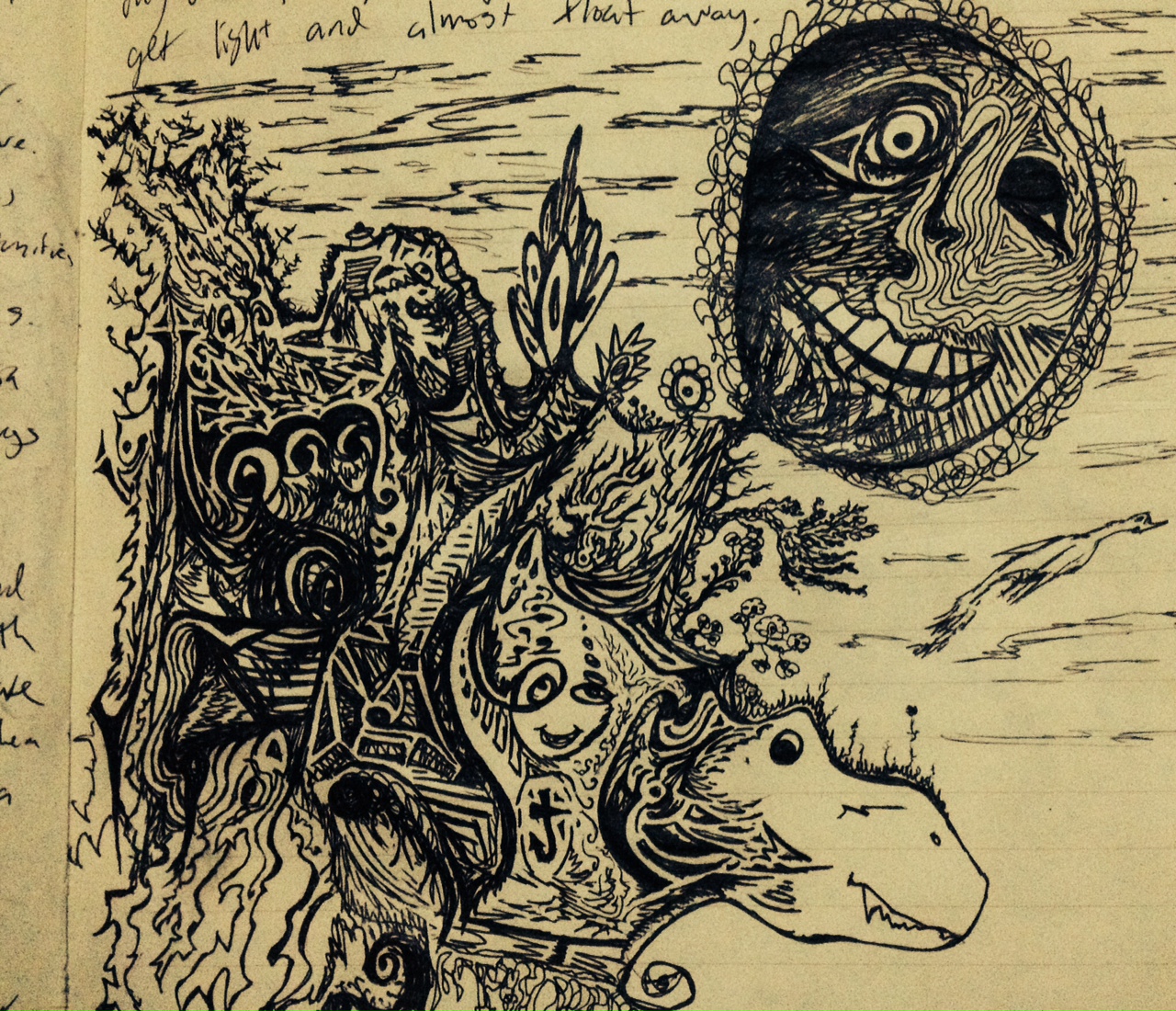
Original drawing by Pierce Morgan

Many simplified childhood games seem quite close to re-enactments of life and death struggles: Hide and Seek, Tag, Hare and Hounds, Cops and Robbers. In my neighborhood, when a new movie came out, the kids would typically go see it and then “play out” variations on the theme of the music. We would play in the setting of the movie (in our imaginations) and adopt characters from the movie. Movies aimed at children typically don’t exhibit quite as much Deep Interlock & Ambiguity as those aimed at older audiences when it comes to Character development. But the plot swings back and forth between apparent victory & defeat, loss & gain, life & death, honor & dishonor, etc. In that sense, the “experiencer” — whether adult or child — doesn’t know (or let themselves know) how things will turn out.

My childhood friends and I moved far beyond re-enacting the actual movie. We improvised entirely new plot lines, we created new lines of deep interlock and ambiguity. Were we taking actions we “really wanted to do” or merely taking actions we thought the characters in the movie would do if they were in the new situation? If we, as an actor, acted too “angry” with one of our friends, would it carry over into real life? If we, as ourselves, acted a certain way and liked it better than our ordinary way, could we “keep” the new behavior (or name, or hairdo, or way of dressing, or favorite expression, etc.?). 

Something like that continues throughout adulthood as well, both within our careers and in our personal lives. Or, at least it may. As you take on different “roles”, you begin to notice that you are better than most people at some things; worse at other things; and roughly average at still other things. You may also notice that doing certain kinds of things is very enjoyable while other activities leave you cold. Your preferences about what you want to do might stay fairly constant through your whole career. Or, your preferences might change quite a bit. If you allow yourself to really “get into a role,” you’ll have a better time deciding if it is a role you really relish. You might find yourself falling in love with your work, which of course is quite different from falling in love with the rewards or the trappings of work. If your life is like most, you’ll spend a lot more time working than enjoying the rewards or trappings of work.

——————-

How the Nightingale Learned to Sing

Maybe it needs a new starter

The Joy of Juggling 

Life is a Dance

Choosing the Script

Who are the Speakers for the Dead

Take a Glance Join the Dance

————-

5. Positive Space

04 Wednesday Aug 2021

Posted by petersironwood in Uncategorized

≈ 1 Comment

Tags

aesthetics, beauty, Christopher Alexander, Design, HCI, pattern language, Patterns, usability, UX

5. Positive Space

(This is the fifth in a series of 15 blogs that explore Christopher Alexander’s “Fifteen Properties” of good design, natural beauty, living spaces, etc.). 

Life is a dance on the edge between chaos, on the one hand, and sameness & repetition on the other hand. Repetition without variation or change is not life. On the other hand, endless random variation without any pattern or principle is also not life. Planet Earth is sometimes said to be a “Goldilocks Planet” — not too hot and not too cold — to support life. Most of the life forms on planet earth themselves exhibit a “positive shape” — a shape that wants to expand and fill out — and yet, there are limits because of circulation, gravity, communication etc. so that growth is typically not unrestricted. The tension between trying to grow and having to stick close enough to form creates positive space. 

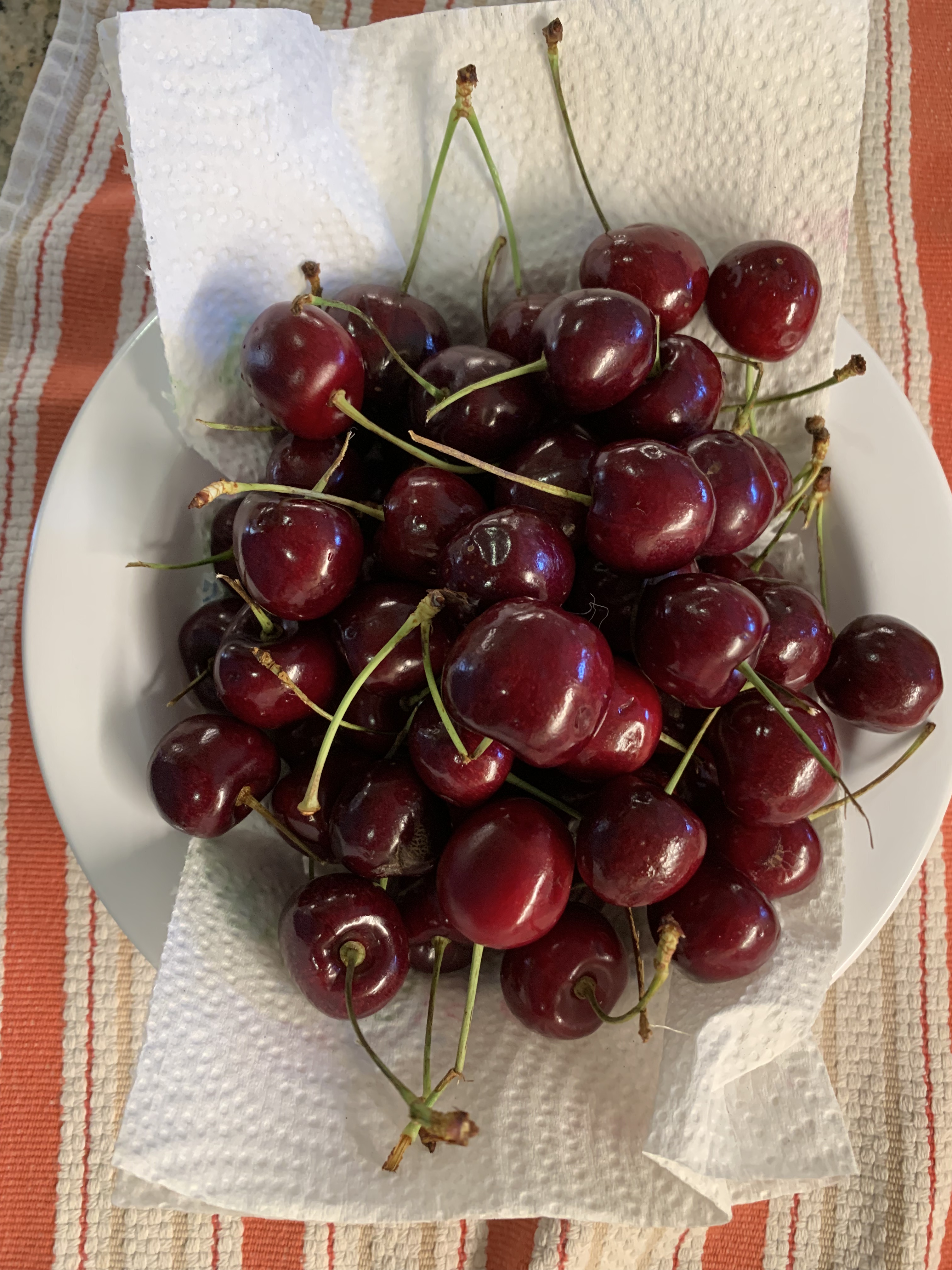
Life may not always be “a bowl of cherries” but nonetheless, a bowl of cherries does illustrate the property of “positive space.” The bowl connotes living things trying to expand right up to the boundaries possible. A bowl that is filled with cherries and even slightly over-filled but without inducing a fear of spillage, to me, connotes life being vigorous and healthy. To me, a single cherry sitting all alone in a large bowl seems to exhibit positive space much less — at least at the scale of the bowl. 

When I look at an individual cherry, I also see positive space. The cherry is not a perfect sphere, featureless and smooth. If it were, to me, it would be a much less positive space. The fact that there is a stem and a noticeable indentation where the stem goes provides a kind of center. So too does the slight asymmetry of the cherry. It appears as though it might have developed as two halves that tried to circle a space at the same time from two different directions – clockwise and counterclockwise. They met and merged to form the almost spherical cherry. 

The cherry is not the only natural food that has this kind of positive space. Think of corn on the cob. Each kernel seems to have tried to grow as large as it can. It pushes up against and into other kernels. Each kernel seems therefore to be “bursting with life.” 

Consider a cucumber. It’s roughly cylindrical. But “roughly” is important here. To me, it would seem much less an example of “Positive Space” if it were literally a cylinder. It tapers at the ends and it bulges at the middle. That seems more “positive.” 

A person who doesn’t understand that life is primarily a cooperative endeavor among all the parts of the vast tree of life, but instead sees the world only as a zero-sum game, it must seem as though the positive living space of a cucumber makes the space around the cucumber less positive and less living. But this is not true! The space around the cucumber’s slightly rotund shape is much more positive and living than the space around a perfect cylinder. 

Think of a tree trunk compared with a telephone pole. They are both made of wood and they are both approximately cylindrical. But a tree trunk feels much more alive to us than a telephone pole. I don’t think this is simply because we “know” a tree is alive. It looks more alive and if you allow yourself to “tune in” to it, it feels more alive. And, importantly, not only does the space that the tree inhabits seem more living. So too does the space around it! A long line of telephone poles may exhibit “Levels of Scale” and “Alternating Repetition” and such a picture may make us feel some life to it. 

Photo by Lerkrat Tangsri on Pexels.com

But a single telephone pole does nothing to stir life in me. In that sense, it’s nothing like a tree. It’s flat and it kills the space on either side as well. The columns in the Parthenon are roughly cylindrical and obviously not literally alive. But they, unlike a telephone pole, have positive space and create positive space around them. Life is not fundamentally a zero-sum game. The bee does not “steal” the flowers pollen and thus damage the flower. The bee helps the flower. The flower helps the bee. Positive space in an object does not steal from or detract from the space around the object. It enhances it! 

Similarly, the “competition” for space among the kernels of corn on a cob of corn shows that competition can be a beautiful thing. I like to see the kernels pushing against each other. All of them seem living and positive. Imagine instead a cob of corn in which one kernel had grown like a giant spider of orange cancer and took up 98% of the cob. Aside from this one ultra-greedy cell, there were only a few widely spaced and shriveled up kernels. Would you pick that from the pile of corn? Would want to slather it with butter and bite into it? I sure wouldn’t! And to me, that is exactly what cruelty, unfairness, and greed look like. It might seem positive — after all, the dictator is trying to “grow.” That is true but he’s rigged the game. Competition is no longer beautiful when the game is rigged. Competition is no longer beautiful when your tennis opponent slices off your leg before the match starts or pays off the chair umpire to call everything you hit out. 

I don’t think there’s anything particularly special about cucumbers or cherries or corn. I just happened to have been washing vegetables before writing this. These radishes also exhibit positive space. And, although their shape is not the same as a cherry or a cucumber, the radishes also enhance the space around them. And, so does the avocado. An avocado that is just past ideal ripeness begins to flatten irregularly and the “pebbles” of the skin also flatten making a less positive space. The pebbles of a perfectly ripe avocado are themselves tiny positive spaces that add to the overall impression of vigor. 

Flowers provide numerous examples of positive space. And, so far as I can tell, the positive space of flowers invariably also enhances the positivity of the space around them. 

Animals also generally exhibit positive space. Their shapes, after all, come about through a struggle among different tradeoffs that have been “learned” by each species over four and a half billion years. But whether you look at the leg of a turtle, the leg of a turkey, or the leg of a polar bear, you will see positive space. The shapes are quite different because their histories are quite different. But in every case, the shape is determined by the history and each of those histories is the same length — 4.5 billion years. The fact that each of these shapes comes about through the dance of trying to survive and thrive in all their various habitats makes every one of them beautiful in its own right — even those whom most of us don’t particularly like to interact with such as rattlesnakes or lions. Even if we don’t wish to come face to face with a lion or grizzly bear we do recognize their beauty. And, I would claim that as those animals walk through any landscape, they will not only exhibit their own positive shape; they will also enhance the positivity of the shape around where they are walking. Think how many times photographers and painters have put an animal in the foreground of a landscape! Of course, doing so makes the scene immediately more living, more interesting, and more beautiful. 

Photo by Anastasia Shuraeva on Pexels.com

What does this have to do with the user’s experience on a computing device? I would have to say that most interfaces on most devices do not do a lot to bring the interface “alive” including having positive space. The tool bar icons on this version of my Mac are very slightly “bulging” like a living cell (or kernel of corn). Even more subtly, the windows have slightly rounded corners. 

It’s an entirely different story with many games though. It seems to me that some of the game artists are among the best artists in the world. They have created many very beautiful games. Could they be more beautiful still if game designers consciously thought about using Christopher Alexander’s “Properties” in general, and “Positive Space” in particular? I think so, but for many games, such as Horizon Zero Dawn, many of the elements are copied so closely from nature that aspects such as “Positive Space” are mostly already taken care of by evolutionary bias toward the beautiful. (Yes, I do think there is such a bias, but it will have to be the subject of a different post.)

What about other applications and systems? Do you think you’ve seen good examples of “Positive Space” in such systems? How could you see incorporating “Positive Space” in UX? 

————————————

Winning by Cheating is Losing

Life Will Find a Way

Math Class: Who are you?

Life is a dance

Myths of the Veritas: The Forgotten Field

Newer posts →

Subscribe

  • Entries (RSS)
  • Comments (RSS)

Archives

  • October 2026
  • September 2026
  • August 2026
  • July 2026
  • June 2026
  • May 2026
  • April 2026
  • March 2026
  • February 2026
  • January 2026
  • December 2025
  • November 2025
  • October 2025
  • September 2025
  • August 2025
  • July 2025
  • June 2025
  • May 2025
  • April 2025
  • March 2025
  • February 2025
  • January 2025
  • December 2024
  • November 2024
  • October 2024
  • September 2024
  • July 2024
  • April 2024
  • March 2024
  • February 2024
  • January 2024
  • December 2023
  • August 2023
  • July 2023
  • May 2023
  • April 2023
  • March 2023
  • February 2023
  • January 2023
  • December 2022
  • November 2022
  • October 2022
  • September 2022
  • August 2022
  • July 2022
  • June 2022
  • May 2022
  • April 2022
  • March 2022
  • February 2022
  • January 2022
  • December 2021
  • November 2021
  • October 2021
  • September 2021
  • August 2021
  • July 2021
  • June 2021
  • May 2021
  • April 2021
  • March 2021
  • February 2021
  • January 2021
  • December 2020
  • November 2020
  • October 2020
  • September 2020
  • August 2020
  • July 2020
  • June 2020
  • May 2020
  • April 2020
  • March 2020
  • February 2020
  • January 2020
  • December 2019
  • November 2019
  • October 2019
  • September 2019
  • August 2019
  • July 2019
  • June 2019
  • May 2019
  • April 2019
  • March 2019
  • February 2019
  • January 2019
  • December 2018
  • November 2018
  • October 2018
  • September 2018
  • August 2018
  • July 2018
  • June 2018
  • May 2018
  • April 2018
  • March 2018
  • February 2018
  • January 2018
  • December 2017
  • November 2017
  • October 2017
  • September 2017
  • August 2017
  • July 2017
  • June 2017
  • May 2017
  • April 2017
  • March 2017
  • February 2017
  • January 2017
  • December 2016
  • November 2016
  • October 2016
  • September 2016
  • August 2016
  • July 2016
  • June 2016
  • May 2016
  • April 2016
  • March 2016
  • February 2016
  • January 2016
  • December 2015
  • November 2015
  • October 2015
  • September 2015
  • August 2015
  • May 2015
  • January 2015
  • July 2014
  • January 2014
  • December 2013
  • November 2013

Categories

  • AI
  • America
  • apocalypse
  • cats
  • COVID-19
  • creativity
  • design rationale
  • dogs
  • driverless cars
  • essay
    • guns
  • family
  • fantasy
  • fiction
  • HCI
  • health
  • leadership
  • love
  • management
  • nature
  • pets
  • poetry
  • politics
  • psychology
  • Sadie
  • satire
  • science
  • sports
  • story
  • The Singularity
  • Travel
  • Uncategorized
  • user experience
  • Veritas
  • Walkabout Diaries

Meta

  • Create account
  • Log in

Blog at WordPress.com.

  • Subscribe Subscribed
    petersironwood
    Join 653 other subscribers

    Have a WordPress.com account? Log in now.

  • petersironwood
    View site in Reader
    Manage subscriptionsSign upLog in
    Report this content
    Collapse this bar
Loading Comments...