• About PeterSIronwood

petersironwood

~ Finding, formulating and solving life's frustrations.

petersironwood

Category Archives: America

Math Class: Who are You?

09 Thursday Mar 2017

Posted by petersironwood in America, Uncategorized

≈ 64 Comments

Tags

genetics, greed, life, math, religion

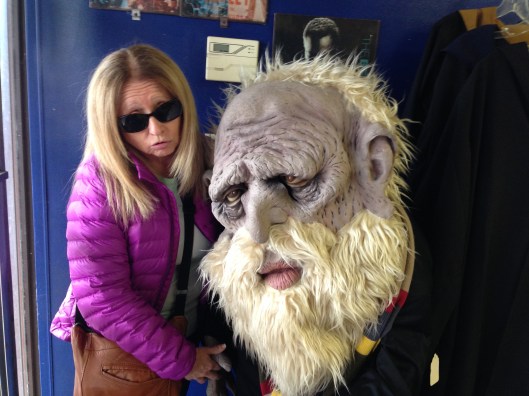
David's DreamDeeply

What better way to drive traffic to your blog than title the entry “Math Class.” As most of you probably recall, math was your favorite class?! All kidding aside, I actually found math fun but that’s probably because I learned a lot of it outside of regular classes which can admittedly be pretty boring. Rest assured, the “math” in this entry does not require integral calculus, differential equations, trigonometry, or even algebra. In fact, if you prefer, you can call the post “Christianity” or “Buddhism” because you would reach the same conclusions but from a very different pathway.

Part of the inspiration for this post came from visiting the Smithsonian Institute about 20 years ago. They displayed a large graph with the population of the earth plotted against the year. I looked at my birth year and could easily see that more than half the total earth’s population came after my birth year. And, that was 20 years ago.

Another inspiration comes from having led the artificial intelligence lab at NYNEX. I worked for an ex-Bell Labs engineer, Ed Thomas. People were always asking me whether we were “related.” I found this question extremely amusing. Why? Because we are all related! In fact, we share about 40% of our genes with crayfish and 90% with horses. We’re closely related to chimps and bonobos though we did not “descend” directly from apes.  Yet, in our society, we chose to “draw the line” between being “related” and “not related” way over at one end of the scale. Ed Thomas and I only share about 99.9% of our genes so we are called “unrelated” while my brother and I share 99.95% and so we are (closely) related. Most people would say they are “unrelated” to a horse even though you share 90% of your genes. Weird.

A few days ago, I read that new fossils indicate life on earth is at least 4.75 billion years old. When I was a kid, starting around age 7, I became (like many others) fascinated by dinosaurs. At that point, the best guesses were that life was somewhere between 500 million years and 1 billion years. In the course of my lifetime, that estimate has increased a lot.

Who cares and why does all this matter? Apart from curiosity, it matters because it allows us to put in perspective our own individual lives in the context of life on planet earth.

Most people, most of the time, love their children and generally put the welfare of their kids even above their own. This is how life progresses. So far as we know, individuals never live forever, at least in this physical world. However, life as a whole continues to live and our direct descendants and relatives continue to live after our death. So, how much of your genetic material is actually in you versus all your cousins?

To simplify, let’s start with just other human beings. There are currently 7 billion people on the planet. You are one of them. You share 99.9% of your genes with those folks.

How much do we share genes?

So, let’s see. There’s you. And there are 7 billion relatives. Some are slightly more related than 99.9% identical genes, but let’s just say 99.9%. That means the total genome of your genes is in one person (you) who has 100% of your genes and 7 billion others who “only” have 99.9% of your genes. 99.9% of 7 billion is 6,993,000,000 while 100% of 1 is 1.000. In other words, the total amount of “your” genes that is in other people is 6,993,000,000 as much lies within the physical boundaries of your own skin. Not an equal amount. Not 10x as much. Not 100x as much. Not even a million times as much. No. Nearly seven billion times as much.

From the standpoint of genes, this vastly understates the case because there are 7-10 million species on earth besides humans. All of these share some of your genes and many of them share a lot of your genes. Of course, we humans are relatively big and while there are some plants and animals much bigger than we are, there is more mass of life in bacteria than blue whales or redwoods. In principle, one can calculate a better number by taking into account, for each of 7-10 million species how many cells are in each; how populous they are, and what percentage of genes are in common between humans (and therefore you) and each of these species. It’s straightforward but tedious. I gave up after 100,000 species. No, I didn’t. I never started because I knew I would give up way before I got to 100,000. In many cases, we don’t even have a very good estimate of the populations. Given all the trees, grasses, bacteria, insects, fish, plankton, etc. I would guesstimate that adding all the genes in all the other plants and animals would mean the genes in your body represent at most about one in a trillion of all the copies of those genes on earth. So, from the standpoint of ensuring the propagation of your genes, caring about your own physical life represents about 1/1000000000000 of the total.

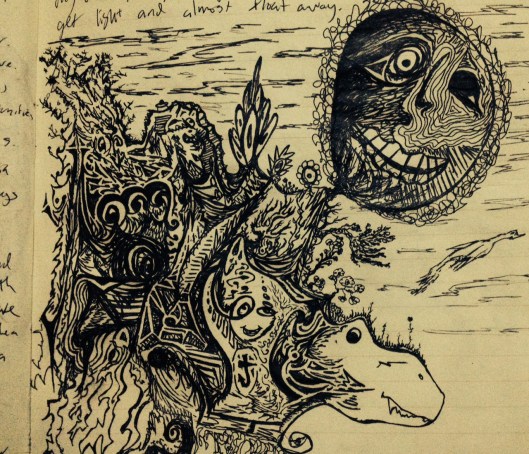
life on earth

I grant you that genes are not all that matters in human life. And, I want to explore some of the other aspects of the interconnectedness of life apart from a common genetic heritage. However, first, it is really worth taking a moment to let that fraction sink in.

It isn’t as though the “you” inside your skin weighs, say, 150 pounds while the “you” that is outside your skin is, say, the size of a blue whale. No. In fact, even 1000 blue whales compared with your physical body is not so lop-sided a comparison. Imagine thirty galactic clusters of stars. Each of those thirty clusters has 100 stars. Each of those stars has 10 planets to support life. Each of those planets has 100 oceans and each of those oceans has 1000 blue whales. Versus you.

Another way to think about is that when you physically die, it is a little like “trimming” or “pruning” the “Tree of Life.” But your dying would not be like cutting off a branch. Or a twig. Or a leaf. It would be like shaving an invisible razor thin strip off one needle of one twig of one branch of a huge Redwood.

redwoods

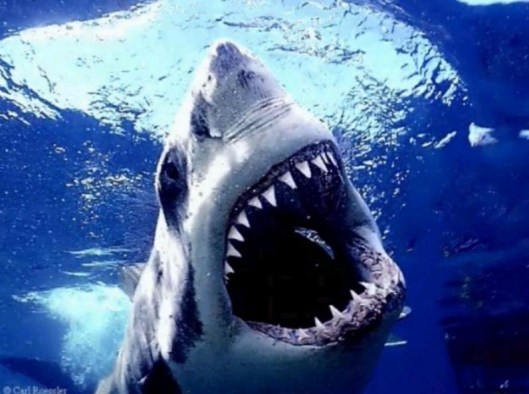
It is understood that life is partly (and by no means wholly) about competition. Each and every one of those bits of “you” that is in other life-forms is not necessarily your best bud. You may share a lot of DNA with a great white shark but you might not wish him well. Or, you might not much like your cousins the mosquitoes and deer flies and pneumonia germs. The problem is that we are not collectively anywhere near to being smart enough to understand the effects of deleting certain species and not others. Perhaps, some day in a hundred years or so, we might understand enough to intelligently redesign an ecosystem. Don’t hold your breath though. Despite the fact that some of those individual species and some individuals within a species are annoying, we really have no idea how to extract some one thing. It is not a set of legos. Every species is connected with a variety of chemical and mechanical connections to hundreds of others. It is more like trying to extract your iPhone adapter from your backpack which also contains headphones, power cords, adapters for five other devices and, for good measure, a couple stray shoelaces.

You could also point out, quite rightly, that not all genes are as “fundamental” to making you you as are other genes. There are genes, perhaps, that make your eyes blue or brown. Does that seem fundamental to you? Or, perhaps there’s a gene that makes your thumb fingerprints whorls or loops. Does that seem fundamental to who you are and to your life? On the other hand, there are genes that make you want to live and find love and raise a family and contribute and play and learn. To me, those are the genes that are fundamental and guess what? Those are the very genes that you share with millions of other species. Naturally, we humans like to think of ourselves as fundamentally different from other species on the planet and in some ways we are. As discussed below, being able to communicate so many messages with other people across time and space and even after death indeed makes people “different” but when it comes the things you are likely to care the most about: staying alive, avoiding pain, keeping your family healthy, fighting off disease — those are pretty common across animals and even plants and bacteria, at least in rudimentary form. Just because an ant doesn’t do calculus doesn’t mean it doesn’t work to stay alive and help it’s colony do the same.  See video links below and you will hopefully see how similar other animals at least are to us.

https://www.youtube.com/results?search_query=animals+helping+each+other

And, speaking of math classes, let us turn to some of the other aspects of how our own individual life fits with the larger web of life. Let us think about learning. Pretty much all life is able learn.  Humans, however, are able to communicate through speech, writing, and pictures. This means that we can learn across continents and generation. Eventually, communications affect behavior. Everyone ends up getting exposed to unique information and delivered under different circumstances so that people also end up acting very differently and even perceiving things differently. So, when it comes to human beings, many of the differences we think important are in terms of the ideas and attitudes various people have as well as their actual behavioral differences. To put it simplistically, we largely feel akin to others on the basis of how we think and feel. Many of the labels that we put on people — in fact, the vast majority of them — focus on differences among people. For example, we have: extrovert, introvert, flirt, workaholic, physicist, physician, psychologist, psychic, pscyho, Republican, Democrat, liberal, heterosexual, homosexual, creative, drudge. But what percentage is different and what percentage is the same and how fundamental are the behaviors and ideas?

How much of the total knowledge and how fundamental is that knowledge? Perhaps people learned approximately linearly through time. We’ve had spoken language for, let us say, 100,000 years although it could be much longer.  At best, people learn about four “chunks” per second. A “chunk” is basically a new configuration of things you already know. We measure the information in a computer in terms of “bits” but this turns out not to be a very good measure for people (or other animals). If you have to learn “A CAD” it is pretty easy. It is essentially only one “chunk.” If you know how to read hexadecimal then “ACAD” is equal to 10-12-10-13. It is easier to remember “a cad” than to remember “10-12-10-13.” That in turn is easier than the binary string: “1010110010101101” though they have the same bits. In the same way, it is much easier to recall the password: “Thistooshallpass” than the password: “ooassllapsTsthih.” That is the basic concept behind “chunks” as a measure. How easily we learn new things depends heavily on what we already know. One major problem with trying to learn a new language is that we keep thinking of it (and even hearing it) in terms of the language we already know. In fact, studies with infants show that by a few weeks of age, they are already less able to distinguish sounds that make no difference in their native language than they were at birth.

Psychology is endlessly fascinating! But let’s return to our calculations. If you are awake, on average for 16 hours a day for your lifetime of 100 years, you would have an opportunity to learn 4 chunks/second x 60 seconds/minute x 60 minutes/hour x 16 hours/day x 365 days/year x 100 years for a total of 12,600,000,000 chunks! That is a lot! Of course, that is rather an ideal case. If you don’t read and instead every week, watch the same TV shows and hang out with the same people you may not get your full 12 billion chunks worth of learning, but it’s still going to be a lot. 

We humans have been communicating and learning through speech though for at least 100,000 years. That is more than 1000 times as long as you’ve been alive. For a long time, the population of the earth was far less than today, but sill likely over a million people for most of that time. Since each person grows up in a different environment, they learn different things. Leaving aside the fact that the population of the earth is now about 7 billion and just using the very conservative 1 million figure, you know about 1/1000000000 or a billionth of what humans collectively have learned.  (For a more in-depth estimate, check out the link below).

http://www.livescience.com/54094-how-big-is-the-internet.html

Of course, a more direct way to think about this is that collectively today, on average, you know about 1/7000000000 of the knowledge of humanity since you are only one person and there are seven billion on the planet. If you’ve been learning for about 70 years (as I have) then you may know a slightly higher fraction of the total knowledge. Let’s just take the conservative estimate that your knowledge is one billionth. But how much is a billion?

One way to think about it is this. You, as an individual, have one “book” of knowledge in your head. (It’s a rather large one, but all of the books in this example will also be large). Now, let’s consider that the whole world of knowledge exists on ten continents. Each continent has 25 countries for a total of 250 countries. Each of these countries has 40 cities. Each of these cities has 10 libraries. Each of these libraries has 10 rooms and each room has 1000 books each of which is every bit as complete and weighty as your own.

IMG_7320

Much of your knowledge is common, but a lot of it is unique. No-one has lived the life you have and so your “book” will contain a lot that is just about your own experience. And that’s true as well for each of the other 7 billion people on earth. So, while the biological stuff that makes you you, is hugely outside your own skin, the knowledge that humanity has collectively has a teeny fraction inside your own skull. Best to share what you know before you die at which point it will become inaccessible. Aside from that sage advice, you might reflect that indeed, none of us knows very much at all compared with what we know as a species.

The other major way that we interact with each other and with every living thing on the planet is through our chemical exchanges. People, such as you and me, for example, inhale air that contains oxygen. We cannot live without it. Where does the oxygen come from? Green plants. To many people, “tree hugger” is a slam, an insult, a term that is meant to be demeaning. Okay, I grant you, actually hugging a tree is probably something that doesn’t mean much to the tree. However, without green plants and the oxygen they produce, people (and other animals) would die off. Not only do plants produce oxygen but they also get rid of carbon dioxide. Of course, without green plants, there would be few foods from plants and we would have to “eat” mostly animals for the short time the supply lasted. A lack of green plants would really have four ways to end humanity: greatly increased carbon dioxide causing global warming, lack of sufficient food, lack of sufficient oxygen, too much carbon dioxide to survive. Probably, the lack of food would do us in first. You could actually hug much worse things than trees.

In any case, the oxygen – carbon dioxide and food cycles are two of the important ways that we are chemically interconnected with the entire web of life on the planet. Another important cycle is the nitrogen cycle. While plants are ultimately at the root of what we eat, the bodies of humans and other animals eventually provide important nitrogen for plants. Most plants are quite patient about waiting passively for us to die before partaking of our bodies. But there are some much pluckier plants such as the pitcher plant, sundew, and Venus flytrap which actually trap animals such as insects and small frogs in order to “feed” their nitrogen needs.

trapped bee

These cycles have been going on for a very long time. What’s new that humans bring to the party is not a nice cabernet or chardonnay, but rather a toxic cocktail of chemicals that never existed before. Some of these are intentionally produced and others are side-effects of other things. But rest assured, these “new” chemicals are overwhelmingly bad for everything in the biosphere. They are bad for you, for your kids, for your grandchildren, for frogs, redwoods, and honeybees. They are bad for almost everybody. For instance, you may find it convenient to buy “air fresheners.” These do not actually “freshen” the air. They have three important classes of chemicals: something that screws up your hormones; something that is a known carcinogen; something that destroys your sense of smell. “Air freshener” indeed.

http://www.toxipedia.org/display/toxipedia/Air+Fresheners

It strikes me as odd that adults in many parts of the world are “not allowed” to buy “street drugs” while any seven year old can walk in and buy “air freshener” which could cause numerous problems. Of course, the other problem is that even though you exercise your freedom to buy air freshener, eventually those chemicals end up in my lungs and the lungs of my descendants as well as monkeys, parrots and rabbits. The polluting chemicals eventually end up pretty well scattered throughout the world. China’s air pollution eventually gets to Americans and American air pollution gets to China. Speaking of math, here’s an interesting calculation to show how much we exchange air molecules with others.

Have you breathed air molecules from Jesus?

To make an overly long story overly short, we are all highly interconnected and most of what makes you, you is not inside the confines of your own body.  For me, this puts unfettered greed in the category of just being plain silly.


(The story above and many cousins like it are compiled now in a book available on Amazon: Tales from an American Childhood: Recollection and Revelation. I recount early experiences and then related them to contemporary issues and challenges in society).

Author Page on Amazon

City Mouse and Country Mouse

04 Saturday Mar 2017

Posted by petersironwood in America, psychology, Uncategorized

≈ 5 Comments

Tags

architecture, culture, ethics, politics, psychology

thumb_img_8068_1024

In our childhood, many of us heard the fable of the city mouse and country mouse. Briefly, the city mouse invites his cousin, country mouse, to visit him in the city. At first, the country mouse is quite impressed with the array of food available in the city mouse’s home. Then, the house cat comes with sharp claws and long pointed teeth and nearly rips them both apart. In the end, the country mouse scampers back and shouts back to his city cousin something to the effect that he’s happy to have his bread crumbs in peace rather than risking life and limb in the city. The exact words, I don’t recall, but they have probably suffered in the translation from Aesop’s ancient Greek to modern English and even more severely in the translation from mousespeak to human speech. Most likely, the original sounded something like this: “Squeak. Squeak. Squeak.”

Aesop Fable of the Mice

No doubt there are advantages and disadvantages for a mouse to live in the city or the country. Both places have sources of food and both have predators. But what about human beings? Here too, there are advantages and disadvantages of living in a large city versus living in the country or a small town. While human beings undoubtedly have many behaviors that are influenced by “instinct”, people are also capable of learning. Moreover, because we humans can talk and write and are fundamentally social beings, not only do urban and rural environments result in different kinds of individual skills, in a fairly short time, they also result in different cultures. These differences are not arbitrary but are adaptations to characteristics of the two environments.

In cities (and especially coastal cities), people typically come in contact with a huge variety of people. Many metropolitan areas feature different cuisines, attractions, races, religions, sexual preferences, and so on. Take the matter of cuisine. It is easy in New York City, San Francisco, Atlanta, Boston, Washington DC, Seattle, Minneapolis, Los Angeles, or San Diego to find restaurants that serve excellent Italian, French, Japanese, Chinese, Mexican, Vegetarian, Vegan, Ethiopian, Jewish or Indian food. I happen to love them all! But if someone hates any of these options, it is also easy to avoid that option. You don’t care for Indian food? No problem. Don’t go. Suppose however, you are with a group of friends and everyone else wants to go for sushi which you happen to hate. The vast majority of urban Japanese restaurants in the USA offer other options that are “close to” traditional American cuisine. So, you can go to a Japanese restaurant with your friends and order steak teriyaki while they all eat raw fish.

But let’s just suppose that for whatever reason, you are so appalled by raw fish that you get sick watching someone else eating it. Well, you simply don’t watch. Now, the thing about living in a big city is that you don’t have to create this solution on your own. That’s what everyone does. If they see something they don’t like, they look away. They learn not to dwell on it. It’s very crowded in a city. If you walk around or take public transportation being “offended” or “put off” by anyone who speaks differently, dresses differently, eats differently, worships differently, looks different, etc. you are going to quickly become completely stressed out and become one completely unhappy camper. People in large cities learn to be polite and focus their energy on the places and people that give them joy. It takes time to find friends but eventually you find people who share fundamental interests and values. They might be next door, but more likely, they are are a subway ride or long walk away. There are literally more than a million people in any large city that you never get to know. Because there are so many choices, plenty of opportunities arise to do what you like and many people who will join you. You might love tennis, roller skating, and art museums. You might never step foot in the science museum or the public library or the parks. It’s all fine. The culture of the city is tolerance for everyone. Yet, people find those they relate to from a huge pool. If you come from, say, China, and you want to stick with other Chinese people, you can easily do that. You can survive in New York City or San Francisco without having to experience Mexican food or even without learning much English. On the other hand, if you want to become assimilated into more “mainstream” American culture and eat pizza every day and listen to jazz and dress like an American Indian — hey, you’re welcome to do that too. Because everyone passes by people that are so different every day, almost everyone learns tolerance. In essence, you see, there is not “one” New York City or Los Angeles, there are thousands! People essentially live in their own version of these cities and become close only with a small group of like-minded people. Of course, your “tennis friends” might be different from your “roller skating friends” which might be a slightly different group than your “art museum friends.” But even putting all your friends together, the people you know are only 1/10,000 or 1/100,000 of the people in the city.

thumb_img_8442_1024

There is a down side. You may never get to know your next door neighbors. You and they may simply have very different tastes and interests. Besides that, there is a lot of turnover in a city. Often, there doesn’t seem to be much point in becoming friends simply because you live next door partly because they (or you) are quite likely to move away in a month. There is a worse down side as well. At the extreme, the distance that people create mentally to accommodate the extremely close physical proximity and the culture of leaving others alone also makes it possible for someone to be stabbed on the street without anyone helping. This phenomenon has been studied and called “bystander behavior.” People are actually much more likely to help if they are the only witness than if they are one of 100. Each of the 100 looks around and sees that none of the other 99 are doing anything and so conclude, all evidence to the contrary, that nothing much is happening or else the other 99 people would be helping. In any case, the “culture” that arises in cities is typically quite tolerant of differences, somewhat distant from the vast majority of your fellow citizens but certainly allows for close friendships based on any combination of a hundred different factors. Because large cities develop a culture of tolerance for other types of people, that fact becomes known and attracts still more diversity which in turn encourages more tolerance and diversity.

There is another important aspect of living in a large city. It is crowded and complex. You constantly have to “trust” people you don’t know who drive the taxis, deliver the food, come to fix your cable, police the streets and so on. These are typically not people you know. In fact, for the most part, you won’t even see them again. But it is impractical not to trust all these strangers. Most of the time, the trust works out though on rare occasions, it backfires.

thumb_img_8311_1024

The experience of living in a small rural town is completely different. There are not 400 different restaurants to choose from. There might be three. Possibly one of the three is ethnic, but it is far less likely. A Korean restaurant in New York City can be quite profitable if only .01% of the NYC population goes there regularly. That won’t work in Woburn MA or Bend OR though, let alone in a town of 5000. A small town in America may well have a baseball diamond and a public library. But they are unlikely to have a holography museum or a laser tag facility. The sheer small number of people living in a small town means, in essence, that the citizens must agree on what types of restaurants are available, what recreational facilities are available, what clothing stores are in town and so on. In addition, everyone in town is likely to run into everyone else again and again. Rather than learning to avoid and look away and ignore things you don’t personally care for, people in small towns instead lean in. They want to know what exactly is going on with everyone else in town. Everyone soon knows who the town drunk is and who is having an affair with whom. People in small towns do not typically think, “It’s none of my business” but that’s exactly what they think in large cities.

For these reasons, people in small towns are less likely to learn the skill of looking away. If they personally hate sushi and end up visiting a relative in a big city and then end up in a Japanese restaurant, they are both fascinated and disgusted by watching their cousin eat sushi. They could theoretically just look away, but that is not a very well learned skill for most. For these reasons, the culture of the small town also evolves to be different. People who thrive on diversity and believe strongly in tolerance feel as though they don’t belong and they also feel deprived of interesting possibilities so most end up moving away. Of course, that makes the town even more homogeneous. The small town ends up being much more “tight knit” than a random group of 5000 people in a large city. It seems much less likely people would fail to help someone being stabbed on the street (though I haven’t actually tried that experiment).

img_5254_1024

In a small town, since people know almost everyone they interact with, they don’t really have to trust strangers all that much. If someone new delivers the mail, the small town person is likely to ask whether they just moved in town, where they live and so on. This would be considered quite rude and even weird in a big city. People in a small town probe to know people in their small town. They tune in not out. They are much more likely to choose friends partly on the basis of location rather than vocation. Because of this cluster of factors, people in one small town are more likely to stay in that small town. It is probably much more “disruptive” to move from Woburn MA to Bend OR than to move from New York City to Los Angeles. Of course, either move means you will have to learn where things are, get a new driver’s license, make new friends etc., but the “culture” of cities is becoming similar all across America and indeed, all across the world. Two small towns can have quite different cultures.

People from large cities are likely to feel quite different on a number of issues compared with people from small towns. People in large cities have been trained and acculturated to simply look away and ignore things and people that they don’t like and to focus on what they do like. Conversely, people in small towns have learned to depend on everyone and so want everyone to agree on a much larger range of issues. There are enough resources in a large city to have scores of museums and hundreds of restaurants and scores of clothing stores. People don’t need to agree on taste. But in a small town, that’s not true. There is much greater pressure to agree on what the “right” museum is for the town, what the “right” kind of food is to serve at the handful of restaurants and what the “right” kind of clothing might be.

People in a small town are likely to know the police that they come in contact with. If a police officer in a small town arrests someone or even shoots them, people in a small town are much more likely to know both the police officer and the person arrested. Provided the police officer is known as a generally fair-minded person, the people in the small town are much more likely to be sympathetic. In addition, they may well known that the person arrested (or even shot) is and has been a “bad guy” the whole time he’s been in town.

In a large city, by contrast, people who read or hear about someone making an arrest or very unlikely to know personally either the policeman or the suspect. They probably still have a presumption that the police probably acted correctly. However, their reactions are much more likely to vary from person to person that what you would find in a small town.

Needless to say, cities do differ from each other in terms of culture and so do small towns. For example, Murray Hill, New Jersey is not a huge city (population around 3500). However, many of the people there were from Bell Labs, a large famous research institute long part of AT&T but now part of Nokia. That particular small area includes residents from many countries, liberal and very well funded schools, and so on. Small towns that grow up around trade centers, farming communities, research centers and universities, or coal mining undoubtedly have very different typical “cultures.” Similarly, a large city like New York that has people from all over the world is quite different than one of the Chinese cities around large-scale manufacturing facilities (e.g., Guangzhou or Shenzhen. Nonetheless, as a general rule, living in a small town versus a large city tends to produce different skill sets and a different outlook and culture.

img_2795

What can small town cultures and big city cultures learn from each other? How can these cultures tolerate each other? Is there a way to have the advantages of both? If humanity keeps exponentially increasing population, will there even be any “small towns” left in 100 or 500 years? To me, city culture and small town/rural culture mirror many of the distinctions made by Jane Jacobs in “Systems of Survival.” I recommend this as an interesting (and short) read.

Systems of Survival


(The story above and many cousins like it are compiled now in a book available on Amazon: Tales from an American Childhood: Recollection and Revelation. I recount early experiences and then related them to contemporary issues and challenges in society).

author page on Amazon

The Invisibility Cloak of Habit

25 Saturday Feb 2017

Posted by petersironwood in America, psychology, Uncategorized

≈ 47 Comments

Tags

adaptability, flexibility, habit, learning

stopsign

“No, you’re not wrong; I’m wrong!”

How often have you heard, or uttered these words? Seldom is my guess. In fact, you may have even misread these words.

Michigan winters are hard. Even in the lower peninsula at the University of Michigan where I went to grad school, winters are long, snowy, bitter cold, and often feature treacherous ice storms. But that made springtime that much more soul-saving. Often, when it was sunny and warm, I would teach my introduction to psychology classes outside on the lawn near Angel Hall. Nearby ran one of the “main drags” in town including a T-shaped intersection. The street going into the main drag included a stop sign for the first three years I lived in Ann Arbor.  And, then, there was a change. Whatever the design rationale, the highway department reversed the situation so that traffic on the main drag now had stop signs both ways and the other street was free to turn onto the main drag. That doesn’t seem  like a tsunami of a change, does it?

Yet, my classes were often interrupted by screeching tires, and honking horns. Society had not yet evolved to the point of pulling a gun and shooting someone for a traffic faux pas. That would still require years of work on the part of the NRA to convince people that they needed “protection” for road rage (which coincidentally made road rage that much more deadly). But back in the 1970’s, my classes were not interrupted with gunshots. But aside from the screeching tires and honking horns, we could hear plenty of screamed profanity.

What made that an interesting situation to discuss in the intro psych class was that it was never the people who actually had the right of way who did the honking and screaming. It was always (at least so far as I observed) the people who sailed right through the new — and unseen stop signs! These stop signs were in plain view. This was not at all like the stop sign I sailed through years later in Westchester. That stop sign was well-hidden behind trees and then made more invisible by spray paint. I guess some teen-agers thought it would be pretty cool to cause an auto accident. Sigh. But let’s teleport back again through time and space to Ann Arbor a couple decades earlier. Those new Ann Arbor stop signs were large and clearly visible to anyone. In fact, both signs were both easily visible to the psych class from 75 yards away. But they were apparently under a magic spell because these same stop signs were invisible to drivers who had driven the main drag for many years. They “knew” the stop signs were not there. They “knew” there was a stop sign on the cross street. So, to many (not all) drivers, these stops signs were under an “invisibility cloak” created by their own expectations.

Furthermore, when drivers did sail through the stop sign and then found themselves almost in an accident, slamming on their breaks and swerving to avoid the accident, it was invariably followed by a loud blaming exercise. The “blame” of course, was always on the other driver — the one actually following the law. In the 5-6 near misses we observed, we never saw someone sail through a stop sign and then realize their mistake and apologize. Nope. Not once. It was always an anger display at the “idiot” who had gone right through the (non-existent) stop sign. If you read the last blog post about “Big Zig Zag Canyon” you are already familiar with how our expectations of reality can be slow to match actual reality.

Such situations remind me a little of tether ball. As a reminder, tether ball is played with a ball that is…tethered. The ball is much like a volleyball but connected by a rope to a pole. The players try to hit the ball and wind it completely around the pole in “their” direction. (This game is made for two righties or two lefties). Anyway, as the cord wraps itself around the pole once, the cord shortens and the radius of the ball path is shorter meaning it comes around more quickly. So you need to adjust your timing. But the typical behavior, at least for beginners, is to jump up a little late because everyone bases their timing on the previous cycle rather than the next cycle. The player realizes they are late and adjusts their timing. Unfortunately, they typically adjust to the last cycle and are once again late. They do keep adjusting but always one revolution too late. As a result, the ball whips around faster and faster wrapping itself into the pole.

In attempts to build artificial intelligence systems, computer scientists encounter the “update problem.” As the world changes, so too must the reactions of the system change. But what kind of change in the environment is related to which changes in necessary reactions? In many cases, humans are pretty good at this. In other cases, not so much. Let’s say, for instance, that you routinely set your clock radio for 7 am in the morning. One evening, you go out for dinner at the Fish Market and bring home left-overs which you put in your fridge. Now, you immediately go and make sure your alarm is set for 7 am, right? No, of course not! You have a model of the world that enables you to realize without any conscious thought that putting leftovers into the fridge in the kitchen will not change your alarm setting.

Let’s take another example. You drive to a golf course and park. You take out your clubs and get ready to play a round. But you realize you need a new golf glove so you buy one at the check-in desk. Fine. But now you play the entire round wondering where your car will be when you’re done. No you don’t! Of course not! Again, your model of the world allows you to realize that there is no way buying a new golf glove can cause your car to appear in a different place. This is not in actuality completely true. Someone at the check-in desk could look at the credit card you used to buy the glove, ask for ID, realize you are going to be occupied with golf for the next 3-5 hours, call their buddy at the DMV, find out your license plate and then call their car thief buddy who finds your car and steals it. That’s extremely unlikely but theoretically possible.

Anyway, what is mainly easy for humans is not that easy for AI systems. It might be configured in such a way that whenever anything changes, it needs to recheck everything. But occasionally, people are confused about the update problem as well. As AI becomes more ubiquitously integrated with the Internet of Things, our own models of what is related to what may well be as outmoded as an Ann Arbor driver. You believe putting something in your fridge cannot affect your alarm setting. And that is true for your “dumb” fridge. But what about a “smart” fridge? It might infer, based on your past behavior, that you typically eat leftovers for breakfast. Your home command center reads the bar codes on your leftovers and realizes it will take you an extra five minutes to consume the dinner-breakfast you brought home. So, it automatically changes your alarm to 6:55. Helpful? Even today, how many of us can really say for certain what the interactions might be among the remote controls and settings for the various components of our home entertainment systems?

Although humans are still much better than computer systems at solving the update problem, we still make errors. Here’s one I remember. We had a small workout room at NYNEX Science and Technology where I ran the Artificial Intelligence lab. In this small workout room was an ordinary wall clock. For years, I used the workout room at noon, and glanced at the clock to check the time. At one point, the equipment was moved around and I realized that the clock would be much easier to see on the opposite wall. So, I moved the clock to the opposite wall. I got on the treadmill and about ten minutes later glanced at the clock to check the time. Only I did not glance at the clock. I glanced at where the clock used to be. Think about that. I myself had moved the clock a few minutes earlier. Obviously, I “knew” where the clock was now positioned. And yet, I felt like a clueless Ann Arbor driver.

Another common sighting of the “invisibility cloak of expectation” came at IBM Watson Research Center. This is a place where Nobel Prize winners work. Anyway, the computer science department was housed for many years at an office building in Hawthorne. Restrooms were conveniently located near the stairwells on every floor. On three of the four floors, the men’s room was on the right. But on one of the floors, the women’s room was on the right. Whether the designers did this knowingly for a joke, I am not sure. But on the “odd” floor, men often wandered into the women’s room and women into the men’s room. Now, the doors for these restrooms were not marked in Kanji characters or ancient Greek. No, they were clearly marked in English. Although the computer science department consisted of people from all over the world, they all read English quite well. But expectations apparently trump perception. That seems to be the case for everyone some of the time and for some people nearly all the time regardless of intelligence or education. People very often see (or don’t see) based on expectations rather than the evidence of their senses.

Is there anything that can be done to help us remove our blinders and see what is really there? I think so, but it isn’t easy. The first line of defense is social. What do other people see? Chances are, if you were milling around in a park and suddenly everyone else starting running and screaming away from the swing set, you probably would too even if you saw nothing at all unusual. However, in the Mysterious Case of the Ann Arbor Stop Sign, people immediately interpreted the other driver’s behavior, not as another source of information, but as proof that the other person was a careless or demented driver. Not only did the drivers not see the “obvious” stop sign but they completely overlooked the possibility that they may have been wrong themselves.

This may be “human nature” but I suspect that aspect is exaggerated by an overly competitive school system and society. In school, we are molded to try to get good grades. Ideally, “grades” would not be so much about comparing people but about realizing what you still needed to learn. In society, we have perverted such intrinsically social and cooperative activities as dancing, cooking, singing, and dating into “contests.” At work, too often, a project failure results in finger-pointing rather than problem solving and prevention. Whatever the reason, it seems incontrovertible that people in our society are bunny-quick to blame others and tortoise-slow to blame themselves.

In The Walking People by Paula Underwood, she describes the “Iroquois Rule of Six.” This is a rule of thumb they use to avoid over-focusing on the very first explanation of behavior that springs into mind. Suppose you work for a large multi-national IT company and find yourself sitting alone in meeting room P-45. You glance at the clock. 10:10. You take out your calendar, whether paper or electronic, and re-read your note: Meet Joe, 10 am, P-45. Here it is 10:10 and he hasn’t shown up! It is natural to have some thought like this trounce through your head, “What he hell? What’s wrong with Joe? I guess he just doesn’t really care about our project!” Maybe. But the Iroquois Rule of Six might get you to consider at least five alternatives such as: 1. Maybe Joe is from a culture where 10:15 is “on time” for a 10 am meeting. 2. Maybe you wrote down the wrong room. 3. Maybe you wrote down the wrong time. 4. Maybe you wrote down the wrong date. 5. Maybe you are not actually in P-45. 6. Maybe the clock is wrong. 7. Maybe Joe cares about the project but is stuck in traffic. And so on. It isn’t so much that we human beings grab on to the first thing that pops into mind. The problem is that once we do grab onto an interpretation of events, we never let go!  We don’t consider other possibilities.


My grade school friend Butch had had an uncle who had fought in the Pacific in WWII. He gave Butch this really cool book about how to survive off the land. One thing I read stuck with me. Monkeys are among the easiest wild animals to catch, not because they are stupid but because they are smart. One simple technique is to put two holes in a coconut shell and hollow it out as much as possible. Then, you slip a treat like a nut or small piece of fruit inside. The monkey comes along and grabs hold of the treat. Their hand, which went easily into the hole cannot get out while their fists are balled up holding the treat. So, you walk up to the monkey and club it and cook it and eat it. Monkeys are fast. It would be easy for the monkey to let go of the treat and scamper away. But they won’t. (At least, that is what the manual claimed). How much are we like the monkey? We grab at an explanation that makes us feel good and stick with it. We cannot let go. And we cannot accept the possibility that we ourselves might be wrong. Only in that last split second before the monkey’s skull is split open does it perhaps think, “Let go. Run. Too late.” Can we do better?

The United States, among other countries, has the intellectual capacity and the urgent need to quickly and fully develop new energy sources that are cheap, reliable, renewable, clean, and not dependent on foreign wars. And we are. In a trickle. But we are giving corporate welfare to old energy oil company kingpins because they are lavish campaign donors in a torrential river of cash. If you had a huge hole in your pocket that was draining all your cash, you’d see to fixing it quickly. But the oil drain isn’t so obvious. It steals far more of your money than a pickpocket could. But it’s well-hidden. Of course, at least until lately, oil money doesn’t come right out and say, “We know we’re rich but we deserve it. Give us more!” But we are so much in the habit of using non-renewable resources that we don’t think twice about it. And, those habits and expectations are played on plenty so that we are trained to think: “EPA- who needs it?” “Climate Change – unproven science”, “Solar and wind power are great but way off in the future”, “Pollution may cause cancer and asthma but that’s the price of civilization.”

The cheap oil prize that we so greedily grabbed hold of is now the trap that will get us killed, quite literally. It’s what we’ve been doing for many years. Why let go now? Instead, it’s easier to scream at others: “There is no stop sign here!!” Eventually of course, people change and civilizations change. But to change too slowly means you could be the cause of an accident; you glance on the wrong wall to see the time; you miss the tether ball on every cycle. Or, it could just mean complete annihilation. Maybe you could at least let go for a little while. Maybe you could at least let go with one hand. Maybe you could just forget the prize and the coconut and get away before it’s too late. I hope so.


(The story above and many cousins like it are compiled now in a book available on Amazon: Tales from an American Childhood: Recollection and Revelation. I recount early experiences and then related them to contemporary issues and challenges in society).

Author Page on Amazon

Home Page

Twitter: JCharlesThomas@truthtableJCT

Big Zig Zag Canyon

20 Monday Feb 2017

Posted by petersironwood in America, Uncategorized

≈ 4 Comments

Tags

America, ecology, hiking, Mt. Hood, politics

Big Zig Zag Canyon

mthood

Ever since I can remember, I have enjoyed hiking. Where I grew up, in Northeastern Ohio, woods, fields, streams and hills provided the typical backdrop. I still cannot deny that every new vista, every turn of the path provides a coursing-through-your-body pleasure…unless of course, the path becomes actually dangerous rather than simply breathtaking. People differ a lot on where that boundary lies between thrilling and insanely stupid. Personally, I find that I get plenty of “adrenaline rushes” simply from being a driver or pedestrian or cyclist. Walking across a fallen log 50 feet above a ravine has never been my idea of a good time. I would, of course, try it if necessary but I wouldn’t enjoy it. On the other hand, speaking in public has always seemed pleasurable although it is definitely nerve-wracking. In any case, it has always seemed to me that there are millions of interesting, beautiful, unique paths, in just America’s own 50 states, that have very little intrinsic danger. All of them are worth pursuing.

I never saw “real” mountains till I visited the West Coast. I hiked a few times on Mt. Ranier with my brothers-in-law. When some of them attended college at Reed in Portland, we decided to take a hike on Mt. Hood in order to take advantage of the clear day. The odd thing about climbing a mounting, at least in the Pacific NW is that often your view of the mountain becomes more and more obscured as you come closer to the parking lot where you begin your journey. By the time you park, you actually possess zero sensory evidence that you are anywhere near a mountain and have to believe it must be there somewhere because of your general orientation in space and because of your belief in social cooperation in providing actual rather than false trails, accurate maps, compasses that more or less work, etc.

Imagine instead that we lived in a society where it was more common to make false trails than real ones; a society where it was more common to publish false maps than real ones; a society where compasses were all digital — and regularly hacked. Would you still bother to try to climb a mountain for pleasure? At the very least, you would build a completely different strategy.

For our actual hike, however, we lived in a society wherein we could generally trust people. We had a map and headed out for what we estimated to be a hike to get us back to the car right before dark. We were not attempting the summit, but it certainly appeared to be a serious hike. We were basically doing a kind of helical partial circumference trek. The scenery began as spruce and pine gradually giving way to more scrub and less forest. Occasionally, we were rewarded with glimpses of the summit. A fair amount of the hike soon consisted of taking zig zag paths up and down small canyons. As we continued these became larger. And larger. And larger. Now our elevation map indeed warned us of “Little Zig Zag Canyon” and “Big Zig Zag Canyon” but we weren’t precisely sure where we were.

As we encountered ever larger canyons, we kept revising our idea about where we were. As we finished one canyon, we would always say, “Well, that must have been Big Zig Zag Canyon, so we must be *here* on the map.” At one point, after just deciding that we had conquered Big Zig Zag Canyon, we emerged from a grove of hemlock to a gaping maw of the mountain. It completely dwarfed anything we had seen before. Obviously, the much lesser giant we had already conquered was only “Little Zig Zag Canyon” and we were only now facing “Big Zig Zag Canyon.” It probably took at least an hour to descend and re-ascend. As those of you who have ever climbed on a mountain know, changing elevation is much like traveling in time. As we descended, the cold frozen ground of winter gave way to the first signs of spring. As we continued our descent, weeds and flowers abound and trees bud and leaf.  At the bottom of the ravine, it felt like a summer day. And, again, on the way up, there was the feeling of time travel compression. We were climbing through weeks of season change in minutes.  At last we reached the top of the trail and looked back at this canyon which would have been much better named “Gargantuan Zig Zag Canyon”! One last look and we turned back to the path into another forests. At the entrance to the forest, I noticed there was a small wooden sign oriented toward people leaving the forest and entering the canyon. Curious, I ventured forth and looked back to read: “Little Zig Zag Canyon.” What!!?? That enormous chasm in the earth was little Zig Zag Canyon?

Up to this point, our hike had been vigorous but not dangerous. However, now a small and subtle danger did present itself. We might be lucky to make it back to the car by dark. We had not bought provisions for an over-night stay. Hiking in the dark is dangerous. And, it gets really cold at night. So, now the question was, could we still cross the next canyon and still get back by dark? We decided we could. We did make it back before dark, but barely. Clearly, “Big” Zig Zag Canyon was a name chosen in a paroxysm of understatement while “Little” Zig Zag Canyon was just a bald-faced lie.

Like it or not, we journey now on spaceship earth. We are traveling together with everyone else on the planet. Neither a single person on the planet nor all of us collectively have a guaranteed comprehensive well thought out plan for how to avoid any one of a number of ecological disasters. Throughout the planet, there are numerous religions and cultures. Getting along with each other is critical, even if many countries did not have nuclear weapons, which we do. To enhance the adrenaline rush, these various countries and cultures and religions are associated with many different languages and stories about how we got to where we are today. Everyone, in other words, has a different map. There are no posted signs. And no-one owns a compass.

I could say, “Fasten Your Seat Belts Folks. We are in for turbulence.” I could say that to bend the spaceship metaphor. But if we think of ourselves as passengers on a plane that someone else, perhaps even someone competent, is piloting, I believe that stance pretty much guarantees that humanity’s day’s are numbered. No, I think a vigorous and potentially dangerous hike is more in order. Sometimes, it will feel as though you are going backwards in time and sometimes forward at lightning speed. Everywhere along the path, you will have to watch your step, even as you take the time to appreciate the beauty still surrounding you. And just when you think you have conquered the biggest challenge we have ever faced, a still larger challenge will appear.

I am hopeful.


panorama of Big Zig Zag Canyon

(The story above and many cousins like it are compiled now in a book available on Amazon: Tales from an American Childhood: Recollection and Revelation. I recount early experiences and then related them to contemporary issues and challenges in society).

Tales from an American Childhood

Author Page on Amazon

website of stories, poems

Newer posts →

Subscribe

  • Entries (RSS)
  • Comments (RSS)

Archives

  • April 2026
  • March 2026
  • February 2026
  • January 2026
  • December 2025
  • November 2025
  • October 2025
  • September 2025
  • August 2025
  • July 2025
  • June 2025
  • May 2025
  • April 2025
  • March 2025
  • February 2025
  • January 2025
  • December 2024
  • November 2024
  • October 2024
  • September 2024
  • July 2024
  • April 2024
  • March 2024
  • February 2024
  • January 2024
  • December 2023
  • August 2023
  • July 2023
  • May 2023
  • April 2023
  • March 2023
  • February 2023
  • January 2023
  • December 2022
  • November 2022
  • October 2022
  • September 2022
  • August 2022
  • July 2022
  • June 2022
  • May 2022
  • April 2022
  • March 2022
  • February 2022
  • January 2022
  • December 2021
  • November 2021
  • October 2021
  • September 2021
  • August 2021
  • July 2021
  • June 2021
  • May 2021
  • April 2021
  • March 2021
  • February 2021
  • January 2021
  • December 2020
  • November 2020
  • October 2020
  • September 2020
  • August 2020
  • July 2020
  • June 2020
  • May 2020
  • April 2020
  • March 2020
  • February 2020
  • January 2020
  • December 2019
  • November 2019
  • October 2019
  • September 2019
  • August 2019
  • July 2019
  • June 2019
  • May 2019
  • April 2019
  • March 2019
  • February 2019
  • January 2019
  • December 2018
  • November 2018
  • October 2018
  • September 2018
  • August 2018
  • July 2018
  • June 2018
  • May 2018
  • April 2018
  • March 2018
  • February 2018
  • January 2018
  • December 2017
  • November 2017
  • October 2017
  • September 2017
  • August 2017
  • July 2017
  • June 2017
  • May 2017
  • April 2017
  • March 2017
  • February 2017
  • January 2017
  • December 2016
  • November 2016
  • October 2016
  • September 2016
  • August 2016
  • July 2016
  • June 2016
  • May 2016
  • April 2016
  • March 2016
  • February 2016
  • January 2016
  • December 2015
  • November 2015
  • October 2015
  • September 2015
  • August 2015
  • May 2015
  • January 2015
  • July 2014
  • January 2014
  • December 2013
  • November 2013

Categories

  • AI
  • America
  • apocalypse
  • cats
  • COVID-19
  • creativity
  • design rationale
  • dogs
  • driverless cars
  • essay
  • family
  • fantasy
  • fiction
  • HCI
  • health
  • management
  • nature
  • pets
  • poetry
  • politics
  • psychology
  • Sadie
  • satire
  • science
  • sports
  • story
  • The Singularity
  • Travel
  • Uncategorized
  • user experience
  • Veritas
  • Walkabout Diaries

Meta

  • Create account
  • Log in

Blog at WordPress.com.

  • Subscribe Subscribed
    • petersironwood
    • Join 662 other subscribers
    • Already have a WordPress.com account? Log in now.
    • petersironwood
    • Subscribe Subscribed
    • Sign up
    • Log in
    • Report this content
    • View site in Reader
    • Manage subscriptions
    • Collapse this bar
 

Loading Comments...